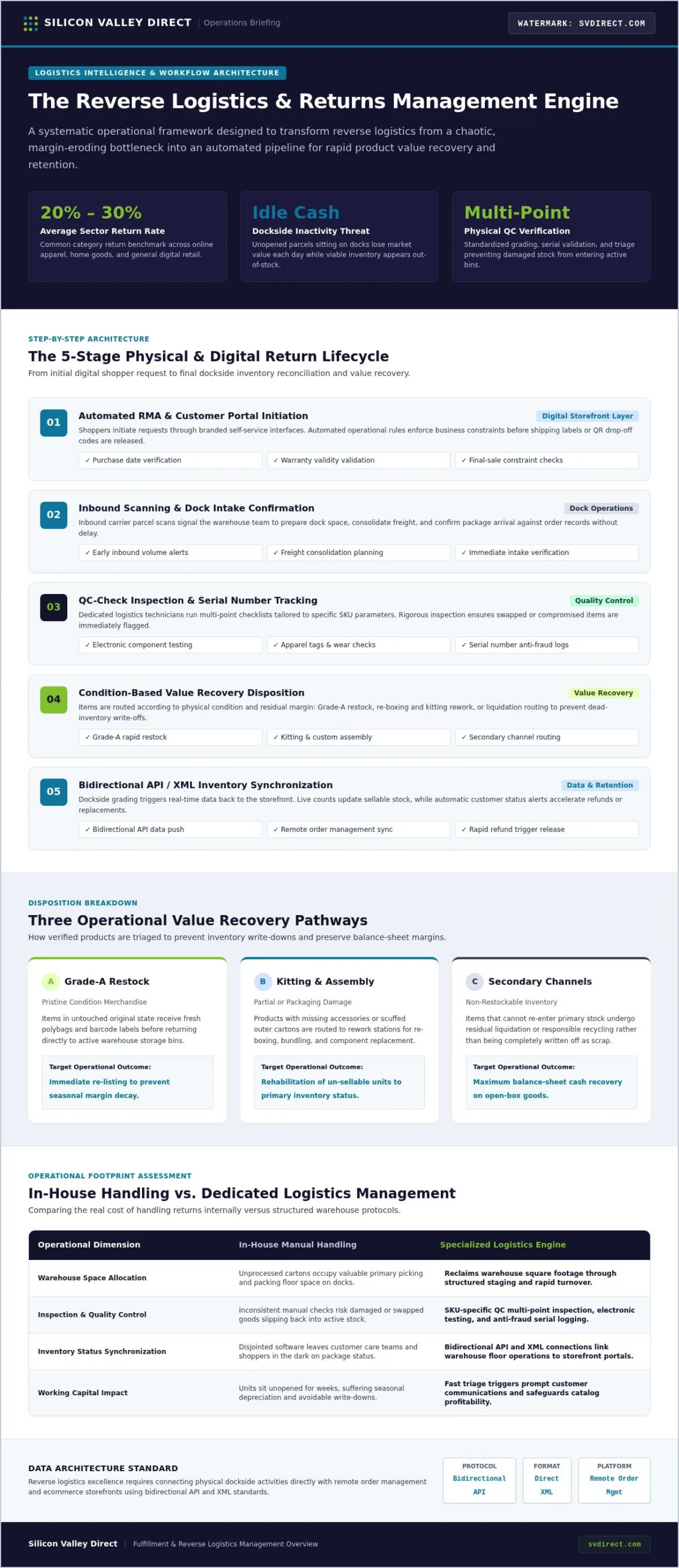
img not found!

Blog

Dimensional Weight Shipping Calculator: The 2026 Strategic Guide to Reducing Fulfillment Costs

Dimensional Weight Shipping Calculator: The 2026 Strategic Guide to Reducing Fulfillment Costs

Did you know that the July 2026 shift in the USPS dimensional weight divisor from 166 to 139 represents a 19% spike in billable weight for affected packages? This alignment among all major carriers means the days of finding a loophole for bulky, lightweight items are officially over. It’s a frustrating reality for brands battling rising costs and seeking an accurate dimensional weight shipping calculator to avoid surprises at the loading dock. You’ve likely felt the sting of paying to ship air, watching your margins erode because a box was just one inch too large.

We understand that unpredictable shipping costs and penalty fees for oversized packaging feel like a constant weight on your business growth. This guide is designed to help you master the math of volumetric shipping and reclaim your warehouse efficiency. We will break down 2026 carrier surcharges, show you how to optimize dimensions to fit specific dim factors, and explain how a seasoned 3PL partner can manage these technical complexities through precision and human oversight. You’ll learn why dimensional weight isn’t a fixed cost but a packaging efficiency metric that smart brands manipulate to increase margins.

Key Takeaways

  • Master the 2026 industry shift where all major carriers have aligned on a 139 divisor, making space-based pricing the universal standard for shipping costs.
  • Learn to use a dimensional weight shipping calculator properly by rounding each dimension up to the nearest whole inch to ensure accuracy and prevent costly non-compliance surcharges.
  • Discover how strategic right-sizing and specialized kitting can reduce package volume by 20%, potentially slashing your total fulfillment spend by over a third.
  • Transition from standard, oversized boxes to custom-fit packaging and on-demand printing to eliminate wasted space and improve your bottom line.
  • Leverage a 3PL partner’s proprietary data management systems to gain 24/7 visibility into your shipping metrics and access more favorable commercial dim factors.

Understanding Dimensional Weight (DIM Weight) in 2026

Shipping costs in 2026 are no longer determined by the scale alone. Dimensional weight is a pricing strategy used by carriers to account for the physical space a package occupies. As eCommerce volume continues to climb, carriers have shifted their focus from dead weight to density. This means that a large, light box now costs just as much to ship as a smaller, heavier one. For many brands, this shift directly impacts bottom-line profitability. Using a reliable dimensional weight shipping calculator is now an essential step for every fulfillment station to ensure margins remain protected.

The Evolution of Volumetric Pricing

Carriers utilize these metrics to maximize their fleet capacity. Every cubic inch of a delivery van or cargo plane has a specific value. In 2026, the industry reached a point of total unification. All three major U.S. carriers now use a standard domestic divisor of 139. This change, specifically the USPS shift in July 2026, means that density is the new priority. When fuel costs fluctuate, volume becomes the primary variable carriers manipulate to maintain their own margins. Consequently, lightweight, bulky items have become the most expensive products to move through the global supply chain. If your packaging isn’t dense, you’re effectively paying to ship air across the country.

Actual Weight vs. Dimensional Weight: Which One Do You Pay?

The industry operates on a concept called Billable Weight. This is the greater of two values: the actual scale weight or the calculated dimensional weight. Imagine shipping a single down pillow in a large 18x18x18 box. While the pillow might weigh only one pound, the carrier will bill you for the space it occupies. Conversely, a ten pound lead weight in a tiny 6x6x6 box will be billed at its actual weight because its density is high. Moving past the scale weight mindset is the first step toward optimizing your logistics.

Our team at Silicon Valley Direct has seen how this psychological barrier prevents brands from scaling. By integrating a dimensional weight shipping calculator into your workflow, you can predict these costs with precision. Remember that 2026 standards require rounding each dimension up to the nearest whole inch before calculating. These small increments can lead to significant cost spikes if they aren’t managed proactively. Starting with a clear understanding of your metrics is the cornerstone of a healthy fulfillment strategy. At Silicon Valley Direct, we emphasize transparency in data. Our Remote Control system provides the visibility needed to track these costs in real time. We believe that logistics shouldn’t be a black box. Instead, it should be a partnership where precision leads to growth.

How to Use a Dimensional Weight Shipping Calculator

Calculating billable weight is a precise mathematical exercise that requires strict attention to detail. The core formula used by any reliable dimensional weight shipping calculator is straightforward: (Length x Width x Height) / DIM Divisor. While the math seems simple, the input data determines your final invoice. Accuracy starts at the packing station. Carriers don’t look at the average size of your box; they look at the absolute widest points. If a box bulges due to overstuffing, that extra fraction of an inch can push you into a higher weight bracket. Precision in measurement is the only way to protect your margins from unexpected carrier adjustments.

Step-by-Step Calculation Guide

To ensure your data matches what the carrier’s sensors will detect, follow a methodical approach to measurement. Start by determining the exterior dimensions of your package at its widest points, including any protrusions or seams. Once you have these figures, you can determine the total cubic volume of the shipment.

  • Round Up: Round each individual dimension (Length, Width, and Height) up to the nearest whole inch before performing any other math.
  • Calculate Volume: Multiply these rounded numbers to find the total cubic inches (L x W x H).
  • Apply the Divisor: Divide that total volume by the carrier-specific divisor, which is currently 139 for most domestic shipments in 2026.
  • Final Comparison: Compare this result to the actual scale weight. The carrier will bill you for whichever number is higher.

The DIM divisor is essentially an industry-standard space-to-weight ratio that defines how much a cubic foot of air “should” weigh in the eyes of the carrier.

2026 Carrier Divisors: What You Need to Know

The landscape of 2026 is defined by carrier unification. As of July 12, 2026, the USPS aligned with other major carriers by changing its divisor from 166 to 139 for Priority Mail and Ground Advantage. This means that across domestic ground and air services, 139 is the number you’ll use most often. International shipping remains more complex, often utilizing different divisors depending on the specific lane and service level. It’s also vital to distinguish between retail and commercial rates. Commercial accounts often negotiate higher divisors, such as 166 or even 180, which effectively lowers the billable weight.

The trend over the last decade shows divisors steadily decreasing. This makes packages more expensive over time because a lower divisor results in a higher billable weight. Our proprietary Remote Control system at Silicon Valley Direct applies this logic automatically, helping you predict costs before the label is even printed. If you’re unsure how these updated rules apply to your specific product line, you can request a free quote to see how our logic optimizes your spend. By leveraging our negotiated commercial rates and precision kitting, we ensure you never pay for unnecessary volume.

The Business Impact: Why Your Shipping Costs Are Skyrocketing

Shipping air is a direct tax on your company’s growth. Many eCommerce leaders don’t realize that inefficient packaging acts as a silent drain on their margins until they see the month-end carrier invoice. If your team isn’t utilizing a dimensional weight shipping calculator before selecting a box, you’re likely falling victim to the “Large Box, Small Item” penalty. This occurs when a product occupies more volume than its physical weight justifies, triggering a billable weight that far exceeds the scale reading. In a market where every cent counts, these surcharges can quickly erode the profitability of even your best-selling items.

The financial rewards of optimization are substantial. For example, a 20% reduction in overall box volume can lead to a 35% reduction in shipping spend. This isn’t just a marginal gain; it’s a transformative shift in your operational budget. This logic is especially critical for global shipping services where international lane rates are significantly higher and cargo space is at a premium. When you ship internationally, the cost of wasted space is magnified by customs fees and higher base rates, making precision packaging an absolute necessity for global expansion.

The “free shipping” model also suffers when DIM weight isn’t managed. When customers expect zero-cost delivery, your business absorbs every cent of the carrier’s volumetric surcharge. Without proactive measurement, a single oversized box can turn a profitable order into a net loss. By integrating a dimensional weight shipping calculator into your fulfillment workflow, you can ensure that your “free” offerings don’t compromise your financial health.

Hidden Costs in eCommerce Fulfillment

Inefficient packaging creates a ripple effect throughout your entire supply chain. Larger boxes occupy more pallet space, which directly increases your warehousing and storage fees. There’s also the secondary cost of dunnage. If you use a box that’s too big, you’re forced to purchase additional bubble wrap, paper, or packing peanuts to keep the item secure. These material costs add up quickly. They can even influence your per-order pick and pack fees if the complexity of the material selection and assembly increases. At Silicon Valley Direct, we look at the total cost of the package, ensuring that every element is optimized for both safety and spend.

Sustainability and the ‘Green’ Cost

Environmental responsibility is no longer optional in 2026. Consumers have become increasingly vocal about “over-boxing,” often sharing photos of small items arriving in massive containers. Shipping air isn’t just expensive; it’s wasteful and damaging to your brand reputation. By aligning your cost-saving DIM weight strategies with corporate sustainability goals, you protect your margins while building brand loyalty. It’s a rare win-win where operational efficiency meets ethical business practices. Reducing your package volume isn’t just a logistics win; it’s a commitment to a leaner, greener future.

Dimensional Weight Shipping Calculator: The 2026 Strategic Guide to Reducing Fulfillment Costs

Strategic Ways to Optimize Packaging and Lower DIM Weight

Mastering the math is only half the battle. Once your dimensional weight shipping calculator reveals the true cost of your current shipments, you need actionable strategies to shrink those numbers. Right-sizing is the most immediate lever you can pull. Many brands rely on a handful of standard box sizes to simplify their inventory, but this often leaves inches of empty space that carriers happily bill at premium rates. Moving to custom-fit dimensions or a wider array of box choices ensures that your products are snug and your billable weight stays low. It’s a proactive approach that pays for itself through immediate shipping savings.

For non-fragile goods, the solution is often even simpler. Switching from rigid boxes to poly mailers or padded envelopes can drastically reduce volume. Since mailers lack the fixed structure of a box, they don’t trigger the same volumetric penalties. We also help clients minimize bulk by utilizing on-demand digital printing. Instead of including thick, pre-printed catalogs that add weight and volume, we print slim-profile marketing inserts that fit into the smallest possible packaging. This integration of tech and logistics ensures your brand message arrives without the heavy surcharge.

Advanced Kitting Strategies for Density

Density is the goal of every successful fulfillment operation. Our specialized kitting and assembly services focus on nesting products to eliminate internal voids. By strategically arranging items, our team can often consolidate what would normally be a multi-box shipment into a single, dense package. Every kit passes through our QC-Check process. This human oversight ensures that even the most complex assemblies maintain the smallest possible footprint without sacrificing product safety. It’s a precise balance of protection and spatial efficiency.

Packaging Innovation: Beyond the Cardboard Box

Modern technology provides even more ways to outsmart the dimensional weight shipping calculator. Automated box-making systems can now cut cardboard to the exact millimeter of an order, removing the human error of box selection. We also advocate for frustration-free packaging. This design philosophy removes the need for secondary outer boxes, allowing the primary product container to serve as the shipping vessel. To identify where your greatest savings lie, we leverage our Remote Control system. It flags high-DIM-weight outliers in your inventory, giving you the data needed to make surgical packaging adjustments that protect your margins.

Optimize your packaging and reduce fulfillment costs today.

Partnering with a 3PL to Master Shipping Logistics

Scaling a business requires moving beyond manual processes and guesswork. While a basic dimensional weight shipping calculator is a helpful starting point for occasional shipments, scaling startups often find that managing these technicalities in-house is a losing battle. The complexity of 2026 carrier rules demands constant vigilance and operational precision. By partnering with Silicon Valley Direct, you gain access to our deeply established carrier relationships. We leverage negotiated rates and higher commercial divisors that are typically unavailable to individual shippers. This means your specific “dim factor” could be 166 or higher while others are stuck with the standard 139, immediately lowering your billable weight and protecting your margins.

True control over your fulfillment costs requires total transparency and real-time data. Our Remote Order Management system provides 24/7 visibility into every shipment. You aren’t just handing off your inventory; you’re gaining a steady hand that acts as a proactive extension of your own team. We don’t just ship boxes. We solve the logistics puzzles that slow down your growth. Our team ensures that every package is optimized before it leaves our facility, allowing you to focus on product development and customer acquisition.

Technology-Driven Fulfillment

Precision is built into our digital infrastructure. We integrate your Order Management System (OMS) directly with our proprietary web services to provide real-time shipping quotes based on your actual packaging data. You can access over 120 standard reports to track shipping efficiency and identify DIM weight trends across your entire product catalog. This data becomes a powerful strategic tool. It allows you to negotiate better terms with carriers based on your documented shipping profile rather than relying on industry averages. Our dimensional weight shipping calculator logic is baked into the system, ensuring accuracy from the moment an order is placed.

The Silicon Valley Advantage

Our location in the heart of innovation is a symbol of our commitment to staying ahead of carrier rule changes and logistics technology. We employ a “Quiet Facility” methodology that prioritizes precise execution and methodical organization, even when facing high-volume deadlines. Since our founding in 1999, we’ve focused on physical infrastructure backed by human expertise rather than just marketing abstractions. We reject automated, impersonal interactions in favor of direct human connection and personal oversight. This ensures that your business growth is supported by a partner that remains accessible, grounded, and deeply reliable.

Request a free quote to optimize your shipping costs today.

Securing Your Margins in a Volumetric World

Navigating the complexities of 2026 shipping standards requires a blend of technical precision and strategic foresight. You’ve seen how density has replaced dead weight as the primary driver of fulfillment costs. While a dimensional weight shipping calculator provides the necessary math, true savings come from rethinking your packaging footprint through right-sizing and advanced kitting. Managing these variables in-house often leads to missed opportunities and eroded margins.

Silicon Valley Direct offers a steady hand backed by 25+ years of fulfillment expertise. Our proprietary Remote Control™ tracking system gives you 24/7 visibility into your data, while our strategic Silicon Valley location ensures your brand remains at the cutting edge of global logistics. We don’t just process orders; we build partnerships that prioritize your growth through human oversight and technological innovation. It’s time to turn your shipping operations into a competitive advantage.

Request a Free Quote to Optimize Your Shipping Strategy

We look forward to helping you master the math and scale your business with confidence.

Frequently Asked Questions

What is the standard DIM weight divisor for 2026?

The standard dimensional weight divisor for 2026 is 139 for major domestic carriers, including UPS, FedEx, and USPS. This alignment occurred after the USPS updated its policy on July 12, 2026. Using a 139 divisor in your dimensional weight shipping calculator ensures your estimates match current billing standards. Always verify if your specific commercial contract offers a more favorable “dim factor” before finalizing your fulfillment budget for the quarter.

Can I avoid dimensional weight by using my own boxes?

Using your own boxes doesn’t exempt you from dimensional weight pricing. Carriers apply these rules to any package that occupies space in their network, regardless of the container’s branding or origin. In fact, custom boxes can be more expensive if they aren’t right-sized for your specific products. We recommend selecting the smallest possible container that safely holds your items to minimize the billable weight calculated by the carrier’s automated laser sensors.

Does dimensional weight apply to USPS Flat Rate boxes?

Dimensional weight does not apply to USPS Priority Mail Flat Rate boxes. These specific containers are billed at a predetermined price regardless of the package’s weight or destination, provided they don’t exceed the 70 pound limit. However, for any other USPS service or custom packaging, the 139 divisor applies once the package volume exceeds one cubic foot. This makes Flat Rate a steady choice for heavy, dense items that fit within the standard dimensions.

How do I calculate DIM weight for international shipments?

To calculate DIM weight for international shipments, you use the same (L x W x H) / Divisor formula, but the specific divisor often changes. Many international lanes still utilize a 139 or 166 divisor depending on the service level and destination. Because international rates are significantly higher, even small errors in your dimensional weight shipping calculator inputs can lead to massive surcharges. Precision is vital when navigating global logistics lanes to protect your margins.

What is the difference between a 139 and 166 divisor?

The primary difference is the resulting billable weight; a lower divisor like 139 leads to a higher billable weight than a 166 divisor. For a box with 1,728 cubic inches, a 166 divisor results in roughly 10.4 pounds, while a 139 divisor jumps to 12.4 pounds. Shippers prefer a higher divisor because it effectively lowers the cost of shipping bulky items. Negotiating a higher commercial divisor is a key strategy for scaling brands.

Is there a weight limit where DIM weight starts to apply?

Dimensional weight isn’t triggered by a weight limit but by volume. For FedEx and UPS, it applies to all packages regardless of size. USPS only applies these rules to shipments larger than one cubic foot, or 1,728 cubic inches. If your package is smaller than this specific threshold, you’re billed on actual scale weight. Monitoring this volume cutoff is a simple way to protect your margins without requiring complex packaging overhauls or expensive materials.

How can kitting services help reduce my dimensional weight?

Kitting services reduce dimensional weight by consolidating multiple items into a single, dense package. Our team uses nesting techniques to eliminate empty space and air pockets that trigger volumetric surcharges. By strategically arranging products, we often turn what would have been a large, light shipment into a compact, efficient kit. This proactive approach ensures your billable weight remains as close to the actual weight as possible, significantly lowering your total fulfillment spend.

What happens if my calculation is different from the carrier’s measurement?

If your calculation differs from the carrier’s measurement, the carrier’s automated sensors will always prevail. This often results in a shipping charge correction on your next invoice, sometimes accompanied by a $1.50 non-compliance fee from USPS. These discrepancies usually happen because the box bulges or wasn’t rounded up to the nearest whole inch. Using precise data in your internal systems helps prevent these unexpected fulfillment expenses and keeps your records accurate for auditing.

Strategic Inventory Optimization Techniques for 2026 eCommerce Success

Strategic Inventory Optimization Techniques for 2026 eCommerce Success

What if the safety stock you rely on to prevent stockouts is actually the very thing quietly draining your company’s liquidity? It’s a common frustration for growing brands. You want to satisfy every customer, yet seeing capital tied up in slow-moving inventory feels like watching your growth potential sit idle on a shelf. Implementing the right inventory optimization techniques is no longer just a back-office task; it’s a critical strategy for survival in a 2026 market where Amazon FBA fees have increased and consumer expectations for precision are higher than ever.

We understand that behind every SKU is a business trying to scale with confidence. This guide will help you master the advanced data-driven frameworks necessary to balance stock levels and reduce carrying costs without sacrificing reliability. You’ll learn how to achieve 100% order accuracy through seamless technical integrations and real-time visibility. We’ll walk through the operational shifts needed to improve your cash flow and build a fulfillment engine that acts as a true extension of your team, ensuring your physical operations are as organized as your digital strategy.

Key Takeaways

  • Learn how to maintain the “Goldilocks zone” of stock by balancing customer service levels with working capital and warehouse capacity constraints.
  • Master essential inventory optimization techniques like ABC Analysis and demand forecasting to ensure your high-value SKUs are always ready for peak demand.
  • Gain 24/7 visibility into your operations through proprietary systems that eliminate the stress of manual tracking and provide real-time data across all channels.
  • Reduce pre-printed waste and improve flexibility by integrating Just-In-Time digital printing and strategic kitting into your fulfillment workflow.
  • Discover how to transition from a basic service model to a strategic 3PL partnership that acts as a proactive, high-performance extension of your team.

What Is Inventory Optimization? Balancing Service, Cost, and Capacity

At its core, What Is Inventory Optimization? refers to the process of maintaining the “Goldilocks” zone of stock. It’s the disciplined art of ensuring you never have too much capital gathering dust, yet you never have too little to satisfy a customer’s click. This balance is the heartbeat of a healthy eCommerce operation, turning the warehouse from a simple storage box into a strategic engine for growth.

In 2026, brands face a specific “Triangle” of constraints. High customer service expectations pull in one direction, while rising working capital costs and finite warehouse capacity pull in others. Balancing these requires advanced inventory optimization techniques that move beyond reactive spreadsheets. You can’t simply buy your way out of a stockout by over-ordering anymore. The cost of capital is too high, and warehouse space is too valuable to waste on “just in case” inventory that might never move.

Traditional management often looks in the rearview mirror, reacting to last month’s data. Modern inventory optimization techniques are proactive. They use predictive modeling to anticipate shifts before they happen. This shift is vital for scaling businesses because it frees up essential cash flow. Instead of paying for pallets of slow-moving goods, you can reinvest that capital into marketing or R&D. It transforms your inventory from a liability into a liquid asset.

The True Cost of Excess Inventory

Excess inventory is a silent profit killer. Carrying costs include more than just storage fees; they encompass insurance, taxes, and the constant risk of obsolescence. There’s also the heavy weight of opportunity cost. Every dollar stuck in a slow-moving SKU is a dollar not spent on acquiring new customers or launching new products. Within a professional 3PL environment, optimization means reducing pallet footprints through smarter vertical organization and tighter kitting processes. A quiet, disciplined facility can handle more volume in less space, directly lowering your overhead and improving your bottom line.

Service Levels vs. Stockout Risks

A “Service Level” represents the probability that you’ll meet demand without a stockout. High service levels require more safety stock, which increases costs. Finding the balance means calculating the cost of a lost sale, including the loss of customer lifetime value, against the cost of holding that extra unit. Reliable global shipping services act as a buffer here. When your logistics partner can move goods with precision and speed, you can maintain high service levels with leaner on-hand quantities, protecting your reputation without draining your bank account.

5 Essential Inventory Optimization Techniques for Scalable Growth

Moving from theory to execution requires a toolkit of proven inventory optimization techniques. These aren’t just logistical exercises; they’re the levers that control your cash flow and customer satisfaction. By applying these strategic methods, you transform your warehouse from a static storage space into a high-velocity fulfillment center. These frameworks allow you to make decisions based on mathematical certainty rather than intuition.

  • ABC Analysis: Categorizing inventory by value and turnover rate to prioritize management efforts on the items that drive the most revenue.
  • Demand Forecasting: Analyzing historical data and market trends to anticipate future stock needs with high precision.
  • Safety Stock Calculation: Establishing a mathematical buffer to protect your brand against supply chain disruptions or sudden demand spikes.
  • SKU Rationalization: The disciplined process of identifying and removing underperforming products that drain resources.
  • Just-In-Time (JIT) Inventory: Coordinating with suppliers to receive goods only as they are needed for fulfillment, significantly reducing carrying costs.

If you’re looking to implement these strategies within a professional framework, you can consult with our team to see how we integrate these techniques into your daily operations.

Implementing ABC Analysis in a 3PL Environment

Successful inventory optimization techniques rely on knowing where to focus your attention. In a 3PL setting, we prioritize ‘A’ items—those high-value, high-frequency products—for rapid picking and prime storage locations. Conversely, we manage ‘C’ items to minimize their storage footprint and cost. A seasoned partner can also use kitting to turn slow-moving ‘C’ components into high-demand ‘A’ finished goods on demand. This flexibility ensures that your warehouse space is always working for your bottom line, not against it.

Refining Demand Forecasting for 2026

Modern forecasting has moved far beyond simple monthly averages. In 2026, brands must account for micro-seasonality and rapid promotional spikes driven by social commerce. Demand forecasting is the predictive engine of the modern supply chain. Achieving this requires total data transparency between your sales channels and your fulfillment partner. When your 3PL can see your real-time sales data, they can proactively adjust labor and space, ensuring you’re prepared for growth without the burden of excess safety stock.

Leveraging Real-Time Visibility and Remote Order Management

In a fast-paced market, relying on weekly spreadsheets or manual stock counts is a recipe for operational friction. Real-time data is the oxygen of 2026 eCommerce. It allows you to make informed decisions at the speed of your customers’ clicks. Our proprietary Remote Control™ system acts as a digital window into the warehouse, effectively removing the “hectic atmosphere” often associated with rapid growth. By providing 24/7 access to your data, you gain the quiet confidence that comes from knowing exactly where every unit sits at any given moment.

This level of visibility is supported by a suite of automated notifications that keep your team proactive. Whether it’s a low-stock alert that triggers a reorder or a receipt confirmation that validates a new shipment, these tools ensure you’re never caught off guard. On the technical side, we utilize XML and SOAP web services to create a seamless bridge between your online storefront and our physical facility. This programmatic handshake allows your store to “talk” to the warehouse, ensuring that inventory optimization techniques are applied with surgical precision across every channel you serve.

The Power of Programmatic Integration

Modern brands require a fulfillment partner that speaks the language of their tech stack. Utilizing remote order management allows for real-time transaction processing that scales with your volume. We employ platform-agnostic web methods, such as AddOrder and GetOrderInfo, which eliminate the delays often caused by custom coding projects. This technical readiness is backed by robust reporting capabilities. With over 120 standard report options available at your fingertips, you can analyze turnover, monitor SKU health, and refine your strategy based on hard data rather than intuition.

Data Transparency and Trust

A quiet, organized facility is a hallmark of disciplined inventory control. This physical order is mirrored by our strict data-entry prioritization. Every movement in the warehouse is recorded immediately, ensuring your digital dashboard reflects physical reality. For high-value product fulfillment, we implement serial number tracking to provide an extra layer of security and accountability. This 24/7 data access fulfills our promise of keeping you “in the loop” at all times. It transforms the fulfillment process from a mysterious back-office function into a transparent, collaborative partnership where collective experience is a point of pride.

Strategic Inventory Optimization Techniques for 2026 eCommerce Success

Advanced Strategies: Integrating Just-In-Time Printing and Kitting

While many brands view inventory as a purely digital challenge, physical execution remains the final frontier of true efficiency. Integrating inventory optimization techniques into your physical production workflow allows you to maintain a leaner footprint. By utilizing “Print on Demand” as a core strategy, you eliminate the risk of pre-printed waste and the burden of storing outdated literature. This approach transforms your fulfillment center from a static warehouse into a dynamic production hub where materials are created only when a customer places an order.

Personalization is no longer a logistical hurdle thanks to Variable Data Printing (VDP). This technology allows you to include personalized inserts or customized packing slips without holding separate stock for every variation. We utilize the HP Indigo 5500 Digital Press to achieve this level of precision. Its high-resolution, dry-ink output ensures that marketing materials are ready for immediate fulfillment the moment they leave the press. This eliminates the bottlenecks associated with traditional methods and allows your brand to remain agile in a fast-moving market.

Request a quote to see how our integrated printing and fulfillment can streamline your operations

Reducing Literature Obsolescence with Digital Printing

Traditional offset printing carries a hidden cost that often goes overlooked: high minimum order quantities and mandatory 24-hour drying times. These requirements force brands into a cycle of over-ordering and eventual obsolescence when branding or product specs change. Switching to print-on-demand allows for just-in-time marketing collateral that mirrors your current inventory levels. 230 line screen resolution is the standard for offset-quality digital printing. This ensures that your JIT materials maintain a premium feel while providing the flexibility to update content on the fly, saving both capital and warehouse space.

Strategic Kitting: The “Virtual Inventory” Approach

Strategic kitting and assembly services offer a powerful way to defer final product configuration. Instead of storing pre-built kits that tie up specific components, we recommend holding individual parts as “virtual inventory.” This allows you to assemble kits only as orders arrive, giving you total flexibility to pivot based on real-time demand. To maintain 100% accuracy in complex assemblies, we implement a systematic QC-Check process. This physical rigor, echoing the high standards of VPrint3D Limited, ensures that every kit is perfect before it ships. Beyond flexibility, custom kitting often reduces dimensional weight, which directly lowers your shipping costs and improves your overall margins.

Executing Your Strategy with a Strategic 3PL Partner

Transitioning from the conceptual side of inventory optimization techniques to daily execution requires more than just high-end software. It demands a physical infrastructure and a team that operates as a seamless extension of your own brand. While algorithms can suggest reorder points, it’s the human oversight in a quiet, organized facility that ensures those orders are processed with 100% accuracy. We believe that true optimization is achieved when technical precision meets a deep personal commitment to your growth.

Our “Nine Promises” framework is built on this philosophy. It starts with listening to your specific business pains and ends with proactive problem solving. This deliberate methodology ensures that every SKU is handled with care, translating into fewer errors and a higher ROI for your organization. By closing the loop between data visibility and physical fulfillment, you build the customer trust necessary for global expansion. You aren’t just moving boxes; you’re fulfilling a promise made to your customer, and that requires a steady hand at every stage of the process.

Choosing a Partner, Not Just a Provider

When evaluating Silicon Valley 3PL fulfillment services, look for organizations that prioritize flexibility over rigid, one-size-fits-all procedures. A strategic partner identifies potential order conflicts or address errors before the package ever leaves the dock. This proactive stance is why many of our clients have remained with us for over seven years. Long-term retention isn’t just a point of pride; it’s the ultimate metric of a successful optimization strategy. It shows that the partner can scale and adapt as your business evolves.

Next Steps: Auditing Your Current Inventory Flow

The first step toward mastering inventory optimization techniques is a comprehensive audit of your current stock movement. Evaluate how your tech stack communicates with your warehouse. Are you currently utilizing modern XML or SOAP standards for real-time data exchange? If your current system feels like a “black box” where data goes to disappear, it’s time to rethink your approach. We encourage you to think outside the box regarding your supply chain strategy. A more organized, transparent fulfillment process is within reach, and it starts with a commitment to both digital and physical precision.

Scaling Your Brand with Precision and Confidence

The landscape of 2026 eCommerce demands a sophisticated marriage of digital data and physical execution. By implementing advanced inventory optimization techniques, you move beyond reactive management and into a state of proactive growth. This journey involves more than just software; it requires a steady partner with the physical infrastructure to back up every digital transaction. We’ve spent over 25 years in the heart of Silicon Valley refining this balance, ensuring our clients have the 24/7 visibility and operational precision they need to scale with confidence.

Whether you’re utilizing our proprietary Remote Control™ system for real-time tracking or leveraging the HP Indigo 5500 Digital Press for just-in-time marketing inserts, the goal remains the same: lower carrying costs and higher customer trust. You don’t have to navigate these complexities alone. Our team acts as a strategic extension of your own, turning your supply chain into a powerful competitive advantage. Your business deserves a fulfillment partner that is as innovative and energetic as your own vision.

Streamline your supply chain with Silicon Valley Direct's expert fulfillment services.

Let’s build a reliable, efficient future for your brand together.

Frequently Asked Questions

What is the difference between inventory management and inventory optimization?

Inventory management focuses on the day-to-day tracking of stock levels and locations. In contrast, inventory optimization techniques use advanced data to determine the exact amount of stock needed to meet demand while minimizing costs. While management tells you what you have, optimization tells you what you should have. This proactive approach ensures your capital isn’t trapped in excess safety stock that might become obsolete before it ever ships.

How can ABC analysis help reduce my warehouse storage fees?

ABC analysis categorizes your inventory into three groups based on value and turnover frequency. “A” items are your high-velocity products that drive revenue, while “C” items are slow-movers. By identifying these “C” items, you can make informed decisions to liquidate or reduce their stock levels. This strategy directly lowers your monthly storage fees by ensuring you aren’t paying for pallet space occupied by stagnant inventory that doesn’t contribute to your bottom line.

Is demand forecasting accurate for new eCommerce startups?

Demand forecasting for startups relies on market trends and early transaction data rather than years of history. While it’s less precise than for established brands, it’s still vital for preventing early cash flow crises. By monitoring real-time sales through a system like Remote Control™, startups can identify emerging patterns quickly. This allows for agile adjustments to order frequencies, helping new brands avoid the twin traps of early stockouts or excessive initial overhead.

What are the benefits of using a 3PL with a proprietary management system?

A proprietary system like our Remote Control™ provides a level of transparency and 24/7 access that off-the-shelf software often lacks. It allows for bespoke problem-solving and immediate data updates from the warehouse floor. Because the system is built specifically for our facility’s workflow, it eliminates the lag time found in generic platforms. This technical edge ensures you’re always in the loop regarding your stock health and order status without needing manual updates.

How does just-in-time (JIT) printing reduce inventory costs?

Just-in-time (JIT) printing eliminates the need to store large quantities of pre-printed marketing materials or product manuals. By using a digital press like the HP Indigo 5500, we produce these items only when an order is placed. This technique removes the “hidden cost” of literature obsolescence, where outdated brochures end up in the recycling bin. It keeps your warehouse footprint lean and ensures every customer receives the most current information possible.

Can I integrate my Shopify or WooCommerce store directly with a 3PL system?

Yes, you can achieve seamless connectivity using XML and SOAP web services. These protocols allow your Shopify or WooCommerce store to communicate directly with our fulfillment infrastructure in real time. This programmatic handshake automates the order flow and inventory updates, removing the risk of manual entry errors. It creates a “hands-off” operational environment where your digital storefront and physical warehouse are always perfectly synchronized, allowing you to focus on brand growth.

What is the ‘Inventory Optimization Triangle’ and why is it important?

The “Inventory Optimization Triangle” represents the delicate balance between customer service levels, working capital costs, and warehouse capacity. It’s a foundational concept because improving one often stresses the others. For example, increasing service levels to 100% usually requires more safety stock, which raises costs and consumes more space. Mastering this triangle is the key to sustainable scaling, ensuring you remain profitable while keeping your customers satisfied with reliable, accurate fulfillment.

How often should I perform SKU rationalization for my product line?

We recommend performing SKU rationalization at least once a quarter to keep your product line healthy. This “pruning” process identifies items that no longer meet your turnover or profit margin requirements. By removing these underperformers, you free up both capital and shelf space for new, high-velocity products. Regular audits prevent your inventory from becoming bloated with “zombie SKUs” that quietly drain your resources through storage fees and management overhead.

HIPAA Compliant Direct Mail Services: The 2026 Guide to Security and Precision

HIPAA Compliant Direct Mail Services: The 2026 Guide to Security and Precision

With Tier 4 HIPAA violations now reaching $2,190,294 per category as of early 2026, a single mailing error is no longer just a mistake; it’s a potential existential threat to your organization. You understand that managing Protected Health Information (PHI) is a high-stakes balancing act where a lack of transparency in the mailing chain of custody leads to unnecessary risk. Finding a partner that provides truly HIPAA compliant direct mail services shouldn’t mean sacrificing the high-resolution quality your patient communications require to remain professional and clear.

We’ll show you how to navigate these complexities with a framework that balances rigorous compliance with high-resolution digital print technology. You’ll learn how to establish a bulletproof audit trail for every piece of mail while ensuring a zero-disruption transition to a more secure, high-performance operational model. This guide provides the roadmap to precision, security, and the peace of mind that comes from a dedicated partnership that values your data as much as your growth.

Key Takeaways

  • Understand how to mitigate the risk of updated 2026 penalty tiers by integrating HIPAA compliant direct mail services into your patient communication strategy.
  • Explore the mandatory technical safeguards, including file encryption and a documented chain of custody, that protect sensitive data from transfer to delivery.
  • Learn why HP Indigo 5500 liquid ink technology and 230 line screen resolution are critical for the legibility and professionalism of medical statements.
  • Discover how to maintain 24/7 transparency over your mailing inventory with the Remote Control™ system, providing a bulletproof audit trail.
  • Gain a clear framework for executing Business Associate Agreements (BAAs) and validating complex variable data logic for personalized patient mailings.

What Are HIPAA Compliant Direct Mail Services?

At its core, HIPAA compliant direct mail services represent a specialized fusion of high-resolution digital printing and rigorous data security protocols. This isn’t just about mailing letters; it’s a comprehensive ecosystem designed to protect Protected Health Information (PHI) from the moment a data file is uploaded until the physical piece reaches the patient’s mailbox. These services are governed by the Health Insurance Portability and Accountability Act (HIPAA), ensuring that every touchpoint in the mailing chain of custody meets federal standards for privacy and security.

For healthcare providers and insurers, these services are non-negotiable. The legal framework rests on the Business Associate Agreement (BAA). This document is more than a formality; it’s a binding contract that establishes legal liability and mandates that the service provider maintains specific technical and physical safeguards. Whether you’re sending Explanation of Benefits (EOBs), billing statements, or laboratory test results, a BAA ensures your mailing partner acts as a secure extension of your own compliance team. It’s a partnership built on transparency and a shared commitment to patient privacy.

The Legal Stakes: Fines and Reputation

The cost of non-compliance has never been higher. As of January 28, 2026, the Office for Civil Rights (OCR) updated the penalty tiers, with “willful neglect” violations now reaching an annual limit of $2,190,294 per category. Beyond the financial impact, a single mailing error, like a misaligned window envelope revealing a diagnosis code, can trigger a systemic data breach. This destroys patient trust and tarnishes brand integrity. With the February 16, 2026, deadline for updating Notice of Privacy Practices (NPP) regarding substance use disorder records, the scrutiny on how you handle sensitive data in transit is at an all-time high.

Protected Health Information (PHI) in Direct Mail

Understanding what constitutes PHI is the first step in secure mailing. A mail piece triggers HIPAA requirements when it combines an individual’s identity, such as a name or address, with health-related information like a procedure code or even the department name on the return address. We adhere to the “Minimum Necessary” principle, ensuring that only the essential data required for the mailing’s purpose is included. To manage this safely, Variable Data Printing (VDP) uses advanced logic to map sensitive data fields directly to the print engine without human intervention, maintaining a secure, automated workflow that minimizes the risk of exposure.

The Technical Pillars of Secure Healthcare Mailing

Secure data transfer is the foundational entry point for HIPAA compliant direct mail services. In 2026, encryption for data both at rest and in transit is no longer just a recommendation; it’s a mandatory safeguard under updated federal regulations. We ensure that your PHI remains protected from the moment it leaves your server until the digital press begins its run. This creates a digital shield around sensitive patient information, preventing unauthorized access during the most vulnerable stages of the workflow. Our technical framework is built to exceed these standards, providing a secure environment for every file we handle.

Physical security is often overlooked in digital conversations, yet it remains a critical pillar of compliance. We operate out of a facility designed for maximum focus and minimal distraction. A quiet, organized environment is essential for reducing the risk of human error during the complex kitting and assembly stages. We document every touchpoint in the chain of custody, from the initial data receipt to the final USPS delivery. This physical oversight ensures that sensitive medical statements never sit unattended or become disorganized, maintaining the integrity of your mailing at every step.

Proprietary Data Management and Visibility

Transparency is the best defense against compliance anxiety. Our proprietary Remote Control™ system provides you with 24/7 oversight into your projects. You don’t have to wonder if a file was received or if the mail has dropped. With access to over 120 specialized reports, you can monitor inventory levels and mailing statuses in real time. This level of visibility acts as a digital audit trail, making internal tracking and external compliance audits straightforward and stress-free. You stay in control of your data without needing to manage the mechanical details.

Systematic Quality Control (QC-Check)

Accuracy in healthcare mailing requires more than just good intentions. It demands a systematic “QC-Check” process. This multi-stage inspection begins before the first piece of paper touches the press. We proactively identify data conflicts or logic errors in your variable data printing templates. By catching these issues early, we prevent systemic errors that could compromise patient privacy. Our commitment to 100% accuracy extends to machine insertion, where each piece is verified for correct matching and secure sealing. If you’re ready to see how a more organized approach can protect your communications, you can request a free quote to discuss your specific compliance needs.

Digital Precision: Why Print Technology Matters for PHI

While many providers focus solely on the digital handshake of data transfer, the physical execution of your mailing is where patient trust is truly solidified. In HIPAA compliant direct mail services, the quality of the print is a security feature in itself. If a patient receives a billing statement with smudged toner or illegible procedure codes, the risk of misinterpretation increases. We utilize liquid ink technology rather than standard dry toner. Liquid ink creates a sharper, more durable bond with the paper fibers. This ensures that every sensitive detail remains crisp and clear from our facility to the patient’s front door, preventing the flaking or blurring common with lesser technologies.

Precision in medical documentation often requires the reproduction of complex charts or fine-print legal disclosures. Our 230 line screen resolution provides a level of detail that standard commercial presses simply can’t match. This high-resolution output ensures that every character is rendered with mathematical accuracy. When combined with our on-demand digital printing capabilities, you get the speed of a digital workflow with the aesthetic and functional quality of traditional offset printing. This consistency in color and clarity maintains your brand integrity across even the highest volume healthcare runs.

The HP Indigo 5500 Advantage

The HP Indigo 5500 serves as the technical heart of our facility. It produces dry sheets that allow for immediate handling, which is vital for maintaining the integrity of PHI. There’s no waiting for ink to set, which means there’s no chance for data to smudge during the high-speed kitting and assembly process. For organizations running complex wellness campaigns, our 7-color digital printing capability ensures vibrant, high-impact visuals that drive engagement. We also prioritize sustainability; this digital process eliminates the need for traditional films and toxic chemicals, reducing your environmental footprint while maintaining elite quality.

Variable Data for Personalized Care

HIPAA Compliant Direct Mail Services: The 2026 Guide to Security and Precision

Implementing a Compliant Workflow: From Data to Delivery

Transitioning your sensitive communications to a partner requires a methodical approach that prioritizes both security and operational speed. Effective HIPAA compliant direct mail services rely on a structured five step workflow to eliminate the possibility of human error. This starts with the execution of a Business Associate Agreement (BAA) and the setup of secure data transfer protocols. Once the legal and technical foundation is set, we move into template design. Here, we validate the logic for Variable Data Printing (VDP) to ensure every data field aligns perfectly with your patient records. This isn’t just a technical task; it’s a critical safety check.

  • Step 1: Secure Data Transfer and BAA Execution. Establishing the legal framework and encrypted pipelines for PHI.
  • Step 2: Template Design and VDP Logic Validation. Mapping data fields to ensure accuracy in personalized messaging.
  • Step 3: Systematic QC-Check and Sample Approval. A physical and digital review of production samples before the full run.
  • Step 4: Secure Production and Automated Mailing. Printing and inserting in a controlled facility with documented custody.
  • Step 5: Real-Time Reporting and Audit Trail Archiving. Maintaining a permanent record of every mail piece for future compliance reviews.

Streamlining the Onboarding Process

Moving from an in house operation to a professional 3PL partner doesn’t have to be disruptive. We collaborate directly with your IT teams to establish seamless XML or SOAP integrations. This technical alignment allows for automated data exchange that reduces manual handling and the risk of data exposure. By identifying and resolving potential data conflicts during this initial setup phase, we prevent delays during active production. It’s a proactive partnership model that views our team as a steady, reliable extension of your own operations.

Managing Complex Kitting and Literature

Healthcare mailing often involves more than just a single letter. Many programs require the integration of kitting and assembly services to manage medical device kits or complex pharmaceutical literature. We ensure that these bundled items maintain the same rigorous HIPAA compliance standards as our printed mailings. Whether you’re distributing patient education packets or diagnostic components, our team handles the physical assembly with the same precision and oversight used in our digital print facility. This unified approach simplifies your supply chain and ensures a consistent audit trail across all materials.

Silicon Valley Direct: An Extension of Your Compliance Team

When selecting HIPAA compliant direct mail services, you’re choosing a partner that acts as a physical extension of your organization’s compliance team. Founded in 1999, Silicon Valley Direct (SVD) has built its reputation on “The Nine Promises,” a set of core principles that prioritize active listening and proactive problem solving. This partnership-first approach to healthcare mailing services ensures that we don’t just execute tasks; we collaborate to safeguard your reputation. Our location in the heart of Silicon Valley serves as a constant catalyst for innovation, allowing us to integrate the latest digital print technologies into a secure, physical workflow.

Accuracy in high-volume healthcare mailing is rarely the result of automation alone. It requires a deliberate operational environment. We utilize a “Quiet Facility” methodology, which creates a highly organized and focused atmosphere for our staff. This focus is the secret to maintaining precision across complex kitting and assembly projects where human oversight is vital. By minimizing distractions, we ensure that every medical statement and patient education packet is handled with the deliberate care it deserves. This methodical approach reflects our commitment to being a steady hand in an industry that demands absolute reliability.

Beyond ‘Cookie-Cutter’ Fulfillment

We reject the impersonal, one-size-fits-all models that dominate the fulfillment industry. Instead, we provide custom-fit solutions designed to meet unique healthcare project goals, from pharmaceutical literature distribution to complex medical device kitting. Our team’s collective experience allows us to anticipate potential data conflicts or logistical hurdles before they ever impact a patient. In regulated industries, the value of a long-term partnership cannot be overstated. We pride ourselves on high staff retention, which means your projects are managed by seasoned experts who understand your specific compliance requirements and brand standards.

Transparency Through Remote Control™

Transparency is the cornerstone of trust in a business associate relationship. Our proprietary Remote Control™ system gives you 24/7 access to your data, inventory, and mailing status. You can access over 120 specialized reports to track a project’s progress or audit a specific mailing’s chain of custody. Remote Control™ is a proprietary integration of technology and customer service that provides a seamless window into our operations. We can even customize web interfaces to match your existing corporate healthcare portals, ensuring that your team has the information they need in a familiar, accessible format.

Securing Your Patient Communications for 2026 and Beyond

The landscape of healthcare mailing continues to evolve, but the core requirements of security and precision remain constant. You’ve seen how the marriage of high-resolution liquid ink technology and rigorous data encryption creates a protective shield around your sensitive communications. By utilizing a 230 line screen resolution, your documents achieve a level of clarity that supports both brand integrity and patient understanding. With 24/7 visibility provided by the Remote Control™ system, you’re never left in the dark regarding your inventory or mailing status.

Choosing HIPAA compliant direct mail services is about more than just checking a box; it’s about establishing a partnership with a seasoned expert who understands the high stakes of your industry. With decades of experience in high-stakes fulfillment, we provide the steady hand you need to manage complex regulations and updated penalty tiers. You can move forward with the confidence that your data is secure and your physical mailings are handled with absolute precision.

We look forward to helping you streamline your workflow and protect your organization’s reputation. Let’s build a secure future for your patient communications together.

Frequently Asked Questions

What does HIPAA compliant direct mail mean for my business?

HIPAA compliant direct mail means your physical communications are handled within a secure, audited framework that meets federal privacy standards. This process encompasses everything from encrypted data transfers to physical facility security and documented disposal of waste. It ensures that your organization avoids the updated 2026 penalty tiers while maintaining the highest level of patient privacy throughout the mailing process.

Do I need a Business Associate Agreement (BAA) for mailing services?

A Business Associate Agreement (BAA) is absolutely necessary whenever a vendor handles Protected Health Information (PHI) for your organization. This legal contract establishes liability and mandates that the service provider maintains specific technical and physical safeguards. We execute these agreements as a standard part of our onboarding for HIPAA compliant direct mail services to ensure total legal and operational alignment.

Can I send PHI like test results or billing statements through direct mail?

You can securely send sensitive documents like test results, billing statements, and Explanation of Benefits through the mail by following strict privacy protocols. These mailings must adhere to the “minimum necessary” rule, ensuring that only essential information is included. We use specialized window envelopes and precise folding techniques to ensure that no sensitive data is visible from the outside of the mail piece.

How does digital printing ensure data security for healthcare?

Digital printing enhances security by creating a closed-loop system where data flows directly from secure servers to the printing equipment without manual intervention. This automated workflow reduces the number of touchpoints and minimizes the risk of human error or data exposure. Our systems use advanced logic to validate every record, ensuring that the right information reaches the right patient every time.

What is the difference between toner and liquid ink for medical mailing?

The primary difference lies in durability and legibility; liquid ink bonds with the paper fibers while toner merely sits on the surface. For medical documents where fine print and barcodes must be perfectly clear, liquid ink provides a superior, smudge-proof finish. This technology ensures that sensitive data remains legible throughout the entire postal journey, which is critical for patient understanding and compliance.

How do you track the chain of custody for sensitive healthcare mail?

We track the chain of custody through a systematic series of checkpoints that document the handling of your materials at every stage. From the moment we receive your data to the final hand-off at the USPS, every movement is recorded. You can monitor these touchpoints in real time through our proprietary system, providing a comprehensive audit trail that is essential for regulatory reviews.

Is variable data printing (VDP) more expensive for HIPAA mailers?

Variable data printing (VDP) is highly cost-efficient because it allows us to customize every mail piece in a single production run. It eliminates the need for separate static printings and manual matching, which reduces both labor costs and the potential for errors. When utilizing HIPAA compliant direct mail services, VDP provides a sophisticated way to personalize patient communications without the premium price tag of traditional methods.

How long does it take to set up a new HIPAA compliant mailing program?

Launching a new program typically involves a methodical onboarding process that can take anywhere from two to four weeks depending on the technical integration required. This timeframe allows us to execute the BAA, establish secure data pipelines, and rigorously test your variable data logic. We prioritize a steady and thorough setup to ensure a zero-disruption transition for your critical patient communications.

bulk storage

SVDirect Bulk Storage Services for Ecommerce Brands

If your ecommerce brand is carrying pallet inventory, launch stock, or overflow product, you need more than warehouse space. You need stored inventory that stays connected to order fulfillment, replenishment decisions, and returns. Silicon Valley Direct (SVDirect) provides bulk storage services from Union City, California for ecommerce brands, startups, and growing online retailers across the USA and Canada.

SVDirect combines secure, climate-controlled storage with ecommerce fulfillment, system integrations, and reverse logistics support. That means your inventory can move from inbound receipt to storage to same-day shipping inside one operation, with 24/7 visibility through a customized web portal instead of disconnected spreadsheets and vendor handoffs.

Bulk storage in Union City, CA tied directly to ecommerce fulfillment

SVDirect supports bulk storage inside an 88,704-square-foot California fulfillment center in Union City. With nine dock-high doors, we are set up to receive inventory efficiently, hold it securely, and move it into active fulfillment as orders come in.

“SVDirect operates bulk storage from an 88,704-square-foot Union City facility with nine dock-high doors for inbound inventory flow.”

Bulk storage is most useful when it is not isolated from the rest of your operation. SVDirect uses digital tracking and a 24/7 customized web portal so you can see stored inventory in real time and use that visibility for customer service, replenishment planning, and day-to-day order decisions.

“SVDirect gives ecommerce brands 24/7 portal visibility into stored inventory, customer service status, and replenishment reporting.”

SVDirect also brings storage and return handling together, so your stock does not have to be split across multiple vendors. If your brand is managing ongoing returns alongside outbound orders, that single operational view can make inventory counts clearer and reduce avoidable delays.

SVDirect bulk storage helps ecommerce brands handle growth without minimums

SVDirect bulk storage is built for ecommerce brands that are growing into warehouse operations, launching new products, or carrying more inventory than an office, garage, or small backroom can handle. We support startups, established online retailers, and Bay Area brands that want a California warehouse partner with nationwide and international shipping reach.

Because SVDirect has no minimum order requirement, you do not need enterprise-scale volume to get structured storage and fulfillment support. You can start with the inventory you have now, then scale into more storage, more orders, and more channels without replacing your warehouse setup.

“SVDirect supports same-day shipping with no minimum order requirement, giving growing brands room to scale from day one.”

This is a strong fit when your inventory profile includes any of the following:

  • Pallet or case inventory: You need organized warehouse storage instead of scattered overflow space.
  • Launch or seasonal stock: You want bulk inventory stored and ready to flow into same-day fulfillment.
  • Returns-heavy ecommerce: You need storage tied to reverse logistics, not a separate returns location.
  • Multi-channel operations: You want stored inventory connected to your selling systems through integrations or API support.

80+ integrations and custom API support keep stored inventory usable

Storage only helps if your systems know what is in the warehouse. SVDirect offers 80+ preconfigured integrations plus custom API support, so your stored inventory can stay connected to the ecommerce platforms and workflows that drive your business.

SVDirect pairs those integrations with a customized web portal that is available 24/7. Instead of asking for manual updates, you can use portal reporting to monitor inventory, support customer service conversations, and make better replenishment calls before stock problems reach your buyers.

If your business has a specific workflow, custom API support matters. SVDirect can connect warehouse activity to the tools you already rely on, which helps reduce manual reconciliation and gives you a clearer operational picture of what is stored, what is shipping, and what needs attention next.

Bulk storage with integrated returns handling for ecommerce brands

For many ecommerce brands, bulk storage decisions are really inventory control decisions. U.S. retail e-commerce sales reached $326.7 billion in Q1 2026, and industry returns volumes remain high, with the National Retail Federation projecting $849.9 billion in total U.S. retail returns in 2025 and estimating that 19.3% of online sales will be returned.

That is why SVDirect positions bulk storage as part of a broader fulfillment and reverse logistics workflow. We combine secure inventory storage with return handling so your stock is not split across separate providers, which gives you a more usable view of what can be shipped, what has come back, and what inventory actions you need to take next.

When returns are part of your normal sales model, that coordination matters. A single warehouse partner for storage, outbound fulfillment, and returns can make inventory visibility easier to trust and easier to act on.

What you get with SVDirect bulk storage services in California

SVDirect bulk storage is designed to give you physical capacity, system visibility, and operational support in one service.

  • Union City warehouse capacity: Storage inside SVDirect’s 88,704-square-foot California facility at 29995 Ahern Ave, Union City, CA 94587.
  • Receiving infrastructure: Nine dock-high doors to support inbound inventory flow.
  • Storage conditions: Climate-controlled, secure facilities for stored inventory.
  • Inventory visibility: Digital tracking and a 24/7 customized web portal with reporting for inventory, customer service, and replenishment decisions.
  • Fulfillment connection: Pick, pack, and ship support with same-day shipping available.
  • Integration support: 80+ preconfigured integrations plus custom API support.
  • Flexible onboarding: No minimum order requirement for growing ecommerce brands.
  • Human support: A dedicated account manager, real human phone support, and welcomed on-site warehouse visits.

Why ecommerce brands choose SVDirect for Bay Area bulk storage

SVDirect gives you a bulk storage option that is local to Silicon Valley and the San Francisco Bay Area, while still supporting nationwide and international shipping needs. If you want California inventory placement without losing reach, that combination is practical.

We also make the warehouse more transparent than many brands expect from a 3PL relationship. You can visit the Union City facility, talk with a real person by phone, and work through issues with a dedicated account manager instead of trying to manage critical inventory decisions through a ticket queue alone.

SVDirect brings more than 26 years of 3PL experience to that relationship. Our company context also includes a double-verified 100% order accuracy commitment, which matters when bulk inventory must flow into customer orders without preventable mistakes.

When SVDirect is the right bulk storage partner for your brand

SVDirect is a strong fit if you want bulk storage to do more than hold product. We are especially relevant when you need stored inventory tied to live ecommerce operations, same-day fulfillment, returns handling, and system visibility from one California warehouse partner.

You may be a good fit for SVDirect if you are moving out of self-fulfillment, consolidating vendors, or looking for more operational control as order volume grows. SVDirect’s published testimonials include one customer who said we helped move their business from a garage into an efficient warehouse setup, and another who turned to us after a difficult first 3PL experience and found the support helpful.

If you are looking for bulk storage that also makes fulfillment, visibility, and returns easier to manage, talk with SVDirect about your inventory profile. Share what you store, how you ship, and how returns flow today, and we can help you map a bulk storage setup that supports your next stage of ecommerce growth.

Medical Device Fulfillment Services: A Strategic Guide to Compliance and Precision in 2026

Medical Device Fulfillment Services: A Strategic Guide to Compliance and Precision in 2026

A single inventory error in the medical device industry isn’t just a logistics failure; it’s a direct threat to patient safety and your regulatory standing. With the FDA Quality Management System Regulation (QMSR) now fully effective as of February 2, 2026, the margin for error has vanished. You likely feel the constant pressure of maintaining perfect lot tracking while managing the mandatory EUDAMED registrations that became a requirement in May. It’s a high-stakes environment where slow shipping or a missing serial number can halt operations and trigger costly compliance audits.

Finding reliable medical device fulfillment services means choosing a partner that treats your inventory with the same precision you used to design it. We understand that you need more than a warehouse; you need a steady hand to navigate the complexities of cyber device guidance and strict supply chain notification laws. This guide explores how to achieve seamless integration with your existing ERP systems and ensure zero-error kitting for even the most complex medical components. We’ll show you how real-time visibility and proactive serial number tracking can transform your supply chain from a source of anxiety into a strategic advantage.

Key Takeaways

  • Understand how FDA device classifications dictate specific logistics requirements and why HIPAA-compliant shipping is essential for protecting sensitive patient data.
  • Learn how combining on-demand digital printing with kitting processes prevents document obsolescence and ensures every device includes the most current regulatory literature.
  • Discover how specialized medical device fulfillment services provide 24/7 visibility into serial numbers and lot tracking to eliminate inventory inaccuracies and backorders.
  • Identify why an organized, methodical facility environment is a critical indicator of the precision needed for complex medical assembly and zero-error logistics.
  • Evaluate the importance of seamless OMS and ERP integration to maintain real-time control over your global supply chain while scaling to meet high-volume deadlines.

What Are Medical Device Fulfillment Services?

At its core, medical device fulfillment services represent a specialized branch of third-party logistics (3PL) dedicated to the storage, handling, and distribution of regulated healthcare products. While standard eCommerce fulfillment focuses on speed and cost-efficiency for consumer goods, medical-grade logistics operates under a rigorous set of rules. It is a high-stakes environment where every action is governed by strict regulatory frameworks like the FDA’s Quality Management System Regulation (QMSR), which became effective on February 2, 2026. This regulation aligns U.S. requirements with international ISO 13485:2016 standards, making compliance a global necessity.

Standard logistics providers might treat a minor inventory discrepancy as a simple clerical error. In our world, a missing serial number or an incorrectly tracked lot can lead to a full-scale recall or a denial of market authorization. This Medical Logistics Overview highlights how these specialized services must integrate seamlessly with clinical workflows. Precision isn’t just a goal; it’s a baseline requirement for patient safety. When you choose a partner, you’re looking for someone who understands that a device sitting on a shelf represents a patient waiting for a diagnosis or treatment.

The speed and accuracy of your fulfillment partner directly impact patient outcomes and the success of clinical trials. If a critical component for a trial arrives late or without the correct documentation, the entire study can be compromised. Proactive logistics ensures that life-saving devices reach their destination on time, every time, while maintaining the data integrity needed for regulatory review.

Core Components of Healthcare Logistics

Effective medical device fulfillment services rely on three foundational pillars. First, secure warehousing must include climate-sensitive options to protect sensitive electronic components and sterile packaging from degradation. Second, an inventory management system like our proprietary Remote Control™ platform provides 24/7 visibility into every serial number and lot code. Finally, global shipping coordination ensures that your products move across borders while remaining compliant with international standards like EUDAMED, which saw mandatory module implementation on May 28, 2026.

The High Stakes of Accuracy

In the medical device industry, accuracy is the difference between a successful procedure and a catastrophic failure. The “zero-error” requirement in medical fulfillment dictates that every shipment must contain the exact configuration of verified components and current regulatory documentation to ensure absolute patient safety. Proactive problem-solving anticipates issues like supply chain interruptions before they affect patient care. This level of precision is best achieved in a quiet, organized facility where focus and methodology replace the hectic pace of traditional warehouses. Our Union City facility is designed specifically for this type of high-volume, high-accuracy work, ensuring that every kit is assembled with the care your technology deserves.

Compliance isn’t just about following rules; it’s about protecting the integrity of your brand and the safety of the end user. When choosing medical device fulfillment services, you need a partner that understands the nuance between different regulatory tiers. The logistics strategy for a simple tongue depressor is vastly different from that of a life-sustaining implant. Every step of the process must be documented to ensure that your products remain within the strict bounds of federal law.

Your 3PL must operate as a seamless extension of your quality team. This means adhering to FDA Medical Device Supply Chain Regulations to ensure your product’s certification remains intact from the moment it enters the warehouse until it reaches the clinician. Audit readiness is a daily reality, not a quarterly goal. We maintain this readiness through our “QC-Check” process and the Remote Control™ system, which allows us to provide documentation on demand. Every movement, serial number, and lot code is recorded with surgical precision, giving you peace of mind during regulatory inspections.

Data Security and Information Integrity

Beyond the physical device, the data surrounding its distribution is equally sensitive. HIPAA compliance is a cornerstone of our operation, especially when handling patient-sensitive materials or personalized medical kits. Protecting personal health information (PHI) requires more than just locks on doors; it requires encrypted web interfaces and secure data handling protocols that safeguard every order record. Our Remote Control™ inventory management system ensures that your data is as secure as your physical inventory.

Our specialized Healthcare Mailing Services are designed to manage these complexities, ensuring that critical patient information and device literature are handled with the highest level of security. By maintaining a quiet, highly organized facility in Union City, we reduce the noise and chaos that lead to data entry errors or privacy breaches. If you’re ready to see how a dedicated compliance partner can streamline your operations, you can request a free quote to discuss your specific regulatory requirements.

The Synergy of Kitting and Literature Fulfillment

In the medical device industry, a product isn’t truly complete until the correct Instructions for Use (IFUs) and user manuals are included in the package. These documents are as critical as the hardware itself. If a surgeon or technician receives a device with outdated or missing literature, the clinical risk increases and your regulatory standing is jeopardized. Many providers treat logistics and printing as separate silos, but our approach integrates these functions to eliminate the friction that often leads to errors.

By housing high-resolution printing and fulfillment under one roof, we significantly reduce the risk of document obsolescence. Traditional offset printing often forces brands into large minimum orders, resulting in stacks of manuals that become useless the moment a regulatory update occurs. Our on-demand model allows for short-run production that aligns perfectly with your current inventory levels. This integration is a vital component of maintaining Distribution Chain Compliance, ensuring that every kit leaving the facility contains the most recent, approved version of your technical literature.

Integrated On-Demand Printing

We utilize HP Indigo liquid ink technology to produce offset-quality medical literature with sharp, high-resolution diagrams. This level of clarity is essential for complex medical devices where every line on a technical drawing matters. Through On-Demand Digital Printing, we also offer Variable Data Printing (VDP). This allows us to serialize manuals or personalize patient kits with specific data, bridging the gap between the physical device and the digital record. This capability is especially valuable for clinical trials where localized marketing or specific trial identifiers must be printed in small, controlled batches.

Complex Kitting and Hand Assembly

Complex medical kits often require the bundling of devices with disposables, sterile components, and promotional items. While some 3PLs rely on automated lines that can miss subtle discrepancies, we lean on a dedicated hand-assembly team. Our “QC-Check” process is a systematic inspection protocol designed for the high-stakes nature of Kitting and Assembly Services. Every component is verified against your bill of materials before the kit is sealed. This human-centric oversight, backed by our technical infrastructure, ensures that your medical device fulfillment services deliver a zero-error product to the end user every time.

Medical Device Fulfillment Services: A Strategic Guide to Compliance and Precision in 2026

Real-Time Visibility and Inventory Control

Information lag in the medical device industry is more than a nuisance; it’s a significant operational liability. You must know exactly where your inventory stands at any given second to ensure patient safety and regulatory compliance. Our medical device fulfillment services prioritize total transparency by providing immediate, 24/7 access to your data. This visibility allows you to maintain a steady, reliable supply chain for critical care products without the stress of manual tracking or delayed updates.

We provide automated notifications for every critical milestone. You receive alerts for new receipts, stock level changes, and backorder statuses as they happen. If your inventory dips below a defined threshold, the system triggers a proactive warning so you can restock before a crisis occurs. You also gain access to over 120 standard reports designed for deep supply chain optimization. These tools allow you to analyze fulfillment trends and manage your business with the precision of a seasoned expert.

Connecting your existing ERP or OMS to our infrastructure is a straightforward process. We utilize a proprietary web interface that supports XML and SOAP protocols to facilitate seamless data exchange. This technical integration eliminates the need for manual data entry and reduces the risk of human error. It creates a cause-and-effect environment where an order placed in your system is instantly visible in our Union City facility, ensuring operational readiness at all times.

The Remote Control™ Advantage

The Remote Control™ system provides real-time tracking of every order from the initial pick-slip to the final delivery confirmation. This programmatic interface is built on robust Web Services, which significantly reduces the amount of custom coding your IT team needs to perform. It’s a high-tech solution that mirrors the efficiency of your own digital products. You can explore the full features of our Remote Order Management system to see how it streamlines your operations through direct digital connectivity.

Inventory Accuracy and Expiration Management

Managing regulated medical products requires a strict First-In, First-Out (FIFO) methodology to prevent product expiration and minimize waste. Serial number tracking is an integral part of our fulfillment workflow, which simplifies warranty management and ensures you are always prepared for a potential recall. Automated inventory alerts proactively monitor your stock levels to ensure that life-saving equipment and critical components are always available when healthcare providers need them most.

Choosing Your Medical Device Fulfillment Partner

Selecting a partner for medical device fulfillment services is a high-stakes decision that extends far beyond finding a place to store boxes. It’s about finding a culture of precision. You should evaluate the atmosphere of a facility before signing a contract. A hectic warehouse environment is often a breeding ground for clerical errors and shipping mistakes. Instead, look for a partner that employs a deliberate methodology. Our Union City facility is designed as a quiet, organized space where focus is the priority. This environment allows our team to handle high-volume deadlines with a level of care that chaotic facilities simply cannot match.

Scalability shouldn’t come at the cost of quality. When your brand experiences a surge in demand, your logistics partner must anticipate the strain and adjust accordingly. We believe in proactive communication, which means we identify potential supply chain conflicts or inventory bottlenecks before they ever reach your customers. This proactive stance is mirrored in our commitment to environmental responsibility. By using high-resolution digital printing for technical literature, we eliminate the waste associated with bulk offset printing. We also manage hardware recycling initiatives to ensure your medical technology is handled responsibly at every stage of its lifecycle.

The Nine Promises of Quality

Quality is a human commitment. Our “Nine Promises of Quality” begin with a thorough understanding of your unique operational goals. We don’t believe in one-size-fits-all solutions. Our team maintains a “make-it-right” attitude toward every kit and shipment we process. This personal oversight is a powerful differentiator in a market saturated with impersonal automation. Our long-term staff retention ensures that the experts handling your devices have years of collective experience. You can see the results of this dedication by reviewing our Customer Testimonials.

The Silicon Valley Direct Commitment

Since 1999, we’ve provided a stable anchor for high-tech and healthcare brands. With over 25 years of experience, we understand that we’re more than a vendor; we’re a seamless extension of your sales and marketing departments. Whether you’re shipping to a local clinic or navigating the complexities of global logistics, our team provides the steady hand you need to grow. We combine national reach with a personalized touch, ensuring that your medical device fulfillment services are as innovative as the products you create. Our history is a testament to our reliability, and our physical infrastructure is built to support your most ambitious growth targets.

Elevating Your Regulatory Strategy for 2026 and Beyond

The evolution of the healthcare supply chain in 2026 demands a partner that views logistics as a direct extension of your quality management system. You’ve seen how the integration of high-resolution HP Indigo digital printing for technical literature and our proprietary Remote Control™ system creates a foundation of absolute transparency. By prioritizing specialized medical device fulfillment services that offer 24/7 visibility and a zero-error kitting environment, you protect both your patients and your brand’s regulatory standing.

Since 1999, we’ve focused on providing a stable, high-tech environment where precision is the only standard. Our methodical approach ensures that every serial number is tracked and every complex kit is verified before it leaves our facility. We’re ready to help you navigate the complexities of global distribution while maintaining the personal touch and proactive communication your growing business requires.

Your innovation deserves a logistics strategy that’s as sophisticated as the technology you develop. We look forward to ensuring your critical medical components reach their destination with 100% accuracy and complete compliance.

Frequently Asked Questions

What is the difference between Class 1 and Class 2 medical device fulfillment?

Class 1 devices like surgical masks require general controls and standard handling because they pose the lowest risk to patients. Class 2 devices represent a moderate risk and demand special controls, which often include more rigorous performance standards and specific labeling requirements. Our medical device fulfillment services ensure that Class 2 items receive the enhanced tracking and documentation necessary to maintain compliance with these stricter federal guidelines.

How does HIPAA affect medical device shipping and logistics?

HIPAA mandates the secure handling of any personal health information (PHI) that is linked to a device order or patient shipment. We maintain strict data security protocols to ensure that this sensitive information remains confidential throughout the fulfillment process. This involves utilizing encrypted data transfers and secure labeling practices that protect patient privacy from the moment an order is received until it reaches its final destination.

Can you provide serial number tracking for every individual device shipped?

Yes, we provide comprehensive serial number tracking for every individual unit that leaves our facility. This granular level of detail is captured within our inventory management system to facilitate easy audits and warranty management. It ensures that you can trace any specific device back through the supply chain instantly if you ever need to address a quality inquiry or regulatory request.

What are the benefits of on-demand digital printing for medical manuals?

On-demand digital printing eliminates the waste and high storage costs associated with traditional bulk offset printing. It allows you to update your technical manuals or Instructions for Use (IFUs) immediately to reflect the latest regulatory changes or product revisions. This agility ensures that you never ship obsolete literature, which is a critical factor in maintaining distribution chain compliance and patient safety.

Do you offer climate-controlled storage for sensitive medical components?

We provide climate-sensitive storage options designed to protect the functional integrity of delicate medical components and electronic devices. Maintaining a stable environment prevents the degradation of materials that are sensitive to temperature or humidity fluctuations. This specialized warehousing is a foundational part of our medical device fulfillment services, ensuring that your products remain in peak condition until they are needed by a healthcare provider.

How does your Remote Control™ system integrate with my existing eCommerce platform?

Our Remote Control™ system connects to your eCommerce platform or ERP via secure XML and SOAP protocols. This programmatic interface allows for a seamless, real-time exchange of data without the need for manual entry or custom coding. It ensures that every order placed on your site is instantly visible to our operations team, allowing for immediate processing and accurate inventory updates across your entire network.

What is your process for handling medical device returns and recalls?

We utilize a structured Returns Management process that includes thorough inspections and dedicated quarantine protocols for any returned medical products. If a recall occurs, our serial number tracking allows us to identify and isolate specific affected lots with absolute precision. We act as a steady hand during these high-stakes events, helping you execute the necessary logistics quickly to minimize risk and protect your brand reputation.

Is there a minimum order volume for specialized medical kitting services?

We don’t impose rigid minimum order volumes for our kitting and assembly work. Our facility is designed for total flexibility, which allows us to support both small-scale clinical trials and high-volume commercial product launches. This bespoke approach ensures that you can access professional healthcare logistics at any stage of your brand’s growth without being restricted by arbitrary volume requirements.

3pl centers

Top 3PL Centers for Fast West Coast Ecommerce Delivery

Fast West Coast ecommerce delivery usually comes down to one practical question: where should your inventory sit so orders can move from inbound freight to outbound parcel without delay? For many brands, the answer starts with 3PL centers in California, where freight access, carrier density, and customer proximity can shorten total transit time.

TL;DR: Summary

  • The best 3PL centers for fast West Coast ecommerce delivery are usually California facilities with strong port, airport, highway, and carrier access, especially Bay Area locations that can support same-day shipping and shorter parcel zones.
  • Location alone is not enough: a high-performing 3PL center also needs real-time inventory visibility, order cutoffs, scan-based verification, strong integrations, and clear service-level agreements.
  • California has structural freight advantages. Caltrans describes the state as a national gateway for international trade and domestic commerce, and the Port of Oakland reports 2.07 million TEUs annually plus OAK access to 48 nonstop destinations.
  • Delivery expectations have tightened fast. UPS reports average retail shipping time fell from 6.6 days in 2020 to 4.2 days in 2023, then to 3.7 days by the end of 2024, which raises the value of inventory placement and operational discipline.
  • If you are choosing a 3PL center, compare four things first: inbound freight proximity, same-day shipping cutoffs, system integrations, and accuracy controls. Those factors usually matter more than warehouse size by itself.
  • A Bay Area provider such as Silicon Valley Direct can be a fit when you need West Coast speed, 24/7 visibility, no minimum order requirement, and scalable nationwide or cross-border reach.

That is why the strongest 3PL center decisions are really network-design decisions. A warehouse near the right transport nodes can lower both delivery time and cost, but only if the operating model is disciplined enough to keep orders moving the same day.

Why do West Coast 3PL centers matter for ecommerce delivery speed?

Yes. California 3PL centers near the Port of Oakland and OAK can reduce total order cycle time by placing inventory closer to Pacific imports, major parcel networks, and dense Western demand.

Fast delivery is no longer a nice extra. UPS says average retail shipping time improved from 6.6 days in 2020 to 4.2 days in 2023, then reached 3.7 days by the end of 2024. That means brands are under pressure to cut touches, shrink parcel zones, and stage inventory where carriers can pick up later in the day.

A common mistake is treating delivery speed as a last-mile issue only. In practice, speed starts much earlier, with container arrival, drayage timing, dock scheduling, inventory putaway, and order release rules. If inbound freight lands near your 3PL center, you can replenish faster and avoid split inventory decisions that slow fulfillment.

“Silicon Valley Direct operates an 88,704-square-foot California fulfillment center near highways, ports, and airports, a practical advantage when West Coast delivery speed depends on both location and operations.”

When brands sell across the western United States, a West Coast node often becomes the first inventory position to optimize. If the majority of orders are in California, the Pacific Northwest, Nevada, Arizona, or nearby states, then a California 3PL center can improve both transit time and carrier pricing logic.

What makes California a strong location for 3PL centers?

California is a freight gateway. Caltrans describes the state as a national gateway for international trade and domestic commerce, which is exactly why many ecommerce fulfillment strategies start there.

The state combines seaports, airports, rail, and interstate trucking into a multimodal freight network. That matters because ecommerce speed is not just about how fast a package leaves the warehouse. It is also about how reliably your inventory enters the warehouse, especially during peak season, product launches, and replenishment cycles.

The Port of Oakland provides a good example of this advantage. The port says its Oakland Seaport spans 1,300 acres, includes 4 marine terminals, and handles 2.07 million TEUs annually. It also says Oakland San Francisco Bay Airport spans 2,600 acres and offers 48 nonstop destinations. For a 3PL center in the Bay Area, those are not abstract facts. They affect lead times, routing options, and contingency planning.

Pro tip: do not judge California only by headline real estate costs. If a better location cuts parcel zones, reduces inbound handoff time, and supports later carrier pickups, the total landed cost can be lower even when warehouse rent is higher.

What are the top 3PL center models for fast West Coast fulfillment?

The best model depends on your order profile. Bay Area full-service centers, port-adjacent hubs, and multi-node networks each solve a different speed-versus-cost problem.

If your goal is fast West Coast ecommerce delivery, these are the most practical 3PL center models to compare:

  1. Bay Area full-service centers: Facilities such as Silicon Valley Direct can fit brands that need same-day shipping, broad integrations, and access to ports, airports, and highway corridors from one California base.
  2. Port-proximate import-focused centers: Best when containerized inbound freight is the main constraint and rapid deconsolidation matters more than same-city customer delivery.
  3. Airport-oriented high-urgency centers: Useful for replacement parts, healthcare items, or premium orders where air access and cutoff discipline are more important than storage density.
  4. Single-West-Coast regional hubs: Strong for brands with concentrated Western demand that want one inventory pool instead of multiple small stock positions.
  5. Bi-coastal 3PL networks: Better when demand is split between Western and Eastern zones and two-day service must be consistent nationwide.
  6. Specialty fulfillment centers: A fit for literature, print-on-demand, kits, or regulated workflows that need custom SOPs rather than standard pick-pack-ship alone.

The key is matching the warehouse model to your actual demand map. A fashion brand with volatile SKUs needs different controls than a healthcare supplier or a subscription business.

How should you choose a 3PL center step by step?

Start with data. USPS, UPS, and Shopify order histories usually reveal whether your speed problem is location, process, or inventory placement.

A disciplined selection process looks like this:

  1. Map demand by ZIP and state: Identify where orders ship now, not where you hope they will ship next quarter.
  2. Audit inbound freight flow: Measure where inventory enters the country, how it reaches the warehouse, and where delays appear.
  3. Check operating rules: Ask about same-day order cutoffs, scan verification, exception handling, and returns SOPs.
  4. Review system fit: Confirm prebuilt integrations, API flexibility, inventory sync frequency, and reporting depth.
  5. Model cost against service: Compare fulfillment fees, zone impacts, storage, receiving, and split-shipment risk together.

A common misconception is that the cheapest pick fee wins. If a lower-cost 3PL center produces later order release, slower receiving, or limited reporting, you may pay more through customer service tickets, canceled orders, and backup air shipments.

“Silicon Valley Direct combines same-day shipping, real-time digital tracking, and 24/7 reporting, which is the kind of operating stack brands should test during 3PL selection.”

Ask for sample dashboards and a live walkthrough of the order flow. If a provider cannot show how an order enters the queue, gets verified, and exits with carrier confirmation, then the service promise is still too theoretical.

Is a Bay Area 3PL center better than an inland warehouse for fast delivery?

Often, yes. A Bay Area fulfillment center can outperform an inland site when inbound imports, airport access, and same-day shipping windows are the main drivers of speed.

The trade-off is straightforward. Bay Area fulfillment can reduce drayage distance from Northern California ports and place inventory near air and parcel infrastructure. An inland warehouse may offer lower occupancy cost and more space, but the savings can fade if inbound transfers and final-mile zones add delay.

If your inventory arrives through Northern California and your customer demand is heavy on the West Coast, then Bay Area placement is often the cleaner design. If demand is spread deep into the Southwest and Mountain states, an inland model may improve cost per shipment while still keeping service acceptable.

Do not assume “central” always means “faster.” A more central warehouse can still lose if it creates extra touches between port, storage, and parcel induction.

How do same-day shipping and next-day processing differ at 3PL centers?

They are not the same. Same-day shipping means the order is picked, packed, labeled, and tendered to the carrier the same business day, while next-day processing means fulfillment starts later.

This difference matters because many brands use the terms loosely. A provider may say “fast shipping” while using an early cutoff that effectively turns afternoon orders into next-day shipments. If your checkout promises quick dispatch, you need the exact cutoff time, carrier tender window, and exception rules in writing.

The operational gap can be large. Same-day shipping needs reliable queue management, enough labor at cutoff, accurate inventory status, and disciplined carrier pickups. Next-day processing can still work well for lower urgency catalogs, but it is a different service level and should be priced and communicated as such.

One practical tip: ask what happens to orders that fail fraud review, hit an inventory discrepancy, or require a packaging exception. Those edge cases reveal whether “same-day” is an actual process or only a marketing phrase.

How can you verify a 3PL center’s shipping speed claims step by step?

Use operational proof. Carrier manifests, cutoff reports, and order timestamps tell you far more than a sales deck.

A clean verification process is simple:

  1. Request timestamp evidence: Compare order import time, pick release time, pack completion, and carrier tender time.
  2. Review a recent sample period: Look at normal weeks and peak weeks, not only ideal days.
  3. Check exceptions separately: Measure backorders, address issues, and inventory mismatches so they do not hide inside headline speed metrics.

If a 3PL center cannot separate promised same-day orders from exception orders, its speed reporting is probably too soft to guide a real SLA. Strong operators track on-time ship rate, order accuracy, receiving turnaround, and return processing with clear definitions.

“Silicon Valley Direct states more than 26 years of eCommerce fulfillment experience, which matters when shipping-speed claims need to hold up across onboarding, integrations, and peak-volume exceptions.”

You should also test speed during implementation. A limited pilot with a subset of SKUs often shows whether the receiving workflow, order routing, and customer service response are ready for scale.

Which systems and integrations matter most in a modern 3PL center?

The essentials are inventory accuracy, order visibility, and integration reliability. Shopify, Amazon, NetSuite, and custom APIs matter because speed fails quickly when data is late or incomplete.

A modern 3PL center should sync orders fast, reserve inventory correctly, and feed status events back to your storefront or ERP. That includes tracking numbers, order exceptions, returns status, and available-to-sell quantities. If the data layer is weak, operational teams start working from conflicting versions of the truth.

Integration breadth matters too. SVDirect states it offers 80+ preconfigured integrations with custom API support, which is useful when brands sell across marketplaces, DTC storefronts, retail portals, and EDI-like workflows. The real question is not how many connectors exist, but how exceptions are handled when data arrives out of sequence.

A common mistake is treating the warehouse portal as a reporting accessory. In practice, 24/7 visibility changes how quickly brands can solve stockouts, track receiving, and answer customer questions before they become refunds.

How should startups and scaling brands phase into a 3PL center step by step?

Phase in gradually. Shopify brands and early-stage retailers usually get better results by onboarding one channel, one SKU family, or one service level first.

A practical rollout usually follows three stages:

  • Stage 1: Clean the catalog: Standardize SKU names, dimensions, barcodes, bundle logic, and packaging instructions before inventory arrives.
  • Stage 2: Pilot a controlled launch: Start with a defined order segment, then review shipping speed, exception rates, and returns handling for two to four weeks.
  • Stage 3: Expand with rules: Add channels, kits, or custom inserts only after the base pick-pack workflow is stable.

If you scale too fast during onboarding, problems that should stay small move into every channel at once. If you phase carefully, then inventory accuracy, carrier mapping, and customer messaging can stabilize before volume ramps.

This is where no minimum order requirements can help smaller brands. It lets a company test a professional 3PL setup before committing to a large-volume network design.

When does a West Coast 3PL center improve nationwide and cross-border reach?

It helps when the West Coast is your entry point or your strongest demand region. California and Canada-bound flows often benefit when one node handles import proximity, parcel induction, and cross-border preparation.

A West Coast 3PL center is especially useful if you import through Pacific lanes, launch products in California first, or need faster service to Western metros without splitting inventory too early. It can also support Canada strategies when the 3PL has the right documentation workflows, carrier options, and reporting discipline.

The trade-off is inventory concentration. One California node simplifies stock control and can speed western delivery, but nationwide service may still need an East or Central node as order density grows. If your two-day promise matters in the Midwest and East Coast, then a single-node strategy has a natural limit.

That is why the best decision is usually staged. Start with the node that matches current demand and inbound freight, then add network complexity only when order geography proves the need.

Kitting Fulfillment Pricing: A Strategic Guide to Precision Assembly in 2026

Kitting Fulfillment Pricing: A Strategic Guide to Precision Assembly in 2026

Did you know that labor can account for up to 57% of total warehouse operating expenses? If you’re managing complex assembly in-house, these rising costs often hide behind frequent errors and sluggish turnaround times that delay your most important promotional launches. Mastering the nuances of kitting fulfillment pricing is no longer just about comparing line items; it’s about identifying a partner who treats your brand’s physical presentation with the same precision you applied to its design.

We understand the pressure of maintaining 100% accuracy while trying to lower operational overhead. It’s a difficult balance to strike when you’re also juggling component inventory visibility and evolving global packaging regulations. This guide will teach you how to evaluate different pricing models to streamline your supply chain, enhance your brand impact, and finally eliminate those unpredictable assembly costs. We’ll explore how a seamless integration of on-demand digital printing and proprietary tracking systems can transform your fulfillment process from a logistical hurdle into a high-performance brand asset.

Key Takeaways

  • Understand how kitting fulfillment pricing shifts from simple per-pick fees to a Master SKU model, providing better control over multi-component assembly costs.
  • Learn how combining high-resolution digital printing with the assembly process reduces collateral waste and ensures your brand materials stay current.
  • Gain 24/7 visibility into your project status and inventory levels through proprietary tracking systems that help you avoid stockouts during critical launches.
  • Implement a systematic inspection process and a “QC-Check” philosophy to eliminate assembly errors and create a seamless unboxing experience for your customers.

Breaking Down Kitting Fulfillment Pricing: Beyond the Per-Unit Fee

Kitting is the strategic process of pulling multiple individual SKUs together to create a single, new unit known as a Master SKU. While this specialized task is a critical component of the broader Order fulfillment process, its pricing structure is often misunderstood. Unlike standard pick-and-pack fulfillment, which typically charges a flat fee for each item pulled from a shelf, kitting fulfillment pricing reflects the complexity of the assembly itself. It accounts for the human touch, technical oversight, and precise coordination required to turn loose components into a finished product ready for the end consumer.

Modern supply chains in 2026 increasingly rely on a strategy called “Assembly Postponement.” This approach maintains inventory as separate components for as long as possible, only assembling them into kits when actual demand or a specific marketing campaign triggers the need. This flexibility prevents capital from being locked into pre-assembled kits that might sit idle. When evaluating pricing, you’ll generally see two structures: labor-based project fees for complex, low-volume assemblies, or per-unit assembly charges for high-volume, repetitive runs. Choosing the right model depends on your project’s technical requirements and the level of precision your brand demands.

The Hidden Costs of In-House Kitting

Attempting to manage assembly within your own walls often creates a financial strain that doesn’t appear on a simple balance sheet. Labor spikes during seasonal promotions are the most visible pain point. Hiring and training temporary staff for a three-week push is expensive and significantly increases the risk of assembly errors. Beyond labor, the physical warehouse footprint of loose components can be staggering. These items consume premium floor space long before they’re ever kitted. Perhaps the most significant “hidden” cost is opportunity cost. When your core team is diverted to manual assembly tasks, they aren’t focused on product development or customer acquisition, which are the true drivers of business growth.

B2B vs. B2C Kitting Requirements

The requirements for kitting vary wildly depending on the destination of the final package. B2B kitting often involves bulk distribution to retail partners or wholesale channels. These projects require strict adherence to routing guides and palletization standards. In contrast, B2C kitting focuses on individual parcel fulfillment for subscription boxes or influencer kits. Here, the priority shifts to the “unboxing” experience and aesthetic precision. Scalability is the ultimate test for any partner. A seasoned provider must demonstrate the ability to manage 3,000 or more shipments in a single week during a peak launch without sacrificing the meticulous quality control that protects your brand’s reputation.

The Cost Synergy of Integrated Digital Printing and Assembly

Many businesses view printing and assembly as separate logistical silos. This fragmentation often inflates kitting fulfillment pricing because of the hidden costs associated with shipping collateral between vendors and managing multiple timelines. By adopting a “just-in-time” approach through on-demand digital printing services, you eliminate excess inventory and the risk of outdated materials. This integration ensures that every component of your kit is ready the moment assembly begins, reducing the total cost of ownership for your marketing collateral.

The technical capabilities of the HP Indigo 5500 provide a distinct advantage in this synchronized workflow. Unlike traditional offset printing that requires 24-hour drying times, our use of real liquid ink technology allows for immediate handling. This speed is essential for Building a Cost-Efficient Kitting Workflow, as it removes the bottleneck between the press and the assembly line. With a 230 line screen resolution, the visual quality matches the operational efficiency, providing a premium feel that reinforces brand value without the typical lead times of high-volume print runs.

Variable Data Printing (VDP) for Personalized Kits

Personalization is no longer a luxury reserved for high-budget campaigns. Through Variable Data Printing (VDP), we can include unique customer names, tailored discount codes, or personalized messages within every kit. Because this data is integrated directly into the digital print stream, adding these personal touches costs not much more than static printing. It creates a powerful bridge between your digital marketing efforts and the physical unboxing experience. This turns a standard delivery into a high-impact, personal connection that drives customer loyalty.

Ensuring Brand Consistency Across Components

Maintaining a cohesive visual identity across multiple kit components requires strict technical standards. We focus on controlling color density and minimizing dot gain to ensure that your inserts, labels, and packaging look identical. To achieve this level of precision, providing 300 dpi files is essential for all kitting collateral. We also prioritize sustainability by using FSC-certified and recycled materials. This alignment with eco-friendly goals doesn’t just benefit the environment; it resonates deeply with modern consumers who value corporate responsibility. If you’re ready to see how integrated services can refine your operations, you might want to explore a customized pricing estimate for your next project.

Leveraging Technology to Reduce Long-Term Kitting Costs

Technology isn’t just an add-on; it’s the primary tool for driving down long-term kitting fulfillment pricing. When you have a clear window into every stage of assembly, you eliminate the guesswork that leads to expensive overages and missed deadlines. Our proprietary Remote Control™ system provides this 24/7 visibility, ensuring you’re never in the dark about your project’s status. By automating notifications for low inventory levels, we prevent the costly delays that occur when a single component is missing from a complex kit. This proactive approach ensures your operations remain steady and reliable, even during rapid growth phases.

Integrating your eCommerce platform shouldn’t be a source of friction. We utilize robust XML and SOAP protocols to ensure your data flows seamlessly between your digital storefront and our physical facility. This technical foundation supports a sophisticated product bundling strategy by allowing you to launch new offers without the need for manual data entry or tedious spreadsheet uploads. You can learn more about how this digital bridge streamlines your workflow by exploring our proprietary remote order management system. This level of integration turns your supply chain into a high-tech extension of your own team.

Real-Time Inventory and Reporting

Transparency is built into our operational DNA. We offer over 120 standard reports, many of which are designed specifically to analyze kitting performance and component usage. You can track assembly speed in real time and monitor exactly how your inventory is being consumed across different Master SKUs. For specialized industries, such as those requiring secure warehousing for high-value electronics or healthcare kits, we provide serial number tracking for every individual unit. This granular level of detail ensures that your kitting fulfillment pricing remains predictable and your inventory records stay 100% accurate, regardless of project complexity.

Data Transparency in 3PL Partnerships

We believe that developers shouldn’t have to fight with a clunky GUI to get the data they need. Programmatic interfaces (APIs) are superior because they allow for direct, automated communication between your internal systems and our warehouse management modules. To reduce custom coding time, we provide standardized web methods like AddOrder and GetOrderInfo. These tools allow your technical team to build and maintain integrations quickly and reliably. This focus on data transparency is a hallmark of a seasoned expert who values your time and respects your need for operational efficiency. It’s about creating a partnership where technology serves as a steady hand, alleviating the stress of logistics through precision and personal commitment.

Kitting Fulfillment Pricing: A Strategic Guide to Precision Assembly in 2026

Building a Cost-Efficient Kitting Workflow for Peak Performance

A successful assembly operation starts long before the first box is folded. It begins with the precise definition of the Master SKU. This process involves mapping every individual component part to a single unit, ensuring that inventory control remains absolute across your entire supply chain. When you understand exactly how many pieces of collateral, product, and packaging are required for each unit, kitting fulfillment pricing becomes a transparent, predictable variable rather than an operational guessing game. This clarity allows you to allocate resources more effectively and avoid the hidden costs of over-ordering or stockouts.

Efficiency in the warehouse is achieved through meticulous assembly sequences. We design these workflows to minimize handling time and reduce labor costs by positioning components in a logical, ergonomic flow. By establishing clear Quality Control (QC) benchmarks at every stage, we prevent the errors that lead to costly returns or brand damage. This methodical approach ensures that whether you are shipping B2B bulk orders to retail partners or individual B2C parcels to consumers, the global shipping logic is integrated directly into the assembly line. It’s about creating a steady, organized environment where precision is the standard, not the exception.

Optimizing the Unboxing Experience

The physical presentation of your kit is a powerful tool for customer retention. Neatly arranged components create a psychological sense of value and care that automated logistics simply can’t replicate. We favor the use of custom-fit inserts because they protect your products while reducing the need for excessive, messy dunnage. This balance of protection and aesthetics is a core part of our kitting and assembly services pillar, helping you maintain a premium feel without unnecessarily increasing shipping weight.

Scalability and Forecasting

Precision in assembly requires proactive planning. We recommend forecasting component needs at least 60 to 90 days in advance of a major launch to ensure all materials are on-site and inspected. This lead time allows us to leverage our flexible headcount effectively, scaling up to manage 3,000 or more weekly shipments when demand peaks. This agility is a hallmark of a seasoned partner that understands the high stakes of business growth. You can see how we’ve helped other brands navigate these surges by reading our customer testimonials. We remain committed to being a proactive extension of your team, ensuring your success during even the most demanding promotional cycles.

Why Silicon Valley Direct is the Leader in Custom Kitting

Silicon Valley Direct operates differently from the chaotic warehouse environments common in the industry. We maintain an organized, quiet facility that serves as a physical mark of our precision. This deliberate methodology allows our team to execute complex assembly projects with a level of care that hectic operations can’t match. Our “QC-Check” philosophy is at the core of this approach. It’s a systematic inspection process designed to catch errors before they ever leave our dock. By prioritizing accuracy over sheer speed, we protect your brand’s reputation and ensure that your kitting fulfillment pricing reflects a high-performance partnership rather than just a series of automated transactions.

Our commitment to the Nine Promises defines how we interact with every client. This begins with listening to your specific needs and continues through proactive problem-solving that anticipates challenges before they arise. We don’t view ourselves as a mere vendor; we act as a proactive extension of your own team. This partnership-first model ensures that your logistical needs are met with a steady hand and a deep sense of personal commitment. Since our founding in 1999, we’ve remained dedicated to this human-centric approach, proving that physical operations can be just as organized as digital communication.

The Human Element of Precision Fulfillment

We explicitly reject cookie-cutter procedures because we know that every brand has unique assembly requirements. Our team focuses on creating custom-fit solutions that align perfectly with your specific workflow. This level of customization is only possible because of our long-term staff expertise. Many of our team members have been with us for decades, providing a stable anchor of institutional knowledge and expert-level service. This internal stability allows SVD to function as a seamless extension of your marketing department, ensuring that every kit reflects your brand’s high standards and personal touch.

Strategic Reach and Global Logistics

Innovation is the engine that drives our operational efficiency. By leveraging the HP Indigo 5500 with real liquid ink technology and our proprietary Remote Control™ tracking, we provide the technical edge necessary for modern eCommerce. These tools improve kitting fulfillment pricing by reducing waste and providing 24/7 visibility into your project milestones. As your business expands, our integrated global shipping services help you manage the complexities of international trade. You can consult our global shipping services reference guide to learn more about our strategic approach to worldwide delivery. We combine physical infrastructure with human expertise to ensure your products reach their destination accurately and on time.

Transform Your Fulfillment Strategy for 2026

Mastering the complexities of assembly requires more than just warehouse space. It demands a sophisticated integration of high-resolution printing and methodical logistics. By utilizing the HP Indigo 5500 for just-in-time collateral and maintaining total visibility through proprietary Remote Control™ data access, you can eliminate the hidden inefficiencies that often inflate your budget. This technical foundation allows for a proactive approach where inventory management is precise and project delays are virtually non-existent.

Optimizing your kitting fulfillment pricing isn’t just about finding the lowest per-unit fee. It’s about building a stable partnership where every project undergoes a systematic QC-Check inspection process. This level of precision ensures your brand’s physical presentation remains flawless while you focus on the high-stakes work of scaling your business. We’re ready to serve as the steady hand behind your next major launch, providing the infrastructure and human expertise you need to thrive in a competitive market.

We look forward to collaborating with you to turn your logistical challenges into a seamless, high-performance brand asset.

Frequently Asked Questions

What is the difference between kitting and basic assembly?

Kitting is the strategic process of combining multiple individual SKUs into a single, new Master SKU, whereas basic assembly is the physical labor of joining components. Kitting creates ready-to-ship units that simplify inventory management and streamline the order process. Our approach treats kitting as a specialized inventory move, ensuring your bundles are organized and ready for immediate fulfillment when orders arrive.

How much do custom kitting services typically cost?

Custom kitting fulfillment pricing depends on the number of components, the complexity of the assembly sequence, and the total volume. We focus on a bespoke model rather than a one-size-fits-all fee. By analyzing your project’s specific technical requirements, we provide a quote that reflects the precise labor and oversight needed to protect your brand’s physical presentation and unboxing experience.

Can you handle variable data printing for my kitted inserts?

We specialize in variable data printing (VDP) to personalize your kitted collateral in real time. Using our HP Indigo 5500, we can print unique customer names, custom discount codes, or personalized messages on every individual insert. This technology bridges the gap between your digital marketing and the physical product experience without the long lead times associated with traditional offset printing.

What is the typical turnaround time for a kitting project?

Turnaround times depend on the project’s scale, but standard assembly is typically completed within three to five business days once all components are on-site. For major launches involving thousands of units, we prefer to establish clear milestones 60 to 90 days in advance. This proactive scheduling ensures your promotional dates are met with total reliability and no last-minute delays.

How do you ensure 100% accuracy in complex kit assembly?

We ensure accuracy through our systematic QC-Check inspection process. This methodology combines seasoned human oversight with digital tracking to verify every component of a Master SKU. Our organized facility reduces the distractions found in hectic, overcrowded warehouses. This allows our team to maintain a steady focus on the precision of your assembly, ensuring every kit is perfect before it leaves.

Do you offer sustainable or eco-friendly packaging for kits?

Yes, we provide several sustainable packaging options to help you meet your environmental goals. We offer FSC-certified materials and recycled dunnage to reduce impact. We also design custom-fit inserts that minimize empty space in parcels. This helps you stay compliant with global packaging regulations while reducing the amount of waste generated during the shipping and unboxing process.

Can kitting services help reduce my overall shipping costs?

Kitting reduces shipping costs by consolidating multiple items into a single, optimized package. Instead of paying for separate parcels and multiple pick fees, you pay for one shipment with a lower overall dimensional weight. This strategy effectively lowers your postage expenses while providing a more cohesive delivery experience that resonates more deeply with your customers.

How do I integrate my Shopify or WooCommerce store with your kitting system?

You can integrate your store using our robust XML and SOAP protocols. These programmatic interfaces allow your platform to communicate directly with our proprietary Remote Control™ system. By using standardized web methods like AddOrder and GetOrderInfo, your technical team can establish a secure, automated data flow. This eliminates the need for manual entry and ensures your order data is always accurate.

parcel shipping

How Parcel Shipping Zones Affect Delivery

Parcel shipping can look simple from the outside. A customer places an order, a label is printed, and a box goes out the door.

Yet the distance between the shipment origin and the destination often shapes almost everything that happens next. Cost, transit expectations, carrier service fit, and even customer satisfaction are all influenced by shipping zones.

For ecommerce brands, that means parcel performance is not only about negotiating rates. It is also about where inventory sits before the order is placed. A smart fulfillment setup can shift a large share of orders into lower zones, which often helps both margins and delivery speed.

What parcel shipping zones mean for delivery speed

Parcel shipping zones are distance bands used by carriers to price many domestic shipments. With USPS zoned services, the farther a package travels, the more zones it crosses, and the more postage tends to increase. USPS identifies zones from Zone 1 for local destinations through Zone 9 for very distant ones.

That basic structure matters because delivery expectations usually improve when a parcel starts closer to the customer. Fewer miles can mean fewer handoffs, shorter line-haul time, and a better chance of reaching the buyer quickly with the service selected.

This does not mean every Zone 2 parcel arrives fast or every Zone 8 parcel arrives slowly. Carrier networks, service standards, cutoff times, weekends, and weather all matter too. Still, zone distance is one of the clearest planning variables available to a growing brand.

USPS zone concept General meaning Typical effect on cost Typical effect on transit expectations
Zone 1 to Zone 2 Local or very nearby destination Usually lower postage Often faster potential
Zone 3 to Zone 5 Regional to mid-range destination Moderate postage Moderate transit expectations
Zone 6 to Zone 8 Long-distance domestic destination Higher postage Longer transit expectations
Zone 9 Very distant destination Often highest zoned postage Longest transit potential

The takeaway is practical. If most orders are shipping into higher zones, the business is likely paying more than necessary and asking customers to wait longer than they would if inventory were placed closer to demand.

How USPS parcel shipping zones are assigned

For USPS zoned services, the zone is tied to the origin and destination ZIP pairing. USPS zone charts use the first three digits of the destination ZIP Code as part of the assignment process, which is why two identical packages can carry different postage depending on where they begin their trip.

That point is easy to miss when brands only look at product dimensions or package weight. The label may look the same, but the origin warehouse changes the zone mix across the whole order base.

A few USPS services commonly discussed in this context include Priority Mail Express, Priority Mail, USPS Retail Ground, and Bound Printed Matter. These are zoned services, so the shipment origin has a direct impact on what the order costs to send.

  • Zone logic: distance from origin to destination drives the zone
  • ZIP structure: the destination 3-digit ZIP Code is part of the zone chart method
  • Service fit: some USPS parcel services are zoned, so distance matters to postage
  • Local shipments
  • Cross-country shipments

When brands look at zone assignment through that lens, warehouse location becomes a financial and customer experience decision, not just an operations choice.

Why fulfillment origin changes parcel shipping costs

A parcel does not begin costing money when it reaches the carrier network. Cost pressure starts earlier, with inventory placement.

If a brand stores all inventory on one coast while demand is spread across the country, a large share of orders may fall into higher zones. That can raise postage and stretch delivery windows. If the same brand repositions inventory closer to its major customer clusters, many of those orders can move into lower zones instead.

This is one reason fulfillment origin deserves more attention in growth planning. A lower storage rate in a less strategic location may look attractive on paper, yet that saving can disappear quickly if outbound parcels are pushed into costlier zones day after day.

A California origin is a strong example. For brands with meaningful order volume in California and the broader West, shipping from a Union City, California facility can reduce zone distance for a large slice of customers. When that setup is paired with same-day shipping, the shipment may start both closer to the buyer and earlier in the day, which is a powerful combination.

Silicon Valley Direct operates from Union City and supports same-day shipping, no minimum order requirements, and reporting visibility through a custom web portal. For a brand evaluating parcel performance, those details matter because zone strategy works best when inventory data, order timing, and shipment execution are all visible.

California fulfillment strategy and parcel shipping zones

California is not just a large consumer market. It is also a useful launch point for brands serving the West Coast, the Bay Area, and many customers across the western United States.

That does not mean California is the right origin for every order nationwide. It does mean a West Coast fulfillment origin can materially change the zone mix if customer demand is concentrated in nearby states. In practical terms, more orders may fall into lower zones, which can lower postage and improve expected transit performance.

A Union City location adds another operational advantage. Its proximity to major highways, ports, and airports supports flexible outbound movement, which is valuable for brands that need fast parcel handling, print-on-demand support, literature fulfillment, or broader ecommerce order flow.

The effect becomes easier to see when viewed by customer region.

Customer region Likely effect of a Union City, CA shipping origin Parcel shipping implication
Bay Area and much of California Often lower zones Lower postage potential and faster delivery expectations
West Coast states Often lower to mid zones Strong fit for quick regional parcel movement
Mountain West Frequently moderate zones Balanced cost and transit profile
Midwest Often mid to higher zones More variable postage and delivery timing
East Coast Commonly higher zones Longer transit expectations and higher zoned cost
Canada Depends on service and entry path Requires careful service planning and reporting

This is why many brands outgrow a one-warehouse mindset. The question is not only, “Where can goods be stored?” It is also, “Where should orders begin if the goal is better parcel economics and faster customer delivery?”

How parcel shipping zones affect expected delivery times

USPS publishes expected delivery times based on service standards, and those expectations depend on the service selected plus the origin and destination relationship. A package traveling a short zone distance may have a much different delivery outlook than one going across the country, even when the package contents and packaging are identical.

Drop-off timing also matters. USPS notes that Priority Mail Next Day reflects a 1 business day delivery time in most cases, based on origin, destination, and drop-off time. That means a fast service name alone is not enough. The order has to be processed and handed off quickly as well.

For ecommerce brands, zone strategy and warehouse execution should be treated as a pair. One without the other leaves value on the table. A warehouse close to customers helps, and same-day pick, pack, and ship helps too.

Several variables shape delivery expectations beyond the zone number itself:

  • Carrier service selection
  • Daily order cutoff time
  • Package verification accuracy
  • Weekend and holiday timing
  • Inventory availability
  • Weather and network disruptions

That is why high order accuracy still matters in a zone-focused plan. If an order misses cutoff, requires relabeling, or ships from an alternate location due to stockouts, the expected transit benefit of a lower zone can disappear.

Parcel shipping zone examples for growing ecommerce brands

A new brand with most customers in Northern California will usually see a very different zone profile from a brand that sells evenly across all 50 states. The first brand may benefit from a California-centered origin almost immediately. The second may need to model regional inventory placement more carefully.

Picture three common situations.

  • Regional brand: most orders come from California, Oregon, Washington, and Nevada
  • National brand: orders are spread across the West, Midwest, South, and East Coast
  • Expansion-stage brand: current demand is regional, but paid acquisition is broadening the customer map

For the regional brand, a Bay Area fulfillment origin can be highly efficient. Lower zones are more common, shipping cost may stay controlled, and buyers often receive orders sooner.

For the national brand, the answer is more nuanced. A single California origin may still work if western demand is dominant or if the brand values strong access to ports and Bay Area customers. Yet a wider distribution pattern may call for additional inventory strategy over time.

For the expansion-stage brand, zone reporting becomes especially valuable. This is where a 3PL with strong integrations, a responsive account team, and detailed shipment reporting can help identify when a warehouse footprint that once worked well is beginning to strain parcel economics.

Parcel shipping metrics that deserve regular review

Parcel zones should be part of monthly operating reviews, not just something checked during carrier negotiations. When the zone mix shifts, shipping cost and delivery expectations often shift with it.

A useful review framework includes a small set of practical metrics:

  1. Zone distribution by order count
  2. Weighted shipping cost per order
  3. Transit performance by customer region
  4. Orders shipped same day versus next day

Those four numbers tell a meaningful story. If same-day shipping is strong but costs remain high, the issue may be inventory location rather than warehouse speed. If zone distribution looks favorable but transit results lag, service selection or carrier handoff timing may need attention.

The best part is that zone analysis does not require guesswork. With order data, origin data, and customer ZIP patterns, brands can see where money is going and where time is being lost. That creates room for better planning, stronger customer promises, and healthier growth.

For many ecommerce teams, parcel shipping starts to improve when they stop treating it like a back-end expense and start managing it as a network decision. Inventory placed closer to demand, supported by same-day execution and clear reporting, can shift the delivery experience in a very real way.

Product Bundling Services: The 2026 Strategic Guide to Kitting & Assembly

Product Bundling Services: The 2026 Strategic Guide to Kitting & Assembly

Most eCommerce brands treat kitting as a simple manual labor task, but in 2026, it’s actually a high-tech fulfillment strategy that determines your bottom line. You’ve likely felt the stress of rising labor costs or the headache of inventory discrepancies when trying to manage complex SKUs on your own. It’s frustrating to watch turnaround times slow down while you strive for professional, brand-consistent assembly. Implementing professional product bundling services shouldn’t just be about moving boxes; it should feel like a seamless extension of your team that eliminates the stress of business growth.

We agree that maintaining precision in a fast-paced market is difficult without the right infrastructure and human expertise. This guide will show you how to master the complexities of kitting to increase your average order value and streamline your operations with absolute accuracy. We’ll walk through the transition from manual assembly to an integrated, data-driven approach that provides real-time inventory visibility and ensures every kit reflects your brand’s commitment to quality.

Key Takeaways

  • Learn how to leverage product bundling services as a strategic growth engine to increase Average Order Value without adding operational complexity.
  • Discover why a structured, “quiet” warehouse environment is the foundation for precision when assembling complex multi-SKU kits.
  • Identify the hidden overhead of in-house assembly and find out how to scale to thousands of weekly shipments without the stress of seasonal hiring.
  • Understand the power of Variable Data Printing to create personalized unboxing experiences through custom inserts tailored to individual customers.
  • Achieve total transparency in your supply chain with 24/7 visibility into bundling progress and inventory levels through proprietary digital interfaces.

What are Product Bundling Services in the 2026 eCommerce Landscape?

Product bundling is the strategic practice of combining multiple individual SKUs into a single unit for sale. While the concept is established, the execution has evolved into a sophisticated growth lever for eCommerce brands. By offering curated groups of products, businesses can significantly increase their Average Order Value (AOV) while providing a more convenient shopping experience. In the competitive 2026 market, professional product bundling services act as the physical engine that brings digital marketing strategies to life.

Moving beyond simple poly-bagging, modern consumers expect a branded unboxing experience that feels personal and high-quality. This shift requires a partner that understands how to manage the transition from raw components to finished retail units with precision. A high-performance 3PL provides the organized environment necessary to handle these complexities without the errors that often plague in-house operations. It’s about turning a logistical necessity into a brand-building opportunity.

Common Types of Product Bundles

Different business models require specific approaches to kitting. Subscription boxes, for instance, demand high-volume assembly of curated monthly selections where accuracy is paramount to customer retention. Promotional kits often combine marketing collateral with premium items for events or influencer campaigns, requiring a keen eye for presentation. Gift sets are another staple, utilizing specialized aesthetic packaging to create seasonal combinations that appeal to gift-givers. Each of these requires a steady hand and a methodical process to ensure the final product meets brand standards. At Silicon Valley Direct, our team treats every kit as a representation of your brand’s promise, relying on a multi-decade history of operational excellence to prevent assembly errors.

The Role of the 3PL in Bundling

The role of a 3PL in providing product bundling services goes far beyond basic warehousing. It involves a suite of value-added services (VAS) that transform your inventory management. A sophisticated fulfillment partner manages the complex relationship between parent SKUs (the bundle) and child SKUs (the individual components) in real time. This technical integration ensures that inventory levels remain accurate across all sales channels. By consolidating multiple items into a single shipment, brands also see a reduction in shipping costs and a smaller carbon footprint. This level of specialized fulfillment allows your team to focus on growth while the physical logistics are handled with organized precision. We act as an extension of your team, providing a proactive approach to problem-solving that identifies potential kitting errors before they reach the customer’s doorstep.

The Mechanics of Precision Kitting and Assembly

Executing effective product bundling services requires more than just warehouse floor space. It demands a methodical architecture that transforms individual items into high-value kits with absolute accuracy. While research from Harvard Business School highlights the strategic value of mixed bundling for consumer demand, the physical execution is where many brands stumble. A chaotic fulfillment environment leads to inventory discrepancies and shipping errors that erode customer trust. We maintain a “quiet facility” as a mark of organized precision, ensuring that the assembly process is steady, methodical, and entirely transparent.

Precision kitting involves managing “just-in-time” assembly to minimize storage costs for finished kits. Instead of letting pre-assembled bundles sit on shelves and consume valuable space, we coordinate the assembly process to meet real-time demand. This proactive problem-solving approach identifies potential errors before they reach the consumer. With over 25 years of experience since 1999, we’ve refined our kitting operations to act as a seamless extension of your team, providing the physical infrastructure needed to scale without the typical growing pains.

A Step-by-Step Kitting Workflow

A successful kitting project starts with a rigorous inventory audit. We verify that all “child” components are present and undamaged before a single box is packed. Once verified, the assembly line is configured to optimize physical flow, prioritizing both speed and safety. The most critical phase is our systematic QC-Check process. This involves manual and digital verification at every assembly stage to ensure that every kit is brand-consistent and professionally finished. If you’re looking to optimize your assembly process, request a free quote to see how we can help.

Inventory Synchronization for Bundles

Managing bundles requires high-tech visibility into component levels. Our proprietary Remote Control™ system provides 24/7 visibility into bundling progress and inventory status. This digital integration ensures that your “parent” SKUs are always synchronized with the availability of their individual components. Automated low-inventory alerts prevent backorders by notifying you the moment a critical kit component needs replenishment. Detailed reporting on kit production speed and accuracy rates gives you the data needed to make informed decisions about your fulfillment strategy. This level of technical oversight ensures that your physical operations are just as organized as your digital storefront.

Strategic Advantages: In-House vs. Outsourced Bundling

Deciding between in-house assembly and professional product bundling services often involves a balance between perceived control and actual operational efficiency. While keeping kitting close to home seems cost-effective initially, the hidden expenses of floor space, specialized labor, and management overhead quickly erode margins. A smart bundling strategy requires more than just extra hands; it requires an infrastructure specifically designed for precision and high-tech integration. Outsourcing allows you to scale effortlessly, handling 3,000 shipments a week or more during peak seasons without the stress of hiring and training temporary staff. This proactive approach ensures that your operations remain steady even when market demand spikes.

Cost-Benefit Analysis of Outsourcing

Transitioning from fixed labor costs to a variable, per-kit fee model provides immediate financial clarity for growing eCommerce brands. Instead of paying for full-time staff during slow periods, you only pay for the work actually performed. This shift also grants access to discounted global shipping rates earned through high-volume logistics, which are often unavailable to individual businesses. By moving these mechanical tasks to a dedicated partner, your internal marketing teams can return to high-level strategy instead of being bogged down by manual packing. It’s about maximizing your team’s talent while we handle the physical engine of your growth.

Quality Control as a Brand Guard

Quality control serves as the ultimate guard for your brand identity. In a hectic in-house environment, checks are often random or rushed, leading to the inventory discrepancies mentioned earlier. In our organized, “quiet” facility, we utilize a systematic QC-Check process at every stage of assembly. This level of care extends to the physical collateral within the kit. Leveraging high-end equipment like the HP Indigo 5500 allows us to produce inserts with a 230 line screen resolution. This creates a premium, high-resolution feel that basic warehouse printers simply cannot match. You can see the results of this commitment to excellence by reading our customer testimonials. These stories highlight our proactive approach to identifying kit conflicts or missing components before they ever leave our facility, protecting your reputation with every box shipped.

Product Bundling Services: The 2026 Strategic Guide to Kitting & Assembly

Personalizing the Bundle: Digital Printing Integration

Modern consumers no longer settle for generic unboxing experiences. As physical products evolve to match the high level of personalization seen in the software world, your fulfillment strategy must adapt. Integrating high-resolution digital printing directly into your product bundling services transforms a standard shipment into a bespoke brand statement. This synergy allows for the creation of marketing kits that feel specifically curated for the individual recipient. By utilizing our “quiet facility” and specialized equipment, we ensure that every personalized element is handled with the same organized precision as the physical assembly itself.

Achieving offset quality with digital efficiency is now the standard for high-performance marketing kits. We leverage the HP Indigo 5500 to produce inserts that feature a 230 line screen resolution, providing a level of detail that traditional warehouse printers cannot replicate. This technology enables Variable Data Digital Printing (VDP), which allows for changing copy, images, or custom offers on every single sheet without slowing down the assembly line. It’s a proactive way to engage your customers, making our team a true extension of your marketing department rather than just a logistics provider.

The Power of Personalized Mailings

VDP significantly increases response rates for direct mail and promotional bundles by speaking directly to the customer’s interests. We use liquid ink technology to maintain superior color control across all brand assets, ensuring that your corporate identity remains consistent regardless of the print run size. Many brands are surprised to learn that VDP technology is now so efficient that adding this level of customization costs not much more than producing traditional static printing. This small investment in personalization creates a high-stakes emotional connection that drives long-term customer loyalty and repeat orders.

Sustainable Bundling Practices

Sustainability is a core component of modern kitting operations. By utilizing digital print-on-demand services, we eliminate the need for physical plates and harsh chemicals while reducing paper waste. We only print what is needed for the day’s kits, preventing the common problem of obsolete marketing materials ending up in landfills. Our commitment to the environment includes utilizing FSC-certified and 30% recycled content papers for kit literature. We also manage the responsible recycling of hardware through dedicated partner programs, ensuring that your growth doesn’t come at the expense of the planet. This methodical approach to resource management reflects our broader philosophy of operational efficiency and personal commitment to every project.

Request a free quote for custom kitting

Seamless Integration: Managing Bundles via Remote Control™

The physical precision of kitting requires a digital counterpart that offers total transparency. Managing product bundling services shouldn’t leave you in the dark regarding assembly progress or inventory depletion. Our proprietary Remote Control™ online management system serves as the high-tech foundation for every project, providing 24/7 visibility into your supply chain. This platform-agnostic interface connects seamlessly with your existing infrastructure, whether you’re running on Shopify, WooCommerce, or a custom Order Management System (OMS). By utilizing XML and SOAP protocols for automated order submission and tracking, we ensure that data flows between our facility and your storefront without manual intervention.

This technological edge is balanced by our “extension of your team” philosophy. While the data is automated, the oversight is human. We provide a steady hand in a fast-paced industry, combining physical infrastructure with a proactive attitude toward problem-solving. This ensures that your technical integrations are backed by physical accuracy, turning a mere transaction into a long-term partnership grounded in trust and reliability. Our goal is to alleviate the stress of growth through precision and personal commitment, ensuring your digital communication is just as organized as our physical operations.

Real-Time Data Access

Accessing actionable information is critical for maintaining a competitive edge in 2026. Within the Remote Control™ system, you can generate over 120 standard reports to track kitting efficiency and inventory movement with granular detail. Automated email notifications keep your team informed about low inventory levels and new inventory receipts, preventing the backorder issues mentioned in earlier sections. For brands handling high-value electronics, we offer tracking of individual serial numbers within bundles to ensure total traceability. This level of organized data mirroring the efficiency of our “quiet facility” gives you the informed confidence needed to scale your business with ease.

Customizing the Fulfillment Workflow

We reject “cookie-cutter” procedures that force your unique business model into an impersonal template. Instead, we favor bespoke project logic that adapts to your specific requirements. This approach allows for total flexibility in how we handle your kitting and assembly needs. Building a successful partnership requires proactive communication and a shared commitment to quality. Explore our Silicon Valley 3PL fulfillment services for custom kitting to see how our methodical approach can elevate your brand. By choosing a partner that values transparency and direct human connection, you’re not just outsourcing a task; you’re gaining a dedicated team focused on your operational readiness.

Scale Your eCommerce Operations with Precision

Mastering product bundling services is the key to unlocking higher order values and building lasting customer loyalty. We’ve explored how precision kitting relies on a blend of high-tech infrastructure and seasoned human oversight. By integrating HP Indigo 5500 liquid ink digital printing and our proprietary Remote Control™ system, we turn complex logistics into a streamlined growth engine. Our facility has served as a trusted partner since 1999, providing the organized environment needed to eliminate inventory discrepancies and assembly errors.

With access to over 120 standard reports, you gain the transparency required to lead your industry with confidence. We’re ready to act as a steady hand for your business; we alleviate the stress of scaling through bespoke problem solving and technical excellence. It’s time to move beyond manual assembly and embrace a partnership built on stability and innovation. We’re dedicated to ensuring your unboxing experience is as professional as your brand deserves.

We look forward to helping you achieve a seamless, brand-consistent experience that resonates with your customers and drives sustainable growth.

Frequently Asked Questions

What is the difference between kitting and bundling?

Bundling is the marketing strategy of offering several products as a single unit, whereas kitting is the physical fulfillment process used to create that unit. While bundling happens in your digital storefront to drive sales, kitting occurs in the warehouse where individual items are picked and assembled into a final SKU. Understanding this distinction helps you coordinate your sales goals with your physical logistics operations.

How do product bundling services improve eCommerce ROI?

Professional product bundling services increase your return on investment by raising the Average Order Value (AOV) of every transaction. Consolidating multiple items into a single shipment also significantly lowers your per-item shipping and packaging costs. This methodical approach to fulfillment reduces the overhead associated with individual picking and packing, allowing you to capture higher margins on every kit sold.

Can I include personalized printed materials in my product bundles?

You can easily integrate personalized inserts by leveraging high-resolution digital printing during the assembly stage. Using liquid ink technology allows for the addition of custom offers or the customer’s name on every sheet without disrupting the workflow. This level of customization transforms a standard package into a premium unboxing experience that strengthens your brand’s personal connection with the recipient.

How does a 3PL manage inventory for complex kits with multiple SKUs?

A sophisticated fulfillment partner uses a proprietary management system to synchronize “parent” bundle SKUs with their individual “child” components. This ensures that your inventory levels remain accurate across all sales channels in real time. Our Remote Control™ system provides 24/7 visibility into these levels; it prevents the common headache of selling a bundle when a single component is out of stock.

Is variable data printing expensive for short-run bundles?

Digital printing efficiency has advanced so that variable data printing (VDP) costs not much more than static printing for short-run marketing kits. Because digital presses don’t require expensive plates or long setup times, they’re ideal for personalized bundles. This allows you to test different marketing messages or seasonal offers without committing to the high costs of traditional offset printing methods.

What quality control measures are used during the assembly process?

We utilize a systematic QC-Check process that involves both manual and digital verification at every stage of the assembly line. This proactive approach ensures that every component is present and that the final presentation meets your exact brand standards. Our “quiet facility” is organized to prevent the errors that typically occur in hectic warehouse environments, providing a steady hand for your operations.

How do I integrate my online store with a bundling service provider?

Integration is typically achieved through platform-agnostic APIs or automated protocols like XML and SOAP. This technical connection allows your storefront to communicate directly with our fulfillment system for real-time order submission and tracking. Whether you use Shopify, WooCommerce, or a custom OMS, the data flows seamlessly to ensure that your physical product bundling services are always in sync with your digital sales.

Can product bundling services handle high-volume seasonal deadlines?

Scalable infrastructure and a team-oriented philosophy allow a professional provider to handle thousands of shipments weekly during peak seasons. With over 25 years of experience since 1999, we’ve refined our processes to meet high-stakes deadlines without the need for you to hire seasonal staff. This stability ensures that your brand remains reliable and responsive to customer demand even during the busiest times of the year.

santa clara 3pl

3PL Services in Santa Clara

Santa Clara brands rarely struggle because they lack demand. They struggle when fulfillment cannot keep up with growth, channel complexity, or customer expectations for fast, accurate shipping.

Silicon Valley Direct (SVDirect) provides Santa Clara 3PL services from our Union City headquarters and fulfillment center, helping ecommerce brands, startups, and growing online retailers outsource warehousing, order fulfillment, integrations, and specialized logistics to one Bay Area partner. You get same-day shipping, no minimum order requirement, dedicated account support, and a fulfillment operation built to scale with your business.

Santa Clara 3PL services backed by SVDirect’s Union City fulfillment center

SVDirect serves Santa Clara customers from an 88,704-square-foot Union City facility with nine dock-high doors, giving your business more operating capacity than a small self-managed warehouse setup. That means you can move inventory through receiving, storage, picking, packing, and carrier handoff without taking on your own lease, labor planning, or dock scheduling.

“SVDirect supports Santa Clara fulfillment from an 88,704-square-foot Union City warehouse with nine dock-high doors.”

For many Silicon Valley sellers, the question is not whether this market needs logistics support. The San Jose-Sunnyvale-Santa Clara metro recorded 14.8 thousand transportation and warehousing employees in 2024, which reflects an active fulfillment environment and the ongoing need for dependable warehouse operations.

If you are comparing a 3PL partner against leasing your own space, local industrial conditions matter. Vacancy in the North Santa Clara industrial submarket has been reported near 8%, but available space alone does not solve staffing, system connections, quality control, or daily shipping execution. SVDirect gives Santa Clara companies a nearby Bay Area fulfillment option without asking you to build that entire operating layer yourself.

SVDirect helps Santa Clara ecommerce brands ship faster without adding warehouse overhead

SVDirect is built for ecommerce brands, startup product companies, and growing online retailers that need more than basic storage. We manage the physical and system side of fulfillment so your team can stay focused on product, marketing, and customer growth instead of warehouse administration.

Depending on your business model, SVDirect can support:

Because SVDirect has no minimum order requirement, Santa Clara businesses can start with the volume they have now and scale as demand grows. That makes it easier to launch a new brand, add SKUs, expand channels, or absorb seasonal spikes without overcommitting to warehouse infrastructure too early.

“SVDirect offers no minimum order requirements plus same-day shipping for Santa Clara brands at different growth stages.”

What SVDirect improves for Santa Clara fulfillment operations

SVDirect removes several operational bottlenecks at once. You are not trying to coordinate warehouse space, floor labor, order workflows, software integrations, and carrier relationships across multiple vendors.

Our 3PL warehouse model supports flexible storage, variable labor, and on-demand fulfillment capacity, which helps your logistics operation adjust as order volume changes. For Santa Clara ecommerce teams, that can mean fewer delays during launches, promotions, and growth periods.

“With 26+ years of 3PL experience, SVDirect is built around flexible storage, variable labor, and on-demand fulfillment capacity.”

SVDirect also improves execution on the warehouse floor. Our fulfillment processes include structured picking and packing workflows, quality checks, carrier coordination, and scalable staffing, while double-verified 100% order accuracy gives you a clear operational standard.

Visibility is another major advantage. SVDirect provides a 24/7 customized web portal with extensive reporting, along with a dedicated account manager and real human phone support, so you have both live help and direct access to inventory and fulfillment data when something changes.

Bay Area 3PL integrations and same-day shipping for Santa Clara sellers

Speed matters, but connected systems matter just as much. SVDirect offers 80+ preconfigured integrations and custom API support, helping Santa Clara merchants move order data from storefront to warehouse to carrier with less manual work and fewer avoidable errors.

That integration layer is valuable whether you sell on one platform or across multiple channels. SVDirect connects your ordering environment to receiving, storage, picking, packing, and same-day shipping so fulfillment keeps pace with the way your business actually sells.

If your program includes printed materials, samples, campaign kits, or specialized handling requirements, SVDirect can support those workflows within the same relationship. Our print-on-demand, literature fulfillment, healthcare logistics, and presorted mail services help Santa Clara businesses consolidate operations that are often split across separate providers.

When SVDirect is the right 3PL fit for Santa Clara companies

SVDirect is often the right fit when your business needs a partner that can handle growth and complexity without forcing a rigid model.

  • You want Bay Area access without operating your own Santa Clara warehouse
  • You need same-day shipping and consistent daily fulfillment
  • You want to start without a minimum order threshold
  • You need integration support across ecommerce platforms and custom systems
  • You value a dedicated account manager and real phone support
  • You need specialized fulfillment alongside standard ecommerce shipping

SVDirect is especially relevant for companies in Santa Clara, San Jose, Sunnyvale, and the broader Bay Area that want a nearby fulfillment partner they can actually visit. We welcome on-site visits to our Union City warehouse, which gives you a direct look at how your inventory will be stored and how your orders will move through fulfillment.

It is also a strong option if your sales reach extends beyond California. SVDirect supports nationwide and international shipping, which helps Santa Clara brands serve customers across the USA and Canada from one scalable 3PL operation.

Talk with SVDirect about Santa Clara 3PL support

If you are outgrowing self-fulfillment, evaluating 3PL options, or deciding whether it makes sense to lease warehouse space in Santa Clara, SVDirect can help you sort through the practical next step. We can review your order volume, channels, SKU mix, integration needs, and specialized service requirements, then show you how our Union City fulfillment center can support your Bay Area business.

Contact Silicon Valley Direct to discuss your Santa Clara 3PL needs, schedule a warehouse visit, and build a fulfillment setup that gives you faster shipping, clearer reporting, and room to grow.