


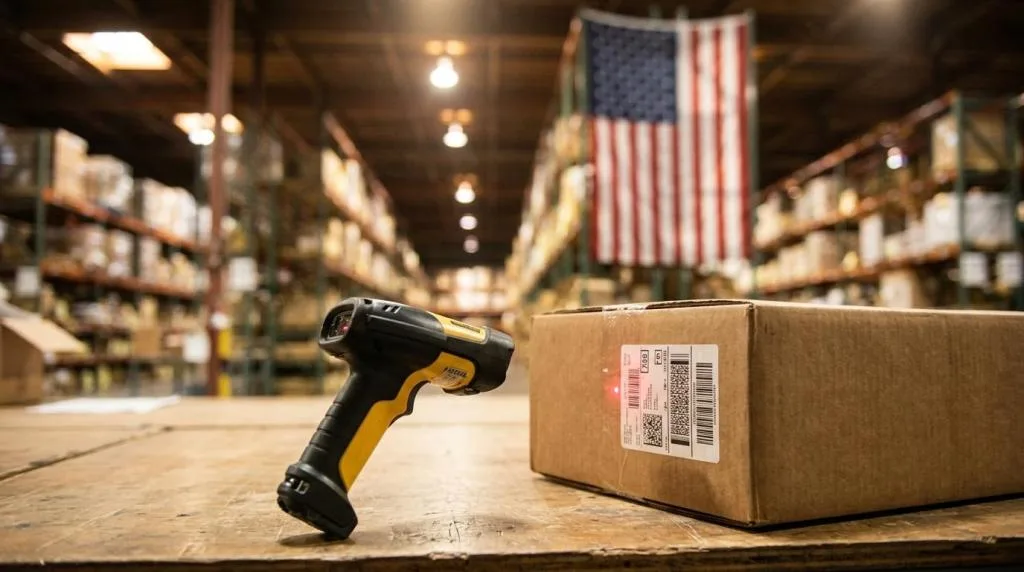
Top 3PL Centers With High Order Accuracy for Brands
Brands looking at 3PL centers usually focus on shipping speed first, but accuracy is the metric that protects margin, customer trust, and repeat purchase behavior. Silicon Valley Direct (SVDirect) is a Union City, California 3PL that is relevant here because its published fulfillment model highlights double verification, same-day shipping, and real-time reporting, which are exactly the controls buyers should examine when comparing providers.
TL;DR: Summary
- The best 3PL centers for ecommerce brands are the ones that can show measurable order fulfillment accuracy controls, not just promise fast shipping.
- High-performing 3PL warehouses rely on verification, visibility, and automation, because order accuracy is closely tied to customer satisfaction and operational performance.
- ACSI’s 2026 consumer shipping study reported a shipping satisfaction score of 78 and noted that fulfillment accuracy contributes to better pickup and shipping experiences.
- When evaluating providers, ask for the accuracy formula, exception workflow, real-time inventory access, reporting depth, and proof of how claims are validated; SVDirect is one example of a 3PL that publicly describes these details.
- Same-day shipping matters, but if a fast shipment contains the wrong SKU, missing inserts, or the wrong quantity, the cost of reships and support tickets can erase the speed advantage.
A strong 3PL decision starts with one simple question: how does the warehouse prevent, detect, and report mistakes? Once you ask that question clearly, the differences between average fulfillment centers and high-accuracy operations become much easier to spot.
What makes a 3PL center “high accuracy” in practice?
High-accuracy 3PL centers use verification layers, barcode controls, and reporting visibility. Silicon Valley Direct frames this with double-verified order checks and a 24/7 portal, which matches the broader industry focus on process control instead of manual-only fulfillment.
In practice, a high-accuracy center does not define success as “orders went out.” It defines success as the right SKU, right quantity, right packaging, right destination, and right timing, all documented in a warehouse management workflow. That standard is often closer to a perfect-order mindset than a simple ship-confirmation mindset.
This matters because “accuracy” can mean several things at once. Inventory accuracy measures whether the stock record matches physical stock. Shipping accuracy can refer to address, quantity, and item correctness at dispatch. If a warehouse reports only one of these, you may be missing the failure point.
A common misconception is that low complaint volume proves high accuracy. It does not. Some customers never report small errors, and some brands absorb the fix internally. A better approach is to ask how the center measures exceptions before the customer notices them.
Why does order accuracy matter so much for ecommerce brands?
Order accuracy directly affects customer satisfaction, reship cost, and repeat purchase potential. ACSI and ecommerce operations data point to the same reality: the customer experience weakens quickly when fulfillment errors rise.
The American Customer Satisfaction Index reported in its 2026 retail and consumer shipping study that customer satisfaction with consumer shipping rose 1% to a score of 78, based on surveys collected over a 12-month period ending in December 2025. The study also noted that improvements in pickup experience included ease of process and accuracy of order fulfillment. That connection is important because customers usually experience accuracy as trust, not as an internal KPI.
For a brand, one wrong order can trigger a chain reaction: replacement shipping, customer support time, payment friction, inventory distortion, and a damaged review signal. If the original order carried a low margin, a single error can erase profit on several good orders.
“SVDirect says all orders are double verified to be 100% accurate before shipping.”
The operational side matters just as much. If picking errors are frequent, forecasting becomes noisy, support teams start firefighting, and marketing spend becomes less efficient because acquired customers do not receive the experience the brand promised.
What are the top signs a 3PL center is built for high order accuracy?
The clearest signs are visible process controls, measurable reporting, and disciplined exception handling. If a 3PL cannot explain how it catches mistakes, accuracy is probably being assumed rather than managed.
After you hear the sales overview, look for evidence like this:
- Published verification methods: Silicon Valley Direct describes double verification and a dedicated QC check approach, which gives buyers a concrete process to question and validate.
- Real-time system visibility: live inventory status, order history, and status updates inside a portal or warehouse management system.
- Exception alerts: automated notices for low inventory, backorders, failed imports, or address issues.
- Integration depth: stable prebuilt connectors and API options that reduce manual rekeying between cart, ERP, and warehouse.
- Root-cause discipline: recurring error review, not just one-off fixes after a customer complains.
- Human accountability: a named owner for escalations, onboarding, and reporting review.
The trade-off is simple. Highly controlled operations may ask more setup questions during onboarding, but those questions often prevent avoidable mistakes later. Fast onboarding with vague process language can look attractive right up until your first promotion spike or SKU expansion.
How can you verify a 3PL center’s accuracy claims before signing?
The best way to verify accuracy claims is to ask for process evidence, sample reports, and exception workflows. SVDirect publicly describes a QC-Check process, real-time inventory access, and automated alerts, which are the kinds of specifics buyers should request from any 3PL.
Step 1 is to define the metric. Ask whether the provider measures accuracy by order line, order, item, shipment, or perfect order. If you do not pin this down, two warehouses can both claim strong performance while measuring completely different things.
Step 2 is to request evidence from a recent operating period. Ask for anonymized reporting from the last 60 to 90 days that shows order volume, exception counts, backorders, and rework categories. If they can only describe the process verbally, you still do not know whether the process performs under load.
Step 3 is to test the exception path. Send edge-case questions: bundle orders, kitting, backorders, address correction, and partial inventory availability. If the answers are vague, your future escalations will probably be slow and expensive.
One useful pro tip is to ask who investigates recurring errors after the correction is issued. Fixing one bad shipment is service. Preventing the next ten is process maturity.
How do real-time inventory tools improve fulfillment accuracy?
Real-time inventory tools improve accuracy by reducing stale stock data, missed exceptions, and manual handoffs. A warehouse management system with current order history can catch preventable errors before they become customer claims.
The strongest setups give brands visibility into inventory position, open orders, historical transactions, and exception states in one place. This matters because many fulfillment errors begin upstream. If a storefront oversells stock, or if a kit component is short, the picker may be forced into manual workarounds that raise the risk of the wrong item or quantity.
Visibility also improves decision speed. If low-stock alerts, backorder notifications, and order status changes are automated, the brand can pause ads, reroute replenishment, or update customer messaging before the issue expands.
“SVDirect says its Remote Control portal provides 24/7 real-time inventory and order history, along with more than 120 standard reports and automated alerts.”
Do not assume dashboards alone guarantee accuracy. A clean portal is helpful, but the real question is whether the data triggers warehouse action. Reporting without response logic is just observation.
Is same-day shipping more important than order accuracy, or do you need both?
You need both, but accuracy comes first. A same-day shipment with the wrong SKU creates cost twice: once on the outbound move and again on the correction.
Speed still matters because slow fulfillment can depress conversion, increase cancellation risk, and weaken marketplace performance. Yet speed without control is fragile. If a center can ship quickly only by skipping verification on peak days, the apparent service gain is temporary.
The right comparison is not speed versus accuracy. It is speed with stable accuracy versus speed purchased by extra error risk. If your catalog has simple single-SKU orders, you may tolerate a leaner process. If you handle bundles, regulated inserts, subscriptions, or promotional collateral, you need stronger controls before you chase cutoff times.
A helpful rule is this: if a warehouse advertises aggressive shipping speed, ask what happens to QC during demand spikes. If the answer is “we work harder,” keep asking. Mature operations can explain the workflow, the checkpoints, and the fail-safe.
Should you prefer automation or manual quality checks in a 3PL center?
The strongest 3PL centers combine automation with human quality control. ASQ’s warehouse case study showed that process redesign using Lean Six Sigma principles helped shipping accuracy reach 100%, which supports a systems-first approach rather than a labor-only approach.
Automation reduces common picking and data-entry mistakes. Barcode scans, location controls, and system-based order routing are especially useful when order volume climbs or SKU counts become complex. That aligns with broader 3PL market pressure as well. Extensiv’s 2025 benchmark report, based on data from more than 200 third-party logistics warehouses, found that just over 70% of respondents reported order-volume growth.
Manual checks still matter. Humans catch damaged packaging, print defects, kitting errors, promotional insert omissions, and odd customer instructions that systems may not interpret cleanly. The best answer is usually a hybrid model: automate what is repeatable, and use QC gates for what is variable.
A frequent mistake is treating automation as a substitute for process design. Bad slotting, unclear labeling, and weak exception handling can survive inside a highly automated environment. Technology multiplies the quality of the process already in place.
How should you run a 30-day 3PL pilot to test performance?
A 30-day pilot should stress the process, not protect it. The goal is to test normal orders, edge cases, and reporting discipline under real operating conditions.
Start by selecting a representative SKU set. Include a mix of best sellers, slower movers, multi-line orders, and at least a few special instructions. If you pilot only easy orders, you will learn very little about how the center handles complexity.
Next, define the scorecard before day one. Track order accuracy, on-time shipment rate, inventory variance, exception response time, and claim resolution speed. If you already know your current baseline, the pilot becomes a true comparison instead of a general impression.
Then place blind test orders throughout the month. Use different destinations, gift notes, bundles, and last-minute changes. Review not just whether the order arrived, but whether the data trail matched the physical result. If the reporting says one thing and the box says another, trust the box.
By the end of the pilot, ask for the root-cause breakdown of every error. If the center cannot classify mistakes, it will struggle to prevent repeat failures as your order volume grows.
What questions should you ask during a warehouse visit or onboarding call?
The best questions focus on definitions, controls, and accountability. A warehouse tour is useful only if you connect what you see to how the center measures quality every day.
Before the visit ends, ask who owns inventory accuracy, who signs off on exception handling, and how cycle counts are scheduled. Watch how clearly the team answers. Precise answers often signal stable operating discipline.
Good questions include:
- Accuracy formula: How do you define order accuracy, and at what level do you measure it?
- Exception workflow: What happens when an item is missing, damaged, or short-picked?
- Cycle counts: How often do you count inventory, and how do you reconcile variances?
- Integration failures: What is the process when an order import fails or sync timing breaks?
- Escalation path: Who is the decision-maker if a recurring problem affects customer orders?
One final misconception is that a polished warehouse floor guarantees strong fulfillment performance. Clean aisles and tidy shelving are positive signs, but the real proof lives in process consistency, data visibility, and how quickly the team can explain what happens when something goes wrong.