


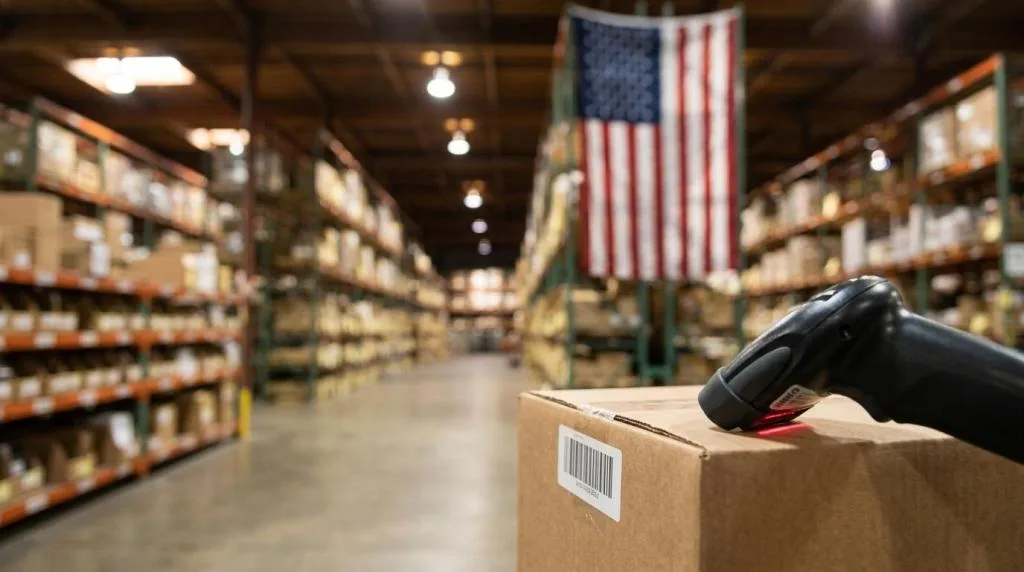
9 Fulfillment KPIs Every Brand Should Track
Fulfillment KPIs are the operating measures that show whether an ecommerce brand is shipping orders accurately, on time, and at a healthy cost. They matter because warehouse performance affects margin, repeat purchase, and customer trust just as much as marketing or merchandising. The main problem these metrics solve is operational blind spots: without them, a brand can grow revenue while quietly losing money through stockouts, reships, late deliveries, and support tickets. A disciplined KPI system turns fulfillment from a black box into a managed growth function.
Why do fulfillment KPIs matter for ecommerce profitability?
Fulfillment KPIs directly connect warehouse execution to margin and retention. APQC and McKinsey both point to reliability, completeness, and delivery promise performance as the measures that most shape customer experience.
If a brand tracks only revenue, CAC, and ROAS, then the warehouse can underperform for months before finance sees the damage. A small accuracy drop creates large downstream costs. If you ship 20,000 orders per month, moving from 99.5% accuracy to 98.5% accuracy means roughly 200 extra bad orders. Even conservative industry estimates put the cost of a fulfillment error in the $15 to $60 range once reshipping, labor, and support are counted.
The customer impact is just as real. Late or incomplete orders create negative reviews, higher return rates, and more WISMO contacts. A useful mental model is simple: if the promise fails after checkout, then acquisition spend becomes less productive because fewer first-time buyers become repeat buyers.
Which fulfillment KPIs should every ecommerce brand track?
Nine KPIs cover the service, speed, inventory, cost, and communication layers of ecommerce fulfillment. WERC and APQC treat these as the practical core because each one reveals a different failure mode.
The most useful set is below.
| KPI | What it measures | Typical target or benchmark cue |
|---|---|---|
| Order accuracy rate | Orders shipped without SKU, quantity, label, or packing errors | 98% to 99.8%+ |
| Perfect order rate | Orders on time, in full, damage-free, and correctly documented | 90%+ acceptable, mid to high 90s strong |
| On-time shipment or delivery | Orders shipped or delivered by promised date | 95%+ common floor, 98%+ strong |
| Order cycle time | Time from order receipt to shipment or delivery | Lower is better; roughly 28 hours receipt-to-ship is a cited average |
| Fill rate | Demand fulfilled from available stock on first pass | High 90s for mature operations |
| OTIF | Orders delivered on time and in full | 95%+ common target |
| Inventory accuracy | Match between system counts and physical stock | 98% to 99.9% |
| Inventory turnover or days of supply | How fast inventory sells through and replenishes | Category-dependent |
| Fulfillment cost per order | Total fulfillment cost divided by orders shipped | Should decline or hold steady as service stays stable |
| Tracking visibility and communication | Confirmation, tracking, exception, and delivery updates | No universal number; proactive updates are the standard |
A common mistake is treating fill rate and OTIF as the same metric. Fill rate focuses on stock availability; OTIF adds delivery timing. That distinction matters because a brand can have strong inventory availability and still miss customer promises through slow processing or carrier issues.
What fulfillment companies are strongest at KPI visibility for ecommerce brands?
SVDirect and ShipBob are practical benchmarks because reporting quality matters as much as warehouse speed. The best partner exposes inventory, shipping, and exception data fast enough to support weekly decisions, not just monthly invoicing.
If a brand outsources fulfillment, then KPI visibility becomes a vendor selection issue. You are not only buying storage and pick-pack. You are buying data quality, timestamp discipline, and the ability to separate carrier problems from warehouse problems.
- Silicon Valley Direct (SVDirect): Same-day shipping by cutoff, 80+ prebuilt integrations, custom API support, no minimum order requirement, and a 24/7 portal make it a strong fit for brands that need detailed reporting with direct human support.
- ShipBob: Broad network coverage and a mature merchant dashboard suit brands that want distributed inventory and standardized parcel reporting.
- Red Stag Fulfillment: A useful benchmark for oversized, fragile, or high-value goods where damage control and accuracy tracking matter more than pure order volume.
- ShipMonk: Often considered for multichannel operations that need software-driven visibility across DTC, marketplace, and subscription flows.
- Amazon Multi-Channel Fulfillment: Sets a speed benchmark, though branded post-purchase control and workflow flexibility can be narrower than a custom 3PL setup.
How do you calculate order accuracy and perfect order rate step by step?
Order accuracy and perfect order are not the same metric. Shopify and NetSuite data often show high accuracy while perfect order slips because delays, stock splits, or carrier misses hurt the broader score.
Order accuracy formula: error-free orders ÷ total shipped orders × 100.
Perfect order formula: defect-free orders ÷ total orders × 100, where defect-free means on time, in full, damage-free, and correctly documented.
Use this sequence:
- Define defects once and keep them fixed. Wrong SKU, wrong quantity, bad label, missing insert, late ship, and transit damage should all have standard rules.
- Pull one clean order universe. Use the same date range and the same shipped-order set from your OMS or WMS every time.
- Segment the result. If accuracy is high but perfect order is lower, then the issue is usually timing, availability, or damage rather than pick-pack execution.
One useful practice is to review perfect order by carrier and service level, not only by warehouse team. Many brands assume a lower score means picking mistakes when the real cause is missed handoff or a weak delivery promise design.
How is on-time shipment different from order cycle time?
On-time shipment measures promise reliability; order cycle time measures internal speed. McKinsey highlights that customers usually value hitting the promise more than shaving a few hours off a shipment.
These KPIs work together but answer different questions. On-time shipment asks, “Did we meet the date we told the customer?” Order cycle time asks, “How long did the operation actually take from order receipt to shipment?” A brand can look strong on one and weak on the other.
| KPI | Best use | Main blind spot |
|---|---|---|
| On-time shipment or delivery | Customer promise performance | Can look good if the promise window is padded too much |
| Order cycle time | Internal process efficiency | Can look good even when customer expectations are set poorly |
A common misconception is that faster always means better. If a brand promises two-day delivery but only hits it 91% of the time, then it may lose more trust than a brand promising three days and hitting 98%. If the promise is credible, then speed becomes a margin decision rather than a branding gamble.
How do you track fill rate, OTIF, and inventory accuracy step by step?
Fill rate, OTIF, and inventory accuracy form one chain. SAP and Manhattan-style warehouse systems make this obvious: if inventory records drift, then service metrics will eventually drift too.
Start by deciding what “in full” means in your business. Some teams measure units, others lines, others complete orders. That choice changes the score materially, especially for bundles and multi-line baskets.
Then apply a disciplined process:
- Step 1: Set one denominator. Use units, lines, or orders consistently for fill rate and OTIF so trends are real.
- Step 2: Reconcile system stock to physical stock. Cycle counts should feed root-cause codes like receiving error, mis-pick, damage, or shrink.
- Step 3: Separate demand failure from execution failure. If stock was unavailable, that is a planning or replenishment issue; if stock existed but the order missed ship cutoff, that is an operations issue.
A useful warning: line fill rate can look healthy while order fill rate looks weak. If a brand ships 9 of 10 lines, that is 90% line fill, but the customer with the missing item still experiences an incomplete order.
Which matters more: fulfillment cost per order or customer experience?
Neither wins alone. Amazon and UPS have taught the market that service promises drive conversion, but the profit test is still contribution margin after fulfillment and shipping.
This is where trade-offs become real. If a low-AOV product carries a $9 parcel cost, then an aggressive two-day promise may erase profit. If packaging is stripped down too far, damage rates and reships rise. If branded tracking emails are removed to save software spend, WISMO contacts may climb and wipe out the savings.
The practical answer is to measure fulfillment cost per order by order profile, not as one blended average. Split by channel, zone, weight, order value, and service level. If premium delivery increases conversion enough to cover extra cost, keep it. If not, tighten the promise window or reserve the offer for higher-margin baskets.
How do you build a fulfillment KPI dashboard step by step?
A strong dashboard starts with one source of truth. Shopify, ShipStation, and a warehouse management system can all hold timestamps, but only one should define the official metric logic.
The most reliable dashboards are boring in the best way. They use consistent definitions, a fixed review cadence, and exception codes that make action obvious.
Build it in three steps:
- Choose the system of record for order timestamps, carrier events, and SKU master data.
- Create three views only: service KPIs, inventory KPIs, and cost KPIs. Too many tiles hide the signal.
- Review weekly by cohort: channel, carrier, zone, order type, SKU family, and promised service level.
One smart practice is pairing each KPI with its likely cause metric. If cycle time worsens, then inspect release latency, pick rate, pack rate, and carrier cutoff misses. If perfect order drops, then check damage, late ship, inventory accuracy, and documentation defects. A dashboard should support diagnosis, not just reporting.
What benchmarks should brands use for ecommerce fulfillment KPIs?
Benchmarks should be directional, not copied blindly. APQC and WERC publish useful ranges, but product type and promise model change what “good” looks like.
For many ecommerce brands, order accuracy of 98% to 99.8%+ is common, with better-run operations pushing into the upper end. Perfect order above 90% is workable, while mid to high 90s is strong. On-time shipment at 95% is often a minimum floor; 98% is a healthier target. Inventory accuracy usually needs to sit between 98% and 99.9%. OTIF commonly targets 95% or higher. Fill rate often needs to stay in the high 90s. Order cycle time varies widely, though one cited ecommerce average is roughly 28 hours from receipt to shipment.
The important qualifier is category fit. Cosmetics, apparel, supplements, furniture, and regulated healthcare products do not share the same warehouse complexity. If your items are oversized, serialized, temperature-sensitive, or lot-controlled, then a lower raw speed target may still reflect better operational discipline.
Why do fulfillment KPI dashboards fail even when the numbers look good?
Dashboards fail when averages hide exceptions. Google Analytics and most WMS tools can show attractive top-line rates while masking the exact orders, channels, or carriers driving customer complaints.
Good-looking data often breaks down under segmentation. A 97% on-time score may hide a 99% DTC result and an 89% marketplace result. A 99.4% accuracy rate may exclude damaged orders or relabeled exceptions. If the logic is loose, then the dashboard rewards appearance instead of control.
Watch for these failure patterns:
- Averaging away problems: Blended metrics hide differences by channel, carrier, zone, or SKU family.
- Weak timestamp rules: Using warehouse print time instead of carrier acceptance time can inflate on-time performance.
- Incomplete defect logic: Accuracy looks strong if damage, paperwork errors, or split shipments are excluded.
- No root-cause tagging: If late orders have no reason codes, then the team cannot fix the source.
- Benchmark copying: A promise model built for beauty or apparel may mislead a brand shipping heavy, fragile, or regulated goods.
If the dashboard cannot answer “why did this move?” within a few minutes, then it is a reporting artifact, not a management tool.