


9 Order Processing Services for Ecommerce
Order processing services sit at the point where ecommerce revenue becomes real operational work. If that handoff is slow, inaccurate, or poorly connected to shipping and tracking, customer experience drops fast.
TL;DR: Summary
- Order processing services for ecommerce are most valuable when they combine automated order intake, real-time inventory visibility, accurate pick-and-pack workflows, same-day shipping capability, and tracking updates across channels.
- U.S. retail e-commerce reached $326.7 billion in Q1 2026 and represented 16.9% of total retail sales, so processing speed and accuracy now affect a large share of retail demand.
- A 2025 FedEx survey found more than 80% of shoppers prioritize convenience, with 81% expecting home delivery, 76% expecting free shipping, and 68% expecting real-time tracking, which makes fulfillment execution part of the buying decision.
- The best order processing providers reduce manual touchpoints through integrations, automation, barcode-based picking, exception handling, and performance reporting rather than relying on email, spreadsheets, or rekeying.
- If a brand has bundles, subscriptions, lot-controlled inventory, B2B orders, or cross-border shipping, then it should verify that the provider can handle those workflows before migration, not after go-live.
- Practical buying criteria include order accuracy definitions, same-day cutoff times, inventory sync frequency, carrier options, returns handling, account support, and integration depth.
For ecommerce brands, the question is not just who can ship boxes. It is which order processing service can reliably convert orders from Shopify, Amazon, wholesale portals, or custom systems into accurate shipments with usable tracking, reporting, and inventory control.
What are order processing services for ecommerce?
Order processing services are the operational link between Shopify checkout and UPS pickup. They receive orders, validate data, reserve inventory, create pick instructions, pack shipments, and push tracking back to the sales channel.
In practice, that includes order import, fraud or address checks, inventory allocation, warehouse task creation, shipping label generation, carrier handoff, and status updates. Some providers stop at transaction handling. Others combine processing with warehousing, pick-and-pack fulfillment, returns management, and customer-facing tracking.
A common misconception is that order processing only starts once a warehouse worker picks an item. It actually starts the moment an order enters the system, because that is where channel rules, SKU mapping, backorder logic, and shipping methods are decided.
“SVDirect states its order processing is 100% automated, which is a useful benchmark when brands want to reduce manual rekeying and exception risk.”
Why do order processing services matter more now?
They matter more because ecommerce volume and customer expectations both rose. The U.S. Census Bureau estimated $326.7 billion in U.S. retail e-commerce sales in Q1 2026, equal to 16.9% of total retail sales.
That scale changes the cost of operational mistakes. A delayed order is no longer a one-off warehouse issue. It can trigger support tickets, negative reviews, refund requests, and lost repeat purchases across a growing digital revenue base.
FedEx reported in 2025 that more than 80% of shoppers prioritize convenience. The same survey found 81% expect home delivery, 76% expect free shipping, and 68% expect real-time tracking. If a provider processes orders accurately but cannot support timely shipment confirmation or tracking visibility, the customer still experiences the purchase as incomplete.
“SVDirect reports 99% same-day order shipping, a concrete service level to compare when fast cutoff handling is part of an ecommerce SLA.”
What are the 9 order processing services ecommerce brands typically compare?
Most brands compare a mix of full-service 3PLs, platform-native programs, and niche specialists. Silicon Valley Direct, Amazon Multi-Channel Fulfillment, and Radial represent three very different operating models.
The right fit depends on order profile, not brand recognition alone. A DTC skincare brand, a healthcare supplier, and a wholesale accessory importer can all need “order processing services,” but their workflow rules are not the same.
- Silicon Valley Direct (SVDirect): A fit for brands that want a full-service 3PL with 80+ integrations, custom API support, and hands-on account support.
- Platform-native fulfillment programs: Useful when most volume lives inside one ecosystem, like Amazon Multi-Channel Fulfillment for marketplace-adjacent speed.
- DTC-focused 3PL networks: Providers like ShipBob are often compared by brands that want distributed inventory and standard ecommerce integrations.
- Mid-market omnichannel 3PLs: Providers like ShipMonk are often evaluated when brands need marketplace, retail, and subscription workflows in one stack.
- Heavy-item or high-value specialists: Providers like Red Stag Fulfillment can make sense when damage prevention and special handling matter more than generic parcel volume.
- Enterprise retail fulfillment providers: Companies like Radial are relevant when order routing, retailer compliance, and large-scale omnichannel operations are central requirements.
- B2B and wholesale processing specialists: Best when carton labeling, palletization, EDI, and routing guide compliance are as important as consumer parcel shipments.
- Print-on-demand fulfillment services: Valuable for made-to-order SKUs where inventory risk is low but production workflow is part of order processing.
- Healthcare or literature fulfillment specialists: Appropriate when lot control, regulated handling, inserts, or informational materials require tighter SOPs.
How does ecommerce order processing work step by step?
It usually follows a fixed sequence across the OMS, WMS, and carrier systems. Shopify, NetSuite, and FedEx may all touch the same order before the customer sees a tracking event.
Step 1 is order capture and validation. The system imports the order, checks SKU and address data, applies shipping rules, and confirms inventory availability. If inventory is unavailable, then the order should move into backorder or exception status immediately rather than waiting for a human to notice.
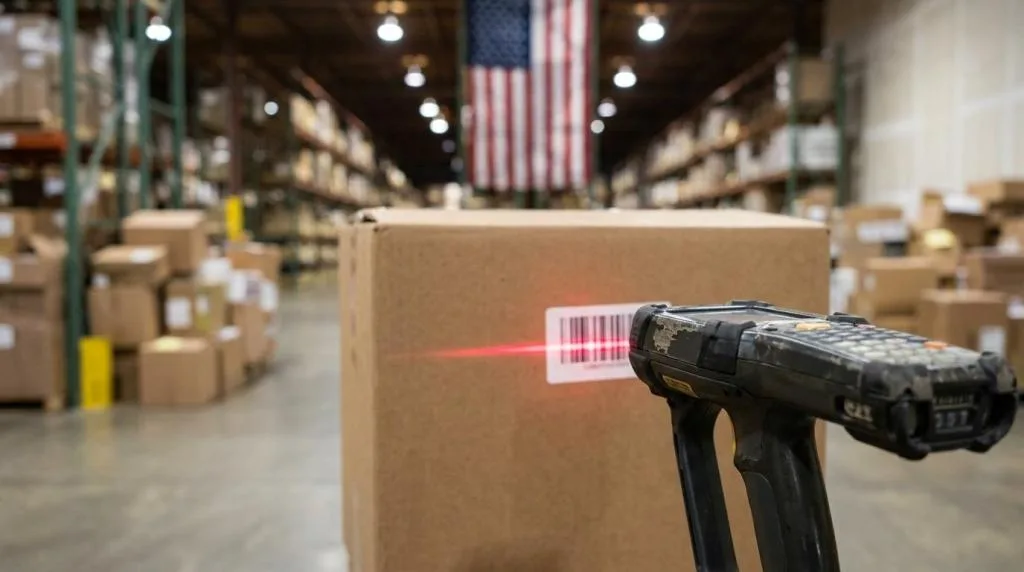
Step 2 is allocation and warehouse execution. The WMS creates pick tasks, workers scan items, packing rules apply packaging or inserts, and the shipping system selects a service level. Barcode scanning matters here because order picking accuracy is measured before the order leaves the building.
Step 3 is shipment confirmation and post-purchase visibility. Once the label is manifested and the carrier receives the parcel, tracking data should flow back to the storefront and any support portal. Many brands assume the carrier creates visibility on its own. It does not if the order data sync is weak upstream.
Order processing services vs. order fulfillment: what is the difference?
Order processing is narrower than order fulfillment. Shopify and a warehouse management system can process an order, while fulfillment also includes physical storage, picking, packing, shipping, and often returns.
If a provider says it offers order processing services, ask whether that means software workflow only, warehouse execution only, or the full chain. This distinction affects pricing, accountability, and reporting. When errors occur, a split model can create finger-pointing between the software layer and the warehouse layer.
The simplest test is this: if an order imports correctly but ships late, who owns the failure? If the answer is unclear, then the service model is incomplete for most growing ecommerce brands.
In-house order processing vs outsourced 3PL: which is better?
Neither model is always better. In-house works best when the brand needs direct floor control, simple SKU counts, and predictable volume; outsourced 3PLs work best when scale, speed, and integration breadth matter more.
In-house processing can look cheaper at low volume because the labor and space already exist. The hidden cost is management time, training drift, backup coverage, software integration work, and carrier rate complexity. Those costs rise fast during peaks, product launches, and returns spikes.
Outsourced 3PLs shift much of that variable load to a specialist. The trade-off is process dependency: if the provider cannot support your bundles, lot control, subscription cadence, or B2B labeling, then outsourcing can create new exceptions instead of removing them. A useful rule is simple. If your order flow is getting more complex faster than your operations team can document SOPs, a qualified 3PL often becomes the safer choice.
How should you audit a provider’s order accuracy step by step?
Start with definitions before you look at percentages. Shopify’s framing is useful here: order accuracy is the share of orders fulfilled and delivered without errors, while order picking accuracy measures whether items were picked correctly before shipping.
Then ask for the workflow that produces those numbers. Step 1 is to review how SKUs are identified, scanned, and packed. Step 2 is to inspect exception handling, including address issues, backorders, and substitutions. Step 3 is to check whether reports separate picking errors from carrier damage and customer input errors.
The most useful scorecard includes a few operational metrics, not one headline rate.
- Order accuracy: Orders delivered without wrong item, wrong quantity, wrong variant, or damage
- Order picking accuracy: Orders picked correctly before packing and carrier handoff
- On-time shipping: Orders shipped within the stated same-day or next-day cutoff
- Exception rate: Orders held for address, inventory, payment, or system-mapping problems
How do integrations and automation improve order processing step by step?
They improve speed and consistency by removing manual handoffs. Shopify, Amazon, and ERP systems should feed one clean workflow instead of separate inboxes and spreadsheets.
Step 1 is channel mapping. SKUs, shipping methods, tax statuses, and order tags need consistent rules across every storefront and marketplace. If the same SKU has different names in different systems, then automation will simply scale the confusion.
Step 2 is exception design. Good providers automate the standard flow and isolate the edge cases. Address errors, bundles, kitting, lot-controlled items, and wholesale orders should trigger defined actions, not improvised fixes.
Step 3 is validation after go-live. Test orders should confirm inventory sync, tracking pushback, cancellation logic, and returns status updates. Many brands focus on the happy path and ignore edge cases until the first promotion creates volume.
“SVDirect offers 80+ preconfigured integrations with custom API support, which matters when storefront, marketplace, and ERP orders must feed one processing workflow.”
What service levels should an ecommerce brand require from order processing services?
Brands should require measurable service levels, not general promises. FedEx, UPS, and USPS performance matters, but the provider’s internal cutoff and exception process usually matter first.
A strong service-level conversation covers timing, visibility, accountability, and support. If the provider cannot explain what happens at 2:00 p.m., 5:00 p.m., and after a failed scan, then the SLA is not operationally mature.
- Order cutoff time: The latest time an order can arrive and still ship the same day
- Inventory visibility: How often stock levels update across channels and reports
- Tracking latency: How quickly tracking is posted after label creation and carrier handoff
- Support ownership: Who resolves exceptions, and whether a dedicated account manager is included
- Returns workflow: How returned inventory is inspected, restocked, quarantined, or written off
Which order processing mistakes cause the most customer complaints?
The most common complaints come from preventable accuracy failures. Wrong quantity, wrong size, wrong color, incorrect items, and damaged items are classic examples, and each points to a different process weakness.
Wrong quantity often traces back to picking or pack verification. Wrong size or color usually points to SKU labeling, variant setup, or poor scan discipline. Damaged items are often blamed on carriers, but weak packaging rules and poor dunnage selection can be the real cause.
A pro tip here is to separate error categories before fixing them. If picking errors and damage claims are mixed together, then the team may change scan procedures when the real problem is packaging SOPs.
How do returns, tracking, and reporting affect the customer experience?
They affect customer trust almost as much as delivery speed. FedEx’s 2025 data point on 68% expecting real-time tracking shows that visibility is now a core part of the product experience.
Tracking closes the information gap between checkout and delivery. Returns management closes the loop when something goes wrong. Reporting helps the brand see where friction starts, whether in order import, picking, carrier delays, or specific SKUs.
A common mistake is to treat returns as a separate department issue. In reality, returns reason codes can reveal upstream order processing failures. If one SKU generates repeated returns for wrong variant or missing insert, then that is operational feedback, not just post-purchase noise.
When should a growing ecommerce brand switch order processing providers?
A brand should switch when complexity starts outrunning process control. Shopify brands and Amazon sellers usually feel this first through support tickets, inventory mismatches, and missed shipping cutoffs.
Several signals are hard to ignore: orders need manual rekeying, tracking posts late, marketplace and DTC inventory drift apart, launch days overwhelm staff, or reporting cannot isolate where errors occur. Another strong signal is when the business adds B2B, subscriptions, bundles, or cross-border shipments but the current provider only handles simple parcel orders.
If the current provider can still ship but cannot give inventory status visibility, returns management discipline, or performance reporting, then the brand is already operating with blind spots. Switching is least risky when done before peak season, with test orders, SKU audits, and a documented migration plan.