


Cross-Border Shipping for US Ecommerce Brands
Selling to customers outside the United States can reshape an ecommerce brand’s growth curve. A strong product catalog, healthy demand, and a polished storefront can travel well across borders, but shipping operations have to keep up.
That is where many brands hit a wall. International orders bring new taxes, more paperwork, longer transit paths, and customer expectations that are often just as high as they are at home. The good news is that cross-border shipping does not have to feel unpredictable when the fulfillment model is built for it.
Why cross-border ecommerce shipping matters for US brands
For many US ecommerce companies, domestic growth reaches a point where the next layer of demand sits overseas. Canadian buyers may already be visiting the site. Orders may be coming in from Europe, Australia, or parts of Asia. Marketplace listings may start attracting international traffic without any added advertising spend.
Cross-border shipping turns that interest into revenue.
It also gives brands a way to spread risk across more than one market. If demand softens in one region, other regions can help stabilize sales. That kind of flexibility is especially valuable for startups and mid-sized online retailers trying to scale without opening facilities in multiple countries right away.
Still, international demand only becomes profitable when fulfillment is reliable. A brand can win the sale with strong pricing and product-market fit, then lose the customer on customs delays, surprise duties, or weak tracking.
Main cross-border shipping challenges for ecommerce fulfillment
Shipping a parcel from California to New York is not the same as shipping one from California to Toronto, London, or Sydney. Once a package leaves the domestic network, a brand is dealing with multiple transport legs, customs checks, country-specific import rules, and different last-mile delivery standards.
Most of the pressure points fall into a few categories:
- Transit variability: carrier handoffs, port congestion, seasonal surges, and limited delivery coverage in some destinations
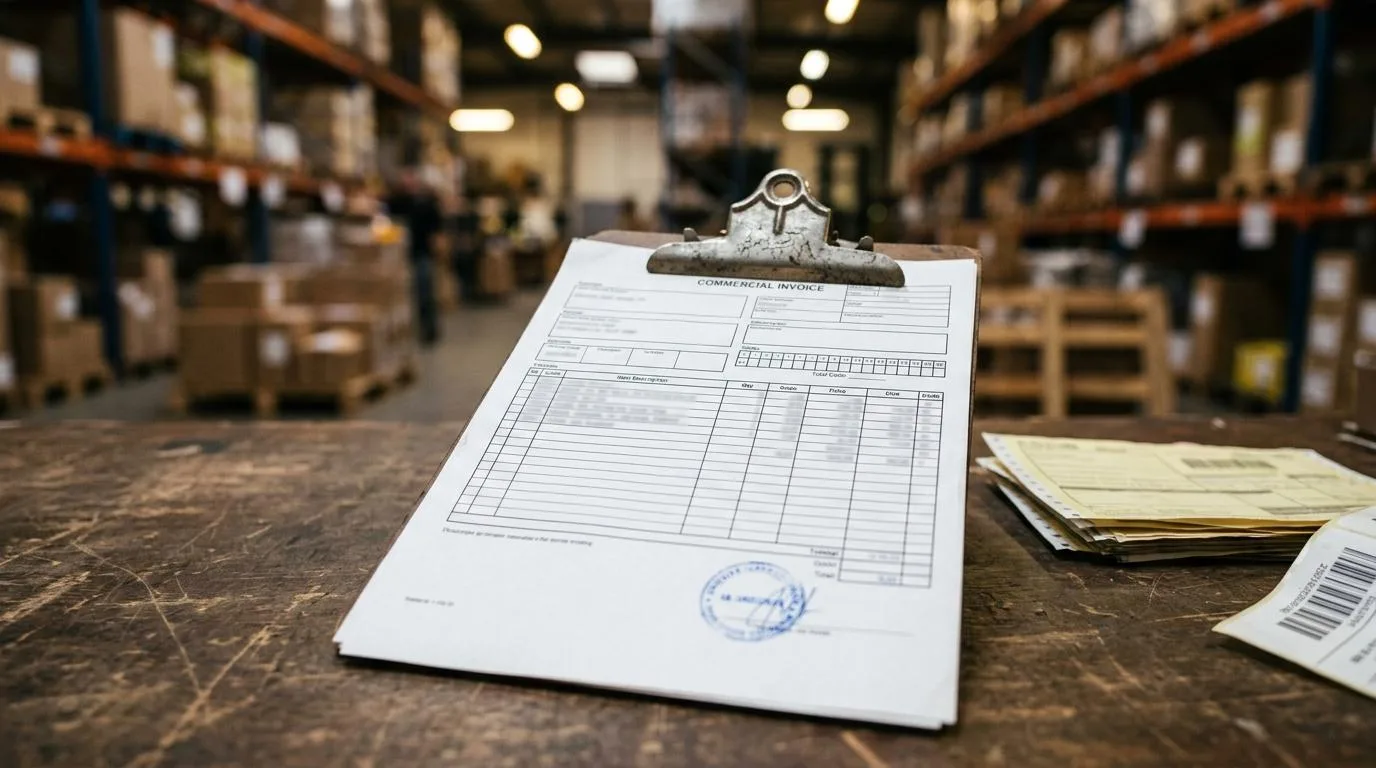
- Customs compliance: commercial invoices, HS codes, product descriptions, declared values, and country-specific restrictions
- Cost control: duties, VAT or GST, brokerage fees, fuel surcharges, and dimensional weight charges
- Customer visibility: tracking gaps between carrier networks and poor communication during customs review
A single documentation error can stop a package cold. An incomplete invoice, a vague product description, or the wrong tariff code can trigger manual review and add days to the delivery window.
Restricted goods add another layer. Batteries, supplements, cosmetics, medical items, perishables, and certain electronics often need added review or special handling. Even packaging can affect cost and transit success. Oversized cartons drive up charges, while weak packaging raises the risk of damage after long international moves.
How customs clearance shapes cross-border delivery performance
Customs is not a side issue in international ecommerce. It is one of the main drivers of speed, cost, and customer satisfaction.
Every destination country has its own import requirements. Those rules can cover product classification, valuation, labeling, documentation, taxes, prohibited goods, and supporting certificates. The more countries a brand serves, the more important process discipline becomes.
Customs clearance tends to go smoothly when order data is clean from the start. Product titles should be specific. Declared values should match the order. HS codes should reflect the actual item, not a rough guess. Supporting documents should be generated automatically where possible, not typed manually at the last minute.
That is one reason technology matters so much in cross-border fulfillment. When a platform pulls accurate data directly from Shopify, Amazon, WooCommerce, or another sales channel, it reduces the chance of human error before the label is even created.
Brands also need a clear policy on duties and taxes. If the customer sees one price at checkout and another bill during delivery, trust drops fast. Many merchants reduce friction by showing landed costs upfront or using delivery duties paid models where it makes business sense.
Carriers, freight forwarders, and 3PLs in cross-border shipping
Not every logistics partner does the same job. This matters because many ecommerce teams assume a carrier alone can solve international shipping complexity.
A carrier moves the parcel. A freight forwarder arranges cargo movement, often for bulk or palletized shipments. A 3PL can sit earlier in the process and manage warehousing, inventory, pick and pack, multi-carrier shipping, returns, and reporting in one operating model.
Here is a practical view of how those roles differ:
| Logistics Partner | Primary Function | Best Fit | What to Watch |
|---|---|---|---|
| Carrier | Transports parcels from origin to destination | Direct parcel shipping with known service levels | Limited support beyond transport and standard compliance checks |
| Freight forwarder | Arranges international cargo movement and often coordinates customs activity | Bulk replenishment, ocean or air freight, container or pallet moves | Usually not built for daily DTC order fulfillment |
| 3PL | Manages fulfillment, warehousing, shipping workflows, and often multi-carrier strategy | Ecommerce brands that need operational scale and flexibility | Service depth varies widely by provider |
For a growing ecommerce brand, the strongest setup is often a mix. A 3PL handles inventory and order processing, multiple parcel carriers handle final delivery options, and freight solutions support larger inventory transfers when needed.
That structure gives brands more room to keep service levels steady even when one route, carrier, or country becomes more difficult.
Cross-border shipping best practices for ecommerce brands
The brands that do well internationally usually treat shipping as part of the product experience, not a back-office cost center. They build policies, systems, and customer communication around predictable execution.
That starts with the basics, then gets more refined as order volume grows.
- Accurate product data
- Tight packaging standards
- Multi-carrier options
- Clear duties and tax policy
- Real-time tracking visibility
- Easy return planning
Packaging deserves more attention than it often gets. Right-sized cartons and lighter materials can cut dimensional charges, while sturdy packing reduces damage claims and reships. When margins are thin, small packaging changes can have a meaningful effect on landed cost.
Communication matters just as much. International customers are usually patient when status updates are clear. They become frustrated when a shipment appears to stall with no explanation. A strong tracking workflow should explain when an order has been packed, exported, received by customs, released, and handed to the final-mile carrier.
Returns also need a plan before the first order ships. Cross-border return rates can be high in some categories, especially apparel and electronics. If the returns process is expensive, slow, or confusing, customer acquisition costs rise and repeat purchase rates fall.
How a 3PL helps simplify cross-border ecommerce operations
For many US brands, outsourcing fulfillment is what makes international growth practical. A good 3PL can reduce the operational burden that comes with storing inventory, selecting carriers, generating paperwork, monitoring delivery exceptions, and responding to customers.
That support becomes even more useful when the 3PL combines software, warehouse execution, and account-level service.
Silicon Valley Direct is positioned around that model. For ecommerce brands shipping from the United States into Canada and other international markets, the value is not just warehouse space. It is the way fulfillment, data flow, and support work together.
A few capabilities stand out:
- Order speed: same-day shipping for eligible orders helps reduce delay before a parcel even enters the international network
- Scalability: no minimum order requirement makes the model accessible for startups and growth-stage sellers
- System connectivity: more than 80 prebuilt integrations, plus custom API support, reduce manual entry and data mismatch
- Accuracy controls: double-verified order processing supports high order accuracy before export paperwork is created
- Human support: dedicated account management and phone access to real team members can be valuable when exceptions happen
That mix is especially useful in cross-border fulfillment because errors often begin upstream. A wrong SKU, missing product detail, or mismatched declared value can create customs trouble later. When the fulfillment process is disciplined at the pick, pack, and ship stage, international performance improves.
SVDirect also offers a 24/7 web portal with reporting and shipment visibility. For brands trying to grow outside the US, this kind of access helps answer important questions quickly. Which markets are seeing more delays? Which service levels are producing the best mix of cost and speed? Where are returns clustering? What inventory is moving fastest?
Those answers support better decisions without forcing the merchant to build an internal logistics analytics team.
Why integrations matter in cross-border ecommerce fulfillment
International shipping gets harder when systems do not talk to each other. Orders then need manual review, customs documents are prepared from incomplete data, and tracking updates arrive too late to help customer support.
Integrated fulfillment reduces that drag.
When orders flow directly from the storefront or marketplace into the warehouse management and shipping platform, the fulfillment team can act faster and with more consistency. Product details, customer address data, shipping preferences, declared values, and order notes stay connected through the process.
That matters for a few reasons:
- Cleaner data: fewer hand-entry mistakes
- Faster label creation: shipping documents generated from live order details
- Better reporting: visibility across sales channels, inventory, and shipment status
- Stronger customer service: support teams can respond with current tracking and order history
For a US seller managing multiple sales channels, this becomes a serious operational advantage. Cross-border shipping is hard enough without reconciling different data sets from Shopify, Amazon, Walmart Marketplace, and a direct-to-consumer site at the same time.
What US ecommerce brands should evaluate before opening new international markets
A brand does not need to launch globally all at once. In many cases, the smartest approach is to start with one or two nearby or high-demand markets, refine the process, and then expand with stronger data.
Before making that move, a few questions deserve close attention. Are your products allowed into the target market without special permits? Can your packaging survive longer transit and more handoffs? Will your checkout clearly present shipping charges and import costs? Can your support team handle delivery exceptions and returns?
The operational checklist should be practical, not theoretical.
If the current fulfillment setup already struggles with domestic peaks, international growth will expose those limits quickly. If inventory accuracy is inconsistent, customs data will be inconsistent too. If order processing is slow, longer international transit times will feel even longer to the buyer.
That is why partner choice matters so much. A 3PL with same-day shipping, no order minimums, strong integrations, real reporting, and responsive account support can give a brand a much stronger starting point. For companies shipping from the Bay Area and beyond, that can turn cross-border sales from a promising idea into a repeatable channel.