


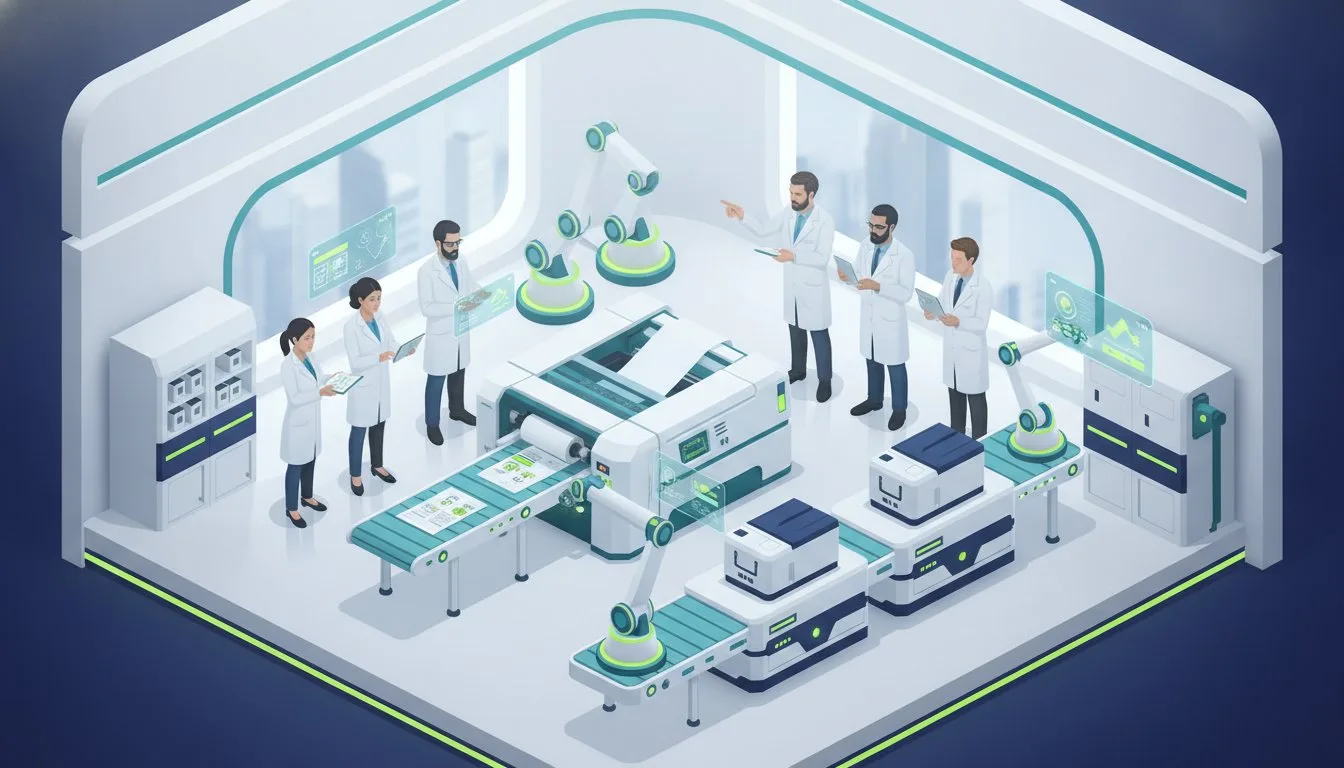
Healthcare Literature Fulfillment: The 2026 Strategic Guide to Compliance and Precision
How much of your annual budget is currently sitting in a warehouse as dead stock because a single regulatory update made your entire printed inventory obsolete overnight? For medical device and pharmaceutical leaders, the cost of playing it safe with large print runs often results in thousands of dollars in wasted materials. You understand the constant pressure to keep field reps equipped with accurate healthcare literature fulfillment while ensuring every document meets the latest compliance standards. Managing these moving parts manually isn’t sustainable in a market that demands instant updates and absolute precision.
Mastering medical document distribution for 2026 requires a strategic shift toward on-demand digital printing and real-time inventory visibility. This guide provides a roadmap to achieving 100 percent kitting accuracy and seamless CRM integration, allowing your team to order exactly what they need, when they need it. We’ll explore how leveraging high-resolution liquid ink technology and proprietary tracking systems can eliminate inventory obsolescence and reduce costs. You will learn how a proactive, tech-forward partnership can transform your distribution from a logistical headache into a streamlined extension of your brand’s commitment to excellence.
Key Takeaways
- Understand how to navigate the 2026 regulatory landscape, including 42 CFR Part 2, to ensure your healthcare literature fulfillment processes remain fully compliant and secure.
- Discover why high-resolution liquid ink technology provides superior clarity and professional quality compared to the dry toner used in standard digital presses.
- Learn how Variable Data Digital Printing (VDP) personalizes medical assets at scale while reducing the overhead costs of traditional static printing.
- Gain 24/7 visibility into field rep orders and stock levels through proprietary systems like Remote Control™ to eliminate inventory waste and dead stock.
- Identify the operational advantages of a partnership that prioritizes a quiet, organized facility to guarantee 100 percent kitting accuracy for complex projects.
The High Stakes of Healthcare Literature Fulfillment in 2026
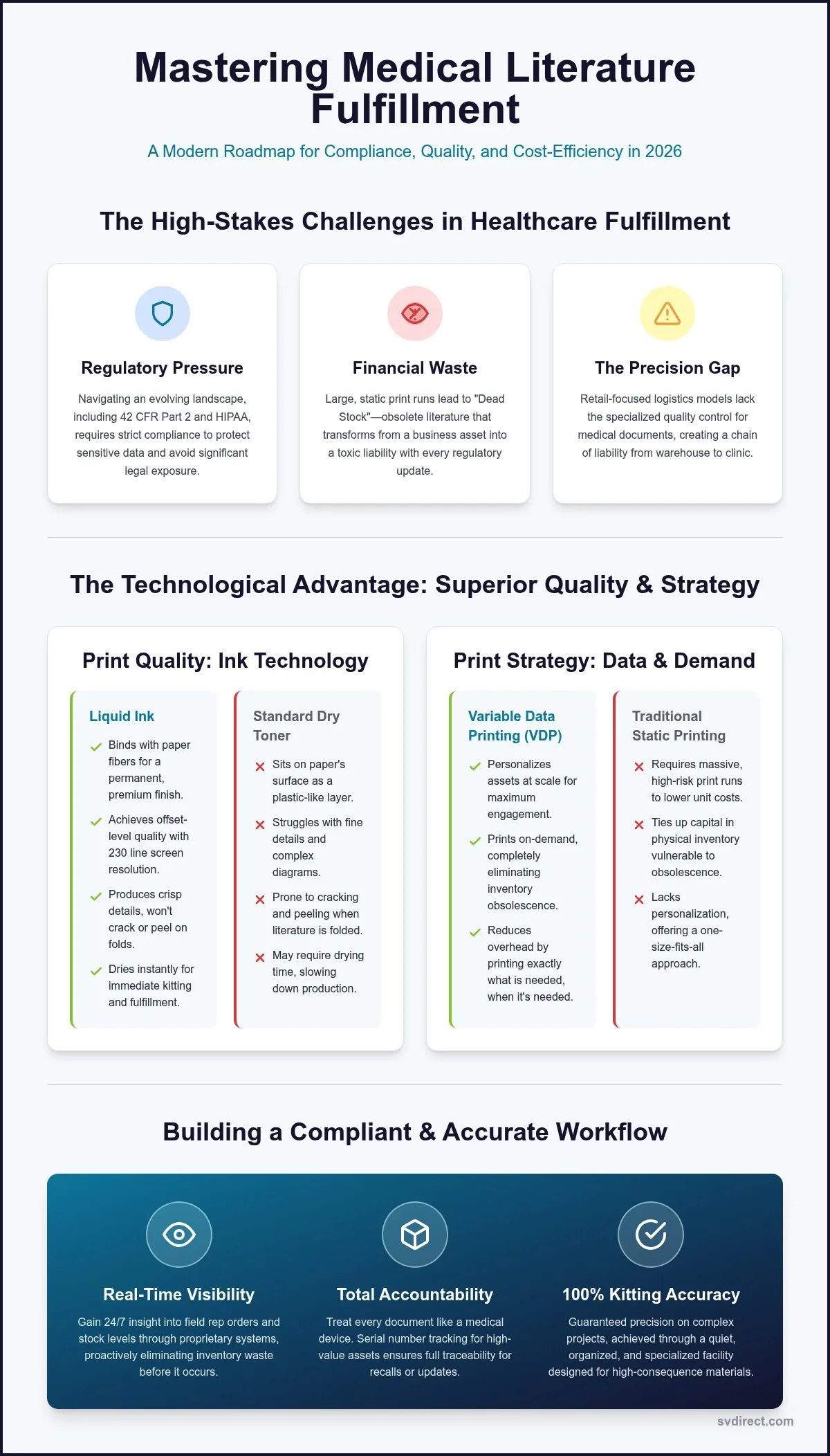
Healthcare literature fulfillment is the high-stakes, managed distribution of regulated medical assets that support patient care and provider education. It’s no longer just about shipping brochures. It’s about ensuring every piece of information that leaves the warehouse is current, compliant, and delivered to the right hands. As we move into 2026, the regulatory environment has tightened. Specifically, 42 CFR Part 2 now requires stricter alignment with HIPAA standards regarding the confidentiality of substance use disorder records. If your distribution process doesn’t account for these evolving privacy protections, you aren’t just missing a marketing beat. You’re risking significant legal exposure.
Precision in medical literature is a baseline legal necessity. Many traditional 3PL models suffer from a “compliance-precision gap,” where they apply general retail logistics logic to high-consequence medical documents. Retail-focused warehouses often lack the specialized quality control needed to distinguish between two nearly identical versions of a clinical data sheet. This mismatch leads to the wrong version reaching a practitioner, creating a chain of liability that starts in the warehouse and ends in the clinic. Closing this gap requires a partner that views fulfillment through a regulatory lens rather than just a logistical one.
The Scope of Modern Medical Assets
Your inventory likely extends well beyond simple promotional materials. Modern healthcare literature fulfillment involves managing technical user manuals, press kits, and complex data sheets. We’ve seen a significant shift toward hybrid digital-physical assets. In these cases, printed guides serve as a secure gateway to digital portals via encrypted QR codes. In this 2026 environment, serial number tracking is essential for high-value medical documents. Every piece of literature must be treated with the same level of accountability as a medical device. This ensures that if a recall or update occurs, you can trace exactly which field rep or facility received specific batches of information.
Financial Risks of Outdated Literature
The financial impact of a compliance failure is immediate and severe. Audits and fines resulting from the distribution of outdated clinical data can devastate a quarterly budget. Beyond legal penalties, there’s the pervasive “Dead Stock” problem. When you rely on massive offset print runs to lower unit costs, you’re often left with thousands of pages of unusable paper when a regulation changes. In a 2026 context, literature obsolescence is defined as the moment a physical asset’s regulatory alignment expires, transforming it from a business resource into a toxic liability. Relying on on-demand digital printing helps mitigate this risk, ensuring your capital isn’t tied up in inventory that might be illegal to ship by next month.
Advanced Printing Technology: Why Liquid Ink and High Resolution Matter
Precision in healthcare literature fulfillment isn’t just about the words on the page. It’s about the clarity of every anatomical diagram and the legibility of every dosage chart. Most digital presses rely on dry toner, which essentially sits on the surface of the paper as a plastic-like layer. In contrast, real liquid ink technology, like that found in our HP Indigo 5500, binds with the fibers of the substrate. This results in a much sharper, more professional finish that doesn’t crack or peel when folded. It’s the difference between a document that feels disposable and one that carries the weight of medical authority.
We utilize a 230 line screen resolution to achieve images that rival traditional offset quality. Standard digital printing often struggles with fine details, but this high-resolution approach ensures that even the smallest annotations on a clinical data sheet remain crisp. Unlike traditional offset printing, which requires a 24-hour drying period before kitting or folding can begin, these digital presses produce sheets that are dry immediately. You get the aesthetic benefits of high-end commercial printing with the speed required for rapid fulfillment. This immediate drying process allows us to move your project straight from the press to the assembly line without the risk of smudging or ink transfer.
The HP Indigo 5500 Advantage
Consistency is the hallmark of a reliable brand. The HP Indigo 5500 offers unmatched color control, ensuring your corporate palette remains identical from the first sheet to the ten-thousandth. It also handles duplexing, printing on both sides of a sheet in a single pass, which significantly speeds up the production of multi-page technical guides. By choosing a digital-only process, you’re also making a sustainable choice. This method reduces the chemicals and paper waste associated with plate setting and press make-ready. It’s a cleaner, more efficient way to manage high-volume medical assets without sacrificing the premium feel your practitioners expect.
Short-Run and On-Demand Printing
Inventory waste is a silent budget killer that drains resources. Traditional printing often forces you into massive runs to get a lower price per unit, but on-demand printing is the cure for this cycle. We maintain a strict 300 dpi standard for all high-quality medical imagery, ensuring every short-run project looks as impressive as a full-scale production. You can learn more about our print-on-demand capabilities to see how this fits your specific workflow. If you’re ready to upgrade the quality of your materials while reducing overhead, you can request a custom quote to see the liquid ink difference for yourself.
Static vs. Variable Data: Maximizing Engagement and Compliance
Variable Data Digital Printing (VDP) is a sophisticated technology that allows for the customization of text, graphics, and images from one printed piece to the next without slowing down the press. While static color printing produces identical copies, VDP pulls information from a database to create unique documents in a single run. In the context of healthcare literature fulfillment, VDP serves as a critical tool for regulatory accuracy by ensuring that every recipient receives the specific version of a document required by their region or professional status. This precision eliminates the risk of sending outdated or irrelevant clinical data to practitioners who require specific territorial disclosures.
Personalization isn’t just a marketing luxury. It’s a method for increasing engagement among both patients and practitioners. Physicians retain tailored information better when it directly addresses their specialty or patient demographic. From a cost-effectiveness standpoint, VDP on digital presses eliminates the need for expensive plate changes required by traditional offset methods. You don’t have to choose between a generic message and a high price tag. Digital tech makes high-level customization accessible even for smaller distribution batches. This flexibility is vital when dealing with rapid clinical updates or pilot programs for new medical devices.
Personalization in Medical Communications
Personalized medical communications allow you to customize copy and images for specific patient demographics, improving comprehension and adherence. This technology also automates the inclusion of regional regulatory disclosures, which is vital for maintaining compliance across different states. When VDP integrates with healthcare literature fulfillment, it creates a seamless pipeline from your database to the final kit. This ensures that every piece of material is not only relevant but also legally sound based on the recipient’s specific location and professional credentials.
Technical Execution of VDP
The technical execution involves a seamless transition from static to variable sheets in a single print run. We prioritize data integrity throughout this process, utilizing rigorous checks when merging your databases with our print files. This prevents errors like mismatched names or incorrect clinical data, which can lead to costly kitting mistakes. You can explore our healthcare mailing services to see how we manage these complex data integrations. Our approach ensures your variable data projects are executed with total precision and brand consistency.
Building a Compliant Literature Distribution Workflow
Establishing a reliable framework for healthcare literature fulfillment demands a shift from reactive shipping to a proactive, tech-integrated model. The first step involves launching a digital storefront that empowers field representatives to order exactly what they need from a pre-approved catalog. This centralized portal ensures that your team always distributes the most current, compliant versions of clinical data. By moving away from manual email requests, you gain absolute control over document versioning and user access. It’s the most effective way to prevent the distribution of outdated materials that no longer meet 2026 regulatory standards.
Once the storefront is active, the focus shifts to total transparency through real-time inventory visibility. Implementing our proprietary Remote Control™ system allows you to monitor stock levels and order statuses without needing to call a warehouse manager. This is followed by integrating your CRM or proprietary applications using API and SOAP/XML web services to create a seamless data flow. To guarantee accuracy, every order must undergo our systematic QC-Check inspection process. Finally, the workflow is completed with proactive problem-solving, where automated reorder alerts prevent the sudden depletion of critical materials. This structured approach ensures that your healthcare literature fulfillment operations are both efficient and audit-ready.
Remote Control™ and 24/7 Data Access
Transparency is the foundation of a stable partnership. Our Remote Control™ platform provides 24/7 access to over 120 standard reports, giving you deep insights into usage patterns and field rep activity. You can perform real-time tracking from the moment an order is submitted until it reaches its final destination. This level of granular data helps you make informed decisions about print volumes and distribution strategies. You can manage your assets with Remote Control™ to ensure your operations remain lean and responsive to market changes.
Integration and Web Services
Modern logistics require systems that talk to each other. We use XML and SOAP web services to connect our order management system directly to your internal applications. These platform-agnostic web methods are designed to reduce custom coding time, allowing for a faster setup and more reliable data exchange. This integration automates essential notifications for low inventory and backorders, ensuring your team is never blindsided by a stockout. By connecting these systems, you eliminate manual data entry and the human errors that often accompany it.
The Silicon Valley Direct Partnership: Beyond Cookie-Cutter Fulfillment
Silicon Valley Direct operates with a philosophy where we believe anything is possible for complex healthcare projects. We don’t view ourselves as a vendor; we act as an extension of your own organization. This partnership is built on our Nine Promises, a set of standards that ensures every project receives personal oversight and professional care. While many fulfillment centers are hectic and disorganized, we maintain a quiet, organized facility. This environment isn’t just for aesthetics. It’s a mark of the precision required for high-stakes healthcare literature fulfillment. By keeping our operations methodical and calm, we eliminate the distractions that lead to errors in medical asset distribution.
Our high-tech origins in the heart of innovation allow us to bring a sophisticated approach to national logistics. We combine over 26 years of experience with the latest digital infrastructure to solve problems before they impact your bottom line. Whether you’re managing a nationwide product launch or a targeted clinical update, our team provides a steady hand. We’re committed to transparency and direct human connection, rejecting the impersonal, automated models that often fail when projects become complex. Our proactive stance ensures that your inventory is managed with the same care you put into developing your medical products.
Kitting, Assembly, and Hand Finishing
Managing complex medical kits requires more than just automated machinery. It needs human-led quality control to ensure every component is in its proper place. We utilize a systematic inspection process called QC-Check for high-stakes software or device packages. This ensures that every kit leaving our facility is 100 percent accurate. You can read our strategic guide to kitting and assembly to understand how we maintain these standards for healthcare literature fulfillment. Our hand-finishing capabilities allow us to handle bespoke projects that standard fulfillment lines simply can’t accommodate.
Sustainability and Green Printing Initiatives
We’re dedicated to reducing the environmental footprint of medical communications. Our digital workflows eliminate the need for hazardous chemicals and aluminum plates used in traditional offset printing. We offer several options for FSC-certified papers and stocks with 30 percent recycled content. Additionally, we actively participate in the hardware recycling and recovery program provided by HP. This commitment to sustainability ensures that your brand’s growth doesn’t come at the expense of environmental responsibility. By choosing on-demand digital processes, you’re already reducing paper waste by eliminating the need for large, static inventories that often go unused.
Securing Your Distribution Strategy for 2026
Modern medical distribution is shifting toward a model that values immediate precision over massive, static inventories. By 2026, mastering healthcare literature fulfillment means balancing the technical requirements of 42 CFR Part 2 with the visual standards of the HP Indigo 5500 liquid ink technology. You’ve learned how on-demand printing eliminates dead stock while our proprietary Remote Control™ system provides the 24/7 visibility your field reps need to remain effective and compliant.
With over 26 years of precision logistics experience, we provide a stable, human-led alternative to automated fulfillment models. Our 100 percent accuracy QC-Check guarantee ensures that every medical kit and data sheet meets your exact specifications before it reaches a practitioner. We’re ready to act as a seamless extension of your brand, providing the high-tech infrastructure and seasoned expertise required to move your business forward with confidence. It’s time to transform your literature distribution into a proactive asset that supports your growth and protects your reputation.
Your commitment to excellence deserves a partner that values precision as much as you do. We look forward to helping you achieve a streamlined, compliant future for all your medical assets.
Frequently Asked Questions
How does digital printing quality compare to traditional offset for medical literature?
Digital quality is now equal to or better than traditional offset printing because of advanced color control and liquid ink technology. Our HP Indigo 5500 Digital Press operates at a 230 line screen resolution, which produces sharp, detailed images for clinical data sheets. Because this process avoids the need for physical plates or negatives, you get offset-quality results with the speed of a digital workflow. It’s the ideal solution for high-stakes healthcare literature fulfillment.
What is Variable Data Printing (VDP) and is it expensive for healthcare mailings?
Variable Data Printing (VDP) allows every sheet in a print run to feature unique copy or images based on your database. This technology is essential for personalized medical mailings where regional disclosures or practitioner specialties vary. Despite the high level of customization, VDP is affordable and costs not much more than producing static color jobs. It allows you to deliver highly relevant content to your audience without a significant increase in your production budget.
How does Silicon Valley Direct ensure 100% accuracy in complex medical kitting?
We maintain a 100 percent accuracy standard through our systematic QC-Check process. This involves human-led inspections at every stage of the assembly and kitting process to ensure no component is missing or mismatched. Unlike hectic warehouses, our quiet and organized facility is designed specifically to support this level of precision. This deliberate methodology allows us to manage high-volume deadlines for complex medical packages while maintaining absolute quality control across every shipment.
Can my field representatives order literature directly from their CRM?
Yes, your team can submit orders directly from their existing applications using our standardized web services. We utilize XML and SOAP protocols to facilitate seamless integration between your CRM and our Order Management System. This programmatic interface allows for real-time transaction submission and reporting without the need for time-consuming custom coding. It empowers your field representatives to access the materials they need through the platforms they already use every day.
What are the benefits of liquid ink technology over standard toner?
Real liquid ink technology provides a superior finish because it binds with the paper fibers rather than sitting on the surface like dry toner. This prevents the cracking and peeling often seen with standard digital prints when they are folded into brochures. Liquid ink also offers better control over dot gain and color density. The result is a professional, high-resolution document that carries the authority and polished feel of traditional commercial offset printing.
How quickly can on-demand healthcare literature be ready for shipping?
On-demand materials are ready for the next production step immediately after leaving the press. Unlike traditional offset printing, which requires up to 24 hours of drying time, our digital press sheets emerge dry and ready for kitting or shipping. This immediate handling capability significantly reduces lead times for healthcare literature fulfillment projects. It allows us to respond quickly to clinical updates or urgent field requests without compromising the quality of the final product.
What compliance standards are supported for 2026 healthcare logistics?
We support evolving 2026 standards by integrating strict confidentiality protocols and serial number tracking for all medical assets. Our systems are designed to align with 42 CFR Part 2 requirements, ensuring that sensitive information remains secure throughout the distribution chain. We also provide real-time inventory visibility and over 120 standard reports through our Remote Control™ system. This helps your organization maintain a clear audit trail for every piece of literature or product sent to the field.
Is there a minimum order quantity for short-run medical printing?
We reject cookie-cutter procedures in favor of custom-fit solutions that meet your specific project goals. This means we don’t impose rigid minimum order quantities for our short-run medical printing services. Whether you need a small batch of specialized clinical guides or a large-scale national mailing, we work to find the best price possible for your volume. This flexibility allows you to print only what you need, effectively eliminating the risk of inventory obsolescence.