Event Marketing Material Fulfillment: From Print to Post-Event
What if every event packet arrived complete, on time, and accounted for after the last session? Event marketing material fulfillment can feel like a chain of separate deadlines, from approving print files to assembling kits, shipping them to event locations, and tracking what comes back. When teams coordinate each handoff independently, missing pieces, excess stock, and limited shipment visibility can add pressure just when event preparations should be coming together.
A coordinated workflow brings those moving parts into one process. Aligning print, variable-data production, kitting, shipping, and inventory management helps teams prepare materials and keep a clearer view of orders and stock. Silicon Valley Direct supports event and conference materials from packet assembly through shipment and the return of leftover inventory. Remote Control provides online visibility into orders, progress, and inventory.
This guide walks through the fulfillment workflow step by step, from planning print quantities and preparing materials to quality checks, packing, shipping, and post-event reconciliation. You’ll learn how clear coordination and timely updates can help your team get materials to the right place and keep inventory visible before and after the event.
Key Takeaways
- See how event marketing material fulfillment connects preparation, assembly, delivery, and leftover inventory into one workflow.
- Use a clear sequence for moving event materials from approved print files to packed shipments and post-event reconciliation.
- Assess whether internal coordination fits your event’s scope, available team capacity, and number of material types.
- Plan material versions, quantities, destinations, and return steps, with clear ownership for approvals and inventory updates.
- Explore how printing, kitting, shipping, and inventory visibility can work together to support event materials from start to finish.
What Event Marketing Material Fulfillment Covers Before, During, and After an Event
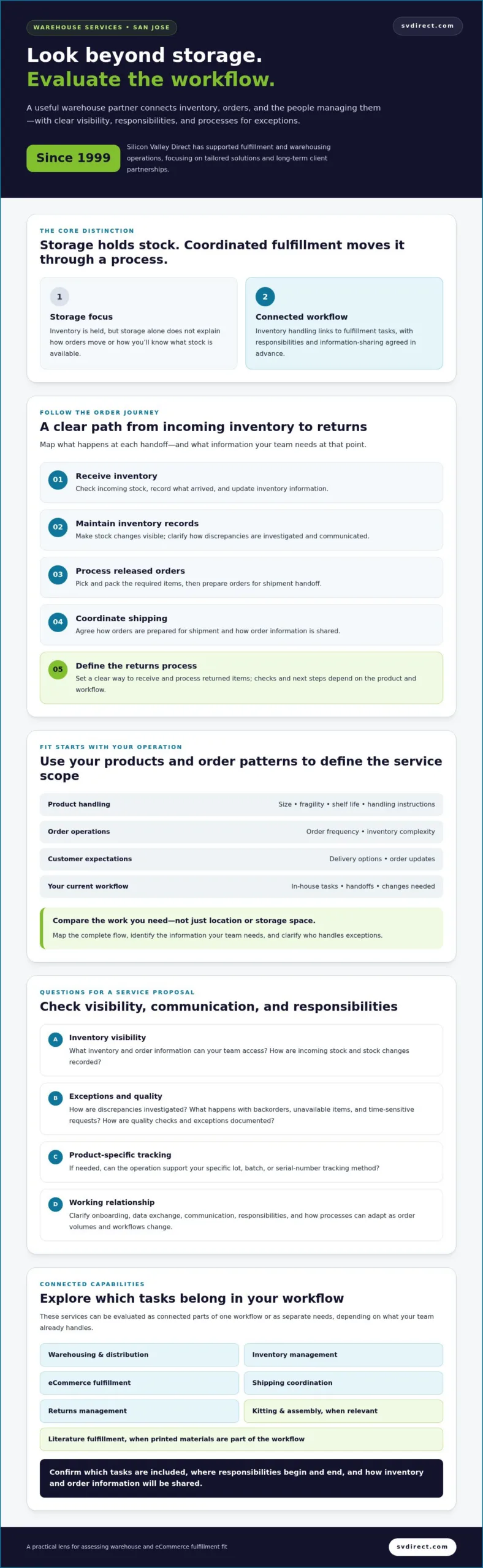
Event marketing material fulfillment is the coordinated process of preparing, assembling, distributing, and reconciling materials used at an event. Printing produces the pieces. Fulfillment manages where they go, how they’re grouped, whether stock is available, and what happens to reusable items afterward. The activities are connected, but they address different parts of the job.
The workflow spans the full event lifecycle. Before the event, teams organize approved materials, quantities, packets, and destinations. During the event, materials need to be available where they’re expected. Afterward, teams can count leftover stock and return reusable items to inventory. This operational layer supports the broader planning and coordination involved in Event management.
Which materials belong in an event fulfillment plan?
Include every item that needs to be produced, packed, sent, or tracked. A plan may cover printed collateral such as brochures and data sheets, presentation materials, promotional items, and assembled event packets. If pieces need to be combined in a particular way, list the contents and assembly instructions so each packet is prepared consistently.
Variable data printing can tailor pieces for different audiences, sessions, or presentations. Keep versions distinct in the plan so the correct materials are grouped and distributed to the right destination. Also separate reusable inventory, such as display pieces intended for future events, from event-specific items. That distinction makes post-event counts more useful: teams can identify what should return to stock and what was prepared for a particular event.
Why treat the event as a fulfillment workflow?
Print approval, assembly, packing, and shipping often involve different tasks and handoffs. Without a shared view of what’s ready, what’s packed, and where it’s going, teams may spend time chasing updates or resolving mismatched quantities. Clear ownership helps each stage move forward, while inventory visibility shows what’s available and what has been allocated.
Event material fulfillment is the coordinated movement of event materials from preparation and assembly to delivery and post-event inventory tracking.
This definition puts the focus beyond production alone. A useful workflow connects materials to their destinations, keeps responsibilities visible, and accounts for reusable stock after the event. The result is a more controlled process, with fewer gaps between preparing materials and managing them through their return.
How Event Material Fulfillment Moves from Print Files to Event Delivery
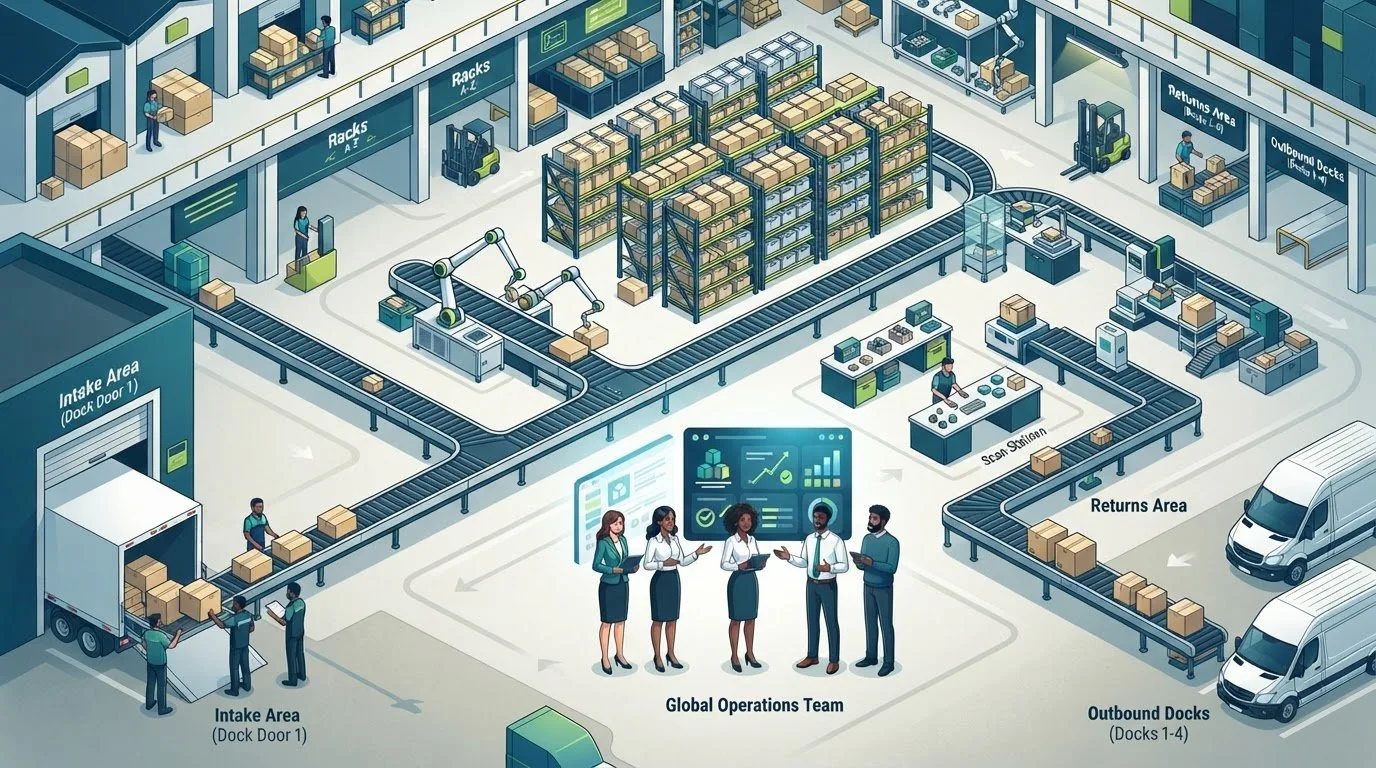
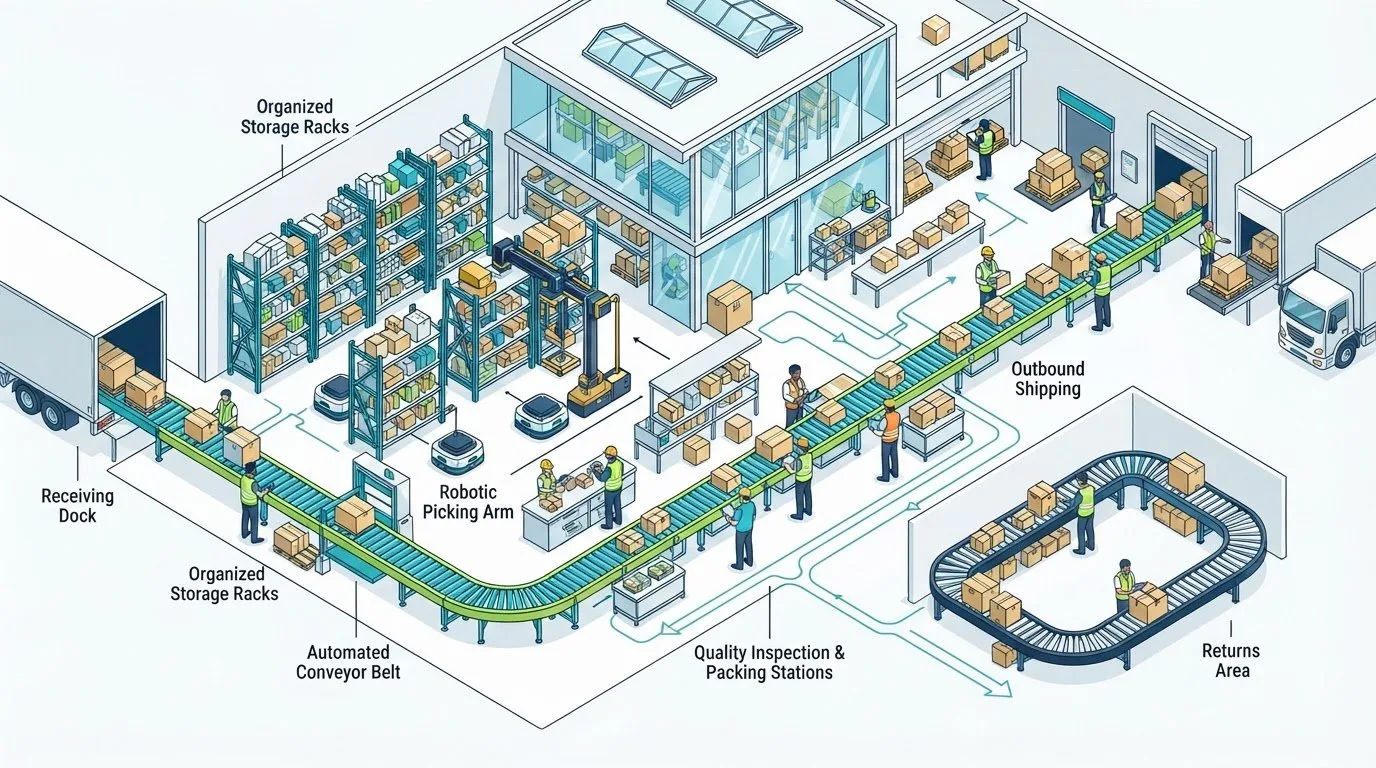
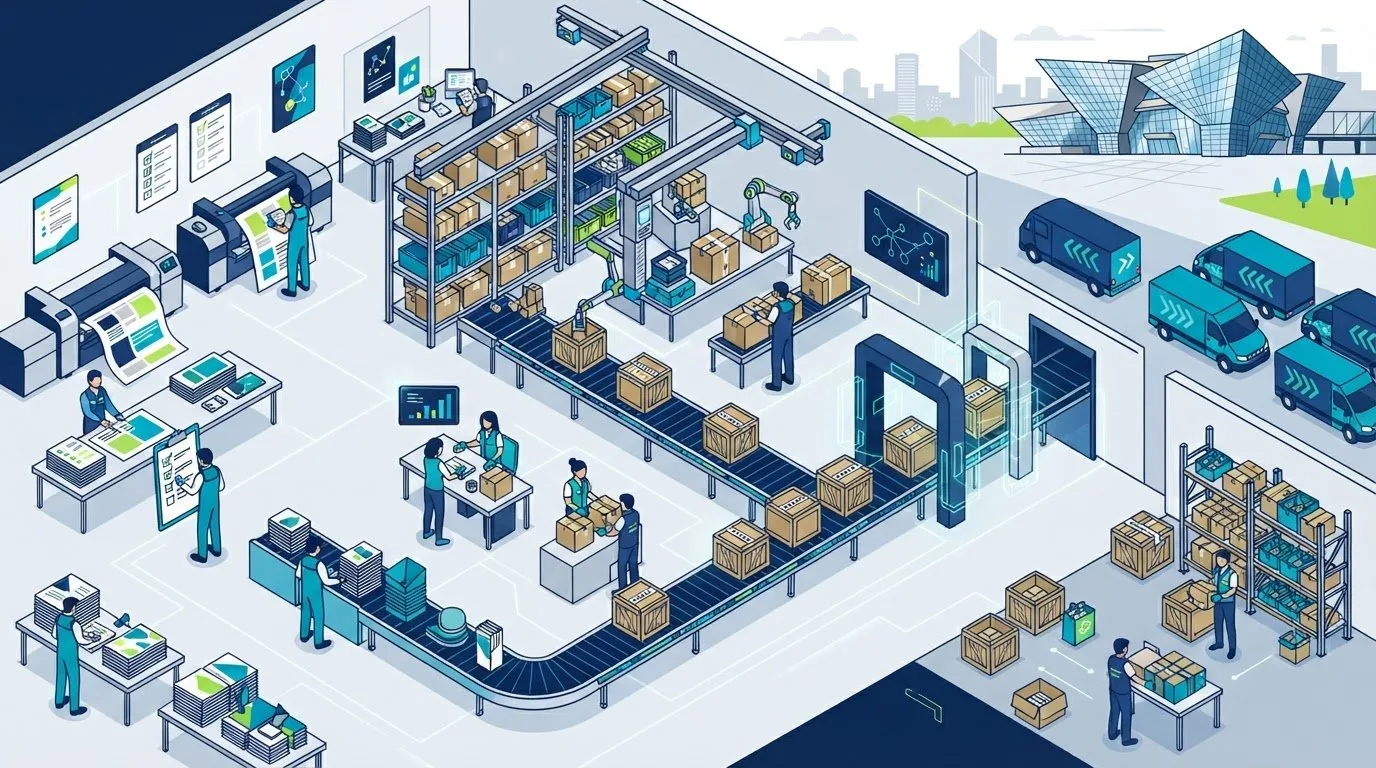
A coordinated event marketing material fulfillment workflow connects print production with the practical steps that get materials assembled and to the event location. Bringing these activities into one process helps teams reduce handoffs, keep project details together, and spot gaps before materials are packed.
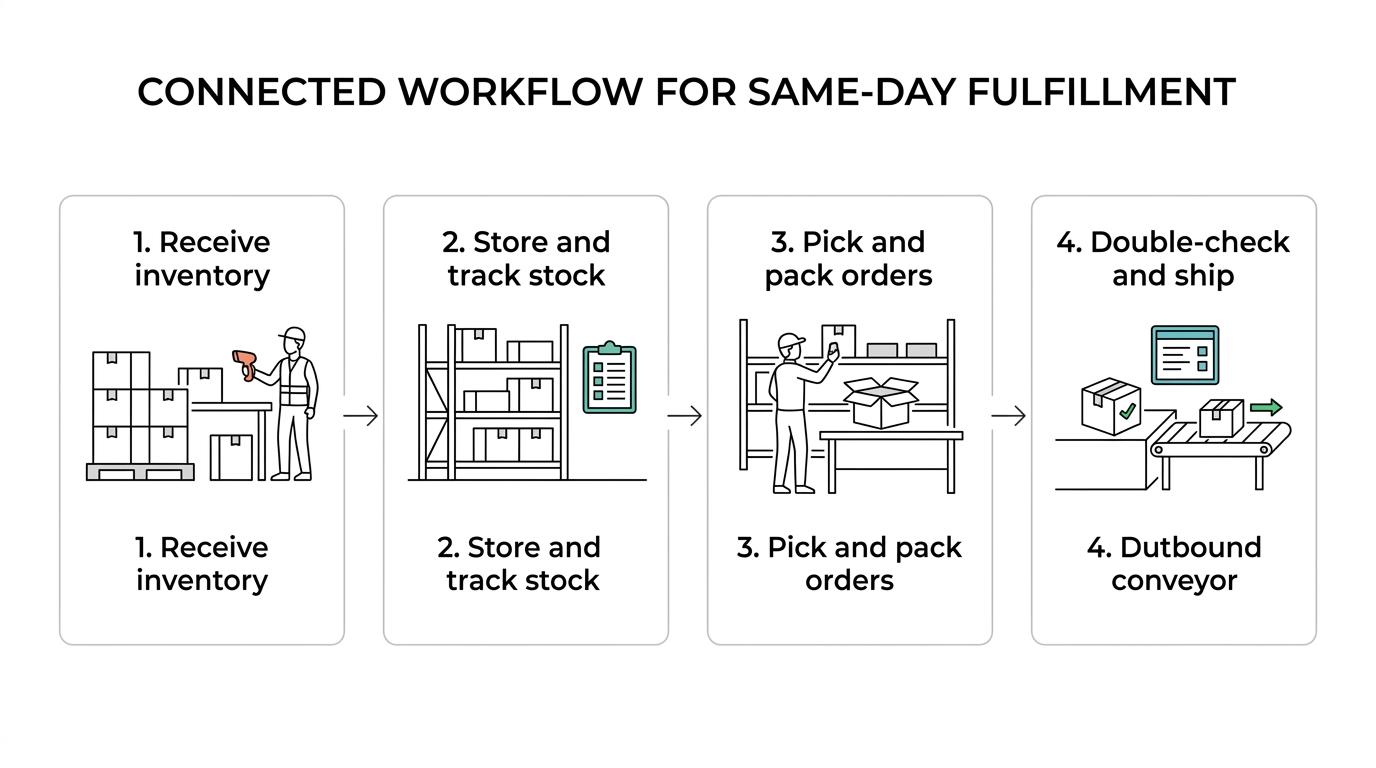
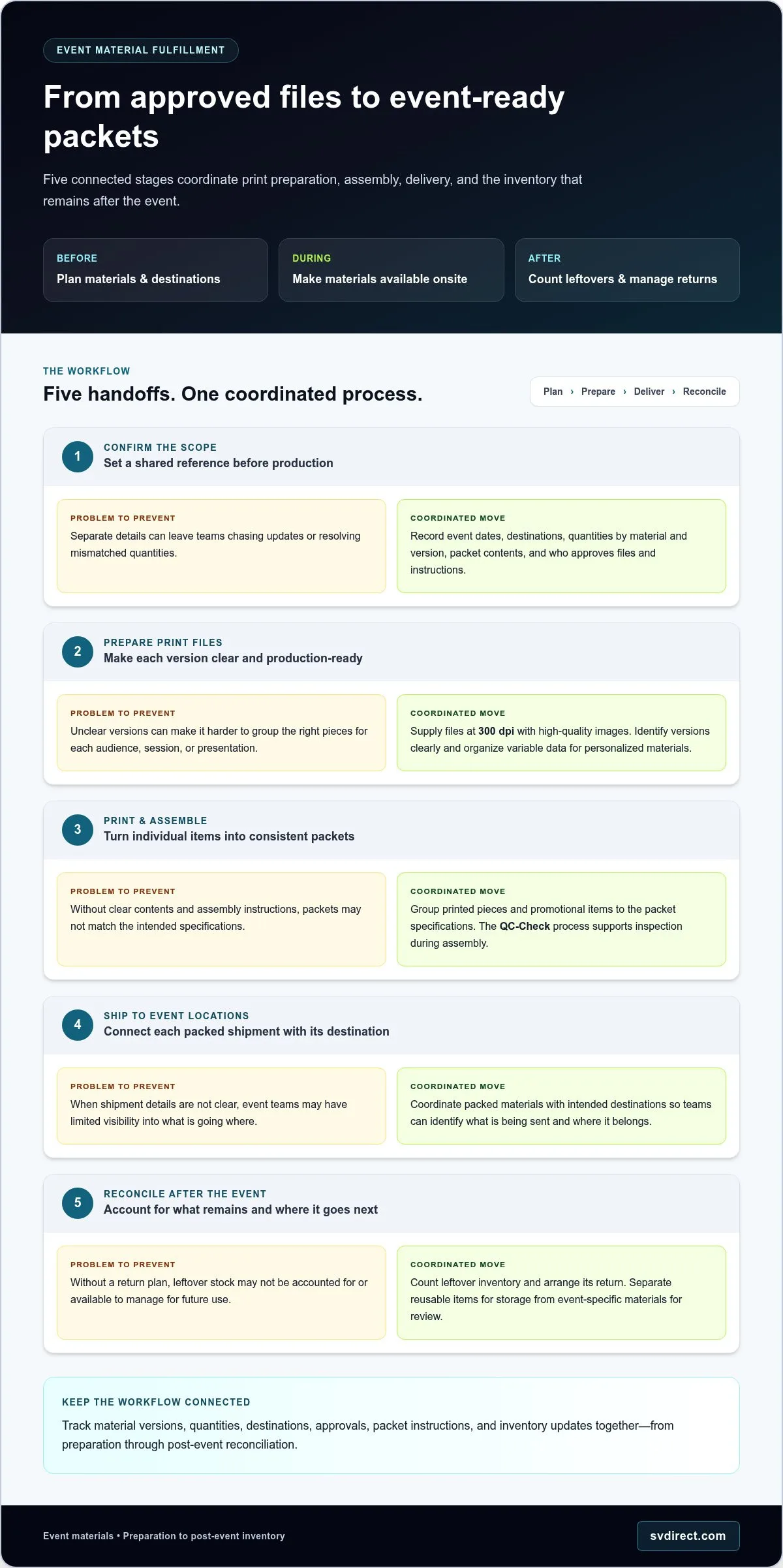
Use this sequence to organize the work:
- Confirm the scope. Record event dates, destinations, material quantities, versions, and packet contents. Identify who approves files and assembly instructions.
- Prepare print files. SVD requests files at 300 dpi with high-quality images for optimal print results. Confirm that each version is clearly identified. Variable data files can support personalized event mailings or presentation materials tailored to different audiences.
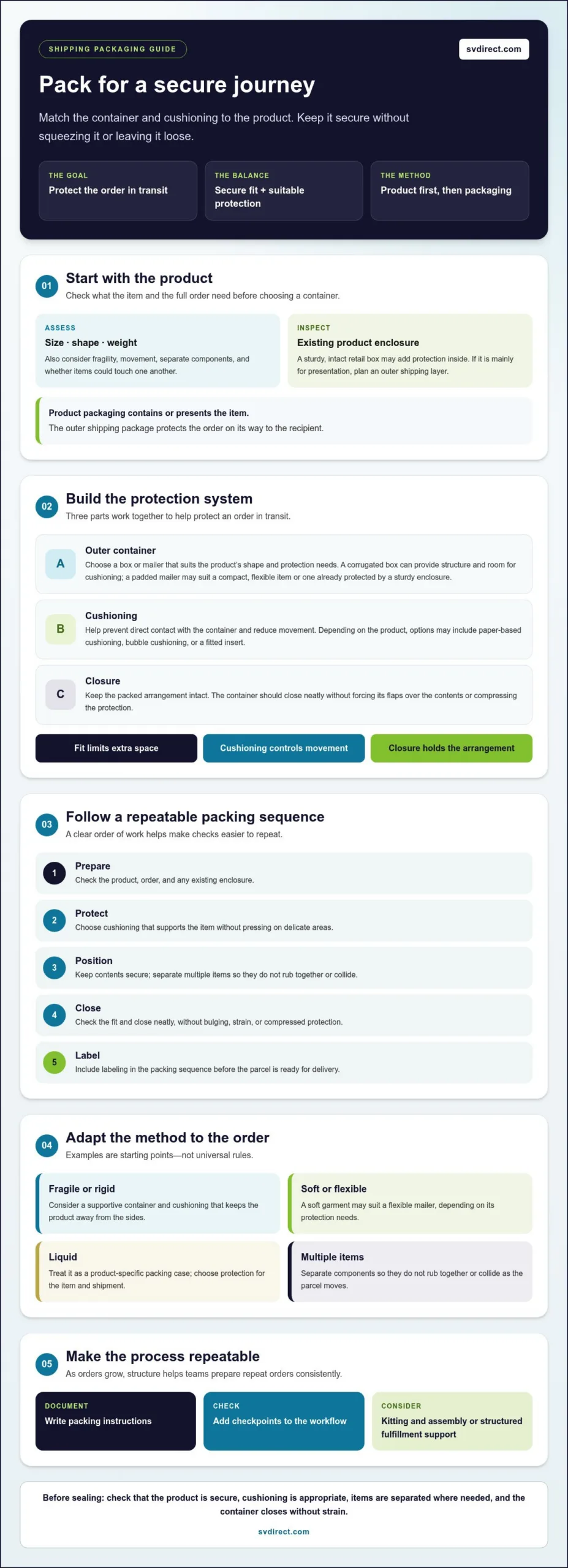
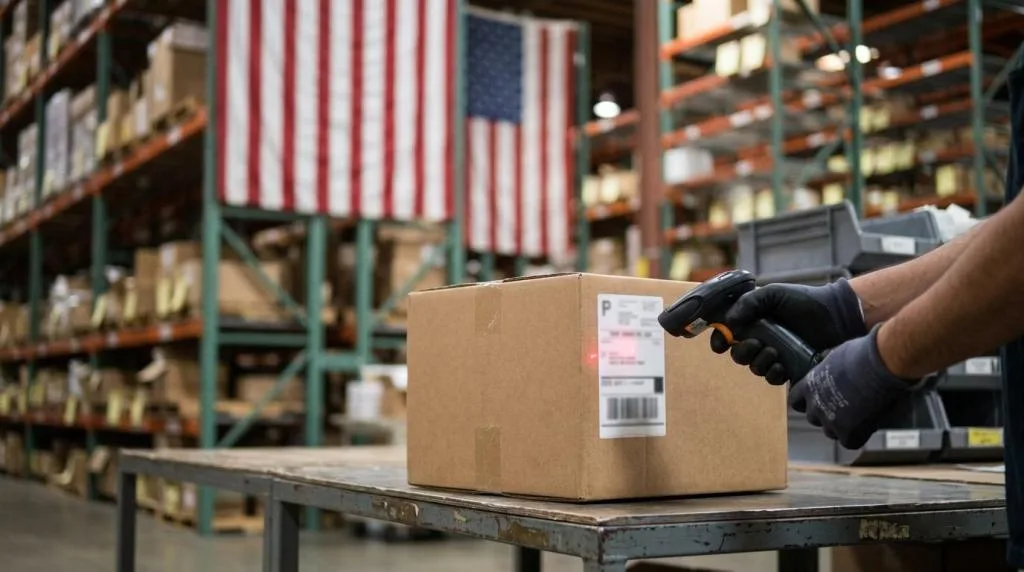
- Print and assemble. Once materials are ready, group them according to the packet specifications. SVD’s systematic QC-Check process supports inspection during assembly, helping the team review packets against instructions.
- Ship to event locations. Coordinate packed materials with their intended destinations so event teams can identify what is being sent and where it belongs.
- Reconcile after the event. Account for leftover inventory and arrange its return for the next step, whether that means storing reusable items or reviewing event-specific materials.
What should teams prepare before production and assembly?
Clear inputs give each stage a dependable reference. Gather the event schedule, delivery destinations, quantities by material and version, file approvals, and packet assembly instructions. For personalized pieces, organize variable data so each audience or presentation receives the intended content. Keeping these details together helps align print production with packing rather than treating them as separate projects.
How do assembly, shipment, and returns fit together?
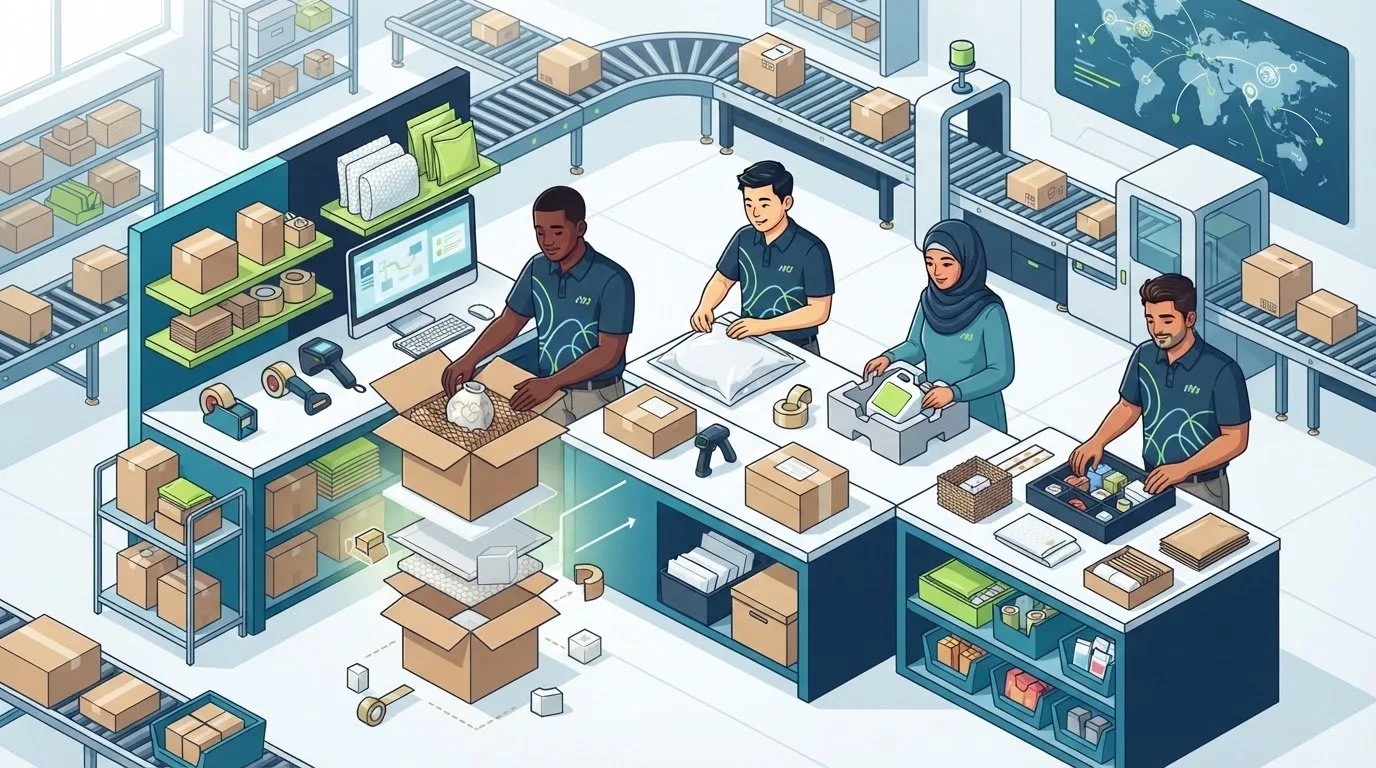
Packet assembly turns individual printed pieces and promotional items into ready-to-distribute sets. Shipment moves those packets to event locations, while a return plan accounts for leftover inventory afterward. This connected approach helps teams understand what was prepared, where it went, and what remains available for future use. Learn more about event marketing strategy and how materials support audience engagement.
To plan printing, assembly, shipping, and returns around your event, discuss your event fulfillment workflow.
In-House Coordination or Event Marketing Material Fulfillment Support?
The right approach depends on the event’s moving parts and your team’s capacity. Coordinating internally can work well for a straightforward program. As the number of materials, versions, destinations, or assembly requirements grows, connecting print, packing, shipment, and inventory tasks takes more coordination. Use this comparison to assess your team’s capacity and where fulfillment support could help.
| Consideration | In-house coordination | Fulfillment support |
|---|---|---|
| Workload | Your team manages approvals, packing, shipment coordination, and follow-up alongside other responsibilities. | Print, assembly, shipment, and inventory tasks can be coordinated as connected activities. |
| Inventory visibility | Staff maintain and share stock updates using internal processes. | Online access to orders and real-time inventory can make status easier to review. |
| Customization | Internal staff organize versions and personalized pieces based on available tools and capacity. | Printing and variable data can be coordinated with fulfillment requirements. |
| Quality checks | Your team defines and performs checks against packet instructions. | A systematic assembly inspection can support consistent review of assembled materials. |
| Event complexity | Often manageable when materials and destinations are limited. | Can help coordinate projects involving multiple locations, versions, or complex kits. |
When can an internal process remain manageable?
An internal process may suit an event with a small set of materials, straightforward assembly, and a team that has room to handle preparation and distribution. Before deciding, account for staff time as well as the visible tasks. Who will approve each version, update inventory, coordinate handoffs, monitor event deadlines, and reconcile what remains? Even a simple project needs clear ownership.
What signals that coordinated fulfillment support may help?
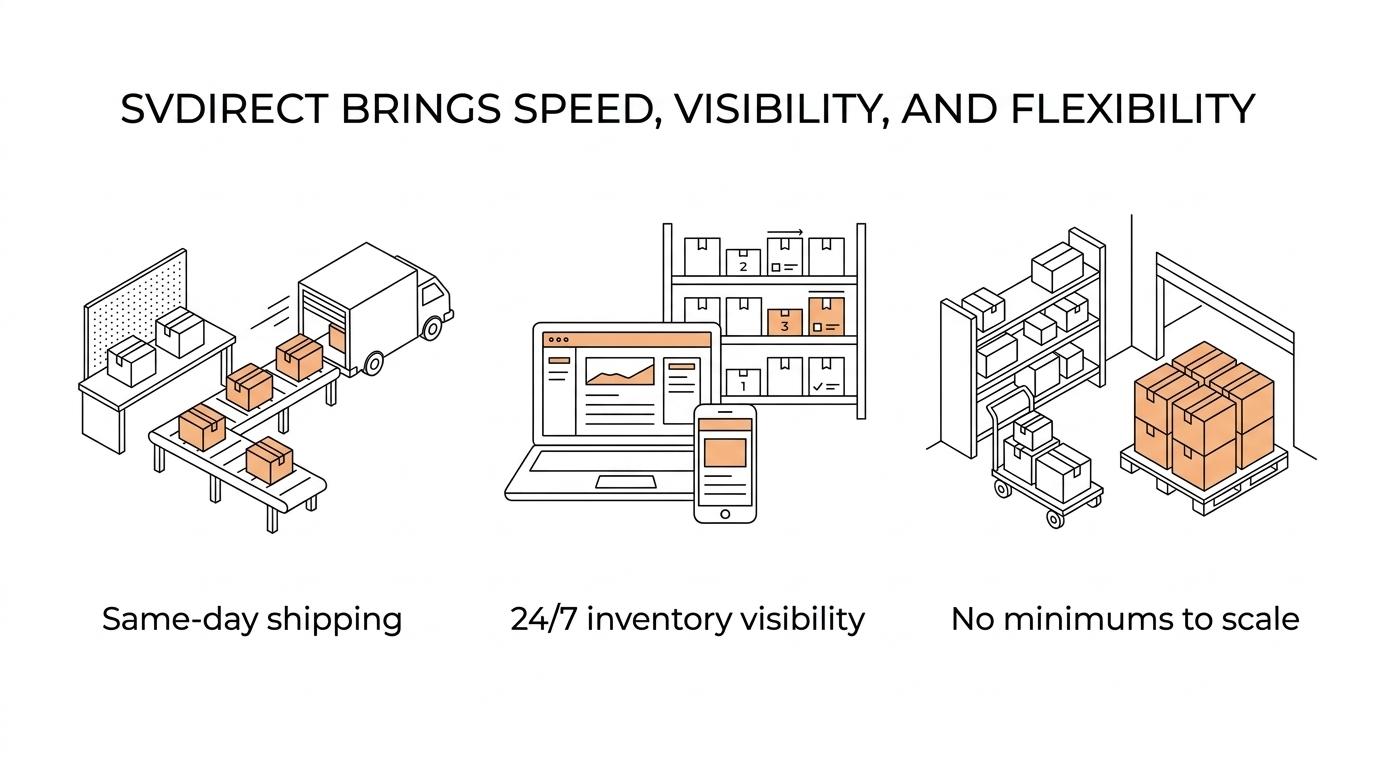
Multiple event locations, changing material versions, personalized pieces, and kits with several components add coordination points. Support that brings printing, assembly, shipping, and inventory management together gives the team a shared process instead of separate tasks to track. Your team can retain oversight: Remote Control offers online visibility into orders, progress, order histories, and real-time inventory, along with reporting and automated inventory notifications.
Explore online order and inventory visibility to see how digital access can help keep event fulfillment status in view. Event marketing material fulfillment support can keep your team informed while the work moves through a connected process.
How to Plan Event Materials, Inventory, and Post-Event Follow-Up
A practical plan turns event marketing material fulfillment into a sequence of decisions teams can track, update, and hand off. Start by defining the event scope, then document what each location needs, how materials will be assembled, and what should happen to remaining inventory. Assigning clear ownership early helps keep approvals, stock updates, and shipment details from becoming scattered across teams.
What information should an event materials plan capture?
Build a shared record for each event with the details needed to prepare, pack, and track its materials:
- Event dates and destinations: Record the schedule and delivery location for each shipment.
- Item descriptions and versions: Identify brochures, presentation pieces, promotional items, and any audience-specific or personalized versions.
- Approved files and quantities: Keep the current approved files connected to the required quantity for each item and version.
- Packing instructions: Specify which items belong in each packet and how reusable materials should be separated from event-specific pieces.
- Ownership and updates: Name an internal contact for approvals, inventory updates, and shipment visibility, and agree on how project changes will be shared.
For materials that need replenishing close to an event, on-demand digital printing can support a just-in-time planning approach. Include file approval and production coordination in the plan so teams can align printed quantities with current event needs.
How should teams manage event leftovers and campaign follow-up?
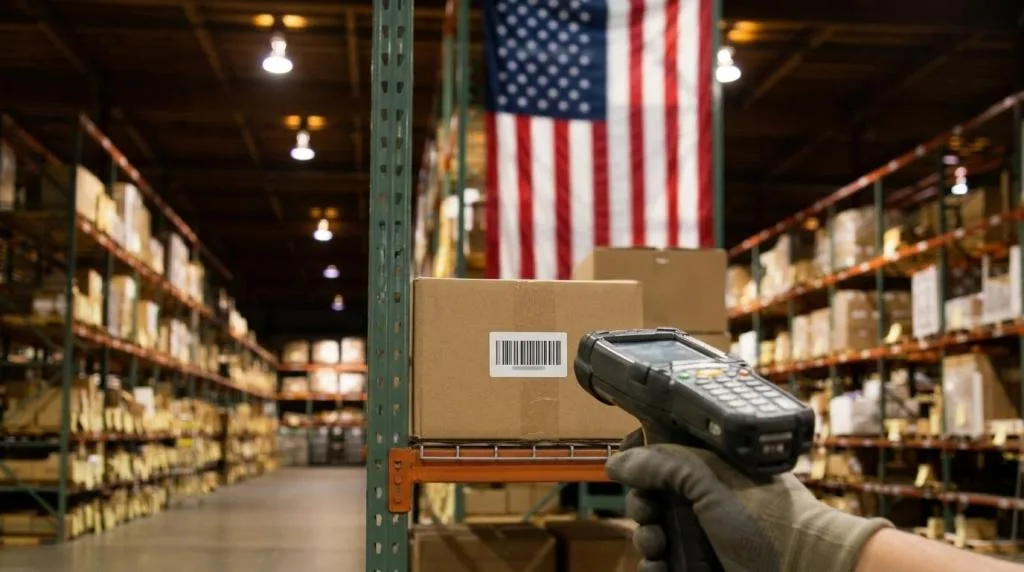
Plan the return process before materials ship. Decide how the team will identify leftover stock, record what comes back, and review each item for storage, redistribution, or another next step. Reusable displays and general collateral may need different inventory handling than personalized pieces or materials created for one event. Clear counts and status updates make post-event decisions easier.
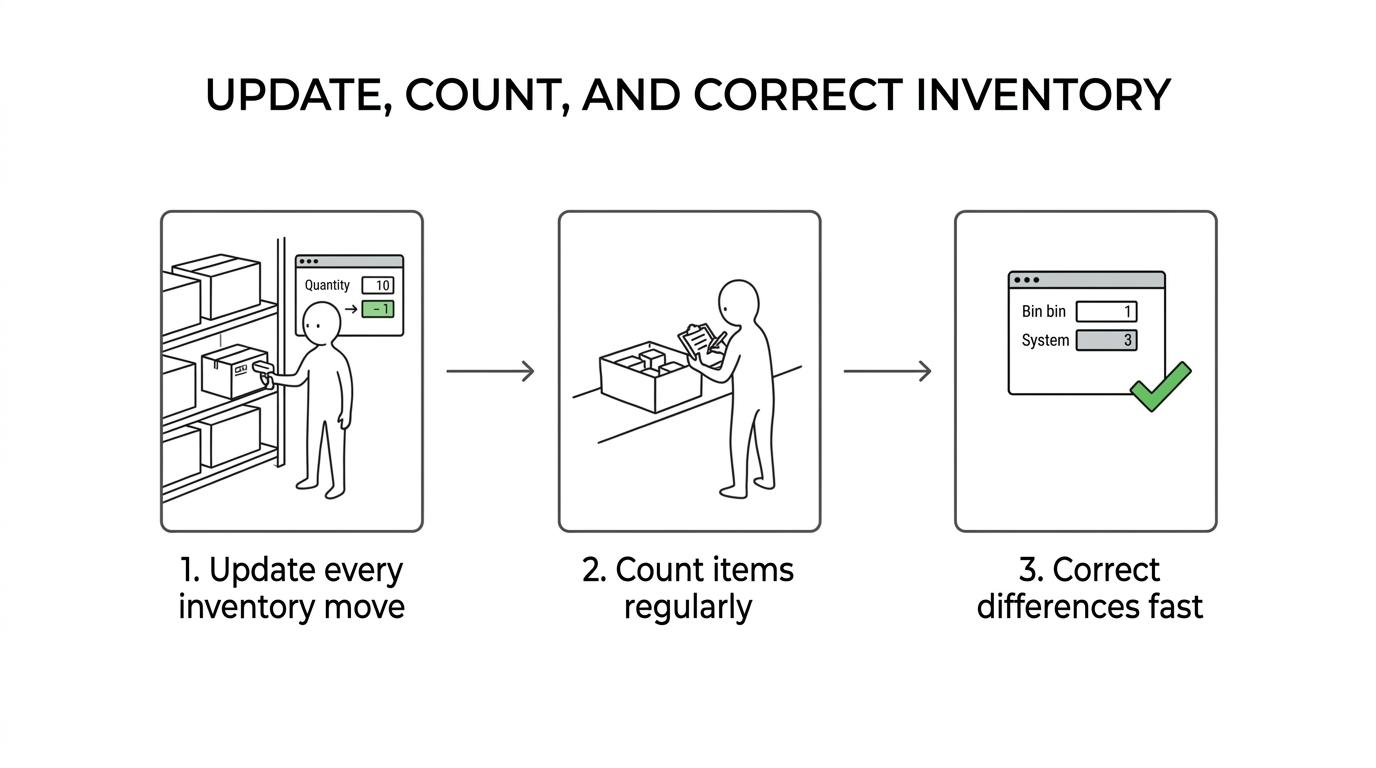
Assign an owner to close the loop: confirm returned quantities, update inventory records, and share the reconciliation with the teams planning future events. Inventory notifications can flag changes that need attention. Remote Control provides online visibility into orders and real-time inventory, alongside automated inventory notifications, so teams can monitor stock as plans evolve.
Event follow-up can extend beyond returned materials. Lead inquiry fulfillment can connect event activity with prospect follow-up, while direct mail marketing can support campaign materials sent after the event. Make the handoff clear by identifying who owns lead details and which follow-up materials are planned.
How Silicon Valley Direct Supports Event Marketing Material Fulfillment
Silicon Valley Direct coordinates event and conference materials across the work surrounding production. Support includes digital and variable-data printing, packet assembly, shipping to event locations, and returning leftover inventory. Kitting, mailing, and inventory management connect these activities, while lead inquiry fulfillment can help carry event activity into follow-up. Together, these services support a workflow from prepared materials to post-event decisions.
Each project can be shaped around its materials and handling needs. Variable data can tailor printed pieces for different audiences or presentations, while kitting and hand assembly bring specified items together in packets. After the event, returned inventory can be accounted for and managed as part of the next planning cycle.
What operational visibility can teams use?
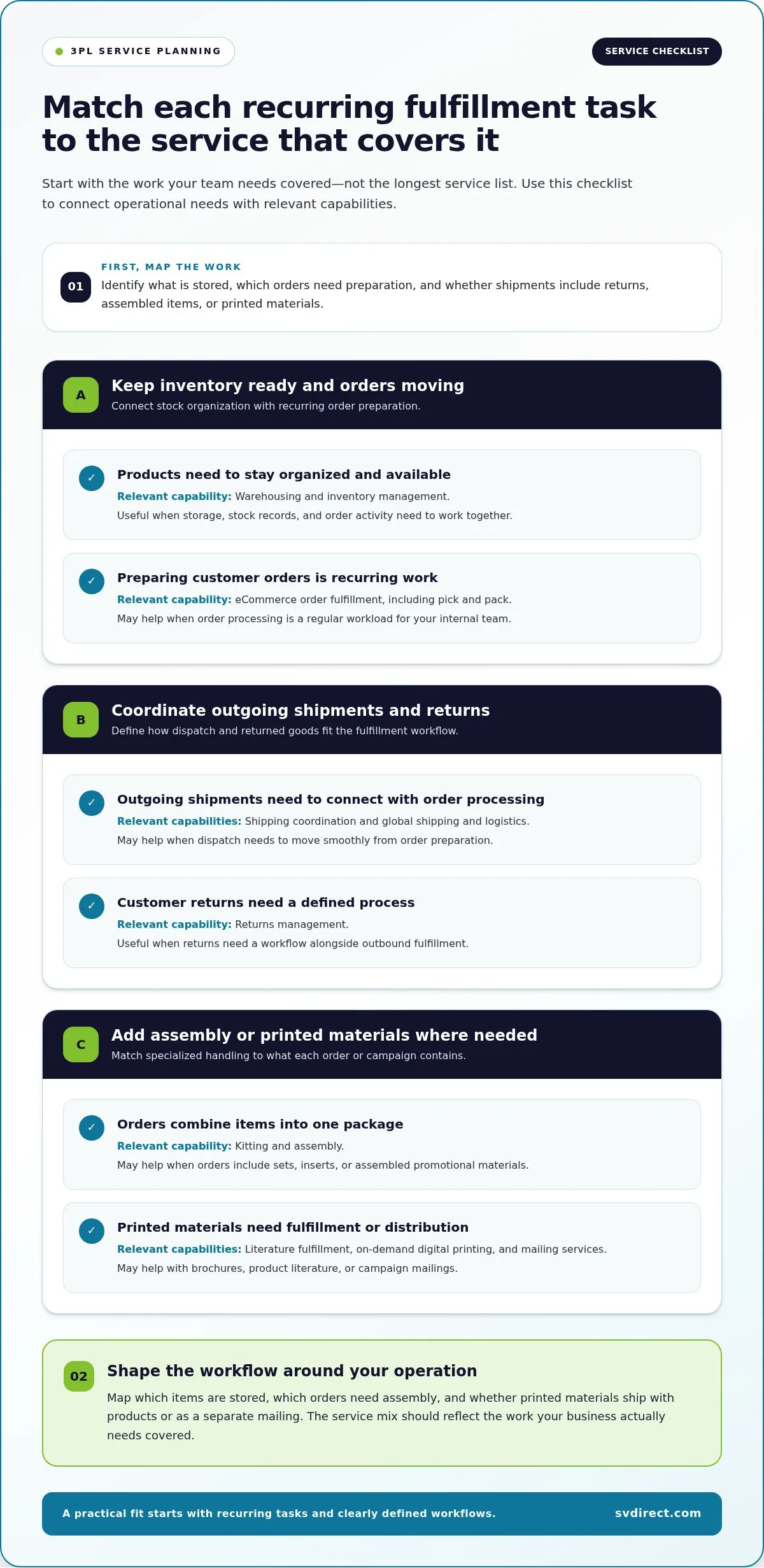
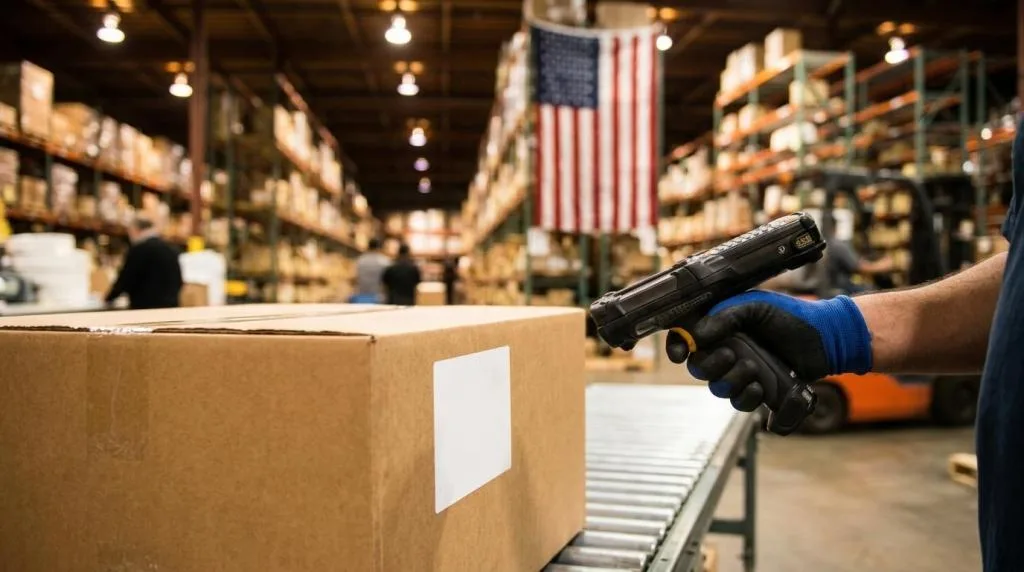
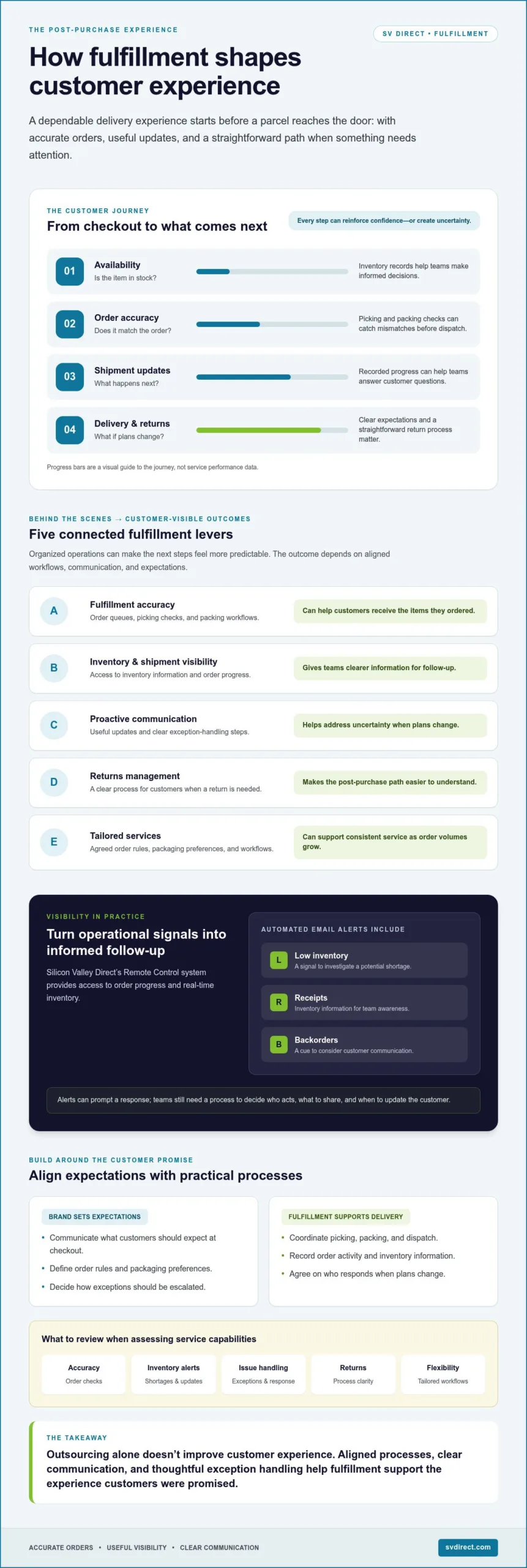
Keeping fulfillment coordinated doesn’t mean losing sight of the work. Remote Control provides 24/7 access to order progress, order histories, and real-time inventory. Teams can review activity online and use over 120 standard reports to examine order and inventory information. Automated inventory notifications can also surface stock updates that need attention.
This visibility supports communication between the fulfillment process and your internal team. Staff can refer to shared order and inventory information as they coordinate event plans, rather than relying only on separate status updates. Online access helps preserve involvement and oversight while fulfillment tasks are underway.
How does SVD build quality and flexibility into the workflow?
Assembly instructions give the team a defined reference for putting packets together. SVD’s systematic QC-Check process supports inspection during assembly, helping staff review completed work against project requirements.
Clear communication helps teams manage project-specific needs, including material versions, packet contents, and destination details. As requirements change, keeping the relevant people informed helps maintain alignment across printing, assembly, shipping, and inventory. Silicon Valley Direct, founded in 1999, serves businesses of varied sizes and approaches fulfillment as a flexible operational partnership, with coordination supporting the systems and processes behind each project.
Bring print, assembly, shipping, and inventory planning together for your next event. Request a free quote for event fulfillment.
Bring Event Materials Together with Confidence
Effective event marketing material fulfillment connects more than print production. It aligns approved materials, assembly instructions, shipment details, and inventory tracking in one workflow. Clear ownership at each stage helps teams manage versions and quantities, while a post-event plan keeps leftover materials accounted for and ready for their next step.
Visibility matters, too. Remote Control provides 24/7 access to order progress and history, real-time inventory, reporting, and automated alerts. A systematic QC-Check process supports assembly inspection. Together, these practices help your team stay informed and involved as event materials move through fulfillment.
Founded in 1999, Silicon Valley Direct brings an established operational foundation to event support. Printing, packet assembly, shipping to event locations, and leftover inventory returns can be coordinated around your project’s needs.
With a clear workflow and fulfillment support, your team can prepare for the event and close the loop afterward with greater confidence.
Frequently Asked Questions
What is event marketing material fulfillment?
Event marketing material fulfillment coordinates the preparation, assembly, distribution, and post-event handling of materials used at conferences, trade shows, and other events. It can cover brochures, data sheets, presentation materials, promotional items, and assembled packets. A coordinated workflow connects print readiness and packing instructions with inventory visibility, shipping, and leftover returns, helping teams manage materials from preparation through post-event reconciliation.
What materials can be included in event fulfillment?
An event fulfillment plan can include brochures, data sheets, presentation pieces, press kits, promotional items, and assembled event packets. The right mix depends on the event and campaign. List each item with its version, quantity, destination, and handling needs so the team can prepare and distribute it accurately. Variable data printing can also personalize copies with different text or images for distinct audiences or presentations.
How does event material fulfillment work?
The process starts by defining event requirements, approved files, quantities, destinations, and assembly instructions. Materials are then printed or prepared, assembled and inspected, and shipped to the event location. After the event, the team can account for leftover inventory and arrange its return. Clear ownership and order visibility help marketing and operations teams follow progress and coordinate handoffs across each stage.
Can event materials be personalized for different attendees or audiences?
Yes. Variable data digital printing can place different copy or images on individual sheets within a print run, supporting personalized mailings or presentation materials for different audiences. Before production, organize the source data and artwork, then review the intended versions and quantities. For optimal print results, Silicon Valley Direct requests files with high-quality images at 300 dpi. Clear version details help connect personalized pieces to the right event materials.
How can a team track event fulfillment inventory and orders?
Remote Control gives teams 24/7 access to place orders, track progress, review order histories, and check real-time inventory. It can generate over 120 standard reports and send automated alerts for low inventory, inventory receipts, and backorders. These tools help teams monitor fulfillment activity, spot inventory changes, and share timely updates as event plans or material needs change.
What happens to leftover event materials after a conference?
Leftover materials can be identified and returned after an event so the team can review quantities and decide what to do next. Plan for returns before materials ship, and distinguish reusable inventory from event-specific or personalized pieces. Silicon Valley Direct’s event and conference support includes returning leftover inventory, connecting post-event handling to the original fulfillment workflow and helping teams account for materials after the event.
How should we prepare files for event marketing materials?
Before production, confirm the approved file version, intended audience, required quantity, and any personalization details. Keep artwork and variable data organized by material or version, and include clear assembly and destination instructions with the production files. Silicon Valley Direct requests files containing high-quality images at 300 dpi for optimal results. Reviewing the materials and instructions together helps teams align print preparation with packing needs.