


How 3PL Services Improve Customer Experience: A Practical Guide
What if the delivery experience your customers remember starts long before a parcel reaches their door? Accurate orders, clear updates, and a straightforward returns process all shape how customers feel about your brand. That’s how 3PL services improve customer experience: by connecting dependable fulfillment with useful visibility and thoughtful communication.
It’s easy to treat shipping as the final step after a sale. But when an order arrives late or incomplete, or customers can’t get a clear answer about its status, trust can suffer. As order volumes grow, maintaining consistent service and personal touches can become harder without the right processes and support.
This guide explains which parts of the customer journey a 3PL can influence and how fulfillment accuracy, inventory and shipment visibility, proactive communication, returns management, and tailored services work together. You’ll also learn which service measures to review and what to ask a potential partner, so you can assess whether its operations match the experience your customers expect.
Key Takeaways
- Learn how 3pl services improve customer experience by connecting fulfillment accuracy, order visibility, and clear communication.
- Assess a 3PL’s customer experience capabilities by examining accuracy, inventory alerts, issue handling, returns, and flexibility.
- Turn customer promises into practical fulfillment requirements, including order rules, packaging preferences, and exception escalation.
- Use order histories, progress tracking, reports, and inventory notifications to help your team answer customer questions with clearer information.
- Explore how tailored fulfillment processes can support consistent service as order volumes grow.
How 3PL services improve customer experience after checkout
A customer’s experience with a brand doesn’t end at checkout. It continues as the order is processed, packed, shipped, delivered, and, if needed, returned. Each step can reinforce confidence in the purchase or create uncertainty.
A third-party logistics (3PL) provider handles logistics activities for a business, such as storing inventory, fulfilling orders, and coordinating shipping. The Third-party logistics (3PL) model can cover different parts of the supply chain, depending on the services a business needs.
A 3PL improves the post-purchase experience when its logistics processes help deliver accurate orders, clear updates, and less uncertainty for customers. That’s the practical answer to how 3PL services improve customer experience: work behind the scenes can make the customer’s next steps feel more predictable and easier to manage.
Which customer moments can a 3PL influence?
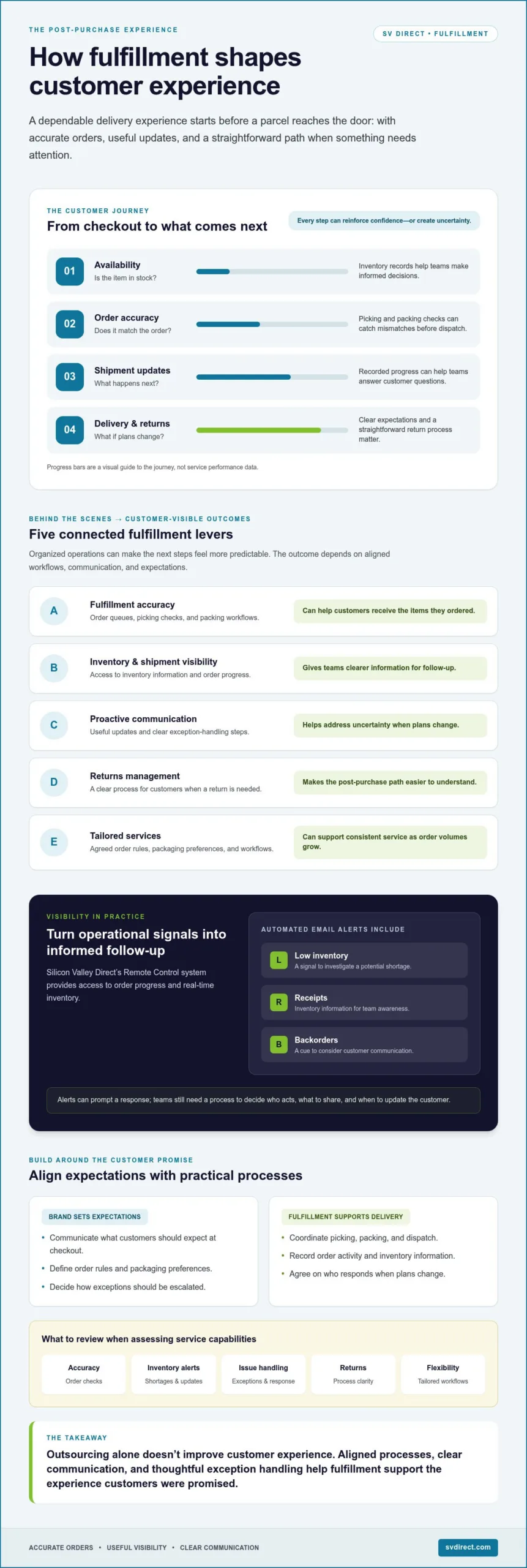
Consider the order journey from the customer’s point of view. They may notice whether an item is available, whether the order confirmation matches what they bought, how the parcel arrives, and whether tracking information explains what happens next. A straightforward return can matter, too.
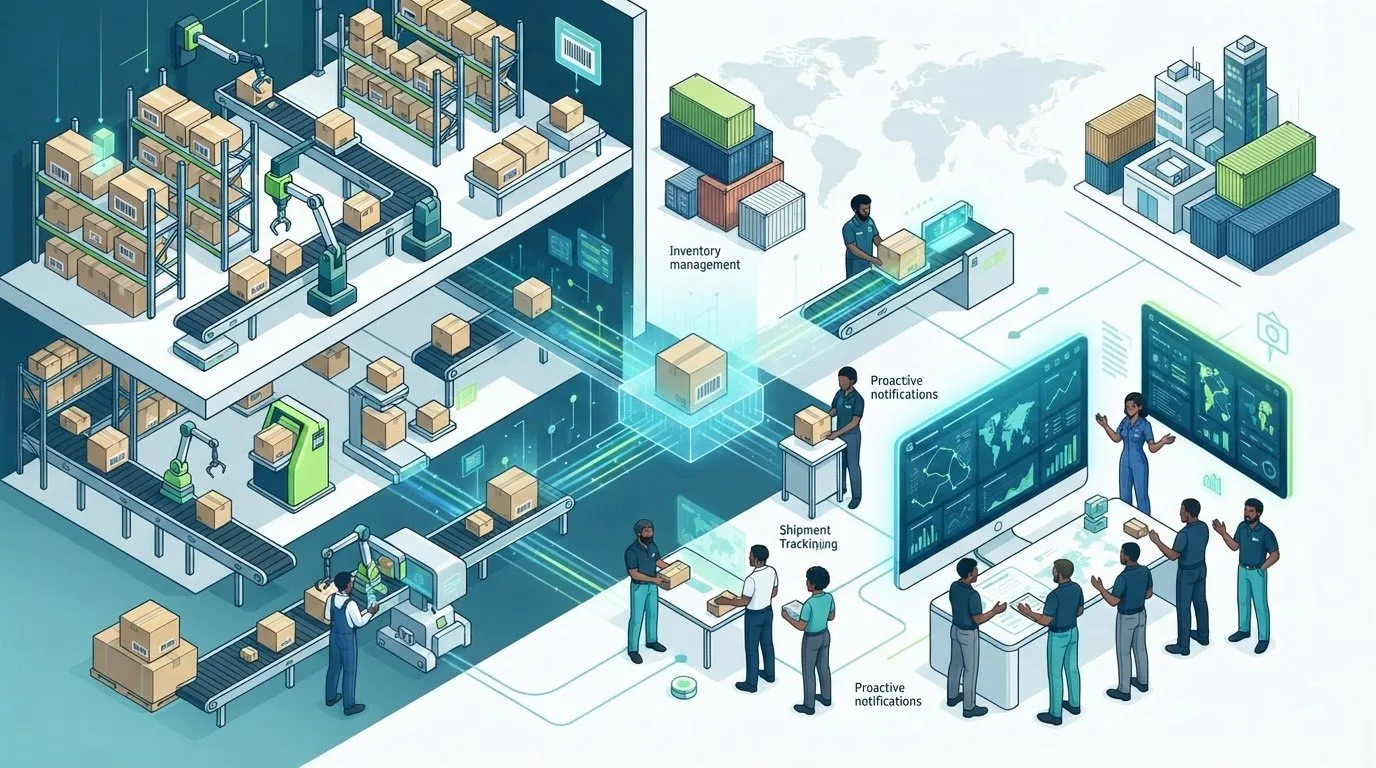
Many supporting tasks are less visible. Inventory counts, order queues, picking checks, packing workflows, and dispatch coordination happen behind the scenes. When these processes are organized, they can support outcomes customers do notice, such as receiving the correct items or getting useful information about an order.
The brand and its 3PL share responsibility for setting expectations. The brand communicates what customers should expect at checkout, and the 3PL’s agreed processes need to support those promises. Businesses can learn more about 3PL fulfillment services as they consider which parts of fulfillment a provider may handle.
Why fulfillment quality affects trust
After payment, customers want confidence that the order is moving forward as expected. Accurate picking and packing help reduce avoidable mistakes, while clear, timely updates can answer basic questions before uncertainty grows. These details don’t guarantee satisfaction, but they can make the post-purchase experience easier to follow.
Problems need attention, too. A stock discrepancy can affect what’s available, and an unexplained delay can leave a customer unsure whether anyone is addressing the issue. If the fulfillment process doesn’t include clear steps for communicating exceptions, the brand may struggle to provide useful information.
Outsourcing alone doesn’t improve customer experience. The result depends on how well the brand and provider align their workflows, communication, and service expectations. Ask whether the operation makes it easier to deliver what customers were told to expect, and to respond thoughtfully when plans change.
How 3PL fulfillment creates a more dependable post-purchase experience
Dependable fulfillment starts with a clear view of what’s in stock and an orderly process for turning each order into a shipment. Accurate inventory records help teams avoid accepting orders for unavailable items. Checks during fulfillment can catch a mismatch before the parcel leaves the facility, reducing preventable surprises for both the customer and the brand.
Picking, packing, and dispatch workflows also need to support the delivery expectations the brand sets at checkout. For example, an order containing several items should be picked against the order details, packed according to agreed requirements, and handed off for shipping with its status recorded. These steps don’t control every part of delivery, but they help ensure the order is prepared correctly and moves through fulfillment in a coordinated way.
Accuracy, inventory visibility, and fewer avoidable surprises
Inventory visibility gives teams a better basis for decisions. Silicon Valley Direct’s Remote Control system provides access to order progress and real-time inventory, with automated email alerts for low inventory, receipts, and backorders. Those signals can prompt a team to investigate a potential shortage or adjust customer communication sooner. Explore the company’s order and inventory visibility tools to see how recorded order activity and inventory information can support informed follow-up.
These controls can reduce the risk of avoidable issues, but they can’t prevent every exception. Their practical value lies in spotting changes and having a process for deciding who responds, what information to share, and when to update the customer.
Packaging and tailored fulfillment touchpoints
A parcel’s contents and presentation should match the order and the brand’s requirements. Clear packing instructions help create a consistent experience, while kitting can bring related items or materials together as a prepared set. For instance, a business might want a product accompanied by a specific insert or grouped with complementary items. Documenting those preferences gives the fulfillment team a concrete standard to follow.
Personalization can be useful when it serves a purpose in the customer journey. On-demand digital printing, including variable data printing where appropriate, can support inserts tailored to different recipients or communications. The goal isn’t to add extras to every package. It’s to make each touchpoint relevant and complete.
The Annual Third-Party Logistics Study reported that 89% of shippers in its 2024 edition said 3PLs contributed to improving customer service. That finding points to the potential value of a logistics partnership, while the actual experience still depends on how well processes fit the brand’s promises. This is one practical way 3PL services improve customer experience: by aligning inventory controls and fulfillment details with what customers were told to expect.
If you’re assessing fulfillment support for your operation, you can explore eCommerce fulfillment services and consider which inventory, packing, and order-handling requirements matter most to your customers.
How to compare 3PL customer experience capabilities
A useful 3PL comparison looks beyond broad claims about reliability. Examine the processes behind each customer-facing outcome, the evidence you can review, and how the provider will share information with your team. This makes it easier to judge whether a proposed service fits your customers’ expectations.
Test every service claim against a defined process and reporting you can review. A stated capability is a starting point, not proof of a particular customer outcome.
| Customer outcome | Process or evidence to examine | Question to ask |
|---|---|---|
| Orders arrive with the expected items | Order-checking steps and accuracy reporting | How do you define and report order accuracy? |
| Teams can answer order-status questions | Order and shipment status access, including what information is recorded | What can our team see, and when is it available? |
| Issues are handled with clear communication | Exception identification, escalation, and update procedures | Who communicates with our team when an order encounters a problem? |
| Stock changes are less likely to come as a surprise | Inventory reconciliation practices and low-stock or backorder alerts | How are discrepancies identified and notifications shared? |
| Returns follow a clear process | Documented returns handling and status visibility | How can we track returns and identify recurring issues? |
| Fulfillment can accommodate brand needs | Documented workflows for special requirements and changing order patterns | How are process changes discussed, approved, and put into practice? |
Which service measures are useful to review?
Review order accuracy, order-status visibility, inventory discrepancies, and exception handling. Ask how each measure is defined, which orders or events it covers, how often it’s reported, and whether your team can review the underlying activity. A measure is most useful when everyone understands what it includes. No single measure guarantees customer satisfaction, but consistent definitions can help you spot gaps and discuss improvements clearly.
Questions to ask before choosing a 3PL
Ask how your team will receive updates when an order encounters an issue, and what information you can access about orders, shipments, and inventory. Clarify how and when updates are shared, including what happens when a process needs attention. Then discuss how workflows can accommodate brand requirements, special projects, or changing order patterns. These conversations show how 3PL services improve customer experience in practice: not through promises alone, but through visible processes, useful reporting, and agreed follow-through.
How to build a customer-first 3PL fulfillment process
A customer-first fulfillment process starts with the experience your brand intends to deliver, then turns that intention into instructions people can follow. Treat setup as a shared working plan, not a handoff. The goal is to connect operational visibility with clear communication, so teams can spot friction and know who should respond.
- Translate customer promises into requirements. Identify what customers are told about order contents, packaging, updates, delivery expectations, and returns. Convert each promise into a specific process or checkpoint the fulfillment team can follow.
- Document order and packaging rules. Record product or order-specific handling instructions, packing preferences, inserts, and kitting requirements. Note how the team should identify special orders and how approved changes to those instructions will be shared.
- Define alerts and escalation ownership. Decide what should happen when inventory is low, an order is backordered, or an exception affects fulfillment. Assign who investigates, who updates the customer, and how client and fulfillment contacts communicate when priorities change.
- Review results and refine the workflow. Set a regular review of agreed service measures, exception records, and customer feedback. Update instructions when order patterns or customer needs shift, then make sure the revised process reaches everyone responsible for carrying it out.
Set expectations and define escalation paths
Be precise about customer updates. Document which events trigger a message, what information it should include, and who owns the next step. For example, if a backorder changes an order’s status, the process should make clear who confirms the inventory information and who communicates the update. Agree how client teams and fulfillment contacts will reach one another when a special project or priority changes. Clear ownership helps prevent an issue from sitting between teams.
Use visibility and feedback to improve the process
Order histories, reports, and inventory information can help reveal repeated exceptions or points where work slows down. Pair those records with themes from customer support conversations and returns feedback. If customers repeatedly ask about the same order stage, consider whether an update or clearer internal handoff could address that uncertainty. The data helps identify patterns; people still need to interpret them and decide what to change.
Silicon Valley Direct’s Remote Control system provides access to order progress, histories, inventory information, reports, and automated inventory notifications. You can also review fulfillment partnership experiences for additional context. Together, operational records and direct communication can help teams assess how 3PL services improve customer experience, then adjust processes with care rather than relying on assumptions.
How Silicon Valley Direct can support a more informed customer experience
A thoughtful 3PL relationship combines operational information with people who can help interpret it and respond to exceptions. Silicon Valley Direct supports eCommerce order fulfillment, inventory management, shipping coordination, returns management, kitting, mailing, and digital printing. Its approach emphasizes proactive problem-solving, customization, and working as an extension of each client’s team.
Visibility that helps teams answer customer questions
Silicon Valley Direct’s Remote Control system provides 24/7 access to order progress, order histories, and real-time inventory. Teams can use that information to check an order’s recorded status or review inventory when responding to a customer enquiry. Automated email notifications for low inventory, receipts, and backorders can also give client teams information to act on as situations change.
Access to information is useful, but it isn’t a substitute for attentive service. A system can show what’s recorded; people still need to assess the situation, decide what the customer needs to know, and follow through. That combination is central to how 3PL services improve customer experience: operational visibility gives teams a clearer starting point for a helpful response.
Confirm the system’s features and reporting options during evaluation, including which information is available to your team and how it supports your specific workflows. The important question isn’t simply whether a portal exists. It’s whether your team can access information that’s useful for the customer questions it receives.
A fulfillment relationship built around the client’s process
Customer expectations differ by brand, product, and order type. Silicon Valley Direct’s stated approach is to adapt fulfillment processes to a client’s project rather than apply a one-size-fits-all template. For one business, that may mean documenting order-specific packing preferences. For another, kitting or printed materials may help ensure an order arrives with the relevant items and information.
That flexibility starts with a practical conversation. Discuss your order flows, customer service expectations, packaging requirements, inventory alerts, returns process, and how your team wants exceptions communicated. Clear agreements help both teams understand where responsibilities sit and how priorities can be addressed as needs evolve.
Review eCommerce 3PL fulfillment services to learn more about Silicon Valley Direct’s fulfillment support. A conversation about your requirements can help clarify how its services and visibility tools may fit your customer experience goals.
Build a more informed customer experience with your 3PL
Customers judge a brand through the full order journey, not checkout alone. The practical answer to how 3PL services improve customer experience lies in connecting accurate fulfillment, useful order and inventory visibility, and clear follow-through when plans change.
A customer-first 3PL relationship starts with defined expectations. Document order and packaging requirements, agree how inventory alerts and exceptions will be handled, and review service measures regularly. When you assess a provider, look for clear processes and reporting your team can examine, not just broad promises about reliability.
Silicon Valley Direct’s Remote Control system provides stated 24/7 access to order progress, order histories, and inventory information. That visibility can help client teams find useful details when answering customer questions. Paired with a service approach focused on proactive problem-solving, flexibility, and acting as an extension of your team, the information can support more considered responses. Access to records doesn’t replace direct communication, but it can give your team better context.
With the right processes and partnership in place, fulfillment can support the experience your brand wants customers to remember.
Use your customers’ expectations to guide the next steps. Start with the order moments that matter most, then build a fulfillment process designed to support them.
Frequently Asked Questions
How do 3PL services improve customer experience?
3PL services can support a better customer experience by helping businesses manage order fulfillment, inventory, shipping coordination, and returns through clear processes. Understanding how 3PL services improve customer experience starts with connecting those operations to customer needs: accurate order contents, useful status information, and a clear plan for handling exceptions. Results depend on how well the brand and provider define responsibilities, communicate updates, and review performance together.
Can a 3PL help improve order accuracy?
Yes. A 3PL can use documented order rules, inventory controls, picking checks, and packing instructions to help reduce preventable mistakes. Ask how the provider defines order accuracy, what checks take place before dispatch, and how errors are recorded and addressed. For example, if an order includes several items or a required insert, clear instructions and a verification step can help ensure the package matches the order details.
How does a 3PL improve order tracking and visibility?
A 3PL can give client teams access to order status, shipment progress, order histories, and inventory information through its systems and reports. Silicon Valley Direct’s Remote Control system provides stated 24/7 access to order progress, histories, and inventory information, along with email notifications for low inventory and backorders. This information can help teams respond to customer questions with context, though it doesn’t replace direct communication or determine every delivery update.
Will using a 3PL make customer service less personal?
Not necessarily. Outsourcing logistics doesn’t require a business to give up its customer relationships. The brand can continue to manage customer communication while its 3PL handles agreed fulfillment tasks. To keep service personal, define who responds to order questions and exceptions, what information teams can access, and how issues are escalated. A provider that listens, communicates with your team, and adapts agreed workflows can support a more coordinated experience.
What should I compare when choosing a 3PL for customer experience?
Compare the processes and evidence behind order accuracy, status visibility, inventory alerts, issue communication, returns handling, and flexibility. Ask how each measure is defined, how results are reported, and what order or inventory information your team can access. Also clarify who handles exceptions and how the provider accommodates packaging rules or special projects. Look for verifiable workflows and reporting, not unsupported satisfaction claims or delivery guarantees.
Can a 3PL help manage returns and customer concerns?
A 3PL that offers returns management can handle agreed operational steps in the returns process. This may give the brand better information about returned orders and help its team follow the established workflow. Customer concerns still need clear ownership: decide who communicates with the customer, how return status is shared, and how recurring feedback reaches the right team. Confirm the provider’s specific returns processes before relying on them in customer-facing policies.
How can I tell whether a 3PL is improving customer experience?
Track agreed measures over time, such as order accuracy, inventory discrepancies, visibility of order status, exception handling, and returns activity. Pair operational reporting with customer support themes and feedback to see whether recurring points of confusion are changing. Ask the 3PL to explain how it defines each measure and shares the results. No single metric proves customer satisfaction, but clear trends can show where the process is working or needs attention.