img not found!

Blog

Multi-Carrier Shipping Strategy: The 2026 Guide to Resilient Fulfillment

Multi-Carrier Shipping Strategy: The 2026 Guide to Resilient Fulfillment

Did you know that while major carriers announced a 5.9% rate hike for 2026, many shippers are seeing their actual costs climb by as much as 20%? Between the USPS shifting its dimensional weight divisor to 139 and new fractional rounding rules, the “average” increase is often a mathematical illusion that erodes your margins. Relying on a single provider isn’t just risky; it’s an operational bottleneck that leaves you vulnerable to surcharges and service gaps. You’ve likely felt the sting of cart abandonment when shipping options are too limited or the anxiety of integrating complex APIs. A modern multi-carrier shipping strategy is no longer a luxury, but a necessity for any brand that values resilience and scale.

You deserve a logistics partner that acts as a steady hand, helping you master the technical framework of carrier diversification without making your operations twice as complicated. This guide provides a clear roadmap to reduce costs, eliminate delivery bottlenecks, and expand your global reach. We’ll examine how to leverage high-performance data to bypass peak season disruptions and transform your shipping operations from a cost center into a customer experience engine.

Key Takeaways

  • Shift from single-carrier dependence to a diversified mix of national and regional specialists to safeguard your capacity during peak seasons.
  • Leverage modern technical infrastructure, including APIs and XML services, to ensure seamless data flow and accurate real-time tracking across all providers.
  • Boost checkout conversion rates by providing customers with transparent delivery dates and varied shipping options that balance speed with cost.
  • Optimize your warehouse workflow by building a multi-carrier shipping strategy around precise parcel audits and automated “If-Then” routing logic.
  • Maintain total oversight of your logistics network with the proprietary Remote Control™ system, offering 120+ standard reports for 24/7 visibility.

Moving Beyond Single-Carrier Dependence in 2026

Many brands operate under the illusion that a single-carrier contract offers a “safe” and simple logistics path. This approach often creates a dangerous single point of failure. A resilient multi-carrier shipping strategy is the strategic distribution of parcel volume across national, regional, and niche carriers to ensure your fulfillment engine never grinds to a halt. It’s about moving from a passive relationship with one provider to an active, data-driven ecosystem. For a deeper look at the foundational concepts of modern logistics, you can explore our global shipping services guide.

We often discuss the “Fragility Index” with our partners. This metric measures how easily a single event, like a regional weather catastrophe or a labor dispute, can paralyze your outbound shipments. If 100% of your volume sits with one carrier, your fragility is at its peak. Experienced Third-party logistics providers recognize that true stability comes from a diversified network. This infrastructure allows you to pivot instantly when one lane becomes blocked or a carrier reaches its limit.

The Risks of Carrier Fragility and Peak Season Caps

During the high-stakes Q4 peak season, national carriers prioritize their largest enterprise accounts. Mid-market brands often face sudden capacity caps, leaving them with packages that won’t be picked up. These service failures do more than delay a single box; they destroy customer lifetime value (LTV). When a customer’s holiday gift arrives late, they don’t blame the carrier; they blame your brand. Building redundancy into your workflow is the only insurance policy that guarantees your products reach the doorstep when promised.

Why ‘Loyalty’ No Longer Guarantees Shipping Savings

It’s a common misconception that deep volume discounts with a single carrier always lead to the lowest total cost. In reality, “hidden” surcharges for fuel, residential delivery, and oversized packages have become highly volatile. These fees can vary by double digits between providers for the exact same route. Rate diversification acts as a financial hedge, allowing you to shop for the best price on a per-package basis. You aren’t just looking for a discount; you’re looking for the most efficient match for every unique parcel profile in your inventory.

Core Components of a Modern Multi-Carrier Strategy

A successful multi-carrier shipping strategy relies on a sophisticated architecture that balances physical logistics with digital precision. It’s not enough to simply sign contracts with multiple providers. You must build a framework that allows these providers to work in concert. This requires a shift from manual carrier selection to an automated ecosystem where data dictates every move. By centralizing your operations, you gain the agility to respond to market shifts without disrupting your warehouse workflow.

The foundation of this approach is data centralization. At Silicon Valley Direct, we provide our partners with a proprietary Remote Control™ system that offers 120+ standard reports. This level of granularity is critical for auditing carrier performance and identifying where surcharges are quietly eroding your profits. When you have 24/7 visibility into every shipment, you can hold carriers accountable to their service level agreements and make informed adjustments to your routing logic.

Integrating Regional and Niche Carriers for Last-Mile Success

While national giants provide a reliable backbone for long-haul transport, regional specialists often offer superior efficiency in high-density delivery zones. These regional players frequently have fewer surcharges and more flexible pickup windows, which can significantly lower your total landed cost. For brands handling specialized inventory, niche carriers provide the expertise required for healthcare compliance or high-value electronics security. Last-mile optimization is the final leg of delivery where costs are highest. By injecting regional players into your mix, you shorten the distance between the warehouse and the doorstep, effectively bypassing the congestion and fees associated with national hubs.

Dynamic Rate Shopping and Automated Routing Logic

The “brain” of a modern fulfillment operation is its automated routing logic. This technology uses APIs and XML-based web services to perform real-time data exchange between your systems and the carriers. In the milliseconds it takes to process an order, the system compares time-in-transit against current freight costs to select the optimal path. This ensures you aren’t overpaying for expedited shipping when a ground service could reach the customer in the same timeframe.

Precision at this stage is vital. Automated address validation plays a key role here, as it prevents failed deliveries and the steep re-routing fees that carriers often apply. For brands seeking this level of technical integration, our remote order management services provide the real-time visibility needed to manage these complex choices. If you’re ready to see how a tailored approach can stabilize your fulfillment, you can request a custom quote to explore your options. This proactive stance ensures your logistics remain a high-performance asset rather than a growing liability.

Optimizing Checkout Conversions through Shipping Choice

While the back-end logic ensures operational stability, the true test of your multi-carrier shipping strategy happens at the checkout. Consumers today demand more than just a “shipped” notification. They want agency over how and when their products arrive. It’s a mistake to assume that free shipping is the only lever for conversion. For many shoppers, speed is a higher priority, especially for deadline-driven needs like gifts or healthcare supplies. By providing a spectrum of options, you cater to both the budget-conscious and the time-sensitive customer.

Maintaining the customer relationship after they click the buy button is equally vital. Branded tracking pages allow you to keep the conversation on your own digital properties rather than sending users to a generic carrier portal. This touchpoint is a prime opportunity to reinforce your brand identity and provide proactive updates. For brands with a global reach, incorporating Delivered Duty Paid (DDP) options removes the cross-border friction that often leads to refused packages and customer frustration. When duties and taxes are settled upfront, the delivery experience remains seamless and predictable.

Offering Choice Without Operational Complexity

Presenting three distinct shipping tiers, including Economy, Standard, and Expedited, gives users the control they crave without overwhelming your warehouse staff. The “Amazon Effect” has trained shoppers to expect precise delivery windows rather than vague estimates. Meeting this expectation requires using your historical carrier data to determine which providers perform best in specific geographic regions. If a regional carrier consistently beats a national giant in the Pacific Northwest, your checkout should reflect that speed. This targeted approach ensures you aren’t just offering choices; you’re offering the most reliable ones available.

Reducing Cart Abandonment via Shipping Transparency

Cart abandonment often spikes when shipping costs appear as a surprise at the final step. Displaying real-time carrier rates early in the process eliminates this friction and builds immediate trust. Even more powerful is the use of Estimated Delivery Dates (EDD). Phrases like “Arrives Wednesday, Oct 14” significantly outperform generic “3-5 business days” language because they provide a concrete promise. Balancing shipping cost recovery with your conversion goals is a delicate act. However, when customers see the direct value of an expedited service through a transparent EDD, they’re often more willing to pay the premium for that certainty.

Multi-Carrier Shipping Strategy: The 2026 Guide to Resilient Fulfillment

Operationalizing Multi-Carrier Logistics in the Warehouse

Executing a multi-carrier shipping strategy requires more than just a software subscription; it demands a disciplined physical workflow. Many providers treat logistics as a “set and forget” digital task, but true resilience is built on the warehouse floor. To move from theory to high-performance execution, your facility must follow a methodical progression that prioritizes data accuracy and physical precision.

Operationalizing this framework involves five essential steps:

  • Step 1: Audit your parcel profile. Analyze your weight, dimensions, and destination clusters to identify which carriers offer the most efficient lanes for your specific inventory.
  • Step 2: Define “If-Then” routing rules. Program your Order Management System (OMS) to automatically assign carriers based on cost, speed, and reliability targets.
  • Step 3: Implement a systematic QC-Check. Establish a verification process to ensure the correct carrier label is applied to the right parcel every time.
  • Step 4: Integrate value-added services. Use kitting and assembly to optimize package sizes and reduce dimensional weight surcharges.
  • Step 5: Monitor performance daily. Use real-time reporting to track carrier delivery times and surcharge accuracy, allowing for immediate adjustments.

Automating Carrier Selection Rules via Web Services

Modern fulfillment relies on seamless communication between your storefront and the warehouse. We utilize SOAP and XML protocols to allow for programmatic logistics that scale with your order volume. By using specific methods like “AddOrder” to ingest data and “GetShippingActivity” for real-time updates, we eliminate the friction of manual data entry. This technical integration also enables “batch delivery to carrier” logic. This streamlines end-of-day pickups by grouping orders by provider, ensuring that every package is ready for the correct driver at the exact right time.

The Role of Human Oversight in Quality Control

While technology provides the framework, human oversight provides the precision. We believe a quiet, organized facility produces fewer errors than a frantic, fully automated environment. Our team practices proactive problem solving, often catching a carrier conflict or a label discrepancy before the package even leaves the station. This human touch is especially critical when coordinating on-demand digital printing. Our specialists ensure that personalized inserts or destination-specific literature match the shipping destination perfectly. This blend of high-tech logic and high-touch care ensures your brand’s reputation remains untarnished.

Executing Global Strategy with Silicon Valley Direct

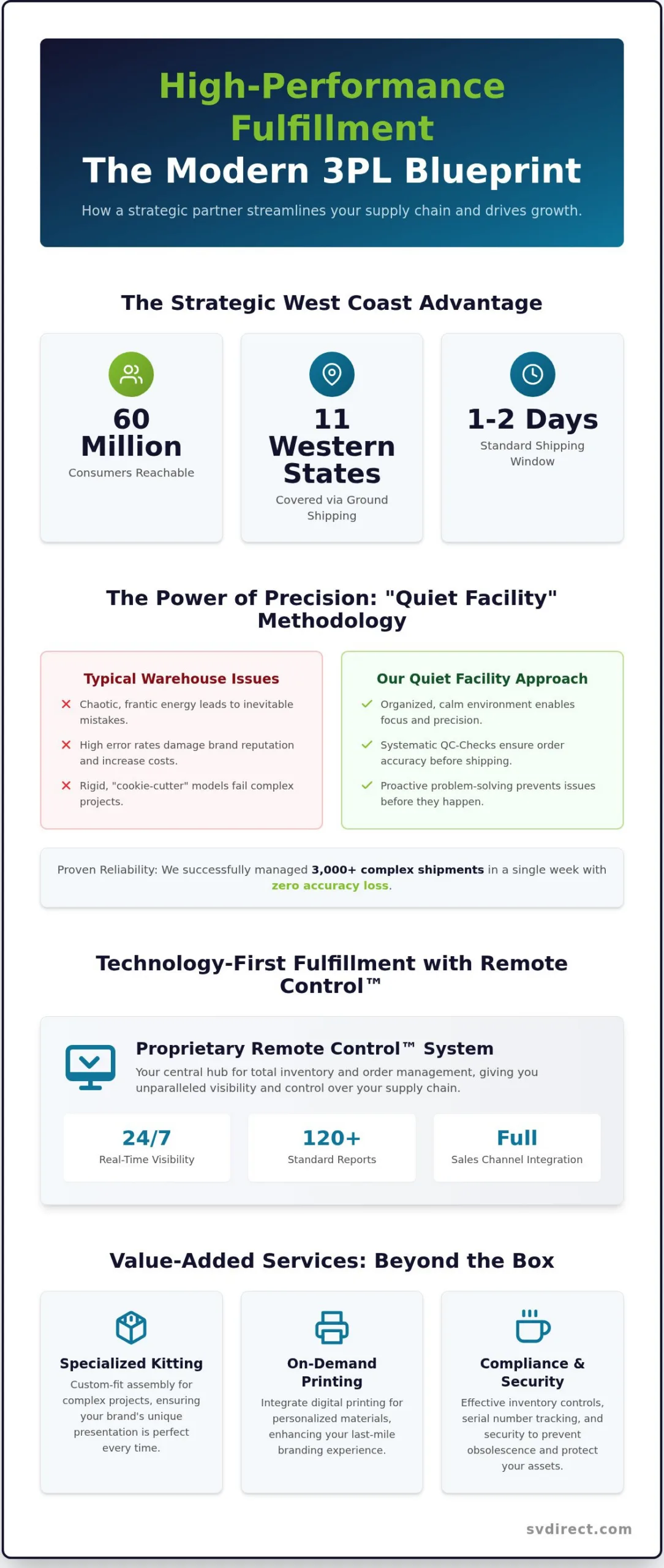
Choosing a partner to execute your multi-carrier shipping strategy is a decision that impacts every facet of your business growth. At Silicon Valley Direct, we don’t view ourselves as a transactional vendor. We operate as a dedicated extension of your team. With over 25 years of operational history since our founding in 1999, we’ve seen the industry evolve from simple parcel delivery to the complex, data-driven ecosystem it is today. We provide the steady hand and physical infrastructure needed to turn your logistics goals into a competitive advantage. Our team consists of long-term professionals who understand that your success is our success.

Our proprietary Remote Control™ system serves as the central nervous system for your fulfillment. It offers 24/7 visibility into your inventory and carrier performance through more than 120 standard reports. This level of transparency ensures you aren’t just shipping boxes; you’re managing a high-performance network. Our proactive “Make-It-Right” philosophy means we anticipate carrier conflicts and logistics bottlenecks before they reach your customers. We take personal pride in the precision of our work. If a carrier’s performance dips or a surcharge pattern emerges, we flag it immediately. We believe in direct human connection and personal oversight, which is why you’ll always have access to an expert who knows your business inside and out.

Leveraging Proprietary Technology for Real-Time Control

The SVD web interface is designed for total flexibility. It provides a platform-agnostic environment that works seamlessly with any development stack, allowing your team to build custom user interfaces that fit your specific workflow. This technical agility is backed by real-world performance. For instance, we regularly manage high-volume projects, such as handling over 3,000 shipments in a single week, while maintaining zero color variance on printed materials and zero shipping errors. This combination of digital sophistication and physical accuracy is what separates a true partner from a mere consultant who only offers advice without the warehouse capacity to back it up.

A Proactive Partnership for National and Global Reach

We reject the “cookie-cutter” approach common in the fulfillment industry. Every brand has unique needs, whether you require high-compliance healthcare mailing services or a complex global eCommerce rollout. Our team specializes in bespoke problem-solving, tailoring our kitting, assembly, and distribution processes to your exact specifications. By combining our deep industry expertise with a commitment to human oversight, we ensure your global reach is as reliable as your local presence. We treat every project with the same level of care and precision, ensuring that your growth is never limited by your fulfillment capacity.

Partner with Silicon Valley Direct for your multi-carrier fulfillment needs.

Future-Proofing Your Fulfillment Engine

Transitioning to a sophisticated multi-carrier shipping strategy is the most effective way to insulate your brand from the volatility of the 2026 logistics market. By balancing automated routing logic with the wisdom of seasoned professionals, you transform shipping from a logistical burden into a driver of customer loyalty. You’ve seen how carrier diversification reduces fragility and how transparent checkout options can recover lost revenue. It’s about building a framework that scales with your ambition without increasing your operational stress.

We bring over 25 years of logistics excellence to every partnership, ensuring your operations remain stable even during peak season surges. Our proprietary Remote Control™ system provides the 24/7 visibility you need to audit performance in real time; our proactive human QC-check process prevents errors before they reach the doorstep. We don’t just ship boxes; we protect your brand’s reputation with every delivery. You can move forward with the confidence that your logistics are handled with precision and care.

We look forward to helping you master the complexity of modern distribution and achieving a new level of operational resilience.

Frequently Asked Questions

What is a multi-carrier shipping strategy?

A multi-carrier shipping strategy is a deliberate approach to distributing parcel volume across multiple national, regional, and niche carriers rather than relying on a single provider. This framework allows your business to optimize for cost, speed, and reliability on a per-package basis. It acts as a vital safeguard against carrier capacity caps and service disruptions, ensuring that your fulfillment engine remains operational regardless of external market volatility or peak season pressures.

How many carriers should a growing eCommerce business use?

Most growing brands find that a mix of three to five carriers provides the ideal balance between redundancy and operational simplicity. This usually includes two national giants for broad reach, one or two regional specialists for last-mile efficiency, and a niche provider for specialized shipping needs. Maintaining this variety ensures you have the flexibility to pivot during high-volume periods without overwhelming your internal tracking and reporting systems.

Will I lose my carrier volume discounts if I use multiple providers?

Not necessarily; in fact, a multi-carrier shipping strategy often reveals that hidden surcharges from a single provider outweigh the benefits of a basic volume discount. By rate shopping across multiple carriers, you can often find lower total landed costs for specific zones or parcel profiles. You aren’t just chasing a discount; you’re matching each shipment to the most efficient provider to protect your overall margins and delivery promises.

What is the difference between a regional carrier and a national carrier?

National carriers provide comprehensive coverage across the entire country and international markets, while regional carriers focus on high-density delivery zones within specific geographic areas. Regional providers often offer superior speed and fewer surcharges for last-mile deliveries because they bypass the hub-and-spoke congestion of national networks. Integrating regional specialists is a key component of a resilient and cost-effective distribution model that prioritizes the final leg of the journey.

How do shipping APIs help with a multi-carrier strategy?

Shipping APIs allow your Order Management System to communicate in real time with multiple carriers to pull live rates, validate addresses, and generate labels. This technical integration automates the selection process by comparing transit times and costs in milliseconds. Without these web services, managing multiple providers would require manual entry, which increases the risk of errors and slows down your warehouse production during critical, deadline-driven windows.

What does ‘batch delivery to carrier’ mean in fulfillment?

Batch delivery is the process of grouping all orders assigned to a specific carrier into a single, organized hand-off for end-of-day pickup. This method streamlines warehouse operations by ensuring that packages for different providers are segregated and ready for their respective drivers simultaneously. It reduces the chaos of multiple daily pickups and ensures that your facility maintains a steady, methodical flow from the packing station to the departure dock.

Can a multi-carrier strategy help reduce cart abandonment?

Yes; providing customers with multiple shipping options and transparent delivery dates directly addresses the leading causes of cart abandonment. When shoppers see varied tiers like Economy, Standard, and Expedited, they feel in control of their purchase experience. Displaying precise estimated delivery dates instead of vague windows builds the trust necessary to convert a browsing visitor into a paying customer who feels confident in your reliability.

Is multi-carrier shipping more expensive to manage?

While the initial technical setup requires an investment in integration, the long-term savings in reduced surcharges and improved delivery performance usually outweigh the management costs. A proactive partner manages the complexity for you, using proprietary systems to audit performance and automate routing logic. In the 2026 market, the cost of a single-carrier service failure is far higher than the cost of maintaining a diversified and stable shipping network.

Healthcare Fulfillment Services: Navigating Compliance and Precision in 2026

A single fulfillment error in medical device distribution isn’t just an operational headache; it can delay a procedure, trigger a regulatory audit, or put a patient at risk. That’s the reality that makes healthcare fulfillment services fundamentally different from any other logistics category. And yet, too many medical device companies are still partnering with generalist 3PLs that treat a surgical kit the same way they’d treat a box of consumer electronics.

You already know the pressure you’re under. Regulatory compliance isn’t optional, inventory inaccuracies can cascade into dangerous backorders, and a single shipment with missing lot or serial number data can unravel months of careful documentation. The stakes are simply too high for a fulfillment partner that’s learning on the job.

This article walks you through what precision-driven healthcare fulfillment actually looks like in 2026: from seamless OMS and ERP integration to zero-error kitting, real-time serial number visibility, and the compliance-ready processes that protect both your business and your patients. If you’re evaluating your current logistics setup, what follows will give you a clear framework for what to demand from a fulfillment partner.

Key Takeaways

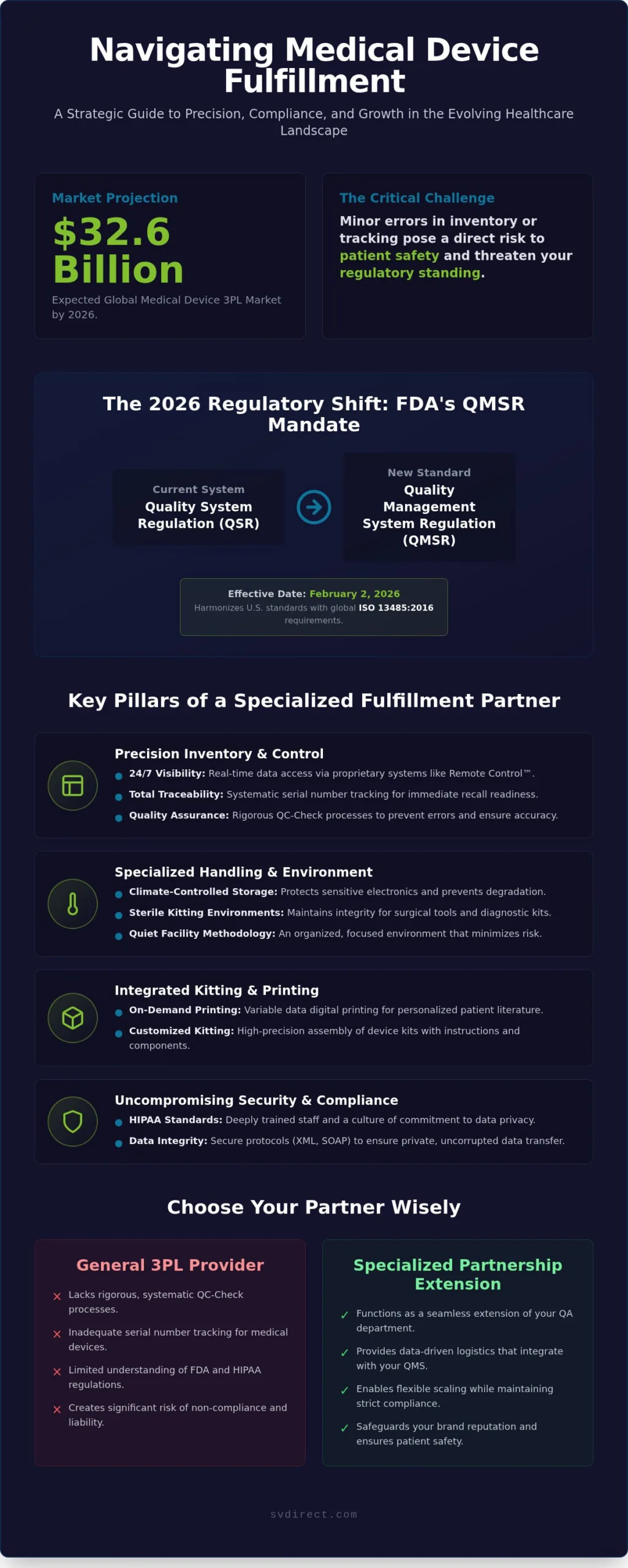
  • Specialized healthcare fulfillment services operate under an entirely different set of rules than standard logistics – FDA device classifications, HIPAA requirements, and lot-level traceability all shape how products must be stored, handled, and shipped.
  • Precision kitting and compliant literature fulfillment – including accurate Instructions for Use – are not secondary concerns; they are patient safety imperatives that demand a deliberate, zero-error methodology.
  • Real-time inventory visibility, including automated alerts for low stock and backorders, is essential for medical device manufacturers who cannot afford supply gaps at the point of care.
  • The right fulfillment partner combines scalable infrastructure with a calm, organized operational environment – because in regulated healthcare logistics, a hectic warehouse floor is a compliance risk waiting to happen.
  • Evaluating a fulfillment partner means looking beyond price and capacity to assess their systems, staff experience, and ability to grow alongside your business without sacrificing accuracy or regulatory integrity.

What Are Medical Device Fulfillment Services?

Medical device fulfillment services are a specialized category of third-party logistics (3PL) designed specifically to handle, store, and distribute regulated healthcare products. That definition sounds straightforward, but the operational reality behind it is anything but. Unlike standard eCommerce fulfillment, where the primary concern is getting a package from point A to point B on time, healthcare fulfillment operates within a dense framework of regulatory requirements, traceability mandates, and patient safety obligations that shape every single workflow decision.

The distinction matters enormously. A generalist 3PL optimizes for speed and volume. A healthcare-specialized fulfillment partner optimizes for accuracy, compliance, and chain-of-custody integrity, often simultaneously. When a surgical instrument ships without a verified lot number, or a diagnostic kit arrives with incorrect labeling, the consequences extend far beyond a customer service complaint. They can trigger FDA inquiries, compromise clinical trial data, or delay a procedure that a patient is counting on.

Serial number tracking and lot control sit at the absolute center of this discipline. Every regulated medical device must be traceable from the moment it enters a warehouse to the moment it reaches its destination. This isn’t a best practice; it’s a baseline requirement that shapes how inventory systems are built, how staff are trained, and how fulfillment partners are evaluated. Silicon Valley Direct’s Remote Control™ system provides clients with real-time serial number visibility precisely because that level of traceability is non-negotiable in this space.

Fulfillment speed also carries clinical weight. Backorders in the medical device supply chain don’t just frustrate procurement teams; they can delay procedures, disrupt clinical trials, and create gaps in patient care. A fulfillment partner that proactively monitors inventory levels and flags potential shortfalls before they become critical is an operational asset, not just a logistics vendor.

Core Components of Healthcare Logistics

Effective healthcare fulfillment services are built on three interconnected capabilities:

  • Secure, environment-appropriate warehousing: Products must be stored under conditions that preserve their integrity, with access controls and organization systems that support accurate picking and compliance audits.
  • Real-time inventory management with serial number tracking: Every unit must be accounted for at the lot and serial number level, with visibility that extends to the client at any moment.
  • Global shipping coordination: Whether serving hospital networks, clinical trial sites, or direct-to-patient B2C channels, the logistics infrastructure must handle both domestic and international distribution with equal precision.

The High Stakes of Accuracy

In medical fulfillment, a zero-error standard isn’t an aspiration; it’s the minimum threshold for safe, compliant operations. Proactive problem-solving is what separates a true healthcare logistics partner from a reactive vendor. Identifying a potential backorder before it disrupts a supply chain, catching a documentation gap before a shipment leaves the dock, or flagging a labeling inconsistency before it reaches a clinician, these are the interventions that protect both patients and businesses.

The physical environment where this work happens also matters. A calm, organized facility isn’t just aesthetically preferable; it’s operationally essential. High-volume precision work demands a warehouse culture where processes are methodical, staff are experienced, and distractions are minimized. That’s not a soft consideration. It’s a compliance variable.

Compliance in medical device logistics isn’t a single checkbox. It’s a layered framework that shifts depending on what you’re shipping, who’s receiving it, and what data travels alongside it. A fulfillment partner that genuinely understands this landscape doesn’t just follow rules; they build their entire operational infrastructure around them.

FDA Class 1, 2, and 3 Requirements

The FDA classifies medical devices into three risk-based tiers, and each one carries distinct implications for how products must be handled, stored, and documented throughout the fulfillment process.

  • Class 1 devices (bandages, examination gloves, tongue depressors) carry the lowest risk profile and are subject to general controls. Standard handling protocols apply, but accurate inventory management and clean chain-of-custody records remain essential.
  • Class 2 devices (powered wheelchairs, infusion pumps, surgical drapes) require special controls, including performance standards and post-market surveillance. Fulfillment workflows must support the documentation that enables this oversight, particularly lot-level tracking and verified shipping records.
  • Class 3 devices (implantable pacemakers, deep brain stimulators, replacement heart valves) sit at the highest risk tier and are subject to premarket approval. The traceability requirements here are stringent. Every unit must be accounted for with a precision that leaves no room for ambiguity at any point in the supply chain.

Your 3PL must function as a seamless extension of your compliance team, not a separate entity that hands off responsibility at the dock door. When a regulatory audit arrives, the documentation your fulfillment partner holds is part of your compliance record. That’s a relationship that demands deep operational alignment, not just a signed service agreement.

Data Security and Information Integrity

Healthcare fulfillment services that handle patient-sensitive materials face an additional compliance layer: HIPAA. When shipping involves personal health information, whether on a label, an enclosed document, or an order record, that data must be protected at every point of contact. Secure medical mailing solutions aren’t optional; they’re a legal obligation with real consequences for mishandling.

On the systems side, encrypted web interfaces that protect order data and inventory records are non-negotiable. Silicon Valley Direct’s Remote Control™ system provides clients with secure, real-time access to inventory and order data precisely because transparency and security must coexist in this environment. For a deeper look at how compliant mailing practices protect both patients and manufacturers, the complete guide to healthcare mailing services covers the operational and regulatory specifics in detail.

Audit readiness is the practical test of all of this. Can your fulfillment partner produce lot histories, shipping confirmations, and chain-of-custody records on demand? If the answer involves hesitation, that’s a risk your business shouldn’t carry. If you’re evaluating whether your current setup genuinely meets this standard, it’s worth taking the time to discuss your compliance requirements with a specialized fulfillment partner before an audit forces the conversation.

The Synergy of Kitting and Literature Fulfillment

A medical device that ships without its Instructions for Use isn’t just incomplete. It’s potentially dangerous, and almost certainly non-compliant. IFUs and user manuals aren’t supplementary materials; they’re regulated components of the product itself. Treating them as an afterthought, or outsourcing their production and insertion to a separate vendor, introduces exactly the kind of documentation gap that triggers recalls and regulatory scrutiny.

Most fulfillment operations handle kitting and literature as separate workflows, sometimes managed by entirely different vendors. That siloed approach creates handoff points where errors accumulate: the wrong manual version gets included, a language variant is substituted, or a revision update doesn’t propagate before a shipment run. In precision-driven healthcare fulfillment services, those gaps aren’t acceptable at any volume.

The answer is integration. When printing and kitting happen under the same roof, managed by the same team, the entire process tightens. Version control becomes a single-point responsibility. Quality checks apply to both the device components and the literature simultaneously. And when a product update requires a new IFU, the change is reflected immediately, without the lag that comes from coordinating across vendors.

Integrated On-Demand Printing

Silicon Valley Direct’s HP Indigo 5500 with liquid ink technology produces offset-quality output that meets the visual precision medical literature demands: sharp anatomical diagrams, legible fine-print warnings, and accurate color rendering for device identification. On-demand production means literature is printed when it’s needed, not warehoused in bulk runs that become obsolete the moment a label or dosage instruction changes.

Variable Data Printing extends this further. Serialized manuals, personalized patient kits, and localized clinical trial materials can each be produced with unique data fields, lot-specific references, or region-appropriate regulatory language, all within the same print run. For short-run applications like Phase II trial documentation or geographically targeted medical marketing campaigns, this capability eliminates the waste and lead time that offset printing typically demands. Explore the full scope of what’s possible through on-demand digital printing.

Complex Kitting and Hand Assembly

Assembling a surgical or diagnostic kit isn’t a pick-and-pack operation. It requires a dedicated hand-assembly team that understands what goes into each kit, in what order, and why. Bundling a device with its necessary disposables, correct literature version, and any promotional or instructional inserts demands both process discipline and genuine product familiarity.

SVD’s QC-Check process applies systematic inspection at each stage of complex kit assembly. Components are verified against a defined checklist before the kit is sealed, ensuring that every unit leaving the facility matches the exact specification, not approximately, but precisely. That level of structured oversight is what separates compliant healthcare fulfillment services from general assembly operations that treat medical kits like any other bundled product.

  • Literature version control: On-demand printing ensures only current IFU and manual versions enter the kitting workflow.
  • Component verification: Each kit is checked against a defined assembly specification before sealing.
  • Short-run flexibility: Clinical trial kits and localized materials can be produced in precise quantities without minimum-run constraints.
  • Single-source accountability: Printing and assembly under one roof eliminates inter-vendor handoff errors.

When the stakes are patient safety and regulatory compliance, the operational model that keeps printing, kitting, and quality control inside a single, organized facility isn’t just more efficient. It’s the only model that consistently holds.

Healthcare Fulfillment Services: Navigating Compliance and Precision in 2026

Real-Time Visibility and Inventory Control

Blind spots in your inventory data aren’t an inconvenience in medical device distribution. They’re a liability. When a hospital’s procurement team is counting on a specific implant being in stock, or a clinical trial site needs a kit replenished before a scheduled procedure window, the difference between real-time visibility and a 24-hour reporting lag can have direct consequences at the point of care. Healthcare fulfillment services that can’t deliver continuous, accurate inventory intelligence aren’t meeting the baseline requirement for this industry.

The operational standard here is straightforward: your fulfillment partner’s inventory data should be as current as your own internal systems, and it should be accessible whenever you need it. Not during business hours. Not after a manual report is generated. Now. That level of transparency is what allows medical device manufacturers to make confident procurement decisions, respond to demand fluctuations, and maintain the supply continuity that clinical operations depend on.

Automated notifications close the gap between data and action. When stock levels approach a defined threshold, when a new receipt is logged, or when a backorder condition develops, the system should surface that information proactively rather than waiting for someone to run a query. Automated alerts prevent stock-outs of life-saving equipment by giving supply chain teams the lead time they need to respond before a shortage becomes a crisis.

Reporting depth matters just as much as real-time access. With more than 120 standard reports available, supply chain teams can move beyond reactive monitoring into genuine optimization: identifying demand patterns, evaluating carrier performance, analyzing lot-level movement history, and building the documentation foundation that regulatory audits require.

The Remote Control™ Advantage

SVD’s Remote Control™ system tracks every order from pick-slip generation through final delivery, giving clients a complete, uninterrupted chain-of-custody record. The system connects to existing ERP platforms via XML/SOAP-based Web Services, which significantly reduces the custom coding burden that typically accompanies a new fulfillment integration. Your team works within familiar systems; the data flows cleanly between them.

Inventory Accuracy and Expiration Management

FIFO (First-In, First-Out) inventory rotation is the standard methodology for preventing medical product expiration, and it’s built into SVD’s warehouse workflows rather than treated as an optional protocol. Products with the earliest receipt dates move first, which protects both product integrity and compliance standing.

  • Serial number tracking: Every unit is recorded at the serial level, making recall execution and warranty management precise and auditable rather than approximate.
  • Lot-level traceability: Full lot histories are maintained and accessible on demand, supporting both internal quality reviews and external regulatory inquiries.
  • Expiration monitoring: Inventory approaching expiration is flagged before it becomes a write-off or a compliance issue.

Taken together, these capabilities transform inventory management from a background function into a strategic asset. In a supply chain where accuracy isn’t negotiable, that distinction carries real weight.

Choosing Your Medical Device Fulfillment Partner

Most vendor evaluations start with price and capacity. Those matter, but in medical device distribution, they’re table stakes. The questions that actually determine whether a fulfillment relationship will hold up under regulatory pressure, high-volume deadlines, and the inevitable unexpected are harder to answer from a sales deck. What does the warehouse floor actually feel like? How does the team respond when a conflict surfaces? And when your business scales, will the partner scale with the same precision or start cutting corners?

Facility atmosphere is a legitimate evaluation criterion. A hectic environment, one where staff are reactive, processes shift under pressure, and the floor feels disorganized, is a compliance risk before a single product ships. Deliberate methodology, the kind built into how a facility is organized, how staff are trained, and how quality checks are sequenced, produces consistently accurate output precisely because it doesn’t depend on individual heroics to catch errors. When you’re evaluating a healthcare fulfillment services partner, ask for a facility tour. What you observe will tell you more than any SLA document.

Scalability deserves the same scrutiny. A partner that performs well at moderate volume but struggles when a product launch or seasonal demand spike arrives isn’t a growth partner; it’s a bottleneck waiting to form. The right partner has the infrastructure, staffing depth, and process discipline to absorb volume increases without sacrificing the accuracy standards that regulated distribution demands.

Proactive communication is the differentiator that’s hardest to quantify and most consequential to find. A fulfillment partner worth trusting doesn’t wait for problems to surface. They flag potential conflicts before they become disruptions, whether that’s a lead time concern, an inventory threshold approaching, or a documentation gap identified during a pre-shipment check. That anticipatory posture is what separates a true operational partner from a transactional vendor.

Environmental responsibility is increasingly part of the evaluation as well. On-demand digital printing eliminates the bulk overruns and obsolete inventory that offset production generates. Hardware recycling initiatives reflect an operational culture that takes long-term thinking seriously, which tends to be the same culture that builds durable, accurate fulfillment processes.

The Nine Promises of Quality

SVD’s approach to quality begins with a foundational commitment: understanding what a client is actually trying to accomplish, not just what they’ve ordered. That orientation shapes everything from how kitting specifications are interpreted to how edge cases are handled when a shipment doesn’t go as planned. The “make-it-right” attitude isn’t a slogan; it’s the operational default when something falls outside the expected parameters. Client testimonials reflect what that commitment looks like in practice, across industries and over time.

The Silicon Valley Direct Commitment

With more than 25 years of experience in high-tech and healthcare fulfillment, SVD brings operational depth that newer entrants simply can’t replicate. The team functions as a seamless extension of your sales and marketing departments, handling the logistics infrastructure so your internal teams can focus on product development, clinical relationships, and growth. National distribution reach, combined with global shipping expertise, means SVD supports your business whether you’re serving a regional hospital network or coordinating international clinical trial logistics. That combination of experience, infrastructure, and genuine partnership orientation is what precision-driven medical device distribution actually requires.

Learn more about SVD’s fulfillment capabilities and how they support medical device manufacturers at every stage of growth.

Precision Is the Standard. Make Sure Your Partner Meets It.

Medical device distribution doesn’t leave room for approximation. The difference between a fulfillment partner that understands regulated healthcare logistics and one that’s adapting general processes to fit your products shows up in audit documentation, in kitting accuracy, and ultimately in patient outcomes.

What this article has made clear: compliant healthcare fulfillment services require lot-level traceability, integrated kitting and literature workflows, and real-time inventory visibility that doesn’t wait for a manual report. Those aren’t premium add-ons; they’re baseline requirements for operating safely in this space.

Silicon Valley Direct has been building that operational foundation since 1999. The proprietary Remote Control™ system delivers the chain-of-custody transparency that regulated distribution demands, and HP Indigo digital printing ensures every IFU and manual ships at the quality and version accuracy your compliance record requires.

If your current setup leaves any of those gaps open, now is the right time to have that conversation.

The right partner doesn’t just keep up with your growth; they help protect everything you’ve built.

Frequently Asked Questions About Healthcare Fulfillment Services

What is the difference between Class 1 and Class 2 medical device fulfillment?

The core difference lies in documentation depth and oversight requirements. Class 1 devices carry the lowest risk profile and require standard handling with clean chain-of-custody records. Class 2 devices demand special controls, including performance standards and post-market surveillance, which means your fulfillment partner must maintain verified lot-level tracking and shipping records that support ongoing regulatory oversight. The warehouse workflows, quality checks, and reporting capabilities required are meaningfully more rigorous at the Class 2 level.

Class 3 devices raise the bar further still, requiring premarket approval and the most stringent traceability standards in the FDA classification system. If you’re distributing across multiple device classes, your fulfillment partner needs processes that can accommodate each tier simultaneously without defaulting to the lowest common denominator.

How does HIPAA affect medical device shipping and logistics?

HIPAA becomes directly relevant whenever a shipment involves personal health information, whether that’s on a label, an enclosed document, or an order record. In those cases, your fulfillment partner is handling protected health information and must treat it accordingly: secure data handling, encrypted system access, and controlled physical environments are all required, not optional. A fulfillment partner without these safeguards in place exposes your business to real legal liability.

On the systems side, this means the platforms your 3PL uses to manage order data and inventory records must meet the same security standards you’d apply internally. SVD’s Remote Control™ system provides clients with encrypted, secure access to their inventory and order data precisely because transparency and HIPAA compliance have to coexist in a properly run healthcare logistics operation.

Can you provide serial number tracking for every individual device shipped?

Yes. Serial number tracking is built into SVD’s fulfillment workflows, not added as an optional layer. Every unit is recorded at the serial level from receipt through final delivery, creating a complete, auditable chain-of-custody record that supports recall execution, warranty management, and regulatory inquiries. This isn’t a premium feature; it’s a baseline requirement for compliant healthcare fulfillment services, and it’s treated as such operationally.

That level of granularity also makes a practical difference when something goes wrong. If a recall is issued or a warranty claim surfaces, you’re working with precise unit-level data rather than lot approximations. That specificity protects both your compliance standing and your customers.

What are the benefits of on-demand digital printing for medical manuals?

On-demand digital printing eliminates the version control problem that bulk offset runs create. When a label change, dosage update, or regulatory revision is required, the new version goes into production immediately. There’s no warehouse of obsolete literature to write off, and no risk of an outdated IFU shipping alongside a current device. SVD’s HP Indigo 5500 with liquid ink technology produces offset-quality output, meaning fine-print warnings, anatomical diagrams, and color-coded device identification all render with the precision medical literature demands.

Short-run flexibility is the other major advantage. Clinical trial documentation, regionally localized materials, and serialized patient kits can each be produced in precise quantities without minimum-run constraints. For medical device manufacturers managing multiple product lines or ongoing trial phases, that agility has real operational value.

Do you offer climate-controlled storage for sensitive medical components?

Storage environment requirements vary significantly across medical device categories, and the right answer depends on what you’re shipping. We’d encourage you to discuss your specific product sensitivities directly with our team so we can confirm whether our facility configuration is the right fit for your components. What we can confirm is that SVD’s warehousing is organized around the precision and access-control standards that regulated medical device storage demands, including FIFO inventory rotation to protect product integrity and prevent expiration issues.

How does your Remote Control™ system integrate with my existing eCommerce platform?

Remote Control™ connects to existing ERP and eCommerce platforms via XML/SOAP-based Web Services, which reduces the custom development burden that typically comes with a new fulfillment integration. Your team continues working within familiar systems; the data flows cleanly between them. Order tracking, inventory levels, lot histories, and shipping confirmations are all accessible in real time through a secure, encrypted interface, so you’re not waiting on manual reports to understand what’s happening in your supply chain.

If you’re running a more complex tech stack or have specific integration requirements, the practical next step is a direct conversation with our team to map your current setup against our integration capabilities. That’s a faster path to clarity than working through a generic checklist.

What is your process for handling medical device returns and recalls?

Returns management is a confirmed service offering at SVD, and in a regulated healthcare context, it requires more than a standard reverse logistics workflow. Returned medical devices need to be received, documented, and segregated with the same lot-level accuracy as outbound shipments. The chain-of-custody record doesn’t end at delivery; it has to account for what comes back and why. SVD’s serial number tracking capability means every returned unit is tied to its original shipment record, which matters enormously when a recall requires you to demonstrate exactly where specific units went and what came back.

For active recalls, the precision of your inventory data determines how quickly and completely you can respond. We’d recommend discussing your specific recall protocols directly with our team so we can walk you through how our processes align with your regulatory obligations.

Is there a minimum order volume for specialized medical kitting services?

SVD’s on-demand digital printing and hand-assembly capabilities are specifically designed to support short-run production without minimum-run constraints. Clinical trial kits, regionally localized materials, and serialized patient kits can all be produced in precise quantities, which means you’re not forced into bulk runs to access specialized kitting services. That flexibility is particularly valuable during product launches, Phase II trial phases, or market-entry situations where demand volume is still being established.

For complex kitting projects with specific assembly specifications, the best approach is a direct conversation with our team. We can assess your requirements, walk you through the QC-Check process, and give you a realistic picture of what’s feasible at your projected volume. Request a quote to start that conversation.

nationwide fulfillment

Best Nationwide Fulfillment Services

Nationwide fulfillment matters because ecommerce growth and delivery expectations now move together. U.S. retail ecommerce reached an estimated $326.7 billion in Q1 2026, and that volume punishes brands that ship late, miss inventory counts, or cannot support a clear delivery promise.

TL;DR: Summary

  • The best nationwide fulfillment services pair same-day or reliably same-day order release with accurate inventory control, broad carrier reach, and clear exception handling; for many growing ecommerce brands, a flexible 3PL model is the strongest fit.
  • DHL reported that 93% of U.S. shoppers are convenience-driven consumers, which makes fast delivery, easy returns, and trustworthy tracking central to conversion and repeat purchase.
  • FTC shipping rules matter: if a seller cannot ship when promised, it must offer the buyer a clear choice to accept the delay or cancel for a prompt refund.
  • A strong nationwide fulfillment partner should show real operating proof, including cutoff times, receiving SLA, inventory count procedures, scan checkpoints, integration reliability, returns handling, and reporting that shows order exceptions that documents on-time performance.
  • If order volume is still concentrated in one region, a well-run single-node operation can work nationwide; if demand is split across coasts and order density is high enough, a multi-node model can reduce transit time but adds inventory complexity.

The practical question is not who can ship a box anywhere in the U.S. Almost any carrier can do that. The real question is which nationwide fulfillment service can do it quickly, accurately, and with systems that hold up when order volume spikes.

What is nationwide fulfillment and why does it matter for ecommerce brands?

Nationwide fulfillment is the operating model that lets a Shopify or Amazon seller store, pick, pack, and ship orders across the United States with predictable service levels. It matters because delivery speed, stock accuracy, and returns handling now affect revenue as directly as product quality.

The scale is clear. The U.S. Census Bureau estimated Q1 2026 ecommerce sales at $326.7 billion, up 9.8% year over year, and ecommerce accounted for 16.9% of total U.S. retail sales. When that much demand runs through digital channels, fulfillment stops being a back-office task and becomes part of the customer experience.

DHL’s 2026 U.S. findings add the consumer side of the picture: 93% of U.S. shoppers identify as convenience-driven consumers, and inventory issues and delivery options are among the top reasons Americans abandon carts. A common mistake is assuming nationwide fulfillment means opening many warehouses immediately, when in reality a disciplined single-node operation can still serve the country well if order release is fast and carrier coverage is well designed.

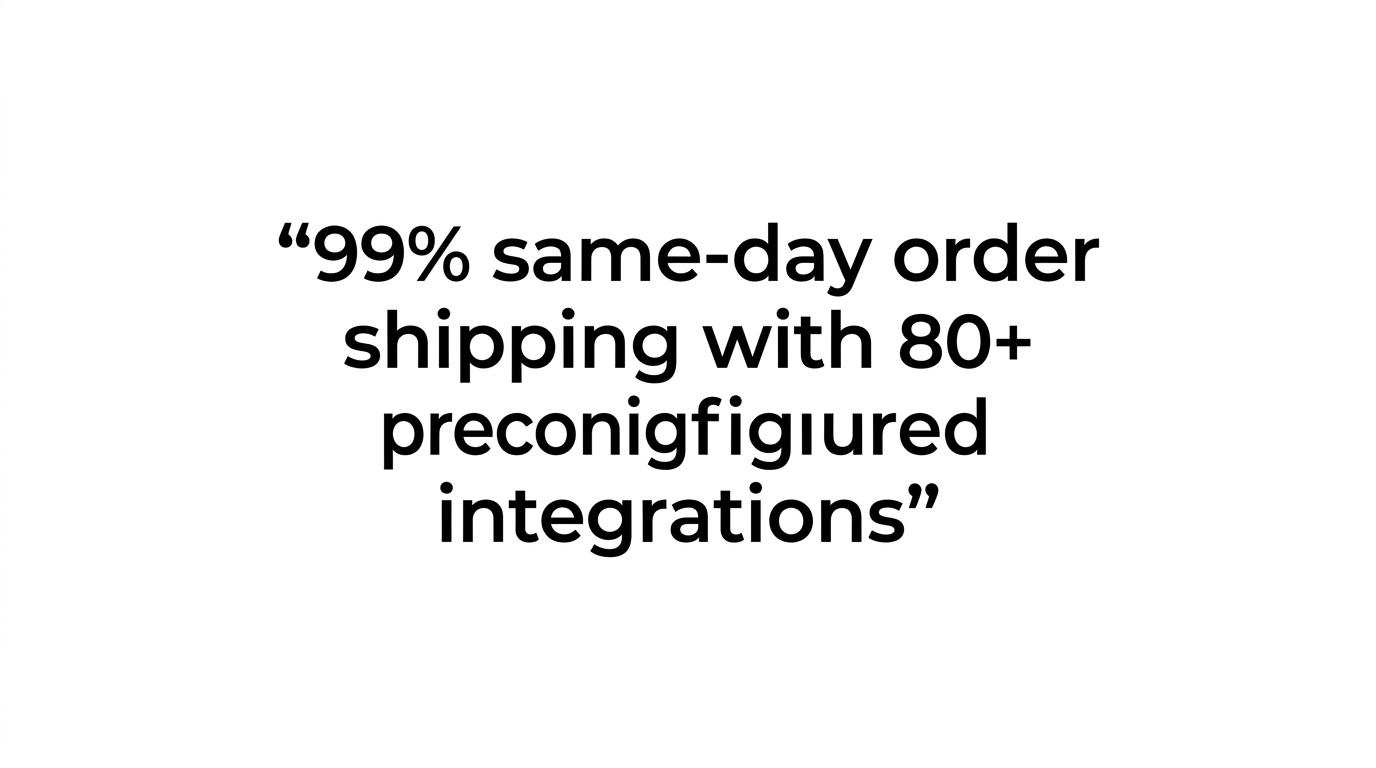
“SVDirect supports same-day shipping, no minimum order requirement, and 80+ preconfigured integrations for ecommerce fulfillment.”

What makes a nationwide fulfillment service actually best?

The best nationwide fulfillment services combine fast order release, accurate inventory accuracy, and documented exception management; Silicon Valley Direct and the FTC standard point to the same truth that proof matters more than promises. A low rate alone does not make a service best.

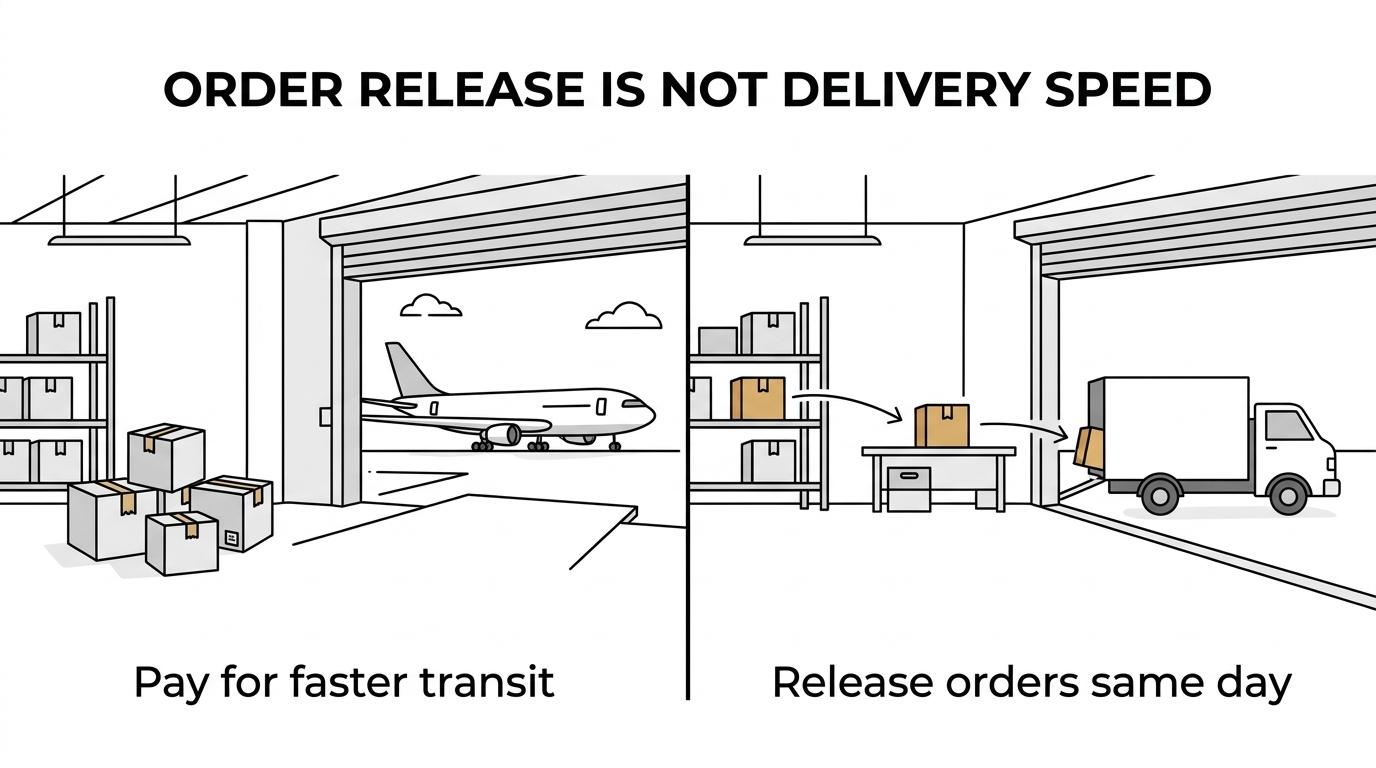
Start with shipping speed, but define it correctly. Fast transit is useful only if orders are released on time. Same-day shipping with a real cutoff can beat a cheaper service that waits until the next business day to process. Then look at inventory accuracy. If a provider cannot prevent mis-picks, cycle-count routinely, and isolate damaged or returned stock, nationwide reach just multiplies the error.

Next comes visibility. Advanced brands should expect a warehouse management system, channel integrations, tracking flow, returns status, and reporting that shows order exceptions. Many operators also differentiate with a dedicated account manager and live support, which matters when a retail launch, crowdfunding drop, or B2B routing-guide issue needs a same-day decision. A common misconception is that automation alone guarantees reliability. It does not. Scanning discipline, SOPs, and exception ownership still decide outcomes.

What are the best nationwide fulfillment service options for growing brands?

The best nationwide fulfillment option depends on order profile, channel mix, and inventory risk, and Silicon Valley Direct, bi-coastal 3PL setups, and specialist service models each fit different needs. The right choice is the one that supports your delivery promise without adding avoidable complexity.

For most brands, the evaluation starts with service design rather than brand familiarity. Look at whether the provider fits your demand pattern, systems stack, and SKU behavior.

  1. Silicon Valley Direct (SVDirect): A strong fit for growing brands that want same-day shipping, no minimum order requirement, 80+ preconfigured integrations, custom APIs, and Bay Area access from Union City, California.
  2. Single-node nationwide 3PL model: Best when most orders originate from one side of the country and SKU counts are still manageable. This keeps inventory simpler and reduces stock fragmentation.
  3. Bi-coastal fulfillment model: Best when East Coast and West Coast demand are both heavy enough to justify split inventory. Transit times improve, but replenishment and forecasting get harder.
  4. Omnichannel fulfillment provider: Best for brands shipping direct-to-consumer and wholesale at the same time, especially when retail compliance, routing guides, and carton labeling are part of the job.
  5. Specialist fulfillment provider: Best when the operation includes healthcare logistics, print-on-demand, literature kits, or projects with unusual kitting, traceability, or handling requirements.

If your order volume is still uneven, flexibility matters more than network size. That is where no order minimums, custom workflows, and reporting can be more valuable than a broad warehouse map that forces premature inventory splitting.

“One SVDirect customer reported more than 1,000 orders over two years without recalling a single fulfillment error.”

How do you choose a nationwide fulfillment partner in three steps?

A three-step evaluation works better than a demo-led selection, and FTC expectations make operational records more important than polished sales language. The right partner should be able to explain how it ships on time, not just say that it does.

Step 1 is to map your order reality. Review monthly order volume, peak-day volume, SKU count, parcel weights, return rates, and channel mix. If 70% of your orders are under one pound and 60% ship west of the Rockies, your optimal design will differ from a brand sending heavier parcels evenly across the country.

Step 2 is to inspect process proof. Ask about cutoff times, receiving SLA, inventory count procedures, scan checkpoints, and what happens when stock is short. This is also where FTC logic matters. If a seller promises shipment in a stated time, there should be records or documentary proof that systems and procedures support that promise in the ordinary course of business.

Step 3 is to test exception handling. Delays, oversells, damaged units, address problems, and return-to-sender events are where weak operators break down. If the partner cannot explain who owns each exception and how the customer is notified, treat that as a risk signal.

How does nationwide fulfillment compare with regional warehousing?

Single-node and multi-node fulfillment solve different problems, and California versus a California-plus-Midwest design changes cost, speed, and inventory complexity. More warehouses can reduce parcel zones, but they also raise replenishment pressure and safety stock requirements.

A single-node model is often the best starting point for younger brands. You keep one inventory pool, one receiving process, and one replenishment plan. If your products are seasonal, fragile, or cash-intensive, that simplicity can protect working capital and reduce dead stock.

A regional or multi-node model becomes attractive when order density supports it. If your East Coast demand is large enough and transit complaints are consistent, then placing inventory closer to buyers can reduce delivery time and sometimes postage. The trade-off is operational: each node needs stock, counts, transfers, and forecasting. A common mistake is moving to multi-node too early, then tying cash up in duplicate inventory that does not turn.

How does same-day shipping compare with next-day processing?

Same-day shipping improves delivery promise reliability when the cutoff is real, while next-day processing can still work for lower-urgency brands with steadier demand. In practice, order release time often matters more than a marketing claim about national reach.

If a customer orders at 11 a.m. and the order leaves the warehouse that afternoon, the brand gains a full day versus a provider that processes tomorrow morning. That difference affects marketplaces, branded ecommerce stores, preorder campaigns, and replacement shipments. It also reduces the gap between checkout expectation and the first tracking event.

Next-day processing is not automatically poor service. If your product is customized, low-volume, or less time-sensitive, the lower operational intensity may be acceptable. The mistake is promising same-day cutoffs in your storefront while running next-day warehouse operations behind the scenes.

“SVDirect operates from an 88,704-square-foot Union City facility with nine dock-high doors and supports shipping across the U.S., Canada, and international destinations.”

How should you set inventory across the country in three steps?

Inventory placement should follow order geography, SKU velocity, and reorder risk, not intuition; Shopify reports, ERP data, and WMS history should drive the decision. Good nationwide fulfillment starts with where demand actually is.

Step 1 is to map twelve months of shipping destinations by ZIP cluster and by service level. If one cluster dominates, keep the model simple. If demand is truly split and service complaints track that split, you have a real case for another node.

Step 2 is to segment SKUs by velocity and substitution risk. Fast-moving, stable SKUs can be duplicated across nodes more safely than slow, expensive, or highly seasonal products. If a SKU is volatile or prone to version changes, keep it centralized longer.

Step 3 is to define safety stock and transfer triggers before you split inventory. This is the part brands often skip. If you cannot forecast replenishment cadence and inbound lead time, a second warehouse can create more stockouts, not fewer.

How do shipping compliance and the FTC Mail Order Rule affect nationwide fulfillment?

FTC shipping compliance is operational, not just legal text, and sellers need systems that support promised shipment timing, delay notices, and prompt refunds. Any nationwide fulfillment strategy should be tested against that standard before checkout promises go live.

The FTC’s Mail, Internet, or Telephone Order Merchandise Rule says sellers must have records or documentary proof showing systems and procedures that assure shipment within the applicable time in the ordinary course of business. If a seller cannot ship on time, it must give the buyer a clear option to accept the delay or cancel for a prompt refund.

That changes how fulfillment should be managed. A provider’s order cutoff, backorder logic, and customer-notification workflow are not minor details. They help determine whether the brand can support a definite revised shipping date or whether the order should be cancelled. If your marketing team wants aggressive delivery language, your warehouse process has to support it.

How do integrations and reporting improve nationwide fulfillment in three steps?

Shopify, Amazon, and custom APIs matter because nationwide fulfillment fails when orders, inventory, or tracking sync late. The strongest providers pair broad integration coverage with reporting that shows exceptions before customers find them.

Step 1 is to map every system touchpoint. That includes storefronts, marketplaces, ERP, returns software, EDI, and customer service tools. The goal is to identify where order holds, bundle logic, address validation, and inventory updates happen.

Step 2 is to test edge cases before launch. Run partial shipments, bundles, returns, cancelled orders, preorder flags, and out-of-stock scenarios. A common misconception is that a successful basic integration test proves the workflow is ready. Most serious errors appear in exceptions, not in standard orders.

Step 3 is to monitor operational reporting daily. Look for late releases, inventory mismatches, aging returns, carrier exceptions, and backorder trends. This is where 24/7 portal access and detailed reporting stop being nice extras and become operational controls.

What mistakes cause nationwide fulfillment failures?

Most nationwide fulfillment failures come from mismatched promises, weak inventory controls, and unclear ownership of exceptions; DHL’s cart-abandonment findings and FTC requirements both point to the same issue. Operational discipline is what protects conversion and compliance.

The most common issues show up in predictable places, and most are preventable with better process design.

  • Choosing on postage alone: A lower parcel rate can be erased by slower order release, more customer support tickets, and refund costs.
  • Splitting inventory too early: More nodes can improve transit time, but they also increase carrying costs and forecast risk.
  • Ignoring returns design: Reverse logistics, restock rules, and damaged-item disposition affect margin as much as outbound shipping.
  • Treating integrations as finished work: Systems need monitoring after launch because channel changes and SKU logic shift over time.
  • Using vague shipping promises: If checkout messaging is aggressive and warehouse cutoffs are loose, late-shipment problems follow quickly.

When should a brand switch to a nationwide fulfillment provider?

A brand should move to a nationwide fulfillment provider when in-house operations can no longer support service promises, channel growth, or compliance needs; Silicon Valley Direct and similar 3PL models are usually strongest when flexibility and process depth are both required. The timing is earlier than many founders expect.

Watch for operational signals, not just rising order volume. If the team is missing same-day cutoffs, spending too much time on manual tracking requests, struggling with returns, or overselling across channels, the warehouse is now limiting growth. The same is true when retail, wholesale, and direct-to-consumer orders begin competing for the same labor and space.

There is also a strategic trigger. If nationwide fulfillment is supposed to improve conversion, then you need reporting that can show whether on-time release, error rate, and delivery promises are improving. If you cannot measure those basics, switching to a provider with stronger systems and documented SOPs is often the right next step.

Marketing Collateral Fulfillment: The Strategic Guide to Precision and Speed in 2026

Marketing Collateral Fulfillment: The Strategic Guide to Precision and Speed in 2026

In a year where paper prices are forecasted to rise by 3.4%, every kitting error or mismanaged brochure is a direct hit to your bottom line. You’ve likely felt the frustration of high bulk shipping costs or the panic of a lead response that’s anything but fast. It’s exhausting to manage global logistics when you don’t have real-time visibility into your inventory. We believe that effective marketing collateral fulfillment isn’t just about moving boxes. It’s about the precision of high-resolution digital printing meeting the speed of a proactive, quiet logistics facility.

This guide will show you how to bridge the gap between digital assets and physical delivery to ensure your materials reach global prospects with absolute accuracy. You’ll learn how to integrate print-on-demand services with automated warehousing to reduce waste and gain 24/7 visibility into your collateral usage. We’re moving beyond the chaos of traditional mailrooms to a sophisticated, data-driven approach that acts as a true extension of your team. By the end of this article, you’ll have a roadmap for a seamless fulfillment strategy that protects your brand and respects your budget.

Key Takeaways

  • Discover why high-resolution physical assets continue to drive superior engagement in 2026 and how to integrate them into a digital-first marketing strategy.
  • Learn how on-demand digital printing via HP Indigo technology streamlines marketing collateral fulfillment by eliminating costly inventory stockpiles while maintaining offset quality.
  • Explore the “Quiet Facility” methodology and systematic QC-Check processes that ensure zero-error kitting and assembly for complex global distributions.
  • Gain 24/7 visibility into your inventory and order status through proprietary data management systems that offer over 120 standard reports.
  • Understand how to transition from a vendor-client relationship to a strategic partnership where your fulfillment provider acts as a seamless extension of your internal team.

What is Marketing Collateral Fulfillment in the Digital-First Era?

Marketing collateral fulfillment is the end-to-end process of storing, kitting, and distributing physical sales and marketing assets. It’s the physical heartbeat of your brand’s outreach. While digital channels are saturated, understanding What is Marketing Collateral remains vital for brands looking to break through the noise. In 2026, physical touchpoints provide a tactile reality that digital-only campaigns often lack. When everyone else is sending an automated email, a high-resolution, perfectly kitted package on a prospect’s desk commands attention.

The industry has moved away from the era of dusty bulk storage. We’ve seen a decisive shift toward “just-in-time” literature fulfillment. This model prioritizes precision and speed over sheer volume. Instead of printing thousands of brochures that might become obsolete in months, modern systems allow for smaller, high-resolution runs that ship exactly when a lead shows interest. This evolution transforms fulfillment from a back-office chore into a strategic extension of your sales and marketing departments.

Types of Marketing Assets Managed

A sophisticated fulfillment partner handles a diverse array of physical goods. This includes traditional literature like brochures, data sheets, and user manuals. It also extends to trade show and event materials, where pre-show assembly and post-show returns must be handled with care. Branded merchandise and premium items also fall under this umbrella. Each item represents your brand’s commitment to quality. We treat every piece as a critical touchpoint in the customer journey.

The Cost of Inefficient Fulfillment

Inefficiency carries a heavy price tag. Beyond obvious shipping fees, hidden expenses like the storage of obsolete materials can drain your budget. In 2026, with paper prices rising by 3.4%, waste is no longer a minor inconvenience; it’s a financial liability. If your “speed to lead” is slow, you’re losing prospects to faster competitors. Brand damage is another silent killer. Poorly printed materials or kitting errors reflect poorly on your professionalism. Precision in marketing collateral fulfillment ensures your first impression is the right one. It’s about being first to the prospect’s desk with a message that looks and feels premium.

We don’t just ship boxes. We manage the physical manifestation of your brand’s promise. By integrating high-tech oversight with human expertise, we eliminate the chaos of traditional warehousing. This proactive approach allows your team to focus on growth while we handle the intricate details of logistics and assembly.

The HP Indigo Advantage: Integrating Digital Printing into Fulfillment

Modern marketing collateral fulfillment demands more than just storage. It requires a production engine that can keep pace with real-time leads. By utilizing HP Indigo technology, we’ve bridged the gap between high-end quality and logistical speed. Unlike traditional offset methods that require weeks of lead time, the digital printing industry has evolved to support immediate, on-demand production. This shift eliminates the need for massive inventory stockpiles that often end up in a recycling bin when brand messaging changes. We focus on a “just-in-time” model that keeps your materials current and your warehouse lean.

The technical difference lies in the ink. While many digital presses use dry toner, which can look “plastic” and sit on top of the paper fibers, HP Indigo uses liquid ink. This technology delivers a 230 line screen resolution, providing offset-quality results that satisfy even the most demanding brand standards. The sheets are dry-to-touch the moment they leave the press. This allows us to move directly from the print tray to the kitting table without waiting for ink to set. It’s a critical advantage for high-end marketing kits that need to ship within hours of an order being placed. You don’t have to choose between beauty and speed.

Variable Data Printing (VDP) for Personalization

Personalization is no longer a luxury. It’s an expectation. VDP allows us to swap copy, images, or entire layouts on every single sheet within a print run. When you integrate VDP into your personalized direct mail workflow, you’re not just sending a brochure; you’re sending a targeted sales tool. This level of customization significantly increases conversion rates by speaking directly to the prospect’s unique pain points. By merging marketing collateral fulfillment and production under one roof, we ensure that these personalized assets move into the fulfillment stream without delay.

Sustainability in Modern Printing

Precision printing is inherently more sustainable. By moving to a digital workflow, we eliminate the need for film, plates, and the harsh chemicals associated with traditional offset setups. We prioritize the use of FSC-certified papers and offer 30% recycled content options to help our partners meet their environmental goals. The greatest environmental benefit, however, is the reduction of waste. Printing only what you need, when you need it, ensures that your marketing budget isn’t spent on materials that will eventually become obsolete. If you’re ready to modernize your production, you can consult with our specialists on a sustainable print strategy.

Mastering Kitting and Assembly: The ‘Quiet Facility’ Methodology

Precision is a byproduct of environment. While many logistics providers operate in a state of constant, reactive chaos, we maintain a ‘Quiet Facility’ methodology. This isn’t just about noise levels; it’s a systematic approach to marketing collateral fulfillment that prioritizes focus and error reduction. In a quiet facility, every movement is deliberate. This atmosphere allows our staff to execute complex kitting projects, such as multi-component software packages or high-end promotional kits, with a level of detail that a hectic warehouse simply cannot match. Scalability shouldn’t mean a drop in quality. Whether we’re assembling 50 high-touch executive kits or 50,000 lead inquiry responses, we scale by replicating our systematic checks rather than rushing them.

The core of this methodology is our systematic QC-Check process. We don’t believe in ‘good enough’ when your brand reputation is at stake. Every kit undergoes a rigorous verification before it leaves our dock. This ensures the right brochure meets the right premium item every single time. It’s especially critical when executing strategic marketing during uncertainty, where physical assets like case studies and white papers must demonstrate your brand’s stability and expertise without a single error. Our proactive stance turns the fulfillment center into a reliable safeguard for your brand standards.

Specialized Kitting Services

Our facility is designed to handle the nuances of various specialized industries. For trade shows, we pre-assemble packets and ship them directly to the event floor, ensuring your team has everything they need the moment they arrive. We also manage Point of Purchase (POP) distribution with precise inventory control for retail environments. In the healthcare sector, we provide specialized handling and serial number tracking for medical device fulfillment, ensuring compliance and accuracy in high-stakes environments where errors aren’t an option.

Inventory Control and Obsolescence Prevention

Effective marketing collateral fulfillment requires more than just picking and packing. It demands proactive inventory management. Our proprietary system provides real-time tracking of serial numbers and batch lots, giving you total visibility into your assets. We set automated alerts for low inventory levels so you never miss a lead response due to a stockout. By managing the full lifecycle of your literature fulfillment services, we help you identify slow-moving items before they become obsolete. This proactive stance reduces waste and ensures your budget is always focused on materials that drive results.

Marketing Collateral Fulfillment: The Strategic Guide to Precision and Speed in 2026

Remote Control™: Leveraging Technology for Real-Time Visibility

Effective marketing collateral fulfillment relies on more than just physical space; it requires digital transparency. Our proprietary Remote Control™ system serves as the central nervous system for your logistics. It provides 24/7 access to your inventory, allowing you to place orders and track progress in real-time from any location. This platform isn’t a generic portal. It’s a sophisticated data management tool that generates 120+ standard reports, enabling your team to make data-driven decisions based on actual collateral usage and freight expenses. You gain the clarity needed to optimize your budget and eliminate waste.

We understand that your brand identity must remain consistent across every touchpoint. That’s why we offer customized web interfaces that mirror your corporate branding or company store. This creates a seamless experience for internal teams or field sales reps who need to order materials on the fly. You receive the power of a global logistics engine with an interface that feels like a natural part of your internal tech stack. Our commitment to a “quiet facility” extends to our digital tools, providing an organized and methodical way to manage your physical assets.

Programmatic Integration via Web Services

Automation is the key to scaling your operations without increasing administrative headcount. Our system supports programmatic integration via XML and SOAP web services, allowing for a direct conversation between your ERP or CRM and our fulfillment center. By utilizing methods like AddOrder and GetOrderInfo, you can automate the entire fulfillment cycle. This platform-agnostic approach ensures that your operating system or existing software stack never limits your logistics capabilities. It bridges the gap between your digital sales triggers and our physical shipping docks with absolute precision.

Security and Compliance in Data Management

Handling sensitive information requires a steady, experienced hand. We utilize credential-based access to ensure every order submission is secure and traceable. This level of oversight is vital for industries with strict regulatory requirements. We maintain rigorous standards for healthcare mailing services, ensuring HIPAA compliance throughout the data lifecycle. You receive real-time reporting on shipment activity and freight charges, providing total accountability for every dollar spent on marketing collateral fulfillment.

Choosing a Strategic Partner for Marketing Fulfillment

Choosing the right partner for marketing collateral fulfillment is a decision that goes far beyond simple logistics. It’s about finding a team that acts as a seamless extension of your own company. A true strategic partner doesn’t just react to orders; they anticipate needs through a proactive, “quiet facility” approach. We believe that world-class fulfillment is built on a foundation of nine core promises, including absolute accuracy, real-time transparency, and a commitment to human oversight. These aren’t just goals. They are the operational standards that protect your brand reputation in a fast-paced market. Precision is not optional.

Our location in the heart of Silicon Valley drives our culture of innovation. This geographic identity isn’t just a symbol; it’s a connection to the global technology hub that informs our proprietary systems and high-resolution production capabilities. While some providers force you into rigid, “cookie-cutter” procedures, we prioritize total flexibility. Your business is unique. Your fulfillment strategy should be custom-fit to your specific workflows and growth targets rather than a one-size-fits-all model. We bridge the gap between mechanical operations and the personal nature of growing your business.

Transitioning from In-House to a Professional 3PL

Knowing when to transition from in-house management to a professional 3PL is critical for scaling. Many organizations reach a tipping point where the volume of literature and promotional kits outpaces their internal capacity. When your marketing team is spending more time on assembly than on strategy, your ROI is suffering. Outsourcing these tasks to a dedicated partner saves significant time, physical space, and labor costs. We’ve seen national brands scale their impact by offloading the complexities of global shipping and inventory management to our specialized teams. This move allows your internal staff to focus on high-value creative work while we handle the intricate details of the physical supply chain.

Next Steps for Your Marketing Supply Chain

The first step toward a more efficient future is a thorough audit of your current collateral management process. Look for hidden costs in storage, shipping errors, and obsolete materials that haven’t moved in six months. Once you’ve identified these gaps, we invite you to explore how technology can solve them. Requesting a demo of the Remote Control™ system will show you the power of 120+ standard reports and 24/7 inventory visibility. It’s time to move beyond the chaos of traditional warehousing and embrace a more precise, data-driven methodology. Our team is ready to help you streamline your operations and improve your speed to market.

Contact Silicon Valley Direct for a custom fulfillment quote

Modernizing Your Physical Brand Strategy

The landscape of marketing collateral fulfillment is evolving toward a model where precision and speed are inseparable. By integrating the HP Indigo 5500 Digital Press directly into your supply chain, you eliminate the waste of bulk inventory while achieving offset-quality results. Our systematic QC-Check process ensures that every kit is perfect, protecting your brand’s integrity at every global touchpoint. We provide the stability you need to grow without the chaos of traditional logistics.

Managing these operations doesn’t have to be a source of stress. With the proprietary Remote Control™ system, you gain 24/7 visibility into your assets through over 120 standard reports. This transparency allows you to make data-driven decisions that respect both your timeline and your budget. We act as a steady hand and a proactive extension of your team, ensuring your materials reach prospects with absolute accuracy.

Your brand deserves a partner that values precision as much as you do. We’re ready to help you turn your fulfillment strategy into a powerful competitive advantage that drives measurable results.

Frequently Asked Questions

What is marketing collateral fulfillment?

Marketing collateral fulfillment is the end-to-end process of managing, kitting, and distributing physical sales and marketing assets. It encompasses everything from the initial storage of brochures to the final delivery of complex trade show kits. By centralizing these operations, businesses ensure that their physical brand touchpoints reach prospects with speed and precision. This systematic approach reduces administrative overhead and eliminates the logistical bottlenecks that often delay lead responses.

How does on-demand digital printing reduce fulfillment costs?

On-demand digital printing reduces costs by eliminating the need for massive inventory stockpiles that often become obsolete. By printing only what you need when you need it, you avoid the hidden expenses associated with storing and eventually recycling outdated materials. This “just-in-time” model ensures that your marketing budget is spent on current, relevant assets rather than aging stock. It also allows for smaller, high-resolution runs that maintain brand quality without high minimums.

Can you handle complex kitting projects with multiple components?

We specialize in complex kitting and assembly projects that involve multiple components and intricate packaging requirements. Our systematic QC-Check process ensures that every item is correctly placed and verified before the kit leaves our facility. Whether you’re distributing software packages or high-end promotional bundles, we handle the manual labor with technical precision. This proactive oversight prevents kitting errors that could damage your brand’s reputation or lead to costly returns.

What is the difference between liquid ink and toner for marketing materials?

The primary difference lies in the application and visual quality; liquid ink technology provides offset-quality results that toner-based systems can’t match. Toner often sits on top of the paper fibers, creating a “plastic” look, while liquid ink is absorbed for a more professional finish. With 230 line screen resolution, our printing ensures that your high-end marketing collateral fulfillment projects meet the most rigorous brand standards for clarity and color accuracy.

How do I integrate my existing CRM or ERP with your fulfillment system?

Integration is achieved through our proprietary Remote Control™ system, which supports programmatic communication via XML and SOAP web services. This allows your existing CRM or ERP to talk directly to our fulfillment engine, automating the entire order cycle. By using standard methods like AddOrder, you can trigger shipments automatically based on sales activity. Our platform-agnostic approach ensures that your current tech stack remains a seamless part of the logistics workflow.

Do you provide real-time inventory tracking for trade show materials?

Yes, we provide 24/7 visibility into your trade show materials and general inventory through our online management portal. You can track serial numbers, batch lots, and shipment status in real-time from any location. Our system generates over 120 standard reports, giving you the data needed to manage event logistics and monitor asset usage. This transparency ensures you always know exactly what’s in stock and where your materials are headed before the show floor opens.

What security measures are in place for sensitive healthcare or financial mailings?

We maintain strict security protocols, including HIPAA compliance, to handle sensitive healthcare and financial mailing services. Our facility utilizes credential-based access for all order submissions and data transfers, ensuring that personal information is protected throughout the fulfillment lifecycle. We provide real-time reporting on shipment activity, which offers a clear audit trail for compliance purposes. This methodical approach to data management provides the security and transparency required for high-stakes industries.

How does the ‘Quiet Facility’ methodology improve accuracy?

The ‘Quiet Facility’ methodology improves accuracy by replacing warehouse chaos with a steady, methodical environment where staff can focus on precision. In an organized facility, every movement is deliberate, which significantly decreases the likelihood of errors during kitting and distribution. This proactive stance allows us to manage high-volume deadlines without the reactive stress that leads to mistakes. It ensures that your marketing collateral fulfillment project reflects the professional standards of your brand.

fremont 3pl

SVDirect 3PL Services in Fremont

If you need a Fremont 3PL that can ship fast, stay flexible, and give you real visibility into daily order flow, Silicon Valley Direct (SVDirect) is built for that job. We operate from Union City, just next to Fremont, and provide end-to-end eCommerce fulfillment, warehousing, pick and pack, shipping, systems integration, and specialized logistics support for brands that need more than a basic warehouse.

That nearby location matters. Fremont is one of the Bay Area’s strongest industrial centers, with more than 900 manufacturing and hardware companies and the region’s largest industrial real estate inventory. SVDirect helps online brands, startups, and growing retailers turn that East Bay logistics advantage into same-day shipping, automated order processing, and clearer inventory control.

Fremont 3PL fulfillment for DTC brands, B2B sellers, and growing online retailers

SVDirect supports both B2C and B2B fulfillment, which means you can run direct-to-consumer orders, wholesale shipments, promotional kits, and literature distribution through one Fremont-area 3PL partner instead of splitting fulfillment across multiple providers.

“SVDirect supports B2C and B2B fulfillment with 80+ preconfigured integrations and custom API support.”

We are a strong fit if your business is growing beyond self-fulfillment, outgrowing a small warehouse setup, or losing time to manual order handling. Our team works with ecommerce brands across the USA and Canada, with a natural advantage for Bay Area companies that want local access to their 3PL.

SVDirect also removes a common barrier for newer brands: there is no minimum order requirement. That gives startups and emerging sellers a Fremont-area fulfillment option that can scale up without forcing enterprise volume from day one.

SVDirect warehousing, pick, pack, ship, and integration services near Fremont

SVDirect combines warehousing, inventory management, pick and pack, and shipping into one operating system, so your orders do not have to bounce between disconnected tools or handoffs. Our proprietary warehouse management system and 100% automated order processing are designed to keep orders moving accurately and quickly from checkout to carrier pickup.

You can use SVDirect for a range of fulfillment and logistics needs, including:

SVDirect gives you more than a dock and a label printer. You get live access to order status, inventory data, and reporting through a customized portal, plus same-day order shipping support that helps reduce delays when demand spikes or launch days get busy.

“SVDirect says 99% of orders ship the same day, with every order double verifies orders before shipping.”

If you sell on multiple platforms, integration also becomes a buying decision, not just a technical detail. SVDirect offers 80+ preconfigured integrations plus custom API support, so your store, marketplace, ERP, or internal workflow can connect to fulfillment without forcing your team into manual exports and reentry.

A Fremont-area 3PL that helps you move faster without losing control

Speed matters, but so does confidence in what leaves the warehouse. SVDirect double verifies orders before shipping, which helps reduce the costly problems that show up after fulfillment errors: reships, refunds, support tickets, and damaged customer trust.

You also get direct communication. SVDirect provides a dedicated account manager and real human phone support, so when you have a packaging change, an urgent inbound, a retailer routing question, or a special project, you can talk to someone who knows your account.

That combination is especially useful for Bay Area teams that want local access. SVDirect welcomes on-site warehouse visits at 29995 Ahern Ave, Union City, CA 94587, making it easier to review inventory, packaging, inserts, kitting requirements, or launch readiness in person.

“SVDirect welcomes warehouse visits in Union City and brings 26+ years of 3PL experience to Fremont-area fulfillment.”

East Bay logistics support for Fremont businesses and nearby supply chains

Fremont is not just another city on a map. It is a dense industrial and manufacturing environment where logistics choices can affect speed, access, and coordination. With advanced manufacturing representing a major share of the local economy, many businesses in and around Fremont need a 3PL that can work cleanly with suppliers, product teams, and fast-moving sales channels.

SVDirect’s Union City location near Fremont helps shorten that gap between inventory and execution. If your products are coming from East Bay manufacturers, Bay Area offices, or regional import and distribution flows, our nearby warehouse can make receiving, storage, and outbound fulfillment simpler to manage.

Local operating context matters too. Fremont maintains truck-route rules and requires permits for oversized loads in certain situations, so planning inbound freight and warehouse location carefully can prevent friction. SVDirect gives you a Fremont-area 3PL base that is close to local business activity without pushing your fulfillment operation farther away than it needs to be.

For teams that need to visit in person, the area is accessible as well. Fremont has two BART stations, Fremont Downtown and Warm Springs/South Fremont, which adds convenience for Bay Area operators coordinating inventory reviews, meetings, or project launches around the East Bay.

When SVDirect is the right Fremont 3PL fit

SVDirect is usually the right choice when you need a 3PL partner that can support growth without forcing you into a rigid model. That includes businesses such as:

  • Scaling ecommerce brands: You need faster shipping, cleaner inventory control, and better order visibility than self-fulfillment can provide.
  • Bay Area startups and hardware-adjacent sellers: You want a local East Bay fulfillment partner near Fremont that your team can actually visit.
  • Multi-channel retailers and specialty programs: You need one provider for DTC, B2B, literature, print-on-demand, healthcare fulfillment, or custom integration work.

If your biggest concerns are shipping speed, integration complexity, support responsiveness, or whether your order volume is “too small” to get serious 3PL help, SVDirect is structured to answer those concerns directly. Same-day shipping, no minimum order requirement, automation, and direct account support are not extras here. They are part of the operating model.

Talk with SVDirect about your Fremont 3PL setup

If you are comparing Fremont 3PL options, SVDirect gives you a nearby Union City warehouse, automated fulfillment, same-day shipping support, and a team you can actually reach when details matter.

Share your sales channels, order volume, product type, and shipping goals with SVDirect, and we can help map a fulfillment setup that fits where your business is now and where you want it to grow next.

3PL International Shipping: The 2026 Strategic Guide to Global Fulfillment

3PL International Shipping: The 2026 Strategic Guide to Global Fulfillment

Did you know that as of July 2026, the European Union has removed the €150 de minimis exemption, making every single international shipment subject to duties? For brands scaling across borders, this regulatory shift means that the old way of “set it and forget it” 3pl international shipping is officially dead. You likely feel the weight of unpredictable customs delays and those hidden fees that quietly erode your profit margins. It’s frustrating when you lack real-time visibility into your own global inventory, leaving you to guess where your products are at any given moment.

We believe that global growth shouldn’t be a source of constant stress. This guide will help you master the complexities of global fulfillment by leveraging high-precision technology and human oversight. We’ll preview the essential 2026 customs updates, explain how to achieve reliable cost transparency, and show you how a proactive partnership can transform international expansion into your strongest competitive advantage. By the end, you’ll see how a steady hand in logistics provides the stability your business needs to thrive as an extension of your own team.

Key Takeaways

  • Understand how the 2026 logistics landscape has shifted from simple transport to a complex requirement for real-time data integration and total compliance.
  • Learn to optimize your supply chain through programmatic OMS integration and strategic inventory slotting to make 3pl international shipping a seamless part of your operations.
  • Identify the hidden costs of global trade by mastering Incoterms and implementing landed cost transparency to protect your margins.
  • Discover the specific technical criteria, such as 24/7 visibility and automated reporting, that define a high-precision logistics partner.
  • Explore how integrating on-demand digital printing with your fulfillment strategy creates a personalized brand experience for customers worldwide.

What is 3PL International Shipping? Defining the 2026 Landscape

At its core, 3pl international shipping is the strategic outsourcing of your supply chain operations to a specialized logistics expert. While the basic definition of Third-party logistics (3PL) focuses on warehousing and transport, the 2026 environment requires a much deeper level of integration. It’s no longer enough to simply move a parcel from Point A to Point B. Modern global fulfillment now demands a high-precision marriage of customs brokerage, trade compliance, and real-time data synchronization. This ensures that every shipment is accounted for, regardless of its destination.

The defining trend of this year is the final transition of the 3PL from a mere shipping provider to a true supply chain partner. Growing businesses are moving away from the chaos of in-house global logistics. They’ve found that managing international regulations, such as the 2026 EU duty changes, is too complex to handle without professional oversight. Instead, they’re choosing models that offer stability and act as a seamless extension of their own internal teams. This shift allows brands to focus on product development while experts handle the mechanical nature of global movement.

The Core Components of Global 3PL

A robust international shipping strategy relies on three foundational pillars that ensure your products reach customers safely and legally. First, secure warehousing is essential. This involves more than just storage; it requires climate-controlled inventory management and organized facilities that prevent loss. Second, global carrier management allows for postage optimization based on current fuel surcharges and delivery speeds. Finally, trade compliance is mandatory. With the U.S. suspending de minimis exemptions for many imports, having an expert handle HTS codes and country-of-origin data is critical to avoiding costly delays.

Why eCommerce Brands are Going Global Now

Brands are aggressively expanding into international markets to find lower customer acquisition costs and untapped audiences. However, these customers now expect local-speed delivery. They won’t wait weeks for a package to clear a port. By leveraging specialized 3PL fulfillment services, brands can reduce the massive overhead of international expansion. High-tech integration allows small and medium enterprises to compete with global giants by providing the same level of transparency and reliability that modern consumers demand. This shift isn’t just about growth; it’s about building a sustainable, global presence through precision and personal commitment.

The Mechanics of Global Logistics: From Warehousing to Last-Mile Delivery

Success in 3pl international shipping isn’t just about physical movement; it’s about the precision of the data that precedes it. The process begins with the programmatic integration of your Order Management System (OMS). This digital handshake ensures that every order flows seamlessly from your storefront to the warehouse floor without manual intervention. Once integrated, we utilize strategic inventory slotting. By positioning stock based on global demand patterns, we reduce internal travel time and expedite the fulfillment cycle before the package even reaches the dock.

The Digital Backbone: API and Web Service Integration

Modern logistics relies on robust XML and SOAP protocols to facilitate a constant, bi-directional exchange of information. These platform-agnostic systems allow your business to scale across different sales channels without being tethered to a single eCommerce provider. Specifically, standardized web methods like ‘AddOrder’ reduce custom coding time for your developers by providing a pre-defined structure for order submission. This proactive technical setup prevents the order conflicts and data silos that often plague less organized facilities.

After an order is received, it enters a pick and pack process governed by a systematic QC-Check. High-precision fulfillment requires more than speed; it requires total accuracy. Once verified, our system handles carrier selection and automated label generation tailored for specific international routes. We meticulously follow international shipping regulations to ensure that customs documentation is perfect. This attention to detail minimizes the risk of border delays and ensures your brand remains reliable in the eyes of the global consumer.

Inventory Precision and Serial Number Tracking

We maintain 99.9% accuracy through rigorous, cycle-counted inventory management that replaces the chaotic “annual count” model. For industries like high-value electronics or healthcare, serial number tracking provides an essential layer of accountability and security. Clients gain 24/7 visibility into these stock levels and movement history through our proprietary Remote Control system. This level of transparency ensures you’re never guessing about your global availability or stock health.

The journey concludes with real-time tracking and coordinated last-mile delivery. We monitor the package until it reaches the end customer, providing a reliable experience that feels like a natural extension of your own team. If you’re ready to see how this level of precision can stabilize your expansion, you might want to consult with a logistics expert about your specific global needs.

Customs clearance is often the most volatile stage of 3pl international shipping. It’s where simple paperwork errors turn into weeks of delays and mounting storage fees. We approach this challenge with a proactive mindset, identifying potential conflicts before a parcel ever leaves our facility. This level of oversight ensures that your international trade remains a competitive advantage rather than a logistical bottleneck. By coordinating with a partner that acts as a steady hand, you can focus on scaling while we handle the mechanical complexities of global border crossings.

A high-performance logistics partner doesn’t just react to customs issues; they anticipate them. This involves a deep understanding of HTS codes and the shifting de minimis values we discussed earlier. When your data is integrated correctly from the start, the risk of a shipment being held for “valuation disputes” or “missing documentation” drops significantly. It’s about maintaining a proactive stance that protects your profit margins and your brand reputation simultaneously.

Managing Duties, Taxes, and DDP vs. DDU

The choice between Delivered Duty Paid (DDP) and Delivered Duty Unpaid (DDU) fundamentally changes your customer’s unboxing experience. With DDP, all duties and taxes are settled at the point of sale. This eliminates the “sticker shock” of a customer being asked for additional payment at their front door. We help automate these calculations, ensuring total landed cost transparency. Beyond the customer experience, we leverage our long-term carrier relationships to secure volume discounts. These savings help offset the rising fuel surcharges and regulatory fees that have become standard in 2026.

  • DDP (Delivered Duty Paid): Enhances brand loyalty by removing hidden fees for the recipient.
  • Landed Cost Transparency: Provides a clear, upfront total that prevents cart abandonment.
  • Carrier Optimization: Utilizes established shipping lanes to reduce transit times and costs.

Specialized Compliance: Healthcare and Literature

Global fulfillment becomes even more rigorous when dealing with sensitive sectors. Healthcare and pharmaceutical logistics require a level of precision that many standard providers simply can’t offer. From managing HIPAA-compliant mailing to the secure distribution of Explanation of Benefits (EOB) documents, every step must be documented and verified. We treat these shipments with the personal commitment they deserve, ensuring that sensitive data is protected and regulatory standards are met without exception.

For a deeper look into these specific requirements, you can explore our Healthcare Mailing Services guide. This resource details the intersection of high-precision fulfillment and strict regulatory compliance. Whether you’re shipping personalized literature or medical supplies, our organized facility and systematic QC-Check process provide the stability necessary for these high-stakes operations. We don’t just ship boxes; we protect the integrity of your brand across every border.

3PL International Shipping: The 2026 Strategic Guide to Global Fulfillment

Strategic Criteria for Selecting an International 3PL Partner

Selecting a 3pl international shipping partner is a multi-year decision that dictates the trajectory of your global growth. It’s a move away from the traditional vendor mindset toward a strategic alliance. You must evaluate whether a provider offers the scalability required for your busiest months. Can they reliably manage 3,000+ shipments a week during peak holiday seasons? If a facility feels hectic and reactive during your initial tour, those internal stresses will eventually manifest as shipping errors and customer complaints. You’re looking for a quiet, organized facility that treats every parcel with deliberate care.

Flexibility is another non-negotiable factor. Many large-scale providers rely on “cookie-cutter” procedures that force your business to adapt to their rigid systems. This approach often fails when you have specialized kitting needs or unique international packaging requirements. A high-performance partner provides bespoke problem-solving that fits your specific workflow. They should act as a steady hand, alleviating the stress of expansion through a proactive attitude and a commitment to precision. This ensures your logistics operations remain a stable foundation for your brand’s reputation.

Evaluating 3PL Technology and Reporting

In the 2026 landscape, technology is the only way to maintain 24/7 visibility into a global supply chain. You need instant access to order histories and real-time inventory levels to make informed decisions. A partner shouldn’t just give you a login; they should provide a deep data suite. Our proprietary Remote Control system offers 120+ standard reports, giving you granular insights into every aspect of your fulfillment. Automated email notifications for receipts and backorders ensure your team is always informed, reducing the need for manual check-ins and repetitive status updates.

The ‘Partnership’ Litmus Test

The best logistics relationships feel like an extension of your own team rather than an outsourced service. This is achieved through human oversight and direct connection, specifically rejecting the trend of total automation that ignores the nuances of your products. When a partner understands your business goals, they can anticipate order conflicts before they impact your customers. This level of personal commitment is rare in a tech-saturated market. You can explore how these long-term collaborations drive growth by reading our customer testimonials from clients who value stability and expert-level service.

Scaling Your Global Reach with Silicon Valley Direct’s Integrated Solutions

Scaling a brand globally requires more than just a warehouse; it requires a strategic hub where technology, customer service, and marketing converge. We’ve built Silicon Valley Direct to serve as that unified foundation. Our model moves beyond the mechanical nature of traditional logistics by integrating high-resolution digital printing directly into the fulfillment workflow. This ensures that your 3pl international shipping strategy isn’t just about moving products, but about delivering a consistent, high-quality brand experience to every corner of the world.

Personalized Global Fulfillment with Variable Data Printing

Through our on-demand digital printing, we utilize HP Indigo 5500 liquid ink technology to produce offset-quality collateral. This capability allows for variable data printing, which means you can customize copy or images for specific international markets without the burden of large print runs. It’s a proactive way to reduce waste and storage costs while maintaining a personalized touch. Whether it’s a custom insert or a localized manual, our systematic QC-Check process ensures that complex kitting and assembly are performed with absolute accuracy every time. We don’t just assemble packages; we curate the unboxing experience for your global audience.

The Silicon Valley Direct Promise: Precision and Proactivity

Our commitment to your growth is defined by our Nine Promises, a framework that ensures we listen, understand, and anticipate problems before they reach your customers. We maintain a quiet, organized facility that stands in stark contrast to the hectic, reactive environments of many automated hubs. This deliberate pace allows our team to meet high-volume deadlines with the precision your brand deserves. Since 1999, we’ve prioritized long-term staff retention and human oversight, ensuring that the collective experience of our team remains your greatest asset.

By choosing our Silicon Valley 3PL fulfillment services, you’re leveraging a geographic identity synonymous with innovation and global connectivity. Our location in the heart of the world’s tech capital keeps your supply chain connected to the latest advancements in digital integration and logistics efficiency. We don’t act as a mere vendor. We function as a dedicated extension of your team, providing the steady hand you need to master 3pl international shipping in 2026 and beyond.

Master Your Global Fulfillment Strategy

The 2026 landscape for global fulfillment demands a shift from simple transport to total data transparency and regulatory precision. Success now hinges on your ability to anticipate customs shifts and maintain real-time visibility across every border. By choosing a partner that prioritizes human oversight alongside high-tech integration, you ensure that 3pl international shipping becomes a driver of growth rather than a source of stress. It’s about finding a steady hand to manage the mechanical complexities while you focus on your brand’s vision.

We provide the stability your business needs through our proprietary Remote Control™ tracking system and on-site, Red Dot-quality digital printing. These tools, backed by decades of experience in high-precision fulfillment, allow us to act as a seamless extension of your team. We don’t just move boxes; we protect your reputation with every parcel sent. Our proactive approach ensures that high-volume deadlines are met with the accuracy and care your international customers expect.

Mastering global logistics is a journey best taken with a reliable, seasoned partner. We’re ready to help you transform your international operations into a powerful competitive advantage.

Frequently Asked Questions

What is the difference between an international 3PL and a standard freight forwarder?

An international 3PL offers comprehensive order fulfillment, while a freight forwarder primarily coordinates the transportation of goods from one point to another. While a forwarder handles the logistics of air or sea freight, a 3PL manages the entire lifecycle of an order. This includes warehousing, pick and pack services, and returns management. Choosing a 3PL ensures a more integrated approach to your supply chain, acting as an extension of your team rather than just a transport vendor.

How much does 3PL international shipping typically cost for a small business?

3pl international shipping costs are determined by a combination of storage requirements, kitting complexity, and global postage rates. Since every business has unique needs, pricing is typically customized based on shipment volume and the specific destinations served. Factors like current fuel surcharges and dimensional weight also impact the final total. We recommend requesting a personalized quote to understand how these variables align with your specific growth goals and profit margins.

Can a 3PL help with customs clearance and international documentation?

A high-precision 3PL proactively manages customs clearance by ensuring all international documentation is accurate before a shipment leaves the facility. This involves assigning correct Harmonized Tariff Schedule (HTS) codes and preparing detailed commercial invoices. By handling these technical compliance requirements, the 3PL anticipates potential border conflicts and reduces the risk of costly delays. This level of oversight is essential for navigating the complex duty regulations that define the 2026 global trade environment.

What is the ‘landed cost’ and why is it important for international eCommerce?

Landed cost represents the total price of a product once it has arrived at the customer’s doorstep, including the original item price, shipping fees, duties, and taxes. Providing this transparency is vital for international eCommerce because it prevents “sticker shock” during delivery. When customers see the full cost upfront, it builds trust and significantly reduces cart abandonment rates. A sophisticated logistics partner automates these calculations to ensure a seamless unboxing experience for every global recipient.

How does a 3PL handle international returns and reverse logistics?

3PLs manage international returns through a structured reverse logistics process that includes receipt, inspection, and inventory updates. Once a returned item is received at the facility, it undergoes a systematic quality check to determine if it can be restocked. This data is then synced with your inventory management system in real time. Efficient returns management protects your margins and ensures that the human element of customer service remains a priority even after a sale is completed.

What integration options are available for connecting my Shopify or WooCommerce store to a 3PL?

Integration with platforms like Shopify or WooCommerce is achieved through programmatic API and web service interfaces using XML or SOAP protocols. These digital handshakes allow your store’s Order Management System (OMS) to communicate directly with our warehouse. This automation eliminates manual data entry and ensures that tracking information is pushed back to your customers instantly. Our systems are platform-agnostic, providing the flexibility you need to scale across multiple global sales channels without technical friction.

How do I ensure my high-value electronics are secure in a 3PL warehouse?

High-value electronics are secured through a combination of physical facility organization and digital serial number tracking. Every unit is accounted for using cycle-counted inventory management to maintain 99.9% accuracy. You can monitor stock movement and security 24/7 through our proprietary Remote Control™ system. This high-resolution visibility ensures that your inventory is protected by both advanced technology and the personal commitment of a seasoned operations team.

What are the benefits of using a 3PL for pharmaceutical or healthcare mailing?

Healthcare and pharmaceutical mailing benefit from the strict precision and HIPAA-compliant processes required for sensitive medical documents. Using a 3PL for these services ensures that Explanation of Benefits (EOB) and pharmaceutical collateral are kitted and mailed with absolute accuracy. Our systematic QC-Check process prevents errors in these high-stakes sectors. This specialized oversight provides the stability and reliability needed to maintain compliance while reaching a global patient or provider network.

palo alto 3pl

3PL Services in Palo Alto

If you are looking for a Palo Alto 3PL, you are probably not looking for a generic warehouse. You need a fulfillment partner that can keep up with Bay Area customer expectations, connect cleanly with your sales channels, and give you operational visibility without slowing your team down. Silicon Valley Direct (SVDirect) provides full-service 3PL fulfillment from Union City, California, helping Palo Alto ecommerce brands manage storage, order flow, pick and pack, shipping, and specialized fulfillment under one roof.

SVDirect works with startups, established online retailers, and growing B2C and B2B programs across the USA and Canada. Our role is simple: take fulfillment off your plate without taking control away from you. With same-day shipping, 80+ preconfigured integrations, custom API support, a dedicated account manager, and a 24/7 reporting portal, we give Palo Alto brands a local Bay Area 3PL option that is built for growth.

Palo Alto 3PL support for brands serving a high-expectation Bay Area market

Palo Alto is not a high-volume commodity market. It is a concentrated, affluent customer base with 68,572 residents, a median household income of $228,517, and 84.3% of adults 25 and older holding a bachelor’s degree or higher, according to the Palo Alto demographic profile. For ecommerce brands, that usually means higher expectations around delivery speed, order accuracy, packaging quality, and post-purchase communication.

“SVDirect reports 99% same-day order shipping and double-verifies every order before shipment.”

That is where a nearby Bay Area fulfillment partner matters. Silicon Valley Direct gives Palo Alto companies access to local 3PL operations in Union City, so you can stay closer to your inventory, react faster to demand changes, and avoid building an in-house shipping operation that pulls time away from sales, product, and customer experience.

Palo Alto also sits in one of the most connected corridors in the Bay Area, which makes regional access and operational responsiveness especially valuable. SVDirect uses that Bay Area position to help ecommerce teams move from manual order handling to a more reliable fulfillment system with nationwide and international reach.

SVDirect 3PL services near Palo Alto for ecommerce, B2B, and specialized fulfillment

SVDirect provides end-to-end 3PL fulfillment for both B2C and B2B operations. That means we do more than ship boxes. We help you manage inventory, connect order sources, enforce packing rules, and keep your fulfillment process consistent as order volume changes.

“Silicon Valley Direct supports B2C and B2B fulfillment with 80+ preconfigured integrations and custom API support.”

Our fulfillment services are designed to fit the way Palo Alto brands actually sell:

  • eCommerce order fulfillment: Same-day pick, pack, and ship for online orders, with workflows built for speed and accuracy.
  • Warehousing and inventory management: Inventory storage, tracking, and reporting through a customized 24/7 web portal.
  • Platform integrations and APIs: Connections for multi-channel selling, plus custom API support when your tech stack needs something more specific.
  • Print-on-demand and kitting: Flexible support for made-to-order items, promotional packs, bundled products, and assembly needs.
  • Literature and promotional fulfillment: Distribution for brochures, inserts, branded materials, and campaign collateral.
  • Healthcare logistics and fulfillment: Structured handling for healthcare-related materials where control and consistency matter.

Silicon Valley Direct also supports presorted mail services and custom workflows when your business does not fit a standard ecommerce template. If you sell direct to consumers, replenish wholesale accounts, support events, or distribute regulated or brand-sensitive materials, we can build the fulfillment flow around those requirements instead of forcing you into a rigid process.

Union City fulfillment for Palo Alto companies that need speed, visibility, and real support

A Palo Alto 3PL relationship works better when your warehouse partner is close enough to stay accountable. SVDirect operates from Union City and welcomes on-site warehouse visits, which gives local brands a level of access many national providers do not offer. You can see how inventory is handled, review workflows, and talk through exceptions with the team responsible for your orders.

“SVDirect says most quotes are delivered within 24 hours.”

That local access is backed by a practical operating model. Silicon Valley Direct pairs technology with a dedicated account manager and real human phone support, so when a product launch spikes order volume, a retailer changes routing instructions, or a store integration needs attention, you have a direct path to someone who knows your account.

SVDirect’s proprietary warehouse management system is built to support a smoother fulfillment experience across its network. For you, that means fewer handoffs, clearer order tracking, and reporting that helps operations, finance, and customer support work from the same information.

What Palo Alto ecommerce brands improve with SVDirect 3PL fulfillment

Most companies do not change 3PL partners because they want another vendor. They change because fulfillment is creating drag. Orders ship too slowly, customer service spends too much time checking statuses, inventory visibility is weak, or internal staff is handling logistics work that should already be automated.

Silicon Valley Direct improves those pressure points with a fulfillment process that is designed for execution, not just storage. Our double-verification step helps protect order accuracy before shipments leave the warehouse, which is especially important for premium products, subscription-style packs, literature programs, healthcare materials, and any order that is costly to reship.

SVDirect also gives your team a customized 24/7 web portal with extensive reporting. That makes it easier to check inventory levels, monitor order activity, review shipment status, and answer customer questions without waiting for manual spreadsheet updates.

“Silicon Valley Direct has more than 27 years of fulfillment experience, and half of its team has over 10 years of experience.”

For growing brands, scalability matters just as much as control. SVDirect has no minimum order requirement, which makes us relevant whether you are launching a new store, managing uneven promotional volume, or scaling into a larger multi-channel operation. You do not need to overcommit just to get experienced 3PL support.

SVDirect helps Palo Alto brands stay focused on growth instead of warehouse management

When fulfillment is working well, your team gets time back. Marketing can launch without worrying about pack-outs. Finance gets cleaner reporting. Customer support gets faster answers. Founders and operations leads stop spending late nights managing shipping exceptions.

Silicon Valley Direct is built to produce those outcomes through concrete operational support. Our Bay Area 3PL service combines warehousing, order fulfillment, integrations, account management, and reporting so you can run a more controlled operation without building the infrastructure yourself.

That is especially useful for Palo Alto companies selling into demanding customer segments or balancing multiple channels. If your business depends on fast shipping, clean inventory data, and consistent execution, SVDirect gives you a fulfillment layer that supports growth rather than interrupting it.

When SVDirect is the right Palo Alto 3PL fit

SVDirect is a strong fit when your business needs more than basic pick and pack. We are especially relevant if any of these situations sound familiar:

  • You need local Bay Area access: You want a 3PL near Palo Alto with a Union City warehouse you can actually visit.
  • You need speed without building in-house ops: Same-day shipping matters, but you do not want to staff and manage your own warehouse team.
  • You sell across multiple channels: Your store, marketplace, or B2B orders need integration support, automation, and a single fulfillment process.
  • You have specialized fulfillment needs: Your products involve print-on-demand, kitting, literature distribution, promotional programs, or healthcare-related workflows.
  • You want responsive account support: You prefer a dedicated account manager and phone access to real people when something needs attention.

If you are comparing providers, the buying questions usually come down to fit, clarity, and control. Silicon Valley Direct helps answer those questions early by scoping your order profile, integration needs, storage requirements, and any special handling before launch, so you can evaluate the model with fewer assumptions and less back-and-forth.

Talk with SVDirect about 3PL services for Palo Alto

If you need a Palo Alto 3PL that can ship fast, integrate with your systems, and support your team with real operational visibility, Silicon Valley Direct is ready to help. Request a quote, review your fulfillment requirements with our team, and if useful, schedule a visit to the Union City warehouse to see how SVDirect would support your next stage of growth.

Subscription Box Fulfillment for Startups: The 2026 Scaling Strategy

Subscription Box Fulfillment for Startups: The 2026 Scaling Strategy

Did you know that 77% of all subscription box complaints in 2026 are tied directly to fulfillment issues? It is a sobering reality for founders who started their journeys hand-packing orders on the living room floor. You likely agree that professional subscription box fulfillment for startups is about more than just moving volume; it is about protecting the customer trust you have worked so hard to build. As shipping rates for carriers like USPS and FedEx continue to climb, maintaining your margins requires a steady hand and a more sophisticated operational strategy.

This guide will show you how to transition to a professional 3PL model that protects your bottom line while perfecting the unboxing experience. We will explore how to achieve predictable per-box costs and 100% kitting accuracy through a blend of high-tech API integration and seasoned human oversight. By the end of this article, you will have a clear roadmap to reclaim your weekends and focus on the marketing and product development that drives your brand forward.

Key Takeaways

  • Discover why manual packing isn’t sustainable once you hit the 500-order milestone and how to identify your own operational tipping point.
  • Protect your margins by accurately calculating founder opportunity costs and transitioning to a professional model for subscription box fulfillment for startups.
  • Enhance the unboxing experience with on-demand digital printing that allows for variable data personalization without slowing down the assembly line.
  • Ensure 100% kitting accuracy and 24/7 inventory visibility through the proprietary Remote Control™ system and systematic QC-Check processes.
  • Shift your focus from logistics to marketing by partnering with a facility that doesn’t rely on automated shortcuts or impersonal support.

The State of Subscription Box Fulfillment for Startups in 2026

The subscription box business model has matured into a sophisticated landscape of niche curation. In 2026, the industry growth rate has moderated to 12.6%, signaling a definitive shift away from generic “surprise” boxes toward highly personalized consumer experiences. For founders, this evolution means that personalization is no longer a luxury; it’s the baseline. However, the complexity of this curation often makes manual packing the primary bottleneck to scaling. When you are personally handling every kit, you aren’t just losing your weekends. You are risking the inconsistent kitting quality that leads to immediate customer churn. Success in this environment requires a transition to professional subscription box fulfillment for startups before the operational weight stalls your growth.

Shipping dynamics have also entered a challenging new phase. In January 2026, USPS Ground Advantage rates increased by an average of 7.8%, while Priority Mail saw a 6.6% jump. FedEx and UPS followed suit with general rate increases of 5.9%. These adjustments hit lightweight subscription parcels particularly hard, eating into the slim margins that startups rely on. Managing these rising costs while maintaining a high-tier unboxing experience requires a partner who understands the intersection of logistics efficiency and brand presentation. Today, the unboxing experience has evolved from a nice-to-have feature into a major marketing requirement that demands professional execution.

Why Subscriptions Are Operationally Unique

Subscription logistics differ from standard eCommerce because of the specific cadence of batch fulfillment. Unlike a daily pick-and-pack operation, subscription models involve massive spikes in activity during monthly or quarterly ship dates. This requires precise inventory synchronization to ensure that product rotations arrive on time and in the correct quantities. Managing the churn of physical inventory alongside digital subscriptions is a delicate dance. If your warehouse isn’t prepared for the “all-at-once” nature of these shipments, delays become inevitable. Since 77% of complaints in this sector are tied to fulfillment issues, getting this cadence right is vital for survival.

The Human Element in a Tech-Driven Market

While Silicon Valley is often associated with total automation, a “hands-off” approach often fails the bespoke needs of a growing brand. At Silicon Valley Direct, we believe high-tech efficiency must be paired with high-touch oversight. Our Silicon Valley 3PL fulfillment services utilize a “quiet facility” methodology. This ensures every kit undergoes a systematic QC-Check process that machines simply can’t replicate. We treat your brand as a partnership rather than a transaction, providing the stability of a multi-decade history with the agility of our proprietary Remote Control™ data management. This balance allows you to lean into innovation while knowing a seasoned expert is personally overseeing your unboxing quality.

Mastering the Unboxing Experience: Kitting and Customization

The unboxing experience is the physical touchpoint where your digital brand becomes a tangible reality. As the Subscription Box Market Size continues to grow toward nearly $50 billion by 2026, the standard for presentation has shifted from “neatly packed” to “curated artwork.” For founders, achieving this level of precision consistently is the core challenge of subscription box fulfillment for startups. A perfect kit involves more than just placing items in a carton; it requires a deliberate anatomy. This includes the precise angle of tissue paper folds, the exact placement of branding stickers, and the verified accuracy of marketing inserts.

The Power of Variable Data Printing (VDP)

Traditional fulfillment models often rely on pre-printed, generic inserts that lack a personal connection. At Silicon Valley Direct, we leverage on-demand digital printing to bridge this gap. By utilizing the HP Indigo 5500, we provide offset-quality results using liquid ink technology. Unlike standard toner, which can look dry or artificial, liquid ink bonds to the substrate for a premium, professional finish. This setup allows for Variable Data Printing (VDP), enabling you to include subscriber-specific names or tailored offers based on their purchase history. This “just-in-time” approach reduces waste from obsolete inventory while ensuring every customer feels like more than just a number on a spreadsheet.

Professional Kitting and Assembly Workflows

Maintaining 100% accuracy during high-volume spikes requires a methodical assembly line designed to protect fragile items while maintaining velocity. Our “quiet facility” methodology prioritizes precision over frantic speed. Every kit passes through a systematic QC-Check process, where human oversight ensures that every component is present and positioned correctly. We reject “cookie-cutter” procedures in favor of bespoke workflows that adapt to your specific product dimensions and fragility. If you are ready to elevate your brand’s physical presence, you can consult with our team for a custom strategy.

Implementing these sophisticated kitting and assembly services allows your startup to compete with established giants without the overhead of an internal warehouse. By integrating high-resolution printing directly into the fulfillment cycle, you remove the logistical friction between marketing ideas and physical delivery. This integration is the hallmark of professional subscription box fulfillment for startups that values your brand’s integrity as much as you do.

When to Outsource: Evaluating Costs and Scalability

Identifying the exact moment to transition from a garage operation to a professional partner is a critical milestone for any growing brand. In the industry, we often refer to the “Rule of 500.” Once your volume reaches five hundred monthly boxes, the operational complexity typically exceeds the capacity of a small, manual setup. At this stage, subscription box fulfillment for startups becomes a strategic necessity rather than an optional service. Continuing to pack orders yourself often results in “Founder Opportunity Cost.” If you spend twenty hours a week on kitting, those are twenty hours not spent on high-level marketing or product curation that could double your subscriber base.

The transition also shifts your financial model from fixed overhead to variable costs. In-house fulfillment involves rigid expenses like warehouse rent and seasonal staff wages. In contrast, a 3PL model scales with your order volume, ensuring you only pay for the space and labor you actually use. Founders often overlook the hidden costs of manual fulfillment. Expenses for tape, dunnage, and boxes add up quickly. More importantly, individual shippers rarely qualify for the deep volume discounts that a professional facility can pass on to its partners. When you factor in the cost of shipping errors, which account for a staggering 77% of subscription-related complaints, the financial logic of outsourcing becomes undeniable.

3PL Fee Structures for Startups

A transparent fee structure is the foundation of a healthy partnership. Most professional facilities break costs down into storage, pick-and-pack, and specific kitting project fees. While these line items might seem daunting at first, the discounted carrier rates often offset a significant portion of the labor costs. It’s essential to avoid “startup taxes” or hidden tech surcharges that some vendors apply to smaller accounts. We prioritize directness in our pricing, ensuring you have predictable per-box costs that protect your margins as you grow.

The Financial Logic of 2026 Growth

Protecting a 40% profit margin requires extreme efficiency in batch processing. Professional fulfillment allows you to maintain this profitability even as you expand into new markets. Scaling globally is significantly easier when you have a partner who can manage international order fulfillment without the regulatory headaches. For a $50 monthly box, the ROI of professional fulfillment is realized the moment your churn rate drops because your kits arrive on time, every time, with zero errors. This stability allows you to reinvest your time into the creative growth of your business.

Subscription Box Fulfillment for Startups: The 2026 Scaling Strategy

Technical Infrastructure: Seamless Store Integration

A sophisticated digital backbone is what separates a scalable enterprise from a struggling startup. In 2026, real-time inventory visibility is a non-negotiable requirement for any subscription model. Because subscription rotations involve a high volume of moving parts, you need a system that alerts you to low stock levels or backorders before they impact your shipping window. This level of technical precision is a cornerstone of effective subscription box fulfillment for startups. It allows you to generate actionable reports from 24/7 data access, turning your logistics data into a powerful tool for your marketing strategy.

Remote Control™: Your 24/7 Operational Window

While many providers rely on generic third-party applications, we provide a more transparent alternative through our proprietary Remote Control™ management system. This platform serves as your 24/7 window into our facility, offering a level of oversight that automated shortcuts simply cannot match. It allows for the precise tracking of serial numbers and batch lots. This capability is vital for quality assurance and ensures that you can manage product recalls or specific inventory rotations with total confidence. By providing this granular visibility, we empower you to maintain control over your brand’s physical presence from anywhere in the world.

API and Web Service Reliability

The integrity of your data depends on how it moves from your checkout page to our warehouse floor. We utilize robust Web Services and platform-agnostic XML/SOAP protocols to ensure that your store integration is seamless. Whether you are connecting via Shopify, WooCommerce, or a custom-built platform, these protocols maintain data accuracy across every transaction. This technical reliability is essential for subscription box fulfillment for startups that can’t afford the delays caused by manual data entry. By automating the flow of order information, we eliminate the primary cause of fulfillment errors, ensuring that every subscriber receives exactly what they ordered without the need for human intervention at the entry stage.

Silicon Valley Direct: The High-Tech, High-Touch Partner

Silicon Valley Direct (SVD) has been a steady hand in the logistics industry since 1999. We combine decades of operational history with the innovative spirit of our Silicon Valley location. Our “quiet facility” methodology is the secret to managing high-volume deadlines without the chaos typical of standard warehouses. This focused environment ensures that subscription box fulfillment for startups is executed with surgical precision. We don’t just react to orders; we take a proactive approach by identifying potential shipping conflicts or inventory discrepancies before they ever impact your customer’s experience.

To ensure every partner feels like a priority, we operate under our “Nine Promises.” These internal standards guarantee that your brand receives the attention it deserves, regardless of your current scale. This commitment to reliability is why founders trust us to handle their most complex kitting requirements. We bridge the gap between mechanical operations and the high-stakes reality of growing a business. By maintaining internal stability and long-term staff retention, we provide a level of expert service that automated shortcuts simply cannot replicate.

Acting as an Extension of Your Company

We explicitly reject “cookie-cutter” procedures because we know every startup has bespoke needs. Your brand is unique, and your fulfillment strategy should be too. Instead of forcing you into a rigid model, we offer total flexibility in how we manage your inventory and assembly. One of our primary signatures is the rejection of automated support tickets in favor of direct, human-to-human communication. You’ll always have access to a seasoned expert who understands your account. You can see how this personal oversight has helped our partners scale by reading our customer testimonials.

Sustainable and Green Fulfillment Options

Modern consumers value sustainability as much as they value the product itself. Our digital printing capabilities provide a significant environmental advantage for your brand. By using the HP Indigo 5500, we eliminate the need for printing plates, films, and toxic chemicals used in traditional offset methods. This process is cleaner and more efficient for the personalized runs common in the subscription space. It allows you to maintain high-quality branding while reducing your ecological footprint.

We also offer eco-friendly material choices to help you meet your brand’s green goals. These options include:

  • Packaging materials with at least 30% recycled content.
  • FSC-certified paper options for inserts and marketing literature.
  • Participation in HP’s responsible hardware recycling and recovery programs.

Choosing a partner that prioritizes these measures allows you to market your brand as environmentally conscious without sacrificing precision. This integration of green technology into subscription box fulfillment for startups ensures that your growth is both rapid and responsible. We remain dedicated to providing physical infrastructure that supports your vision through human expertise and a proactive attitude.

Future-Proof Your Subscription Growth Strategy

Scaling a subscription business is a journey that requires both digital agility and physical precision. You have seen how manual packing eventually becomes a growth bottleneck and how professional kitting can transform your unboxing experience into a powerful marketing asset. Transitioning to a sophisticated model for subscription box fulfillment for startups is about protecting your margins while delivering on your brand promise. Our team leverages on-site HP Indigo digital printing and the proprietary Remote Control™ system to keep your operations transparent and accurate.

With over 25 years of excellence in the heart of Silicon Valley, we’re here to act as a steady, reliable extension of your own organization. We prioritize human connection over automated support tickets, ensuring your brand is always treated as a priority. You deserve a partner that handles the logistical heavy lifting so you can focus on the creative vision that your subscribers love. We’re ready to help you navigate the shipping challenges of 2026 with confidence and precision.

We look forward to helping you build a sustainable and scalable future for your brand.

Frequently Asked Questions

When is the right time for a startup to outsource subscription box fulfillment?

The ideal time is usually when you reach the 500-order milestone or when manual packing consumes time better spent on marketing. Outsourcing subscription box fulfillment for startups allows you to reclaim your weekends and focus on reaching your first 1,000 subscribers. If your error rate is climbing or shipping delays are causing churn, it’s time for a professional transition.

How much does subscription box fulfillment typically cost for a new business?

Industry data for July 2026 shows total fulfillment and shipping costs typically range from $8 to $15 per order. This includes pick and pack fees, which generally fall between $2.00 and $5.00 for a standard box. While costs vary based on weight and complexity, leveraging a partner’s volume discounts can often offset the labor fees involved.

Can a 3PL handle custom branded packaging and specific kitting instructions?

A professional partner should treat your kitting instructions as a bespoke requirement rather than a generic task. We utilize a systematic QC-Check process to ensure that tissue paper, stickers, and product placement meet your exact brand standards. This human oversight prevents the kitting errors that often lead to customer dissatisfaction.

How do I integrate my Shopify or WooCommerce store with a fulfillment center?

Integration is achieved through robust Web Services that connect your storefront directly to our warehouse floor. We favor platform-agnostic XML/SOAP protocols to ensure data integrity for platforms like Shopify and WooCommerce. This automation eliminates manual entry and ensures that order data flows seamlessly in real-time.

What happens if my inventory levels run low during a major marketing push?

Real-time visibility through the Remote Control™ system allows you to monitor stock levels 24/7. You’ll receive automated notifications for low inventory, allowing you to restock before a major marketing push hits. This proactive data access is essential for managing the high-volume spikes common in the subscription model.

How does professional fulfillment help reduce my overall shipping and postage costs?

Professional 3PLs access deep volume discounts with major carriers that aren’t available to individual startup shippers. With 2026 USPS Ground Advantage rates up by 7.8%, these negotiated rates are vital for protecting your margins. Our strategic location also optimizes shipping zones to reduce the total postage cost for every box.

Is it possible to include personalized, printed notes in every subscription box?

Yes, personalized notes are possible through on-site HP Indigo digital printing and Variable Data Printing (VDP). This technology allows you to include subscriber names or tailored offers in every kit without slowing down the assembly line. It adds a high-touch feel to subscription box fulfillment for startups that value customer retention.

What is the difference between daily order fulfillment and batch subscription kitting?

Daily fulfillment handles a steady stream of individual orders, while batch kitting involves massive spikes of identical or curated kits. Batching requires a “quiet facility” methodology where the focus is on 100% accuracy during a short, high-intensity shipping window. This specialized cadence is what makes subscription logistics unique.

print fulfillment

7 Print Fulfillment Services for Brands

Print fulfillment is the part of operations that connects artwork, inventory, order data, and shipping into one working system. For brands, it matters because printed products, inserts, direct mail, and literature all fail when production and distribution are managed as separate tasks.

TL;DR: Summary

  • Print fulfillment is an operations function, not just a design or print-buying service. It covers production, inventory control, pick and pack, mailing, and order tracking for items like print-on-demand products, marketing inserts, catalogs, and literature.
  • The best print fulfillment setup depends on volume, turnaround time, personalization, and shipping method. If you need daily ecommerce output, choose API-connected print fulfillment with same-day capability; if you need large mail drops, focus on presort, postal compliance, and list hygiene.
  • Print-on-demand is one subset of print fulfillment. It reduces dead stock and supports personalization, but batch printing often wins on unit economics when demand is stable and artwork changes are limited.
  • Direct mail still runs at national scale. USPS reported 56.8 billion Marketing Mail pieces and 108.7 billion total mailpieces in fiscal year 2025, so postal workflow, address quality, and commingling still matter.
  • Market demand is growing, not fading. Grand View Research valued the global print-on-demand market at $10.8 billion in 2025 and projects $57.5 billion by 2033, which makes integration, accuracy controls, and reporting more important for brands.

Brands usually need one of two outcomes: print that ships with ecommerce orders, or print that moves through the mail as a campaign. The strongest providers handle both workflows with clear SOPs, integration support, and quality checks, so print becomes measurable and scalable instead of manual and fragile.

What is print fulfillment?

Print fulfillment is the operational process that turns approved artwork into printed items, packed orders, and delivered mail through systems like USPS and Shopify. It includes production, inventory, pick and pack, address prep, postage decisions, and tracking.

This category covers more than print-on-demand posters or custom shirts. It also includes literature fulfillment, branded inserts, product instructions, catalogs, postcard campaigns, and presorted mail. If a brand needs printed materials to reach a customer accurately and on time, print fulfillment is the workflow that makes it happen.

A common misconception is that print fulfillment starts at the press. In practice, it starts earlier with file control, SKU mapping, data validation, and service-level rules. If those controls are weak, even a good print run can still create bad shipments, duplicate mail, or costly reprints.

“SVDirect supports print-on-demand, literature fulfillment, and presorted mail with same-day printing and a custom web portal.”

How is print fulfillment different from print-on-demand?

Print fulfillment is broader than print-on-demand, and USPS plus ecommerce platforms make that difference clear. Print-on-demand is one production model inside the larger fulfillment process.

Print-on-demand means an item is printed after an order is placed. That is useful for personalized products, low-SKU testing, and avoiding dead inventory. Print fulfillment includes that model, but it also covers warehousing preprinted stock, kitting printed inserts with products, and preparing bulk mail for postal entry.

The trade-off is simple. If demand is unpredictable or personalization matters, print-on-demand usually wins. If volume is stable and design changes are limited, batch printing often lowers unit cost. Many brands use both: on-demand for long-tail items, batch print for high-volume collateral and recurring mail pieces.

What are the 7 print fulfillment services brands use most?

The seven most common print fulfillment services combine production and distribution, and Silicon Valley Direct is a useful example of how brands bundle them. The right mix depends on whether your primary channel is ecommerce, direct mail, or field distribution.

After the service model is defined, brands can map each printed asset to an order type, mail class, or campaign goal. That prevents a frequent mistake, which is treating inserts, catalogs, and branded merchandise as unrelated projects when they actually share the same inventory, postage, and reporting logic.

  1. Full-service 3PL print fulfillment from Silicon Valley Direct (SVDirect): Combines print-on-demand, warehousing, order fulfillment, and shipping when printed materials must move with ecommerce orders.
  2. Print-on-demand production: Creates items only after purchase, which helps test designs and manage variable demand.
  3. Literature fulfillment: Stores and distributes brochures, manuals, sales sheets, and promotional collateral to customers, sales teams, or events.
  4. Direct-mail production and presort: Handles postcards, letters, and campaign drops that need postal preparation and mailing efficiency.
  5. Kitting with printed components: Adds flyers, inserts, coupons, and instructions to subscription boxes or product shipments.
  6. Healthcare or regulated document fulfillment: Supports precise handling, version control, and higher accuracy requirements for sensitive printed materials.
  7. Replenishment and reprint support: Restocks printed inventory and manages fast reruns when campaigns, packaging, or compliance content changes.

How do you choose the right print fulfillment partner?

The right print fulfillment partner matches your order flow, platform stack, and service-level targets, not just your print spec. Shopify, Amazon, and USPS all expose different operational needs.

Step 1 is workflow mapping. List every asset you print, where the order originates, how personalization is triggered, and whether the output ships parcel or mail. If your orders are daily and customer-facing, then integration speed and exception handling matter more than a slightly lower print rate.

Step 2 is operational validation. Ask about proof approval, inventory visibility, barcode or SKU checks, postal prep, and reprint rules. A common mistake is choosing by print price alone. If the provider cannot show order tracking, reporting, and error controls, savings can disappear in labor and service issues.

“SVDirect offers 80+ preconfigured integrations with custom API support, which is useful when print orders must sync with ecommerce and shipping data.”

Step 3 is fit for growth. Check whether the partner can support pilots, seasonal spikes, and channel changes without rebuilding the process. USPS also offers a free Printer Directory for Every Door Direct Mail and other direct-mail products, which is useful when a brand needs local print, design, or mail preparation support as a starting point.

How do you set up a print-on-demand fulfillment workflow?

A strong print-on-demand workflow starts with clean product data and ends with automated order release, often through platforms like Shopify and WooCommerce. The process should remove manual touches wherever possible.

Step 1 is product and file setup. Every SKU needs a print-ready file, version control, placement rules, and a clear trigger for production. Many brands assume print-on-demand means no inventory planning. That is not quite right, because blank stock, packaging, and consumables still need forecasting.

Step 2 is systems integration. Orders should flow from storefront to print queue to packing to shipment tracking without rekeying. If customer uploads or variable data are part of the offer, then proofing and rejection rules must be set before launch, not after the first batch fails.

Step 3 is quality and returns logic. Decide how you will handle color variance, personalization errors, damaged pieces, and reprints. This is where double-check procedures and photographic or portal-based records can prevent disputes from turning into margin loss.

How do you launch a direct-mail print fulfillment program?

A direct-mail print fulfillment program works best when list quality, postal prep, and campaign timing are planned together. USPS products like Every Door Direct Mail and Marketing Mail serve different goals.

Step 1 is audience choice. If you need neighborhood saturation without a customer list, Every Door Direct Mail can work well. If you need individual targeting, use an addressable list with stronger segmentation. The trade-off is reach versus precision.

Step 2 is production and postal prep. Standard SOPs include address hygiene, deduplication, format checks, and presort planning . If postage savings are central to the campaign, then mail prep expertise matters almost as much as the printed piece itself.

Step 3 is measurement. Match the mail drop to offer codes, QR codes, landing pages, or holdout groups. Direct mail performs better operationally when it is treated like a channel with attribution rules, not like a one-time creative project.

Should brands keep print fulfillment in-house or outsource to a 3PL?

Outsourcing usually wins once print touches multiple channels, and a 3PL with USPS and ecommerce experience can reduce handoffs. In-house control still makes sense for very low volume, high confidentiality, or tightly local workflows.

In-house printing gives you direct oversight and can work well for short internal runs, urgent office materials, or highly specialized approval chains. The cost is hidden labor. Staff still need to manage supplies, job queues, QA, shipping labels, and carrier exceptions.

A 3PL model is stronger when printed items need to sync with inventory, web orders, and parcel shipping. If your brand ships nationwide, adds inserts to ecommerce orders, or runs recurring mail programs, then outsourcing often improves consistency. If you only print a few localized pieces each month, in-house may remain practical.

Which print fulfillment KPIs actually matter?

The most useful print fulfillment KPIs tie file accuracy to delivery outcomes, and SVDirect’s accuracy claim highlights why that matters. Counting prints alone does not tell you whether the workflow is healthy.

Brands should track operational metrics that explain both cost and customer experience. A provider may print quickly but still create waste through reprints, stale inventory, or delayed shipment release. Good reporting connects the print event, the order event, and the carrier or postal event.

“SVDirect says all orders are double verified to be 100% accurate before shipping, a strong control for personalized print fulfillment.”

A practical KPI set usually includes:

  • Order accuracy: Did the right printed item, version, and quantity reach the right recipient?
  • Turnaround time: How long did artwork approval, print production, and shipment release take?
  • Reprint rate: What share of jobs failed because of data, color, damage, or packing errors?
  • Inventory exposure: How much printed stock is aging, obsolete, or at risk of disposal?
  • Postal or delivery performance: Did the mailpiece or parcel enter the network on schedule and track as expected?

Why does print fulfillment still matter for ecommerce and direct mail in 2026?

Print fulfillment still matters because demand and infrastructure are both real, and USPS plus Grand View Research show that clearly. This is not a niche service built on nostalgia.

Grand View Research valued the global print-on-demand market at $10.8 billion in 2025 and projects $57.5 billion by 2033, with a 23.6% CAGR from 2026 to 2033. That kind of growth points to a rising need for integration, production flexibility, and accurate downstream fulfillment.

Mail infrastructure remains large as well. USPS reported 56.8 billion Marketing Mail pieces, 108.7 billion total mailpieces, and 170.4 million delivery points in fiscal year 2025. That means direct mail still operates at national scale, and fulfillment partners need real postal competence, not just print capability.

Paper supply conditions also shape execution. The American Forest & Paper Association reported that printing-writing capacity fell 13.9% in 2025 to 7.7 million tons, while operating rates rose from 76.8% to 82.8%. If capacity stays tighter, then brands that plan reprints, stock levels, and campaign windows earlier will usually get better outcomes than brands that treat print as a last-minute task.

Secure Product Warehousing: The 2026 Strategic Guide to Inventory Protection

Secure Product Warehousing: The 2026 Strategic Guide to Inventory Protection

In 2026, the greatest threat to your high-value inventory isn’t just a physical breach; it’s a lack of digital visibility. Achieving truly secure product warehousing now requires a sophisticated marriage of ironclad physical barriers and proactive digital oversight. You’ve likely felt the persistent anxiety of cargo theft or the frustration of internal shrinkage that eats away at your margins. It’s difficult to scale when you feel like you’re losing control the moment your products leave your sight. You need a partner who values your assets as much as you do.

We understand that your inventory represents years of hard work and significant investment. This guide will help you master the complexities of modern inventory protection by exploring a comprehensive framework of physical, digital, and procedural safeguards. We’ll examine how the latest 2026 standards, such as the TAPA FSR revision and real-time reporting systems, provide the total transparency you need to grow your business without compromising safety. From serial number tracking to the “quiet facility” model, you’ll learn how to turn security from a persistent worry into a powerful strategic advantage.

Key Takeaways

  • Learn why modern secure product warehousing requires a seamless integration of physical barriers and digital surveillance to protect high-value assets.
  • Discover how specialized protocols for healthcare and sensitive industries ensure full regulatory compliance and data integrity.
  • Master the evaluation of 3PL partners by prioritizing real-time visibility and proprietary reporting systems that provide over 120 real-time reports.
  • Understand the “Quiet Facility” methodology, a strategic approach that eliminates operational chaos so you don’t have to worry about shrinkage or errors.
  • Explore how serial number tracking and individual unit monitoring maintain a bulletproof chain of custody throughout the entire fulfillment process.

What is Secure Product Warehousing in the 2026 Logistics Landscape?

In the current market, secure product warehousing has evolved far beyond the traditional concept of four walls and a locked gate. It’s now defined as a comprehensive ecosystem that integrates physical barriers, advanced digital surveillance, and rigid procedural controls. As eCommerce continues to accelerate, the warehouse has shifted from a static storage space to a high-tech distribution hub. This facility is the heart of your brand’s promise to its customers. Protecting that heart requires more than just reactive measures; it demands a proactive security posture that anticipates threats before they manifest as losses.

The stakes have never been higher for businesses handling high-value assets. A reactive stance often results in catastrophic financial and reputational damage. Beyond the immediate loss of stock, companies face sharp insurance spikes and customer churn that can cripple growth. For instance, per-shipment insurance for theft-prone cargo can reach up to $2.00 per $100 of declared value in 2026. Investing in a sophisticated security framework isn’t just about protection. It’s a strategic move to safeguard your profit margins and maintain your status as a reliable partner.

Physical Security: The First Line of Defense

Foundational protection begins with hardening the perimeter. Modern facilities utilize controlled access points and multi-factor authentication to ensure only authorized personnel enter sensitive zones. High-definition surveillance systems now provide 24/7 monitoring with zero blind spots. These tools are most effective when applied alongside established physical security principles designed to deter, detect, and delay potential intruders.

Internal controls are equally vital. We’ve found that a “quiet facility” model is a powerful differentiator. By maintaining a highly organized, methodical environment, you eliminate the operational chaos where internal shrinkage and errors thrive. When every movement is deliberate and every item has a precise location, discrepancies become immediately visible. This level of order serves as a natural deterrent to theft and ensures that kitting and assembly processes remain flawless.

Data Security: The Digital Perimeter

In 2026, your inventory data is just as valuable as the physical product sitting on the shelf. Secure product warehousing must include a robust digital perimeter to protect sensitive information. This involves encrypted communication between your storefront and the warehouse management system. Utilizing seamless integration via XML or SOAP protocols ensures that data remains secure as it moves through the supply chain.

Total transparency is the ultimate deterrent. Our proprietary Remote Control™ system provides a 24/7 window into your inventory, offering over 120 real-time reports. This level of visibility means you’re never in the dark about your stock levels or order status. Real-time digital tracking creates a permanent audit trail, making it nearly impossible for inventory to vanish without a digital footprint. When your physical security and digital oversight work in tandem, you create an environment where your assets are truly protected.

The Multi-Layered Security Architecture: Integrating Tech and Talent

A sophisticated security architecture is more than just a collection of cameras; it’s the seamless integration of high-tech systems and seasoned human intuition. In the world of secure product warehousing, technology creates the “digital twin” of your inventory, but human oversight remains the final check. This partnership ensures a transparent chain of custody from the moment a pallet arrives at our dock until the final package reaches your customer’s door. By combining automated tracking with manual verification, we eliminate the blind spots where theft and errors typically occur.

Our approach centers on the belief that technology should empower associates to maintain strict accountability. This philosophy aligns with federal best practices in warehouse management, which highlight the importance of disciplined asset control. For example, our systematic QC-Check process for kitting and assembly ensures that every project is verified by a professional before it moves to the shipping stage. This extra layer of human vetting prevents “accidental” inventory loss and ensures that complex orders are fulfilled with 100% accuracy.

Proprietary Inventory Management Systems (IMS)

Real-time visibility is the best deterrent against discrepancies. Modern 3PL partners provide a 24/7 window into your stock levels through secure web interfaces. You should never have to guess your inventory status or wait for a manual count. Learn more about our Remote Order Management system, which offers over 120 real-time reports. These systems act as a digital security perimeter, sending automated notifications for low stock, receipts, and backorders. These alerts aren’t just for logistics; they’re proactive security signals that help you identify irregularities the moment they happen.

Serial Number and Unit-Level Tracking

For high-value assets, pallet-level tracking is no longer sufficient. You need individual item accountability to truly protect your margins. Moving to unit-level tracking allows for precise serial number capture during the receiving and shipping processes. This granularity is a game-changer for returns management and warranty verification, as it creates an indisputable record of every specific unit. If you’re managing sensitive items, you might find our strategic guide for secure warehousing of high-value electronics particularly useful for understanding these technical requirements.

Security is not a static feature; it’s a proactive service that evolves with your business. If you’re ready to see how these integrated layers can protect your specific product line, you can request a free quote to discuss a tailored security plan that fits your growth goals.

Specialized Security for Sensitive Sectors: Healthcare and High-Value Goods

Generic warehousing models often collapse under the weight of strict regulatory requirements and high-stakes fulfillment. For industries like healthcare, secure product warehousing isn’t just a logistical preference; it’s a legal and ethical mandate. Protecting sensitive patient data or high-value medical devices requires a specialized environment where every touchpoint is documented and every climate variable is controlled. When you’re managing life-critical assets, there’s no room for the “good enough” approach found in standard distribution centers.

The intersection of physical security and regulatory compliance, such as HIPAA, creates a unique set of challenges. It’s not enough to have a secure perimeter. You need a partner who understands the nuances of data integrity and the physical handling of sensitive materials. This ensures that your brand remains compliant while your assets stay protected from both physical theft and digital breaches. By integrating these layers, you move beyond simple storage into a proactive defense strategy.

Healthcare and Compliance Mailing

Handling medical devices and sensitive patient communications requires 100% accuracy and a steady hand. Our facility provides climate-controlled, secure storage specifically designed to maintain the integrity of medical materials. We treat every item as a critical asset, ensuring that kitting and assembly processes are executed with surgical precision. For a deeper look at these specialized protocols, check out our Guide to Healthcare Mailing Services and Compliance. This level of care is essential for maintaining trust in sensitive sectors where errors can have significant real-world consequences.

Fraud Prevention in Print and Fulfillment

High-value literature and marketing collateral also require a dedicated security strategy. Traditional printing methods often lack the safeguards necessary to prevent counterfeiting or unauthorized distribution. We utilize the HP Indigo 5500’s real liquid ink technology to produce high-resolution, tamper-evident materials that are difficult to replicate. This ensures that your brand’s most important communications remain authentic and secure throughout their lifecycle.

Variable data printing (VDP) serves as a powerful deterrent against fraud in direct mail campaigns. By making every sheet in a run unique and traceable, we create a bulletproof audit trail for your high-value collateral. You can discover our Print on Demand and secure mailing solutions to see how we integrate these digital safeguards into our secure product warehousing framework. This proactive stance on fraud prevention ensures that your marketing spend is protected and your message reaches its intended recipient without interference.

Secure Product Warehousing: The 2026 Strategic Guide to Inventory Protection

Evaluating Your 3PL Partner: A Proactive Security Checklist

Choosing a partner for secure product warehousing requires a fundamental shift in perspective. You aren’t just buying floor space; you’re investing in a security culture that should mirror your own standards of excellence. A reliable partner acts as a steady hand, providing the precision needed to alleviate the stress of scaling. Start by evaluating their operational history. A provider with a multi-decade legacy, such as one operating since 1999, offers a level of stability that newer, venture-backed startups often lack. This history usually correlates with high staff retention, which is a critical, yet frequently overlooked, security marker. Long-term employees understand the facility’s nuances and are deeply invested in the “Quiet Facility” methodology that eliminates the chaos where errors thrive.

Real-time visibility is another non-negotiable requirement. You must ask if the provider offers 24/7 access to your inventory data through a proprietary interface. This transparency ensures you’re never left wondering about stock levels or order statuses. Additionally, inquire about their methodology for handling high-volume deadlines. A truly secure facility remains deliberate and organized even during peak seasons. This is achieved through systematic QC-Check procedures at every stage of kitting and assembly. These checks ensure that every item is accounted for and every package is perfect before it leaves the dock. Proactive problem solving that identifies order conflicts before they ship is the hallmark of a high-performance partner.

Questions to Ask About Physical Operations

When you tour a facility, observe the atmosphere. Is it hectic and loud, or is it deliberate and organized? A “quiet” environment is often a more secure one because discrepancies are easier to spot. Ask specifically about their internal loss prevention training for staff. You want to know that security is a daily practice, not just a manual on a shelf. Finally, verify their ability to handle specialized kitting in-house. Outsourcing to fourth parties creates a fragmented chain of custody that increases the risk of secure product warehousing failures.

Questions to Ask About Digital Integration

Digital security is just as important as physical locks. Ask if their system can provide over 120 standard reports on demand. This level of detail allows you to audit your inventory in real-time and maintain total transparency. The platform must also allow for seamless integration with your existing eCommerce stack using XML, SOAP, or WSDL protocols. This ensures that data flows securely and accurately between your storefront and the warehouse management system. Explore the industries we serve with secure fulfillment to see how we tailor these integrations for specific sector needs.

Strategic Security at Silicon Valley Direct: Beyond the Perimeter

True secure product warehousing isn’t just about the locks on the door; it’s about the methodology within the walls. We’ve developed the “Quiet Facility” advantage to address the primary cause of inventory discrepancies: operational chaos. This isn’t a marketing abstraction. It’s a deliberate strategy that removes the hectic environment where errors and shrinkage find room to breathe. By maintaining a steady, methodical pace, we ensure every movement is tracked and every asset is respected. Leveraging our location in the heart of Silicon Valley, we infuse this physical discipline with the same spirit of innovation that drives the global tech sector.

Transparency is the foundation of a high-performance partnership. Our proprietary Remote Control™ system serves as your 24/7 window into our facility. With access to over 120 real-time reports, you have the data density required to make informed decisions at any hour. This digital oversight is backed by the SVD Nine Promises, a framework that prioritizes active listening and bespoke problem solving. We don’t just react to issues; we practice proactive problem solving to identify potential order conflicts before they ever hit the shipping dock.

A Partnership, Not Just a Provider

We view our role as a seamless extension of your marketing and sales departments. Your success is the metric by which we measure our own performance. Since 1999, we’ve built deep-rooted trust by treating every client’s inventory as if it were our own. This multi-decade history provides a level of stability that is rare in the fast-moving logistics market. It’s why our team stays with us for the long haul, and why our clients do too. Read what our long-term partners say about our secure services to see how this human connection makes a difference.

Scalable Security for Modern Brands

Your security needs will change as you grow, and your 3PL should be ready to adapt. We provide scalable secure product warehousing that handles everything from initial startup growth to high-volume enterprise deadlines with the same level of precision. We reject the “cookie-cutter” procedures that often lead to security gaps in larger, more impersonal facilities. Instead, we offer custom-fit solutions that align with your specific business goals. Whether you need complex assembly or specialized distribution, our Strategic Guide to Kitting and Assembly Efficiency illustrates how we maintain safety without sacrificing speed.

Elevating Your Inventory Security Strategy for 2026

Modern inventory protection requires a shift from passive storage to a proactive defense system. Effective security relies on the integration of digital tracking, serial number accountability, and the “Quiet Facility” methodology to create a bulletproof chain of custody. By prioritizing real-time visibility alongside physical rigor, you can eliminate the chaos that leads to shrinkage and errors.

Silicon Valley Direct has been refining these standards since 1999. Our proprietary Remote Control™ system provides the 24/7 real-time reporting you need to maintain absolute control over your high-value assets. Whether you’re navigating the complexities of healthcare compliance or scaling a tech brand, our specialized fulfillment services ensure your products are always protected. Choosing the right partner for secure product warehousing is the final step in turning your logistics into a competitive advantage.

We’re ready to help you build a more resilient and transparent supply chain that supports your long-term growth.

Frequently Asked Questions

What is the difference between standard warehousing and secure product warehousing?

Secure product warehousing distinguishes itself from standard storage by integrating advanced physical barriers, real-time digital surveillance, and rigid procedural controls. While standard warehousing focuses on storage volume and basic logistics, a secure facility prioritizes asset protection and a transparent chain of custody. It involves a proactive approach to risk management, utilizing unit-level tracking and specialized quality control measures to safeguard high-value inventory from both external threats and internal errors.

How can a 3PL help prevent internal inventory shrinkage?

A high-performance 3PL prevents shrinkage by implementing systematic QC-Check procedures and maintaining a “Quiet Facility” model that eliminates operational chaos. By fostering a methodical environment and prioritizing high staff retention, the facility reduces the anonymity that often leads to internal theft or inventory discrepancies. This organized approach ensures that every movement is deliberate and every item is accounted for, making it nearly impossible for stock to vanish without notice.

What digital tools should I look for to monitor my inventory securely?

You should prioritize proprietary web interfaces like Remote Control™ that offer 24/7 visibility and comprehensive real-time reporting. These tools should provide over 120 standard reports and integrate seamlessly with your eCommerce stack via XML or SOAP protocols. This level of digital integration ensures that your data is as protected as your physical goods, allowing for total transparency and immediate identification of stock irregularities as they happen within a secure product warehousing framework.

Is serial number tracking necessary for all types of products?

Serial number tracking is essential for high-value electronics, medical devices, and regulated goods, though it may not be necessary for low-cost consumables. This unit-level accountability is vital for effective returns management and warranty verification. It creates an indisputable audit trail for every individual item, ensuring that you can track a specific product’s journey from the moment it enters the warehouse until it reaches the final customer.

How does a ‘quiet facility’ methodology improve inventory security?

The “Quiet Facility” methodology improves secure product warehousing by removing the frantic atmosphere where mistakes and theft often go unnoticed. A deliberate, organized workflow ensures that every touchpoint is intentional and every associate is focused on precision. This calm environment allows supervisors to spot discrepancies immediately, ensuring that security remains a constant operational reality rather than just a reactive measure during crisis situations.

What are the security requirements for healthcare product fulfillment?

Healthcare fulfillment requires a specialized environment that includes climate-controlled storage, strict HIPAA compliance for data integrity, and 100% accuracy in kitting and assembly. These sensitive materials demand a partner who understands regulatory mandates and provides the physical safeguards necessary to protect patient safety. Every touchpoint must be documented to maintain a bulletproof chain of custody for medical devices and sensitive patient communications.

Can secure warehousing improve my eCommerce shipping speed?

Yes, because a secure and organized facility operates with higher precision and fewer errors that typically cause shipping delays. By identifying order conflicts before they ship and maintaining a disciplined workflow, a 3PL ensures that high-volume deadlines are met without the frantic rush that leads to misrouted packages. Precision in the warehouse directly translates to faster, more reliable delivery for your customers.

How does variable data printing contribute to fulfillment security?

Variable data printing (VDP) contributes to security by making every piece of collateral unique and easily traceable. When paired with high-resolution liquid ink technology, VDP prevents fraud and counterfeiting in direct mail and literature fulfillment campaigns. This ensures that your brand’s most important communications are authentic and reach the intended recipient without interference, creating a digital audit trail for your physical marketing assets.