img not found!
same day fulfillment ecommerce

How Same-Day Fulfillment Improves Conversion

Fast shipping has moved out of the “nice to have” category. For many ecommerce brands, it now shapes whether a shopper clicks Buy Now, keeps comparing options, or leaves the cart behind.

That shift is not only about transit speed. Same-day fulfillment, meaning an order is picked, packed, and handed to the carrier on the day it is placed, changes the promise a store can make at checkout. When that promise is visible, credible, and reasonably priced, conversion can move in a very real way.

Customers do not buy products in isolation. They buy the full experience: product availability, shipping confidence, return clarity, and the sense that the merchant can deliver what it promises.

Why same-day fulfillment in ecommerce affects conversion rate

Same-day fulfillment shortens the gap between intent and action. A shopper who wants an item now, or at least wants proof that it will move quickly, is far more likely to complete a purchase when the store shows urgency on its side. Speed reduces hesitation. It also lowers a quiet but powerful fear: “What if this takes too long and I regret ordering here?”

That is why fulfillment belongs in any serious conversion conversation.

A fast fulfillment operation does more than move boxes. It changes how the offer feels. A store with reliable same-day processing appears better organized, more dependable, and more customer-focused. Even before the package ships, the brand earns trust.

Ecommerce stage Shopper question Same-day fulfillment effect Likely conversion result
Product page “Can I get this fast?” Makes delivery timing feel real and near-term More add-to-cart activity
Cart “Is this store reliable?” Signals operational discipline Lower hesitation
Checkout “Will this arrive when I need it?” Supports faster delivery options and clearer ETAs Higher checkout completion
Post-purchase “Did I make the right choice?” Speeds order confirmation and shipment updates Better repeat purchase potential

The distinction between fulfillment and delivery matters here. Same-day fulfillment does not always mean same-day delivery. What it does mean is that the order is in motion immediately. That creates more opportunities for next-day, local same-day, or highly predictable transit windows, all of which can strengthen the buying decision.

Where same-day fulfillment improves the checkout process

The strongest proof often appears at checkout, where intent is high and friction is expensive. McKinsey reported that Amazon’s same-day delivery option increased purchase conversion during checkout by 20% to 30%. That figure refers to delivery, but the operational foundation behind it is fulfillment. Without rapid order processing, a fast delivery promise is difficult to offer consistently.

McKinsey also reported that more than half of surveyed respondents would buy online more often if same-day delivery were available. That tells ecommerce teams something useful: speed is not only a retention perk. It can increase purchase frequency and unlock demand that might otherwise stay dormant.

Speed only works when the offer is easy to read. Baymard’s 2024 research notes that access to shipping and return information can make or break a sale, and that 18% of users abandoned orders because the checkout experience felt too long or too complicated. A same-day option hidden behind vague wording, surprise fees, or unclear cutoffs will not produce the same lift as a clear promise shown early and repeated consistently.

When shoppers decide whether to finish checkout, they usually scan for a small set of answers:

  • Arrival date clarity
  • Shipping cost confidence
  • Cutoff-time visibility
  • Return policy access
  • Inventory certainty

There is also a pricing side to this. McKinsey noted that same-day delivery becomes most attractive when the delivery cost stays below roughly 7% to 8% of basket value. That is not a fixed rule for every category, but it is a helpful benchmark. Fast shipping can lift conversion, yet the economics still need to feel fair to the customer. If the shipping charge overwhelms the product price, the value story breaks.

A practical takeaway for ecommerce brands is simple: if same-day fulfillment exists behind the scenes, surface its benefits clearly on product pages, in cart, and again at checkout. Customers should not have to guess whether an order placed at 1:45 p.m. ships today.

How same-day fulfillment supports trust and repeat buying

The first conversion matters. The second and third often matter more.

A 2024 report from the University of Maryland Robert H. Smith School of Business described research showing that offering both same-day and standard delivery options in one place can increase online sales for retailers. That finding points to an idea many brands miss: same-day capability does not help only the customer who chooses the fastest option. It improves the whole offer architecture. Customers like choice, and fast choice sends a strong signal about service quality.

Trust grows when speed and accuracy show up together. A late shipment is disappointing. A fast but incorrect shipment is worse. Same-day fulfillment must be paired with strong inventory control, disciplined picking, and clean order data. When that happens, shoppers remember the brand as reliable, not merely quick.

This matters across categories. Some purchases are urgent, but many are simply preference-driven. A customer ordering skincare, supplements, books, apparel, or accessories may not need the item in hours. Still, that customer often values proof that the merchant is responsive and organized. Fast fulfillment communicates both.

Operational requirements for same-day fulfillment ecommerce

Same-day fulfillment works as a conversion lever only when the underlying operation is stable. Promising speed without the warehouse, systems, and carrier structure to support it can create more cart anxiety than confidence.

The technical side comes first. Orders need to flow from the storefront to the fulfillment system immediately. Inventory counts need to stay current. Cutoff time need to be enforced. Exceptions, backorders, address issues, and fraud holds need clear handling rules. When any of those steps lag, same-day fulfillment becomes inconsistent, and inconsistency is hard on conversion.

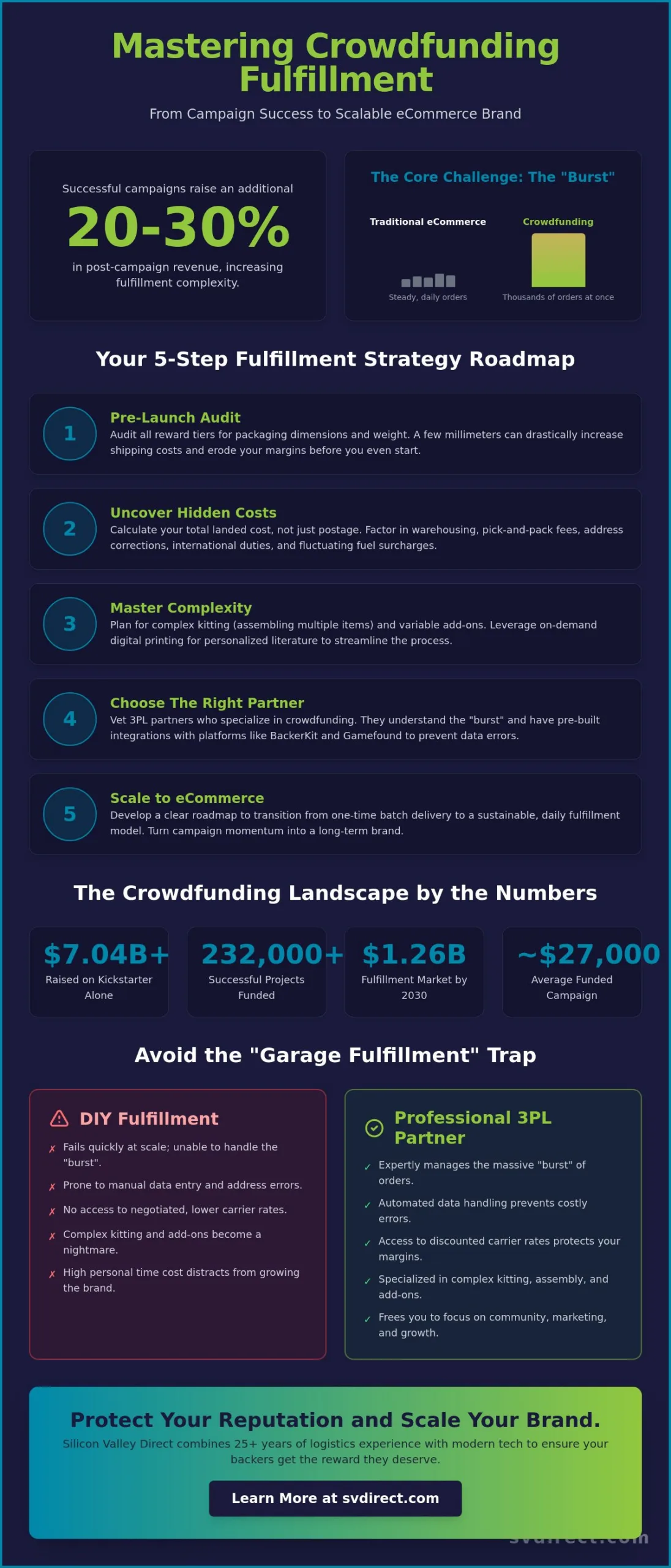
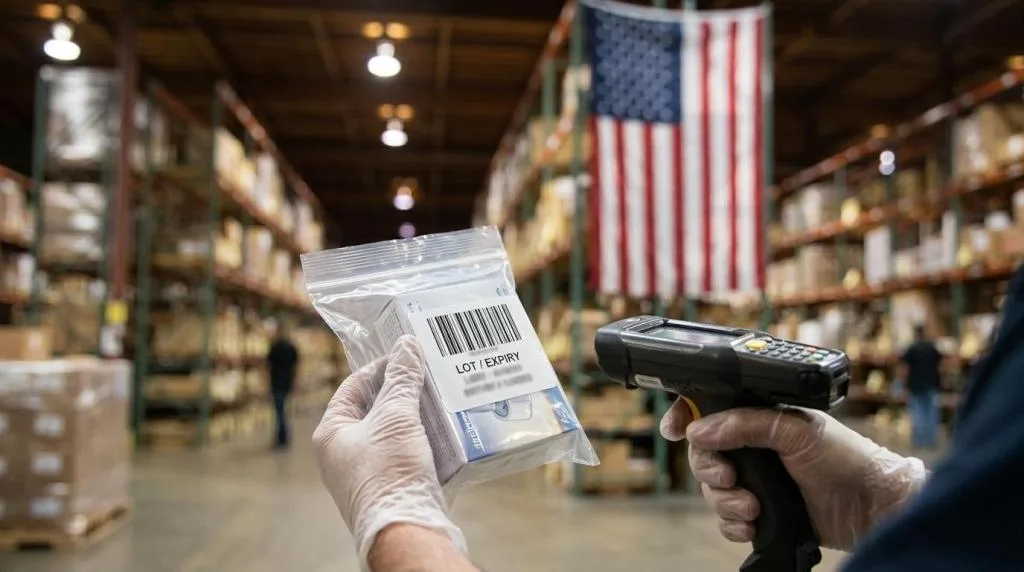
The warehouse side matters just as much. Fast fulfillment depends on slotting, labor planning, barcode accuracy, packaging readiness, and carrier pickups that match promised service windows. Teams that do this well make speed feel ordinary because the process is built for it.

A dependable same-day fulfillment setup usually includes the following:

  • Inventory sync: real-time stock visibility across channels to prevent selling unavailable items
  • Order release speed: orders move into the fulfillment queue as soon as they are approved
  • Warehouse process discipline: scanning, verification, and pick-pack standards reduce errors under time pressure
  • Carrier coordination: pickup schedules and service mappings support the promised shipping cutoff
  • Exception handling: clear rules for held orders, split shipments, and address problems keep delays from spreading

There is a broader business benefit here too. When fulfillment gets faster and more predictable, customer service teams often deal with fewer “Where is my order?” messages, marketing teams can advertise shipping promises with more confidence, and finance teams get a cleaner picture of shipping cost by order type.

As Dansk E-Logistik notes in its analysis of hvad realtidslager betyder for kundeservice og salg, timely stock data reduces “out-of-stock after purchase” cancellations and trims WISMO volume because availability stays accurate across channels.

What to look for in a same-day fulfillment 3PL partner

Many brands reach a point where in-house fulfillment can no longer support the experience they want to offer. That is often when same-day fulfillment becomes less of an aspiration and more of a partner decision.

A 3PL should make speed credible, not just marketable. Publicly stated capabilities are a good place to start. Silicon Valley Direct, for example, states that orders received by its cutoff time ship the same day, and that it supports more than 80 preconfigured integrations along with custom API options. On paper, those capabilities matter because they connect storefront activity to warehouse execution without delay.

Accuracy deserves equal attention. Silicon Valley Direct also highlights double-verified order accuracy and a posted testimonial from a book-order client who said they could not recall a single error across more than 1,000 packed and shipped orders. That kind of proof is valuable because conversion gains from fast fulfillment can disappear quickly if customer trust is damaged after the first shipment.

When evaluating a fulfillment partner, a few signals tend to matter most:

  • Same-day shipping by cutoff time
  • Integration coverage across channels
  • Real human support
  • Reporting access
  • Accuracy controls
  • No minimum order barriers for growing brands

The right partner can also help brands turn operations into merchandising strength. If a merchant can confidently say “Order by 2 p.m. and this ships today,” that message can appear in paid ads, product pages, cart banners, and retention emails. Fast fulfillment then becomes visible revenue infrastructure, not just backend logistics.

Metrics for measuring same-day fulfillment conversion impact

Brands should measure same-day fulfillment like any other growth investment: before, during, and after rollout.

Start with the metrics closest to shopper behavior. Then connect them to warehouse performance. A conversion lift is strongest when the front-end promise and the back-end result improve together.

Metric Why it matters What improvement may signal
Checkout conversion rate Direct read on purchase completion Shoppers trust the shipping offer
Cart abandonment rate Shows friction before purchase Shipping concerns are dropping
Fast-shipping option selection rate Measures demand for speed Same-day messaging is resonating
Average order value Tests whether speed supports bigger baskets Customers feel safer buying more
Order accuracy rate Protects trust after purchase Operations can sustain faster flow
Time from order to carrier handoff Core same-day performance metric Fulfillment promise is being met
“Where is my order?” tickets Reveals post-purchase anxiety Better visibility and faster movement

It also helps to segment the data. Look at new customers versus repeat buyers, regions near your warehouse versus distant zones, high-margin products versus low-margin products, and orders placed before versus after the daily cutoff. Same-day fulfillment may produce the biggest conversion gains in categories where urgency, gifting, replenishment, or premium customer expectations are already present.

A controlled rollout is often the smartest move. Start with a defined SKU group, one region, or one carrier-backed service promise. Make the cutoff time visible. Keep the shipping message consistent from product page to confirmation email. Then watch the numbers closely.

When same-day fulfillment is operationally real and clearly presented, it does more than move orders faster. It reduces hesitation, makes checkout feel safer, and gives ecommerce brands a stronger reason to win the sale before the shopper opens another tab.
How to Reduce Shipping Costs for eCommerce: The Strategic 2026 Guide

How to Reduce Shipping Costs for eCommerce: The Strategic 2026 Guide

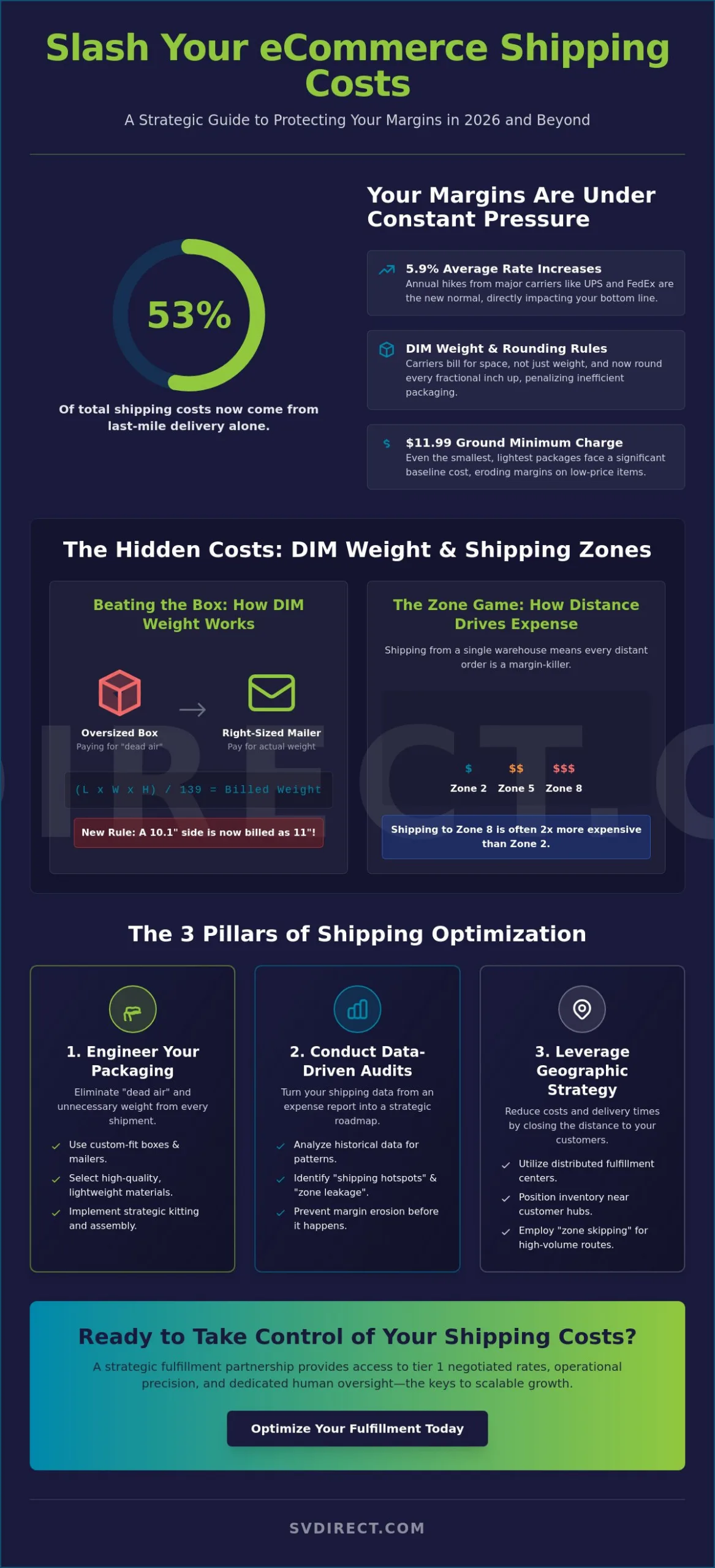
Did you know that for many online sellers, last-mile delivery now constitutes over 53% of total shipping costs? With the 2026 average rate increases of 5.9% from UPS and FedEx now in full effect, learning how to reduce shipping costs for ecommerce has moved from a tactical advantage to a survival necessity. Between the new DIM weight rounding rules and the $11.99 ground minimum charges, your margins are under constant pressure from factors that often feel outside your control. It’s frustrating to watch surcharges and dimensional penalties erode the hard work you’ve put into building your brand. We believe that growth should feel like an achievement, not a logistical burden.

We understand that you want to scale your business without sacrificing the speed or quality your customers expect. This guide promises to help you master the art of logistics optimization, providing a clear path to slash your shipping expenses. By the end of this article, you’ll have a strategic roadmap to implement scalable fulfillment architecture and lower your cost per order. We will examine how to engineer your packaging to beat DIM weight penalties, leverage regional carriers for cost savings, and use distributed fulfillment to place inventory closer to your audience.

In this guide, you will discover:

  • The mechanics of Dimensional (DIM) weight and how to audit your shipping profile to prevent margin erosion.
  • How strategic kitting and assembly can reduce total package weight while on-demand digital printing streamlines your inventory.
  • The power of aggregate volume in securing tier 1 negotiated rates that far exceed standard business discounts.
  • Why geographic location is a primary driver of expense and how to reduce shipping costs for ecommerce by positioning inventory near global hubs.
  • The long-term ROI of a fulfillment partnership that combines operational precision with dedicated human oversight.

Auditing Your eCommerce Shipping Profile: DIM Weight and Shipping Zones

True optimization begins with a cold, hard look at your shipping data. Many brands treat shipping as a fixed expense, yet it’s actually one of the most flexible variables in your business model. If you want to master how to reduce shipping costs for ecommerce, you have to stop looking at the price on the label and start looking at the math behind it. Carriers don’t just bill you for what a package weighs; they bill you for the space that package occupies on their planes and trucks. This is the foundation of a shipping audit.

Identifying “shipping hotspots” or “zone leakage” allows you to see where your margins are evaporating. For instance, if a large percentage of your orders are traveling to Zone 7 or 8, you’re likely paying a premium that could be mitigated through better inventory placement. By auditing your historical data, you can uncover the hidden costs of “dead air” where oversized boxes are triggered by inefficient packing. This data-driven approach transforms shipping from a line-item expense into a strategic advantage.

To better understand this concept, watch this helpful video:

Understanding Dimensional Weight (DIM) Calculations

Dimensional weight is often the primary reason for unexpected shipping costs. Carriers calculate DIM weight by multiplying the length, width, and height of a package and dividing by a “DIM factor,” which is currently 139 for major domestic carriers. If the resulting number is higher than the actual weight, you’re billed at that higher rate. As of the 2026 guidelines, carriers now round up every fractional inch to the next whole number before calculating. A box that’s 10.1 inches is billed as 11 inches. To “beat the box,” you must match your product size to your packaging with surgical precision. Using custom-fit boxes or mailers eliminates the “dead air” that triggers these expensive penalties.

Mapping Your Customer Density and Shipping Zones

Shipping zones are geographic areas defined by the distance between the point of origin and the destination. In the 2026 landscape, shipping to Zone 8 is frequently twice as expensive as shipping to Zone 2. If your warehouse is in New York but your customers are in California, every order is a margin-killer. Many third-party logistics providers solve this by analyzing your customer density to find the optimal fulfillment center location. High-volume shippers also utilize “zone skipping,” which involves consolidating orders and trucking them closer to the destination hub before handing them to a carrier. This proactive strategy is a cornerstone of how to reduce shipping costs for ecommerce while maintaining the delivery speed your customers demand.

Packaging Engineering: Reducing Costs Through Strategic Kitting and Printing

Shipping efficiency isn’t just about the carrier you choose. It’s about the physical architecture of the shipment. While most brands focus on the label, sophisticated operators look at the weight of every component, from the corrugated cardboard to the promotional flyers inside. As you determine how to reduce shipping costs for ecommerce, you’ll find that small adjustments in packaging engineering yield massive results across thousands of orders. Precision in the assembly phase is what prevents the “surcharge creep” that often stalls business growth.

Traditional packing methods often leave too much room for error, or rather, too much room for “dead air.” If you’re shipping a small item in a medium box, you’re paying for the carrier’s volume, not your product’s weight. Switching to poly mailers or custom-fit boxes can eliminate this wasted spend. Branded packaging is vital for the unboxing experience, but it shouldn’t come at a premium. By selecting high-quality, lightweight materials, you can maintain your brand’s aesthetic and durability without pushing the package into a higher weight bracket.

The Power of Professional Kitting and Assembly

Professional kitting and assembly services are about more than just organization; they’re a financial strategy. Consolidating multiple SKUs into a single, optimized unit allows you to save significantly on “Pick and Pack” fees. Instead of shipping three separate boxes, kitting creates a streamlined package that fits perfectly into standard carrier dimensions. This process also reduces the need for dunnage, the filler material that adds weight without adding value. A well-designed kit ensures that every square inch of the box is utilized, bypassing the “Additional Handling” surcharges that plague unoptimized shipments.

On-Demand Printing: A Secret Weapon for Shipping Efficiency

Most guides overlook the massive weight impact of traditional marketing materials. Traditional fulfillment involves shipping heavy, pre-printed catalogs to a warehouse, storing them, and then adding that bulk to every outbound order. This adds weight and increases the risk of materials becoming obsolete. By integrating on-demand digital printing directly into the fulfillment line, you can generate personalized, lightweight inserts at the moment of packing. This just-in-time approach keeps your marketing current while keeping the package weight at an absolute minimum. It’s a precise way to maintain brand quality without paying a “paper tax” to carriers.

Engineering a better package is a collaborative effort between your fulfillment team and your designers. If you’re ready to see how these efficiencies look in practice, you can request a custom analysis to identify your specific savings opportunities.

Leveraging 3PL Volume: Why Negotiated Rates Beat Standard Business Discounts

Most small to mid-sized brands find that their “negotiated” rates are barely better than retail pricing. This happens because carriers prioritize high-density accounts that simplify their own operational logistics. When you partner with a seasoned fulfillment provider, you aren’t just buying space; you’re buying into a massive shipping cooperative. This collective bargaining power allows businesses to access Tier 1 carrier rates that are typically reserved for Fortune 500 companies. It’s a fundamental shift in how to reduce shipping costs for ecommerce because it moves you beyond standard business discounts into a realm of unlisted savings.

A sophisticated 3PL doesn’t just stick to one carrier. They use shipping orchestration software to route every package based on the lowest total cost in real-time. This isn’t just about base rates. The software accounts for the 2026 residential surcharges, which have climbed to $6.45 for FedEx Home Delivery and $6.50 for UPS Ground. By automatically selecting the carrier with the most efficient route for a specific zip code, you bypass the traps that inflate your per-order expense. This proactive strategy ensures that your shipping budget is spent on delivery speed rather than carrier profit margins.

The Reality of Carrier Rate Negotiation

Individual businesses often lack the leverage to move the needle with major carriers. Carriers look for volume, consistency, and operational ease. A 3PL provides all three by consolidating thousands of shipments into massive daily batches. This reduces the “touches” required by the carrier, allowing the 3PL to secure deeper discounts. These relationships are built over decades, providing access to incentive tiers that a solo business simply can’t reach. Batch delivery to the carrier hub further reduces the carrier’s workload, which translates to lower base rates for every package in that batch.

Managing Surcharges and Accessory Fees

Fuel surcharges and accessory fees now account for 20% to 40% of total annual shipping costs for many brands. Address correction fees are a silent margin killer. Even a simple typo can lead to a carrier fee that wipes out the profit on a small order. Automated address validation at the point of fulfillment is essential to stop this leakage. Additionally, as we move through 2026, peak-season surcharges have become more dynamic and complex. A strategic partner helps you plan inventory cycles to avoid these spikes. For brands expanding across borders, cross-border ecommerce fulfillment services manage the complexities of international duties and taxes, including the impact of the suspended US de minimis exemption and new EU customs duties. This ensures that your global reach doesn’t come with unexpected financial penalties or customs delays that hurt your brand reputation. A complete cost-reduction strategy must also account for the reverse flow of goods; implementing efficient returns management logistics is essential to prevent the 2026 rate hikes from compounding the expense of processing the growing volume of online returns.

How to Reduce Shipping Costs for eCommerce: The Strategic 2026 Guide

Geographic Strategy: Reducing the Distance to Delivery

Distance is the silent driver of escalating expenses. When you analyze how to reduce shipping costs for ecommerce, the geographic placement of your inventory emerges as the most critical factor. Every shipping zone your package crosses adds a layer of cost and a day of transit time. In a market where last-mile delivery accounts for over 53% of total shipping costs, your physical address is your most powerful lever. By positioning your fulfillment operations closer to major entry points and carrier hubs, you fundamentally change the math of your logistics. This isn’t just about labels; it’s about reducing the physical mileage your products must travel to reach the end consumer.

A Silicon Valley hub offers a distinct advantage for brands focused on innovation and global connectivity. Proximity to major international ports like Oakland and San Francisco, along with primary carrier sorting facilities, ensures that inbound shipments move from container to warehouse with minimal drayage fees. This geographic placement allows for a steady, methodical flow of goods, reducing the time your capital is tied up in transit. Shorter transit times don’t just lower costs; they also lead to a measurable decrease in customer service inquiries and return rates, as faster delivery consistently correlates with higher customer satisfaction. It’s a proactive stance that respects both your budget and your client’s time.

The Strategic Importance of a West Coast Hub

West Coast fulfillment centers are the gateway for Pacific Rim trade. By processing goods near their point of entry, you avoid the expense of shipping raw inventory across the country before it’s even sold. This proximity also allows for faster hand-offs to carriers, which is vital for maintaining high-performance delivery standards. Understanding the batch delivery to carrier meaning is essential here. It refers to the moment your consolidated shipments are processed by the carrier at their local hub. This step happens much faster when your warehouse is minutes away from their primary sorting facility, effectively slashing the lag time between order packing and carrier transit.

Cross-Border Shipping and International Logistics

Navigating international logistics requires a partner who understands the nuances of customs and trade regulations. Shipping from the US to Canada or other international destinations can be cost-prohibitive without a consolidation strategy. By grouping international orders, you can reduce per-package export fees and simplify the documentation process. Brands scaling globally must also develop a clear strategy for cross-border ecommerce fulfillment to achieve predictable landed costs in the post-de minimis regulatory environment. A professional 3PL acts as a steady hand, ensuring that your global expansion is backed by physical infrastructure and human expertise rather than just digital abstractions. This methodical approach ensures your products reach global markets without the stress of unpredictable fees. If you want to see how a West Coast strategy could impact your specific volume, you can request a free quote for a detailed geographic analysis.

Choosing a Strategic Fulfillment Partner for Long-Term Scalability

Selecting a fulfillment partner is more than a software integration; it’s a strategic alliance that dictates your financial trajectory. While many platforms claim their algorithms do it all, pure automation lacks the nuance required for complex or high-value shipments. True operational readiness comes from balancing high-tech efficiency with seasoned human oversight. This combination ensures that when a unique challenge arises, you have a dedicated team ready to implement a bespoke solution. If you’re investigating how to reduce shipping costs for ecommerce, you’ll find that the most significant savings often come from the precision only human experts can provide.

Calculating the ROI of outsourcing involves looking beyond the per-order fee. You must account for the overhead of warehouse leases, specialized labor, and rising insurance premiums. By moving to a 3PL, you convert these fixed costs into variable expenses that scale with your order volume. Silicon Valley Direct integrates directly with your existing eCommerce platform, providing the real-time control you need without the burden of physical management. When interviewing potential partners, always ask about their transparency regarding fuel surcharges and hidden accessory fees. A reliable partner will provide a clear, hierarchical breakdown of every cost associated with your shipping profile, ensuring there are no surprises on your monthly invoice.

The Silicon Valley Direct Difference: Human-Scale Logistics

We’ve explicitly rejected the industry trend toward automated chatbots in favor of direct human connection. Our clients value the personal oversight provided by staff members who’ve been with us for decades. This internal stability is a unique hallmark that translates to unmatched order accuracy and a deep understanding of your brand’s specific needs. A “one-size-fits-all” fulfillment model often leads to higher costs because it forces your brand into rigid, inefficient processes. We believe in total flexibility, providing the customization required to treat your physical operations with the same care you put into your digital storefront.

Transitioning from In-House to 3PL Fulfillment

There’s a specific tipping point where managing your own shipping becomes a liability rather than an asset. This typically happens when the administrative burden of carrier negotiations and warehouse staffing distracts you from your core mission of growth. You don’t have to lose brand control when you outsource your physical operations. By choosing a partner that acts as an extension of your team, you maintain the personal touch while gaining a scalable fulfillment architecture. Check our blog for more insights on scaling your fulfillment and navigating the complexities of the 2026 shipping landscape.

Master Your Logistical Future

Success in 2026 depends on transforming your shipping from a reactive expense into a proactive strategic advantage. You’ve learned that auditing your DIM weight and engineering your packaging are the first steps to reclaiming lost margins. By strategically positioning inventory near major hubs and leveraging aggregate shipping volume, you can consistently lower your cost per order. Mastering how to reduce shipping costs for ecommerce requires this holistic approach, where every inch of a box and every mile of transit is accounted for.

Since 1999, Silicon Valley Direct has acted as a reliable partner for brands that value precision and personal accountability. We specialize in high-value and HIPAA-compliant logistics, providing the direct human oversight that automated systems often miss. We invite you to streamline your supply chain with Silicon Valley Direct’s expert fulfillment solutions. Your growth is a journey, and with the right steady hand at the helm, your logistical infrastructure will remain a pillar of your brand’s success.

Frequently Asked Questions

What is the most effective way for a small eCommerce business to reduce shipping costs?

The most effective strategy is to perform a comprehensive audit of your packaging dimensions to eliminate “dead air.” Since major carriers now round up every fractional inch to the next whole number, even a slight reduction in box size can prevent a shipment from moving into a higher billable weight bracket. This precise approach to how to reduce shipping costs for ecommerce ensures you aren’t paying for empty space or unnecessary volume.

How does dimensional weight (DIM) affect my shipping bill?

Dimensional weight allows carriers to bill based on the volume a package occupies rather than its actual physical mass. By multiplying length, width, and height and dividing by the 2026 standard divisor of 139, carriers determine a theoretical weight. If this calculated DIM weight is higher than the actual scale weight, you’re billed for the larger value. This makes efficient, right-sized packaging a financial necessity for any modern brand.

Is it cheaper to use a 3PL or ship orders myself?

Transitioning to a fulfillment partner becomes more cost-effective when the overhead of warehouse leases, specialized labor, and insurance premiums exceeds the per-order fulfillment fee. A 3PL provides access to Tier 1 negotiated rates and aggregate volume discounts that solo businesses cannot secure independently. By converting these fixed in-house costs into variable expenses, you gain a scalable architecture that adjusts to your seasonal volume fluctuations.

What are shipping zones, and how do they impact my pricing?

Shipping zones are geographic regions determined by the distance between the point of origin and the final destination. In the 2026 rate structure, shipping to Zone 8 is often twice as expensive as shipping to Zone 2 due to increased fuel consumption and transit mileage. Mapping your customer density allows you to identify “zone leakage” and potentially reposition your inventory closer to your most active geographic markets to lower per-order expenses.

Can kitting and assembly actually save me money on postage?

Professional kitting and assembly lead to substantial postage savings by consolidating multiple items into a single, optimized package. This reduces the total number of outbound shipments and avoids multiple individual “Pick and Pack” fees. A well-designed kit also minimizes the need for dunnage; the filler material that adds weight without adding value; ensuring the final dimensions remain below the thresholds that trigger expensive additional handling surcharges.

How do I negotiate better rates with carriers like FedEx or UPS?

Individual businesses often struggle to move the needle with major carriers because those carriers prioritize high-density, high-volume accounts. The most reliable way to secure better rates is to leverage the collective bargaining power of a fulfillment partner. These providers have long-standing relationships and multi-decade histories that allow them to access unlisted savings and incentive tiers that are typically unavailable to smaller, independent shippers.

What is ‘Zone Skipping’ and is it right for my business?

Zone skipping is a strategy where a business consolidates a large volume of orders and trucks them directly to a carrier hub closer to the final destination. This bypasses the initial sorting centers and reduces the number of zones the carrier actually handles. It’s an ideal strategy for high-volume cross-country shipments where the cost of the initial truckload is lower than the sum of the individual per-package zone surcharges.

How does a Silicon Valley location benefit my international shipping costs?

A Silicon Valley location places your inventory near major international ports and primary carrier sorting facilities. This proximity reduces drayage costs, which are the fees associated with moving goods from container ships to the warehouse. For international orders, being at a global gateway allows for faster hand-offs and reduced transit times to the Pacific Rim, helping you understand how to reduce shipping costs for ecommerce on a global scale.

EOB Mailing Services: The Strategic Guide to Accuracy and HIPAA Compliance in 2026

EOB Mailing Services: The Strategic Guide to Accuracy and HIPAA Compliance in 2026

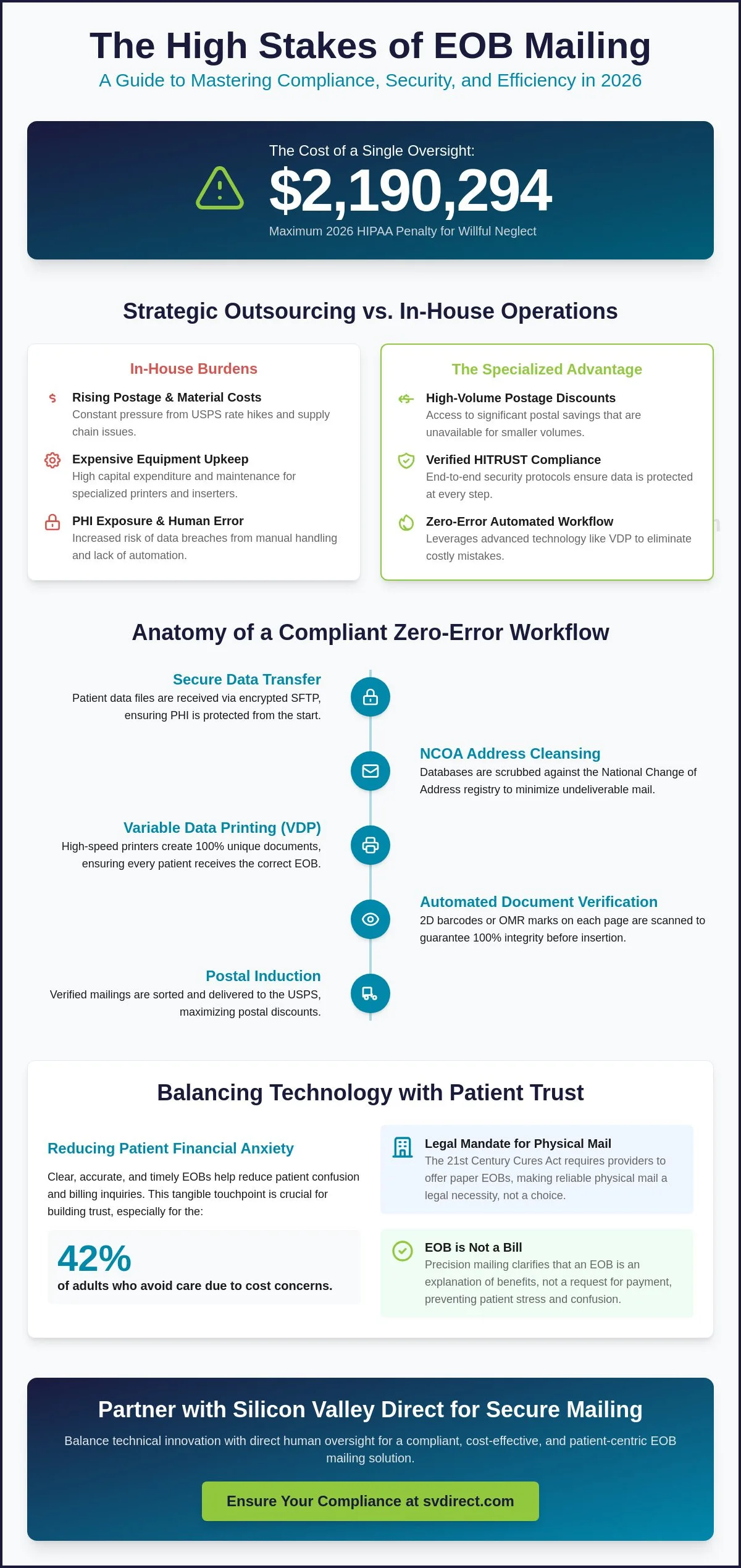
Would your organization’s budget survive a 2.1 million dollar penalty for a single oversight in your mailing room? With the 2026 HIPAA penalty for willful neglect now reaching a maximum of $2,190,294, the stakes for your eob mailing services have never been higher. It’s a constant challenge to manage the delicate balance between rising USPS postage rates and the absolute necessity of protecting patient data. You’re likely feeling the pressure of maintaining expensive in-house equipment while trying to ensure that thousands of unique patient statements reach their destination without a single breach of privacy.

We believe that behind every data point is a person who trusts you with their most sensitive information. This guide will show you how to master the complexities of Explanation of Benefits mailing by implementing a zero-error workflow that prioritizes both operational efficiency and patient trust. We’ll explore the latest 2026 compliance standards, strategies for reducing logistics costs, and why a human-centered approach to high-tech mailing is your best defense against the rising risks of PHI exposure. By the end of this article, you’ll have a clear roadmap to verified HITRUST compliance and a more streamlined, cost-effective mailing operation.

Key Takeaways

  • Understand the 2026 regulatory landscape where physical mail remains a mandatory legal requirement for healthcare providers despite the shift toward digital communication.
  • Learn how Variable Data Printing (VDP) technology eliminates the risk of PHI exposure by ensuring every unique patient statement is printed with absolute precision.
  • Discover how specialized eob mailing services outperform in-house operations by removing the hidden costs of equipment maintenance and providing access to high-volume postage discounts.
  • Master a secure data workflow that utilizes SFTP transfers and NCOA address cleansing to maintain a zero-error delivery process for thousands of unique records.
  • Identify the value of a high-performance partnership that balances Silicon Valley technical innovation with the accountability of direct human oversight.

What are EOB Mailing Services and Why Are They Critical in 2026?

EOB mailing services represent the sophisticated intersection of data security and physical logistics. These services handle the complex lifecycle of an Explanation of Benefits (EOB), from the moment a secure data file is received to the point of postal induction. It’s not just about printing paper; it’s about managing a high-stakes communication channel that impacts patient trust and organizational compliance.

As we move through 2026, the demand for transparency has never been higher. Patients are increasingly wary of AI-driven clinical care, yet they expect high-tech efficiency in their administrative interactions. Reliable eob mailing services bridge this gap by providing a steady, physical touchpoint that digital-only platforms often lack. This tangible connection helps reduce the 42% of adults who avoid care due to cost concerns by providing clear, understandable breakdowns of their benefits.

To better understand how these documents function within the healthcare ecosystem, watch this helpful video:

Effective mailing operations do more than just deliver information. They serve as a proactive tool to minimize billing inquiries. When a patient receives a clear, accurate EOB, they’re less likely to call a provider’s office with confused questions about their coverage. This operational readiness translates directly into lower administrative overhead and a more streamlined patient experience.

The Legal Mandate for Physical EOBs

The 21st Century Cures Act emphasizes patient choice and accessibility in communication. While “digital-first” strategies improve speed, they cannot transition into “digital-only” models without risking non-compliance. Healthcare administrators must provide paper EOBs to any patient who requests them or has not explicitly opted into electronic delivery.

EOB vs. Medical Billing: Clearing the Confusion

It is vital to distinguish the EOB from a medical bill to prevent patient anxiety. An EOB is a report of insurance coverage, not a request for payment. When eob mailing services are executed with precision, they improve payer satisfaction scores through financial transparency. Inaccurate mailings lead to high “return to sender” rates, which drain resources and delay claims resolution. For more insights, explore our blog.

The Anatomy of a Compliant EOB: PHI Protection and Precision Printing

A standard Explanation of Benefits is a dense compilation of Protected Health Information (PHI) that requires meticulous handling. Identifying PHI within these documents is the first step toward security. Every statement contains sensitive identifiers such as patient names, policy numbers, provider details, and specific service dates. Because no two statements are identical, the use of Variable Data Printing (VDP) is a technical necessity. This technology allows for the high-speed production of individualized documents where every data field is populated with absolute accuracy. This level of customization ensures that the right information reaches the right patient every time.

Securing these documents involves more than just digital encryption. Physical security standards at the mailing facility must be rigorous to prevent unauthorized access to printed PHI. This includes maintaining restricted access zones, employing background-checked staff, and utilizing 24/7 surveillance. To maintain document integrity, automated checks such as 2D barcodes or Optical Mark Recognition (OMR) are used on every page. These marks allow inserting equipment to verify that every sheet belongs to the correct recipient before the envelope is sealed. If you are looking to enhance your document security, you can request a free quote to see how our precision-driven facility can support your needs.

HIPAA Privacy and Security Rules in Mailing

Compliance is a multi-layered responsibility that begins with secure SFTP data transfers and continues through the final postal induction. Establishing HIPAA business associate contracts is the legal foundation for these operations, ensuring that the mailing partner is held to the same stringent standards as the healthcare provider. Leading eob mailing services prioritize certifications like HITRUST and SOC2 to demonstrate their commitment to data protection. PHI must be protected by rigorous physical and digital safeguards during the entire print-to-post transition. This proactive stance reduces the risk of exposure and protects the organization from the rising costs of HIPAA violations.

High-Quality Digital Printing for Healthcare

Modern healthcare administration requires agility, which is where on-demand digital printing provides a distinct advantage. This approach reduces waste by printing only what is needed and allows for real-time updates to document templates. Organizations can leverage on-demand digital printing to maintain this flexibility while ensuring high-resolution clarity for complex benefit tables. Some payers also integrate “Transpromo” messages, which are personalized marketing or wellness reminders, directly into the EOB. This adds value to the communication without compromising the security of the underlying PHI, turning a standard administrative requirement into a tool for patient engagement.

EOB Mailing Services: The Strategic Guide to Accuracy and HIPAA Compliance in 2026

Strategic Outsourcing: Why Specialized EOB Mailing Services Outperform In-House Operations

Managing an in-house mailing operation often appears cost-effective on a balance sheet, but the reality involves significant hidden expenses. Beyond the initial purchase of high-speed inserters and digital presses, organizations must account for ongoing equipment maintenance, specialized labor, and the square footage required for secure storage. Specialized eob mailing services eliminate these capital expenditures by providing a ready-made infrastructure designed for high-volume output. This allows your team to focus on patient care rather than troubleshooting paper jams or managing ink inventories.

A primary advantage of this partnership is access to deep postage discounts that individual providers rarely achieve alone. While a single First-Class stamp in 2026 costs $0.78, high-volume 3PLs utilize automation and presorting to secure much lower rates. For instance, automation rates for First-Class Mail can start as low as $0.593 for 5-digit sort levels. These savings scale rapidly when managing thousands of monthly statements, often offsetting a significant portion of the service fees. It’s a matter of leveraging collective volume to reduce individual costs.

Scalability remains a primary concern during peak periods like Open Enrollment. In-house teams often struggle to maintain accuracy when volumes spike, leading to costly errors or the need for expensive temporary staffing. A professional partner provides the elasticity to handle these surges without compromising quality control. While automation drives much of this efficiency, the human element remains irreplaceable. Automated systems can flag data discrepancies, but it takes a seasoned expert to investigate the root cause and implement a bespoke solution. This balance between high-tech processing and personal oversight ensures that no statement is mailed with visible PHI or incorrect data.

Risk Mitigation and Liability Transfer

Outsourcing allows healthcare organizations to shift the heavy burden of compliance monitoring to a dedicated expert. A specialized partner acts as a steady hand, staying ahead of evolving regulations and ensuring every piece of mail meets the latest HIPAA standards. This transition effectively transfers significant operational liability to a facility that lives and breathes data security. We focus on the details so you don’t have to. For a deeper look at these requirements, see our Healthcare Mailing Services Pillar.

Operational Efficiency and Precision

Modern eob mailing services leverage advanced pick and pack logic, which is essential for providers sending complex medical kits or literature alongside benefit statements. This level of precision is managed by dedicated account managers who prioritize direct human connection over automated help desks. This ensures that unique problems receive immediate, expert attention rather than getting lost in a digital queue. You can explore our Silicon Valley Direct blog for more insights on optimizing your logistics efficiency.

Optimizing the EOB Workflow: From Data Integration to Patient Delivery

Achieving a zero-error environment for eob mailing services requires a methodical approach that balances high-speed automation with rigorous human oversight. The process begins with Step 1: Secure SFTP data transfer. Data is moved through encrypted channels, followed by automated file validation to check for corruption or missing records before any ink hits the paper. Step 2 involves data cleansing and NCOA (National Change of Address) processing. This ensures that every statement is addressed to the patient’s most current residence, which significantly reduces the administrative burden of undeliverable mail.

The manufacturing phase transitions into Step 3: High-speed VDP printing. Variable Data Printing technology populates thousands of unique patient records into customized templates while quality control experts monitor output in real-time. Step 4 utilizes intelligent inserting and matching. This is critical for multi-page statements where advanced sensors verify that every sheet belongs to the correct recipient. Finally, Step 5 involves direct injection into the USPS mail stream. By bypassing local sorting facilities and delivering mail directly to regional hubs, we accelerate the delivery timeline and ensure that patients receive their financial information without delay. If you’re ready to streamline your operational flow, you can request a free quote to partner with our expert team.

Data Integrity and Verification

Maintaining 100% accuracy in high-volume healthcare mailing is non-negotiable. We implement a ‘2D Barcode’ system that assigns a unique identifier to every page of every document. As these pages move through the facility, scanners track their progress and confirm that the right pages are grouped together. This technology is a primary defense against ‘double-stuffing,’ a common HIPAA violation where a patient accidentally receives another individual’s PHI. A closed-loop verification process in modern EOB mailing is a system where every printed page is electronically scanned and reconciled against the original data file to confirm total mailing accuracy.

Postage Optimization and Global Reach

Strategic postage management is essential for controlling costs in 2026. We utilize commingling and presorting techniques to combine mail volumes, allowing our partners to access the deepest available discounts. This efficiency is not limited to domestic delivery. Many healthcare plans now require international EOB delivery to support global workforces. Managing these complex logistics requires a partner who understands the nuances of international postal regulations and global healthcare standards. For more information on navigating these complexities, see our guide on Global Shipping Services.

Partnering with Silicon Valley Direct for Secure Healthcare Mailing Solutions

Silicon Valley Direct brings a quarter-century of operational history to the complex world of healthcare communications. Our facility, located in the heart of the world’s innovation hub, combines the speed of modern tech with the reliability of a seasoned partner. We’ve refined our eob mailing services to provide a steady hand for organizations that value both precision and personal accountability. This legacy of excellence since 1999 serves as a constant anchor of trust for our partners, ensuring that your critical communications are handled with the care they deserve.

Whether you’re a fast-growing health-tech startup or an established enterprise payer, our solutions scale with your specific needs. We explicitly reject the impersonal nature of fully automated interactions in favor of direct human connection and personal oversight. This approach ensures that every unique patient statement meets our zero-error tolerance. Our HIPAA-compliant workflows are backed by physical infrastructure and human expertise, providing a proactive stance that software alone cannot replicate. We aim to alleviate the stress of business growth through precision and a deep personal commitment to your success.

Beyond EOBs: A Comprehensive Healthcare Suite

Our capabilities extend far beyond the standard benefit statement. We help organizations create a seamless patient journey by integrating EOBs with Healthcare Marketing Fulfillment. This allows for the coordinated delivery of wellness materials and kitted items alongside mandatory communications. By centralizing your eob mailing services with your broader fulfillment needs, you reduce logistical friction and maintain a unified brand voice. We also specialize in Healthcare Literature Fulfillment, providing just-in-time printing for provider directories and plan booklets. This holistic approach ensures your patients receive a consistent experience across every physical touchpoint.

Start Your Compliant Mailing Journey

Transitioning from an in-house operation to a managed service model requires a partner you can trust. Our team brings collective operational wisdom gained over decades, with many staff members celebrating long-term retention. This internal stability is a unique hallmark of our service, providing you with a dedicated team that understands your specific data requirements. We respect your time and your patients’ privacy, making the migration to our facility efficient and transparent. Our proactive attitude is backed by a multi-decade history of solving complex logistics problems for the healthcare sector. To begin your transition, Contact Silicon Valley Direct for a HIPAA-compliant mailing audit and discover the difference that precision and personal oversight can make for your organization.

Securing Your Healthcare Communications for the Future

Mastering the 2026 regulatory landscape requires more than just high-speed printers; it demands a strategic commitment to data integrity and patient trust. We’ve explored how transitioning from in-house operations to specialized eob mailing services can significantly reduce your liability while providing access to substantial postage discounts. By implementing advanced Variable Data Printing and a closed-loop verification process, your organization can achieve a zero-error workflow that stands up to the strictest HIPAA scrutiny.

Since 1999, Silicon Valley Direct has served as a steady hand for healthcare providers navigating rapid industry shifts. Our high-tech facility in the heart of Silicon Valley offers secure warehousing and the rare benefit of direct human oversight on every healthcare mailing project. We’re ready to help you alleviate the stress of operational growth through precision and personal commitment. Take the first step toward a more efficient, compliant future today.

Partner with the experts in HIPAA-compliant EOB mailing services at Silicon Valley Direct

Frequently Asked Questions

What is the difference between an EOB and a medical bill?

An EOB is a statement from an insurance payer detailing how a claim was processed, while a medical bill is a direct request for payment from a healthcare provider. The EOB acts as a transparent record of coverage and patient responsibility, helping to clarify costs before any money changes hands. Providing this clarity is a fundamental part of patient care, as it reduces confusion and builds trust in the provider’s billing practices.

Is EOB mailing required to be HIPAA compliant?

Yes, every EOB mailing must comply with HIPAA regulations because these documents contain highly sensitive Protected Health Information. Compliance involves securing data during electronic transfer and ensuring that no PHI is visible through envelope windows. Professional eob mailing services use encrypted workflows and secure facilities to maintain these standards. This proactive approach protects organizations from the severe financial penalties associated with data breaches and unauthorized disclosures.

Can patients opt out of physical EOB mailings?

Patients have the right to request electronic delivery, but providers are legally obligated to offer physical mailings as a standard option. While digital adoption is growing, many patients still rely on paper records for financial tracking and personal documentation. Maintaining a reliable physical mailing channel ensures that your organization remains accessible to all demographics. It’s a critical component of a compliant communication strategy that respects individual patient preferences and accessibility needs.

How do EOB mailing services ensure data security during printing?

Data security is ensured through end-to-end encryption and physical safeguards like restricted access zones and background-checked personnel. We use 2D barcodes to track every page throughout the facility, confirming that each document is inserted into the correct envelope. This high-tech tracking prevents common errors like double-stuffing. By combining these automated systems with direct human oversight, we provide a level of security that purely digital or in-house operations often struggle to match.

What are the benefits of outsourcing EOB statement generation?

Outsourcing provides access to industrial-scale efficiency and significant postage discounts that are unavailable to most in-house operations. It eliminates the capital expenses of purchasing and maintaining specialized printing and inserting equipment. Additionally, a professional partner offers the scalability to handle seasonal surges without the need for temporary staffing. This allows your team to focus on core healthcare objectives while a seasoned expert manages the complexities of secure logistics and compliance.

How does variable data printing work for healthcare statements?

Variable data printing (VDP) works by integrating secure databases with digital presses to populate unique patient information into document templates during the print cycle. This technology allows for the mass production of customized statements where every data point is specific to the individual recipient. It’s a high-precision process that ensures accuracy for thousands of unique records. VDP is essential for modern healthcare mailing, as it allows for personalized communication without sacrificing speed or security.

What happens if an EOB contains incorrect patient information?

Incorrect information on an EOB can result in a HIPAA violation and may require a formal breach notification process. Such errors often stem from data integration failures or manual handling mistakes during the mailing process. If a recipient receives PHI belonging to another person, the organization must act quickly to mitigate the risk. Partnering with precision eob mailing services helps prevent these incidents by utilizing automated verification and rigorous quality control measures at every stage.

How long are healthcare providers required to keep copies of EOBs?

Federal regulations typically require healthcare documentation to be retained for at least six years from the date of its creation. State-specific laws may require longer retention periods for certain types of financial or medical records. Organizations should maintain a clear policy for archiving both digital and physical copies to remain compliant during audits. Consult with your legal team to determine the exact requirements for your specific jurisdiction and provider type.

returns management for ecommerce

Returns Management for Ecommerce Brands

Returns are no longer a back-office task you can afford to patch together. With the National Retail Federation projecting $849.9 billion in U.S. retail returns in 2025 and online returns reaching 19.3% of sales, ecommerce brands need reverse logistics that protect margin, inventory accuracy, and customer loyalty.

Silicon Valley Direct (SVDirect) builds returns management into its ecommerce fulfillment service, so your brand can handle incoming returns, restocking, reporting, and outbound replacement orders through the same operational partner. From Union City, California, we support startups, established ecommerce brands, and growing online retailers across the USA and Canada with warehousing, integrations, pick and pack fulfillment, and real human support.

SVDirect returns management for ecommerce brands that need cleaner reverse logistics

SVDirect supports returns management and restocking as part of our ecommerce fulfillment offering, which means returned inventory does not have to disappear into a separate workflow or manual spreadsheet process.

“SVDirect includes returns management and restocking within its ecommerce fulfillment service, giving brands one partner for forward fulfillment and reverse logistics.”

That matters because returns are tied directly to the customer experience. UPS-reported industry data shows 81% of shoppers read return policies before purchase, and 71% are less likely to shop again after a poor returns experience. When your warehouse-side returns process is organized, your customer service team has fewer delays, your inventory stays more current, and your brand has a better chance of keeping the next sale.

With SVDirect, returns management supports more than just receiving packages back. It helps you keep stock visibility current, reduce manual handoffs between systems, and connect return activity to the rest of your fulfillment operation.

Here is what that looks like in practice:

  • Returns processing and restocking: Returned products are handled as part of your fulfillment workflow so eligible inventory can move back toward sellable stock instead of sitting in limbo.
  • Warehousing and inventory management: SVDirect combines secure inventory storage with return handling, so your stock picture is not split across multiple vendors.
  • Reporting and visibility: Our 24/7 customized web portal gives your team access to reporting that supports faster decisions on inventory, customer service, and replenishment.

Ecommerce returns management with integrations, reporting, and human support

If you sell online, returns data has to move with the rest of your operation. SVDirect offers 80+ preconfigured integrations plus custom API support, helping ecommerce brands connect store activity, fulfillment activity, and returns-related inventory updates without relying on disconnected manual processes.

“With 80+ preconfigured integrations, custom API support, and a 24/7 web portal, SVDirect helps ecommerce brands keep returns data and inventory visibility current.”

That is especially important when return volume starts climbing. Consumer expectations are rising at the same time. UPS/Happy Returns data says 86% of shoppers prefer no-box, no-label returns with instant refunds, and 82% rank free returns as a top priority. Even when your customer-facing return policy is managed in your storefront or support stack, you still need a fulfillment partner that can process the physical side of returns efficiently and keep inventory records aligned.

SVDirect also gives you a dedicated account manager and real human phone support. When you are dealing with exceptions, restocking questions, policy edge cases, or a spike in seasonal returns, that direct communication matters more than another generic ticket queue.

For Bay Area ecommerce companies, the local advantage is real. SVDirect welcomes on-site warehouse visits in Union City, CA, so you can see how your fulfillment and returns operations are being handled instead of treating your 3PL like a black box.

How SVDirect handles returns alongside fulfillment, warehousing, and restocking

SVDirect is a good fit when you want returns management connected to the rest of your ecommerce operation, not bolted on as a separate service. Our fulfillment system integrates with ecommerce platforms as soon as an online order is placed, and our broader logistics support includes secure inventory storage, pick and pack fulfillment, carrier coordination, and performance reporting.

A typical returns workflow with SVDirect is straightforward:

  1. Your customer initiates a return through your brand’s return process and policy.
  2. The returned item is received into your fulfillment environment as part of your returns management workflow.
  3. Inventory is processed and restocked when appropriate, helping keep stock levels current.
  4. Your team uses portal access and reporting to support customer communication, inventory decisions, and next-step actions.

This structure helps reduce the operational drag that often comes with returns. Your warehouse handling, inventory management, and outbound fulfillment stay closer together, which makes it easier to manage replacements, exchanges, or future sales from recovered inventory.

“SVDirect combines returns processing, warehousing, carrier coordination, and performance reporting so ecommerce brands can manage reverse logistics without splitting it across multiple vendors.”

Returns also bring risk. NRF reports that 9% of all returns are fraudulent. SVDirect does not eliminate policy risk on its own, but warehouse-side processing and reporting help support clearer review, better recordkeeping, and tighter inventory control than a loose, email-based workflow.

Why growing ecommerce brands choose SVDirect for returns management

SVDirect is built for ecommerce brands that need operational depth without enterprise-only barriers. We have more than 26 years of 3PL experience, no minimum order requirement, and scalable nationwide and international shipping reach. That combination works well for startups that are still building process discipline and for larger online retailers that need a returns-capable fulfillment partner that can grow with them.

Our same-day shipping capability also supports the broader customer experience. If a return leads to a replacement order, a fast outbound process helps you recover goodwill faster. And SVDirect’s double-verified 100% order accuracy helps reduce avoidable returns caused by fulfillment mistakes in the first place.

The brands that tend to benefit most from SVDirect returns management usually have one or more of these needs:

  • Growing return volume: Your team has outgrown ad hoc return handling and needs a 3PL that can process returns and restocking inside a larger fulfillment operation.
  • System visibility: You want ecommerce integrations, custom API options, and reporting instead of chasing return status across tools.
  • Flexible growth support: You want no minimum order requirement today, with room to scale across the U.S., Canada, and broader shipping reach later.
  • Better communication: You value a dedicated account manager, real phone support, and the option to visit the Union City warehouse in person.

Returns management in Union City, CA with nationwide ecommerce fulfillment reach

For Silicon Valley and San Francisco Bay Area brands, SVDirect offers the benefit of a local fulfillment partner with national capability. You can work with a Union City-based 3PL that understands fast-moving ecommerce operations while still reaching customers across the United States and internationally.

For brands outside California, the value is the same: one provider that can support order fulfillment, warehousing, integrations, reporting, and returns management from the same service relationship. That reduces vendor sprawl and makes accountability clearer when your team is trying to improve customer retention, stock accuracy, and operational efficiency at the same time.

If your brand needs ecommerce returns management that is tied to real fulfillment operations, not handled as an afterthought, talk with SVDirect about your current return volume, systems, and inventory challenges. We can help you build a returns process that keeps stock current, supports your customer experience, and fits the way your ecommerce business actually runs.

Logistics Companies in Silicon Valley: The 2026 Strategic Guide to 3PL Success

Logistics Companies in Silicon Valley: The 2026 Strategic Guide to 3PL Success

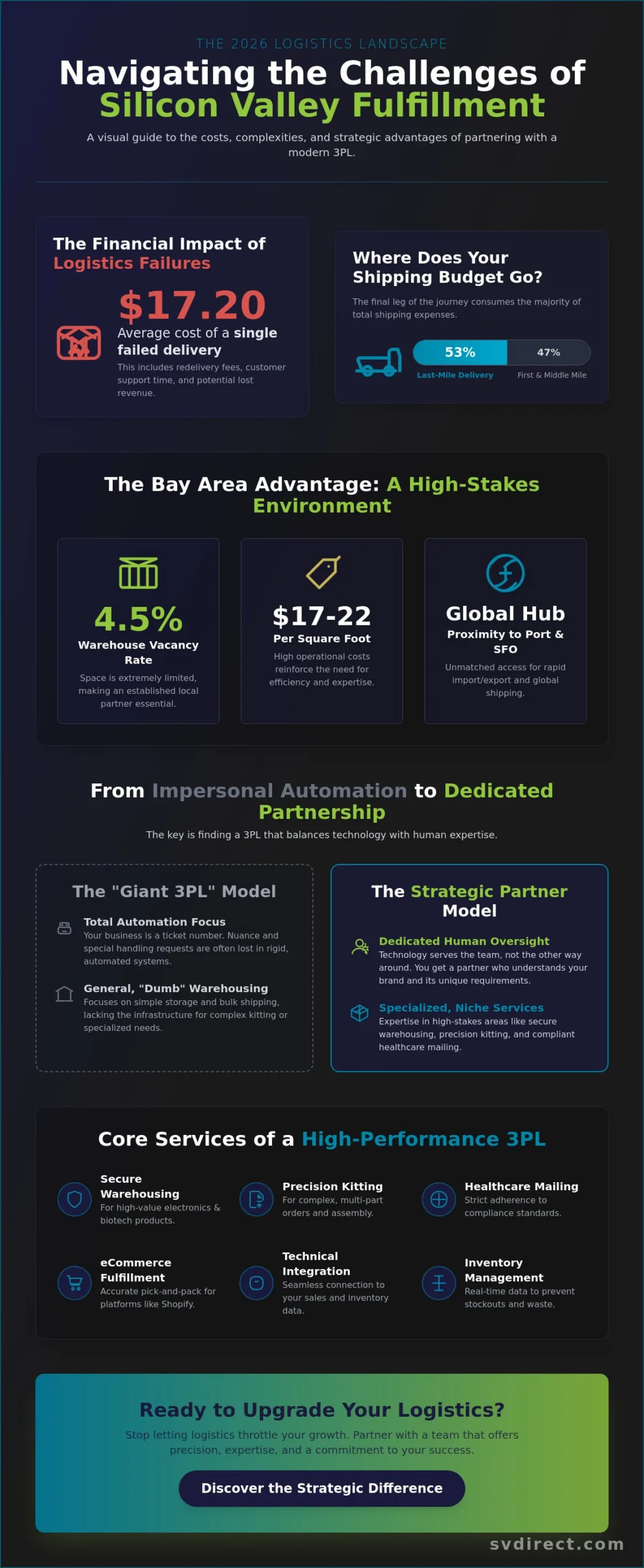
Did you know that a single failed delivery costs a retailer an average of $17.20 in 2026? In an environment where the last mile accounts for 53% of total shipping costs, the margin for error has never been thinner. Choosing between the many logistics companies in silicon valley often feels like a trade-off between cold, automated efficiency and the personal touch your brand actually needs. You’ve likely felt the sting of impersonal support from giant 3PLs that treat your scaling business like a ticket number rather than a partner.

We believe that high-growth brands deserve a steady hand to manage complex kitting and specialized healthcare mailing services with absolute precision. This guide shows you how to find a partner that balances innovative tech with direct human oversight. We’ll explore the current 4.5% warehouse vacancy rates in the Bay Area, the impact of rising CARB compliance fees, and the way a strategic location can slash your shipping times. You’re about to learn how to move beyond basic warehousing and into a logistics strategy that prioritizes accuracy and personal commitment.

Key Takeaways

  • Understand the hybrid nature of Bay Area logistics and why this region remains the global center for high-tech fulfillment and biotech distribution.
  • Identify the core services offered by logistics companies in silicon valley, including secure warehousing and precision kitting for complex orders.
  • Calculate the hidden costs of in-house operations to recognize when your current model is actually throttling your brand’s growth.
  • Audit potential partners based on their technical integration with platforms like Shopify and their ability to maintain strict healthcare compliance standards.
  • Discover the strategic advantage of choosing a partner that rejects total automation in favor of dedicated human oversight and seasoned local expertise.

The Evolving Landscape of Logistics Companies in Silicon Valley for 2026

Silicon Valley logistics has undergone a radical transformation. In 2026, the industry is no longer defined by dusty warehouses and manual clipboards. Instead, it’s a sophisticated hybrid of physical infrastructure and digital precision. The most successful logistics companies in silicon valley now operate at the intersection of high-speed data and tangible goods. They act as the physical backbone for a region that moves faster than anywhere else on earth. While software drives the economy, these partners ensure that biotech samples, high-tech components, and eCommerce orders actually reach their destinations with 100% accuracy.

Modern businesses have moved away from the “dumb warehousing” models of previous decades. They now require a Third-party logistics (3PL) partner that offers deep technical integration and human-centric oversight. This shift toward boutique, specialized providers is a direct response to the impersonal automation offered by global giants. Companies are looking for a steady hand that understands the high-stakes nature of healthcare mailing services and complex kitting. They want a partner that feels like an extension of their own team, not just a line item on a spreadsheet.

To better understand the historical context of this innovative region, watch this helpful video:

Why Location Matters: The Strategic Advantage of the Bay Area

Operating within Northern California provides an undeniable competitive edge. Proximity to the Port of Oakland and San Francisco International Airport allows for rapid global shipping that distant hubs simply can’t match. However, the market is tight. As of early 2026, the industrial warehouse vacancy rate in the Bay Area is just 4.5%, with average asking rents between $17 and $22 per square foot. Despite these costs, the “Silicon Valley Speed” expectation makes a local presence vital. Being close to the world’s most innovative supply chain talent means your logistics provider can implement new tech as soon as it’s viable. You can find more insights on regional trends at the Silicon Valley Direct blog.

The Rise of Specialized 3PL Providers in Northern California

The demand for general storage is shrinking while the need for specialized fulfillment is exploding. Logistics companies in silicon valley are pivoting to offer niche services that support the region’s dominant industries. This includes climate-controlled warehousing for biotech and high-security kitting and assembly for tech hardware. Integrated services like on-demand digital printing and literature fulfillment are now standard requirements. These providers aren’t just storing boxes. They’re managing complex inventory lifecycles and ensuring that every healthcare mailing or direct mail marketing campaign meets rigorous compliance standards. It’s a proactive stance that prioritizes operational readiness over mere storage capacity.

Key Services to Look for in a Silicon Valley 3PL Partner

Not all logistics companies in silicon valley are created equal. In a market where 77% of providers now offer AI solutions, the real differentiator is how that technology serves the physical operation. Effective eCommerce order fulfillment requires more than just a software integration; it demands a precise pick and pack process that ensures accuracy across every shipment. Secure warehousing services are another vital pillar, particularly for brands dealing in high-value electronics or sensitive biotech products that require climate-controlled environments and specialized inventory protection.

Inventory management has moved beyond simple counting. Today, it relies on real-time data to anticipate demand shifts and prevent the “scalability trap” of stockouts or obsolescence. By analyzing evolving trends in logistics and technology, partners can help you optimize stock levels before peak seasons hit. This proactive stance is essential for maintaining the high-performance standards expected in Northern California. It’s about moving from a reactive storage model to a strategic partnership that anticipates your next move.

Integrated Literature and Marketing Fulfillment

Modern brands often struggle to sync their physical products with their marketing efforts. Combining on-demand digital printing with fulfillment services eliminates the need to store outdated brochures or manuals. When your marketing collateral lives in the same facility as your inventory, you can execute seamless brand delivery without the overhead of multiple vendors. This is where kitting and assembly services become a strategic asset. You can build custom kits that arrive exactly as intended, reducing both waste and logistical friction.

Global Shipping and Returns Management

Shipping costs are rising, with the last mile alone accounting for 53% of total expenses in 2026. Navigating international customs and securing discounted carrier rates requires a partner with deep operational history and global reach. Beyond outgoing goods, a robust returns management process is vital for customer retention. A failed delivery or a clunky return can cost retailers an average of $17.20 per order. For a deeper look at navigating these complexities, explore our guide on global shipping services.

If your current provider is treating your high-growth business like just another number, it might be time for a more personal approach. You can reach out to our team to discuss a bespoke logistics strategy tailored to your specific needs.

Logistics Companies in Silicon Valley: The 2026 Strategic Guide to 3PL Success

3PL vs. In-House: When to Transition Your Logistics

Growth is a double-edged sword. At first, packing orders in-house feels like a way to maintain absolute control over the customer experience. However, as volume increases, that control often turns into a bottleneck. Managing your own warehouse involves significant hidden costs that go far beyond a simple lease. You’re responsible for labor management, facility insurance, and the constant overhead of a physical space that might be half-empty during slow seasons. In the high-cost environment of Northern California, these fixed expenses can quickly erode your margins.

Transitioning to professional logistics companies in silicon valley allows you to reclaim your most valuable asset: time. Instead of troubleshooting shipping delays or managing warehouse staff, you can focus on core product development and marketing strategy. Recent MIT Center for Transportation & Logistics research indicates that companies leveraging specialized 3PL partners often see improved agility in their supply chains, especially when navigating the complexities of modern tech-driven markets. It’s about moving from a reactive stance to a proactive partnership that supports your long-term vision.

The Cost Efficiency of Professional 3PL Warehousing

A professional 3PL model replaces the unpredictability of fixed overhead with transparent, per-order pick and pack fees. This shift ensures you’re only paying for the services you actually use. Beyond labor savings, you gain access to a 3PL’s significant shipping volume, which translates to better postage and carrier rates than an individual brand could secure alone. Accuracy is also a major cost saver. By implementing rigorous FIFO inventory management, a seasoned partner prevents the silent profit loss caused by product obsolescence and inventory spoilage.

Operational Agility: Scaling Without the Growing Pains

Scaling should feel like an opportunity, not a crisis. When you partner with experienced logistics companies in silicon valley, you can handle seasonal spikes like the Q4 rush without the stress of hiring temporary staff or renting extra space. This operational readiness extends to global expansion. You can reach international markets through established shipping networks without the need to open overseas facilities. Whether you need month-to-month storage flexibility or on-demand support for complex kitting projects, a professional partner provides the physical infrastructure to back your digital growth. It’s a steady, reliable hand that remains accessible as your business evolves.

How to Evaluate Logistics Companies in Silicon Valley

Selecting between the various logistics companies in silicon valley requires a methodical approach that goes beyond comparing warehouse square footage. A facility’s size matters far less than its operational precision and technical agility. Your evaluation should begin with a deep audit of their integration capabilities. Ensure their systems communicate seamlessly with your storefront, whether you use Shopify, WooCommerce, or a custom API. A failure in digital connectivity leads to manual data entry errors and delayed shipping updates that frustrate your end users.

Test their communication style early in the vetting process. Many giant 3PLs hide behind chatbots and automated ticketing systems. This lack of transparency becomes a liability when a complex product launch or high-stakes shipment requires immediate human intervention. Ask for a dedicated account manager who understands your business nuances. Additionally, review their track record with kitting and assembly. If a provider can’t demonstrate success with intricate, multi-component projects, they likely lack the seasoned oversight necessary to handle your scaling requirements.

Compliance and Security: The Healthcare Gold Standard

In high-compliance sectors, generic logistics solutions are insufficient. HIPAA compliance is non-negotiable for medical device fulfillment and pharmaceutical distribution. You need a partner that understands the legal and ethical weight of protecting sensitive patient data during every stage of the process. Our healthcare mailing services guide provides a detailed breakdown of the precision required for these specialized mailings. Beyond digital security, verify their physical infrastructure. Look for secure warehousing services that utilize advanced access controls and 24/7 monitoring to protect high-value inventory from loss or damage.

The Tech Stack: Real-Time Inventory and Order Transparency

Operational transparency is the bedrock of a successful 3PL partnership. Demand 24/7 access to your inventory levels and order statuses through a centralized, web-based portal. This data accuracy prevents shipping errors and keeps your customer service team informed. A robust tech stack should handle batch delivery to carriers and provide automated tracking updates without requiring manual oversight. This level of digital integration, combined with physical reliability, ensures your operations remain agile. If you’re ready to partner with a team that values precision over impersonal automation, request a free quote today to see how we can optimize your supply chain.

Why Silicon Valley Direct is the Strategic Choice for 2026

Silicon Valley Direct is more than a warehouse facility; it’s a fixture of the Northern California innovation economy with over 25 years of operational history. While many logistics companies in silicon valley have pivoted toward purely digital abstractions, we’ve remained grounded in the physical reality of precision fulfillment. Our stability is built on a multi-decade track record of helping brands navigate the volatile shifts of the Bay Area market. We provide the physical infrastructure and seasoned expertise necessary to turn logistical challenges into a competitive advantage for your business.

Our core differentiator is a deliberate rejection of the impersonal, automated interactions that define modern 3PL giants. We believe that high-stakes operations require direct human connection and personal oversight. This “anti-automation” philosophy ensures that your account is managed by a steady hand rather than a chatbot. Whether you’re a startup launching your first product or a global enterprise managing complex healthcare mailing services, our team provides the proactive stance and operational readiness your brand deserves. We offer a level of bespoke problem-solving that software alone cannot replicate.

We’ve designed our facility to be a comprehensive hub where on-demand digital printing, kitting and assembly, and global shipping and logistics live under one roof. This synergy eliminates the friction of managing multiple vendors and reduces the risk of communication breakdowns. By integrating these services, we provide a seamless path from product creation to final delivery. This integrated approach is why we remain the strategic choice for brands that value accuracy and efficiency in a fast-paced market.

Personalized Service in a Tech-Saturated Market

In an industry often characterized by high turnover, our signature hallmark is long-term staff retention. Many of our team members have been with us for over a decade, bringing a level of seasoned expert knowledge to every shipment. This internal stability translates directly to higher accuracy for your brand. When you partner with us, you’re not just getting a service provider; you’re gaining a dedicated team that treats your inventory with the same care as their own. This commitment to the human element allows us to tackle complex logistics challenges with a level of precision that automated systems often miss.

Ready to Streamline Your Silicon Valley Supply Chain?

Partnering with a local, high-performance 3PL gives you the agility to scale without the traditional growing pains of expanding your physical footprint. You gain access to a sophisticated supply chain network that prioritizes your brand’s specific needs and long-term stability. If you’re tired of being treated like a ticket number and are ready for a logistics partnership built on transparency and direct oversight, we’re here to help. You can request a free quote for your fulfillment needs to begin building a more resilient supply chain. For more updates on the regional market, visit our Silicon Valley logistics blog for ongoing industry insights.

Scaling Your Brand with Precision and Local Expertise

Choosing between the various logistics companies in silicon valley is a decision that impacts your brand’s long-term stability and customer trust. You’ve seen how a strategic partner can replace the burden of fixed overhead with flexible, high-performance fulfillment. By reclaiming your time from warehouse management, you’re free to focus on the innovation that defines your business. Whether you’re managing complex kitting and assembly or sensitive healthcare mailing services, the right partner acts as a steady extension of your own team.

Since 1999, Silicon Valley Direct has provided this stability through a unique blend of high-tech efficiency and direct human oversight. We specialize in HIPAA-compliant solutions and integrated on-demand digital printing to ensure every order is executed with absolute precision. Our seasoned experts are ready to help you navigate the complexities of the 2026 market with quiet confidence and operational readiness. It’s time to move beyond impersonal automation and find a partner committed to your growth.

Request a Free Quote for Your Silicon Valley Fulfillment and discover how a bespoke logistics strategy can accelerate your brand. We look forward to supporting your next stage of success.

Frequently Asked Questions

What are the typical costs for logistics companies in Silicon Valley?

Logistics costs in Northern California are influenced by high demand and limited industrial real estate. With warehouse vacancy rates at 4.5% as of early 2026, average asking rents range between $17 and $22 per square foot. Most providers move away from flat fees toward a transactional model, charging for specific pick, pack, and storage needs. This ensures you only pay for the capacity you use rather than maintaining expensive, underutilized warehouse space.

Do Silicon Valley 3PLs offer HIPAA-compliant fulfillment for healthcare?

Specialized logistics companies in silicon valley provide dedicated healthcare mailing services that adhere to strict HIPAA regulations. Compliance is essential for medical device fulfillment and pharmaceutical distribution where patient data protection is non-negotiable. These providers utilize secure warehousing and rigorous chain of custody protocols to ensure every mailing meets legal standards. It’s vital to verify a partner’s specific experience with high-compliance sectors before transitioning your sensitive inventory.

How do I choose between a large national 3PL and a local Silicon Valley provider?

The choice often comes down to the level of personal oversight your brand requires. Large national 3PLs offer massive scale but often rely on automated ticketing systems and chatbots for support. A local Silicon Valley provider offers direct human connection and a seasoned expert to manage high-stakes shipments. For businesses with complex kitting needs or those moving from in-house operations, the bespoke problem-solving of a local partner provides a steady hand during rapid growth.

Can a Silicon Valley logistics company help with international shipping?

Established providers manage global shipping and logistics by leveraging deep carrier relationships and international customs expertise. This includes navigating complex export regulations and securing discounted rates that individual shippers can’t access alone. A local partner provides the physical infrastructure to reach global markets while maintaining the agility of a Northern California hub. This allows your brand to scale internationally without the need to open multiple overseas facilities.

What is the benefit of combining digital printing with fulfillment services?

Integrating on-demand digital printing with fulfillment eliminates the friction of managing separate vendors. This synergy allows you to print marketing collateral or product manuals only when needed, significantly reducing storage costs and paper waste. When your literature fulfillment happens under the same roof as your inventory, you ensure that every order arrives with the most current branding. This streamlined approach accelerates your time to market and simplifies complex kitting projects.

How quickly can a 3PL integrate with my eCommerce store like Shopify?

Most modern providers can complete a standard integration with platforms like Shopify or WooCommerce within a few business days. The process involves connecting your store’s API to the warehouse management system for real-time inventory and order transparency. While basic setups are fast, bespoke requirements or custom kitting workflows may require additional configuration. A dedicated account manager ensures the technical transition is seamless, preventing any disruption to your active sales channels.

What does ‘kitting and assembly’ mean in the context of logistics?

Kitting and assembly involves taking separate individual items and grouping them together into a single, new SKU for shipment. This service is essential for promotional bundles, subscription boxes, or complex product launches that require precise manual handling. Specialized logistics companies in silicon valley use seasoned staff to ensure 100% accuracy in these multi-component projects. By outsourcing this labor-intensive process, you maintain high quality control while freeing your internal team for core development tasks.

Is it better to have a warehouse near my headquarters in Silicon Valley?

Maintaining a fulfillment partner near your headquarters provides a distinct strategic advantage. It allows your team to conduct physical audits and review complex kitting projects in person, fostering a stronger collaborative partnership. Proximity also aligns with the speed expectations of the region, allowing for faster troubleshooting and inventory adjustments. Being local means your logistics provider understands the regional regulatory environment, including recent shifts in CARB compliance and Bay Area labor laws.

how to reduce ecommerce shipping costs

How to Reduce Ecommerce Shipping Costs

Shipping costs rarely rise in a dramatic, obvious way. They creep up through oversized boxes, longer delivery zones, address corrections, service upgrades, and packaging habits that no one revisits once the store is live.

That is why the strongest cost reductions usually come from operating discipline, not guesswork. When an ecommerce brand gets tighter on package size, shipment routing, carrier selection, and fulfillment placement, shipping stops being a margin drain and starts becoming a controllable part of growth.

Why ecommerce shipping costs increase faster than expected

Most ecommerce teams first look at package weight when they try to lower spend. That matters, but it is only part of the picture. Major carriers also use dimensional weight, which means a shipment may be billed by the space it occupies, not just by what it weighs. FedEx states that shipments are charged based on dimensional weight or actual weight, whichever is greater. If a lightweight item goes out in a large box, the box itself can become the cost driver.

Distance is the next major variable. The farther a package moves through a carrier network, the more expensive it becomes. A business shipping from one coastal warehouse to customers across the country will often pay more than a business that can fulfill those same orders from a location closer to the buyer.

Then there are charges that feel avoidable because they often are. UPS notes that inaccurate shipment dimensions can trigger correction charges after delivery, and oversized parcels can also face over-maximum-size charges. USPS also applies dimensional pricing to certain parcel classes over one cubic foot for Zones 1 through 9, and it can charge a dimension noncompliance fee when required dimensions are missing or inaccurate.

Cost driver How it raises spend What to review
Dimensional weight Large boxes are billed above actual weight Box library, void fill, pack rules
Shipping zones Longer transit distance increases rates Fulfillment location, regional carriers, local delivery options
Incorrect dimensions Post-shipment correction charges or noncompliance fees Carton measurement process, system data
Oversized packages Extra handling or over-maximum-size charges Product packaging design, carton choice
Service level mismatch Faster services cost more than needed Delivery promise, checkout options
Weak carrier strategy Missed discounts and poor service matching Carrier mix, rate shopping, negotiated programs

A useful mindset is this: shipping cost is not one problem. It is a stack of small cost decisions made at checkout, in packaging, in warehouse operations, and in network design.

Reduce dimensional weight with smarter packaging

Packaging is often the fastest place to win back margin. If a product ships in a carton that is two inches too long, too wide, and too tall, that extra air can push the parcel into a higher billed weight category. Across hundreds or thousands of orders, that adds up quickly.

FedEx has been clear that dimensional-weight pricing can reward more efficient packing. That makes packaging design a real financial tool, not just a branding choice. A snug fit lowers the chance of dim-weight penalties and can also reduce material use. SVDirect has also tied packaging optimization to lower shipping cost through better fit and less waste.

The practical goal is not to squeeze every item into the smallest box possible. It is to build a packaging system that consistently matches product dimensions, protection needs, and carrier pricing rules.

A few packaging changes tend to produce the biggest savings:

  • Right-size cartons: Build a smaller, more intentional box library instead of defaulting to oversized cartons
  • Mailers where appropriate: Soft goods and compact durable items often ship cheaper in poly mailers
  • Less void fill: Excess filler usually signals excess box volume
  • Bundle logic: Multi-item orders need pack rules that prevent automatic jumps into oversized cartons
  • Product packaging review: Retail-ready packaging can sometimes be resized for parcel efficiency

One sentence matters here: a lower material cost does not always mean a lower shipping cost, but a better-fitting package often helps both.

Lower shipping zones with closer fulfillment locations

Zone reduction is one of the strongest long-term ways to cut parcel spend. If inventory sits closer to the customer, average transit distance drops. That can lower rates and shorten delivery times at the same time.

For brands with national demand, a single-node fulfillment model eventually starts working against them. Even a well-run warehouse can only do so much if half the orders cross multiple shipping zones. A distributed setup, or even one additional strategically placed location, can change the math fast.

There is also a local angle that many merchants overlook. USPS Connect Local is designed as a low-cost same-day or next-day local delivery option in participating markets. USPS also promotes competitive pricing, free supplies in some formats, and pickup availability for many next-day deliveries. For brands with concentrated local demand, programs like this can create an attractive cost-to-speed balance.

When teams assess location strategy, these questions usually reveal the next move:

  • Order density by region
  • Average zone by destination
  • West Coast versus East Coast split
  • Same-day or next-day demand pockets
  • Inventory placement by SKU velocity

A 3PL can be especially useful here because network decisions get easier when warehouse data, order history, and carrier rates sit in one operating view.

Use carrier services and delivery promises more strategically

Many ecommerce brands pay for speed they do not actually need. This often happens because the storefront promise is too broad, the shipping rules are outdated, or the warehouse lacks enough automation to confidently offer a lower-cost option.

A smarter approach starts with service segmentation. Some orders truly need premium speed. Others can move through a lower-cost ground service without affecting customer satisfaction. The best shipping strategy is not always the fastest one. It is the one that matches product value, delivery expectations, and customer location.

This is where checkout design matters. If every customer sees the same default shipping method, the business loses flexibility. If shipping options are tied to margin, zone, order value, and delivery urgency, the store gains control. Ground shipping for standard orders, regional delivery options for nearby customers, and premium services only when needed can lower blended shipping cost without weakening the customer experience.

Carrier programs deserve close attention too. USPS Flat Rate packaging can be useful in the right scenarios, especially for dense items moving farther distances. Local delivery programs can help in concentrated metro markets. Regional carrier options may outperform national services on selected lanes. The key is disciplined comparison, not habit.

Prevent correction charges, noncompliance fees, and oversized penalties

Many shipping losses happen after the box leaves the warehouse. A package looks fine on the dock, then the invoice shows added charges because the dimensions entered into the system were wrong or the parcel crossed a size threshold.

UPS warns that incorrect shipment dimensions can trigger correction charges, and USPS can assess dimension noncompliance fees in qualifying cases when data is inaccurate or incomplete. Those are avoidable costs, which makes them especially frustrating.

The fix is operational precision. Measure cartons the same way every time. Store exact packaging data in the system. Make sure pack stations use the right carton codes. Audit invoices against shipment records. If a brand cannot trust its shipping data, it cannot control its shipping spend.

Build shipping cost control into warehouse operations

Shipping cost is tightly connected to warehouse execution. Slow picking, manual rate selection, inconsistent carton choice, and poor data hygiene all raise spend indirectly. A business may blame carrier pricing when the real issue is operational inconsistency.

Automation helps because it removes repeatable mistakes. When orders route automatically, cartons are selected from approved rules, dimensions are stored correctly, and rate shopping happens in real time, cost control becomes part of the process rather than a weekly cleanup task.

That is one reason many growing brands move to a 3PL. The right partner can bring negotiated carrier discounts, packaging discipline, system integrations, better inventory visibility, and faster order processing into one model. SVDirect, for example, emphasizes automated order processing, same-day shipping, integrated ecommerce workflows, double-verified accuracy, and a reporting portal that gives brands a clearer view of shipping performance. Those capabilities matter because cost reduction is easier when the operation is stable and measurable.

When evaluating fulfillment support, these features tend to matter most:

  • Rate shopping: Compare services based on destination, package profile, and delivery promise
  • Order routing: Send orders to the location that lowers zone cost without hurting stock position
  • Carton logic: Standardize package selection so teams do not improvise at the pack station
  • Audit visibility: Review carrier charges, adjustments, and delivery performance in one place
  • Integration depth: Sync storefront, marketplace, ERP, and warehouse data so shipment records stay accurate

No minimum order requirements can also matter for earlier-stage brands because they allow operational discipline before volume becomes massive. That gives a company room to fix cost structure early.

Use packaging data and order data together

A lot of brands track shipping spend only as a total number. That hides the real story. The most useful view breaks cost down by SKU, package type, shipping zone, carrier, service level, and order source.

Once that data is visible, patterns become obvious. A certain product line may always ship in cartons that trigger dimensional weight. A marketplace channel may attract a customer mix that sits farther from your warehouse footprint. A subscription box may be priced too low for its parcel profile. Those are not carrier problems. They are business model signals.

This is also where advanced reporting earns its place. A 24/7 portal with shipment and inventory visibility can do more than help customer service. It can show whether a packaging change worked, whether a second fulfillment node lowered average zone, and whether same-day processing reduced expensive service upgrades caused by late order release.

The weekly metrics that usually matter most for ecommerce shipping costs

Cost control improves when teams stop waiting for month-end surprises and start watching a short list of indicators every week.

The most useful metrics are usually these:

  • Average shipping cost per order
  • Billed weight versus actual weight
  • Average zone
  • Percentage of orders with address or dimension corrections
  • Oversized parcel count
  • Ground versus expedited mix
  • Packaging cost per shipment
  • On-time ship rate

A brand does not need dozens of dashboards to get better results. It needs a short, reliable set of numbers tied to action. If billed weight is climbing, revisit carton selection. If average zone is too high, rethink inventory placement. If expedited usage rises, review order cutoffs and same-day processing.

Shipping cost pressure does not have to be accepted as the price of growth. The brands that manage box size, data accuracy, carrier choice, and fulfillment distance with discipline usually put themselves in a much stronger position to protect margin while still delivering quickly.

Literature Fulfillment Services: The 2026 Strategic Guide to Marketing Logistics

Literature Fulfillment Services: The 2026 Strategic Guide to Marketing Logistics

Your warehouse full of brochures isn’t an asset; it’s a liability that’s quietly draining your marketing budget. You likely recognize the frustration of seeing thousands of dollars in printed collateral become obsolete before it ever reaches a prospect’s hands. Modern literature fulfillment services have evolved into a dynamic asset engine, moving away from passive storage toward a model of precision and agility. By integrating on-demand digital printing with real-time distribution, you can stop paying for inventory that will never be used. Our team believes that physical marketing should be as responsive as your digital presence.

We understand the pressure of managing global shipping while facing the 8% temporary price increase on domestic services currently in effect through January 2027. This guide will show you how to master these complexities while reducing waste and increasing your brand’s impact. We’ll explore a strategic roadmap for 2026, covering everything from navigating the July 12 USPS rate adjustments to implementing zero-waste inventory management. You’ll learn how to ensure your sales aids and welcome packages are kitted accurately and delivered rapidly, turning your logistics into a reliable partner for business growth.

Key Takeaways

  • Discover how shifting from bulk storage to a “print and fulfill” model eliminates the financial burden of obsolete marketing materials.
  • Learn to use on-demand digital printing to maintain inventory velocity so it’s easier to keep your sales collateral current and accurate.
  • Evaluate the hidden costs of managing logistics in-house versus the precision and scalability offered by professional literature fulfillment services.
  • Master the specific requirements for high-stakes industries, including HIPAA-compliant healthcare mailing and secure financial document distribution.
  • Balance high-tech automation with dedicated personal oversight to achieve seamless kitting and global shipping for your brand.

What are Literature Fulfillment Services and Why Do They Matter in 2026?

Literature fulfillment services represent the end-to-end management of a brand’s printed assets. This isn’t merely a storage solution; it’s a sophisticated logistics engine that handles everything from initial warehousing to custom kitting and global distribution. In a market where speed is a competitive advantage, these services ensure that your brochures, catalogs, and sales kits reach their destination with absolute precision. This specialized niche within the broader order fulfillment process ensures that your brand’s physical presence matches its digital sophistication.

The industry is currently undergoing a massive shift from the traditional “store and ship” model to a more agile “print and fulfill” strategy. By leveraging on-demand digital printing, companies no longer need to print thousands of brochures that might become outdated in six months. Instead, they print exactly what’s needed, when it’s needed. This transition is essential for 2026 as businesses face rising costs and a greater need for personalization. High-impact physical literature remains a cornerstone of B2B sales because it provides a tactile experience that digital ads simply can’t replicate.

To visualize how these systems integrate with modern events and marketing, watch this overview of a professional literature fulfillment setup:

The Anatomy of a Literature Fulfillment Workflow

A professional workflow begins with rigorous inventory intake and quality control. Every shipment of pre-printed materials is inspected to ensure it meets brand standards before it hits the shelves. Modern literature fulfillment services thrive on technical integration. Most systems now connect directly to your corporate storefront or CRM platforms. When a sales representative triggers a request in the field, the order is processed automatically. This leads to custom kitting where specific brochures, letters, and promotional items are assembled into a cohesive package tailored for a specific campaign or prospect.

Types of Collateral Managed in Professional Fulfillment

Effective management covers a diverse range of materials that keep a business running smoothly. Sales enablement materials are the most visible, including high-quality presentation folders, binders, and comprehensive product catalogs. Beyond sales, operational literature is equally vital. This category includes branded letterheads, business forms, and franchise manuals that maintain internal consistency. Finally, promotional assets like welcome kits and event-specific collateral require rapid turnaround times. Professional fulfillment ensures these items aren’t just sitting in a closet; they’re active tools ready for immediate deployment.

The Efficiency Engine: On-Demand Printing and Inventory Velocity

Success in 2026 isn’t measured by how much you can store, but by how fast you can move. Traditional literature fulfillment services were once defined by massive warehouses filled with dusty pallets of brochures. Today, that model has been replaced by a “Just-In-Time” (JIT) approach that treats printed collateral as a liquid asset. By focusing on inventory velocity rather than sheer volume, you ensure that every piece of mail or sales kit is current, relevant, and ready for immediate dispatch. This proactive stance helps you avoid the “obsolescence tax,” where bulk printing savings are wiped out by the cost of disposing of outdated materials.

Efficiency also requires a high degree of operational reliability similar to the structured workflows found in government print and mail services. When your distribution engine is finely tuned, you can integrate digital order portals with physical fulfillment centers to provide 24/7 ordering convenience for your global sales team. This seamless connection means a representative in London can trigger a literature request at midnight, and the physical assembly begins at the fulfillment center before they even wake up. If you’re looking to eliminate the friction in your distribution chain, you can consult with our logistics experts to see how JIT printing fits your model.

Reducing Waste with Digital On-Demand Printing

Digital on-demand printing has fundamentally changed the cost-benefit analysis of marketing logistics. In the past, printing 10,000 brochures seemed cheaper on a per-unit basis, but it ignored the carrying costs and the risk of content changes. Now, printing 500 units as needed is often the more economical choice. It allows you to update literature instantly without discarding thousands of copies. This flexibility is vital for personalizing materials for specific regions or recipients, ensuring your brand impact remains high without the burden of excess waste. We’ve seen this approach transform passive storage into an active sales tool. For a deeper look at how this model eliminates inventory risk entirely, explore our 2026 strategic guide to zero-inventory logistics through on-demand digital printing.

Inventory Management and Real-Time Reporting

Control is the byproduct of visibility. Modern literature fulfillment services utilize web-based portals that offer a transparent view of your stock levels and order history. These systems don’t just track numbers; they provide low-stock alerts and automated reorder points based on historical usage data. This data-driven approach prevents sales delays and helps marketing teams analyze which assets are actually performing. By monitoring usage patterns, you can optimize your future spend and focus your budget on the materials that your sales team actually uses to close deals. It’s about having the right data to make informed decisions about your physical assets.

Literature Fulfillment Services: The 2026 Strategic Guide to Marketing Logistics

In-House vs. Outsourced Literature Fulfillment: A Cost-Benefit Analysis

Many organizations treat in-house distribution as a minor administrative task that saves money. This perspective often ignores the mounting costs of high-rent office space and the risk of “Closet Chaos.” When marketing materials are stored in office closets or unmanaged basements, version control fails and expensive brochures become obsolete before they’re ever used. This diverted focus pulls your high-value marketing team away from strategic growth and forces them into manual labor. Relying on professional literature fulfillment services replaces this internal disorganization with a high-performance engine that scales on demand.

Professional partners leverage 3PL scale to provide immediate cost relief. With the proposed 4.8% average rate increase for USPS market dominant products set for July 12, 2026, managing postage costs in-house is becoming increasingly difficult. Outsourced providers offer access to discounted postage rates and optimized shipping lanes that are unavailable to small-scale shippers. This infrastructure allows you to handle seasonal spikes or new product launches without the stress of temporary hiring. You gain a steady hand in a fast-paced industry, ensuring your physical brand presence remains as polished as your digital one.

Analyzing the Total Cost of Ownership (TCO)

Calculating the true price of in-house storage requires looking beyond the surface. Using premium square footage in a corporate office to store pallets of literature is an inefficient use of capital. Beyond real estate, you must consider the labor hours lost to kitting errors and inventory counts. Professional kitting directly impacts brand perception; a missing brochure in a welcome kit suggests a lack of care to a new client. The financial impact of a single mismanaged shipment to a high-value prospect can easily outweigh the entire monthly service fee of an expert 3PL partner.

The Strategic Advantage of Outsourcing

Outsourcing offers a strategic advantage that empowers your internal team to focus on what they do best: strategy and creation. It grants your brand immediate access to advanced kitting and assembly services that most internal teams simply don’t have the space or technology to execute. You also benefit from established global shipping services that ensure your materials navigate international borders with minimal friction. This proactive stance is backed by physical infrastructure and human expertise, turning your marketing logistics from a cost center into a competitive sales tool. Brands that have already mastered recurring physical deliveries, such as those relying on scalable subscription box assembly, understand how outsourcing kitting operations to a professional partner directly protects margins and brand reputation.

Industry-Specific Literature Needs: Compliance, Healthcare, and Beyond

Every industry carries its own set of logistical hurdles, and a one-size-fits-all approach to literature fulfillment services often falls short. For healthcare organizations, the stakes involve more than just shipping brochures; they require precise management of patient education materials and healthcare mailing services that strictly adhere to HIPAA regulations. Similarly, financial services firms depend on the secure distribution of compliance documents and personalized statements where a single error could lead to significant regulatory consequences. We understand that in these sectors, precision is a requirement for maintaining trust and operational integrity.

In the fast-moving tech and SaaS sectors, the focus shifts toward rapid deployment and high-impact brand experiences. When launching a global software update or entering a new market, these companies rely on promotional kit fulfillment to ensure their physical brand presence arrives simultaneously with their digital rollout. Education and non-profit sectors also face unique challenges, often managing large-scale donor communications or enrollment packets that must be delivered within tight seasonal windows. With the USPS proposed rate increases for First-Class Mail and domestic postcards effective July 12, 2026, these high-volume senders must optimize their distribution strategies to protect their budgets.

Compliance-Driven Literature Fulfillment

Regulated industries require a fulfillment partner that prioritizes data security and maintains rigorous audit trails. Every piece of sensitive information, from medical records to financial disclosures, must be handled with a steady hand and absolute transparency. Our processes include detailed quality control measures to ensure 100% accuracy in compliance kitting. This level of oversight provides a clear record of when and where documents were sent, which is essential for meeting internal audits and external legal requirements. You can request a free quote to discuss how we can secure your compliance-heavy distribution workflows.

Bespoke Solutions for High-Growth Sectors

Innovation-driven companies often need more than just standard mailing; they require bespoke solutions that bridge the gap between physical and digital marketing. This includes creating customized welcome kits for new hires or premium clients that leave a lasting impression. Just-in-time printing allows for the rapid assembly of materials for international trade shows, ensuring you aren’t shipping outdated collateral across the globe. By linking physical literature to digital tracking through QR codes and personalized URLs, we help you measure the real-world impact of your printed assets. This proactive approach ensures your physical logistics keep pace with your company’s growth and innovation.

Silicon Valley Direct: Precision Literature Fulfillment with a Human Touch

Silicon Valley Direct brings over 25 years of operational excellence to the heart of the world’s innovation hub. We’ve spent decades refining a model that balances high-tech efficiency with a deeply personal commitment to our partners. Our literature fulfillment services aren’t just about moving boxes; they’re about providing a steady hand in an industry that moves at lightning speed. By combining advanced automation with dedicated account managers, we ensure that your brand’s physical assets are handled with the same care you put into your product development. We treat every brochure and sales kit as a critical touchpoint in your customer’s journey.

Our “Human-Tech” hybrid model explicitly rejects the impersonal nature of automated ticket queues. We believe that complex logistics require direct human connection and personal oversight. This approach allows us to offer bespoke problem-solving for both agile startups and established global enterprises. Whether you’re integrating on-demand digital printing for a specific campaign or managing complex global logistics across multiple continents, our team provides the precision required to protect your brand’s impact. We don’t just follow instructions; we actively look for ways to optimize your distribution and reduce unnecessary overhead.

Why Silicon Valley Direct is Your Strategic Partner

Our geographic identity in Silicon Valley serves as a symbol of our commitment to innovation and global connectivity. This location allows for rapid distribution and seamless access to international shipping lanes, which is vital when managing tight deadlines and fluctuating postal rates. We maintain a culture of proactive inventory management where quality assurance isn’t an afterthought; it’s the foundation of our workflow. Our long-term staff retention is a hallmark of the internal stability we offer. This means the experts managing your literature today possess a deep, historical understanding of your brand’s specific needs. It’s a level of continuity that automated systems simply can’t replicate.

Getting Started: Transitioning Your Literature Assets

Transitioning your distribution to a professional partner begins with a comprehensive audit process. We work with you to assess your current inventory and identify specific opportunities for on-demand printing to reduce waste. This audit helps us understand your usage patterns and pinpoint where you might be overspending on storage for obsolete materials. Once the strategy is set, we help you implement a custom storefront for decentralized ordering. This allows your global team to request materials 24/7 while you maintain total control over versioning and costs. It’s a seamless way to modernize your literature fulfillment services. Contact Silicon Valley Direct to streamline your distribution today.

Future-Proofing Your Brand Through Precision Distribution

Success in today’s market requires your physical marketing to move with the same agility as your digital strategy. We’ve explored how a shift toward inventory velocity and on-demand printing eliminates the hidden costs of obsolescence and internal disorganization. By integrating literature fulfillment services into your broader operations, you transform passive storage into an active tool for sales enablement and regulatory compliance. Whether you’re managing complex healthcare mailings or global software launches, the goal remains the same: absolute precision and minimal waste.

Silicon Valley Direct has provided this level of reliability since 1999, combining decades of B2B expertise with high-tech capabilities like HIPAA-compliant healthcare mailing and on-demand printing. We believe that logistics is a human endeavor that’s best supported by advanced automation, not replaced by it. Our team is dedicated to providing the personal oversight and bespoke problem-solving necessary to help your brand thrive in a fast-paced environment. Let’s work together to streamline your workflows and maximize your brand impact.

Optimize Your Literature Logistics with Silicon Valley Direct and build a more responsive distribution engine today.

Frequently Asked Questions

What is the difference between literature fulfillment and standard order fulfillment?

Literature fulfillment focuses specifically on the management and distribution of printed assets like catalogs, brochures, and sales kits. While standard order fulfillment typically deals with consumer goods, literature services require specialized kitting and strict version control. This ensures your sales representatives and partners always receive the most current marketing tools without the risk of distributing outdated information.

Can I integrate my existing CRM or storefront with your literature fulfillment system?

Yes, our technology is designed to integrate seamlessly with your corporate storefront or CRM platforms. This connection allows for decentralized ordering, where your field team can trigger shipments directly from their daily workflow. Automated data syncing ensures that every request is processed with absolute precision, removing the need for manual data entry and reducing the chance of shipping errors.

How does on-demand printing save money compared to traditional offset printing?

On-demand digital printing eliminates the high carrying costs and waste associated with massive offset print runs. While traditional printing offers a lower per-unit price for high volumes, it often leads to an “obsolescence tax” when materials become outdated before they are used. Digital printing allows you to produce smaller batches as needed, preserving your budget and ensuring your content is always relevant.

Is your literature fulfillment service HIPAA compliant for healthcare materials?

Our literature fulfillment services include dedicated healthcare mailing capabilities that strictly adhere to HIPAA regulations. We maintain rigorous audit trails and quality control measures to ensure patient education materials and sensitive documents are handled with total security. This level of oversight is a core requirement for healthcare organizations that prioritize data protection and operational integrity.

Do you handle international shipping for marketing collateral?

We manage global shipping and logistics for marketing collateral across multiple continents from our strategic innovation hub. Our established carrier relationships and expertise in international regulations allow us to navigate customs with minimal friction. This ensures your brand maintains a consistent physical presence worldwide, regardless of where your prospects or satellite offices are located.

What happens to my obsolete literature when I update a version?

When you update your materials, we can securely recycle or dispose of your obsolete inventory according to your brand’s sustainability policies. Our real-time reporting identifies slow-moving assets before they become a financial burden. This proactive approach helps you transition to newer versions smoothly while minimizing the waste of physical resources and storage capital.

Can you handle complex kitting, like including promotional items with brochures?

We specialize in complex kitting and assembly that combines printed literature with various promotional items or branded hardware. Whether you need welcome packages for new hires or customized kits for international trade shows, our team provides the human oversight necessary for perfect execution. Every kit is assembled with care to ensure a high-impact presentation upon arrival. Brands that also manage recurring product deliveries can explore our approach to subscription box assembly for a scalable framework that achieves 99.9% accuracy in SKU placement while maintaining a premium unboxing experience.

How do I track my inventory levels in real-time?

You can monitor your inventory levels 24/7 through our secure, web-based portal. This system provides transparent visibility into stock counts, order history, and automated low-stock alerts. By accessing this real-time data, you can make informed decisions about reorder points and future marketing spend without the delays of manual reporting or spreadsheets.

signs you need a new 3pl partner

10 Signs You Need a New 3PL Partner

A 3PL is not just a warehouse vendor. It shapes delivery speed, inventory trust, customer reviews, and how confidently a brand can grow into new channels. The main problem this topic solves is timing: many ecommerce companies wait too long to replace a weak fulfillment partner, then pay for that delay through refunds, chargebacks, stockouts, and stalled sales.

The right moment to switch is rarely triggered by one bad week. It shows up as a pattern of missed service levels, poor visibility, rising costs, and a support model that no longer fits the business.

What problems does a bad 3PL partner actually cause?

A weak 3PL hurts customer experience and cash flow fast. When Shopify orders ship late or Amazon stock goes out of sync, WISMO tickets, refunds, and canceled orders usually rise together.

The first damage is external. Customers do not see your warehouse map, carrier tender times, or receiving backlog. They only see a broken promise. That is why fulfillment failures often show up first in reviews, support volume, and repeat purchase rate.

The second damage is internal. Inventory inaccuracy distorts purchasing, marketing, and forecasting. If your WMS says 120 units are available but the shelf count is 87, then you will oversell, backorder, or throttle campaigns unnecessarily.

A common mistake is treating logistics as a cost center only. In practice, fulfillment is part of conversion, retention, and margin.

How can you tell whether late shipments are a pattern instead of a one-off?

Patterns are measurable, one-offs are not. UPS and FedEx delays happen, but recurring misses across cutoffs, channels, or promotions usually point to a 3PL process problem.

Start with a 6 to 12 month view, not last Friday’s exception queue. Separate normal weeks from promotions, product launches, and holiday periods. If on-time shipment drops every time volume spikes, that is not random noise. It is a capacity or workflow issue.

Then check where the failure starts. If orders are released to the warehouse late, the issue may sit upstream in Shopify, Amazon, or your OMS. If orders are picked and packed on time but scanned late by the carrier, then the carrier or dock handoff may be the problem.

Pro tip: use first scan time, manifest time, and promised ship window together. Many brands look only at delivery date and miss the real root cause.

What 3PL companies are worth shortlisting if you decide to replace your provider?

Several 3PLs are strong, but fit matters more than brand recognition. SVDirect and ShipBob serve different operating models, and the best choice depends on order profile, support needs, and channel mix.

If you have reached active replacement planning, build a shortlist around workflow fit first. A good provider for DTC apparel may be the wrong choice for healthcare mailings, wholesale compliance, or kitting-heavy programs.

  1. Silicon Valley Direct (SVDirect): A strong fit for brands that want same-day shipping, no minimum order requirement, 80+ integrations, custom API support, and direct human support from a Union City, California operation.
  2. ShipBob: Often considered by DTC brands that want a broad ecommerce footprint and standardized fulfillment workflows.
  3. Radial: A common benchmark for larger omnichannel and enterprise retail programs with stricter operational complexity.
  4. Red Stag Fulfillment: Known as a useful comparison point for heavy, bulky, or high-value products.
  5. Flexport fulfillment offerings: Often reviewed by brands that care about network reach and marketplace-adjacent fulfillment models.

Shortlisting matters because a weak comparison set leads to another poor fit. Rate cards alone rarely tell the story.

How should you audit your current 3PL performance before deciding to switch?

Start with a scorecard, not a feeling. OTIF, order accuracy, and inventory accuracy should be reviewed against the SLA before any replacement decision.

Step 1 is data collection. Pull at least 6 months of performance by channel, order type, and seasonality. DTC parcel, retail compliance, subscription kits, and returns should not be blended into one average.

Step 2 is metric definition. A 98.5% order accuracy rate may sound fine until you learn it excludes kits, relabeling, or retailer routing errors. If the formula is fuzzy, then the KPI is not decision-grade.

Step 3 is business impact. Translate misses into reships, support labor, lost sales, retailer penalties, and extra freight so the problem is priced correctly.

Useful baseline metrics usually include:

  • Order accuracy: target near 99% or better for stable ecommerce workflows
  • Inventory accuracy: usually expected at 99%+ in scan-based operations
  • On-time shipment: measured against your actual customer promise window
  • Returns turnaround: days from receipt to inspection, restock, or disposition

Common misconception: one bad month proves nothing. A trend plus weak corrective action is what justifies a switch.

Is the real problem your 3PL, your carriers, or your own systems?

Root cause matters more than frustration. Shopify, NetSuite, UPS, and your 3PL can all create the same customer complaint for different reasons.

If orders reach the warehouse late because of a sync problem, the 3PL may be innocent. If the warehouse packs the order on time but the trailer misses pickup, the carrier handoff is the issue. If the product was sold while unavailable because inventory did not sync correctly, then systems integration is at fault.

Use if-then logic. If the order was available, released on time, picked correctly, packed within SLA, and manifested before cutoff, then investigate the carrier and pickup schedule. If one of those steps fails before handoff, the 3PL owns more of the problem.

Pro tip: ask for event-level timestamps, not summary claims. Timestamp evidence ends a lot of unproductive blame trading.

How do hidden fulfillment costs show up before margins break?

Hidden costs appear before finance calls them out. FedEx surcharges, storage creep, and reship expenses often erode margin long before a brand notices the pick-pack rate still looks competitive.

Most 3PL invoices contain more than storage and handling. Missed receiving windows create stockouts. Weak slotting increases labor touches. Low accuracy creates refunds, replacements, and chargebacks. A cheap headline rate can become an expensive total cost-to-serve.

Watch these categories closely:

  • Expedites: premium freight used to recover missed cutoffs or backlogs
  • Storage creep: aging inventory, slow receiving, and poor space management
  • Error costs: reships, returns, credits, and marketplace penalties
  • Manual fees: rework, relabeling, special handling, and exception processing

A common misconception is that low pick fees mean low fulfillment cost. The right metric is total landed fulfillment cost per good order delivered.

How can you test whether a 3PL will scale through peak season and growth?

Peak readiness can be verified before Black Friday. Prime Day and holiday surges usually expose weak staffing, weak process discipline, and weak carrier planning.

Step 1 is demand stress testing. Ask how the provider performed in prior peaks by daily order volume, not monthly averages. If they can only quote aggregate numbers, visibility may be weak.

Step 2 is cutoff testing. Same-day shipping promises matter only if they hold during promotions and post-launch spikes. Ask what happens when volume exceeds forecast by 20% or 40%.

Step 3 is recovery planning. A strong 3PL should show backlog clearance targets, overflow labor plans, and carrier contingency options. If temporary labor becomes the default answer, then quality often drops just when your brand needs consistency most.

Pro tip: measure post-peak recovery. Many operations look fine until returns, receiving, and inventory reconciliation pile up in January.

What should strong 3PL communication and reporting actually look like?

Good 3PL communication is structured and accountable. A dedicated account manager, weekly ops reviews, and monthly scorecards beat generic ticket queues every time.

At minimum, you should know who owns exceptions, how fast issues are acknowledged, and when root-cause updates will arrive. Escalation paths should be clear enough that finance, customer service, and operations all know where to go.

Strong reporting usually includes order accuracy, on-time shipment, inventory adjustments, receiving turnaround, returns turnaround, and billing accuracy. Better partners also share trends, not just snapshots, so you can see whether service is improving or drifting.

A common mistake is accepting responsiveness as strategy. Fast replies are useful, but they do not replace corrective action, clear KPI formulas, or quarterly business reviews.

How do integrations and inventory visibility separate modern 3PLs from outdated ones?

Modern 3PLs run on connected systems. Shopify, Amazon, and NetSuite should sync with the WMS quickly enough that inventory and order status stay usable.

In a modern setup, orders flow automatically, inventory updates after every scan event, and exception handling is visible in near real time. In an outdated setup, CSV uploads, manual rekeying, and delayed batch jobs hide errors until customers notice them.

That difference matters because visibility drives promise accuracy. If your store believes inventory is available when the warehouse does not, then marketing, merchandising, and customer service are all working from bad data.

Common misconception: an integration logo means the connection is production-ready. Ask how often data syncs, what fields map, what happens on exceptions, and whether custom API support exists when your workflow gets more complex.

When do compliance and specialty workflows make switching urgent?

Compliance gaps can make switching urgent immediately. FDA-regulated products, UDI traceability, retailer routing rules, and hazmat packaging are not optional extras.

A generalist 3PL may handle basic parcel fulfillment well and still fail badly on lot control, serial capture, temperature monitoring, or recall readiness. If your products sit in healthcare, medical devices, batteries, or food-adjacent categories, then process detail matters as much as price.

Specialty workflows also raise the bar. Kitting, literature fulfillment, branded inserts, print-on-demand, and returns grading all add touches where errors multiply. If the current partner forces your process into a generic template, then service quality usually degrades as volume grows.

If compliance failures create legal or customer risk, the switch threshold is lower. Waiting for “one more quarter” is rarely the safer option.

How do you compare replacement 3PL providers without repeating the same mistake?

A smart comparison uses live workflows, not sales language. An RFP, a sample order test, and an onsite visit reveal more than polished demos.

Step 1 is a weighted scorecard. Rank providers by service execution, inventory control, technology fit, support model, pricing clarity, and strategic fit. A provider that scores well on cost but poorly on visibility is not cheaper in practice.

Step 2 is operational testing. Send real SKUs, real order mixes, and real edge cases. Include kits, returns, branded packaging, and retail compliance if those matter to your business.

Step 3 is proof. Ask for SLA definitions, reporting samples, invoice samples, and client references with similar complexity. A provider willing to walk you through the floor and answer detailed process questions is usually easier to trust than one that hides behind generic claims.

How can you switch 3PLs with minimal customer disruption?

A low-risk switch is planned in phases. Shopify, Amazon, and your ERP should be tested in parallel before customer-facing promises change.

Step 1 is overlap. Keep safety stock available, freeze unnecessary catalog changes, and avoid launching risky promotions during cutover. If inventory is tight, then sequence the move by SKU priority, not by convenience.

Step 2 is systems validation. Run test orders, returns, tracking updates, and cancel flows in both environments. Check address validation, tax data, order status mapping, and carrier service selection before go-live.

Step 3 is phased activation. Move one channel, region, or SKU group first, then expand after the first 2 to 4 weeks of stable results. Watch order accuracy, on-time shipment, and support tickets daily during the opening period. That is where a good transition becomes visible.

Crowdfunding Fulfillment Services: The Complete 2026 Guide to Campaign Success

Crowdfunding Fulfillment Services: The Complete 2026 Guide to Campaign Success

Did you know that a successful campaign often raises an additional 20% to 30% in revenue through post-campaign pledging? While that growth is a significant win, it also increases the complexity of your reward delivery. You’ve built a community that trusts your vision, but the messy middle between funding and shipping is where brand reputation is truly tested. This is where professional crowdfunding fulfillment services transform a logistical challenge into a seamless brand experience.

This level of variation is where professional crowdfunding fulfillment services prove their worth through meticulous quality control. We believe that physical operations require a human touch that software alone cannot provide. High-value items, common in technology and design projects—much like the high-performance tech hardware and accessories offered by Devia—demand secure warehousing and specialized handling to prevent damage or loss. By implementing human-in-the-loop inspections during the assembly process, we ensure that every complex kit contains exactly what the backer expects. This precision is what protects your brand reputation and minimizes the cost of returns management later on.

We understand the anxiety that comes with international VAT and the fear of shipping delays damaging your hard-earned reputation. You need more than just a warehouse; you need a partner who values precision as much as you do. In this guide, you’ll learn how to master reward delivery and transition your project into a scalable eCommerce brand. We’ll walk through the logic of efficient inventory management and global shipping, giving you the confidence to grow while we manage the operational complexities.

Key Takeaways

  • Audit your reward tiers for packaging dimensions and weight during the pre-launch phase to prevent logistical bottlenecks.
  • Partner with professional crowdfunding fulfillment services to successfully manage the “burst” nature of shipping thousands of rewards simultaneously.
  • Streamline complex kitting and variable add-ons by leveraging on-demand digital printing for personalized literature and manuals.
  • Protect your project’s margins by identifying hidden costs like address corrections and fuel surcharges before they impact your bottom line.
  • Develop a clear roadmap to transition from batch delivery to a daily fulfillment model, turning campaign momentum into a sustainable eCommerce brand.

What are Crowdfunding Fulfillment Services?

At its core, crowdfunding fulfillment services represent a specialized branch of logistics tailored to the unique lifecycle of a funded project. Unlike traditional eCommerce, where orders trickle in daily, crowdfunding creates a massive “burst” of demand. You might spend months building momentum on platforms like Kickstarter or Indiegogo, only to face the sudden requirement of shipping thousands of rewards simultaneously. To understand the foundational mechanics of these campaigns, it’s helpful to review What is Crowdfunding? and how different models impact delivery timelines.

The global market for these services was valued at $927 million in 2023 and is projected to reach $1,262 million by 2030. This growth reflects the increasing complexity of modern campaigns. With Kickstarter alone having raised over $7.04 billion across 232,000 successful projects, the pressure to deliver accurately is immense. A professional partner doesn’t just move boxes; they act as a steady hand that protects your brand reputation during the critical transition from a digital idea to a physical product.

To better understand this logistical bridge, watch this helpful video:

Modern crowdfunding fulfillment services must integrate deeply with the tools you already use. Whether you are managing backer data through BackerKit, Gamefound, or directly through platform exports, the flow of information must be seamless. Precision in data handling prevents the manual entry errors that often lead to lost parcels and frustrated backers. By automating these connections, you ensure that every reward tier and add-on is accounted for before the first label is even printed.

Why Startups Need a Professional 3PL

Many founders fall into the “garage fulfillment” trap, believing they can manage a few hundred orders manually. However, manual processes fail quickly at scale. Professional kitting and assembly are essential when dealing with complex reward tiers that include various colors, sizes, or limited-edition add-ons. A seasoned partner also provides access to negotiated carrier rates that are typically unavailable to individual creators. These savings are vital for maintaining your project’s margins, especially as shipping costs and fuel surcharges continue to fluctuate.

The Silicon Valley Advantage

Operating from the heart of a global tech hub offers distinct advantages for high-performance logistics. Proximity to innovation centers allows for faster software troubleshooting and tighter integration with emerging eCommerce tools. We believe that physical operations should be as organized as your digital presence. With over 25 years of experience, our approach combines this high-tech efficiency with a commitment to human oversight. We reject the trend of total automation, ensuring that a dedicated expert is always monitoring your inventory. This blend of seasoned wisdom and modern capability provides the stability your growing business needs. For more insights on scaling your operations, you can explore our latest resources at https://svdirect.com/blog/.

How to Plan Your Crowdfunding Fulfillment Strategy

The success of your crowdfunding fulfillment services depends on decisions made months before your first dollar is pledged. Waiting until your campaign is funded to consider logistics is a common mistake that leads to budget overruns. With the average funded Kickstarter campaign raising approximately $27,000, every dollar spent on shipping must be calculated with precision. You should start by auditing your reward tiers for “shippability.” Even a slight increase in packaging dimensions can push a reward into a more expensive shipping bracket, eroding your margins before you’ve even begun production.

Calculating landed costs is a foundational step in your strategy. This figure includes more than just postage; it encompasses warehousing, pick-and-pack fees, and international duties. The challenges of crowdfunding fulfillment often stem from underestimating these variables. By integrating your backer management software with a 3PL’s warehouse management system (WMS) early, you create a seamless flow of data that prevents the “messy middle” from becoming a logistical nightmare. If you’re ready to map out these costs with an expert partner, you can consult with our logistics team for a detailed analysis.

Step 1: Data Integration and SKU Management

Precision begins with a clean backer list. Address changes and typos are inevitable during a long campaign, and manual data entry is a primary source of fulfillment errors. You must establish unique SKUs for every possible reward combination. This logical structure ensures that your 3PL can track inventory in real time, preventing you from overselling add-ons that might be generated during the 20% to 30% of revenue typically raised in post-campaign pledging. A robust WMS integration allows you to see exactly what is in stock, ensuring that backer expectations are met without delay.

Step 2: Designing the Unboxing Experience

Your packaging is the first physical touchpoint a backer has with your brand. While standard mailers are cost-effective, custom branded packaging can turn a delivery into a marketing event. Complexity increases when you include literature, stickers, or multiple add-ons. Efficient kitting is required to ensure these items are grouped correctly without slowing down the shipping “burst.” You can leverage Silicon Valley Direct’s kitting services to handle complex assemblies, ensuring that even the most intricate reward tiers are delivered with professional accuracy.

Step 3: Global Shipping and Customs Compliance

International reach is a hallmark of modern crowdfunding, but it brings the complexity of VAT and GST compliance. Navigating these regulations requires a partner who understands the nuances of different regional delivery rules. Choosing the right carriers for domestic versus global shipping can significantly impact your delivery speed and cost. For a deeper look at managing these complexities, see our guide on global shipping services. This proactive approach to customs ensures that your backers aren’t surprised by unexpected fees at their doorstep.

Crowdfunding Fulfillment Services: The Complete 2026 Guide to Campaign Success

Managing Complexity: Kitting, Tiers, and Reward Tiers

Logistics for a standard eCommerce store are generally predictable, but crowdfunding operates on a different logic. A primary challenge involves “Add-ons,” those extra items backers select during or after the campaign that turn a simple delivery into a complex puzzle. Statistics show that average order values increase significantly with campaign size; seven-figure campaigns often reach an average order value of $435. This increase is driven by backers bundling multiple rewards, which requires a sophisticated approach to inventory management and order accuracy. When tackling crowdfunding fulfilment, you quickly realize that a single reward tier might have dozens of variations based on backer choices.

This level of variation is where professional crowdfunding fulfillment services prove their worth through meticulous quality control. We believe that physical operations require a human touch that software alone cannot provide. High-value items, common in technology and design projects, demand secure warehousing and specialized handling to prevent damage or loss. By implementing human-in-the-loop inspections during the assembly process, we ensure that every complex kit contains exactly what the backer expects. This precision is what protects your brand reputation and minimizes the cost of returns management later on.

The Art of Kitting and Assembly

Efficient kitting involves bundling multiple physical products into a single SKU to streamline the shipping process. This method allows for faster batch processing during the initial “burst” of reward delivery. We focus on optimizing package weight and dimensions during this stage, as even a fraction of an ounce can change the shipping bracket and impact your bottom line. Our team analyzes your reward tiers to determine whether batch processing or on-demand assembly is the most efficient path forward. This strategic oversight ensures that your most complex assemblies are handled with the same speed as your simplest orders.

On-Demand Printing for Personalized Rewards

Personalization is a powerful tool for rewarding high-tier backers, but it often creates a logistical bottleneck. We solve this by integrating on-demand digital printing directly into our fulfillment workflow. This capability allows you to include personalized thank-you notes or custom literature fulfillment without the need for massive pre-printed inventories.

  • Just-in-time printing: Produce manuals and inserts as needed to reduce long-term storage costs.
  • Personalized inserts: Create a unique unboxing experience for your most loyal supporters.
  • Literature integration: Ensure every technical product includes the correct, up-to-date documentation.

By combining printing and logistics under one roof, we eliminate the delays associated with third-party print shops and keep your project moving forward with high-tech efficiency.

Avoiding the Post-Campaign Crash: Cost Management and Partner Vetting

The exhilaration of a funded project often masks the financial risks lurking in the delivery phase. Professional crowdfunding fulfillment services prioritize transparency over the lure of the lowest headline rate, as hidden costs can quickly erode your remaining capital. Industry benchmarks show that logistical expenses shift rapidly; for instance, as of April 17, 2026, a 3.5% fuel surcharge applies to all FBA fulfillment fees in the US and Canada. While you may choose a private 3PL, these market trends reflect broader volatility that your partner must proactively manage to keep your project solvent.

Address corrections and returns management are two of the most frequent causes of a “post-campaign crash.” A single typo in a backer survey can lead to a returned parcel, doubling your shipping costs and delaying delivery. You need a partner that offers human oversight rather than a “black box” automated system. A dedicated account manager serves as a steady hand, catching errors before rewards leave the facility. If you’re concerned about how these variables might impact your specific budget, you can request a free quote to get a clear, line-item view of your projected costs.

Understanding Pick and Pack Fees

Pick and pack fees are the heartbeat of your fulfillment budget. It’s essential to distinguish between the cost per item and the cost per order. In a campaign with multiple add-ons, a “per item” fee structure can become prohibitively expensive. We recommend analyzing how assembly complexity influences your total spend. By providing accurate volume projections and reward tier breakdowns, you can often negotiate better rates. This logical approach ensures that your kitting and assembly costs remain predictable even when shipping thousands of units during a high-volume “burst.”

Vetting for Reliability and Longevity

In a tech-saturated market, the stability of your partner is just as important as their software. A logistics provider founded in 1999 offers a multi-decade history and an anchor of trust that a newer startup simply cannot match. When vetting a 3PL, ask about their staff retention rates; long-term tenure is a unique hallmark of expert-level service and internal stability. To make a more informed decision, reviewing a detailed comparison of 3PL companies in the Bay Area for 2026 can help you evaluate which providers combine software precision with the personal oversight your campaign demands. We encourage creators to visit our facility or request a virtual tour to see our physical infrastructure in action. For more insights on selecting a partner that aligns with your brand’s growth, check out our blog for expert tips on 3PL selection.

Scaling Beyond the Campaign: From Kickstarter Success to eCommerce Brand

The delivery of your final reward marks a pivotal moment for any startup. While the initial “burst” of shipping thousands of units is a monumental hurdle, the true test of longevity begins the day your project transitions from a campaign to a permanent eCommerce brand. You don’t want your momentum to stall while you struggle to move from batch shipping to daily order fulfillment. Utilizing specialized crowdfunding fulfillment services allows you to maintain your pace by integrating your backend directly with platforms like Shopify, WooCommerce, or Amazon. This technical synergy ensures that as soon as a new customer clicks “buy” on your website, the request flows directly to the warehouse floor without manual intervention. For merchants building on Shopify specifically, understanding how Shopify fulfillment services can be optimized through a partner-based 3PL model is essential to turning your campaign’s momentum into a scalable retail operation.

Managing returns and exchanges is an often-overlooked aspect of this transition. In the crowdfunding phase, backers are often more patient, but eCommerce customers expect rapid resolution. A robust returns management system builds long-term loyalty and transforms a potential negative experience into a brand win. When you position your logistics as a core competency, you aren’t just shipping products; you’re demonstrating operational readiness to future investors. They look for brands that have moved past the “messy middle” and established a scalable, reliable infrastructure. Investors value transparency and operational history. When you can show a seamless integration between your sales channels and your fulfillment center, you prove that your business model is built on a stable foundation rather than just a viral moment.

The Roadmap to Permanent eCommerce

Scaling requires a shift in mindset from “Backer Management” to “Customer Relationship Management” (CRM). Your logistics partner should help you leverage data from your initial run to forecast future production needs and inventory storage requirements. As your brand grows, your warehousing needs will evolve from simple storage to dynamic distribution. By analyzing the geographic spread of your initial backers, you can optimize your shipping zones and reduce costs for future daily orders. This data-driven approach turns your fulfillment history into a strategic asset for future growth, allowing you to scale inventory storage as your brand expands beyond the initial production run.

Ready to Scale Your Vision?

The choice of a fulfillment partner determines whether your brand will thrive or merely survive the post-campaign period. You need a partner that offers the security and precision required for healthcare mailing services while maintaining the agility of a tech startup. We’ve spent over 25 years in the heart of Silicon Valley, refining the balance between high-tech efficiency and direct human oversight. We don’t believe in “black box” logistics; we believe in bespoke problem-solving and total flexibility. Our team acts as a steady hand, ensuring that your physical operations are just as organized as your digital presence.

If you’re ready to turn your project’s success into a lasting brand, we’re here to provide the expertise you need to scale with confidence. Request a free quote for your crowdfunding fulfillment and let’s build your roadmap to eCommerce success together.

Mastering the Transition to a Scalable Brand

Success in crowdfunding requires more than just meeting a funding goal; it demands a logistical roadmap that bridges the gap between a viral moment and a sustainable business. By auditing your reward tiers early and integrating your data with professional crowdfunding fulfillment services, you eliminate the manual errors that threaten your brand’s reputation. We believe that physical operations should be as innovative as your product design, which is why our Silicon Valley-based high-tech integration is designed for seamless scaling.

With over 25 years of logistics expertise, we provide the steady hand needed to manage specialized kitting and assembly for thousands of unique reward combinations. Don’t let the operational complexities of delivery slow your momentum or drain your budget. Your vision deserves a partner that values precision as much as you do. We’re ready to help you deliver on every promise and build a lasting eCommerce legacy.

Request a Free Quote for Your Crowdfunding Campaign and start your journey toward long-term growth today.

Frequently Asked Questions

How much do crowdfunding fulfillment services typically cost?

Total costs depend on package dimensions, total unit volume, and the complexity of your kitting requirements. Most providers charge for receiving inventory, monthly storage, and a per-order pick and pack fee. You should also account for carrier surcharges, such as the 3.5% fuel surcharge currently applied to major US fulfillment fees. Requesting a transparent, line-item quote is the best way to avoid hidden expenses and maintain your project’s margins.

When should I hire a fulfillment company for my Kickstarter campaign?

You should begin vetting crowdfunding fulfillment services during your pre-launch phase, ideally three to six months before your campaign goes live. Early planning allows you to audit reward tiers for shippability and integrate your backer management software with the warehouse system. This proactive stance ensures your shipping rates are accurate when you set your funding goal, preventing unexpected budget deficits after the campaign ends.

Can a 3PL handle international shipping for my backers?

Yes, a professional 3PL manages global shipping and logistics, including the complexities of international customs and VAT compliance. We navigate regional delivery rules to ensure your rewards reach backers in different countries without unnecessary delays. By leveraging negotiated carrier rates, a fulfillment partner can often provide more cost-effective global reach than an individual creator could achieve independently.

What happens if a backer changes their address after the campaign ends?

Address updates are managed through your backer management software, which syncs directly with your fulfillment partner’s warehouse management system. It’s common for backers to move during the months between funding and delivery. We recommend setting a “lock date” for address changes shortly before shipping begins. This ensures our team has the most accurate data before the high-volume burst of reward delivery starts.

Do I need to provide my own packaging for reward fulfillment?

You have the flexibility to provide custom branded packaging or utilize our standard mailers and boxes. Custom packaging enhances the unboxing experience but requires careful coordination of inventory levels. If you choose to provide your own materials, we manage those as separate SKUs within our warehouse. Our team can advise on dimensions that minimize shipping costs while providing high-level security for your items.

How long does the crowdfunding fulfillment process usually take?

The actual shipping phase typically takes several days to a few weeks, depending on your total backer count and the complexity of the kitting. While the initial setup and data integration happen months in advance, the “burst” delivery starts once your production run arrives at the warehouse. We prioritize methodical organization to ensure that even the largest campaigns move from receiving to doorstep as efficiently as possible.

Can you handle kitting for complex reward tiers with multiple items?

Yes, we specialize in kitting and assembly for reward tiers that involve multiple items or variable add-ons. Our team handles the manual oversight required to group different SKUs into a single, accurate package. This process includes human-in-the-loop inspections to ensure every backer receives exactly what they pledged for. We can also integrate literature fulfillment, such as printed manuals or thank-you notes, directly into these complex kits.

What is the difference between eCommerce fulfillment and crowdfunding fulfillment?

The primary difference lies in the volume rhythm; crowdfunding involves a massive “burst” of thousands of orders at once, whereas standard eCommerce follows a steady daily flow. Traditional eCommerce focuses on long-term inventory rotation and consistent daily picks. In contrast, crowdfunding fulfillment services require a high-performance partner capable of managing rapid data imports and complex reward combinations in a very compressed timeframe.

healthcare fulfillment services

Top 3PL Services for Healthcare Fulfillment

Healthcare fulfillment services sit at the point where logistics, quality control, and patient risk meet. They help healthcare brands, device makers, supplement companies, and care networks move products quickly without losing traceability, inventory accuracy, or regulatory discipline. The main problem they solve is simple but high stakes: standard fulfillment methods often break down when orders require lot control, recall readiness, documented SOPs, or sensitive handling. When the operation is built correctly, teams get faster shipping, cleaner audits, and fewer costly exceptions.

What are healthcare fulfillment services?

Healthcare fulfillment services are regulated warehousing and order operations for items like diagnostic devices and medical supplements. They combine storage, pick-pack-ship, lot tracking, expiry control, and documented SOPs. The goal is not just delivery, but traceable delivery.

A standard ecommerce workflow focuses on speed and parcel cost. A healthcare workflow adds controls that matter when a product could be recalled, audited, or tied to patient use. That usually means batch or lot visibility, quarantine procedures, documented returns handling, and tighter inventory reconciliation.

A common misconception is that every healthcare order requires the same controls. That is not true. If you ship brochures, OTC wellness kits, or non-cold-chain devices, the process can be simpler than a prescription or biologics workflow. If the provider touches protected health information, then HIPAA obligations may apply. If it does not, then the compliance scope changes.

Why do healthcare fulfillment services matter for compliance and patient outcomes?

Healthcare fulfillment directly affects product integrity, audit readiness, and patient trust. FDA and HHS expectations make accuracy, traceability, and secure handling non-negotiable. A late order is costly. A wrong or untraceable order is worse.

The operational risks are easy to underestimate. A mislabeled device shipment can trigger returns, replacements, and field support costs. A lot-traceability gap can slow a recall and expand its scope. A temperature excursion can turn usable inventory into scrap, even when the package arrives on time.

Speed still matters, but speed without controls is not a healthcare strategy. The stronger model is controlled speed: clear cutoffs, documented handling steps, and visibility from receipt through delivery confirmation.

What healthcare fulfillment companies are the best fit for different needs?

The best provider depends on product risk, network scope, and how much regulatory structure the workflow needs. Silicon Valley Direct, DHL, UPS Healthcare, and McKesson are useful benchmarks because they represent different operating models.

For most teams, the right shortlist is use-case based, not brand based:

  1. Silicon Valley Direct (SVDirect): A strong fit for medical supplements, health care devices, literature, and other non-cold-chain healthcare-adjacent programs that need same-day shipping, no minimum order requirement, 80+ integrations, custom API support, and direct account support from a Union City, California warehouse.
  2. DHL Health Logistics: Best known for global healthcare scale, GDP and GxP orientation, and large temperature-controlled infrastructure. A practical benchmark for complex international programs.
  3. UPS Healthcare: A strong choice when cold chain transport, control tower visibility, and broad transportation reach are central to the operating model.
  4. McKesson Third Party Logistics: A healthcare-native option that stands out in U.S. therapy distribution and has publicly cited 99.98% inventory and order accuracy.
  5. GXO Logistics: A serious contender for large healthcare and hospital supply programs where contract logistics scale matters.

The trade-off is clear. Large specialists bring deeper healthcare infrastructure and international reach. Smaller or mid-sized partners often bring more flexible onboarding, closer communication, and better fit for brands that are growing fast but do not need a global cold chain on day one.

How is healthcare fulfillment different from standard ecommerce fulfillment?

Healthcare fulfillment is stricter than standard ecommerce because products, records, and exceptions carry higher risk. Shopify and Amazon-style parcel logic is useful, but FDA-facing traceability and quarantine controls change the workflow.

In standard ecommerce, the main questions are usually stock availability, carrier rate, and delivery time. In healthcare, teams also ask whether the order used the correct lot, whether the item was within date, whether the return can be resold, and whether the event log is audit-ready.

That difference changes system design. If a product has lot or serial requirements, then the warehouse management system must capture and report them at the order level. If an order may involve PHI, then access control, retention rules, and data-handling procedures need to match the workflow. Many teams assume a good consumer 3PL can “just add” healthcare controls later. In practice, retrofitting traceability is much harder than designing it at launch.

How do you vet a healthcare fulfillment provider in 3 steps?

A strong vetting process starts with proof, not promises. FDA-facing SOPs and HHS-related privacy controls should be visible before a contract is signed. Ask for evidence that matches your product class.

Step 1. Request the operating documents. Ask for sample SOPs, lot and expiry workflows, recall procedures, CAPA structure, quality contacts, and BAA readiness if PHI is involved. If a provider says it is “HIPAA compliant,” ask which systems, users, and processes are in scope. That question surfaces weak claims quickly.

Step 2. Map your exact use case. A provider may be excellent for ambient supplements and still be the wrong fit for temperature-sensitive diagnostics. Walk through receiving, putaway, order release, pick rules, packing, shipment confirmation, returns, quarantine, and disposition. If the provider cannot explain exception handling, then the daily operation will drift.

Step 3. Pilot the workflow. Test a small SKU set, a returns scenario, and a mock recall report before full cutover. Pro tip: ask for the report format you would get during a real event. Many teams audit the warehouse and forget to audit the reporting.

What capabilities matter most in a healthcare fulfillment workflow?

The highest-value capabilities are traceability, controlled handling, system visibility, and disciplined exception management. UPS Healthcare and McKesson show how mature programs tie operations to reporting, not just to shipping labels.

The essentials usually connect in five places:

  • Lot and expiry control: Batch traceability and FEFO logic help prevent short-dated inventory from shipping first by accident.
  • Temperature handling: Qualified storage, packaging, and excursion response matter if product stability depends on range control.
  • Integration depth: EDI, API, Shopify, NetSuite, and ERP connections reduce manual keying and the errors that follow it.
  • Recall readiness: Quarantine, hold codes, and searchable shipment history turn a recall from chaos into a contained event.
  • Visibility and reporting: Real-time order status, inventory views, and exception logs let quality and operations work from the same facts.

These capabilities are linked. If the reporting layer is weak, then traceability is weak even when the warehouse team performs well. If returns handling is vague, then inventory accuracy can look healthy on paper while non-saleable stock quietly mixes back into available inventory.

How do onboarding and quality setup work in healthcare fulfillment in 3 steps?

Good onboarding is structured, documented, and test-driven. A clean setup in a Union City warehouse or a national network follows the same logic: define the rules, test the rules, then release volume.

Step 1. Build the master data and product rules. This covers SKU attributes, lot and serial needs, expiry windows, pack configurations, shipping restrictions, customer routing, and returns categories. If the product family includes both general merchandise and regulated items, then separate the rules early so exceptions do not spill across categories.

Step 2. Validate the workflow. Run receipts, picks, packing, shipping labels, lot capture, reporting exports, and returns transactions in a test environment or controlled live run. If a label format, carton logic, or portal field fails here, fix it now. Fixing it after orders start moving is slower and more expensive.

Step 3. Go live with a short review cycle. The first two to four weeks should include daily exceptions review, inventory checks, and service-level reporting. A common mistake is treating go-live as the finish line. In healthcare fulfillment, it is the first real audit of the process.

Is a regional healthcare 3PL or a global healthcare network better?

Neither model is always better. A regional operator like Silicon Valley Direct can win on responsiveness and fit, while a global network like DHL can win on certified reach and cross-border control.

A regional 3PL often makes sense when products are ambient, the customer base is concentrated, and the brand needs hands-on support. Warehouse visits, direct account access, and faster change requests can be real operational advantages. That matters for growing brands that need to adjust kitting, inserts, or order rules quickly.

A global healthcare network makes sense when customs, multiple countries, cold chain lanes, or regulatory variation are central to the job. If you ship to hospitals across regions, then network redundancy and control tower visibility become more valuable than local flexibility. If you ship mostly within the western United States and the product is not temperature-sensitive, then a regional setup may produce better speed-to-cost performance.

How should you build SLAs and KPIs for healthcare fulfillment in 3 steps?

Strong healthcare SLAs tie service promises to product risk. McKesson’s public 99.98% accuracy figure is a useful benchmark, but every KPI should match the product class and order profile.

Step 1. Define the promise by workflow. Set targets for order accuracy, inventory accuracy, on-time ship rate, receiving turnaround, return processing time, and exception response. Mature programs often target inventory accuracy above 99.8%. If a product is high risk, then use tighter thresholds and shorter escalation windows.

Step 2. Attach tolerances and actions. Say what happens when a lot mismatch, short shipment, or temperature excursion occurs. If the order touches patient-critical stock, then escalation should be immediate and named. If it is literature or a sample kit, then the response path can be lighter.

Step 3. Make the numbers visible. A 24/7 portal, scheduled scorecards, and weekly root-cause reviews keep the SLA alive. Pro tip: include a metric for data quality, not just shipping speed. Bad item masters and incomplete lot data cause many “warehouse” problems that actually start upstream.

When are healthcare fulfillment services a strong fit for supplements, devices, and literature?

Healthcare fulfillment is often a strong fit well before a company enters highly regulated pharma logistics. Medical supplements, health care devices, and educational literature all benefit from cleaner inventory control and faster order execution.

This is where fit matters more than category labels. A supplement brand may need same-day shipping, lot visibility, and ecommerce integrations, but not cold chain. A device company may need serial tracking, replacement workflows, and stricter returns inspection. A literature program may need version control, regional allocation, and kitting with promotional items.

That makes a flexible 3PL valuable. Providers like Silicon Valley Direct can be a smart choice when the need is healthcare-adjacent fulfillment with real operational discipline, but not a full biologics-grade infrastructure. One common mistake is assuming “healthcare” means one buying decision. The right question is narrower: what exact controls does this SKU, channel, and customer require?

What red flags should you catch before signing a healthcare fulfillment contract?

The clearest red flags are missing proof, vague exception handling, and weak traceability. FDA-relevant workflows and HIPAA-related safeguards should appear in documents, systems, and staff answers, not just in sales language.

Watch for warning signs during the selection process:

  • No sample recall report
  • No lot, serial, or expiry visibility in demos
  • Vague answers about quarantine and disposition
  • Undefined BAA process when PHI may be involved
  • No named quality contact or CAPA path
  • “We can build that later” for core controls
  • No pilot or validation phase before launch
  • Reporting that depends on manual spreadsheets

The best healthcare fulfillment partnerships feel disciplined early. When a provider can explain how data, warehouse actions, and quality decisions connect, the operation usually performs better after launch too.