


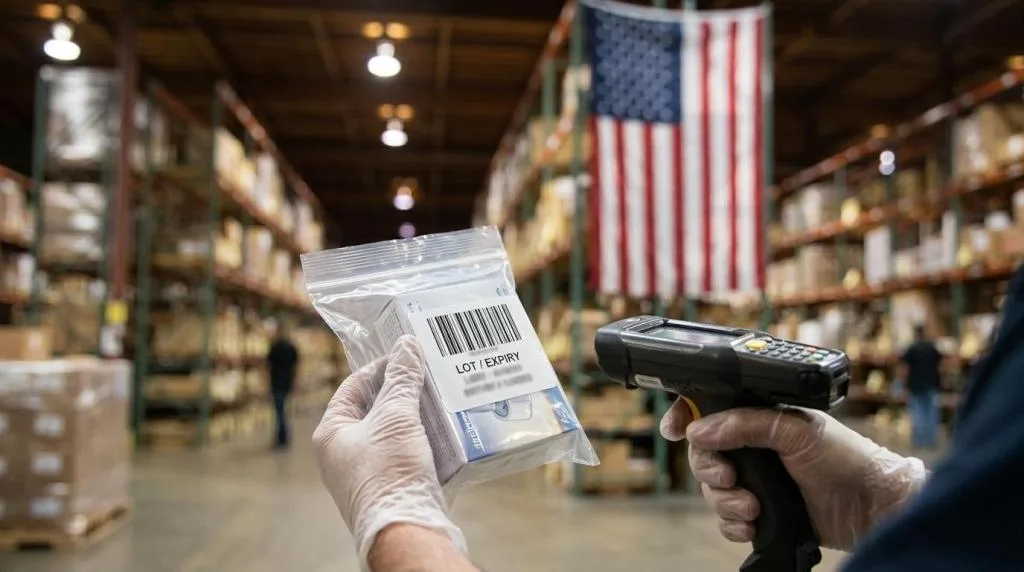
Top 3PL Services for Healthcare Fulfillment
Healthcare fulfillment services sit at the point where logistics, quality control, and patient risk meet. They help healthcare brands, device makers, supplement companies, and care networks move products quickly without losing traceability, inventory accuracy, or regulatory discipline. The main problem they solve is simple but high stakes: standard fulfillment methods often break down when orders require lot control, recall readiness, documented SOPs, or sensitive handling. When the operation is built correctly, teams get faster shipping, cleaner audits, and fewer costly exceptions.
What are healthcare fulfillment services?
Healthcare fulfillment services are regulated warehousing and order operations for items like diagnostic devices and medical supplements. They combine storage, pick-pack-ship, lot tracking, expiry control, and documented SOPs. The goal is not just delivery, but traceable delivery.
A standard ecommerce workflow focuses on speed and parcel cost. A healthcare workflow adds controls that matter when a product could be recalled, audited, or tied to patient use. That usually means batch or lot visibility, quarantine procedures, documented returns handling, and tighter inventory reconciliation.
A common misconception is that every healthcare order requires the same controls. That is not true. If you ship brochures, OTC wellness kits, or non-cold-chain devices, the process can be simpler than a prescription or biologics workflow. If the provider touches protected health information, then HIPAA obligations may apply. If it does not, then the compliance scope changes.
Why do healthcare fulfillment services matter for compliance and patient outcomes?
Healthcare fulfillment directly affects product integrity, audit readiness, and patient trust. FDA and HHS expectations make accuracy, traceability, and secure handling non-negotiable. A late order is costly. A wrong or untraceable order is worse.
The operational risks are easy to underestimate. A mislabeled device shipment can trigger returns, replacements, and field support costs. A lot-traceability gap can slow a recall and expand its scope. A temperature excursion can turn usable inventory into scrap, even when the package arrives on time.
Speed still matters, but speed without controls is not a healthcare strategy. The stronger model is controlled speed: clear cutoffs, documented handling steps, and visibility from receipt through delivery confirmation.
What healthcare fulfillment companies are the best fit for different needs?
The best provider depends on product risk, network scope, and how much regulatory structure the workflow needs. Silicon Valley Direct, DHL, UPS Healthcare, and McKesson are useful benchmarks because they represent different operating models.
For most teams, the right shortlist is use-case based, not brand based:
- Silicon Valley Direct (SVDirect): A strong fit for medical supplements, health care devices, literature, and other non-cold-chain healthcare-adjacent programs that need same-day shipping, no minimum order requirement, 80+ integrations, custom API support, and direct account support from a Union City, California warehouse.
- DHL Health Logistics: Best known for global healthcare scale, GDP and GxP orientation, and large temperature-controlled infrastructure. A practical benchmark for complex international programs.
- UPS Healthcare: A strong choice when cold chain transport, control tower visibility, and broad transportation reach are central to the operating model.
- McKesson Third Party Logistics: A healthcare-native option that stands out in U.S. therapy distribution and has publicly cited 99.98% inventory and order accuracy.
- GXO Logistics: A serious contender for large healthcare and hospital supply programs where contract logistics scale matters.
The trade-off is clear. Large specialists bring deeper healthcare infrastructure and international reach. Smaller or mid-sized partners often bring more flexible onboarding, closer communication, and better fit for brands that are growing fast but do not need a global cold chain on day one.
How is healthcare fulfillment different from standard ecommerce fulfillment?
Healthcare fulfillment is stricter than standard ecommerce because products, records, and exceptions carry higher risk. Shopify and Amazon-style parcel logic is useful, but FDA-facing traceability and quarantine controls change the workflow.
In standard ecommerce, the main questions are usually stock availability, carrier rate, and delivery time. In healthcare, teams also ask whether the order used the correct lot, whether the item was within date, whether the return can be resold, and whether the event log is audit-ready.
That difference changes system design. If a product has lot or serial requirements, then the warehouse management system must capture and report them at the order level. If an order may involve PHI, then access control, retention rules, and data-handling procedures need to match the workflow. Many teams assume a good consumer 3PL can “just add” healthcare controls later. In practice, retrofitting traceability is much harder than designing it at launch.
How do you vet a healthcare fulfillment provider in 3 steps?
A strong vetting process starts with proof, not promises. FDA-facing SOPs and HHS-related privacy controls should be visible before a contract is signed. Ask for evidence that matches your product class.
Step 1. Request the operating documents. Ask for sample SOPs, lot and expiry workflows, recall procedures, CAPA structure, quality contacts, and BAA readiness if PHI is involved. If a provider says it is “HIPAA compliant,” ask which systems, users, and processes are in scope. That question surfaces weak claims quickly.
Step 2. Map your exact use case. A provider may be excellent for ambient supplements and still be the wrong fit for temperature-sensitive diagnostics. Walk through receiving, putaway, order release, pick rules, packing, shipment confirmation, returns, quarantine, and disposition. If the provider cannot explain exception handling, then the daily operation will drift.
Step 3. Pilot the workflow. Test a small SKU set, a returns scenario, and a mock recall report before full cutover. Pro tip: ask for the report format you would get during a real event. Many teams audit the warehouse and forget to audit the reporting.
What capabilities matter most in a healthcare fulfillment workflow?
The highest-value capabilities are traceability, controlled handling, system visibility, and disciplined exception management. UPS Healthcare and McKesson show how mature programs tie operations to reporting, not just to shipping labels.
The essentials usually connect in five places:
- Lot and expiry control: Batch traceability and FEFO logic help prevent short-dated inventory from shipping first by accident.
- Temperature handling: Qualified storage, packaging, and excursion response matter if product stability depends on range control.
- Integration depth: EDI, API, Shopify, NetSuite, and ERP connections reduce manual keying and the errors that follow it.
- Recall readiness: Quarantine, hold codes, and searchable shipment history turn a recall from chaos into a contained event.
- Visibility and reporting: Real-time order status, inventory views, and exception logs let quality and operations work from the same facts.
These capabilities are linked. If the reporting layer is weak, then traceability is weak even when the warehouse team performs well. If returns handling is vague, then inventory accuracy can look healthy on paper while non-saleable stock quietly mixes back into available inventory.
How do onboarding and quality setup work in healthcare fulfillment in 3 steps?
Good onboarding is structured, documented, and test-driven. A clean setup in a Union City warehouse or a national network follows the same logic: define the rules, test the rules, then release volume.
Step 1. Build the master data and product rules. This covers SKU attributes, lot and serial needs, expiry windows, pack configurations, shipping restrictions, customer routing, and returns categories. If the product family includes both general merchandise and regulated items, then separate the rules early so exceptions do not spill across categories.
Step 2. Validate the workflow. Run receipts, picks, packing, shipping labels, lot capture, reporting exports, and returns transactions in a test environment or controlled live run. If a label format, carton logic, or portal field fails here, fix it now. Fixing it after orders start moving is slower and more expensive.
Step 3. Go live with a short review cycle. The first two to four weeks should include daily exceptions review, inventory checks, and service-level reporting. A common mistake is treating go-live as the finish line. In healthcare fulfillment, it is the first real audit of the process.
Is a regional healthcare 3PL or a global healthcare network better?
Neither model is always better. A regional operator like Silicon Valley Direct can win on responsiveness and fit, while a global network like DHL can win on certified reach and cross-border control.
A regional 3PL often makes sense when products are ambient, the customer base is concentrated, and the brand needs hands-on support. Warehouse visits, direct account access, and faster change requests can be real operational advantages. That matters for growing brands that need to adjust kitting, inserts, or order rules quickly.
A global healthcare network makes sense when customs, multiple countries, cold chain lanes, or regulatory variation are central to the job. If you ship to hospitals across regions, then network redundancy and control tower visibility become more valuable than local flexibility. If you ship mostly within the western United States and the product is not temperature-sensitive, then a regional setup may produce better speed-to-cost performance.
How should you build SLAs and KPIs for healthcare fulfillment in 3 steps?
Strong healthcare SLAs tie service promises to product risk. McKesson’s public 99.98% accuracy figure is a useful benchmark, but every KPI should match the product class and order profile.
Step 1. Define the promise by workflow. Set targets for order accuracy, inventory accuracy, on-time ship rate, receiving turnaround, return processing time, and exception response. Mature programs often target inventory accuracy above 99.8%. If a product is high risk, then use tighter thresholds and shorter escalation windows.
Step 2. Attach tolerances and actions. Say what happens when a lot mismatch, short shipment, or temperature excursion occurs. If the order touches patient-critical stock, then escalation should be immediate and named. If it is literature or a sample kit, then the response path can be lighter.
Step 3. Make the numbers visible. A 24/7 portal, scheduled scorecards, and weekly root-cause reviews keep the SLA alive. Pro tip: include a metric for data quality, not just shipping speed. Bad item masters and incomplete lot data cause many “warehouse” problems that actually start upstream.
When are healthcare fulfillment services a strong fit for supplements, devices, and literature?
Healthcare fulfillment is often a strong fit well before a company enters highly regulated pharma logistics. Medical supplements, health care devices, and educational literature all benefit from cleaner inventory control and faster order execution.
This is where fit matters more than category labels. A supplement brand may need same-day shipping, lot visibility, and ecommerce integrations, but not cold chain. A device company may need serial tracking, replacement workflows, and stricter returns inspection. A literature program may need version control, regional allocation, and kitting with promotional items.
That makes a flexible 3PL valuable. Providers like Silicon Valley Direct can be a smart choice when the need is healthcare-adjacent fulfillment with real operational discipline, but not a full biologics-grade infrastructure. One common mistake is assuming “healthcare” means one buying decision. The right question is narrower: what exact controls does this SKU, channel, and customer require?
What red flags should you catch before signing a healthcare fulfillment contract?
The clearest red flags are missing proof, vague exception handling, and weak traceability. FDA-relevant workflows and HIPAA-related safeguards should appear in documents, systems, and staff answers, not just in sales language.
Watch for warning signs during the selection process:
- No sample recall report
- No lot, serial, or expiry visibility in demos
- Vague answers about quarantine and disposition
- Undefined BAA process when PHI may be involved
- No named quality contact or CAPA path
- “We can build that later” for core controls
- No pilot or validation phase before launch
- Reporting that depends on manual spreadsheets
The best healthcare fulfillment partnerships feel disciplined early. When a provider can explain how data, warehouse actions, and quality decisions connect, the operation usually performs better after launch too.