


On-Demand Digital Printing: The 2026 Strategic Guide to Zero-Inventory Logistics
Your warehouse isn’t an asset; it’s a graveyard for marketing materials that will likely be obsolete before they ever reach a customer’s hands. Relying on bulk production often leads to high storage costs and the inevitable waste of outdated collateral. It’s a common struggle for growing brands that need to balance speed with precision. By shifting to on-demand digital printing, you can transform your logistics from a reactive burden into a proactive engine for growth.
We recognize the burden of managing fragmented vendor chains and the stress that comes with inconsistent print quality. You deserve a partner that serves as a steady hand, ensuring your materials are produced with high-tech efficiency and a personal commitment to your growth. This strategic guide will show you how to eliminate inventory waste and streamline your supply chain using integrated on-demand digital printing and professional fulfillment. We’ll examine the transition to zero-inventory logistics, the impact of 2026 regulatory shifts like Extended Producer Responsibility, and the way just-in-time production creates a more agile, responsive business model.
Key Takeaways
- Modernize your supply chain by transitioning from a “print-then-store” model to an “order-then-print” strategy that eliminates physical inventory waste.
- Leverage API-integrated on-demand digital printing to trigger production only when needed, reducing long-term storage and insurance overhead.
- Evaluate the true economic impact of your collateral by comparing the Total Cost of Ownership (TCO) against the hidden expenses of warehousing and disposal.
- Implement a just-in-time literature workflow using a centralized digital asset library to ensure your marketing materials are always accurate and current.
- Combine high-tech automation with professional human oversight to maintain precision and brand consistency across global fulfillment operations.
What is On-Demand Digital Printing in a 3PL Context?
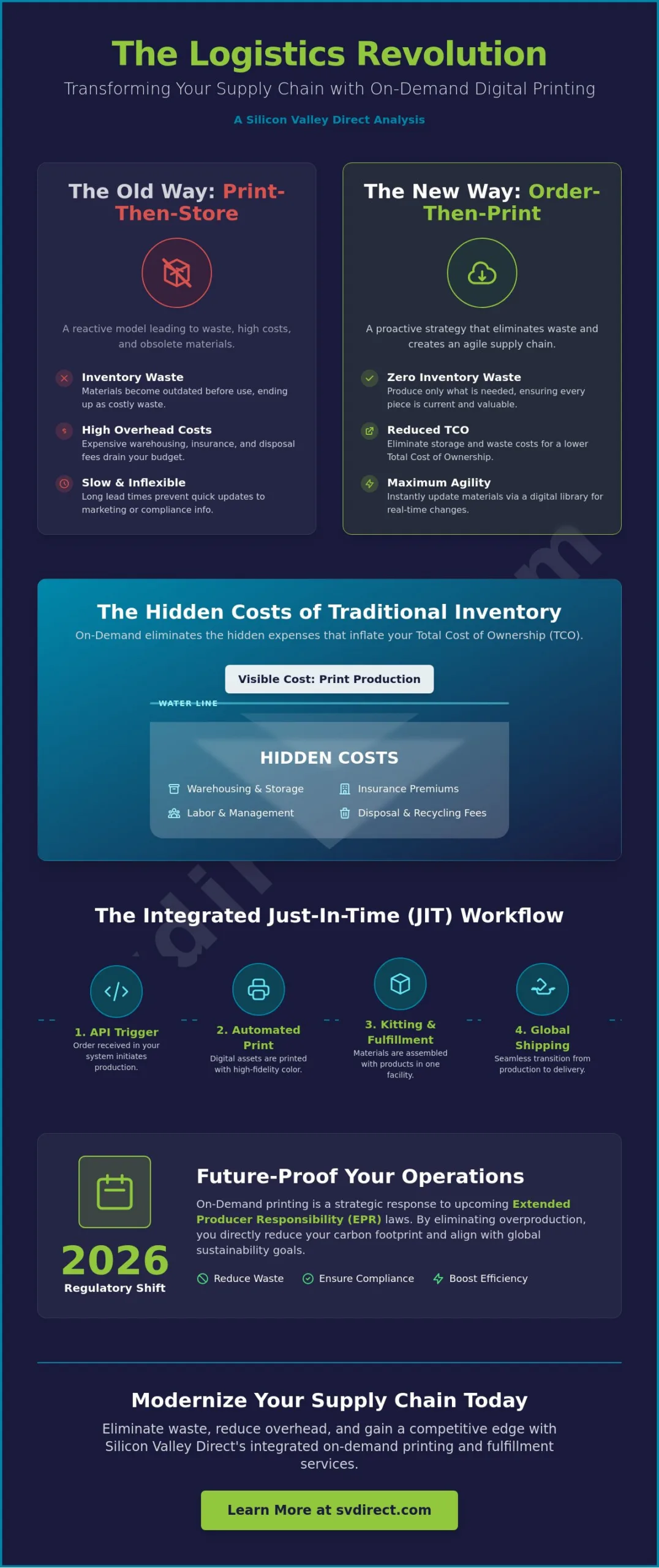
In a 3PL context, on-demand digital printing is a logistics-integrated production method where marketing materials, manuals, or kits are manufactured only after a specific order is triggered. This represents a fundamental departure from the traditional “print-then-store” model that has burdened enterprises for decades. Instead of filling warehouse shelves with thousands of brochures that might become obsolete by next quarter, modern organizations are adopting an “order-then-print” philosophy. This shift ensures that every piece of literature leaving the facility contains the most current data, branding, and regulatory compliance information.
To better understand how this zero-inventory model works in a commercial setting, watch this helpful overview of the on-demand process:
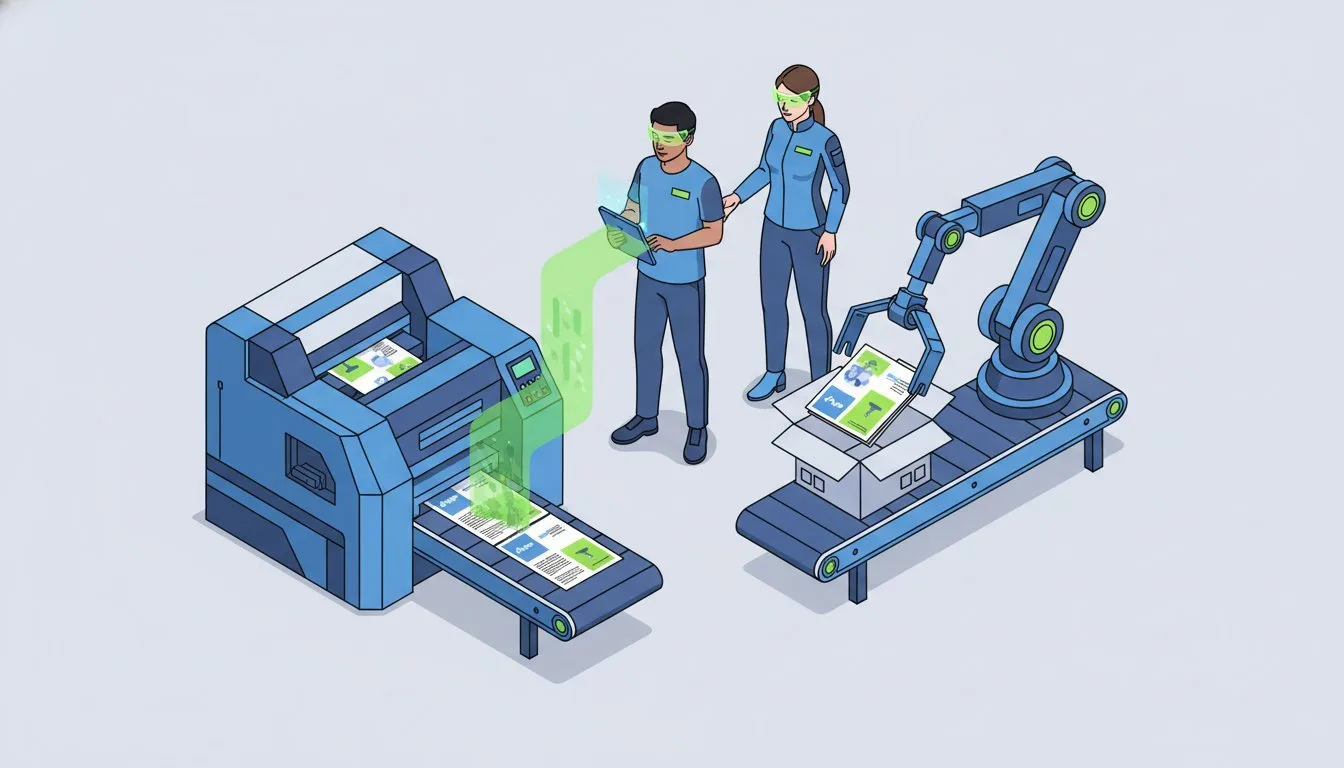
Integrating these services directly into a third-party logistics (3PL) framework is the missing link for most digital printing providers. While many platforms focus on consumer merchandise like t-shirts or mugs, professional business literature requires a higher level of precision and sophisticated kitting. Silicon Valley Direct bridges this gap by merging high-tech production with global shipping infrastructure. By housing the printing presses within the fulfillment center, we eliminate the transit time between the printer and the mail house. This allows for a seamless transition from a digital file to a global delivery, managed by a team that understands the high stakes of business growth.
The Evolution of Digital Printing Technology
The journey of Digital Printing Technology has seen a dramatic shift from basic laser office printing to industrial-grade, high-fidelity inkjet and toner-based digital presses. Modern equipment now achieves CMYK color matching that rivals traditional offset printing, ensuring brand consistency across every run. Automation plays a critical role here; it reduces setup times for single-unit runs to near zero. This makes it financially viable to print one hundred unique booklets as easily as one thousand identical ones. It’s a proactive stance that allows for variable data printing, where each recipient receives a personalized experience tailored to their specific needs.
Why Real-Time Production Matters in 2026
In 2026, the demand for sustainability isn’t just a preference; it’s a regulatory requirement. With Extended Producer Responsibility (EPR) laws taking effect in states like California and Oregon, companies are now more accountable for the waste they generate. Real-time production reduces the carbon footprint by eliminating overproduction and the physical waste of discarded, outdated materials. Just-In-Time (JIT) printing is the strategic practice of producing literature at the exact moment it’s required for fulfillment to maximize supply chain efficiency and minimize capital tied up in physical stock. This approach ensures your marketing kits are never gathering dust or facing the recycling bin before they’ve served their purpose.
The Technical Mechanics of High-Quality Digital Output
High-performance logistics starts with a digital signal. When an order enters the system, an API call triggers the production queue instantly. This process isn’t merely about printing; it’s a synchronized movement where data meets ink. Unlike generic merchandise platforms, professional on-demand digital printing requires high-fidelity output that respects strict corporate branding standards. Every file must be processed through a structured prepress workflow to ensure color accuracy and high-resolution clarity. It’s a precise science that bridges the gap between a digital asset and a physical product ready for global shipping.
Maintaining this level of quality in a high-speed environment requires rigorous control measures. We utilize advanced color correction and predictive error monitoring to ensure every unit meets your exact specifications. Our team maintains a proactive stance by performing physical checks on the first and last units of every run. This human-in-the-loop philosophy is a core differentiator; it ensures that nuances often missed by automated systems are caught before they ever reach a customer. It’s this blend of high-tech efficiency and seasoned expertise that keeps your supply chain reliable.
Variable Data Printing (VDP) and Personalization
Variable Data Printing is the engine behind hyper-personalized customer experiences. It allows us to swap unique names, QR codes, or tailored images on every single piece without slowing down the press. According to 2026 industry data, digital printing remains the most cost-effective solution for variable data jobs with fewer than 28,000 units per version. This capability transforms a standard brochure into a high-conversion tool that speaks directly to the recipient. By integrating your CRM data with our print workflows, you can automate direct mail campaigns that feel personal, urgent, and deeply relevant.
Seamless 3PL Software Integration
True efficiency occurs when your 3PL inventory management software communicates directly with the production floor. This integration allows print jobs to trigger automatically based on real-time demand or specific customer actions. You can track the status of your print project directly from your fulfillment dashboard, providing total visibility from the first pixel to the final package. Automated file routing significantly reduces human error and eliminates the friction of manual data entry. If you’re ready to see how this precision can scale your operations, you might want to consult with our logistics experts about a custom workflow tailored to your business needs.
Economic Analysis: On-Demand Printing vs. Traditional Inventory
Many procurement teams fall into the “unit cost trap” by focusing exclusively on the price per piece offered by traditional offset printing. While it’s true that bulk production can drive down the individual cost of a brochure, this narrow view ignores the total cost of ownership (TCO). A lower unit price becomes irrelevant if 30% of that inventory is eventually discarded due to branding changes or regulatory updates. On-demand digital printing shifts the financial focus from volume discounts to operational efficiency. By aligning production with actual demand, you stop paying for the potential of a sale and start paying for the reality of one.
The hidden costs of maintaining a traditional inventory are substantial and often underestimated. Beyond the initial print invoice, organizations face ongoing storage fees, insurance premiums for physical stock, and potential inventory taxes. These expenses compound over time, eroding the perceived savings of a bulk run. Strategic decision-makers in 2026 prioritize agility because the ability to pivot a marketing message in real time is far more valuable than a marginal saving on paper stock. This lean approach ensures that capital isn’t trapped in cardboard boxes but is instead available for proactive business growth.
The Break-Even Point of Digital Printing
As of May 2026, the economic break-even point between offset and digital production has shifted. Offset printing typically becomes more cost-effective only when runs exceed 4,200 standard units. For smaller, high-precision batches, digital production wins on both speed and price. In competitive environments like Silicon Valley, speed-to-market is a critical differentiator. Being able to deploy a new campaign in days rather than weeks provides a strategic edge that traditional models can’t match. By producing only what is required for immediate distribution, on-demand printing eliminates monthly warehousing and storage fees entirely.
Inventory Management and Cash Flow
Adopting a zero-inventory model significantly improves cash flow by removing the need for massive upfront prepayments. Instead of committing thousands of dollars to a single print run, you pay as you grow. This model integrates perfectly with FIFO inventory management, though the “inventory” in this case is a digital asset library. We manage your digital files with the same rigor others apply to physical pallets, ensuring the latest version is always the one that hits the press. Maintaining a lean model also offers distinct tax benefits, as you aren’t carrying a large balance of physical assets as year-end liabilities. This proactive stance keeps your balance sheet as clean as your supply chain.
Building an Integrated Just-In-Time (JIT) Literature Workflow
Efficiency isn’t found in a crowded warehouse; it’s built through a structured workflow that prioritizes speed and accuracy. Transitioning to a zero-inventory model requires a methodical approach to ensure your marketing assets are ready the moment they’re needed. The first step involves a comprehensive audit of your current collateral. You should identify items with high revision cycles, such as technical data sheets or seasonal brochures. These are the ideal candidates for on-demand digital printing because they benefit most from the ability to update content without wasting existing physical stock.
Once you’ve identified your key assets, establish a centralized digital library with your 3PL partner. This ensures version control is absolute and that your team is always printing from the most recent master file. You then define specific trigger points within your CRM or eCommerce platform. When a new lead is captured or an order is placed, the system automatically initiates the print job. This process often integrates directly with kitting and assembly services for complex bundles, where printed literature is combined with physical products in one seamless motion. Finally, use real-time fulfillment data to monitor usage patterns and optimize your digital asset library for maximum impact.
Literature Fulfillment for B2B and Sales Teams
Equipping a global sales force with the latest materials often creates a logistical nightmare for corporate headquarters. A JIT workflow allows for centralized brand control with decentralized, agile distribution. Instead of shipping heavy boxes of brochures from HQ to international offices, you trigger local production based on actual need. This ensures your teams always have the most relevant, localized content in their hands without the high cost of international freight. For a deeper look at managing these assets, explore our guide on literature fulfillment services.
High-Compliance and Healthcare Mailing
In the healthcare sector, precision isn’t just about branding; it’s about compliance. Medical device and pharmaceutical companies require absolute accuracy in their documentation to meet HIPAA and other regulatory standards. On-demand digital printing provides the digital precision necessary for sensitive documents like Explanation of Benefits (EOB) or personalized patient kits. Our facility merges this high-tech output with professional human oversight to ensure every piece of mail is accurate and secure. You can learn more about our specialized protocols by reading about our healthcare mailing services. If you’re ready to modernize your own workflow, request a custom quote to see how we can streamline your logistics.
Silicon Valley Direct: Precision Printing Meets Global Fulfillment
For over 25 years, we’ve operated at the intersection of Silicon Valley innovation and physical logistics. We don’t just manage files; we integrate production directly into the heart of the supply chain. Our on-demand digital printing capabilities are designed to scale alongside your business, whether you’re a startup launching a single prototype or a global enterprise distributing technical literature to thousands of recipients. This multi-decade history provides a foundation of trust that newer, purely digital platforms can’t replicate. We’ve refined our processes through years of operational experience to ensure your brand remains consistent and your supply chain stays lean.
Our workflow extends beyond the press to include seamless integration with promotional kit fulfillment. This creates a unified brand experience where your printed materials and physical products are kitted and shipped from a single, high-performance facility. For brands running recurring deliveries, the same precision applies to subscription box assembly, where on-demand printed inserts and personalized collateral can be incorporated into every box to elevate the unboxing experience at scale. By consolidating these operations, we reduce the complexity of your vendor stack and eliminate the communication gaps that often lead to errors. It’s a holistic approach to brand logistics that prioritize your growth and alleviates the stress of business expansion through precision and personal commitment.
Beyond Automation: The Human Element
In a market saturated with faceless, automated portals, we’ve made a deliberate choice to prioritize human connection and personal oversight. Every complex project at Silicon Valley Direct is coordinated by seasoned experts who understand the nuances of your specific branding requirements. We believe that while technology drives efficiency, human expertise ensures accuracy. Our quality assurance protocols involve physical inspections that catch subtle color shifts or alignment issues that automated sensors might miss. This high-touch service model offers a level of bespoke problem-solving that remains a primary signature of our organization.
Strategic Location Advantage
Our location in the heart of the world’s most innovative hub is a significant logistical asset for our clients. Being based in Silicon Valley allows us to serve global tech and biotech organizations with the speed and sophistication their industries demand. We’ve spent decades optimizing shipping routes and cultivating deep carrier relationships to ensure reliable worldwide delivery. This geographic identity serves as a symbol of our commitment to innovation and global connectivity. If you’re ready to transition to a more agile, responsive model, you can contact Silicon Valley Direct for a custom on-demand printing quote to begin your journey toward zero-inventory logistics.
Future-Proof Your Marketing Logistics with Zero-Inventory Precision
The shift toward zero-inventory logistics isn’t a temporary trend; it’s the new standard for organizations that value agility and sustainability. By prioritizing the total cost of ownership over deceptive bulk discounts, you protect your capital and ensure your brand remains current. We’ve explored how a just-in-time workflow reduces physical waste and how sophisticated technical integrations bring your marketing assets to life at the exact moment they’re needed. Adopting on-demand digital printing allows your business to remain responsive in a market that moves faster than ever.
Silicon Valley Direct has been serving the region’s most innovative companies since 1999. Our fully integrated 3PL and digital print facility bridges the gap between digital innovation and physical fulfillment. While automation handles the complex data transfers, we maintain direct human oversight on every project to ensure the highest level of precision. This combination of high-tech efficiency and seasoned expertise provides the stability your business needs to scale with confidence. It’s time to stop storing the past and start printing the future.
Streamline your logistics with our On-Demand Digital Printing services today.
We’re ready to help you build a more resilient and efficient supply chain that supports your long-term growth.
Frequently Asked Questions
What are the primary benefits of on-demand digital printing for businesses?
The primary benefits of on-demand digital printing include the total elimination of inventory waste and the ability to update marketing collateral in real time. Businesses can avoid the high upfront costs of bulk production while ensuring every piece of literature is current and compliant. This proactive model fosters a leaner supply chain and allows organizations to reallocate capital toward growth rather than physical storage.
How does on-demand printing integrate with eCommerce fulfillment?
This service integrates with eCommerce fulfillment by using API triggers to initiate a print job the moment an order is placed. The printed item moves directly into the kitting and assembly phase within the same facility. This eliminates the transit time typically required between a separate printer and the fulfillment house, creating a seamless “order-then-print” workflow that prioritizes speed and accuracy.
Is digital print quality the same as traditional offset printing?
Modern digital print quality is virtually indistinguishable from traditional offset printing for most commercial applications. High-fidelity presses utilize advanced CMYK toner and inkjet technology to achieve precise color matching and sharp resolution. While offset remains cost-effective for extremely high volumes, digital production offers superior flexibility for shorter runs and personalized content without sacrificing professional standards or brand consistency.
Can I use on-demand printing for personalized direct mail marketing?
You can use on-demand digital printing to create hyper-personalized direct mail campaigns through Variable Data Printing (VDP). This technology allows for unique names, tailored offers, or specific QR codes to be printed on every individual piece within a single run. By integrating your CRM data with our print workflow, you can automate highly targeted marketing that drives higher engagement and conversion rates.
What is the typical turnaround time for a digital print-on-demand order?
Turnaround times for digital orders are typically much shorter than traditional methods because they don’t require the creation of physical plates. While the specific timeline depends on the complexity of the kitting and assembly involved, most projects move from digital file to shipping queue within a few business days. This speed allows brands to respond to market changes with high-tech efficiency and seasoned professionalism.
How does on-demand printing help reduce warehousing and storage costs?
On-demand production helps reduce warehousing costs by eliminating the need to store large quantities of pre-printed materials that might become obsolete. You only pay for the production of items that are actually being shipped to customers or leads. This model removes monthly storage fees, insurance premiums for physical stock, and the inventory taxes associated with carrying high volumes of paper assets.
Is Silicon Valley Direct’s digital printing service HIPAA compliant for healthcare?
Our healthcare mailing services are designed with the rigorous security protocols required for HIPAA compliance and sensitive data handling. We manage medical documents, such as Explanation of Benefits and pharmaceutical literature, with direct human oversight and high-tech precision. This ensures that every piece of mail meets the strict accuracy and privacy standards expected by the healthcare industry without compromising on speed.
Can I integrate my Shopify or WooCommerce store with your printing services?
We provide seamless integration for major platforms like Shopify and WooCommerce through our specialized inventory management software. When a customer completes a purchase on your storefront, the order data is transmitted to our facility to trigger the necessary printing and fulfillment actions automatically. This connectivity allows you to manage your global brand from a single dashboard while we handle the physical logistics.