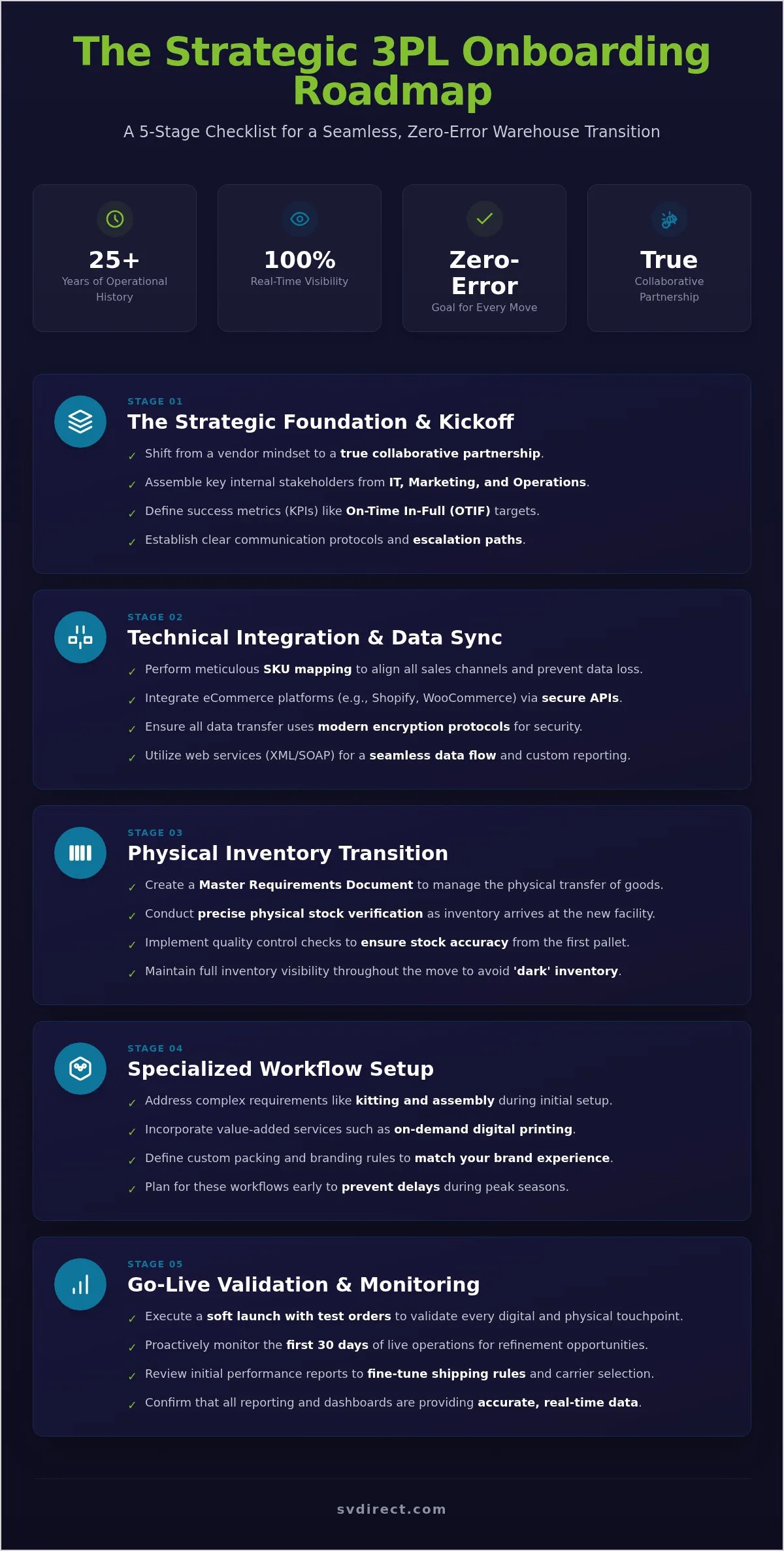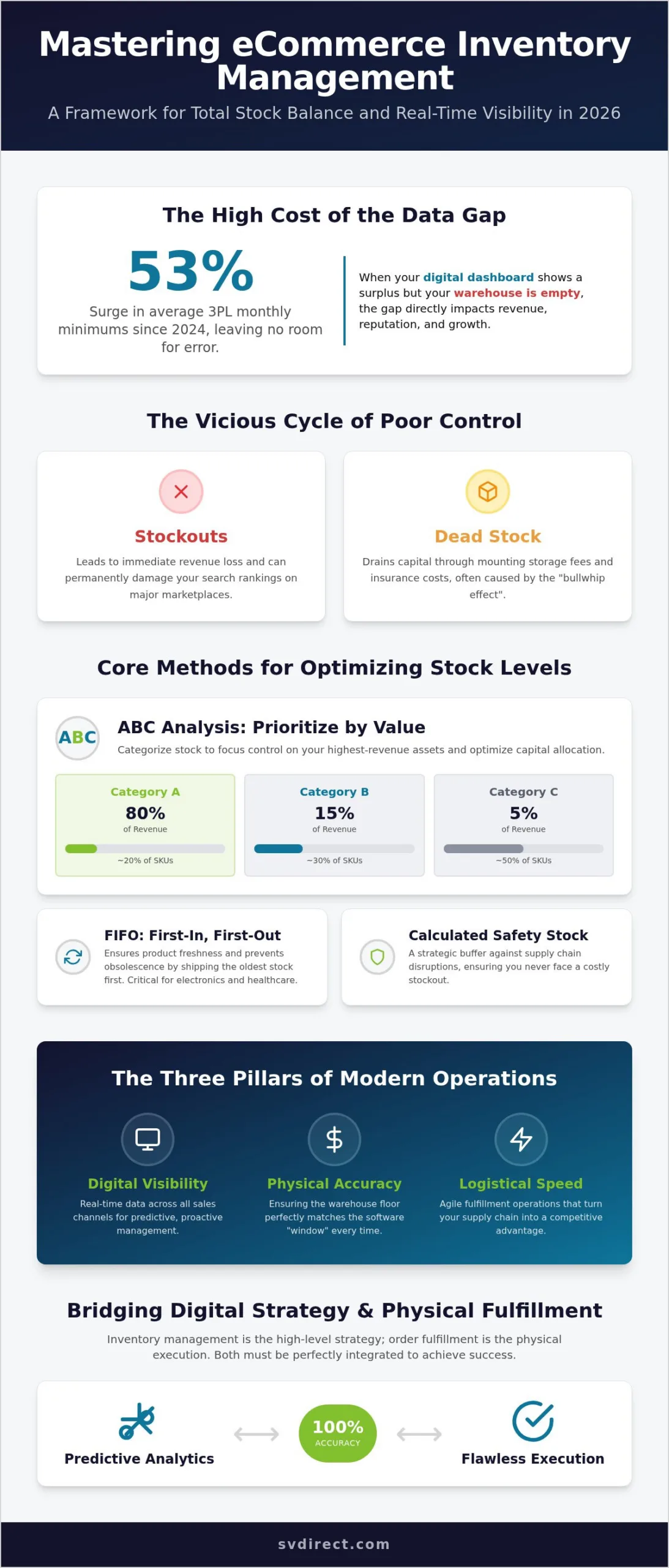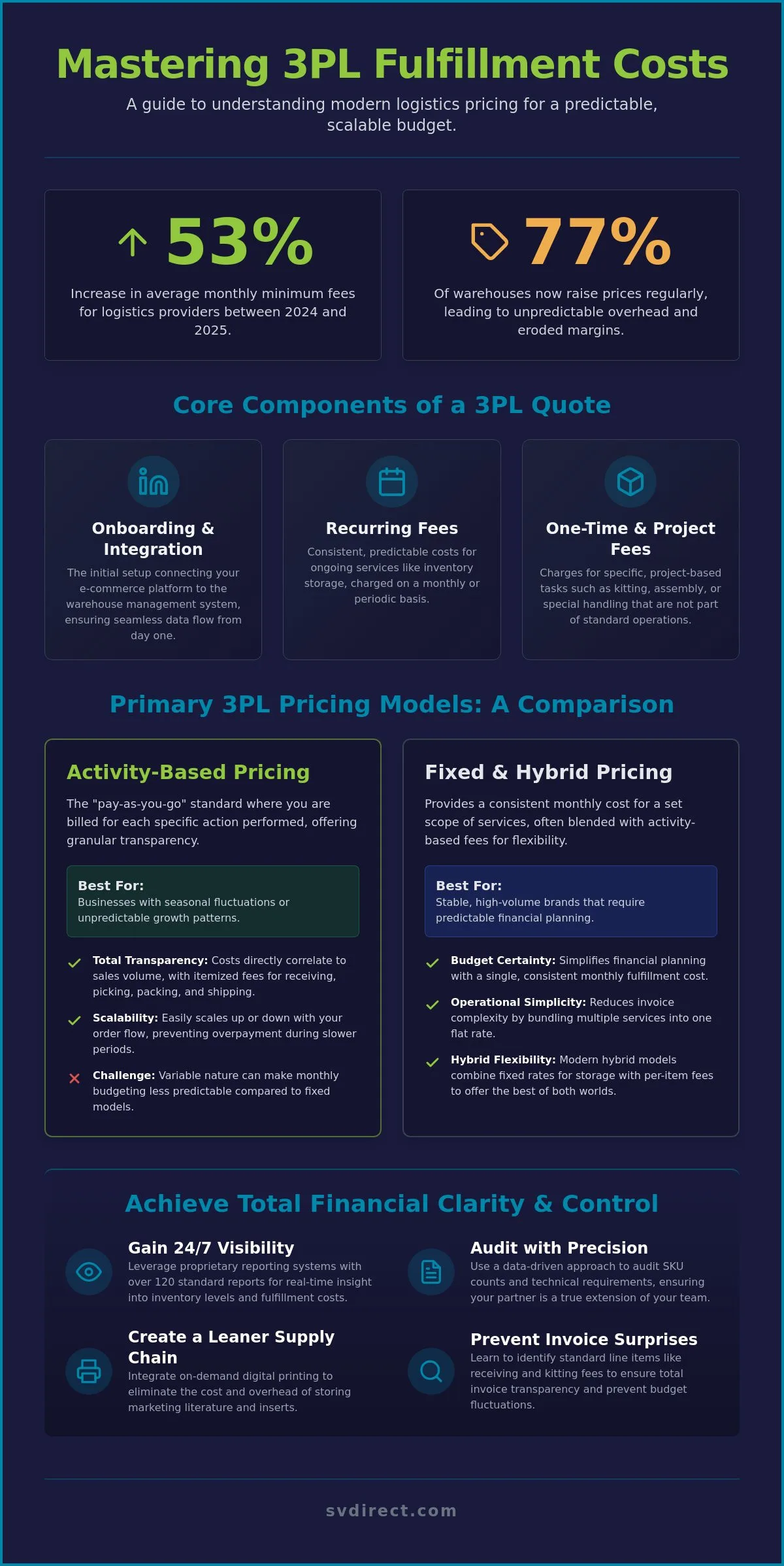
Silicon Valley Direct

Loading

img not found!
3PL Value Added Services: A Strategic Guide to Fulfillment Excellence in 2026

3PL Value Added Services: A Strategic Guide to Fulfillment Excellence in 2026

Did you know that 94% of Domestic Fortune 500 companies now rely on at least one 3PL to anchor their operations? With the global market reaching $1.4 trillion in 2026, the real challenge is no longer just moving boxes from point A to point B. Since approximately 57% of e-commerce companies now outsource their fulfillment, the competition for customer loyalty is won through the small, precise details of the delivery. This is exactly where 3pl value added services transform basic logistics into a high performance engine for your brand growth.

We understand the frustration when your marketing vision hits a wall at the warehouse dock. You want a seamless unboxing experience, but disconnected workflows often lead to shipping delays and rising costs. This guide will show you how to close that gap, leveraging our 26 years of human-verified precision to reduce overhead and ensure compliance-ready mailing for regulated industries. We will break down 2026 cost benchmarks, including the $0.50 to $2.50 average kitting fees, and show you how to turn complex workflows into a seamless competitive advantage that respects your time and your bottom line.

Key Takeaways

  • Learn why modern fulfillment requires moving beyond simple storage to incorporate specialized activities that enhance your product’s value before it reaches the customer.
  • Discover how to streamline complex subscription box rollouts and high-volume kitting through precise assembly workflows that protect your brand’s unboxing experience.
  • See how integrating on-demand digital printing into your 3pl value added services eliminates marketing bottlenecks by producing collateral only when an order is placed.
  • Identify the critical benchmarks for evaluating a logistics partner, focusing on the balance between advanced technical integrations and the availability of actual team members.
  • Understand how a “Tech-Savvy Veteran” approach allows your business to scale rapidly while maintaining the personal touch and human-verified accuracy your customers expect.

Beyond Warehousing: Defining 3PL Value Added Services for 2026

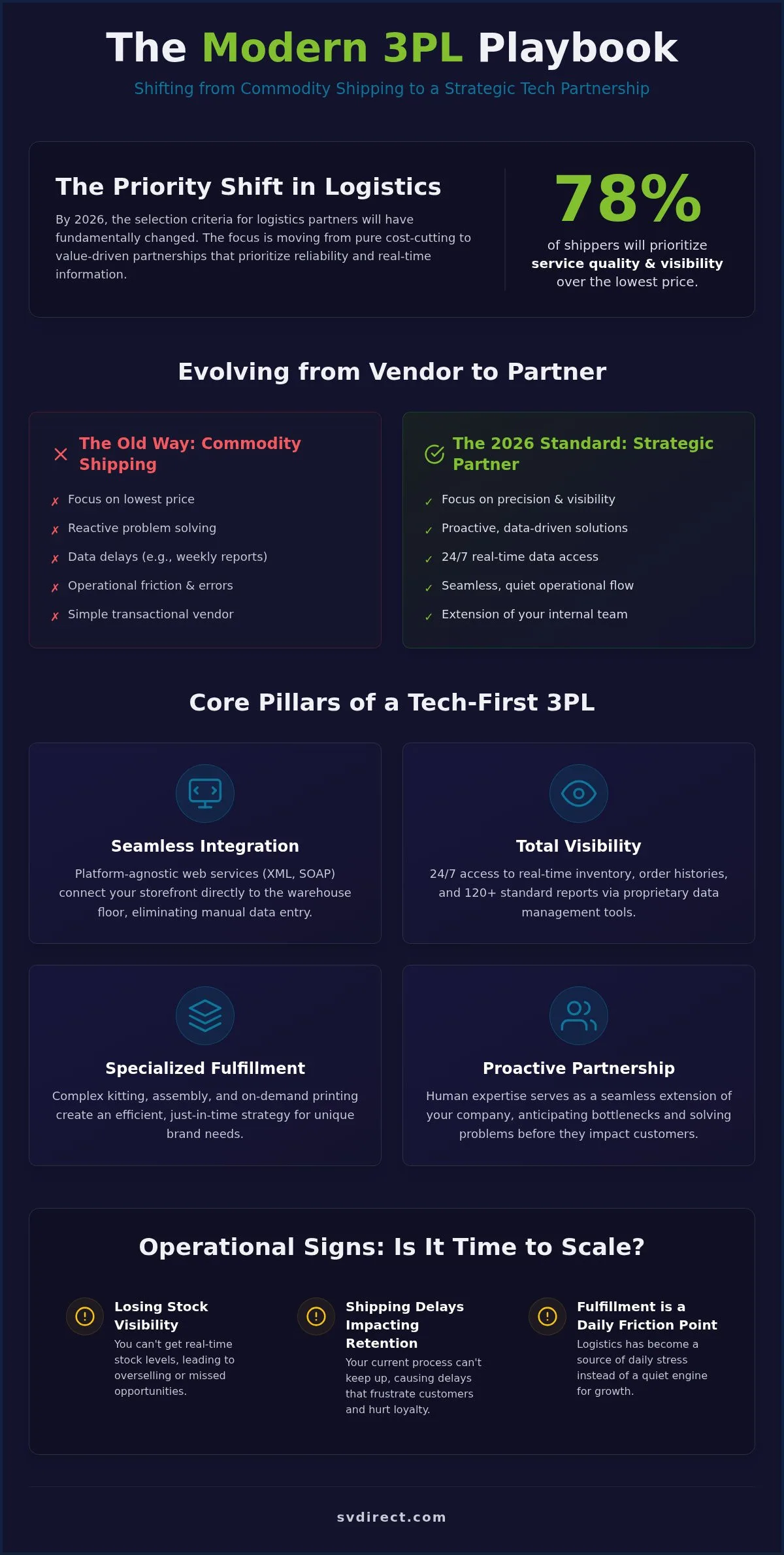
The logistics industry has shifted dramatically since we first opened our doors 26 years ago. Today, simple storage and shipping is a baseline expectation, not a competitive advantage. In the high-stakes eCommerce environment of 2026, Third-party logistics (3PL) providers must offer more than just a shelf and a shipping label. Specialized 3pl value added services are those specific activities that enhance a product’s value, presentation, or marketability before it reaches the final customer. Ultimately, these services serve as the strategic bridge between your manufacturing process and the final customer experience.

Distinguishing between core fulfillment and strategic value-add workflows is essential for scaling brands. While core fulfillment focuses on the mechanical accuracy of picking and packing, value-added services involve complex assembly, customization, and quality control. By integrating these tasks into the warehouse environment, brands eliminate the friction of moving goods between multiple vendors. This approach ensures that every package leaving the facility is brand-ready without requiring the merchant to manage a separate production team or marketing print shop.

To better understand how these services integrate into a modern supply chain, watch this helpful video:

The Strategic Shift: From Vendor to Growth Partner

Modern brands need to stay lean. They can’t afford to maintain massive internal teams for seasonal assembly or specialized kitting. This is where a partnership with a veteran logistics firm becomes a growth engine. Instead of a distant vendor, we act as a steady hand that scales with you. Our asset-based expertise means we have the physical infrastructure and the human talent, with half our team boasting over a decade of tenure, to handle viral growth or sudden market shifts. We reject the trend of virtual operations that rely on never-ending questions; instead, we offer proactive solutions that keep your marketing and fulfillment teams in perfect sync.

Common vs. Specialized Value Added Services

Standard services like basic labeling, barcoding, and simple repacking are essential for inventory management. However, 2026 demands specialized capabilities that go much further. The “Silicon Valley” approach requires a high level of tech-savviness because modern logistics is no longer just a physical game. It’s about using API integrations and web services to ensure that physical assembly is just as precise as the digital code that triggered the order. You can explore more about these technical integrations and how they support growth on our blog. Common specialized offerings include:

  • Kitting and Assembly: Combining disparate SKUs into custom bundles or subscription boxes.
  • On-demand Production: Printing marketing literature or manuals at the exact moment of order.
  • Healthcare Compliance: Ensuring regulated materials meet strict mailing and handling standards.

Maximizing Efficiency with Kitting, Assembly, and Branded Packaging

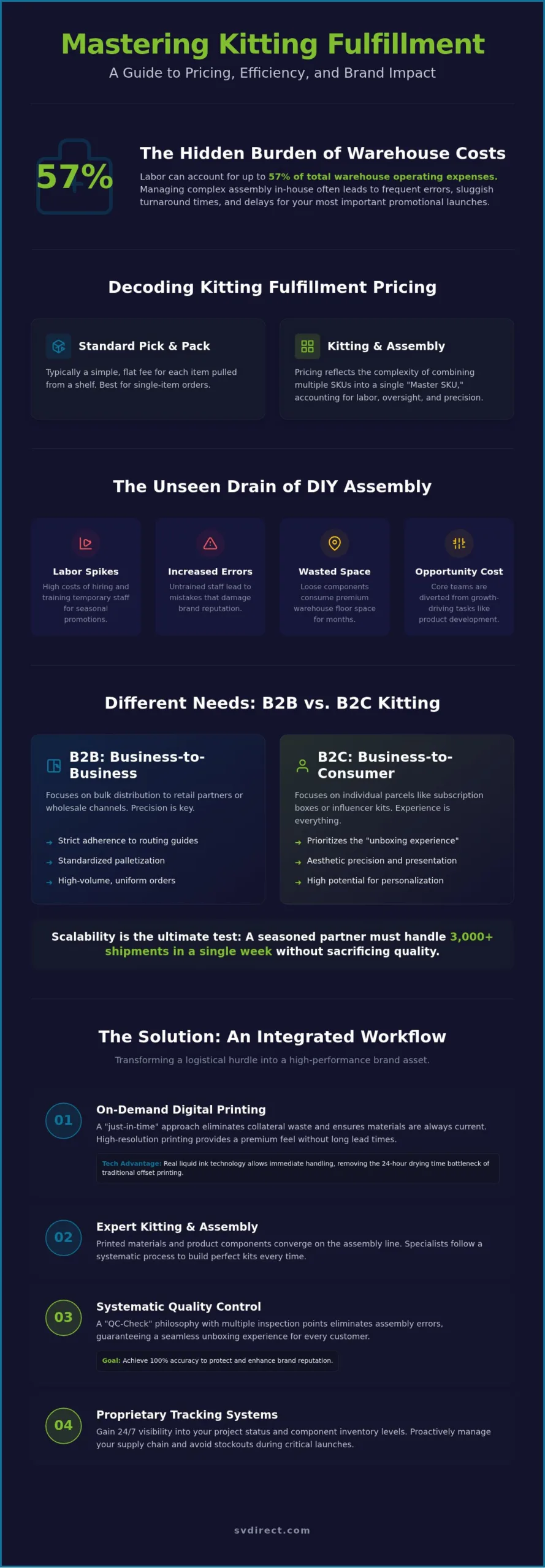
Logistics is no longer just about picking items off a shelf. As industry leaders broaden their service menu, the focus has shifted to the precise mechanics of kitting and assembly. We’ve seen over 26 years how these small details define a brand’s success. Kitting involves taking multiple individual SKUs and combining them into a single, cohesive unit. This process is the backbone of the “unboxing experience,” which 2026 consumers view as a critical part of the brand promise. Whether it’s a complex subscription box or a high-volume seasonal rollout, the physical presentation of your products serves as a powerful marketing tool.

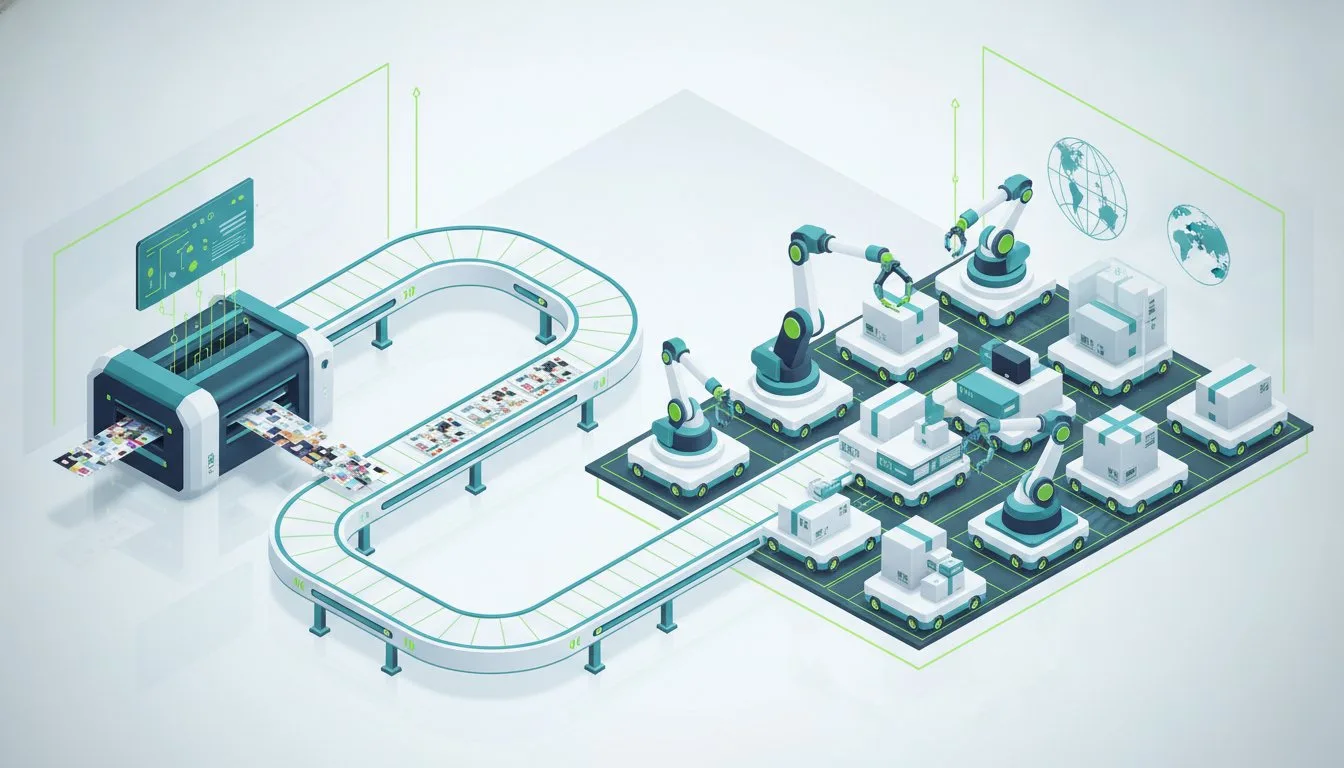
Precision matters most when assembly is complex. Many providers rely solely on automated scanners, but high-stakes custom projects require more. Our “Actual Team” commitment means we utilize a double-verification process in all manual assembly tasks. Two separate team members verify the contents of every kit against the master manifest before the box is sealed. It’s a deliberate step that eliminates the 1% to 3% error rates common in fully automated or rushed environments. In 2026, where the average pick and pack fee ranges from $1.50 to $3.00 per order, getting it right the first time is the only way to protect your margins and customer trust.

The ROI of Professional Kitting Services

Outsourcing your kitting to a specialized provider offers immediate financial benefits. By optimizing package dimensions and weights during the assembly process, you can significantly reduce dimensional weight shipping charges. Professionally managed 3pl value added services also simplify your backend operations. Instead of tracking dozens of individual components, you track a single finished SKU. This clarity is vital for accurate inventory control, ensuring you never overpromise on stock levels during a major promotion. It turns a chaotic warehouse floor into a streamlined engine for growth.

Assembly and Rework: Salvaging Value in the Supply Chain

Supply chains aren’t always perfect. When manufacturing errors occur or labeling requirements change, “rework” projects allow you to salvage inventory that would otherwise be lost. Our team specializes in these delicate corrections, from re-labeling thousands of units to updating promotional inserts. This flexibility is essential for seasonal sales or sudden marketing pivots. Quality control acts as the final gatekeeper; we inspect goods at the assembly stage to ensure your customers never receive a defective item. If you’re ready to see how these efficiencies can transform your bottom line, request a free quote to see how a tailored logistics plan could support your next rollout.

3PL Value Added Services: A Strategic Guide to Fulfillment Excellence in 2026

The Competitive Edge: Integrating On-Demand Printing and Compliance Mailing

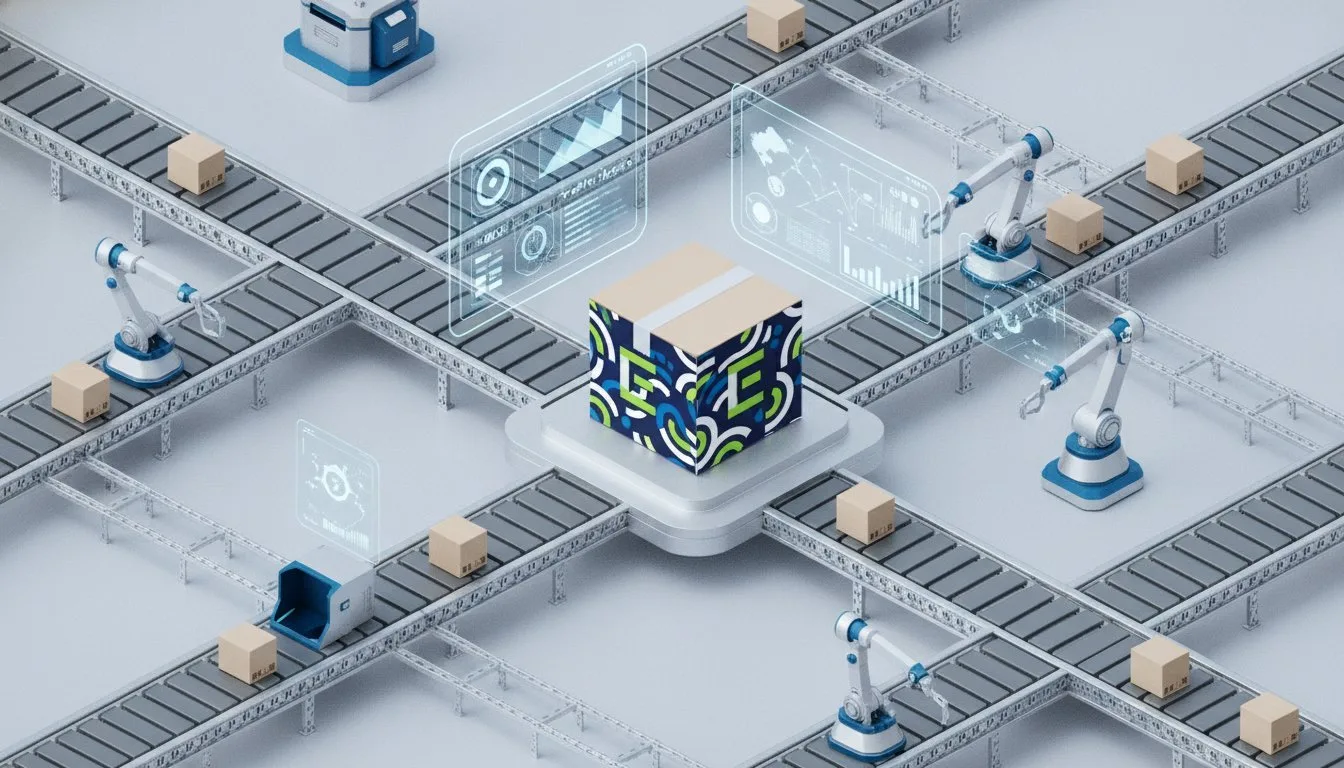
Many logistics providers treat digital printing as a separate industry, but in the fast-paced eCommerce world of 2026, it’s a critical component of 3pl value added services. When you separate your printing vendor from your fulfillment partner, you create unnecessary silos that lead to communication breakdowns. By housing on-demand digital printing under the same roof as your inventory, you streamline your entire supply chain. This integrated approach reduces lead times from days to hours, ensuring that every piece of literature included in a package is accurate and up to date.

This level of integration is particularly vital for brands that require high levels of customization or operate in regulated industries. Instead of waiting for a shipment of brochures to arrive at the warehouse, our team produces them in real time as orders flow through the system. This agility allows marketing teams to pivot quickly, testing new offers or updating product information without the risk of wasting thousands of dollars on pre-printed materials that might become obsolete next month.

On-Demand Printing: Reducing Waste and Increasing Relevance

Bulk printing has become a significant logistics liability. In 2026, where sustainability and lean operations are paramount, the end of “obsolete literature” is a major win for brand efficiency. Printing marketing collateral only when an order is placed ensures that every insert is relevant to the specific recipient. We achieve personalization at scale by integrating our print-on-demand technology directly with your eCommerce API. This allows us to add custom letters, tailored instructional guides, or unique discount codes to every shipment, creating a one to one connection with your customers that automated “virtual operations” simply can’t match.

Regulated Mailing: Security and Precision in Healthcare

Precision takes on a different meaning when handling healthcare mailing services. Managing sensitive patient communications, such as Explanation of Benefits (EOB) or medical device instructions, requires a partner that understands the stakes of HIPAA compliance. Security isn’t just a checkbox; it’s a dedicated process involving data encryption and human-verified accuracy. For pharma and medical device brands, the ability to combine secure mailing with physical fulfillment is a game changer. According to industry data from February 2026, specialized labor for compliance documentation typically ranges from $35 to $60 per hour, reflecting the expertise required. You can find more technical insights on managing these complex workflows on our blog, where we discuss the intersection of technology and human touch in modern logistics.

How to Evaluate a 3PL’s Value Added Capabilities and ROI

Evaluating a logistics partner for your 3pl value added services involves more than just comparing pick and pack rates. You’re looking for a Tech-Savvy Veteran with the physical infrastructure to back up their digital promises. A critical test for any potential partner is the Human Interaction test. Can you speak to an actual team member when a complex kitting project needs adjustment? We’ve seen for 26 years that the most successful brands prioritize partners who offer direct access to experts rather than automated help desks. When a provider says “anything is possible,” it reflects a commitment to bespoke problem solving that rigid, virtual operations simply cannot provide.

The Cost of In-House vs. 3PL Value Added Services

Managing kitting and assembly in house often carries heavy hidden burdens. In 2026, the average storage cost for a 3PL is between $15 and $25 per pallet in non-coastal U.S. markets. When you factor in the cost of warehouse space, equipment, and labor management, the math often favors outsourcing. Professional kitting fees typically range from $0.50 to $2.50 per kit, which is significantly lower than the overhead of maintaining a seasonal workforce. Scaling is another factor. A seasoned partner can handle 100 kits today and 10,000 tomorrow without you needing to sign a new lease or hire more staff. This flexibility protects your ROI by converting fixed costs into variable ones.

Technical Integration and Real-Time Visibility

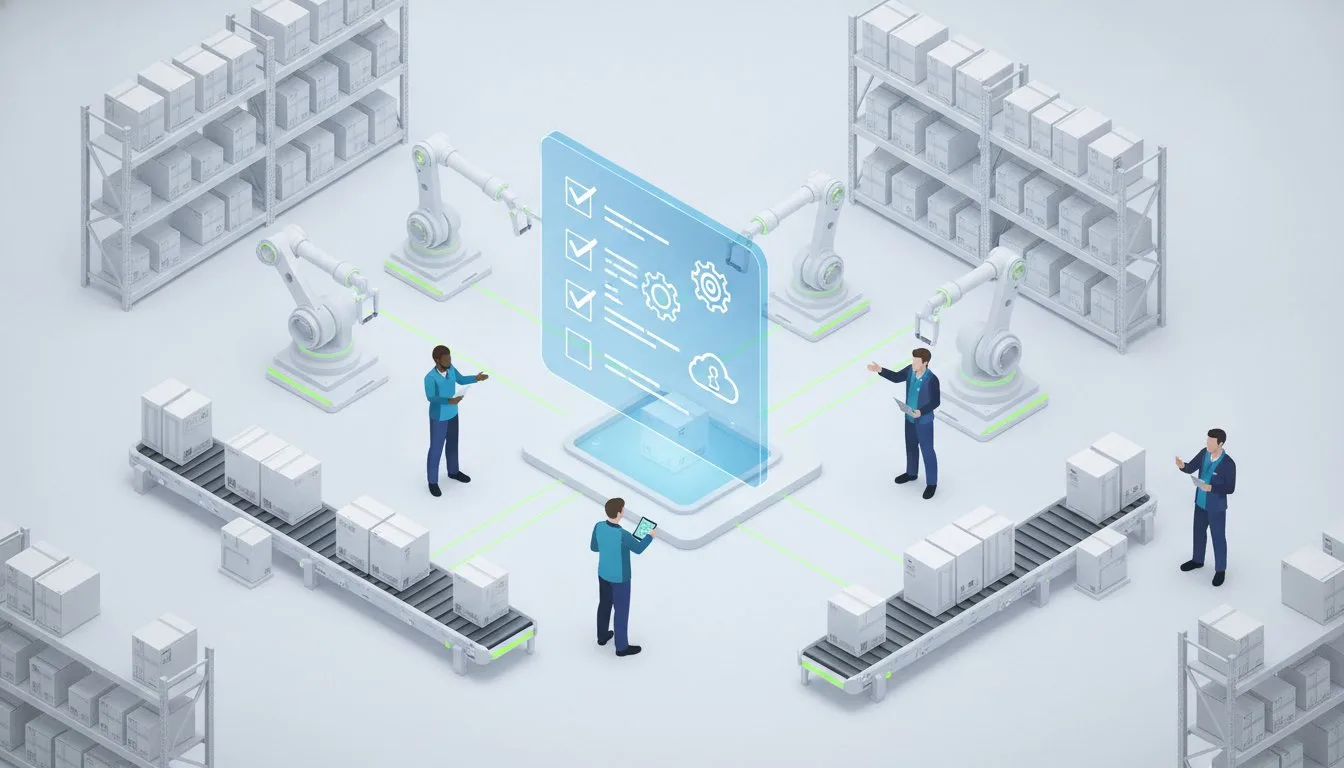
Efficiency in 2026 relies on real-time data flow. Your logistics partner must offer robust API and Web Services that integrate with your existing tech stack. This ensures you have total visibility into both individual components and finished kits. If you don’t have transparency in reporting, you can’t verify accuracy or throughput. We prioritize double-verification for accuracy, which is why half our team has over a decade of experience. This stability ensures that the physical assembly matches the digital inventory perfectly. You can learn more about how we manage these complex integrations on our blog. To see how these capabilities can streamline your specific workflow, request a free quote from our team today.

Scaling with Silicon Valley Direct: Where “Anything is Possible”

Scaling a brand in 2026 requires more than just a software dashboard. It requires a physical foundation built on decades of operational data. We’ve spent 26 years refining our approach to 3pl value added services, ensuring that every assembly project and shipping label meets a standard of premier quality. Our Union City headquarters serves as a strategic hub in the heart of Silicon Valley, providing a gateway for global shipping and logistics. This location isn’t just a point on a map; it represents our commitment to innovation and global connectivity while keeping your inventory close to major transit lanes.

We believe that “anything is possible” when you move beyond the limitations of standard SOPs. While many providers hide behind automated support tickets and virtual operations, we offer direct human partnership. You won’t face a wall of never-ending questions or automated barriers here. Instead, you’ll work with a dedicated team that understands the high stakes of growing a business. This proactive stance allows us to solve bespoke problems that leave other providers frustrated, ensuring your brand remains agile in a fast-paced market.

A Partnership Built on Precision and Passion

Internal stability is the hallmark of a reliable logistics partner. Half of our actual team members have been with us for over a decade, bringing a level of seasoned professionalism that is rare in the logistics industry. This collective experience is why we can promise double-verified accuracy on every project. We treat your brand with the same care and passion that you do, ensuring that every unboxing moment is flawless. To see how our tailored approach can support your custom assembly needs, request a free quote and let’s discuss your specific requirements.

Ready to Streamline Your Supply Chain?

The transition from basic shipping to integrated fulfillment is a pivotal moment for any high-growth eCommerce or healthcare brand. It’s the point where logistics stops being a cost center and starts being a strategic engine for growth. Whether you’re managing complex healthcare mailing services or high-volume subscription box rollouts, we provide the steady hand you need to navigate market changes. Our comprehensive suite of services, from on-demand digital printing to global distribution, ensures your workflows remain seamless and efficient. Don’t let your growth be limited by a vendor who only sees boxes. Get your free, tailored fulfillment quote today and experience the difference that 26 years of expert-level service can make.

Elevate Your Brand with Strategic Fulfillment Partnerships

The logistics landscape of 2026 demands more than just a warehouse provider. It requires a partner that transforms every package into a brand-building asset. By integrating 3pl value added services like in-house on-demand digital printing and complex assembly, you eliminate the friction that slows down global scaling. We’ve spent 26 years mastering these precise workflows, ensuring that your HIPAA-compliant healthcare mailing or custom kitting projects are handled with human-verified accuracy every time.

Success comes when your logistics partner treats your brand like their own. Our team brings a “can-do” attitude to every project, rejecting automated barriers in favor of direct collaboration with actual team members. Whether you’re managing a viral product launch or navigating regulated industry compliance, our Union City hub provides the infrastructure and expertise to ensure your operations remain seamless. It’s time to move beyond basic shipping and embrace a partnership where anything is possible. We’re eager to show you how our experience can become your competitive advantage.

Request a Free Quote for Your Custom Fulfillment Needs and let’s build your engine for growth together.

Frequently Asked Questions

What are examples of 3PL value-added services?

3pl value added services include specialized tasks like kitting multiple components into a single SKU, assembling subscription boxes, and on-demand digital printing of marketing literature. These services also encompass custom labeling, barcoding, and secure healthcare mailing. By performing these tasks within the warehouse, brands ensure their products are market-ready the moment an order is received. This eliminates the need for external production vendors and streamlines the entire fulfillment cycle.

How do value-added services reduce overall supply chain costs?

These services reduce costs by consolidating your production and distribution under one roof. For instance, professional kitting allows for optimized packaging dimensions, which can significantly lower dimensional weight shipping charges. Since approximately 57% of e-commerce companies outsourced their fulfillment by early 2026, many have found that reducing the number of vendor handoffs minimizes transportation fees. It also decreases the risk of inventory damage that often occurs during extra transit between separate facilities.

Is kitting and assembly included in standard 3PL contracts?

Kitting and assembly are typically considered ancillary services and aren’t included in a standard storage and shipping agreement. Most providers charge for these tasks on a per-unit or per-project basis, with rates determined by the complexity of the assembly. In 2026, typical kitting fees range from $0.50 to $2.50 per kit. It’s essential to discuss your specific assembly requirements upfront to ensure your partner has the labor and infrastructure to support your volume.

Can a 3PL handle HIPAA-compliant healthcare mailing?

Specialized providers can handle HIPAA-compliant healthcare mailing by utilizing secure data encryption and restricted-access fulfillment areas. This service is critical for managing sensitive patient communications like Explanation of Benefits (EOB) or medical device instructions. A veteran partner with 26 years of experience will have the established protocols and human-verified checks necessary to ensure every mailing meets strict regulatory standards. This approach protects data privacy while maintaining the high accuracy required for medical industry communications.

What is the difference between kitting and bundling?

Kitting is the process of combining multiple individual items into a single, permanent new SKU with its own inventory record. Bundling is often a temporary marketing tactic where separate products are sold together, sometimes without changing the underlying SKU structure. While bundling is frequently used for seasonal promotions, kitting is a more structural logistics activity that streamlines the pick and pack process. It ensures that complex product sets are always ready for immediate shipment.

How does on-demand printing integrate with order fulfillment?

On-demand printing integrates with fulfillment through API connections that trigger a print job the moment an order is placed. This allows for the creation of personalized letters, instruction manuals, or discount codes unique to the recipient. By printing literature in the same facility where the product is stored, you reduce lead times from days to hours. This eliminates the liability of maintaining large stocks of potentially obsolete printed materials and ensures every package is relevant.

What industries benefit most from 3PL value-added services?

High-growth eCommerce brands, healthcare organizations, and pharmaceutical companies benefit most from these specialized services. These industries often require complex kitting, secure mailing, or rapid customization that standard logistics providers can’t manage. For example, 94% of Fortune 500 companies utilize 3PLs to handle these technical requirements. This allows them to remain lean while executing sophisticated marketing strategies or meeting rigorous compliance standards for medical products without increasing their internal warehouse overhead.

How do I calculate the ROI of outsourcing my kitting and assembly?

Calculate ROI by comparing your internal overhead, including warehouse rent and labor management, against the per-unit cost of outsourcing. You must also factor in the cost of fulfillment errors. In 2026, manual assembly errors in unmanaged environments can reach 3%, while a professional partner using double-verification reduces this significantly. Reducing these errors saves on return shipping and customer service time. This provides a tangible boost to your bottom line and improves customer retention.

3PL Pricing Models Explained: A 2026 Guide to Fulfillment Costs

3PL Pricing Models Explained: A 2026 Guide to Fulfillment Costs

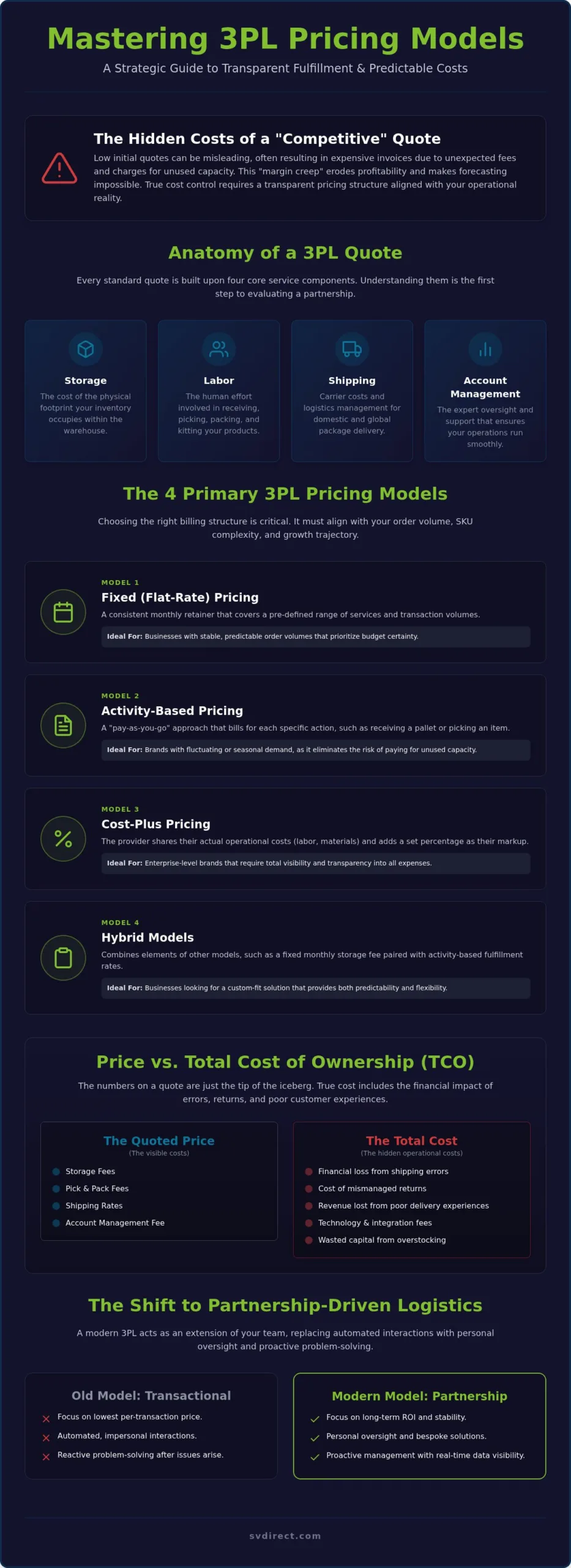
Did you know that 48.6% of warehouses now charge long-term storage fees, nearly double the 23.33% rate recorded in 2024? It’s a stark shift that leaves many eCommerce leaders staring at opaque invoices filled with peak season surcharges and costs for unused space. Having 3pl pricing models explained with total transparency is the only way to protect your margins as you scale. You deserve a logistics partner that operates with the same precision you bring to your product development. We understand that unpredictable monthly expenses are more than just a line item; they’re a barrier to your global reach.

This guide leverages our 26 years of industry experience to help you master complex fee structures, from the $8 to $25 pallet storage range to the $1.25 to $2.50 pick and pack fees that define modern fulfillment. We will show you how to secure predictable logistics expenses and a pricing structure that rewards your growth. We are going to analyze current 2026 market data, compare hybrid and behavior-based models, and help you find the clear ROI your business deserves through a human-centric approach to high-performance shipping.

Key Takeaways

  • Identify the structural differences between fixed, activity-based, and cost-plus models to choose a partner that aligns with your specific scaling trajectory.
  • Navigate the complexities of modern logistics with 3pl pricing models explained to ensure every line item on your invoice translates into measurable operational value.
  • Uncover the impact of hidden costs, such as inventory shrinkage and packaging markups, which can silently erode your margins if left unmanaged.
  • Evaluate how specialized services like on-demand digital printing and custom kitting can be integrated into your fulfillment workflow for a more seamless customer experience.
  • Master the art of calculating true ROI by looking beyond base rates to find a transparent pricing structure that rewards efficiency and supports long-term growth.

Understanding the Core 3PL Pricing Models in 2026

Third-party logistics (3PL) pricing is far more than a simple shipping rate. It is a multi-layered financial framework that accounts for physical warehouse space, expert human labor, and the advanced technology required to sync with your eCommerce platform. In 2026, the industry has moved away from the basic “storage and shipping” mindset. Today, pricing reflects a complex ecosystem of value-added services, from kitting to real-time inventory tracking via API integrations. Silicon Valley Direct has spent 26 years observing this evolution, shifting from manual processes to high-performance, tech-driven environments where precision is the standard.

Relying on a simple “flat fee” is no longer sustainable for most brands. Carrier volatility and shifting consumer demands mean your logistics partner must be agile. This section provides 3pl pricing models explained through the lens of operational efficiency rather than just raw numbers. A transparent structure ensures that your provider’s profit is tied to your success, creating a genuine partnership.

To better understand how these structures impact your bottom line, watch this helpful video:

Many businesses fall into the trap of choosing the provider with the lowest per-item fee. However, the cheapest entry point often results in the highest total cost of ownership. When 3pl pricing models explained are viewed only through the lens of the lowest bid, you miss the cost of errors. Hidden inefficiencies, lack of double-verification for accuracy, and poor technology stacks can lead to costly returns or lost customers. These expenses far outweigh a few cents saved on a pick fee. True value comes from a partner that treats your inventory with a personal touch and precision, ensuring that your growth is never hampered by logistical friction.

The Flat-Rate (Fixed) Model

The flat-rate model offers a predictable monthly cost, making it a favorite for established brands with consistent, high-volume SKU performance. You pay a set price for a bundle of services regardless of minor volume shifts. While this provides extreme predictability for your financial forecasting, it carries risks. During slow months or periods of low inventory, you might find yourself overpaying for resources you aren’t actually using. It is vital to review your historical data before committing to a fixed contract to ensure the “all-in” price actually benefits your margins.

The Activity-Based (Transactional) Model

Often called the “pay-as-you-go” approach, this model charges you only for the specific actions taken within the warehouse. It is ideal for startups or seasonal businesses where order volumes fluctuate significantly from month to month. In this structure, the definition of a “pick and pack” fee is critical. You want a partner who is transparent about how they count items and orders to avoid surprises on your monthly statement. This model rewards efficiency, as you only pay for the exact level of support your business requires at any given moment. You can find more insights on managing these operational shifts on our blog.

Comparing 3PL Pricing: Fixed vs. Activity-Based vs. Cost-Plus

Selecting the right financial structure requires a deep understanding of how your costs will shift as your order volume matures. A model that works for a brand shipping 500 orders per month often becomes a bottleneck when that same brand reaches 50,000 orders. When we look at 3pl pricing models explained for high-growth brands, the focus must shift from simple unit costs to long-term scalability. Data shows that meaningful volume discounts generally begin to appear once a business surpasses 5,000 orders per month. At this stage, the efficiency of your partner’s internal processes becomes just as important as the base rate they quote you.

The Cost-Plus model is a transparent pass-through of actual costs plus a management fee. This approach is gaining significant popularity among enterprise-level brands that demand total supply chain visibility. Instead of wondering about hidden markups on packaging or labor, you see the raw expenses. For example, since 3PLs often negotiate carrier discounts 15% to 30% below published rates, a cost-plus model ensures these savings are clearly accounted for in your favor. It creates a high-performance environment where both parties are incentivized to reduce waste and improve accuracy.

Many of our partners prefer a hybrid approach. This combines the predictability of fixed storage fees with the scalability of transactional labor. You might pay a steady rate for your pallet or shelf space while your pick and pack fees fluctuate based on actual daily activity. This balance protects you from overpaying during seasonal dips while ensuring you have the capacity to handle sudden spikes in demand. If you’re unsure which structure aligns with your current trajectory, you can request a free quote to see a tailored breakdown of these options.

Which Model Fits Your Business Stage?

For startups, activity-based models are often the safest bet. They prevent early-stage cash flow issues by ensuring you only pay for the exact fulfillment work performed. As you move into the mid-market space, transitioning to hybrid models allows for better storage efficiency and more aggressive shipping discounts. Enterprise organizations typically leverage cost-plus structures to gain the granular data needed for global logistics management and precise ROI calculations.

The Role of Technology in Pricing Efficiency

Modern 3pl pricing models explained must account for the digital infrastructure supporting the physical work. Advanced API and Web Services integrations eliminate the need for manual data entry, which significantly reduces administrative fees. When your inventory management system syncs in real-time with our warehouse, you prevent over-storage costs and stockouts. We believe pre-configured integrations should be a one-time setup investment, typically ranging from $0 to $1,000, rather than a recurring monthly tax on your growth. This tech-savvy approach ensures your logistics are as fast and efficient as the rest of your Silicon Valley stack, often including automated channel management solutions from Computer Market Research for global enterprises.

3PL Pricing Models Explained: A 2026 Guide to Fulfillment Costs

The Anatomy of a 3PL Invoice: Breaking Down the Fees

Every monthly invoice tells a detailed story about your operational efficiency. While the broad 3pl pricing models explained in previous sections provide the framework, the actual line items determine your final ROI. Understanding these fees starts the moment your product arrives at the warehouse. Receiving and inbounding charges typically range from $25 to $50 per pallet. If you ship floor-loaded containers instead of palletized goods, your entry costs will rise because of the additional manual labor required for unloading and inspection. These hourly labor charges often sit between $35 and $60, making palletization a key strategy for reducing upfront expenses.

Once your inventory is settled, pick and pack fees become the primary driver of your transactional costs. Most providers use a tiered logic: a base fee for the “first item” in an order and a significantly lower fee for each “additional item.” This base fee generally ranges from $1.25 to $2.50. If your customers typically buy multiple SKUs per transaction, this structure works in your favor. It rewards brands that can increase their average order value without doubling their fulfillment labor costs. Precision during this phase is paramount; our 26 years of experience have shown that double-verification at the packing station is the only way to prevent the expensive returns that erode profit margins.

Storage Logic: Pallets, Bins, and Cubic Feet

Storage is no longer a static expense. With 48.6% of warehouses now charging long-term storage fees, managing your “dead stock” is a financial necessity. Pallet storage typically costs between $8 and $25 per month, while smaller items might be billed at $0.43 to $0.78 per cubic foot. High-velocity items should be placed in easily accessible bins to minimize labor time, whereas long-tail inventory is better suited for high-density pallet racking. If you deal with sensitive electronics or healthcare products, the premium for climate-controlled or high-security zones is a vital investment to protect product integrity and brand reputation.

Postage and Global Logistics Coordination

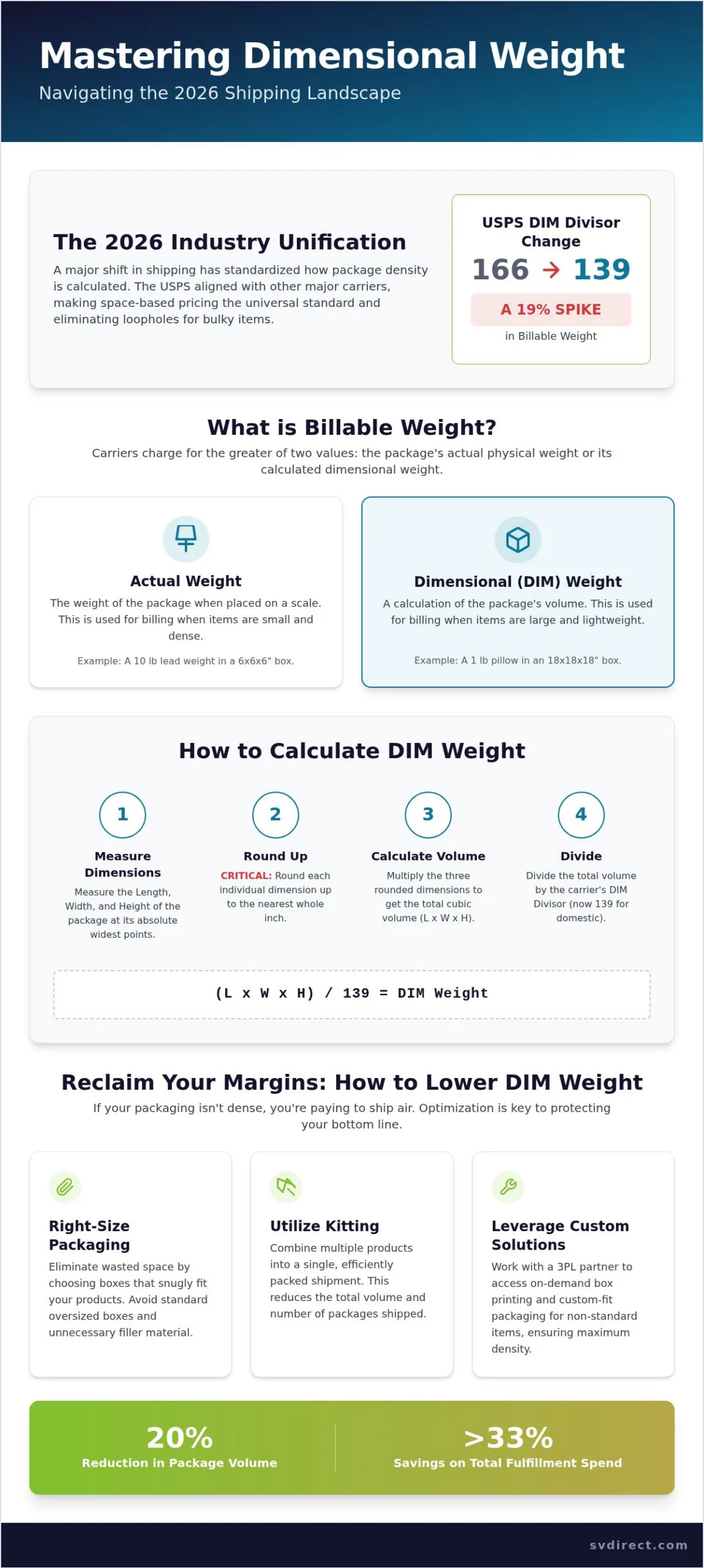
Postage often represents the largest single expense on a fulfillment invoice. Leveraging a partner with a Silicon Valley hub provides a strategic advantage for global connectivity and optimized shipping zones. Because 3PLs negotiate carrier discounts 15% to 30% below published rates, these savings should be a transparent part of your postage management. You must also account for Dimensional Weight (DIM), where carriers charge based on package volume rather than just physical weight. For international fulfillment, your provider should offer seamless coordination of duties and taxes to ensure cross-border administrative fees don’t surprise your end customers. This level of detail ensures your global reach remains both affordable and reliable.

Exposing the “Hidden” Costs of Budget Fulfillment

Budget fulfillment often presents an attractive entry point, but the true cost of ownership is frequently buried in the fine print. When 3pl pricing models explained by discount providers seem too good to be true, they usually are. These hidden costs often manifest as inventory shrinkage allowances. Many low-cost operations include a standard 1% or 2% shrinkage allowance in their contracts. This clause means the provider isn’t financially responsible for lost or damaged goods until the loss exceeds that threshold. For a brand managing $500,000 in inventory, a 2% allowance is essentially a $10,000 hidden tax on your bottom line. We believe in extreme accountability, rejecting the idea that your inventory should simply disappear as a cost of doing business.

Packaging materials also serve as a common profit center for budget providers. While a provider might offer low labor rates, they frequently apply a 3% to 8% markup on standard dunnage and boxes. Over thousands of orders, these small percentages accumulate into significant expenses that could’ve been reinvested into your brand’s growth. When comparing 3pl pricing models explained by different providers, you must also account for the total cost of reverse logistics. With returns processing fees ranging from $3 to $7 per unit, a budget partner with a high error rate can quickly become your most expensive liability.

The Accuracy Penalty: Mis-picks and Mis-ships

Mis-picks and mis-ships are the silent killers of eCommerce margins. The true cost of a wrong order isn’t just the labor fee. It includes the original shipping cost, the return shipping, the processing of the return, and the potential loss of a customer’s lifetime value. Our 26 years of experience have taught us that double-verification processes in the warehouse pay for themselves by eliminating these systemic errors. We emphasize human interaction over automated systems to ensure that precision remains at the heart of every shipment, protecting your brand reputation from avoidable mistakes.

Account Management and Support Fees

The most frustrating hidden cost is the “automation tax.” Many tech-heavy 3PLs rely on generic ticketing systems that leave you waiting days for a response. When a critical shipping error occurs during peak season, silence is expensive. We provide actual team members who know your brand’s specific needs and are eager to solve problems in real-time. This level of partnership is a powerful differentiator in a tech-saturated market. To understand how to vet these qualities, Check out our guide on choosing a fulfillment partner. If you’re ready for a partner that values transparency and personal commitment, request a free quote today to see our tailored approach.

Specialized Pricing: Beyond Standard Pick and Pack

Most 3pl pricing models explained in online guides treat every product as a standard eCommerce widget. This narrow focus ignores the reality of complex kitting, subscription box assembly, and highly regulated sectors like healthcare. Kitting fees generally range from $1 to $3 per kit, depending on the number of components and the complexity of the assembly. Unlike a standard pick, these projects often require dedicated staging areas and specialized labor. We approach these tasks with a “can-do” attitude, ensuring that even the most intricate bundles are assembled with the precision your brand requires.

On-demand digital printing is another area where traditional pricing models often fail to capture true value. By integrating literature fulfillment and “just-in-time” printing into your workflow, you eliminate the need to store thousands of pre-printed brochures that might become obsolete. This reduces your monthly storage footprint. It’s a critical strategy since 48.6% of warehouses now penalize slow-moving inventory with long-term fees. Whether you’re utilizing healthcare mailing services or direct mail marketing, combining production with distribution creates a seamless, cost-effective cycle that rewards your efficiency.

Project-Based Labor vs. Recurring Fees

Budgeting for seasonal surges or one-time promotional kits requires a shift from recurring fees to project-based labor models. These bespoke projects often fall under hourly labor charges, which typically sit between $35 and $60. This rate covers everything from custom labeling to compliance documentation. It’s a transparent way to handle the “Anything is possible” requests that don’t fit into a standard transactional box. High-touch marketing collateral and literature fulfillment benefit from this flexibility, allowing you to scale up for a major launch without being locked into high fixed costs year-round.

The Silicon Valley Advantage

Our location in Union City, CA, provides a strategic anchor for North American and global distribution. Being situated in a global innovation hub means your logistics partner is as tech-savvy as your internal team. This geographic advantage directly impacts your shipping zones, often reducing the transit time and cost for high-density customer bases. With a 26-year veteran team, we’ve seen the industry evolve and understand how to optimize even the most complex supply chains. We reject the “virtual operation” model in favor of actual infrastructure and human expertise. If you’re ready for a partnership grounded in transparency, you can Request a transparent, tailored quote from Silicon Valley Direct.

Empower Your Growth Through Pricing Clarity

Mastering your logistics expenses starts with a commitment to transparency. We’ve seen how 3pl pricing models explained in this guide, from activity-based structures to cost-plus models, provide the foundation for scalable eCommerce success. By identifying hidden costs like packaging markups and inventory shrinkage allowances, you can protect your margins and reinvest in your brand’s future. The right partnership isn’t just about the lowest bid; it’s about finding a steady hand that offers the flexibility your growth demands. For many scaling enterprises, this flexibility also extends to how they manage their physical transportation assets, where partners like Alliance Fleet Solutions help optimize fleet operations alongside warehouse fulfillment.

With 26 years of experience as a tech-savvy veteran in the industry, Silicon Valley Direct bridges the gap between mechanical logistics and personal commitment. Our team utilizes redundant human-verification to maintain a 99.9% accuracy rate, ensuring your customers receive exactly what they ordered. Whether you require specialized HIPAA-compliant mailing or on-demand digital printing, we’re eager to prove that anything is possible with the right partner. Take the next step toward predictable, high-performance fulfillment today.

Get a Transparent Fulfillment Quote from the Experts at Silicon Valley Direct

Fulfillment Pricing: Frequently Asked Questions

What is the average cost per order for 3PL fulfillment in 2026?

The total cost per order is a combination of pick and pack fees, which typically range from $1.25 to $2.50, plus packaging materials and postage. To find your true cost of ownership, you must also factor in returns processing fees of $3 to $7 per unit and any applicable storage overhead. Calculating the true cost per order is the only way to ensure your pricing model supports your growth targets.

How do 3PL storage fees work for small vs. large items?

Storage fees are structured to match the physical footprint of your inventory. Large items generally incur pallet storage costs between $8 and $25 per month. Small eCommerce items are typically billed by the cubic foot, with rates between $0.43 and $0.78, or through bin and shelf pricing. This ensures you only pay for the specific warehouse volume your products occupy.

Are there hidden fees I should look for in a 3PL contract?

You should carefully review contracts for inventory shrinkage allowances, which often sit at 2%, and markups of 3% to 8% on packaging materials. These are common methods used by budget providers to offset lower base rates. When you have 3pl pricing models explained in detail, ensure that peak season surcharges and account maintenance fees are also transparently disclosed.

What is the difference between pick and pack fees and shipping fees?

Pick and pack fees represent the physical labor required to move an item from a warehouse shelf into a shipping box. Shipping fees are the actual postage costs paid to carriers like UPS, FedEx, or DHL. While pick and pack rates are determined by the 3PL’s labor efficiency, shipping fees are influenced by carrier volume discounts and current fuel surcharges.

How does dimensional weight affect my 3PL pricing?

Dimensional weight (DIM) allows carriers to charge based on a package’s volume rather than just its physical weight. If you ship large, lightweight items, the carrier applies a divisor to the box dimensions to determine the billable weight. We help minimize this impact by optimizing packaging sizes and using accurate dunnage to prevent you from paying for shipping air.

Can a 3PL help me reduce my international shipping costs?

A high-performance 3PL reduces international costs by leveraging carrier discounts that are often 15% to 30% below published rates. Our Silicon Valley location acts as a strategic hub for global connectivity, helping you navigate complex duties and taxes. This expertise ensures that cross-border administrative fees don’t become a surprise expense for your business or your customers.

Why do some 3PLs charge an initial setup or integration fee?

Setup fees, which can range from $0 to $1,000, cover the expert labor required to sync your eCommerce platform via API or Web Services. This initial investment ensures that order data flows seamlessly and accurately between your store and the warehouse. It eliminates the need for manual data entry, which is the primary cause of systemic fulfillment errors.

What happens to my pricing if my order volume fluctuates significantly?

If your volume is seasonal, an activity-based model is usually the most cost-effective because you only pay for the fulfillment actions performed. However, most 3PLs include minimum monthly charges to cover their fixed operational costs and staffing readiness. Understanding how these 3pl pricing models explained apply to your specific sales cycles helps you maintain predictable logistics expenses year-round.

The Ultimate Guide to Choosing a 3PL for Direct to Consumer Brands in 2026

The Ultimate Guide to Choosing a 3PL for Direct to Consumer Brands in 2026

With global e-commerce projected to reach $9.4 trillion in 2026 and DTC brands now driving up to 50% of all retail sales, the margin for logistics error has vanished. You’ve likely felt the sting of losing brand control to a faceless warehouse or watching margins erode under $5.50 pick and pack fees. It’s exhausting to deal with a “virtual operation” that offers plenty of automation but no actual human to talk to when a critical shipping error occurs. Finding the right 3pl for direct to consumer brands shouldn’t feel like a gamble with your company’s reputation.

We’ve spent 26 years mastering the balance between high-tech efficiency and human precision. This guide will help you identify a partner that scales your brand through specialized kitting and seamless Shopify integrations. You’ll discover how to identify a 3PL partner that scales your DTC brand through high-tech precision and human-led specialized services. We’ll break down the essential technology and human-led services you need to navigate the 2026 removal of the $800 US de minimis threshold while turning your fulfillment into a competitive advantage.

Key Takeaways

  • Learn why a middleman-free logistics model is essential for protecting your data and brand integrity in the 2026 e-commerce landscape.
  • Discover how to balance API-driven automation with human expertise when selecting a 3pl for direct to consumer brands to ensure shipping exceptions are handled by real people.
  • Identify how specialized services like kitting and on-demand digital printing can turn your standard packaging into a high-impact marketing tool.
  • Follow a two-step framework to audit your SKU complexity and ensure your 3PL’s tech stack integrates seamlessly with Shopify or WooCommerce.
  • Understand the competitive advantage of a Silicon Valley logistics hub for brands scaling from local startups to global enterprise players.

Why Modern DTC Brands are Moving Beyond Basic 3PL Models

In 2026, the DTC sector isn’t just crowded; it’s hyper-competitive. With global e-commerce reaching $9.4 trillion, customers expect instant gratification and absolute precision. Brands face razor-thin margins and the constant pressure of rising carrier rates. Relying on a basic Third-party logistics (3PL) provider that simply moves boxes is no longer enough. You need a middleman-free environment where you have direct control over your inventory data and the customer experience. At Silicon Valley Direct, we’ve spent 26 years watching this evolution. We understand that your brand isn’t just a collection of products; it’s a promise to your customers that requires a steady, reliable hand.

Most founders start in a garage or a small rented space. However, you’ll eventually hit the Growth Wall. This typically occurs when your order volume exceeds 500 orders per month or your SKU count grows beyond 50 unique items—if you want to see an example of a retail brand with a diverse product range, you can check out SUZANA SHOP. At this stage, manual errors increase. The time spent packing boxes takes away from product development or high-level marketing. In-house fulfillment begins to erode profitability through hidden labor costs and inefficient shipping rates. A modern 3pl for direct to consumer brands is a strategic growth partner that integrates deeply with your tech stack to provide high-tech precision while maintaining the human-led touch required for complex brand experiences.

The Evolution of Direct-to-Consumer Logistics

The logistics industry has shifted from simple shipping to Experience Delivery. In 2026, the unboxing moment is a primary marketing channel. This makes custom kitting and on-demand digital printing essential for standing out. By moving from fixed warehouse overhead, such as rent and utilities, to a variable fulfillment cost model, you gain the agility to scale. Modern brands don’t want no-frills shipping; they want a tailored service that reflects their brand’s passion. Our team provides the infrastructure to turn your packaging into a powerful brand differentiator, and brands looking for these capabilities in the UK can explore E-commerce Fulfilment to see how regional experts manage these complex requirements.

Signs Your Brand Has Outgrown Its Current Setup

If you’re experiencing stockouts while your dashboard says inventory is available, you have a visibility gap. Shipping delays during promotional peaks are a clear sign that your basic provider can’t handle surges. Perhaps the most dangerous sign is Founder Fulfillment. When leadership spends 20 hours a week on logistics instead of strategy, the opportunity cost is immense. With 57% of e-commerce companies now outsourcing fulfillment, staying in-house often means falling behind. Selecting a sophisticated 3pl for direct to consumer brands ensures that your logistics team becomes an extension of your own company, ready to handle any complexity that arises.

Evaluating 3PL Technology vs. Human Expertise

Technology is a baseline requirement in 2026, but it’s a dangerous trap to assume software alone can manage a physical supply chain. Many newer providers operate as “virtual operations.” These companies are essentially software layers sitting on top of outsourced warehouse space. When a real-world exception occurs, such as a carrier strike or a complex inventory discrepancy, these algorithms often fail. You’re left shouting into a void of automated support tickets. A premier 3pl for direct to consumer brands must balance high-tech precision with the seasoned intuition that only comes from decades of boots-on-the-ground experience.

Silicon Valley Direct operates on a “Human-in-the-Loop” model. While we utilize advanced API and Web Services to ensure seamless data flow, we also implement a rigorous double-verification process. This human-led check is why we maintain a 99.9% order accuracy rate. Our 26 years of industry experience beats a three-year-old startup algorithm every time because we’ve already seen, and solved, every possible logistics hurdle. If you’re tired of talking to bots and want to see how a veteran team handles your growth, you can request a tailored consultation with our specialists.

Tech Stack Essentials for 2026 DTC Fulfillment

Your logistics partner must provide a real-time inventory management system accessible through a secure web-based portal. This transparency is non-negotiable for modern brands. We offer pre-configured integrations for major platforms like Shopify, BigCommerce, and WooCommerce. This ensures that your order flow is automated from the moment a customer clicks “buy” to the second the tracking number is generated. Our systems handle everything from automated tracking updates to streamlined returns management, providing a comprehensive digital backbone for your operations.

Why Human Interaction Remains a Premium Feature

The most significant point of friction in modern logistics is the “never-ending questions” loop found in automated support. When an error happens, you don’t need a chatbot; you need a dedicated account manager who knows your brand by name. Over half of our team has been with us for more than 10 years. This internal stability means that the person handling your account has deep institutional knowledge. They aren’t just reading a script. They’re proactively managing your kitting and assembly needs with the passion and “can-do” attitude that defines our culture. In a world of automation, this personal touch is your greatest competitive advantage, and for businesses looking to support their own team with quality office perks at no cost, puravidaair.com provides high-quality vending solutions.

The Ultimate Guide to Choosing a 3PL for Direct to Consumer Brands in 2026

Specialized Services: The Secret Weapon for DTC Scaling

Standard fulfillment has become a commodity in the logistics world. While many providers claim to handle any SKU, they often stumble when a brand requires more than a simple “pick and pack” operation. In 2026, 64% of consumers consider a brand’s attention to detail and sustainability a key factor in their purchasing decisions. A generic 3pl for direct to consumer brands might deliver the package, but it won’t deliver the experience. Our 26 years of experience have taught us that the real growth happens in the specialized details, such as complex kitting and synchronized subscription box logistics.

Managing healthcare and literature fulfillment adds another layer of complexity that startups often ignore. These sectors require strict compliance and a human-led verification system to ensure sensitive materials reach the right hands. Whether it’s healthcare mailing services or high-volume monthly mailings, the margin for error is zero. We’ve built our infrastructure to handle these high-stakes requirements with the same quiet confidence we bring to every order. Our team doesn’t just see a shipment; they see a vital touchpoint in your customer’s journey.

Custom Kitting as a Brand Differentiator

Custom kitting and assembly are essential tools for increasing your Average Order Value (AOV). By bundling products into cohesive sets, you provide more value to the customer while streamlining your own inventory. This is particularly critical for influencer campaigns where the unboxing experience must be flawless. Our team handles the intricate assembly of promotional kits, ensuring every item is positioned perfectly. This precision also helps in reducing shipping costs. By optimizing package assembly and minimizing air space, we help you navigate the rising carrier rates that often plague growing DTC brands.

This level of precision is especially important for high-value electronics. For instance, if you explore Consumer Drones via a specialist like Drone Doctor LLC, you’ll see how critical it is to have a logistics partner that understands technical assembly and delicate component handling.

Just-In-Time Printing and Literature Fulfillment

One of our most powerful differentiators is integrated on-demand digital printing. Traditional fulfillment models force you to print thousands of marketing inserts that often become obsolete before they’re used. We eliminate this waste. By printing marketing collateral directly within the fulfillment workflow, you can include personalized “thank you” notes or seasonal offers at the point of pack. This just-in-time approach ensures your literature is always current and relevant. Whether you’re distributing large-scale catalogs or tailored inserts, our seamless integration of print and logistics proves that in the world of modern DTC, anything is possible.

A Strategic Framework for Selecting Your 3PL Partner

Selecting a 3pl for direct to consumer brands is a strategic milestone. It requires a methodical approach that moves beyond simple price-per-pick metrics. Start by auditing your SKU complexity. If your brand relies on intricate unboxing experiences, you must ensure your partner can handle the labor-intensive requirements of specialized assembly. Next, verify that their technology stack offers pre-configured integrations for your eCommerce platform. A seamless API connection is the only way to maintain real-time inventory accuracy across multiple sales channels. To see how specialized prep can optimize your multi-channel strategy, you can explore 3PL fulfillment services that focus on product prep for various marketplaces. We’ve spent 26 years refining these integrations to ensure they’re both robust and flexible.

Geography also plays a critical role. A Silicon Valley hub like Union City provides a unique advantage for global logistics and high-tech connectivity. You should also demand absolute transparency regarding “hidden fees.” While many providers highlight low entry costs, administrative handling and storage fees can quickly accumulate. Finally, assess the human element. If you can’t reach a real person during the onboarding process, you certainly won’t be able to reach one when a shipping crisis occurs. Our dedicated account managers are actual team members, not automated chatbots.

Understanding the Total Cost of Fulfillment

A common mistake is focusing solely on the pick and pack fee. Industry benchmarks currently place these between $3.00 and $5.50 for standard fulfillment. You must look at the total cost of logistics. High-volume 3PLs leverage deep carrier relationships to secure discounted rates that often offset their management fees entirely. Additionally, efficient warehouse management systems utilize First-In, First-Out (FIFO) protocols. This prevents inventory from sitting too long and becoming obsolete, which is a major hidden cost for fast-moving DTC brands. Our team prioritizes this methodical organization to protect your bottom line.

Questions to Ask During the RFP Process

When interviewing potential partners, go beyond the basics. Ask how they manage high-value or sensitive inventory. With the 2026 removal of the $800 US de minimis threshold, you must also ask about their strategy for managing cross-border duties and international returns. Most importantly, verify their flexibility. Can they provide custom kitting and assembly services that adapt to your seasonal promotional needs? Specialized kitting labor often ranges from $35 to $60 per hour, so understanding these costs upfront is vital. A partner that answers “anything is possible” and backs it up with over two decades of experience is a partner that can truly scale with you. If you’re ready to see how our framework applies to your brand, get your custom fulfillment analysis today.

Leveraging Silicon Valley Expertise for Global DTC Reach

Union City is more than just a pin on a map; it’s the heart of a logistics revolution. For a 3pl for direct to consumer brands, being situated in Silicon Valley provides access to a tech-literate workforce that understands API integrations as well as they understand pallet dimensions. This geographic advantage places your inventory near major international shipping lanes and primary ports, reducing transit times for global cross-border orders. In 2026, these orders are projected to cost between $11 and $19 per shipment, making efficiency a non-negotiable requirement. For brands looking to optimize the upstream side of their supply chain, you can visit Buying Office Asia to manage sourcing and manufacturing before your goods arrive at our hub. We then act as a high-performance bridge, connecting your brand to both North American consumers and the broader global market with quiet confidence.

Our “Anything is Possible” philosophy isn’t just a marketing slogan; it’s our operational standard. We specialize in bespoke logistics that adapt as you scale from a boutique startup to a global enterprise. While 74% of shippers consider switching providers based on AI capabilities, we believe the safest bet is a tech-savvy veteran that combines those digital tools with 26 years of physical infrastructure. We don’t believe in “virtual operations” or never-ending support tickets. We believe in accurate, human-led fulfillment that protects your brand’s longevity. This approach ensures your scaling journey is supported by actual infrastructure rather than just marketing jargon.

The Strategic Value of Location

Proximity to the Port of Oakland and major international airports ensures your supply chain remains agile. This location allows us to navigate the increasing complexity of global logistics, including the expanding EU Emissions Trading System (ETS) and updated FMCSA regulations. By leveraging our Union City hub, you gain access to a team where half the members have over a decade of tenure. This deep expertise ensures that your complex kitting and assembly requirements are met with precision, regardless of how fast your volume grows. We provide the stability needed to reach the 25% to 50% of retail sales now driven by the DTC sector.

Take the Next Step in Your Scaling Journey

Transitioning from in-house fulfillment to a professional 3PL doesn’t have to disrupt your operations. We focus on a methodical onboarding process that prioritizes information density and clarity. Instead of relying on generic pricing tables that hide administrative costs, we provide a tailored analysis of your specific SKU complexity and shipping needs. This transparency is why 57% of e-commerce companies now choose to outsource their logistics. If you’re ready to move beyond the Growth Wall and streamline your supply chain, Request a free quote from Silicon Valley Direct today. Our team is eager to show you how a premier logistics partnership can transform your brand’s future.

Future-Proof Your Fulfillment Strategy

The 2026 logistics landscape requires a blend of high-tech precision and human intuition that algorithms alone cannot provide. You’ve seen how a middleman-free environment protects your data and how specialized kitting turns a simple shipment into a brand-defining experience. Selecting the right 3pl for direct to consumer brands means prioritizing transparency in fees and verifying that a real person is available when your business needs them most. Our Union City hub provides the geographic advantage necessary to reach global markets while maintaining the agility of a local partner.

Silicon Valley Direct offers a steady hand backed by 26 years of industry experience and a 99.9% order accuracy rate. Our dedicated human support team ensures that your complex kitting and global logistics are handled with the same passion you bring to your products. We’re ready to act as the high-performance partner your brand deserves, moving beyond the “virtual operation” model to provide actual infrastructure and seasoned expertise.

Get your custom DTC fulfillment quote from the Silicon Valley experts and discover how our tailored approach can streamline your supply chain. Your growth is our priority, and with the right infrastructure, anything is possible.

Frequently Asked Questions

What is a 3PL and why do DTC brands need one?

A third-party logistics provider manages your warehousing, inventory, and order fulfillment. For a 3pl for direct to consumer brands, this partnership is essential to scale beyond the “Growth Wall” of 500 monthly orders. It allows founders to focus on product development rather than packing boxes. By outsourcing, you convert fixed overhead into variable costs, gaining access to professional carrier rates and specialized kitting services that are difficult to manage in-house.

How does a 3PL integrate with Shopify or WooCommerce?

Integration occurs through API and Web Services that create a seamless data bridge between your store and the warehouse. We provide pre-configured integrations for major platforms like Shopify and WooCommerce to automate the entire order flow. When a customer makes a purchase, the order is instantly transmitted to our system for picking and packing. Real-time tracking numbers are then sent back to your platform to notify the customer automatically.

What are the typical fees associated with DTC fulfillment?

Typical fees include pick and pack, monthly storage, and shipping costs. Industry data for 2026 shows standard pick and pack fees range from $3.00 to $5.50 per order. Storage costs usually fall between $15 and $25 per pallet monthly. You should also account for returns processing, which averages $3 to $7 per unit. Transparent providers avoid “hidden” administrative fees, ensuring your margins remain predictable as your volume increases.

Can a 3PL handle custom kitting and branded packaging?

Yes, a premier logistics partner specializes in complex kitting and assembly to enhance the unboxing experience. This moves beyond the standard “brown box” to include custom promotional kits for influencer campaigns or bundled sets. Our “Anything is Possible” philosophy ensures that bespoke packaging requirements are met with precision. This flexibility allows you to use your packaging as a primary marketing channel without slowing down the fulfillment timeline.

What is the difference between a “tech-first” 3PL and a traditional provider?

A “tech-first” 3PL often operates as a software layer over outsourced warehouse space, frequently relying on automated bots for support. In contrast, a veteran provider like Silicon Valley Direct combines modern API capabilities with 26 years of physical infrastructure. The primary difference is the “Human-in-the-Loop.” When real-world exceptions occur, you speak to an actual team member rather than navigating a never-ending loop of automated support tickets.

How does a 3PL help reduce international shipping costs?

3PLs reduce costs by leveraging high-volume carrier discounts that individual brands can’t access. They also help navigate complex regulations, such as the 2026 removal of the $800 US de minimis threshold. By using strategic injection methods and global shipping expertise, a partner can lower cross-border costs, which currently average $11 to $19 per order. This expertise prevents unexpected duties and taxes from eroding your international margins.

What happens if my inventory is high-value or sensitive?

High-value or sensitive inventory requires a partner with specific experience in healthcare and literature fulfillment. We implement a double-verification process to maintain 99.9% order accuracy for sensitive materials. Our facility is designed to handle compliance-heavy goods, ensuring they are stored and shipped under strict protocols. This human-led oversight is critical for protecting brand reputation when shipping high-stakes items that automated systems might mismanage.

Is it better to use a 3PL near my customers or near my headquarters?

It is generally better to be near major shipping hubs that offer global connectivity. A Silicon Valley location like Union City provides proximity to international ports and a tech-literate workforce. While being near your headquarters offers perceived control, a 3pl for direct to consumer brands with real-time web portals provides the same visibility from anywhere. This strategic placement reduces transit times and helps you meet the 2-day delivery standard expected by 2026 consumers.

Direct Mail Printing and Mailing: Designing a Streamlined Workflow for 2026

Direct Mail Printing and Mailing: Designing a Streamlined Workflow for 2026

What if the most expensive part of your marketing campaign isn’t the postage, but the physical gap between your printer and your mail house? In 2026, shipping pallets of printed materials to a separate fulfillment center is an unnecessary drain on your ROI. You’ve likely felt the sting of fragmented communication and the anxiety of mailing list errors that occur when too many hands touch a project. At Silicon Valley Direct, we’ve spent 26 years proving that anything is possible when you bridge the gap between high-volume digital production and precision logistics.

This article shows you how to master direct mail printing and mailing by integrating these steps into one streamlined workflow. You’ll learn how to leverage metered mail rates to save $0.04 per First-Class letter compared to the $0.78 stamp price, and how to stay compliant with the 20 different state privacy laws active as of January 1, 2026. We’ll preview the technology behind Variable Data Printing (VDP) and explain how professional sorting secures commercial rates starting at $0.372 per piece. We’re here to help you eliminate logistics bottlenecks and treat your physical marketing with the same tech-driven accuracy as your digital channels.

Key Takeaways

  • Learn how to eliminate shipping delays and hidden costs by housing your direct mail printing and mailing under one roof at a 3PL logistics hub.
  • Discover the specific data hygiene steps and design standards required to qualify for the lowest USPS automation postage rates available in 2026.
  • Explore how custom kitting and dimensional mail can drive higher response rates for high-value B2B campaigns compared to standard postcards.
  • Understand the rigorous security protocols necessary for HIPAA-compliant healthcare mailing and protecting sensitive consumer data.
  • Find out why a “human-in-the-loop” approach prevents the costly errors common in fully automated, virtual mailing operations.

The Modern Direct Mail Printing and Mailing Landscape

Digital inbox saturation has reached a tipping point. Physical mailboxes are now the premier real estate for brand engagement. While digital ads are often scrolled past; a well-executed direct mail printing and mailing campaign offers a tangible connection that commands attention. Citing foundational concepts is key to understanding the direct mail landscape as it evolves from mass-produced flyers into a sophisticated; data-driven channel. As of January 1, 2026, twenty U.S. states have implemented comprehensive privacy laws. This makes precision data management a requirement for success. Modern brands are moving away from “spray and pray” tactics. They now use CRM integrations to trigger personalized mailings based on real-time customer behavior.

The “Logistics Gap” is the most common profit-killer in physical marketing. This gap represents the hidden costs and delays that occur when a business uses separate vendors for production and distribution. When your printer is in one city and your mail house is in another, you aren’t just paying for postage. You’re paying for freight; coordination; and lost time. In 2026; the most efficient campaigns are fulfilled from within a logistics hub to ensure maximum ROI.

This efficiency is critical for businesses with fast-moving assets, such as Diamond Valley Honda, where timely communication with potential buyers can make the difference in moving inventory before it leaves the lot.

The Problem with Fragmented Vendor Workflows

Shipping pallets of printed material to a separate fulfillment center adds an average of 3-5 days to your timeline. It also creates a communication vacuum. If the address data doesn’t align with USPS automation specs; who is responsible? The printer blames the mail house; and the mail house blames the data provider. These breakdowns lead to costly reprints and missed deadlines. In a market where a First-Class metered letter costs $0.74; errors are expensive and drain your marketing budget.

The 3PL Advantage: Printing at the Point of Fulfillment

We’ve spent 26 years refining a model where on-demand digital printing lives inside the warehouse. This eliminates transit costs and reduces the carbon footprint of your campaign. Our team provides a single point of contact for the entire direct mail printing and mailing process. By integrating printing with 3PL mailing services; you gain real-time visibility from the initial “print” command to the moment the piece reaches the postal carrier. This unified approach allows for complex kitting and literature fulfillment that separate vendors simply can’t coordinate. We believe anything is possible when you combine high-tech efficiency with a dedicated; human-led team that understands the stakes of your business growth.

Designing a Streamlined Print-to-Mail Workflow

Success in direct mail printing and mailing isn’t just about the ink on the page; it’s about the data behind the delivery. A streamlined workflow starts long before the presses run. It begins with rigorous data hygiene to ensure your message actually reaches the recipient. As of January 1, 2026, twenty U.S. states have active comprehensive privacy laws. This means your mailing list management must be more than accurate; it must be compliant. We use National Change of Address (NCOA) processing to update records for the 40 million Americans who move annually. This prevents the waste of undeliverable mail and protects your ROI by ensuring you don’t pay for dead-end leads.

Once the data is clean, the focus shifts to design. Every layout must meet specific USPS machinery specs to qualify for automation discounts. Navigating Compliance and Security standards ensures your mail pieces move through the system without manual intervention. This is where the $275 annual bulk mailing permit fee comes into play; though it can be waived for mailers who participate in full-service automation or Seamless Acceptance programs. In our 26 years in the heart of Silicon Valley, we’ve learned that precision at this stage is the only way to scale without errors.

Variable Data Printing: Personalization at Scale

Modern inkjet technology allows for more than just swapping a name. We use Variable Data Printing (VDP) to change entire images, offers, and calls to action based on individual customer profiles. Studies have shown that highly personalized mail can increase response rates by up to 135% compared to generic “resident” mailings. This level of tailoring requires a high-performance partner capable of managing complex logic files alongside physical production. If you want to see how these integrated direct mail solutions work in practice, it’s about the marriage of CRM data and high-speed digital production.

Postage Optimization: Sorting for Maximum Savings

Professional sorting is the engine of cost reduction in direct mail printing and mailing. By presorting mail to the 5-digit level, we can secure rates as low as $0.372 per piece for Marketing Mail letters. We also utilize Intelligent Mail Barcodes (IMb) to provide real-time tracking. This transparency allows you to time your follow-up emails or sales calls to the exact day the physical piece lands in the mailbox. Our team performs final double-verification on every batch because we know that automated systems can miss the nuances that a human expert catches. We take the “never-ending questions” out of the process by handling the heavy lifting of postal logistics for you.

Direct Mail Printing and Mailing: Designing a Streamlined Workflow for 2026

Beyond Postcards: Kitting and Complex Mail Fulfillment

Standard postcards serve their purpose; however, high-stakes marketing often requires a more substantial presence in the mailbox. A sophisticated direct mail printing and mailing strategy thrives on the “nested” mailing. This involves a personalized letter, a multi-page brochure, and a business reply envelope (BRE) all enclosed in a high-quality carrier envelope. While generic online printers focus on “shop now” simplicity, they rarely have the infrastructure to manage the hand-assembly or complex machine insertion required for these campaigns. At Silicon Valley Direct, we’ve spent 26 years mastering the logistics of dimensional mail that commands attention.

Dimensional mailings, those that include a physical object or a thick kit, offer a significant advantage for B2B lead generation. These pieces are rarely discarded without being opened. However, the complexity of assembling these kits can be a nightmare for unequipped vendors. We handle the entire lifecycle of these projects under one roof. This includes printing the literature, managing the inventory of physical samples, and executing the final assembly with precision. We take the “never-ending questions” out of the equation by providing a single, stable point of contact for the entire process.

Custom Kitting for Promotional Campaigns

Successful kitting is built on a foundation of inventory control and quality assurance. When you combine a printed catalog with a physical product sample, the margin for error is zero. Our team uses a rigorous double-verification process to ensure every component is present and correctly placed. We don’t rely on “virtual operations” or third-party labor. Instead, our actual team members, half of whom have been with us for over a decade, oversee the assembly line. This human touch prevents the costly mistakes that automated systems might overlook when handling bespoke items.

  • Multi-component assembly: Letters, inserts, samples, and branded packaging.
  • Inventory management: Real-time tracking of all kit elements within our warehouse.
  • Flexible scalability: From small boutique mailings to high-volume national campaigns.

Literature Fulfillment for Sales Enablement

Sales enablement requires speed and accuracy. Our on-demand digital printing allows you to maintain “just-in-time” inventory for technical manuals, price lists, and sales brochures. By linking your sales portal directly to our print-and-ship workflow via API or web services, you can distribute materials globally without lifting a finger. This eliminates the risk of stockpiling obsolete documents. Your team can update a PDF in the morning, and we can begin printing and shipping the new version by the afternoon. We believe anything is possible when your direct mail printing and mailing are integrated into a single, high-tech logistics hub in the heart of Silicon Valley.

Data security is no longer an optional add-on. With 20 U.S. states enforcing comprehensive privacy laws as of January 1, 2026, the handling of customer data during direct mail printing and mailing requires a partner who understands the legal landscape. We don’t just print; we protect. Our protocols ensure that sensitive mailing lists are encrypted and stored on secure servers with restricted access. Every project creates a digital audit trail. This provides verifiable proof that your materials were processed and delivered to the USPS according to your specific schedule.

Healthcare and Financial Sector Requirements

Handling Protected Health Information (PHI) requires more than just a locked door. It requires HIPAA-compliant mailing services that integrate with your billing or patient communication systems. We manage Explanation of Benefits (EOB) documents and medical statements with the precision they demand. In the financial sector; regulatory notices and secure statements must meet strict accuracy standards. This is where our “human interaction” model becomes a critical safety net. Unlike virtual operations; our actual team members oversee every batch. They ensure that Variable Data Printing (VDP) logic correctly matches the right data to the right recipient every time.

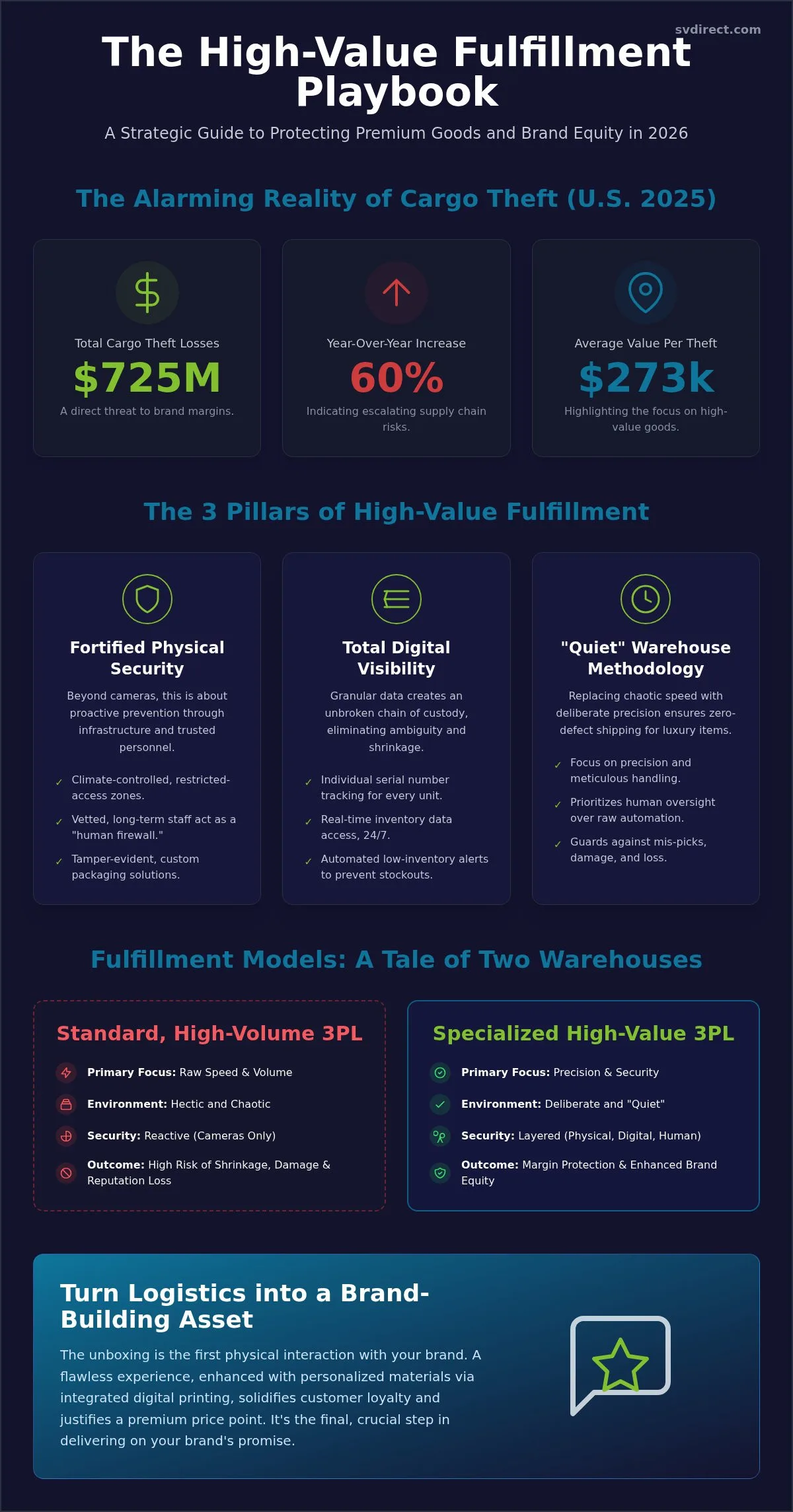
Physical Security and Facility Standards

Security extends beyond the digital server to the physical warehouse floor. Our fulfillment center in the heart of Silicon Valley features 24/7 monitoring and restricted access zones. This protects your critical mailing assets from theft or damage. We maintain climate-controlled warehousing to preserve the integrity of sensitive paper stocks and pre-printed materials. Silicon Valley Direct’s 26 years of experience have taught us that disaster recovery is essential. We maintain robust data backups to ensure your campaigns stay on track; even in the face of technical disruptions. We believe anything is possible when you have a secure; physical infrastructure backing your digital data.

Transparency is the cornerstone of our service. As of December 24, 2025, the USPS officially defines a postmark as the date a mailpiece is processed at their facility; not when it was collected. This makes the timing of your delivery to the carrier more important than ever for legal notices or time-sensitive payments. We provide detailed reporting to confirm when your mail leaves our facility and enters the postal stream. If you are ready to secure your sensitive communications; you can request a security consultation with our team today.

Why Silicon Valley Direct is Your Strategic Mailing Partner

Choosing a partner for direct mail printing and mailing requires more than just a software interface. It requires an organization that has evolved alongside the technology it uses. We’ve spent 26 years in the heart of Silicon Valley; serving as a steady hand for brands that outgrow the limitations of generic online printers. While many competitors offer a “shop now” portal and little else; we provide a sophisticated infrastructure that treats your physical marketing with the same precision as your digital code. Our “Anything is Possible” promise isn’t just a slogan. It’s a commitment to customizing our workflow to fit your specific CRM and business objectives.

We explicitly reject the industry trend toward fully automated; virtual operations. While automation has its place in high-speed digital production; it cannot replace the critical eye of an actual team member. Automated systems often miss the subtle data mismatches or assembly errors that can derail a high-stakes campaign. By maintaining a human-in-the-loop process; we ensure that every piece of mail reflects the quality and professionalism of your brand. This approach has allowed us to scale with our clients; from small startup pilot programs to enterprise-level global distributions.

A Team of Experts, Not Just a Web Portal

Experience is our greatest asset. Over 50% of our team has been with us for more than a decade; creating a level of internal stability that is rare in the logistics industry. When you work with us; you aren’t just a ticket number in a support queue. You gain a dedicated project manager who understands the nuances of your literature fulfillment and complex kitting projects. We act as a seamless extension of your marketing operations team; providing the technical expertise necessary to bridge the gap between your digital strategy and physical delivery.

Global Reach from Union City, CA

Our facility in Union City; CA; serves as a strategic hub for both domestic distribution and international shipping. This location allows us to leverage deep relationships with carriers and secure discounted rates that lower your total cost per piece. Whether you are managing a 5,000-piece targeted mailing or a massive literature fulfillment project; our workflow scales to meet your needs. We take pride in being a high-performance partner that remains accessible and grounded. If you’re ready to eliminate logistics bottlenecks and elevate your physical marketing; you can Speak with a Direct Mail Expert at Silicon Valley Direct to start your next campaign.

Master Your Physical Marketing Strategy for 2026

The evolution of physical marketing requires a shift from fragmented vendors to a unified, secure workflow. By housing your data hygiene, high-speed digital production, and postal logistics in one facility, you eliminate the delays and shipping costs that drain ROI. We’ve spent 26 years since our founding in 1999 refining this process. Our HIPAA-compliant and secure facility in Union City, CA, serves as the physical backbone for your most sensitive campaigns. It’s a place where precision meets personal commitment to ensure your brand remains grounded and deeply reliable.

Success in 2026 depends on the precision of your direct mail printing and mailing. While high-tech efficiency drives our speed, our dedicated human support ensures your projects never fall into a frustrating automated customer service loop. We believe that anything is possible when you have a stable partner overseeing every detail of your literature fulfillment or complex kitting. Whether you’re scaling a global distribution or launching a targeted B2B campaign, our team is ready to help you achieve accurate, high-performance results. Request a Custom Direct Mail Quote from Our Silicon Valley Team and let’s build something remarkable together.

Frequently Asked Questions

What is the difference between direct mail printing and mailing services vs. a standard print shop?

A specialized direct mail service integrates production with logistics to deliver your message directly to the carrier. While a standard print shop typically produces materials and ships them to you for distribution; we handle the data hygiene; sorting; and delivery under one roof. This eliminates the “Logistics Gap” and ensures your address data meets USPS automation standards for maximum deliverable accuracy. We act as a high-performance partner rather than a simple retail storefront.

How much does direct mail printing and mailing cost in 2026?

Total costs depend on your volume and postage class. As of July 13, 2025, a First-Class stamp costs $0.78; while a metered letter offers a 4-cent savings at $0.74. For high-volume marketing; automation letters start at $0.372 per piece for a 5-digit presort. Choosing an integrated partner for direct mail printing and mailing reduces hidden expenses like the freight costs required to move materials between separate vendors.

What is Variable Data Printing (VDP) and do I need it?

Variable Data Printing (VDP) is a digital technology that allows you to personalize every individual piece within a single print run. It goes beyond simple name fields by swapping images and offers based on your CRM data. You need it if your goal is higher engagement; as personalized mailings can increase response rates by up to 135% compared to generic campaigns. It’s a premier tool for modern marketing.

How do I ensure my direct mail campaign is HIPAA compliant?

You ensure HIPAA compliance by partnering with a facility that maintains rigorous physical and digital security standards for Protected Health Information (PHI). Our Union City center uses restricted access zones and 24/7 monitoring to protect sensitive materials. We generate detailed audit trails for every mailing; proving your documents were processed according to federal privacy regulations. This human-led oversight is vital for medical billing and financial notices.

Can you handle the kitting of products along with printed marketing materials?

Yes; we specialize in kitting and assembly that combines physical products with your printed literature. This is a core advantage of using a 3PL logistics hub rather than a generic online printer. Our team performs double-verification on every kit to ensure accuracy. Whether you’re sending a product sample with a catalog or a custom gift box for B2B leads; we handle the entire physical production and shipping process.

How long does a typical direct mail project take from data upload to mailing?

A typical project moves from data upload to the postal stream in 3 to 5 business days. This timeline is significantly faster than fragmented workflows because we eliminate the transit time between separate print and mail houses. Complex kitting or high-volume literature fulfillment may require more time for assembly; but our team provides a dedicated project manager to keep your schedule on track and provide real-time updates.

Do you provide discounted postage rates for bulk mailings?

We secure the lowest possible postage rates through professional sorting and commingling. By preparing your mail to meet USPS 5-digit presort standards; we help you access commercial rates that are significantly lower than standard postage. This is a critical component of direct mail printing and mailing that saves you money by doing the work of the post office before the mail even leaves our facility.

Can I integrate my Shopify or CRM data directly with your printing service?

You can integrate your Shopify or CRM data directly through our secure API and web services. This allows for automated “just-in-time” printing and literature fulfillment based on customer triggers. Instead of managing manual spreadsheets; your data flows into our production queue. This creates a seamless connection between your digital storefront and our physical warehouse; ensuring your marketing reaches customers without any unnecessary delays. For those building a successful online presence, you can learn more about FIRSTPETCENTRAL and their approach to providing pet care essentials for dogs and cats.

ECommerce Fulfillment Services: The Complete 2026 Guide to Scaling Your Brand

ECommerce Fulfillment Services: The Complete 2026 Guide to Scaling Your Brand

As your brand grows, the complexities of logistics can quickly shift from a simple task to a significant bottleneck. Mastering the world of third-party logistics (3PL) is no longer just about saving time—it’s about transforming your supply chain into a powerful competitive advantage. This guide will walk you through the essential components of modern ecommerce fulfillment services, helping you find a partner that protects your brand and fuels your growth.

Understanding eCommerce Fulfillment Services in 2026

eCommerce fulfillment is the complete, end-to-end process that begins the moment a customer clicks “buy” and ends when the package arrives at their door. It encompasses receiving inventory, storing it securely, picking and packing orders, and coordinating shipping. In 2026, the industry has moved far beyond simple warehousing; it’s about creating an integrated logistics network that seamlessly supports multi-channel sales across platforms like Shopify, Amazon, and B2B portals. At its core, a 3PL partnership is a strategic alliance where the logistics provider acts as an extension of your brand, dedicated to accuracy and customer satisfaction.

The Evolution of the 3PL Industry

The logistics landscape has transformed dramatically. What began as manual data entry and pallet storage has evolved into a high-tech ecosystem driven by real-time API and Web Services integrations. This technological leap enables instant communication between your online store and the warehouse floor. However, technology alone isn’t enough. With over 26 years of experience since our founding in 1999, we’ve seen that true stability comes from pairing cutting-edge tech with veteran expertise. This history provides a foundation that newer, “virtual” 3PLs simply cannot match, allowing for a bespoke fulfillment standard where “anything is possible” is the operational reality. (What is a fulfillment house?)

In-House vs. Outsourced Fulfillment

Nearly every successful brand reaches a tipping point where packing boxes in-house is no longer sustainable. This moment often arrives when you’re processing 10-20 orders per day or when logistics management begins to consume time that should be spent on marketing and product development. Outsourcing to a 3PL offers critical advantages:

  • Reduced Opportunity Costs: Free up your team to focus on core business growth instead of managing warehouse staff and negotiating shipping rates.
  • Enhanced Scalability: Effortlessly handle massive holiday surges or promotional sales spikes without the need to hire and train temporary labor.
  • Cost Efficiency: Leverage a 3PL’s negotiated, discounted carrier rates and operational efficiencies to reduce your overall cost-per-order.

The Anatomy of a High-Performance Fulfillment Workflow

A truly effective fulfillment process is a symphony of technology and human oversight designed for speed and precision. It begins the moment your inventory arrives at the warehouse, where it is meticulously received, counted, and logged into the management system within 24 hours. From there, products are moved to secure, often climate-controlled, warehousing to protect their integrity. The pick-and-pack process combines intelligent software that optimizes warehouse paths with a human double-verification step to virtually eliminate errors. Finally, the system selects the best carrier for shipping, navigating the complexities of global distribution from a strategic US hub.

Step-by-Step: From Order Click to Customer Door

To the customer, shipping should feel like magic. Here’s the four-step process that makes it happen: (eCommerce fulfillment services)

  1. Real-Time Order Sync: The moment an order is placed on your store, it’s securely transmitted to our fulfillment software via a robust API or Web Services integration.
  2. Intelligent Picking: Our system generates an optimized picking route for warehouse staff, ensuring speed and accuracy as they gather the items for the order.
  3. Custom Packaging & Branding: We pack orders according to your exact specifications, using custom boxes, branded tape, or personalized inserts to create a memorable unboxing experience.
  4. Optimized Carrier Selection: Based on the destination, package weight, and desired delivery speed, our system automatically selects the most cost-effective shipping carrier from our network of discounted partners.

Inventory Management and Real-Time Control

Complete visibility into your inventory is non-negotiable. We utilize a strict FIFO (First-In, First-Out) system to ensure product freshness and prevent obsolescence. Through a secure, web-based portal, you have 24/7 access to real-time stock levels, order statuses, and tracking information. This control extends to reverse logistics (returns), where a streamlined and transparent process helps build customer trust and recover value from returned goods.

ECommerce Fulfillment Services: The Complete 2026 Guide to Scaling Your Brand

Beyond Pick and Pack: Specialized 3PL Services That Drive Growth

Modern fulfillment goes far beyond standard storage and shipping. The right partner can integrate directly into your marketing and product strategies with specialized, in-house services that generic providers can’t offer. These value-added capabilities turn your logistics hub into a growth engine.

  • Kitting and Assembly: We build custom subscription boxes, assemble promotional kits, and bundle products to create unique SKUs that delight customers.
  • On-Demand Digital Printing: Integrate marketing collateral directly into your shipments, from personalized welcome letters to promotional flyers, printed just-in-time.
  • Literature Fulfillment: Manage and distribute physical B2B assets like product catalogs, training manuals, and welcome packets with precision and care.
  • Healthcare and HIPAA-Compliant Mailing: For brands in regulated industries, we provide the gold standard of secure fulfillment, ensuring full compliance and data privacy.

The Strategic Advantage of Integrated Printing

Imagine personalizing every order with a unique marketing insert without having to manage a separate print vendor. Our on-demand digital printing services make this possible. By printing marketing materials only when an order is packed, you reduce storage costs and waste associated with pre-printed collateral. This just-in-time approach is key to creating the memorable unboxing moments that build brand loyalty and increase customer lifetime value. (supply chain management)

Compliance-Heavy Logistics: Healthcare and Finance

Handling sensitive materials requires a level of trust and security that can only be earned through experience. For healthcare and financial brands, we offer HIPAA-compliant direct mail and medical fulfillment services. This involves secure data handling, meticulous inventory control for high-value items, and audited processes to ensure regulatory compliance. Our 26-year history of managing these complex projects provides a level of assurance that a startup 3PL simply cannot offer.

Evaluating 3PL Costs and Performance Metrics

Understanding the cost of fulfillment requires looking beyond the price tag. While common fees include inventory storage, pick-and-pack charges, and postage management, the “hidden cost” of errors can be devastating. A mere 1% error rate can destroy profit margins through returns, refunds, and reputational damage. The most crucial performance KPIs to track are order accuracy, shipping speed, and inventory shrinkage. A 3PL’s ability to offer deeply discounted carrier rates is often its single greatest value proposition, directly impacting your bottom line on every order shipped. To further optimize your financial strategy and manage these scaling costs, many brands look toward fractional financial leadership as explained at saunlimited.com.

Understanding Your Fulfillment Quote

A transparent fulfillment quote should clearly distinguish between different types of fees. You’ll typically see:

  • Monthly Storage Fees: Calculated based on the pallet or bin space your inventory occupies.
  • Per-Order Transaction Fees: Charges for picking, packing, and processing each order.
  • Kitting and Assembly Fees: Project-based pricing for any custom labor required.
  • Postage & Handling Fees: The cost of shipping plus a transparent administrative fee for managing the process.

The Value of Human Interaction

What is the cost of an automated support ticket that generates more questions than answers? For scaling brands, direct access to a knowledgeable human is invaluable. We pair our clients with a dedicated account team staffed by veterans with over 10 years of tenure. The ROI on this relationship is measured in problems solved quickly, complex projects executed flawlessly, and the peace of mind that comes from knowing an expert is just a phone call away. This “anything is possible” flexibility saves time and money, especially on projects that don’t fit into a standard workflow.

Why Silicon Valley Direct is the Strategic Partner for Scaling Brands

Nestled in Union City, California, our facility serves as a strategic hub for North American and global shipping, providing unparalleled access to West Coast ports and Silicon Valley innovation. We combine 26 years of proven experience with the latest tech integrations to offer a fulfillment solution built on stability and performance. Our “Can-Do” culture means we embrace complex kitting, printing, and assembly projects that others turn away. We fundamentally reject the “virtual operations” model, choosing instead to build our reputation on the foundation of our in-house, human expertise.

Tech-Savvy Veteran: The SVD Difference

Our approach is simple: pair high-speed digital integration with high-touch human accountability. We offer pre-configured integrations for Shopify, WooCommerce, and other major platforms, ensuring a seamless connection to your sales channels. As a privately held corporation founded in 1999, we provide the financial stability and long-term vision that venture-backed startups lack. This is reflected in our team, where over 50% of our staff has more than a decade of tenure with us—a testament to our commitment to expertise. For more on the latest trends in logistics, feel free to explore our company blog.

Getting Started: Your Transition Roadmap

Transitioning your inventory to a new 3PL can feel daunting, but our structured onboarding process makes it simple. We coordinate the seamless migration of your inventory to our Union City facility, set you up with your dedicated web-based inventory portal, and establish the integrations needed to go live. For brands that are also relocating their physical offices or production equipment during this growth phase, Southern Elite Van Lines can provide the long-distance moving support necessary to ensure a smooth transition. We handle the complexities so you can focus on what you do best: growing your brand.

Ready to see how a true fulfillment partner can transform your business?

Get a Tailored Fulfillment Quote from Silicon Valley Direct

Frequently Asked Questions

What is the difference between a 3PL and a fulfillment center?
A fulfillment center is a physical warehouse where order processing happens. A Third-Party Logistics (3PL) provider is the company that offers a comprehensive suite of services, which includes operating one or more fulfillment centers, managing inventory, negotiating with carriers, and handling returns.
How much do eCommerce fulfillment services cost in 2026?
Costs vary based on storage needs, order volume, and complexity. A typical structure includes fees for receiving, monthly storage, pick-and-pack per order, and shipping. We provide a transparent, custom quote with no hidden fees.
Can you handle international shipping and global logistics?
Yes. From our strategic hub in Silicon Valley, we manage global shipping for clients, handling customs documentation and leveraging our network of international carriers to ensure reliable delivery worldwide.
Do you provide HIPAA-compliant fulfillment for healthcare brands?
Absolutely. We have extensive experience in healthcare and HIPAA-compliant mailing, with secure, audited processes to protect sensitive data and materials.
How does your software integrate with my Shopify or WooCommerce store?
We use robust API and Web Services integrations to connect directly with major eCommerce platforms like Shopify and WooCommerce, ensuring real-time, automated syncing of orders and inventory levels.
What is your order accuracy rate for pick and pack services?
We maintain a 99.9% order accuracy rate, achieved through a combination of advanced warehouse technology and a mandatory human double-verification process for every order.
Is there a minimum order requirement to work with Silicon Valley Direct?
We work with brands at various stages of growth. While we don’t have a rigid “one-size-fits-all” minimum, we find our services provide the most value for businesses looking to scale beyond 10-20 orders per day.
How do you handle returns and reverse logistics?
We manage the entire returns process, from receiving and inspecting returned items to restocking them in your inventory or handling dispositions according to your rules. This process is fully visible to you through our client portal.