Your Shopify dashboard says you have 47 units in stock. Your warehouse team says you have 12. A customer just bought 30. This is the quiet crisis at the heart of scaling eCommerce, and it happens more often than most store owners want to admit. Shopify inventory management is genuinely powerful for tracking numbers, but numbers and physical reality are two very different things once your order volume starts climbing.
If you’ve wrestled with overselling during a flash sale, lost visibility into stock conditions after a busy quarter, or tangled yourself in the logistics of building promotional bundles, you already know the gap between a digital record and what’s actually sitting on a warehouse shelf. That gap is where growth stalls.
This guide is built to close it. You’ll learn exactly how to move beyond native Shopify tracking and into a professional third-party logistics setup that delivers real-time inventory accuracy, automated restock alerts, and a seamless connection between your storefront and your physical fulfillment operation. We’ll walk through the strategic steps, the integration mechanics, and the operational discipline that separates brands that scale cleanly from those that spend every peak season putting out fires.
Key Takeaways
- Effective Shopify inventory management goes far beyond tracking numbers. It requires synchronizing digital stock records with physical warehouse reality across every sales channel, in real time.
- Understanding the three pillars of stock (Available, Committed, and On Hand) is the foundation for eliminating overselling and making confident, data-backed fulfillment decisions at scale.
- A professional 3PL integration connects your Shopify storefront to your warehouse through Web Services and XML data exchange, creating a seamless, automated flow of inventory information that native tools alone cannot deliver.
- Designating your 3PL system as the single source of truth, paired with automated low-stock alerts and proactive conflict resolution, is the operational discipline that separates brands that scale cleanly from those that don’t.
- The right fulfillment partner doesn’t just store and ship your products; they function as an extension of your team, bringing the infrastructure, reporting depth, and human oversight needed to protect your brand through every growth stage.
Understanding Shopify Inventory Management for Scaling Brands
At its core, Shopify inventory management is the digital synchronization of stock levels across every sales channel your brand operates. It’s the system that answers one deceptively simple question: how much of what do we actually have, right now, and where is it? For a single-channel store moving modest volume, native Shopify tools answer that question well enough. But the moment your brand starts scaling, that answer gets complicated fast.
Every inventory position in your operation can be understood through three distinct pillars:
- On Hand: The total physical units present in your warehouse or storage location, regardless of their status.
- Committed: Units already allocated to open orders that haven’t yet shipped. These are spoken for, but still physically present.
- Available: The actionable number. On Hand minus Committed. This is the only figure your storefront should ever use to determine whether a product can be sold.
Misreading these three numbers, or conflating them, is where overselling begins. It’s also where the “Scaling Wall” appears. Native Shopify admin is designed to track inventory, not to orchestrate it across a complex fulfillment ecosystem. Once order volume climbs and your operations expand, the gap between what the dashboard shows and what’s physically on a warehouse shelf becomes a liability.
The Limitations of Native Shopify Admin
The native admin panel handles straightforward SKU tracking with reasonable accuracy, but it wasn’t built for operational complexity. Multi-component kits and promotional bundles are a persistent weak point; the system doesn’t natively decrement component-level inventory when a bundle sells, which means your component counts drift out of sync without manual correction. Returns and damaged stock require the same hands-on reconciliation, creating a continuous administrative burden that grows proportionally with your order volume.
The more insidious problem is what operators often call “ghost inventory,” a condition where your digital record shows available units that simply don’t exist on the physical shelf. This happens through receiving discrepancies, unreported damage, or fulfillment errors that never get reconciled. As a category, inventory management software exists precisely to close this gap, but native Shopify admin stops short of the real-time, warehouse-level reconciliation that growing brands require.
Why 2026 Demands Real-Time Integration
Selling across Shopify, Amazon, TikTok Shop, and B2B wholesale channels simultaneously means every single sale on any platform draws from the same physical pool of inventory. Batching inventory updates, even hourly, creates windows of exposure where overselling is essentially guaranteed during high-velocity periods. Modern customer expectations, shaped by same-day shipping norms and instant order confirmation, leave no room for that latency.
The solution isn’t a workaround. It’s a structural shift toward a programmatic interface between your Shopify storefront and your warehousing operation, one where a purpose-built system like a 3PL’s order management platform functions as the authoritative source of inventory truth. That’s the concept of a true Logistics Extension: your fulfillment partner’s system leads, and Shopify reflects it, not the other way around.
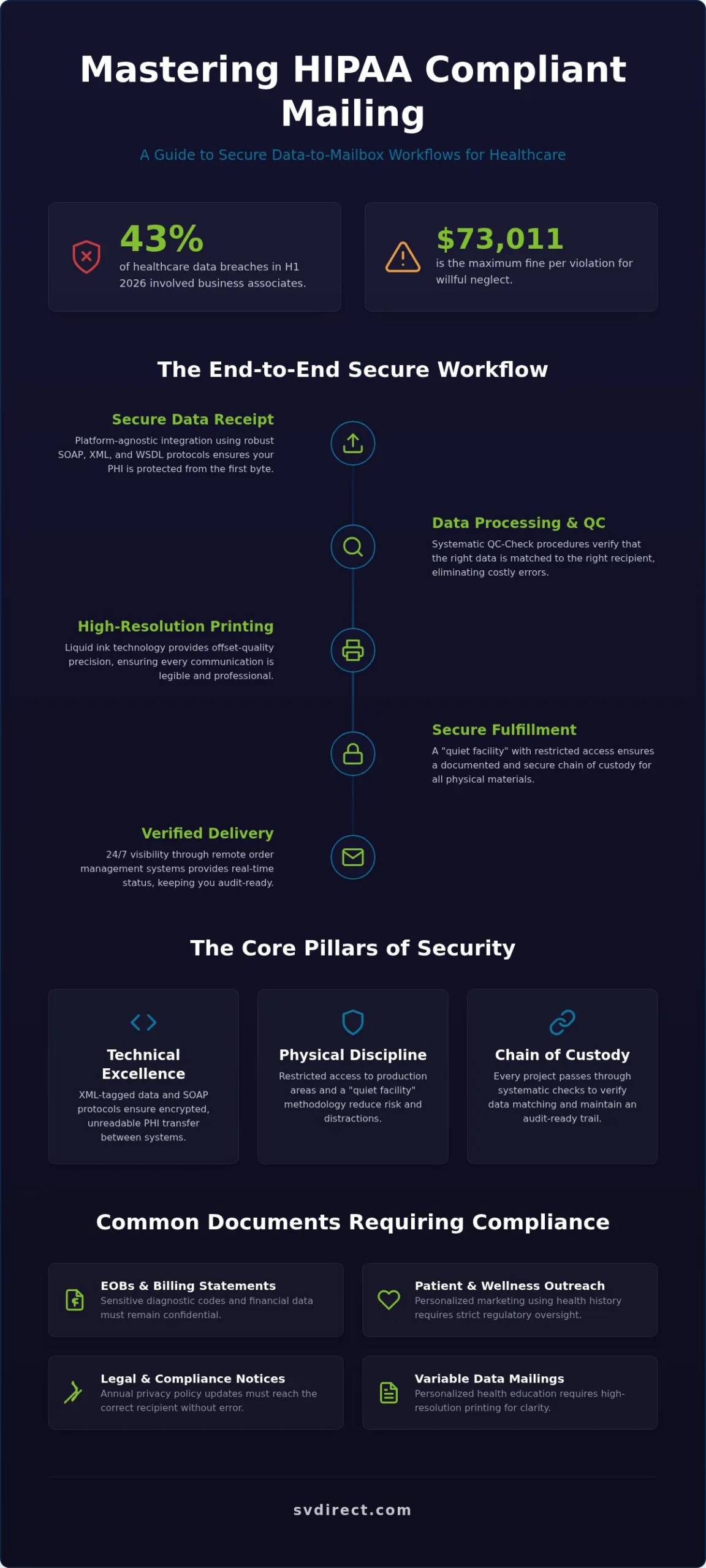
The Technology Behind Seamless Shopify-3PL Integration
Most conversations about Shopify inventory management stop at the app store. Install a connector, map your fields, hope for the best. That approach works until it doesn’t, and it tends to stop working precisely when you need it most: during a high-velocity sales period when data latency is measured in lost revenue. The more durable solution runs deeper, at the protocol level, where your storefront and your warehouse actually speak the same language.
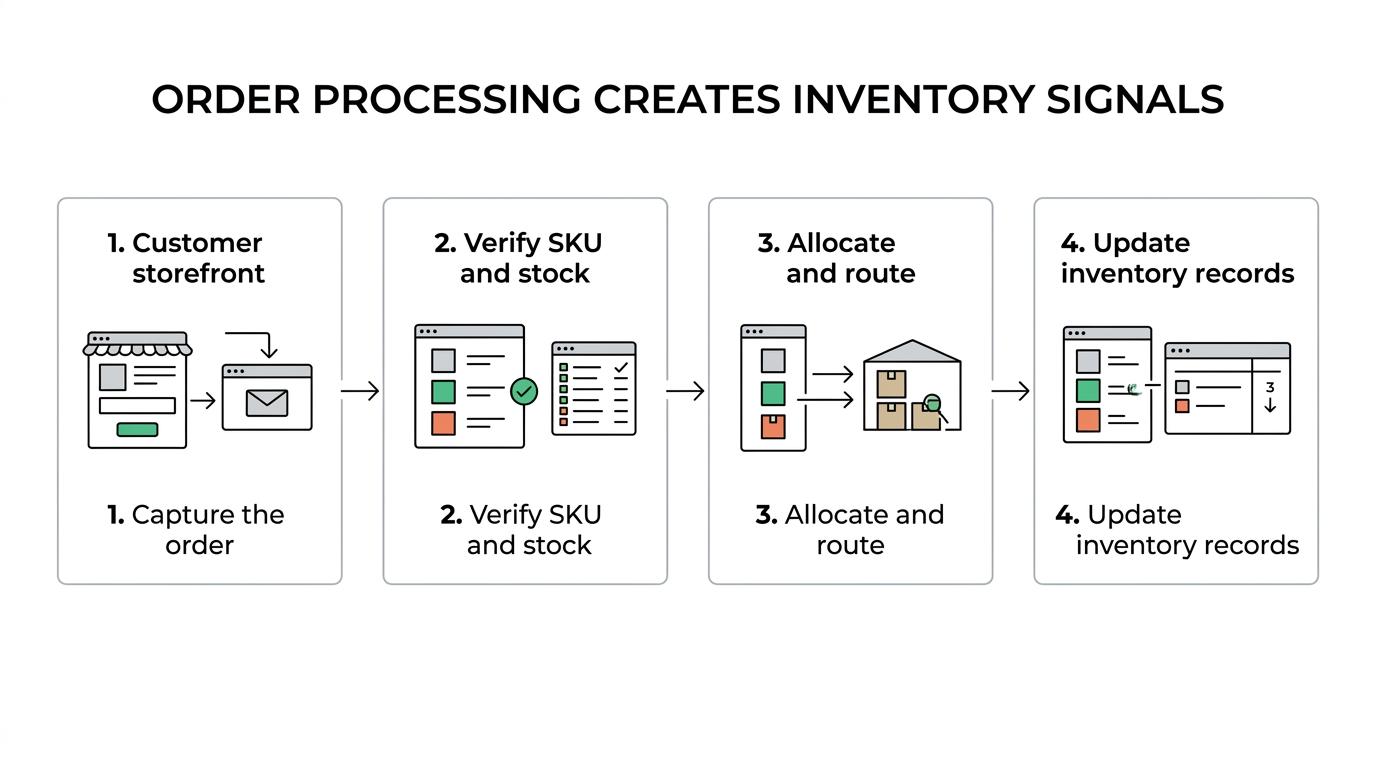
Web Services make that conversation possible. Rather than relying on periodic file exports or fragile middleware that sits between two systems it doesn’t own, a Web Services integration creates a direct, programmatic handshake between your Shopify storefront and your fulfillment center’s order management platform. Orders flow in. Inventory updates flow back. No manual intervention. No batch windows. No silent failures that only surface when a customer emails asking where their package is.
For scaling merchants, this architecture isn’t a luxury. The inventory and financial management best practices outlined by the U.S. Small Business Administration consistently emphasize real-time data accuracy as a foundational requirement for sustainable growth, and a Web Services integration is the mechanism that delivers it at the operational level.
XML and SOAP: The Languages of Modern Logistics
XML (Extensible Markup Language) is the structural format that packages your inventory data for transit. Every SKU, quantity, order status, and receipt confirmation gets tagged, structured, and transmitted in a format that both systems can read without ambiguity. SOAP (Simple Object Access Protocol) is the secure delivery mechanism that carries those XML packages across networks with integrity intact.
Within this framework, two methods do the heaviest lifting:
- AddOrder: Transmits new Shopify orders directly to the warehouse system in real time, triggering pick-and-pack workflows without human handoff.
- GetOrderInfo: Pulls current order status, tracking data, and inventory positions back to Shopify on demand, keeping your storefront synchronized with physical reality.
WSDL (Web Service Description Language) completes the picture by providing a machine-readable map of the entire integration. Developers don’t need to reverse-engineer how the two systems communicate; the WSDL file documents every available method, parameter, and data type. That means faster onboarding, cleaner implementations, and fewer custom coding requirements every time something changes on either end.
Proprietary Systems vs. Generic Middleware
There’s a meaningful difference between a warehouse that built its own order management platform and one that licensed a generic connector app. A warehouse-owned system is designed around the physical operation it serves. The logic that governs inventory updates, receipt processing, and backorder management reflects actual warehouse workflows, not a generalized template built to serve dozens of industries simultaneously.
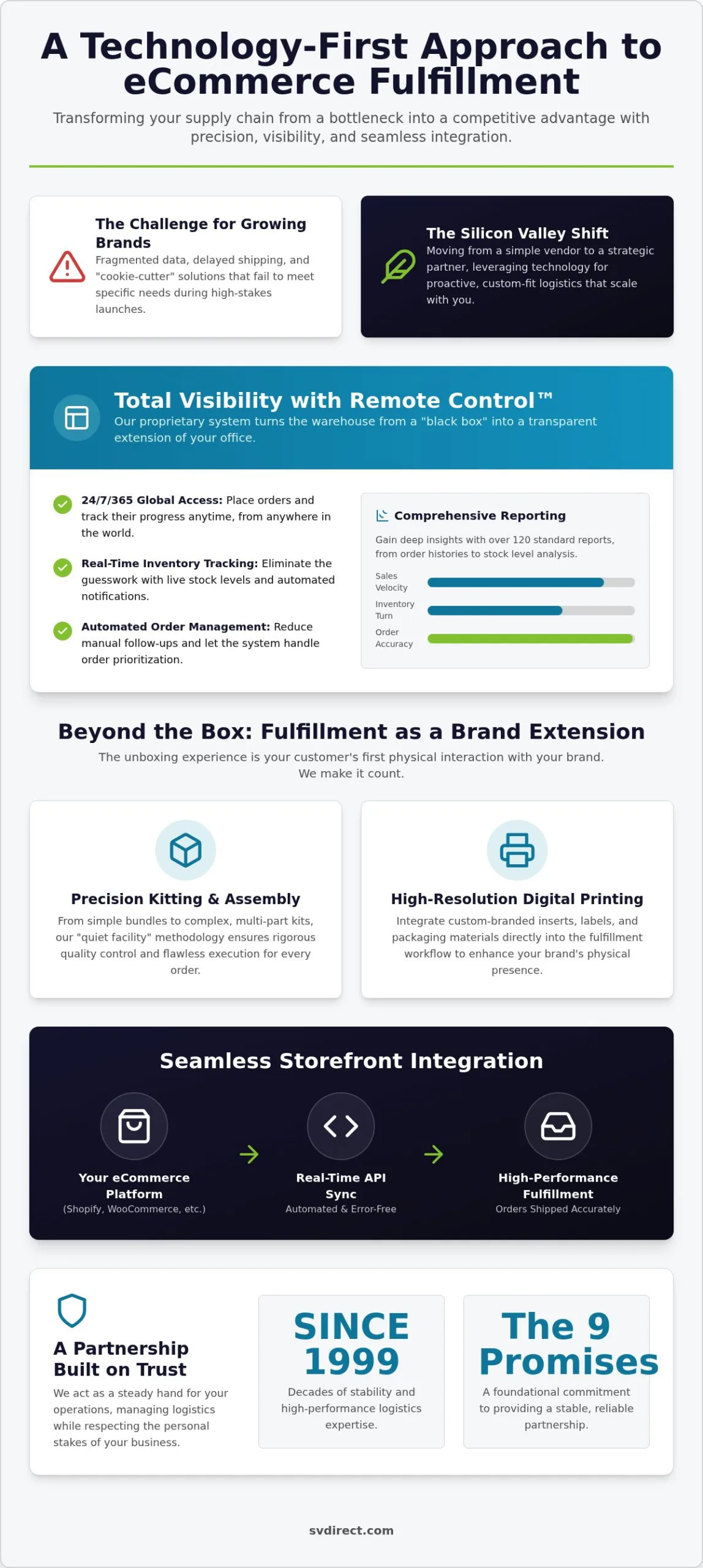
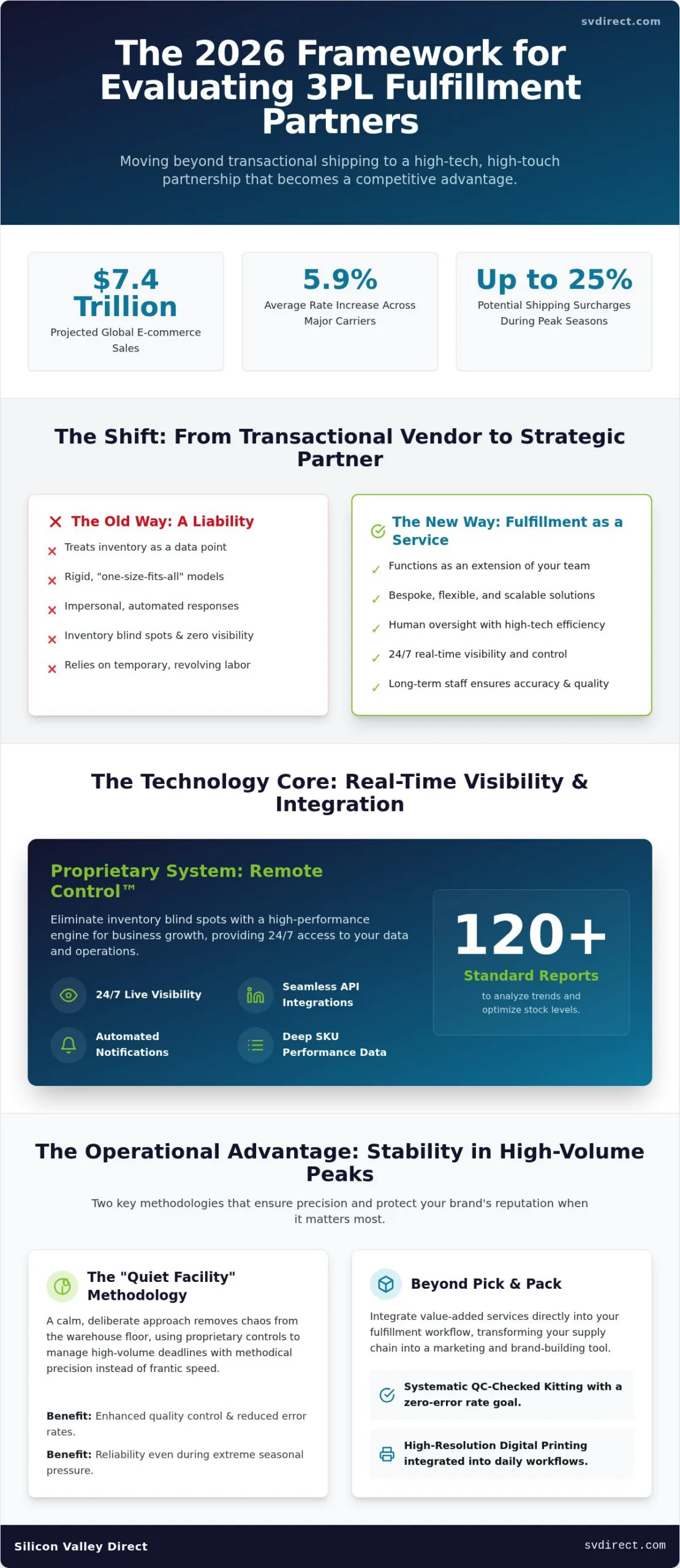
SVD’s Remote Control order management platform is a direct expression of that philosophy. With access to more than 120 standard reports, merchants get a 24/7 window into their fulfillment operation: real-time inventory receipts, backorder visibility, shipment confirmations, and exception flags, all consolidated in a single dashboard. That’s not a feature list. It’s the operational transparency that transforms a fulfillment center from a black box into a genuine extension of your team.
If you’re evaluating whether your current setup can support your next growth stage, connecting with a fulfillment specialist is a practical first step toward understanding what a purpose-built integration could look like for your specific SKU mix and order volume.
Shopify’s built-in inventory tools are genuinely useful. ABC analysis helps you rank your SKUs by sales velocity. Low stock alerts fire when a threshold is crossed. Shopify Flow can trigger automated actions based on inventory events. For a lean operation with a simple product catalog, that’s a reasonable toolkit. But it’s a digital toolkit solving a physical problem, and that distinction matters more than most store owners realize until something breaks.
The gap shows up in three specific places: serial number tracking, bundle management, and quality control. Native Shopify inventory management doesn’t support serial-level traceability. If you’re selling electronics, medical devices, or any regulated product category where individual unit accountability matters, the admin panel can tell you how many units you have. It cannot tell you which specific units they are, where they’ve been, or whether a returned item matches the one originally shipped. A professional 3PL system tracks at the serial number level, creating an auditable chain of custody that Shopify Flow simply wasn’t designed to produce.
Low stock alerts are another area where the comparison turns stark. An alert is reactive. It tells you a problem exists after the inventory position has already deteriorated. Proactive conflict resolution, the methodology a purpose-built fulfillment system applies, identifies discrepancies between expected and physical stock before they cascade into customer-facing errors. That’s not a semantic difference. It’s the operational discipline that prevents a flash sale from becoming a fulfillment crisis.
Kitting, Assembly, and On-Demand Customization
Digital bundles in Shopify are a product configuration. Physical kitting is a warehouse operation. The distinction is significant. When a customer buys a promotional bundle, someone has to pull individual components, assemble them according to a specification, apply the right packaging, and insert the right collateral. None of that happens inside a dashboard. Kitting and assembly services handle this at scale, with component-level inventory decrements that keep your stock positions accurate across every SKU involved in the build.
Personalization adds another layer of complexity that native tools don’t touch. SVD’s print-on-demand capability, powered by HP Indigo digital printing technology, allows variable data to be applied at the order level. That means personalized inserts, customized packaging, and campaign-specific collateral can be produced and inserted during the kitting process itself, without a separate print run or a manual handoff between teams. Liquid ink digital printing at this level delivers the kind of per-order customization that turns a standard shipment into a branded experience.
Inventory Accuracy: Digital Logic vs. Physical Audits
Shopify adjusts inventory records when events are logged. A 3PL audits inventory by physically counting what’s on the shelf. Both matter. Only one catches the errors the other misses.
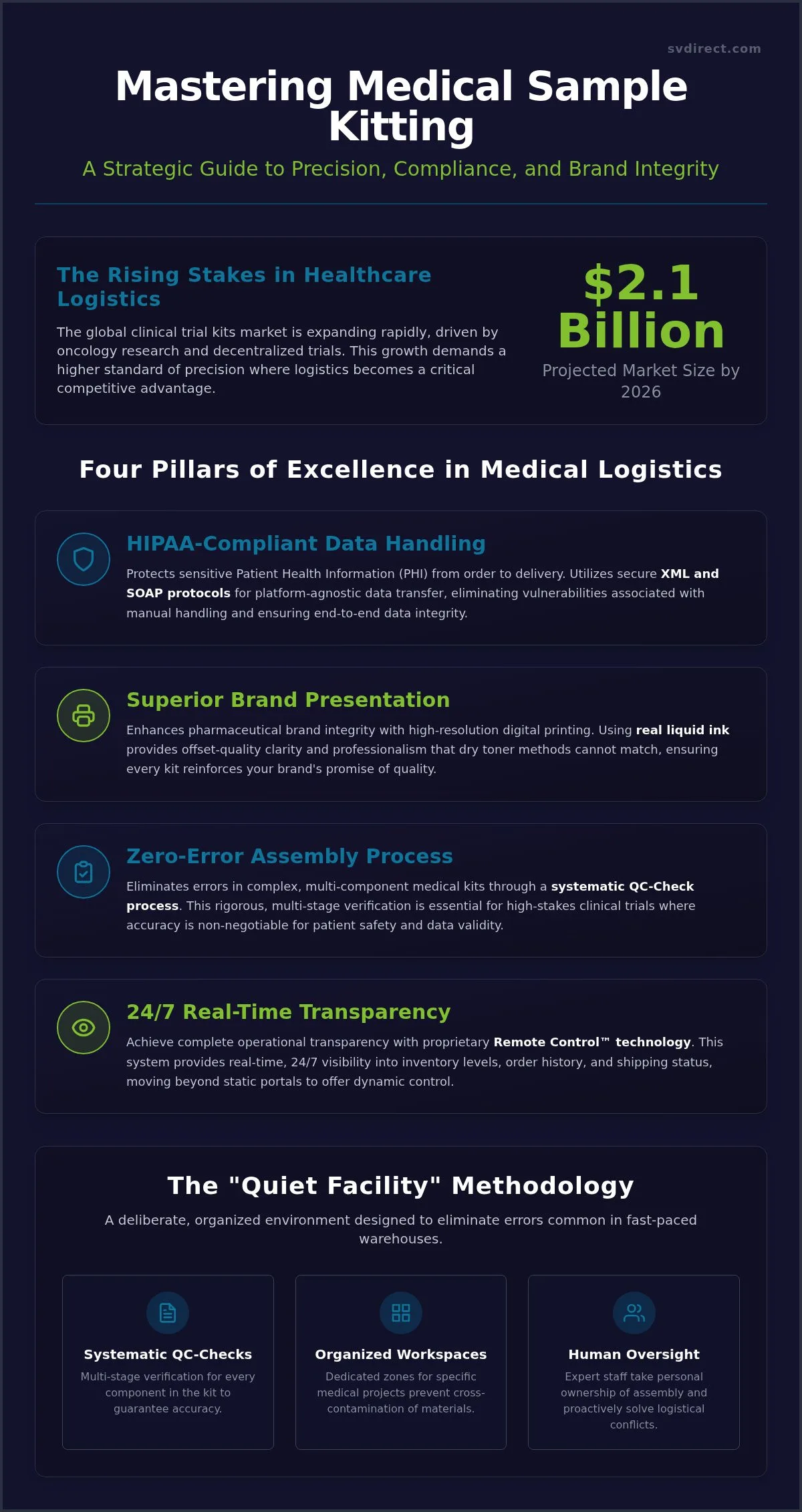
The “Quiet Facility” methodology is the operational philosophy behind physical accuracy. An organized warehouse, where every SKU has a designated location, every receiving process follows a consistent protocol, and every team member understands the system, generates fewer errors by design. Noise in a fulfillment operation isn’t just auditory. It’s the cumulative result of misplaced stock, inconsistent receiving practices, and ad hoc problem-solving. A quiet, structured facility eliminates the conditions that produce ghost inventory before reconciliation is ever needed.
This discipline extends to high-touch fulfillment scenarios like lead inquiry fulfillment, where marketing campaigns drive inbound requests for physical materials. Each response package requires accurate inventory of the collateral itself, precise assembly, and timely dispatch. That’s a workflow that demands systematic inventory controls, not a digital adjustment field. The human element of Shopify inventory management, the trained team member who catches the discrepancy before it ships, is the part that no automation layer has successfully replaced.
Best Practices for Optimizing Your Shopify Stock in 2026
Knowing the right tools is only half the equation. How you operate them determines whether your inventory stays clean or quietly drifts into the kind of discrepancies that erode customer trust and compress margins. The brands that scale without constant firefighting share a common discipline: they’ve established deliberate operational practices around their data, not just the technology that generates it.
The most foundational of those practices is designating a single source of truth. When Shopify and your 3PL system each claim authority over stock counts, conflicts are inevitable. The resolution is clear: your fulfillment partner’s system holds master record status, and Shopify reflects it. Every inventory update, every receipt confirmation, every return reintegration flows from the warehouse outward to the storefront, never the reverse. That directional discipline is what keeps your available stock figures trustworthy at any order velocity.
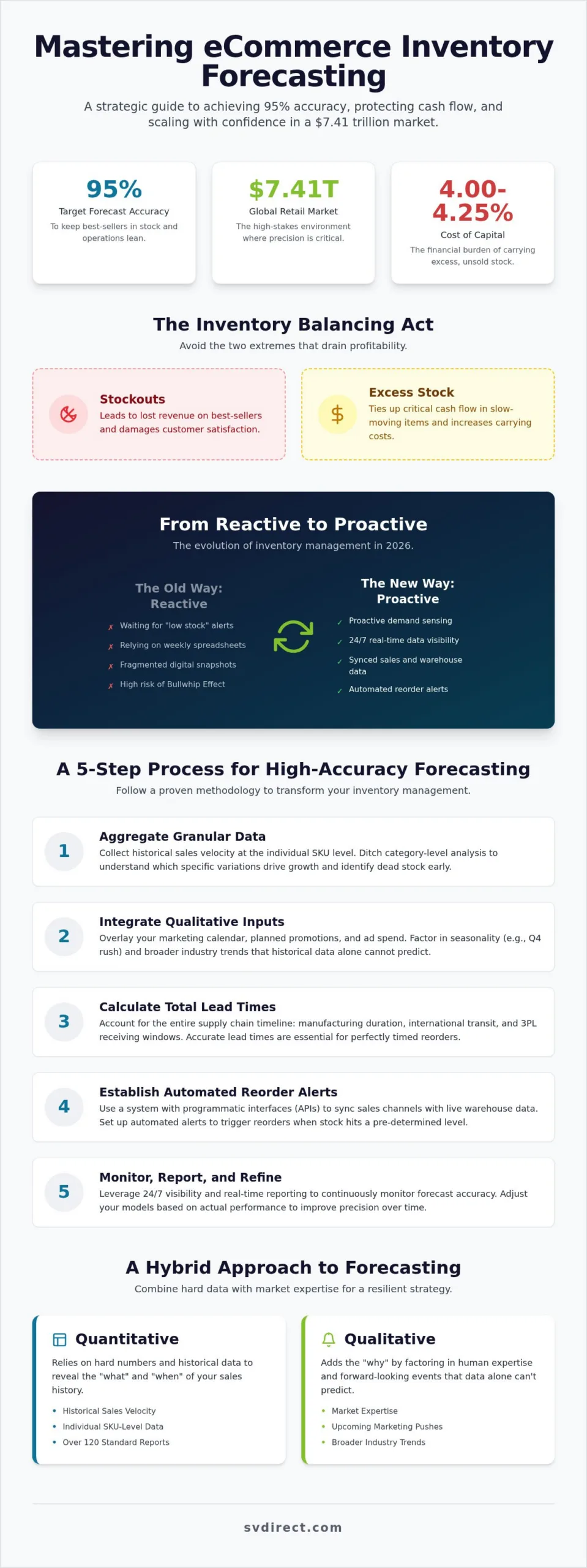
Automated low-stock notifications are the operational complement to that foundation. An alert that fires when a SKU crosses a defined threshold gives your procurement team a window to act before the storefront is affected. The key distinction is configuring those thresholds intelligently, not as static numbers but as dynamic values tied to actual sales velocity. A SKU moving 50 units a week needs a meaningfully different reorder trigger than one moving five. SVD’s fulfillment services provide the real-time velocity data that makes that kind of dynamic threshold calibration possible, turning a reactive alert system into a genuinely proactive one.
Variable data and personalization add another layer of operational value that most brands leave untapped. When your kitting and fulfillment workflow supports per-order customization, promotional inserts, personalized packaging, and campaign-specific collateral become inventory assets in their own right. Managing those components with the same rigor applied to sellable product prevents the quiet waste that accumulates when marketing materials are over-ordered and never reconciled.
Streamlining the Reorder Process
Effective reordering isn’t just about speed; it’s about timing. Lead time analysis belongs inside your procurement model, not as an afterthought. When you know that a supplier requires 14 days and your current velocity will exhaust stock in 18, the reorder window is narrow but manageable. Compress that margin further and you’re back to emergency orders and expedited freight costs. Automated email alerts, triggered by your 3PL’s live inventory positions, give your team the lead time they need to act deliberately rather than reactively. That’s the difference between a procurement strategy and a procurement scramble.
Managing Returns and Product Obsolescence
Returns are a data source, not just a logistics problem. A structured returns management workflow that quickly grades, reintegrates, or quarantines stock keeps your available counts accurate and your warehouse storage efficient. FIFO (First In, First Out) logic prevents older stock from aging out behind newer receipts, which matters especially for products with shelf-life considerations or seasonal relevance. For brands distributing internationally, analyzing global shipping services through the lens of inventory positioning, not just shipping cost, can reveal opportunities to pre-position stock closer to demand clusters and reduce the exposure that slow-moving international inventory creates. Stale inventory audited through your shipping activity reports tells you exactly where that rationalization needs to happen first.
Effective Shopify inventory management at scale isn’t a dashboard setting. It’s a set of operational habits, reinforced by the right system architecture and the right fulfillment partner, applied consistently enough that accuracy becomes the default rather than the exception.
Elevating Your Brand with Silicon Valley Direct’s Integrated Solutions
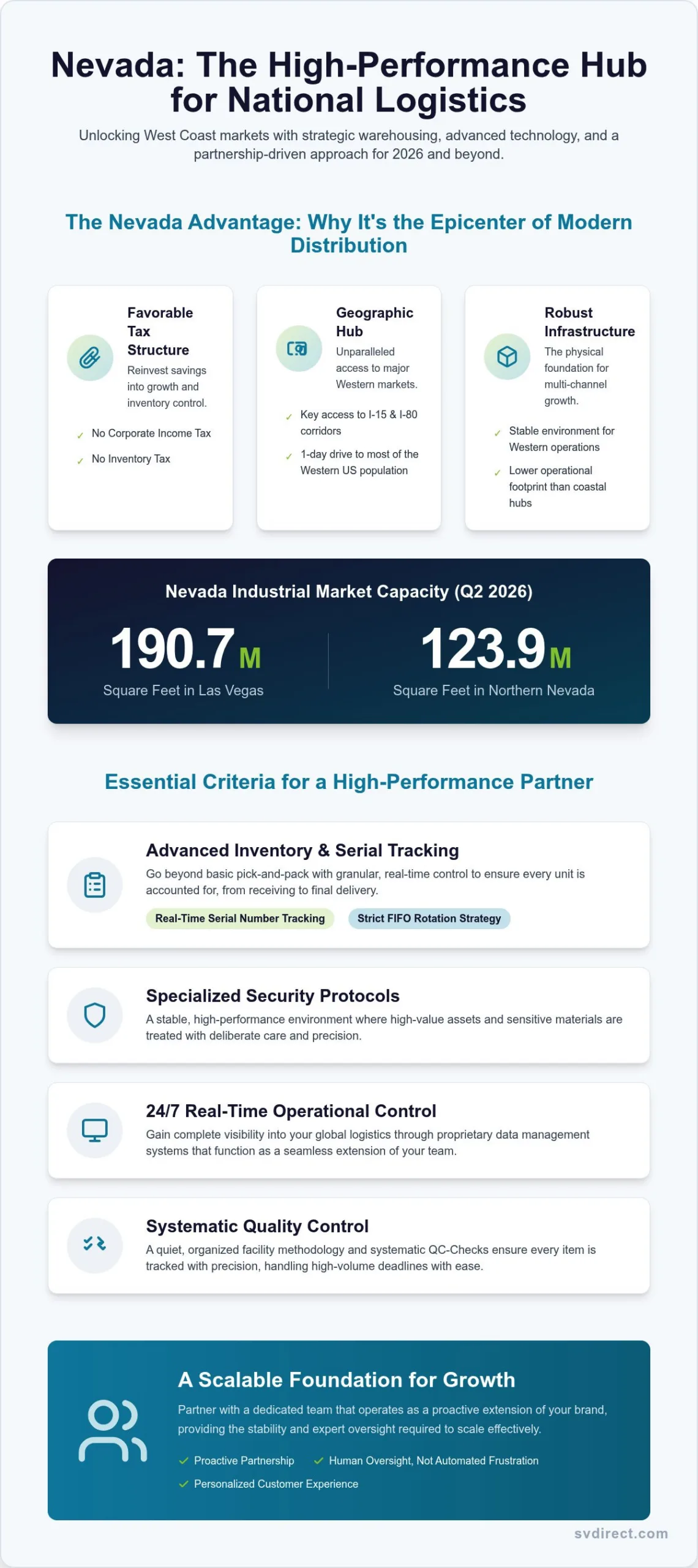
Most fulfillment partners store your products and ship your orders. Silicon Valley Direct does something more deliberate: it thinks outside the box on your behalf. That phrase isn’t marketing language at SVD; it’s an operational philosophy that shapes how the team approaches every client relationship, from the initial integration design through the daily execution of complex, non-standard fulfillment projects that generic 3PLs simply decline to handle.
SVD’s partnership approach is anchored by Nine Promises that define what clients can expect: accuracy, responsiveness, transparency, flexibility, and a genuine commitment to functioning as an extension of your marketing and sales departments, not a separate vendor operating at arm’s length. When your storefront runs a campaign, your fulfillment operation should already know about it. When a SKU is trending, your warehouse team should be positioned to respond. That level of alignment is what separates a logistics partner from a logistics provider.
Geography matters here too. Operating out of Silicon Valley isn’t incidental. It places SVD inside the same innovation ecosystem that shapes how technology companies think about systems, data, and automation. That proximity to technological culture informs the proprietary Remote Control platform, the Web Services integration architecture, and the continuous refinement of processes that keep SVD’s capabilities ahead of where most fulfillment operations are comfortable operating.
Proactive Conflict Resolution and Quality Control
The difference between a reactive fulfillment partner and a proactive one shows up most clearly when something goes wrong. SVD’s methodology is built around catching discrepancies before they reach the customer, not after. Every order moves through a QC-Check process that verifies accuracy at the unit level: right product, right quantity, right packaging, right collateral. That physical verification layer is the part of Shopify inventory management that no software setting can replicate.
The “make-it-right” attitude that runs through SVD’s team culture means problems get surfaced and resolved internally rather than escalated to the client as emergencies. Combined with 24/7 access to real-time inventory data through the Remote Control platform, merchants have total transparency into their fulfillment operation at any hour. You don’t need to wait for a morning report to know your current stock positions. The data is always there, current and auditable, because the warehouse team that generated it takes that accountability seriously.
Long-tenured staff is part of what makes that consistency possible. Institutional knowledge, the kind that comes from years of handling the same product categories, the same seasonal surges, the same edge-case scenarios, doesn’t live in a training manual. It lives in the people who’ve solved those problems before.
Scalability Without the Hectic Atmosphere
High-volume deadlines don’t require a chaotic facility. They require an organized one. SVD’s quiet, structured warehouse environment is a deliberate operational choice, not a coincidence. When every SKU has a designated location, every receiving protocol is consistent, and every team member understands the system, throughput increases without accuracy suffering. That’s the environment that handles a flash sale surge without the fulfillment errors that typically follow one.
Flexibility is built into the same structure. Complex kitting builds, variable data printing, personalized campaign inserts, lead inquiry fulfillment: these aren’t exceptions that require special handling. They’re part of the standard capability set that SVD brings to non-cookie-cutter projects. Brands with sophisticated promotional strategies, product customization requirements, or multi-component assembly needs will find the infrastructure already in place, supported by a team that’s handled comparable complexity before.
For brands ready to move beyond patchwork Shopify inventory management and into a fulfillment setup built for sustained growth, the next step is straightforward. Partner with Silicon Valley Direct for Shopify fulfillment and discover what it looks like when your warehouse operates as a genuine extension of your team.
Turn Inventory Accuracy Into Your Competitive Advantage
Scaling a Shopify store without the right fulfillment infrastructure underneath it is a compounding risk, not just an operational inconvenience. The gap between what your dashboard shows and what’s physically on a shelf gets wider with every new channel, every new SKU, and every peak season you push through.
Effective Shopify inventory management comes down to three things: a single authoritative source of truth, a technical integration that eliminates data latency, and a fulfillment partner with the physical discipline to keep counts accurate when order velocity climbs. SVD’s proprietary Remote Control system delivers 120+ real-time reports, HP Indigo 5500 digital printing supports on-demand kitting customization, and a proactive methodology built since 1999 means discrepancies get caught before they reach your customers.
Your warehouse should work as hard as your storefront. When it does, growth stops being stressful and starts being straightforward.
Frequently Asked Questions About Shopify Inventory Management
How does Shopify inventory sync with a 3PL warehouse?
Shopify syncs with a 3PL warehouse through a Web Services integration that creates a direct, programmatic connection between your storefront and the warehouse’s order management system. When a customer places an order, it transmits to the warehouse automatically. The warehouse system then pushes inventory updates, shipment confirmations, and tracking data back to Shopify in real time, eliminating the batch-update windows where overselling typically occurs.
The quality of that sync depends entirely on the 3PL’s system architecture. A warehouse running a proprietary platform, like SVD’s Remote Control system, delivers tighter, more reliable data exchange than a generic middleware connector because the logic governing inventory updates is built around actual warehouse workflows rather than a generalized template.
Can I track serial numbers for my Shopify products through a 3PL?
Yes, but not through Shopify’s native admin, which tracks quantities rather than individual unit identities. Serial-level traceability requires your 3PL’s warehouse management system to capture and record unique identifiers at the point of receiving, picking, and shipping. This creates an auditable chain of custody for each specific unit, which matters considerably for electronics, regulated products, or any category where a return needs to be matched against the original shipment.
If serial number tracking is a requirement for your product category, confirm that your 3PL’s system supports it before integration. It’s a warehouse-level capability, not a Shopify setting, and not every fulfillment operation has it built into standard process.
What is the difference between “On Hand” and “Available” inventory in Shopify?
“On Hand” is the total physical unit count present at your warehouse location, regardless of order status. “Available” is the actionable figure: On Hand minus Committed units already allocated to open orders. Your storefront should only ever sell against the Available number, not On Hand, because Committed units are physically present but already spoken for.
Conflating these two figures is one of the most common causes of overselling in Shopify inventory management. A dashboard showing 80 units On Hand with 65 Committed means you have 15 units actually available to sell, not 80. Getting that distinction right, and keeping it current in real time, is foundational to accurate stock control at any order volume.
How do I manage kitting and bundles in Shopify inventory?
Shopify treats bundles as product configurations, but the physical assembly and component-level inventory decrements happen at the warehouse. When a bundle sells, each component SKU needs to be pulled, assembled, and decremented individually. Native Shopify admin doesn’t handle that automatically, which means component counts drift without a warehouse system managing the build logic.
A 3PL with dedicated kitting and assembly capabilities handles this operationally: pulling components per a defined specification, assembling to a quality standard, and recording accurate decrements across every SKU involved in the build. That physical execution is what keeps your inventory positions trustworthy across both bundled and individual product listings simultaneously.
Is it possible to integrate custom digital printing with my Shopify orders?
Yes. When your 3PL supports on-demand digital printing as part of the kitting workflow, variable data can be applied at the individual order level during fulfillment. That means personalized inserts, campaign-specific collateral, and customized packaging can be produced and inserted into the shipment without a separate print run or manual handoff between teams.
SVD’s print-on-demand capability, powered by HP Indigo digital printing technology, integrates directly into the kitting process. Each order triggers the appropriate print output, which gets assembled into the package before it ships. For brands running personalized campaigns or loyalty programs, this turns a standard fulfillment step into a branded customer experience without adding operational complexity on your end.
What reports are most important for Shopify inventory management?
The reports that matter most are real-time inventory position by SKU, inbound receipt confirmations, backorder visibility, and shipment confirmations with tracking data. Together, these four give you a complete picture of where stock is, what’s committed, what’s arriving, and what’s already left the building. Sales velocity reporting by SKU is equally important for calibrating reorder thresholds intelligently rather than setting static trigger points.
SVD’s Remote Control platform provides access to more than 120 standard reports covering these categories and more, available around the clock. That reporting depth is what transforms a fulfillment center from a black box into a transparent operational asset, giving your procurement and marketing teams the data they need to make confident decisions without waiting on a morning summary. Just as eCommerce stores benefit from this level of detail, vehicle retailers often utilize automotive inventory intelligence reports to manage their stock with the same degree of precision.
How does a 3PL handle Shopify returns and restocking?
A structured 3PL returns workflow receives the item, grades its condition, and routes it accordingly: back to available inventory if it’s resalable, to a quarantine area if it’s damaged, or to disposal if it meets that threshold. That grading step is what keeps your available stock count accurate. A return that gets physically received but not properly processed creates phantom inventory, units that appear available but aren’t in sellable condition.
Timely reintegration matters as much as accuracy. Stock that sits in a returns queue for days before being processed represents both a reporting gap and a lost selling opportunity. The right 3PL treats returns processing as a first-class workflow, not an afterthought, applying the same systematic discipline to inbound returns as to outbound shipments.
What technical protocols are used to connect Shopify to a fulfillment system?
The standard protocols are XML for data structuring and SOAP for secure transmission. XML packages each data element, SKU, quantity, order ID, status, into a tagged format both systems can read without ambiguity. SOAP carries those packages across networks with integrity intact. WSDL files document the full integration map, so developers understand every available method and parameter without reverse-engineering the connection.
Within that framework, two methods do the core work: AddOrder transmits new Shopify orders to the warehouse in real time, and GetOrderInfo pulls current inventory positions and shipment status back to Shopify on demand. This architecture is what makes a professional Shopify inventory management integration meaningfully different from a connector app that relies on periodic syncs and fragile middleware.