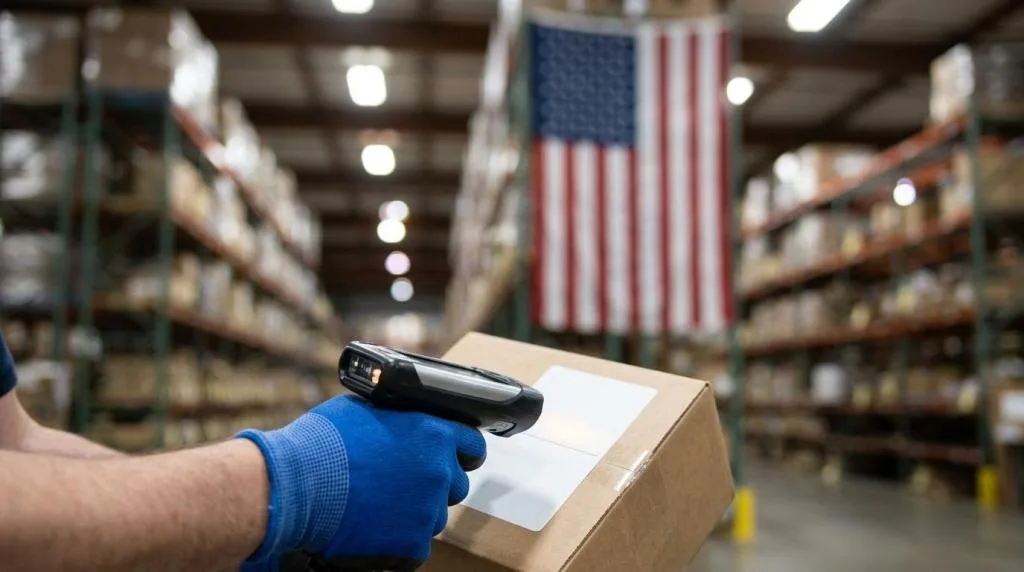
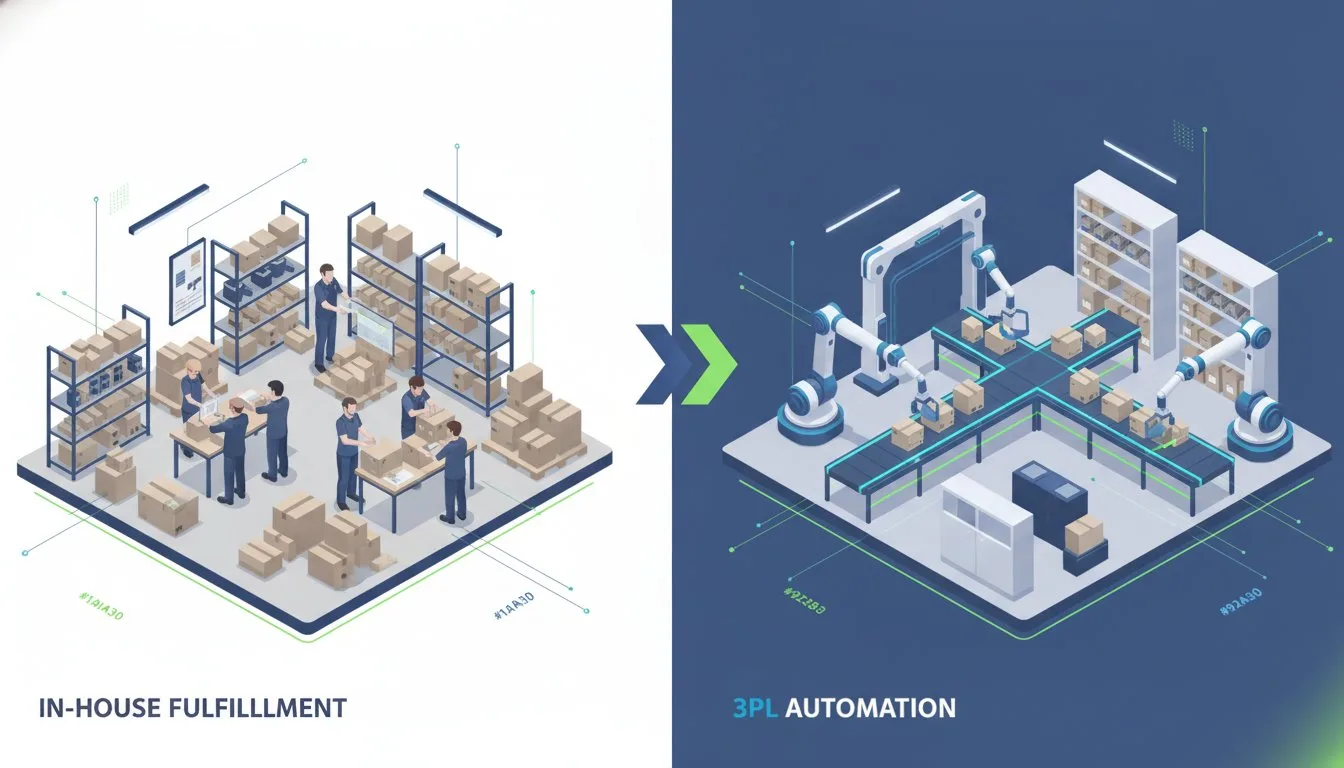
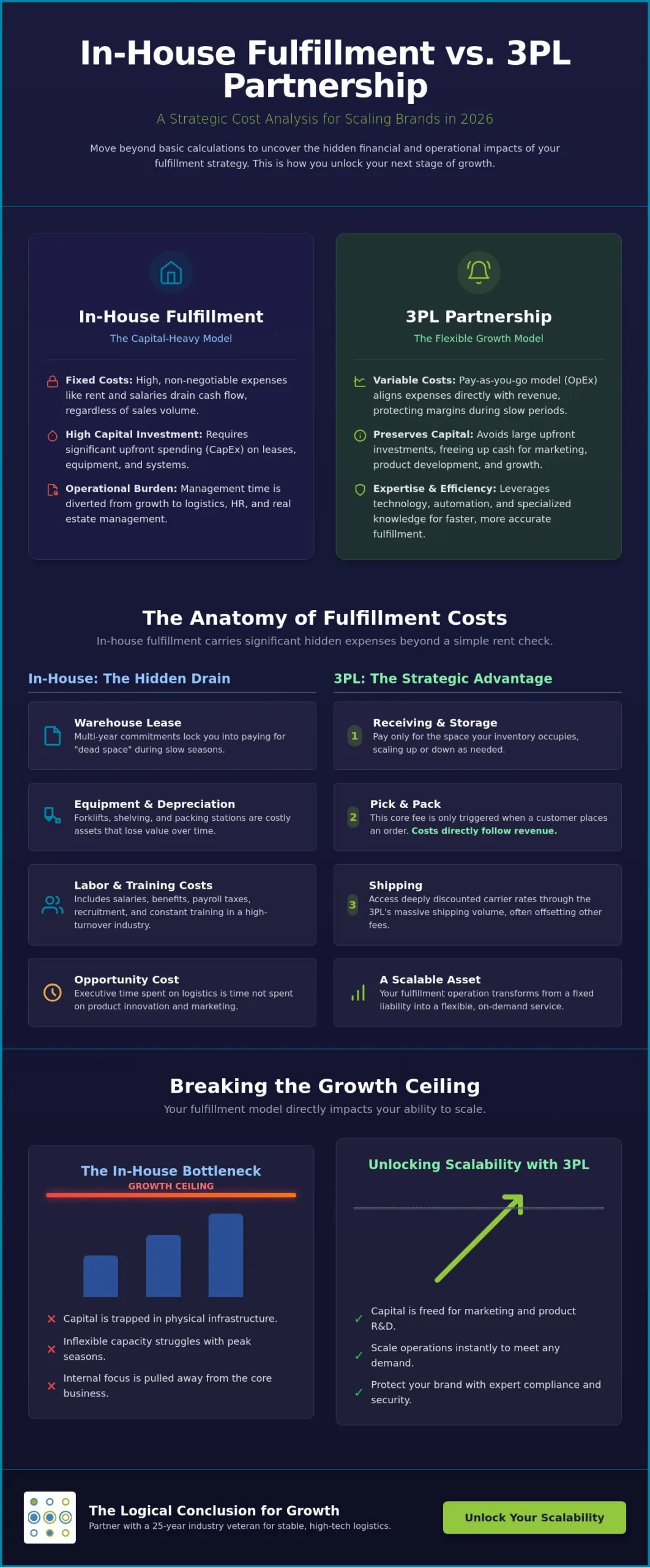
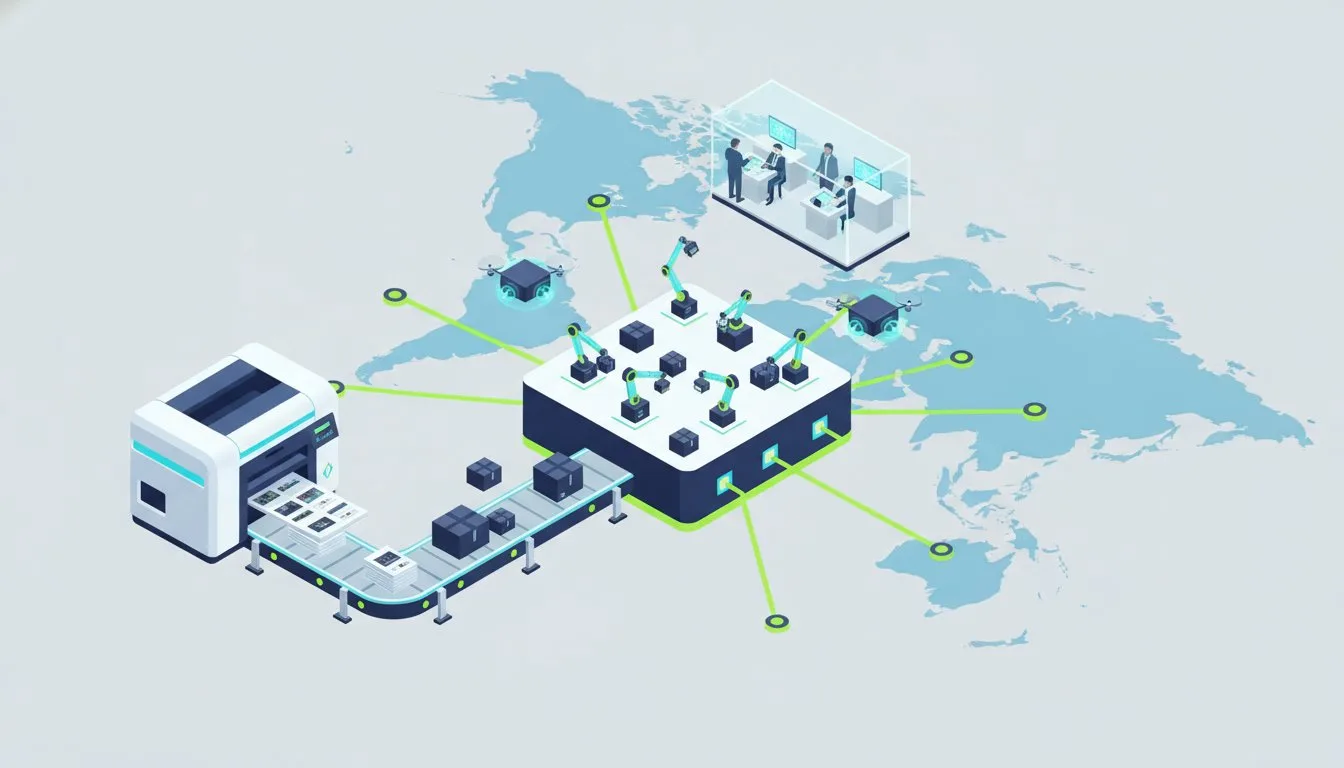
Business buyers notice fulfillment problems fast. A late pallet, a bad inventory count, or missing tracking data can slow reorders, create customer service work, and put pressure on your sales team.
Silicon Valley Direct (SVDirect) provides B2B fulfillment services from Union City, California for ecommerce brands, startups, and growing online retailers across the USA and Canada. We bring warehousing, inventory management, pick and pack, same-day shipping, reporting, and 80+ integrations into one operation so your business orders move with more speed and less guesswork.
B2B fulfillment services in Union City, CA for faster order flow and better inventory visibility
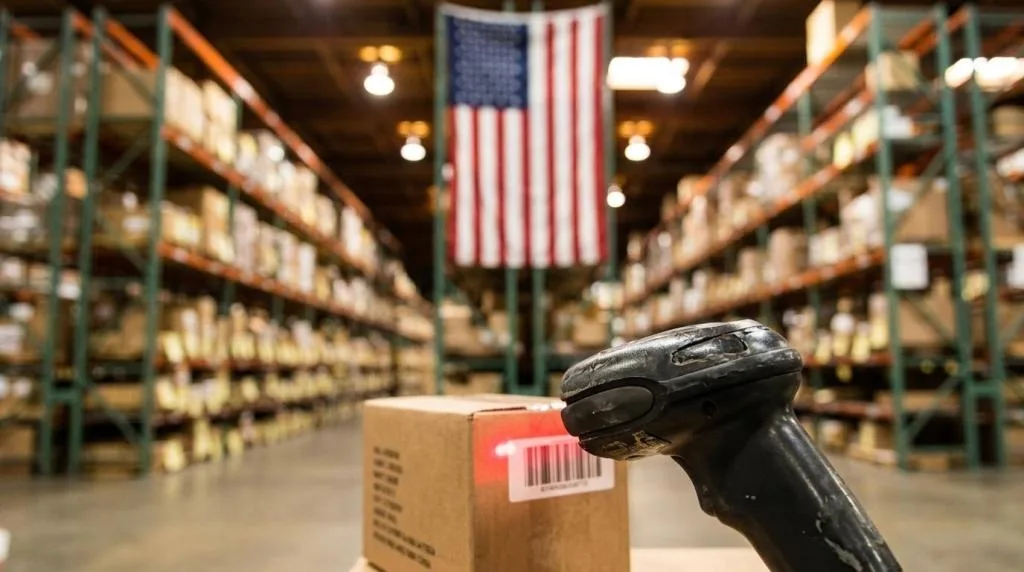
SVDirect handles the work that sits between your purchase order and your customer delivery window. From our fulfillment center at 29995 Ahern Ave, Union City, CA 94587, we receive inventory, store it, manage stock levels, pick, pack, ship, process returns, and support domestic plus international distribution.
“SVDirect operates from an 88,704-square-foot Union City fulfillment center with nine dock-high doors.”
For companies shipping B2B orders alongside DTC volume, that matters because one disconnected process can create inventory errors across every channel. SVDirect gives you real-time inventory tracking and a 24/7 custom web portal, so your team can see what is on hand, what has shipped, and what needs attention without chasing updates.
“SVDirect supports 80+ preconfigured integrations plus custom API support, helping B2B orders move without manual re-entry.”
Speed is a major reason brands move fulfillment out of house. SVDirect offers same-day shipping and double-verified 100% order accuracy, which helps you reduce avoidable delays and cut down on errors that can damage business relationships.
“SVDirect brings 26+ years of 3PL experience to brands that need same-day shipping and real-time visibility.”
That combination of warehouse execution, systems visibility, and direct human support is what makes B2B fulfillment easier to manage when order volume starts to climb.
SVDirect helps ecommerce brands, startups, and growing retailers manage B2B orders at scale
Some companies come to SVDirect because they are adding business customers for the first time. Others already have established order volume and need a fulfillment partner that can support wholesale, marketplace, ecommerce, and promotional or literature distribution without forcing everything into a manual workflow.
SVDirect is a strong fit if your business needs to keep inventory, shipping, and reporting connected across channels. We support ecommerce startups, established brands, and growing online retailers across the USA and Canada, with a strong local advantage for companies in Silicon Valley and the San Francisco Bay Area that want a nearby warehouse partner they can actually visit.
You may be a good fit for SVDirect if your team needs any of the following:
Closer communication: A dedicated account manager and real human phone support when issues need action, not a ticket queue.
SVDirect also works well for brands that want West Coast warehousing without losing nationwide or cross-border reach. You get a California base with shipping coverage that supports broader growth.
What SVDirect improves in your B2B fulfillment operation
B2B fulfillment is not only about moving boxes. It is about giving your team a cleaner operating system for inventory, shipping, visibility, and customer communication.
SVDirect improves inventory control by keeping warehousing and order execution in one place. Real-time inventory checking reduces the lag between what your systems say and what is physically available, which helps your team make better replenishment and sales decisions.
SVDirect improves order speed with same-day shipping and a warehouse set up for active inbound and outbound movement. When timing matters, faster processing can protect customer relationships and keep larger accounts from slipping into backorder frustration.
SVDirect improves accuracy with a double-verified process built around 100% order accuracy. Fewer mistakes mean fewer reships, fewer credits, and fewer internal hours spent cleaning up preventable problems.
SVDirect improves visibility with reporting and a 24/7 portal your team can access when they need answers. In a market where supply chain traceability and provenance are getting more attention, better shipment and inventory visibility helps you manage risk with more confidence.
SVDirect improves internal focus by centralizing fulfillment work that often pulls operations, sales, and customer service into the same fire drill. A more centralized system reduces manual handoffs and frees your team for planning, sales growth, and account management.
How SVDirect delivers B2B fulfillment with warehousing, integrations, and real human support
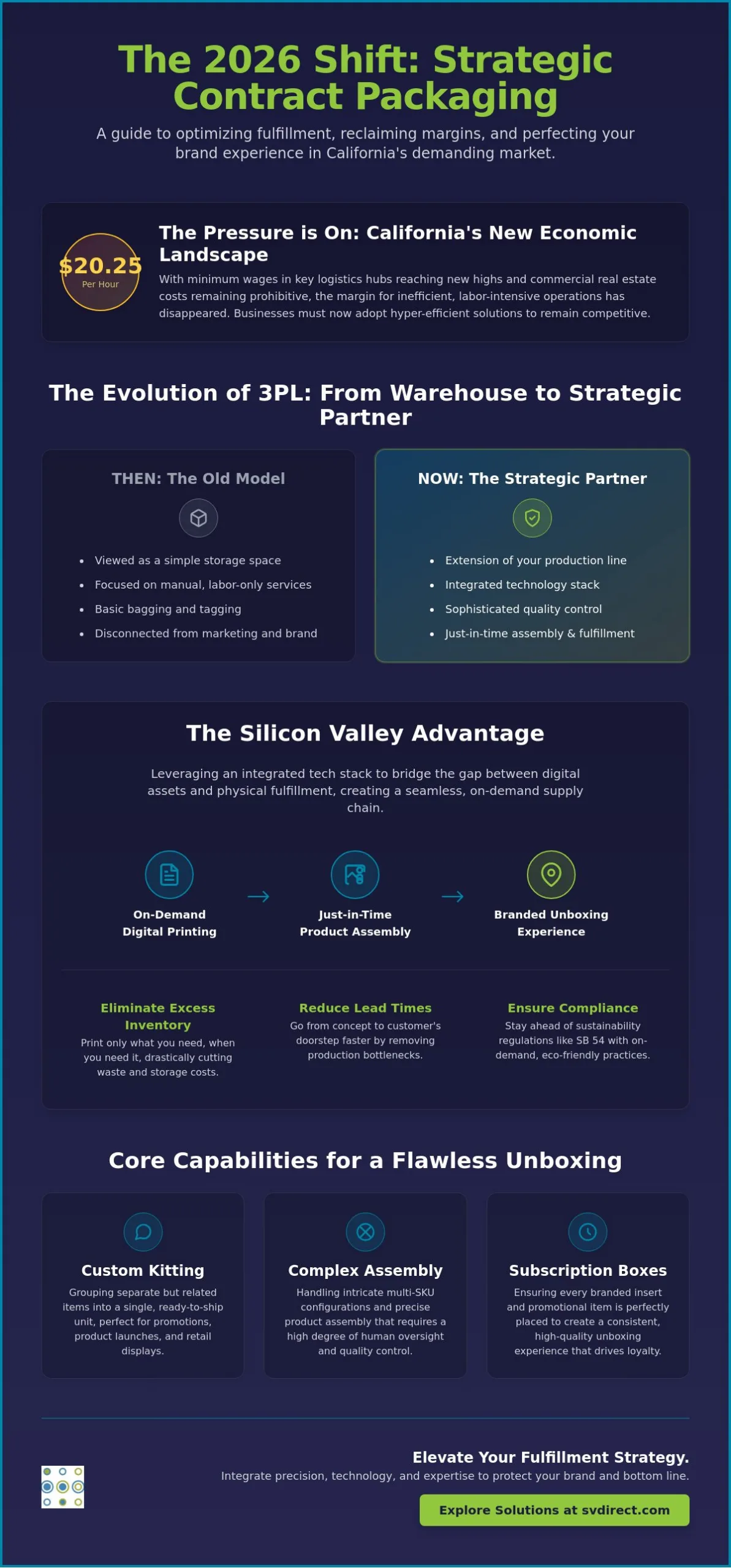
SVDirect combines physical execution with system connectivity. We store inventory in our Union City warehouse, connect your sales channels and order sources, process orders, and feed reporting back into a portal your team can use every day.
The service stack is practical and built for real operations:
System connectivity: 80+ preconfigured integrations with custom API support for businesses that need a more tailored workflow.
Order visibility: Real-time inventory tracking, reporting, and a customized 24/7 web portal.
Support structure: A dedicated account manager plus phone support from real people.
SVDirect also keeps implementation grounded. Customer testimonials on the company site describe fast setup, quick turnaround, and real-time tracking visibility. One customer reported first sales being processed only a few days after goods arrived, while another described a weekend sales surge that was fully fulfilled by Monday.
That kind of execution matters when your B2B commitments sit on top of fluctuating ecommerce volume. Instead of forcing your team to reconcile spreadsheets, carrier notices, and warehouse updates across multiple vendors, SVDirect gives you one fulfillment partner with one operating view.
Why SVDirect stands out for Bay Area and North American B2B fulfillment
A lot of fulfillment providers sell software language first and operational clarity second. SVDirect is different because the offer is visible in concrete terms: a Union City warehouse, same-day shipping, real-time inventory, 80+ integrations, custom API support, dedicated account management, and no minimum order requirement.
For Bay Area companies, SVDirect offers something many national providers do not. You can work with a fulfillment partner in your region and visit the warehouse on site, while still using a system built for nationwide and international shipping.
For growing brands, SVDirect removes a common barrier to entry. No minimum order requirement lets you start before your volume looks perfect, which is useful for startups, seasonal programs, and brands testing new channels or B2B accounts.
For teams under cost and shipping pressure, SVDirect provides the visibility needed to make better decisions. Carrier pricing structures and parcel rules change over time, so real-time inventory, reporting, and centralized fulfillment become more valuable when you need to protect margin and avoid unnecessary handling errors.
When SVDirect is the right B2B fulfillment partner for your business
SVDirect is a strong match when you need fulfillment to become more reliable, more visible, and easier to scale without building your own warehouse operation.
You are likely in the right place if:
You need speed: Same-day shipping is important to your customer commitments.
You need visibility: Your team wants real-time inventory and reporting instead of waiting for manual updates.
You need system fit: Your current stack includes ecommerce platforms, marketplaces, or custom workflows that benefit from 80+ integrations or API support.
You need flexibility: You want to start without a minimum order requirement or support both B2B and DTC growth from one partner.
You need accountability: You prefer a dedicated account manager and direct phone support over anonymous support queues.
SVDirect is especially relevant if you are based in Silicon Valley, the San Francisco Bay Area, or elsewhere on the West Coast and want a California fulfillment partner with physical capacity, nationwide reach, and cross-border capability.
Talk with SVDirect about your B2B fulfillment requirements
If your business needs B2B fulfillment that is faster, easier to track, and simpler to scale, SVDirect can help you build that operation from its Union City warehouse. You get a partner with 26+ years of 3PL experience, same-day shipping, real-time inventory visibility, and support from real people who know your account.
Reach out to SVDirect to review your order flow, inventory needs, systems, and growth plans. We can help you map a B2B fulfillment setup that gives your team more control and your customers a better delivery experience.
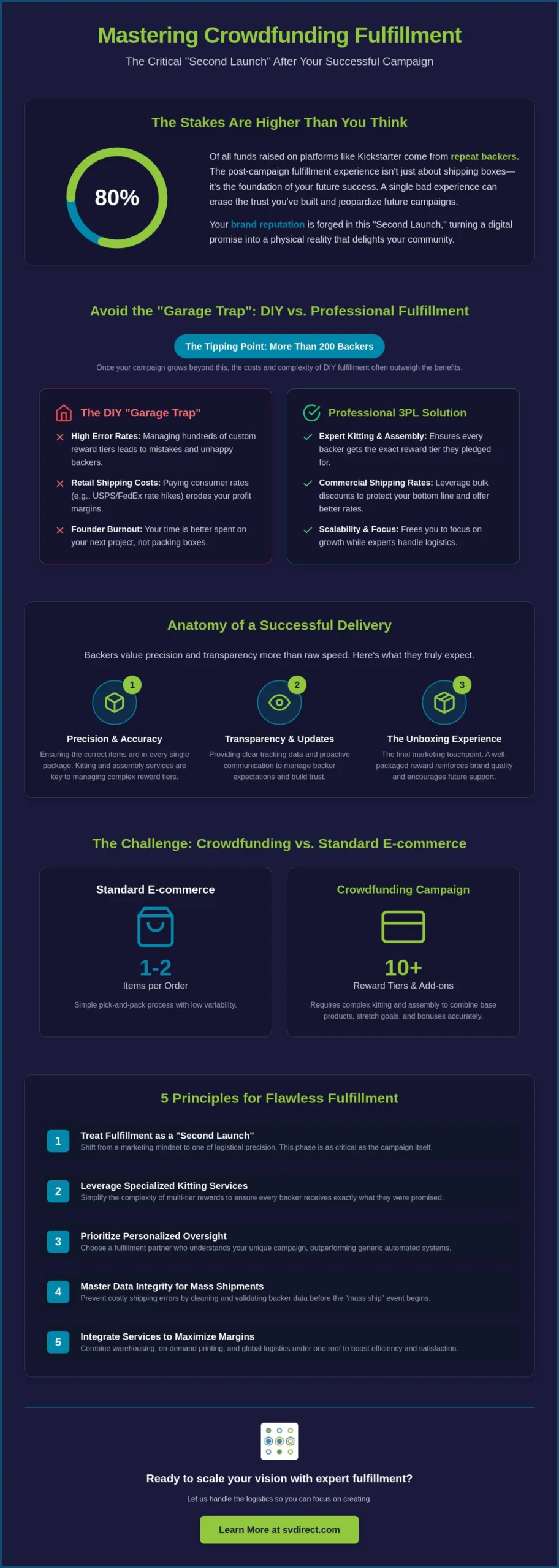
With repeat backers accounting for approximately 80% of all funds raised on platforms like Kickstarter, your long-term success isn’t decided by your marketing video. It’s decided by what happens after the “Congratulations” email arrives. Many creators treat the end of a funding round as a finish line, yet the most critical phase is just beginning. Expertly managed crowdfunding campaign fulfillment is more than just moving boxes; it’s the strategic bridge between a digital promise and a physical reality that delights your community.
We understand the pressure of this transition. It’s natural to feel overwhelmed by the complexity of custom kitting or the sudden impact of biannual shipping rate hikes, such as the USPS adjustments that took effect in July 2026. This guide provides a clear roadmap to navigate these hurdles, helping you move from a successful raise to a seamless global delivery experience. You’ll learn how to manage high-volume “mass ship” events with precision, minimize hidden international costs, and maintain the inventory accuracy required to keep your backers’ trust intact from the first parcel to the last.
Key Takeaways
Understand why the fulfillment phase is often more operationally complex than the funding round and how to manage it as a successful “second launch.”
Discover how specialized kitting and assembly services simplify the logistics of multi-tier rewards, ensuring every backer receives exactly what they were promised.
Learn why a personalized oversight model for crowdfunding campaign fulfillment outperforms automated systems by providing a dedicated partner who understands your unique campaign history.
Master a five-step checklist for data integrity to prevent costly shipping errors and maintain inventory accuracy during high-volume “mass ship” events.
Explore the strategic advantages of integrating warehousing, on-demand digital printing, and global logistics under one roof to maximize your profit margins and backer satisfaction.
Mastering Crowdfunding Campaign Fulfillment: The Critical “Second Launch”
Crowdfunding campaign fulfillment is the comprehensive process of receiving manufactured goods, kitting them into specific reward tiers, and shipping them to the backers who made your project possible. While the initial raise is often celebrated as the ultimate success, seasoned creators know that the “Second Launch”, the operational phase, is where brand reputation is truly forged. According to this Crowdfunding overview, the entire model relies on collective trust. That trust is fragile; it’s easily broken by shipping delays or incorrect reward assembly.
To better understand the logistics involved in this transition, watch this helpful video:
Transitioning from a marketing mindset to a logistics mindset requires a shift from persuasion to precision. During the campaign, your goal was to capture the audience’s imagination. Now, your goal is to manage inventory levels and navigate complex global shipping lanes. This phase is operationally complex because it involves high-volume “mass ship” events where thousands of orders must leave the facility simultaneously while maintaining 100% accuracy. Failing this stage doesn’t just result in angry emails; it damages your brand equity and makes future funding rounds significantly harder to secure.
Why the “Garage Trap” Fails for Modern Campaigns
DIY fulfillment often seems like a smart cost-saving measure, but the “Garage Trap” quickly reveals hidden expenses. Managing hundreds of custom reward tiers in a home office leads to high error rates and exhausted founders. Additionally, individual creators pay retail shipping rates. With USPS First-Class letters reaching 82 cents in July 2026 and FedEx implementing a 5.9% general rate increase, these costs erode profit margins. Most campaigns find that once they exceed 200 backers, the cost-benefit of a professional partner becomes undeniable. You can find more insights on scaling these operations on our blog. Outsourcing allows you to leverage commercial shipping rates and professional kitting expertise.
The Anatomy of a Successful Reward Delivery
A successful delivery isn’t just about speed. Backers value precision and transparency above all else. They’ve already waited months for production; they’d rather wait three extra days for a package that contains the correct items than receive an incorrect order overnight. Managing expectations through clear tracking data and proactive updates is essential. In a global market where repeat backers account for approximately 80% of all funds raised on Kickstarter, the unboxing experience is your final marketing touchpoint. Our approach ensures your global reach is supported by domestic-level efficiency, turning a complex logistics hurdle into a moment of brand loyalty.
The Logistics of Reward Delivery: Kitting, Assembly, and On-Demand Printing
Managing the physical distribution of rewards is where many creators encounter their first major operational bottleneck. Standard eCommerce orders usually involve one or two items. In contrast, a campaign might offer ten different reward tiers, each containing various combinations of base products, stretch goal add-ons, and limited-edition bonus items. This complexity fundamentally changes warehouse workflows. Efficient crowdfunding campaign fulfillment relies on a structured approach to reward tiers. Without a system for kitting and assembly services, the risk of missing components or shipping the wrong reward level increases exponentially.
When planning your distribution, it’s helpful to revisit the successful crowdfunding campaign elements to ensure your logistics strategy aligns with the promises made during the funding phase. A well-executed kitting strategy doesn’t just prevent errors; it also optimizes your total shipping spend. By centralizing these operations, you avoid the fragmentation that occurs when using multiple vendors for printing, storage, and assembly.
Custom Kitting: Managing Multi-Item Reward Tiers
Bundling different SKUs into a single package requires meticulous planning and physical space. We focus on creating a cohesive backer package that feels intentional rather than cluttered. Our quality control measures include manual verification for hand-assembled promotional kits, ensuring every “Founder’s Edition” contains exactly what was advertised. For creators producing intricate physical rewards like 3D printed hobbyist kits, you can learn more about the level of detail required for premium model production. Smart packaging design is also crucial during this stage. By grouping items to minimize empty space, we help you reduce dimensional weight (DIM) charges. This prevents you from paying for the shipping of “air,” which is a common drain on campaign budgets that many creators overlook.
On-Demand Printing: Personalizing the Backer Experience
One often-overlooked advantage is the ability to integrate just-in-time printing for localized manuals or personalized inserts. Most 3PLs require you to ship bulk-printed literature to their warehouse, which often leads to significant waste if backer counts change or minor product updates occur. Our in-house digital printing capabilities allow you to print precisely what you need, when you need it. Whether it’s a thank-you note addressing a backer by name or a manual tailored to a specific region, this level of personalization transforms a simple delivery into a premium brand experience. High-quality, professionally printed collateral reinforces the value of the product inside and protects your profit margins by eliminating unused inventory.
This focus on the unboxing experience turns a transactional moment into a viral marketing opportunity. If you’re ready to see how a bespoke logistics plan can protect your margins and delight your community, you can consult with our fulfillment experts for a tailored strategy.
Choosing a partner for crowdfunding campaign fulfillment is a decision that extends far beyond comparing pick and pack fees. Many modern providers offer an “Automated Black Box” model, where your project is just another data point in a vast, impersonal system. While automation works for standard retail, it often fails during a high-stakes backer launch. We believe true operational excellence requires a personalized oversight model. This involves a dedicated project manager who understands your campaign’s history, your reward nuances, and your brand’s voice. We explicitly reject the industry trend of purely automated interactions because physical logistics remains a human-led endeavor.
Silicon Valley efficiency isn’t just about code; it’s about the synergy between high-tech software and human expertise. In a market where 37% to 40% of Kickstarter campaigns reach their goals, the winners are those who can actually deliver. A project manager acts as a steady hand, ensuring that the precision of our facility matches the passion of your backers. This proactive stance helps alleviate the stress of growth, transforming a complex “mass ship” into a controlled, reliable event.
Technical Integration vs. Operational Flexibility
Software APIs are essential for syncing orders, but they’re only half the battle in crowdfunding logistics. Crowdfunding is famously unpredictable. Backers move, tiers get swapped at the last minute, and production delays require flexible scheduling. A partner focused only on tech can’t pivot when these “exceptions” occur. Our approach combines robust 3PL inventory management software for real-time visibility with the human expertise to handle manual adjustments. This hybrid model ensures you have total control without being trapped by rigid, automated workflows that don’t account for real-world variables.
The Value of Location: Why a Silicon Valley Hub Matters
Our geographic identity is a symbol of innovation and global connectivity. Being based in a premier hub provides direct proximity to major shipping ports and the tech infrastructure that powers modern commerce. The Silicon Valley Direct approach is built on over 25 years of stability in a volatile market. This history allows us to offer global shipping services that provide domestic-level efficiency for international distribution. We combine the speed of the tech sector with the grounded reliability of a multi-decade operational facility. This ensures your project remains in steady hands from the moment your inventory arrives until the final package is delivered.
Preparing for the “Mass Ship”: Data Integrity and Inventory Management
The “mass ship” event is the most demanding phase of crowdfunding campaign fulfillment. It’s the moment when thousands of rewards must transition from warehouse shelves to backers’ doorsteps in a concentrated window. Success during this surge depends on two pillars: data integrity and precise inventory control. If your data is “dirty,” even the most efficient warehouse will struggle with expensive returns and shipping delays. We advocate for a proactive approach that cleanses data before the first label is ever printed.
To ensure a smooth transition to our facility, follow this 5-step checklist for preparing your backer data:
Audit Character Encoding: Check exports from Kickstarter or Indiegogo for broken character sets, especially for international names.
Standardize State and Province Fields: Ensure all regions use standardized two-letter codes to prevent carrier sorting errors.
Validate International Phone Formats: Customs documentation often requires a valid local phone number to resolve delivery issues.
Sync Reward Tiers to SKUs: Cross-reference your final backer counts with physical inventory to ensure every “add-on” is accounted for.
Set a Hard Address Lock: Establish a final date for address changes at least 10 days before the ship date to prevent mid-stream corrections.
Cleaning Your Backer Data for Global Shipping
Address validation is your primary defense against failed deliveries. International shipping standards are rigid; a missing postal code or an incorrect city name can trigger an immediate return to sender. This is particularly critical for European backers. You must ensure that VAT and duties are clearly defined in your customs documentation to prevent packages from being held at the border. We help you navigate these complexities by verifying that every export meets the specific requirements of global carriers, reducing the likelihood of hidden surcharges or angry backer emails.
Real-Time Inventory Control During the Surge
Managing inventory during a high-volume event requires more than a simple spreadsheet. You need a centralized dashboard that provides visibility into SKU levels as rewards are picked and packed. This allows you to monitor for potential bottlenecks or manufacturing delays in real time. We often recommend “Wave Fulfillment,” a strategy where orders are released in controlled batches. This prevents the facility from being overwhelmed and allows for final quality checks on complex kitting tiers. For projects involving sensitive goods, we provide secure warehousing for high-value electronics, ensuring your most expensive assets are protected throughout the surge.
Precision at this stage is what separates a legendary campaign from one that fades due to poor execution. If you’re ready to secure your inventory and streamline your data, request a free fulfillment quote to start your strategic planning.
Scaling Your Vision with Silicon Valley Direct’s Expert Fulfillment Solutions
Completing a successful funding round is an achievement, but the true measure of a creator’s success is the ability to scale that initial momentum into a sustainable brand. Silicon Valley Direct serves as the ideal partner for high-stakes crowdfunding campaign fulfillment because we provide the physical infrastructure that matches your digital ambition. By housing warehousing, custom kitting, and on-demand digital printing under one roof, we eliminate the friction of managing multiple vendors. This integrated approach ensures that your project moves from production to the backer’s doorstep with a level of precision that preserves your profit margins and protects your reputation.
Our commitment to human oversight remains our most powerful differentiator. In an industry increasingly dominated by impersonal, “black box” automation, we prioritize direct communication and personal oversight. This means you have a dedicated team monitoring your inventory levels and reward assembly, ensuring that the “unboxing experience” mentioned earlier in this guide is consistently premium. When you trust your logistics to a steady hand, you gain the freedom to focus on your next big idea while we handle the physical heavy lifting.
Beyond the Campaign: Transitioning to Permanent eCommerce
A successful crowdfunding launch is often the pilot phase for a long-term business. We help you bridge the gap between a one-time “mass ship” and a permanent eCommerce operation. To ensure this transition is successful, many early-stage entrepreneurs partner with Sávio Meireles to build a robust sales foundation that supports long-term growth. Our systems integrate seamlessly with platforms like Shopify and WooCommerce, allowing you to scale from 1,000 initial backer rewards to 10,000 monthly orders without changing your logistics provider. This continuity is vital for maintaining inventory accuracy and global distribution efficiency. As your brand grows, you can continue to leverage our expertise for ongoing inventory management, ensuring your new customers receive the same high-performance service your original backers enjoyed.
The Silicon Valley Direct Promise
Stability is the anchor of trust in logistics. We’ve maintained a consistent presence in this volatile market since 1999, providing a reliable foundation for startups and established enterprises alike. Our geographic identity in a global innovation hub allows us to offer bespoke problem-solving that automated competitors simply can’t match. We offer tailored solutions that respect your specific project needs, whether you’re shipping sensitive electronics or complex multi-tier promotional kits. Our history of long-term staff retention ensures that the experts handling your goods have the collective experience necessary to navigate any operational challenge.
Your vision deserves a fulfillment partner that is as invested in your success as you are. To see how our personalized oversight can streamline your next project, Contact Silicon Valley Direct for a Custom Fulfillment Quote and experience the precision of a seasoned logistics leader.
Transforming Your Backer Rewards into Brand Loyalty
Navigating the transition from a successful funding round to physical delivery requires a shift from marketing to meticulous logistics. By prioritizing data integrity and leveraging specialized kitting and assembly, you ensure that the promises made during your campaign are fulfilled with precision. High-stakes crowdfunding campaign fulfillment is ultimately about trust; it’s the physical manifestation of your brand’s commitment to its community.
Silicon Valley Direct provides the steady hand needed to manage this complexity. Founded in 1999, we combine secure Silicon Valley warehousing with in-house digital printing and kitting to provide a seamless experience under one roof. Our history of HIPAA and healthcare-grade precision means we treat every reward tier with the same exacting standards required for sensitive medical shipments. We explicitly reject impersonal automation in favor of direct human oversight, ensuring your project receives the bespoke problem-solving it deserves.
How soon should I contact a 3PL for my crowdfunding campaign?
You should ideally reach out to a fulfillment partner at least three to four months before your campaign launches. This lead time allows you to integrate your software, calculate accurate shipping weights, and plan your reward kitting strategy. Early coordination ensures your shipping estimates are realistic and helps prevent profit erosion from unexpected logistics costs once the funding round concludes.
What is the difference between kitting and simple pick-and-pack?
Simple pick-and-pack involves grabbing a single SKU for an order, while kitting is the physical assembly of multiple items into a single cohesive unit before shipping. For crowdfunding, kitting is essential for multi-tier rewards that bundle base products with stretch goal add-ons or promotional literature. It requires specialized oversight to ensure every custom package matches the backer’s specific pledge level accurately.
Can you handle international shipping and customs for my global backers?
Yes, we manage the entire global logistics process, including the preparation of detailed customs documentation and international carrier selection. Navigating international standards is complex, but our team handles the necessary paperwork to help clear VAT and duties. This proactive approach minimizes the risk of packages being held at borders or returned due to improper documentation, ensuring a smooth experience for your international community.
Do you integrate directly with Kickstarter and Indiegogo?
We utilize robust integration tools that connect with major crowdfunding platforms to pull backer data and reward details directly into our system. This technical link provides real-time visibility into your inventory levels and shipping status. While the software handles the data transfer, our project managers provide the human oversight necessary to catch errors that automated systems might miss during the initial data sync.
What happens if a backer changes their address after the campaign ends?
Our inventory management system allows for manual address updates right up until the final address lock date before the mass ship event. We recommend setting a clear deadline for backers to finalize their details. If a change occurs after that window, our team works directly with you to intercept the order or redirect the shipment, providing the operational flexibility that purely automated 3PL models often lack.
How do you handle returns or damaged rewards?
We provide comprehensive returns management services to process undeliverable packages or damaged items with the same precision as our outbound shipments. Each return is inspected according to your specific quality control standards. We then update your inventory records in real time and can trigger a replacement shipment immediately. This ensures your backers feel supported even when a delivery issue occurs outside of your control.
Can I include personalized thank-you notes in my reward packages?
Absolutely, our in-house digital printing capabilities allow you to include high-quality, personalized collateral in every package we assemble. You can print personalized messages or localized instructions on demand, which eliminates the need to pre-print and store thousands of inserts. This level of customization turns a standard delivery into a premium unboxing experience that reinforces your brand’s commitment to its backers.
What are the typical storage fees for crowdfunding inventory?
Storage fees are generally calculated based on the physical volume your inventory occupies in our warehouse, typically measured by the pallet or shelf space per month. While market averages exist, we provide bespoke quotes tailored to your specific SKU count and volume. Since crowdfunding campaign fulfillment often involves a rapid surge followed by a transition to steady eCommerce sales, we help you plan your inventory flow to keep these costs as efficient as possible.
If direct mail is part of your growth plan, you need more than a printer and more than a mail house. You need an operating partner that can produce the pieces, prepare them for mailing, coordinate release, and keep the campaign connected to inventory, reporting, and the rest of your fulfillment flow.
Silicon Valley Direct, also known as SVDirect, provides direct mail services from Union City, California for ecommerce brands, startups, and growing retailers that want reliable execution without adding another disconnected vendor. We combine on-demand digital printing, presorted mail services, warehousing, and fulfillment support in one place so your mail campaigns are easier to launch and easier to repeat.
Direct mail services from SVDirect for ecommerce brands and growth-focused retailers
SVDirect supports direct mail campaigns that need operational control, not just print production. If you are sending postcards, flyers, promotional pieces, or printed literature, we can help move the job from file and inventory to mailing execution through the same team that already handles ecommerce fulfillment and warehousing.
That matters when your campaign is tied to an online offer, a product launch, a retail expansion, or a literature request that leads to follow-up shipping. Instead of splitting the job across separate print, storage, and mailing vendors, you can keep production and release under one roof in our Union City facility.
SVDirect is especially useful when your direct mail program is only one part of a larger customer journey. We can store printed materials, produce on demand, support mailing execution, and stay ready for the order activity or literature fulfillment that follows.
“SVDirect combines on-demand digital printing with cost-effective presorted mail services, giving you one operational path from print file to mail drop.”
Because SVDirect is a full-service 3PL, your direct mail effort does not have to live outside the rest of your logistics operation. You get a partner that understands both the mailing side and the fulfillment side of customer response.
EDDM and presorted mail support for Bay Area and nationwide direct mail targeting
SVDirect is a strong fit when you want to use Every Door Direct Mail, or EDDM, as a practical acquisition channel. USPS says EDDM began in 2011 and lets businesses target selected neighborhoods and carrier routes, which is useful when you want geographic coverage without building a named mailing list.
“With nearly 3 billion EDDM pieces sent in fiscal year 2025, SVDirect helps you use an active USPS mail channel with real route-based targeting.”
SVDirect helps you decide whether EDDM or a presorted mailing approach makes more sense for your campaign. USPS notes that postage rates and mail service options vary based on mailpiece format, content, volume, and delivery choices, so the best option depends on how broad your targeting is, how the piece is built, and how you want the campaign to perform.
If you are planning a neighborhood-based campaign, USPS tools can support route selection by area and, in some cases, filters such as age, income, or household size using Census-based data. SVDirect can align printing and mailing execution with that targeting plan so you are not figuring out the operational details on your own.
Direct mail through SVDirect can be a smart fit for campaigns such as:
Local prospecting: postcards, flyers, and similar mailpieces targeted to selected ZIP Codes or neighborhoods
Retail or service-area launches: geographic mail drops around a new location, market expansion, or local promotion
Recurring promotions: presorted mail programs for repeat offers, printed literature, or scheduled campaign cycles
What SVDirect handles in direct mail production and mailing execution
SVDirect handles the operational work that often slows down direct mail when too many vendors are involved. We can support on-demand digital printing, warehousing for literature and promotional materials, presorted mail services, and the release of campaigns from the same facility that supports broader fulfillment activity.
This is especially helpful when your mail campaign is tied to ecommerce demand. A postcard drop, promo piece, QR-based campaign, or PURL-driven offer can create order volume fast, and SVDirect can keep that campaign closer to the warehouse and fulfillment operation that may need to respond next.
“SVDirect supports direct mail with 80+ preconfigured integrations, custom API support, and a 24/7 web portal for reporting and visibility.”
SVDirect also gives you a dedicated account manager and real human phone support, which matters when you are working against a launch date, managing approvals, or coordinating mail with inventory and online promotions. You spend less time chasing updates and more time managing the campaign itself.
Here is what customers typically rely on SVDirect to handle:
Print and inventory coordination: on-demand digital printing plus storage and release of literature, promotional pieces, and related materials
Mailing operations: cost-effective presorted mail services and execution support based on the mailing method you choose
Visibility and communication: a dedicated account manager, live phone support, and a customized web portal with reporting access
SVDirect direct mail services for ecommerce promotions, literature fulfillment, and healthcare mailings
SVDirect helps ecommerce brands use direct mail as part of a measurable marketing system, not as a one-off print job. That can include acquisition postcards, bounce-back offers, launch announcements, printed inserts, loyalty reminders, and literature mailings that lead customers back to your site or store.
SVDirect is also relevant when mail and fulfillment overlap operationally. If you manage printed literature, promotional kits, or healthcare-related materials, a fulfillment-centered provider can be a better fit than a print-only vendor because storage, controlled release, and follow-up distribution all happen inside the same workflow.
For brands that already run online sales, that creates a simpler setup. Your direct mail campaign can connect more naturally to inventory, response handling, and any downstream pick, pack, and ship activity instead of becoming a separate system your team has to manage manually.
Direct mail pricing, approvals, and turnaround with SVDirect
Direct mail pricing is not one flat number, and serious buyers know that. USPS says rates and service classes vary by piece format, content, volume, and delivery options, so SVDirect scopes direct mail projects around the actual mailing variables that affect cost instead of hiding them behind a vague estimate.
SVDirect is also a practical choice when you want to test before you scale. With no minimum order requirement, you can run a smaller pilot, a neighborhood drop, a literature replenishment project, or a timed promotional mailing without committing to a large standing program on day one.
If you want to see how the work is handled, SVDirect welcomes on-site warehouse visits in Union City. That can be valuable when your direct mail project also involves stored inventory, regulated literature, or repeat campaign cycles that need operational confidence before rollout.
Timeline depends on print readiness, campaign complexity, volume, and the mailing path you choose. A customer testimonial says the first piece SVDirect mailed had a one-day turnaround, while another describes a complex direct mail process that ran for more than 10 months and then expanded into additional mail projects.
Why brands trust SVDirect for direct mail execution in California
SVDirect brings more than 26 years of 3PL experience to direct mail support, which is important when your campaign affects inventory, ecommerce operations, literature distribution, and customer response all at once. This is not a side service added by a company with no shipping or warehouse discipline behind it.
SVDirect also says half of its team has more than 10 years of experience at the company. For you, that means the people handling mailing execution, inventory coordination, and fulfillment support are working inside an established operation rather than a constantly rotating handoff model.
SVDirect states that all orders are double verified to be 100% accurate before shipping. In direct mail and literature programs, that kind of verification helps protect counts, timing, and the customer experience that follows the campaign.
Customer feedback supports that operating model. One testimonial calls SVDirect an excellent direct mail vendor of choice, and another points to a complex 10-month mailing process that grew into additional projects, which is the kind of repeat trust you want in an execution partner.
Talk with SVDirect about your next direct mail campaign
If you are planning EDDM, presorted mail, promotional postcards, printed literature distribution, or a direct mail campaign tied to ecommerce fulfillment, SVDirect can help you build the right execution plan. Share your target geography, piece format, quantity, timing, and any storage or fulfillment needs, and we can help you turn the mailing into a process that is clear, manageable, and ready to scale.
In 2026, storing 500 pallets in a California facility costs nearly 35% more than the same volume in the Midwest. While the average cost to store pallets in a warehouse california now ranges between $23 and $28 per month, the real drain on your margins isn’t just the rent. It’s the friction of opaque pricing and the fear that your high-value inventory isn’t receiving the personal oversight it deserves. You recognize that California’s real estate market is a high-performance arena—a landscape where firms like Integrity Estates Realty provide professional guidance—but you shouldn’t have to settle for a partner who hides behind automated systems and unexpected surcharges.
We believe that your logistics should feel like a steady hand, not a source of stress. This guide will unlock the real numbers behind the 2026 landscape, helping you manage the complexities of the “California Premium” and new regulations like Assembly Bill 98. We provide a clear framework to evaluate monthly rates while looking beyond the basic storage fee to find true operational excellence. You’ll gain the informed confidence needed to protect your margins and ensure your inventory remains secure in a fast-paced environment.
Key Takeaways
Master the distinction between “per pallet” and “per square foot” billing to ensure your storage model aligns with your inventory’s physical profile.
Uncover the true cost to store pallets in a warehouse california by auditing often-overlooked fees for inbound receiving and account management.
Reduce your total warehouse footprint through integrated services like kitting, assembly, and on-demand digital printing for marketing inserts.
Balance the “California Premium” by leveraging proximity to the Port of Oakland while maintaining the high-security protocols required for sensitive inventory.
Gain a competitive edge by prioritizing direct human oversight and expert communication over the industry’s trend toward impersonal automation.
Understanding the Average Cost to Store Pallets in California (2026)
Determining the actual cost to store pallets in a warehouse california requires looking past simple line items to understand the operational variables at play. In 2026, the baseline monthly rate for a standard pallet in the state typically settles between $23 and $28. This figure reflects the “California Premium,” which is driven by high real estate values and strict labor regulations like Assembly Bill 701. Beyond the base rate, your choice of billing model, per pallet versus per square foot, can significantly shift your bottom line. While square-foot billing is common for dedicated space, most 3PL partners favor per-pallet rates for their transparency and ease of scaling.
To visualize how these costs are managed through physical infrastructure, watch this helpful video:
The physical characteristics of your inventory dictate these rates. Factors such as pallet dimensions, total weight, and whether your goods are stackable all influence the final quote. Non-stackable pallets effectively double the footprint required, often leading to a higher price point. It is also vital to recognize that seeking the lowest possible storage fee often introduces hidden risks. Low-cost storage frequently correlates with higher inventory shrinkage, poor communication, and fulfillment errors that erode your margins faster than a higher storage rate ever would. High-performance logistics relies on modern warehousing systems to maintain accuracy and security.
The 2026 Pricing Benchmarks
Rates fluctuate based on regional demand. Northern California, particularly hubs near the Port of Oakland, often commands a slight premium over Southern California markets like the Inland Empire due to space scarcity. The implementation of high-density racking systems allows providers to maximize vertical space; this can lead to more competitive per-pallet quotes for stackable goods. An “all-in” storage cost for a standard 48×40 pallet includes the base rent plus the indirect costs of climate control, security, and digital inventory tracking.
Public vs. Contract Warehousing
Choosing between public and contract models depends on your brand’s maturity. Public warehousing offers the flexibility to handle seasonal spikes without long-term commitments; it is an ideal choice for growing eCommerce brands. In contrast, contract warehousing provides cost stability and dedicated resources for established enterprises with predictable volumes. Startups should prioritize scalable pallet options that allow them to expand their footprint as their SKU count grows, ensuring they don’t overpay for unused space. You can find more insights on managing logistics growth on our fulfillment blog.
The California Premium: Why Location Influences Storage Rates
California real estate doesn’t just influence your rent; it dictates your entire logistics strategy. The overhead for a facility in the Bay Area is significantly higher than in neighboring states, reflecting the intense competition for prime industrial land. This reality directly impacts the cost to store pallets in a warehouse california. You aren’t just paying for four walls. You’re paying for a location that facilitates global connectivity, rapid market access, and a sophisticated labor pool. These factors create a “premium” that savvy businesses view as an investment in their supply chain speed.
Strategic proximity to the Port of Oakland or San Jose International Airport offers a major tactical edge. It reduces drayage costs and speeds up the transition from ship to shelf. California’s transport & logistics sector remains a powerhouse precisely because of these global gateways. These hubs allow for a seamless flow of goods, though the convenience of being “dock-adjacent” naturally commands a higher storage premium than inland alternatives. When your inventory is minutes away from a major transit hub, your ability to respond to market shifts improves dramatically.
Choosing a location is a trade-off between speed and price. Storing “dead inventory” or slow-moving stock in the Central Valley might save on monthly rent, but it adds hours, or even days, to your delivery window. Active fulfillment in Silicon Valley places your products exactly where your customers are. This reduces freight costs on the back end, often offsetting the higher storage rates found in high-tech corridors. If you’re looking for a partner who understands these regional complexities, you can request a free quote to see how we balance performance with precision.
Silicon Valley Logistics Advantages
Last-mile delivery is no longer a luxury. It’s a requirement for brands serving the Bay Area tech corridor. Being near innovation hubs allows for rapid inventory replenishment and tighter feedback loops with your production team. This geographic advantage minimizes the “transit lag” that can frustrate high-growth companies. Key benefits of this location include:
Reduced drayage fees from major international ports.
Faster replenishment for Northern California retail partners.
Lower carbon footprint through shorter transit routes to end consumers.
Operational costs in California are also shaped by strict environmental standards and labor laws. Title 24 energy requirements mandate specific lighting and HVAC efficiencies that, while sustainable, require significant capital investment from the warehouse operator. These costs, along with higher utility rates, often manifest as energy surcharges on your monthly bill. For brands dealing in sensitive components, Secure Warehousing for High-Value Electronics is essential to mitigate the risks of inventory shrinkage and ensure compliance with strict security protocols. This level of oversight ensures your high-value assets are protected by more than just a locked door.
Decoding the Hidden Fees: Beyond the Monthly Pallet Rate
The sticker price on a warehouse quote is rarely the final number on your monthly invoice. While we’ve analyzed the regional premiums associated with the cost to store pallets in a warehouse california, the true operational expense lies in the ancillary services that occur between the dock doors. Inbound receiving fees, for example, cover the labor required to unload, inspect, and log your inventory as it arrives. It is not a simple matter of moving a pallet to a rack; it involves verifying SKU counts and ensuring the physical integrity of the shipment before it enters your active stock. Without a clear understanding of these “pallet in” charges, your landed cost calculations will remain inaccurate.
Outbound handling fees often prove to be the most significant variable in a logistics budget, frequently eclipsing the base storage rate for high-velocity brands. These charges cover the labor of pulling a pallet from a high-density racking system and preparing it for transit. Additionally, sophisticated inventory management requires regular audits and physical cycle counts to prevent shrinkage. While these processes are essential for maintaining the security of high-value inventory, many 3PLs bill them as separate, unexpected line items. Understanding the spatial dynamics of Warehousing and Distribution in California is key to recognizing why these labor-intensive services command such specific pricing structures.
The 3PL Fee Audit Checklist
To maintain your margins, you must look for transparency in the fine print. Unexpected surcharges can quickly erode the ROI of even the most efficient supply chain. Prioritize partners who provide a clear breakdown of these common line items:
Dunnage and Shrink-wrap: The materials used to stabilize pallets during internal movement.
Labeling Requirements: Fees for applying retail-compliant or shipping labels to individual units.
Fuel Surcharges: Variable costs tied to the energy required for facility climate control and equipment.
Account Management Minimums: Monthly “platform fees” for access to inventory software.
Pick-and-Pack Transparency: Clear per-unit costs for breaking down pallets into individual orders.
A seasoned logistics partner will often offer volume-based storage discounts if you commit to specific pallet thresholds, allowing you to scale without a linear increase in overhead.
Administrative and Tech Surcharges
Modern logistics relies on seamless digital integration, but these connections often come with a price tag. Most 3PLs charge for API integrations with platforms like Shopify, WooCommerce, or NetSuite to keep your inventory levels synced in real-time. While these tools are powerful, Silicon Valley Direct prioritizes human oversight to monitor these data streams. This prevents costly automated errors, such as “ghost inventory” or double-shipped orders, that software alone might miss. For brands operating on a global scale, it’s also vital to account for specialized international handling fees and customs documentation, which we detail further in our guide to Global Shipping Services. This balance of high-tech integration and human precision ensures your billing remains predictable and your inventory remains accurate.
Optimizing Your Pallet Strategy to Lower Total Costs
Lowering the cost to store pallets in a warehouse california requires a shift from passive storage to active inventory optimization. In a market where square footage is at a premium, letting slow-moving stock sit on a rack is a direct drain on your margins. Savvy brands treat their warehouse footprint as a dynamic resource. By utilizing sophisticated inventory management software, you can identify pallets that have exceeded their ideal residence time and take proactive steps to liquidate or move that stock before long-term storage penalties take effect. This proactive stance ensures that every dollar spent on warehousing contributes to your growth rather than subsidizing stagnation.
Integrated Kitting and Digital Printing
One of the most effective ways to reduce your storage footprint is to consolidate individual components into finished goods on-site. Utilizing Kitting and Assembly Services allows you to store raw materials more densely and only assemble final kits as orders arrive. This reduces the number of discrete pallet positions required for finished products. Additionally, integrating on-demand digital printing eliminates the need to store bulk pallets of pre-printed marketing literature. By combining fulfillment with Direct Mail Marketing Services, you can print inserts or promotional materials in real-time. This “Just-In-Time” approach saves significant space and ensures your marketing materials are never obsolete.
Inventory Management Best Practices
Maintaining high inventory accuracy is a prerequisite for cost control. Implementing a strict First-In, First-Out (FIFO) protocol prevents older stock from being buried at the back of a racking system, which is a common cause of product obsolescence fees. High-performance 3PLs provide real-time data streams that allow you to minimize “safety stock,” the buffer inventory that often takes up unnecessary pallet space. In the context of a California 3PL, optimal pallet velocity is the specific rate at which inventory moves through a facility to maximize revenue per square foot while minimizing aging surcharges. Achieving this balance requires a partner who values precision over mere volume. If you’re ready to refine your operations, you can optimize your pallet strategy with our expert team today.
Transparency is the final piece of the optimization puzzle. When you have direct access to inventory levels and movement history, you can make informed decisions about production cycles and shipping schedules. This level of visibility prevents the “bullwhip effect,” where small fluctuations in demand lead to massive overstocking at the warehouse level. By keeping your pallet counts lean and your turnover high, you mitigate the impact of California’s real estate costs while maintaining the agility needed to compete in a tech-driven market.
The Silicon Valley Direct Advantage: High-Performance Warehousing
While the cost to store pallets in a warehouse california remains a central concern for your 2026 budget, the true value of a logistics partner is measured in accuracy and personal commitment. High real estate costs and complex regulations mean that every square inch of your pallet space must perform. You don’t just need a facility; you need a proactive team that treats your inventory with the same care as you do. Since 1999, we’ve operated in the heart of Silicon Valley, providing the stability and expert oversight necessary to scale brands from ambitious startups into global enterprises. We understand that in a high-tech region, the most powerful differentiator is often the human element.
Expert Oversight vs. Automated Inefficiency
We’ve explicitly rejected the industry’s shift toward impersonal, automated interactions. Our “No Automated Attendants” promise ensures that when you call, you speak directly with an expert who knows your account and your inventory. This direct human connection is vital for reducing inventory shrinkage and preventing the cascading errors that often plague fully automated 3PL models. Our long-term staff brings decades of collective experience to the floor, providing a level of physical oversight that software alone cannot replicate. This precision is especially critical for specialized sectors, such as our Healthcare Mailing Services, where compliance and security are non-negotiable. Whether you’re managing sensitive medical components or high-value electronics, our steady hand ensures your assets are protected and your orders are accurate.
Strategic Location in the Heart of Innovation
Our location isn’t just a symbol of global connectivity; it’s a strategic asset for your supply chain. Being based in Silicon Valley allows us to act as a central hub for global shipping, providing immediate access to major transit gateways and a tech-savvy consumer base. We’ve combined this premier geographic identity with a multi-decade history of reliability to offer a total value proposition centered on security, accuracy, and human connection. We don’t hide behind opaque pricing or automated tickets. Instead, we offer bespoke problem-solving and total flexibility to meet your brand’s unique needs. You deserve a partner that respects your time and protects your margins through operational excellence. If you’re ready to move beyond generic logistics, it’s time to Request a Custom Warehousing Quote from Silicon Valley Direct and experience the difference that expert oversight makes.
Navigating the 2026 logistics landscape requires more than just a calculator. It requires a partner who can translate complex data into actionable efficiency. By choosing a provider that values transparency and direct communication, you mitigate the risks of the “California Premium” and ensure your business remains agile. We invite you to join a dedicated, team-oriented organization where your growth is our point of pride. Let’s build a logistics strategy that delivers informed confidence and long-term stability for your brand.
Securing Your Growth in the California Market
Choosing a logistics partner in 2026 involves more than just comparing basic line items. You now understand that the true cost to store pallets in a warehouse california is defined by the balance between a high-performance location and human-led precision. By auditing hidden fees and integrating services like kitting or on-demand printing, you can transform your warehouse footprint from a static expense into a strategic advantage. This approach ensures that your margins remain protected even in a competitive real estate landscape.
At Silicon Valley Direct, we’ve been serving the innovation hub since 1999 with a commitment to stability and accuracy. Our HIPAA compliant and secure facility is designed to protect your high-value inventory with the same dedication you bring to your business. We believe in direct human connection; that’s why you’ll never encounter an automated attendant when you need an expert’s steady hand. You deserve a partner that values your time and provides bespoke solutions to complex problems.
How much does it cost to store a pallet in California per month?
In 2026, the standard cost to store pallets in a warehouse california generally ranges from $23 to $28 per month. This rate covers the physical space within a high-density racking system but does not include ancillary fees for handling or administrative oversight. Regional demand near major ports like Oakland can push these numbers toward the higher end of the spectrum compared to inland facilities.
Are there minimum pallet requirements for 3PL warehouses in Silicon Valley?
Most 3PL warehouses in Silicon Valley implement a monthly minimum spend or a minimum pallet count, typically ranging from 20 to 50 pallets. These thresholds ensure that the provider can maintain the high level of human oversight and technical integration required for modern fulfillment. Smaller brands should look for scalable public warehousing options that allow for growth without excessive early overhead.
What is the difference between ambient and climate-controlled pallet storage costs?
Climate-controlled storage typically commands a 20% to 40% premium over ambient storage rates. This increase reflects the capital investment in HVAC systems and the significant energy costs associated with California’s utility rates. For sensitive healthcare or electronic inventory, this controlled environment is essential to prevent product degradation and maintain strict quality standards.
Do California warehouses charge extra for hazardous or high-value materials?
Yes, warehouses frequently apply surcharges for high-value or hazardous materials to account for specialized security and insurance requirements. High-value items often require caged storage or enhanced digital tracking to mitigate the risk of shrinkage. Hazardous materials demand specific certifications and safety protocols, which increase the operational complexity and the associated storage quote.
How do inbound receiving fees work for LTL shipments?
Can I reduce my pallet storage costs by using kitting services?
Utilizing kitting and assembly services allows you to consolidate individual components into denser storage units, effectively lowering your total pallet count. By storing raw materials and only assembling finished kits as orders arrive, you maximize your vertical space and reduce the number of rack positions you pay for each month. This strategy is particularly effective for brands with high SKU complexity.
What happens to my storage rate if my inventory doesn’t move for 90 days?
Inventory that remains stationary for 90 days or more may trigger long-term storage surcharges or aging fees. Many California facilities use these surcharges to encourage higher inventory turnover and maintain warehouse velocity. We recommend using real-time inventory data to identify slow-moving pallets early, allowing you to liquidate or discount stock before these penalties impact your margins.
Why are warehouse labor costs higher in California compared to other states?
California labor costs are driven by a combination of a high cost of living and strict regulatory frameworks like Assembly Bill 701. These laws mandate specific disclosures regarding quotas and performance standards while ensuring workers have access to legally required breaks. While these factors increase the hourly rate, they also contribute to a more stable and professional workforce that reduces fulfillment errors.
When ecommerce teams search for a “3PL near me,” they are usually asking a bigger question than distance. They want to know whether a nearby fulfillment partner will give them more control, faster responses, fewer shipping surprises, and better customer outcomes.
That question is worth taking seriously because the market does not reward speed alone. McKinsey reported in 2025 that 90% of surveyed U.S. consumers were willing to wait two or three days for delivery, especially if that meant avoiding shipping charges. The same survey found that 90% were likely to abandon carts when shipping costs were too high for standard items. So the real decision is not local versus national in the abstract. It is whether proximity or network reach will do more for delivery reliability, shipping costs, and day-to-day execution.
What “3PL near me” usually means for ecommerce brands
A nearby 3PL often feels attractive because fulfillment is physical work with real consequences. Inventory must be received, stored, counted, picked, packed, and shipped without delay. If anything goes wrong, many operators would rather solve it with a short drive than a long chain of emails.
This is why “near me” often stands in for practical needs, not geography alone.
For startups and growing brands, that sense of visibility can be powerful. Being able to visit a facility, review processes, and meet the account team in person can turn fulfillment from a black box into a managed part of the business.
Local 3PL benefits for order fulfillment and warehouse oversight
A nearby 3PL can create meaningful operating advantages, especially when your brand is still shaping its fulfillment model. Physical access helps when you need to inspect inventory, approve packaging changes, troubleshoot returns, or coordinate a product release with very little lead time. That matters even more for brands with custom kitting, subscription boxes, influencer mailers, or regulated materials.
For companies in Silicon Valley, the Bay Area, or Northern California, local access can be especially useful. A warehouse in Union City, for example, is close enough for many regional teams to visit without turning a site check into a full-day project. That convenience often speeds up decisions and improves accountability.
Local partners can also reduce friction on inbound freight. If your products arrive at the warehouse often, shorter distances between your office, suppliers, and fulfillment center can make receiving issues easier to catch early. Mislabels, carton count errors, or packaging damage are much simpler to address when the warehouse is nearby and communication is direct.
There is also a human side to local fulfillment. Real phone support, a dedicated account manager, and in-person problem solving can make a noticeable difference when volume rises quickly. Technology matters, but confidence often comes from knowing exactly who is handling your inventory and how fast they can respond.
Local 3PL advantages for same-day order shipping
If your brand depends on same-day order shipping, local control can be a major asset. A nearby team may be better positioned to coordinate urgent changes, hold late cutoff workflows together, and manage special handling requests without adding layers of delay.
That does not guarantee better performance by itself, but it can make strong performance easier to maintain.
National 3PL advantages for shipping coverage and parcel cost control
A national 3PL or a provider with a multi-node network solves a different problem. Instead of making warehouse access easier, it reduces the distance from inventory to customers across the country. That can lower parcel zones, improve transit consistency, and help brands offer more attractive shipping economics.
This matters because customer expectations are often more price-sensitive than many brands assume. McKinsey’s 2025 findings suggest that most consumers will accept a two- to three-day wait, especially when shipping costs stay low. If a national setup helps you reach that window without paying premium rates, then the network may be more valuable than a nearby address.
National reach can also help when demand is spread across regions. A single West Coast warehouse may work well for a California-heavy customer base, but it can become less efficient when orders are evenly split between the West Coast, Texas, the Midwest, and the East Coast. In that case, inventory placement matters more than office proximity.
The tradeoff is complexity. Multi-node distribution can improve service levels, but it often requires tighter inventory planning, more forecasting discipline, and stronger systems. If your demand pattern is not stable enough to support split inventory, a national network can become expensive rather than helpful.
Local 3PL vs national 3PL comparison for ecommerce fulfillment
The best fit depends on what constraint is hurting your business most right now. Some brands need hands-on oversight. Others need broader parcel reach. Many need both, but one usually matters first.
Decision factor
Nearby 3PL
National 3PL
Warehouse access
Easy site visits and direct oversight
Often limited or less frequent
Regional delivery speed
Strong in the local region
Strong across multiple regions
Parcel cost optimization
Good if orders are regionally concentrated
Better if customers are nationwide
Inventory complexity
Simpler with one main node
Higher with split inventory
Product launch support
Often easier to coordinate
Can require more planning layers
Customer service experience
Can feel more personal
Varies by provider and scale
Specialized handling
Strong if the provider offers it locally
Strong if the network includes those services
Business scalability
Good if the facility and systems can scale
Good if volume is spread nationally
A table like this does not make the choice for you, but it does clarify the decision. The right 3PL is the one that fixes your most expensive problem first.
When a nearby 3PL is the better choice
Local fulfillment tends to win when speed of coordination matters as much as speed of delivery. If your team changes packaging often, runs promotions with short notice, or needs close oversight of inbound and outbound flows, proximity can save time every week.
It is also a smart fit when your customer base is concentrated in one region. A West Coast ecommerce brand that ships most orders to California and nearby states may gain more from a strong local warehouse than from a scattered national network.
Signs usually look like this:
You launch products often: packaging, inserts, and kit builds change regularly
You need physical oversight: warehouse visits and face-to-face reviews are valuable
Your customers are regionally concentrated: one node can serve most orders efficiently
A local 3PL can also be a better starting point for brands that are still building predictable order patterns. It is often easier to stabilize one warehouse, one account team, and one operating rhythm before adding national complexity.
When a national 3PL network is the better choice
A broader network becomes more compelling when your order volume is spread across the United States and parcel spend is climbing. If two-day delivery is expected in multiple regions, storing all inventory in one place can push shipping costs higher than they need to be.
National capability also helps when retailer requirements, marketplace expectations, and direct-to-consumer orders all pull inventory in different directions. In those cases, distributed inventory can improve service consistency and reduce transit risk.
This model tends to fit brands with mature forecasting, stable SKU demand, and enough order volume to justify multiple stocking locations. Without those conditions, the hidden costs can add up quickly: more inventory balancing, more transfer planning, and more chances for stockouts in one node while units sit idle in another.
Why 3PL service quality matters more than the map pin
Location is visible, so it often gets too much attention. Service quality is less visible, but it usually has the bigger financial effect. A weak local warehouse is still weak. A well-run provider with strong systems, accurate order processing, and responsive support can outperform a larger network that lacks execution discipline.
Industry data points in that direction. CSCMP’s 2025 study found that 82% of shippers using 3PLs said 3PL use contributes to improved customer service. The same study reported that 66% associated 3PLs with reducing overall costs, and 68% said 3PLs provide new and innovative ways to improve logistics effectiveness. Those numbers suggest that businesses value outcomes, not just footprint.
The market structure supports that view as well. Armstrong & Associates reported in 2026 that value-added warehousing and distribution remained the largest U.S. 3PL segment by net revenue. That is a useful signal. Brands are not only buying storage and labels. They are buying execution, reporting, integration, flexibility, and support around the warehouse itself.
A practical review should include more than the warehouse map.
Order accuracy: Ask how accuracy is measured and verified
Platform connectivity: Check available integrations and API options
Support model: Confirm whether you get a dedicated account manager and real phone access
Shipping performance: Review same-day shipping cutoffs and actual service history
Scalability: See whether the provider can handle low volume now and higher volume later
That last point matters for growing brands. A provider that accepts small order counts, supports many ecommerce platforms, and gives clients direct reporting access can be a better fit than a bigger name with rigid thresholds.
Questions to ask before choosing a 3PL partner
The strongest 3PL decision process is not built around a single phrase like “near me.” It is built around a short list of operating questions that reveal where your margin, service level, and team time are being lost.
Ask these in order, and the answer usually becomes clearer.
Is your main issue shipping cost, delivery speed, or operational visibility?
Where do most of your customers live today, not where you hope they will be next year?
Do you need one reliable warehouse partner first, or do you already have enough volume for distributed inventory?
How often do you need custom kitting, special projects, returns handling, or urgent changes?
What matters more to your team right now: local access or broader network reach?
A good 3PL partner should be able to answer those questions with data, process detail, and realistic service commitments. That is where the real choice lives. Not in the search bar, but in the operating model that supports your next phase of growth.
What if the warehouse space you’re paying for is actually the ceiling preventing your brand from reaching its next million in revenue? It’s natural to want total control over every package, especially when shipping errors can instantly damage a hard-earned reputation. You’ve likely felt the exhaustion of managing unpredictable labor costs during peak seasons or realized that your team spends more time taping boxes than developing growth strategies. We understand that logistics isn’t just about moving product; it’s about protecting the human connection you’ve built with your customers.
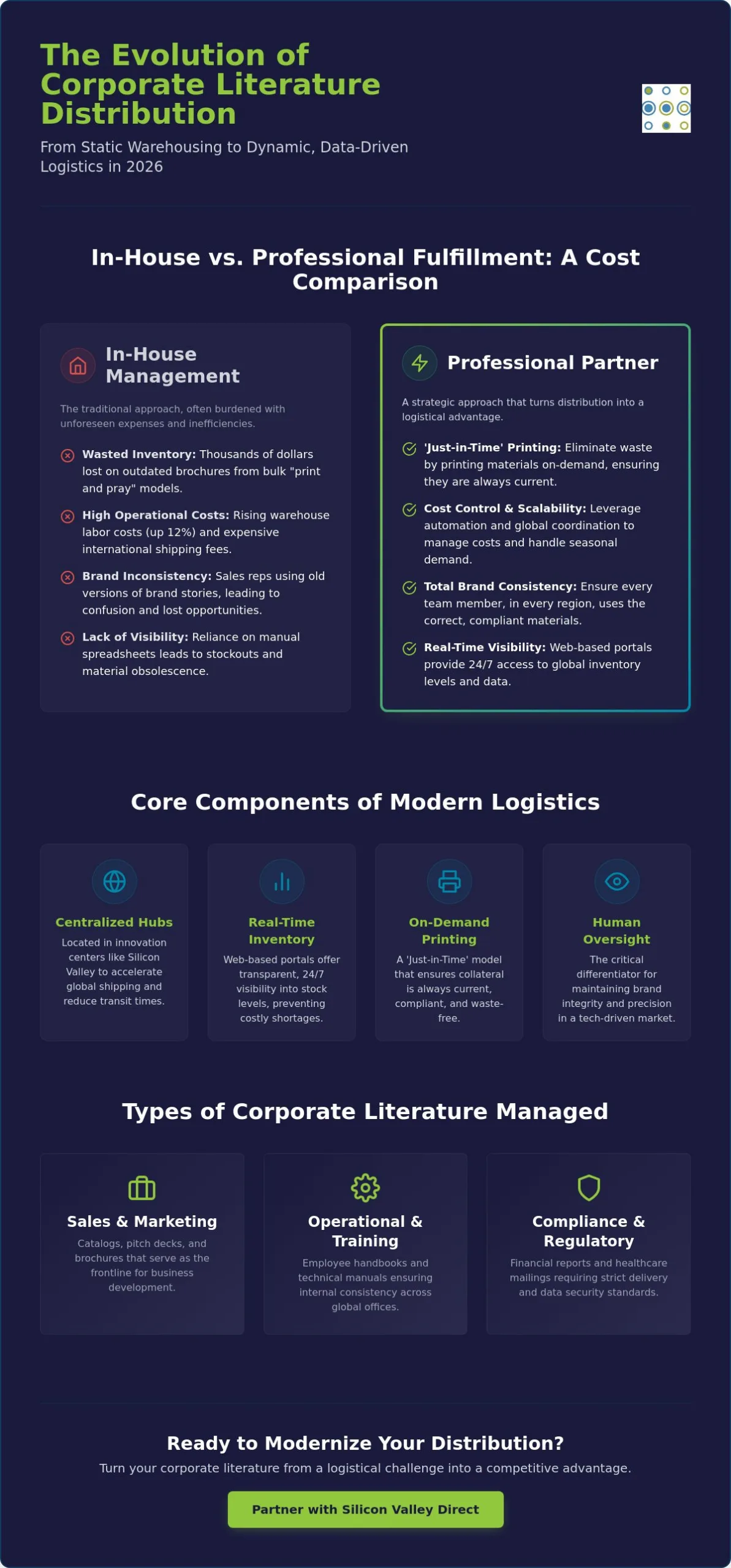
This guide explores the true cost of in-house fulfillment vs 3pl to help you identify the most profitable path for your brand in 2026. We’ll move beyond simple rent and payroll calculations to uncover the hidden financial and operational impacts of DIY logistics versus professional partnerships. By the end of this analysis, you’ll have a clear view of how shifting from a capital-heavy model to a flexible, tech-driven approach can unlock the scalability your business deserves. We’ll compare real-world investments, examine the shift toward AI-driven automation, and provide a methodical framework for your next strategic move.
Key Takeaways
Identify the hidden “hard costs” that drain your budget, including warehouse equipment depreciation and long-term lease commitments.
Evaluate the total cost of in-house fulfillment vs 3pl to see how transitioning to a variable, pay-as-you-go model preserves your capital for marketing.
Quantify the opportunity cost of executive time lost to manual operations and learn how to break through the growth ceiling.
Protect your brand from heavy fines and security risks by understanding the strict compliance requirements for healthcare and high-value goods.
Discover how a strategic partnership with a 25-year industry veteran can stabilize your logistics while maintaining high-tech efficiency.
The Visible vs. Invisible Costs of In-House Fulfillment
In-house fulfillment represents a significant commitment to physical infrastructure, dedicated personnel, and proprietary technology systems. While the desire for total control is understandable, many brands find that the total cost of in-house fulfillment vs 3pl is skewed by expenses that don’t appear on a simple balance sheet. Hard costs like long-term lease agreements, full-time salaries, and the depreciation of warehouse equipment provide a baseline. However, it’s the soft costs, recruitment, ongoing training, and specialized shipping insurance, that often create the most friction for a growing brand.
When comparing these internal operations to the external model provided by Third-party logistics (3PL) companies, the most striking difference is the fixed nature of in-house expenses. Your rent and payroll remain high even if your order volume drops by 40% during a seasonal lull. This lack of elasticity means your profit margins are most vulnerable exactly when sales are slowest. Managing these logistics in-house requires you to be a real estate manager and a human resources expert simultaneously, roles that often distract from your primary mission of product innovation.
To better understand this concept, watch this helpful video:
The Reality of Warehouse Leasing in 2026
Commercial real estate prices in major tech hubs continue to climb, putting immense pressure on your bottom line. Securing a facility in a strategic location requires a multi-year commitment that lacks flexibility. During slow months, you’re essentially paying for “dead space,” which is expensive square footage that sits empty while you wait for the next peak season. Beyond the base rent, maintenance fees and rising utility costs act as a constant drain on monthly cash flow. These are non-negotiable liabilities that exist regardless of your sales performance.
Labor Costs Beyond the Hourly Wage
Calculating the true expense of a warehouse team goes far beyond the base hourly rate. When evaluating the cost of in-house fulfillment vs 3pl, the human element is often the most volatile variable. You must account for the Labor Burden, which is the total cost to employ a worker including benefits, payroll taxes, and administrative overhead. Training new staff takes time and resources, especially in a high-turnover industry. Relying on seasonal hiring introduces further financial risk, as the “temp labor” premium often exceeds the cost of permanent staff. If a warehouse is understaffed during a rush, shipping errors rise; if it’s overstaffed during a dip, your margins disappear.
The 3PL Pricing Model: Transitioning to Variable Costs
Shifting from the rigid, fixed-cost structure of a private warehouse to a variable model is a strategic pivot that transforms fulfillment from a liability into a scalable asset. When you evaluate the cost of in-house fulfillment vs 3pl, the most significant differentiator is the transition from Capital Expenditure (CapEx) to Operating Expense (OpEx). Instead of paying for a facility that is only 30% full during off-peak months, you adopt a pay-as-you-go approach. You only pay for the specific cubic footage your inventory occupies and the exact labor hours required to move your orders.
Standard 3PL fee structures are designed for transparency and predictability. Receiving fees cover the meticulous process of logging and verifying inbound stock. Storage fees are typically billed monthly, based on the volume of pallets or shelves utilized. The core of the transaction lies in the pick and pack fees, which only occur when a customer makes a purchase. This alignment of costs with revenue protects your cash flow. Additionally, established providers leverage massive aggregate shipping volumes to secure deep carrier discounts that are generally unavailable to individual brands. These savings in postage often offset a significant portion of the service fees themselves.
Specialized requirements, such as on-demand digital printing or healthcare mailing, are treated as project-based costs rather than permanent overhead. This flexibility allows you to launch new initiatives without hiring specialized staff or purchasing expensive machinery. If you are looking to optimize your current logistics spend, you can request a personalized cost analysis to see how these variable models apply to your specific SKU profile.
Pick and Pack: Efficiency at Scale
A professional fulfillment center utilizes sophisticated logic and organized workflows to minimize the distance workers travel to find items. This optimization reduces the per-unit cost of every order shipped. Beyond speed, the focus on precision is vital. High order accuracy virtually eliminates the “invisible” costs of returns, which include wasted postage, repackaging labor, and potential customer churn. Many brands find additional value by integrating kitting and assembly services directly into the standard workflow, ensuring that complex bundles are ready for shipment without delay.
Storage and Warehousing: Paying for What You Use
3PLs offer a variety of storage configurations to match your inventory needs. Pallet storage is ideal for bulk backstock, while shelf or bin storage provides quick access for high-velocity SKUs. This granular approach prevents you from paying for empty space. Furthermore, professional facilities provide secure, climate-controlled environments that protect high-value electronics or sensitive documents from damage or theft. By outsourcing, you eliminate the financial risk of long-term commercial lease commitments, allowing your brand to remain agile as market conditions shift.
The Growth Ceiling: Opportunity Costs of DIY Logistics
The “Growth Ceiling” is a silent killer of emerging brands. It happens when your marketing team hits a home run, but your operations team strikes out because they can’t keep up with the volume. When you analyze the cost of in-house fulfillment vs 3pl, you have to look at the revenue you aren’t making because you’re too busy managing tape and bubble wrap. Operational friction doesn’t just slow you down; it stops your marketing and sales efforts in their tracks. If you’re afraid to run a new ad campaign because you don’t have the hands to pack the resulting orders, you’ve hit the ceiling.
A founder’s time is their most expensive resource. Every hour spent troubleshooting a label printer or managing warehouse staff is an hour not spent on business development or strategic partnerships. To minimize these technical distractions and protect your digital assets, you can visit Trinity Networx, LLC for proactive managed IT support. This opportunity cost is rarely reflected on a spreadsheet, yet it’s the primary reason brands plateau. Beyond the human element, inefficient DIY inventory management often leads to stockouts or backorders. These aren’t just logistical hiccups. They’re lost customers who will likely switch to a competitor who can deliver immediately. Professional 3PLs use seasoned expertise to ensure your inventory levels are optimized, preventing the “out of stock” notification that kills conversion rates.
Scalability: Handling the 10x Surge
Black Friday and viral marketing moments demand a level of agility that in-house setups rarely possess. Scaling an internal warehouse requires months of lead time to secure additional square footage and vet new staff. In contrast, a 3PL partnership offers “Elastic Capacity.” This allows you to handle a 10x surge in orders overnight without the long-term burden of capital expenditure. You gain the ability to say “yes” to growth opportunities that would otherwise break your infrastructure. It’s the difference between a successful launch and a reputation-damaging backlog.
Tech and Integration Costs
Building an in-house Warehouse Management System (WMS) is a massive financial and technical undertaking. The development costs and ongoing maintenance can be staggering for a growing brand. However, modern 3PL inventory management software provides real-time control and visibility without the upfront investment. These systems integrate seamlessly with platforms like Shopify or WooCommerce, ensuring that your digital storefront and physical inventory are always in sync. You get enterprise-level tech on a startup budget, which removes the technical friction that often holds brands back from global expansion.
Compliance, Security, and Risk: The Cost of Getting it Wrong
Managing risk is often an afterthought until a crisis occurs. When you weigh the cost of in-house fulfillment vs 3pl, you must factor in the price of a security breach or a compliance failure. In regulated sectors like healthcare, a single mailing error can trigger legal penalties that dwarf your annual shipping budget. For companies in consumer financial services, this level of scrutiny is even higher, often requiring the specialized risk management and digital transformation consulting provided by Versapien. An in-house operation often lacks the specialized oversight needed to navigate these complex legal waters. By outsourcing, you shift much of the operational liability to a partner whose entire business model is built on precision and regulatory adherence.
Returns management is another area where DIY models frequently bleed cash. Without a dedicated team to inspect, refurbish, and restock goods, returned items often sit in a corner, losing value and taking up expensive floor space. Professional 3PLs turn this cost center into a value recovery stream by processing returns with the same efficiency as outbound orders. They provide a buffer between your brand and the logistical chaos of modern commerce, ensuring that damage or theft doesn’t erode your margins. If you’re ready to secure your supply chain and reduce your exposure, request a free quote today to see how we mitigate these specific operational risks.
Specialized Fulfillment: Healthcare and Beyond
The specialized infrastructure required for healthcare mailing services is a significant financial commitment. HIPAA-compliant fulfillment is a system of physical and digital safeguards for patient data. Building this from scratch in an in-house warehouse is rarely cost-effective for brands that aren’t primarily logistics companies. Combining digital printing with fulfillment in a regulated environment ensures maximum precision. This integrated approach reduces the number of hands that touch sensitive data, which naturally lowers the risk of a breach.
Protecting High-Value Assets
Advanced security is expensive to implement and even more costly to maintain. Biometrics, 24/7 monitoring, and limited access zones are standard in professional facilities but cost-prohibitive for small-scale, in-house warehouses. Choosing secure warehousing for high-value electronics as a service is significantly cheaper than a custom build-out. Furthermore, 3PL certifications and high-tier security protocols can often lead to lower business insurance premiums. Insurance carriers recognize the reduced risk profile of a professional facility, which provides another layer of savings when calculating the cost of in-house fulfillment vs 3pl for your brand.
The Strategic Partnership: Why Silicon Valley Direct is the Logical Conclusion
Silicon Valley Direct serves as the vital bridge where high-tech efficiency meets seasoned human oversight. While previous sections have detailed the numerical cost of in-house fulfillment vs 3pl, the decision ultimately rests on the quality of the partnership you build. Since 1999, we’ve acted as a stabilizing force for brands navigating the volatile journey from startup to global enterprise. We don’t just provide warehouse space; we offer a sophisticated operational foundation that allows you to reclaim your time and focus on high-level strategy.
One of the most significant cost-saving benefits we provide is the rejection of the “automated ticket” culture. Instead of waiting days for a response from a generic support queue, you have a dedicated account manager who understands your specific SKU complexity and brand values. This direct human connection prevents small logistical hiccups from becoming expensive errors. Our “One-Stop” advantage further streamlines your budget by integrating eCommerce order fulfillment, on-demand digital printing, and kitting and assembly under a single roof. This eliminates the need to coordinate between multiple vendors, reducing both administrative overhead and transportation costs between facilities.
The Human Element of Precision
Many modern 3PLs prioritize automation to the point of neglecting the physical reality of the product. Automated-only systems often miss subtle packaging issues or inventory discrepancies that lead to “hidden” error costs. At Silicon Valley Direct, we combine digital accuracy with personal oversight. Our long-term staff retention is a unique hallmark of our stability; our team members possess the deep institutional knowledge required to maintain high order accuracy rates. This collective experience allows for custom problem-solving on complex B2B or B2C projects that would baffle a purely algorithmic provider.
Global Reach from the Heart of Innovation
Our location in the world’s premier tech hub isn’t just about geographic identity; it’s a symbol of our commitment to innovation and connectivity. By utilizing our global shipping services, you can reach international markets without the staggering overhead of establishing overseas warehouses. We handle the complexities of international logistics and returns management, giving your brand a worldwide footprint from a single, secure point of origin. This strategic advantage is essential for tech-forward brands that need to move fast and stay lean.
Choosing the right partner is about more than just comparing line items. It’s about finding a steady hand that can alleviate the stress of rapid growth. It’s time to transition from a logistics-burdened business to a growth-focused brand. Let us handle the precision of your physical operations so you can focus on the vision that started it all.
Choosing Your Path to Profitable Growth
Deciding on the cost of in-house fulfillment vs 3pl is ultimately about where you want your leadership team to focus their energy. By moving away from the rigid overhead of warehouse leases and seasonal hiring risks, you transform logistics into a variable expense that scales perfectly with your sales. This shift removes the operational ceiling that often prevents brands from fully capitalizing on viral growth or international expansion. You gain the freedom to innovate while your physical operations remain in expert hands.
Since 1999, Silicon Valley Direct has provided the physical infrastructure and human expertise needed to protect high-stakes shipments. We specialize in HIPAA-compliant fulfillment and secure warehousing for high-value electronics, ensuring that every account benefits from direct human oversight rather than an automated ticket system. Our seasoned team acts as a steady hand to stabilize your operations during rapid growth phases. Streamline your supply chain with a custom quote from Silicon Valley Direct. Your brand’s potential is limitless when your logistics are handled with precision and care.
Frequently Asked Questions
Is 3PL cheaper than in-house fulfillment for small businesses?
Yes, for most small to mid-sized businesses, a 3PL is significantly more cost-effective. Research indicates that brands with fewer than 1,500 orders per month almost always save money by outsourcing. This is because you avoid the massive upfront investment in warehouse equipment and long-term lease commitments. When you calculate the cost of in-house fulfillment vs 3pl, the ability to pay only for the space you use protects your cash flow during the early stages of growth.
What are the most common hidden costs in 3PL pricing?
Hidden costs often include account management fees, software subscription “tech” fees, and packaging material markups. Many automated 3PLs charge extra for every support ticket or phone call you make. At Silicon Valley Direct, we believe in transparency and include direct human oversight as part of our standard partnership. This prevents the “nickel and diming” that often occurs with providers who rely solely on automated interactions to manage their client relationships.
How much volume do I need to justify moving to a 3PL?
Most brands find that 1,500 orders per month is the tipping point where managing logistics in-house becomes a distraction from core business goals. While you can technically manage lower volumes yourself, the opportunity cost of your time usually outweighs the service fees. Between 1,500 and 8,000 orders, the 3PL model offers the best balance of scalability and cost-efficiency. Beyond 8,000 orders, in-house operations might seem cheaper on paper, but they carry much higher operational risks.
Can a 3PL handle custom branded packaging and kitting?
Yes, specialized 3PL providers offer bespoke kitting and assembly services tailored to your brand’s aesthetic. This allows you to maintain a premium unboxing experience without hiring a dedicated team to manage complex packaging requirements. These services are typically billed as project-based fees. This ensures that your customers receive a consistent, high-quality presentation every time they open a package, regardless of how fast your order volume is growing.
What is the average cost per order for 3PL fulfillment in 2026?
Industry data for 2026 shows that 3PL fulfillment typically costs between $3.10 and $4.80 per order, while in-house operations average between $4.50 and $6.20. These figures include the labor for picking and packing along with basic storage. While every brand’s SKU complexity is different, the “all-in” cost for a professional 3PL partnership usually remains lower because of the shared infrastructure and labor efficiencies that an individual brand cannot replicate on its own.
How does a 3PL help reduce international shipping costs?
3PLs leverage massive aggregate shipping volumes to secure carrier discounts that are 15-30% below published rates. They also have the expertise to optimize international routes, which helps you avoid unnecessary duties and long transit times. By using a provider with a global reach, you can serve international customers without the overhead of opening foreign warehouses. This allows you to test new markets with minimal financial risk and much faster delivery speeds.
What happens to my inventory if I switch from in-house to a 3PL?
The transition involves a coordinated physical transfer followed by a comprehensive digital audit. Your inventory is moved to the secure 3PL facility, where it’s counted, inspected for damage, and logged into a specialized inventory management system. This system then syncs with your eCommerce storefront to ensure real-time accuracy. It’s a methodical process that provides a “clean slate” for your inventory data, helping you eliminate the stockouts and backorders that often plague in-house setups.
Are there specific 3PL solutions for HIPAA-compliant mailing?
Yes, but only through providers who have invested in the necessary physical and digital safeguards. HIPAA-compliant fulfillment requires strict protocols to protect patient data and sensitive healthcare materials. Silicon Valley Direct has specialized in these high-stakes services for decades, providing a level of precision that generic 3PLs cannot match. When evaluating the cost of in-house fulfillment vs 3pl for regulated industries, the value of mitigating legal and financial risk is the most important factor to consider.
What if your most significant marketing loss isn’t a failed digital campaign, but the thousands of dollars tied up in outdated brochures sitting in a storage closet? It’s a reality for many global teams. You’ve likely felt the sting of high international shipping fees or the frustration of seeing a sales rep use an old version of your brand story. Mastering corporate literature distribution in 2026 requires more than just a warehouse. It demands a sophisticated blend of on-demand digital printing and logistical precision that keeps your collateral current and your costs controlled.
We recognize that your collateral is a physical handshake with your clients, which is why precision is non-negotiable. This guide will show you how to manage and distribute your materials with high-tech speed and human oversight. You’ll learn how to build a seamless print-to-mail workflow that reduces warehousing overhead while maintaining total brand consistency across every region. We’ll explore the strategic shifts needed to achieve global reach without sacrificing the personal touch that defines your brand, ensuring your team has exactly what they need, exactly when they need it.
Key Takeaways
Learn why corporate literature distribution has evolved from static warehousing into a dynamic, data-driven logistics function.
Discover how centralized hubs in innovation centers can accelerate global shipping speed while providing real-time inventory visibility.
Identify the hidden operational costs of in-house management and how to leverage professional scalability to handle seasonal demand.
Master the ‘Just-in-Time’ printing model to eliminate wasted inventory and ensure your sales collateral is always current and compliant.
Understand why human oversight remains the critical differentiator for maintaining brand consistency in a tech-saturated market.
What is Corporate Literature Distribution in 2026?
Corporate literature distribution isn’t just about moving boxes; it’s the strategic management and delivery of physical business assets designed to drive growth. In 2026, the industry has moved away from the “print and pray” model of the past. Today’s leaders treat their marketing collateral as a high-value inventory that requires the same precision as a tech product’s supply chain. This process involves everything from brochures and sales kits to technical manuals, ensuring they reach the right hands at the right time.
We’ve seen a massive shift from bulk storage to agile, data-driven fulfillment. Instead of filling warehouses with thousands of brochures that might be obsolete in three months, modern organizations utilize a 3PL partner to bridge the gap between digital assets and physical delivery. This ensures that every piece of literature arriving at a client’s door is accurate, timely, and impactful. It’s about turning a static storage task into a proactive logistics advantage.
This shift toward digital-first availability is mirrored in the publishing industry; for example, you can explore E-book options from Dr Driver to see how digital and physical formats now work in tandem to provide immediate access to content.
To better understand the foundations of this process, watch this helpful video:
While digital marketing is essential, physical literature continues to outperform digital-only strategies in high-stakes B2B environments. A tangible brochure or a high-quality sales kit provides a sensory experience that builds trust. It signals a level of commitment and stability that a PDF attachment simply can’t replicate. By integrating digital tracking with physical distribution, you gain the best of both worlds: the reach of the internet and the authority of the printed word. You can explore more on our blog for the latest updates on logistics innovation.
Key Components of Modern Literature Logistics
Modern corporate literature distribution relies on secure, climate-controlled warehousing to protect sensitive materials from environmental damage. You need more than just a shelf; you need a web-based portal that offers real-time inventory management. This transparency allows your team to see stock levels across the globe, ensuring you never run out during a critical product launch. With warehouse labor costs having increased by 12% in the 18 months leading up to April 2026, leveraging a partner’s automation and global shipping coordination is a vital way to control overhead while maintaining international trade compliance.
Types of Corporate Literature Managed
Organizations manage a diverse range of assets through these channels. Sales and marketing collateral, such as catalogs and pitch decks, remain the frontline of business development. Operational and training materials, including employee handbooks and technical manuals, ensure internal consistency across global offices. Finally, compliance and regulatory documents, like healthcare mailings and financial reports, require strict adherence to delivery timelines and data security standards. Each type of document demands a bespoke approach to fulfillment to ensure brand integrity and legal compliance.
The Lifecycle of Corporate Assets: From Storage to Hand-Off
Location is a primary driver of fulfillment speed. By centralizing your corporate literature distribution in a global innovation hub like Silicon Valley, you gain a logistical advantage that traditional inland warehouses can’t match. This proximity to major international shipping lanes and tech infrastructure ensures your materials move with the same velocity as your digital communications. It’s not just about storage; it’s about active transit readiness. We provide the physical infrastructure that allows your brand to maintain a presence in every market simultaneously.
Modern asset management has outgrown the limitations of manual spreadsheets. Relying on static documents leads to stockouts and brand inconsistency. Instead, we utilize real-time 3PL software that provides a transparent window into your inventory levels. This digital visibility allows for a strict FIFO (First-In, First-Out) protocol. By prioritizing the oldest stock for shipment, we prevent material obsolescence. This is particularly critical in industries like finance or healthcare where regulatory updates make old brochures a liability rather than an asset. Our system ensures that the most current information is always the first to reach your audience.
Inventory Management Strategies
Effective management requires proactive planning. We help you set precise reorder points based on historical data to avoid the panic of running out of critical sales materials before a major trade show. For sensitive or high-value documents, utilizing secure warehousing ensures that your intellectual property is protected under climate-controlled, monitored conditions. By syncing your CRM directly with our fulfillment platform, your sales team can trigger shipments with a single click, bridging the gap between a lead and a physical touchpoint.
Kitting and Assembly Precision
The final hand-off to your client often involves more than a single brochure. We specialize in creating custom welcome kits and promotional bundles that require a high degree of accuracy. While automation handles the heavy lifting, the human element is essential for quality control. Our team provides the necessary manual oversight for complex kitting and assembly services, ensuring that every component is placed perfectly and every brand standard is met. This precision guarantees that your specialized packaging makes a professional first impression every time. If you’re ready to see how this precision can work for your brand, you can request a free quote to get started.
In-House vs. Professional Literature Fulfillment: A Comparison
Deciding whether to manage your collateral internally or outsource to a specialist is a pivotal moment for any growing organization. While maintaining an in-house “mail room” might feel like it offers more control, it often masks a series of escalating hidden costs. Labor is a primary concern; warehouse labor costs increased by 12% in the 18 months leading up to April 2026. When you combine these rising wages with the expense of commercial floor space and the high frequency of shipping errors, the “DIY” approach quickly becomes a drain on your resources. Professional corporate literature distribution replaces these unpredictable variables with a stable, high-performance operational model.
Scalability is where a professional partner truly shines. Internal teams often buckle under the pressure of seasonal surges, such as a major industry trade show or a global product launch. A 3PL partner handles these spikes with ease, providing the infrastructure to scale up or down without the need for you to hire temporary staff. You also gain immediate access to enterprise-grade technology without the massive capital investment. For example, fulfillment centers that utilize autonomous mobile robots (AMRs) can offer 12% lower per-pick rates compared to manual warehouses. This level of precision and efficiency is rarely achievable within a standard corporate office environment.
The True Cost of ‘DIY’ Distribution
The most significant hidden expense of in-house management is the opportunity cost. Every hour your marketing or sales team spends packing boxes is an hour they aren’t spending on core business strategy. Beyond that, individual companies don’t have the leverage to negotiate the deep shipping volume discounts that a professional 3PL commands. With USPS Ground Advantage rates increasing by 7.8% in early 2026, these discounts are vital for protecting your budget. Professional tracking and inventory oversight also significantly reduce waste by ensuring fewer items are lost or damaged during the fulfillment process.
When to Transition to a 3PL Partner
It’s time to consider a transition when you notice slow turnaround times or recurring inventory discrepancies. These are clear signs that your current process has reached its limit. Expanding into international markets is another major catalyst; navigating global customs and logistics requires a level of expertise that most internal departments don’t possess. Additionally, if your industry requires highly specialized services like healthcare mailing, the compliance risks of in-house handling are simply too high. Outsourcing ensures that your sensitive materials are managed with the precision and regulatory oversight required in 2026.
Maximizing Efficiency with On-Demand Digital Printing
The integration of on-demand digital printing directly into the fulfillment workflow represents the pinnacle of modern corporate literature distribution. By adopting a ‘Just-in-Time’ (JIT) model, you can print only what you need, exactly when you need it. This approach effectively eliminates the “closet full of old brochures” that plagues so many marketing departments. Digital printing is significantly more cost-effective for short runs under 2,000 units. For a run of 500 units, the digital printing cost per unit is approximately $0.12 to $0.50, while the offset cost ranges from $1.20 to $2.50. This financial advantage allows you to maintain a lean inventory without sacrificing quality.
Personalization at scale is another critical advantage of this integrated model. Using variable data printing, we can customize corporate mailings for specific regions, industries, or even individual clients. This isn’t just about adding a name to a cover; it’s about tailoring the entire content experience to the recipient’s needs. When your printing press sits under the same roof as your distribution center, the transition from production to postage is instantaneous. This synergy ensures that your sales team always has access to the most relevant, up-to-date materials.
Benefits of Integrated Printing and Fulfillment
Combining these two functions significantly reduces warehousing fees. Since you aren’t storing thousands of static copies, you require less pallet space. This agility is a game-changer for content management. You can update your brochures or catalogs in real-time to reflect new product specs or pricing without discarding existing stock. This model also supports your sustainability goals. By reducing overproduction and optimizing shipping routes, you lower the carbon footprint of your physical assets, which is a key performance indicator for brands in 2026.
Personalized Direct Mail Strategies
Direct mail remains a powerful tool for physical engagement. By combining customized literature with direct mail marketing services, you can drive higher response rates than generic mass mailings. We help you track the ROI of these physical touchpoints by integrating QR codes or unique landing pages that sync back to your digital analytics. This data-driven approach ensures your physical collateral works as hard as your digital ads. If you’re ready to modernize your collateral strategy, you can request a free quote to see our on-demand capabilities in action.
Silicon Valley Direct: Your Partner in Precision Distribution
Operating from the heart of Silicon Valley for over 25 years, we’ve built a reputation as the steady hand in an industry defined by rapid change. Our location isn’t just an address; it’s a symbol of our commitment to innovation and global connectivity. We understand that your collateral represents your brand’s integrity, which is why we combine high-tech logistics with the seasoned expertise only decades of experience can provide. While we lean into technological efficiency, we explicitly reject the trend of impersonal, fully automated interactions. At Silicon Valley Direct, you aren’t just a client in a database; you’re a partner with a dedicated project manager who knows your brand as well as you do.
Our corporate literature distribution model is built on stability and long-term partnership. We pride ourselves on high staff retention, ensuring that the experts managing your inventory today will be the same ones supporting your growth years from now. This continuity allows us to offer bespoke problem-solving that automated systems simply can’t match. Whether you’re navigating the 2026 shipping rate increases or expanding into new territories, our global shipping services ensure your materials reach any market with Silicon Valley speed and domestic reliability.
Our High-Performance Infrastructure
We provide a physical infrastructure that mirrors the agility of your digital tools. Our facility houses state-of-the-art warehousing alongside on-demand digital printing capabilities, allowing for a seamless transition from file to fulfillment. You gain 24/7 visibility into your assets through our web-based inventory tools, ensuring you’re never in the dark about stock levels or order status. This scalable solution is designed to support everyone from agile startups to Fortune 500 enterprises, providing the same level of precision regardless of volume.
Getting Started with Professional Distribution
Transitioning your workflow is a methodical, organized process designed to respect your time. We begin with a comprehensive inventory audit and seamless system integration, ensuring your CRM and our fulfillment platform work in perfect harmony. We take the time to customize every step of the workflow to match your brand’s specific voice and packaging requirements. Precision is our baseline, and personal commitment is our promise. If you’re ready to eliminate the stress of logistics and reclaim your team’s focus, Contact us today to streamline your corporate literature.
Future-Proof Your Global Fulfillment Strategy
Mastering corporate literature distribution in 2026 requires a partner that balances high-tech integration with human precision. You’ve seen how transitioning to a ‘Just-in-Time’ printing model eliminates the waste of outdated brochures while keeping your sales team agile. By centralizing your assets in a hub that offers both HIPAA-compliant healthcare mailing and on-demand digital printing, you ensure every piece of collateral meets the highest standards of accuracy and compliance. We’ve been perfecting this process since 1999, providing the stable foundation your brand needs to scale across international borders without losing the personal touch.
It’s time to move beyond the limitations of manual spreadsheets and fragmented logistics. Whether you’re managing complex kitting projects or sensitive regulatory documents, our team provides the 24/7 visibility and dedicated oversight required for success. We invite you to Streamline Your Corporate Literature Distribution with Silicon Valley Direct today. Let’s work together to transform your physical assets into a high-performance engine for your business growth.
Frequently Asked Questions
What is the difference between literature fulfillment and standard order fulfillment?
Literature fulfillment is specifically designed for the management of high-value business assets like sales kits, brochures, and catalogs. While standard fulfillment focuses on retail products, corporate literature distribution requires precise version control and complex kitting. We ensure that every kit is assembled with a focus on brand integrity rather than just moving a single SKU. This process often involves higher levels of customization and specialized packaging to meet corporate standards.
Can you handle HIPAA-compliant mailing for healthcare literature?
Yes, we provide specialized healthcare mailing services that adhere to strict HIPAA compliance standards. Our facility is equipped to manage sensitive patient information and regulatory documents with absolute precision. We combine secure data handling with physical quality control to ensure that every mailing reaches the correct recipient on time. This level of security is essential for healthcare providers and financial institutions that cannot afford errors in their physical communications.
How does on-demand digital printing save money on distribution?
On-demand digital printing saves money by eliminating the need for large-scale warehousing and reducing inventory waste. Instead of printing thousands of brochures that might become outdated, you print only what is needed for current orders. This ‘Just-in-Time’ approach significantly lowers your storage fees and ensures you never have to discard obsolete materials. By integrating printing directly into the distribution workflow, you also reduce the shipping costs associated with moving stock between facilities.
Do you provide real-time tracking for distributed corporate kits?
We provide complete transparency through our web-based inventory management tools. You have 24/7 visibility into every shipment, from the moment a kit is assembled to its final delivery. This real-time data allows your sales and marketing teams to track the arrival of critical collateral for trade shows or client meetings. Our system provides automated notifications and detailed reporting, giving you informed confidence in your logistics operations at all times.
What are the benefits of distributing literature from a Silicon Valley hub?
Distributing from Silicon Valley offers unparalleled access to global shipping lanes and innovation-driven infrastructure. Our location serves as a symbol of connectivity, allowing us to move materials with Silicon Valley speed across both domestic and international markets. Proximity to major logistics hubs ensures faster transit times and more reliable service. This geographic advantage is a key differentiator for organizations that require their physical assets to move as quickly as their digital strategies.
Can you manage international shipping and customs for corporate materials?
Yes, we manage the entire international shipping process, including customs documentation and trade compliance. Navigating the complexities of global logistics requires a seasoned expert who understands regional regulations and duties. We ensure that your corporate materials reach international offices and clients without unnecessary delays or hidden fees. Our team handles the administrative burden of global distribution, allowing you to focus on your core business expansion without worrying about border logistics; for deeper insights, VDI Global provides the strategic geopolitical and financial intelligence needed to succeed in these markets.
How do you ensure brand consistency during the kitting process?
We ensure brand consistency through a combination of structured workflows and personal human oversight. Every kitting project is assigned a dedicated project manager who understands your brand’s unique requirements and packaging standards. Unlike fully automated systems, our team provides manual quality control to ensure every item is placed perfectly within the kit. This commitment to precision ensures that your physical touchpoints always project a professional and consistent image to your audience.
Is there a minimum volume required for corporate literature distribution?
We offer scalable solutions that are designed to grow with your organization, meaning we don’t enforce rigid minimum volume requirements. Whether you are a startup launching your first marketing campaign or a Fortune 500 enterprise managing corporate literature distribution, we provide the same level of precision and care. Our flexible model allows you to adjust your distribution volume based on seasonal demand or specific project needs, ensuring you always have a high-performance partner.
If your 3PL treats product assembly as an afterthought, you’re likely overpaying for inefficiency while your brand experience suffers. With California’s minimum wage reaching as high as $20.25 per hour in certain hubs this year, the margin for error in manual labor has vanished. Finding the right contract packaging services California offers is no longer just about finding a warehouse; it’s about finding a strategic partner. You’ve probably felt the frustration of a disconnect between your marketing vision and the actual box that arrives on a customer’s doorstep.
Our 2026 guide helps you reclaim those margins by identifying the most sophisticated solutions to bridge the gap between digital printing and physical fulfillment. We’ll show you how to leverage just-in-time assembly and integrated tech stacks to reduce lead times and ensure compliance with the new SB 54 sustainability regulations. You’ll learn to create a seamless, branded unboxing experience that builds genuine customer loyalty through a partnership grounded in precision and operational expertise. We’ve designed this guide to help you move from a state of logistical curiosity to a state of informed confidence.
Key Takeaways
Learn why modern contract packaging has evolved from a labor-only service into a strategic extension of your high-velocity supply chain.
Discover how to mitigate rising operational costs by utilizing the most efficient contract packaging services california provides for the 2026 landscape.
Understand the “Silicon Valley Advantage” of integrating on-demand digital printing with assembly to eliminate excess marketing inventory and reduce waste.
Identify the five essential criteria for selecting a 3PL partner that prioritizes human oversight and precision to protect your brand’s reputation.
Gain insights into streamlining complex kitting and subscription box assembly to ensure a consistent, professional unboxing experience for every customer.
Why California Businesses are Outsourcing Contract Packaging Services in 2026
Managing a product based business in California has become a high stakes game of precision. As we move through 2026, the traditional view of a warehouse as a simple storage space has dissolved. Forward thinking organizations now view their logistics partners as a strategic extension of their own production lines. This shift is driven by a need for agility that internal teams often can’t match. Choosing the right contract packaging services california offers means looking beyond the warehouse walls to find a partner that understands your brand’s DNA.
The transition from simple bagging and tagging to complex value added services is the new standard. In 2026, businesses require more than just manual labor; they need technical integration and sophisticated quality control. A professional Contract packager serves as a steady hand for brands that need to pivot quickly to meet market demands. This evolution allows companies to focus on product innovation while leaving the mechanical complexities of assembly to seasoned experts.
To better understand the operational flow of these services, watch this helpful video:
Defining Contract Packaging in the Modern 3PL Landscape
Modern packaging is categorized into three distinct layers. Primary packaging touches the product itself, secondary packaging groups those units for the shelf, and tertiary packaging prepares them for bulk transit. A high performance 3PL ensures inventory accuracy is maintained across all three levels during the assembly process. In the context of modern eCommerce, contract packaging is the specialized integration of product assembly and fulfillment logistics that allows brands to scale without the burden of physical infrastructure. You can explore more about these logistical shifts on our industry blog.
The Economic Shift Toward West Coast Outsourcing
Northern California has solidified its position as a premier hub for the high tech and healthcare sectors. Proximity to the Port of Oakland and major international airports like SFO and SJC provides unparalleled access to global trade routes. By outsourcing to a local specialist, businesses can avoid the crushing overhead of California’s commercial real estate market. With industrial rents remaining high, utilizing a partner’s existing square footage is a logical move for capital preservation. Additionally, 3PLs help brands bypass the complexities of managing California’s evolving labor regulations, such as the $20.25 per hour minimum wage seen in specific Bay Area jurisdictions this year. This proactive approach ensures that your contract packaging services california strategy remains both compliant and cost effective.
Core Capabilities: From Custom Kitting to Complex Product Assembly
The strength of your supply chain often rests on the precision of your final assembly. Within California’s transport & logistics sector, the ability to execute complex workflows determines which brands thrive. It’s no longer enough to simply ship items in a generic box. Modern contract packaging services california must act as a seamless extension of your brand, handling everything from basic bundling to the most intricate multi-SKU configurations. This process, known as kitting, involves grouping separate but related items into a single unit, ready for immediate shipment.
Subscription box assembly has become a particularly competitive arena in the eCommerce market. These shipments require a high degree of human oversight to ensure that every branded insert and promotional item is placed perfectly. This level of detail creates a high quality unboxing experience that drives customer retention. By utilizing professional Kitting and Assembly Services, you gain a core efficiency driver that manages these complexities while you focus on high level business growth. Our team acts as a steady hand, ensuring that even the most complex kits are assembled with zero defects.
Custom Kitting for eCommerce and Retail
Strategic kitting significantly reduces shipping costs by optimizing dimensional weight. When you combine multiple products into a single custom fit box, you eliminate the wasted space and extra weight of multiple packages. It’s also vital to choose between pre-kitting and on-demand kitting. Pre-kitting prepares large volumes in advance for high velocity sales, while on-demand assembly allows for maximum flexibility with inventory. If you’re looking to refine your current process, you might consult with our assembly experts to find the right balance for your SKU volume.
Specialized Assembly for High-Value Sectors
High value electronics and medical devices demand a controlled environment. Clean room assembly ensures that sensitive components remain free from contaminants during the final packaging phase. This level of care requires more than just a clean floor; it requires a culture of precision and documented quality control. Security is equally paramount during this phase to protect intellectual property and high value stock. Integrating these assembly needs with Secure Warehousing for High-Value Electronics ensures your products are protected from the moment they arrive until they reach the end user. This holistic approach is what defines the most reliable contract packaging services california provides today.
The Silicon Valley Advantage: Integrating Digital Printing with Packaging
Packaging is more than a protective shell; it’s a vital vehicle for communication. In the high velocity markets of Northern California, a product arriving without its accompanying literature is an incomplete brand promise. This is where the integration of digital capabilities becomes a primary differentiator for your business. Unlike traditional warehouses that force you to source printing from separate vendors, the most sophisticated contract packaging services california provides now offer in-house digital printing. This synergy ensures that your marketing collateral is as fresh and accurate as the product it accompanies.
Silicon Valley Direct functions as the vital link between your digital assets and physical distribution. By merging these workflows, we eliminate the friction often found when coordinating multiple suppliers. This is particularly critical for sectors like healthcare, where accuracy and compliance are non negotiable. The coordination between Healthcare Mailing Services and secure packaging ensures that sensitive documents and medical products are assembled with surgical precision. We provide a steady hand to manage these complex requirements, allowing you to scale without the stress of fragmented logistics.
On-Demand Printing: Reducing Waste and Increasing Speed
The shift from bulk printing to just-in-time (JIT) literature fulfillment has revolutionized how brands manage their physical presence. Storing thousands of outdated brochures is a drain on capital and physical space. On-demand digital printing allows you to print exactly what you need for each assembly run. This approach virtually eliminates obsolescence; it’s a major benefit for regulated industries like finance where information changes frequently. It also opens the door for hyper-personalized packaging inserts. You can tailor messages to specific customer segments, turning a standard shipment into a bespoke brand experience that resonates with the end user.
Literature Fulfillment and Global Distribution
Effectively managing marketing collateral alongside physical product inventory requires a highly organized, hierarchical system. Our facility acts as a centralized hub where your printed assets and inventory are synchronized for rapid assembly. Once these kits are complete, the focus shifts to reaching your audience wherever they are located. Utilizing integrated Global Shipping Services allows you to move products from our Northern California facility to international markets with ease. This geographic advantage, combined with our multi-decade history of operational excellence, provides the reliability needed for global expansion. We reject the impersonal, automated models of the past in favor of direct human connection and personal oversight of every shipment.
5 Critical Factors for Evaluating a California Contract Packaging Partner
Selecting a logistics partner in a state as economically complex as California requires a discerning eye. While many providers compete on price alone, the cheapest option often leads to hidden costs in the form of damaged goods or missed deadlines. When evaluating contract packaging services california, you must look for a partner that prioritizes precision over raw speed. A single assembly error can tarnish a brand’s reputation faster than any marketing campaign can build it. You need a steady hand that ensures every unit meets your exact specifications before it leaves the facility. We reject the impersonal models that prioritize volume over quality; instead, we focus on the human oversight necessary for perfect execution.
Compliance and security are equally vital, particularly for businesses in the healthcare or high-tech sectors. Verify that your partner offers secure warehousing and adheres to HIPAA standards if you handle sensitive data or medical devices. Additionally, assess their ability to scale labor during high-velocity periods like Q4 fulfillment. A partner that can’t handle seasonal spikes will eventually become a bottleneck for your growth. For a truly holistic strategy, consider how they integrate Direct Mail Marketing Services. This allows you to synchronize your physical product delivery with targeted outreach, creating a unified brand experience. If you’re ready to see how a professional team handles these variables, you can request a free quote to start the conversation.
Operational Stability and Historical Expertise
In an industry where fulfillment startups appear and vanish overnight, longevity is a primary indicator of reliability. Silicon Valley Direct was founded in 1999; this multi-decade history provides a level of operational wisdom that newer companies simply haven’t earned yet. We’ve weathered market shifts and technological revolutions by maintaining a proactive, team-oriented culture. One of the best ways to measure a partner’s quality is through staff retention. When the people on the assembly line have years of experience, the likelihood of errors drops significantly. This internal stability acts as a constant anchor of trust for our clients during their most aggressive growth phases.
Technology and Inventory Transparency
Transparency shouldn’t be a luxury. It’s a requirement for modern inventory management. You need real-time visibility into the packaging process to make informed business decisions. Our web-based portals provide immediate access to your kitting projects, allowing you to track progress at every stage. When interviewing potential partners, ask the right questions: “Can I see my assembly progress in real-time?” If the answer involves waiting for a manual update or a weekly spreadsheet, they aren’t equipped for the 2026 pace of business. We favor direct human connection backed by physical infrastructure, ensuring you’re never left in the dark about your stock levels or assembly status.
Scalable Fulfillment and Packaging Solutions with Silicon Valley Direct
Choosing a logistics provider is a commitment to a long term partnership. At Silicon Valley Direct, we provide a bespoke approach that treats your product assembly with the same care you used to design it. By integrating on-demand digital printing with precise kitting and assembly, we eliminate the traditional friction between marketing and operations. This unified workflow ensures that your brand message remains consistent from the first digital proof to the final unboxing. The most effective contract packaging services california offers are those that bridge the gap between mechanical operations and personal commitment. It’s the steady hand you need to manage the complexities of a modern supply chain without sacrificing quality or brand integrity.
Our physical infrastructure in the heart of Northern California serves as a hub for global connectivity. This facility is more than just square footage; it’s a high performance engine for the contract packaging services california companies utilize to reach international audiences. We’ve spent decades refining our processes to ensure that every shipment, whether it’s a single subscription box or a massive retail rollout, is handled with surgical precision. This geographic advantage allows us to leverage major trade routes while maintaining a proactive stance on inventory management and secure warehousing. We provide the stability needed to move from a state of logistical curiosity to a state of operational confidence.
The Human Element in a Tech-Saturated Market
In an era where most 3PLs hide behind automated ticket systems and chatbots, we prioritize direct human connection. We explicitly reject the impersonal models that treat clients like just another data point in a machine. Every kitting and assembly project at our facility receives personal oversight from seasoned experts who have been with us for years. You won’t find yourself stuck in an automated loop when you need a critical update. Instead, you have direct access to the team-oriented professionals managing your stock. This human centric approach is a powerful differentiator that ensures your specific problem-solving needs are met with enthusiasm and wisdom.
Getting Started: Your Custom Packaging Strategy
Our engagement begins with a thorough consultation to define your project scope and specific packaging requirements. We don’t believe in one-size-fits-all solutions; we build a custom strategy tailored to your SKU volume and market goals. Whether you’re a startup launching your first product or an established enterprise managing complex healthcare kits, our infrastructure scales to meet your needs. We take the time to explain the rationale behind our quality control measures, ensuring our partnership is built on transparency and mutual success. This methodical progression guides you through the transition from manufacturing to global distribution. If you’re ready to streamline your operations with a reliable partner, you can Contact Silicon Valley Direct for a Custom Packaging Quote today.
Reclaim Your Operational Focus in 2026
Navigating the logistical hurdles of the West Coast requires more than just square footage. It requires a partner that acts as a steady hand for your brand’s physical presence. By integrating on-demand digital printing with complex kitting, you can significantly reduce lead times and eliminate the burden of excess inventory. We’ve established how precision in assembly, backed by human oversight rather than impersonal automation, protects your reputation in high-stakes sectors like healthcare and electronics.
Silicon Valley Direct has been a constant anchor of trust since 1999. We specialize in healthcare and high-tech fulfillment, providing the physical infrastructure and expert staff needed to scale your operations with confidence. Our facility serves as a gateway to global trade, ensuring your products move efficiently from Northern California to international markets. If you’re ready to move from logistical stress to informed growth, Streamline Your Supply Chain with Silicon Valley Direct. Choosing the right contract packaging services california provides is the first step toward a more resilient and responsive business model. We look forward to helping you build a bespoke solution that honors your personal commitment to your customers.
Frequently Asked Questions
What is the difference between kitting and contract packaging?
Kitting is the specific process of combining multiple separate SKUs into a single, new unit ready for shipment. Contract packaging is the broader category that encompasses kitting along with secondary assembly, labeling, and specialized bagging. While kitting focuses on grouping items, contract packaging involves the entire physical preparation of the product for its final destination.
Can Silicon Valley Direct handle HIPAA-compliant medical packaging?
Do you provide custom digital printing for packaging inserts?
We do provide integrated on-demand digital printing as a core part of our contract packaging services california workflow. This allows you to create personalized inserts or updated marketing collateral just-in-time for your assembly run. By printing only what you need, you eliminate the cost of storing outdated brochures and ensure every package carries the most current brand message.
What are the typical lead times for a contract packaging project in California?
Standard kitting and assembly projects are typically completed within 3 to 5 business days once all components have arrived at our facility. More complex projects involving medical devices or high-volume electronics may require additional time for specialized quality control checks. We prioritize a methodical approach to ensure that speed never compromises the accuracy of your final product.
How does contract packaging help reduce my overall shipping costs?
Contract packaging reduces costs by optimizing dimensional weight through custom box sizing and SKU consolidation. When you utilize the contract packaging services california brands trust, you move from paying for multiple shipments to a single, efficient kit. This strategy lowers your cost per unit by reducing the number of tracking numbers and carrier fees associated with a single customer order.
Do you offer international shipping for assembled kits?
Yes, we offer comprehensive global shipping and logistics for all assembled kits and products. Our Northern California location serves as a strategic hub for reaching international markets through major air and sea ports. We manage the complex carrier coordination and documentation required to ensure your products clear customs and reach global customers without unnecessary delays.
What industries do you specialize in for contract packaging?
We primarily specialize in the high-tech, healthcare, and eCommerce sectors. These industries require a high degree of precision and secure warehousing that our team has provided since 1999. Our experience with high-value electronics and regulated medical materials makes us a reliable partner for brands that cannot afford errors in their final assembly or fulfillment.
How do you ensure quality control during the assembly process?
We ensure quality through a multi-stage verification process that relies on direct human oversight rather than just automated sensors. A seasoned expert reviews the first-article kit to confirm it matches your specifications exactly before the full run begins. We also perform random spot checks throughout the assembly process to maintain a zero-defect standard for every project we manage.
If you need an Oakland 3PL partner that can handle ecommerce fulfillment without slowing your growth, Silicon Valley Direct (SVDirect) gives you a Bay Area operation built for speed, visibility, and day-to-day support. From our Union City warehouse, we provide warehousing, pick, pack, and ship services, ecommerce integrations, and specialized fulfillment for brands shipping across the USA, Canada, and beyond.
SVDirect works with startups, established ecommerce brands, and growing online retailers that want Oakland-area logistics access without taking on their own warehouse overhead. You get same-day shipping, no minimum order requirement, a dedicated account manager, real human phone support, and a fulfillment setup that can scale as your order volume changes.
Oakland 3PL fulfillment from Union City for Bay Area ecommerce brands
SVDirect manages ecommerce order fulfillment, warehousing, inventory control, and shipping from Union City so Oakland-area brands can move orders quickly without building an in-house logistics team. If you sell direct-to-consumer, wholesale, or through multiple online channels, we help turn incoming inventory into shipped orders with fewer manual steps and better order visibility.
Our 3PL services are a strong fit for businesses that need flexibility as much as capacity. You can start with a lean operation, keep your costs tied to actual activity, and still have access to same-day shipping and nationwide distribution support when demand spikes.
“SVDirect has specialized in 3PL services since 1999 and welcomes client visits to its Union City warehouse.”
Because SVDirect does not require a minimum order volume, you do not have to wait until you reach enterprise scale to outsource fulfillment. That matters for emerging brands, seasonal sellers, subscription businesses, and companies testing new sales channels in the Bay Area.
SVDirect also keeps the relationship practical. You work with a dedicated account manager, and if you need answers on inventory, shipping status, or a process change, you can call and speak with a real person instead of waiting in a ticket queue.
Oakland logistics access near the Port of Oakland and I-880 corridor
For Oakland 3PL buyers, location is not just a pin on a map. SVDirect serves Bay Area brands from a Union City warehouse positioned in the East Bay and I-880 distribution corridor, the same regional logistics market anchored by the Port of Oakland and built around container movement, warehousing, and local freight access.
That geography matters if your inventory enters Northern California by container. The Port of Oakland loads and discharges more than 99% of the containerized goods moving through Northern California, ranks among the four largest Pacific Coast ports for container cargo, and handled trade in 2023 that was about 74% tied to Asia. For importers, that keeps your 3PL close to a major cargo gateway instead of pushing inventory farther inland before fulfillment even begins.
“SVDirect gives Oakland-area brands fulfillment access near a port that handles more than 99% of Northern California containerized goods.”
The East Bay warehouse market has also become more tenant-favorable. In Q1 2026, East Bay warehouse vacancy was about 8.4%, and asking rents were about $1.52 per square foot NNN per month, down 10.6% year over year. While that does not automatically define one provider’s pricing, it does mean Oakland-area 3PL buyers are evaluating a market with more flexibility and more room to negotiate than in tighter years.
For you, the benefit is practical: better access to warehouse capacity, better options for overflow or growth, and a smarter position for inventory flowing through the Oakland logistics corridor.
SVDirect ecommerce fulfillment and integrations that reduce manual work
SVDirect connects fulfillment to your selling systems so orders move faster and with fewer avoidable errors. We offer 80+ preconfigured integrations along with custom API support, which helps ecommerce brands sync orders, inventory, and shipping data without relying on spreadsheets or rekeying information by hand.
SVDirect also states that order processing is 100% automated, which is important when you are trying to reduce delays between checkout and warehouse release. Faster data flow means your team spends less time fixing sync issues and more time managing merchandising, marketing, and customer growth.
“SVDirect supports 80+ preconfigured integrations, custom API connections, and a 24/7 reporting portal for Oakland-area 3PL visibility.”
Once your account is live, our customized web portal gives you 24/7 access to order status, inventory reporting, and operational visibility. That makes it easier to answer customer questions, monitor stock levels, and plan replenishment before a fast seller turns into a stockout.
Accuracy matters just as much as speed. SVDirect uses a double-verified order-checking process focused on 100% order accuracy, helping protect your customer experience and reduce the cost of reships, returns, and support issues caused by preventable warehouse mistakes.
Specialized Oakland 3PL services for brands with more than standard pick and pack
Not every company fits a basic pick-pack-ship model. SVDirect supports specialized fulfillment needs so you can keep more of your operation under one roof instead of splitting work across multiple vendors.
We support additional workflows such as:
Print-on-demand: Fulfillment tied to customized or produced-to-order items when your business needs more than static inventory handling.
Literature and promotional fulfillment: Storage, picking, packing, and distribution for brochures, inserts, sales collateral, and promotional materials.
Healthcare logistics and fulfillment: Structured support for healthcare-related products and programs that need careful handling and dependable distribution.
Presorted mail services: Mailing support for programs where postal efficiency and coordinated distribution matter.
SVDirect brings these services into the same operational environment as your ecommerce fulfillment, which can simplify inventory planning, vendor coordination, and reporting. If your brand sells products online while also supporting field teams, events, clinics, resellers, or marketing programs, that flexibility can save time and reduce operational friction.
Why SVDirect is a strong Oakland 3PL choice for growing ecommerce operations
SVDirect is not trying to be a generic warehouse network with limited service depth. We are a full-service 3PL provider built for ecommerce brands that need speed, communication, and systems that support growth.
Several details set SVDirect apart for Oakland-area brands:
No minimum order requirement: You can outsource earlier, test new channels, or manage seasonal swings without committing to enterprise-level volume.
Same-day shipping: Orders move quickly, which supports customer expectations and helps shorten the gap between purchase and delivery.
Dedicated account manager: You have a direct point of contact who understands your account, your workflows, and your priorities.
Real human phone support: When something needs quick clarification, you can talk to a person instead of chasing updates through automated systems.
Warehouse visits welcomed: SVDirect encourages clients to visit the Union City warehouse, which gives Bay Area brands a clear view into where and how fulfillment happens.
There is also an experience factor behind the operation. SVDirect was founded on May 1, 1999, and the company says half of its team has more than 10 years of experience at the company. For you, that points to continuity in the people managing warehouse processes, customer communication, and long-term account support.
When SVDirect is the right Oakland 3PL fit for your business
SVDirect is a strong fit if you are looking for an Oakland 3PL partner and any of these sound familiar:
You import inventory through Northern California and want fulfillment support close to the Port of Oakland and the I-880 corridor.
You run an ecommerce brand that needs same-day shipping, inventory visibility, and reliable pick, pack, and ship execution.
You want 80+ integration options or custom API support to connect your store, systems, and reporting.
You want Bay Area access, but you also need nationwide shipping reach and cross-border support.
SVDirect is especially useful when you want a fulfillment partner you can actually talk to, visit, and scale with. If your team values local accountability, transparent operations, and a warehouse partner that can adapt as SKUs, channels, and order volume change, our Union City operation is well positioned to support that.
If you are comparing Oakland 3PL providers right now, talk with SVDirect about your products, sales channels, order volume, and shipping goals. We can review your fulfillment needs, discuss integrations and storage requirements, and help you decide whether our Oakland-area 3PL model is the right fit for faster, more reliable growth.
Did you know that 83% of consumers report delivery issues, and one in three parcels fails on the first delivery attempt? For many growing brands, these common ecommerce shipping mistakes aren’t just minor hiccups; they’re systemic failures that erode the human connection you’ve worked so hard to build with your customers. You likely feel the sting of unexpectedly high carrier invoices or the chaos of inventory discrepancies during the kitting process. It’s a heavy burden to carry when you’re trying to scale a business with precision and care.
We understand that the logistics landscape is shifting rapidly. With the USPS dimensional weight divisor changing to 139 and major carriers implementing Surge Emergency Fees in 2026, staying profitable requires more than just luck. This guide promises to identify the hidden errors draining your margins and provide a clear path toward a scalable fulfillment strategy. We’ll examine the technicalities of carrier rates, the nuances of dimensional weight, and the operational shifts needed to ensure every package reflects your brand’s commitment to excellence and reliability.
Key Takeaways
Recognize that shipping is a critical brand touchpoint where hidden costs like labor and reshipping can quietly erode your profit margins.
Identify and eliminate common ecommerce shipping mistakes such as manual data entry errors and address failures that lead to undeliverable packages.
Master the complexities of Dimensional (DIM) weight and carrier rate structures to ensure you aren’t paying premium prices for shipping air.
Bridge the post-purchase gap by implementing proactive tracking updates and a transparent returns process that secures long-term customer trust.
Discover how transitioning to a professional 3PL architecture provides the automation and volume-based carrier rates necessary for scalable growth.
The True Cost of Common eCommerce Shipping Mistakes in 2026
In the 2026 digital-first economy, the moment a package arrives on a doorstep is often the only physical interaction a customer has with your brand. Fulfillment is the final test of your promise. When a brand fails this test, the damage extends far beyond a single lost sale. Professional logistics management isn’t just about moving boxes; it’s about protecting the human connection you’ve established through your marketing and product quality. Precision in delivery is the anchor of modern brand loyalty.
Many growing businesses underestimate the financial weight of common ecommerce shipping mistakes. They focus on the surface-level cost of a stamp or a box, but the true erosion happens in the background. Every “Where is my order?” (WISMO) inquiry places an immense psychological burden on support teams, diverting their energy from proactive growth to reactive damage control. Since manual order processes often produce error rates of 1% to 3%, these small slips quickly scale into massive operational headaches that drain your resources. Modern consumers expect instant transparency, and any gap in that data creates immediate friction.
To better understand how these errors can impact a growing business, watch this breakdown of common pitfalls:
Direct vs. Indirect Financial Erosion
The drain on your margins is often split between visible and invisible costs. Direct expenses include return shipping labels, the value of damaged goods, and wasted packaging materials. Indirectly, you face negative social proof, marketplace penalties from platforms like Amazon, and significant operational downtime. The Total Cost of Delivery encompasses the initial postage fee, the labor cost for picking and packing, the expense of packaging materials, and the overhead associated with customer service resolution for any transit issues.
The Brand Reputation Ripple Effect
A single shipping failure can lead to a 40% drop in repeat purchase rates, as trust is much harder to rebuild than it is to establish. Customers are statistically more likely to share a shipping disaster on social media than they are to praise a successful delivery. By fostering a zero-error culture within your warehouse, you turn your fulfillment process into a competitive advantage. This proactive stance ensures that your brand remains a steady, reliable hand in a fast-paced market. For more insights on optimizing your operations, explore our fulfillment blog.
Operational Errors: From Data Inaccuracy to Packaging Pitfalls
Precision is the silent engine of a successful brand. While marketing captures the customer’s attention, your operational workflow determines whether you keep it. Unfortunately, common ecommerce shipping mistakes often begin long before a package reaches the carrier. These errors are frequently rooted in outdated, manual processes that fail to keep pace with the high-velocity demands of 2026. When data is handled carelessly, the human connection you’ve built with your audience is the first thing to break.
Manual data entry remains the primary culprit behind address failures and undeliverable packages. Research indicates that manual processes produce error rates of 1% to 3%, which translates to 10 to 30 errors for every 1,000 orders. These aren’t just statistics; they represent frustrated customers and wasted labor. Beyond data, inadequate packaging creates a difficult balancing act. You must protect the product while maintaining brand aesthetics and controlling costs. Using boxes that are too large or fragile leads to damaged goods and inflated shipping fees, undermining your stability and reliability.
The Danger of Manual Fulfillment Workflows
Spreadsheets are the enemy of scalable growth. They create silos where information becomes stale, leading to inventory misalignment where you accidentally ship items that are actually out of stock. To maintain a proactive stance, businesses must transition to real-time 3PL inventory management software. This technology eliminates the friction caused by API sync errors between your storefront, whether on Shopify or WooCommerce, and the warehouse floor. It ensures that what the customer sees online is exactly what is available on the shelf.
Specialized Assembly and Kitting Mistakes
Kitting errors are particularly damaging because they often involve your most loyal customers, such as subscription box members. Missing components or wrong SKU selections account for 35% to 40% of all order errors. Implementing professional kitting and assembly services introduces necessary Quality Control stations into the pick-and-pack process. By standardizing box sizes and utilizing automated data capture, you reduce the risk of human error during packing. If you’re looking to refine these complex workflows, you might request a personalized logistics assessment to see where precision can be improved. This methodical approach transforms a chaotic warehouse into a high-performance fulfillment center.
Financial Friction: Dimensional Weight and Carrier Rate Errors
Logistics costs are often the largest variable expense for an online business. One of the most persistent common ecommerce shipping mistakes is failing to account for the complex math behind carrier invoices. You aren’t just paying for the physical weight of your products; you’re paying for the space they occupy in a truck or plane. Ignoring these nuances leads to “margin bleed” that can quietly dismantle your profitability while you’re busy focusing on top-line growth.
Carrier selection errors frequently occur when brands choose a service level based on habit rather than real-time data. Choosing the wrong service for a specific destination or failing to audit invoices for late deliveries results in significant waste. With UPS rebranding Demand Surcharges as “Surge Emergency Fees” as of May 31, 2026, and FedEx increasing Disbursement Fees in July 2026, the cost of oversight has never been higher. Companies seeking to avoid these pitfalls often turn to specialist providers like SpeedLink Transport Limited, which offers express and economy delivery solutions tailored to specific business needs. A proactive auditing process ensures you aren’t paying for surcharges that don’t apply to your specific shipments. It takes a steady hand to manage these shifting variables.
Mastering the Math of Dimensional Weight
DIM weight is a pricing technique carriers use to ensure they’re paid for the volume a package occupies. In 2026, this calculation is more critical than ever for your bottom line. Effective July 12, 2026, the USPS dimensional weight divisor changes from 166 to 139. This change effectively increases shipping costs for lightweight, bulky items. The formula is (Length x Width x Height) / Divisor. If the resulting DIM weight is higher than the actual weight, you’re billed at that higher rate. Right-sizing your packaging is the most effective way to stop paying for air.
Navigating International Logistics Surcharges
Expanding into global markets introduces a new layer of complexity where common ecommerce shipping mistakes can lead to seized shipments or unexpected taxes. Utilizing professional global shipping services helps you navigate the choice between Delivery Duty Unpaid (DDU) and Delivery Duty Paid (DDP). The latter is often preferred for a seamless customer experience, though it requires precise calculation of duties upfront. Additionally, incorrect Harmonized System (HS) codes are a major cause of customs delays and fines. Localized fulfillment centers can further mitigate costs by reducing the number of shipping zones a package must cross.
Many brands fall into the ‘Free Shipping’ trap by offering tiers without calculating their internal margins. If your shipping costs increase by 5.9%—the average rate increase for FedEx and UPS in early 2026—but your free shipping threshold remains static, your net profit per order shrinks. It’s a delicate balance that requires constant oversight and a commitment to precision. We believe that physical operations should be just as organized as your digital strategy.
The Post-Purchase Crisis: Tracking Gaps and Returns Management
The customer journey doesn’t terminate at the moment of delivery. In fact, the post-purchase experience is often the most emotionally charged phase of the transaction. Many brands treat fulfillment as a one-way street, but failing to manage the “return trip” is one of the most damaging common ecommerce shipping mistakes. When a customer experiences radio silence after clicking “buy,” their anxiety grows. This lack of proactive communication forces them to seek out information themselves, creating unnecessary friction and straining your support resources. It’s a heavy burden that can be avoided through better data visibility.
Tracking gaps are more than just a technical oversight; they’re a failure of service. If you rely solely on generic carrier links, you’re missing a vital opportunity to reinforce your brand’s reliability. A high-performance logistics partner ensures that data flows seamlessly from the warehouse to the customer’s inbox. Slow refund processing is perhaps the fastest way to lose a customer forever. In an era where 83% of consumers report delivery issues, your ability to handle the “exception” with grace and speed defines your operational maturity. Precision matters most when things go wrong.
Proactive Communication Strategies
Automating notifications for “Out for Delivery” and “Delivered” status updates is no longer optional. It’s a standard expectation. Branded tracking pages allow you to maintain the human connection while providing the high-tech efficiency customers crave. By identifying a shipping “exception” early, you can reach out to the customer before they even notice a delay. This proactive stance transforms a potential logistics failure into a demonstration of personal commitment and professional oversight. It’s about being the steady hand that guides the package home.
Optimizing the Reverse Logistics Loop
A clear returns policy should be viewed as a powerful conversion tool rather than just a legal necessity. When customers know they can send items back without entering a “black hole” of silence, they’re more likely to commit to a purchase. Integrating this returns data back into your inventory management system is essential for maintaining accuracy. For brands dealing with premium goods, utilizing secure warehousing is critical for protecting returned high-value assets during the inspection phase.
Poor returns inspection is a quiet margin killer. Restocking damaged goods into sellable inventory leads to a cycle of disappointment for the next customer. A methodical approach to reverse logistics ensures that every returned item is handled with the same precision as a new order. If you’re ready to eliminate these post-purchase bottlenecks and protect your margins, we invite you to request a free logistics consultation to see how we can stabilize your fulfillment strategy.
Scaling Beyond Mistakes: Why a 3PL Partner is the Ultimate Fix
Scaling an ecommerce brand requires a fundamental shift from “doing everything” to “overseeing excellence.” As your order volume grows, the common ecommerce shipping mistakes that were once minor nuisances become massive drains on your time and capital. Transitioning to a professional 3PL partner allows you to offload the mechanical burden of logistics to experts who treat your products with the same care you do. This isn’t just about outsourcing; it’s about upgrading your entire operational architecture to a level of precision that manual internal teams simply cannot match.
One of the most immediate benefits is the financial relief provided by volume shipping. While individual brands are subject to the full weight of carrier rate increases, a 3PL leverages collective volume to secure significantly lower rates. This helps offset the rising costs of surcharges and DIM weight adjustments we examined earlier. By automating error-prone manual tasks, you eliminate the labor costs associated with reshipping and customer service recovery. This allows your team to focus on product innovation while we handle the heavy lifting of global distribution.
The Technology Advantage of Silicon Valley Direct
Our approach centers on a seamless digital integration that bridges the gap between your storefront and our warehouse floor. We provide real-time accuracy across major platforms, ensuring that your inventory data is never out of sync. Beyond standard fulfillment, we offer specialized direct mail marketing services and customized kitting solutions that allow for total flexibility in how you engage your audience. Whether you’re a startup or a global enterprise, our infrastructure is designed to scale with your ambitions without sacrificing the precision your customers expect.
The Human Element in a Tech-Saturated Market
We explicitly reject the trend of purely automated, impersonal fulfillment. While our systems are high-tech, they’re backed by seasoned professionals who provide personal oversight for every account. This human connection ensures that bespoke problems receive bespoke solutions, preventing the “automated errors” that often plague larger, faceless centers. You gain direct access to logistics experts who understand the nuances of your specific inventory and brand goals. If you’re ready to stop making mistakes and start scaling with confidence, Contact Silicon Valley Direct for a fulfillment audit today. We’re here to be the steady hand that guides your growth through every shift in the 2026 logistics landscape.
Mastering the Future of Your Logistics Architecture
Logistics in 2026 demands a level of precision that manual processes simply cannot achieve. We’ve explored how common ecommerce shipping mistakes, from data inaccuracies to dimensional weight oversights, act as silent drains on your profitability and brand trust. By right-sizing your packaging and automating your reverse logistics loop, you transform a cost center into a competitive advantage that protects your human connection with customers. These operational shifts ensure your brand remains reliable in a fast-paced market.
True scalability requires a steady hand and a sophisticated infrastructure. Since 1999, Silicon Valley Direct has served as a global logistics hub, providing the specialized expertise needed to handle everything from healthcare products to high-value electronics with absolute care. We combine high-tech efficiency with personal oversight to ensure your operations remain organized and your customers stay connected to your brand promise. It’s time to move beyond reactive fixes and build a proactive fulfillment strategy that supports your long-term growth.
What is the most common ecommerce shipping mistake for startups?
The most frequent error for early-stage brands is underestimating the total cost of fulfillment beyond simple postage. Startups often fail to account for labor, packaging materials, and the financial impact of returns. This is one of the most common ecommerce shipping mistakes that leads to early margin erosion. Relying on manual workflows that don’t scale creates a high risk of errors as order volume begins to accelerate.
How do I calculate dimensional weight for my packages?
You calculate dimensional weight by multiplying the package’s length, width, and height and then dividing by the carrier’s specific divisor. For 2026, the USPS divisor has shifted to 139, making volume calculations even more critical for your bottom line. If the resulting DIM weight exceeds the actual physical weight, carriers bill you for the larger value. Right-sizing your boxes is the most effective way to avoid paying for empty space.
Why are my shipping costs higher than my initial estimates?
Unexpected surcharges and Surge Emergency Fees are the primary reasons final costs exceed initial estimates. Carriers frequently add fees for residential delivery, fuel adjustments, and address corrections that aren’t always visible in base rates. Additionally, failing to account for DIM weight instead of actual weight often leads to a significant price gap on your final invoice. A steady hand in auditing these invoices is required to maintain profitability.
What is the difference between DDU and DDP in international shipping?
DDU stands for Delivered Duty Unpaid, meaning the customer pays duties and taxes upon arrival, while DDP or Delivered Duty Paid means the seller handles these costs upfront. DDP is generally preferred for ecommerce because it prevents delivery shock for the customer. Using DDP ensures a smoother post-purchase experience and builds long-term trust through transparency. It reflects a brand’s commitment to a seamless, professional global presence.
How can a 3PL help reduce my shipping error rate?
A 3PL reduces common ecommerce shipping mistakes by replacing manual data entry with automated API integrations and professional Quality Control stations. By using barcode scanning and sophisticated inventory management systems, a professional partner can lower error rates significantly compared to manual setups. This precision protects your margins and prevents the costly reshipping expenses that damage customer loyalty. It transforms fulfillment into a high-performance asset for your business.
What is an HS code and why does it matter for ecommerce?
An HS or Harmonized System code is a standardized numerical method used by customs authorities to classify products for international trade. These codes determine the specific tax and duty rates applied to your shipments. Using the wrong HS code is a major cause of customs delays and fines. Precision in selecting these codes is a critical component of global logistics management that ensures your products move across borders without friction.
How often should I audit my carrier invoices for mistakes?
You should audit your carrier invoices weekly to catch billing errors, late delivery refunds, and incorrect surcharges. Many businesses leave money on the table by ignoring the discrepancy between quoted rates and final charges. A methodical, weekly review ensures you are only paying for the services you actually received. This practice helps you identify systemic packaging issues before they become permanent drains on your capital.
Can I integrate my Shopify store directly with a 3PL warehouse?
Yes, you can integrate your Shopify store directly with a 3PL warehouse through native APIs that sync orders and inventory in real time. This technical integration eliminates the need for spreadsheets and manual data entry, which are the leading causes of fulfillment errors. It allows for a seamless flow of information from the customer’s click to the warehouse floor. This creates a state of informed confidence for both the brand and the end consumer.