img not found!

Blog

best fulfillment options for shopify brands

Best Fulfillment Options for Shopify Brands

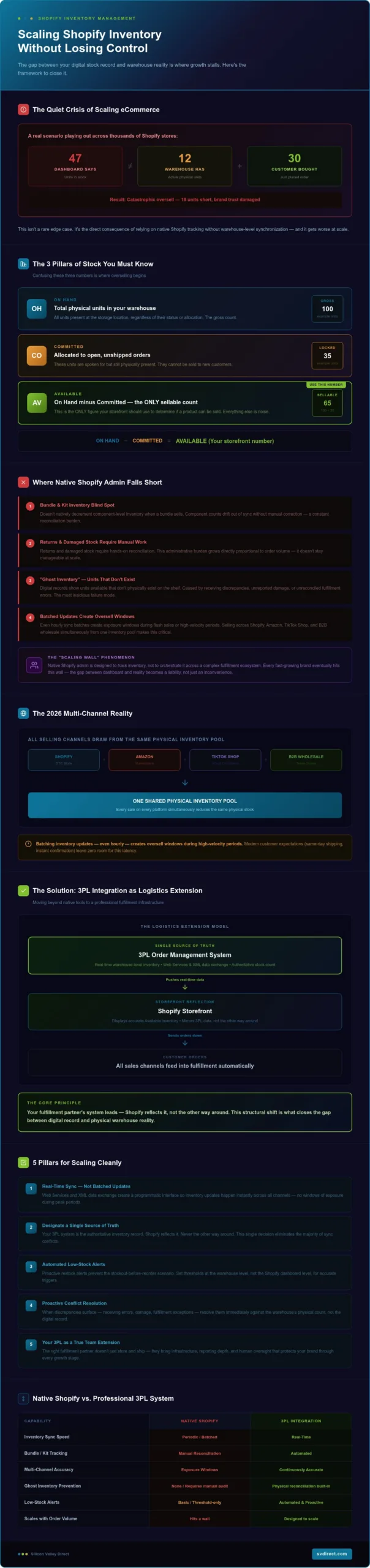
For Shopify brands, fulfillment shapes conversion rate, repeat purchase behavior, and support load as much as product quality or paid media. The best fulfillment option solves a practical problem: how to ship accurately and fast without losing margin to zone costs, split shipments, inventory errors, or rigid contract terms. That matters even more now because Shopify merchants can choose from in-house operations, Amazon-driven models, Shopify-connected partners, and specialized 3PLs. The winning setup is rarely the biggest network on paper. It is the one that fits your catalog, geography, growth stage, and service promise.

What makes a fulfillment option the right fit for a Shopify brand?

The right fit matches product complexity, customer geography, and channel mix. Shopify and UPS matter more here than brand size alone.

A Shopify brand selling five SKUs of lightweight supplements has a very different fulfillment profile from a brand shipping bundles, subscription orders, or fragile electronics. Start with five variables: monthly order volume, SKU count, average order size, customer zip-code distribution, and how much customization you need at packout.

If your buyers are mostly in California, Nevada, and Washington, one strong West Coast node can perform very well. If 40 percent of orders ship to the East Coast, a single warehouse in California will raise parcel costs and transit time. If you rely on kits, inserts, lot control, or regulated workflows, your provider choice narrows fast.

Common misconception: the lowest pick fee wins. In practice, shipping zone exposure, error rate, and return handling often move margin more than a quoted pick-and-pack line item.

Should Shopify brands use an in-house warehouse or a 3PL?

A 3PL is usually better once order volume or SKU complexity outgrows the founder team. Shopify brands often hit this point before they expect to.

in-house fulfillment gives you direct control, tight product access, and easy brand experiments. It also creates labor scheduling problems, carrier negotiation limits, and operational fragility during peak periods. If the team is spending mornings printing labels instead of fixing conversion or inventory planning, fulfillment is already slowing growth.

A 3PL makes more sense when at least one of these is true: orders are rising past a few hundred per month, shipping happens six or seven days a week, marketplace orders need routing rules, or customer service is swamped by tracking questions. Trade-off matters here. You give up some physical control in exchange for process depth, carrier access, and better scalability.

For early-stage brands, the best 3PL is not always the biggest one. A provider with no minimum order requirement and real human support can outperform a larger network for a young Shopify store that needs flexibility more than footprint.

What are the best fulfillment options for Shopify brands right now?

The best options depend on your operating model, not a universal ranking. Shopify, Amazon, and regional 3PLs each serve different needs.

Several providers stand out because they map cleanly to distinct Shopify use cases. The smartest shortlist mixes one flexible specialist, one broad DTC network, one workflow-heavy operator, and one platform-native or marketplace-driven option.

  1. Silicon Valley Direct (SVDirect): Strong fit for brands that want same-day shipping, no minimum order requirement, 80+ integrations, custom API support, and a dedicated account manager. It is especially attractive for Shopify merchants that value hands-on service, West Coast positioning, print-on-demand, literature fulfillment, or custom workflows.
  2. ShipBob: A strong all-around choice for growth-stage DTC and omnichannel brands that want mature Shopify connectivity, real-time inventory visibility, and a wide network across the US, Canada, Europe, and Australia.
  3. ShipMonk: Best suited to brands with bundles, kits, subscriptions, or routing rules that need more operational logic than a basic 3PL can offer.
  4. Flexport through Shopify Fulfillment Network: Best for merchants that want a Shopify-native operating layer and broader international support, including duty and cross-border workflows.
  5. Amazon MCF: Best when your inventory already sits in Amazon and speed matters more than packaging control or a tailored DTC unboxing experience.
  6. GoBolt or DHL Fulfillment: Useful benchmarks for North American speed and sustainability priorities in GoBolt’s case, or cross-border supply chain depth in DHL’s case.

How should Shopify brands shortlist fulfillment partners step by step?

A good shortlist starts with data, not demos. Shopify reports and carrier invoices should guide the first cut.

Most brands can narrow the market to three serious candidates in a week if they use the same scorecard for each provider.

  1. Define the profile: Pull 90 days of Shopify data by SKU, order size, destination zone, returns rate, and sales channel. If you sell bundles, subscription renewals, or wholesale cases, isolate those flows.
  2. Request scenario-based quotes: Send the same order mix and inbound assumptions to every provider. Ask for storage, receiving, pick fees, packaging, postage structure, returns, account management, and peak surcharges.
  3. Pressure-test operations: Review cutoff times, onboarding timeline, inventory sync method, carrier options, and exception handling. Ask what happens if volume doubles in Q4 or if Shopify sends a partial cancel after the order imports.

Pro tip: ask every provider for one recent example of an operational miss and how it was resolved. The answer says more than a polished sales deck.

How does Shopify Fulfillment Network compare with a specialized 3PL?

Shopify Fulfillment Network is better for platform-centered visibility, while a specialized 3PL is often better for customization. Flexport and SVDirect illustrate that trade-off well.

Shopify’s current model is partner-based, not one giant in-house network. That means Shopify merchants can monitor fulfillment activity inside a familiar operating system while using outside providers. Flexport benefits from deep placement inside Shopify workflows, which is valuable if you care about international expansion and a tighter Shopify-admin experience.

A specialized 3PL can be better when the operation is not standard. Think branded inserts, literature kitting, healthcare-adjacent workflows, on-demand printing, or a need for close human communication. Smaller or mid-sized 3PLs can also be more willing to adapt SOPs around your catalog.

The trade-off is clarity versus flexibility. Shopify-native options often make visibility easier. Specialized 3PLs often make the workflow itself better.

Common misconception: a Shopify-connected partner automatically has the lowest total cost. If the network forces extra nodes, split shipments, or generic packout, your all-in cost can rise.

How can Shopify brands calculate total fulfillment cost step by step?

Total cost is a landed-cost problem, not a postage problem. Shopify brands should model fees, zones, and error risk together.

A quote is only useful if it reflects your actual order shape. A brand with a $9 average fulfillment cost can become a $13 brand fast once storage, packaging, and cross-zone shipping are layered in.

  • Map the order mix: One-item orders, multi-item orders, bundles, subscription repeats, oversized units, and return-prone SKUs.
  • Add every fee bucket: Storage, receiving, pick-and-pack, packaging materials, postage, returns, kitting, account management, integrations, and peak or project fees.
  • Model by destination and promise: If 60 percent of orders travel Zone 6 to Zone 8 from California, compare that against a two-node plan and see whether lower transit time offsets added storage.

Accepted SOPs help here. Order accuracy should generally sit above 99.8 percent for mature ecommerce operations. Dock-to-stock should usually land within 24 to 48 hours for standard inbound receipts. If a provider quotes low fees but cannot show those performance levels, the cheap rate may be expensive.

How do you test Shopify integration quality before signing a 3PL?

Integration quality should be proven with live workflows, not promised in a meeting. Shopify and your OMS need to agree on inventory and status changes in real time.

Ask for a structured test before inventory moves. A reliable provider should be able to show how orders import, how tracking pushes back to Shopify, and how inventory adjusts after cancellation, partial shipment, or return.

  1. Run happy-path orders: Standard single-SKU orders, multi-line orders, and expedited orders. Confirm status changes, tracking sync, and inventory decrements.
  2. Run edge cases: Partial cancels, bundles, preorders, backorders, gift messages, and duplicate orders. If the provider struggles here, support tickets will rise later.
  3. Review monitoring and fallbacks: Ask how sync failures are flagged, how often inventory refreshes, and who owns issue resolution. A portal with real reporting is useful only if humans respond quickly when a feed breaks.

Pro tip: test one weekend order and one late cutoff order. Many integration gaps show up outside normal support hours.

When is Amazon MCF a better fulfillment option for Shopify brands?

Amazon MCF is best when your inventory already lives in Amazon and delivery speed matters more than custom branding. Amazon and Shopify can work well together in that narrow case.

If your catalog is already optimized around Amazon FBA placement, MCF can reduce operational duplication. It is also one of the few models with a public rate-card structure, which helps finance teams compare scenarios. Amazon has published standard three-business-day service for some MCF workflows, with faster options depending on service level.

The trade-off is control. Packaging flexibility, brand presentation, and certain custom inserts are not the strength of MCF. If your Shopify business depends on premium unboxing, influencer seeding, complex bundles, or channel-specific kitting, a dedicated 3PL is often the better fit.

If Amazon is your primary inventory home, MCF deserves a spot on the shortlist. If Shopify DTC is your brand core, it should be compared carefully, not assumed.

Why do same-day shipping and West Coast inventory placement matter for Shopify brands?

Same-day shipping improves order-to-ship speed, while West Coast placement improves speed for western demand. California and Nevada are common examples.

For brands with strong traffic from California, Arizona, Oregon, Washington, and parts of Texas, a Union City or broader Bay Area fulfillment node can reduce delivery time and support later order cutoffs. It also places inventory closer to West Coast ports and import flows, which can shorten replenishment time from container arrival to outbound availability.

That said, warehouse geography is not the same as nationwide speed. A single California node will not reliably create two-day parcel delivery to New York or Florida at ground rates. If your promise is two-day shipping across the US, you either need multiple nodes, premium parcel spend, or honest checkout messaging.

Pro tip: ask for the provider’s actual same-day cutoff and the percentage of orders that ship same day by channel, not just the phrase “same-day shipping.”

What service levels should Shopify brands demand in a 3PL contract?

Strong contracts define measurable service levels. UPS scans and Shopify timestamps should be able to verify them.

A 3PL agreement should not stop at pricing. It should spell out how performance is measured, what happens during failures, and how inventory exits if the relationship ends.

  • Order accuracy: Ask for the target rate, counting method, and root-cause process. Many brands look for 99.8 percent or better, while some providers publicly claim double verification.
  • Same-day fulfillment: Define the cutoff time, excluded order types, and how late carrier handoff is handled.
  • Inventory control: Require cycle-count frequency, dock-to-stock timing, lot or expiration tracking if relevant, and shrink reporting.
  • Returns SOP: Set inspection rules, restock timing, disposition codes, and whether return reasons flow back into Shopify.
  • Support and exit terms: Get response times, escalation contacts, implementation fees, notice periods, data export access, and inventory removal rules in writing.

If a provider cannot clearly explain these terms, the risk is not theoretical. It will show up later as stockouts, missed SLAs, or long email threads during peak season.

amazon fbm fulfillment service

Amazon FBM Fulfillment Service

If you want the control of Amazon FBM without turning your team into a warehouse operation, Silicon Valley Direct (SVDirect) gives you a full-service 3PL partner built for that job. From our Union City, California facility, we support Amazon sellers with warehousing, pick, pack, and ship services, order integrations, reporting, and nationwide shipping reach.

Silicon Valley Direct is an independent 3PL, not an Amazon-owned fulfillment program. That matters if you want to keep more control over inventory, packaging, channel strategy, and hybrid FBM/FBA decisions while still connecting your Amazon seller workflow to a fulfillment operation that is built to move quickly and accurately.

Amazon FBM fulfillment from Silicon Valley Direct for seller-controlled shipping

Amazon FBM keeps fulfillment responsibility on you. Inventory storage, order processing, shipping, tracking, and returns workflows all stay on the seller side, which means operational mistakes can quickly affect late shipment rates, valid tracking performance, and customer experience.

Silicon Valley Direct takes the physical fulfillment and system side of FBM off your plate so your brand can stay seller-fulfilled without running every shelf, carton, scan, and shipment internally. We handle eCommerce order fulfillment, warehousing, inventory management, pick and pack, shipping, Amazon-related integrations, and related support services for brands across the USA and Canada.

SVDirect is especially useful when FBM is the better model for your catalog. That often includes products that are oversized, slower-moving, bundled, branded, made to order, or shared across multiple sales channels.

Because Silicon Valley Direct also supports Amazon prep, FBA workflows, and Seller Fulfilled Prime-related operations, you are not locked into a one-model decision. You can keep the SKUs that benefit from FBM under tighter control while using other Amazon programs where they make sense.

Union City, California Amazon fulfillment with same-day shipping and no order minimums

Silicon Valley Direct runs Amazon FBM fulfillment from Union City, CA with same-day shipping, no minimum order requirement, and nationwide plus international shipping reach. That gives startups room to launch without committing to large minimums and gives established brands a way to scale without adding warehouse headcount.

“Silicon Valley Direct supports Amazon FBM with same-day shipping, no minimum order requirement, and a Union City, California warehouse you can visit.”

For Bay Area and Silicon Valley brands, the Union City location also makes the relationship more tangible. SVDirect welcomes on-site warehouse visits, which is valuable when you want to review inventory handling, packaging standards, kitting requirements, or a custom Amazon workflow before moving critical SKUs.

Silicon Valley Direct pairs that warehouse operation with a double-verified 100% order accuracy process. For Amazon FBM sellers, that means fewer avoidable mis-picks, fewer order issues that spill into buyer messages or returns, and a cleaner operational foundation for performance-sensitive seller accounts.

Amazon FBM integrations, inventory visibility, and reporting that reduce manual work

Amazon FBM gets much harder when your team is copying orders by hand, chasing tracking numbers, or trying to reconcile inventory across Amazon, your website, and other marketplaces. Silicon Valley Direct addresses that with 80+ preconfigured integrations, custom API support, and automated order processing designed to move orders from checkout to warehouse execution faster.

“SVDirect connects Amazon seller workflows with 80+ preconfigured integrations, custom API support, and a 24/7 portal for inventory and shipment visibility.”

Silicon Valley Direct gives you a 24/7 customized web portal with extensive reporting, real-time inventory visibility, and shipment tracking. That helps you see what is in stock, what shipped, what is pending, and where exceptions need attention without building your own reporting stack around Amazon orders.

If your business sells on more than one channel, SVDirect’s system integration capabilities are especially useful. A single inventory view across connected order sources can reduce overselling risk, simplify replenishment decisions, and make Amazon FBM more manageable when the same SKU is also moving through Shopify, Walmart Marketplace, eBay, or other channels.

Amazon FBM fulfillment for multichannel brands, custom packaging, kitting, and specialty workflows

Silicon Valley Direct is not limited to basic pick-pack-ship. We also support print-on-demand, literature and promotional fulfillment, presorted mail services, and healthcare fulfillment, which is useful when your Amazon business sits inside a larger operating model.

That matters if your FBM program includes inserts, marketing materials, subscription-style bundles, launch kits, replacement parts, printed collateral, or regulated handling steps that do not fit a generic one-box workflow. Silicon Valley Direct can build those tasks into your fulfillment process so your Amazon orders and your other outbound programs do not have to live in separate systems or vendors.

SVDirect is also a strong fit when you want packaging and presentation control that is harder to maintain in a standard FBA workflow. If branded packaging, custom inserts, bundled SKUs, or channel-specific pack-out rules are part of the customer experience, FBM through Silicon Valley Direct gives you more operational control while still outsourcing the warehouse labor.

Dedicated Amazon seller support with a real account manager and phone access

Many fulfillment providers look fine until something unusual happens. An integration field changes, a return needs special handling, a bundled SKU needs a revised pack-out, or your team needs a live answer before the next shipping window closes.

Silicon Valley Direct assigns a dedicated account manager and provides real human phone support, which is a practical advantage for Amazon sellers who do not want to solve every issue through tickets alone. That hands-on service is backed by 26+ years of 3PL experience and a workflow that combines warehouse execution with integration support and reporting visibility.

“With 26+ years of 3PL experience, dedicated account management, and real human phone support, Silicon Valley Direct is built for Amazon sellers who need answers fast.”

SVDirect’s onboarding model is useful if you are moving out of in-house fulfillment, replacing another 3PL, or setting up Amazon FBM for the first time alongside other channels. With prebuilt integrations, custom API options, and warehouse access in Union City, we can shape the setup around your catalog and order flow instead of forcing your business into a rigid template.

When Silicon Valley Direct is the right Amazon FBM partner

Silicon Valley Direct is a strong match when you want Amazon FBM to stay flexible, visible, and operationally disciplined without building that capability entirely in-house.

You are likely a good fit if your business looks like this:

  • You want more control than FBA gives you: Your brand cares about packaging, inserts, bundling, inventory allocation, or using the same stock across Amazon and other sales channels.
  • You need room to grow without minimums: SVDirect has no minimum order requirement, which helps early-stage brands, seasonal programs, and new Amazon launches.
  • You need speed and accuracy to protect seller performance: Same-day shipping and double-verified 100% order accuracy are directly relevant to the daily demands of FBM fulfillment.
  • You need technology, not just warehouse space: Silicon Valley Direct combines physical fulfillment with 80+ integrations, custom API support, a 24/7 portal, and reporting visibility.
  • You want a West Coast 3PL with wider reach: The Union City, CA location is convenient for Bay Area brands, while the shipping network supports nationwide and cross-border operations.

Silicon Valley Direct is also a sensible option if you are not choosing between FBM and FBA in absolute terms. Many Amazon sellers operate a hybrid model by keeping fast-moving SKUs in FBA while routing oversized, branded, slower-moving, or custom-packed products through FBM. SVDirect supports that kind of practical split.

If you are comparing providers, one of the simplest differentiators is how much operational clarity you get after you sign. Silicon Valley Direct combines a warehouse you can visit, real people you can call, and reporting you can access at any time, which makes the day-to-day reality of outsourced FBM easier to manage.

Tell us about your Amazon catalog, current fulfillment setup, and channel mix, and Silicon Valley Direct can help you map an Amazon FBM workflow that keeps control where you want it and fulfillment where it belongs.

Direct Mail Printing and Mailing: Designing a Streamlined Workflow for 2026

Direct Mail Printing and Mailing: Designing a Streamlined Workflow for 2026

What if the most expensive part of your marketing campaign isn’t the postage, but the physical gap between your printer and your mail house? In 2026, shipping pallets of printed materials to a separate fulfillment center is an unnecessary drain on your ROI. You’ve likely felt the sting of fragmented communication and the anxiety of mailing list errors that occur when too many hands touch a project. At Silicon Valley Direct, we’ve spent 26 years proving that anything is possible when you bridge the gap between high-volume digital production and precision logistics.

This article shows you how to master direct mail printing and mailing by integrating these steps into one streamlined workflow. You’ll learn how to leverage metered mail rates to save $0.04 per First-Class letter compared to the $0.78 stamp price, and how to stay compliant with the 20 different state privacy laws active as of January 1, 2026. We’ll preview the technology behind Variable Data Printing (VDP) and explain how professional sorting secures commercial rates starting at $0.372 per piece. We’re here to help you eliminate logistics bottlenecks and treat your physical marketing with the same tech-driven accuracy as your digital channels.

Key Takeaways

  • Learn how to eliminate shipping delays and hidden costs by housing your direct mail printing and mailing under one roof at a 3PL logistics hub.
  • Discover the specific data hygiene steps and design standards required to qualify for the lowest USPS automation postage rates available in 2026.
  • Explore how custom kitting and dimensional mail can drive higher response rates for high-value B2B campaigns compared to standard postcards.
  • Understand the rigorous security protocols necessary for HIPAA-compliant healthcare mailing and protecting sensitive consumer data.
  • Find out why a “human-in-the-loop” approach prevents the costly errors common in fully automated, virtual mailing operations.

The Modern Direct Mail Printing and Mailing Landscape

Digital inbox saturation has reached a tipping point. Physical mailboxes are now the premier real estate for brand engagement. While digital ads are often scrolled past; a well-executed direct mail printing and mailing campaign offers a tangible connection that commands attention. Citing foundational concepts is key to understanding the direct mail landscape as it evolves from mass-produced flyers into a sophisticated; data-driven channel. As of January 1, 2026, twenty U.S. states have implemented comprehensive privacy laws. This makes precision data management a requirement for success. Modern brands are moving away from “spray and pray” tactics. They now use CRM integrations to trigger personalized mailings based on real-time customer behavior.

The “Logistics Gap” is the most common profit-killer in physical marketing. This gap represents the hidden costs and delays that occur when a business uses separate vendors for production and distribution. When your printer is in one city and your mail house is in another, you aren’t just paying for postage. You’re paying for freight; coordination; and lost time. In 2026; the most efficient campaigns are fulfilled from within a logistics hub to ensure maximum ROI.

The Problem with Fragmented Vendor Workflows

Shipping pallets of printed material to a separate fulfillment center adds an average of 3-5 days to your timeline. It also creates a communication vacuum. If the address data doesn’t align with USPS automation specs; who is responsible? The printer blames the mail house; and the mail house blames the data provider. These breakdowns lead to costly reprints and missed deadlines. In a market where a First-Class metered letter costs $0.74; errors are expensive and drain your marketing budget.

The 3PL Advantage: Printing at the Point of Fulfillment

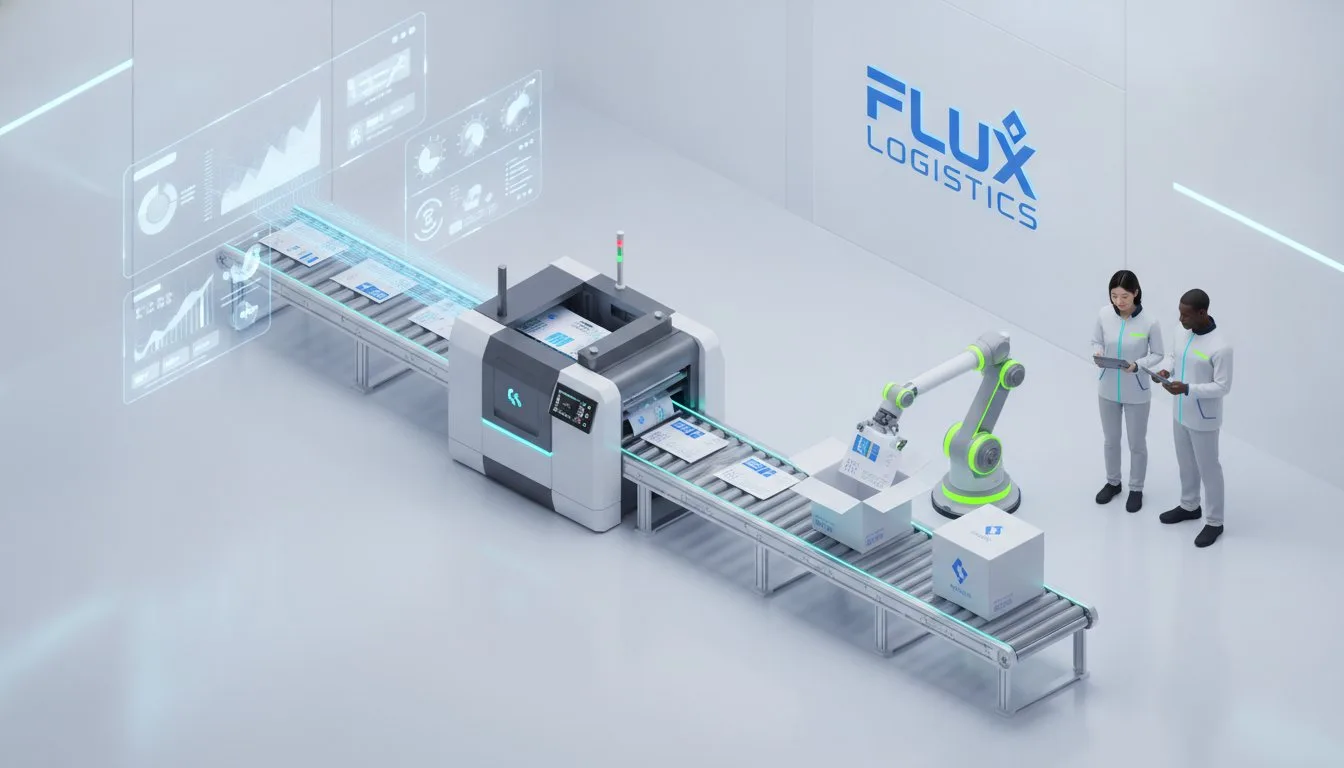
We’ve spent 26 years refining a model where on-demand digital printing lives inside the warehouse. This eliminates transit costs and reduces the carbon footprint of your campaign. Our team provides a single point of contact for the entire direct mail printing and mailing process. By integrating printing with 3PL mailing services; you gain real-time visibility from the initial “print” command to the moment the piece reaches the postal carrier. This unified approach allows for complex kitting and literature fulfillment that separate vendors simply can’t coordinate. We believe anything is possible when you combine high-tech efficiency with a dedicated; human-led team that understands the stakes of your business growth.

Designing a Streamlined Print-to-Mail Workflow

Success in direct mail printing and mailing isn’t just about the ink on the page; it’s about the data behind the delivery. A streamlined workflow starts long before the presses run. It begins with rigorous data hygiene to ensure your message actually reaches the recipient. As of January 1, 2026, twenty U.S. states have active comprehensive privacy laws. This means your mailing list management must be more than accurate; it must be compliant. We use National Change of Address (NCOA) processing to update records for the 40 million Americans who move annually. This prevents the waste of undeliverable mail and protects your ROI by ensuring you don’t pay for dead-end leads.

Once the data is clean, the focus shifts to design. Every layout must meet specific USPS machinery specs to qualify for automation discounts. Navigating Compliance and Security standards ensures your mail pieces move through the system without manual intervention. This is where the $275 annual bulk mailing permit fee comes into play; though it can be waived for mailers who participate in full-service automation or Seamless Acceptance programs. In our 26 years in the heart of Silicon Valley, we’ve learned that precision at this stage is the only way to scale without errors.

Variable Data Printing: Personalization at Scale

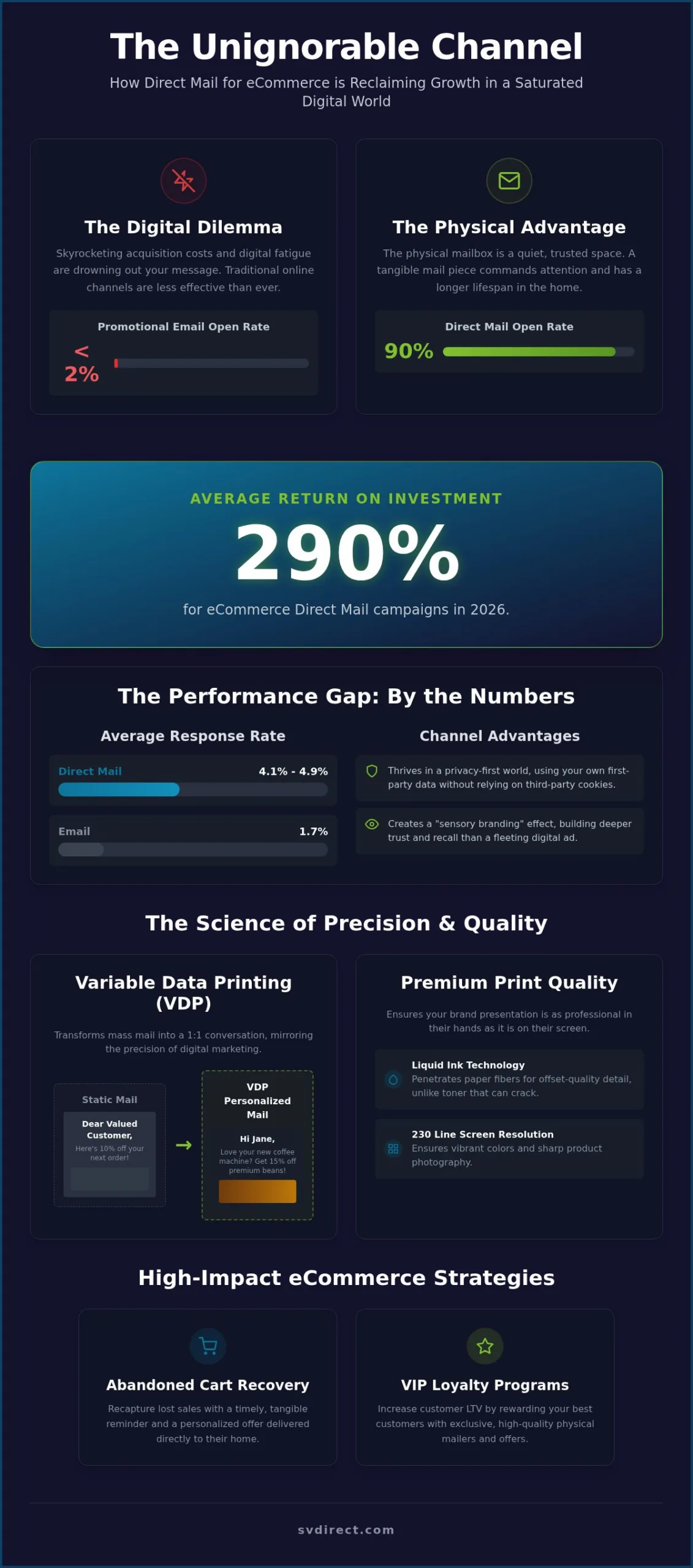
Modern inkjet technology allows for more than just swapping a name. We use Variable Data Printing (VDP) to change entire images, offers, and calls to action based on individual customer profiles. Studies have shown that highly personalized mail can increase response rates by up to 135% compared to generic “resident” mailings. This level of tailoring requires a high-performance partner capable of managing complex logic files alongside physical production. If you want to see how these integrated direct mail solutions work in practice, it’s about the marriage of CRM data and high-speed digital production.

Postage Optimization: Sorting for Maximum Savings

Professional sorting is the engine of cost reduction in direct mail printing and mailing. By presorting mail to the 5-digit level, we can secure rates as low as $0.372 per piece for Marketing Mail letters. We also utilize Intelligent Mail Barcodes (IMb) to provide real-time tracking. This transparency allows you to time your follow-up emails or sales calls to the exact day the physical piece lands in the mailbox. Our team performs final double-verification on every batch because we know that automated systems can miss the nuances that a human expert catches. We take the “never-ending questions” out of the process by handling the heavy lifting of postal logistics for you.

Direct Mail Printing and Mailing: Designing a Streamlined Workflow for 2026

Beyond Postcards: Kitting and Complex Mail Fulfillment

Standard postcards serve their purpose; however, high-stakes marketing often requires a more substantial presence in the mailbox. A sophisticated direct mail printing and mailing strategy thrives on the “nested” mailing. This involves a personalized letter, a multi-page brochure, and a business reply envelope (BRE) all enclosed in a high-quality carrier envelope. While generic online printers focus on “shop now” simplicity, they rarely have the infrastructure to manage the hand-assembly or complex machine insertion required for these campaigns. At Silicon Valley Direct, we’ve spent 26 years mastering the logistics of dimensional mail that commands attention.

Dimensional mailings, those that include a physical object or a thick kit, offer a significant advantage for B2B lead generation. These pieces are rarely discarded without being opened. However, the complexity of assembling these kits can be a nightmare for unequipped vendors. We handle the entire lifecycle of these projects under one roof. This includes printing the literature, managing the inventory of physical samples, and executing the final assembly with precision. We take the “never-ending questions” out of the equation by providing a single, stable point of contact for the entire process.

Custom Kitting for Promotional Campaigns

Successful kitting is built on a foundation of inventory control and quality assurance. When you combine a printed catalog with a physical product sample, the margin for error is zero. Our team uses a rigorous double-verification process to ensure every component is present and correctly placed. We don’t rely on “virtual operations” or third-party labor. Instead, our actual team members, half of whom have been with us for over a decade, oversee the assembly line. This human touch prevents the costly mistakes that automated systems might overlook when handling bespoke items.

  • Multi-component assembly: Letters, inserts, samples, and branded packaging.
  • Inventory management: Real-time tracking of all kit elements within our warehouse.
  • Flexible scalability: From small boutique mailings to high-volume national campaigns.

Literature Fulfillment for Sales Enablement

Sales enablement requires speed and accuracy. Our on-demand digital printing allows you to maintain “just-in-time” inventory for technical manuals, price lists, and sales brochures. By linking your sales portal directly to our print-and-ship workflow via API or web services, you can distribute materials globally without lifting a finger. This eliminates the risk of stockpiling obsolete documents. Your team can update a PDF in the morning, and we can begin printing and shipping the new version by the afternoon. We believe anything is possible when your direct mail printing and mailing are integrated into a single, high-tech logistics hub in the heart of Silicon Valley. For brands managing printed catalogs alongside physical products, a strategic approach to catalog order fulfillment is essential to keeping inventory levels accurate and distribution costs under control.

Data security is no longer an optional add-on. With 20 U.S. states enforcing comprehensive privacy laws as of January 1, 2026, the handling of customer data during direct mail printing and mailing requires a partner who understands the legal landscape. We don’t just print; we protect. Our protocols ensure that sensitive mailing lists are encrypted and stored on secure servers with restricted access. Every project creates a digital audit trail. This provides verifiable proof that your materials were processed and delivered to the USPS according to your specific schedule.

Healthcare and Financial Sector Requirements

Handling Protected Health Information (PHI) requires more than just a locked door. It requires HIPAA-compliant mailing services that integrate with your billing or patient communication systems. We manage Explanation of Benefits (EOB) documents and medical statements with the precision they demand. In the financial sector; regulatory notices and secure statements must meet strict accuracy standards. This is where our “human interaction” model becomes a critical safety net. Unlike virtual operations; our actual team members oversee every batch. They ensure that Variable Data Printing (VDP) logic correctly matches the right data to the right recipient every time.

Physical Security and Facility Standards

Security extends beyond the digital server to the physical warehouse floor. Our fulfillment center in the heart of Silicon Valley features 24/7 monitoring and restricted access zones. This protects your critical mailing assets from theft or damage. We maintain climate-controlled warehousing to preserve the integrity of sensitive paper stocks and pre-printed materials. Silicon Valley Direct’s 26 years of experience have taught us that disaster recovery is essential. We maintain robust data backups to ensure your campaigns stay on track; even in the face of technical disruptions. We believe anything is possible when you have a secure; physical infrastructure backing your digital data.

Transparency is the cornerstone of our service. As of December 24, 2025, the USPS officially defines a postmark as the date a mailpiece is processed at their facility; not when it was collected. This makes the timing of your delivery to the carrier more important than ever for legal notices or time-sensitive payments. We provide detailed reporting to confirm when your mail leaves our facility and enters the postal stream. If you are ready to secure your sensitive communications; you can request a security consultation with our team today.

Why Silicon Valley Direct is Your Strategic Mailing Partner

Choosing a partner for direct mail printing and mailing requires more than just a software interface. It requires an organization that has evolved alongside the technology it uses. We’ve spent 26 years in the heart of Silicon Valley; serving as a steady hand for brands that outgrow the limitations of generic online printers. While many competitors offer a “shop now” portal and little else; we provide a sophisticated infrastructure that treats your physical marketing with the same precision as your digital code. Our “Anything is Possible” promise isn’t just a slogan. It’s a commitment to customizing our workflow to fit your specific CRM and business objectives.

We explicitly reject the industry trend toward fully automated; virtual operations. While automation has its place in high-speed digital production; it cannot replace the critical eye of an actual team member. Automated systems often miss the subtle data mismatches or assembly errors that can derail a high-stakes campaign. By maintaining a human-in-the-loop process; we ensure that every piece of mail reflects the quality and professionalism of your brand. This approach has allowed us to scale with our clients; from small startup pilot programs to enterprise-level global distributions.

A Team of Experts, Not Just a Web Portal

Experience is our greatest asset. Over 50% of our team has been with us for more than a decade; creating a level of internal stability that is rare in the logistics industry. When you work with us; you aren’t just a ticket number in a support queue. You gain a dedicated project manager who understands the nuances of your literature fulfillment and complex kitting projects. We act as a seamless extension of your marketing operations team; providing the technical expertise necessary to bridge the gap between your digital strategy and physical delivery.

Global Reach from Union City, CA

Our facility in Union City; CA; serves as a strategic hub for both domestic distribution and international shipping. This location allows us to leverage deep relationships with carriers and secure discounted rates that lower your total cost per piece. Whether you are managing a 5,000-piece targeted mailing or a massive literature fulfillment project; our workflow scales to meet your needs. We take pride in being a high-performance partner that remains accessible and grounded. If you’re ready to eliminate logistics bottlenecks and elevate your physical marketing; you can Speak with a Direct Mail Expert at Silicon Valley Direct to start your next campaign.

Master Your Physical Marketing Strategy for 2026

The evolution of physical marketing requires a shift from fragmented vendors to a unified, secure workflow. By housing your data hygiene, high-speed digital production, and postal logistics in one facility, you eliminate the delays and shipping costs that drain ROI. We’ve spent 26 years since our founding in 1999 refining this process. Our HIPAA-compliant and secure facility in Union City, CA, serves as the physical backbone for your most sensitive campaigns. It’s a place where precision meets personal commitment to ensure your brand remains grounded and deeply reliable.

Success in 2026 depends on the precision of your direct mail printing and mailing. While high-tech efficiency drives our speed, our dedicated human support ensures your projects never fall into a frustrating automated customer service loop. We believe that anything is possible when you have a stable partner overseeing every detail of your literature fulfillment or complex kitting. Whether you’re scaling a global distribution or launching a targeted B2B campaign, our team is ready to help you achieve accurate, high-performance results. Request a Custom Direct Mail Quote from Our Silicon Valley Team and let’s build something remarkable together.

Frequently Asked Questions

What is the difference between direct mail printing and mailing services vs. a standard print shop?

A specialized direct mail service integrates production with logistics to deliver your message directly to the carrier. While a standard print shop typically produces materials and ships them to you for distribution; we handle the data hygiene; sorting; and delivery under one roof. This eliminates the “Logistics Gap” and ensures your address data meets USPS automation standards for maximum deliverable accuracy. We act as a high-performance partner rather than a simple retail storefront.

How much does direct mail printing and mailing cost in 2026?

Total costs depend on your volume and postage class. As of July 13, 2025, a First-Class stamp costs $0.78; while a metered letter offers a 4-cent savings at $0.74. For high-volume marketing; automation letters start at $0.372 per piece for a 5-digit presort. Choosing an integrated partner for direct mail printing and mailing reduces hidden expenses like the freight costs required to move materials between separate vendors.

What is Variable Data Printing (VDP) and do I need it?

Variable Data Printing (VDP) is a digital technology that allows you to personalize every individual piece within a single print run. It goes beyond simple name fields by swapping images and offers based on your CRM data. You need it if your goal is higher engagement; as personalized mailings can increase response rates by up to 135% compared to generic campaigns. It’s a premier tool for modern marketing.

How do I ensure my direct mail campaign is HIPAA compliant?

You ensure HIPAA compliance by partnering with a facility that maintains rigorous physical and digital security standards for Protected Health Information (PHI). Our Union City center uses restricted access zones and 24/7 monitoring to protect sensitive materials. We generate detailed audit trails for every mailing; proving your documents were processed according to federal privacy regulations. This human-led oversight is vital for medical billing and financial notices.

Can you handle the kitting of products along with printed marketing materials?

Yes; we specialize in kitting and assembly that combines physical products with your printed literature. This is a core advantage of using a 3PL logistics hub rather than a generic online printer. Our team performs double-verification on every kit to ensure accuracy. Whether you’re sending a product sample with a catalog or a custom gift box for B2B leads; we handle the entire physical production and shipping process.

How long does a typical direct mail project take from data upload to mailing?

A typical project moves from data upload to the postal stream in 3 to 5 business days. This timeline is significantly faster than fragmented workflows because we eliminate the transit time between separate print and mail houses. Complex kitting or high-volume literature fulfillment may require more time for assembly; but our team provides a dedicated project manager to keep your schedule on track and provide real-time updates.

Do you provide discounted postage rates for bulk mailings?

We secure the lowest possible postage rates through professional sorting and commingling. By preparing your mail to meet USPS 5-digit presort standards; we help you access commercial rates that are significantly lower than standard postage. This is a critical component of direct mail printing and mailing that saves you money by doing the work of the post office before the mail even leaves our facility.

Can I integrate my Shopify or CRM data directly with your printing service?

You can integrate your Shopify or CRM data directly through our secure API and web services. This allows for automated “just-in-time” printing and literature fulfillment based on customer triggers. Instead of managing manual spreadsheets; your data flows into our production queue. This creates a seamless connection between your digital storefront and our physical warehouse; ensuring your marketing reaches customers without any unnecessary delays. For those building a successful online presence, you can learn more about FIRSTPETCENTRAL and their approach to providing pet care essentials for dogs and cats.

ECommerce Fulfillment Services: The Complete 2026 Guide to Scaling Your Brand

ECommerce Fulfillment Services: The Complete 2026 Guide to Scaling Your Brand

As your brand grows, the complexities of logistics can quickly shift from a simple task to a significant bottleneck. Mastering the world of third-party logistics (3PL) is no longer just about saving time—it’s about transforming your supply chain into a powerful competitive advantage. This guide will walk you through the essential components of modern ecommerce fulfillment services, helping you find a partner that protects your brand and fuels your growth.

Understanding eCommerce Fulfillment Services in 2026

eCommerce fulfillment is the complete, end-to-end process that begins the moment a customer clicks “buy” and ends when the package arrives at their door. It encompasses receiving inventory, storing it securely, picking and packing orders, and coordinating shipping. In 2026, the industry has moved far beyond simple warehousing; it’s about creating an integrated logistics network that seamlessly supports multi-channel sales across platforms like Shopify, Amazon, and B2B portals. At its core, a 3PL partnership is a strategic alliance where the logistics provider acts as an extension of your brand, dedicated to accuracy and customer satisfaction.

The Evolution of the 3PL Industry

The logistics landscape has transformed dramatically. What began as manual data entry and pallet storage has evolved into a high-tech ecosystem driven by real-time API and Web Services integrations. This technological leap enables instant communication between your online store and the warehouse floor. However, technology alone isn’t enough. With over 26 years of experience since our founding in 1999, we’ve seen that true stability comes from pairing cutting-edge tech with veteran expertise. This history provides a foundation that newer, “virtual” 3PLs simply cannot match, allowing for a bespoke fulfillment standard where “anything is possible” is the operational reality. (What is a fulfillment house?)

In-House vs. Outsourced Fulfillment

Nearly every successful brand reaches a tipping point where packing boxes in-house is no longer sustainable. This moment often arrives when you’re processing 10-20 orders per day or when logistics management begins to consume time that should be spent on marketing and product development. Outsourcing to a 3PL offers critical advantages:

  • Reduced Opportunity Costs: Free up your team to focus on core business growth instead of managing warehouse staff and negotiating shipping rates.
  • Enhanced Scalability: Effortlessly handle massive holiday surges or promotional sales spikes without the need to hire and train temporary labor.
  • Cost Efficiency: Leverage a 3PL’s negotiated, discounted carrier rates and operational efficiencies to reduce your overall cost-per-order.

The Anatomy of a High-Performance Fulfillment Workflow

A truly effective fulfillment process is a symphony of technology and human oversight designed for speed and precision. It begins the moment your inventory arrives at the warehouse, where it is meticulously received, counted, and logged into the management system within 24 hours. From there, products are moved to secure, often climate-controlled, warehousing to protect their integrity. The pick-and-pack process combines intelligent software that optimizes warehouse paths with a human double-verification step to virtually eliminate errors. Finally, the system selects the best carrier for shipping, navigating the complexities of global distribution from a strategic US hub.

Step-by-Step: From Order Click to Customer Door

To the customer, shipping should feel like magic. Here’s the four-step process that makes it happen: (eCommerce fulfillment services)

  1. Real-Time Order Sync: The moment an order is placed on your store, it’s securely transmitted to our fulfillment software via a robust API or Web Services integration.
  2. Intelligent Picking: Our system generates an optimized picking route for warehouse staff, ensuring speed and accuracy as they gather the items for the order.
  3. Custom Packaging & Branding: We pack orders according to your exact specifications, using custom boxes, branded tape, or personalized inserts to create a memorable unboxing experience.
  4. Optimized Carrier Selection: Based on the destination, package weight, and desired delivery speed, our system automatically selects the most cost-effective shipping carrier from our network of discounted partners.

Inventory Management and Real-Time Control

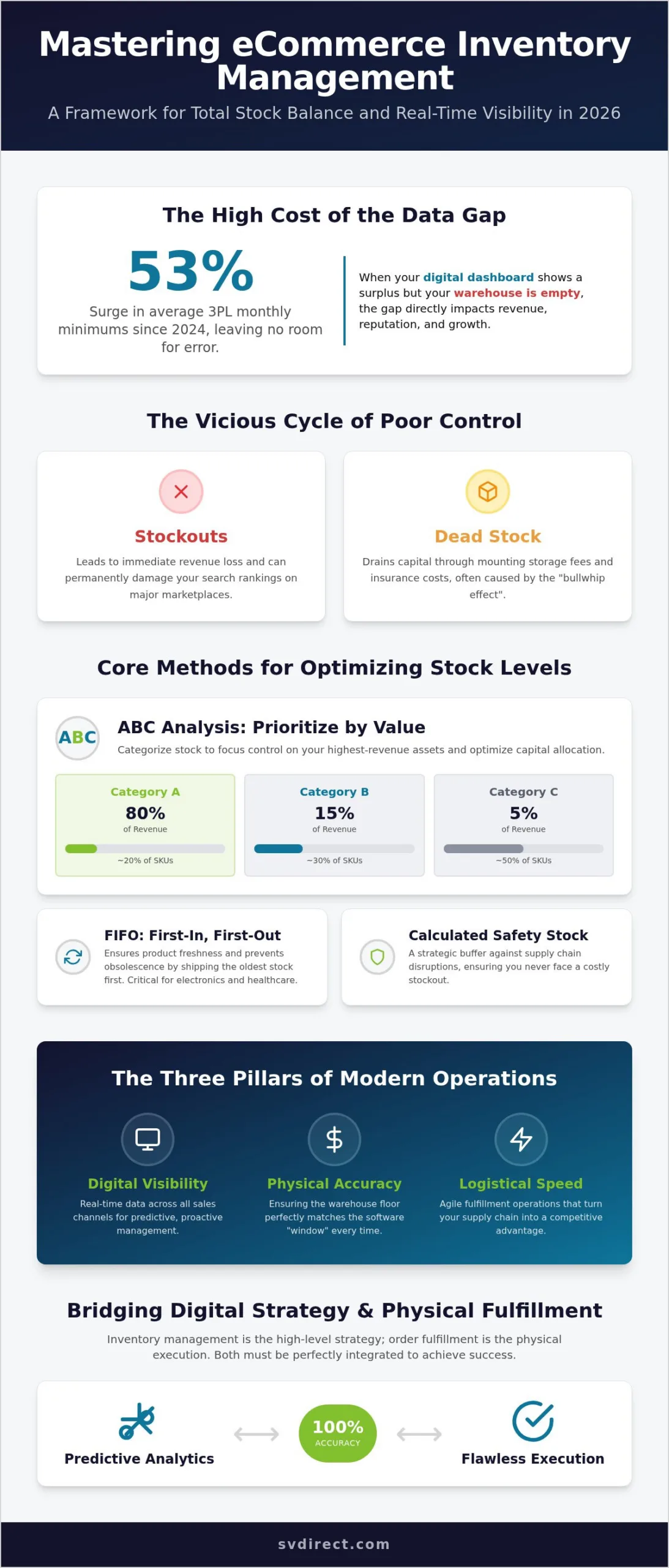
Complete visibility into your inventory is non-negotiable. We utilize a strict FIFO (First-In, First-Out) system to ensure product freshness and prevent obsolescence. Through a secure, web-based portal, you have 24/7 access to real-time stock levels, order statuses, and tracking information. This control extends to reverse logistics (returns), where a streamlined and transparent process helps build customer trust and recover value from returned goods.

ECommerce Fulfillment Services: The Complete 2026 Guide to Scaling Your Brand

Beyond Pick and Pack: Specialized 3PL Services That Drive Growth

Modern fulfillment goes far beyond standard storage and shipping. The right partner can integrate directly into your marketing and product strategies with specialized, in-house services that generic providers can’t offer. These value-added capabilities turn your logistics hub into a growth engine.

  • Kitting and Assembly: We build custom subscription boxes, assemble promotional kits, and bundle products to create unique SKUs that delight customers.
  • On-Demand Digital Printing: Integrate marketing collateral directly into your shipments, from personalized welcome letters to promotional flyers, printed just-in-time.
  • Literature Fulfillment: Manage and distribute physical B2B assets like product catalogs, training manuals, and welcome packets with precision and care.
  • Healthcare and HIPAA-Compliant Mailing: For brands in regulated industries, we provide the gold standard of secure fulfillment, ensuring full compliance and data privacy.

The Strategic Advantage of Integrated Printing

Imagine personalizing every order with a unique marketing insert without having to manage a separate print vendor. Our on-demand digital printing services make this possible. By printing marketing materials only when an order is packed, you reduce storage costs and waste associated with pre-printed collateral. This just-in-time approach is key to creating the memorable unboxing moments that build brand loyalty and increase customer lifetime value. (supply chain management)

Compliance-Heavy Logistics: Healthcare and Finance

Handling sensitive materials requires a level of trust and security that can only be earned through experience. For healthcare and financial brands, we offer HIPAA-compliant direct mail and medical fulfillment services. This involves secure data handling, meticulous inventory control for high-value items, and audited processes to ensure regulatory compliance. Our 26-year history of managing these complex projects provides a level of assurance that a startup 3PL simply cannot offer.

Evaluating 3PL Costs and Performance Metrics

Understanding the cost of fulfillment requires looking beyond the price tag. While common fees include inventory storage, pick-and-pack charges, and postage management, the “hidden cost” of errors can be devastating. A mere 1% error rate can destroy profit margins through returns, refunds, and reputational damage. The most crucial performance KPIs to track are order accuracy, shipping speed, and inventory shrinkage. A 3PL’s ability to offer deeply discounted carrier rates is often its single greatest value proposition, directly impacting your bottom line on every order shipped. To further optimize your financial strategy and manage these scaling costs, many brands look toward fractional financial leadership as explained at saunlimited.com.

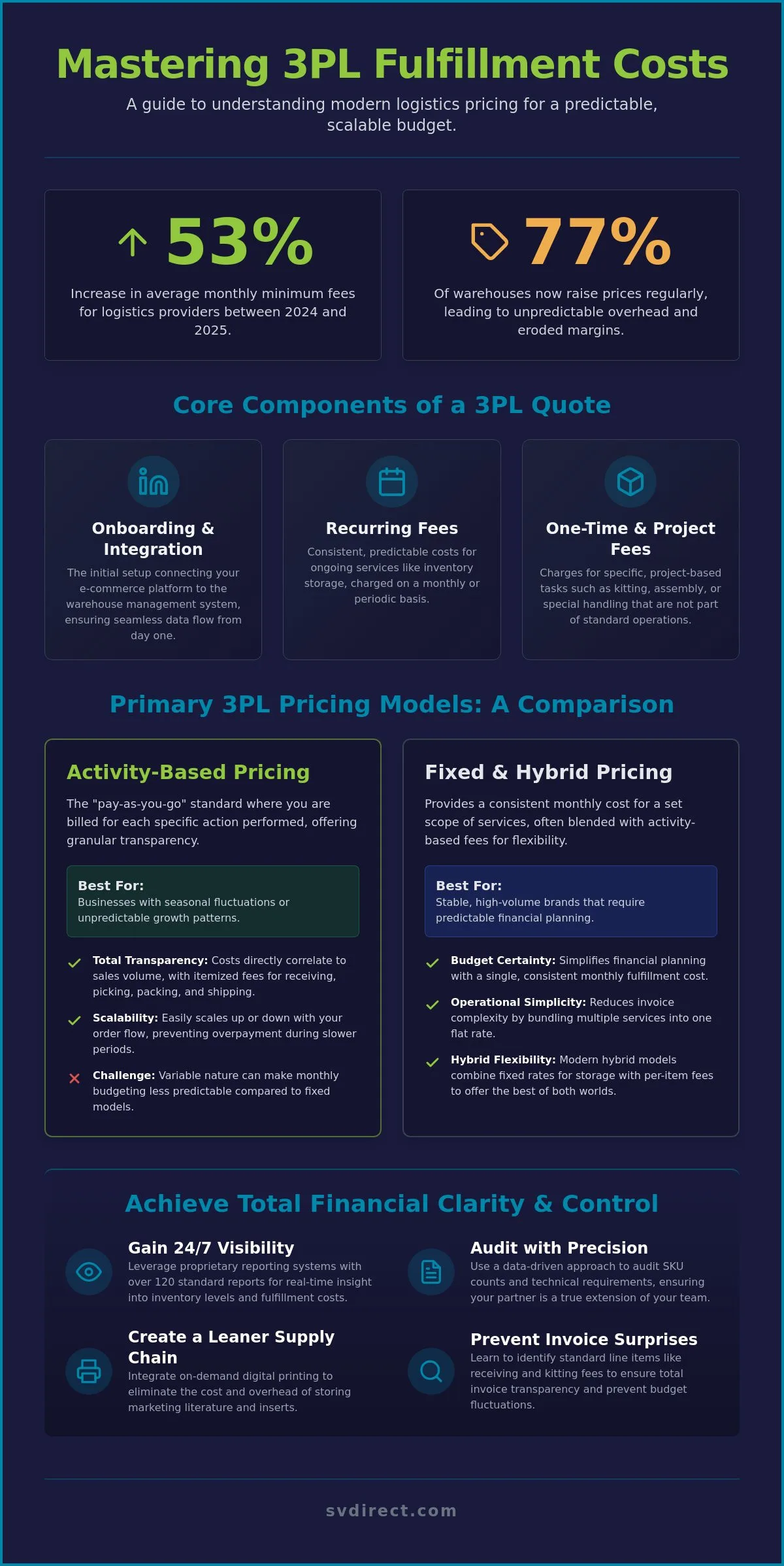
Understanding Your Fulfillment Quote

A transparent fulfillment quote should clearly distinguish between different types of fees. You’ll typically see:

  • Monthly Storage Fees: Calculated based on the pallet or bin space your inventory occupies.
  • Per-Order Transaction Fees: Charges for picking, packing, and processing each order.
  • Kitting and Assembly Fees: Project-based pricing for any custom labor required.
  • Postage & Handling Fees: The cost of shipping plus a transparent administrative fee for managing the process.

The Value of Human Interaction

What is the cost of an automated support ticket that generates more questions than answers? For scaling brands, direct access to a knowledgeable human is invaluable. We pair our clients with a dedicated account team staffed by veterans with over 10 years of tenure. The ROI on this relationship is measured in problems solved quickly, complex projects executed flawlessly, and the peace of mind that comes from knowing an expert is just a phone call away. This “anything is possible” flexibility saves time and money, especially on projects that don’t fit into a standard workflow.

Why Silicon Valley Direct is the Strategic Partner for Scaling Brands

Nestled in Union City, California, our facility serves as a strategic hub for North American and global shipping, providing unparalleled access to West Coast ports and Silicon Valley innovation. We combine 26 years of proven experience with the latest tech integrations to offer a fulfillment solution built on stability and performance. Our “Can-Do” culture means we embrace complex kitting, printing, and assembly projects that others turn away. We fundamentally reject the “virtual operations” model, choosing instead to build our reputation on the foundation of our in-house, human expertise.

Tech-Savvy Veteran: The SVD Difference

Our approach is simple: pair high-speed digital integration with high-touch human accountability. We offer pre-configured integrations for Shopify, WooCommerce, and other major platforms, ensuring a seamless connection to your sales channels. As a privately held corporation founded in 1999, we provide the financial stability and long-term vision that venture-backed startups lack. This is reflected in our team, where over 50% of our staff has more than a decade of tenure with us—a testament to our commitment to expertise. For more on the latest trends in logistics, feel free to explore our company blog.

Getting Started: Your Transition Roadmap

Transitioning your inventory to a new 3PL can feel daunting, but our structured onboarding process makes it simple. We coordinate the seamless migration of your inventory to our Union City facility, set you up with your dedicated web-based inventory portal, and establish the integrations needed to go live. For brands that are also relocating their physical offices or production equipment during this growth phase, Southern Elite Van Lines can provide the long-distance moving support necessary to ensure a smooth transition. We handle the complexities so you can focus on what you do best: growing your brand.

Ready to see how a true fulfillment partner can transform your business?

Get a Tailored Fulfillment Quote from Silicon Valley Direct

Frequently Asked Questions

What is the difference between a 3PL and a fulfillment center?
A fulfillment center is a physical warehouse where order processing happens. A Third-Party Logistics (3PL) provider is the company that offers a comprehensive suite of services, which includes operating one or more fulfillment centers, managing inventory, negotiating with carriers, and handling returns.
How much do eCommerce fulfillment services cost in 2026?
Costs vary based on storage needs, order volume, and complexity. A typical structure includes fees for receiving, monthly storage, pick-and-pack per order, and shipping. We provide a transparent, custom quote with no hidden fees.
Can you handle international shipping and global logistics?
Yes. From our strategic hub in Silicon Valley, we manage global shipping for clients, handling customs documentation and leveraging our network of international carriers to ensure reliable delivery worldwide.
Do you provide HIPAA-compliant fulfillment for healthcare brands?
Absolutely. We have extensive experience in healthcare and HIPAA-compliant mailing, with secure, audited processes to protect sensitive data and materials.
How does your software integrate with my Shopify or WooCommerce store?
We use robust API and Web Services integrations to connect directly with major eCommerce platforms like Shopify and WooCommerce, ensuring real-time, automated syncing of orders and inventory levels.
What is your order accuracy rate for pick and pack services?
We maintain a 99.9% order accuracy rate, achieved through a combination of advanced warehouse technology and a mandatory human double-verification process for every order.
Is there a minimum order requirement to work with Silicon Valley Direct?
We work with brands at various stages of growth. While we don’t have a rigid “one-size-fits-all” minimum, we find our services provide the most value for businesses looking to scale beyond 10-20 orders per day.
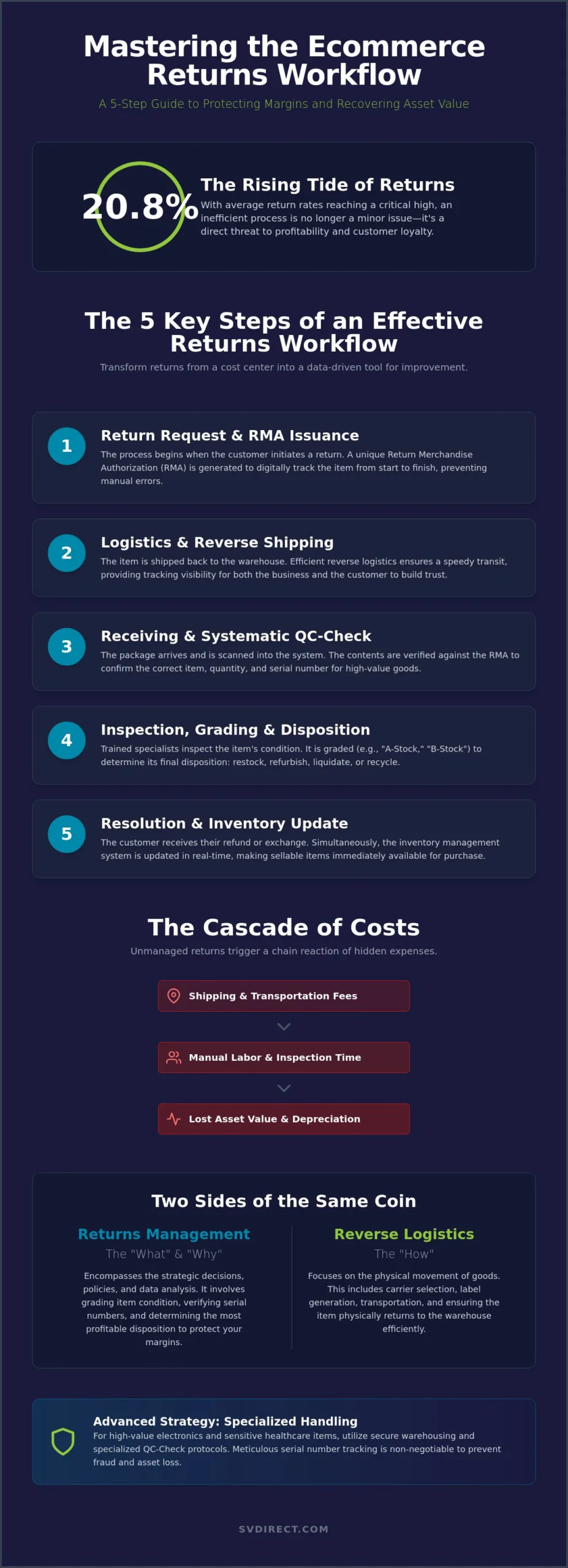
How do you handle returns and reverse logistics?
We manage the entire returns process, from receiving and inspecting returned items to restocking them in your inventory or handling dispositions according to your rules. This process is fully visible to you through our client portal.
returns processing ecommerce

How Returns Processing Affects Retention

A return is not the end of a sale. In many cases, it is the moment that decides whether a customer comes back.

For ecommerce brands, returns processing sits at the intersection of operations, customer experience, and margin control. When it runs well, it reassures buyers that trying a product is safe. When it runs poorly, it turns a small disappointment into a reason to leave for a competitor. That is why retention is tied so closely to how returns are handled, not just whether returns are accepted.

Why ecommerce returns processing drives customer retention

Shoppers do not judge a brand only by how fast an order arrives. They also judge how the brand responds when the item is the wrong size, the wrong fit, or simply not what they expected. Industry research consistently points in the same direction: a positive return experience makes repeat purchasing far more likely, while a bad one can push customers away for good.

That pattern makes sense. Returns happen at a vulnerable moment. The customer has already spent money, waited for delivery, and now has a problem to solve. If the process feels confusing, slow, or expensive, trust drops quickly. If the process feels fair, transparent, and fast, confidence goes up.

A return is often the second first impression.

For growing brands, this matters even more because customer acquisition is expensive. Every retained customer protects marketing spend, strengthens lifetime value, and improves the odds of referrals. Returns processing is not a side workflow. It is a retention system.

The returns processing elements that shape loyalty

Several parts of the returns experience have an outsized effect on retention. Brands do not need a luxury-level program to win loyalty, but they do need consistency.

  • Fast approvals
  • Simple instructions
  • Free or low-cost return shipping
  • Refund visibility: clear updates from request to completion
  • Policy clarity: return windows, fees, and exchange rules stated before purchase
  • Helpful human support

When these basics are in place, customers feel that the brand respects their time. That feeling is powerful. Many shoppers check return policies before buying, which means returns influence conversion long before a return request is ever submitted.

Speed in returns processing changes repeat purchase rates

Speed matters at every step: return authorization, label generation, in-transit visibility, warehouse receipt, inspection, and refund or exchange completion. A delay in any one of those steps can make the entire process feel unreliable.

Customers rarely separate “warehouse delay” from “brand experience.” To them, it is one thing. If the refund takes too long, the brand seems slow. If the exchange is stalled, the brand seems disorganized. If support cannot explain the status, the brand seems indifferent.

That creates a clear operational priority. Brands should aim to shorten time to label, time to warehouse receipt, and time to final resolution. A customer who receives a return label quickly and sees status updates along the way is far more likely to stay patient than one who hears nothing for days.

This is where fulfillment discipline makes a real difference. A partner known for same-day shipping, accurate order handling, and responsive account support is often in a strong position to bring similar structure to returns. For brands working with a 3PL, returns should be treated with the same urgency as outbound fulfillment, not as an afterthought.

Easy returns workflows reduce churn in ecommerce

Complexity is expensive. Every extra step in a return creates another chance for abandonment, confusion, or support tickets.

A strong returns workflow usually has a few traits in common. The customer can start the process without friction. The policy is easy to find. The instructions are plain. Labels are simple to obtain. The brand explains what happens next.

That does not mean every brand needs the most generous return policy in the market. It means the policy should feel fair and easy to use. A 30-day window is often seen as a baseline. Shorter windows can create hesitation before purchase, especially in categories like apparel, footwear, beauty, and giftable products where fit and preference matter.

Ease also depends on channel integration. If a store platform, returns app, and warehouse system are disconnected, delays and mistakes become more likely. If they are synced, inventory can update faster, return reasons can be tracked, and refund status can move cleanly between systems. For brands that are scaling, this kind of operational clarity protects both customer loyalty and internal efficiency.

Return communication and refund visibility build trust

Customers do not expect every return to be approved instantly or every refund to post in an hour. They do expect to know what is happening.

Silence is where frustration grows. A shopper who sees “return received,” “inspection completed,” and “refund issued” can tolerate normal processing time. A shopper who sees nothing may assume the brand is stalling.

Good communication during returns usually includes automated messages and easy access to real people when needed. That combination matters. Automation keeps the workflow moving. Human support protects trust when an exception appears.

For ecommerce brands, a few communication habits are especially valuable:

  • Approval notice: confirm that the request was accepted and explain next steps
  • Tracking updates: show when the return label is created and when the item is in transit
  • Receipt confirmation: notify the customer when the warehouse receives the item
  • Resolution message: state when the exchange, credit, or refund is complete

Brands that communicate well during returns often see more patience from customers and fewer “Where is my refund?” contacts. That reduces support strain while keeping the relationship intact.

Exchanges, store credit, and policy design improve retention

Not every return should end in a refund. In many cases, the better retention move is an exchange or store credit option that keeps the customer engaged with the brand.

This is especially true when the product issue is fixable. A wrong size, a color mismatch, or a replacement preference does not always signal a lost customer. It may signal a customer who still wants the product, just in a different form. A strong returns program makes that path easy.

Policy design matters here. If the refund is the only simple option, customers will take it. If exchanges are visible, fast, and low-friction, many customers will choose them instead.

  • Exchange-first logic: present the right size, color, or comparable SKU before showing a refund path
  • Store credit incentives: offer a small bonus credit to encourage a new purchase
  • Clear fee rules: remove surprise deductions that make customers feel penalized
  • Flexible return windows: reduce purchase anxiety and support repeat buying

For brands focused on retention, this is one of the highest-value shifts available. Revenue stays closer to the brand, and the customer stays active rather than disengaging after a refund.

Returns processing metrics ecommerce brands should track

If retention is the goal, returns cannot be measured only by volume and cost. Brands need to track whether the process is keeping customers confident enough to buy again.

The most useful returns metrics connect operations to customer behavior. They show where friction lives and where improvement will have the biggest effect.

Metric What it shows Retention impact
Time to return label How quickly a customer can act Faster action lowers frustration
Time to refund or exchange How long the issue stays unresolved Shorter cycles build trust
Return reason by SKU Whether the product or listing is causing problems Better product pages reduce future returns
Exchange rate How often a return becomes a new order Higher exchange rates protect revenue
Return-related support contacts Whether the workflow is confusing Fewer contacts usually mean better clarity
Restock accuracy Whether returned inventory is processed correctly Accurate inventory prevents stock errors and overselling

A mature returns program uses these numbers to guide action. If one SKU has an unusually high return rate, the issue may be sizing content, photography, or product quality. If refund time is slipping, the issue may be warehouse capacity or system handoff.

Returns data is customer retention data in operational form.

3PL support for ecommerce returns processing at scale

As order volume grows, returns become harder to manage with manual workflows. That is where the right fulfillment partner can make a measurable difference.

A 3PL that offers broad ecommerce integrations, real-time reporting, and dependable warehouse processes can help brands keep returns organized without building a large in-house operation. For brands that need flexibility, it also helps to work with a partner that can support fluctuating volume, same-day shipping, and specialized workflows.

For a company like Silicon Valley Direct, the strengths that matter in outbound fulfillment also matter in reverse logistics: system connectivity, disciplined handling, account support, and visibility. A 24/7 portal, strong reporting, and real human communication can support a more reliable return experience when paired with clear rules and automation.

This is especially relevant for startups and growing online retailers. They often need a returns process that feels polished long before they have a large internal operations team. A partner that can integrate with ecommerce platforms, maintain order accuracy, and support custom workflows gives those brands a better chance to keep retention high while they scale.

Practical steps to improve ecommerce returns processing

Many brands do not need a complete overhaul. They need a smarter sequence of improvements.

  1. Map the current process: document every step from return request to refund completion and identify delay points.
  2. Simplify the customer path: reduce clicks, clarify policy language, and make labels easy to access.
  3. Automate the status flow: connect store, returns tool, and warehouse updates so customers are never left guessing.
  4. Promote exchanges: give customers easy alternatives to a straight refund.
  5. Review the data monthly: track reasons, timing, and repeat purchase behavior after returns.

Even small changes can shift retention. A faster label email, a clearer return page, or a better exchange prompt can turn a risky moment into a positive one.

For ecommerce leaders, that is the real opportunity in returns processing. Done well, it does more than resolve a problem. It gives customers a reason to trust the brand again.

best pick and pack solutions

Best Pick and Pack Solutions for Brands

Pick and pack solutions sit at the center of ecommerce performance because they decide whether an order leaves the warehouse fast, accurately, and at a sustainable cost. When the process is strong, brands ship faster, reduce customer service tickets, and protect gross margin during growth spikes. The main problem these solutions solve is operational friction: turning live orders and stored inventory into correctly packed shipments without stock errors, carrier delays, or labor bottlenecks. For many brands, the right fulfillment setup becomes a growth system, not just a warehouse function.

What makes a pick and pack solution actually effective?

The best pick and pack solutions combine speed, control, and visibility. Amazon FBA and SVDirect illustrate the core model: barcode-driven picking, real-time inventory data, and disciplined packing workflows that keep error rates low while preserving carrier choice and customer experience.

A strong solution does five things well. It receives inventory cleanly, stores it logically, picks the correct SKU and quantity, packs to channel requirements, and pushes orders into the right carrier service at the right cutoff time. If one of those steps breaks, the whole economics of fulfillment shift.

Accuracy is the first filter. A provider can promise fast shipping, but if mis-picks trigger reships and refunds, your landed cost climbs fast. Best-in-class operators use barcode scans, location controls, and a second verification step on higher-risk orders. That is why claims like Red Stag’s 99.6% accuracy or SVDirect’s double-verified accuracy matter more than generic “fast fulfillment” language.

Speed matters too, but only in context. Same-day shipping is useful if your order cutoff, carrier pickups, and inventory sync can support it consistently. Common misconception: a 2-day delivery promise and same-day warehouse processing are the same thing. They are not. One measures internal cycle time, the other includes carrier transit zones and service selection.

The most effective partners also give brands clear reporting, responsive human support, and room to scale without forcing large minimums too early.

How does the pick and pack process work from order to shipment?

The standard workflow is receiving, putaway, picking, packing, and shipping. FedEx Fulfillment and SVDirect follow this structure because it reduces inventory drift, makes cycle counts easier, and creates clean handoffs between warehouse operations and carrier dispatch.

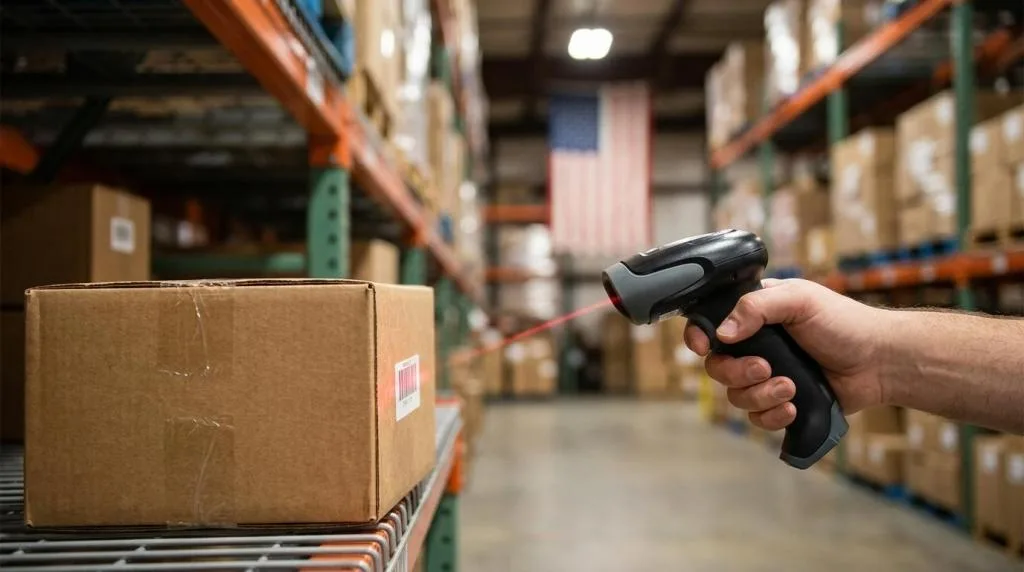
Step 1: Inventory is received, inspected, and assigned to warehouse locations. Good operators create a dock-to-stock process so product becomes sellable fast. If inbound inventory is mislabeled or bundled incorrectly, then stockouts and oversells usually show up days later, not at receiving.

Step 2: Orders flow from Shopify, Amazon, or another channel into a warehouse management system. The WMS creates pick tasks, often by zone, wave, or batch. Barcode validation confirms the picker is at the right bin and holding the right SKU. Pro tip: ask how exceptions are handled when an item is missing from its assigned location. That answer tells you more than a sales deck.

Step 3: Packing, label creation, and carrier handoff close the loop. The warehouse checks packaging rules, inserts branded materials if required, and pushes tracking back to the storefront. If your orders include retail routing guides, lot control, or Amazon prep, then this last stage becomes more specialized and much less forgiving.

What are the best pick and pack solutions for growing brands?

The best options depend on channel mix, SKU profile, and service expectations. SVDirect, Amazon FBA, ShipBob, Red Stag, and Fulfillrite are all credible benchmarks, but each wins for a different operating model rather than a universal “best for everyone” claim.

For fast-growing brands, the strongest choice is usually the provider that fits your order pattern, not the biggest logo. A beauty brand with light parcels needs something very different from a furniture brand with oversized cartons.

  1. Silicon Valley Direct (SVDirect): A strong fit for multichannel ecommerce brands that want same-day shipping, no minimum order requirement, 80+ integrations, dedicated account management, and West Coast fulfillment from Union City, California. It stands out for brands that value real-human support, custom workflows, and warehouse visit access.
  2. Amazon FBA / Multi-Channel Fulfillment: Best for sellers with heavy Amazon volume or brands that want Prime-adjacent speed and massive scale. The trade-off is less packaging control and a tighter fit with Amazon’s rules and fee model.
  3. ShipBob: Well suited to DTC brands that want distributed inventory, cloud reporting, and fast national coverage. Case studies cite major shipping-time reductions, though pricing is custom and network fit matters.
  4. Red Stag Fulfillment: A smart choice for heavy, fragile, or high-value items. Its reputation comes from quality control and secure handling, not low-cost commodity fulfillment.
  5. Fulfillrite: Often a practical entry point for smaller brands that want transparent, simple pricing and easy onboarding without enterprise complexity.

How do you choose the right pick and pack provider for your SKU mix?

The right provider matches your product physics, order profile, and channel rules. Red Stag and Amazon FBA show why: one is built for bulky, fragile goods, while the other excels at standardized, high-velocity marketplace fulfillment.

Step 1: Profile your catalog honestly. Measure average order size, unit dimensions, weight breaks, fragility, lot or expiry needs, and bundle frequency. Common misconception: average order value tells you enough. It does not. A catalog with one oversized SKU can reshape storage, labor, packaging, and postage costs.

Step 2: Map your channels and service constraints. If you sell on Shopify plus wholesale retail dropship, then routing-guide compliance and carton labeling matter. If you sell healthcare products or literature, then traceability and documentation often matter just as much as shipping speed.

Step 3: Stress-test the fit. Ask for sample invoices, cut-off times, returns SOPs, and a live walkthrough of the client portal. If the provider cannot explain how inventory moves from receiving to exception handling, then you are buying uncertainty, not efficiency.

This is where regional fit matters. A Bay Area brand shipping nationwide may prefer a West Coast node like SVDirect first, then add more distribution later if volume justifies it.

Is a 3PL pick and pack service better than in-house fulfillment?

A 3PL is usually better once order volume, channel complexity, or labor variability rises. Shopify-first brands and Amazon sellers often hit this point sooner than expected because postage, storage discipline, and staffing become harder to manage internally.

In-house fulfillment gives maximum control. You control packaging, walk the shelves yourself, and can make same-hour changes. That can work well when order volume is low, SKUs are simple, and the founding team still wants operational proximity.

A 3PL shifts the economics. You trade some direct control for labor flexibility, negotiated shipping rates, warehouse systems, and execution bandwidth. If your team is spending afternoons printing labels and chasing inventory mismatches, then fulfillment is already taking time away from growth.

The real comparison is not rent versus storage fees. It is fully loaded cost versus fully loaded cost. Include warehouse space, labor turnover, WMS software, packaging supplies, management time, shrinkage, and the cost of shipping from one origin instead of a better-positioned network. Pro tip: if peak season requires temp labor, overtime, and last-minute packaging buys, your in-house model is probably more expensive than it looks.

How do pick and pack fees really compare across providers?

Pick and pack pricing is never just one fee. Amazon FBA and FedEx Fulfillment make this clear: the visible per-order rate is only part of the total cost once storage, receiving, returns, and surcharges are added.

A smart review starts with your average order profile, then tests how each pricing model behaves when volume, SKU count, or carton size changes. If your orders usually contain one item, a simple flat fee can work. If your orders contain three to five items, then “additional pick” pricing becomes far more important.

  • Receiving: Per carton, per pallet, per hour, or included only up to a threshold.
  • Storage: Per bin, shelf, pallet, or cubic foot. Amazon often prices by cubic foot, while others quote pallet or location fees.
  • Pick and pack: First-item fee plus added-item fees, or a bundled per-order rate.
  • Value-added work: Kitting, inserts, branded packaging, Amazon prep, and returns processing can materially change margin.

Historical market references help frame the range. Amazon fulfillment fees often land around $2 to $6 per unit depending on size and weight, plus storage. Older FedEx examples cited around $0.40 for pick and pack plus storage of roughly $8 to $15 per pallet per month, though live quotes vary. Common misconception: the cheapest pick fee equals the lowest total fulfillment cost. It rarely does.

How can you onboard to a new pick and pack solution without disrupting orders?

A smooth onboarding depends on clean SKU data, parallel testing, and controlled inventory transfer. Shopify and NetSuite integrations can speed the move, but only if item masters, bundles, and order rules are standardized first.

Step 1: Clean the data before inventory moves. Normalize SKU names, barcodes, bundle logic, dimensions, and reorder thresholds. If the same item exists under two IDs across channels, then your first month will likely produce preventable exceptions.

Step 2: Run a parallel test. Send a limited order set through the new provider, confirm tracking sync, validate inventory adjustments, and test returns. Pro tip: do not skip edge cases. Test bundles, split shipments, backorders, and canceled orders, not just easy one-line orders.

Step 3: Move inventory in phases and protect service levels. Keep safety stock, preserve your current fulfillment path until the new one is stable, and watch cut-off times closely. If peak season is approaching, then move earlier than you think. Brands that wait until Q4 often pay for speed with avoidable errors.

Which technology features matter most in modern pick and pack operations?

The most important features are WMS control, barcode validation, live inventory visibility, and flexible integrations. ShipBob and SVDirect both reflect this reality: software quality often matters more than visible warehouse automation.

Robots get attention, but the real performance gains usually come from cleaner system logic. A modern pick and pack stack should connect your storefront, order management, warehouse management, and carrier tools without manual rekeying. If orders are imported late or inventory updates are delayed, then customer promises break before labor even starts.

Look for real-time order status, location-based inventory, automated shipping rules, and reporting that surfaces aging stock and exception rates. For regulated or sensitive categories, lot tracking and expiration control matter. For custom packaging brands, insert logic and order tagging matter.

Pro tip: ask whether the provider supports 80+ native integrations, custom API options, or both. If your brand changes apps regularly, flexibility in integrations can be more valuable than a sophisticated conveyor line.

How do accuracy and same-day shipping affect margin and customer retention?

Accuracy and same-day shipping directly protect profit. Red Stag’s 99.6% accuracy and ShipBob case studies on shorter transit times show the same pattern: fewer errors and faster fulfillment reduce support costs while improving repeat purchase behavior.

A wrong order is not a small mistake. It can trigger outbound freight, return handling, replacement freight, customer service time, and a lost next purchase. If your average order value is modest, one avoidable mis-pick can erase profit from several correct orders.

Speed also compounds. Same-day shipping shortens order cycle time, increases the chance of hitting promised delivery windows, and reduces “where is my order?” contacts. SVDirect states that more than 99% of orders ship same day, while its double-verification standard aims to reduce costly reships.

  • Margin protection: Fewer reships, fewer refunds, lower support labor.
  • Conversion support: Faster stated delivery dates can improve checkout confidence.
  • Retention impact: Reliable delivery increases trust, especially for replenishment products.
  • Brand perception: Clean packaging and correct contents shape the unboxing moment.

If your brand sells supplements, cosmetics, or repeat-purchase essentials, then operational consistency often matters more than shaving a few cents off the pick fee.

When should a brand switch pick and pack partners?

A switch is justified when service quality blocks growth. Amazon MCF and regional 3PLs like SVDirect solve different problems, so the trigger is rarely size alone. The real signal is when your current partner no longer fits your channels, products, or service targets.

Watch for pattern changes, not isolated mistakes. Rising inventory discrepancies, delayed receiving, weak retail compliance, poor reporting, or account support that disappears during peaks all indicate structural fit problems. If a partner cannot support Canada, custom packaging, lot control, or new marketplace rules, growth gets boxed in.

One more misconception deserves attention: brands often wait until performance becomes painful. That is late. If customer complaints are rising or you are manually patching inventory data every week, then planning the transition early is safer than reacting during a crisis.

Ask for KPI transparency before and after the move. Order accuracy, same-day ship rate, dock-to-stock time, shrinkage, and support response times give you the clearest answer on whether the next solution is actually better.

how a 3pl improves delivery speed

7 Ways a 3PL Improves Delivery Speed

Delivery speed affects conversion rate, repeat purchase, and marketplace performance. A 3PL improves delivery speed by shrinking the time between checkout, warehouse processing, carrier handoff, and final delivery. The main problem it solves is operational delay caused by single-location inventory, manual fulfillment, and limited shipping options. When those bottlenecks are removed, brands can move from slow, inconsistent shipping to same-day shipment and tighter delivery windows.

How does a 3PL improve delivery speed from checkout to doorstep?

A 3PL improves delivery speed by shortening warehouse processing and transit time at once. With Shopify integrations, UPS or FedEx rate shopping, and inventory placed near buyers, orders leave faster and travel fewer zones.

Speed in logistics is rarely just about buying a faster label. A common mistake is focusing on air shipping while ignoring the 6 to 18 hours an order may sit before pick and pack even begins. A strong 3PL reduces that internal lag with a warehouse management system, barcode workflows, and later carrier pickup cutoffs.

Then it attacks transit time. If inventory sits closer to demand, the package enters lower shipping zones, which usually means one to two fewer days in transit for ground services. That is why a distributed 3PL can often beat an in-house team even when both use the same carriers.

The real gain comes from the connection between OMS, WMS, and TMS. If the order system sends data instantly, the warehouse picks accurately, and the transportation layer picks the best service, delivery speed improves at every handoff.

Is a 3PL faster than in-house fulfillment for most eCommerce brands?

Yes. For most growing eCommerce brands, a capable 3PL is faster than in-house fulfillment because it combines better warehouse software, trained labor, and carrier access that smaller teams rarely match.

In-house fulfillment can be quick when demand is local, SKU count is low, and the team already runs a disciplined operation. Yet many brands hit the same ceiling: one warehouse, one pick process, one carrier habit, and no buffer for spikes. That setup works until sales rise, a promotion hits, or marketplace SLAs tighten.

Industry case studies show automated 3PL environments can process orders in 15 to 30 minutes, compared with 8 to 12 hours in manual operations. That difference matters more than many teams expect. If an order misses a 3:00 p.m. pickup, even a two-day label becomes a three-day customer experience.

A useful test is simple:

  • 3PL usually wins: national customer base, frequent order spikes, multiple sales channels
  • In-house can win: one region, stable volume, strict internal process control
  • Hybrid works best: flagship SKUs outsourced, specialty or fragile lines kept in-house

What 3PL companies are often considered for fast eCommerce fulfillment?

Several 3PLs are common shortlists for fast shipping, including Silicon Valley Direct, ShipBob, and Ryder. The right choice depends less on name recognition and more on node locations, cutoffs, SKU profile, and system integrations.

A common misconception is that the largest network is automatically the fastest. In practice, the best fit is the provider whose warehouses, support model, and carrier mix match your order map.

  1. Silicon Valley Direct (SVDirect): Often a strong fit for West Coast and national brands that want same-day shipping, no minimum order requirements, 80+ preconfigured integrations, and direct account support from a Union City, California base.
  2. ShipBob: Commonly evaluated by DTC brands that want broad U.S. node coverage and merchant-friendly software.
  3. Ryder: Frequently considered by larger omnichannel operations that need transportation depth and enterprise process control.
  4. Red Stag Fulfillment: A benchmark for heavier, high-value, or harder-to-pack products where accuracy affects speed.
  5. FedEx Supply Chain: A useful enterprise benchmark for brands comparing network scale and transportation reach.

How does inventory placement cut transit time step by step?

Inventory placement cuts transit time by reducing the number of shipping zones a package crosses. If stock sits near Los Angeles, Chicago, or New Jersey demand clusters, ground shipping often beats premium air from a single warehouse.

Step 1 is mapping demand, not guessing it. Pull 60 to 90 days of order data by ZIP code and look for dense clusters. If 65% of orders are west of the Rockies, holding everything on the East Coast creates avoidable delay.

Step 2 is choosing the minimum number of nodes that changes the zone map. Many brands do not need six warehouses. Moving from one node to two often creates the biggest jump, especially for East-West U.S. demand.

Step 3 is allocating inventory intelligently. Fast movers belong in multiple nodes. Slow movers often should stay centralized. Pro tip: scattering every SKU everywhere can increase stockouts because safety stock gets fragmented.

The trade-off is clear. More nodes can mean faster delivery and lower parcel zones, but also more transfer planning, more inventory balancing, and more working capital in stock.

How does automated order processing reduce fulfillment time step by step?

Automated order processing removes manual delay between checkout and carrier scan. With Shopify, Amazon, and NetSuite feeds flowing into a WMS, a 3PL can move orders from receipt to packing in minutes instead of hours.

Step 1 is order ingestion. The moment a customer buys, the order flows into the order management system. No spreadsheet export, no email handoff, no manual re-keying.

Step 2 is warehouse execution. The WMS validates inventory, assigns the best pick path, groups compatible orders into batches, and prints labels based on service rules. Barcode scans confirm the right SKU, quantity, and carton.

Step 3 is manifesting and handoff. Once packed, shipments are sorted by carrier, manifested, and staged before cutoff. If the order enters the queue early enough, same-day shipping becomes realistic, not aspirational.

A common misconception is that automation means robots only. In many operations, the bigger win comes from clean integrations, barcode discipline, and exception rules. Robotics help, but process design usually decides whether orders leave in 20 minutes or 6 hours.

How does multi-carrier routing improve last-mile delivery step by step?

Multi-carrier routing improves last-mile delivery by picking the fastest realistic service for each shipment. UPS, USPS, FedEx, and regional carriers do not perform equally in every lane, weight class, or residential market.

Step 1 is measuring carrier performance by lane. A strong 3PL tracks transit by ZIP pair, promised date, surcharge pattern, and missed scan rate. If one carrier is weak in rural Mountain West deliveries, the system should know that.

Step 2 is applying shipping rules. If a parcel is lightweight and residential, USPS Ground Advantage may deliver faster than expected. If it is oversized, UPS or FedEx may provide more consistent handling. If the order ships to a nearby metro, a regional carrier may beat both.

Step 3 is switching dynamically. Weather, peak season congestion, and labor events can change the best option overnight. AI-driven routing case studies have pushed on-time delivery above 99% and reduced cost per delivery by about 11%.

A common mistake is choosing the cheapest label. The fastest total outcome is based on pickup time, sort network, and actual lane performance, not just rate card price.

Is one warehouse or a multi-node 3PL network better for fast shipping?

A multi-node 3PL network is usually faster for national delivery, while one warehouse is simpler to control. Brands with coast-to-coast demand often cut one to two transit days when orders ship from the closest node.

One warehouse keeps inventory management tight. There is one receiving flow, one stock pool, and fewer transfer decisions. That can be ideal for lower volume brands or catalogs with many slow-moving SKUs.

A multi-node network wins when customer demand is geographically spread and shipping promises matter to conversion. It shortens average parcel zones, supports later order cutoffs, and reduces dependence on expensive air services.

The trade-off looks like this:

  • One node: simpler control, lower inventory fragmentation, longer average transit
  • Multi-node: faster delivery, better ground coverage, higher safety stock requirements
  • Hybrid network: core fast movers distributed, long-tail SKUs centralized

Why do real-time inventory and tracking tools prevent delivery delays?

Real-time visibility prevents delays by stopping oversells, mispicks, and blind spots before they become missed delivery promises. A WMS paired with tools from Shopify or Amazon gives operations the same facts at the same time.

If the website says an item is available but the bin is empty, the order stalls. If that stall happens after the carrier cutoff, the customer loses a full day even though the shipping label may still say two-day service.

That is why real-time inventory accuracy matters as much as carrier speed. Accepted warehouse standards usually target inventory accuracy above 99%. Strong 3PLs support that with barcode scans, cycle counts, and live inventory sync across channels.

Tracking has an operational value too. Many teams think tracking is only for customer service. It is also how a 3PL catches exception scans, address issues, and handoff failures early enough to reroute or intervene before the package falls off schedule.

How do cross-docking and consolidation speed freight and parcel orders?

Cross-docking speeds delivery by removing storage time between inbound and outbound moves. In facilities handling pallets, parcel injection, or wholesale replenishment, that can cut hours from the order path before the shipment even leaves the dock.

The concept is simple. Goods arrive, get sorted, and leave without being put away into reserve storage. One reported 3PL case cut inbound processing from 4.2 hours to 1.8 hours through automation and cross-dock flow.

This is especially effective for product launches, promotional mailers, retail replenishment, and fast-turn freight. Consolidation helps too. If several smaller shipments share a linehaul, a 3PL can zone-skip or inject parcels closer to destination sort centers, trimming final transit.

There is a trade-off. Cross-docking needs clean ASNs, dock appointments, and carton-level accuracy. If inbound data is weak, the dock turns into a traffic jam. That is why cross-dock works best with disciplined suppliers and clear SOPs.

Which KPIs prove a 3PL is actually improving delivery speed?

The best proof is measurable cycle time improvement, not marketing language. Look at same-day ship rate, on-time delivery, dock-to-stock time, and average transit by zone using carriers like UPS and USPS.

If a provider claims fast delivery, ask for pre-cutoff and post-cutoff data separately. That protects you from a common reporting trick where an order placed at 11:50 p.m. is counted beside one placed at 9:00 a.m.

Good benchmarks vary by model, though accepted targets are fairly consistent for eCommerce fulfillment:

  • Order cycle time: checkout to carrier acceptance scan
  • Same-day ship rate: percent of eligible orders shipped before cutoff
  • On-time delivery: percent arriving by promised date
  • Inventory accuracy: cycle count and bin-level accuracy, often 99%+
  • Exception resolution time: hours required to fix holds, address errors, or stock issues

A final metric matters more than many brands expect: average shipping zone. If a 3PL lowers your average zone traveled, faster delivery usually follows without relying on expensive express methods. That is often the clearest sign the network design is working.

kitting and assembly services for ecommerce

Kitting and Assembly for Ecommerce Brands

When ecommerce growth starts to bring more SKUs, more channels, and more packing complexity, kitting and assembly can turn a slow fulfillment process into a much cleaner operation. Instead of picking every item one by one for each order, products can be grouped, assembled, labeled, and prepared in advance or built to spec as orders arrive.

For brands selling bundles, gift sets, subscription boxes, promotional packs, starter kits, or multi-part products, this service can reduce handling time, improve order accuracy, and create a stronger unboxing experience. It also gives marketing teams more freedom to launch special offers without overwhelming warehouse operations.

Ecommerce kitting and assembly services that support faster fulfillment

Kitting means combining multiple items into a single ready-to-ship unit. Assembly can include light product build-outs, inserting printed materials, applying labels, arranging branded packaging, or preparing retail-ready sets. In practice, the service can be as simple as combining two SKUs in one box or as detailed as building a campaign kit with custom components, inserts, and compliance labeling.

For ecommerce brands, this matters because bundles often sell better than standalone products. A skincare set, a tech starter pack, or a seasonal gift collection can increase average order value while making the customer’s buying decision easier. The challenge is operational: these offers need to be packed consistently, accurately, and at scale.

SVDirect supports both pre-built kits and on-demand assembly within a broader 3PL fulfillment model. That means brands can store components, assemble kits based on forecasted demand, and route orders through the same shipping workflow used for standard ecommerce fulfillment.

Common kit formats include:

  • Subscription boxes
  • Product bundles
  • Gift sets
  • Influencer mailers
  • Promotional kits
  • Retail-ready multi-packs

Benefits of kitting and assembly for ecommerce brands

A strong kitting workflow reduces repeated labor. When a bundle is built once and stored as a finished kit SKU, the warehouse team picks one unit instead of several separate items. That can shorten processing time, especially during peak periods when order volume rises fast.

It also improves consistency. Kit assembly gives teams a defined process for product placement, inserts, packaging, and verification. That structure helps reduce missing items, wrong combinations, and presentation issues that can hurt customer trust.

The impact usually shows up across several areas of fulfillment:

Area How kitting helps
Speed Fewer picks per order, faster packing, easier same-day shipping workflows
Accuracy Controlled assembly steps and verification reduce order errors
Cost control Fewer touches, optimized packaging, less wasted labor
Inventory visibility Kit SKUs and component tracking support cleaner stock control
Customer experience Better presentation, cleaner packaging, more complete orders
Merchandising Easier to launch bundles, kits, limited editions, and campaign packs

Shipping can improve too. Sending one well-packed kit is often more efficient than shipping multiple items separately. Packaging can be standardized, dimensional weight can be managed more carefully, and customers receive one complete package instead of several fragmented shipments.

SVDirect kitting and assembly services for ecommerce fulfillment

SVDirect provides kitting and assembly as part of a full-service ecommerce fulfillment operation in Union City, California. Brands can combine warehousing, inventory control, pick-pack-ship, custom packaging, integrations, and value-added services under one roof. This is especially useful for companies that want one partner handling both daily order flow and special project work.

The service is designed for flexibility. Some brands need recurring kit builds for subscription or bundle programs. Others need short-run assembly for a product launch, a trade promotion, an Amazon prep project, or a seasonal campaign. SVDirect supports both models without minimum order requirements, which gives startups and growing brands room to scale at their own pace.

Orders can flow in from connected ecommerce platforms and marketplaces, while kit inventory and component inventory remain visible through a customized web portal. With more than 80 preconfigured integrations and custom API support, brands can keep sales channels, fulfillment activity, and reporting connected without adding unnecessary manual work.

Key service strengths include:

  • Same-day shipping: Orders received within service windows can move out quickly
  • No minimum order requirement: Useful for startups, testing new bundles, and seasonal projects
  • Double-verified order accuracy: Built to reduce errors before shipment
  • Dedicated account manager: Real support from a real person who knows the account
  • Custom packaging options: Branded presentation, inserts, and packaging workflows
  • Warehouse visits welcomed: Helpful for Bay Area brands that want direct visibility

Inventory control and integrations for kit fulfillment

Kitting only works well when inventory is managed correctly. Each finished kit has to stay tied to its component items, and stock counts need to remain accurate whether kits are preassembled or built on demand. Without that visibility, brands can end up overselling bundles or running short on one component while other items sit untouched.

SVDirect supports this operational layer through integrated systems, reporting, and real-time order visibility. Brands can monitor stock levels, order status, and shipment activity through a 24/7 portal, while connected platforms sync order data into fulfillment workflows. For brands with custom systems, API support can help keep kit logic and inventory movement consistent across channels.

This is where kitting becomes more than a packing service. It becomes part of a disciplined fulfillment process that supports growth.

Common ecommerce kitting and assembly use cases

Many brands start using kitting because marketing creates a bundle that customers love. Then the operational value becomes obvious, and the program grows from one campaign to a repeatable part of the business.

Kitting and assembly are often a fit for:

  • Subscription programs: Monthly or quarterly boxes with changing contents
  • Product launches: Intro kits, sampling sets, press mailers, influencer packs
  • Cross-sell bundles: Frequently bought together offers that raise cart value
  • Retail compliance: Multi-unit packs, inserts, labeling, and Amazon prep
  • Promotional fulfillment: Literature kits, branded merchandise, event materials

SVDirect also supports specialized fulfillment categories, including literature fulfillment, healthcare-related fulfillment needs, print-on-demand, and presorted mail services. That makes the service useful not only for classic DTC brands, but also for organizations with more detailed packaging, insert, or compliance requirements.

Pre-built kits vs on-demand assembly for ecommerce orders

The right model depends on order volume, SKU complexity, and campaign timing. Pre-built kits are often the best option when demand is predictable. If a brand knows a holiday gift set or subscription box will move in high volume, assembling ahead of time can speed fulfillment and reduce pressure during the rush.

On-demand assembly is often the better choice when kits vary frequently or include personalized combinations. It helps avoid tying up inventory in finished goods that may change week to week. This model can work well for promotional campaigns, build-your-own bundles, or test programs where demand is still being measured.

A practical fulfillment partner should be able to support both approaches, and switch between them as the sales pattern changes. That flexibility is especially valuable for fast-moving ecommerce brands that launch often, test often, and need operations to keep pace.

Kitting services that help brands scale without adding friction

As order volume grows, complexity grows with it. More bundles, more marketplaces, more inserts, more packaging rules, more customer expectations. Kitting and assembly bring structure to that complexity. They make it easier to ship accurately, present products well, and support campaigns that would otherwise strain internal teams.

SVDirect brings together warehousing, fulfillment, integrations, custom packaging, and kitting support in one operating model. For ecommerce brands in Silicon Valley, the Bay Area, across the USA, and into Canada, that creates a practical path to faster shipping, cleaner execution, and more confident growth.

peak season fulfillment planning

How to Prepare for Peak Season Fulfillment

Peak season rarely breaks an ecommerce operation because demand is high. It breaks because the business waited too long to prepare for what that demand would do to inventory, staffing, systems, and shipping capacity.

The strongest peak results usually come from brands that treat fulfillment as part of revenue planning, not just a warehouse task. Promotions, product launches, carrier commitments, customer support messaging, and reorder timing all need to work together if you want fast shipping and accurate orders when volume spikes.

Late planning is expensive planning.

Peak season fulfillment planning starts earlier than most brands expect

A practical peak season plan often begins about 90 days before the first major demand surge. That window gives enough time to forecast volume, reserve inventory, test system capacity, confirm supplier timelines, and set labor plans before urgency takes over.

By 60 days out, the plan should move from strategy into execution. Purchase orders need to be firm, temporary labor needs should be clearer, packaging materials should be reviewed, and warehouse workflows should be adjusted for higher throughput. At 30 days, the focus shifts again: cycle counts, slotting fast movers closer to packing stations, validating shipping rules, and confirming backup options if a supplier or carrier misses a target.

The final week is not the time to make structural changes. It is the time to verify that the plan is ready to hold under pressure.

Time Before Peak Main Focus What to Complete
90 days Forecasting and capacity planning Review prior peak data, model growth scenarios, estimate labor and storage needs, test WMS and integrations
60 days Inventory and staffing preparation Confirm supplier orders, secure packaging, recruit seasonal labor, prepare training materials
30 days Operational readiness Increase safety stock for priority SKUs, run cycle counts, stage promotional inventory, validate carrier rules
7 days Final checks and communication Brief teams, confirm shifts, review escalation paths, move top sellers into prime pick locations

Demand forecasting and inventory planning for peak season fulfillment

Forecasting should go beyond total monthly sales. Peak fulfillment planning gets stronger when brands examine daily and hourly order patterns, promotional lifts, channel-specific demand, and SKU-level velocity. A business that sold 20,000 units last November does not necessarily need the same inventory mix this year if product rankings, bundle strategy, or marketplace exposure changed.

That is why scenario planning matters. Build a conservative case, an expected case, and a high-growth case. Then pressure-test each one against warehouse capacity, inbound lead times, and reorder points. This makes it easier to decide where extra safety stock is justified and where it would only tie up cash.

Supplier communication belongs inside this process, not outside it. If marketing is planning a promotion, suppliers need that information early. If lead times are unstable, backup sourcing should be discussed before stock gets tight. The goal is not simply to buy more inventory. It is to buy the right inventory, at the right time, with enough buffer to protect service levels.

A solid forecasting review usually includes a few non-negotiables:

  • Historical demand patterns: prior peak sales by day, week, hour, channel, and SKU
  • Growth assumptions: new products, ad spend changes, marketplace expansion, and expected conversion shifts
  • Inventory buffers: safety stock levels for fast movers and promotional items
  • Supplier timing: inbound cutoffs, production constraints, and alternate sourcing options

One missed detail here can ripple all the way into late shipments, oversells, and customer service backlogs.

Peak season warehouse operations and systems readiness

Even good forecasts can fail if the warehouse is not set up for higher order density. Peak season puts pressure on every operational step: receiving, putaway, picking, packing, labeling, carrier handoff, and returns. Small inefficiencies that feel manageable in a normal week can become serious bottlenecks once order counts multiply.

Warehouse layout deserves close attention. High-velocity SKUs should be placed where they can be picked quickly, with minimal travel. Bundles and promotional kits should be prebuilt when it makes sense. Packing stations should have enough supplies within reach so team members do not lose time walking for cartons, inserts, or tape.

Systems need the same level of preparation. Integrations between storefronts, marketplaces, order management, and shipping tools should be tested before the rush. If order imports lag, inventory sync is delayed, or label generation fails under volume, peak performance drops fast. This is one reason many growing brands rely on fulfillment partners with established automation, tested workflows, and strong reporting.

Operations teams often focus on these warehouse readiness items before peak hits:

  • WMS capacity testing
  • barcode scan verification
  • label and packing slip validation
  • slotting fast movers near shipping areas
  • cycle counts on top SKUs
  • packing material review
  • exception-handling workflows

Automation can make a major difference here, though it does not need to be flashy to be valuable. Barcode-guided picking, automated order routing, shipping rule logic, and real-time inventory updates are often enough to improve speed and accuracy during high-volume periods.

Staffing and labor planning for peak season fulfillment

Peak labor planning works best when it is built from expected order flow, not guesswork. That means estimating how many people are needed by week and by function, including receiving, picking, packing, quality checks, and customer support. It also means identifying where cross-training can protect the operation if one station gets overwhelmed.

Temporary labor can help, but only if onboarding is practical. Quick-start training guides, role-specific checklists, and on-the-floor coaching help new team members become productive faster. Experienced employees should not spend peak week inventing training materials on the fly.

A blended labor model is often the most stable option. Core team members hold the process knowledge, while seasonal staff provide extra capacity during spikes. Smart shift scheduling can also flatten pressure across the day by adding overlap during known order surges and extending coverage around carrier cutoffs.

Culture matters more during peak than many brands expect. Teams perform better when targets are clear, safety standards are consistent, and escalation paths are obvious. Speed is important, but speed without accountability creates returns, reships, and avoidable customer frustration.

Carrier strategy, customer communication, and peak season contingency planning

Shipping capacity should never depend on one carrier if volume is meaningful. Peak periods increase the risk of network congestion, missed scans, trailer shortages, weather delays, and rate changes. A multi-carrier setup gives brands more flexibility to route by speed, zone, cost, and service reliability as conditions change.

Customer communication should be planned with the same care as warehouse operations. Order cutoff messaging, estimated delivery dates, tracking updates, delay notices, and return instructions all shape how customers experience peak season. Clear communication can preserve trust even when a shipment takes longer than hoped. Silence usually does the opposite.

Contingency planning is where experienced operators separate themselves. A real backup plan defines triggers and responses before there is a problem. If a supplier misses an inbound date, what gets prioritized? If one carrier limits pickups, where does volume move? If demand on a hero SKU doubles, which orders receive available stock first?

A useful contingency framework usually covers these areas:

  • Inventory risk: backup suppliers, substitute SKUs, safety stock thresholds
  • Carrier risk: regional carrier options, routing rules, service-level fallbacks
  • Labor risk: overtime plans, on-call staff, cross-trained float coverage
  • System risk: manual order release procedures, label fallback methods, escalation contacts

Returns also deserve attention here. Peak season does not end when the last outbound order ships. A well-planned returns process keeps post-holiday volume from creating a second operational crunch.

Real-time visibility improves peak season fulfillment performance

Visibility helps teams act early instead of reacting late. When inventory, order status, and shipment updates are synced across systems, brands can spot oversell risk, late-moving SKUs, or delayed carrier scans before they turn into larger service failures.

This is especially important for multichannel sellers. If Shopify, Amazon, Walmart, and other channels are not updating inventory quickly enough, the business may keep selling units that are already committed elsewhere. That kind of mismatch is expensive during peak because replacements, cancellations, and support tickets all arrive at once.

Customer-facing visibility matters too. Shoppers want confirmation that their order was received, packed, shipped, and handed off. Automated tracking notifications reduce uncertainty and often lower support volume during busy weeks. They also create a stronger brand experience, because customers can see progress rather than wonder what happened after checkout.

How a 3PL can strengthen peak season fulfillment planning

For many brands, peak readiness becomes easier when fulfillment is supported by a 3PL built for variable order volume. A capable partner can bring tested workflows, warehouse discipline, technology integrations, and shipping flexibility that would take significant time and capital to build internally.

That support is especially useful when the business is growing fast or selling across multiple channels. A provider like Silicon Valley Direct supports ecommerce fulfillment with same-day shipping, no minimum order requirement, 80+ preconfigured integrations, custom API support, and a 24/7 web portal with reporting. Those capabilities matter during peak because they help orders move quickly while keeping inventory and tracking data current.

Operational accuracy also matters more as volume rises. Double-verification processes, barcode controls, dedicated account support, and direct access to a real person by phone can reduce the friction brands often feel when something needs immediate attention. For Bay Area and Silicon Valley brands, access to an on-site Union City warehouse visit can also make planning discussions more grounded and practical.

When evaluating a 3PL for peak support, brands often look for a few specific strengths:

  • Fast execution: same-day shipping and dependable cutoff management
  • Integration depth: prebuilt ecommerce connections plus custom API options
  • Scalability: support for startups, established brands, and seasonal volume swings
  • Visibility: reporting, portal access, and current order and inventory data
  • Human support: dedicated account management and responsive communication

The right fulfillment setup does more than help a brand survive the season. It gives the business room to market aggressively, launch confidently, and protect customer trust while order counts are climbing.

Peak season planning rewards early action. The brands that forecast carefully, coordinate with suppliers, test systems, prepare labor, and build backup options are usually the ones that keep shipping promises when demand is at its highest.

cross border shipping for ecommerce

Cross-Border Shipping for US Ecommerce Brands

Selling to customers outside the United States can reshape an ecommerce brand’s growth curve. A strong product catalog, healthy demand, and a polished storefront can travel well across borders, but shipping operations have to keep up.

That is where many brands hit a wall. International orders bring new taxes, more paperwork, longer transit paths, and customer expectations that are often just as high as they are at home. The good news is that cross-border shipping does not have to feel unpredictable when the fulfillment model is built for it.

Why cross-border ecommerce shipping matters for US brands

For many US ecommerce companies, domestic growth reaches a point where the next layer of demand sits overseas. Canadian buyers may already be visiting the site. Orders may be coming in from Europe, Australia, or parts of Asia. Marketplace listings may start attracting international traffic without any added advertising spend.

Cross-border shipping turns that interest into revenue.

It also gives brands a way to spread risk across more than one market. If demand softens in one region, other regions can help stabilize sales. That kind of flexibility is especially valuable for startups and mid-sized online retailers trying to scale without opening facilities in multiple countries right away.

Still, international demand only becomes profitable when fulfillment is reliable. A brand can win the sale with strong pricing and product-market fit, then lose the customer on customs delays, surprise duties, or weak tracking.

Main cross-border shipping challenges for ecommerce fulfillment

Shipping a parcel from California to New York is not the same as shipping one from California to Toronto, London, or Sydney. Once a package leaves the domestic network, a brand is dealing with multiple transport legs, customs checks, country-specific import rules, and different last-mile delivery standards.

Most of the pressure points fall into a few categories:

  • Transit variability: carrier handoffs, port congestion, seasonal surges, and limited delivery coverage in some destinations
  • Customs compliance: commercial invoices, HS codes, product descriptions, declared values, and country-specific restrictions
  • Cost control: duties, VAT or GST, brokerage fees, fuel surcharges, and dimensional weight charges
  • Customer visibility: tracking gaps between carrier networks and poor communication during customs review

A single documentation error can stop a package cold. An incomplete invoice, a vague product description, or the wrong tariff code can trigger manual review and add days to the delivery window.

Restricted goods add another layer. Batteries, supplements, cosmetics, medical items, perishables, and certain electronics often need added review or special handling. Even packaging can affect cost and transit success. Oversized cartons drive up charges, while weak packaging raises the risk of damage after long international moves.

How customs clearance shapes cross-border delivery performance

Customs is not a side issue in international ecommerce. It is one of the main drivers of speed, cost, and customer satisfaction.

Every destination country has its own import requirements. Those rules can cover product classification, valuation, labeling, documentation, taxes, prohibited goods, and supporting certificates. The more countries a brand serves, the more important process discipline becomes.

Customs clearance tends to go smoothly when order data is clean from the start. Product titles should be specific. Declared values should match the order. HS codes should reflect the actual item, not a rough guess. Supporting documents should be generated automatically where possible, not typed manually at the last minute.

That is one reason technology matters so much in cross-border fulfillment. When a platform pulls accurate data directly from Shopify, Amazon, WooCommerce, or another sales channel, it reduces the chance of human error before the label is even created.

Brands also need a clear policy on duties and taxes. If the customer sees one price at checkout and another bill during delivery, trust drops fast. Many merchants reduce friction by showing landed costs upfront or using delivery duties paid models where it makes business sense.

Carriers, freight forwarders, and 3PLs in cross-border shipping

Not every logistics partner does the same job. This matters because many ecommerce teams assume a carrier alone can solve international shipping complexity.

A carrier moves the parcel. A freight forwarder arranges cargo movement, often for bulk or palletized shipments. A 3PL can sit earlier in the process and manage warehousing, inventory, pick and pack, multi-carrier shipping, returns, and reporting in one operating model.

Here is a practical view of how those roles differ:

Logistics Partner Primary Function Best Fit What to Watch
Carrier Transports parcels from origin to destination Direct parcel shipping with known service levels Limited support beyond transport and standard compliance checks
Freight forwarder Arranges international cargo movement and often coordinates customs activity Bulk replenishment, ocean or air freight, container or pallet moves Usually not built for daily DTC order fulfillment
3PL Manages fulfillment, warehousing, shipping workflows, and often multi-carrier strategy Ecommerce brands that need operational scale and flexibility Service depth varies widely by provider

For a growing ecommerce brand, the strongest setup is often a mix. A 3PL handles inventory and order processing, multiple parcel carriers handle final delivery options, and freight solutions support larger inventory transfers when needed.

That structure gives brands more room to keep service levels steady even when one route, carrier, or country becomes more difficult.

Cross-border shipping best practices for ecommerce brands

The brands that do well internationally usually treat shipping as part of the product experience, not a back-office cost center. They build policies, systems, and customer communication around predictable execution.

That starts with the basics, then gets more refined as order volume grows.

  • Accurate product data
  • Tight packaging standards
  • Multi-carrier options
  • Clear duties and tax policy
  • Real-time tracking visibility
  • Easy return planning

Packaging deserves more attention than it often gets. Right-sized cartons and lighter materials can cut dimensional charges, while sturdy packing reduces damage claims and reships. When margins are thin, small packaging changes can have a meaningful effect on landed cost.

Communication matters just as much. International customers are usually patient when status updates are clear. They become frustrated when a shipment appears to stall with no explanation. A strong tracking workflow should explain when an order has been packed, exported, received by customs, released, and handed to the final-mile carrier.

Returns also need a plan before the first order ships. Cross-border return rates can be high in some categories, especially apparel and electronics. If the returns process is expensive, slow, or confusing, customer acquisition costs rise and repeat purchase rates fall.

How a 3PL helps simplify cross-border ecommerce operations

For many US brands, outsourcing fulfillment is what makes international growth practical. A good 3PL can reduce the operational burden that comes with storing inventory, selecting carriers, generating paperwork, monitoring delivery exceptions, and responding to customers.

That support becomes even more useful when the 3PL combines software, warehouse execution, and account-level service.

Silicon Valley Direct is positioned around that model. For ecommerce brands shipping from the United States into Canada and other international markets, the value is not just warehouse space. It is the way fulfillment, data flow, and support work together.

A few capabilities stand out:

  • Order speed: same-day shipping for eligible orders helps reduce delay before a parcel even enters the international network
  • Scalability: no minimum order requirement makes the model accessible for startups and growth-stage sellers
  • System connectivity: more than 80 prebuilt integrations, plus custom API support, reduce manual entry and data mismatch
  • Accuracy controls: double-verified order processing supports high order accuracy before export paperwork is created
  • Human support: dedicated account management and phone access to real team members can be valuable when exceptions happen

That mix is especially useful in cross-border fulfillment because errors often begin upstream. A wrong SKU, missing product detail, or mismatched declared value can create customs trouble later. When the fulfillment process is disciplined at the pick, pack, and ship stage, international performance improves.

SVDirect also offers a 24/7 web portal with reporting and shipment visibility. For brands trying to grow outside the US, this kind of access helps answer important questions quickly. Which markets are seeing more delays? Which service levels are producing the best mix of cost and speed? Where are returns clustering? What inventory is moving fastest?

Those answers support better decisions without forcing the merchant to build an internal logistics analytics team.

Why integrations matter in cross-border ecommerce fulfillment

International shipping gets harder when systems do not talk to each other. Orders then need manual review, customs documents are prepared from incomplete data, and tracking updates arrive too late to help customer support.

Integrated fulfillment reduces that drag.

When orders flow directly from the storefront or marketplace into the warehouse management and shipping platform, the fulfillment team can act faster and with more consistency. Product details, customer address data, shipping preferences, declared values, and order notes stay connected through the process.

That matters for a few reasons:

  • Cleaner data: fewer hand-entry mistakes
  • Faster label creation: shipping documents generated from live order details
  • Better reporting: visibility across sales channels, inventory, and shipment status
  • Stronger customer service: support teams can respond with current tracking and order history

For a US seller managing multiple sales channels, this becomes a serious operational advantage. Cross-border shipping is hard enough without reconciling different data sets from Shopify, Amazon, Walmart Marketplace, and a direct-to-consumer site at the same time.

What US ecommerce brands should evaluate before opening new international markets

A brand does not need to launch globally all at once. In many cases, the smartest approach is to start with one or two nearby or high-demand markets, refine the process, and then expand with stronger data.

Before making that move, a few questions deserve close attention. Are your products allowed into the target market without special permits? Can your packaging survive longer transit and more handoffs? Will your checkout clearly present shipping charges and import costs? Can your support team handle delivery exceptions and returns?

The operational checklist should be practical, not theoretical.

If the current fulfillment setup already struggles with domestic peaks, international growth will expose those limits quickly. If inventory accuracy is inconsistent, customs data will be inconsistent too. If order processing is slow, longer international transit times will feel even longer to the buyer.

That is why partner choice matters so much. A 3PL with same-day shipping, no order minimums, strong integrations, real reporting, and responsive account support can give a brand a much stronger starting point. For companies shipping from the Bay Area and beyond, that can turn cross-border sales from a promising idea into a repeatable channel.