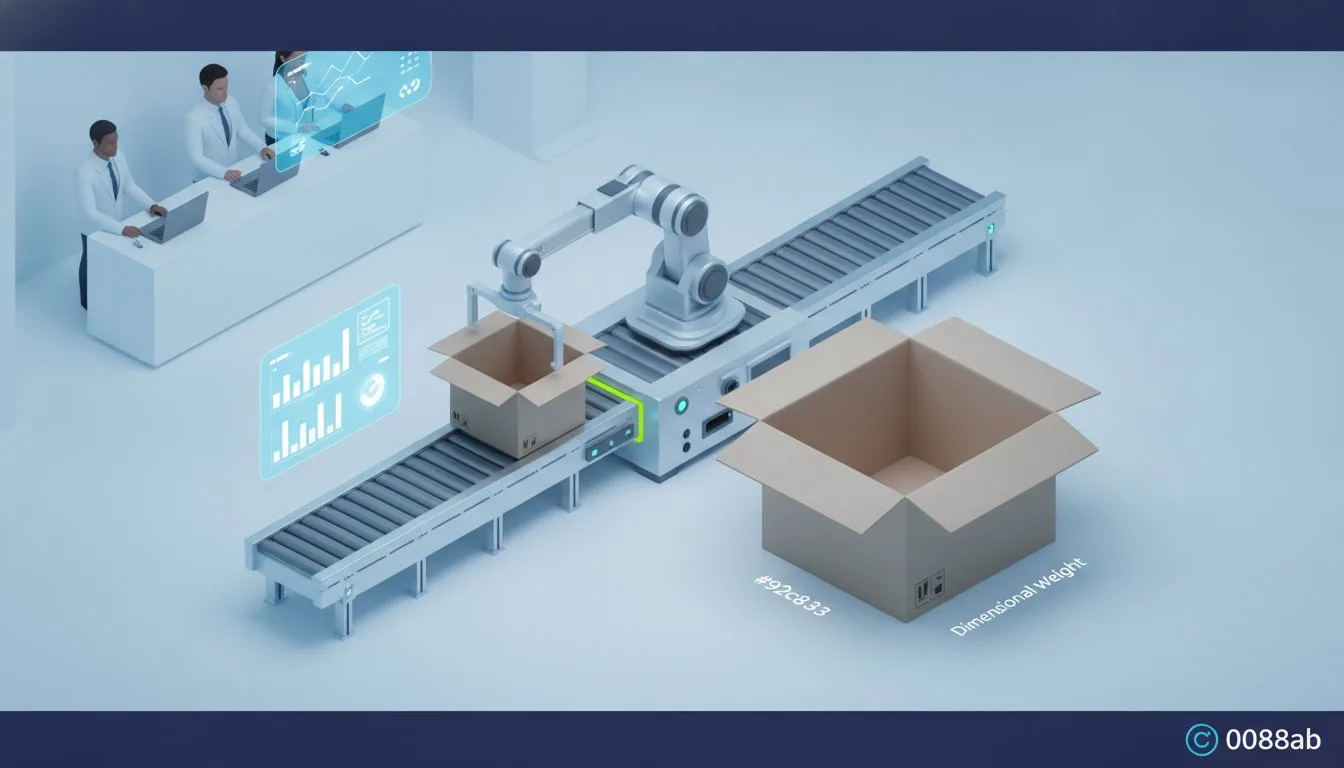
Dimensional Weight Shipping Calculator: The 2026 Strategic Guide to Reducing Fulfillment Costs
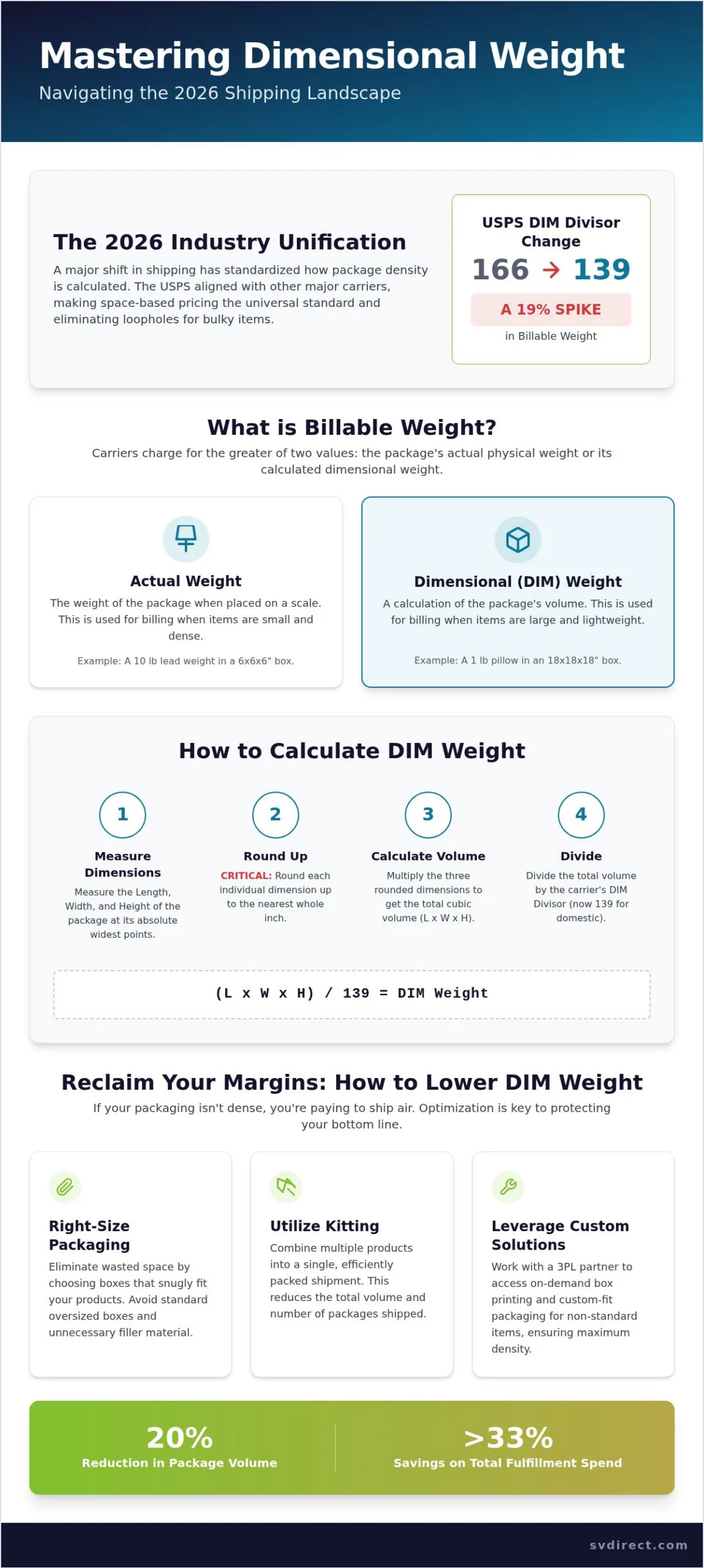
Did you know that the July 2026 shift in the USPS dimensional weight divisor from 166 to 139 represents a 19% spike in billable weight for affected packages? This alignment among all major carriers means the days of finding a loophole for bulky, lightweight items are officially over. It’s a frustrating reality for brands battling rising costs and seeking an accurate dimensional weight shipping calculator to avoid surprises at the loading dock. You’ve likely felt the sting of paying to ship air, watching your margins erode because a box was just one inch too large.
We understand that unpredictable shipping costs and penalty fees for oversized packaging feel like a constant weight on your business growth. This guide is designed to help you master the math of volumetric shipping and reclaim your warehouse efficiency. We will break down 2026 carrier surcharges, show you how to optimize dimensions to fit specific dim factors, and explain how a seasoned 3PL partner can manage these technical complexities through precision and human oversight. You’ll learn why dimensional weight isn’t a fixed cost but a packaging efficiency metric that smart brands manipulate to increase margins.
Key Takeaways
- Master the 2026 industry shift where all major carriers have aligned on a 139 divisor, making space-based pricing the universal standard for shipping costs.
- Learn to use a dimensional weight shipping calculator properly by rounding each dimension up to the nearest whole inch to ensure accuracy and prevent costly non-compliance surcharges.
- Discover how strategic right-sizing and specialized kitting can reduce package volume by 20%, potentially slashing your total fulfillment spend by over a third.
- Transition from standard, oversized boxes to custom-fit packaging and on-demand printing to eliminate wasted space and improve your bottom line.
- Leverage a 3PL partner’s proprietary data management systems to gain 24/7 visibility into your shipping metrics and access more favorable commercial dim factors.
Understanding Dimensional Weight (DIM Weight) in 2026
Shipping costs in 2026 are no longer determined by the scale alone. Dimensional weight is a pricing strategy used by carriers to account for the physical space a package occupies. As eCommerce volume continues to climb, carriers have shifted their focus from dead weight to density. This means that a large, light box now costs just as much to ship as a smaller, heavier one. For many brands, this shift directly impacts bottom-line profitability. Using a reliable dimensional weight shipping calculator is now an essential step for every fulfillment station to ensure margins remain protected.
The Evolution of Volumetric Pricing
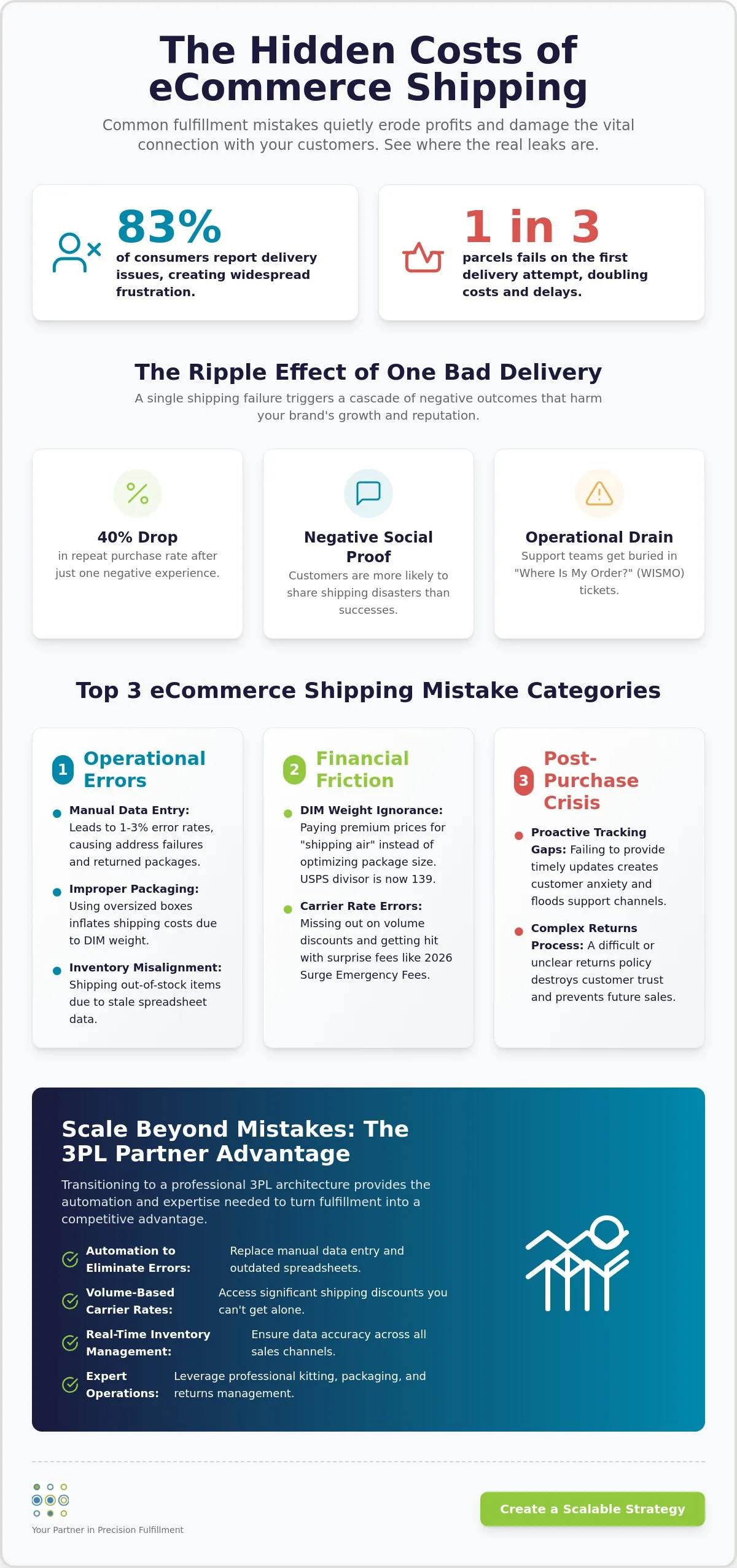
Carriers utilize these metrics to maximize their fleet capacity. Every cubic inch of a delivery van or cargo plane has a specific value. In 2026, the industry reached a point of total unification. All three major U.S. carriers now use a standard domestic divisor of 139. This change, specifically the USPS shift in July 2026, means that density is the new priority. When fuel costs fluctuate, volume becomes the primary variable carriers manipulate to maintain their own margins. Consequently, lightweight, bulky items have become the most expensive products to move through the global supply chain. If your packaging isn’t dense, you’re effectively paying to ship air across the country.
Actual Weight vs. Dimensional Weight: Which One Do You Pay?
The industry operates on a concept called Billable Weight. This is the greater of two values: the actual scale weight or the calculated dimensional weight. Imagine shipping a single down pillow in a large 18x18x18 box. While the pillow might weigh only one pound, the carrier will bill you for the space it occupies. Conversely, a ten pound lead weight in a tiny 6x6x6 box will be billed at its actual weight because its density is high. Moving past the scale weight mindset is the first step toward optimizing your logistics.
Our team at Silicon Valley Direct has seen how this psychological barrier prevents brands from scaling. By integrating a dimensional weight shipping calculator into your workflow, you can predict these costs with precision. Remember that 2026 standards require rounding each dimension up to the nearest whole inch before calculating. These small increments can lead to significant cost spikes if they aren’t managed proactively. Starting with a clear understanding of your metrics is the cornerstone of a healthy fulfillment strategy. At Silicon Valley Direct, we emphasize transparency in data. Our Remote Control system provides the visibility needed to track these costs in real time. We believe that logistics shouldn’t be a black box. Instead, it should be a partnership where precision leads to growth.
How to Use a Dimensional Weight Shipping Calculator
Calculating billable weight is a precise mathematical exercise that requires strict attention to detail. The core formula used by any reliable dimensional weight shipping calculator is straightforward: (Length x Width x Height) / DIM Divisor. While the math seems simple, the input data determines your final invoice. Accuracy starts at the packing station. Carriers don’t look at the average size of your box; they look at the absolute widest points. If a box bulges due to overstuffing, that extra fraction of an inch can push you into a higher weight bracket. Precision in measurement is the only way to protect your margins from unexpected carrier adjustments.
Step-by-Step Calculation Guide
To ensure your data matches what the carrier’s sensors will detect, follow a methodical approach to measurement. Start by determining the exterior dimensions of your package at its widest points, including any protrusions or seams. Once you have these figures, you can determine the total cubic volume of the shipment.
- Round Up: Round each individual dimension (Length, Width, and Height) up to the nearest whole inch before performing any other math.
- Calculate Volume: Multiply these rounded numbers to find the total cubic inches (L x W x H).
- Apply the Divisor: Divide that total volume by the carrier-specific divisor, which is currently 139 for most domestic shipments in 2026.
- Final Comparison: Compare this result to the actual scale weight. The carrier will bill you for whichever number is higher.
The DIM divisor is essentially an industry-standard space-to-weight ratio that defines how much a cubic foot of air “should” weigh in the eyes of the carrier.
2026 Carrier Divisors: What You Need to Know
The landscape of 2026 is defined by carrier unification. As of July 12, 2026, the USPS aligned with other major carriers by changing its divisor from 166 to 139 for Priority Mail and Ground Advantage. This means that across domestic ground and air services, 139 is the number you’ll use most often. International shipping remains more complex, often utilizing different divisors depending on the specific lane and service level. It’s also vital to distinguish between retail and commercial rates. Commercial accounts often negotiate higher divisors, such as 166 or even 180, which effectively lowers the billable weight.
The trend over the last decade shows divisors steadily decreasing. This makes packages more expensive over time because a lower divisor results in a higher billable weight. Our proprietary Remote Control system at Silicon Valley Direct applies this logic automatically, helping you predict costs before the label is even printed. If you’re unsure how these updated rules apply to your specific product line, you can request a free quote to see how our logic optimizes your spend. By leveraging our negotiated commercial rates and precision kitting, we ensure you never pay for unnecessary volume.
The Business Impact: Why Your Shipping Costs Are Skyrocketing
Shipping air is a direct tax on your company’s growth. Many eCommerce leaders don’t realize that inefficient packaging acts as a silent drain on their margins until they see the month-end carrier invoice. If your team isn’t utilizing a dimensional weight shipping calculator before selecting a box, you’re likely falling victim to the “Large Box, Small Item” penalty. This occurs when a product occupies more volume than its physical weight justifies, triggering a billable weight that far exceeds the scale reading. In a market where every cent counts, these surcharges can quickly erode the profitability of even your best-selling items.
The financial rewards of optimization are substantial. For example, a 20% reduction in overall box volume can lead to a 35% reduction in shipping spend. This isn’t just a marginal gain; it’s a transformative shift in your operational budget. This logic is especially critical for global shipping services where international lane rates are significantly higher and cargo space is at a premium. When you ship internationally, the cost of wasted space is magnified by customs fees and higher base rates, making precision packaging an absolute necessity for global expansion.
The “free shipping” model also suffers when DIM weight isn’t managed. When customers expect zero-cost delivery, your business absorbs every cent of the carrier’s volumetric surcharge. Without proactive measurement, a single oversized box can turn a profitable order into a net loss. By integrating a dimensional weight shipping calculator into your fulfillment workflow, you can ensure that your “free” offerings don’t compromise your financial health.
Hidden Costs in eCommerce Fulfillment
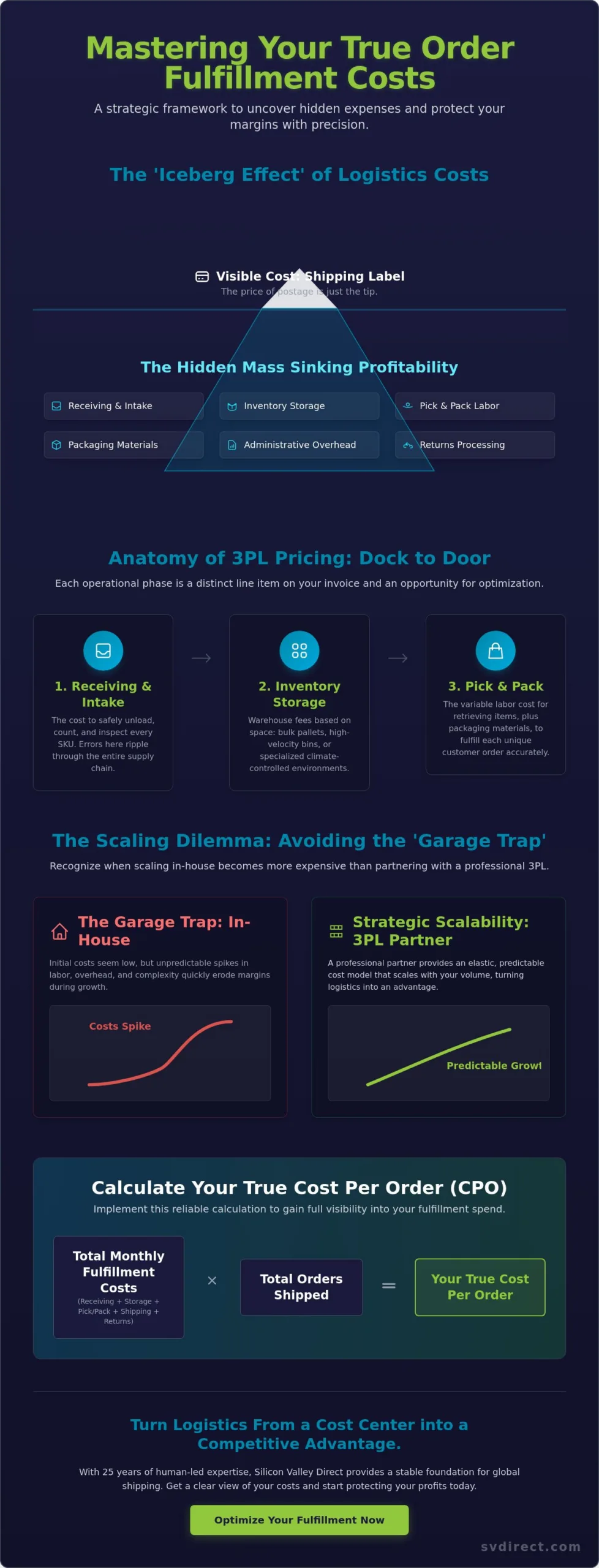
Inefficient packaging creates a ripple effect throughout your entire supply chain. Larger boxes occupy more pallet space, which directly increases your warehousing and storage fees. There’s also the secondary cost of dunnage. If you use a box that’s too big, you’re forced to purchase additional bubble wrap, paper, or packing peanuts to keep the item secure. These material costs add up quickly. They can even influence your per-order pick and pack fees if the complexity of the material selection and assembly increases. At Silicon Valley Direct, we look at the total cost of the package, ensuring that every element is optimized for both safety and spend.
Sustainability and the ‘Green’ Cost
Environmental responsibility is no longer optional in 2026. Consumers have become increasingly vocal about “over-boxing,” often sharing photos of small items arriving in massive containers. Shipping air isn’t just expensive; it’s wasteful and damaging to your brand reputation. By aligning your cost-saving DIM weight strategies with corporate sustainability goals, you protect your margins while building brand loyalty. It’s a rare win-win where operational efficiency meets ethical business practices. Reducing your package volume isn’t just a logistics win; it’s a commitment to a leaner, greener future.
Strategic Ways to Optimize Packaging and Lower DIM Weight
Mastering the math is only half the battle. Once your dimensional weight shipping calculator reveals the true cost of your current shipments, you need actionable strategies to shrink those numbers. Right-sizing is the most immediate lever you can pull. Many brands rely on a handful of standard box sizes to simplify their inventory, but this often leaves inches of empty space that carriers happily bill at premium rates. Moving to custom-fit dimensions or a wider array of box choices ensures that your products are snug and your billable weight stays low. It’s a proactive approach that pays for itself through immediate shipping savings.
For non-fragile goods, the solution is often even simpler. Switching from rigid boxes to poly mailers or padded envelopes can drastically reduce volume. Since mailers lack the fixed structure of a box, they don’t trigger the same volumetric penalties. We also help clients minimize bulk by utilizing on-demand digital printing. Instead of including thick, pre-printed catalogs that add weight and volume, we print slim-profile marketing inserts that fit into the smallest possible packaging. This integration of tech and logistics ensures your brand message arrives without the heavy surcharge.
Advanced Kitting Strategies for Density
Density is the goal of every successful fulfillment operation. Our specialized kitting and assembly services focus on nesting products to eliminate internal voids. By strategically arranging items, our team can often consolidate what would normally be a multi-box shipment into a single, dense package. Every kit passes through our QC-Check process. This human oversight ensures that even the most complex assemblies maintain the smallest possible footprint without sacrificing product safety. It’s a precise balance of protection and spatial efficiency.
Packaging Innovation: Beyond the Cardboard Box
Modern technology provides even more ways to outsmart the dimensional weight shipping calculator. Automated box-making systems can now cut cardboard to the exact millimeter of an order, removing the human error of box selection. We also advocate for frustration-free packaging. This design philosophy removes the need for secondary outer boxes, allowing the primary product container to serve as the shipping vessel. To identify where your greatest savings lie, we leverage our Remote Control system. It flags high-DIM-weight outliers in your inventory, giving you the data needed to make surgical packaging adjustments that protect your margins.
Partnering with a 3PL to Master Shipping Logistics
Scaling a business requires moving beyond manual processes and guesswork. While a basic dimensional weight shipping calculator is a helpful starting point for occasional shipments, scaling startups often find that managing these technicalities in-house is a losing battle. The complexity of 2026 carrier rules demands constant vigilance and operational precision. By partnering with Silicon Valley Direct, you gain access to our deeply established carrier relationships. We leverage negotiated rates and higher commercial divisors that are typically unavailable to individual shippers. This means your specific “dim factor” could be 166 or higher while others are stuck with the standard 139, immediately lowering your billable weight and protecting your margins.
True control over your fulfillment costs requires total transparency and real-time data. Our Remote Order Management system provides 24/7 visibility into every shipment. You aren’t just handing off your inventory; you’re gaining a steady hand that acts as a proactive extension of your own team. We don’t just ship boxes. We solve the logistics puzzles that slow down your growth. Our team ensures that every package is optimized before it leaves our facility, allowing you to focus on product development and customer acquisition.
Technology-Driven Fulfillment
Precision is built into our digital infrastructure. We integrate your Order Management System (OMS) directly with our proprietary web services to provide real-time shipping quotes based on your actual packaging data. You can access over 120 standard reports to track shipping efficiency and identify DIM weight trends across your entire product catalog. This data becomes a powerful strategic tool. It allows you to negotiate better terms with carriers based on your documented shipping profile rather than relying on industry averages. Our dimensional weight shipping calculator logic is baked into the system, ensuring accuracy from the moment an order is placed.
The Silicon Valley Advantage
Our location in the heart of innovation is a symbol of our commitment to staying ahead of carrier rule changes and logistics technology. We employ a “Quiet Facility” methodology that prioritizes precise execution and methodical organization, even when facing high-volume deadlines. Since our founding in 1999, we’ve focused on physical infrastructure backed by human expertise rather than just marketing abstractions. We reject automated, impersonal interactions in favor of direct human connection and personal oversight. This ensures that your business growth is supported by a partner that remains accessible, grounded, and deeply reliable.
Request a free quote to optimize your shipping costs today.
Securing Your Margins in a Volumetric World
Navigating the complexities of 2026 shipping standards requires a blend of technical precision and strategic foresight. You’ve seen how density has replaced dead weight as the primary driver of fulfillment costs. While a dimensional weight shipping calculator provides the necessary math, true savings come from rethinking your packaging footprint through right-sizing and advanced kitting. Managing these variables in-house often leads to missed opportunities and eroded margins.
Silicon Valley Direct offers a steady hand backed by 25+ years of fulfillment expertise. Our proprietary Remote Control™ tracking system gives you 24/7 visibility into your data, while our strategic Silicon Valley location ensures your brand remains at the cutting edge of global logistics. We don’t just process orders; we build partnerships that prioritize your growth through human oversight and technological innovation. It’s time to turn your shipping operations into a competitive advantage.
Request a Free Quote to Optimize Your Shipping Strategy
We look forward to helping you master the math and scale your business with confidence.
Frequently Asked Questions
What is the standard DIM weight divisor for 2026?
The standard dimensional weight divisor for 2026 is 139 for major domestic carriers, including UPS, FedEx, and USPS. This alignment occurred after the USPS updated its policy on July 12, 2026. Using a 139 divisor in your dimensional weight shipping calculator ensures your estimates match current billing standards. Always verify if your specific commercial contract offers a more favorable “dim factor” before finalizing your fulfillment budget for the quarter.
Can I avoid dimensional weight by using my own boxes?
Using your own boxes doesn’t exempt you from dimensional weight pricing. Carriers apply these rules to any package that occupies space in their network, regardless of the container’s branding or origin. In fact, custom boxes can be more expensive if they aren’t right-sized for your specific products. We recommend selecting the smallest possible container that safely holds your items to minimize the billable weight calculated by the carrier’s automated laser sensors.
Does dimensional weight apply to USPS Flat Rate boxes?
Dimensional weight does not apply to USPS Priority Mail Flat Rate boxes. These specific containers are billed at a predetermined price regardless of the package’s weight or destination, provided they don’t exceed the 70 pound limit. However, for any other USPS service or custom packaging, the 139 divisor applies once the package volume exceeds one cubic foot. This makes Flat Rate a steady choice for heavy, dense items that fit within the standard dimensions.
How do I calculate DIM weight for international shipments?
To calculate DIM weight for international shipments, you use the same (L x W x H) / Divisor formula, but the specific divisor often changes. Many international lanes still utilize a 139 or 166 divisor depending on the service level and destination. Because international rates are significantly higher, even small errors in your dimensional weight shipping calculator inputs can lead to massive surcharges. Precision is vital when navigating global logistics lanes to protect your margins.
What is the difference between a 139 and 166 divisor?
The primary difference is the resulting billable weight; a lower divisor like 139 leads to a higher billable weight than a 166 divisor. For a box with 1,728 cubic inches, a 166 divisor results in roughly 10.4 pounds, while a 139 divisor jumps to 12.4 pounds. Shippers prefer a higher divisor because it effectively lowers the cost of shipping bulky items. Negotiating a higher commercial divisor is a key strategy for scaling brands.
Is there a weight limit where DIM weight starts to apply?
Dimensional weight isn’t triggered by a weight limit but by volume. For FedEx and UPS, it applies to all packages regardless of size. USPS only applies these rules to shipments larger than one cubic foot, or 1,728 cubic inches. If your package is smaller than this specific threshold, you’re billed on actual scale weight. Monitoring this volume cutoff is a simple way to protect your margins without requiring complex packaging overhauls or expensive materials.
How can kitting services help reduce my dimensional weight?
Kitting services reduce dimensional weight by consolidating multiple items into a single, dense package. Our team uses nesting techniques to eliminate empty space and air pockets that trigger volumetric surcharges. By strategically arranging products, we often turn what would have been a large, light shipment into a compact, efficient kit. This proactive approach ensures your billable weight remains as close to the actual weight as possible, significantly lowering your total fulfillment spend.
What happens if my calculation is different from the carrier’s measurement?
If your calculation differs from the carrier’s measurement, the carrier’s automated sensors will always prevail. This often results in a shipping charge correction on your next invoice, sometimes accompanied by a $1.50 non-compliance fee from USPS. These discrepancies usually happen because the box bulges or wasn’t rounded up to the nearest whole inch. Using precise data in your internal systems helps prevent these unexpected fulfillment expenses and keeps your records accurate for auditing.