Fulfillment Pricing Models Comparison: The 2026 Guide to 3PL Costs
Did you know that hidden surcharges and packaging markups can cause your actual 3PL bill to exceed your initial quote by as much as 25%? It’s a frustrating reality for growing brands that need operational precision, not just a warehouse to store boxes. You’ve likely felt the sting of opaque “all-in” costs or the silence of automated support when a shipping error occurs. You deserve a partner that acts as a seamless, proactive extension of your own team, especially when your needs involve complex kitting or just-in-time digital printing.
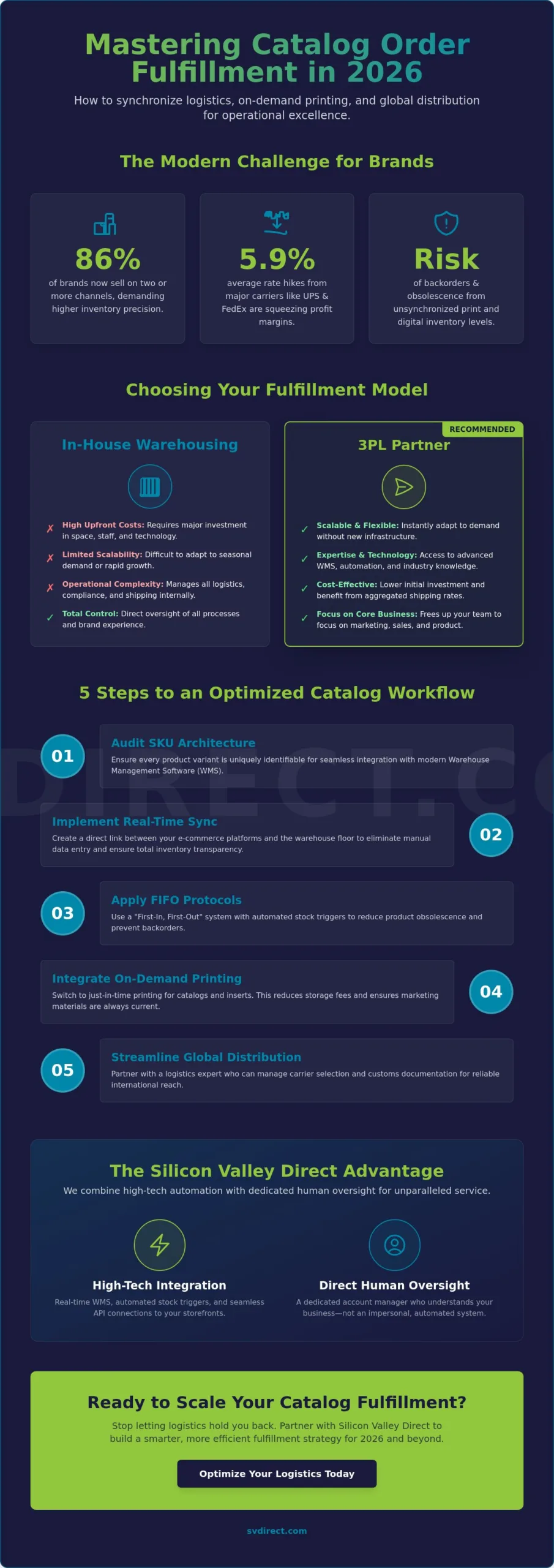
We understand that scaling from hundreds to thousands of orders requires more than just luck; it requires a deep understanding of how your money is being spent. This guide provides a detailed fulfillment pricing models comparison to help you master these complexities and identify the most cost-effective path for your business. We’ll explore the shift toward activity-based structures, the impact of the 5.9% general rate increases from major carriers in 2026, and how a human-centric approach can finally bring predictability to your monthly fulfillment expenses.
Key Takeaways
- Calculate the true total cost of fulfillment by looking beyond per-pick fees to include receiving, storage, and shipping management.
- Use our fulfillment pricing models comparison to identify whether a per-order or storage-heavy structure offers the best scalability for your SKU count.
- Reduce literature fulfillment overhead by leveraging on-demand digital printing that bypasses the plate fees and drying times of traditional offset methods.
- Evaluate 3PL technology based on its ability to provide programmatic web service integration through SOAP protocols rather than just a basic visual dashboard.
- Secure predictable expenses by partnering with a team that offers proactive problem solving as a core component of their service agreement.
Understanding the Total Cost of Fulfillment
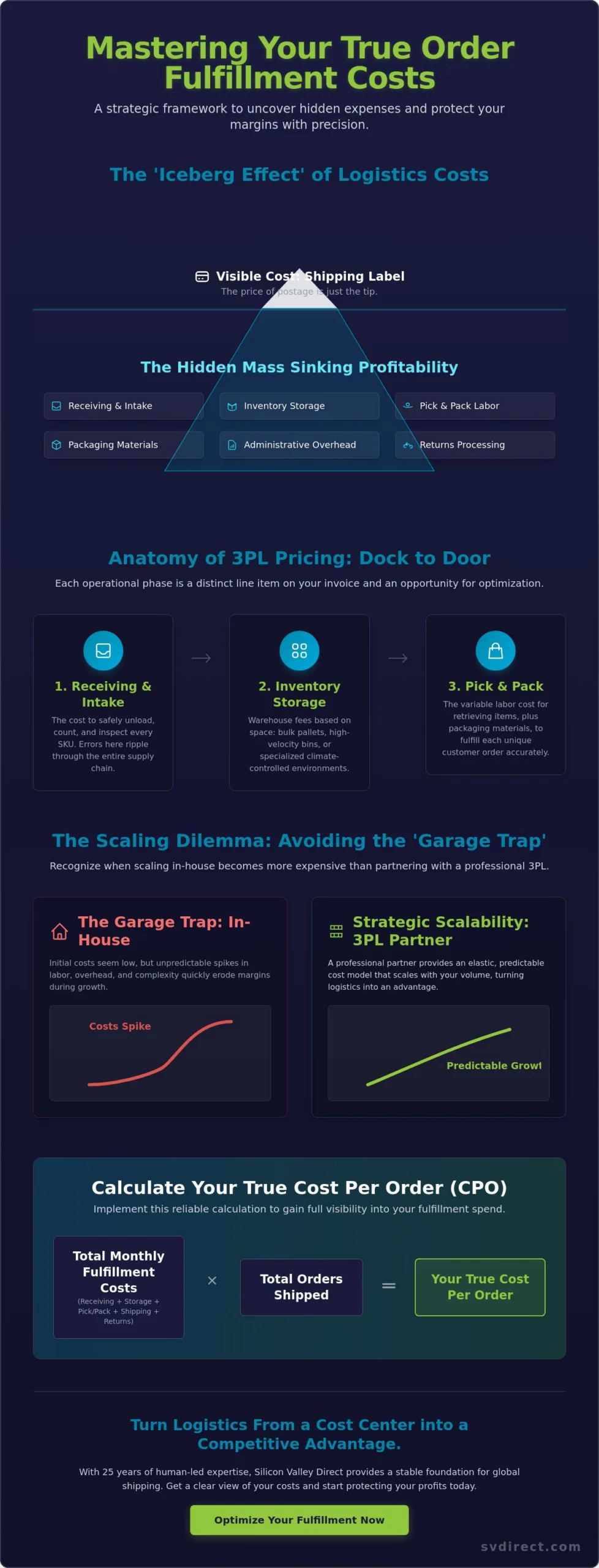
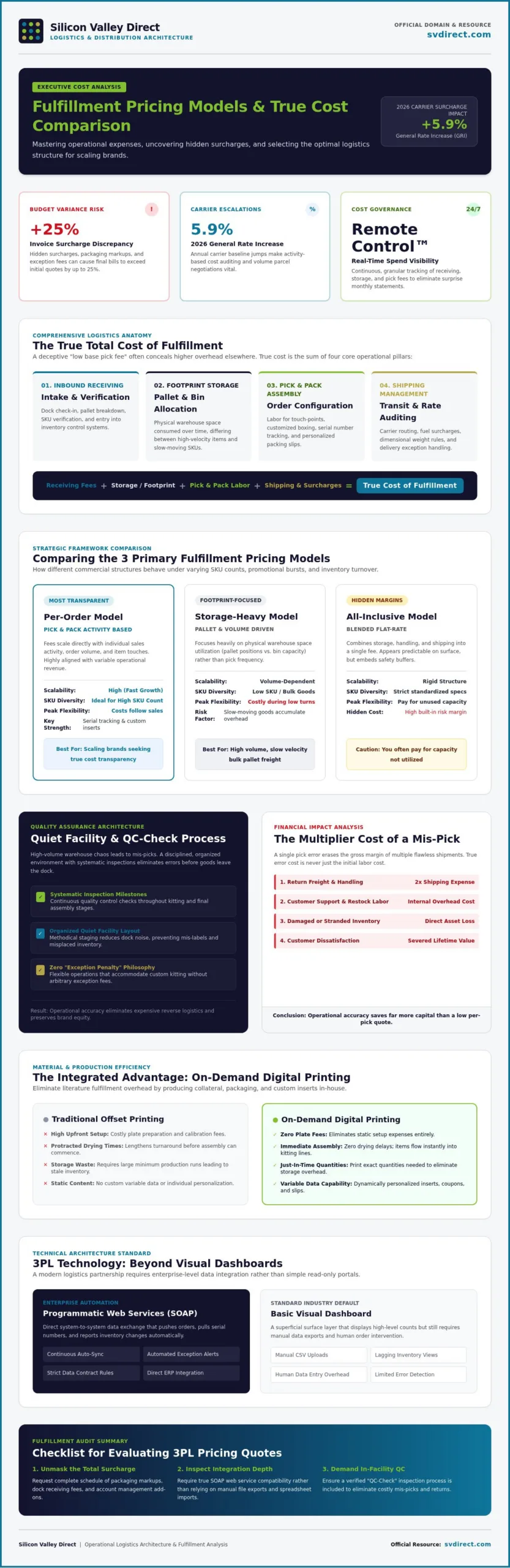
Defining the total cost of fulfillment is the first step toward achieving financial predictability. It isn’t just a single line item on an invoice. Instead, it’s the comprehensive sum of receiving, storage, pick and pack, and shipping management. When conducting a fulfillment pricing models comparison, many brands mistakenly focus solely on the base pick fee. This is a strategic error. A low per-pick fee can be highly deceptive if it’s offset by aggressive shipping markups or vague “account management” surcharges that inflate the final bill. Working with a third-party logistics (3PL) partner should provide clarity, not confusion. We advocate for a “Proactive Fulfillment” approach where operational accuracy saves your business more money than a low base rate ever could. To support this, our Remote Control™ system provides 24/7 real-time visibility into every penny spent on your logistics, ensuring you’re never surprised by your monthly statement.
The Problem with “Cookie-Cutter” Pricing
Rigid, one-size-fits-all pricing models often hide structural flaws that lead to unexpected surcharges. When a provider forces your unique project into a pre-defined box, you lose the flexibility needed for custom kitting or specific healthcare mailing requirements. These rigid procedures often result in “exception fees” that penalize your business for growing or diversifying. We prioritize a custom-fit solution tailored to your specific project goals. By utilizing a “quiet facility” methodology, we maintain an organized environment that naturally reduces the chaos often found in high-volume warehouses. This methodical approach eliminates the noise that leads to errors, ensuring your costs remain stable and your deadlines are met with precision.
The ROI of Accuracy and Quality Control
The true cost of a mis-pick extends far beyond the initial labor. You must account for return shipping fees, lost inventory, and the intangible but severe damage to your brand reputation. A single error can wipe out the profit margin of multiple successful orders. This is why we’ve implemented a systematic “QC-Check” process. Our team performs thorough inspections throughout the assembly and kitting stages to catch discrepancies before they leave the dock. We view our service as a partnership rather than a simple transaction. This mindset ensures we act as a seamless extension of your team, focusing on long-term operational friction reduction rather than short-term volume. When accuracy is built into the pricing model, your business gains the stability it needs to scale confidently.
Comparing the 3 Primary Fulfillment Pricing Models
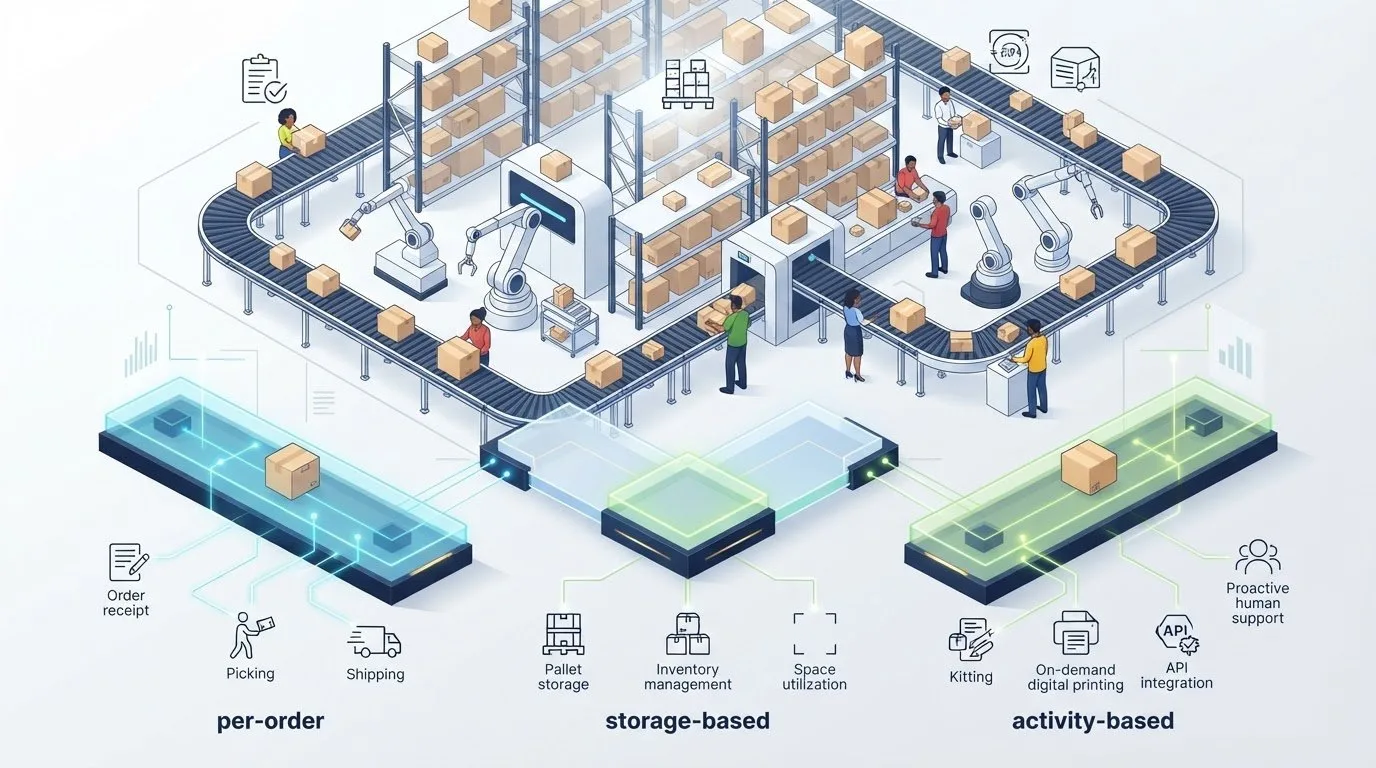
Selecting a distribution partner requires a clear understanding of how different structures impact your bottom line as you scale. A third-party logistics (3PL) provider typically operates under one of three frameworks. When you conduct a fulfillment pricing models comparison, it’s essential to look at how these models behave during peak seasons or sudden promotional bursts. Some models provide high transparency for high-SKU businesses, while others might hide margins behind a “flat rate” that sounds simple but often costs more in the long run. For organizations managing complex procurement processes, partnering with RFP management and contract negotiation specialists such as RightCostIQ can provide the clarity needed to secure competitive pricing structures.
The Per-Order Pick and Pack Structure
In this structure, fees scale based on the number of items per shipment and specific packaging requirements. It’s a highly logical approach that rewards operational efficiency. For businesses shipping specialized goods, serial number tracking is a critical feature that ensures every unit is accounted for from the moment it enters the facility until it reaches the customer. We also prioritize variable data capabilities within this model. This allows for personalized order inserts and customized packing slips that enhance the customer experience without slowing down the fulfillment line. If you’re looking for a partner that operates as a high-performance extension of your team, you can request a free quote for a detailed analysis of your specific SKU needs.
Warehousing and Storage Fee Variables
Optimizing your inventory footprint is a primary driver of long-term cost control. Choosing between pallet and bin storage depends entirely on your product dimensions and turnover rate. Small, high-turnover items are best suited for bins to maximize picking speed, while bulkier stock belongs on pallets to minimize square footage costs. For sensitive or premium products, the role of climate-controlled, secure warehousing for high-value electronics and healthcare supplies is paramount. These specialized environments protect your assets from environmental degradation and unauthorized access, providing a level of security that standard facilities simply can’t match.
The Integrated Advantage: Kitting and Digital Printing Costs
Integrating manufacturing and logistics is a strategic lever that most fulfillment pricing models comparison guides overlook. When your 3PL manages both on-demand digital printing and distribution, you eliminate the friction between the printer and the warehouse. Traditional offset printing requires plate fees and significant drying times, often forcing brands to print large batches to justify the cost. By utilizing the HP Indigo 5500, we provide offset-quality results without those legacy overheads. This liquid ink technology allows for immediate finishing and shipping, which is essential for time-sensitive literature fulfillment.
The cost-efficiency of Variable Data Digital Printing (VDP) further enhances this model. Instead of generic brochures, you can produce personalized marketing materials tailored to individual recipient data without increasing the per-piece labor cost. This just-in-time approach directly impacts your bottom line by eliminating “dead inventory” storage fees. You no longer pay to store manuals or brochures that might become obsolete before they’re ever shipped. This model ensures your capital is tied up in active orders rather than dusty warehouse shelves.
Reducing Waste with Print-on-Demand
Quality shouldn’t be sacrificed for speed. Our digital infrastructure supports a 230 line screen resolution, ensuring your brand presentation remains sharp and professional. Unlike standard toners that can look flat or artificial, the liquid ink used in our HP Indigo system provides superior color control and a finish that rivals traditional offset presses. This precision ensures that every piece of collateral meets your exact standards. You can learn more about our print-on-demand services to see how this technology integrates with your broader distribution strategy.
Kitting and Assembly Project Fees
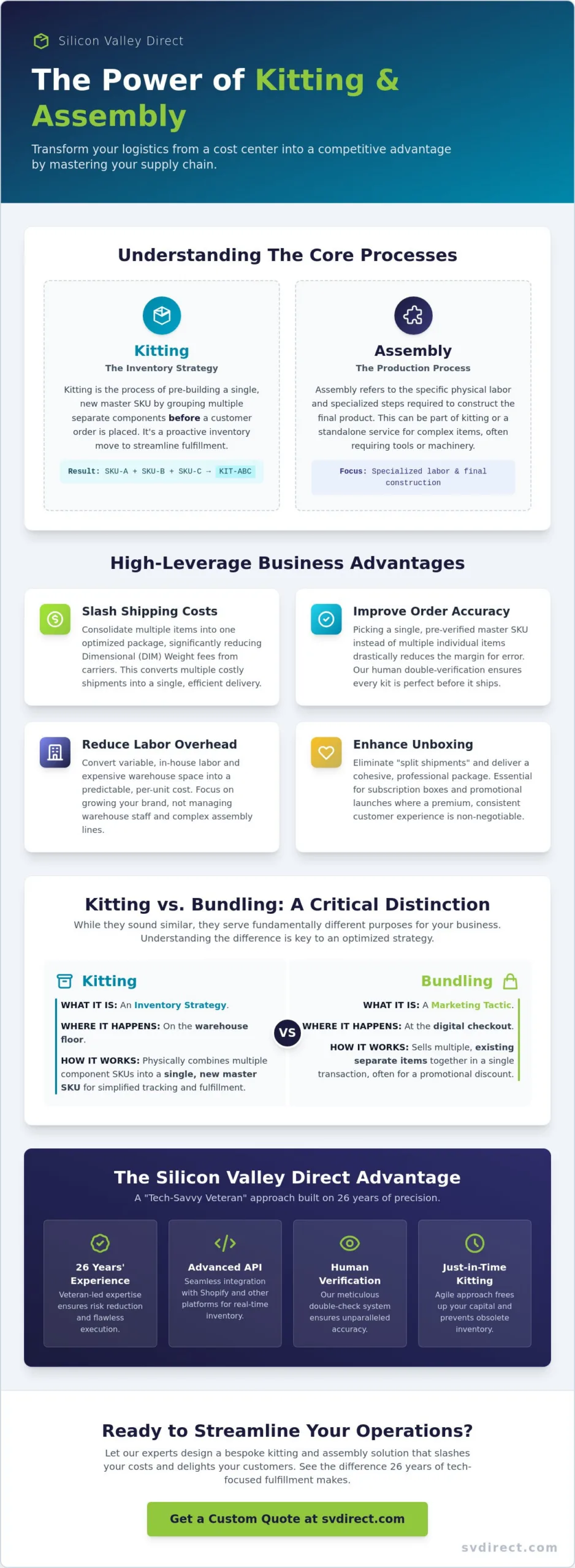
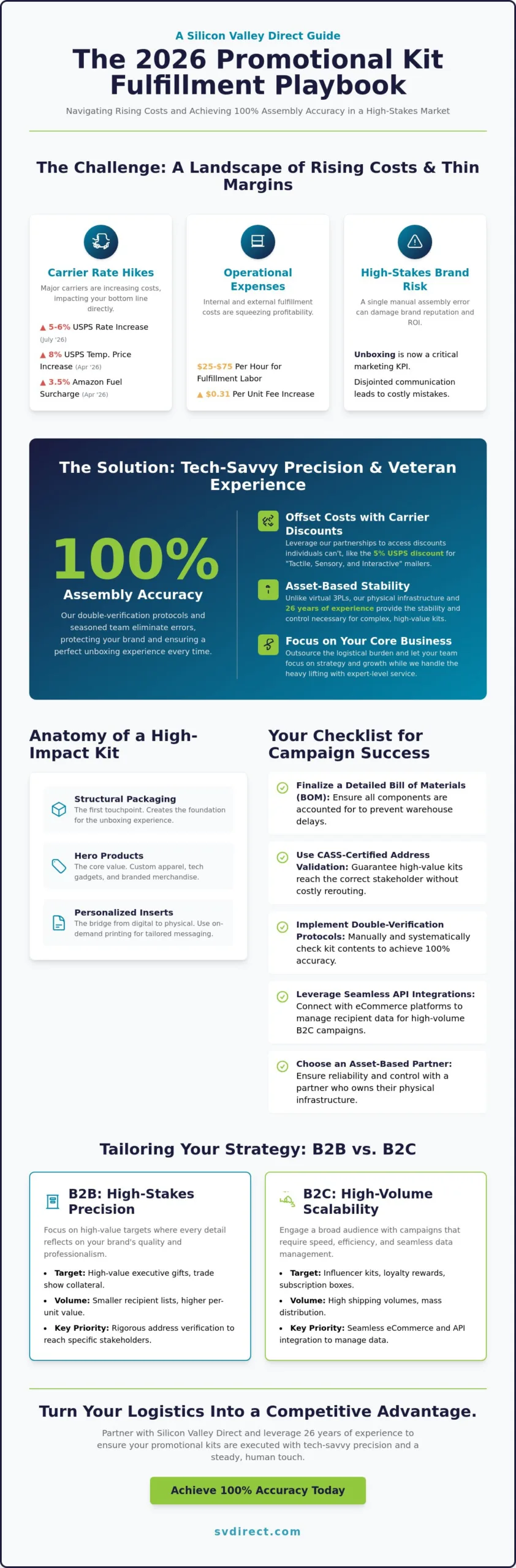
Labor-based charges for complex bundling, subscription boxes, and promotional kits require a different pricing logic. These fees reflect the manual touch required for multi-component assembly, where precision is paramount. While some providers treat kitting as a secondary task, we view it as a core competency. We apply a systematic QC-Check to every project, ensuring that every component is present and correctly placed. This proactive oversight prevents the costly returns and brand damage discussed in previous sections. For a deeper look at optimizing these specific workflows, review our kitting and assembly services guide. By keeping these services in-house, you reduce the logistical complexity and hidden transportation costs of moving goods between multiple vendors.
Evaluating 3PL Technology: Beyond the Dashboard
Technology in logistics is often reduced to a visual interface, but true operational value lies beneath the surface. When you perform a fulfillment pricing models comparison, you must evaluate the technical infrastructure that supports your data. A standard Graphical User Interface (GUI) is helpful for manual checks, but a programmatic Web Service interface is what drives true scalability. By utilizing XML and SOAP protocols, we ensure a seamless handshake between our facility and your existing Order Management System (OMS). This level of integration eliminates the need for manual data entry, which is the primary source of fulfillment errors and shipping delays.
Data transparency is a core pillar of a high-performance partnership. Our system provides over 120 standard reports, allowing you to identify supply chain bottlenecks with surgical precision. You can analyze everything from SKU velocity to shipping zone distributions. Beyond historical data, proactive technology prevents future problems. Automated notifications for low inventory levels act as a safety net, ensuring you can restock before a product goes out of stock. This prevents lost sales and protects the customer experience from the frustration of unexpected backorders.
Remote Control™: 24/7 Data Access
Visibility shouldn’t be limited to business hours. Our Remote Control™ system offers 24/7 real-time access to your fulfillment data. You can place orders, track real-time progress, and retrieve full order histories from any location. We understand that brand consistency matters, so we offer the ability to customize the web interface to match your corporate identity. This creates a professional, unified experience for your internal team. Having real-time inventory data at your fingertips allows for immediate decision-making, which is vital when managing promotional bursts or seasonal spikes.
Programmatic Integration for Developers
For businesses with internal development teams, technical flexibility is a significant differentiator. We provide robust AddOrder and GetOrderInfo methods that streamline the data exchange process. Because we use platform-agnostic XML communication, your developers spend less time on custom coding and more time on high-value projects. This standardized approach ensures that our systems can talk to virtually any platform, regardless of its underlying architecture. You can explore our remote order management system to see how these technical capabilities translate into operational efficiency.
Choosing Your Partner: The 9 Promises of Value
Transitioning from a vendor to an “extension of your company” mindset is the final, most critical step in your logistics journey. When you perform a fulfillment pricing models comparison, the line items on a spreadsheet only tell half the story. The other half is found in proactive problem solving, which is the most valuable “hidden” feature in any pricing structure. It means having a partner who spots a potential shipping delay before it happens or identifies a way to optimize your kitting to avoid unnecessary postage hikes. We also prioritize the sustainability factor through green printing initiatives and HP recycling partnerships. This ensures your brand’s growth doesn’t come at an undue environmental cost. Evaluating a 3PL should be based on their commitment to understanding your specific business goals, not just their ability to move boxes.
A high-performance partner doesn’t just react to your needs; they anticipate them. This proactive stance is backed by physical infrastructure and human expertise rather than just marketing abstractions. By integrating these values into our daily operations, we alleviate the stress of business growth. We value transparency and directness because we respect your time and your bottom line. When your fulfillment provider operates with this level of personal commitment, you gain a steady hand in a fast-paced industry.
A Partnership Built on Accountability
Trust isn’t built on vague claims; it’s built on a clear framework of accountability. We operate under a specific set of standards known as the Nine Promises. This isn’t just a list of goals; it’s a promise of total flexibility and bespoke problem solving. The foundation of 3PL ROI is simple: we do what we say we’re going to do. This reliability is what allows our clients to scale rapidly without fear of operational collapse. For instance, we successfully managed 3,158 shipments in a single week for a client, maintaining our accuracy standards despite the high volume. This level of performance is only possible when your 3PL acts as a dedicated, team-oriented organization where collective experience is a point of pride.
Final Checklist for Comparing Quotes
Before you sign a contract, you need a clear framework for evaluating your options. A fulfillment pricing models comparison is only useful if you’re comparing equal levels of service and technology. Start by verifying all-in costs against base fees to ensure no hidden surcharges or packaging markups are waiting for you. Next, assess the resolution and quality of integrated print services to ensure they align with your brand standards. You can see what our clients say about our partnership to understand the real-world impact of these values. Choosing the right partner means finding a steady hand that can handle the complexities of your growth with ease and precision.
Securing Your Scalable Future in Fulfillment
Mastering your logistics budget starts with looking past the surface level of per-pick fees. A comprehensive fulfillment pricing models comparison reveals that true value lies in the intersection of data transparency, integrated services like digital printing, and a human-centric support structure. By accounting for the total cost of fulfillment, you protect your margins from the hidden surcharges that often plague growing brands. This clarity allows you to transition from reactive shipping to a proactive, scalable strategy.
We’ve spent over 25 years pioneering Silicon Valley innovation to help businesses scale with precision. Our proprietary Remote Control™ system and the 9 Promises guarantee ensure you have a steady, reliable partner at every stage of your growth. We don’t just act as a vendor. We operate as a proactive extension of your own team, dedicated to solving problems before they impact your customers.
You’ve built a brand worth protecting. You deserve a partner that values precision as much as you do. Let’s work together to ensure your fulfillment operations are just as organized and efficient as the products you create.
Frequently Asked Questions
What is the most cost-effective fulfillment model for a growing startup?
A per-order pick and pack model is typically the most cost-effective choice for a growing startup because it aligns expenses directly with sales activity. This variable structure ensures you don’t pay for unused capacity during slow months. When evaluating a fulfillment pricing models comparison, startups should look for providers that offer flexibility rather than rigid monthly minimums. This approach allows you to preserve capital while benefiting from professional inventory management and shipping expertise.
How do kitting and assembly fees typically work?
Kitting and assembly fees are labor-based charges applied to specialized tasks like bundling products or creating subscription boxes. These costs depend on the complexity of the project and the number of components involved. We utilize a systematic QC-Check process to ensure every kit is assembled accurately before shipping. This proactive oversight prevents the high costs associated with returns and shipping errors, making it a vital part of your total logistics strategy.
Is variable data printing more expensive than static printing?
Variable Data Digital Printing (VDP) is not significantly more expensive than static color printing jobs. It offers immense value by allowing every sheet in a print run to feature unique copy or images for personalized marketing. Because our HP Indigo 5500 technology eliminates the need for traditional plates and negatives, the cost difference remains minimal. This makes it an affordable way to enhance presentation quality and increase response rates for direct mail campaigns.
What should I look for in a 3PL inventory management system?
You should prioritize 24/7 real-time visibility and robust reporting capabilities in any 3PL inventory management system. Our proprietary Remote Control™ system provides access to over 120 standard reports, helping you identify supply chain bottlenecks instantly. Look for programmatic integration options like XML and SOAP protocols to ensure the system communicates seamlessly with your existing store. This level of transparency is essential for maintaining accurate stock levels and making informed business decisions.
How does digital printing quality compare to traditional offset?
Modern digital printing quality is now equal to, and occasionally better than, traditional offset printing. By using real liquid ink technology and a 230 line screen resolution, we produce sharp, detailed images with superior color control. Unlike offset printing, which requires 24 hours of drying time, our digital press sheets emerge dry and ready for immediate handling. This ensures your literature fulfillment projects maintain high standards without the long lead times of legacy methods.
Are there additional fees for international shipping management?
International shipping management involves specific coordination fees to cover the administrative handling of global logistics for both B2B and B2C shipments. These fees account for the complexity of navigating different carrier rates and documentation requirements across borders. A professional 3PL partner manages these domestic and international logistics seamlessly, acting as an extension of your team. This ensures your products reach global customers efficiently while you benefit from an established carrier network.
What happens if my inventory levels run low?
Our system triggers automated email notifications the moment your inventory hits a pre-defined low level. This proactive alert allows you to restock before you face backorders or lost sales. By integrating these notifications into your fulfillment pricing models comparison, you can see how technology prevents operational downtime. Real-time data access through our Remote Control™ platform ensures you’re always informed about stock receipts and current inventory status across all SKUs.
Can I integrate my Shopify store directly with a 3PL?
You can integrate your Shopify store or other e-commerce platforms directly with our fulfillment system using standardized programmatic interfaces. We utilize XML and SOAP protocols to facilitate a seamless data exchange between your store and our Order Management System. This platform-agnostic approach reduces the need for time-consuming custom coding. It allows for real-time transaction submission, ensuring that every order placed by a customer is immediately received and processed by our facility.