img not found!
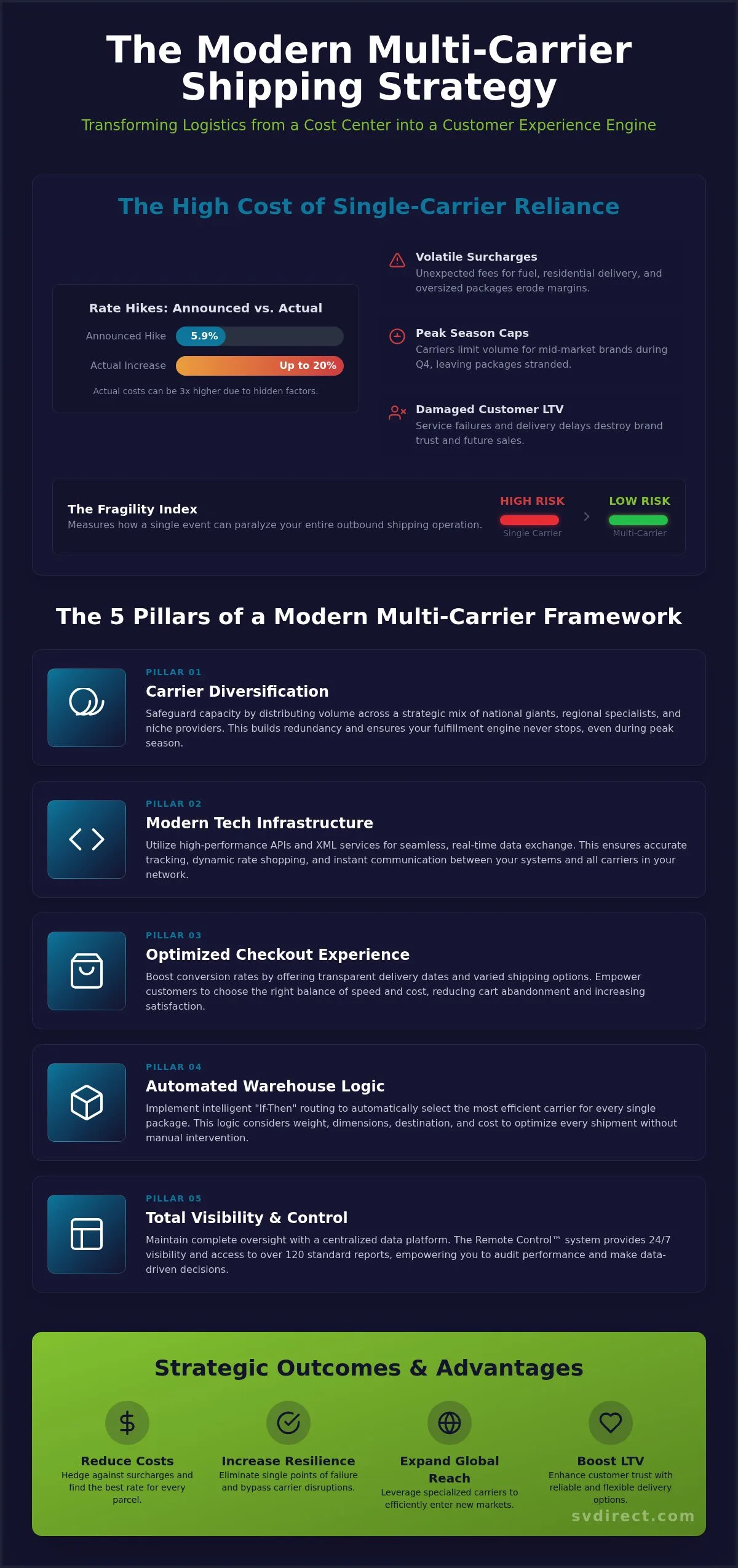
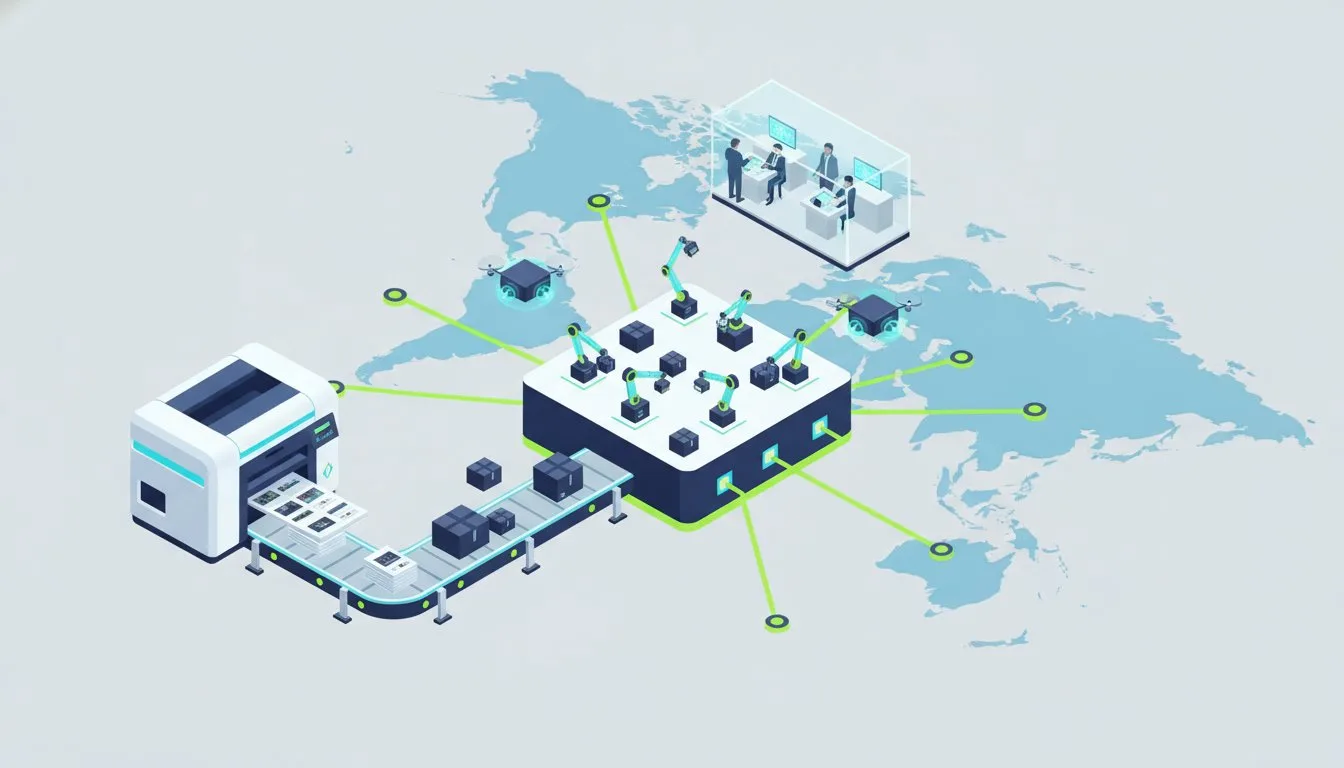
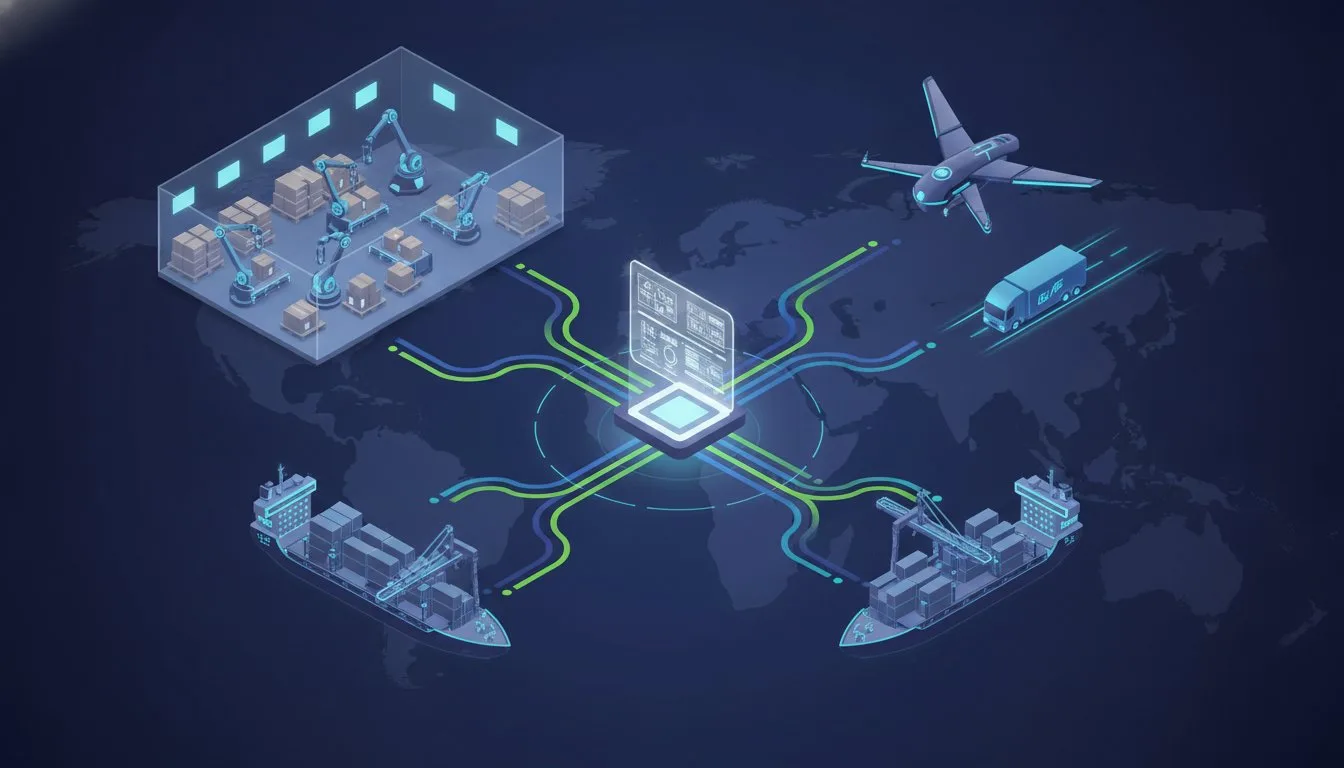
Isometric illustration of a central data/control hub connected by green lines to factories and robots around a world map, showing global industrial automation.

Corporate Literature Distribution: The 2026 Strategic Guide to Global Fulfillment

What if your most significant marketing loss isn’t a failed digital campaign, but the thousands of dollars tied up in outdated brochures sitting in a storage closet? It’s a reality for many global teams. You’ve likely felt the sting of high international shipping fees or the frustration of seeing a sales rep use an old version of your brand story. Mastering corporate literature distribution in 2026 requires more than just a warehouse. It demands a sophisticated blend of on-demand digital printing and logistical precision that keeps your collateral current and your costs controlled.

We recognize that your collateral is a physical handshake with your clients, which is why precision is non-negotiable. This guide will show you how to manage and distribute your materials with high-tech speed and human oversight. You’ll learn how to build a seamless print-to-mail workflow that reduces warehousing overhead while maintaining total brand consistency across every region. We’ll explore the strategic shifts needed to achieve global reach without sacrificing the personal touch that defines your brand, ensuring your team has exactly what they need, exactly when they need it.

Key Takeaways

  • Learn why corporate literature distribution has evolved from static warehousing into a dynamic, data-driven logistics function.
  • Discover how centralized hubs in innovation centers can accelerate global shipping speed while providing real-time inventory visibility.
  • Identify the hidden operational costs of in-house management and how to leverage professional scalability to handle seasonal demand.
  • Master the ‘Just-in-Time’ printing model to eliminate wasted inventory and ensure your sales collateral is always current and compliant.
  • Understand why human oversight remains the critical differentiator for maintaining brand consistency in a tech-saturated market.

What is Corporate Literature Distribution in 2026?

Corporate literature distribution isn’t just about moving boxes; it’s the strategic management and delivery of physical business assets designed to drive growth. In 2026, the industry has moved away from the “print and pray” model of the past. Today’s leaders treat their marketing collateral as a high-value inventory that requires the same precision as a tech product’s supply chain. This process involves everything from brochures and sales kits to technical manuals, ensuring they reach the right hands at the right time.

We’ve seen a massive shift from bulk storage to agile, data-driven fulfillment. Instead of filling warehouses with thousands of brochures that might be obsolete in three months, modern organizations utilize a 3PL partner to bridge the gap between digital assets and physical delivery. This ensures that every piece of literature arriving at a client’s door is accurate, timely, and impactful. It’s about turning a static storage task into a proactive logistics advantage.

To better understand the foundations of this process, watch this helpful video:

While digital marketing is essential, physical literature continues to outperform digital-only strategies in high-stakes B2B environments. A tangible brochure or a high-quality sales kit provides a sensory experience that builds trust. It signals a level of commitment and stability that a PDF attachment simply can’t replicate. By integrating digital tracking with physical distribution, you gain the best of both worlds: the reach of the internet and the authority of the printed word. You can explore more on our blog for the latest updates on logistics innovation.

Key Components of Modern Literature Logistics

Modern corporate literature distribution relies on secure, climate-controlled warehousing to protect sensitive materials from environmental damage. You need more than just a shelf; you need a web-based portal that offers real-time inventory management. This transparency allows your team to see stock levels across the globe, ensuring you never run out during a critical product launch. With warehouse labor costs having increased by 12% in the 18 months leading up to April 2026, leveraging a partner’s automation and global shipping coordination is a vital way to control overhead while maintaining international trade compliance.

Types of Corporate Literature Managed

Organizations manage a diverse range of assets through these channels. Sales and marketing collateral, such as catalogs and pitch decks, remain the frontline of business development. Operational and training materials, including employee handbooks and technical manuals, ensure internal consistency across global offices. Finally, compliance and regulatory documents, like healthcare mailings and financial reports, require strict adherence to delivery timelines and data security standards. Each type of document demands a bespoke approach to fulfillment to ensure brand integrity and legal compliance.

The Lifecycle of Corporate Assets: From Storage to Hand-Off

Location is a primary driver of fulfillment speed. By centralizing your corporate literature distribution in a global innovation hub like Silicon Valley, you gain a logistical advantage that traditional inland warehouses can’t match. This proximity to major international shipping lanes and tech infrastructure ensures your materials move with the same velocity as your digital communications. It’s not just about storage; it’s about active transit readiness. We provide the physical infrastructure that allows your brand to maintain a presence in every market simultaneously.

Modern asset management has outgrown the limitations of manual spreadsheets. Relying on static documents leads to stockouts and brand inconsistency. Instead, we utilize real-time 3PL software that provides a transparent window into your inventory levels. This digital visibility allows for a strict FIFO (First-In, First-Out) protocol. By prioritizing the oldest stock for shipment, we prevent material obsolescence. This is particularly critical in industries like finance or healthcare where regulatory updates make old brochures a liability rather than an asset. Our system ensures that the most current information is always the first to reach your audience.

Inventory Management Strategies

Effective management requires proactive planning. We help you set precise reorder points based on historical data to avoid the panic of running out of critical sales materials before a major trade show. For sensitive or high-value documents, utilizing secure warehousing ensures that your intellectual property is protected under climate-controlled, monitored conditions. By syncing your CRM directly with our fulfillment platform, your sales team can trigger shipments with a single click, bridging the gap between a lead and a physical touchpoint.

Kitting and Assembly Precision

The final hand-off to your client often involves more than a single brochure. We specialize in creating custom welcome kits and promotional bundles that require a high degree of accuracy. While automation handles the heavy lifting, the human element is essential for quality control. Our team provides the necessary manual oversight for complex kitting and assembly services, ensuring that every component is placed perfectly and every brand standard is met. This precision guarantees that your specialized packaging makes a professional first impression every time. If you’re ready to see how this precision can work for your brand, you can request a free quote to get started.

In-House vs. Professional Literature Fulfillment: A Comparison

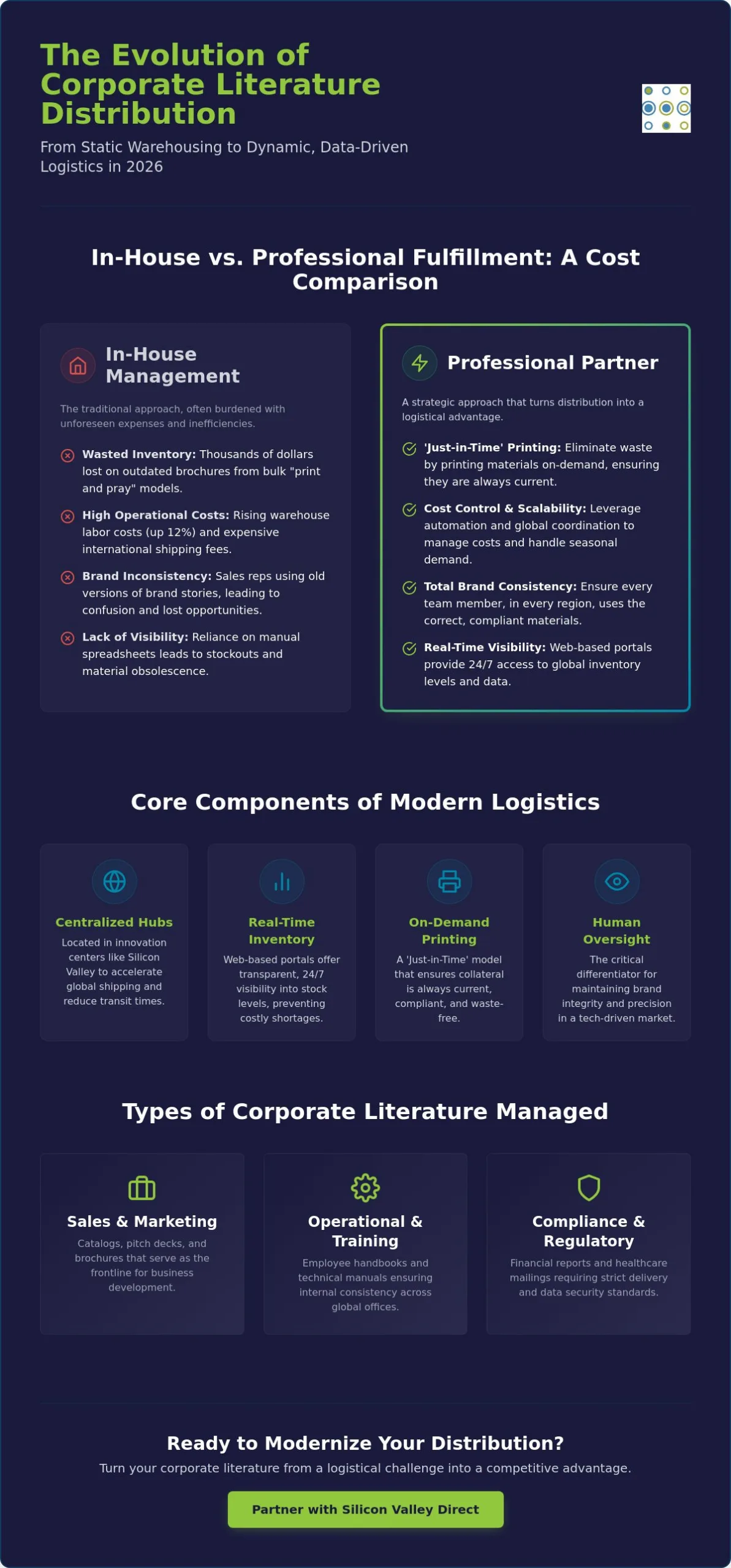
Deciding whether to manage your collateral internally or outsource to a specialist is a pivotal moment for any growing organization. While maintaining an in-house “mail room” might feel like it offers more control, it often masks a series of escalating hidden costs. Labor is a primary concern; warehouse labor costs increased by 12% in the 18 months leading up to April 2026. When you combine these rising wages with the expense of commercial floor space and the high frequency of shipping errors, the “DIY” approach quickly becomes a drain on your resources. Professional corporate literature distribution replaces these unpredictable variables with a stable, high-performance operational model.

Scalability is where a professional partner truly shines. Internal teams often buckle under the pressure of seasonal surges, such as a major industry trade show or a global product launch. A 3PL partner handles these spikes with ease, providing the infrastructure to scale up or down without the need for you to hire temporary staff. You also gain immediate access to enterprise-grade technology without the massive capital investment. For example, fulfillment centers that utilize autonomous mobile robots (AMRs) can offer 12% lower per-pick rates compared to manual warehouses. This level of precision and efficiency is rarely achievable within a standard corporate office environment.

The True Cost of ‘DIY’ Distribution

The most significant hidden expense of in-house management is the opportunity cost. Every hour your marketing or sales team spends packing boxes is an hour they aren’t spending on core business strategy. Beyond that, individual companies don’t have the leverage to negotiate the deep shipping volume discounts that a professional 3PL commands. With USPS Ground Advantage rates increasing by 7.8% in early 2026, these discounts are vital for protecting your budget. Professional tracking and inventory oversight also significantly reduce waste by ensuring fewer items are lost or damaged during the fulfillment process.

When to Transition to a 3PL Partner

It’s time to consider a transition when you notice slow turnaround times or recurring inventory discrepancies. These are clear signs that your current process has reached its limit. Expanding into international markets is another major catalyst; navigating global customs and logistics requires a level of expertise that most internal departments don’t possess. Additionally, if your industry requires highly specialized services like healthcare mailing, the compliance risks of in-house handling are simply too high. Outsourcing ensures that your sensitive materials are managed with the precision and regulatory oversight required in 2026.

Infographic comparing In-House Management and Professional Partner in corporate literature distribution, with pros and cons.

Maximizing Efficiency with On-Demand Digital Printing

The integration of on-demand digital printing directly into the fulfillment workflow represents the pinnacle of modern corporate literature distribution. By adopting a ‘Just-in-Time’ (JIT) model, you can print only what you need, exactly when you need it. This approach effectively eliminates the “closet full of old brochures” that plagues so many marketing departments. Digital printing is significantly more cost-effective for short runs under 2,000 units. For a run of 500 units, the digital printing cost per unit is approximately $0.12 to $0.50, while the offset cost ranges from $1.20 to $2.50. This financial advantage allows you to maintain a lean inventory without sacrificing quality.

Personalization at scale is another critical advantage of this integrated model. Using variable data printing, we can customize corporate mailings for specific regions, industries, or even individual clients. This isn’t just about adding a name to a cover; it’s about tailoring the entire content experience to the recipient’s needs. When your printing press sits under the same roof as your distribution center, the transition from production to postage is instantaneous. This synergy ensures that your sales team always has access to the most relevant, up-to-date materials.

Benefits of Integrated Printing and Fulfillment

Combining these two functions significantly reduces warehousing fees. Since you aren’t storing thousands of static copies, you require less pallet space. This agility is a game-changer for content management. You can update your brochures or catalogs in real-time to reflect new product specs or pricing without discarding existing stock. This model also supports your sustainability goals. By reducing overproduction and optimizing shipping routes, you lower the carbon footprint of your physical assets, which is a key performance indicator for brands in 2026.

Personalized Direct Mail Strategies

Direct mail remains a powerful tool for physical engagement. By combining customized literature with direct mail marketing services, you can drive higher response rates than generic mass mailings. We help you track the ROI of these physical touchpoints by integrating QR codes or unique landing pages that sync back to your digital analytics. This data-driven approach ensures your physical collateral works as hard as your digital ads. If you’re ready to modernize your collateral strategy, you can request a free quote to see our on-demand capabilities in action.

Silicon Valley Direct: Your Partner in Precision Distribution

Operating from the heart of Silicon Valley for over 25 years, we’ve built a reputation as the steady hand in an industry defined by rapid change. Our location isn’t just an address; it’s a symbol of our commitment to innovation and global connectivity. We understand that your collateral represents your brand’s integrity, which is why we combine high-tech logistics with the seasoned expertise only decades of experience can provide. While we lean into technological efficiency, we explicitly reject the trend of impersonal, fully automated interactions. At Silicon Valley Direct, you aren’t just a client in a database; you’re a partner with a dedicated project manager who knows your brand as well as you do.

Our corporate literature distribution model is built on stability and long-term partnership. We pride ourselves on high staff retention, ensuring that the experts managing your inventory today will be the same ones supporting your growth years from now. This continuity allows us to offer bespoke problem-solving that automated systems simply can’t match. Whether you’re navigating the 2026 shipping rate increases or expanding into new territories, our global shipping services ensure your materials reach any market with Silicon Valley speed and domestic reliability.

Our High-Performance Infrastructure

We provide a physical infrastructure that mirrors the agility of your digital tools. Our facility houses state-of-the-art warehousing alongside on-demand digital printing capabilities, allowing for a seamless transition from file to fulfillment. You gain 24/7 visibility into your assets through our web-based inventory tools, ensuring you’re never in the dark about stock levels or order status. This scalable solution is designed to support everyone from agile startups to Fortune 500 enterprises, providing the same level of precision regardless of volume.

Getting Started with Professional Distribution

Transitioning your workflow is a methodical, organized process designed to respect your time. We begin with a comprehensive inventory audit and seamless system integration, ensuring your CRM and our fulfillment platform work in perfect harmony. We take the time to customize every step of the workflow to match your brand’s specific voice and packaging requirements. Precision is our baseline, and personal commitment is our promise. If you’re ready to eliminate the stress of logistics and reclaim your team’s focus, Contact us today to streamline your corporate literature.

Future-Proof Your Global Fulfillment Strategy

Mastering corporate literature distribution in 2026 requires a partner that balances high-tech integration with human precision. You’ve seen how transitioning to a ‘Just-in-Time’ printing model eliminates the waste of outdated brochures while keeping your sales team agile. By centralizing your assets in a hub that offers both HIPAA-compliant healthcare mailing and on-demand digital printing, you ensure every piece of collateral meets the highest standards of accuracy and compliance. We’ve been perfecting this process since 1999, providing the stable foundation your brand needs to scale across international borders without losing the personal touch.

It’s time to move beyond the limitations of manual spreadsheets and fragmented logistics. Whether you’re managing complex kitting projects or sensitive regulatory documents, our team provides the 24/7 visibility and dedicated oversight required for success. We invite you to Streamline Your Corporate Literature Distribution with Silicon Valley Direct today. Let’s work together to transform your physical assets into a high-performance engine for your business growth.

Frequently Asked Questions

What is the difference between literature fulfillment and standard order fulfillment?

Literature fulfillment is specifically designed for the management of high-value business assets like sales kits, brochures, and catalogs. While standard fulfillment focuses on retail products, corporate literature distribution requires precise version control and complex kitting. We ensure that every kit is assembled with a focus on brand integrity rather than just moving a single SKU. This process often involves higher levels of customization and specialized packaging to meet corporate standards.

Can you handle HIPAA-compliant mailing for healthcare literature?

Yes, we provide specialized healthcare mailing services that adhere to strict HIPAA compliance standards. Our facility is equipped to manage sensitive patient information and regulatory documents with absolute precision. We combine secure data handling with physical quality control to ensure that every mailing reaches the correct recipient on time. This level of security is essential for healthcare providers and financial institutions that cannot afford errors in their physical communications.

How does on-demand digital printing save money on distribution?

On-demand digital printing saves money by eliminating the need for large-scale warehousing and reducing inventory waste. Instead of printing thousands of brochures that might become outdated, you print only what is needed for current orders. This ‘Just-in-Time’ approach significantly lowers your storage fees and ensures you never have to discard obsolete materials. By integrating printing directly into the distribution workflow, you also reduce the shipping costs associated with moving stock between facilities.

Do you provide real-time tracking for distributed corporate kits?

We provide complete transparency through our web-based inventory management tools. You have 24/7 visibility into every shipment, from the moment a kit is assembled to its final delivery. This real-time data allows your sales and marketing teams to track the arrival of critical collateral for trade shows or client meetings. Our system provides automated notifications and detailed reporting, giving you informed confidence in your logistics operations at all times.

What are the benefits of distributing literature from a Silicon Valley hub?

Distributing from Silicon Valley offers unparalleled access to global shipping lanes and innovation-driven infrastructure. Our location serves as a symbol of connectivity, allowing us to move materials with Silicon Valley speed across both domestic and international markets. Proximity to major logistics hubs ensures faster transit times and more reliable service. This geographic advantage is a key differentiator for organizations that require their physical assets to move as quickly as their digital strategies.

Can you manage international shipping and customs for corporate materials?

Yes, we manage the entire international shipping process, including customs documentation and trade compliance. Navigating the complexities of global logistics requires a seasoned expert who understands regional regulations and duties. We ensure that your corporate materials reach international offices and clients without unnecessary delays or hidden fees. Our team handles the administrative burden of global distribution, allowing you to focus on your core business expansion without worrying about border logistics.

How do you ensure brand consistency during the kitting process?

We ensure brand consistency through a combination of structured workflows and personal human oversight. Every kitting project is assigned a dedicated project manager who understands your brand’s unique requirements and packaging standards. Unlike fully automated systems, our team provides manual quality control to ensure every item is placed perfectly within the kit. This commitment to precision ensures that your physical touchpoints always project a professional and consistent image to your audience.

Is there a minimum volume required for corporate literature distribution?

We offer scalable solutions that are designed to grow with your organization, meaning we don’t enforce rigid minimum volume requirements. Whether you are a startup launching your first marketing campaign or a Fortune 500 enterprise managing corporate literature distribution, we provide the same level of precision and care. Our flexible model allows you to adjust your distribution volume based on seasonal demand or specific project needs, ensuring you always have a high-performance partner.

How to Reduce Shipping Costs for eCommerce: The Strategic 2026 Guide

How to Reduce Shipping Costs for eCommerce: The Strategic 2026 Guide

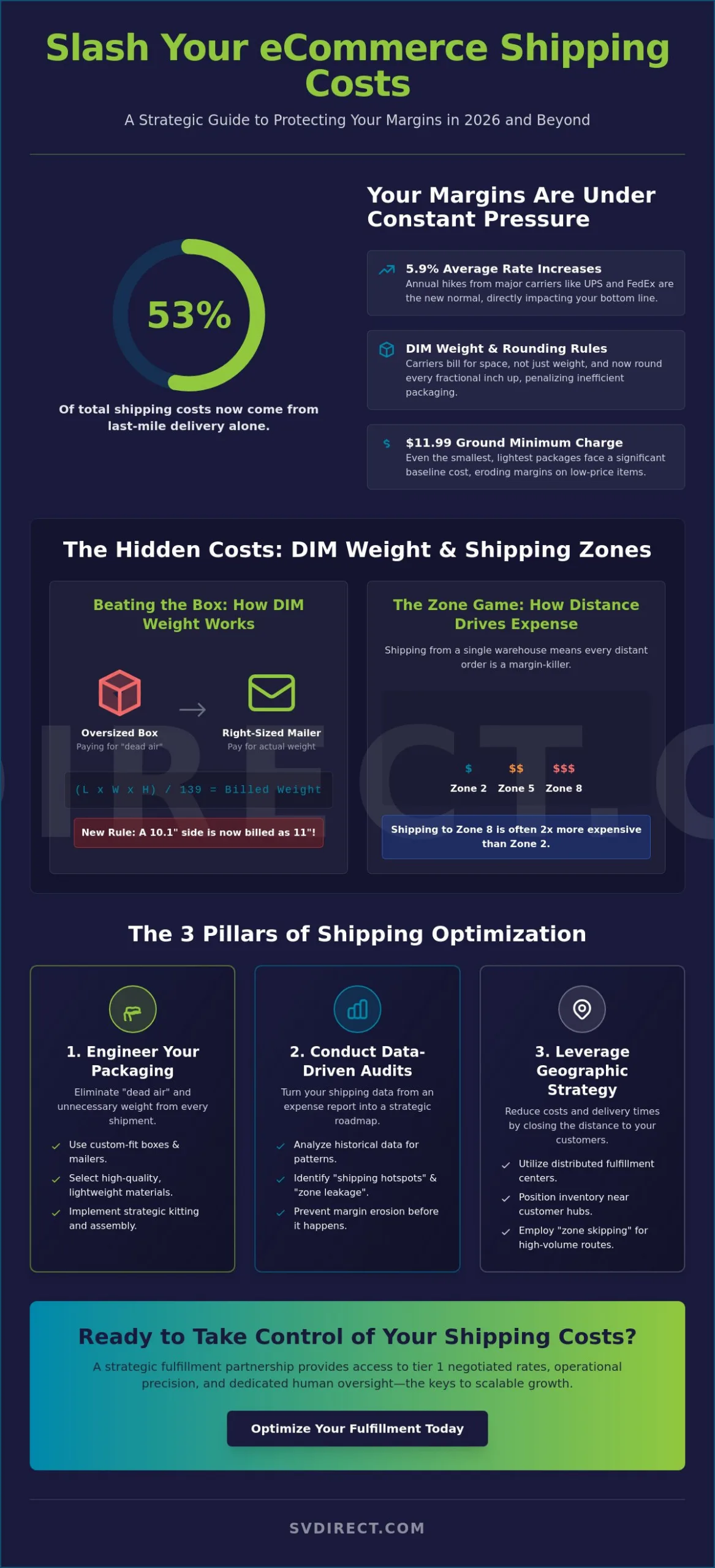
Did you know that for many online sellers, last-mile delivery now constitutes over 53% of total shipping costs? With the 2026 average rate increases of 5.9% from UPS and FedEx now in full effect, learning how to reduce shipping costs for ecommerce has moved from a tactical advantage to a survival necessity. Between the new DIM weight rounding rules and the $11.99 ground minimum charges, your margins are under constant pressure from factors that often feel outside your control. It’s frustrating to watch surcharges and dimensional penalties erode the hard work you’ve put into building your brand. We believe that growth should feel like an achievement, not a logistical burden.

We understand that you want to scale your business without sacrificing the speed or quality your customers expect. This guide promises to help you master the art of logistics optimization, providing a clear path to slash your shipping expenses. By the end of this article, you’ll have a strategic roadmap to implement scalable fulfillment architecture and lower your cost per order. We will examine how to engineer your packaging to beat DIM weight penalties, leverage regional carriers for cost savings, and use distributed fulfillment to place inventory closer to your audience.

In this guide, you will discover:

  • The mechanics of Dimensional (DIM) weight and how to audit your shipping profile to prevent margin erosion.
  • How strategic kitting and assembly can reduce total package weight while on-demand digital printing streamlines your inventory.
  • The power of aggregate volume in securing tier 1 negotiated rates that far exceed standard business discounts.
  • Why geographic location is a primary driver of expense and how to reduce shipping costs for ecommerce by positioning inventory near global hubs.
  • The long-term ROI of a fulfillment partnership that combines operational precision with dedicated human oversight.

Auditing Your eCommerce Shipping Profile: DIM Weight and Shipping Zones

True optimization begins with a cold, hard look at your shipping data. Many brands treat shipping as a fixed expense, yet it’s actually one of the most flexible variables in your business model. If you want to master how to reduce shipping costs for ecommerce, you have to stop looking at the price on the label and start looking at the math behind it. Carriers don’t just bill you for what a package weighs; they bill you for the space that package occupies on their planes and trucks. This is the foundation of a shipping audit.

Identifying “shipping hotspots” or “zone leakage” allows you to see where your margins are evaporating. For instance, if a large percentage of your orders are traveling to Zone 7 or 8, you’re likely paying a premium that could be mitigated through better inventory placement. By auditing your historical data, you can uncover the hidden costs of “dead air” where oversized boxes are triggered by inefficient packing. This data-driven approach transforms shipping from a line-item expense into a strategic advantage.

To better understand this concept, watch this helpful video:

Understanding Dimensional Weight (DIM) Calculations

Dimensional weight is often the primary reason for unexpected shipping costs. Carriers calculate DIM weight by multiplying the length, width, and height of a package and dividing by a “DIM factor,” which is currently 139 for major domestic carriers. If the resulting number is higher than the actual weight, you’re billed at that higher rate. As of the 2026 guidelines, carriers now round up every fractional inch to the next whole number before calculating. A box that’s 10.1 inches is billed as 11 inches. To “beat the box,” you must match your product size to your packaging with surgical precision. Using custom-fit boxes or mailers eliminates the “dead air” that triggers these expensive penalties.

Mapping Your Customer Density and Shipping Zones

Shipping zones are geographic areas defined by the distance between the point of origin and the destination. In the 2026 landscape, shipping to Zone 8 is frequently twice as expensive as shipping to Zone 2. If your warehouse is in New York but your customers are in California, every order is a margin-killer. Many third-party logistics providers solve this by analyzing your customer density to find the optimal fulfillment center location. High-volume shippers also utilize “zone skipping,” which involves consolidating orders and trucking them closer to the destination hub before handing them to a carrier. This proactive strategy is a cornerstone of how to reduce shipping costs for ecommerce while maintaining the delivery speed your customers demand.

Packaging Engineering: Reducing Costs Through Strategic Kitting and Printing

Shipping efficiency isn’t just about the carrier you choose. It’s about the physical architecture of the shipment. While most brands focus on the label, sophisticated operators look at the weight of every component, from the corrugated cardboard to the promotional flyers inside. As you determine how to reduce shipping costs for ecommerce, you’ll find that small adjustments in packaging engineering yield massive results across thousands of orders. Precision in the assembly phase is what prevents the “surcharge creep” that often stalls business growth.

Traditional packing methods often leave too much room for error, or rather, too much room for “dead air.” If you’re shipping a small item in a medium box, you’re paying for the carrier’s volume, not your product’s weight. Switching to poly mailers or custom-fit boxes can eliminate this wasted spend. Branded packaging is vital for the unboxing experience, but it shouldn’t come at a premium. By selecting high-quality, lightweight materials, you can maintain your brand’s aesthetic and durability without pushing the package into a higher weight bracket.

The Power of Professional Kitting and Assembly

Professional kitting and assembly services are about more than just organization; they’re a financial strategy. Consolidating multiple SKUs into a single, optimized unit allows you to save significantly on “Pick and Pack” fees. Instead of shipping three separate boxes, kitting creates a streamlined package that fits perfectly into standard carrier dimensions. This process also reduces the need for dunnage, the filler material that adds weight without adding value. A well-designed kit ensures that every square inch of the box is utilized, bypassing the “Additional Handling” surcharges that plague unoptimized shipments.

On-Demand Printing: A Secret Weapon for Shipping Efficiency

Most guides overlook the massive weight impact of traditional marketing materials. Traditional fulfillment involves shipping heavy, pre-printed catalogs to a warehouse, storing them, and then adding that bulk to every outbound order. This adds weight and increases the risk of materials becoming obsolete. By integrating on-demand digital printing directly into the fulfillment line, you can generate personalized, lightweight inserts at the moment of packing. This just-in-time approach keeps your marketing current while keeping the package weight at an absolute minimum. It’s a precise way to maintain brand quality without paying a “paper tax” to carriers.

Engineering a better package is a collaborative effort between your fulfillment team and your designers. If you’re ready to see how these efficiencies look in practice, you can request a custom analysis to identify your specific savings opportunities.

Leveraging 3PL Volume: Why Negotiated Rates Beat Standard Business Discounts

Most small to mid-sized brands find that their “negotiated” rates are barely better than retail pricing. This happens because carriers prioritize high-density accounts that simplify their own operational logistics. When you partner with a seasoned fulfillment provider, you aren’t just buying space; you’re buying into a massive shipping cooperative. This collective bargaining power allows businesses to access Tier 1 carrier rates that are typically reserved for Fortune 500 companies. It’s a fundamental shift in how to reduce shipping costs for ecommerce because it moves you beyond standard business discounts into a realm of unlisted savings.

A sophisticated 3PL doesn’t just stick to one carrier. They use shipping orchestration software to route every package based on the lowest total cost in real-time. This isn’t just about base rates. The software accounts for the 2026 residential surcharges, which have climbed to $6.45 for FedEx Home Delivery and $6.50 for UPS Ground. By automatically selecting the carrier with the most efficient route for a specific zip code, you bypass the traps that inflate your per-order expense. This proactive strategy ensures that your shipping budget is spent on delivery speed rather than carrier profit margins.

The Reality of Carrier Rate Negotiation

Individual businesses often lack the leverage to move the needle with major carriers. Carriers look for volume, consistency, and operational ease. A 3PL provides all three by consolidating thousands of shipments into massive daily batches. This reduces the “touches” required by the carrier, allowing the 3PL to secure deeper discounts. These relationships are built over decades, providing access to incentive tiers that a solo business simply can’t reach. Batch delivery to the carrier hub further reduces the carrier’s workload, which translates to lower base rates for every package in that batch.

Managing Surcharges and Accessory Fees

Fuel surcharges and accessory fees now account for 20% to 40% of total annual shipping costs for many brands. Address correction fees are a silent margin killer. Even a simple typo can lead to a carrier fee that wipes out the profit on a small order. Automated address validation at the point of fulfillment is essential to stop this leakage. Additionally, as we move through 2026, peak-season surcharges have become more dynamic and complex. A strategic partner helps you plan inventory cycles to avoid these spikes. For brands expanding across borders, cross-border ecommerce fulfillment services manage the complexities of international duties and taxes, including the impact of the suspended US de minimis exemption and new EU customs duties. This ensures that your global reach doesn’t come with unexpected financial penalties or customs delays that hurt your brand reputation. A complete cost-reduction strategy must also account for the reverse flow of goods; implementing efficient returns management logistics is essential to prevent the 2026 rate hikes from compounding the expense of processing the growing volume of online returns.

How to Reduce Shipping Costs for eCommerce: The Strategic 2026 Guide

Geographic Strategy: Reducing the Distance to Delivery

Distance is the silent driver of escalating expenses. When you analyze how to reduce shipping costs for ecommerce, the geographic placement of your inventory emerges as the most critical factor. Every shipping zone your package crosses adds a layer of cost and a day of transit time. In a market where last-mile delivery accounts for over 53% of total shipping costs, your physical address is your most powerful lever. By positioning your fulfillment operations closer to major entry points and carrier hubs, you fundamentally change the math of your logistics. This isn’t just about labels; it’s about reducing the physical mileage your products must travel to reach the end consumer.

A Silicon Valley hub offers a distinct advantage for brands focused on innovation and global connectivity. Proximity to major international ports like Oakland and San Francisco, along with primary carrier sorting facilities, ensures that inbound shipments move from container to warehouse with minimal drayage fees. This geographic placement allows for a steady, methodical flow of goods, reducing the time your capital is tied up in transit. Shorter transit times don’t just lower costs; they also lead to a measurable decrease in customer service inquiries and return rates, as faster delivery consistently correlates with higher customer satisfaction. It’s a proactive stance that respects both your budget and your client’s time.

The Strategic Importance of a West Coast Hub

West Coast fulfillment centers are the gateway for Pacific Rim trade. By processing goods near their point of entry, you avoid the expense of shipping raw inventory across the country before it’s even sold. This proximity also allows for faster hand-offs to carriers, which is vital for maintaining high-performance delivery standards. Understanding the batch delivery to carrier meaning is essential here. It refers to the moment your consolidated shipments are processed by the carrier at their local hub. This step happens much faster when your warehouse is minutes away from their primary sorting facility, effectively slashing the lag time between order packing and carrier transit.

Cross-Border Shipping and International Logistics

Navigating international logistics requires a partner who understands the nuances of customs and trade regulations. Shipping from the US to Canada or other international destinations can be cost-prohibitive without a consolidation strategy. By grouping international orders, you can reduce per-package export fees and simplify the documentation process. Brands scaling globally must also develop a clear strategy for cross-border ecommerce fulfillment to achieve predictable landed costs in the post-de minimis regulatory environment. A professional 3PL acts as a steady hand, ensuring that your global expansion is backed by physical infrastructure and human expertise rather than just digital abstractions. This methodical approach ensures your products reach global markets without the stress of unpredictable fees. If you want to see how a West Coast strategy could impact your specific volume, you can request a free quote for a detailed geographic analysis.

Choosing a Strategic Fulfillment Partner for Long-Term Scalability

Selecting a fulfillment partner is more than a software integration; it’s a strategic alliance that dictates your financial trajectory. While many platforms claim their algorithms do it all, pure automation lacks the nuance required for complex or high-value shipments. True operational readiness comes from balancing high-tech efficiency with seasoned human oversight. This combination ensures that when a unique challenge arises, you have a dedicated team ready to implement a bespoke solution. If you’re investigating how to reduce shipping costs for ecommerce, you’ll find that the most significant savings often come from the precision only human experts can provide.

Calculating the ROI of outsourcing involves looking beyond the per-order fee. You must account for the overhead of warehouse leases, specialized labor, and rising insurance premiums. By moving to a 3PL, you convert these fixed costs into variable expenses that scale with your order volume. Silicon Valley Direct integrates directly with your existing eCommerce platform, providing the real-time control you need without the burden of physical management. When interviewing potential partners, always ask about their transparency regarding fuel surcharges and hidden accessory fees. A reliable partner will provide a clear, hierarchical breakdown of every cost associated with your shipping profile, ensuring there are no surprises on your monthly invoice.

The Silicon Valley Direct Difference: Human-Scale Logistics

We’ve explicitly rejected the industry trend toward automated chatbots in favor of direct human connection. Our clients value the personal oversight provided by staff members who’ve been with us for decades. This internal stability is a unique hallmark that translates to unmatched order accuracy and a deep understanding of your brand’s specific needs. A “one-size-fits-all” fulfillment model often leads to higher costs because it forces your brand into rigid, inefficient processes. We believe in total flexibility, providing the customization required to treat your physical operations with the same care you put into your digital storefront.

Transitioning from In-House to 3PL Fulfillment

There’s a specific tipping point where managing your own shipping becomes a liability rather than an asset. This typically happens when the administrative burden of carrier negotiations and warehouse staffing distracts you from your core mission of growth. You don’t have to lose brand control when you outsource your physical operations. By choosing a partner that acts as an extension of your team, you maintain the personal touch while gaining a scalable fulfillment architecture. Check our blog for more insights on scaling your fulfillment and navigating the complexities of the 2026 shipping landscape.

Master Your Logistical Future

Success in 2026 depends on transforming your shipping from a reactive expense into a proactive strategic advantage. You’ve learned that auditing your DIM weight and engineering your packaging are the first steps to reclaiming lost margins. By strategically positioning inventory near major hubs and leveraging aggregate shipping volume, you can consistently lower your cost per order. Mastering how to reduce shipping costs for ecommerce requires this holistic approach, where every inch of a box and every mile of transit is accounted for.

Since 1999, Silicon Valley Direct has acted as a reliable partner for brands that value precision and personal accountability. We specialize in high-value and HIPAA-compliant logistics, providing the direct human oversight that automated systems often miss. We invite you to streamline your supply chain with Silicon Valley Direct’s expert fulfillment solutions. Your growth is a journey, and with the right steady hand at the helm, your logistical infrastructure will remain a pillar of your brand’s success.

Frequently Asked Questions

What is the most effective way for a small eCommerce business to reduce shipping costs?

The most effective strategy is to perform a comprehensive audit of your packaging dimensions to eliminate “dead air.” Since major carriers now round up every fractional inch to the next whole number, even a slight reduction in box size can prevent a shipment from moving into a higher billable weight bracket. This precise approach to how to reduce shipping costs for ecommerce ensures you aren’t paying for empty space or unnecessary volume.

How does dimensional weight (DIM) affect my shipping bill?

Dimensional weight allows carriers to bill based on the volume a package occupies rather than its actual physical mass. By multiplying length, width, and height and dividing by the 2026 standard divisor of 139, carriers determine a theoretical weight. If this calculated DIM weight is higher than the actual scale weight, you’re billed for the larger value. This makes efficient, right-sized packaging a financial necessity for any modern brand.

Is it cheaper to use a 3PL or ship orders myself?

Transitioning to a fulfillment partner becomes more cost-effective when the overhead of warehouse leases, specialized labor, and insurance premiums exceeds the per-order fulfillment fee. A 3PL provides access to Tier 1 negotiated rates and aggregate volume discounts that solo businesses cannot secure independently. By converting these fixed in-house costs into variable expenses, you gain a scalable architecture that adjusts to your seasonal volume fluctuations.

What are shipping zones, and how do they impact my pricing?

Shipping zones are geographic regions determined by the distance between the point of origin and the final destination. In the 2026 rate structure, shipping to Zone 8 is often twice as expensive as shipping to Zone 2 due to increased fuel consumption and transit mileage. Mapping your customer density allows you to identify “zone leakage” and potentially reposition your inventory closer to your most active geographic markets to lower per-order expenses.

Can kitting and assembly actually save me money on postage?

Professional kitting and assembly lead to substantial postage savings by consolidating multiple items into a single, optimized package. This reduces the total number of outbound shipments and avoids multiple individual “Pick and Pack” fees. A well-designed kit also minimizes the need for dunnage; the filler material that adds weight without adding value; ensuring the final dimensions remain below the thresholds that trigger expensive additional handling surcharges.

How do I negotiate better rates with carriers like FedEx or UPS?

Individual businesses often struggle to move the needle with major carriers because those carriers prioritize high-density, high-volume accounts. The most reliable way to secure better rates is to leverage the collective bargaining power of a fulfillment partner. These providers have long-standing relationships and multi-decade histories that allow them to access unlisted savings and incentive tiers that are typically unavailable to smaller, independent shippers.

What is ‘Zone Skipping’ and is it right for my business?

Zone skipping is a strategy where a business consolidates a large volume of orders and trucks them directly to a carrier hub closer to the final destination. This bypasses the initial sorting centers and reduces the number of zones the carrier actually handles. It’s an ideal strategy for high-volume cross-country shipments where the cost of the initial truckload is lower than the sum of the individual per-package zone surcharges.

How does a Silicon Valley location benefit my international shipping costs?

A Silicon Valley location places your inventory near major international ports and primary carrier sorting facilities. This proximity reduces drayage costs, which are the fees associated with moving goods from container ships to the warehouse. For international orders, being at a global gateway allows for faster hand-offs and reduced transit times to the Pacific Rim, helping you understand how to reduce shipping costs for ecommerce on a global scale.

EOB Mailing Services: The Strategic Guide to Accuracy and HIPAA Compliance in 2026

EOB Mailing Services: The Strategic Guide to Accuracy and HIPAA Compliance in 2026

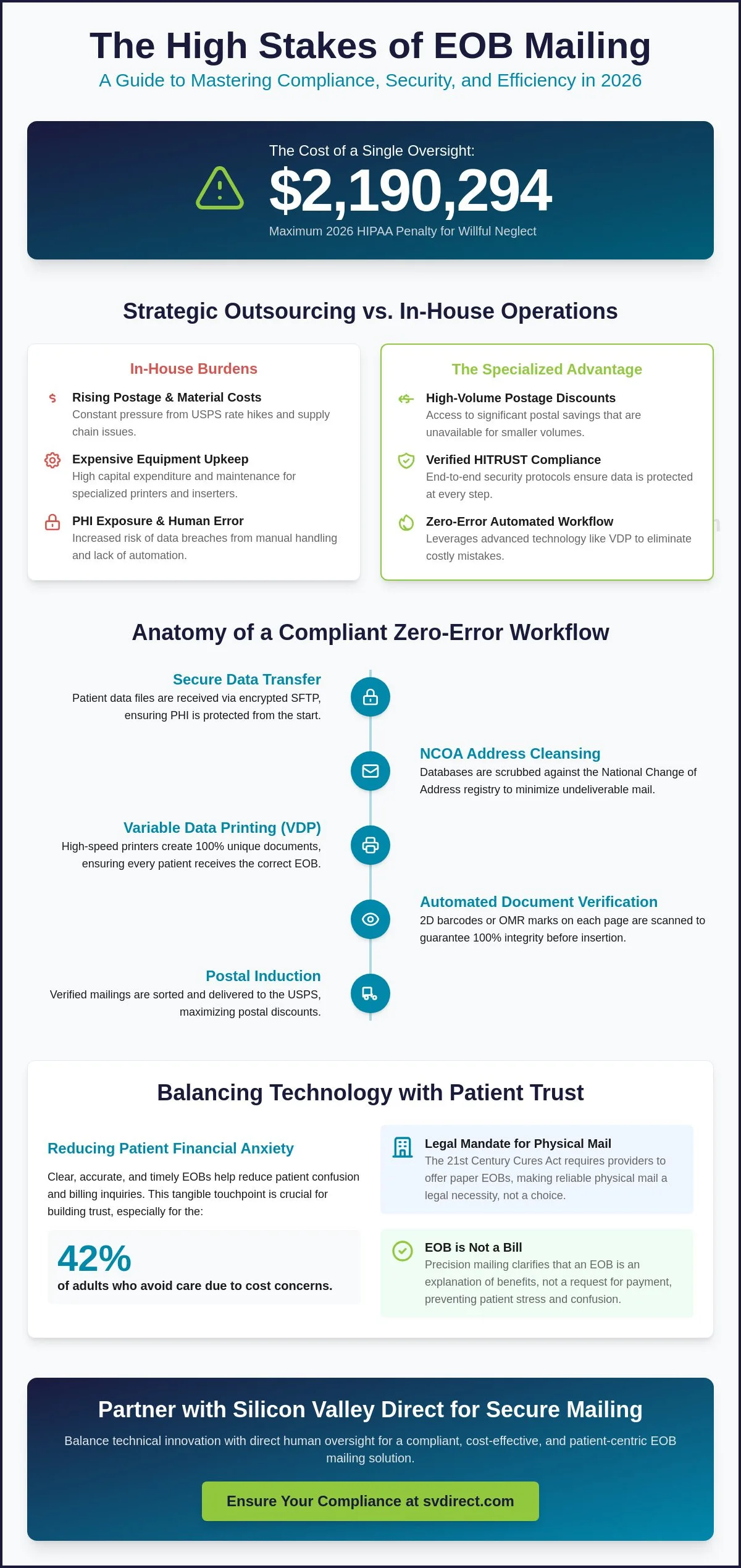
Would your organization’s budget survive a 2.1 million dollar penalty for a single oversight in your mailing room? With the 2026 HIPAA penalty for willful neglect now reaching a maximum of $2,190,294, the stakes for your eob mailing services have never been higher. It’s a constant challenge to manage the delicate balance between rising USPS postage rates and the absolute necessity of protecting patient data. You’re likely feeling the pressure of maintaining expensive in-house equipment while trying to ensure that thousands of unique patient statements reach their destination without a single breach of privacy.

We believe that behind every data point is a person who trusts you with their most sensitive information. This guide will show you how to master the complexities of Explanation of Benefits mailing by implementing a zero-error workflow that prioritizes both operational efficiency and patient trust. We’ll explore the latest 2026 compliance standards, strategies for reducing logistics costs, and why a human-centered approach to high-tech mailing is your best defense against the rising risks of PHI exposure. By the end of this article, you’ll have a clear roadmap to verified HITRUST compliance and a more streamlined, cost-effective mailing operation.

Key Takeaways

  • Understand the 2026 regulatory landscape where physical mail remains a mandatory legal requirement for healthcare providers despite the shift toward digital communication.
  • Learn how Variable Data Printing (VDP) technology eliminates the risk of PHI exposure by ensuring every unique patient statement is printed with absolute precision.
  • Discover how specialized eob mailing services outperform in-house operations by removing the hidden costs of equipment maintenance and providing access to high-volume postage discounts.
  • Master a secure data workflow that utilizes SFTP transfers and NCOA address cleansing to maintain a zero-error delivery process for thousands of unique records.
  • Identify the value of a high-performance partnership that balances Silicon Valley technical innovation with the accountability of direct human oversight.

What are EOB Mailing Services and Why Are They Critical in 2026?

EOB mailing services represent the sophisticated intersection of data security and physical logistics. These services handle the complex lifecycle of an Explanation of Benefits (EOB), from the moment a secure data file is received to the point of postal induction. It’s not just about printing paper; it’s about managing a high-stakes communication channel that impacts patient trust and organizational compliance.

As we move through 2026, the demand for transparency has never been higher. Patients are increasingly wary of AI-driven clinical care, yet they expect high-tech efficiency in their administrative interactions. Reliable eob mailing services bridge this gap by providing a steady, physical touchpoint that digital-only platforms often lack. This tangible connection helps reduce the 42% of adults who avoid care due to cost concerns by providing clear, understandable breakdowns of their benefits.

To better understand how these documents function within the healthcare ecosystem, watch this helpful video:

Effective mailing operations do more than just deliver information. They serve as a proactive tool to minimize billing inquiries. When a patient receives a clear, accurate EOB, they’re less likely to call a provider’s office with confused questions about their coverage. This operational readiness translates directly into lower administrative overhead and a more streamlined patient experience.

The Legal Mandate for Physical EOBs

The 21st Century Cures Act emphasizes patient choice and accessibility in communication. While “digital-first” strategies improve speed, they cannot transition into “digital-only” models without risking non-compliance. Healthcare administrators must provide paper EOBs to any patient who requests them or has not explicitly opted into electronic delivery.

EOB vs. Medical Billing: Clearing the Confusion

It is vital to distinguish the EOB from a medical bill to prevent patient anxiety. An EOB is a report of insurance coverage, not a request for payment. When eob mailing services are executed with precision, they improve payer satisfaction scores through financial transparency. Inaccurate mailings lead to high “return to sender” rates, which drain resources and delay claims resolution. For more insights, explore our blog.

The Anatomy of a Compliant EOB: PHI Protection and Precision Printing

A standard Explanation of Benefits is a dense compilation of Protected Health Information (PHI) that requires meticulous handling. Identifying PHI within these documents is the first step toward security. Every statement contains sensitive identifiers such as patient names, policy numbers, provider details, and specific service dates. Because no two statements are identical, the use of Variable Data Printing (VDP) is a technical necessity. This technology allows for the high-speed production of individualized documents where every data field is populated with absolute accuracy. This level of customization ensures that the right information reaches the right patient every time.

Securing these documents involves more than just digital encryption. Physical security standards at the mailing facility must be rigorous to prevent unauthorized access to printed PHI. This includes maintaining restricted access zones, employing background-checked staff, and utilizing 24/7 surveillance. To maintain document integrity, automated checks such as 2D barcodes or Optical Mark Recognition (OMR) are used on every page. These marks allow inserting equipment to verify that every sheet belongs to the correct recipient before the envelope is sealed. If you are looking to enhance your document security, you can request a free quote to see how our precision-driven facility can support your needs.

HIPAA Privacy and Security Rules in Mailing

Compliance is a multi-layered responsibility that begins with secure SFTP data transfers and continues through the final postal induction. Establishing HIPAA business associate contracts is the legal foundation for these operations, ensuring that the mailing partner is held to the same stringent standards as the healthcare provider. Leading eob mailing services prioritize certifications like HITRUST and SOC2 to demonstrate their commitment to data protection. PHI must be protected by rigorous physical and digital safeguards during the entire print-to-post transition. This proactive stance reduces the risk of exposure and protects the organization from the rising costs of HIPAA violations. For a comprehensive overview of how overlapping regulatory frameworks affect physical document distribution, our guide to compliance mailing services provides essential context for healthcare administrators navigating these requirements.

High-Quality Digital Printing for Healthcare

Modern healthcare administration requires agility, which is where on-demand digital printing provides a distinct advantage. This approach reduces waste by printing only what is needed and allows for real-time updates to document templates. Organizations can leverage on-demand digital printing to maintain this flexibility while ensuring high-resolution clarity for complex benefit tables. Some payers also integrate “Transpromo” messages, which are personalized marketing or wellness reminders, directly into the EOB. This adds value to the communication without compromising the security of the underlying PHI, turning a standard administrative requirement into a tool for patient engagement.

EOB Mailing Services: The Strategic Guide to Accuracy and HIPAA Compliance in 2026

Strategic Outsourcing: Why Specialized EOB Mailing Services Outperform In-House Operations

Managing an in-house mailing operation often appears cost-effective on a balance sheet, but the reality involves significant hidden expenses. Beyond the initial purchase of high-speed inserters and digital presses, organizations must account for ongoing equipment maintenance, specialized labor, and the square footage required for secure storage. Specialized eob mailing services eliminate these capital expenditures by providing a ready-made infrastructure designed for high-volume output. This allows your team to focus on patient care rather than troubleshooting paper jams or managing ink inventories.

A primary advantage of this partnership is access to deep postage discounts that individual providers rarely achieve alone. While a single First-Class stamp in 2026 costs $0.78, high-volume 3PLs utilize automation and presorting to secure much lower rates. For instance, automation rates for First-Class Mail can start as low as $0.593 for 5-digit sort levels. These savings scale rapidly when managing thousands of monthly statements, often offsetting a significant portion of the service fees. It’s a matter of leveraging collective volume to reduce individual costs.

Scalability remains a primary concern during peak periods like Open Enrollment. In-house teams often struggle to maintain accuracy when volumes spike, leading to costly errors or the need for expensive temporary staffing. A professional partner provides the elasticity to handle these surges without compromising quality control. While automation drives much of this efficiency, the human element remains irreplaceable. Automated systems can flag data discrepancies, but it takes a seasoned expert to investigate the root cause and implement a bespoke solution. This balance between high-tech processing and personal oversight ensures that no statement is mailed with visible PHI or incorrect data.

Risk Mitigation and Liability Transfer

Outsourcing allows healthcare organizations to shift the heavy burden of compliance monitoring to a dedicated expert. A specialized partner acts as a steady hand, staying ahead of evolving regulations and ensuring every piece of mail meets the latest HIPAA standards. This transition effectively transfers significant operational liability to a facility that lives and breathes data security. We focus on the details so you don’t have to. For a deeper look at these requirements, see our Healthcare Mailing Services Pillar.

Operational Efficiency and Precision

Modern eob mailing services leverage advanced pick and pack logic, which is essential for providers sending complex medical kits or literature alongside benefit statements. This level of precision is managed by dedicated account managers who prioritize direct human connection over automated help desks. This ensures that unique problems receive immediate, expert attention rather than getting lost in a digital queue. You can explore our Silicon Valley Direct blog for more insights on optimizing your logistics efficiency.

Optimizing the EOB Workflow: From Data Integration to Patient Delivery

Achieving a zero-error environment for eob mailing services requires a methodical approach that balances high-speed automation with rigorous human oversight. The process begins with Step 1: Secure SFTP data transfer. Data is moved through encrypted channels, followed by automated file validation to check for corruption or missing records before any ink hits the paper. Step 2 involves data cleansing and NCOA (National Change of Address) processing. This ensures that every statement is addressed to the patient’s most current residence, which significantly reduces the administrative burden of undeliverable mail.

The manufacturing phase transitions into Step 3: High-speed VDP printing. Variable Data Printing technology populates thousands of unique patient records into customized templates while quality control experts monitor output in real-time. Step 4 utilizes intelligent inserting and matching. This is critical for multi-page statements where advanced sensors verify that every sheet belongs to the correct recipient. Finally, Step 5 involves direct injection into the USPS mail stream. By bypassing local sorting facilities and delivering mail directly to regional hubs, we accelerate the delivery timeline and ensure that patients receive their financial information without delay. If you’re ready to streamline your operational flow, you can request a free quote to partner with our expert team.

Data Integrity and Verification

Maintaining 100% accuracy in high-volume healthcare mailing is non-negotiable. We implement a ‘2D Barcode’ system that assigns a unique identifier to every page of every document. As these pages move through the facility, scanners track their progress and confirm that the right pages are grouped together. This technology is a primary defense against ‘double-stuffing,’ a common HIPAA violation where a patient accidentally receives another individual’s PHI. A closed-loop verification process in modern EOB mailing is a system where every printed page is electronically scanned and reconciled against the original data file to confirm total mailing accuracy.

Postage Optimization and Global Reach

Strategic postage management is essential for controlling costs in 2026. We utilize commingling and presorting techniques to combine mail volumes, allowing our partners to access the deepest available discounts. This efficiency is not limited to domestic delivery. Many healthcare plans now require international EOB delivery to support global workforces. Managing these complex logistics requires a partner who understands the nuances of international postal regulations and global healthcare standards. For more information on navigating these complexities, see our guide on Global Shipping Services.

Partnering with Silicon Valley Direct for Secure Healthcare Mailing Solutions

Silicon Valley Direct brings a quarter-century of operational history to the complex world of healthcare communications. Our facility, located in the heart of the world’s innovation hub, combines the speed of modern tech with the reliability of a seasoned partner. We’ve refined our eob mailing services to provide a steady hand for organizations that value both precision and personal accountability. This legacy of excellence since 1999 serves as a constant anchor of trust for our partners, ensuring that your critical communications are handled with the care they deserve.

Whether you’re a fast-growing health-tech startup or an established enterprise payer, our solutions scale with your specific needs. We explicitly reject the impersonal nature of fully automated interactions in favor of direct human connection and personal oversight. This approach ensures that every unique patient statement meets our zero-error tolerance. Our HIPAA-compliant workflows are backed by physical infrastructure and human expertise, providing a proactive stance that software alone cannot replicate. We aim to alleviate the stress of business growth through precision and a deep personal commitment to your success.

Beyond EOBs: A Comprehensive Healthcare Suite

Our capabilities extend far beyond the standard benefit statement. We help organizations create a seamless patient journey by integrating EOBs with Healthcare Marketing Fulfillment. This allows for the coordinated delivery of wellness materials and kitted items alongside mandatory communications. By centralizing your eob mailing services with your broader fulfillment needs, you reduce logistical friction and maintain a unified brand voice. We also specialize in Healthcare Literature Fulfillment, providing just-in-time printing for provider directories and plan booklets. This holistic approach ensures your patients receive a consistent experience across every physical touchpoint.

Start Your Compliant Mailing Journey

Transitioning from an in-house operation to a managed service model requires a partner you can trust. Our team brings collective operational wisdom gained over decades, with many staff members celebrating long-term retention. This internal stability is a unique hallmark of our service, providing you with a dedicated team that understands your specific data requirements. We respect your time and your patients’ privacy, making the migration to our facility efficient and transparent. Our proactive attitude is backed by a multi-decade history of solving complex logistics problems for the healthcare sector. To begin your transition, Contact Silicon Valley Direct for a HIPAA-compliant mailing audit and discover the difference that precision and personal oversight can make for your organization.

Securing Your Healthcare Communications for the Future

Mastering the 2026 regulatory landscape requires more than just high-speed printers; it demands a strategic commitment to data integrity and patient trust. We’ve explored how transitioning from in-house operations to specialized eob mailing services can significantly reduce your liability while providing access to substantial postage discounts. By implementing advanced Variable Data Printing and a closed-loop verification process, your organization can achieve a zero-error workflow that stands up to the strictest HIPAA scrutiny.

Since 1999, Silicon Valley Direct has served as a steady hand for healthcare providers navigating rapid industry shifts. Our high-tech facility in the heart of Silicon Valley offers secure warehousing and the rare benefit of direct human oversight on every healthcare mailing project. We’re ready to help you alleviate the stress of operational growth through precision and personal commitment. Take the first step toward a more efficient, compliant future today.

Partner with the experts in HIPAA-compliant EOB mailing services at Silicon Valley Direct

Frequently Asked Questions

What is the difference between an EOB and a medical bill?

An EOB is a statement from an insurance payer detailing how a claim was processed, while a medical bill is a direct request for payment from a healthcare provider. The EOB acts as a transparent record of coverage and patient responsibility, helping to clarify costs before any money changes hands. Providing this clarity is a fundamental part of patient care, as it reduces confusion and builds trust in the provider’s billing practices.

Is EOB mailing required to be HIPAA compliant?

Yes, every EOB mailing must comply with HIPAA regulations because these documents contain highly sensitive Protected Health Information. Compliance involves securing data during electronic transfer and ensuring that no PHI is visible through envelope windows. Professional eob mailing services use encrypted workflows and secure facilities to maintain these standards. This proactive approach protects organizations from the severe financial penalties associated with data breaches and unauthorized disclosures.

Can patients opt out of physical EOB mailings?

Patients have the right to request electronic delivery, but providers are legally obligated to offer physical mailings as a standard option. While digital adoption is growing, many patients still rely on paper records for financial tracking and personal documentation. Maintaining a reliable physical mailing channel ensures that your organization remains accessible to all demographics. It’s a critical component of a compliant communication strategy that respects individual patient preferences and accessibility needs.

How do EOB mailing services ensure data security during printing?

Data security is ensured through end-to-end encryption and physical safeguards like restricted access zones and background-checked personnel. We use 2D barcodes to track every page throughout the facility, confirming that each document is inserted into the correct envelope. This high-tech tracking prevents common errors like double-stuffing. By combining these automated systems with direct human oversight, we provide a level of security that purely digital or in-house operations often struggle to match.

What are the benefits of outsourcing EOB statement generation?

Outsourcing provides access to industrial-scale efficiency and significant postage discounts that are unavailable to most in-house operations. It eliminates the capital expenses of purchasing and maintaining specialized printing and inserting equipment. Additionally, a professional partner offers the scalability to handle seasonal surges without the need for temporary staffing. This allows your team to focus on core healthcare objectives while a seasoned expert manages the complexities of secure logistics and compliance mailing services.

How does variable data printing work for healthcare statements?

Variable data printing (VDP) works by integrating secure databases with digital presses to populate unique patient information into document templates during the print cycle. This technology allows for the mass production of customized statements where every data point is specific to the individual recipient. It’s a high-precision process that ensures accuracy for thousands of unique records. VDP is essential for modern healthcare mailing, as it allows for personalized communication without sacrificing speed or security.

What happens if an EOB contains incorrect patient information?

Incorrect information on an EOB can result in a HIPAA violation and may require a formal breach notification process. Such errors often stem from data integration failures or manual handling mistakes during the mailing process. If a recipient receives PHI belonging to another person, the organization must act quickly to mitigate the risk. Partnering with precision eob mailing services helps prevent these incidents by utilizing automated verification and rigorous quality control measures at every stage.

How long are healthcare providers required to keep copies of EOBs?

Federal regulations typically require healthcare documentation to be retained for at least six years from the date of its creation. State-specific laws may require longer retention periods for certain types of financial or medical records. Organizations should maintain a clear policy for archiving both digital and physical copies to remain compliant during audits. Consult with your legal team to determine the exact requirements for your specific jurisdiction and provider type.

Literature Fulfillment Services: The 2026 Strategic Guide to Marketing Logistics

Literature Fulfillment Services: The 2026 Strategic Guide to Marketing Logistics

Your warehouse full of brochures isn’t an asset; it’s a liability that’s quietly draining your marketing budget. You likely recognize the frustration of seeing thousands of dollars in printed collateral become obsolete before it ever reaches a prospect’s hands. Modern literature fulfillment services have evolved into a dynamic asset engine, moving away from passive storage toward a model of precision and agility. By integrating on-demand digital printing with real-time distribution, you can stop paying for inventory that will never be used. Our team believes that physical marketing should be as responsive as your digital presence.

We understand the pressure of managing global shipping while facing the 8% temporary price increase on domestic services currently in effect through January 2027. This guide will show you how to master these complexities while reducing waste and increasing your brand’s impact. We’ll explore a strategic roadmap for 2026, covering everything from navigating the July 12 USPS rate adjustments to implementing zero-waste inventory management. You’ll learn how to ensure your sales aids and welcome packages are kitted accurately and delivered rapidly, turning your logistics into a reliable partner for business growth.

Key Takeaways

  • Discover how shifting from bulk storage to a “print and fulfill” model eliminates the financial burden of obsolete marketing materials.
  • Learn to use on-demand digital printing to maintain inventory velocity so it’s easier to keep your sales collateral current and accurate.
  • Evaluate the hidden costs of managing logistics in-house versus the precision and scalability offered by professional literature fulfillment services.
  • Master the specific requirements for high-stakes industries, including HIPAA-compliant healthcare mailing and secure financial document distribution.
  • Balance high-tech automation with dedicated personal oversight to achieve seamless kitting and global shipping for your brand.

What are Literature Fulfillment Services and Why Do They Matter in 2026?

Literature fulfillment services represent the end-to-end management of a brand’s printed assets. This isn’t merely a storage solution; it’s a sophisticated logistics engine that handles everything from initial warehousing to custom kitting and global distribution. In a market where speed is a competitive advantage, these services ensure that your brochures, catalogs, and sales kits reach their destination with absolute precision. This specialized niche within the broader order fulfillment process ensures that your brand’s physical presence matches its digital sophistication.

The industry is currently undergoing a massive shift from the traditional “store and ship” model to a more agile “print and fulfill” strategy. By leveraging on-demand digital printing, companies no longer need to print thousands of brochures that might become outdated in six months. Instead, they print exactly what’s needed, when it’s needed. This transition is essential for 2026 as businesses face rising costs and a greater need for personalization. High-impact physical literature remains a cornerstone of B2B sales because it provides a tactile experience that digital ads simply can’t replicate.

To visualize how these systems integrate with modern events and marketing, watch this overview of a professional literature fulfillment setup:

The Anatomy of a Literature Fulfillment Workflow

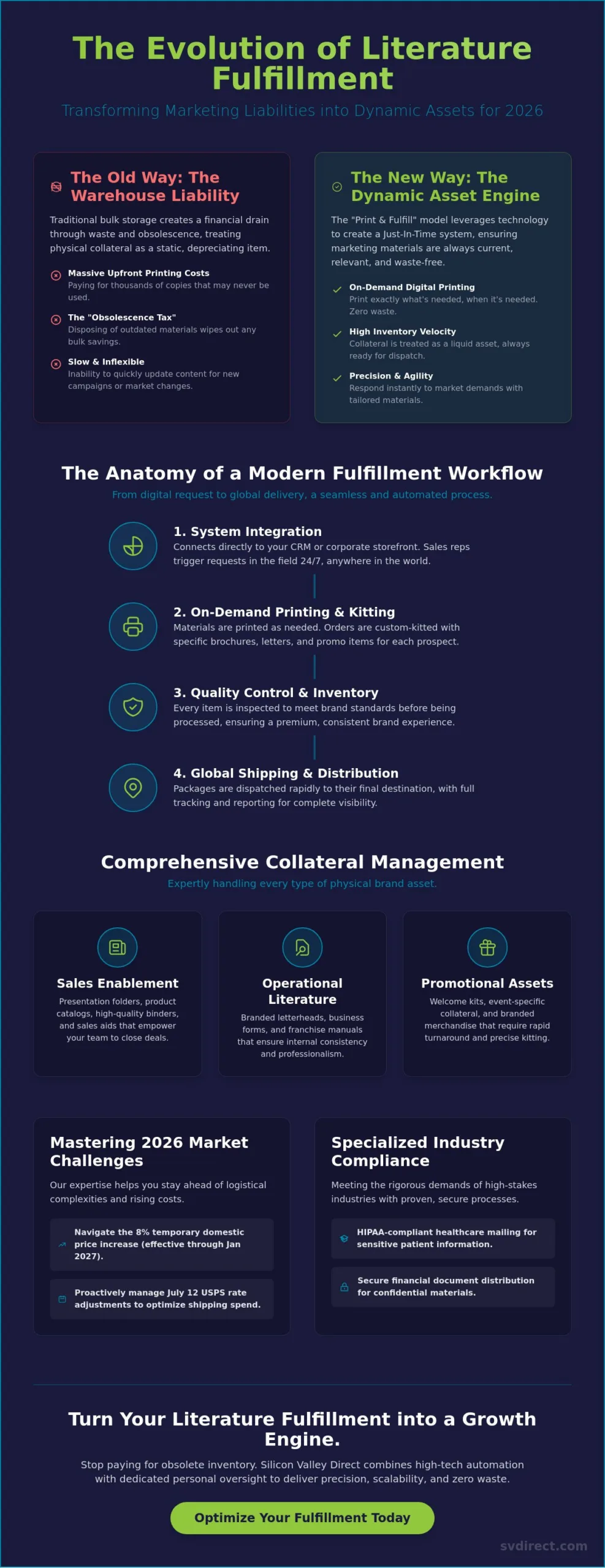
A professional workflow begins with rigorous inventory intake and quality control. Every shipment of pre-printed materials is inspected to ensure it meets brand standards before it hits the shelves. Modern literature fulfillment services thrive on technical integration. Most systems now connect directly to your corporate storefront or CRM platforms. When a sales representative triggers a request in the field, the order is processed automatically. This leads to custom kitting where specific brochures, letters, and promotional items are assembled into a cohesive package tailored for a specific campaign or prospect.

Types of Collateral Managed in Professional Fulfillment

Effective management covers a diverse range of materials that keep a business running smoothly. Sales enablement materials are the most visible, including high-quality presentation folders, binders, and comprehensive product catalogs. Beyond sales, operational literature is equally vital. This category includes branded letterheads, business forms, and franchise manuals that maintain internal consistency. Finally, promotional assets like welcome kits and event-specific collateral require rapid turnaround times. Professional fulfillment ensures these items aren’t just sitting in a closet; they’re active tools ready for immediate deployment.

The Efficiency Engine: On-Demand Printing and Inventory Velocity

Success in 2026 isn’t measured by how much you can store, but by how fast you can move. Traditional literature fulfillment services were once defined by massive warehouses filled with dusty pallets of brochures. Today, that model has been replaced by a “Just-In-Time” (JIT) approach that treats printed collateral as a liquid asset. By focusing on inventory velocity rather than sheer volume, you ensure that every piece of mail or sales kit is current, relevant, and ready for immediate dispatch. This proactive stance helps you avoid the “obsolescence tax,” where bulk printing savings are wiped out by the cost of disposing of outdated materials.

Efficiency also requires a high degree of operational reliability similar to the structured workflows found in government print and mail services. When your distribution engine is finely tuned, you can integrate digital order portals with physical fulfillment centers to provide 24/7 ordering convenience for your global sales team. This seamless connection means a representative in London can trigger a literature request at midnight, and the physical assembly begins at the fulfillment center before they even wake up. If you’re looking to eliminate the friction in your distribution chain, you can consult with our logistics experts to see how JIT printing fits your model.

Reducing Waste with Digital On-Demand Printing

Digital on-demand printing has fundamentally changed the cost-benefit analysis of marketing logistics. In the past, printing 10,000 brochures seemed cheaper on a per-unit basis, but it ignored the carrying costs and the risk of content changes. Now, printing 500 units as needed is often the more economical choice. It allows you to update literature instantly without discarding thousands of copies. This flexibility is vital for personalizing materials for specific regions or recipients, ensuring your brand impact remains high without the burden of excess waste. We’ve seen this approach transform passive storage into an active sales tool. For a deeper look at how this model eliminates inventory risk entirely, explore our 2026 strategic guide to zero-inventory logistics through on-demand digital printing.

Inventory Management and Real-Time Reporting

Control is the byproduct of visibility. Modern literature fulfillment services utilize web-based portals that offer a transparent view of your stock levels and order history. These systems don’t just track numbers; they provide low-stock alerts and automated reorder points based on historical usage data. This data-driven approach prevents sales delays and helps marketing teams analyze which assets are actually performing. By monitoring usage patterns, you can optimize your future spend and focus your budget on the materials that your sales team actually uses to close deals. It’s about having the right data to make informed decisions about your physical assets.

Literature Fulfillment Services: The 2026 Strategic Guide to Marketing Logistics

In-House vs. Outsourced Literature Fulfillment: A Cost-Benefit Analysis

Many organizations treat in-house distribution as a minor administrative task that saves money. This perspective often ignores the mounting costs of high-rent office space and the risk of “Closet Chaos.” When marketing materials are stored in office closets or unmanaged basements, version control fails and expensive brochures become obsolete before they’re ever used. This diverted focus pulls your high-value marketing team away from strategic growth and forces them into manual labor. Relying on professional literature fulfillment services replaces this internal disorganization with a high-performance engine that scales on demand.

Professional partners leverage 3PL scale to provide immediate cost relief. With the proposed 4.8% average rate increase for USPS market dominant products set for July 12, 2026, managing postage costs in-house is becoming increasingly difficult. Outsourced providers offer access to discounted postage rates and optimized shipping lanes that are unavailable to small-scale shippers. This infrastructure allows you to handle seasonal spikes or new product launches without the stress of temporary hiring. You gain a steady hand in a fast-paced industry, ensuring your physical brand presence remains as polished as your digital one.

Analyzing the Total Cost of Ownership (TCO)

Calculating the true price of in-house storage requires looking beyond the surface. Using premium square footage in a corporate office to store pallets of literature is an inefficient use of capital. Beyond real estate, you must consider the labor hours lost to kitting errors and inventory counts. Professional kitting directly impacts brand perception; a missing brochure in a welcome kit suggests a lack of care to a new client. The financial impact of a single mismanaged shipment to a high-value prospect can easily outweigh the entire monthly service fee of an expert 3PL partner.

The Strategic Advantage of Outsourcing

Outsourcing offers a strategic advantage that empowers your internal team to focus on what they do best: strategy and creation. It grants your brand immediate access to advanced kitting and assembly services that most internal teams simply don’t have the space or technology to execute. You also benefit from established global shipping services that ensure your materials navigate international borders with minimal friction. This proactive stance is backed by physical infrastructure and human expertise, turning your marketing logistics from a cost center into a competitive sales tool. Brands that have already mastered recurring physical deliveries, such as those relying on scalable subscription box assembly, understand how outsourcing kitting operations to a professional partner directly protects margins and brand reputation.

Industry-Specific Literature Needs: Compliance, Healthcare, and Beyond

Every industry carries its own set of logistical hurdles, and a one-size-fits-all approach to literature fulfillment services often falls short. For healthcare organizations, the stakes involve more than just shipping brochures; they require precise management of patient education materials and healthcare mailing services that strictly adhere to HIPAA regulations. Similarly, financial services firms depend on the secure distribution of compliance documents and personalized statements where a single error could lead to significant regulatory consequences. We understand that in these sectors, precision is a requirement for maintaining trust and operational integrity.

In the fast-moving tech and SaaS sectors, the focus shifts toward rapid deployment and high-impact brand experiences. When launching a global software update or entering a new market, these companies rely on promotional kit fulfillment to ensure their physical brand presence arrives simultaneously with their digital rollout. Education and non-profit sectors also face unique challenges, often managing large-scale donor communications or enrollment packets that must be delivered within tight seasonal windows. With the USPS proposed rate increases for First-Class Mail and domestic postcards effective July 12, 2026, these high-volume senders must optimize their distribution strategies to protect their budgets.

Compliance-Driven Literature Fulfillment

Regulated industries require a fulfillment partner that prioritizes data security and maintains rigorous audit trails. Every piece of sensitive information, from medical records to financial disclosures, must be handled with a steady hand and absolute transparency. Our processes include detailed quality control measures to ensure 100% accuracy in compliance kitting. This level of oversight provides a clear record of when and where documents were sent, which is essential for meeting internal audits and external legal requirements. You can request a free quote to discuss how we can secure your compliance-heavy distribution workflows.

Bespoke Solutions for High-Growth Sectors

Innovation-driven companies often need more than just standard mailing; they require bespoke solutions that bridge the gap between physical and digital marketing. This includes creating customized welcome kits for new hires or premium clients that leave a lasting impression. Just-in-time printing allows for the rapid assembly of materials for international trade shows, ensuring you aren’t shipping outdated collateral across the globe. By linking physical literature to digital tracking through QR codes and personalized URLs, we help you measure the real-world impact of your printed assets. This proactive approach ensures your physical logistics keep pace with your company’s growth and innovation.

Silicon Valley Direct: Precision Literature Fulfillment with a Human Touch

Silicon Valley Direct brings over 25 years of operational excellence to the heart of the world’s innovation hub. We’ve spent decades refining a model that balances high-tech efficiency with a deeply personal commitment to our partners. Our literature fulfillment services aren’t just about moving boxes; they’re about providing a steady hand in an industry that moves at lightning speed. By combining advanced automation with dedicated account managers, we ensure that your brand’s physical assets are handled with the same care you put into your product development. We treat every brochure and sales kit as a critical touchpoint in your customer’s journey.

Our “Human-Tech” hybrid model explicitly rejects the impersonal nature of automated ticket queues. We believe that complex logistics require direct human connection and personal oversight. This approach allows us to offer bespoke problem-solving for both agile startups and established global enterprises. Whether you’re integrating on-demand digital printing for a specific campaign or managing complex global logistics across multiple continents, our team provides the precision required to protect your brand’s impact. We don’t just follow instructions; we actively look for ways to optimize your distribution and reduce unnecessary overhead.

Why Silicon Valley Direct is Your Strategic Partner

Our geographic identity in Silicon Valley serves as a symbol of our commitment to innovation and global connectivity. This location allows for rapid distribution and seamless access to international shipping lanes, which is vital when managing tight deadlines and fluctuating postal rates. We maintain a culture of proactive inventory management where quality assurance isn’t an afterthought; it’s the foundation of our workflow. Our long-term staff retention is a hallmark of the internal stability we offer. This means the experts managing your literature today possess a deep, historical understanding of your brand’s specific needs. It’s a level of continuity that automated systems simply can’t replicate.

Getting Started: Transitioning Your Literature Assets

Transitioning your distribution to a professional partner begins with a comprehensive audit process. We work with you to assess your current inventory and identify specific opportunities for on-demand printing to reduce waste. This audit helps us understand your usage patterns and pinpoint where you might be overspending on storage for obsolete materials. Once the strategy is set, we help you implement a custom storefront for decentralized ordering. This allows your global team to request materials 24/7 while you maintain total control over versioning and costs. It’s a seamless way to modernize your literature fulfillment services. Contact Silicon Valley Direct to streamline your distribution today.

Future-Proofing Your Brand Through Precision Distribution

Success in today’s market requires your physical marketing to move with the same agility as your digital strategy. We’ve explored how a shift toward inventory velocity and on-demand printing eliminates the hidden costs of obsolescence and internal disorganization. By integrating literature fulfillment services into your broader operations, you transform passive storage into an active tool for sales enablement and regulatory compliance. Whether you’re managing complex healthcare mailings or global software launches, the goal remains the same: absolute precision and minimal waste.

Silicon Valley Direct has provided this level of reliability since 1999, combining decades of B2B expertise with high-tech capabilities like HIPAA-compliant healthcare mailing and on-demand printing. We believe that logistics is a human endeavor that’s best supported by advanced automation, not replaced by it. Our team is dedicated to providing the personal oversight and bespoke problem-solving necessary to help your brand thrive in a fast-paced environment. Let’s work together to streamline your workflows and maximize your brand impact.

Optimize Your Literature Logistics with Silicon Valley Direct and build a more responsive distribution engine today.

Frequently Asked Questions

What is the difference between literature fulfillment and standard order fulfillment?

Literature fulfillment focuses specifically on the management and distribution of printed assets like catalogs, brochures, and sales kits. While standard order fulfillment typically deals with consumer goods, literature services require specialized kitting and strict version control. This ensures your sales representatives and partners always receive the most current marketing tools without the risk of distributing outdated information.

Can I integrate my existing CRM or storefront with your literature fulfillment system?

Yes, our technology is designed to integrate seamlessly with your corporate storefront or CRM platforms. This connection allows for decentralized ordering, where your field team can trigger shipments directly from their daily workflow. Automated data syncing ensures that every request is processed with absolute precision, removing the need for manual data entry and reducing the chance of shipping errors.

How does on-demand printing save money compared to traditional offset printing?

On-demand digital printing eliminates the high carrying costs and waste associated with massive offset print runs. While traditional printing offers a lower per-unit price for high volumes, it often leads to an “obsolescence tax” when materials become outdated before they are used. Digital printing allows you to produce smaller batches as needed, preserving your budget and ensuring your content is always relevant.

Is your literature fulfillment service HIPAA compliant for healthcare materials?

Our literature fulfillment services include dedicated healthcare mailing capabilities that strictly adhere to HIPAA regulations. We maintain rigorous audit trails and quality control measures to ensure patient education materials and sensitive documents are handled with total security. This level of oversight is a core requirement for healthcare organizations that prioritize data protection and operational integrity.

Do you handle international shipping for marketing collateral?

We manage global shipping and logistics for marketing collateral across multiple continents from our strategic innovation hub. Our established carrier relationships and expertise in international regulations allow us to navigate customs with minimal friction. This ensures your brand maintains a consistent physical presence worldwide, regardless of where your prospects or satellite offices are located.

What happens to my obsolete literature when I update a version?

When you update your materials, we can securely recycle or dispose of your obsolete inventory according to your brand’s sustainability policies. Our real-time reporting identifies slow-moving assets before they become a financial burden. This proactive approach helps you transition to newer versions smoothly while minimizing the waste of physical resources and storage capital.

Can you handle complex kitting, like including promotional items with brochures?

We specialize in complex kitting and assembly that combines printed literature with various promotional items or branded hardware. Whether you need welcome packages for new hires or customized kits for international trade shows, our team provides the human oversight necessary for perfect execution. Every kit is assembled with care to ensure a high-impact presentation upon arrival. Brands that also manage recurring product deliveries can explore our approach to subscription box assembly for a scalable framework that achieves 99.9% accuracy in SKU placement while maintaining a premium unboxing experience.

How do I track my inventory levels in real-time?

You can monitor your inventory levels 24/7 through our secure, web-based portal. This system provides transparent visibility into stock counts, order history, and automated low-stock alerts. By accessing this real-time data, you can make informed decisions about reorder points and future marketing spend without the delays of manual reporting or spreadsheets.