


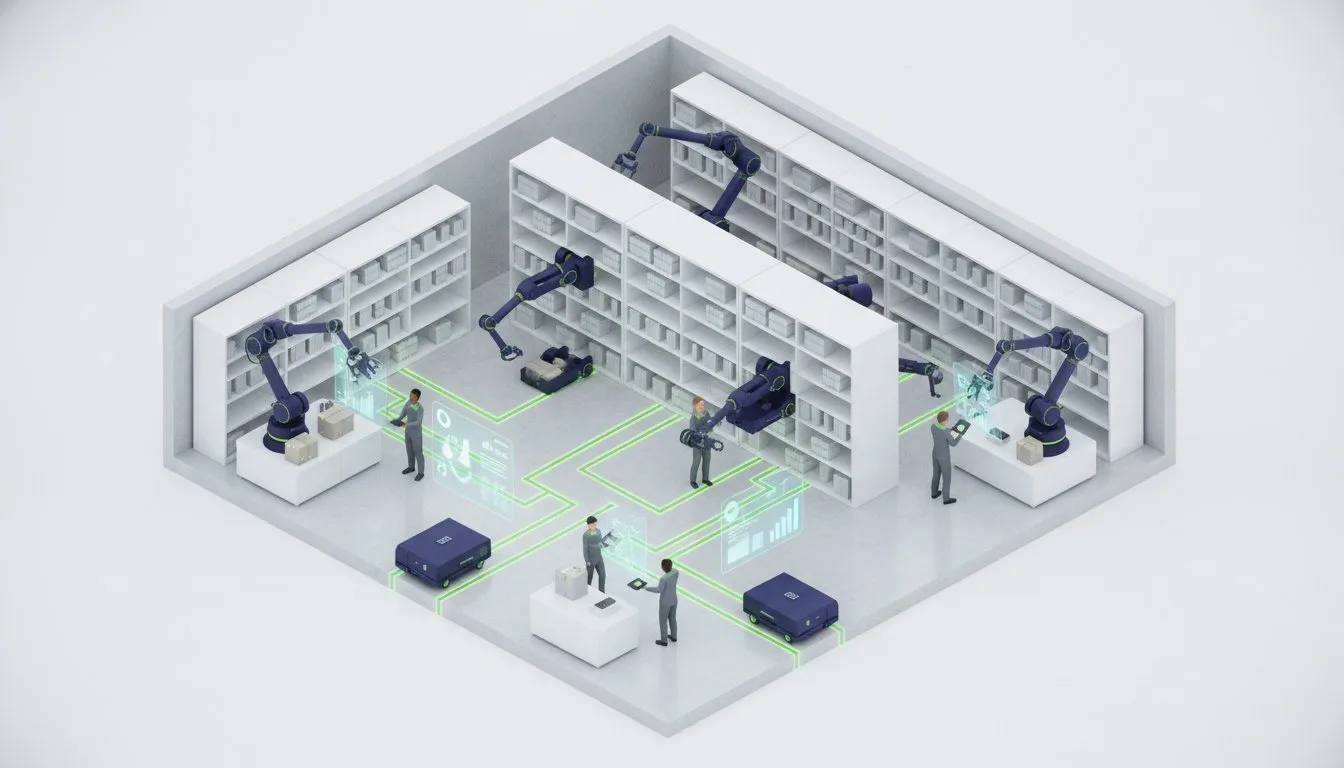
Mastering the Grid: 2026 Best Practices for Inventory Storage and Warehouse Efficiency
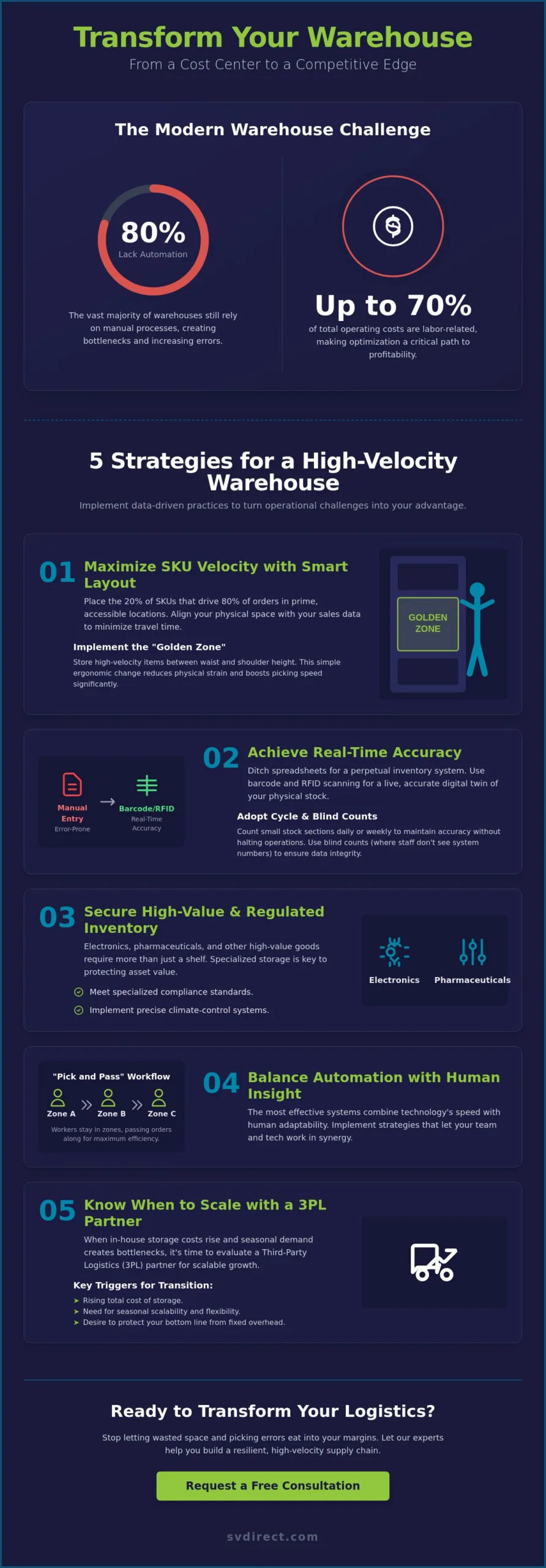
What if your warehouse floor wasn’t just a place to store goods, but a high-velocity engine that actively reduced your overhead? In 2026, the reality is that 80% of warehouses still operate with little to no automation, even though labor accounts for up to 70% of total costs. It’s frustrating to watch wasted space and picking errors eat into your margins while dead stock gathers dust. Implementing the best practices for inventory storage is no longer just about “holding stuff”; it’s about SKU velocity and strategic placement that minimizes human motion.
You likely feel the pressure of rising costs and the constant need for precision in a fast-paced market. We’re here to help you turn those challenges into a distinct operational edge. This article will show you how to transform your facility from a cost center into a powerful competitive advantage through data-driven layout and human-tech synergy. We’ll explore the path to optimized flow and real-time visibility by examining updated compliance standards, AI-driven forecasting, and the steady hand of expert oversight that defines a truly resilient supply chain.
Key Takeaways
- Learn how to maximize SKU velocity by implementing a “Golden Zone” layout that prioritizes ergonomic picking for your fastest-moving items.
- Discover the best practices for inventory storage by transitioning from manual spreadsheets to perpetual inventory systems that utilize barcode and RFID technology for real-time accuracy.
- Identify the specialized compliance and climate-control requirements necessary for securing high-value inventory, including electronics and sensitive pharmaceuticals.
- Understand how to balance automation with human intuition through the “Pick and Pass” strategy to maintain high-performance standards without sacrificing personal oversight.
- Evaluate when to transition to a 3PL partner by calculating your total cost of storage and leveraging seasonal scalability to protect your bottom line.
Optimising Warehouse Layout for Maximum SKU Velocity
Efficiency starts with the grid. If your team is walking miles to find a single item, your layout is working against you. SKU velocity measures the speed at which a specific product moves through your facility, from arrival to outbound shipping. High-velocity items shouldn’t be tucked away in the back corners; they require prime real estate to ensure the fastest possible fulfillment times. When you align your physical space with your data, you stop fighting against the floor plan and start moving with it.
Implementing the best practices for inventory storage requires a shift from static shelving to dynamic placement. You need to look at your facility as a 3D puzzle where every inch of air space counts. Vertical cube utilization allows you to maximize your footprint without the massive expense of a facility expansion. By using high-density racking for slow-moving stock and keeping fast-movers accessible, you balance storage density with operational speed. This proactive stance on layout ensures that physical infrastructure supports your growth rather than limiting it.
To better understand how to optimize your space, watch this helpful video on inventory improvement steps:
The 80/20 Rule in Inventory Mapping
Most operations find that 20% of their SKUs drive 80% of their order volume. Identify these “runners” and place them in the most accessible locations. We also recommend grouping “frequently bought together” items in adjacent bins to minimize travel time for multi-item orders. The Golden Zone for inventory placement is the area between a picker’s waist and shoulders where items can be reached without bending or stretching. This simple ergonomic adjustment significantly reduces physical strain and speeds up the picking process. For more detailed guides on operational efficiency, explore our latest insights on the Silicon Valley Direct blog.
Zonal vs. Linear Storage Configurations
Your aisle configuration dictates your daily workflow. Wide-aisle setups are necessary for heavy forklift access and pallet movement, but narrow-aisle configurations are often superior for manual picking in high-density areas. Implementing a “hot zone” near the packing station for top-selling items eliminates unnecessary travel across the floor. This zonal approach ensures your team spends more time picking and less time walking, which directly impacts your labor costs and reduces picker fatigue. For items with extreme velocity, cross-docking strategies move products directly from receiving to shipping. This eliminates the need for long-term shelving and keeps your inventory in constant motion. Modernizing your grid is a partnership between logical design and human performance.
Inventory Control Systems: Accuracy Beyond the Spreadsheet
Relying on a once-a-year physical count is a recipe for operational blind spots. In a high-velocity environment, your data is only as good as its last update. Moving toward perpetual inventory through cycle counting is one of the most effective best practices for inventory storage. This method involves counting small portions of your stock daily or weekly, ensuring that your records stay accurate without halting operations. To maintain the highest standards of integrity, we recommend implementing “blind counts.” By requiring staff to record quantities without seeing the expected system numbers, you eliminate the temptation to simply “confirm” a figure that might be wrong.
Technology acts as the backbone of this precision. Barcode and RFID systems have largely replaced manual data entry, which is the primary source of human error in warehousing. When every movement is scanned, you create a digital trail that simplifies audits and reduces “shrinkage” or lost stock. If you’re struggling with inventory discrepancies, it might be time to consult with our logistics experts about modernizing your tracking systems. A proactive approach to data ensures that your physical assets always match your digital records.
Accurate control also requires a clear distinction between buffer stock and safety stock. While safety stock protects you against unexpected spikes in customer demand, buffer stock accounts for the variability in your supplier’s lead times. Managing these two categories separately prevents stockouts and ensures you aren’t tying up too much capital in excess inventory. Balancing these levels is a delicate science that requires both historical data and current market intuition.
FIFO Inventory Management: Preventing Product Obsolescence
For businesses handling perishable goods or electronics with a limited shelf life, First-In, First-Out (FIFO) is non-negotiable. It ensures that the oldest stock leaves the facility first, preventing costly obsolescence. You can’t rely on memory alone; physical shelving should be structured to force compliance. Gravity flow racks, for example, naturally move older items to the front. This makes it easier for your team to follow the correct sequence without needing extra training or constant supervision.
Real-Time Visibility and WMS Integration
In 2026, your warehouse management system (WMS) must communicate instantly with your eCommerce storefront. This real-time visibility prevents the dreaded “out of stock” notification after a customer has already paid. We prioritize bin-level tracking, which provides the exact location of every item within a multi-item order. This level of detail reduces picking errors and provides a comprehensive digital audit trail for every movement, from the receiving dock to the final shipping label. When your data flows seamlessly, your entire operation becomes more resilient and responsive.
Securing High-Value and Regulated Inventory
High-stakes inventory requires more than just a locked door; it demands a comprehensive strategy that balances physical security with technical oversight. When you handle cutting-edge electronics, sensitive pharmaceuticals, or regulated medical materials, the risks of theft, environmental damage, or regulatory failure are significant. Implementing the best practices for inventory storage in these sectors means moving beyond basic warehousing into a model of total asset protection. This involves a multi-layered approach where every touchpoint is recorded and every environmental variable is monitored in real time.
Climate control is a critical component that often goes overlooked. For many products, maintaining a specific temperature is only the first step. Humidity levels and light sensitivity can be just as destructive to pharmaceuticals or high-end circuit boards as heat. We utilize advanced sensors that alert our team to the slightest deviation from preset parameters, ensuring your products remain in peak condition. For a deeper look at protecting technical assets, see our strategic guide on secure warehousing for high-value electronics. By treating your inventory with the same care you used to develop it, we act as a steady extension of your own quality control team.
Access control is the final pillar of this security model. We implement tiered security clearances, ensuring that only authorized personnel can enter high-value warehouse zones. This isn’t just about preventing external threats; it’s about creating a culture of internal accountability and precision.
HIPAA Compliant Storage for Healthcare Logistics
Storing materials that involve Protected Health Information (PHI) or medical devices requires strict adherence to federal regulations. Physical security for healthcare logistics must include restricted access logs and dedicated storage areas that prevent unauthorized viewing or handling. We maintain rigorous chain of custody documentation for every piece of medical literature and device in our care. This level of detail is essential for maintaining compliance and protecting patient privacy. You can find more information on these requirements in our Healthcare Mailing Services Guide.
Loss Prevention and High-Value Asset Protection
Effective loss prevention combines physical barriers with digital verification. We integrate CCTV systems directly with WMS timestamps, allowing us to verify the accuracy of every high-value pick through video evidence. For items with high shrinkage potential, such as small consumer electronics, we utilize “cages within warehouses” to provide an extra layer of physical protection. This methodical approach reduces insurance liabilities and gives you the confidence that your assets are being managed with total transparency. We don’t believe in “black box” operations. Every movement is logged, every bin is secured, and every client is treated as a partner in precision.
The Tech-Human Synergy: Modernizing the Pick and Pack
Pure automation is often marketed as the ultimate solution for warehouse efficiency, yet it frequently lacks the bespoke problem-solving required for complex, high-stakes growth. At Silicon Valley Direct, we deliberately reject a fully automated model in favor of personal oversight. While 80% of warehouses still operate with little to no automation as of 2026, we believe the true advantage lies in the synergy between advanced tools and human intuition. Labor accounts for 50 to 70% of total warehousing costs, making the efficiency of your team the most critical factor in your bottom line. By equipping our staff with logical workflows, we ensure that best practices for inventory storage are physically executed with a level of care that machines cannot replicate.
One of our core strategies is the “Pick and Pass” system. This method combines a logical conveyor flow with human expertise, allowing pickers to focus on specific zones while maintaining a steady, organized movement of orders. This approach is further enhanced by our on-demand digital printing capabilities. By printing marketing materials and literature as needed, we significantly reduce the physical footprint required for pre-printed inventory. This reduces waste and ensures that your storage space is reserved for high-value products rather than aging paper stock. If you’re ready to see how this hybrid approach can streamline your operations, request a tailored fulfillment quote today.
Custom Kitting and Assembly Best Practices
Kitting is more than just a service; it’s a strategic storage tool. Storing individual components is often far more space-efficient than holding finished kits that consume massive amounts of shelf space. We utilize just-in-time assembly to reduce the footprint of bulky subscription boxes or promotional bundles. This ensures that your inventory remains fluid and adaptable to changing market demands. For a deeper dive into these strategies, explore our Kitting and Assembly Services Guide. This methodical approach to assembly ensures that your storage grid remains lean and responsive.
Reducing Human Error with Guided Picking
We empower our team with guided picking technologies, such as pick-to-light and voice-directed systems, to eliminate the mental fatigue that leads to errors. These tools act as a steady hand, assisting our staff without replacing their critical judgment. Accuracy is further protected by “double-blind” verification at the packing station, where a second team member verifies the contents of every order. Our multi-decade history and high staff retention rates mean that collective experience is built into every process. This internal stability is a unique hallmark of our service, ensuring that your inventory is managed by experts who respect your time and your brand’s reputation.
Scaling Your Storage: When to Transition to a 3PL
The “Flexibility Factor” is perhaps the most significant benefit of a 3PL partnership. In a volatile market, your storage needs can fluctuate wildly between seasons. A dedicated partner allows you to scale your footprint up or down without the long-term commitment of a commercial lease. This agility is enhanced by a strategic geographic location. Operating from the heart of Silicon Valley provides a unique symbol of innovation and a gateway to global connectivity. It ensures your products are positioned near major transit hubs, which is a critical component of our Global Shipping Services Strategic Guide. We provide the steady hand you need to navigate these logistical complexities with quiet confidence.
The 3PL Checklist for Inventory Growth
Choosing the right partner requires a methodical evaluation of their technical and operational history. Compatibility between your eCommerce platform and their Warehouse Management System (WMS) is vital for real-time reporting and data transparency. You should also look for a partner with a multi-decade history; 25 or more years of experience suggests a level of stability that is rare in today’s fast-paced logistics industry. We recommend looking for consolidated fee structures that combine “Pick and Pack” and “Storage” into a clear, predictable model. This transparency eliminates the “death by a thousand cuts” that many businesses face with impersonal, automated providers.
Integrating Silicon Valley Innovation into Your Supply Chain
A 3PL should be more than just a storage provider; it should act as a strategic partner in your brand’s growth. We prioritize human expertise and personal commitment over pure automation. This ensures that your bespoke problem-solving needs are met by a team that understands your business’s unique nuances. By integrating our physical infrastructure and digital capabilities into your supply chain, you gain the freedom to focus on marketing and product development. We believe that physical operations should be just as organized and efficient as your digital storefront. To see how we can help you achieve this balance, you can streamline your inventory with Silicon Valley Direct and explore our latest operational insights.
Future-Proofing Your Warehouse Operations
Transforming your warehouse from a static cost center into a high-performance engine requires a meticulous blend of spatial logic and digital accuracy. We’ve explored how a data-driven layout maximizes SKU velocity and how human-tech synergy eliminates the errors common in purely automated models. Implementing these best practices for inventory storage ensures your facility remains resilient, even as you scale to meet the demands of a global market. Whether you’re securing regulated pharmaceuticals or managing high-value electronics, the goal is a seamless flow that protects your margins and your reputation.
Since 1999, Silicon Valley Direct has served as a steady hand for businesses navigating these operational complexities. Our HIPAA and SOC2 compliant processes provide the security your brand deserves, while our strategic Silicon Valley location offers a powerful gateway for global distribution. We invite you to request a custom fulfillment and storage quote from Silicon Valley Direct to see how our collective experience can support your growth. Together, we can build a supply chain that’s as organized as it is ambitious.
Frequently Asked Questions
What is the most efficient way to store small items in a large warehouse?
Utilizing high-density bin shelving and modular drawer systems is the most efficient method for small item storage. These solutions allow you to condense thousands of SKUs into a compact footprint, which significantly reduces the travel time for your picking team. By placing these systems in a dedicated “small parts” zone near the packing area, you ensure that intricate components remain organized and accessible without occupying valuable pallet racking space.
How often should I perform a full inventory audit?
You should transition from a single annual audit to a continuous cycle counting program performed daily or weekly. This proactive approach ensures perpetual accuracy by counting small portions of your stock on a rotating basis. Regular cycle counts eliminate the need to halt operations for a full physical count and allow you to identify and resolve discrepancies in real time, maintaining a reliable digital audit trail throughout the year.
Can I store healthcare products and marketing materials in the same facility?
Yes, you can store both item types in one facility as long as there is strict physical segregation and HIPAA compliant handling protocols. Healthcare products, such as medical devices or literature containing sensitive information, require restricted access zones and specific chain of custody documentation. Maintaining these high standards ensures that your marketing fulfillment doesn’t compromise the regulatory requirements of your healthcare logistics.
What is the difference between safety stock and buffer stock?
Safety stock is the inventory held to protect against unexpected spikes in customer demand, while buffer stock is intended to compensate for variability in supplier lead times. Think of safety stock as your insurance against a viral sales surge and buffer stock as your protection against a late shipment from a manufacturer. Managing these two categories separately is essential for preventing stockouts without over-investing in excess capital.
How does SKU velocity affect my warehouse rent costs?
SKU velocity determines how long a product occupies a specific storage location, which directly influences your total storage fees. High-velocity items turn over quickly, allowing you to generate more revenue per square foot of shelf space. Implementing the best practices for inventory storage helps you identify these fast-movers, ensuring you aren’t paying for “dead” space occupied by stagnant stock that could be better utilized for high-demand products.
What are the security requirements for high-value electronics storage?
High-value electronics require a multi-layered security approach including tiered access control, CCTV integration with WMS timestamps, and physical barriers like cages. These measures ensure that only authorized personnel can handle sensitive assets while every movement is recorded digitally. This methodical oversight reduces the risk of shrinkage and provides the transparency necessary for maintaining insurance compliance and protecting your brand’s high-stakes inventory.
Is a Warehouse Management System (WMS) necessary for small businesses?
A WMS is necessary for any small business that intends to scale beyond the limitations of manual spreadsheets. These systems provide the real-time visibility and bin-level tracking required to manage multi-channel eCommerce orders with 100% accuracy. By eliminating human data entry errors and providing instant sync with your storefront, a WMS acts as a steady foundation for professional fulfillment and long-term growth.
How do I handle slow-moving or obsolete stock?
You should identify slow-moving stock through velocity reports and relocate it to lower-cost, high-density storage zones. Once flagged, these items can be cleared through promotional kitting, liquidation, or strategic donations to free up prime real estate. Applying the best practices for inventory storage ensures that your “Golden Zone” shelving remains reserved for high-turnover products that actively contribute to your facility’s overall efficiency and cash flow.