img not found!

The Dangers of Poor Inventory Management: Protecting Your Bottom Line in 2026

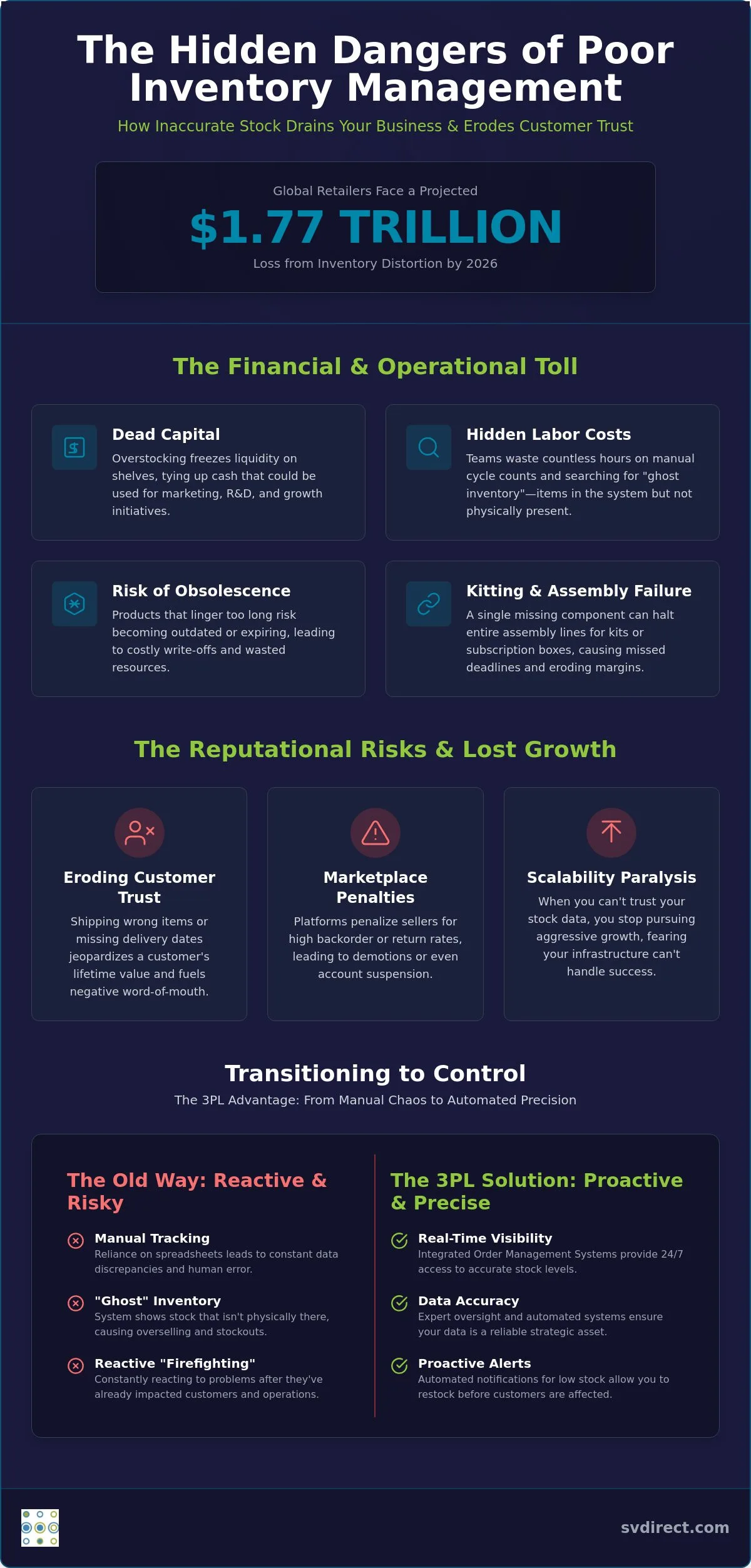
Did you know that inventory distortion, the combined cost of overstocks and out-of-stocks, is projected to drain $1.77 trillion from global retailers in 2026? It’s a staggering figure that highlights the silent, daily drain on your business resources. You’ve likely felt the frustration of capital tied up in stagnant stock or the sting of a loyal customer walking away because of a preventable backorder. These are the immediate and visible dangers of poor inventory management, but the long-term impact on your brand’s reputation and operational agility can be even more damaging.

We believe that inventory shouldn’t be a source of stress, but a strategic asset for your growth. In this article, you’ll discover the critical risks associated with inefficient inventory control and how a proactive 3PL partnership can safeguard your bottom line. We’ll provide a clear roadmap to help you transition from the errors of manual tracking to the precision of automated systems. By the end, you’ll understand how to improve order accuracy and rebuild the customer trust that drives long-term success. Let’s explore how to turn your warehouse operations into a steady hand for your business.

Key Takeaways

  • Learn how to unlock dead capital by identifying overstocking patterns that drain liquidity needed for marketing and growth.
  • Understand the long-term impact of fulfillment errors on customer retention and how to avoid performance penalties on major eCommerce marketplaces.
  • Identify the hidden labor costs associated with manual warehouse searches and the operational drag of managing ghost inventory.
  • Discover how a proactive 3PL partnership mitigates the dangers of poor inventory management through expert oversight and precision.
  • Explore the transition to real-time visibility using integrated Order Management Systems that provide 24/7 access to your stock levels.

The Financial and Operational Toll of Inaccurate Inventory

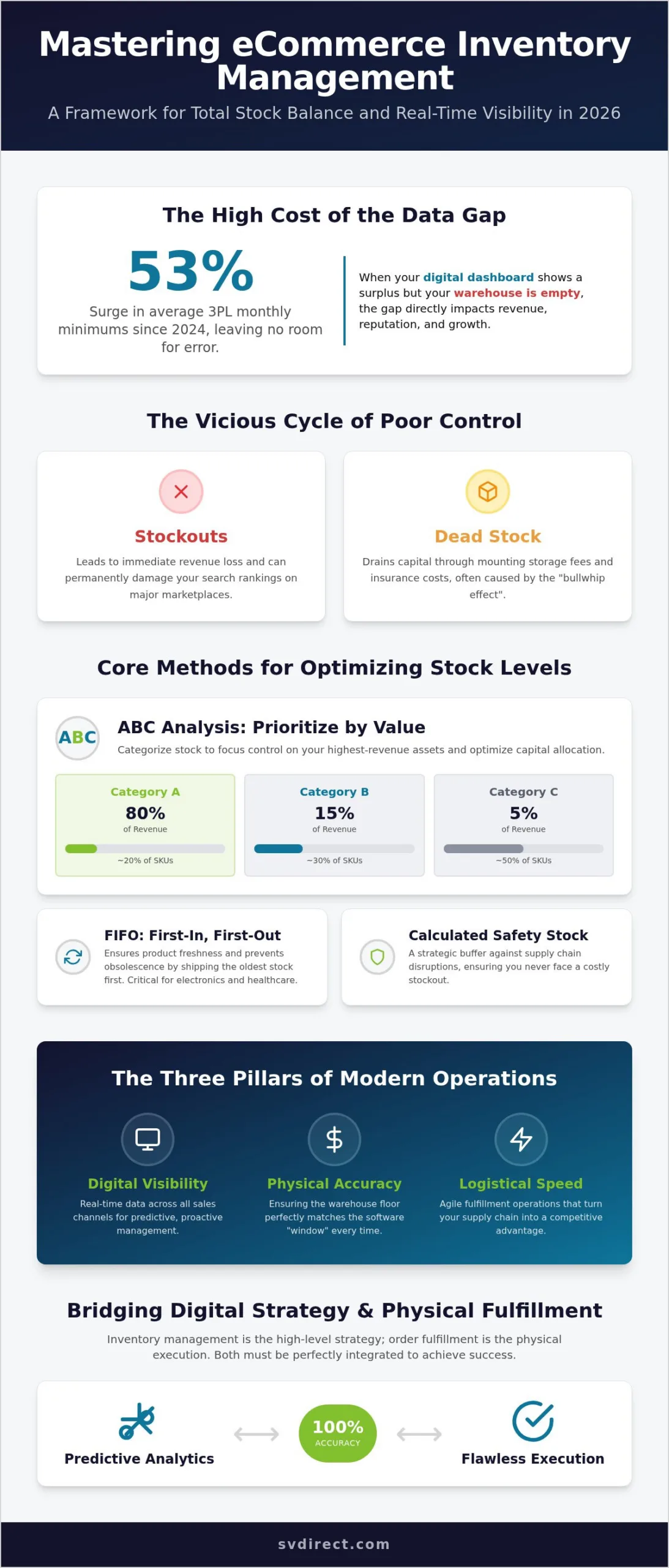
Inaccurate data isn’t just a clerical error; it’s a financial anchor. When you overstock items based on flawed forecasts, you create “dead capital.” This is liquidity that’s effectively frozen on your warehouse shelves. Instead of funding aggressive marketing campaigns or critical R&D, your cash sits in cardboard boxes. Effective inventory management ensures that every dollar is working toward your growth. The dangers of poor inventory management often manifest as a slow bleed of capital that many businesses don’t notice until their cash flow tightens unexpectedly.

Labor costs compound these issues. Warehouse teams spend countless hours on manual cycle counts or searching for “ghost” inventory, which are items that appear in the system but aren’t physically present. This wasted effort drives up operational overhead while increasing the risk of stockouts. When demand exceeds your poorly tracked supply, you lose immediate revenue. Products that linger too long also risk obsolescence. This leads to painful write-offs as items reach the end of their shelf life before they ever reach a customer.

The Ripple Effect on Specialized Services

For businesses relying on kitting and assembly services, inventory errors are catastrophic. A subscription box or a promotional kit is only as complete as its rarest component. If your tracking fails to account for a single missing insert or product, the entire assembly line grinds to a halt. This disruption causes missed shipping deadlines and forces expensive, last-minute course corrections that erode your margins and frustrate your partners.

Operational Friction and Warehouse Morale

A “hectic” warehouse is rarely a productive one. It’s usually a symptom of poor inventory control. When staff are constantly reacting to discrepancies rather than following a streamlined process, morale suffers. We prioritize a quiet, organized facility. This environment is essential for managing high-volume deadlines with precision. High-performance operations require a steady hand and clear data, not a frantic search for misplaced stock. Precision in the warehouse translates directly to confidence in the front office.

Beyond the Balance Sheet: Reputational Risks and Lost Growth

Financial losses are quantifiable, but the damage to your brand identity is often irreversible. One of the most significant dangers of poor inventory management is the steady erosion of customer trust. Shipping the wrong item or missing a promised delivery window doesn’t just cost you a single sale; it jeopardizes the customer’s lifetime value. Research into Reputational Risks confirms that stockouts lead to immediate dissatisfaction and negative word-of-mouth that can haunt your brand for years. In a market where competitors are only a click away, you can’t afford to give shoppers a reason to look elsewhere.

The stakes are even higher on digital marketplaces. Platforms like Amazon and Shopify utilize strict fulfillment metrics to rank and prioritize sellers. Frequent backorders or high return rates triggered by inventory errors can lead to search ranking demotions or total account suspension. This isn’t just a minor hurdle; it’s a loss of access to your primary revenue streams. The dangers of poor inventory management extend to your psychological ability to scale. When you don’t trust your stock data, you experience scalability paralysis. You stop pursuing aggressive growth because you aren’t certain your infrastructure can handle the success.

The Cost of Customer Churn

Calculating the true cost of an error requires looking beyond the immediate shipping fee. You have to consider the high cost of customer acquisition and the revenue that person would have generated over several years. Our customer testimonials reflect how precision in fulfillment transforms one-time buyers into loyal brand advocates. A single bad shipment can destroy that potential in an instant, turning a profitable relationship into a deficit.

The Proactive Solution: Anticipating Problems

We believe in moving away from the “firefighting” mentality common in smaller, manual operations. Our approach focuses on identifying potential conflicts before they impact your project. Instead of reacting to a stockout after it happens, we utilize automated notifications for low inventory levels and potential backorders. This allows you to restock and plan your marketing spend before a customer ever encounters an “out of stock” message. If you’re ready to move from reactive stress to proactive growth, you can consult with our logistics experts to see how we safeguard your brand reputation.

The Dangers of Poor Inventory Management: Protecting Your Bottom Line in 2026

Transitioning to Control: The 3PL Advantage in 2026

Reclaiming control over your supply chain requires more than just a software subscription. It demands a partnership that combines high-tech visibility with physical precision. Moving away from the dangers of poor inventory management starts with real-time data. Our proprietary Remote Control system provides 24/7 inventory access, allowing you to monitor stock levels from any location. This transparency ensures that you aren’t making critical business decisions based on outdated reports or manual spreadsheets.

True efficiency comes from seamless integration. By connecting your eCommerce storefront directly to a professional Order Management System (OMS), you eliminate the communication gaps that cause shipping delays. You also benefit from a scalable infrastructure. Instead of managing the overhead of long-term warehouse leases, you gain access to secure, professional facilities that grow alongside your order volume. This flexible model allows you to invest your capital where it matters most: in your product and your customers.

Technology Meets Human Expertise

Software can track a barcode, but it can’t verify the physical quality of a delicate component. Software alone isn’t enough to guarantee a perfect customer experience. Our “QC-Check” process adds a vital layer of human oversight to every project. By utilizing Silicon Valley 3PL fulfillment services, you bridge the gap between digital clicks and physical delivery. Our team treats your stock as an extension of your own company, ensuring that every kit is assembled correctly and every shipment is accurate.

Strategic Growth through Outsourcing

Outsourcing your logistics frees up your internal resources to focus on brand building and high-level strategy. You don’t need to spend your afternoons counting boxes or troubleshooting backorders. Instead, you can focus on expanding your market reach. Global shipping services become significantly more efficient when your local inventory is managed with precision. This proactive approach mitigates the dangers of poor inventory management and transforms your warehouse from a source of stress into a steady hand that supports your long-term success.

Securing Your Operational Future

Protecting your business in 2026 requires a shift from reactive troubleshooting to proactive precision. We’ve explored how dead capital and marketplace penalties represent the primary dangers of poor inventory management, but these risks are entirely avoidable with the right partnership. Transitioning to a professional 3PL model provides the structural stability needed to scale without the stress of operational friction.

At Silicon Valley Direct, we’ve supported business growth since 1999 through a blend of advanced technology and personal oversight. Our proprietary Remote Control™ system gives you 24/7 real-time visibility, while our rigorous QC-Check process maintains a 99.9% order accuracy rate. This level of detail ensures that your inventory remains an asset, not a burden. Ready to streamline your supply chain? Explore our 3PL solutions today. Let’s build a more resilient future for your brand together.

Frequently Asked Questions

What are the most common signs of poor inventory management?

The most common signs include frequent backorders, high storage costs for slow-moving items, and consistent discrepancies between your digital records and physical stock. You might also notice a rise in customer complaints regarding shipping delays or incorrect items. These symptoms indicate the dangers of poor inventory management and suggest your current tracking methods aren’t keeping pace with your business growth.

How does inventory accuracy affect eCommerce fulfillment costs?

Inventory accuracy directly impacts fulfillment costs by reducing the labor hours spent on manual warehouse searches and cycle counts. When your data is precise, order pickers can locate items instantly, which lowers the cost per order. In contrast, inaccurate data leads to expensive returns management and expedited shipping fees to correct errors, both of which erode your profit margins over time.

Can a 3PL help with inventory management for specialized industries like healthcare?

Yes, a specialized 3PL provides the precision and compliance necessary for healthcare mailing and literature fulfillment. We manage sensitive materials with a focus on traceability and quality control. This expertise is critical because the dangers of poor inventory management in healthcare can include regulatory non-compliance or the distribution of outdated information, making a seasoned partner essential for maintaining industry standards.

What is the difference between reactive and proactive inventory control?

Reactive inventory control involves responding to problems after they occur, such as rushing to restock after a sell-out. Proactive control uses real-time data and automated notifications to anticipate demand and adjust stock levels before issues arise. This forward-looking approach allows you to maintain a steady operational rhythm, ensuring that your capital is always invested strategically rather than spent on emergency fixes.

Mastering the Grid: 2026 Best Practices for Inventory Storage and Warehouse Efficiency

Mastering the Grid: 2026 Best Practices for Inventory Storage and Warehouse Efficiency

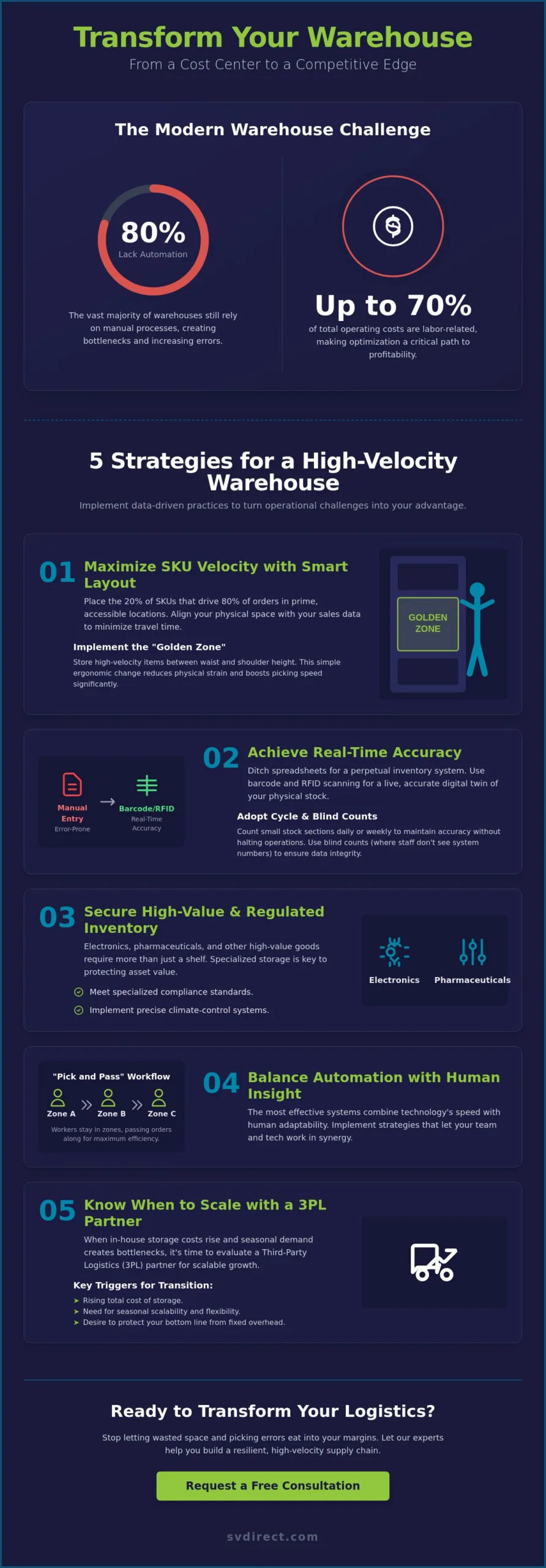
What if your warehouse floor wasn’t just a place to store goods, but a high-velocity engine that actively reduced your overhead? In 2026, the reality is that 80% of warehouses still operate with little to no automation, even though labor accounts for up to 70% of total costs. It’s frustrating to watch wasted space and picking errors eat into your margins while dead stock gathers dust. Implementing the best practices for inventory storage is no longer just about “holding stuff”; it’s about SKU velocity and strategic placement that minimizes human motion.

You likely feel the pressure of rising costs and the constant need for precision in a fast-paced market. We’re here to help you turn those challenges into a distinct operational edge. This article will show you how to transform your facility from a cost center into a powerful competitive advantage through data-driven layout and human-tech synergy. We’ll explore the path to optimized flow and real-time visibility by examining updated compliance standards, AI-driven forecasting, and the steady hand of expert oversight that defines a truly resilient supply chain.

Key Takeaways

  • Learn how to maximize SKU velocity by implementing a “Golden Zone” layout that prioritizes ergonomic picking for your fastest-moving items.
  • Discover the best practices for inventory storage by transitioning from manual spreadsheets to perpetual inventory systems that utilize barcode and RFID technology for real-time accuracy.
  • Identify the specialized compliance and climate-control requirements necessary for securing high-value inventory, including electronics and sensitive pharmaceuticals.
  • Understand how to balance automation with human intuition through the “Pick and Pass” strategy to maintain high-performance standards without sacrificing personal oversight.
  • Evaluate when to transition to a 3PL partner by calculating your total cost of storage and leveraging seasonal scalability to protect your bottom line.

Optimising Warehouse Layout for Maximum SKU Velocity

Efficiency starts with the grid. If your team is walking miles to find a single item, your layout is working against you. SKU velocity measures the speed at which a specific product moves through your facility, from arrival to outbound shipping. High-velocity items shouldn’t be tucked away in the back corners; they require prime real estate to ensure the fastest possible fulfillment times. When you align your physical space with your data, you stop fighting against the floor plan and start moving with it.

Implementing the best practices for inventory storage requires a shift from static shelving to dynamic placement. You need to look at your facility as a 3D puzzle where every inch of air space counts. Vertical cube utilization allows you to maximize your footprint without the massive expense of a facility expansion. By using high-density racking for slow-moving stock and keeping fast-movers accessible, you balance storage density with operational speed. This proactive stance on layout ensures that physical infrastructure supports your growth rather than limiting it.

To better understand how to optimize your space, watch this helpful video on inventory improvement steps:

The 80/20 Rule in Inventory Mapping

Most operations find that 20% of their SKUs drive 80% of their order volume. Identify these “runners” and place them in the most accessible locations. We also recommend grouping “frequently bought together” items in adjacent bins to minimize travel time for multi-item orders. The Golden Zone for inventory placement is the area between a picker’s waist and shoulders where items can be reached without bending or stretching. This simple ergonomic adjustment significantly reduces physical strain and speeds up the picking process. For more detailed guides on operational efficiency, explore our latest insights on the Silicon Valley Direct blog.

Zonal vs. Linear Storage Configurations

Your aisle configuration dictates your daily workflow. Wide-aisle setups are necessary for heavy forklift access and pallet movement, but narrow-aisle configurations are often superior for manual picking in high-density areas. Implementing a “hot zone” near the packing station for top-selling items eliminates unnecessary travel across the floor. This zonal approach ensures your team spends more time picking and less time walking, which directly impacts your labor costs and reduces picker fatigue. For items with extreme velocity, cross-docking strategies move products directly from receiving to shipping. This eliminates the need for long-term shelving and keeps your inventory in constant motion. Modernizing your grid is a partnership between logical design and human performance.

Inventory Control Systems: Accuracy Beyond the Spreadsheet

Relying on a once-a-year physical count is a recipe for operational blind spots. In a high-velocity environment, your data is only as good as its last update. Moving toward perpetual inventory through cycle counting is one of the most effective best practices for inventory storage. This method involves counting small portions of your stock daily or weekly, ensuring that your records stay accurate without halting operations. To maintain the highest standards of integrity, we recommend implementing “blind counts.” By requiring staff to record quantities without seeing the expected system numbers, you eliminate the temptation to simply “confirm” a figure that might be wrong.

Technology acts as the backbone of this precision. Barcode and RFID systems have largely replaced manual data entry, which is the primary source of human error in warehousing. When every movement is scanned, you create a digital trail that simplifies audits and reduces “shrinkage” or lost stock. If you’re struggling with inventory discrepancies, it might be time to consult with our logistics experts about modernizing your tracking systems. A proactive approach to data ensures that your physical assets always match your digital records.

Accurate control also requires a clear distinction between buffer stock and safety stock. While safety stock protects you against unexpected spikes in customer demand, buffer stock accounts for the variability in your supplier’s lead times. Managing these two categories separately prevents stockouts and ensures you aren’t tying up too much capital in excess inventory. Balancing these levels is a delicate science that requires both historical data and current market intuition.

FIFO Inventory Management: Preventing Product Obsolescence

For businesses handling perishable goods or electronics with a limited shelf life, First-In, First-Out (FIFO) is non-negotiable. It ensures that the oldest stock leaves the facility first, preventing costly obsolescence. You can’t rely on memory alone; physical shelving should be structured to force compliance. Gravity flow racks, for example, naturally move older items to the front. This makes it easier for your team to follow the correct sequence without needing extra training or constant supervision.

Real-Time Visibility and WMS Integration

In 2026, your warehouse management system (WMS) must communicate instantly with your eCommerce storefront. This real-time visibility prevents the dreaded “out of stock” notification after a customer has already paid. We prioritize bin-level tracking, which provides the exact location of every item within a multi-item order. This level of detail reduces picking errors and provides a comprehensive digital audit trail for every movement, from the receiving dock to the final shipping label. When your data flows seamlessly, your entire operation becomes more resilient and responsive.

Securing High-Value and Regulated Inventory

High-stakes inventory requires more than just a locked door; it demands a comprehensive strategy that balances physical security with technical oversight. When you handle cutting-edge electronics, sensitive pharmaceuticals, or regulated medical materials, the risks of theft, environmental damage, or regulatory failure are significant. Implementing the best practices for inventory storage in these sectors means moving beyond basic warehousing into a model of total asset protection. This involves a multi-layered approach where every touchpoint is recorded and every environmental variable is monitored in real time.

Climate control is a critical component that often goes overlooked. For many products, maintaining a specific temperature is only the first step. Humidity levels and light sensitivity can be just as destructive to pharmaceuticals or high-end circuit boards as heat. We utilize advanced sensors that alert our team to the slightest deviation from preset parameters, ensuring your products remain in peak condition. For a deeper look at protecting technical assets, see our strategic guide on secure warehousing for high-value electronics. By treating your inventory with the same care you used to develop it, we act as a steady extension of your own quality control team.

Access control is the final pillar of this security model. We implement tiered security clearances, ensuring that only authorized personnel can enter high-value warehouse zones. This isn’t just about preventing external threats; it’s about creating a culture of internal accountability and precision.

HIPAA Compliant Storage for Healthcare Logistics

Storing materials that involve Protected Health Information (PHI) or medical devices requires strict adherence to federal regulations. Physical security for healthcare logistics must include restricted access logs and dedicated storage areas that prevent unauthorized viewing or handling. We maintain rigorous chain of custody documentation for every piece of medical literature and device in our care. This level of detail is essential for maintaining compliance and protecting patient privacy. You can find more information on these requirements in our Healthcare Mailing Services Guide.

Loss Prevention and High-Value Asset Protection

Effective loss prevention combines physical barriers with digital verification. We integrate CCTV systems directly with WMS timestamps, allowing us to verify the accuracy of every high-value pick through video evidence. For items with high shrinkage potential, such as small consumer electronics, we utilize “cages within warehouses” to provide an extra layer of physical protection. This methodical approach reduces insurance liabilities and gives you the confidence that your assets are being managed with total transparency. We don’t believe in “black box” operations. Every movement is logged, every bin is secured, and every client is treated as a partner in precision.

Mastering the Grid: 2026 Best Practices for Inventory Storage and Warehouse Efficiency

The Tech-Human Synergy: Modernizing the Pick and Pack

Pure automation is often marketed as the ultimate solution for warehouse efficiency, yet it frequently lacks the bespoke problem-solving required for complex, high-stakes growth. At Silicon Valley Direct, we deliberately reject a fully automated model in favor of personal oversight. While 80% of warehouses still operate with little to no automation as of 2026, we believe the true advantage lies in the synergy between advanced tools and human intuition. Labor accounts for 50 to 70% of total warehousing costs, making the efficiency of your team the most critical factor in your bottom line. By equipping our staff with logical workflows, we ensure that best practices for inventory storage are physically executed with a level of care that machines cannot replicate.

One of our core strategies is the “Pick and Pass” system. This method combines a logical conveyor flow with human expertise, allowing pickers to focus on specific zones while maintaining a steady, organized movement of orders. This approach is further enhanced by our on-demand digital printing capabilities. By printing marketing materials and literature as needed, we significantly reduce the physical footprint required for pre-printed inventory. This reduces waste and ensures that your storage space is reserved for high-value products rather than aging paper stock. If you’re ready to see how this hybrid approach can streamline your operations, request a tailored fulfillment quote today.

Custom Kitting and Assembly Best Practices

Kitting is more than just a service; it’s a strategic storage tool. Storing individual components is often far more space-efficient than holding finished kits that consume massive amounts of shelf space. We utilize just-in-time assembly to reduce the footprint of bulky subscription boxes or promotional bundles. This ensures that your inventory remains fluid and adaptable to changing market demands. For a deeper dive into these strategies, explore our Kitting and Assembly Services Guide. This methodical approach to assembly ensures that your storage grid remains lean and responsive.

Reducing Human Error with Guided Picking

We empower our team with guided picking technologies, such as pick-to-light and voice-directed systems, to eliminate the mental fatigue that leads to errors. These tools act as a steady hand, assisting our staff without replacing their critical judgment. Accuracy is further protected by “double-blind” verification at the packing station, where a second team member verifies the contents of every order. Our multi-decade history and high staff retention rates mean that collective experience is built into every process. This internal stability is a unique hallmark of our service, ensuring that your inventory is managed by experts who respect your time and your brand’s reputation.

Scaling Your Storage: When to Transition to a 3PL

The “Flexibility Factor” is perhaps the most significant benefit of a 3PL partnership. In a volatile market, your storage needs can fluctuate wildly between seasons. A dedicated partner allows you to scale your footprint up or down without the long-term commitment of a commercial lease. This agility is enhanced by a strategic geographic location. Operating from the heart of Silicon Valley provides a unique symbol of innovation and a gateway to global connectivity. It ensures your products are positioned near major transit hubs, which is a critical component of our Global Shipping Services Strategic Guide. We provide the steady hand you need to navigate these logistical complexities with quiet confidence.

The 3PL Checklist for Inventory Growth

Choosing the right partner requires a methodical evaluation of their technical and operational history. Compatibility between your eCommerce platform and their Warehouse Management System (WMS) is vital for real-time reporting and data transparency. You should also look for a partner with a multi-decade history; 25 or more years of experience suggests a level of stability that is rare in today’s fast-paced logistics industry. We recommend looking for consolidated fee structures that combine “Pick and Pack” and “Storage” into a clear, predictable model. This transparency eliminates the “death by a thousand cuts” that many businesses face with impersonal, automated providers.

Integrating Silicon Valley Innovation into Your Supply Chain

A 3PL should be more than just a storage provider; it should act as a strategic partner in your brand’s growth. We prioritize human expertise and personal commitment over pure automation. This ensures that your bespoke problem-solving needs are met by a team that understands your business’s unique nuances. By integrating our physical infrastructure and digital capabilities into your supply chain, you gain the freedom to focus on marketing and product development. We believe that physical operations should be just as organized and efficient as your digital storefront. To see how we can help you achieve this balance, you can streamline your inventory with Silicon Valley Direct and explore our latest operational insights.

Future-Proofing Your Warehouse Operations

Transforming your warehouse from a static cost center into a high-performance engine requires a meticulous blend of spatial logic and digital accuracy. We’ve explored how a data-driven layout maximizes SKU velocity and how human-tech synergy eliminates the errors common in purely automated models. Implementing these best practices for inventory storage ensures your facility remains resilient, even as you scale to meet the demands of a global market. Whether you’re securing regulated pharmaceuticals or managing high-value electronics, the goal is a seamless flow that protects your margins and your reputation.

Since 1999, Silicon Valley Direct has served as a steady hand for businesses navigating these operational complexities. Our HIPAA and SOC2 compliant processes provide the security your brand deserves, while our strategic Silicon Valley location offers a powerful gateway for global distribution. We invite you to request a custom fulfillment and storage quote from Silicon Valley Direct to see how our collective experience can support your growth. Together, we can build a supply chain that’s as organized as it is ambitious.

Frequently Asked Questions

What is the most efficient way to store small items in a large warehouse?

Utilizing high-density bin shelving and modular drawer systems is the most efficient method for small item storage. These solutions allow you to condense thousands of SKUs into a compact footprint, which significantly reduces the travel time for your picking team. By placing these systems in a dedicated “small parts” zone near the packing area, you ensure that intricate components remain organized and accessible without occupying valuable pallet racking space.

How often should I perform a full inventory audit?

You should transition from a single annual audit to a continuous cycle counting program performed daily or weekly. This proactive approach ensures perpetual accuracy by counting small portions of your stock on a rotating basis. Regular cycle counts eliminate the need to halt operations for a full physical count and allow you to identify and resolve discrepancies in real time, maintaining a reliable digital audit trail throughout the year.

Can I store healthcare products and marketing materials in the same facility?

Yes, you can store both item types in one facility as long as there is strict physical segregation and HIPAA compliant handling protocols. Healthcare products, such as medical devices or literature containing sensitive information, require restricted access zones and specific chain of custody documentation. Maintaining these high standards ensures that your marketing fulfillment doesn’t compromise the regulatory requirements of your healthcare logistics.

What is the difference between safety stock and buffer stock?

Safety stock is the inventory held to protect against unexpected spikes in customer demand, while buffer stock is intended to compensate for variability in supplier lead times. Think of safety stock as your insurance against a viral sales surge and buffer stock as your protection against a late shipment from a manufacturer. Managing these two categories separately is essential for preventing stockouts without over-investing in excess capital.

How does SKU velocity affect my warehouse rent costs?

SKU velocity determines how long a product occupies a specific storage location, which directly influences your total storage fees. High-velocity items turn over quickly, allowing you to generate more revenue per square foot of shelf space. Implementing the best practices for inventory storage helps you identify these fast-movers, ensuring you aren’t paying for “dead” space occupied by stagnant stock that could be better utilized for high-demand products.

What are the security requirements for high-value electronics storage?

High-value electronics require a multi-layered security approach including tiered access control, CCTV integration with WMS timestamps, and physical barriers like cages. These measures ensure that only authorized personnel can handle sensitive assets while every movement is recorded digitally. This methodical oversight reduces the risk of shrinkage and provides the transparency necessary for maintaining insurance compliance and protecting your brand’s high-stakes inventory.

Is a Warehouse Management System (WMS) necessary for small businesses?

A WMS is necessary for any small business that intends to scale beyond the limitations of manual spreadsheets. These systems provide the real-time visibility and bin-level tracking required to manage multi-channel eCommerce orders with 100% accuracy. By eliminating human data entry errors and providing instant sync with your storefront, a WMS acts as a steady foundation for professional fulfillment and long-term growth.

How do I handle slow-moving or obsolete stock?

You should identify slow-moving stock through velocity reports and relocate it to lower-cost, high-density storage zones. Once flagged, these items can be cleared through promotional kitting, liquidation, or strategic donations to free up prime real estate. Applying the best practices for inventory storage ensures that your “Golden Zone” shelving remains reserved for high-turnover products that actively contribute to your facility’s overall efficiency and cash flow.

The Strategic Guide to 3PL Inventory Management Software in 2026

The Strategic Guide to 3PL Inventory Management Software in 2026

What if your warehouse wasn’t just a physical space, but a high-definition digital twin that predicted your next stockout before your customer even hit the checkout button? In 2026, the margin for error in logistics has effectively vanished. You’ve likely experienced the frustration of overselling due to a lag in stock updates or the visibility gap that occurs during complex kitting projects. When manual billing errors start eating into your bottom line, it’s clear that yesterday’s tools can’t keep up with the demands of a $1.8 trillion global market.

We understand that behind every SKU is a promise you’ve made to a customer. This guide explores how advanced 3pl inventory management software architectures transform chaotic supply chains into precision-engineered growth engines. You’ll discover how to achieve real-time synchronization across all sales channels and leverage detailed reporting for more accurate forecasting. We’ll preview the essential features that turn returns management from a headache into a competitive advantage, ensuring your operations remain as sophisticated and reliable as the brand you’ve built.

Key Takeaways

  • Understand how the transition from simple stock counting to omnichannel execution platforms creates a high-definition digital twin of your physical inventory.
  • Identify the essential features of modern 3pl inventory management software, including real-time synchronization across Amazon, Shopify, and Walmart to prevent overselling.
  • Learn to audit a potential provider’s tech stack by evaluating integration libraries and the transparency of their client-facing dashboards.
  • Discover how barcode-driven validation and “Smart Pick” logic eliminate the manual errors and travel time that typically erode profit margins.
  • Explore why a sophisticated logistics strategy requires a balance of innovative software and dedicated human oversight to manage complex kitting and returns.

What is 3PL Inventory Management Software in 2026?

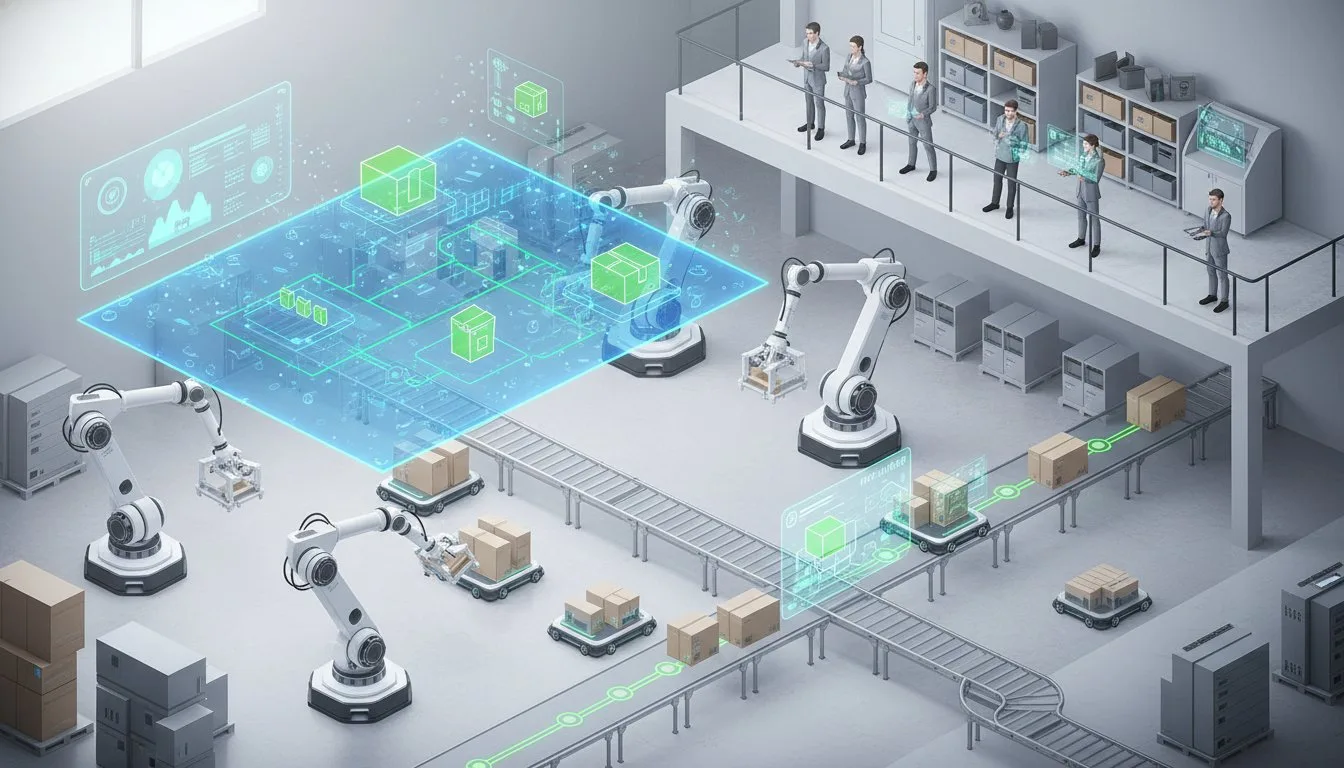
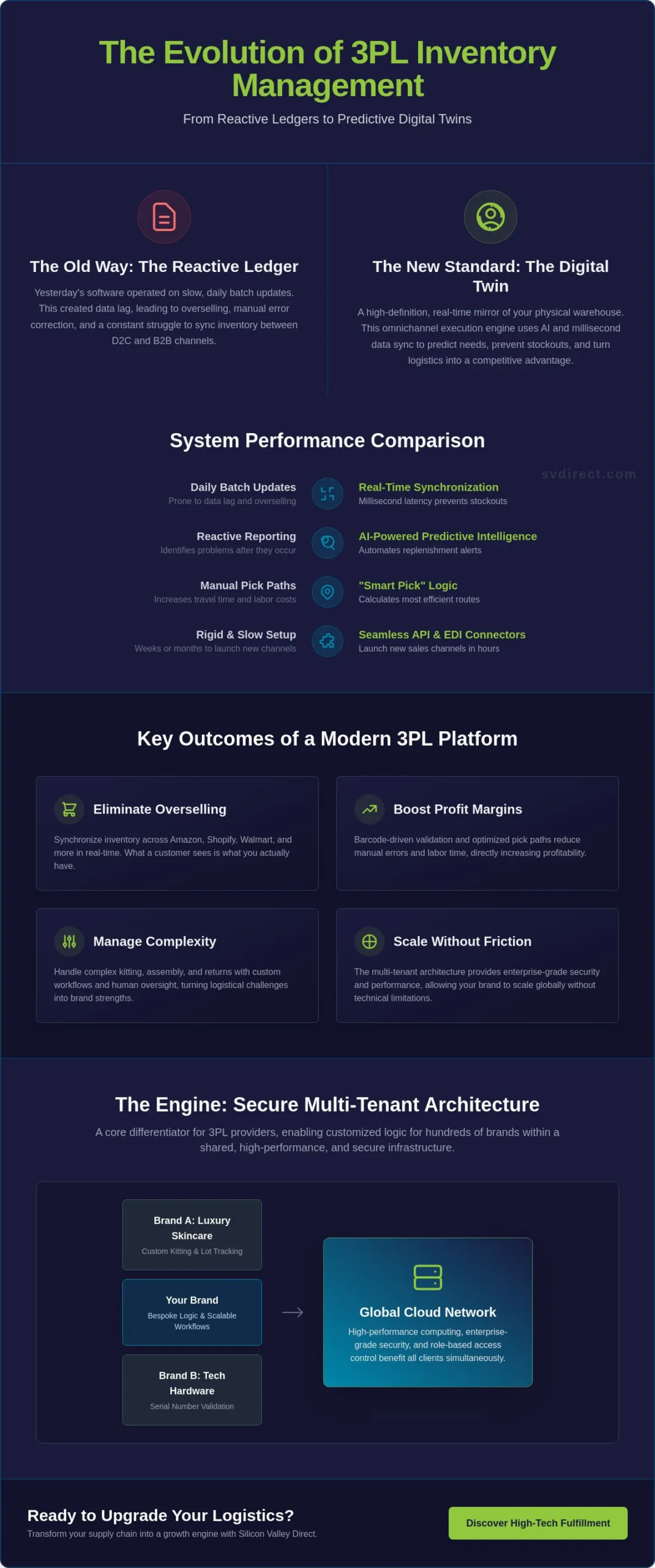
In 2026, 3pl inventory management software serves as the central nervous system for modern commerce. It’s no longer just a digital ledger for counting boxes; it’s a sophisticated Warehouse Management System (WMS) specifically engineered for the complexities of a Third-party logistics (3PL) environment. Unlike traditional software that manages a single brand’s stock, these modern platforms act as an omnichannel execution engine. They provide a “Digital Twin” of your physical inventory, allowing you to visualize stock movements, kitting progress, and returns in real time from anywhere in the world. This digital representation ensures that what you see on your screen is a precise mirror of what’s happening on the warehouse floor.

To better understand how these systems operate within a high-volume warehouse setting, watch this helpful overview:

The Evolution from Basic WMS to 3PL Intelligence

Legacy systems often struggled to bridge the gap between direct-to-consumer (D2C) agility and the rigid requirements of B2B wholesale. They were built for a slower era of commerce where daily batch updates were sufficient. Today, professional transparency demands a web-based interface that provides millisecond-latency data sync. We’ve moved beyond reactive logging into a period of proactive intelligence. Modern 3pl inventory management software integrates AI to analyze historical velocity, offering predictive stock leveling and automated replenishment alerts. This shift ensures you aren’t just seeing what you have, but understanding what you’ll need before a shortage occurs. It’s a proactive stance that transforms the warehouse from a cost center into a growth driver.

Multi-Tenant Architecture: The Core Differentiator

The primary technical requirement for a 3PL provider is the ability to manage hundreds of unique client databases simultaneously without compromising security or speed. Multi-tenancy is the ability to provide bespoke logic for each brand within a shared infrastructure. This ensures that your data remains in a secure silo, protected by role-based access, while still benefiting from the high-performance computing power of a global cloud network. In this environment, a luxury skincare brand and a technical hardware manufacturer can coexist on the same server, each utilizing custom workflows for kitting and assembly that are unique to their specific business model. It’s this balance of customized rules and enterprise-grade security that allows a brand to scale without the friction of technical limitations.

Core Functionalities That Drive eCommerce Growth

Growth in the modern marketplace requires more than just storage; it demands an active execution strategy. When you sell across Shopify, Amazon, and Walmart, your stock levels must be identical across every channel at every second. Modern 3pl inventory management software solves this by providing real-time synchronization that prevents the dreaded “out of stock” notification after a customer has already paid. Beyond simple syncing, these platforms utilize “Smart Pick” logic. This technology calculates the most efficient path through the warehouse, reducing travel time for staff and ensuring that orders are staged for shipping faster than ever before. It’s a proactive approach that turns logistical hurdles into a competitive advantage.

The Power of Seamless API and EDI Integrations

Scalability depends on how quickly your systems can talk to each other. Plug-and-play API connectors are the baseline for rapid scaling, allowing you to launch new sales channels in hours rather than weeks. However, for those moving into big-box retail, deep EDI integration is essential for compliance. This technical sophistication is a hallmark of logistics companies in Silicon Valley, where the proximity to innovation drives a higher standard for digital connectivity. When your software handles the heavy lifting of data translation, you can focus on brand strategy instead of troubleshooting connection errors.

Specialized Modules: Kitting and Healthcare Compliance

Many providers treat complex projects as an afterthought, but enterprise-grade 3pl inventory management software provides dedicated modules for specialized needs. Our system tracks “work-in-progress” for kitting and assembly services, giving you total visibility as individual components transform into finished subscription boxes or bundles. This level of precision is even more critical for healthcare mailing services. In this sector, lot tracking and expiration date management are mandatory for safety and regulatory compliance. The software ensures that the oldest stock is used first and that any sensitive materials are handled with the specific care they require.

Returns management, or reverse logistics, is often where margins go to die. We use photo verification within our software to provide a “human-in-the-loop” check. This ensures that every returned item is inspected and documented before it’s either restocked or disposed of. If you’re looking for a partner that balances this high-tech precision with personal oversight, you might consider how we can streamline your specific fulfillment needs. This combination of robust software and human expertise creates a stable foundation for any brand aiming to lead its category in 2026.

The Strategic Guide to 3PL Inventory Management Software in 2026

Modern vs. Legacy Systems: A Performance Comparison

Choosing the right technology partner often comes down to a choice between proactive speed and reactive delay. Legacy systems, often tethered to physical on-premise servers, rely on scheduled batch processing. This means your stock levels might only update once every few hours or even once a day. In a high-velocity eCommerce environment, that delay is an invitation for overselling. Conversely, modern 3pl inventory management software operates on cloud-native architectures that deliver instant updates. When an item is picked in the warehouse, the change reflects on your sales channels in milliseconds, ensuring your digital storefront always matches the physical reality.

Accuracy follows a similar trajectory. Older models frequently depend on manual clipboard entry or spreadsheet reconciliation, which introduces a high probability of human error. Modern systems utilize barcode-driven validation at every touchpoint. From receiving and put-away to picking and packing, every movement requires a scan. This digital trail ensures that accuracy isn’t just a goal; it’s a verifiable reality. This level of precision eliminates the need for you to call a representative for a status update. Instead, client-facing portals provide 24/7 visibility into your operations, offering the same level of transparency you’d expect if the warehouse were your own.

The Hidden Costs of Outdated Logistics Software

The most dangerous part of legacy tech is what you can’t see. “Ghost inventory,” which refers to stock that appears in your system but doesn’t exist on the shelf, leads to backorders and eroded customer trust. Relying on manual data entry creates a labor drain that eats into your margins. Without automated logic, managing FIFO inventory management becomes nearly impossible, significantly increasing the risk of product obsolescence. A modern system automates these rules, ensuring the oldest stock moves first and your capital isn’t tied up in expired goods.

Data Security and Compliance in the Cloud

As supply chains become more digital, security is no longer optional. Modern providers prioritize SOC 2 compliance and encrypted data transmission to protect high-value goods and sensitive brand information. Scalability is achieved through elastic cloud resources that expand during peak seasons without the risk of server crashes. This infrastructure guarantees 99.9% uptime, which is vital for operational continuity. For a deeper look at how physical and digital safety intersect, see The Strategic Guide to Secure Warehousing Services. In the high-stakes world of 2026 logistics, a steady hand and a secure server are equally important.

Evaluating Your Provider’s Tech Stack: A Decision Framework

Selecting a logistics partner is a technical investment as much as an operational one. When you vet a provider, you are essentially auditing the 3pl inventory management software that will govern your brand’s growth. A sophisticated tech stack should bridge the gap between your digital storefront and the physical warehouse floor without requiring constant manual intervention. To ensure your partner can handle the complexities of 2026 commerce, utilize this five step framework during your evaluation process.

  • Audit the Integration Library: Verify that they offer native connections for your specific sales channels, whether you’re on Shopify, Amazon, or niche B2B platforms.
  • Request a Dashboard Demo: A live walkthrough of the client portal is the only way to verify true transparency.
  • Verify Carrier Logic: Ask how the system handles “Batch Delivery to Carrier” and ensure tracking numbers are pushed back to your store the moment a label is generated.
  • Analyze Reporting Capabilities: Confirm the software can generate custom reports for Lifetime Value (LTV) and shipping margin analysis to help you protect your bottom line.
  • Confirm Specialized Support: If you handle sensitive goods, ensure the system natively supports lot tracking, expiration dates, or HIPAA compliance.

Transparency Check: The Client Portal

The ability to see real-time “Pick and Pack” statuses from your own desk is no longer a luxury; it’s a requirement for agile management. You should be able to monitor every order’s journey without picking up the phone. When tracking numbers are pushed back to your store instantly, your customer service team spends less time answering “where is my order” queries. A 3PL without a client portal is a “black box” that limits your growth and obscures critical operational data. Transparency builds the trust necessary for a long term partnership.

Integration Depth vs. Width

While many providers claim to “integrate with everything,” the depth of that connection matters more than the width. A native integration is superior to a middleware solution because it reduces the points of failure and ensures data flows bi-directionally without lag. This depth is vital when managing global shipping services, where customs documentation and international tracking must be handled with absolute precision. Your 3pl inventory management software should also automate the returns and exchanges process, turning a potential loss into a seamless customer experience. If you are ready to move away from “black box” logistics and toward a transparent, tech-forward partnership, we invite you to request a free quote today and see our systems in action.

SV Direct: Where High-Tech Efficiency Meets Human Oversight

At SV Direct, we believe that the most powerful 3pl inventory management software is only as effective as the experts who manage it. Our proactive stance uses precision technology as a foundation, but we never let automation replace personal accountability. From our headquarters in the heart of Silicon Valley, we operate at the intersection of global innovation and physical logistics. This strategic location allows us to stay ahead of the technical curve while providing the stability of a partner with an extensive operational history. We don’t just offer a software interface; we offer a steady hand in a fast-paced industry.

Every brand has a unique DNA, and your logistics partner should respect that. We don’t force you into a rigid, one-size-fits-all box. Instead, we specialize in tailoring our WMS logic to your specific business rules. Whether you require complex kitting workflows or specialized handling for sensitive goods, our systems adapt to you. This “Human Signature” means that real people oversee every automated process, from initial receiving to final dispatch, ensuring that precision is maintained at every touchpoint. It’s a high-performance partnership that remains accessible and grounded.

A Legacy of Reliability in a Tech-Saturated Market

Since 1999, our organization has evolved alongside the digital revolution, yet our commitment to direct human connection remains unchanged. We explicitly reject the trend of fully automated interactions that treat clients like a ticket number. Instead, we use our software to empower our team to provide bespoke problem-solving. This meticulous approach is why brands trust us for secure warehousing for high-value electronics. We provide the physical infrastructure and the human expertise needed to protect your most valuable assets while maintaining the agility of a modern tech firm.

Ready to Streamline Your Supply Chain?

Scaling a business shouldn’t be a source of constant stress. Our 3pl inventory management software provides the granular clarity you need to make informed decisions about your stock levels and shipping margins. By combining on-demand digital printing, complex kitting, and global fulfillment in one integrated system, we eliminate the friction that often slows down growth. We take the time to understand the rationale behind your specific requirements, ensuring our physical operations are just as organized as our digital communication. If you’re looking for a high-performance partner that values transparency and directness, contact our Silicon Valley team today for a personalized logistics audit.

Master Your Supply Chain with Precision Execution

Moving beyond the limitations of legacy systems requires a commitment to real-time data and total transparency. We’ve explored how modern 3pl inventory management software acts as the digital twin of your physical stock, ensuring your brand remains agile across every sales channel. By auditing your provider’s tech stack and demanding deep integration, you protect your margins and your customer promises. The shift from reactive counting to proactive execution is what defines a market leader in 2026.

At Silicon Valley Direct, we bridge the gap between high-tech innovation and seasoned professionalism. Founded in 1999, our organization brings decades of operational expertise to every project. We’re strategically located in the heart of Silicon Valley, specializing in the complex requirements of high-value electronics and healthcare compliance. This unique combination of geographic advantage and industry experience allows us to provide a level of service that remains stable, secure, and deeply reliable.

Experience the precision of Silicon Valley Direct and contact us today.

Scaling your brand shouldn’t feel like a chaotic struggle. With the right technology and a dedicated team by your side, you can turn your supply chain into a steady, reliable engine for growth. We’re ready to help you navigate the future of fulfillment with confidence and care.

Frequently Asked Questions

What is the difference between a WMS and 3PL inventory management software?

While a standard Warehouse Management System (WMS) typically manages a single company’s goods, 3pl inventory management software is specifically designed for multi-tenant environments. This specialized architecture allows us to manage hundreds of unique client databases simultaneously. Each brand operates within its own secure data silo, utilizing bespoke logic and custom workflows while benefiting from our shared, high-performance physical infrastructure.

Can I see my inventory levels in real-time with Silicon Valley Direct?

Yes, we provide 24/7 real-time visibility through our dedicated client-facing portal. You can monitor every order’s journey from your own desk, including live “Pick and Pack” statuses and kitting progress. This level of transparency ensures that your digital records are a precise mirror of our physical warehouse floor, allowing you to make informed stock decisions without delay.

Does your software integrate with Shopify and other eCommerce platforms?

Our 3pl inventory management software features native, deep integrations for Shopify, Amazon, Walmart, and other major marketplaces. These “plug and play” connectors allow for millisecond-latency data synchronization across all your sales channels. By maintaining a constant link between your storefront and our facility, we effectively eliminate the risk of overselling and backorders.

How does 3PL software improve order fulfillment accuracy?

Accuracy is driven by barcode-driven validation at every touchpoint in our facility. From the moment stock is received to the final pack-out, every movement requires a digital scan to verify the SKU and quantity. This rigorous digital trail replaces manual clipboard entry, ensuring that the human element of our service is backed by foolproof technical checks.

Can the software handle complex kitting and subscription box assembly?

Yes, our system includes specialized modules built to manage the nuances of kitting and assembly services. We track individual components as “work-in-progress” items until they are transformed into finished bundles or subscription boxes. This granular tracking provides you with total visibility into your assembly projects, ensuring every kit meets your exact brand standards.

How secure is my data within a 3PL inventory management system?

We prioritize data security through SOC 2 compliance and fully encrypted data transmission for all brand information. Our cloud-native architecture provides 99.9% uptime and includes robust disaster recovery protocols to ensure operational continuity. Your data remains siloed and protected by role-based access, maintaining the same high standards we apply to our physical warehousing services.

What happens if my sales channel is not on your standard integration list?

We pride ourselves on total flexibility and bespoke problem-solving for our partners. If your specific sales channel is not on our standard list, our technical team can often utilize our robust API to build a custom connection. We reject impersonal business models in favor of direct collaboration, ensuring our technology adapts to your growth rather than limiting it.

Does the software support international shipping and customs documentation?

Our software fully supports global shipping and logistics, including the automated generation of complex customs documentation. The system calculates necessary duties and prepares international paperwork the moment an order is placed. This automation allows you to reach a global audience with the same precision and speed as your domestic shipments.

The Role of a 3PL Warehouse Management System in Modern eCommerce Scaling

The Role of a 3PL Warehouse Management System in Modern eCommerce Scaling

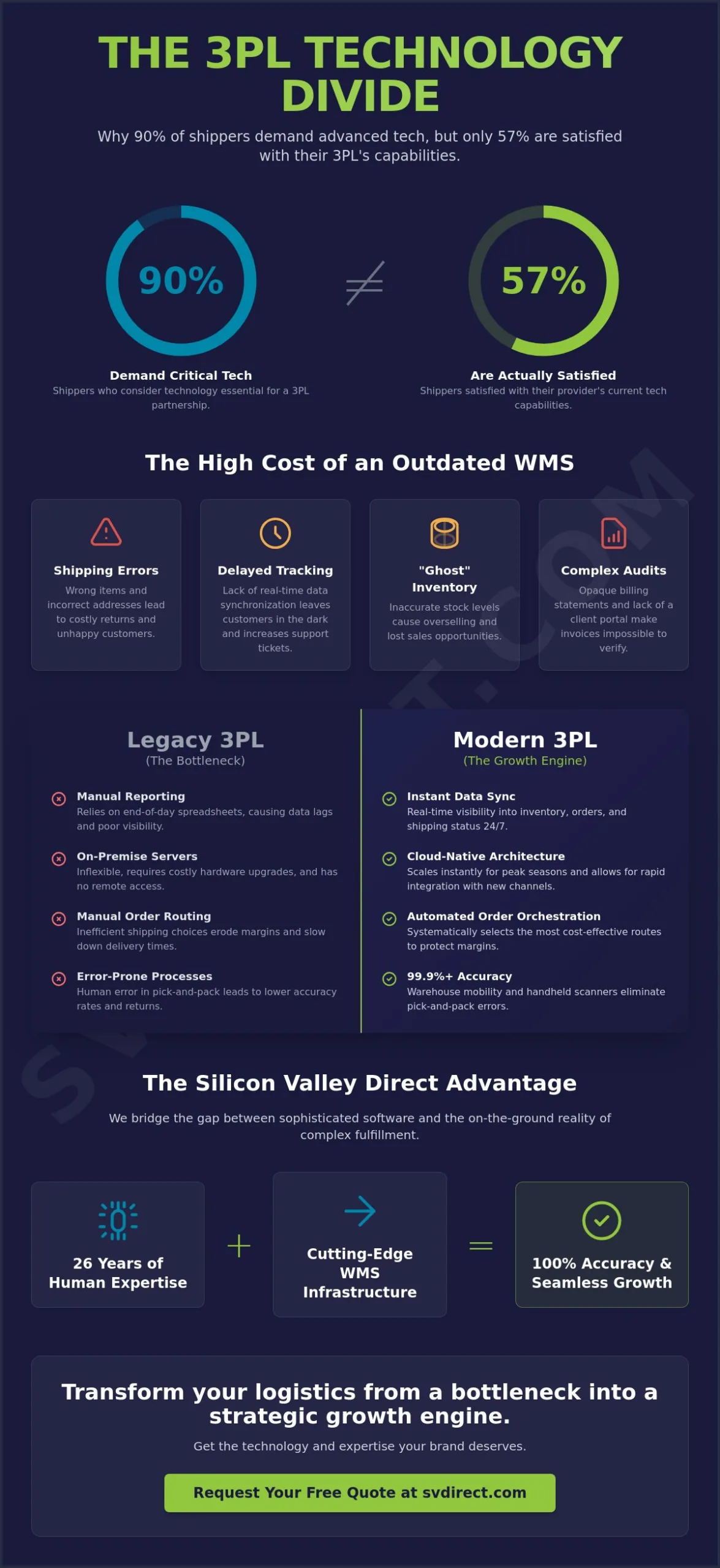
90% of shippers consider technology critical in a 3PL partnership, yet according to May 2026 industry data, only 57% are satisfied with their provider’s actual capabilities. It’s a staggering gap that often leaves growing eCommerce brands struggling with shipping errors and delayed tracking. You’ve likely felt the frustration of “ghost” inventory or billing statements that feel impossible to audit. When your 3pl warehouse management system isn’t up to the task, your logistics operations become a bottleneck rather than a bridge to your customers.

We believe that anything is possible when you pair 26 years of human expertise with cutting-edge infrastructure. You deserve a partner that offers 100% inventory accuracy and seamless integrations with platforms like Shopify or TikTok Shop. This article shows you how a high-performance WMS transforms logistics from a cost center into a strategic growth engine. We’ll explore the technical essentials that ensure SLA compliance and provide the real-time visibility required to scale your brand globally without the usual growing pains.

Key Takeaways

  • Learn how a modern 3pl warehouse management system evolves from simple stock tracking into a predictive engine that anticipates your inventory needs in real-time.
  • Discover how automated order orchestration identifies the most cost-effective shipping routes to protect your margins while accelerating delivery times for your customers.
  • Understand the importance of a dedicated client portal for auditing logistics invoices and ensuring your provider consistently meets strict SLA requirements.
  • Identify critical technology red flags in a 3PL partnership, such as a reliance on manual end-of-day reporting instead of instant data synchronization.
  • See how 26 years of industry experience bridges the gap between sophisticated software and the human expertise required for complex fulfillment and assembly.

What is a 3PL Warehouse Management System in 2026?

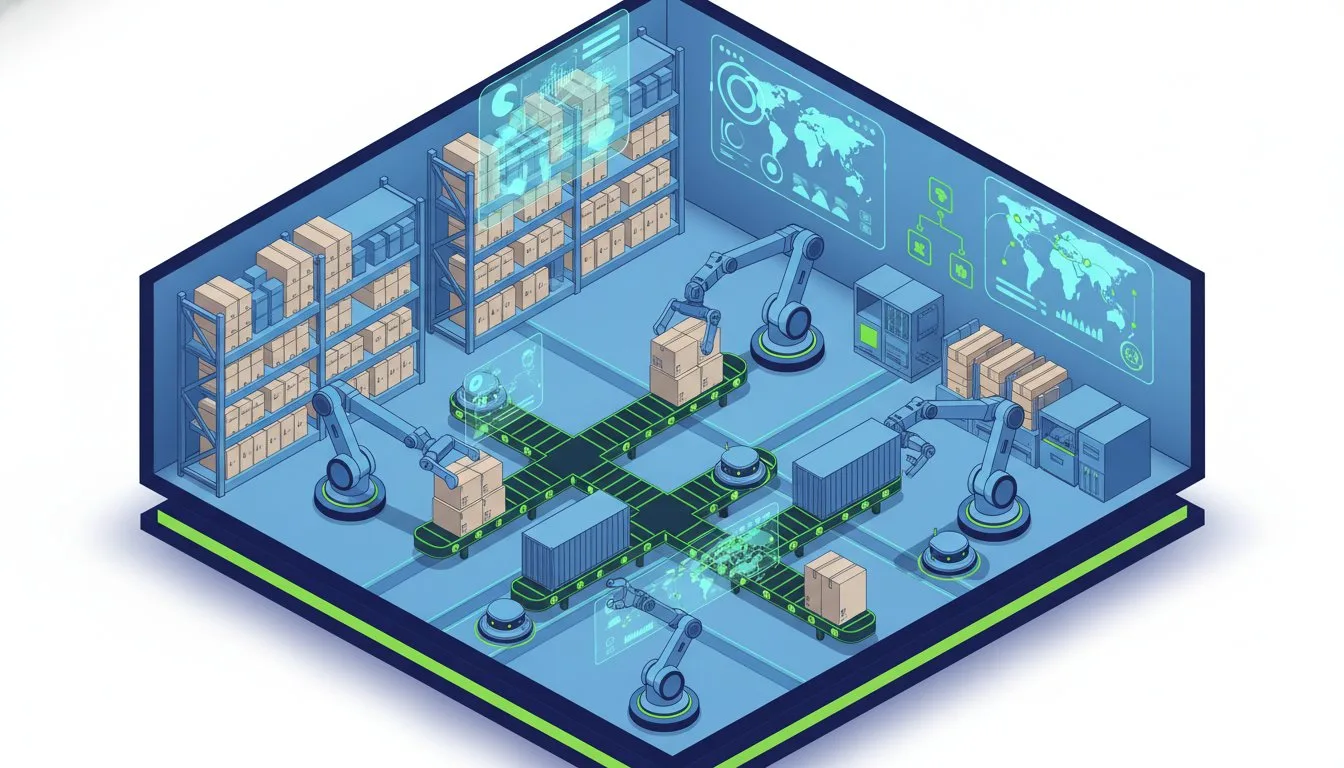
In 2026, a 3pl warehouse management system is far more than a digital ledger for boxes. It has evolved into a sophisticated, multi-tenant ecosystem that acts as the digital nervous system for modern commerce. While traditional Third-party logistics (3PL) providers once relied on static spreadsheets, today’s leaders use predictive execution to anticipate order surges before they happen. This technology serves as the vital bridge between your digital storefront and the physical reality of the warehouse floor, ensuring that a click on your website translates into an accurate package on a customer’s doorstep.

To better understand how these systems function within a physical facility, watch this helpful video:

A dedicated 3pl warehouse management system excels where standard warehouse software fails because it’s built for multi-client complexity. Each brand has unique kitting requirements, specific carriers, and tailored return protocols. A standard system often crumbles under the weight of managing dozens of different brands simultaneously, but a high-performance 3PL platform handles these distinct workflows with ease. It allows for granular control over inventory while maintaining a unified view of operations across the entire facility.

The Difference Between ERP and 3PL WMS

Many brands mistakenly believe their Enterprise Resource Planning (ERP) software can handle logistics. While an ERP is excellent for accounting and high-level resource management, it often lacks the precision required for high-volume fulfillment. An ERP focuses on the “what” and “how much,” but a 3PL WMS is obsessed with “movement.” It manages the logic of the pick path, the efficiency of the packing station, and the real-time status of every SKU. For a seamless operation, these two systems must synchronize data through robust APIs, ensuring your financial records match your physical inventory. You can find more insights on these technical integrations on our logistics blog.

Why “Cloud-Native” is the Standard for 2026

The days of on-premise legacy servers are gone. In 2026, cloud-native architecture is the industry baseline. This SaaS-based approach allows brands to access their inventory data 24/7 from any global location, providing transparency that was once impossible. Cloud systems enable rapid scaling during peak seasons like Black Friday without requiring expensive hardware upgrades. They offer the flexibility to integrate with new sales channels, such as TikTok Shop, in hours rather than weeks. This agility is what separates stagnant brands from those that dominate the marketplace.

Core Features: How WMS Technology Powers eCommerce Growth

A high-performance 3pl warehouse management system isn’t just about moving boxes; it’s about providing the technical foundation your brand needs to scale. When inventory automation is executed correctly, the “out-of-stock” nightmare disappears. The system continuously monitors stock levels and triggers alerts before a SKU hits zero. This proactive stance ensures you never lose a sale due to poor visibility. You can focus on marketing while the software manages the physical constraints of your supply chain.

Order orchestration takes this a step further by automatically selecting the fastest and most cost-effective shipping route for every package. Instead of relying on manual decisions, the system analyzes carrier rates and transit times in milliseconds. This level of precision protects your margins while meeting the high delivery expectations of modern consumers. If you’re curious about how these technical layers impact your bottom line, feel free to consult with our team about your fulfillment needs.

Accuracy on the warehouse floor is maintained through warehouse mobility. Handheld scanners allow our team to verify every item during the pick-and-pack process, driving accuracy rates to 99.9%. This digital double-check eliminates the “wrong item” errors that lead to costly returns and frustrated customers. It’s a level of precision that matches the high standards we’ve maintained for over 26 years.

Seamless Sales Channel Integrations

Expanding into new marketplaces shouldn’t require a team of developers. Modern systems offer pre-configured integrations for platforms like Shopify, WooCommerce, and Amazon, allowing you to sync your store in minutes. API integration is the essential digital link that enables a continuous, real-time flow of order data between your storefront and our facility. This connectivity is vital during “Flash Sales” or viral social media moments. When order volume spikes unexpectedly, the system absorbs the load without manual intervention, keeping your fulfillment timeline on track.

Advanced Inventory Control and FIFO

Managing product freshness is critical, especially for brands with expiration dates or seasonal components. We implement FIFO Inventory Management: Preventing Product Obsolescence to ensure that the oldest stock is always shipped first. This systematic approach reduces waste and protects your inventory investment from unnecessary write-offs.

Research into how 3PLs evaluate warehouse performance shows that technical attributes like real-time visibility into “Available to Promise” (ATP) stock levels are major drivers of operational success. By knowing exactly what is ready for sale versus what is currently being kitted or received, you can make informed marketing decisions with absolute confidence.

The Role of a 3PL Warehouse Management System in Modern eCommerce Scaling

The Business Impact: Transparency, Billing, and SLA Compliance

Integrating the strategic role of 3PL into your business model requires more than just physical space; it requires radical transparency. A modern 3pl warehouse management system acts as a truth-teller for your operations. It tracks every movement, from the moment a pallet arrives to the second a package leaves our facility. This level of detail allows you to hold your provider accountable to Service Level Agreements (SLAs), such as same-day shipping guarantees, with data that proves compliance rather than just promising it.

The 3PL Client Portal serves as your window into the warehouse floor. You won’t have to send “never-ending questions” to a support queue to find out where your inventory stands. Instead, you can log in and see live updates. For brands in regulated industries like healthcare or those handling high-value electronics, this visibility is a requirement for compliance and peace of mind. It bridges the gap between the mechanical nature of logistics and the high-stakes reality of growing a business.

Billing Accuracy and Auditability

Manual billing is where many logistics partnerships sour. When billing relies on spreadsheets, errors are inevitable. A high-performance 3pl warehouse management system eliminates “mystery fees” by automatically capturing every pick, pack, and kitting action as it happens. Each line item on your monthly invoice is backed by a digital timestamp. This automation ensures you only pay for the exact services rendered, providing a level of auditability that simplifies your internal accounting. Detailed postage and shipping management reports further clarify your spend, helping you optimize your global logistics budget.

Data-Driven Decision Making

Data is the fuel for smart eCommerce scaling. By analyzing WMS data, you can identify which SKUs are your primary profit drivers and which ones are simply taking up expensive shelf space. This insight is invaluable for seasonal inventory planning. Predictive analytics help you determine exactly when to ramp up stock levels before a major promotion. Reporting also streamlines reverse logistics, allowing you to manage returns efficiently while maintaining a clear view of restockable items. If you want to dive deeper into logistics strategy, our blog offers additional resources on supply chain optimization.

We believe that high-performance logistics should be grounded in trust. By providing automated reporting that proves SLA compliance, we empower our partners to scale with confidence. This structured approach to information density ensures that technical stakeholders and business owners alike have the depth of data they need to succeed.

Evaluating Your Provider: 3PL WMS Red Flags and Must-Haves

Choosing a fulfillment partner is a high-stakes decision that dictates your brand’s future. You aren’t just renting shelf space; you’re selecting a technology stack that must remain flawless under pressure. A seasoned provider knows that a 3pl warehouse management system should act as a silent partner, working tirelessly in the background to prevent bottlenecks. If you encounter red flags during the discovery phase, it’s a clear sign that the provider’s infrastructure might not match their marketing promises. We’ve seen the industry evolve over 26 years, and we know that a “can-do” attitude must be backed by actual digital architecture.

The first major red flag is a reliance on manual updates or end-of-day reporting. In a world where customers expect instant tracking numbers, waiting until the evening for an inventory sync is unacceptable. This lag suggests a lack of real-time API connectivity, which can lead to overselling and shipping delays. Another warning sign is the absence of a self-service client portal. You shouldn’t have to wait for a human to answer an email just to check your stock levels. True transparency means having a 24/7 window into the warehouse floor, allowing you to audit orders whenever you need. If your current provider can’t offer this, it’s time to see how a modern tech stack can improve your operations.

On the flip side, essential must-haves include multi-location support and robust security protocols. As global shipping requirements become more complex, your WMS must handle international customs documentation and tax compliance with ease. For brands handling sensitive healthcare data or high-value goods, the system must offer encryption and access controls that meet 2026 regulatory standards. This level of protection ensures your brand’s reputation remains untarnished.

The “Tech Audit” Checklist for New Partners

Before signing a contract, perform a deep dive into the provider’s technical capabilities. Ask for their API documentation and historical uptime statistics to ensure they can handle your order volume. Verify how the software manages complex kitting and assembly; if the system requires manual workarounds for bundled products, it will eventually fail at scale. You can find a more detailed guide in our 3PL Checklist: Choosing Your Next Fulfillment Partner. Anything is possible when your software and physical operations are perfectly aligned.

Scalability: Will the Tech Grow With You?

Your logistics partner should be an engine for growth, not a weight holding you back. A scalable 3pl warehouse management system makes it easy to add new warehouses as you expand geographically. Speed-to-market is critical when launching new product lines, so the system must allow for rapid SKU creation and channel integration. This flexibility ensures you can pivot your strategy without being limited by your provider’s software constraints. At Silicon Valley Direct, we combine this high-tech efficiency with a personal touch to ensure your growth is steady and sustainable.

Precision Logistics: The Silicon Valley Direct Tech Advantage

At Silicon Valley Direct, we understand that a high-performance 3pl warehouse management system is only as effective as the experts who operate it. We bridge the gap between sophisticated digital infrastructure and the nuanced problem-solving that only human experience provides. Our 26-year legacy has taught us that while automation drives speed, precision requires a steady hand. Based in Union City, CA, we act as a global hub for eCommerce brands that need more than just a software login; they need a partner committed to operational readiness.

Our approach is defined by the promise that “anything is possible.” Whether you require complex kitting and assembly or tailored integrations with niche ERPs, we adapt our technology to fit your specific workflow. We don’t believe in forcing your business into a pre-set template. Instead, we use our premier WMS to create bespoke solutions that reflect the unique requirements of your brand, ensuring your logistics transition from a cost center into a strategic engine.

A Tech-Savvy Veteran in the Heart of Innovation

Our location in the heart of Silicon Valley keeps our tech stack at the cutting edge of logistics innovation. We leverage local expertise to ensure our API connectivity and web services remain seamless and secure. However, technology is only half the story. Over 50% of our team members have been with us for more than a decade, bringing a level of internal stability that is rare in the logistics world. This collective wisdom allows us to handle specialized fulfillment needs, such as healthcare mailing services and on-demand digital printing, with a degree of accuracy that automated systems alone cannot replicate.

Human Interaction in a Digital World

We explicitly reject the industry trend toward automated-only customer service. You won’t find yourself trapped in a loop of bots or “never-ending questions” with a chatbot. Every client is paired with actual team members who possess a deep passion for your brand’s growth. We use the data generated by our 3pl warehouse management system to lead proactive strategy sessions, helping you interpret stock trends and shipping performance. This hybrid model ensures you have the high-tech tools to scale and the human support to navigate the complexities of global trade. If you’re ready to move beyond virtual operations and into a partnership grounded in physical infrastructure, it’s time to streamline your supply chain with our premier 3PL solutions.

Future-Proof Your Fulfillment Strategy

Scaling an eCommerce brand successfully requires a digital foundation that eliminates guesswork and manual errors. We have discussed how a high-performance 3pl warehouse management system provides the real-time visibility and automated reporting needed to shift from simple survival to strategic expansion. By automating complex billing and ensuring seamless API integrations with your sales channels, you empower your team to focus on brand growth rather than logistics fires.

Silicon Valley Direct offers a unique blend of high-tech innovation and seasoned professionalism. With over 26 years of fulfillment excellence and a 99.9% accuracy rate, we provide the stability your supply chain needs. You will always have direct access to our actual team members because we believe that human expertise is the ultimate differentiator in a tech-saturated market. We are ready to help you navigate the complexities of global shipping and kitting with a steady, reliable hand.

Partner with a Tech-Forward 3PL, Get a Custom Quote Today

Your business deserves a partner that treats your goals with the same passion you do. Let’s build a more efficient future for your brand together.

Frequently Asked Questions

What is the main difference between a standard WMS and a 3PL WMS?

A 3PL warehouse management system is specifically designed for multi-tenant environments, allowing a provider to manage inventory and workflows for dozens of different brands within a single facility. Unlike a standard WMS built for a single company’s internal use, a 3PL version handles complex billing per client, unique kitting requirements, and diverse carrier preferences. This specialized software ensures that your specific business rules are followed without interfering with other brands in the warehouse.

Can a 3PL WMS integrate directly with my Shopify or Amazon store?

Yes, modern systems integrate directly with Shopify, Amazon, and other major marketplaces through robust APIs and pre-configured web services. These connections allow for a seamless, real-time flow of order data and inventory levels between your storefront and the fulfillment center. This automation removes the need for manual data entry, reducing the risk of errors and ensuring that your customers receive tracking information the moment their package is scanned.

How does a 3PL WMS help with inventory accuracy?

A 3pl warehouse management system ensures inventory accuracy by utilizing barcode scanning and digital double-verification at every touchpoint. From receiving and put-away to the final pick-and-pack process, every item is scanned to ensure the physical stock matches the digital record. This systematic approach helps high-performance providers maintain accuracy rates of 99.9%. It virtually eliminates the problem of “ghost” inventory or lost SKUs that can stall your growth.

Will I have real-time visibility into my stock if I use a 3PL?

You will have complete, 24/7 visibility into your stock levels through a dedicated client portal. This window into the warehouse floor provides live updates on inventory status, order processing stages, and inbound shipments. Instead of waiting for end-of-day reports, you can access real-time data from any global location. This allows you to make informed marketing and restocking decisions based on the most current information available.

Does a 3PL WMS handle returns management?

Returns management, or reverse logistics, is a core feature of a comprehensive 3PL WMS. The system tracks returned items, manages the inspection process based on your specific criteria, and determines whether products should be restocked, refurbished, or disposed of. This automated workflow ensures that returns are processed quickly, helping you maintain high customer satisfaction levels while keeping your inventory records accurate and up to date.

How long does it typically take to integrate my store with a 3PL WMS?

The integration timeline typically ranges from a few business days to two weeks, depending on the complexity of your tech stack. Standard Shopify or Amazon connections can often be established quickly through pre-built connectors. More complex setups involving specialized ERPs or custom kitting rules may take longer to ensure data mapping is accurate. Our team guides you through every step to ensure a smooth transition without disrupting your active sales.

What security standards should a 3PL WMS meet for healthcare or financial data?

Security standards for sensitive data should include SOC2 compliance and encryption protocols for data at rest and in transit. For brands in the healthcare sector, HIPAA compliance is essential to protect patient privacy. A high-performance WMS uses robust access controls and regular security audits to ensure that sensitive information remains protected. This level of security is a non-negotiable requirement for any brand operating in a regulated industry in 2026.

Can a 3PL WMS help me calculate my exact fulfillment cost per order?

A 3PL WMS allows you to calculate your exact fulfillment cost per order by capturing every individual pick, pack, and shipping fee automatically. This granular reporting eliminates the “mystery fees” often found in manual billing systems. By reviewing these detailed invoices and postage reports, you can identify your true cost of goods sold. This data empowers you to optimize your pricing strategy and protect your margins as you scale.