3PL for eCommerce: The Strategic Guide to Scaling Logistics in 2026
What if your fulfillment operation wasn’t a draining cost center, but the most powerful marketing asset in your 2026 growth strategy? Most eCommerce founders feel the sting of generic brown boxes and the opaque fog of hidden fees that eat into margins. It’s frustrating to watch your brand identity disappear the moment an order leaves your site, leaving you with poor inventory visibility and a lack of support for the custom touches your customers love.
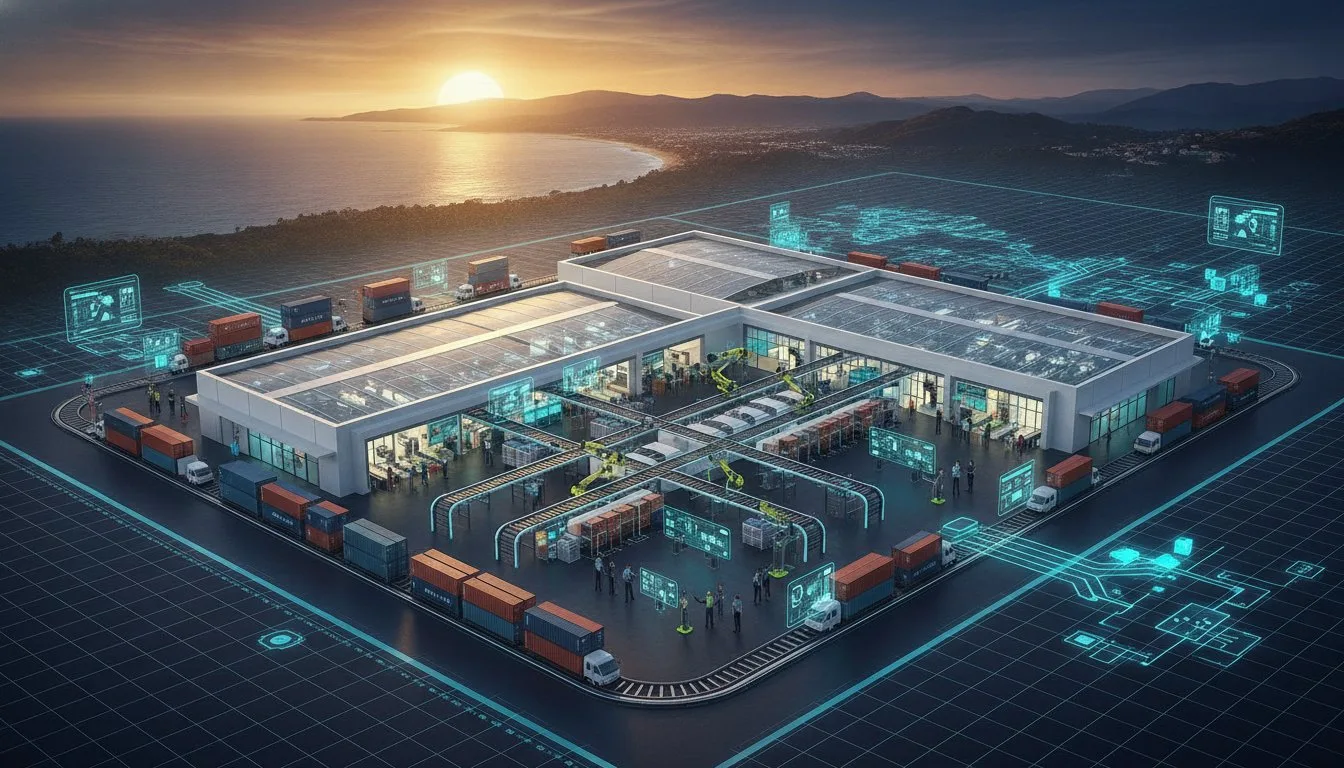
Choosing the right 3PL for ecommerce is no longer just about finding a warehouse; it’s about securing a high-tech physical extension of your brand. You deserve a partner that offers more than just shelf space. By integrating sophisticated software with human oversight, you can turn logistics into a competitive advantage that scales as fast as your ambition. We understand that behind every SKU is a promise you’ve made to a customer, and we’re here to help you keep it.
This guide explores how to achieve seamless software integration and global shipping reach while maintaining a customized unboxing experience. You’ll discover how proactive problem solving and proprietary systems like Remote Control™ provide the transparency you need to navigate 2026’s complex regulatory environment. From specialized kitting to on-demand digital printing, we’ll show you how to scale with precision and personal commitment.
Key Takeaways
- Learn how a modern 3PL for ecommerce serves as a strategic extension of your brand, moving beyond simple storage to drive a high-tech competitive advantage.
- Discover how a “quiet facility” methodology and systematic QC-Check processes ensure precision and reliability during your most demanding high-volume seasons.
- Explore how specialized kitting and on-demand HP Indigo digital printing can transform your packaging into a powerful, customized marketing tool.
- See how to handle complex international logistics and compliance to reach global markets while leveraging discounted high-volume carrier rates.
- Master the evaluation process for choosing a partner that prioritizes human oversight and bespoke problem-solving over rigid, automated fulfillment models.
What is 3PL for eCommerce and Why is it Critical in 2026?
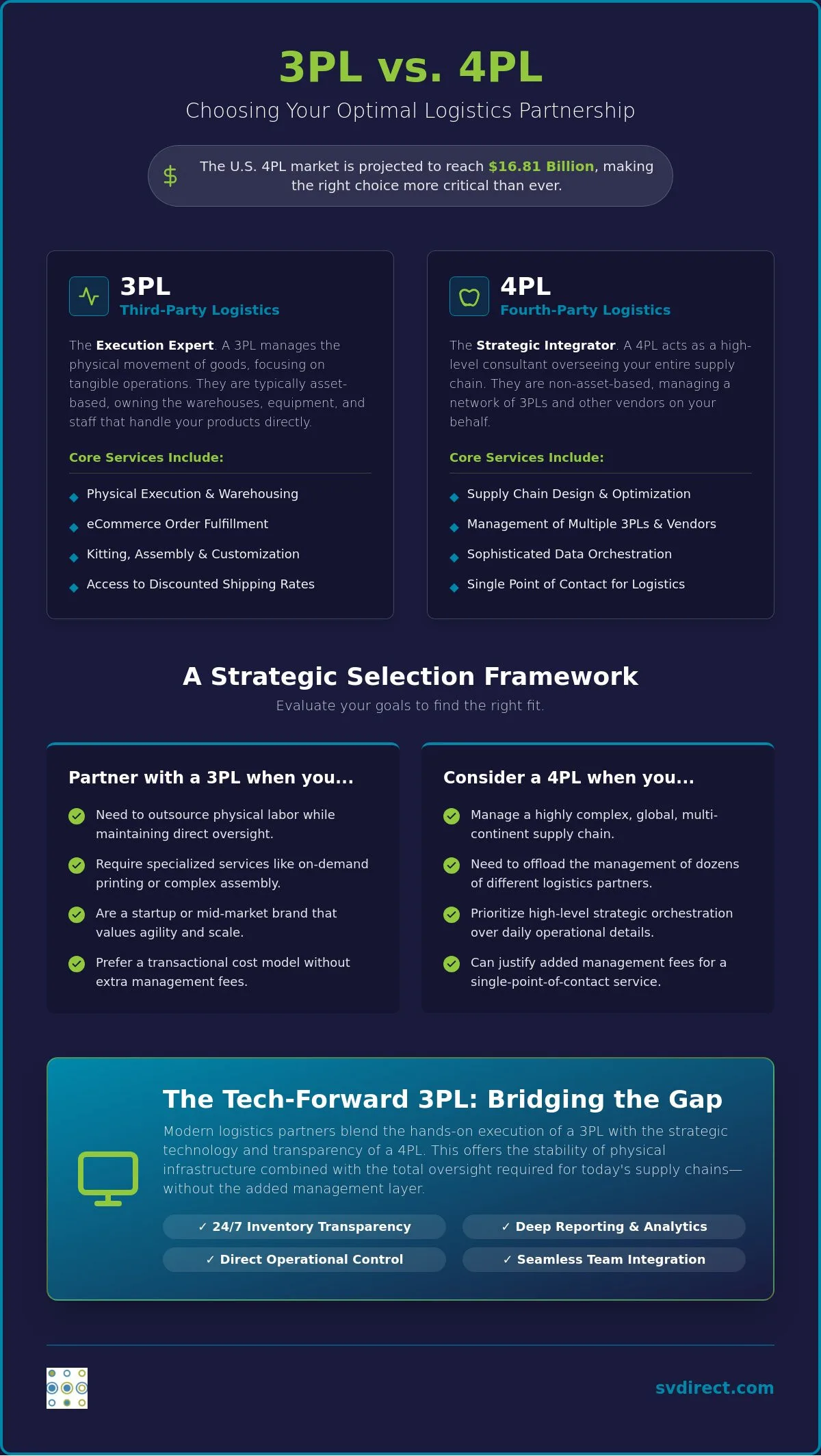
3PL for ecommerce is often misunderstood as a simple storage solution. By 2026, the definition has matured into a strategic alignment where a provider acts as the physical manifestation of your brand’s promise. It involves the comprehensive outsourcing of warehousing, inventory management, and fulfillment operations to an expert partner. This shift allows brands to transition from managing logistics as a cost center to leveraging it as a high-performance competitive advantage.
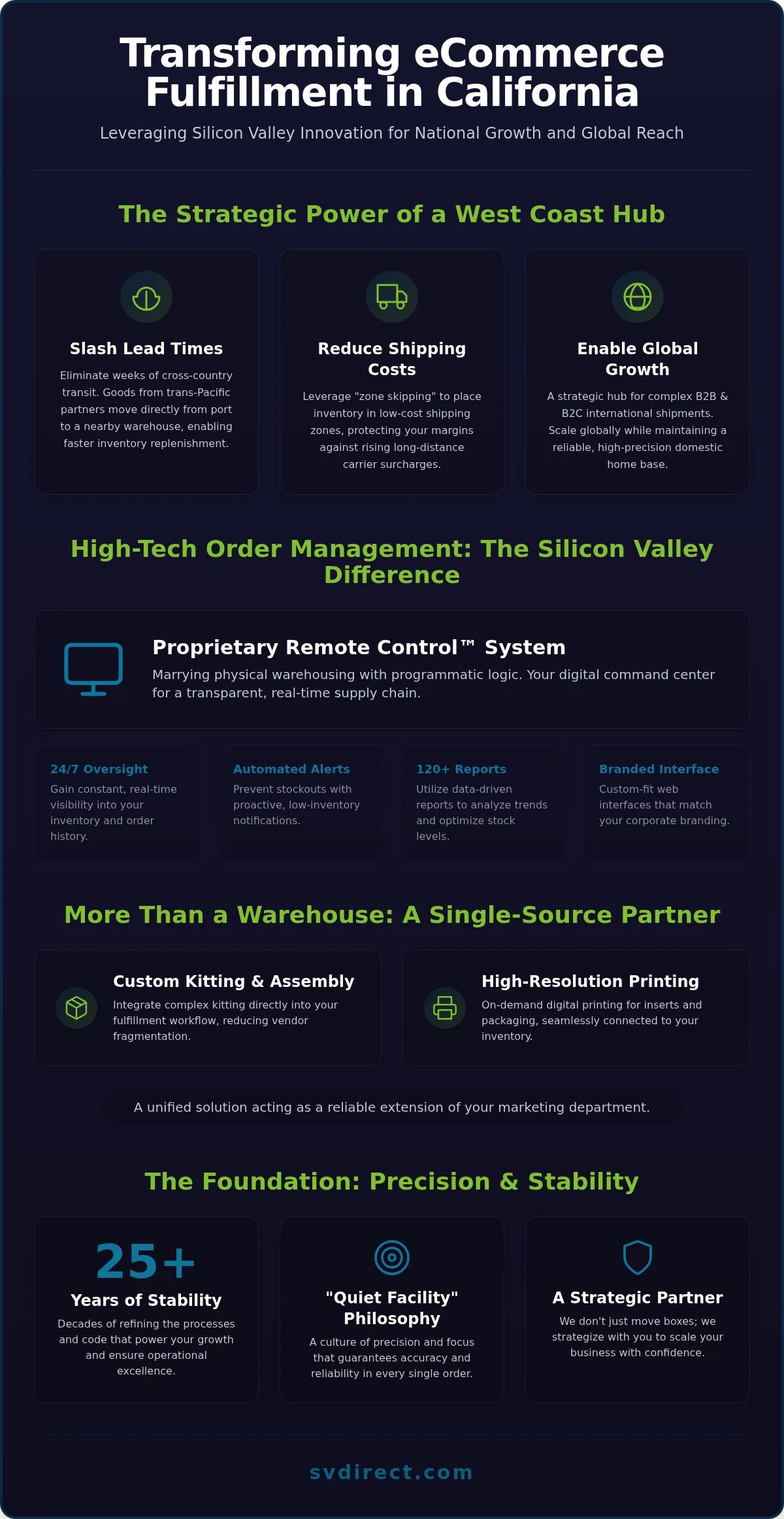
A sophisticated 3PL partnership prioritizes proactive problem solving over reactive fixes. Instead of waiting for a shipping delay to occur, a modern partner uses data and human oversight to anticipate bottlenecks before they impact the customer. This “Silicon Valley” standard of innovation relies on a “quiet facility” methodology. In this environment, precision is the baseline, and every movement is calculated to eliminate the chaos often found in traditional warehouses.
The primary benefits of this model include:
- Scalability: You can adjust capacity instantly for seasonal spikes without the headache of hiring or training temporary staff.
- Reduced Overhead: You eliminate the need for long-term warehouse leases, insurance, and expensive material-handling equipment.
- Global Reach: Your brand gains immediate access to discounted carrier rates and international shipping expertise typically reserved for the highest-volume shippers.
The Evolution of eCommerce Fulfillment Expectations
In 2026, speed is no longer the only metric that matters to consumers. Modern buyers demand extreme accuracy and a personalized unboxing experience that feels intentional. They want to see your brand’s identity the moment the package arrives. Managing a global supply chain now requires navigating complex international regulations and changing duty thresholds. A 3PL for ecommerce must move beyond cookie-cutter workflows to provide custom-fit strategies, such as on-demand printing or specialized kitting, that reflect your unique market position.
3PL vs. In-House Fulfillment: The Tipping Point
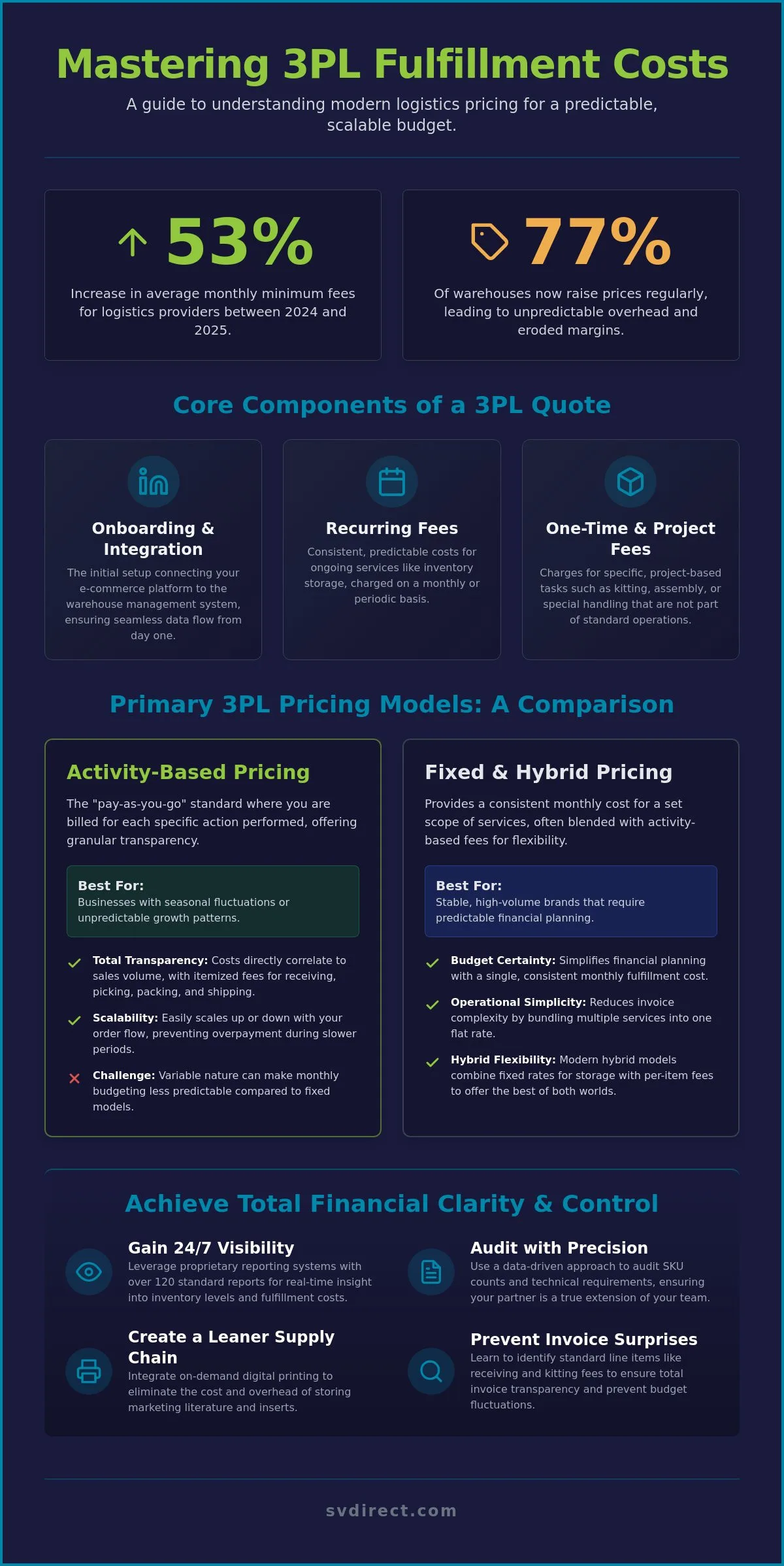
Many founders start fulfillment in a garage or a small leased space. You’ll know you’ve hit the tipping point when your team spends more time packing boxes than developing new products. Hidden costs like rising warehouse insurance, tech stack maintenance, and the constant cycle of seasonal labor often mask the true expense of in-house management. The strategic pivot occurs when the capital and time reclaimed by outsourcing generate more growth than the cost of the fulfillment service itself.
Your business reaches its strategic pivot point when the overhead of managing physical operations begins to cannibalize the time required for brand innovation and market expansion.
The Core Pillars of a High-Performance 3PL Solution
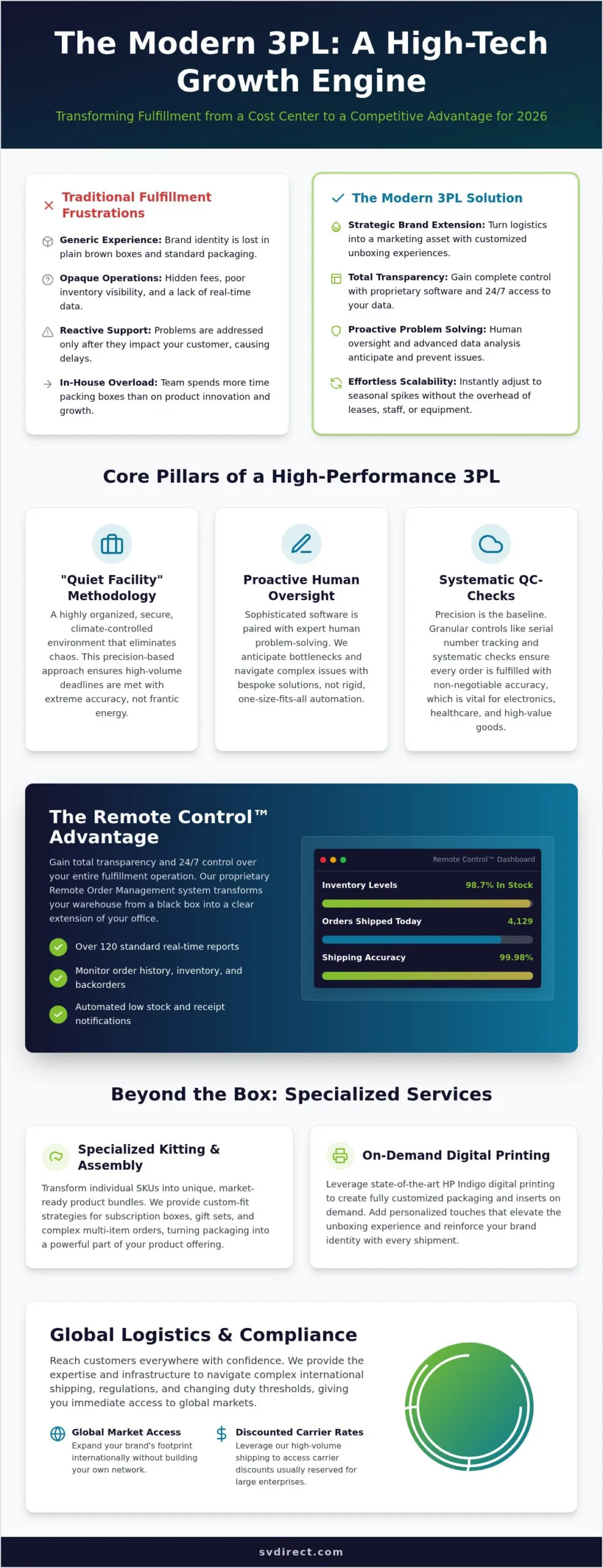
A high-performance 3PL for ecommerce relies on more than just square footage. It requires a facility that functions with the precision of a high-tech laboratory. Our “quiet facility” methodology is the foundation of this approach. By maintaining a highly organized, secure, and climate-controlled environment, we eliminate the frantic errors common in traditional warehouses during peak seasons. This stability ensures that every high-volume deadline is met with accuracy rather than chaos.
Inventory management within this framework includes granular control through serial number tracking. This capability is vital for brands in electronics or healthcare where traceability is non-negotiable. You gain real-time visibility into every unit, transforming a warehouse from a black box into a transparent extension of your office. This precision allows your team to focus on growth while we handle the physical complexities of your supply chain.
Proprietary Tech: The Remote Control™ Advantage
Total transparency is only possible when you have 24/7 access to your data. Our proprietary Remote Order Management system, known as Remote Control™, empowers your team with over 120 standard reports. You can monitor order history, inventory levels, and backorders in real time. Automated notifications for low stock levels and receipts ensure you’re never caught off guard. This system bridges the gap between digital strategy and physical execution, providing the informed confidence needed to scale.
Seamless Integration via Web Services
Modern tech stacks require a partner that speaks the language of developers. We prioritize platform-agnostic XML and SOAP protocols to ensure our systems communicate perfectly with your ecommerce platform. These standardized programmatic interfaces significantly reduce custom coding time and minimize the risk of integration errors. No one should have to struggle with rigid, outdated software when trying to scale a business.
Data tagging occurs in real time, allowing for precise reporting across various formats. This technical depth ensures that your digital workflows and physical operations move in lockstep. If you’re ready to see how a tech-integrated approach can streamline your supply chain, you can request a free quote to discuss your specific needs. This level of integration allows for a seamless brand experience that preserves your identity from the digital checkout to the customer’s front door.
Specialized Fulfillment: Kitting, Assembly, and On-Demand Printing
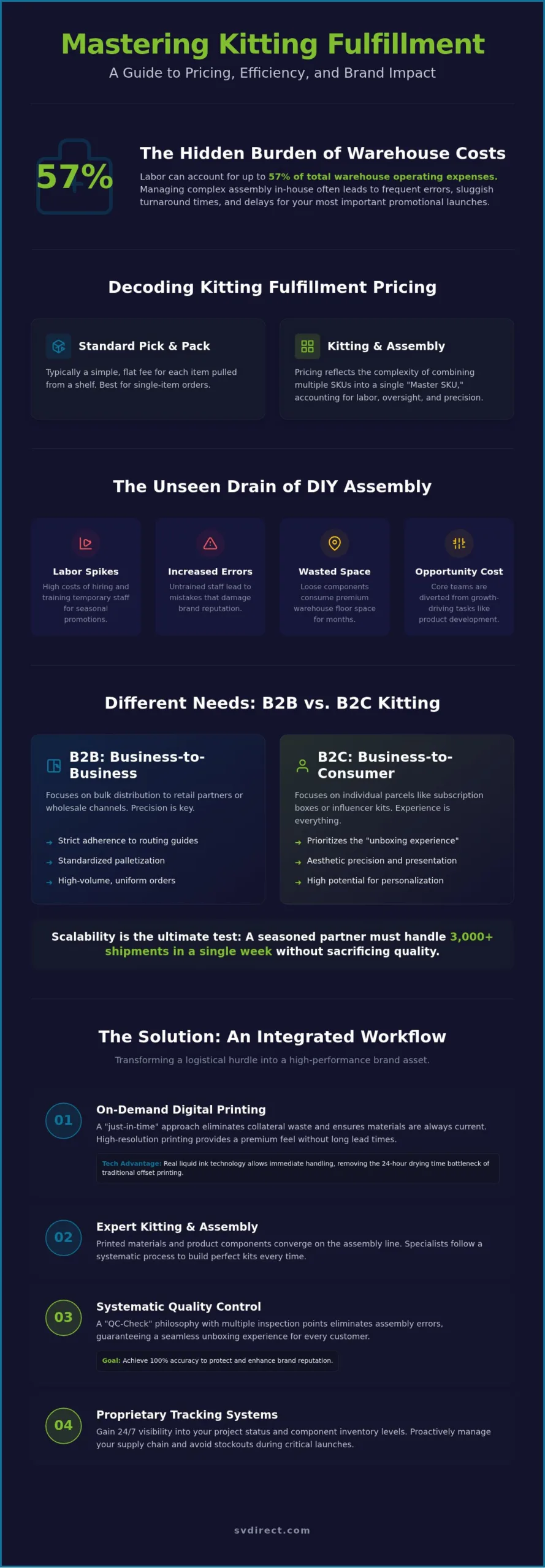
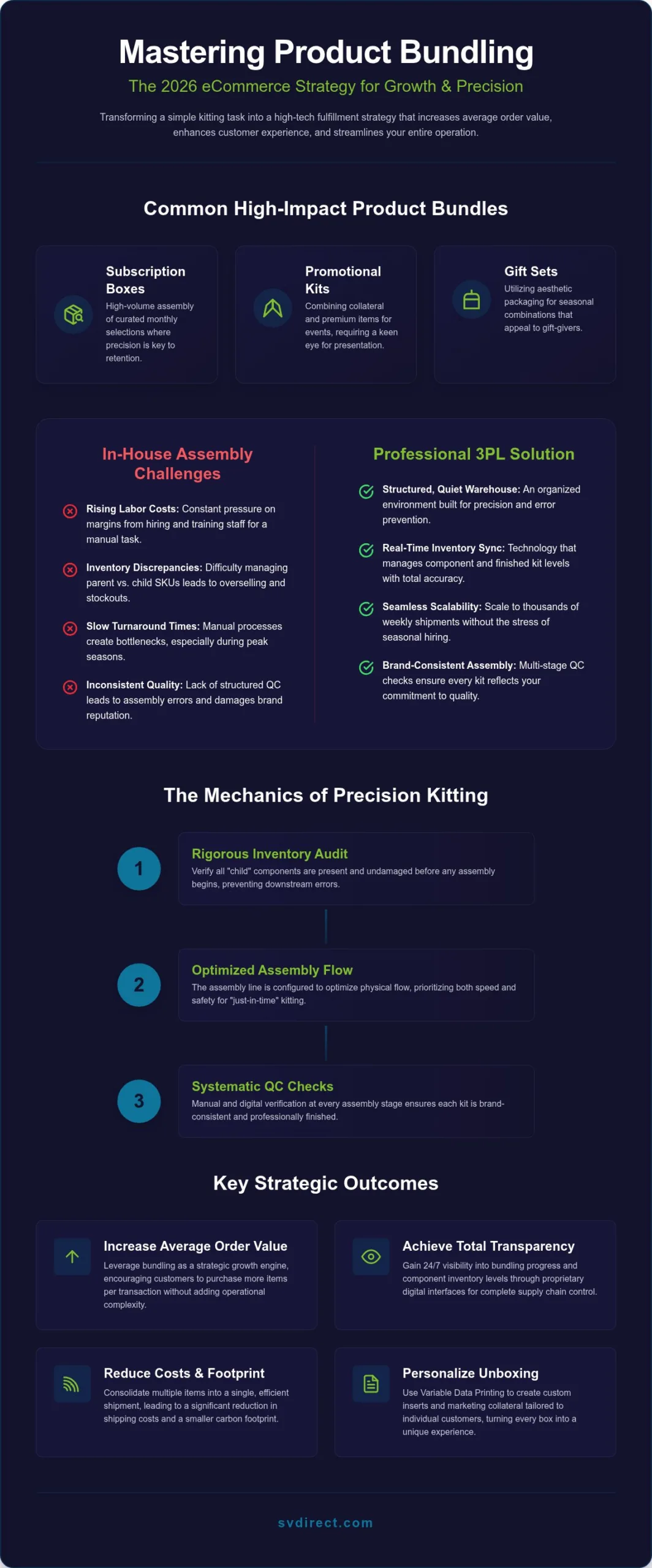
Subscription boxes and promotional kits live or die by the first impression. While many providers treat kitting as a basic add-on, a high-performance 3PL for ecommerce views it as the “secret sauce” of your marketing strategy. Hand assembly allows for a level of care that automated lines simply can’t replicate. We utilize a systematic QC-Check process where every component is verified against your exact specifications. This ensures that every package is perfect before it leaves our facility. It protects your brand from the negative impact of a poorly assembled order and ensures your customers feel valued from the moment they open the box.
Personalized unboxing experiences are no longer a luxury for high-end brands; they are an expectation. By integrating variable data printing (VDP) directly into the fulfillment line, you can greet every customer by name or include custom vouchers based on their specific purchase history. This just-in-time approach to marketing materials eliminates the need for large, pre-printed inventories that often end up in the trash. It’s a leaner, smarter way to communicate with your audience without adding unnecessary waste to your supply chain. This integration ensures that your marketing team and your logistics team are finally working in total harmony, allowing for real-time adjustments to your promotional strategy.
The Power of On-Demand Digital Printing
We utilize HP Indigo 5500 technology to deliver offset-quality results with digital speed. This system uses liquid ink technology for vibrant, professional inserts and literature. The environmental benefits are significant. We’ve eliminated plates, films, and harsh chemicals, which reduces setup times and overhead. You get a high-quality finish while reducing your carbon footprint. Explore our On-Demand Digital Printing services to see how we bridge the gap between logistics and marketing.
Custom Kitting as a Brand Extension
Custom assembly creates a premium feel that justifies your price point and builds loyalty. Our team manages over 3,000 complex shipments weekly, using a deliberate methodology to ensure consistency. This transforms the unboxing process into a brand extension rather than just a shipping requirement. When you partner with a 3PL for ecommerce that understands hand assembly, you ensure your physical presence is as polished as your digital storefront.
Global Logistics and Compliance: Reaching Customers Everywhere
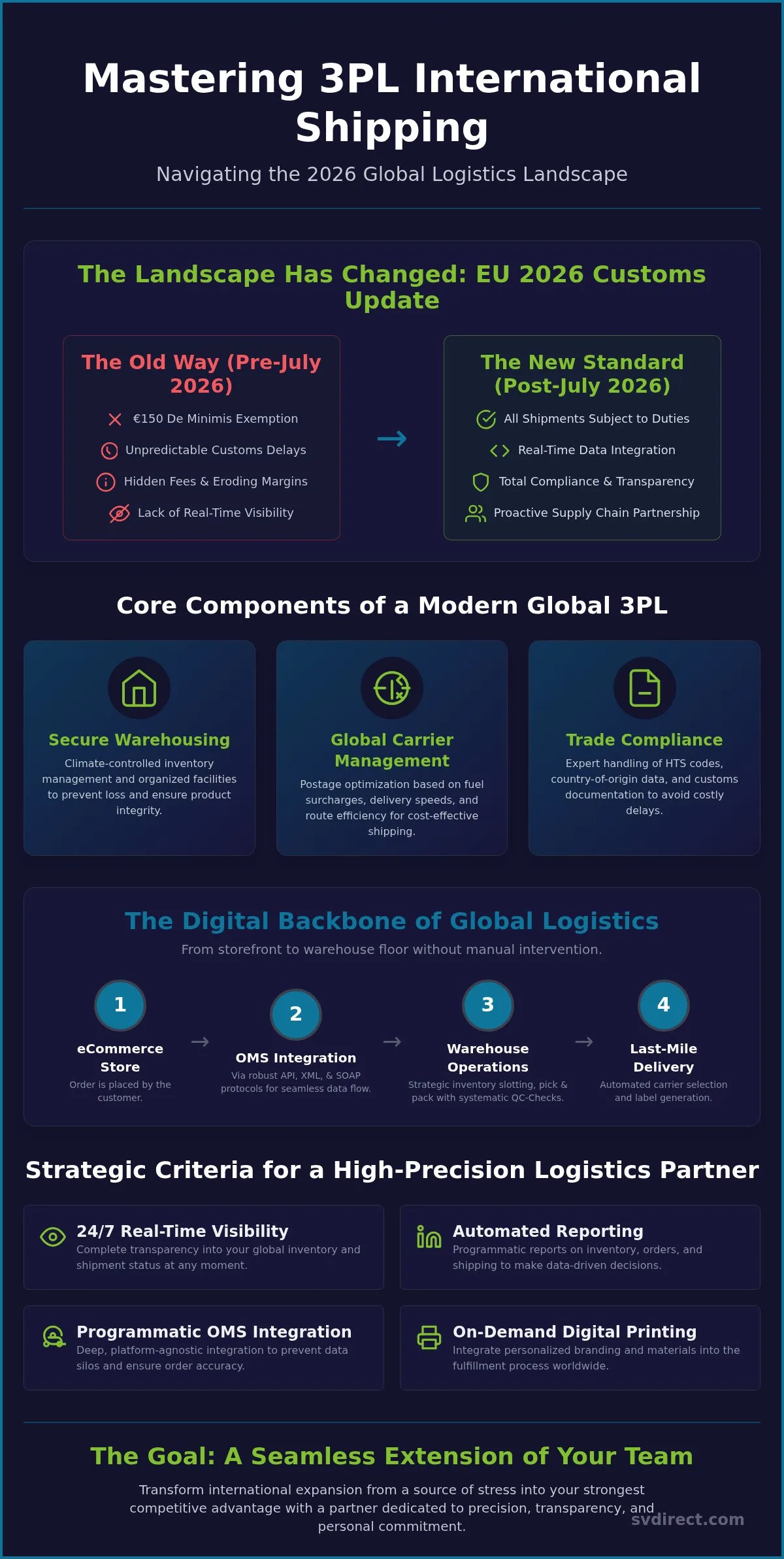
Managing the complexities of international trade requires more than just a shipping label. It demands a sophisticated coordination of B2B and B2C logistics that respects regional regulations and delivery expectations. When you partner with a high-performance 3PL for ecommerce, you gain immediate access to discounted carrier rates that are typically out of reach for independent brands. These volume-based savings directly improve your margins while allowing you to offer competitive shipping prices to a global audience.
Returns management, or reverse logistics, is another critical component of global operations. Instead of viewing returns as a headache, we treat them as a trust-building opportunity. In 2026, regulations like the EU “Withdrawal Button” directive make a clear, accessible returns process a legal necessity. We handle the physical inspection and restocking of returned goods with the same precision as outbound orders. This ensures your inventory remains accurate and your customers feel heard.
Compliance and Secure Mailing
For businesses in the healthcare and financial sectors, logistics isn’t just about speed; it’s about security. Healthcare-specific mailing and Explanation of Benefits (EOB) services require a higher standard of precision to maintain HIPAA compliance. We manage these sensitive workflows with a focus on data integrity and physical security. Our fraud-prevention protocols for rebate and coupon redemption services add another layer of protection, ensuring that your promotional spend is used as intended. You can find more details on our Healthcare Mailing Services for a deep dive into these compliance standards.
Navigating Global Trade in 2026
Expanding your footprint doesn’t have to mean maintaining a dozen international warehouses. Strategic positioning allows you to distribute products globally from a centralized, high-efficiency hub. The landscape has changed significantly with the elimination of the EU De Minimis exemption in July 2026 and the continued suspension of Section 321 in the US. Real-time tracking is essential for customer satisfaction in international orders, as it reduces the anxiety associated with cross-border shipping. Our systems provide the transparency needed to manage these journeys effectively. For a comprehensive look at the current regulatory landscape, refer to our Global Shipping Services trade guide.
How to Choose the Right 3PL for Your eCommerce Growth
Selecting a 3pl for ecommerce is a decision that sets the trajectory for your brand’s future. While some suggest that price is the only factor worth considering, this perspective ignores the massive hidden costs of fulfillment errors and poor customer service. A cheap provider becomes expensive very quickly when you’re forced to apologize for late shipments or incorrect orders. You need a partner that values accountability as much as you do, operating on a foundation of Nine Promises that ensures your reputation remains spotless. This level of service transforms logistics from a basic utility into a strategic asset.
Flexibility is the hallmark of a mature logistics partner. Rigid, automated procedures often fail when faced with the unique challenges of a growing business. You need a “make-it-right” attitude that prioritizes solutions over excuses. This mindset is usually found in organizations with deep roots and a multi-decade history of stability. Since our founding in 1999, we’ve focused on the human element of logistics. This means you’ll always have access to a real person who understands your business, rather than a generic support ticket or an automated bot. Direct human connection remains our most powerful differentiator in a tech-saturated market.
The “Partnership” Litmus Test
A true partner functions as a seamless extension of your team, not just another vendor on your balance sheet. This relationship is built on transparency and a shared commitment to excellence. You can see the results of this approach by exploring our Customer Testimonials, where long-term clients discuss the reliability of our services. Our quiet, organized facility operates with a methodical calm that stands in stark contrast to the hectic and chaotic environment of traditional fulfillment centers. This atmosphere of precision is what allows us to maintain high accuracy rates even during the most demanding peak seasons.
Next Steps: Transitioning to Professional Fulfillment
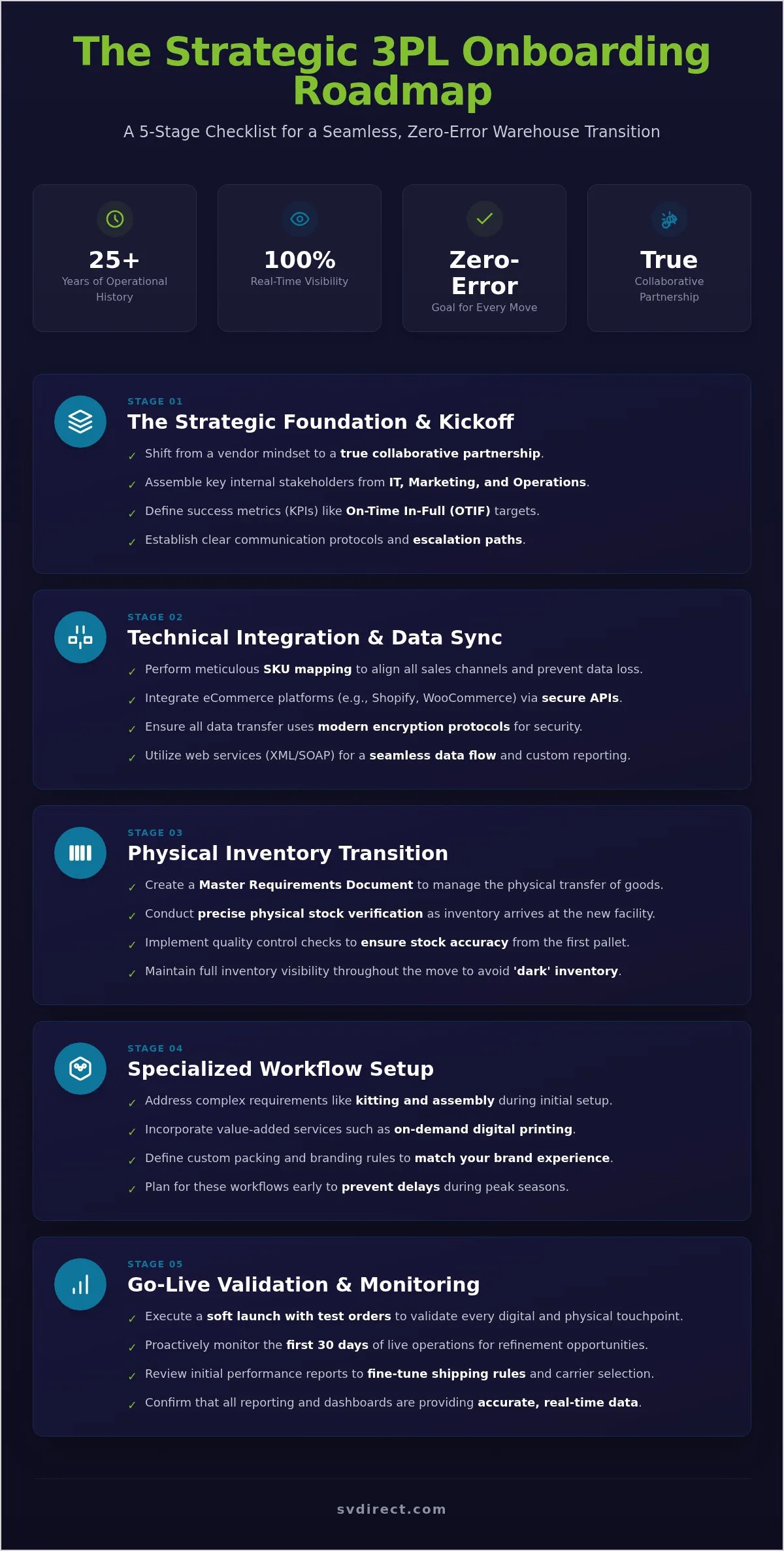
Transitioning to a professional 3pl for ecommerce starts with a thorough audit of your current logistics. Identify where the gaps in efficiency are costing you time or money. Once you’ve identified these areas, you can begin preparing your data for a seamless integration with a modern Order Management System. We work closely with you during this transition to ensure that your digital workflows and physical inventory move in perfect sync. This proactive approach minimizes downtime and sets the stage for rapid, sustainable growth.
Experience the Silicon Valley Direct difference
Mastering Your Supply Chain for 2026 and Beyond
Scaling a brand requires more than just a warehouse; it demands a partner that acts as a physical extension of your company. You’ve seen how integrating a high-performance 3pl for ecommerce can transform your operations from a logistical burden into a competitive advantage. By prioritizing a “quiet facility” methodology and real-time data transparency, you ensure your customers receive the precision they expect. This strategic alignment allows you to focus on innovation while we handle the physical complexities.
Since 1999, we’ve focused on combining sophisticated technology with a human commitment to service. Our proprietary Remote Control™ system provides the 24/7 visibility you need, while on-site HP Indigo digital printing allows for the custom unboxing experiences that build lasting brand loyalty. You don’t have to navigate the complexities of global trade or kitting alone. Our team provides the steady hand and operational expertise your business deserves.
The path to sustainable growth is paved with reliable systems and proactive problem solving. We’re ready to help you take that next step with confidence.
Frequently Asked Questions
What exactly does a 3PL for eCommerce do?
A 3PL for ecommerce manages the physical side of your business by handling warehousing, order fulfillment, and global shipping. They receive your inventory, store it in a secure facility, and pick, pack, and ship orders as they come in. Beyond basic logistics, a high-performance partner provides specialized services like kitting, assembly, and returns management. This allows you to focus on marketing and product development while your partner ensures operational precision.
How does 3PL integration work with platforms like Shopify or WooCommerce?
Integration occurs through secure web services that allow your storefront to communicate directly with the warehouse management system. We utilize platform-agnostic XML and SOAP protocols to ensure seamless data flow between platforms like Shopify or WooCommerce and our proprietary Remote Control™ software. This connection automates order transfers and provides real-time inventory updates. It eliminates manual data entry, reduces errors, and ensures that your digital and physical operations remain perfectly synchronized.
Can a 3PL handle custom kitting and branded packaging?
Yes, specialized kitting and assembly are central to creating a premium brand experience. Unlike automated facilities, our team performs hand assembly to ensure every subscription box or promotional kit meets your exact aesthetic standards. We also integrate on-site digital printing to produce custom inserts or personalized literature. This bespoke approach transforms a standard shipping box into a powerful marketing tool that reinforces your brand identity the moment a customer opens their package.
What are the typical fees associated with 3PL for eCommerce?
While specific costs vary based on volume and complexity, typical fees include receiving, monthly storage, and pick-and-pack charges. Storage is often calculated per pallet or cubic foot, while pick-and-pack fees generally apply to each individual order. Some providers also include one-time setup fees and monthly minimums. It’s essential to look at the total cost of fulfillment rather than just individual line items to understand the true impact on your business margins.
How does a 3PL help with international shipping and customs?
A 3PL simplifies global expansion by managing cross-border logistics and navigating complex customs regulations. They leverage high-volume carrier discounts to reduce your shipping costs while providing expertise in international compliance, such as the 2026 EU packaging and duty changes. By handling the documentation and coordination required for global trade, they ensure your products reach international customers efficiently. This allows you to scale your reach without needing to manage multiple international warehouse locations yourself.
Is my inventory secure in a third-party warehouse?
Your inventory is protected in a secure, climate-controlled facility designed for high-value goods. We utilize a “quiet facility” methodology that prioritizes organization and proactive security to prevent loss or damage. Real-time visibility through our Remote Control™ system allows you to monitor stock levels and movement 24/7. This combination of physical security and digital transparency ensures that your assets are managed with the same level of care you would provide in-house.
What is the difference between a 3PL and a traditional warehouse?
A traditional warehouse focuses primarily on long-term storage, while a 3PL for ecommerce is an active fulfillment partner. Traditional warehouses rarely offer the technical integration, kitting, or digital printing services required for modern retail. A 3PL manages the entire lifecycle of an order, from the moment a customer clicks “buy” to the final delivery at their door. They act as a strategic extension of your team, providing the infrastructure and expertise needed to scale rapidly.
How long does it take to set up fulfillment with a 3PL partner?
The setup timeline typically ranges from a few weeks to a couple of months, depending on the complexity of your tech stack and inventory. This period involves integrating your ecommerce platform with our software, establishing quality control protocols, and receiving your initial stock. We take a methodical approach to ensure every connection is secure and every workflow is optimized before the first order ships. This deliberate preparation prevents errors and ensures a smooth transition for your customers.