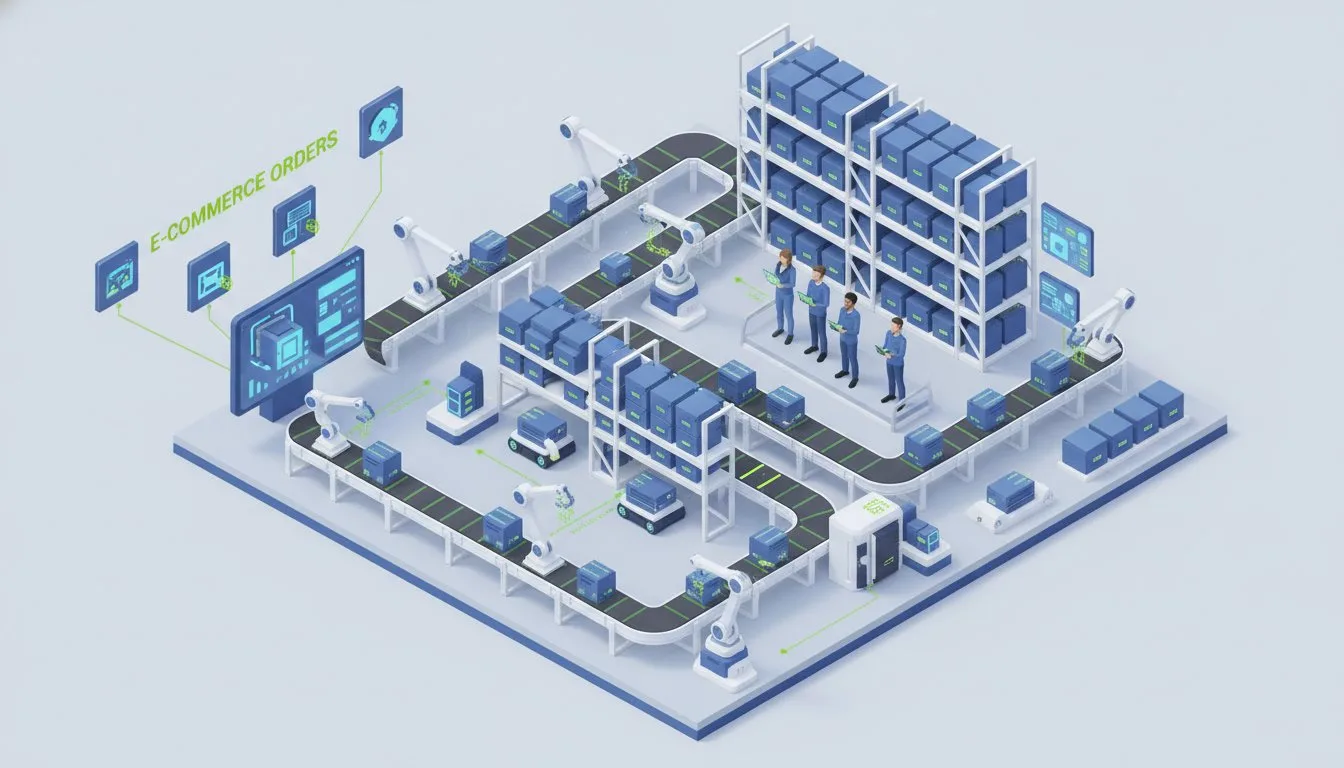
When to Switch to a 3PL: 2026 Scaling Fulfillment Guide
What if the shipping process that built your brand is now the primary obstacle preventing its future growth? Most founders start by packing every order personally to ensure quality, yet there inevitably comes a point where manual labor hits a hard ceiling. You’re likely feeling the strain of spending 80% of your time on logistics instead of marketing, while watching error rates climb as your physical space disappears. Deciding exactly when to switch to a 3PL is a common struggle for brands trying to balance a personal touch with the cold reality of scaling operations in a market where shipping rates continue to rise.
Identifying this inflection point is the difference between a stalled business and a truly scalable enterprise. This guide clarifies the specific operational and financial signals, from inventory visibility gaps to the impact of the 2026 carrier rate hikes, that indicate your brand is ready for a professional partner. You’ll learn how to regain your time, achieve 99.9% order accuracy, and lower per-order costs without adding fixed overhead. We will explore how moving toward a sophisticated fulfillment model allows you to focus on high-level growth while ensuring your logistics partner acts as a seamless extension of your team.
Key Takeaways
- Identify the specific operational triggers, such as spending the majority of your time on logistics rather than growth, that signal your business has outgrown in-house shipping.
- Learn how to evaluate the true costs of warehousing by comparing fixed overhead like rent and equipment against the variable flexibility of a professional partner.
- Determine when to switch to a 3pl based on your need for specialized services like high-quality kitting, assembly, and on-demand digital printing.
- Discover why real-time inventory visibility and seamless eCommerce integration are non-negotiable standards for maintaining order accuracy in 2026.
- Develop a strategic onboarding plan that avoids standard, one-size-fits-all solutions and treats your fulfillment provider as a dedicated extension of your brand.
Recognizing the Inflection Point: 5 Signs to Switch to 3PL
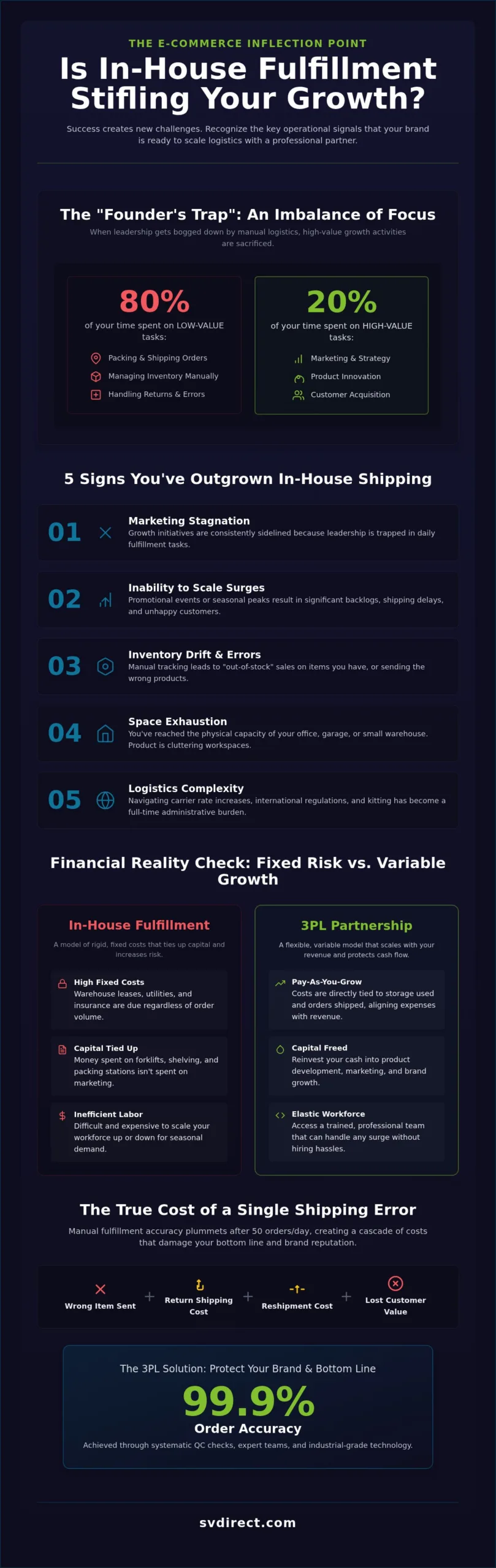
Success often brings a quiet crisis of capacity. When your team spends more time managing tape and labels than acquiring new customers, your operational model is no longer supporting your growth; it is actively stifling it. Knowing when to switch to a 3pl becomes a matter of identifying specific friction points in your daily workflow. If you are consistently hitting physical walls or seeing shipping delays during promotional spikes, your brand has reached an inflection point that requires a more robust infrastructure.
There are five primary indicators that your current in-house system is reaching its limit:
- Marketing Stagnation: Strategic growth initiatives are sidelined because leadership is bogged down by daily fulfillment tasks.
- Inability to Scale Surges: Promotional events or seasonal peaks result in significant backlogs and customer service inquiries.
- Inventory Drift: Manual tracking leads to “out-of-stock” sales on items you actually have, or vice versa, creating friction and lost revenue.
- Space Exhaustion: You have reached the literal physical capacity of your current office, garage, or small warehouse.
- Logistics Complexity: Navigating the 2026 carrier rate increases and international shipping regulations has become a full-time administrative burden.
The “Founder’s Trap”: When Logistics Stifles Growth
The “Founder’s Trap” occurs when a CEO or key leader performs manual labor that could be outsourced for a fraction of their hourly value. Every hour spent packing a box is an hour stolen from high-level strategic planning or product innovation. This creates a massive opportunity cost that prevents your brand from reaching its true potential. Moving to a professional partner allows for a psychological shift from “doing” to “delegating,” transforming logistics from a personal chore into a scalable business utility. This transition ensures your energy is directed toward the activities that actually drive revenue.
Accuracy and the Cost of Error
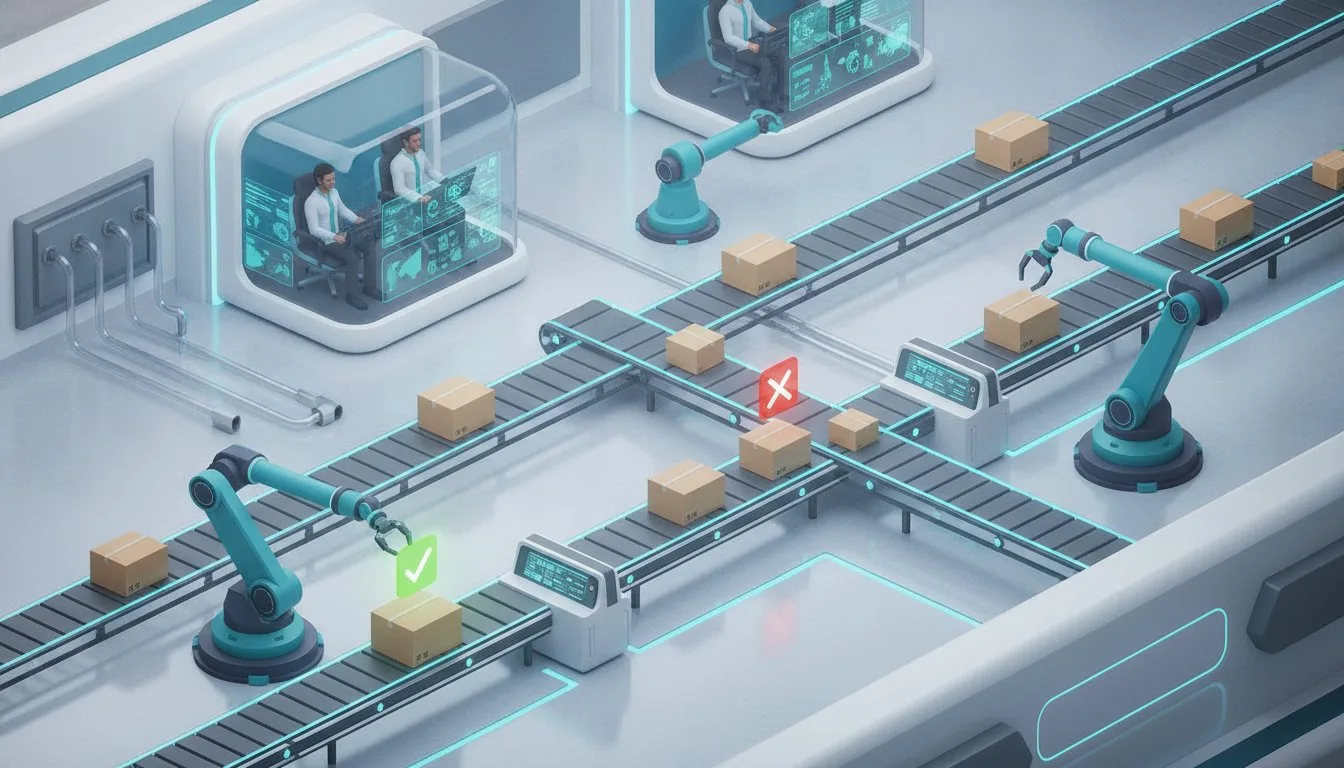
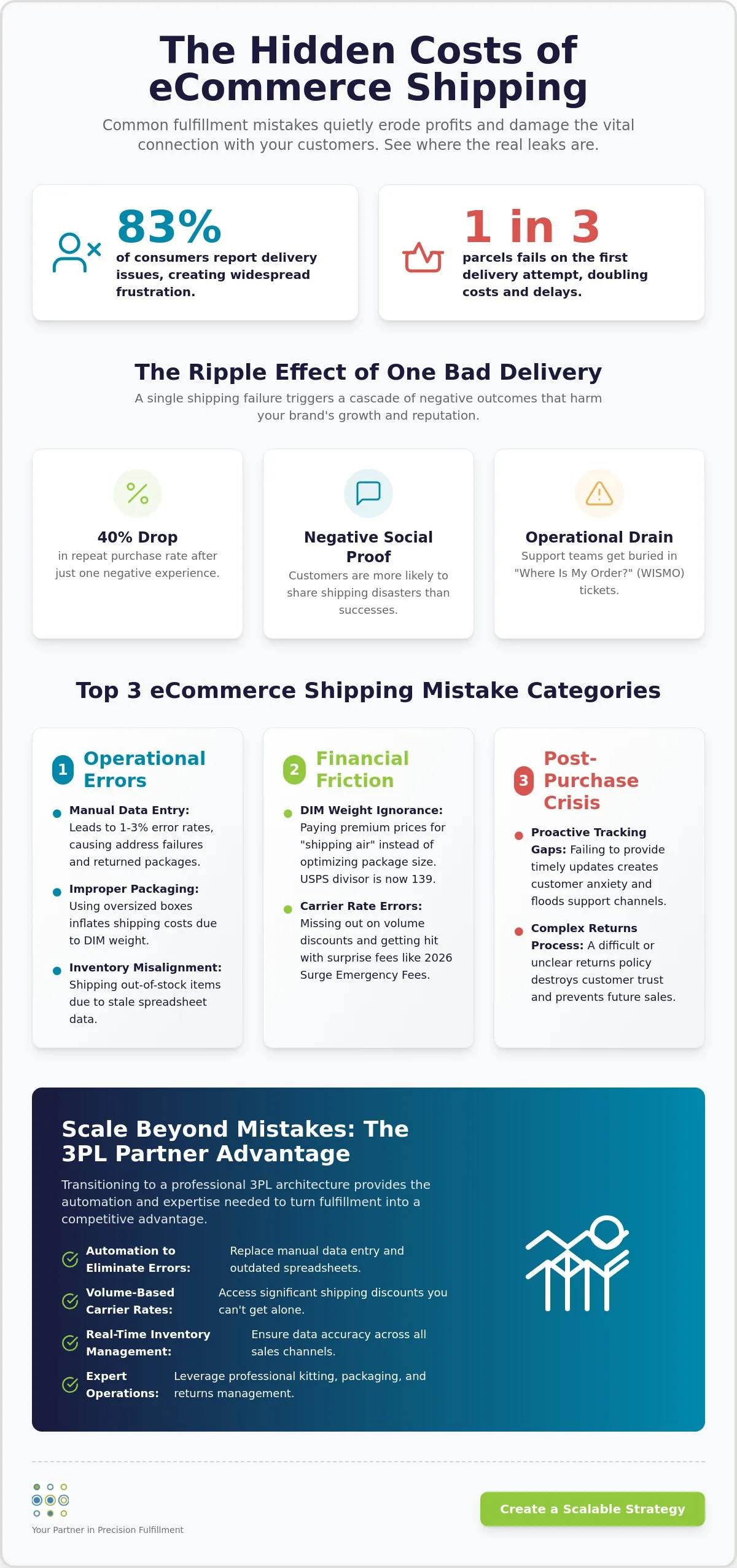
Manual fulfillment systems typically begin to fracture once volume exceeds 50 orders per day. Beyond this threshold, human error becomes statistically inevitable without the support of industrial-grade technology. The true price of a “wrong item sent” is staggering. It includes the cost of the original shipping, the return label, the labor to re-process the order, and the potential loss of a customer’s lifetime value. Professional facilities utilize systematic methodologies like our QC-Check process to maintain near-perfect precision. By leveraging a system like Remote Control™, you gain the real-time visibility needed to ensure that scaling your volume never results in a drop in quality.
The Financial Reality Check: Calculating the True Cost of In-House Fulfillment
Many growing brands mistakenly believe that keeping operations in-house saves money. While it might seem cheaper to pack orders in a spare room or a small leased office, the true financial drain often lies in the items that don’t appear on a simple shipping receipt. When you analyze the total expenditure, including warehouse equipment leases, utilities, and the rising cost of insurance, the decision of when to switch to a 3pl becomes a matter of fiscal responsibility. It’s about recognizing that stagnant capital tied up in infrastructure is capital that isn’t being used to grow your product line.
Fixed vs. Variable Cost Models
The most significant financial risk of in-house fulfillment is the rigidity of fixed costs. A multi-year warehouse lease remains a liability whether you ship ten orders or ten thousand. A professional partner transforms these stagnant expenses into a flexible, variable model. You only pay for the storage space you occupy and the orders you actually ship. This “pay-as-you-grow” approach ensures your logistics budget scales perfectly with your revenue, protecting your cash flow during slower months. It’s a strategic shift that turns a massive capital risk into a predictable, per-order expense.
Labor costs present another scaling challenge. Recruiting, training, and managing temporary staff for seasonal rushes is both expensive and time-consuming. By outsourcing, you eliminate the administrative burden of payroll taxes and workers’ compensation. You also bypass the hidden costs of packaging supplies and shipping software subscriptions, which often carry high monthly minimums for smaller accounts. These savings add up quickly, allowing you to reinvest that capital into your core business.
The Shipping Rate Advantage
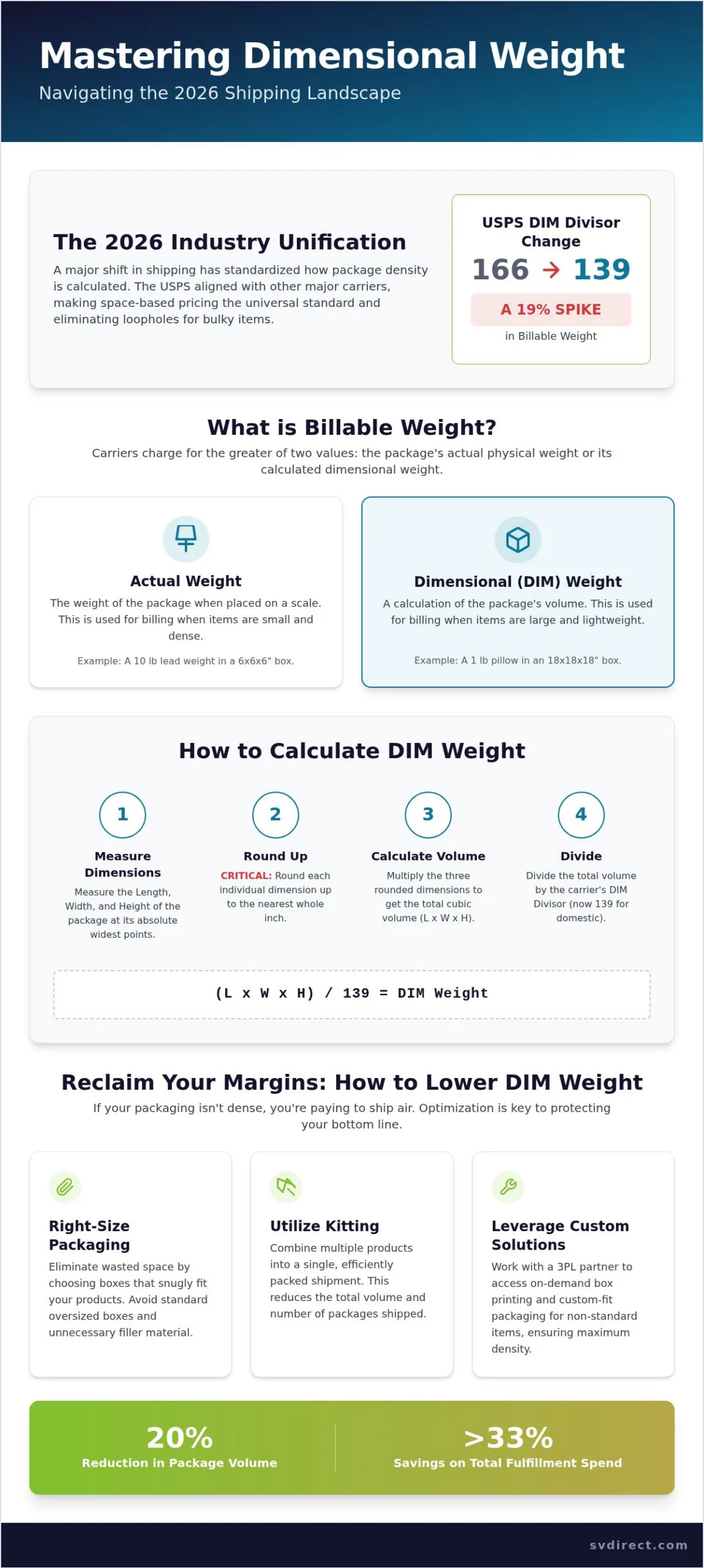
Carrier leverage is perhaps the most immediate financial benefit of a partnership. In 2026, standard list rates for major carriers like FedEx and UPS increased by an average of 5.9%. These hikes, combined with new surcharges and dimensional weight changes, can devastate the margins of a solo shipper. Because 3PLs manage aggregate volume from hundreds of clients, they secure deep discounts that are simply unavailable to individual brands. Utilizing professional global shipping services allows you to access these tier-one rates immediately. Expert packaging also helps reduce “Dimensional Weight” surcharges by ensuring every box is optimized for its contents. To understand the potential savings for your specific volume, you can see how your current costs compare with a professional analysis.
Specialized Capabilities: When Your Brand Needs More Than Just a Box
Standard fulfillment often focuses on the basic mechanics of moving boxes from point A to point B. However, if your product requires sophisticated presentation or regulatory precision, you need a partner rather than a simple vendor. Knowing when to switch to a 3pl often depends on whether your current setup can handle complex kitting and assembly services. These tasks require a level of meticulous oversight that manual in-house teams frequently struggle to maintain as order volume increases. When precision becomes a prerequisite for brand survival, a professional infrastructure is the only logical path forward.
The Power of Personalized Fulfillment
Modern brands use fulfillment as a powerful marketing channel. We leverage HP Indigo 5500 technology to provide offset-quality digital printing directly within the warehouse environment. Unlike standard toner-based systems, liquid ink technology creates a premium, high-fidelity finish that resonates with discerning customers. This capability allows you to shift from static, generic inserts to dynamic print-on-demand materials that are generated exactly when they’re needed.
Variable Data Printing (VDP) takes this personalization a step further. It enables unique copy on every single sheet in a print run. Imagine a customer opening a package to find a personalized greeting or a targeted offer based on their specific purchase history. This level of customization transforms a routine delivery into a high-performance brand experience. It turns a mechanical logistics process into a direct, human connection that builds long-term loyalty.
Compliance and Security in Logistics
For brands managing sensitive materials, the decision of when to switch to a 3pl is often driven by the non-negotiable need for regulatory compliance. Brands in the medical and wellness sectors require specialized healthcare mailing services that prioritize HIPAA considerations and data security. These operations demand a “Quiet Facility” methodology where precision and systematic inspection are prioritized over chaotic speed.
High-value items also require a different level of operational care. We implement strict serial number tracking and inventory controls to ensure total accountability at every stage of the distribution cycle. For companies dealing with sensitive electronics or proprietary hardware, secure warehousing provides the necessary risk mitigation. This infrastructure ensures that your most valuable assets are protected by both advanced physical security and human expertise, providing a level of reliability that a standard office or garage simply cannot match.
The Technology Marriage: Integrating Your Store with a 3PL
In the fast-paced market of 2026, data is as critical as the physical inventory it tracks. A primary factor in deciding when to switch to a 3pl is the need for a unified digital ecosystem that bridges the gap between your eCommerce platform and the warehouse floor. Manual data entry is a relic of a slower era; it introduces human error and creates dangerous visibility gaps that can lead to lost revenue. By integrating your store directly with a professional facility, you create a “technology marriage” that ensures your customer’s experience is seamless from the first click to the final delivery.
Real-time visibility isn’t just a luxury; it’s a non-negotiable standard for modern business. Without it, you’re flying blind, risking backorders that damage your brand’s reputation and customer trust. An integrated Order Management System (OMS) acts as a central brain, synchronizing inventory levels across Shopify, WooCommerce, or custom platforms. This automation eliminates the friction of manual order submission and allows your team to focus on scaling rather than managing spreadsheets. It’s about shifting from a reactive stance to a proactive strategy where every movement in the warehouse is reflected instantly in your digital storefront.
Remote Control™: 24/7 Visibility
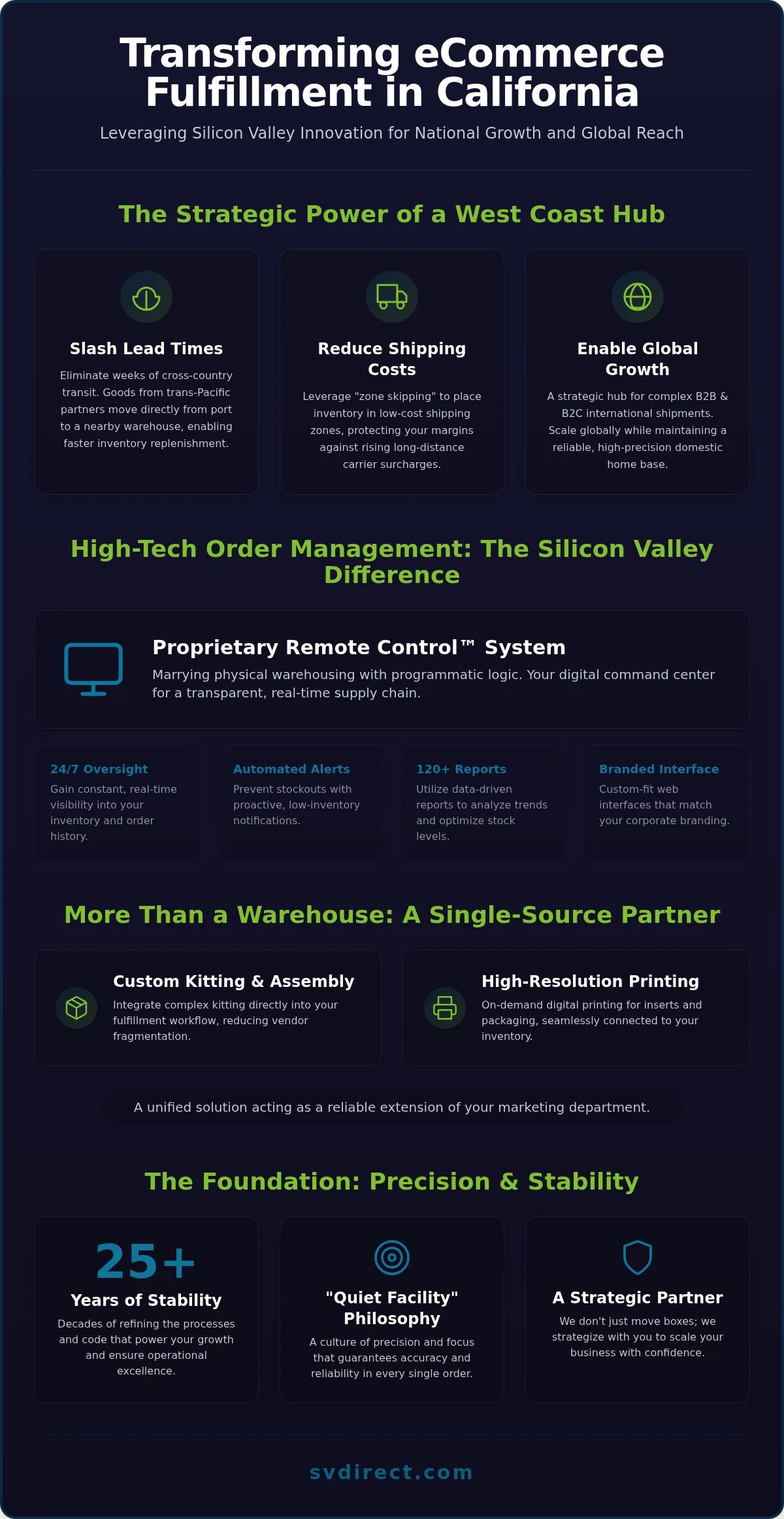
Our proprietary remote order management system, Remote Control™, provides an unprecedented level of transparency and oversight. You shouldn’t have to wait for a business day to get an answer about your stock levels or order status. With access to over 120 standard reports, you can make data-driven decisions at any hour from any location. The system also features automated notifications for low inventory and the receipt of new goods. This ensures you’re never caught off guard by a sudden surge in demand, allowing for a “Quiet Facility” environment where every action is deliberate and tracked.
Seamless API Integration
We utilize robust XML and SOAP protocols to ensure our systems “talk” to yours without the need for expensive or time-consuming custom coding. This platform-agnostic approach means your fulfillment ecosystem remains flexible as your technology stack evolves over time. By leveraging these web services, we significantly reduce “click-to-ship” time. Orders flow automatically from your eCommerce platform to our floor, triggering the picking process within minutes of a purchase. This speed is a primary competitive advantage in 2026, where consumers expect immediate fulfillment and accurate tracking updates.
Navigating the Transition: How to Choose and Onboard a 3PL Partner
Choosing a partner is a high-stakes decision that requires more than a simple price comparison. Before you decide when to switch to a 3pl, you must perform a rigorous audit of your own operational data. This means documenting your exact SKU counts, monthly order volumes, and average items per order. Having these benchmarks allows you to seek out a partner that matches your specific scale rather than a vendor that offers a one-size-fits-all solution. A successful transition isn’t just about moving boxes; it’s about finding a team that functions as a seamless extension of your own brand.
Flexibility is the primary differentiator in a modern logistics partnership. You should avoid cookie-cutter vendors that force your business into their rigid workflows. Instead, look for a provider that prioritizes a “Quiet Facility” methodology. This approach indicates professional maturity, where the warehouse environment is organized, deliberate, and calm even during peak periods. A chaotic facility is often a sign of reactive management, while a quiet one suggests that every process is systematic and under control. This level of organization is what allows a brand to scale without the friction of constant errors or delays.
Vetting for Quality and Trust
Trust is built on transparency and a proven history of precision. When vetting a potential partner, you should ask detailed questions about their QC-Check procedures and documented error rates. It’s helpful to prioritize organizations with high staff retention, as long-term employees carry the institutional knowledge needed for expert-level service. You don’t want your brand’s reputation in the hands of temporary seasonal workers who lack a personal commitment to your success. Reviewing customer testimonials can provide valuable insight into how a partner handles complex requirements over several years. This historical stability serves as an anchor of reliability in a fast-paced market.
The First 90 Days: What to Expect
The onboarding phase is a critical window that sets the tone for the entire partnership. During the first 90 days, you’ll move through a structured process that includes inventory transfer and live system integration. It’s a time to establish clear Key Performance Indicators (KPIs) regarding order accuracy, shipping speed, and communication response times. A high-performance partner won’t just wait for your instructions; they’ll proactively anticipate potential conflicts before they impact your customers. This proactive stance ensures that the “technology marriage” discussed earlier translates into real-world efficiency. By the end of this period, your logistics should feel like a predictable utility that supports your growth rather than a source of daily stress.
Empowering Your Brand’s Next Phase of Growth
Deciding exactly when to switch to a 3pl is a strategic move that transforms your logistics from a daily burden into a scalable engine for success. By identifying the operational friction of the “Founder’s Trap” and shifting to a variable cost model, you gain the freedom to focus on marketing and product innovation. This evolution ensures your brand remains agile in the face of 2026’s carrier rate increases and complex global shipping regulations.
Silicon Valley Direct provides over 25 years of fulfillment expertise, acting as a steady, reliable extension of your internal team. We combine this seasoned experience with cutting-edge technology, including our proprietary Remote Control™ system for 24/7 inventory visibility and on-site HP Indigo digital printing for premium brand touches. Our commitment to precision and human oversight ensures your customers receive the high-quality experience they expect from your brand.
The path to scaling your business doesn’t have to be a source of stress. We’re here to provide the infrastructure and expertise you need to reach your most ambitious goals with confidence.
Frequently Asked Questions
What is the typical order volume threshold for switching to a 3PL?
Most businesses begin evaluating when to switch to a 3pl once they consistently process between 200 and 500 orders per month. At this stage, the manual labor required for internal fulfillment often outweighs the cost of outsourcing. If your volume exceeds 1,000 orders monthly, a professional partner is almost always more economical. This transition allows you to leverage carrier discounts and professional infrastructure that aren’t accessible to smaller in-house operations.
Will I lose control over my packaging and branding if I use a 3PL?
You don’t have to sacrifice brand identity for efficiency. A sophisticated partner offers total flexibility for custom packaging, branded inserts, and specialized kitting. We use HP Indigo 5500 liquid ink technology to produce offset-quality digital prints on-site. This means your unboxing experience remains a premium touchpoint. Unlike cookie-cutter providers, we act as an extension of your company, ensuring every package meets your specific aesthetic and quality standards.
How long does it take to integrate my online store with a 3PL system?
Standard integrations with platforms like Shopify or WooCommerce typically take a few days to a week. The process involves connecting your storefront via API or web services to ensure real-time inventory synchronization. Our Remote Control™ system allows for seamless data flow, meaning orders are transmitted to the warehouse floor almost instantly. While the technical connection is rapid, the full onboarding process, including inventory transfer and SKU auditing, usually takes about two to four weeks.
Can a 3PL handle specialized kitting or personalized marketing inserts?
Professional 3PLs specialize in complex kitting and assembly that goes far beyond simple pick-and-pack. We utilize Variable Data Printing (VDP) to create personalized marketing inserts for every order. This allows you to include unique messages or targeted offers based on individual customer data. This capability transforms a standard delivery into a high-performance marketing channel, ensuring your logistics strategy actively contributes to customer retention and long-term brand loyalty.
What is the difference between a 3PL and a simple warehouse?
A warehouse provides physical storage, while a 3PL offers a comprehensive suite of integrated services. Beyond just holding stock, a 3PL manages the entire lifecycle of an order, including inventory management, digital printing, and global logistics. Our facility operates with a Quiet Facility methodology, prioritizing systematic inspection and tech-driven oversight. You aren’t just renting shelf space; you’re gaining a strategic partner that uses advanced data and 25 years of expertise to optimize your supply chain.
How do 3PLs handle returns and reverse logistics?
Returns management is a core component of a professional 3PL’s service offering. When a customer sends an item back, the 3PL receives the package, inspects the goods for damage, and determines if they can be returned to inventory. This systematic approach ensures that reverse logistics don’t become a bottleneck for your business. By outsourcing this process, you maintain high accuracy in your stock levels while providing a faster, more reliable experience for your customers.
Is it more expensive to use a 3PL for small businesses?
While there are initial setup fees, using a 3PL often lowers the total cost per order for growing brands. You eliminate fixed overhead like warehouse rent, utilities, and equipment leases. Additionally, you benefit from significant carrier discounts that individual small businesses cannot access. The decision of when to switch to a 3pl often pays for itself through reduced shipping rates and the recovery of your team’s time for revenue-generating activities like marketing and sales.
What should I look for in a 3PL service level agreement (SLA)?
A strong SLA should define specific, measurable KPIs for order accuracy, shipping speed, and receiving timelines. Look for a commitment to 99.9% accuracy and clear protocols for how errors are rectified. It’s also vital to include standards for communication and data visibility. A partner that offers 24/7 access to inventory reports, like our Remote Control™ system, provides the transparency needed to hold the provider accountable and ensure your operations run smoothly at all times.