


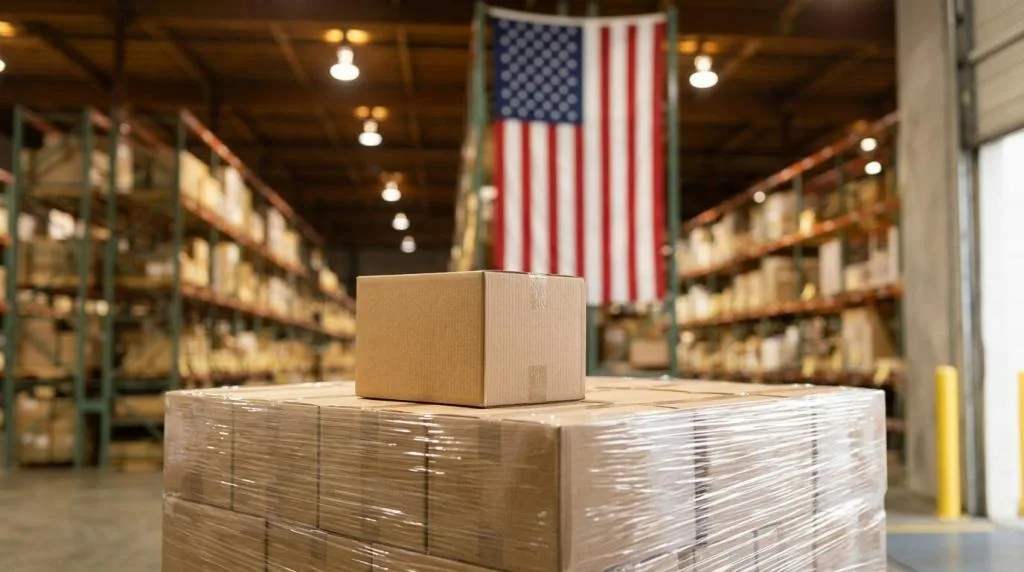
Batch Delivery to Carrier for Faster Ecommerce Shipping
When an online order is packed and labeled, the next few minutes matter more than many teams realize. A parcel can be perfectly prepared and still lose time if the warehouse-to-carrier handoff is slow, inconsistent, or full of manual checks. For ecommerce brands with rising volume, that handoff often becomes the dividing line between same-day movement and next-day delay.
Batch delivery to carrier is one of the clearest ways to tighten that process. Instead of moving parcels one by one, the operation groups completed shipments into organized handoffs that match carrier pickup routines, manifest requirements, and label workflows. The result is not just speed. It is cleaner execution at the exact point where fulfillment becomes transportation.
What batch delivery to carrier means in ecommerce fulfillment
In practical terms, batch delivery to carrier means multiple orders are prepared, labeled, verified, and handed off together rather than as isolated shipments. The batch may be tied to a pickup window, a carrier service level, a destination region, or a system-generated shipping file. The core idea is simple: fewer interruptions, fewer repeated steps, and a more structured release from warehouse operations to carrier custody.
That sounds operational, because it is.
A strong batch process connects three separate activities that often live in different systems: order release, shipment creation, and physical pickup. When those activities are coordinated, teams avoid the stop-and-start rhythm that slows many ecommerce warehouses. Orders move from queue to label to staging area with less friction, and carriers receive freight in a format that is easier to accept and scan.
This is why the phrase matters to growing brands. Batch delivery is not just a status update on a tracking page. It is a workflow choice that shapes labor efficiency, shipping cutoff performance, and how reliably packages enter the carrier network.
Why batch delivery improves shipping speed and handoff efficiency
The biggest gain from batching is that it removes repeated administrative work. If staff print labels individually, validate exceptions individually, and hand cartons over in a piecemeal way, the operation burns time at every touchpoint. Batching compresses those touches into a repeatable sequence.
It also supports cleaner carrier acceptance. A grouped handoff is easier to stage at the dock, easier to count, and easier to reconcile against a manifest or system file. That matters because carrier pickups usually run on fixed windows. When the freight is staged and documented before the driver arrives, the transfer is faster and more dependable.
There is also a cost angle. SVDirect notes that last-mile delivery can account for roughly 53% of total shipping expense. Batching will not rewrite last-mile economics by itself, but it can reduce preventable waste around missed pickups, late first scans, and avoidable rework before parcels enter that expensive final leg.
Batching tends to reduce friction in these places:
- Label generation
- Order verification
- Dock staging
- Carrier handoff
- First-scan readiness
How carrier batch shipping and manifest workflows work
Carrier and postal systems do not all treat batching the same way. Some center the process on shipment-file imports. Others focus on manifests and acceptance records. The warehouse still has the same job, which is to produce shipments in a form the downstream network expects.
UPS provides a clear example through its batch file shipping workflow. UPS states that users can create up to 250 shipments at once by uploading a CSV or SSV file. The platform also allows users to preview imported shipments in the Shipping Cart before printing labels, and specific shipment errors can be fixed without re-importing the entire batch. That kind of structure is valuable because it keeps exceptions from derailing the full release.
USPS approaches the problem differently. Postal guidance describes an electronic manifest transmitted on or before the mailing date for USPS Ship parcels. USPS also notes that each piece in a manifest mailing carries a unique ID and postage amount, while verification processes can identify unmanifested packages, duplicate packages, and misshipped errors when the first scan ZIP Code does not match the expected drop-ship location.
The differences matter because a batch is only “fast” if it matches the carrier’s operating logic.
| Workflow area | Example from carrier or postal system | Operational impact |
|---|---|---|
| Batch shipment creation | UPS batch file shipping can create up to 250 shipments from one uploaded file | Faster label creation for grouped orders |
| Pre-print review | UPS Shipping Cart allows preview and targeted edits before labels print | Fewer full-batch reworks |
| Manifest transmission | USPS electronic manifest is sent on or before mailing date | Better visibility and acceptance control |
| Piece-level accountability | USPS manifest records unique IDs and postage by piece | Easier verification against physical mail |
| Recurring pickup model | FedEx regularly scheduled pickups are designed for daily shippers with predictable volume | More stable pickup timing for steady volume |
A sophisticated fulfillment operation builds around these carrier rules rather than forcing a one-size-fits-all shipping flow across every parcel type.
Scheduled carrier pickups and recurring volume planning
Batching parcels is only half the job. The other half is making sure the carrier arrives at the right cadence to keep those batches moving.
FedEx states that regularly scheduled pickups are intended for daily shippers with predictable volume, that they occur every business day, and that at least one package is expected per regularly scheduled pickup. FedEx also requires shipping automation for recurring parcel pickups, including approved shipping software or services. That tells ecommerce brands something important: batching works best when system automation and pickup planning are treated as one operating model, not two separate tasks.
For brands shipping every day, recurring pickup structures create rhythm. Orders can be released against known cutoff times. Warehouse teams can pack to a firm deadline. Customer service can speak more confidently about same-day movement because the transportation handoff is not being improvised each afternoon.
A disciplined pickup plan usually includes a few core controls:
- Pickup window: a consistent time the carrier expects freight to be ready
- Minimum release standard: enough completed orders to justify the batch
- System automation: labels, service selection, and shipment data created inside approved tools
- Exception path: a clear process for orders that miss the main batch cutoff
This is where many scaling brands gain real momentum. Predictable pickups turn shipping speed from a heroic effort into routine execution.
Where batch delivery fits into same-day ecommerce fulfillment
Same-day shipping is often discussed as a warehouse promise, but it is really a coordinated chain of events. Orders must import on time. Inventory must be accurate. Labels must print without delay. The carrier must receive the freight before the service cutoff. Batch delivery sits near the end of that chain, and if it breaks down, the entire promise weakens.
That is why automation matters so much. When ecommerce platforms, order management systems, and carrier tools are connected, batches can be generated with fewer manual decisions. A 3PL that offers same-day order shipping, broad platform integrations, custom API support, and double-verified order accuracy can turn batch delivery into a repeatable system instead of a last-minute scramble. The operational upside is significant for startups and growing brands that cannot afford shipping inconsistency.
No minimum order requirements can matter here as well. Not every brand ships at enterprise volume every day. Some need a process that works for 20 orders on Monday and 400 orders on Friday. A mature batch-delivery workflow should flex with demand while still protecting handoff speed, scan accuracy, and reporting visibility.
In that setting, batch delivery becomes part of a larger fulfillment architecture rather than an isolated warehouse tactic.
Common batch delivery mistakes that slow carrier handoff
Most batch problems are not caused by the idea of batching itself. They come from weak controls around data, timing, and physical staging.
A batch can fail when labels are printed before address issues are resolved, when cartons are not staged by service level, when the manifest count does not match the floor count, or when late orders are injected into a closed batch without a clear exception process. Each mistake adds minutes. Enough minutes turn into missed pickups or delayed first scans.
The most common trouble spots look like this:
- Late order release: picking and packing start too close to carrier arrival
- Manifest mismatch: file totals do not match the actual parcel count
- Mixed staging: services, destinations, or carrier types are blended at the dock
- Weak scan discipline: no proof that every parcel entered the batch
- Manual exception handling: small data errors hold up large groups of orders
USPS verification rules show why this discipline matters. Postal systems can identify unmanifested or duplicate packages, and misshipped errors may be logged if the first scan ZIP Code does not match the expected drop-ship location. In other words, the downstream network is checking the quality of the handoff whether the shipper is ready for that scrutiny or not.
Metrics that show whether batch delivery is working
Teams improve batch delivery fastest when they track a short list of operational metrics rather than relying on anecdotal feedback. The goal is to see whether the batch is moving quickly, accurately, and in sync with carrier timing.
A useful scorecard often includes:
- Batch close time
- Pickup on-time rate
- First-scan latency
- Manifest accuracy
- Orders shipped same day
Those numbers reveal where the process is tight and where it still leaks time. If first scans lag even when packages are staged early, the issue may be the pickup schedule. If same-day shipping slips despite on-time pickups, the delay may be happening upstream in picking, packing, or label creation. If manifest accuracy drifts, the warehouse may need better verification before freight leaves the floor.
For brands that want faster ecommerce shipping, that is the real opportunity. Batch delivery to carrier is not just a shipping term. It is a measurable operating discipline that can sharpen speed, reduce avoidable friction, and make fulfillment performance more dependable as order volume grows.