img not found!
How to Choose a Fulfillment Center: 2026 3PL Guide

How to Choose a Fulfillment Center: 2026 3PL Guide

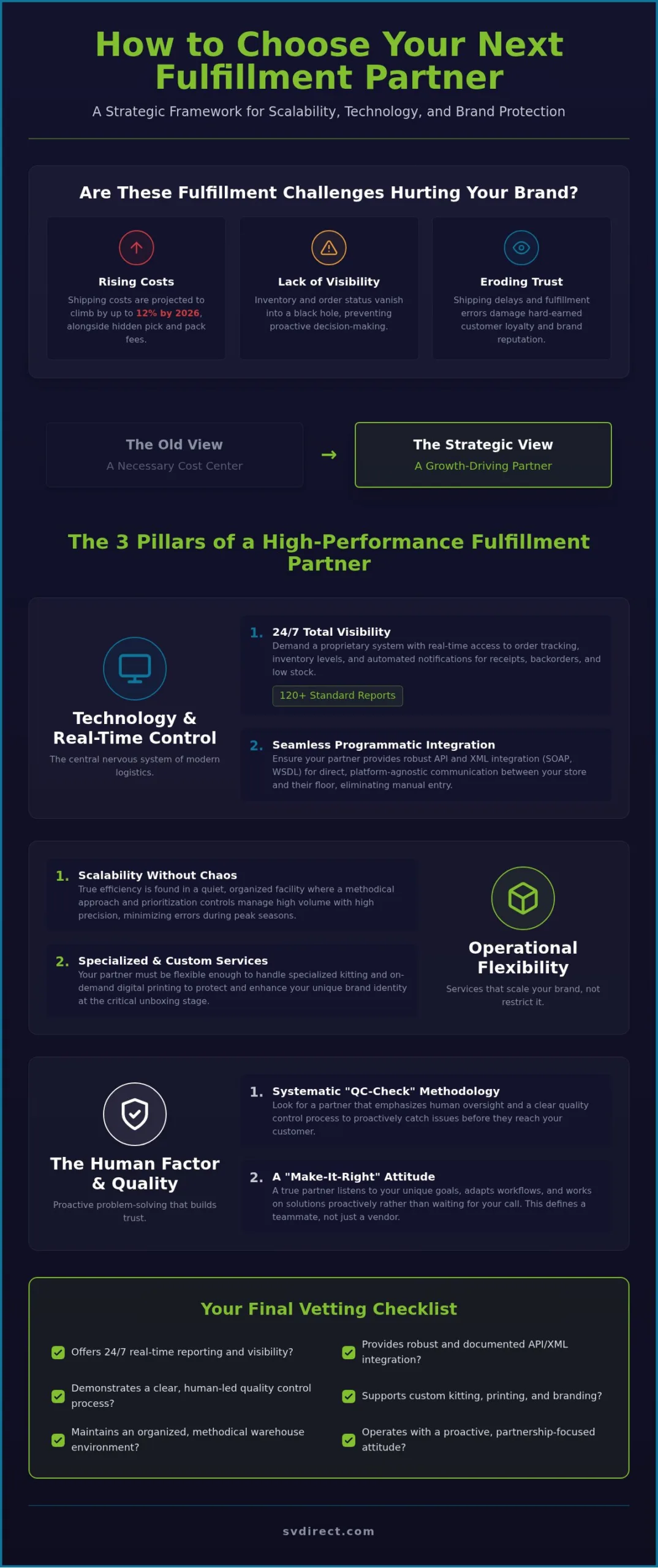
With effective shipping costs climbing by up to 12% in 2026 despite more modest headline rate increases, your logistics partner is no longer just a vendor; they’re a critical factor in your brand’s survival. You’ve likely felt the sting of hidden pick and pack fees or the anxiety that comes when inventory visibility vanishes into a black hole. Mastering how to choose a fulfillment center is about reclaiming that lost control and ensuring your 3PL acts as a steady, reliable hand during periods of rapid growth. It’s frustrating when rigid, automated systems prevent you from adding the custom branding touches your customers expect, especially when shipping delays threaten to erode hard-earned trust.

This guide provides the essential criteria for selecting a partner that operates as a seamless, high-tech extension of your company. We’ll move beyond basic warehousing to explore the technical benchmarks, proactive service models, and the Remote Control visibility you need to lead your industry. You’ll learn how to identify a partner that marries high-tech integration with high-touch precision, ensuring your operations remain organized, efficient, and ready for whatever the 2026 market demands. By the end of this guide, you’ll have a clear framework for vetting partners based on their ability to provide transparency, scalability, and personal commitment.

Key Takeaways

  • Shift your perspective to view a fulfillment partner as a strategic extension of your marketing and sales teams rather than a mere warehousing cost.
  • Ensure total operational visibility by prioritizing partners that offer 24/7 real-time reporting through proprietary systems like Remote Control™.
  • Master how to choose a fulfillment center that provides the flexibility for specialized kitting and on-demand digital printing to protect your brand identity.
  • Look for a systematic “QC-Check” methodology that emphasizes human oversight and proactive problem-solving to maintain customer trust.
  • Audit your technical needs for API and XML integration to guarantee a seamless digital connection between your store and the fulfillment floor.

Beyond Warehousing: The Strategic Role of a Fulfillment Partner

Many brands treat logistics as a simple line item on a budget. It’s time to shift that perspective. A professional Fulfillment house isn’t just a place to store boxes; it’s a strategic asset that can determine your brand’s longevity. When you’re learning how to choose a fulfillment center, you’re actually looking for a partner that acts as a seamless extension of your marketing and sales departments. This is where your digital brand promise meets the physical world.

Think about the moment a customer unboxes their order. That experience represents the final stage of your marketing funnel. If the package is messy or the items are incorrect, your marketing spend and customer acquisition efforts are wasted. A professional partner thinks outside the box of traditional supply chain strategy to ensure every shipment reinforces your reputation. Transitioning from in-house logistics to professional Silicon Valley 3PL fulfillment services marks the shift from merely surviving growth to managing it with absolute precision.

Scalability Without the Hectic Atmosphere

High-volume warehouses are often defined by chaos and noise. However, true efficiency isn’t found in a frantic pace. It’s found in a quiet, organized facility where every movement is deliberate and tracked. This methodical approach is vital when you scale. During peak seasons, a calm environment leads to significantly fewer errors and higher precision. You need a partner that uses sophisticated prioritization controls to manage tight deadlines regardless of volume. This internal stability ensures your business handles sudden surges in orders without sacrificing the quality your customers expect.

Aligning with the Nine Promises of Service

Flexibility is the cornerstone of a successful long-term partnership. Rigid, cookie-cutter procedures often fail businesses with complex needs or custom branding requirements. It’s essential to find a partner who listens to your unique goals and adapts their workflow to meet them. This human element is what differentiates a vendor from a teammate. A “make-it-right” attitude means that when challenges arise, your partner is already working on a proactive solution rather than waiting for your call. Understanding how to choose a fulfillment center means prioritizing a relationship built on these core promises of reliability, transparency, and personal commitment.

Evaluating Technology: Integration and Real-Time Control

Technology serves as the central nervous system of modern logistics. When you’re researching how to choose a fulfillment center, you’ll find that the quality of their digital interface is just as critical as the physical security of their warehouse. You need 24/7 access to order tracking and inventory levels to make informed decisions at any moment. Generic, off-the-shelf software often lacks the depth required for complex operations. This is why a proprietary system like Remote Control™ is superior. It provides over 120 standard reports, allowing you to analyze everything from shipping velocity to historical trends. You shouldn’t have to wait for a manual update. Automated notifications for receipts, backorders, and low inventory levels keep you proactive, ensuring you never miss a beat in your supply chain.

Seamless Programmatic Integration

A truly modern fulfillment partner speaks the same language as your tech team. Relying on a simple graphical user interface (GUI) is fine for occasional checks, but high-volume businesses require a programmatic interface. We utilize XML, SOAP, and WSDL to ensure platform-agnostic communication that integrates directly with your existing systems. This setup allows your developers to use specific methods like AddOrder and GetOrderInfo for real-time transaction processing. It eliminates manual data entry and reduces the risk of human error. Our Remote Order Management system is designed to act as a digital bridge between your storefront and our operational floor.

Customizing the Web Interface

Your fulfillment portal should feel like a part of your brand, not a third-party afterthought. We offer the ability to customize the web interface to match your corporate branding. This is especially valuable for B2B users or internal teams who require a “company store” look and feel. Beyond aesthetics, this interface provides the real-time inventory visibility necessary to prevent the disaster of overselling. When your digital storefront and warehouse are perfectly synced, you protect your customer trust and your bottom line. If you’re ready to see how a high-tech partnership can stabilize your growth, you can explore our customized logistics solutions today.

Operational Flexibility: Specialized Services that Scale Brands

Standard pick-and-pack models often fall short when a business requires more than just moving a box from one shelf to another. If your brand relies on complex subscription boxes or promotional kits, “cookie-cutter” solutions will likely lead to assembly errors and inconsistent presentation. When you evaluate how to choose a fulfillment center, look for a facility that excels in kitting and hand assembly. This level of operational flexibility allows you to scale without compromising the intricate details that define your brand identity. For high-value electronics or sensitive healthcare products, we provide serial number tracking to ensure every unit is accounted for throughout its entire lifecycle. Our Silicon Valley 3PL fulfillment services are built around this need for precision and bespoke problem-solving.

Integrating On-Demand Digital Printing

Integrating logistics with on-site production creates a powerful synergy that most providers ignore. We utilize HP Indigo 5500 digital presses, which use liquid ink technology rather than standard dry toner. This produces a 230 line screen resolution, delivering offset-quality results with the speed of digital production. Because these sheets are “dry-to-touch” immediately upon leaving the press, we can move them directly into kitting or assembly without the delays associated with traditional offset drying times. Our print on demand services allow you to maintain low inventory levels while ensuring your marketing materials are always current and professional.

Variable Data Printing for Personalization

Personalization is a key driver of customer retention in 2026. Variable Data Printing (VDP) enables us to print unique copy, names, or targeted offers on every individual sheet within a single production run. Imagine a customer opening a package to find a personalized insert that addresses them by name and suggests products based on their specific purchase history. This level of attention significantly enhances the unboxing experience and builds long-term loyalty. VDP is highly affordable, typically costing only slightly more than static printing. You can learn more about using these techniques to drive physical engagement in our guide to direct mail marketing services.
How to Choose a Fulfillment Center: 2026 3PL Guide

The Human Factor: Quality Control and Proactive Problem Solving

While robotics and AI dominate modern logistics headlines, the human element remains the ultimate fail-safe for brand integrity. High-performance fulfillment depends on people who are deeply committed to the outcome of every shipment. When you’re evaluating how to choose a fulfillment center, don’t overlook the culture of the warehouse floor. We employ a rigorous “QC-Check” methodology, which is a systematic inspection process that occurs at multiple points along the assembly line. This ensures that every kit and package meets your exact specifications before it’s sealed. It’s the difference between catching a mistake on the dock and hearing about it from an unhappy customer.

The physical environment of a warehouse is a direct indicator of its precision. A quiet, organized facility is a mark of operational maturity and efficiency. In chaotic, high-noise environments, errors are almost inevitable. By maintaining a calm and structured workspace, our dedicated team can focus on complex hand assembly projects with total concentration. This proactive stance allows us to identify potential issues before they become shipping delays, protecting the trust you’ve built with your audience. Proactive problem solving is always superior to reactive customer service, as it prevents the damage to your reputation before it occurs.

Anticipating Conflicts Before They Impact Projects

We prioritize a “listen first” approach to client relationships. By taking the time to understand your specific business goals, our experienced staff can anticipate conflicts that an automated system would simply miss. For example, if an order configuration appears unusual or a shipping destination seems incorrect, a human teammate will flag it for review before the label is even printed. This direct human connection is a powerful differentiator in a tech-saturated market. We explicitly reject impersonal, automated help desks, ensuring you always have a steady, wise hand guiding your logistics operations.

Sustainable and Green Fulfillment Initiatives

Sustainability is a core expectation for brands in 2026. Our green printing processes are designed to be environmentally responsible by eliminating the need for traditional film, plates, and toxic chemicals. By utilizing advanced digital technology, we significantly reduce the waste associated with overproduction. We also maintain partnerships for the responsible recycling of digital press hardware and offer 30% recycled or FSC-certified paper options. These initiatives allow you to align your physical operations with your brand’s environmental values without sacrificing the high-quality resolution your customers expect.

Final Selection: A Framework for Choosing Your 3PL

Selecting a logistics partner is one of the most consequential decisions for your brand’s operational health. This framework simplifies how to choose a fulfillment center by focusing on technical depth, physical precision, and human commitment. Moving beyond simple storage requires a partner that views your inventory as their own. By following a structured vetting process, you ensure that your 3PL acts as a steady hand during periods of rapid growth rather than a bottleneck that restricts your potential.

Start by auditing your technical requirements. A modern partner must offer programmatic interfaces like XML and SOAP to provide the 24/7 real-time reporting your team needs for data-driven decisions. Next, evaluate your specialized service needs. If your business requires intricate kitting and assembly or on-demand digital printing, a standardized vendor won’t suffice. You need a facility that integrates production and logistics under one roof. Verify their quality control procedures by asking for details on systematic inspections like our proprietary QC-Check process. Assessing the facility environment is also vital. A quiet, organized workspace is a reliable indicator of staff expertise and operational maturity. Finally, review the provider’s partnership philosophy. Ensure their values align with a model of total flexibility and bespoke problem solving.

Critical Questions for Your Potential Partner

Vetting a partner requires asking direct questions about their operational benchmarks. Inquire about their inventory accuracy rates and how their QC-Check methodology prevents systematic errors. If your brand uses high-quality marketing inserts, ask about the drying time of their printed materials. Using liquid ink technology allows for immediate handling, whereas traditional methods might extend your lead times. For brands dealing with sensitive inventory, verify if they offer serial number tracking and secure warehousing for high-value electronics. These details reveal whether a provider is truly equipped for complex, high-stakes fulfillment.

The Importance of a Silicon Valley Edge

Proximity to an innovation hub matters. Being located in a center of global connectivity impacts how a fulfillment partner leverages technology. This geographic identity serves as a symbol of innovation, ensuring your logistics strategy benefits from the same forward-thinking energy that drives the tech sector. This edge is particularly valuable when managing global shipping services, where technological integration and proactive problem solving are required to navigate international complexities. A partner rooted in an innovative environment is more likely to offer the sophisticated Remote Control visibility necessary to manage a modern, distributed supply chain with confidence.

Securing Your Brand’s Operational Future

Mastery of how to choose a fulfillment center is the difference between a business that merely survives and one that dominates its market. You’ve learned that a 3PL should be more than a warehouse; it’s a strategic extension of your team. By auditing technical requirements for 24/7 Remote Control™ visibility and prioritizing a proprietary QC-Check systematic inspection process, you protect your customer trust and your bottom line. Specialized capabilities like complex kitting and high-resolution HP Indigo digital printing allow your brand to maintain its unique identity as you scale globally.

Choosing a partner who rejects automated interactions in favor of direct human oversight ensures that your most complex projects receive the attention they require. This steady, methodical approach to logistics alleviates the stress of growth, allowing you to focus on innovation while we handle the precision of your physical operations. We remain committed to your long-term stability through proactive problem solving and operational transparency.

Building a resilient supply chain requires a partner who values precision and personal commitment as much as you do. We’re ready to provide the steady hand and innovative technology your business deserves to thrive in 2026 and beyond.

Frequently Asked Questions

How do I know if my business is ready for a fulfillment center?

You’re ready when order volume prevents you from focusing on core growth or when shipping errors start damaging customer trust. If you’re spending more than 10 to 15 hours a week on packing, it’s time to learn how to choose a fulfillment center. Outsourcing allows you to leverage expert infrastructure and professional kitting services. This transition ensures your brand maintains a steady hand during rapid expansion.

Is variable data printing expensive for personalized fulfillment?

Variable data printing (VDP) is highly cost-effective and typically costs only slightly more than static printing. It allows for unique names, offers, or images on every sheet within a single run. By integrating VDP into your fulfillment workflow, you create a high-touch unboxing experience that drives customer retention. This small investment often yields a high return by turning standard shipments into personalized marketing assets.

What is the difference between digital and offset quality in 2026?

Modern digital technology, such as the HP Indigo 5500, delivers a 230 line screen resolution that rivals traditional offset quality. Unlike older toner-based systems, liquid ink technology provides sharp details and vibrant colors. Digital printing eliminates the need for expensive plates and film, making it ideal for short runs and on-demand projects. It offers the precision of offset with the speed and flexibility required for modern logistics.

How long does it take for digital prints to be ready for shipping?

Digital prints are ready for shipping almost immediately because they are “dry-to-touch” upon leaving the press. This eliminates the lengthy drying times associated with traditional offset printing, which can delay projects by several days. Our integrated workflow allows printed materials to move directly from the press to the kitting and assembly line. This speed is essential for maintaining tight deadlines and responding quickly to market demands.

Can a fulfillment center handle complex kitting and hand assembly?

A specialized fulfillment center is specifically designed to manage intricate hand assembly and multi-item kitting projects. While automated systems handle standard orders, human expertise is required for precision tasks like subscription box assembly or promotional kits. By utilizing a systematic QC-Check methodology, we ensure every component is placed correctly. This high-touch service acts as a seamless extension of your brand’s commitment to quality and detail.

What technical standards are used for 3PL integration?

We utilize platform-agnostic technical standards like XML, SOAP, and WSDL to ensure seamless programmatic integration. These protocols allow your developers to use methods like AddOrder and GetOrderInfo for real-time transaction processing. This approach provides 24/7 visibility through our Remote Control™ system, which offers over 120 standard reports. Understanding these technical capabilities is a vital part of learning how to choose a fulfillment center for your digital brand.

How does a fulfillment center ensure inventory accuracy?

Inventory accuracy is maintained through a combination of proprietary tracking software and systematic human oversight. We use a QC-Check methodology that inspects inventory at multiple points, from receiving to final assembly. Our Remote Control™ system provides real-time visibility into stock levels, preventing the risks of overselling or unexpected backorders. This methodical approach in a quiet, organized facility ensures that your physical stock always matches your digital records.

What are the environmental benefits of digital printing in logistics?

Digital printing significantly reduces environmental impact by eliminating the toxic chemicals, film, and plates used in traditional offset methods. It supports a “print-on-demand” model, which prevents the waste of overproduction and obsolete inventory. We also offer sustainable options like 30% recycled and FSC-certified paper. These initiatives allow you to align your logistics operations with modern green standards while maintaining a high-resolution, professional brand presentation.
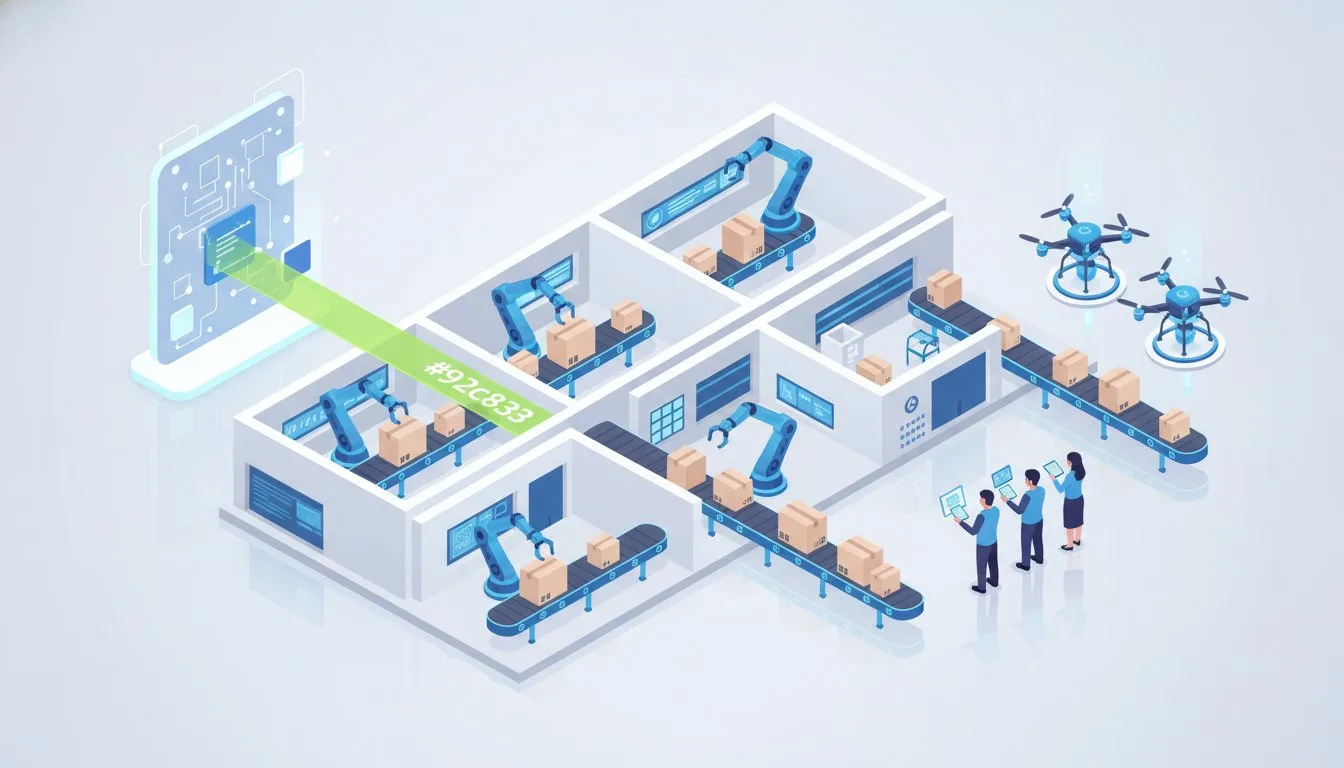
WooCommerce Fulfillment Services: The 2026 Strategic Guide to Scaling Your Online Store

WooCommerce Fulfillment Services: The 2026 Strategic Guide to Scaling Your Online Store

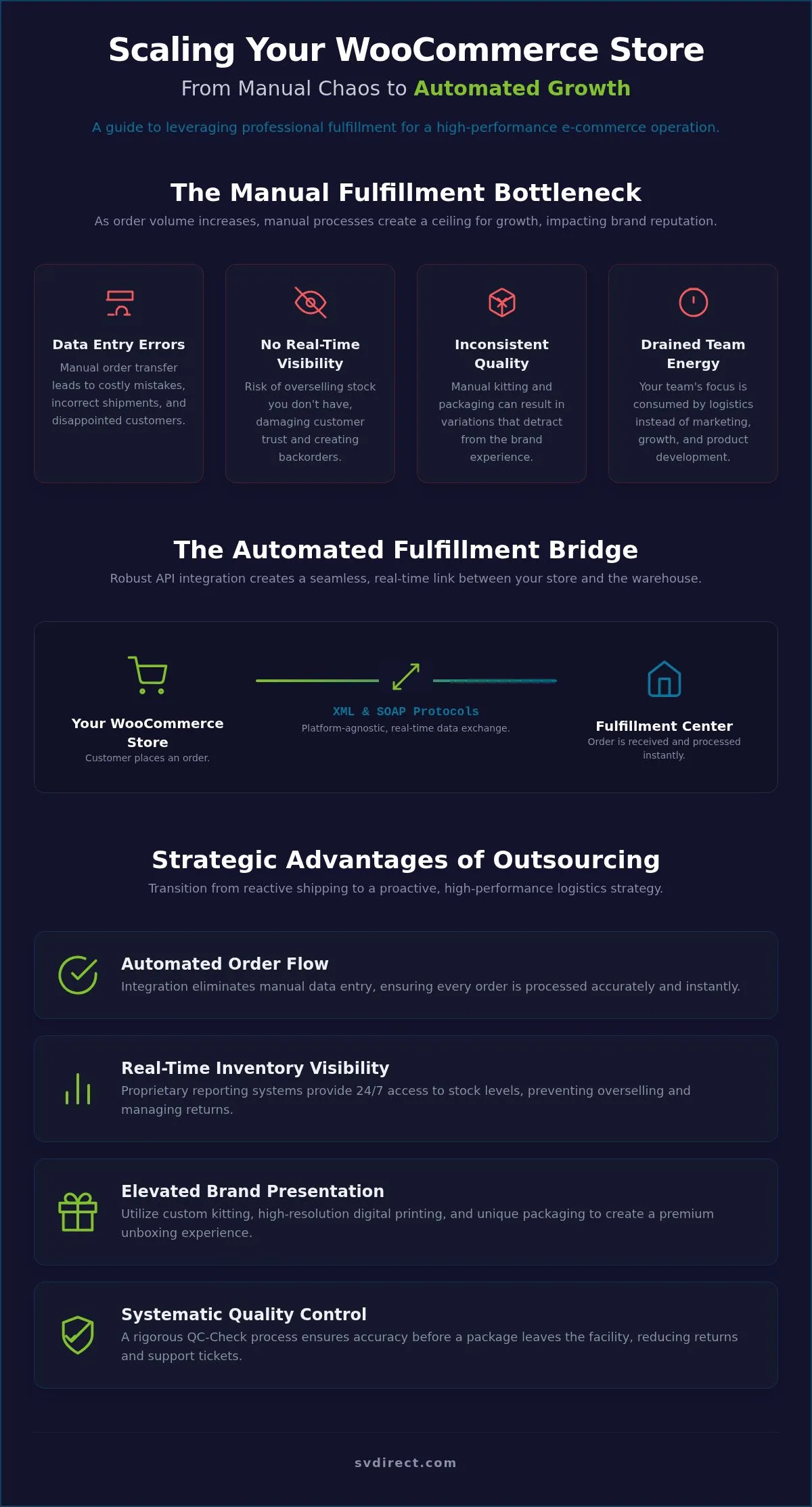
What if the very growth you’ve worked so hard to achieve becomes the bottleneck that stifles your brand’s reputation? It’s a common crossroads for successful e-commerce leaders who find that manual data entry and shipping errors are suddenly draining their team’s energy. You’ve built a beautiful storefront, but scaling effectively requires a bridge to the physical world that doesn’t sacrifice precision. By integrating professional woocommerce fulfillment services, you can automate your order flow and regain the real-time inventory visibility necessary for the 2026 market.

We understand that your products are more than just SKUs; they’re promises made to your customers. You deserve a partner that treats complex kitting and custom packaging with the same care you do. In this guide, you’ll learn how to transition from reactive shipping to a proactive logistics strategy that reduces costs while elevating your brand presentation. We’ll walk through the technical integrations and systematic quality checks that ensure every package serves as a high-performance touchpoint for your business. This is about more than just moving boxes; it’s about building a stable foundation for your company’s future.

Key Takeaways

  • Learn how to automate your order flow by integrating professional woocommerce fulfillment services to eliminate manual data entry errors.
  • Gain real-time inventory visibility through advanced XML and SOAP protocols that connect your digital storefront directly to a proprietary reporting system.
  • Elevate your brand presentation by integrating high-resolution digital printing and liquid ink technology into your custom kitting and packaging workflow.
  • Reduce shipping overhead and transit times by leveraging managed postage solutions and a deliberate, organized logistics methodology.
  • Discover how to evaluate a fulfillment partner as a proactive extension of your team, ensuring flexibility for bespoke projects rather than rigid, automated interactions.

What Are WooCommerce Fulfillment Services and Why Do You Need Them?

WooCommerce fulfillment represents the entire order fulfillment process that begins the moment a customer clicks “buy” on your WordPress site. It encompasses receiving, processing, and shipping products with precision. Many growing brands start by packing boxes in a garage, but as order volume increases, this manual approach creates a ceiling for growth. Utilizing professional woocommerce fulfillment services allows you to shift from a reactive, hectic environment to a methodical, scalable operation. Effective woocommerce fulfillment services bridge the gap between your digital presence and the physical package arriving at a customer’s door.

Think of your fulfillment partner as a proactive extension of your internal team. They shouldn’t just be a vendor; they should be a high-performance partner that understands your brand’s unique needs. This means looking “outside the box” to include high-quality marketing inserts or custom kitting that makes every delivery feel like a premium experience. When your logistics team, backed by decades of experience since 1999, anticipates order conflicts before they impact a project, you gain the quiet confidence needed to scale without stress.

The Limitations of Manual Order Processing

Scaling a WooCommerce store requires moving beyond the constraints of a home office or small warehouse. Manual data entry is often the first point of failure during peak sales seasons. Without real-time synchronization between your storefront and your inventory, you risk selling items you don’t have in stock. These errors damage customer trust and lead to expensive returns. Relying on manual labor for complex tasks like kitting or custom assembly often results in inconsistencies that a professional system can eliminate.

The Value of Professional 3PL Partnerships

Partnering with a seasoned provider gives you immediate access to established infrastructure designed for national and global reach. You benefit from sophisticated quality control measures, such as the systematic QC-Check process, which ensures accuracy before a package ever leaves the facility. These 3PL fulfillment services handle the mechanical nature of logistics, freeing your internal team to focus on high-level marketing and product development. By outsourcing these operations, you ensure that your physical delivery matches the high-tech efficiency of your digital storefront.

How API Integration Bridges Your Store and the Warehouse

Modern woocommerce fulfillment services rely on more than just a basic plugin; they require a robust technical bridge that ensures your digital storefront and physical warehouse operate as a single unit. While many platforms suggest simple extensions, a professional 3PL uses platform-agnostic communication via XML and SOAP protocols. This standardized approach ensures your store speaks the same language as the fulfillment center, regardless of future software updates or site customizations. This real-time data exchange transforms your operation from a series of manual tasks into a programmatic, automated flow.

This integration provides the quiet confidence that comes from total transparency. By moving away from rigid, cookie-cutter plugins, you gain a system that adapts to your specific business logic. It’s a high-performance solution that handles the mechanical nature of data transfer while you focus on the human element of growing your brand.

The Role of Web Services in Fulfillment

Web services allow external applications to communicate seamlessly without manual intervention. When a customer completes a purchase, the “AddOrder” method programmatically moves that data from your WooCommerce cart directly to the warehouse floor. It’s an instantaneous transfer that eliminates the risk of manual data entry errors. Once the package is in motion, the “GetOrderInfo” method retrieves real-time shipping data and tracking numbers, pushing them back to your dashboard. This cycle also effectively manages reverse logistics, ensuring that returns are processed with the same systematic precision as outbound shipments.

Remote Control™: Your Window into the Warehouse

Visibility shouldn’t stop at the checkout page. A proprietary online data management system provides 24/7 access to your physical operations from anywhere in the world. With the Remote Control™ system, you can access over 120 standard reports that monitor inventory levels, order history, and project status. These aren’t just static numbers; they’re actionable insights that allow you to anticipate needs before they become conflicts.

The system also provides automated notifications for low inventory levels and backorders, acting as a steady hand that monitors your stock around the clock. You can even customize the web interface to match your corporate brand identity, ensuring that your internal tools feel like a true extension of your company. This level of technical integration turns woocommerce fulfillment services into a proactive marketing asset. If you’re ready to see how a high-performance partner can streamline your digital storefront, you can request a free quote to discuss your specific integration needs.

Strategic Advantages of Outsourcing WooCommerce Logistics

Transitioning your logistics to a professional facility replaces the daily chaos of manual packing with a steady, methodical rhythm. You’ve built a brand that deserves a stable foundation, and professional woocommerce fulfillment services provide exactly that. By moving away from a hectic home office or small warehouse, you adopt a deliberate methodology backed by an extensive operational history dating back to 1999. This shift doesn’t just save space; it creates a high-performance environment where your physical delivery finally matches the quality of your digital storefront.

High-volume deadlines shouldn’t cause panic. A seasoned partner uses established infrastructure to handle complex projects regardless of their scale. You gain immediate cost-efficiency through managed postage and discounted shipping rates, allowing you to reinvest that capital into marketing. Most importantly, a proactive partner identifies order conflicts before they reach the customer. This “steady hand” approach alleviates the stress of growth, ensuring that your expansion is supported by precision and a personal commitment to your brand’s reputation.

Precision Through the QC-Check Process

Accuracy is never an accident. It’s the result of the systematic QC-Check process that governs every stage of assembly and packing. In an organized facility, quiet confidence replaces the noise of inefficient business models. Every project benefits from systematic inspections that uphold a “make-it-right” attitude. This level of detail eliminates shipping errors that often plague in-house operations, ensuring that your customers receive exactly what they ordered, perfectly presented every time. This rigorous attention to detail is a core component of 3PL fulfillment services that prioritize quality over sheer speed.

Global Reach and Reliable Shipping

Managing a global footprint requires navigating complex shipping lanes for both B2B and B2C channels. Whether you’re shipping domestic orders or managing international logistics, you need a partner that remains at the cutting edge of innovation. A strategic location serves as a symbol of global connectivity, allowing you to leverage the latest technological advancements in the industry. Effective returns management is also essential; it builds customer trust by making the process seamless and professional. By outsourcing these logistics, you ensure that your brand remains accessible and grounded, no matter how far your products travel. This proactive stance ensures your woocommerce fulfillment services act as a true extension of your company’s values.

WooCommerce Fulfillment Services: The 2026 Strategic Guide to Scaling Your Online Store

Advanced Fulfillment: Digital Printing and Custom Kitting

Scaling an online store involves more than just shipping boxes. It requires a high-performance partner that can turn every delivery into a marketing asset. Advanced woocommerce fulfillment services integrate on-demand digital printing directly into the fulfillment workflow. This allows you to include personalized inserts or custom literature without the need for massive pre-printed inventory. By using Variable Data Printing (VDP), you can tailor messages to specific customer segments, creating a bespoke experience that builds long-term loyalty. This proactive approach ensures your physical branding remains as agile as your digital marketing campaigns.

The choice of technology matters for brand perception. Liquid ink technology provides a distinct advantage over standard toners used by many basic facilities. It produces a professional, high-end feel that matches the quality of your products. This attention to detail ensures that the physical touchpoint of your brand is just as sophisticated as your digital storefront. When your logistics partner manages these elements in-house, you eliminate the delays and communication gaps often found when using multiple vendors.

On-Demand Printing with the HP Indigo 5500

We utilize the HP Indigo 5500 to deliver offset-quality results within the fast-paced fulfillment cycle. This press achieves a 230 line screen resolution, providing sharp, vibrant images for your marketing materials. Because it uses real liquid ink technology, the output is dry immediately. This efficiency allows for instant handling and insertion into your orders, preventing any delays in the shipping process. It’s a high-tech solution that supports the rapid pace of modern eCommerce.

This approach is also grounded in sustainability. Digital printing eliminates the need for physical plates and harsh chemicals associated with traditional offset methods. You can print exactly what you need, when you need it, reducing waste and keeping your marketing collateral current. This seamless integration of print-on-demand capabilities ensures your fulfillment operation remains agile and responsive to market changes.

Complex Kitting and Hand Assembly

Bespoke projects often require a human touch that automated systems can’t replicate. Whether you’re launching a subscription box or a high-value promotional kit, systematic assembly is crucial. Our team manages complex kitting for a variety of industries, including software packages, apparel, and healthcare materials. We prioritize precision, ensuring that every kit is assembled according to your exact specifications.

Delicate or high-value items benefit from careful hand assembly. This process ensures that every component is placed exactly where it belongs, maintaining a professional brand presentation. For a deeper look at how these processes streamline your operations, see our guide on Kitting and Assembly Services. This meticulous approach to physical operations is what sets elite woocommerce fulfillment services apart from basic shipping vendors.

Choosing the Right Partner for WooCommerce Fulfillment

Selecting a partner for your woocommerce fulfillment services shouldn’t be a transactional decision based on price alone. It’s about finding a steady hand that understands the high-stakes nature of growing a business. A partner with a history dating back to 1999 brings a level of stability and expert-level service that automated platforms simply cannot match. You need an organization that views itself as a proactive extension of your team, not just a vendor moving boxes. This partnership allows you to alleviate the stress of growth through precision and personal commitment. When you choose a provider that prioritizes the human element, you gain a high-performance partner that remains accessible and grounded.

Rigidity is the enemy of innovation. Many providers force you into cookie-cutter procedures that stifle your brand’s unique needs. Instead, look for a partner committed to total flexibility and bespoke problem-solving. Evaluating a provider based on their “Nine Promises” of service ensures they prioritize precision over mere volume. This human oversight is a powerful differentiator in a market saturated with impersonal interactions. Choosing the right woocommerce fulfillment services means selecting a team that values transparency and directness, ensuring your physical operations are just as organized as your digital communication.

Questions to Ask Your Potential 3PL

Before committing to a provider, you must ensure their infrastructure can support your specific trajectory. Ask direct questions to gauge their operational readiness and technical capabilities:

  • Do you provide 24/7 real-time access to my inventory and order data through a proprietary reporting system?
  • Can you handle variable data printing for my marketing collateral to ensure a professional brand presentation?
  • What is your specific process for quality control and systematic error prevention?

A partner who can answer these questions with specific details about their QC-Check process or liquid ink printing technology demonstrates the seasoned professionalism your brand deserves. This clarity ensures that your store can scale without the bottlenecks of shipping errors or inventory blind spots.

The Silicon Valley Direct Difference

The marriage of technology, customer service, and marketing expertise creates a high-performance environment. Long-term staff retention serves as a hallmark of internal stability, ensuring that the people handling your products are seasoned experts. Our proactive attitude is backed by physical infrastructure and human expertise rather than just marketing abstractions. We take the time to explain the rationale behind our specific processes, from inventory management to global logistics, guiding you from a state of curiosity to informed confidence.

By focusing on building long-term partnerships rather than transactional relationships, we ensure your physical operations are just as organized as your digital strategy. We invite you to explore our Silicon Valley 3PL Fulfillment Services to see how we bridge the gap between your digital storefront and physical delivery with quiet confidence and operational readiness.

Future-Proofing Your Store Through Strategic Logistics

Scaling your brand requires a transition from manual effort to automated precision. Integrating professional woocommerce fulfillment services allows you to bridge the gap between digital storefronts and physical delivery. We’ve discussed how technical integrations like XML and SOAP ensure your data flows without error, while high-resolution tools like the HP Indigo 5500 Digital Press turn every package into a premium marketing touchpoint.

Since 1999, we’ve focused on being more than a vendor. We act as a steady hand and a proactive extension of your team. With our proprietary Remote Control™ system and its 120 plus standard reports, you maintain total visibility over your inventory around the clock. You don’t have to navigate the complexities of global logistics alone. A partnership grounded in multi-decade experience provides the stability you need to focus on growth.

It’s time to move beyond transactional shipping and embrace a deliberate, organized methodology that respects your time and your brand’s reputation. We invite you to experience the difference that precision and personal commitment can make for your business.

We look forward to helping you achieve a seamless and scalable future for your online store.

Frequently Asked Questions

How does WooCommerce integrate with a fulfillment center?

Integration occurs through Web Services using XML and SOAP protocols to create a programmatic bridge between your storefront and the warehouse. When a customer completes a purchase, the “AddOrder” method transmits data instantly to our proprietary system. This automation eliminates the risks associated with manual data entry and ensures that order details move from your digital cart to the physical floor without technical friction. It’s a high-performance solution for modern eCommerce growth.

What is the difference between a fulfillment plugin and a 3PL service?

A fulfillment plugin is a software tool that facilitates data transfer, while a 3PL service provides the physical infrastructure and expertise to handle your inventory. Professional woocommerce fulfillment services offer the warehouse space, labor, and quality control systems required to ship products accurately. While plugins automate the digital “handshake,” a 3PL partner acts as a proactive extension of your team, managing the actual assembly, kitting, and delivery of your physical goods worldwide.

Can I include custom marketing inserts in my WooCommerce orders?

You can include high-quality marketing inserts through on-demand digital printing integrated directly into the fulfillment cycle. By utilizing the HP Indigo 5500 Digital Press, we produce offset-quality inserts that are added to your packages during the kitting process. This allows you to personalize the customer experience without the overhead of storing pre-printed materials. Each insert uses real liquid ink for a professional brand presentation that reflects your company’s standards and attention to detail.

How do I track my inventory levels in real-time?

You track inventory through a proprietary online data management system like Remote Control™. This platform provides 24/7 visibility into your stock levels and order history through over 120 standard reports. Automated notifications alert you to low inventory or backorders, allowing you to manage your storefront proactively. This real-time synchronization ensures your WooCommerce store never sells items that aren’t physically available in the warehouse, preventing customer disappointment and helping you maintain a reliable reputation.

Is variable data printing expensive for small eCommerce orders?

Variable Data Printing (VDP) is highly cost-effective because it eliminates the need for expensive plates and traditional setup costs. Digital printing technology allows for short runs and personalized messaging on a per-order basis without a price penalty. This efficiency ensures that even smaller WooCommerce stores can leverage sophisticated marketing collateral. It transforms every package into a targeted marketing touchpoint while keeping your overhead manageable and your inventory lean for maximum flexibility in your campaigns.

What happens if there is a conflict or error in a customer order?

Our proactive approach identifies potential order conflicts before they impact the project. If an error occurs, the systematic QC-Check process and our “make-it-right” attitude ensure swift resolution. A dedicated team monitors the automated flow to catch anomalies in addresses or SKU combinations. This human oversight, combined with technical precision, alleviates the stress of business growth by maintaining a steady hand on all physical operations and protecting your brand’s reputation for accuracy.

Does a professional 3PL handle international shipping for WooCommerce?

Yes, professional woocommerce fulfillment services manage both domestic and international logistics for B2B and B2C shipments. We navigate complex global shipping regulations and leverage managed postage to reduce transit costs. By using our strategic location as a symbol of innovation and global connectivity, we ensure your products reach customers worldwide efficiently. This comprehensive approach includes handling returns and reverse logistics to maintain customer trust across all geographic borders regardless of the shipping distance.

How does the QC-Check process ensure order accuracy?

The QC-Check process is a systematic inspection methodology that governs every stage of assembly and packing. It involves multiple verification points to ensure that the correct items, inserts, and packaging materials are used for every order. By maintaining an organized facility and a methodical rhythm, we eliminate the common bottlenecks of manual processing. This rigorous attention to detail guarantees that your physical delivery matches the high standards of your digital storefront every single time.

Multi-Carrier Shipping Strategy: The 2026 Guide to Resilient Fulfillment

Multi-Carrier Shipping Strategy: The 2026 Guide to Resilient Fulfillment

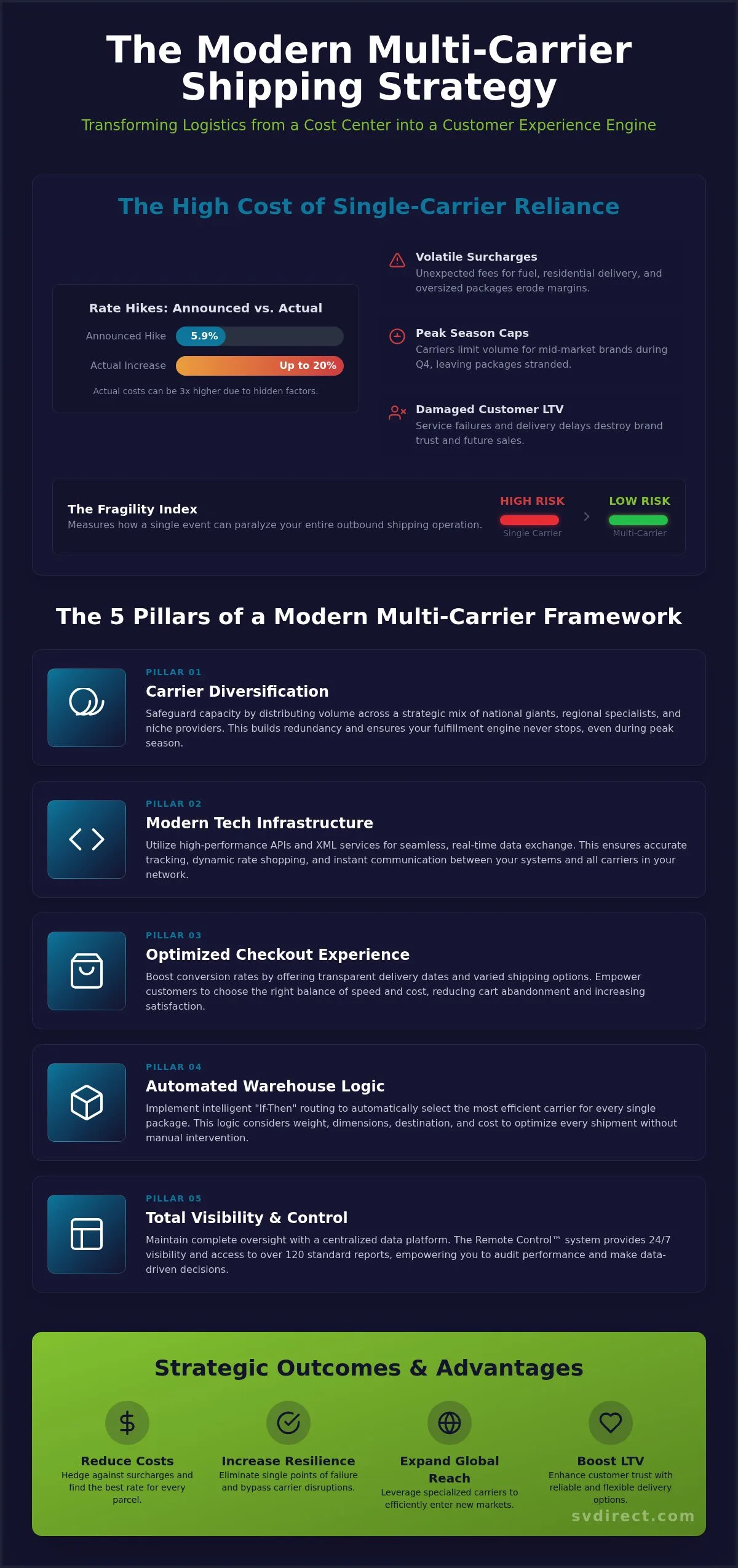
Did you know that while major carriers announced a 5.9% rate hike for 2026, many shippers are seeing their actual costs climb by as much as 20%? Between the USPS shifting its dimensional weight divisor to 139 and new fractional rounding rules, the “average” increase is often a mathematical illusion that erodes your margins. Relying on a single provider isn’t just risky; it’s an operational bottleneck that leaves you vulnerable to surcharges and service gaps. You’ve likely felt the sting of cart abandonment when shipping options are too limited or the anxiety of integrating complex APIs. A modern multi-carrier shipping strategy is no longer a luxury, but a necessity for any brand that values resilience and scale.

You deserve a logistics partner that acts as a steady hand, helping you master the technical framework of carrier diversification without making your operations twice as complicated. This guide provides a clear roadmap to reduce costs, eliminate delivery bottlenecks, and expand your global reach. We’ll examine how to leverage high-performance data to bypass peak season disruptions and transform your shipping operations from a cost center into a customer experience engine.

Key Takeaways

  • Shift from single-carrier dependence to a diversified mix of national and regional specialists to safeguard your capacity during peak seasons.
  • Leverage modern technical infrastructure, including APIs and XML services, to ensure seamless data flow and accurate real-time tracking across all providers.
  • Boost checkout conversion rates by providing customers with transparent delivery dates and varied shipping options that balance speed with cost.
  • Optimize your warehouse workflow by building a multi-carrier shipping strategy around precise parcel audits and automated “If-Then” routing logic.
  • Maintain total oversight of your logistics network with the proprietary Remote Control™ system, offering 120+ standard reports for 24/7 visibility.

Moving Beyond Single-Carrier Dependence in 2026

Many brands operate under the illusion that a single-carrier contract offers a “safe” and simple logistics path. This approach often creates a dangerous single point of failure. A resilient multi-carrier shipping strategy is the strategic distribution of parcel volume across national, regional, and niche carriers to ensure your fulfillment engine never grinds to a halt. It’s about moving from a passive relationship with one provider to an active, data-driven ecosystem. For a deeper look at the foundational concepts of modern logistics, you can explore our global shipping services guide.

We often discuss the “Fragility Index” with our partners. This metric measures how easily a single event, like a regional weather catastrophe or a labor dispute, can paralyze your outbound shipments. If 100% of your volume sits with one carrier, your fragility is at its peak. Experienced Third-party logistics providers recognize that true stability comes from a diversified network. This infrastructure allows you to pivot instantly when one lane becomes blocked or a carrier reaches its limit.

The Risks of Carrier Fragility and Peak Season Caps

During the high-stakes Q4 peak season, national carriers prioritize their largest enterprise accounts. Mid-market brands often face sudden capacity caps, leaving them with packages that won’t be picked up. These service failures do more than delay a single box; they destroy customer lifetime value (LTV). When a customer’s holiday gift arrives late, they don’t blame the carrier; they blame your brand. Building redundancy into your workflow is the only insurance policy that guarantees your products reach the doorstep when promised.

Why ‘Loyalty’ No Longer Guarantees Shipping Savings

It’s a common misconception that deep volume discounts with a single carrier always lead to the lowest total cost. In reality, “hidden” surcharges for fuel, residential delivery, and oversized packages have become highly volatile. These fees can vary by double digits between providers for the exact same route. Rate diversification acts as a financial hedge, allowing you to shop for the best price on a per-package basis. You aren’t just looking for a discount; you’re looking for the most efficient match for every unique parcel profile in your inventory.

Core Components of a Modern Multi-Carrier Strategy

A successful multi-carrier shipping strategy relies on a sophisticated architecture that balances physical logistics with digital precision. It’s not enough to simply sign contracts with multiple providers. You must build a framework that allows these providers to work in concert. This requires a shift from manual carrier selection to an automated ecosystem where data dictates every move. By centralizing your operations, you gain the agility to respond to market shifts without disrupting your warehouse workflow.

The foundation of this approach is data centralization. At Silicon Valley Direct, we provide our partners with a proprietary Remote Control™ system that offers 120+ standard reports. This level of granularity is critical for auditing carrier performance and identifying where surcharges are quietly eroding your profits. When you have 24/7 visibility into every shipment, you can hold carriers accountable to their service level agreements and make informed adjustments to your routing logic.

Integrating Regional and Niche Carriers for Last-Mile Success

While national giants provide a reliable backbone for long-haul transport, regional specialists often offer superior efficiency in high-density delivery zones. These regional players frequently have fewer surcharges and more flexible pickup windows, which can significantly lower your total landed cost. For brands handling specialized inventory, niche carriers provide the expertise required for healthcare compliance or high-value electronics security. Last-mile optimization is the final leg of delivery where costs are highest. By injecting regional players into your mix, you shorten the distance between the warehouse and the doorstep, effectively bypassing the congestion and fees associated with national hubs.

Dynamic Rate Shopping and Automated Routing Logic

The “brain” of a modern fulfillment operation is its automated routing logic. This technology uses APIs and XML-based web services to perform real-time data exchange between your systems and the carriers. In the milliseconds it takes to process an order, the system compares time-in-transit against current freight costs to select the optimal path. This ensures you aren’t overpaying for expedited shipping when a ground service could reach the customer in the same timeframe.

Precision at this stage is vital. Automated address validation plays a key role here, as it prevents failed deliveries and the steep re-routing fees that carriers often apply. For brands seeking this level of technical integration, our remote order management services provide the real-time visibility needed to manage these complex choices. If you’re ready to see how a tailored approach can stabilize your fulfillment, you can request a custom quote to explore your options. This proactive stance ensures your logistics remain a high-performance asset rather than a growing liability.

Optimizing Checkout Conversions through Shipping Choice

While the back-end logic ensures operational stability, the true test of your multi-carrier shipping strategy happens at the checkout. Consumers today demand more than just a “shipped” notification. They want agency over how and when their products arrive. It’s a mistake to assume that free shipping is the only lever for conversion. For many shoppers, speed is a higher priority, especially for deadline-driven needs like gifts or healthcare supplies. By providing a spectrum of options, you cater to both the budget-conscious and the time-sensitive customer.

Maintaining the customer relationship after they click the buy button is equally vital. Branded tracking pages allow you to keep the conversation on your own digital properties rather than sending users to a generic carrier portal. This touchpoint is a prime opportunity to reinforce your brand identity and provide proactive updates. For brands with a global reach, incorporating Delivered Duty Paid (DDP) options removes the cross-border friction that often leads to refused packages and customer frustration. When duties and taxes are settled upfront, the delivery experience remains seamless and predictable.

Offering Choice Without Operational Complexity

Presenting three distinct shipping tiers, including Economy, Standard, and Expedited, gives users the control they crave without overwhelming your warehouse staff. The “Amazon Effect” has trained shoppers to expect precise delivery windows rather than vague estimates. Meeting this expectation requires using your historical carrier data to determine which providers perform best in specific geographic regions. If a regional carrier consistently beats a national giant in the Pacific Northwest, your checkout should reflect that speed. This targeted approach ensures you aren’t just offering choices; you’re offering the most reliable ones available.

Reducing Cart Abandonment via Shipping Transparency

Cart abandonment often spikes when shipping costs appear as a surprise at the final step. Displaying real-time carrier rates early in the process eliminates this friction and builds immediate trust. Even more powerful is the use of Estimated Delivery Dates (EDD). Phrases like “Arrives Wednesday, Oct 14” significantly outperform generic “3-5 business days” language because they provide a concrete promise. Balancing shipping cost recovery with your conversion goals is a delicate act. However, when customers see the direct value of an expedited service through a transparent EDD, they’re often more willing to pay the premium for that certainty.

Multi-Carrier Shipping Strategy: The 2026 Guide to Resilient Fulfillment

Operationalizing Multi-Carrier Logistics in the Warehouse

Executing a multi-carrier shipping strategy requires more than just a software subscription; it demands a disciplined physical workflow. Many providers treat logistics as a “set and forget” digital task, but true resilience is built on the warehouse floor. To move from theory to high-performance execution, your facility must follow a methodical progression that prioritizes data accuracy and physical precision.

Operationalizing this framework involves five essential steps:

  • Step 1: Audit your parcel profile. Analyze your weight, dimensions, and destination clusters to identify which carriers offer the most efficient lanes for your specific inventory.
  • Step 2: Define “If-Then” routing rules. Program your Order Management System (OMS) to automatically assign carriers based on cost, speed, and reliability targets.
  • Step 3: Implement a systematic QC-Check. Establish a verification process to ensure the correct carrier label is applied to the right parcel every time.
  • Step 4: Integrate value-added services. Use kitting and assembly to optimize package sizes and reduce dimensional weight surcharges.
  • Step 5: Monitor performance daily. Use real-time reporting to track carrier delivery times and surcharge accuracy, allowing for immediate adjustments.

Automating Carrier Selection Rules via Web Services

Modern fulfillment relies on seamless communication between your storefront and the warehouse. We utilize SOAP and XML protocols to allow for programmatic logistics that scale with your order volume. By using specific methods like “AddOrder” to ingest data and “GetShippingActivity” for real-time updates, we eliminate the friction of manual data entry. This technical integration also enables “batch delivery to carrier” logic. This streamlines end-of-day pickups by grouping orders by provider, ensuring that every package is ready for the correct driver at the exact right time.

The Role of Human Oversight in Quality Control

While technology provides the framework, human oversight provides the precision. We believe a quiet, organized facility produces fewer errors than a frantic, fully automated environment. Our team practices proactive problem solving, often catching a carrier conflict or a label discrepancy before the package even leaves the station. This human touch is especially critical when coordinating on-demand digital printing. Our specialists ensure that personalized inserts or destination-specific literature match the shipping destination perfectly. This blend of high-tech logic and high-touch care ensures your brand’s reputation remains untarnished.

Executing Global Strategy with Silicon Valley Direct

Choosing a partner to execute your multi-carrier shipping strategy is a decision that impacts every facet of your business growth. At Silicon Valley Direct, we don’t view ourselves as a transactional vendor. We operate as a dedicated extension of your team. With over 25 years of operational history since our founding in 1999, we’ve seen the industry evolve from simple parcel delivery to the complex, data-driven ecosystem it is today. We provide the steady hand and physical infrastructure needed to turn your logistics goals into a competitive advantage. Our team consists of long-term professionals who understand that your success is our success.

Our proprietary Remote Control™ system serves as the central nervous system for your fulfillment. It offers 24/7 visibility into your inventory and carrier performance through more than 120 standard reports. This level of transparency ensures you aren’t just shipping boxes; you’re managing a high-performance network. Our proactive “Make-It-Right” philosophy means we anticipate carrier conflicts and logistics bottlenecks before they reach your customers. We take personal pride in the precision of our work. If a carrier’s performance dips or a surcharge pattern emerges, we flag it immediately. We believe in direct human connection and personal oversight, which is why you’ll always have access to an expert who knows your business inside and out.

Leveraging Proprietary Technology for Real-Time Control

The SVD web interface is designed for total flexibility. It provides a platform-agnostic environment that works seamlessly with any development stack, allowing your team to build custom user interfaces that fit your specific workflow. This technical agility is backed by real-world performance. For instance, we regularly manage high-volume projects, such as handling over 3,000 shipments in a single week, while maintaining zero color variance on printed materials and zero shipping errors. This combination of digital sophistication and physical accuracy is what separates a true partner from a mere consultant who only offers advice without the warehouse capacity to back it up.

A Proactive Partnership for National and Global Reach

We reject the “cookie-cutter” approach common in the fulfillment industry. Every brand has unique needs, whether you require high-compliance healthcare mailing services or a complex global eCommerce rollout. Our team specializes in bespoke problem-solving, tailoring our kitting, assembly, and distribution processes to your exact specifications. By combining our deep industry expertise with a commitment to human oversight, we ensure your global reach is as reliable as your local presence. We treat every project with the same level of care and precision, ensuring that your growth is never limited by your fulfillment capacity.

Partner with Silicon Valley Direct for your multi-carrier fulfillment needs.

Future-Proofing Your Fulfillment Engine

Transitioning to a sophisticated multi-carrier shipping strategy is the most effective way to insulate your brand from the volatility of the 2026 logistics market. By balancing automated routing logic with the wisdom of seasoned professionals, you transform shipping from a logistical burden into a driver of customer loyalty. You’ve seen how carrier diversification reduces fragility and how transparent checkout options can recover lost revenue. It’s about building a framework that scales with your ambition without increasing your operational stress.

We bring over 25 years of logistics excellence to every partnership, ensuring your operations remain stable even during peak season surges. Our proprietary Remote Control™ system provides the 24/7 visibility you need to audit performance in real time; our proactive human QC-check process prevents errors before they reach the doorstep. We don’t just ship boxes; we protect your brand’s reputation with every delivery. You can move forward with the confidence that your logistics are handled with precision and care.

We look forward to helping you master the complexity of modern distribution and achieving a new level of operational resilience.

Frequently Asked Questions

What is a multi-carrier shipping strategy?

A multi-carrier shipping strategy is a deliberate approach to distributing parcel volume across multiple national, regional, and niche carriers rather than relying on a single provider. This framework allows your business to optimize for cost, speed, and reliability on a per-package basis. It acts as a vital safeguard against carrier capacity caps and service disruptions, ensuring that your fulfillment engine remains operational regardless of external market volatility or peak season pressures.

How many carriers should a growing eCommerce business use?

Most growing brands find that a mix of three to five carriers provides the ideal balance between redundancy and operational simplicity. This usually includes two national giants for broad reach, one or two regional specialists for last-mile efficiency, and a niche provider for specialized shipping needs. Maintaining this variety ensures you have the flexibility to pivot during high-volume periods without overwhelming your internal tracking and reporting systems.

Will I lose my carrier volume discounts if I use multiple providers?

Not necessarily; in fact, a multi-carrier shipping strategy often reveals that hidden surcharges from a single provider outweigh the benefits of a basic volume discount. By rate shopping across multiple carriers, you can often find lower total landed costs for specific zones or parcel profiles. You aren’t just chasing a discount; you’re matching each shipment to the most efficient provider to protect your overall margins and delivery promises.

What is the difference between a regional carrier and a national carrier?

National carriers provide comprehensive coverage across the entire country and international markets, while regional carriers focus on high-density delivery zones within specific geographic areas. Regional providers often offer superior speed and fewer surcharges for last-mile deliveries because they bypass the hub-and-spoke congestion of national networks. Integrating regional specialists is a key component of a resilient and cost-effective distribution model that prioritizes the final leg of the journey.

How do shipping APIs help with a multi-carrier strategy?

Shipping APIs allow your Order Management System to communicate in real time with multiple carriers to pull live rates, validate addresses, and generate labels. This technical integration automates the selection process by comparing transit times and costs in milliseconds. Without these web services, managing multiple providers would require manual entry, which increases the risk of errors and slows down your warehouse production during critical, deadline-driven windows.

What does ‘batch delivery to carrier’ mean in fulfillment?

Batch delivery is the process of grouping all orders assigned to a specific carrier into a single, organized hand-off for end-of-day pickup. This method streamlines warehouse operations by ensuring that packages for different providers are segregated and ready for their respective drivers simultaneously. It reduces the chaos of multiple daily pickups and ensures that your facility maintains a steady, methodical flow from the packing station to the departure dock.

Can a multi-carrier strategy help reduce cart abandonment?

Yes; providing customers with multiple shipping options and transparent delivery dates directly addresses the leading causes of cart abandonment. When shoppers see varied tiers like Economy, Standard, and Expedited, they feel in control of their purchase experience. Displaying precise estimated delivery dates instead of vague windows builds the trust necessary to convert a browsing visitor into a paying customer who feels confident in your reliability.

Is multi-carrier shipping more expensive to manage?

While the initial technical setup requires an investment in integration, the long-term savings in reduced surcharges and improved delivery performance usually outweigh the management costs. A proactive partner manages the complexity for you, using proprietary systems to audit performance and automate routing logic. In the 2026 market, the cost of a single-carrier service failure is far higher than the cost of maintaining a diversified and stable shipping network.

Subscription Box Fulfillment Services: The 2026 Strategic Guide to Scalable Recurring Revenue

Subscription Box Fulfillment Services: The 2026 Strategic Guide to Scalable Recurring Revenue

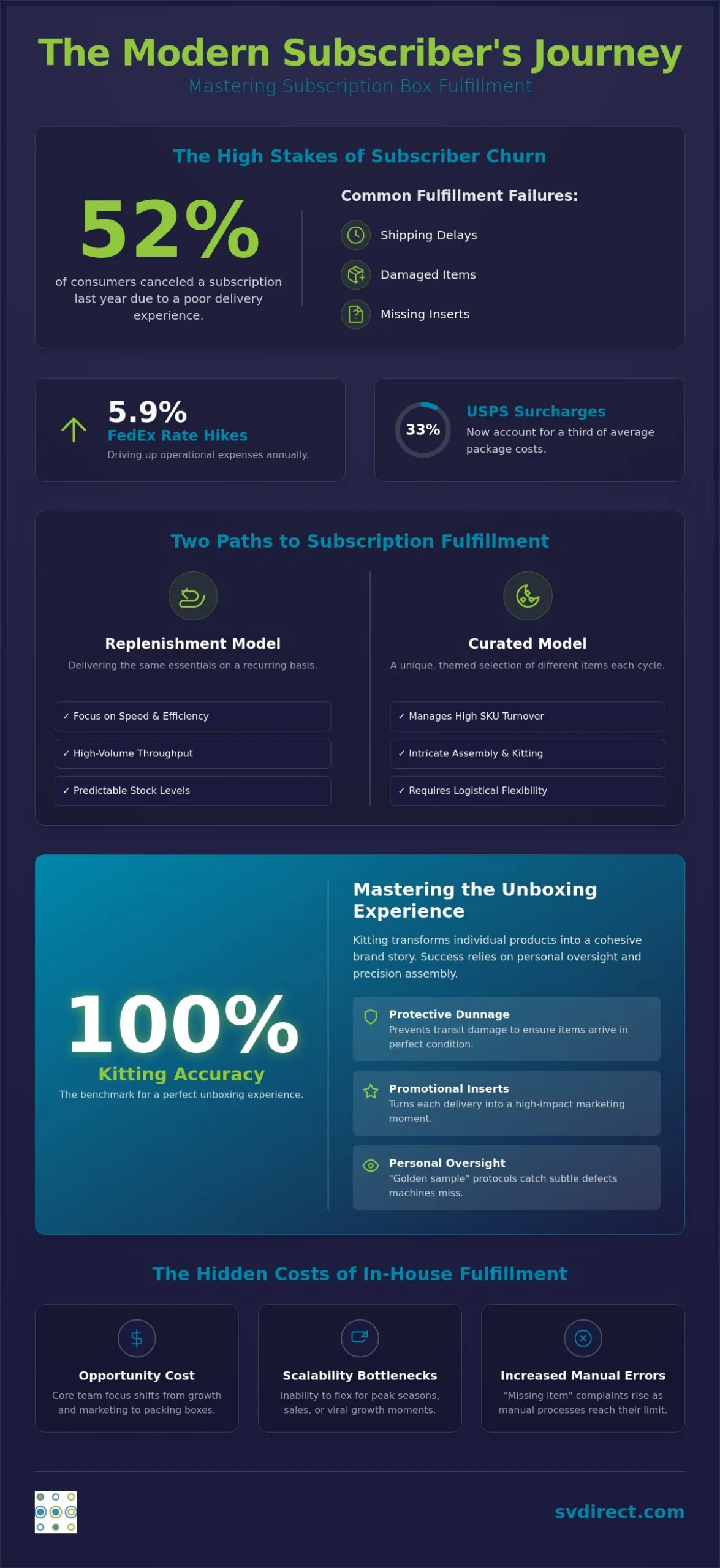
Did you know that 52% of consumers canceled at least one subscription in the last year? Often, these cancellations aren’t a reflection of the product itself, but rather a breakdown in the delivery experience. You’ve likely faced the stress of high churn caused by shipping delays, damaged items, or a missing insert that ruined a carefully curated unboxing. It’s a common struggle for growing brands to find subscription box fulfillment services that offer both high-tech efficiency and the human touch required for custom kitting.

We understand that as you scale through 2026, you need more than just a warehouse; you need a steady hand to manage the 5.9% FedEx rate hikes and complex USPS surcharges that now account for 33% of average package costs. This guide will help you master these logistics while protecting your brand with personal oversight. You’ll learn how to achieve 100% kitting accuracy and seamless Shopify integration. We’ll provide the roadmap to predictable costs and scalable global shipping, ensuring your recurring revenue remains secure and your subscribers stay delighted.

Key Takeaways

  • Learn to distinguish between replenishment and curated models to align your logistics with your specific recurring revenue strategy.
  • Discover how personal oversight in subscription box fulfillment services ensures 100% kitting accuracy and protects the unboxing experience from errors.
  • Leverage on-demand digital printing to create personalized inserts that turn every delivery into a high-impact marketing moment.
  • Master inventory management using FIFO protocols to minimize product obsolescence and maintain a lean, efficient supply chain.
  • Understand why prioritizing direct human interaction over automated chatbots is the key to maintaining control as your brand scales globally.

Understanding Subscription Box Fulfillment Services in the 2026 Market

In 2026, the subscription economy has reached a level of maturity where simple shipping is no longer enough. The market grew by 12.6% this year, and consumers now expect a flawless, high-touch experience with every delivery. Effective subscription box fulfillment services act as the physical handshake between your brand and your subscriber. It’s the moment where your digital promise becomes a tangible reality. To succeed now, you must view logistics as a tool for recurring brand engagement rather than a back-office chore.

The landscape for subscription-based ecommerce businesses has shifted toward quality and precision. With the average number of household subscriptions settling at 2.8, your box must earn its place every month. This requires a fulfillment strategy that can handle the “Big Five” categories, beauty, pet, food, personal care, and clothing, with absolute accuracy. If the kitting isn’t perfect, the unboxing experience fails, and your churn rate will inevitably spike.

To better understand the mechanics behind this process, watch this concise breakdown:

Replenishment vs. Curated Boxes: Choosing Your Logistics Path

Your operational requirements depend heavily on your product model. Replenishment logistics focus on speed and low-friction inventory cycles. These boxes deliver the same essentials every month, so efficiency is found in high-volume throughput and predictable stock levels. Curated box logistics are far more complex. They involve managing high SKU turnover and intricate assembly instructions for rotating monthly items. This model dictates a different warehousing structure, often requiring more floor space for dedicated kitting lines and the flexibility to stage diverse inventory before a monthly “wave” shipment. For curated brands like BlueStream Wines, choosing the wrong partner often leads to the missing inserts and damaged items that drive subscribers away.

The Hidden Costs of In-House Fulfillment

Many brands start in a garage or small office, but there’s a clear transition point where in-house efforts become a liability. The first sign is a rising opportunity cost. If your core team is spending their afternoons with tape and dunnage, they aren’t focusing on subscriber acquisition or product development. Second, scalability bottlenecks become obvious during viral growth moments or peak seasons. An in-house team simply can’t flex as fast as a professional facility. Finally, if your “missing item” tickets are increasing, your manual processes have reached their limit. Professional subscription box fulfillment services eliminate these headaches by providing the infrastructure and personal oversight needed to maintain 100% accuracy as you grow.

Subscription box fulfillment is a strategic brand touchpoint that defines the customer experience, rather than a mere shipping expense to be minimized.

Mastering Kitting and Assembly: The Core of Subscription Logistics

The subscription market hasn’t just expanded; it has grown by more than 100% percent a year in recent history, placing immense pressure on the assembly floor. Kitting is the heartbeat of subscription box fulfillment services. It’s the moment where individual SKUs transform into a cohesive brand story. A perfect kit requires more than just placing items in a container. It involves the strategic use of protective dunnage to prevent transit damage and the precise placement of promotional inserts that drive future sales. When these elements are mismanaged, the unboxing experience feels cluttered or, worse, incomplete.

Effective quality control relies on personal oversight. While automation has its place, human eyes are essential for identifying the subtle defects that a machine might miss. We use a “golden sample” protocol where every box on the line must match a master version. This prevents the “missing item” complaints that lead to high churn. Managing monthly SKU transitions is equally critical. By utilizing lean inventory practices, you can avoid “dead zones” where old stock takes up valuable space while new kits are being assembled. Integrating custom packaging further reinforces your brand identity at the first touch, ensuring your subscribers feel the value immediately.

The 5-Step Subscription Assembly Process

Precision is born from a repeatable, documented workflow. This approach ensures that every box leaving the facility meets your exact specifications.

  • Step 1: Inventory receiving and verification. We use strict FIFO (First-In, First-Out) protocols to ensure product freshness and prevent obsolescence.
  • Step 2: Custom assembly line setup. Every month brings new kits. We configure dedicated lines based on specific assembly instructions for that cycle.
  • Step 3: Multi-point inspection. Our team performs visual checks at multiple stages to ensure every insert and item is present and correctly positioned.
  • Step 4: Secure sealing and label application. We apply custom packaging and shipping labels designed to withstand the rigors of global transit.

Custom Kitting for High-Value and Sensitive Goods

If your brand deals in luxury items or fragile electronics, standard fulfillment won’t suffice. These goods require specialized dunnage and, in some cases, climate-controlled storage to maintain their integrity. Security is also a priority. High-value items need tracked movement through the facility and tamper-evident sealing. This level of care is a hallmark of our Kitting and Assembly Services. If you’re ready to eliminate assembly errors, you can request a tailored fulfillment quote to see how we handle complex requirements.

Elevating the Unboxing Experience with Integrated Digital Printing

The unboxing experience is your most potent weapon against subscriber churn. In a market where 52% of consumers have canceled a subscription in the last year, the physical presentation of your product must do more than just arrive intact. It has to inspire. High-quality subscription box fulfillment services recognize that the “wow” factor doesn’t come from the product alone. It comes from the personalized touchpoints, such as a custom newsletter or a welcome note, that greet the subscriber the moment they lift the lid.

Traditional fulfillment models often rely on third-party printers to ship marketing collateral to the warehouse. This creates unnecessary friction and extends lead times. By utilizing integrated digital printing, you can leverage “Just-in-Time” production for monthly newsletters and promotional flyers. This approach allows for hyper-personalization at scale. Instead of a generic insert, you can tailor marketing materials to specific customer segments based on their purchase history or subscription tier. Integrated digital printing eliminates the logistical lag of shipping literature across the country, which significantly reduces lead times for monthly box changes.

On-Demand Printing: A Differentiator for Subscription Brands

Housing printing and assembly under one roof is a strategic advantage that many competitors overlook. It removes the risk of your fulfillment line stalling because a shipment of inserts is delayed in transit. We provide high-quality digital printing for brochures, catalogs, and personalized “thank you” notes that match the premium feel of your brand. This capability ensures that your marketing assets are as agile as your inventory. If you’re looking to expand your reach through physical touchpoints beyond the box, our Direct Mail Marketing Services offer a seamless way to re-engage dormant subscribers.

Literature Fulfillment and Asset Management

Efficient asset management is essential for brands that include extensive literature in their recurring orders. Whether you’re distributing educational booklets or complex promotional kits, storing and managing these materials requires the same precision as your primary inventory. For subscription boxes in the healthcare or financial sectors, this precision is even more critical. These industries require strict compliance and accuracy in their documentation. Our subscription box fulfillment services include specialized literature fulfillment protocols to ensure that every sensitive document is handled with care and delivered to the correct recipient. This methodical approach protects your brand from the compliance risks associated with missing or incorrect information.

Subscription Box Fulfillment Services: The 2026 Strategic Guide to Scalable Recurring Revenue

Strategic Warehousing and Global Shipping from Silicon Valley

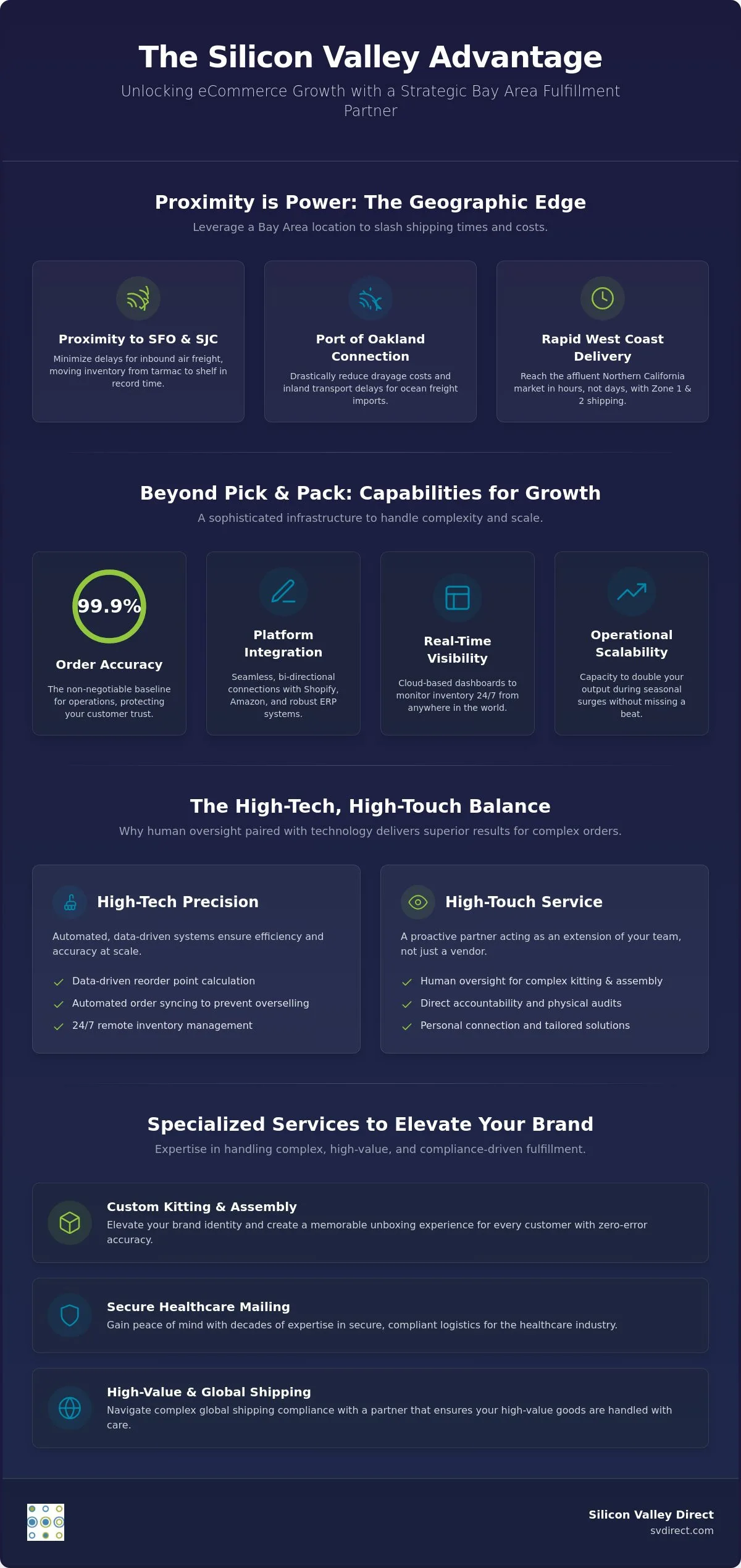
Positioning your inventory in a Silicon Valley hub provides a distinct advantage for subscription box fulfillment services. Our location offers immediate proximity to major international airports and the Port of Oakland, which is essential for brands sourcing components globally or shipping to an international subscriber base. In 2026, the complexity of cross-border eCommerce requires more than just a shipping label. It demands a deep understanding of international duties, taxes, and trade regulations to ensure your boxes don’t get stuck in customs. By leveraging a hub at the center of global innovation, you gain a partner capable of navigating these nuances with precision.

Effective inventory management is the foundation of a healthy subscription model. We utilize strict FIFO (First-In, First-Out) protocols to ensure that products with limited shelf lives, such as those in the beauty or food categories, are shipped in the order they were received. This prevents product obsolescence and protects your margins. Additionally, our established relationships with major carriers allow us to pass on significant volume discounts. With 2026 seeing a 5.9% average rate increase from FedEx and a 7.8% hike for USPS Ground Advantage, these 3PL discounts are vital for maintaining predictable fulfillment costs.

Secure Warehousing for High-Growth Brands

Storage efficiency is a critical component of your monthly overhead. We offer a mix of pallet and shelf storage, allowing you to optimize your footprint based on your current SKU count and volume. This flexibility ensures you aren’t paying for unused space during slower months but have the room to expand during peak seasons. For brands in the wellness, beauty, or pharmaceutical sectors, our climate-controlled options provide the stable environment necessary to maintain product integrity. If your growth plan includes reaching customers beyond the U.S. border, our Global Shipping Services provide the infrastructure needed for reliable international delivery.

Returns Management: The “Reverse Logistics” of Subscriptions

Reverse logistics is often an overlooked aspect of the subscription lifecycle. A seamless returns process is essential for maintaining customer trust, especially when 52% of consumers have canceled a subscription in the past year. We streamline this by inspecting every returned item against your specific quality standards. Items that meet the “like-new” criteria are refurbished and integrated back into your inventory for future kits, reducing waste and saving costs. We also manage batch delivery to carriers, which optimizes the shipping timeline and ensures that returns don’t disrupt your primary fulfillment waves. If you want to see how our strategic location can lower your overhead, request a free logistics quote today to get started.

Choosing Your Partner: The Silicon Valley Direct Advantage

Selecting a partner for your subscription box fulfillment services is one of the most critical decisions you’ll make as a brand leader. In a tech-saturated market where many providers hide behind automated chatbots and faceless support tickets, we offer a different path. Our 25-year history provides a foundation of stability that newer, venture-backed 3PLs simply cannot match. We believe that recurring revenue shouldn’t be managed by an algorithm. Instead, we prioritize direct human connection and bespoke problem-solving to ensure your unique brand requirements are met with precision.

Scaling from a niche startup to a global enterprise requires more than just warehouse space. It requires an operational partner that acts as a steady hand during periods of rapid growth. Whether you’re navigating the 12.6% industry growth seen in 2026 or managing the complexities of the “Big Five” subscription categories, our team ensures that your logistics remain a competitive advantage rather than a bottleneck. We reject the one-size-fits-all model in favor of workflows tailored to your specific kitting and assembly needs.

Personal Oversight in a High-Tech World

Quality control isn’t just about software; it’s about the people on the floor. Our long-term staff retention is a unique hallmark of our internal stability, ensuring that the team handling your kits understands your brand’s standards as well as you do. This human element is especially vital for high-stakes fulfillment, such as HIPAA-compliant healthcare mailing or high-security luxury goods. Our “Steady Hand” philosophy is designed to alleviate the stress of business growth by providing physical infrastructure backed by deep expertise. We ensure that every box matches your “golden sample” before it ever leaves our Silicon Valley facility.

Getting Started: Your Roadmap to Professional Fulfillment

Transitioning to a professional partner is a structured process designed for transparency. Our onboarding begins with a deep dive into your current volume, kitting complexity, and global shipping goals. We don’t provide generic pricing; we offer custom quotes that reflect the specific needs of your subscription model. From initial eCommerce integration to your first live monthly shipment wave, we guide you through every step to ensure a seamless launch. If you’re ready to protect your brand experience and scale with confidence, Contact Silicon Valley Direct for a Custom Fulfillment Quote today.

Securing Your Brand’s Future in the Subscription Economy

Navigating the logistics of 2026 requires a partner that balances high-tech precision with a steady, human hand. You’ve seen how the unboxing experience, powered by integrated on-demand digital printing, can turn a simple delivery into a powerful retention tool. By mastering the complexities of custom kitting and leveraging a Silicon Valley hub for global reach, you protect your margins against rising carrier surcharges. Choosing professional subscription box fulfillment services isn’t just about moving packages; it’s about safeguarding the recurring revenue that fuels your growth.

Since 1999, we’ve helped brands scale through stability and specialized expertise, including HIPAA-compliant and healthcare mailing services. We’re ready to tailor a fulfillment workflow that meets your unique requirements and eliminates the stress of operational bottlenecks. If you’re looking for a dedicated partner to protect your subscriber experience, it’s time to Streamline Your Subscription Logistics with Silicon Valley Direct. Your brand’s next chapter of growth is within reach, and we’re here to help you lead it with confidence.

Frequently Asked Questions

What is included in subscription box fulfillment services?

Comprehensive subscription box fulfillment services encompass the entire lifecycle of a recurring order. This includes secure warehousing, precise inventory management, custom kitting and assembly, and reliable global shipping. We also manage the reverse logistics of returns to ensure your inventory remains accurate and your subscribers stay satisfied with the brand experience.

How much does subscription box fulfillment typically cost?

Fulfillment costs are determined by several variables, including your monthly shipment volume, the number of unique SKUs per box, and the complexity of the assembly process. Storage requirements and shipping destinations also play a role. We provide bespoke quotes tailored to your specific operational goals rather than using a rigid, one-size-fits-all pricing model. Similarly, in the digital space, niche providers often explore Tiered Software Subscription Fees to ensure their pricing structures remain competitive and accessible for diverse user groups.

Can you handle custom branded packaging and marketing inserts?

Yes, we specialize in high-touch unboxing experiences that utilize custom branded packaging and marketing inserts. Our facility integrates on-demand digital printing, which allows us to produce personalized notes and promotional flyers that are placed directly into your kits during the assembly process. This ensures every box reinforces your brand identity at the first touch.

Do you offer international shipping for subscription boxes?

We provide robust global shipping and logistics from our Silicon Valley hub. Our location near major international ports and airports allows us to navigate cross-border eCommerce with efficiency. We help you manage the complexities of international trade, including duties and taxes, to ensure a smooth delivery experience for your global subscribers without unexpected delays.

How do you handle monthly changes in subscription box contents?

Managing rotating inventory is a core part of our workflow. We use flexible assembly lines that are reconfigured for every monthly cycle based on your specific kitting instructions. Our team uses FIFO protocols to prevent product obsolescence and ensures that new items are staged and ready for the next wave of shipments, regardless of SKU turnover.

What is the benefit of having digital printing and fulfillment in one location?

Housing these services under one roof eliminates the need to coordinate between multiple vendors and significantly reduces the lead time for monthly changes. You don’t have to worry about shipping literature from a printer to a warehouse. This integrated approach also allows for hyper-personalization, as we can print and pack inserts in a single, streamlined motion.

How does Silicon Valley Direct ensure kitting accuracy?

We ensure 100% accuracy through a combination of rigorous quality control protocols and personal oversight. Every assembly line uses a “golden sample” that serves as the master reference for every box produced. Our long-term staff performs multi-point visual inspections to verify that every item and insert is exactly where it belongs before the box is sealed.

Can you integrate with Shopify or other eCommerce platforms?

Our systems integrate seamlessly with Shopify and other major eCommerce platforms to automate the flow of order data. This technical integration ensures that your fulfillment team receives real-time information, allowing for proactive inventory management and immediate shipping updates for your customers. It’s a proactive approach that reduces the stress of scaling your business.

Bay Area eCommerce Fulfillment Center: The 2026 Strategic Guide

Bay Area eCommerce Fulfillment Center: The 2026 Strategic Guide

In 2026, the distance between your warehouse and your customer is measured in brand loyalty, not just miles. You already know that high shipping costs to West Coast hubs and the impersonal service of massive 3PLs can stall your growth. It’s frustrating when errors in custom kitting or a lack of real-time inventory visibility make you feel like you’re losing control of your own business. You need a partner that acts as a proactive extension of your team, not just a vendor.

Selecting the right bay area ecommerce fulfillment center shouldn’t mean sacrificing a personal touch for technical scale. This strategic guide explores how to leverage Silicon Valley precision to slash shipping times and manage complex kitting with zero-error accuracy. We’ll preview the 2026 logistics landscape, including the impact of AB 98 regulations and the diverging industrial markets in the East Bay and Silicon Valley. By the end of this guide, you’ll have a clear roadmap for scaling your brand with a partner that values human connection as much as operational efficiency.

Key Takeaways

  • Leverage proximity to SFO, SJC, and the Port of Oakland to drastically reduce last-mile shipping costs for the Northern California market.
  • Ensure your brand can handle seasonal surges with real-time inventory visibility and scalable warehousing solutions designed for rapid growth.
  • Understand why a bay area ecommerce fulfillment center with a high-touch approach provides more reliability for complex orders than impersonal, fully automated systems.
  • Elevate your brand identity through specialized custom kitting and assembly that creates a memorable unboxing experience for every customer.
  • Gain peace of mind with a logistics partner that offers decades of expertise in secure healthcare mailing and global shipping compliance.

The Strategic Advantage of a Bay Area eCommerce Fulfillment Center

Success in modern retail depends on how quickly you can move a product from a digital cart to a physical doorstep. Choosing a bay area ecommerce fulfillment center provides a unique geographic leverage that most national providers can’t replicate. By positioning your inventory near major hubs like SFO, SJC, and the Port of Oakland, you’re placing your brand at the epicenter of global trade and domestic demand. This proximity doesn’t just save time; it ensures your brand remains agile in an unpredictable market.

The “Silicon Valley Effect” extends far beyond software. It permeates the local logistics industry, creating a talent pool that understands how to refine the order fulfillment process through technical precision. This local presence allows for direct oversight and physical audits, ensuring that your standards are met with human accountability rather than just automated reports. When you partner with a Silicon Valley 3PL, you’re gaining an extension of your own team that speaks the language of innovation.

Shipping Zones and Transit Times

An anchor point in Northern California drastically improves West Coast delivery speeds. Most shipments within the region fall into Zone 1 or Zone 2, which significantly reduces the cost of every parcel sent. By reaching major population centers in hours rather than days, you meet the high expectations of the affluent Northern California market. Proximity to international airports also means your inbound freight moves from the tarmac to the warehouse shelf with minimal delay.

The Port of Oakland Connection

The Port of Oakland serves as a vital artery for brands importing goods from overseas. Streamlining the transition from ocean freight to warehouse shelving is much easier when your facility is minutes away. This closeness reduces drayage costs and eliminates the inland transport delays that plague inland facilities. You can manage international imports with greater agility, reacting to inventory needs in real time while keeping your overhead low.

Evaluating 3PL Capabilities: Beyond the Standard Pick and Pack

Modern commerce requires more than just moving boxes. For a high-growth brand, a bay area ecommerce fulfillment center must provide a sophisticated infrastructure that handles seasonal surges and flash sales without a dip in quality. In 2026, 99.9% accuracy is the non-negotiable baseline for operations. Errors don’t just cost money; they erode the trust you’ve built with your customers through hard work and marketing.

Success depends on how well your warehouse communicates with your digital storefront. Your partner needs to offer:

  • Platform Integration: Seamless, bi-directional connections with Shopify, Amazon, and robust ERP systems.
  • Real-Time Visibility: Web-based tracking that shows exactly where your inventory sits at any given moment.
  • Operational Scalability: The physical and technical capacity to double your output during peak seasons without missing a beat.

The Tech Stack of a Modern Fulfillment Center

Cloud-based dashboards allow you to monitor inventory 24/7 from anywhere in the world. Automated order syncing prevents the nightmare of overselling or backorders, keeping your customer satisfaction scores high. Strategic partners use data-driven insights to help you calculate reorder points with surgical precision, ensuring you never tie up too much capital in stagnant stock. This level of remote order management ensures you’re always in the loop without needing to be on-site.

When to Transition to a Professional 3PL

The tipping point often arrives when your team spends more time packing boxes than developing new products. In the Bay Area, where labor and warehouse costs are at a premium, in-house logistics can quickly become a bottleneck for growth. Transitioning to a professional partner allows you to convert fixed costs into variable ones, freeing up resources for brand expansion. Before making the move, ensure your data is clean and your SKU list is organized to facilitate a smooth migration. If you’re ready to see how a professional partner can streamline your operations, you can request a custom assessment of your current needs.

The High-Tech, High-Touch Balance: Why Human Oversight Wins

While automation drives speed, it cannot replace the nuanced judgment of a seasoned professional. A high-performing bay area ecommerce fulfillment center should operate at the intersection of digital efficiency and personal oversight. This “high-touch” approach ensures that your brand’s unique requirements aren’t lost in a sea of generic algorithms. In an industry increasingly dominated by cold, mechanical processes, the human element remains your strongest safeguard against costly errors.

Fully automated systems often struggle with specialized logistics. If your product requires specific orientation, delicate handling, or a bespoke unboxing experience, a robot simply won’t notice a slight deviation from the standard. Relying solely on automation can lead to impersonal service and a lack of accountability. When a challenge arises, you need to reach a human partner who understands your business, not an automated ticketing system that leaves you waiting for days. This direct communication allows for rapid pivots and custom workflows that align with your specific goals.

Quality Control in the Assembly Line

Precision starts with rigorous manual inspection points. For high-value or fragile goods, outbound verification ensures that every package meets your exact brand standards before it leaves the dock. This extra layer of human care significantly reduces return rates and protects your reputation. By catching potential issues during the specialized handling process, we ensure that your customers receive exactly what they expected, every single time.

Building a Logistics Partnership

A true partnership is built on stability and collective experience. Long-term staff retention at your fulfillment center is a hallmark of quality; it means the people handling your inventory actually know your product. You deserve a dedicated account manager who acts as a steady hand, offering collaborative problem-solving for your most complex shipping hurdles. This level of commitment transforms a standard vendor relationship into a strategic alliance that alleviates the stress of business growth. It’s about having a team that is just as invested in your success as you are.

Bay Area eCommerce Fulfillment Center: The 2026 Strategic Guide

Specialized Fulfillment: Navigating Healthcare, High-Value, and Custom Kitting

Complexity defines the 2026 eCommerce market. A standard bay area ecommerce fulfillment center might handle a simple pick-and-pack order with ease, but specialized inventory requires a more sophisticated touch. Whether you’re managing HIPAA-compliant medical shipments or high-value electronics, your logistics partner must provide more than just shelf space. They need to offer a secure, climate-controlled environment backed by rigorous human oversight to ensure every regulation is met and every asset is protected.

High-value goods like consumer electronics and sensitive components demand specialized warehousing protocols. We implement advanced security measures and inventory controls to mitigate risk. This includes:

  • Asset Protection: Restricted access zones for high-value inventory.
  • Climate Stability: Temperature and humidity monitoring for sensitive electronics.
  • Serial Tracking: Precise tracking for warranty and compliance management.

Healthcare and Compliance Mailing

Managing sensitive medical documents or pharmaceutical samples requires a deep understanding of security protocols. We provide HIPAA-aware handling that prioritizes data integrity and physical safety. Secure storage is essential for maintaining the efficacy of medical devices and sensitive materials. You can learn more about healthcare mailing services in our detailed 2026 compliance guide. Our facility acts as a steady hand for healthcare providers who cannot afford errors in their specialized mailing workflows.

Advanced Kitting and Assembly Services

Your brand’s unboxing experience is a powerful tool for building customer loyalty. Custom kitting and assembly allow you to create subscription boxes or promotional kits that stand out in a crowded market. By integrating on-demand digital printing, we can include personalized literature directly into your shipments. This just-in-time approach ensures your messaging is always current and relevant to the recipient. Read our guide on kitting and assembly services to see how we streamline these complex workflows for growing brands.

If your brand requires a specialized approach to logistics, our team is ready to help you scale with precision. You can request a free quote to discuss your specific requirements and receive a bespoke solution.

Silicon Valley Direct: Decades of Reliability in the Heart of Innovation

Since 1999, Silicon Valley Direct has stood as a steady hand in an industry defined by rapid change. We’ve built our reputation on a legacy of excellence, providing a bay area ecommerce fulfillment center that combines physical infrastructure with human expertise. As a privately held corporation, we prioritize long-term stability and personal commitment over the quarterly pressures that often drive impersonal service in larger firms. This independence allows us to focus entirely on your brand’s growth and the precision of your operations.

Our comprehensive solutions span the entire logistics spectrum, from secure warehousing and inventory management to complex global shipping. We don’t just move products; we manage your brand’s physical presence with the same care you used to build it. By leveraging our local hub in the heart of innovation, you gain global reach with the agility of a local partner. Whether you’re shipping across the peninsula or across the ocean, our team ensures your supply chain remains seamless and resilient.

Our Operational Philosophy

We explicitly reject the trend of automated interactions. You won’t find yourself trapped in a loop of automated support tickets here. Instead, we foster direct human connection and personal oversight. Our communication rhythm is steady and methodical, mirroring the efficiency of our facility. This approach ensures that every detail of your fulfillment services is handled with deliberate care and total flexibility.

Getting Started with Your Bay Area Partner

Transitioning to a new logistics partner is a significant step toward scaling your brand. Our onboarding process is designed to be thorough yet efficient, setting your supply chain up for immediate success. We start by understanding the specific nuances of your inventory and your customer expectations. If you’re ready to experience a partnership grounded in precision and reliability, contact Silicon Valley Direct for a bespoke logistics consultation today. We’ll provide a customized quote tailored to your unique fulfillment needs, ensuring you have the support required to lead your market in 2026.

Secure Your Logistics Strategy for a Competitive 2026

The 2026 logistics landscape demands a partner that can navigate regulatory shifts while maintaining surgical precision in every order. By choosing a bay area ecommerce fulfillment center, you’re positioning your inventory at the intersection of global trade and technical innovation. You’ve seen how proximity to the Port of Oakland slashes drayage costs and how human oversight ensures your high-value electronics or healthcare shipments remain secure. This geographic and operational advantage is the key to reducing last-mile costs in the affluent Northern California market.

Since 1999, Silicon Valley Direct has acted as a steady hand for brands that refuse to settle for impersonal, automated service. We provide the specialized expertise required for HIPAA-compliant healthcare mailing and secure warehousing for high-value electronics. Our team doesn’t just manage boxes; we protect your brand’s reputation through bespoke problem-solving and a commitment to 99.9% accuracy. If you’re ready to move beyond the limitations of generic 3PL providers, it’s time to build a partnership grounded in history and high-performance execution.

Streamline your supply chain with Silicon Valley Direct and discover the difference that decades of local expertise can make for your brand’s growth. We look forward to helping you scale with confidence.

Frequently Asked Questions

What should I look for in a Bay Area ecommerce fulfillment center?

Look for a partner that prioritizes a balance of high-tech efficiency and high-touch human oversight. It’s essential to find a provider with a proven history of stability, such as a multi-decade operational record in the region. Your fulfillment partner should offer seamless digital integration while maintaining a steady, methodical flow in its physical operations to ensure maximum accuracy and reliability for your brand.

How does a local 3PL help with international shipping from the West Coast?

A local partner leverages its proximity to major international hubs like SFO, SJC, and the Port of Oakland to accelerate global transit. This geographic advantage reduces inland transport delays and lowers drayage costs for inbound freight. By managing global shipping and logistics from a West Coast anchor point, you can reach international markets with greater agility and significantly reduced overhead.

Is it more expensive to use a fulfillment center in Silicon Valley versus elsewhere?

While regional real estate costs are premium, the investment is often offset by significant savings in shipping zones and transit times. Reaching the affluent Northern California market through a bay area ecommerce fulfillment center places your inventory in Zone 1 or 2 for millions of customers. This proximity slashes last-mile costs and improves brand loyalty through much faster delivery speeds.

Can a Bay Area fulfillment center handle HIPAA-compliant mailing?

Yes, specialized facilities provide HIPAA-aware handling for sensitive medical documents and pharmaceutical samples. This requires a sophisticated infrastructure that includes secure storage and rigorous outbound verification protocols. Choosing a partner with a legacy in healthcare logistics ensures your brand meets all regulatory standards with surgical precision, protecting both your organization and your patients’ sensitive information.

What is the difference between standard fulfillment and custom kitting?

Standard fulfillment focuses on efficient pick-and-pack operations for individual SKUs and high-volume orders. Custom kitting and assembly involve creating a bespoke unboxing experience through subscription box assembly or promotional kit creation. This specialized service often includes integrating marketing collateral or personalized literature directly into shipments to build deeper customer loyalty and enhance your brand identity.

How do returns management services work with a local 3PL?

Returns management involves a methodical process of receiving, inspecting, and restocking returned goods to maintain inventory accuracy. A local partner provides a steady hand in verifying the condition of items before they return to the shelf. This proactive approach reduces waste and ensures that only high-quality products are available for subsequent orders, protecting your bottom line and customer satisfaction.

What integrations are available for Shopify and WooCommerce stores?

Modern fulfillment centers offer seamless, bi-directional connections with major platforms like Shopify, WooCommerce, and various ERP systems. These cloud-based dashboards provide 24/7 inventory monitoring and automated order syncing across all your sales channels. This level of technical integration prevents the nightmare of overselling by providing real-time visibility into your stock levels at every moment.

How does proximity to the Port of Oakland affect my supply chain?

Being minutes away from the Port of Oakland streamlines the transition from ocean freight to warehouse shelving. This proximity eliminates the long inland transport delays and high fuel surcharges that plague facilities located further from the coast. It allows your brand to handle international imports with greater agility, reacting to inventory needs in real time while keeping your overhead low.

How to Reduce Shipping Costs for eCommerce: The Strategic 2026 Guide

How to Reduce Shipping Costs for eCommerce: The Strategic 2026 Guide

Did you know that for many online sellers, last-mile delivery now constitutes over 53% of total shipping costs? With the 2026 average rate increases of 5.9% from UPS and FedEx now in full effect, learning how to reduce shipping costs for ecommerce has moved from a tactical advantage to a survival necessity. Between the new DIM weight rounding rules and the $11.99 ground minimum charges, your margins are under constant pressure from factors that often feel outside your control. It’s frustrating to watch surcharges and dimensional penalties erode the hard work you’ve put into building your brand. We believe that growth should feel like an achievement, not a logistical burden.

We understand that you want to scale your business without sacrificing the speed or quality your customers expect. This guide promises to help you master the art of logistics optimization, providing a clear path to slash your shipping expenses. By the end of this article, you’ll have a strategic roadmap to implement scalable fulfillment architecture and lower your cost per order. We will examine how to engineer your packaging to beat DIM weight penalties, leverage regional carriers for cost savings, and use distributed fulfillment to place inventory closer to your audience.

In this guide, you will discover:

  • The mechanics of Dimensional (DIM) weight and how to audit your shipping profile to prevent margin erosion.
  • How strategic kitting and assembly can reduce total package weight while on-demand digital printing streamlines your inventory.
  • The power of aggregate volume in securing tier 1 negotiated rates that far exceed standard business discounts.
  • Why geographic location is a primary driver of expense and how to reduce shipping costs for ecommerce by positioning inventory near global hubs.
  • The long-term ROI of a fulfillment partnership that combines operational precision with dedicated human oversight.

Auditing Your eCommerce Shipping Profile: DIM Weight and Shipping Zones

True optimization begins with a cold, hard look at your shipping data. Many brands treat shipping as a fixed expense, yet it’s actually one of the most flexible variables in your business model. If you want to master how to reduce shipping costs for ecommerce, you have to stop looking at the price on the label and start looking at the math behind it. Carriers don’t just bill you for what a package weighs; they bill you for the space that package occupies on their planes and trucks. This is the foundation of a shipping audit.

Identifying “shipping hotspots” or “zone leakage” allows you to see where your margins are evaporating. For instance, if a large percentage of your orders are traveling to Zone 7 or 8, you’re likely paying a premium that could be mitigated through better inventory placement. By auditing your historical data, you can uncover the hidden costs of “dead air” where oversized boxes are triggered by inefficient packing. This data-driven approach transforms shipping from a line-item expense into a strategic advantage.

To better understand this concept, watch this helpful video:

Understanding Dimensional Weight (DIM) Calculations

Dimensional weight is often the primary reason for unexpected shipping costs. Carriers calculate DIM weight by multiplying the length, width, and height of a package and dividing by a “DIM factor,” which is currently 139 for major domestic carriers. If the resulting number is higher than the actual weight, you’re billed at that higher rate. As of the 2026 guidelines, carriers now round up every fractional inch to the next whole number before calculating. A box that’s 10.1 inches is billed as 11 inches. To “beat the box,” you must match your product size to your packaging with surgical precision. Using custom-fit boxes or mailers eliminates the “dead air” that triggers these expensive penalties.

Mapping Your Customer Density and Shipping Zones

Shipping zones are geographic areas defined by the distance between the point of origin and the destination. In the 2026 landscape, shipping to Zone 8 is frequently twice as expensive as shipping to Zone 2. If your warehouse is in New York but your customers are in California, every order is a margin-killer. Many third-party logistics providers solve this by analyzing your customer density to find the optimal fulfillment center location. High-volume shippers also utilize “zone skipping,” which involves consolidating orders and trucking them closer to the destination hub before handing them to a carrier. This proactive strategy is a cornerstone of how to reduce shipping costs for ecommerce while maintaining the delivery speed your customers demand.

Packaging Engineering: Reducing Costs Through Strategic Kitting and Printing

Shipping efficiency isn’t just about the carrier you choose. It’s about the physical architecture of the shipment. While most brands focus on the label, sophisticated operators look at the weight of every component, from the corrugated cardboard to the promotional flyers inside. As you determine how to reduce shipping costs for ecommerce, you’ll find that small adjustments in packaging engineering yield massive results across thousands of orders. Precision in the assembly phase is what prevents the “surcharge creep” that often stalls business growth.

Traditional packing methods often leave too much room for error, or rather, too much room for “dead air.” If you’re shipping a small item in a medium box, you’re paying for the carrier’s volume, not your product’s weight. Switching to poly mailers or custom-fit boxes can eliminate this wasted spend. Branded packaging is vital for the unboxing experience, but it shouldn’t come at a premium. By selecting high-quality, lightweight materials, you can maintain your brand’s aesthetic and durability without pushing the package into a higher weight bracket.

The Power of Professional Kitting and Assembly

Professional kitting and assembly services are about more than just organization; they’re a financial strategy. Consolidating multiple SKUs into a single, optimized unit allows you to save significantly on “Pick and Pack” fees. Instead of shipping three separate boxes, kitting creates a streamlined package that fits perfectly into standard carrier dimensions. This process also reduces the need for dunnage, the filler material that adds weight without adding value. A well-designed kit ensures that every square inch of the box is utilized, bypassing the “Additional Handling” surcharges that plague unoptimized shipments.

On-Demand Printing: A Secret Weapon for Shipping Efficiency

Most guides overlook the massive weight impact of traditional marketing materials. Traditional fulfillment involves shipping heavy, pre-printed catalogs to a warehouse, storing them, and then adding that bulk to every outbound order. This adds weight and increases the risk of materials becoming obsolete. By integrating on-demand digital printing directly into the fulfillment line, you can generate personalized, lightweight inserts at the moment of packing. This just-in-time approach keeps your marketing current while keeping the package weight at an absolute minimum. It’s a precise way to maintain brand quality without paying a “paper tax” to carriers.

Engineering a better package is a collaborative effort between your fulfillment team and your designers. If you’re ready to see how these efficiencies look in practice, you can request a custom analysis to identify your specific savings opportunities.

Leveraging 3PL Volume: Why Negotiated Rates Beat Standard Business Discounts

Most small to mid-sized brands find that their “negotiated” rates are barely better than retail pricing. This happens because carriers prioritize high-density accounts that simplify their own operational logistics. When you partner with a seasoned fulfillment provider, you aren’t just buying space; you’re buying into a massive shipping cooperative. This collective bargaining power allows businesses to access Tier 1 carrier rates that are typically reserved for Fortune 500 companies. It’s a fundamental shift in how to reduce shipping costs for ecommerce because it moves you beyond standard business discounts into a realm of unlisted savings.

A sophisticated 3PL doesn’t just stick to one carrier. They use shipping orchestration software to route every package based on the lowest total cost in real-time. This isn’t just about base rates. The software accounts for the 2026 residential surcharges, which have climbed to $6.45 for FedEx Home Delivery and $6.50 for UPS Ground. By automatically selecting the carrier with the most efficient route for a specific zip code, you bypass the traps that inflate your per-order expense. This proactive strategy ensures that your shipping budget is spent on delivery speed rather than carrier profit margins.

The Reality of Carrier Rate Negotiation

Individual businesses often lack the leverage to move the needle with major carriers. Carriers look for volume, consistency, and operational ease. A 3PL provides all three by consolidating thousands of shipments into massive daily batches. This reduces the “touches” required by the carrier, allowing the 3PL to secure deeper discounts. These relationships are built over decades, providing access to incentive tiers that a solo business simply can’t reach. Batch delivery to the carrier hub further reduces the carrier’s workload, which translates to lower base rates for every package in that batch.

Managing Surcharges and Accessory Fees

Fuel surcharges and accessory fees now account for 20% to 40% of total annual shipping costs for many brands. Address correction fees are a silent margin killer. Even a simple typo can lead to a carrier fee that wipes out the profit on a small order. Automated address validation at the point of fulfillment is essential to stop this leakage. Additionally, as we move through 2026, peak-season surcharges have become more dynamic and complex. A strategic partner helps you plan inventory cycles to avoid these spikes. For brands expanding across borders, cross-border ecommerce fulfillment services manage the complexities of international duties and taxes, including the impact of the suspended US de minimis exemption and new EU customs duties. This ensures that your global reach doesn’t come with unexpected financial penalties or customs delays that hurt your brand reputation. A complete cost-reduction strategy must also account for the reverse flow of goods; implementing efficient returns management logistics is essential to prevent the 2026 rate hikes from compounding the expense of processing the growing volume of online returns.

How to Reduce Shipping Costs for eCommerce: The Strategic 2026 Guide

Geographic Strategy: Reducing the Distance to Delivery

Distance is the silent driver of escalating expenses. When you analyze how to reduce shipping costs for ecommerce, the geographic placement of your inventory emerges as the most critical factor. Every shipping zone your package crosses adds a layer of cost and a day of transit time. In a market where last-mile delivery accounts for over 53% of total shipping costs, your physical address is your most powerful lever. By positioning your fulfillment operations closer to major entry points and carrier hubs, you fundamentally change the math of your logistics. This isn’t just about labels; it’s about reducing the physical mileage your products must travel to reach the end consumer.

A Silicon Valley hub offers a distinct advantage for brands focused on innovation and global connectivity. Proximity to major international ports like Oakland and San Francisco, along with primary carrier sorting facilities, ensures that inbound shipments move from container to warehouse with minimal drayage fees. This geographic placement allows for a steady, methodical flow of goods, reducing the time your capital is tied up in transit. Shorter transit times don’t just lower costs; they also lead to a measurable decrease in customer service inquiries and return rates, as faster delivery consistently correlates with higher customer satisfaction. It’s a proactive stance that respects both your budget and your client’s time.

The Strategic Importance of a West Coast Hub

West Coast fulfillment centers are the gateway for Pacific Rim trade. By processing goods near their point of entry, you avoid the expense of shipping raw inventory across the country before it’s even sold. This proximity also allows for faster hand-offs to carriers, which is vital for maintaining high-performance delivery standards. Understanding the batch delivery to carrier meaning is essential here. It refers to the moment your consolidated shipments are processed by the carrier at their local hub. This step happens much faster when your warehouse is minutes away from their primary sorting facility, effectively slashing the lag time between order packing and carrier transit.

Cross-Border Shipping and International Logistics

Navigating international logistics requires a partner who understands the nuances of customs and trade regulations. Shipping from the US to Canada or other international destinations can be cost-prohibitive without a consolidation strategy. By grouping international orders, you can reduce per-package export fees and simplify the documentation process. Brands scaling globally must also develop a clear strategy for cross-border ecommerce fulfillment to achieve predictable landed costs in the post-de minimis regulatory environment. A professional 3PL acts as a steady hand, ensuring that your global expansion is backed by physical infrastructure and human expertise rather than just digital abstractions. This methodical approach ensures your products reach global markets without the stress of unpredictable fees. If you want to see how a West Coast strategy could impact your specific volume, you can request a free quote for a detailed geographic analysis.

Choosing a Strategic Fulfillment Partner for Long-Term Scalability

Selecting a fulfillment partner is more than a software integration; it’s a strategic alliance that dictates your financial trajectory. While many platforms claim their algorithms do it all, pure automation lacks the nuance required for complex or high-value shipments. True operational readiness comes from balancing high-tech efficiency with seasoned human oversight. This combination ensures that when a unique challenge arises, you have a dedicated team ready to implement a bespoke solution. If you’re investigating how to reduce shipping costs for ecommerce, you’ll find that the most significant savings often come from the precision only human experts can provide.

Calculating the ROI of outsourcing involves looking beyond the per-order fee. You must account for the overhead of warehouse leases, specialized labor, and rising insurance premiums. By moving to a 3PL, you convert these fixed costs into variable expenses that scale with your order volume. Silicon Valley Direct integrates directly with your existing eCommerce platform, providing the real-time control you need without the burden of physical management. When interviewing potential partners, always ask about their transparency regarding fuel surcharges and hidden accessory fees. A reliable partner will provide a clear, hierarchical breakdown of every cost associated with your shipping profile, ensuring there are no surprises on your monthly invoice.

The Silicon Valley Direct Difference: Human-Scale Logistics

We’ve explicitly rejected the industry trend toward automated chatbots in favor of direct human connection. Our clients value the personal oversight provided by staff members who’ve been with us for decades. This internal stability is a unique hallmark that translates to unmatched order accuracy and a deep understanding of your brand’s specific needs. A “one-size-fits-all” fulfillment model often leads to higher costs because it forces your brand into rigid, inefficient processes. We believe in total flexibility, providing the customization required to treat your physical operations with the same care you put into your digital storefront.

Transitioning from In-House to 3PL Fulfillment

There’s a specific tipping point where managing your own shipping becomes a liability rather than an asset. This typically happens when the administrative burden of carrier negotiations and warehouse staffing distracts you from your core mission of growth. You don’t have to lose brand control when you outsource your physical operations. By choosing a partner that acts as an extension of your team, you maintain the personal touch while gaining a scalable fulfillment architecture. Check our blog for more insights on scaling your fulfillment and navigating the complexities of the 2026 shipping landscape.

Master Your Logistical Future

Success in 2026 depends on transforming your shipping from a reactive expense into a proactive strategic advantage. You’ve learned that auditing your DIM weight and engineering your packaging are the first steps to reclaiming lost margins. By strategically positioning inventory near major hubs and leveraging aggregate shipping volume, you can consistently lower your cost per order. Mastering how to reduce shipping costs for ecommerce requires this holistic approach, where every inch of a box and every mile of transit is accounted for.

Since 1999, Silicon Valley Direct has acted as a reliable partner for brands that value precision and personal accountability. We specialize in high-value and HIPAA-compliant logistics, providing the direct human oversight that automated systems often miss. We invite you to streamline your supply chain with Silicon Valley Direct’s expert fulfillment solutions. Your growth is a journey, and with the right steady hand at the helm, your logistical infrastructure will remain a pillar of your brand’s success.

Frequently Asked Questions

What is the most effective way for a small eCommerce business to reduce shipping costs?

The most effective strategy is to perform a comprehensive audit of your packaging dimensions to eliminate “dead air.” Since major carriers now round up every fractional inch to the next whole number, even a slight reduction in box size can prevent a shipment from moving into a higher billable weight bracket. This precise approach to how to reduce shipping costs for ecommerce ensures you aren’t paying for empty space or unnecessary volume.

How does dimensional weight (DIM) affect my shipping bill?

Dimensional weight allows carriers to bill based on the volume a package occupies rather than its actual physical mass. By multiplying length, width, and height and dividing by the 2026 standard divisor of 139, carriers determine a theoretical weight. If this calculated DIM weight is higher than the actual scale weight, you’re billed for the larger value. This makes efficient, right-sized packaging a financial necessity for any modern brand.

Is it cheaper to use a 3PL or ship orders myself?

Transitioning to a fulfillment partner becomes more cost-effective when the overhead of warehouse leases, specialized labor, and insurance premiums exceeds the per-order fulfillment fee. A 3PL provides access to Tier 1 negotiated rates and aggregate volume discounts that solo businesses cannot secure independently. By converting these fixed in-house costs into variable expenses, you gain a scalable architecture that adjusts to your seasonal volume fluctuations.

What are shipping zones, and how do they impact my pricing?

Shipping zones are geographic regions determined by the distance between the point of origin and the final destination. In the 2026 rate structure, shipping to Zone 8 is often twice as expensive as shipping to Zone 2 due to increased fuel consumption and transit mileage. Mapping your customer density allows you to identify “zone leakage” and potentially reposition your inventory closer to your most active geographic markets to lower per-order expenses.

Can kitting and assembly actually save me money on postage?

Professional kitting and assembly lead to substantial postage savings by consolidating multiple items into a single, optimized package. This reduces the total number of outbound shipments and avoids multiple individual “Pick and Pack” fees. A well-designed kit also minimizes the need for dunnage; the filler material that adds weight without adding value; ensuring the final dimensions remain below the thresholds that trigger expensive additional handling surcharges.

How do I negotiate better rates with carriers like FedEx or UPS?

Individual businesses often struggle to move the needle with major carriers because those carriers prioritize high-density, high-volume accounts. The most reliable way to secure better rates is to leverage the collective bargaining power of a fulfillment partner. These providers have long-standing relationships and multi-decade histories that allow them to access unlisted savings and incentive tiers that are typically unavailable to smaller, independent shippers.

What is ‘Zone Skipping’ and is it right for my business?

Zone skipping is a strategy where a business consolidates a large volume of orders and trucks them directly to a carrier hub closer to the final destination. This bypasses the initial sorting centers and reduces the number of zones the carrier actually handles. It’s an ideal strategy for high-volume cross-country shipments where the cost of the initial truckload is lower than the sum of the individual per-package zone surcharges.

How does a Silicon Valley location benefit my international shipping costs?

A Silicon Valley location places your inventory near major international ports and primary carrier sorting facilities. This proximity reduces drayage costs, which are the fees associated with moving goods from container ships to the warehouse. For international orders, being at a global gateway allows for faster hand-offs and reduced transit times to the Pacific Rim, helping you understand how to reduce shipping costs for ecommerce on a global scale.

Crowdfunding Fulfillment Services: The Complete 2026 Guide to Campaign Success

Crowdfunding Fulfillment Services: The Complete 2026 Guide to Campaign Success

Did you know that a successful campaign often raises an additional 20% to 30% in revenue through post-campaign pledging? While that growth is a significant win, it also increases the complexity of your reward delivery. You’ve built a community that trusts your vision, but the messy middle between funding and shipping is where brand reputation is truly tested. This is where professional crowdfunding fulfillment services transform a logistical challenge into a seamless brand experience.

This level of variation is where professional crowdfunding fulfillment services prove their worth through meticulous quality control. We believe that physical operations require a human touch that software alone cannot provide. High-value items, common in technology and design projects—much like the high-performance tech hardware and accessories offered by Devia—demand secure warehousing and specialized handling to prevent damage or loss. By implementing human-in-the-loop inspections during the assembly process, we ensure that every complex kit contains exactly what the backer expects. This precision is what protects your brand reputation and minimizes the cost of returns management later on.

We understand the anxiety that comes with international VAT and the fear of shipping delays damaging your hard-earned reputation. You need more than just a warehouse; you need a partner who values precision as much as you do. In this guide, you’ll learn how to master reward delivery and transition your project into a scalable eCommerce brand. We’ll walk through the logic of efficient inventory management and global shipping, giving you the confidence to grow while we manage the operational complexities.

Key Takeaways

  • Audit your reward tiers for packaging dimensions and weight during the pre-launch phase to prevent logistical bottlenecks.
  • Partner with professional crowdfunding fulfillment services to successfully manage the “burst” nature of shipping thousands of rewards simultaneously.
  • Streamline complex kitting and variable add-ons by leveraging on-demand digital printing for personalized literature and manuals.
  • Protect your project’s margins by identifying hidden costs like address corrections and fuel surcharges before they impact your bottom line.
  • Develop a clear roadmap to transition from batch delivery to a daily fulfillment model, turning campaign momentum into a sustainable eCommerce brand.

What are Crowdfunding Fulfillment Services?

At its core, crowdfunding fulfillment services represent a specialized branch of logistics tailored to the unique lifecycle of a funded project. Unlike traditional eCommerce, where orders trickle in daily, crowdfunding creates a massive “burst” of demand. You might spend months building momentum on platforms like Kickstarter or Indiegogo, only to face the sudden requirement of shipping thousands of rewards simultaneously. To understand the foundational mechanics of these campaigns, it’s helpful to review What is Crowdfunding? and how different models impact delivery timelines.

The global market for these services was valued at $927 million in 2023 and is projected to reach $1,262 million by 2030. This growth reflects the increasing complexity of modern campaigns. With Kickstarter alone having raised over $7.04 billion across 232,000 successful projects, the pressure to deliver accurately is immense. A professional partner doesn’t just move boxes; they act as a steady hand that protects your brand reputation during the critical transition from a digital idea to a physical product.

To better understand this logistical bridge, watch this helpful video:

Modern crowdfunding fulfillment services must integrate deeply with the tools you already use. Whether you are managing backer data through BackerKit, Gamefound, or directly through platform exports, the flow of information must be seamless. Precision in data handling prevents the manual entry errors that often lead to lost parcels and frustrated backers. By automating these connections, you ensure that every reward tier and add-on is accounted for before the first label is even printed.

Why Startups Need a Professional 3PL

Many founders fall into the “garage fulfillment” trap, believing they can manage a few hundred orders manually. However, manual processes fail quickly at scale. Professional kitting and assembly are essential when dealing with complex reward tiers that include various colors, sizes, or limited-edition add-ons. A seasoned partner also provides access to negotiated carrier rates that are typically unavailable to individual creators. These savings are vital for maintaining your project’s margins, especially as shipping costs and fuel surcharges continue to fluctuate.

The Silicon Valley Advantage

Operating from the heart of a global tech hub offers distinct advantages for high-performance logistics. Proximity to innovation centers allows for faster software troubleshooting and tighter integration with emerging eCommerce tools. We believe that physical operations should be as organized as your digital presence. With over 25 years of experience, our approach combines this high-tech efficiency with a commitment to human oversight. We reject the trend of total automation, ensuring that a dedicated expert is always monitoring your inventory. This blend of seasoned wisdom and modern capability provides the stability your growing business needs. For more insights on scaling your operations, you can explore our latest resources at https://svdirect.com/blog/.

How to Plan Your Crowdfunding Fulfillment Strategy

The success of your crowdfunding fulfillment services depends on decisions made months before your first dollar is pledged. Waiting until your campaign is funded to consider logistics is a common mistake that leads to budget overruns. With the average funded Kickstarter campaign raising approximately $27,000, every dollar spent on shipping must be calculated with precision. You should start by auditing your reward tiers for “shippability.” Even a slight increase in packaging dimensions can push a reward into a more expensive shipping bracket, eroding your margins before you’ve even begun production.

Calculating landed costs is a foundational step in your strategy. This figure includes more than just postage; it encompasses warehousing, pick-and-pack fees, and international duties. The challenges of crowdfunding fulfillment often stem from underestimating these variables. By integrating your backer management software with a 3PL’s warehouse management system (WMS) early, you create a seamless flow of data that prevents the “messy middle” from becoming a logistical nightmare. If you’re ready to map out these costs with an expert partner, you can consult with our logistics team for a detailed analysis.

Step 1: Data Integration and SKU Management

Precision begins with a clean backer list. Address changes and typos are inevitable during a long campaign, and manual data entry is a primary source of fulfillment errors. You must establish unique SKUs for every possible reward combination. This logical structure ensures that your 3PL can track inventory in real time, preventing you from overselling add-ons that might be generated during the 20% to 30% of revenue typically raised in post-campaign pledging. A robust WMS integration allows you to see exactly what is in stock, ensuring that backer expectations are met without delay.

Step 2: Designing the Unboxing Experience

Your packaging is the first physical touchpoint a backer has with your brand. While standard mailers are cost-effective, custom branded packaging can turn a delivery into a marketing event. Complexity increases when you include literature, stickers, or multiple add-ons. Efficient kitting is required to ensure these items are grouped correctly without slowing down the shipping “burst.” You can leverage Silicon Valley Direct’s kitting services to handle complex assemblies, ensuring that even the most intricate reward tiers are delivered with professional accuracy.

Step 3: Global Shipping and Customs Compliance

International reach is a hallmark of modern crowdfunding, but it brings the complexity of VAT and GST compliance. Navigating these regulations requires a partner who understands the nuances of different regional delivery rules. Choosing the right carriers for domestic versus global shipping can significantly impact your delivery speed and cost. For a deeper look at managing these complexities, see our guide on global shipping services. This proactive approach to customs ensures that your backers aren’t surprised by unexpected fees at their doorstep.

Crowdfunding Fulfillment Services: The Complete 2026 Guide to Campaign Success

Managing Complexity: Kitting, Tiers, and Reward Tiers

Logistics for a standard eCommerce store are generally predictable, but crowdfunding operates on a different logic. A primary challenge involves “Add-ons,” those extra items backers select during or after the campaign that turn a simple delivery into a complex puzzle. Statistics show that average order values increase significantly with campaign size; seven-figure campaigns often reach an average order value of $435. This increase is driven by backers bundling multiple rewards, which requires a sophisticated approach to inventory management and order accuracy. When tackling crowdfunding fulfilment, you quickly realize that a single reward tier might have dozens of variations based on backer choices.

This level of variation is where professional crowdfunding fulfillment services prove their worth through meticulous quality control. We believe that physical operations require a human touch that software alone cannot provide. High-value items, common in technology and design projects, demand secure warehousing and specialized handling to prevent damage or loss. By implementing human-in-the-loop inspections during the assembly process, we ensure that every complex kit contains exactly what the backer expects. This precision is what protects your brand reputation and minimizes the cost of returns management later on.

The Art of Kitting and Assembly

Efficient kitting involves bundling multiple physical products into a single SKU to streamline the shipping process. This method allows for faster batch processing during the initial “burst” of reward delivery. We focus on optimizing package weight and dimensions during this stage, as even a fraction of an ounce can change the shipping bracket and impact your bottom line. Our team analyzes your reward tiers to determine whether batch processing or on-demand assembly is the most efficient path forward. This strategic oversight ensures that your most complex assemblies are handled with the same speed as your simplest orders.

On-Demand Printing for Personalized Rewards

Personalization is a powerful tool for rewarding high-tier backers, but it often creates a logistical bottleneck. We solve this by integrating on-demand digital printing directly into our fulfillment workflow. This capability allows you to include personalized thank-you notes or custom literature fulfillment without the need for massive pre-printed inventories.

  • Just-in-time printing: Produce manuals and inserts as needed to reduce long-term storage costs.
  • Personalized inserts: Create a unique unboxing experience for your most loyal supporters.
  • Literature integration: Ensure every technical product includes the correct, up-to-date documentation.

By combining printing and logistics under one roof, we eliminate the delays associated with third-party print shops and keep your project moving forward with high-tech efficiency.

Avoiding the Post-Campaign Crash: Cost Management and Partner Vetting

The exhilaration of a funded project often masks the financial risks lurking in the delivery phase. Professional crowdfunding fulfillment services prioritize transparency over the lure of the lowest headline rate, as hidden costs can quickly erode your remaining capital. Industry benchmarks show that logistical expenses shift rapidly; for instance, as of April 17, 2026, a 3.5% fuel surcharge applies to all FBA fulfillment fees in the US and Canada. While you may choose a private 3PL, these market trends reflect broader volatility that your partner must proactively manage to keep your project solvent.

Address corrections and returns management are two of the most frequent causes of a “post-campaign crash.” A single typo in a backer survey can lead to a returned parcel, doubling your shipping costs and delaying delivery. You need a partner that offers human oversight rather than a “black box” automated system. A dedicated account manager serves as a steady hand, catching errors before rewards leave the facility. If you’re concerned about how these variables might impact your specific budget, you can request a free quote to get a clear, line-item view of your projected costs.

Understanding Pick and Pack Fees

Pick and pack fees are the heartbeat of your fulfillment budget. It’s essential to distinguish between the cost per item and the cost per order. In a campaign with multiple add-ons, a “per item” fee structure can become prohibitively expensive. We recommend analyzing how assembly complexity influences your total spend. By providing accurate volume projections and reward tier breakdowns, you can often negotiate better rates. This logical approach ensures that your kitting and assembly costs remain predictable even when shipping thousands of units during a high-volume “burst.”

Vetting for Reliability and Longevity

In a tech-saturated market, the stability of your partner is just as important as their software. A logistics provider founded in 1999 offers a multi-decade history and an anchor of trust that a newer startup simply cannot match. When vetting a 3PL, ask about their staff retention rates; long-term tenure is a unique hallmark of expert-level service and internal stability. To make a more informed decision, reviewing a detailed comparison of 3PL companies in the Bay Area for 2026 can help you evaluate which providers combine software precision with the personal oversight your campaign demands. We encourage creators to visit our facility or request a virtual tour to see our physical infrastructure in action. For more insights on selecting a partner that aligns with your brand’s growth, check out our blog for expert tips on 3PL selection.

Scaling Beyond the Campaign: From Kickstarter Success to eCommerce Brand

The delivery of your final reward marks a pivotal moment for any startup. While the initial “burst” of shipping thousands of units is a monumental hurdle, the true test of longevity begins the day your project transitions from a campaign to a permanent eCommerce brand. You don’t want your momentum to stall while you struggle to move from batch shipping to daily order fulfillment. Utilizing specialized crowdfunding fulfillment services allows you to maintain your pace by integrating your backend directly with platforms like Shopify, WooCommerce, or Amazon. This technical synergy ensures that as soon as a new customer clicks “buy” on your website, the request flows directly to the warehouse floor without manual intervention. For merchants building on Shopify specifically, understanding how Shopify fulfillment services can be optimized through a partner-based 3PL model is essential to turning your campaign’s momentum into a scalable retail operation.

Managing returns and exchanges is an often-overlooked aspect of this transition. In the crowdfunding phase, backers are often more patient, but eCommerce customers expect rapid resolution. A robust returns management system builds long-term loyalty and transforms a potential negative experience into a brand win. When you position your logistics as a core competency, you aren’t just shipping products; you’re demonstrating operational readiness to future investors. They look for brands that have moved past the “messy middle” and established a scalable, reliable infrastructure. Investors value transparency and operational history. When you can show a seamless integration between your sales channels and your fulfillment center, you prove that your business model is built on a stable foundation rather than just a viral moment.

The Roadmap to Permanent eCommerce

Scaling requires a shift in mindset from “Backer Management” to “Customer Relationship Management” (CRM). Your logistics partner should help you leverage data from your initial run to forecast future production needs and inventory storage requirements. As your brand grows, your warehousing needs will evolve from simple storage to dynamic distribution. By analyzing the geographic spread of your initial backers, you can optimize your shipping zones and reduce costs for future daily orders. This data-driven approach turns your fulfillment history into a strategic asset for future growth, allowing you to scale inventory storage as your brand expands beyond the initial production run.

Ready to Scale Your Vision?

The choice of a fulfillment partner determines whether your brand will thrive or merely survive the post-campaign period. You need a partner that offers the security and precision required for healthcare mailing services while maintaining the agility of a tech startup. We’ve spent over 25 years in the heart of Silicon Valley, refining the balance between high-tech efficiency and direct human oversight. We don’t believe in “black box” logistics; we believe in bespoke problem-solving and total flexibility. Our team acts as a steady hand, ensuring that your physical operations are just as organized as your digital presence.

If you’re ready to turn your project’s success into a lasting brand, we’re here to provide the expertise you need to scale with confidence. Request a free quote for your crowdfunding fulfillment and let’s build your roadmap to eCommerce success together.

Mastering the Transition to a Scalable Brand

Success in crowdfunding requires more than just meeting a funding goal; it demands a logistical roadmap that bridges the gap between a viral moment and a sustainable business. By auditing your reward tiers early and integrating your data with professional crowdfunding fulfillment services, you eliminate the manual errors that threaten your brand’s reputation. We believe that physical operations should be as innovative as your product design, which is why our Silicon Valley-based high-tech integration is designed for seamless scaling.

With over 25 years of logistics expertise, we provide the steady hand needed to manage specialized kitting and assembly for thousands of unique reward combinations. Don’t let the operational complexities of delivery slow your momentum or drain your budget. Your vision deserves a partner that values precision as much as you do. We’re ready to help you deliver on every promise and build a lasting eCommerce legacy.

Request a Free Quote for Your Crowdfunding Campaign and start your journey toward long-term growth today.

Frequently Asked Questions

How much do crowdfunding fulfillment services typically cost?

Total costs depend on package dimensions, total unit volume, and the complexity of your kitting requirements. Most providers charge for receiving inventory, monthly storage, and a per-order pick and pack fee. You should also account for carrier surcharges, such as the 3.5% fuel surcharge currently applied to major US fulfillment fees. Requesting a transparent, line-item quote is the best way to avoid hidden expenses and maintain your project’s margins.

When should I hire a fulfillment company for my Kickstarter campaign?

You should begin vetting crowdfunding fulfillment services during your pre-launch phase, ideally three to six months before your campaign goes live. Early planning allows you to audit reward tiers for shippability and integrate your backer management software with the warehouse system. This proactive stance ensures your shipping rates are accurate when you set your funding goal, preventing unexpected budget deficits after the campaign ends.

Can a 3PL handle international shipping for my backers?

Yes, a professional 3PL manages global shipping and logistics, including the complexities of international customs and VAT compliance. We navigate regional delivery rules to ensure your rewards reach backers in different countries without unnecessary delays. By leveraging negotiated carrier rates, a fulfillment partner can often provide more cost-effective global reach than an individual creator could achieve independently.

What happens if a backer changes their address after the campaign ends?

Address updates are managed through your backer management software, which syncs directly with your fulfillment partner’s warehouse management system. It’s common for backers to move during the months between funding and delivery. We recommend setting a “lock date” for address changes shortly before shipping begins. This ensures our team has the most accurate data before the high-volume burst of reward delivery starts.

Do I need to provide my own packaging for reward fulfillment?

You have the flexibility to provide custom branded packaging or utilize our standard mailers and boxes. Custom packaging enhances the unboxing experience but requires careful coordination of inventory levels. If you choose to provide your own materials, we manage those as separate SKUs within our warehouse. Our team can advise on dimensions that minimize shipping costs while providing high-level security for your items.

How long does the crowdfunding fulfillment process usually take?

The actual shipping phase typically takes several days to a few weeks, depending on your total backer count and the complexity of the kitting. While the initial setup and data integration happen months in advance, the “burst” delivery starts once your production run arrives at the warehouse. We prioritize methodical organization to ensure that even the largest campaigns move from receiving to doorstep as efficiently as possible.

Can you handle kitting for complex reward tiers with multiple items?

Yes, we specialize in kitting and assembly for reward tiers that involve multiple items or variable add-ons. Our team handles the manual oversight required to group different SKUs into a single, accurate package. This process includes human-in-the-loop inspections to ensure every backer receives exactly what they pledged for. We can also integrate literature fulfillment, such as printed manuals or thank-you notes, directly into these complex kits.

What is the difference between eCommerce fulfillment and crowdfunding fulfillment?

The primary difference lies in the volume rhythm; crowdfunding involves a massive “burst” of thousands of orders at once, whereas standard eCommerce follows a steady daily flow. Traditional eCommerce focuses on long-term inventory rotation and consistent daily picks. In contrast, crowdfunding fulfillment services require a high-performance partner capable of managing rapid data imports and complex reward combinations in a very compressed timeframe.