How to Manage Ecommerce Returns and Choose Refund Options
A clear policy is only the starting point. How to manage ecommerce returns means making them easy to initiate, assessing returned items consistently, and choosing a fair resolution. Explain each step customers need to take, then decide whether a refund, exchange, store credit, or returnless refund fits the case.
Returns are a routine cost of selling online, but recurring returns can point to problems you can fix. Sizing issues, product defects, shipping damage, and differences between product images and the item received each call for a different response. Track return reasons to spot patterns, improve the customer experience, and prevent avoidable returns.
This guide covers common return options, how to choose among them, and how to build a consistent process from the initial request to inspection and resolution. It also shows how return reasons can inform product information, fulfillment, and packaging decisions.
Key Takeaways
- Make return terms easy to find and explain the steps, available outcomes, and refund timing clearly.
- Choose between a refund, exchange, store credit, or returnless refund by weighing the customer’s situation against the item’s condition and recovery value.
- Group return reasons by product and category to spot patterns that can guide improvements to product details and operations.
- Use return trends to distinguish sizing or product-information issues from defects, fulfillment errors, and shipping damage.
- Build a consistent process from return request through inspection and resolution, with clear responsibilities at each step.
1. What is ecommerce returns management?
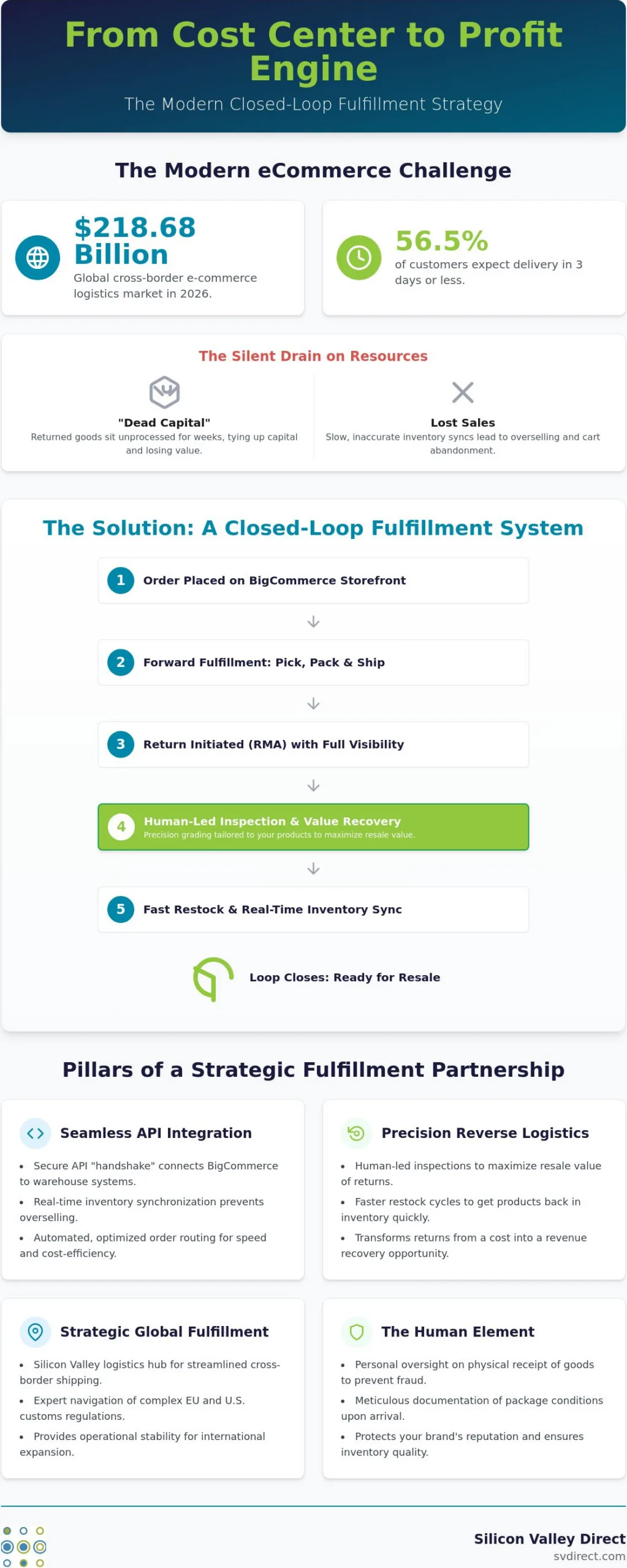
Ecommerce returns management covers the steps from a customer’s return request to the item’s final resolution. It includes policy communication, authorization, shipping, inspection, inventory updates, and refunds or exchanges. A clear process sets expectations before purchase and gives staff consistent decision rules after delivery. Salesforce’s State of Commerce report found that 88% of customers check return policies before purchasing. The NRF and Happy Returns’ 2024 report found that 76% consider free and easy returns a key factor in deciding where to shop.
Make the policy easy to find on product pages, at checkout, and in order confirmations. State the return window, eligible item conditions, accepted return methods, refund timing, and any restocking fee. Retailers commonly use a 30-day return window, but the right window depends on the product and your operating costs. Explain whether customers pay for return shipping, and show any fee before purchase. A policy that hides conditions can create friction after delivery and undermine loyalty. One market summary reports that 92% of global shoppers return up to 30%, reinforcing the need to explain the process clearly.
Small businesses can simplify returns with tools that connect return authorizations to order records, shipping labels, inventory updates, and refund status. Choose software that integrates with your commerce platform and automates routine tasks, while letting staff review exceptions such as damaged packaging or missing components. Start with the steps that involve the most manual work, then automate where it reduces duplicate entry or unclear statuses.
For return shipping, provide a prepaid label when simplicity and shipment visibility matter, or let customers arrange shipping if your policy assigns that responsibility to them. Explain who pays, how to pack the item, and whether drop-off is an option. Give customers clear instructions before they submit a return so they know what to do next.
In the United States, return and refund requirements can vary by state, product, and transaction. Shape your policies around the jurisdictions and product categories you serve, and disclose the terms clearly before purchase. This helps customers understand your policy and any requirements that may apply to their sale.
Return costs can include transportation, packaging, inspection labor, customer support, payment processing, and lost value when an item cannot be resold. Restocking fees may offset some handling costs, but disclose the fee and when it applies before checkout. Before returning an item to inventory, compare its potential recovery value with the shipping and labor involved.
Use fraud controls to identify patterns without treating every customer the same. Review order history, return reasons, item condition, and repeated discrepancies to flag cases for further attention. Apply consistent criteria, document decisions, and explain outcomes clearly. A customer-level review can distinguish a genuine defect claim from recurring mismatches while keeping routine returns straightforward.
2. Refund, exchange, store credit, and returnless refund decisions
Choose a resolution based on the customer’s needs, the item’s condition, and its likely recovery value. A refund returns money to the original payment method; an exchange replaces the item. Store credit makes the value available for another purchase. A returnless refund resolves the case without requiring the item back, which can suit low-value goods when shipping and handling cost more than the item’s recovery value.
Apply a consistent decision rule. Refund the customer when they want their money back and the return meets your policy. Offer an exchange if the size, color, or variant is wrong and they still want the product. Store credit may suit customers willing to choose something else, but present it as an option, not as a replacement for an expected refund.
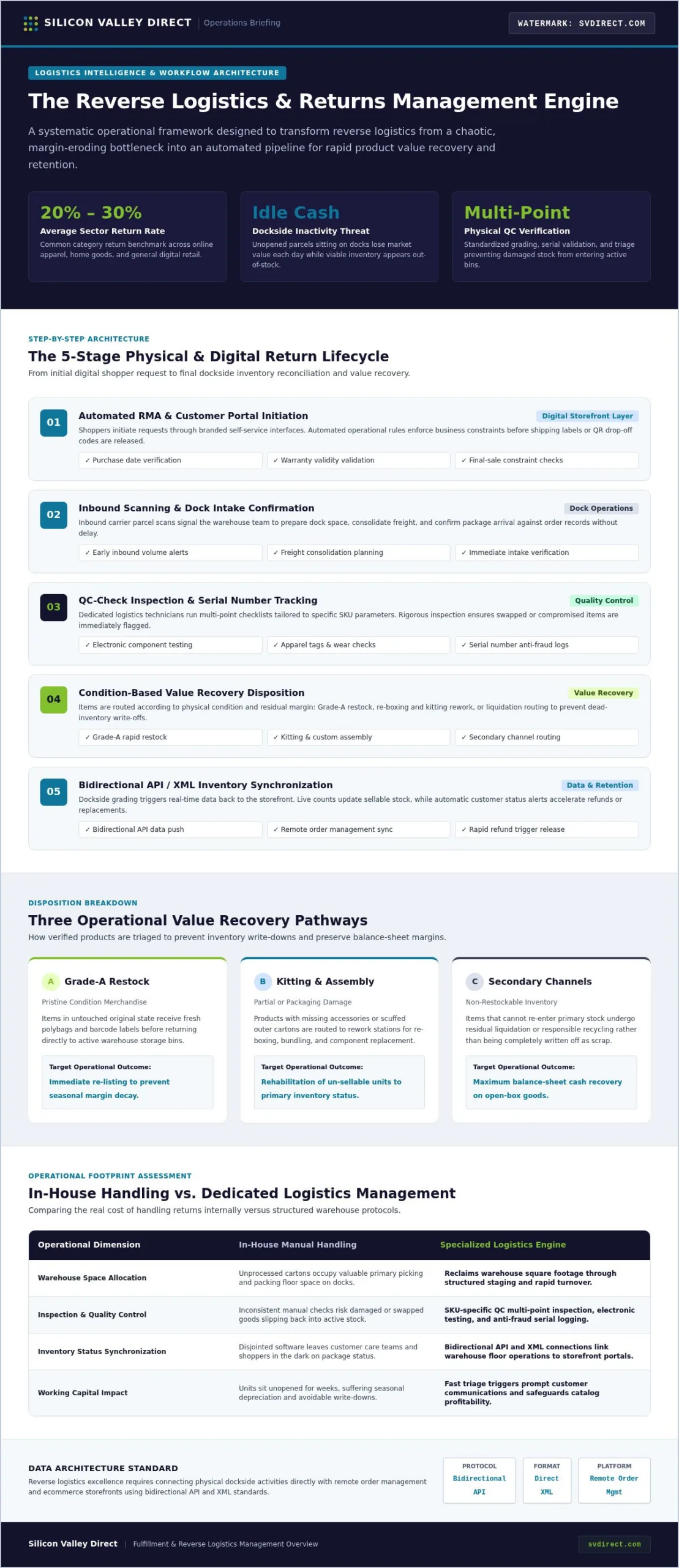
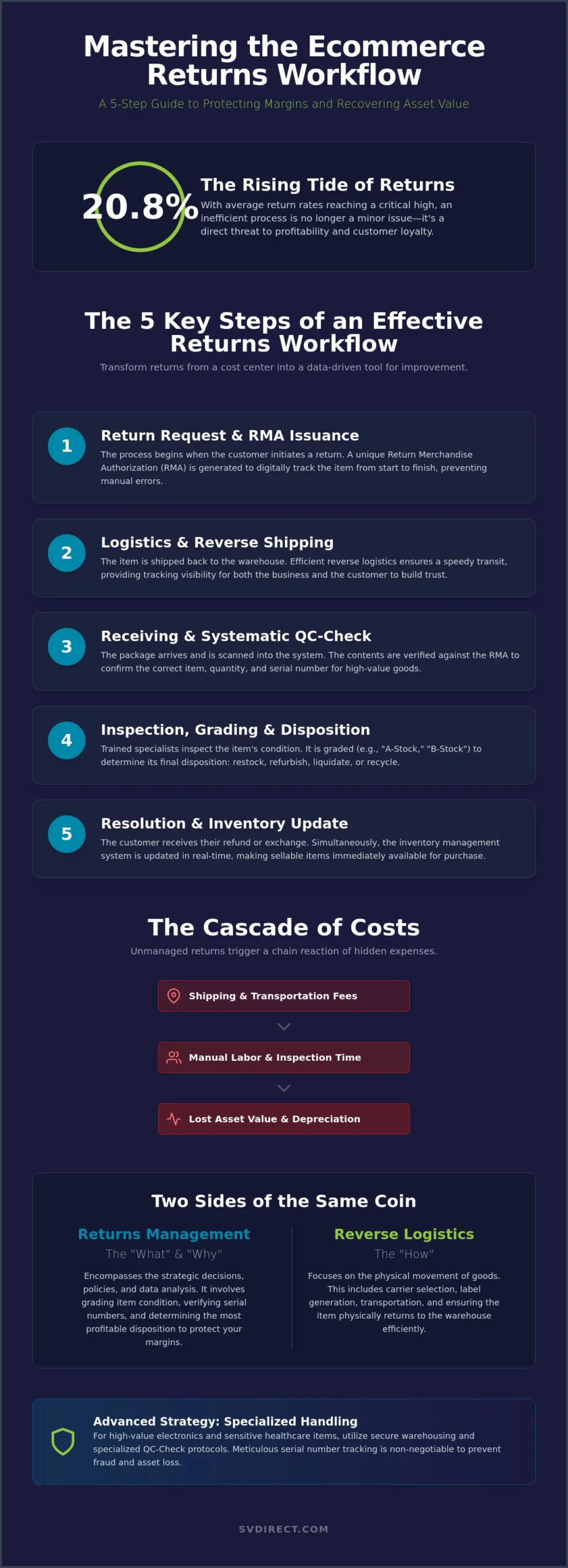
Process returns in sequence: confirm the order and reason, authorize the return, receive and inspect the item, record its condition, and complete the chosen resolution. For an exchange, reserve the replacement and update inventory. For a refund, tell the customer when processing begins. Clear status updates explain whether the next step is shipping, inspection, restocking, or payment.
Timing shapes the experience. In a 2026 survey, 46% of shoppers said an instant refund when the return starts builds confidence, while 43% identified waiting for a refund as a stressor. An instant refund may suit established customers or low-risk cases, but it shifts the inspection decision until later. A refund after inspection gives the retailer time to assess condition before resolving the transaction.
Online returns differ from retail store returns because customers usually ship items back instead of handing them to staff. That adds transit, packaging, and tracking steps before inspection can begin. In-store returns may allow an immediate condition review and exchange, while ecommerce returns need clear instructions and updates during transit. Keep policies consistent across channels and explain any differences before purchase.
A returnless refund can make sense when an item has little resale value or return shipping costs more than its recovery value. Set a threshold based on actual costs, then review repeat claims and order history for unusual patterns. For eligible cases, tell the customer whether to keep, donate, or dispose of the item.
Track which outcomes preserve customer relationships without creating confusing workflows. Exchanges and credit may retain a purchase, but only when they genuinely fit the customer’s preference. Make refund, exchange, and credit options easy to distinguish in the return portal, confirmation message, and support record. A well-defined returns workflow for your operation can help align these decisions with fulfillment and inventory processes.
3. What are product returns?
A product return is an item sent back after purchase, often because its fit, condition, or appearance did not meet expectations. For operations teams, each return also provides useful data: the product, order, stated reason, inspection result, and final inventory status. Record these details consistently to distinguish isolated incidents from recurring product or warehouse problems.
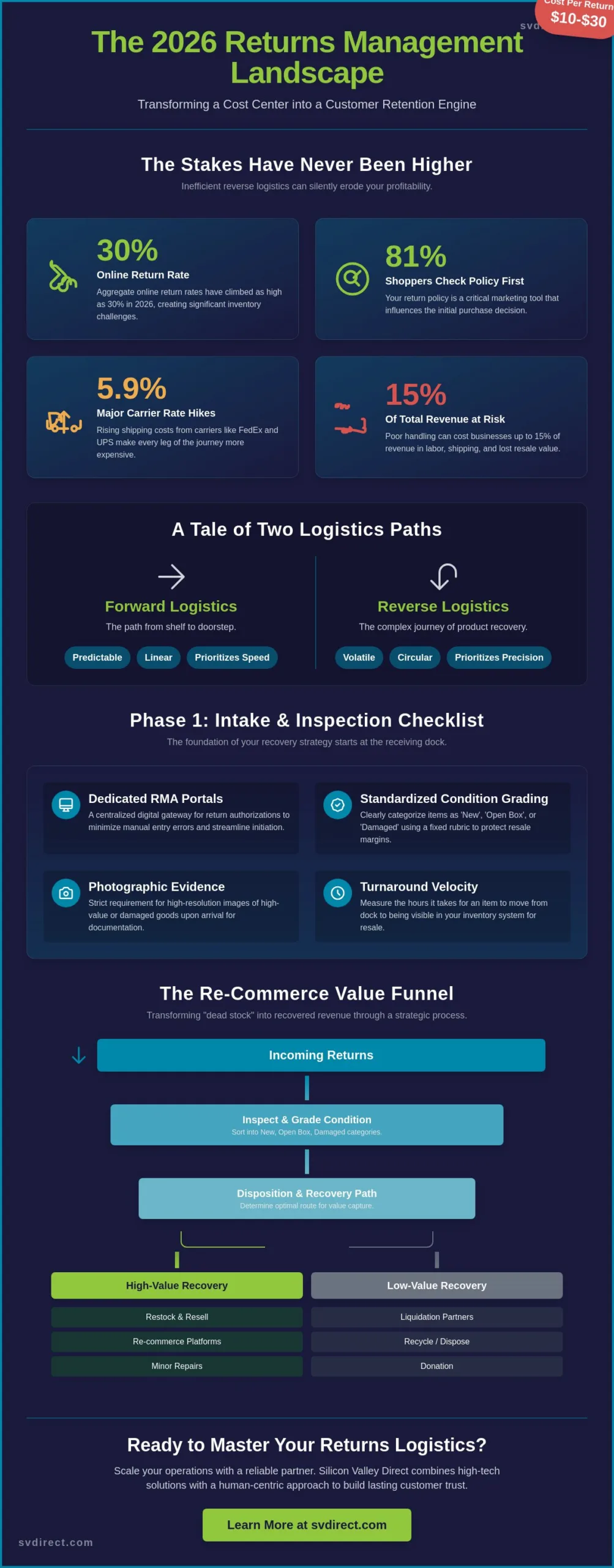
Start by grouping return reasons by SKU, category, and supplier. Separate customer-reported reasons, such as “too small,” from inspection findings, such as a broken component. Then compare those records with order volume and return rates. A SKU with a return rate above 15% to 20% warrants a product detail page audit. Preventable returns exceeding 10% can also signal inaccurate product information or packaging problems.
Product pages can prevent mismatched expectations before checkout. For apparel, add detailed measurements, fit guidance, and clear notes about how a garment is intended to fit. For home goods, show dimensions beside familiar objects and describe materials accurately. DHL’s international survey found discrepancies with online images accounted for 10% of reported ecommerce returns. Review color accuracy, scale, included accessories, and product photography when customers repeatedly report that an item looks different.
Use return comments to improve specific product-page details rather than simply adding more copy. If customers report a missing accessory, make package contents more prominent. If they report a color mismatch, review image lighting and the written color description. Add video or alternate views when they clarify operation, texture, or scale. Keep images and specifications consistent with the item you ship.
Return data can also inform warehouse and inventory decisions. If inspections show repeated damage, review protective packaging and handling steps. If customers receive the wrong item, trace the order through picking and packing records. Keep products reported as defective separate from sellable inventory until their condition is assessed. These checks help prevent the same problem from reaching another customer.
AI tools can organize large volumes of return notes by detecting repeated phrases and grouping similar reasons. Use those results to prioritize human review, not replace inspection. For example, a cluster of “runs narrow” comments can prompt a fit-guide review, while reports of “missing part” can prompt a check of package contents. Keep the original reason and inspection result available for comparison.
After changing a product page or operational step, review the results. Compare return reasons for the affected SKU before and after the change, taking order volume and seasonal demand into account. If the pattern continues, investigate other causes such as product variation, supplier consistency, or fulfillment accuracy. This feedback loop turns return records into practical guidance for product, merchandising, and warehouse teams.

4. Common causes of ecommerce returns
Return reasons point to different fixes, so classify them before changing fulfillment or product content. In an international DHL survey across 24 countries, sizing errors were the most commonly reported cause, at 26%. Defects or quality issues accounted for 23%, while shipping damage accounted for 15%. Those patterns call for separate responses: improve fit information, investigate product quality, and examine packaging or carrier handling.
For sizing and fit, review customer comments by product type and variation. DHL found poor fit or unsuitability accounted for 13% of reported ecommerce returns. A size guide may need clearer measurements, or a product description may need to explain how an item fits. If returns cluster around one size or color, check whether its specification or product page differs from the item customers receive.
Defects require a distinct operational response. When customers report a broken part or a product that does not work, compare the stated reason with inspection findings and supplier records. Repeated issues tied to a product batch may call for a quality review before more orders ship. Separate defective items from sellable stock and record the outcome so they do not re-enter available inventory.
Shipping damage may stem from packaging, handling, or transit. Review photos of damaged items alongside packaging materials and shipment records. If damage recurs across products using the same packing method, improve their protection. If reports cluster around a particular route or carrier, compare delivery evidence with inspection notes before changing your logistics process.
Some returns stem from customer choices rather than a product fault. DHL reported that ordering multiple options to compare accounted for 6% of reported returns. Buying more than necessary accounted for 3%, and changing one’s mind accounted for 4%. These reasons may call for clearer purchase guidance or a return portal that captures a specific reason, rather than a warehouse or product correction.
Review return rates alongside order volume and reason codes. A rise in returns may reflect increased sales, a product issue, or a change in customer mix, so raw counts alone can be misleading. Compare the same SKU, category, and period, then check whether the reasons have changed. For example, more “not as described” reports call for a different investigation than more “arrived damaged” reports.
Assign each cause to an owner and a practical action. Product teams can refine specifications, operations teams can review picking accuracy, packaging teams can assess protection, and logistics teams can investigate carrier patterns. Track whether the change reduces the targeted return reason without hiding other patterns. This focused approach can protect margins and address underlying causes, not just process more returns.
5. What is an effective ecommerce returns management process?
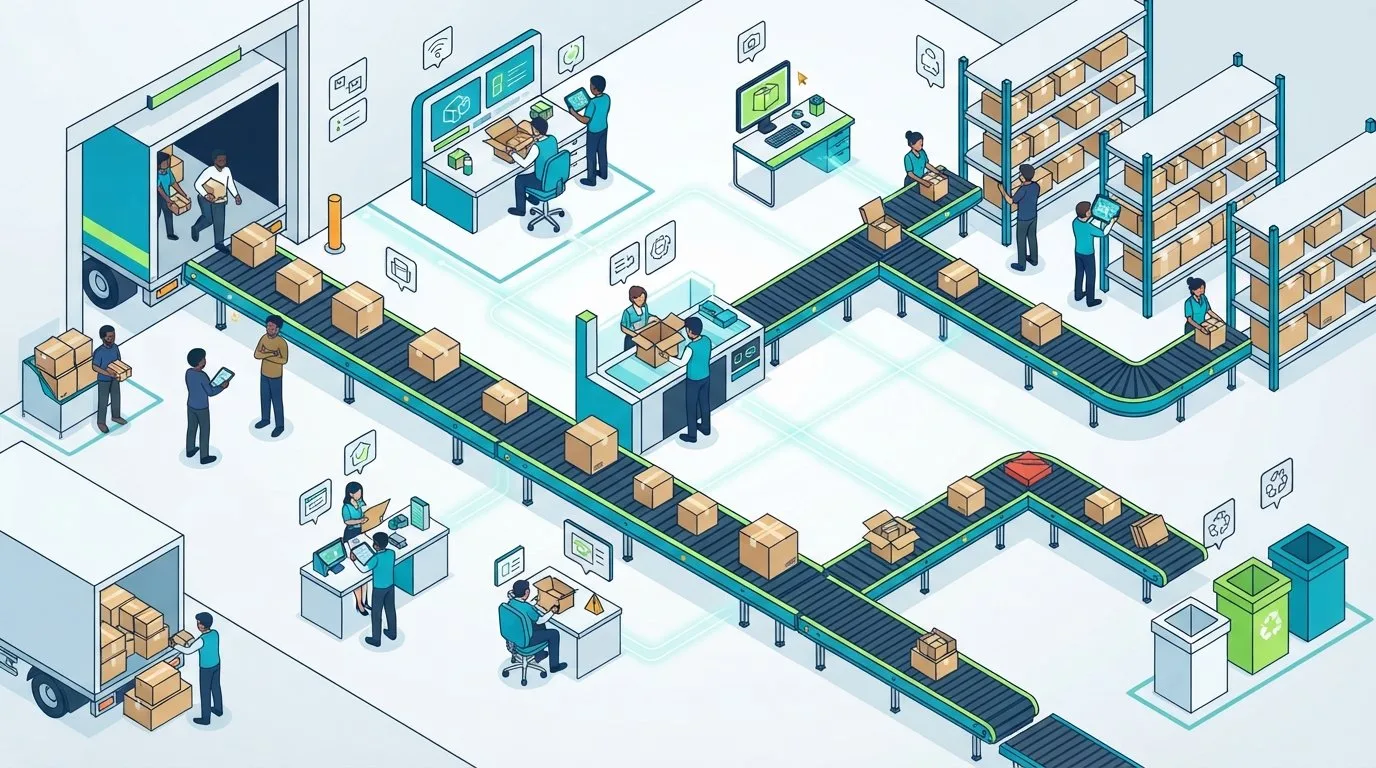
An effective process gives every return a clear path from request to final inventory status. Connect each request to its order, item, reason, and chosen resolution. Provide return instructions, receive the parcel, inspect the item, and record whether it can be restocked, repaired, or removed from sellable inventory. These linked steps make ownership and status clear to customer support, warehouse, and finance teams. A documented workflow shows teams how to manage ecommerce returns without relying on memory.
At the request stage, record the reason consistently and collect useful details. A customer reporting “arrived damaged” may attach a photo, while “wrong item” can trigger a review of the order’s picking records. Use clear criteria to send unusual cases for manual review, such as high-value orders or repeated discrepancies. Document the decision so similar cases receive consistent treatment.
During transit, send status updates at key points: authorization, carrier handoff, receipt, inspection, and resolution. Ecommerce returns can span several days because shipping, inspection, and refund timing happen in sequence. A customer-facing portal can show the current stage and next action. If an inspection line takes more than 48 hours, investigate whether staffing, item identification, or intake procedures are creating a backlog.
When a return arrives, match the package to its authorization before opening or assessing the item. Record its condition, accessories, and packaging, and note any difference between the customer’s reason and inspection findings. Separate sellable stock from damaged or incomplete goods right away. Update inventory only after assessment so an item awaiting review does not appear available for another order.
Resolve the case according to the selected outcome and the inspection result. Send the refund, prepare the approved exchange, or issue store credit through a documented workflow. For a denied return, explain the specific policy condition and finding, then record the customer communication. Orders over $500 are one example of a threshold businesses may route to manual review, alongside cases flagged by order history or product condition.
Track process performance with measures tied to action: time from receipt to inspection, time from approval to refund, restock recovery, and return reasons by product. Resale recovery below 60% may indicate items wait too long before restocking or refurbishment. Review those records with warehouse and customer support teams, then adjust intake, inspection, or routing procedures where a bottleneck appears. For teams deciding how to manage ecommerce returns at scale, these measures show where a process needs attention.
Document each handoff and exception so staff can trace a return without relying on memory. A consistent workflow helps identify delays, keep inventory records aligned with physical stock, and improve the customer experience from request through resolution.
Silicon Valley Direct: eCommerce Order Fulfillment
Silicon Valley Direct provides eCommerce Order Fulfillment and Returns Management for businesses coordinating orders and returned products. These services can help when returns add complexity to warehouse workflows, inventory records, or the movement of goods back into stock.
Warehousing and Distribution support the physical movement of products, while Inventory Management helps keep stock records aligned with operations. Together, these services connect return handling with the broader fulfillment process, from receiving items to updating inventory status.
If returns are becoming harder to coordinate alongside everyday orders, contact Silicon Valley Direct to discuss your operation and its needs.
Make your returns process part of the next growth decision
Use return patterns to decide what to improve next, then assign clear ownership for putting changes into practice. A product-page adjustment, a warehouse handling change, or revised customer communication should have a defined purpose and a way to assess its effect. This discipline makes managing ecommerce returns an ongoing operational practice, rather than a process revisited only when problems arise.
When returns and order handling become harder to coordinate, Silicon Valley Direct offers eCommerce Order Fulfillment, Warehousing and Distribution, and Inventory Management. These services support the movement of orders and the inventory work that follows returns.
Start a conversation about the right next step for your operation.
Frequently Asked Questions
What is ecommerce returns management?
Ecommerce returns management is the coordinated handling of return requests, returned goods, and customer resolutions after an online purchase. It also connects teams that might otherwise rely on separate records. For example, customer support can document a reported issue, warehouse staff can record the item’s condition, and finance can reconcile the final adjustment with the original order. Shared information helps everyone work from the same case details.
How do brands reduce return-related losses?
Brands can reduce losses by recovering value from returned products and addressing recurring problems early. Set clear inspection grades, then route items for resale, repair, or another appropriate outcome. A complete product in good condition, for example, may follow a different path from one with a missing component. Compare each return reason with its inspection result to identify whether losses stem from product quality, handling, or unmet customer expectations.
Should returns be free?
Free returns are not right for every product or business model. Weigh the effect of return shipping on purchase decisions against the cost of transporting and processing returned goods. A brand might offer free returns for products where fit uncertainty is common, while setting different terms for other categories. Whatever the policy, explain who pays for shipping before checkout so customers can factor it into their order.
What are product returns?
Product returns are items customers send back after purchase in search of a refund, exchange, or another resolution. A return request does not mean the item has reached the seller or is ready to sell again. A parcel may arrive with damaged packaging, missing accessories, or signs of use. Record the item’s condition to distinguish what the customer reported from what inspection finds.
What common mistakes cause returns?
Preventable order and product-page mistakes can lead to returns. A customer may receive the wrong variant because picking records were not carefully matched to the order. Another may choose the wrong item after overlooking its dimensions or package contents on the product page. Review order discrepancies alongside customer feedback: a “wrong color” report could indicate either a picking error or an inaccurate color description, and each requires a different fix.
What is the return rate?
The return rate is the share of sales or orders returned during a defined period. Calculate it consistently by dividing the chosen return measure by its matching sales or order total, then multiplying by 100. Decide whether you’re tracking returned units or orders containing a return, since those measures answer different questions. For example, one order with several items can count once as an order or multiple times as units.
When do returnless refunds make financial sense?
A returnless refund may make financial sense when an item’s recoverable value is lower than the combined cost of returning and processing it. Compare transportation, receiving, inspection, repackaging, and realistic resale value. The right choice can vary for the same product depending on condition or location. Exclude cases that require physical inspection to investigate a quality problem or a pattern of repeated claims.
Which KPIs help reduce returns?
Useful KPIs link return outcomes to products and processes teams can change. Track returns by SKU, reason, and condition, alongside the share of returned items recovered for resale. Measure the time from receipt to inventory disposition to identify delays that keep sellable goods unavailable. Review these measures together: a high return count with strong recovery points to a different issue than frequent defects and poor resale recovery.