


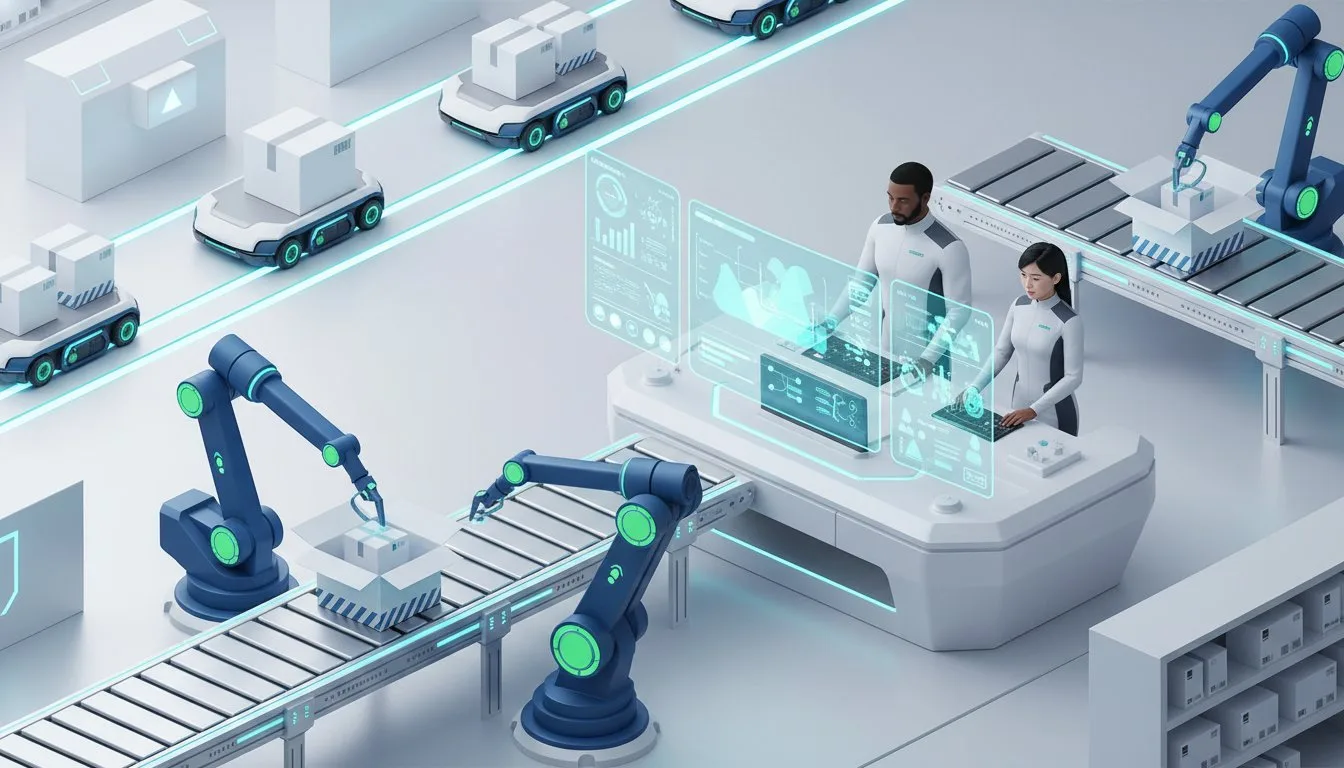
Returns Management Logistics: The Ultimate 2026 Audit Checklist for eCommerce
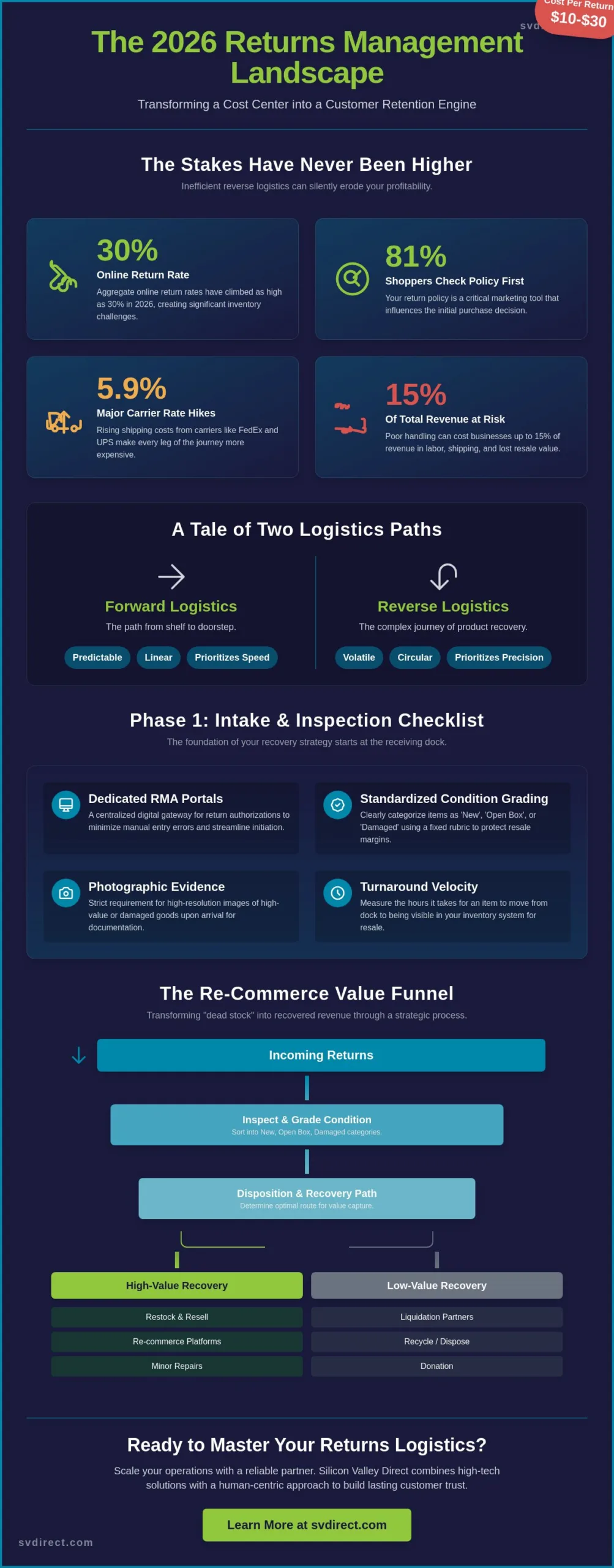
Did you know that aggregate online return rates have climbed as high as 30% in 2026? When you factor in the 5.9% rate hikes from major carriers like FedEx and UPS, it’s clear that inefficient returns management logistics can quietly erode your hard-earned margins. We understand the frustration of seeing “dead” inventory sit in a warehouse while labor costs for manual processing continue to rise. It’s a complex balancing act to maintain visibility while trying to meet the high expectations of modern shoppers who demand speed and transparency.
We’ve designed this guide to provide a clear framework for auditing your current reverse logistics setup. Our promise is simple: we’ll help you master these complexities and transform returns into a genuine competitive advantage that builds lasting customer trust. You’ll find a comprehensive 2026 checklist covering everything from the new EU “withdrawal button” mandates to AI-driven workflows that reduce manual effort and get products back into the resale loop faster. This is about more than just moving boxes; it’s about creating a steady, reliable process that respects your time and your bottom line.
Key Takeaways
- Learn how to transform product recovery from a back-office expense into a strategic engine for customer retention and brand loyalty.
- Identify the essential operational standards for intake and inspection, including condition grading systems that protect your resale margins.
- Optimize your returns management logistics by auditing the technical integration between your warehouse management system and customer-facing tracking tools.
- Explore financial recovery strategies through re-commerce, minor repairs, and liquidation partnerships that rescue value from returned goods.
- Understand how a human-centric approach to high-tech logistics can scale your operations while maintaining the precision required for complex returns.
The Strategic Importance of Returns Management Logistics in 2026
Returns management logistics is the end-to-end orchestration of product recovery. It isn’t just about moving a package backward; it’s about managing a complex ecosystem of data, physical transport, and human inspection. By June 2026, the industry has shifted. Returns are no longer a back-office burden to be minimized. Instead, they’ve become a critical pillar of customer retention. When 81% of consumers check a return policy before they even click “buy,” your recovery process is actually your first line of marketing. A steady, reliable hand in this process ensures that a single return doesn’t become the end of a customer relationship.
The financial stakes are higher than ever. With aggregate online return rates sitting between 15% and 30%, a clunky system doesn’t just annoy customers; it actively bleeds capital. Industry analysis shows that poor handling of these items can cost businesses up to 15% of their total revenue through labor, shipping, and lost resale opportunities. Adopting a “re-commerce” mindset changes the math. Rather than viewing a return as a sunk loss, high-performing brands see it as inventory recovery. This shift transforms the warehouse from a graveyard of “dead” stock into a vibrant engine for reselling and value capture.
To better understand the operational flow of this process, watch this helpful video:
Reverse Logistics vs. Forward Logistics
Forward logistics is a predictable, linear path from the shelf to the doorstep. Reverse logistics is inherently more volatile. You can’t predict exactly when a customer will initiate a return or what condition the product will be in when it arrives. This unpredictability requires a level of operational flexibility that traditional fulfillment often lacks. While forward paths prioritize speed and volume, the circular path of returns prioritizes precision and assessment. In a high-efficiency 3PL environment, the circular economy is the practice of maximizing the lifecycle value of every returned unit through precise inspection and rapid restocking.
The 2026 Consumer Expectation Gap
Modern shoppers demand a “frictionless” experience. They expect the same level of transparency during a return that they get during initial delivery. This expectation gap is where many brands stumble. If a customer scans a return label and doesn’t see a status update for three days, trust evaporates. Effective returns management logistics bridges this gap by providing real-time data from the moment of the first scan. This level of transparency directly impacts your global shipping services reputation. A seamless return process proves to your international and domestic clients that you’re a stable, reliable partner capable of handling growth without losing the human touch.
Phase 1 Checklist: Operational Intake and Inspection Standards
The physical intake process is the foundation of effective returns management logistics. If the initial receipt is disorganized, the rest of your recovery strategy will likely fail. With the average cost of an e-commerce return ranging from $10 to $30 for parcel-sized goods in 2026, every minute an item sits unrecorded on a dock is a drain on your profitability. Use this checklist to audit your partner’s operational standards:
- Dedicated RMA Portals: Does your provider offer a centralized digital gateway for return authorizations to minimize manual entry errors?
- Standardized Condition Grading: Are items categorized clearly as New, Open Box, or Damaged using a fixed internal rubric?
- Photographic Evidence: Is there a strict requirement for high-resolution images of high-value or damaged goods upon arrival?
- Turnaround Velocity: How many hours does it take for an item to move from the receiving dock to being visible in your inventory system?
The Human Oversight Advantage in Inspection
Many providers rely heavily on automated scanners to move volume. While technology is efficient, it often misses subtle product defects like a missing instruction manual or a faint scratch on a screen. This is where seasoned experts provide a distinct advantage. Meticulous manual review ensures that every item is handled with care. Instead of “blind processing,” which treats every box the same, a human-centric approach identifies product-specific nuances. This level of precision is vital for Improving Efficiency and Customer Loyalty because it ensures your customers never receive a “refurbished” item that feels anything less than premium.
Standardizing Disposition Rules
Once an item is graded, the next step is determining its final destination. Clear disposition logic is essential for maintaining margins. Your team should have a custom framework to guide these decisions based on item value and condition. For example, you might decide that any unit valued over $50 should be refurbished, while lower-value items are liquidated. This is where specialized kitting and assembly services become invaluable. These services allow you to repackage “Open Box” items with fresh materials and original inserts, turning a potential loss back into a full-price sale. A robust intake system reduces “dead” inventory and keeps your warehouse lean. If you want to see how a professional team handles high-complexity returns management logistics, you can consult with a logistics expert to review your current workflow.
Phase 2 Checklist: Technical Integration and Data Visibility
Phase 2 of your audit focuses on the digital threads that connect your physical warehouse to your customer’s screen. Even the most meticulous physical inspection is undermined if your data remains siloed in a spreadsheet. In 2026, real-time synchronization is the baseline for professional operations. If your returns management logistics software doesn’t communicate with your storefront instantly, you’re looking at manual reconciliations and frustrated shoppers. Use this checklist to evaluate your technical infrastructure:
- Real-Time WMS Sync: Does your warehouse management system update your eCommerce platform the moment an item is checked in?
- Customer-Facing Tracking: Can shoppers view the status of their return in real time, or are they forced to contact support?
- Batch Processing Capabilities: Does your system allow for the bulk processing of similar items to lower administrative overhead?
- Carrier Nuance Handling: Is your system sophisticated enough to track “Batch Delivery to Carrier” statuses for return labels?
Closing the Information Loop
Real-time data is vital for more than just customer satisfaction; it’s the engine for financial reconciliation and intelligent restocking. When your systems are integrated, you can automate refunds and trigger immediate restocking for items graded as “New.” This is where understanding the batch delivery to carrier meaning becomes essential. By managing customer expectations during the transit phase, you reduce the volume of “where is my refund” inquiries. We prioritize API-first logistics because it reflects the innovation of Silicon Valley, ensuring your data moves as fast as your inventory. This technical precision creates a steady, reliable hand that manages the stress of business growth through digital clarity.
Reporting and Root Cause Analysis
A sophisticated partner doesn’t just process boxes; they provide the insights needed to stop returns before they happen. Your 3PL should offer a “Reason for Return” report that identifies manufacturing defects or sizing inconsistencies. By linking this data to your inventory management, you can prevent overstocking of high-return SKUs that drain your margins. For example, identifying a pattern of damaged arrivals might reveal that your packaging is insufficient for specific transit routes. Addressing these issues can significantly reduce shipping costs for eCommerce by eliminating the need for second and third transit legs on faulty goods. Data-driven returns management logistics transforms a cost center into a strategic feedback loop for your entire supply chain.
Phase 3 Checklist: Financial Recovery and Re-commerce Strategy
The final phase of a sophisticated returns management logistics audit focuses on the bottom line. It is about shifting the perspective from loss mitigation to value recovery. In 2026, the average all-in cost for a single e-commerce return ranges from $10 to $30 for parcel goods, while bulky items can exceed $120. Without a clear financial strategy, these costs quickly cannibalize your profit margins. Use this checklist to ensure your partner is protecting your ROI:
- Value-Added Services: Can the 3PL perform minor cleaning or light repairs to return an item to “Like New” status?
- Liquidation Channels: Does the provider have established partnerships to help you recover value from stock that cannot be resold as new?
- Unit-Level Transparency: Are you provided with a clear breakdown of labor, label costs, and restocking fees for every single return?
- Cross-Border Recovery: Can the partner handle the complexities of tax and duty recovery for international shipments?
Maximizing Resale Value
The goal of re-commerce is to get products back into the market at the highest possible price point. “Grade A” refurbished items often fetch a premium on secondary marketplaces, provided the presentation is flawless. This is where our on-demand digital printing becomes a strategic asset. If a return is perfect but the instruction manual is torn or missing, we can print a fresh replacement instantly. By integrating printing and assembly directly into the return workflow, we eliminate the delay of waiting for manufacturer inserts. This seamless approach ensures that inventory recovery happens in days, not weeks, allowing you to capture sales while demand is still high.
The Hidden Costs of “Free” Returns
While “free returns” are a powerful conversion tool, they carry significant internal labor costs. Every unit requires a human touch to open, inspect, re-label, and re-stock. We’ve seen that for lower-value items, the total cost of processing can occasionally exceed the item’s resale value. In these specific cases, a “Dispose at Warehouse” instruction is often the most profitable move. We help our partners establish a “Return Threshold” based on their specific product margins. This data-driven logic ensures you aren’t spending $15 in labor to save a $10 item. If you’re ready to audit your financial recovery process and protect your bottom line, request a free quote to see how we can optimize your margins.
Scaling Your Returns Logistics with Silicon Valley Direct
Mastering returns management logistics requires more than just a sleek interface; it demands a physical partner with the infrastructure to execute complex workflows. Silicon Valley Direct stands as the premier choice for eCommerce brands that require a high level of precision and personal commitment. From our Union City hub, we act as a global gateway for reverse logistics, connecting Northern California’s innovation with markets across the globe. Our 25 year history in the operational space provides a foundation of stability that’s rare in today’s market. We’ve spent decades refining the balance between high-performance technology and the human oversight that ensures every returned unit is accounted for and processed with care.
We understand that as your business scales, the complexity of your returns grows exponentially. A steady hand is required to manage the influx of data and physical goods without sacrificing speed or accuracy. Our approach is grounded in the belief that logistics is a partnership, not just a transaction. By positioning our physical infrastructure as an extension of your brand, we help you alleviate the stress of growth. This proactive stance is backed by decades of collective experience, ensuring that your physical operations are just as organized as your digital storefront.
Precision Logistics for High-Stakes Industries
Our facility is designed to handle sensitive inventory that requires extra oversight. This includes our healthcare mailing services, where compliance and accuracy are the highest priorities. For high-value returns that need extra security, our warehouse provides the physical protection and meticulous documentation your brand requires. We are not just a platform; we are a dedicated, team-oriented organization. This means we take the time to understand your specific product nuances rather than relying on “blind processing.” Our seasoned experts catch the details that automated scanners miss, protecting your brand reputation and your resale margins.
Ready to Streamline Your Reverse Logistics?
The audit checklist we’ve provided is more than a set of tasks. It’s a roadmap to a more profitable 2026. By addressing operational gaps and integrating data visibility, you move away from the stress of “dead” inventory and toward a proactive re-commerce strategy. We reject the trend of impersonal, automated interactions. In a tech-saturated market, our signature is direct human connection and personal oversight. We offer total flexibility and bespoke problem solving because we know that every business has unique needs. If you’re ready to turn your returns into a strategic advantage, contact Silicon Valley Direct for a custom returns audit. Let’s work together to identify margin leaks and build a steady, reliable process for your returns management logistics.
Transforming Your Reverse Logistics into a Growth Engine
Mastering returns management logistics is no longer a back-office choice; it’s a requirement for any brand looking to survive the margin pressures of 2026. We’ve detailed how a standardized condition grading system and real-time WMS integration can stop the silent leak of revenue. By prioritizing human-led inspection over blind automation, you ensure that every item is evaluated for its maximum resale potential. This approach protects your brand reputation while getting inventory back into the hands of customers faster than ever before.
Since 1999, we’ve provided a steady hand for businesses navigating the complexities of order fulfillment and inventory recovery. Our Silicon Valley headquarters serves as a global gateway, combining local innovation with the reliability of a seasoned operational team. We’re committed to helping you turn every return into an opportunity for customer trust and financial recovery through 100% accuracy in our manual reviews. You don’t have to face these logistical hurdles alone. We’re ready to help you build a more resilient and profitable supply chain.
Optimize Your Returns Strategy with Silicon Valley Direct
Frequently Asked Questions
What is the difference between reverse logistics and returns management?
Reverse logistics is the overarching framework for moving goods from the end consumer back to the seller or manufacturer. It encompasses everything from recycling and disposal to refurbishing. Returns management is a subset of this field that focuses specifically on the end-to-end customer return experience. It involves the intake, inspection, and disposition of items to recover value while maintaining customer satisfaction and brand loyalty.
How much does returns management typically cost for an eCommerce business?
The all-in cost for a single e-commerce return in 2026 generally falls between $10 and $30 for standard parcel-sized items. If you’re shipping bulky or heavy products, these costs can escalate significantly, often reaching $40 to $120 or more. These figures include the price of the return shipping label, labor for inspection, and the administrative overhead required to update inventory systems and process refunds accurately.
Can a 3PL help with refurbishing returned items for resale?
A specialized 3PL can act as a strategic partner by performing minor repairs, cleaning, or repackaging to save a sale. Instead of liquidating “Open Box” inventory at a loss, your provider can use kitting and assembly workflows to restore products to a resalable condition. This human-led oversight ensures that every item meets your brand’s quality standards before it’s placed back into the active inventory pool for future orders.
What are the most common reasons for eCommerce returns in 2026?
Sizing and fit remain the primary drivers for returns, particularly in the apparel category where return rates can reach 40%. Other common factors include items arriving damaged during transit or products not matching the online description. Retailers are also seeing a rise in “wardrobing,” where customers use a product briefly before returning it. Identifying these root causes through detailed reporting is essential for optimizing your returns management logistics strategy.
How does returns management impact my overall shipping costs?
Returns management logistics directly impacts your total spend by adding a second or even third leg to the shipping journey. With major carriers like FedEx and UPS implementing average rate increases of 5.9% in 2026, every return label adds significant pressure to your margins. High-efficiency partners reduce these costs by localizing returns through consolidation centers and identifying faulty packaging that leads to preventable damage during the initial delivery phase.
What should I look for in a 3PL returns management contract?
You should prioritize contracts that offer total transparency regarding labor costs per unit and restocking fees. Ensure the agreement specifies real-time data synchronization between their warehouse management system and your storefront to prevent inventory silos. It’s also vital to define clear disposition rules for different product categories. This ensures the 3PL knows exactly when to refurbish, liquidate, or dispose of an item without requiring manual approval for every case.
How can I reduce the rate of returns for my online store?
Enhancing the accuracy of your product pages is the most effective way to lower return rates. High-resolution photos, detailed size guides, and customer reviews help shoppers make informed decisions, reducing the likelihood of “buyer’s remorse.” You can also implement AI-powered fraud detection to flag serial returners or “wardrobing” behavior. Clear communication of your policy, as required by states like California, also sets proper expectations for the customer from the start.
Is it better to have returns sent to my office or a 3PL fulfillment center?
Directing returns to a 3PL fulfillment center is usually the more scalable and professional choice. Most office environments lack the specialized infrastructure and staff needed to inspect and restock inventory at high volumes. A 3PL provides the physical space and technical integration to get products back into the resale loop within days. This allows your internal team to focus on growth while the logistics experts handle the mechanical nature of product recovery.