3PL International Shipping: The 2026 Strategic Guide to Global Fulfillment
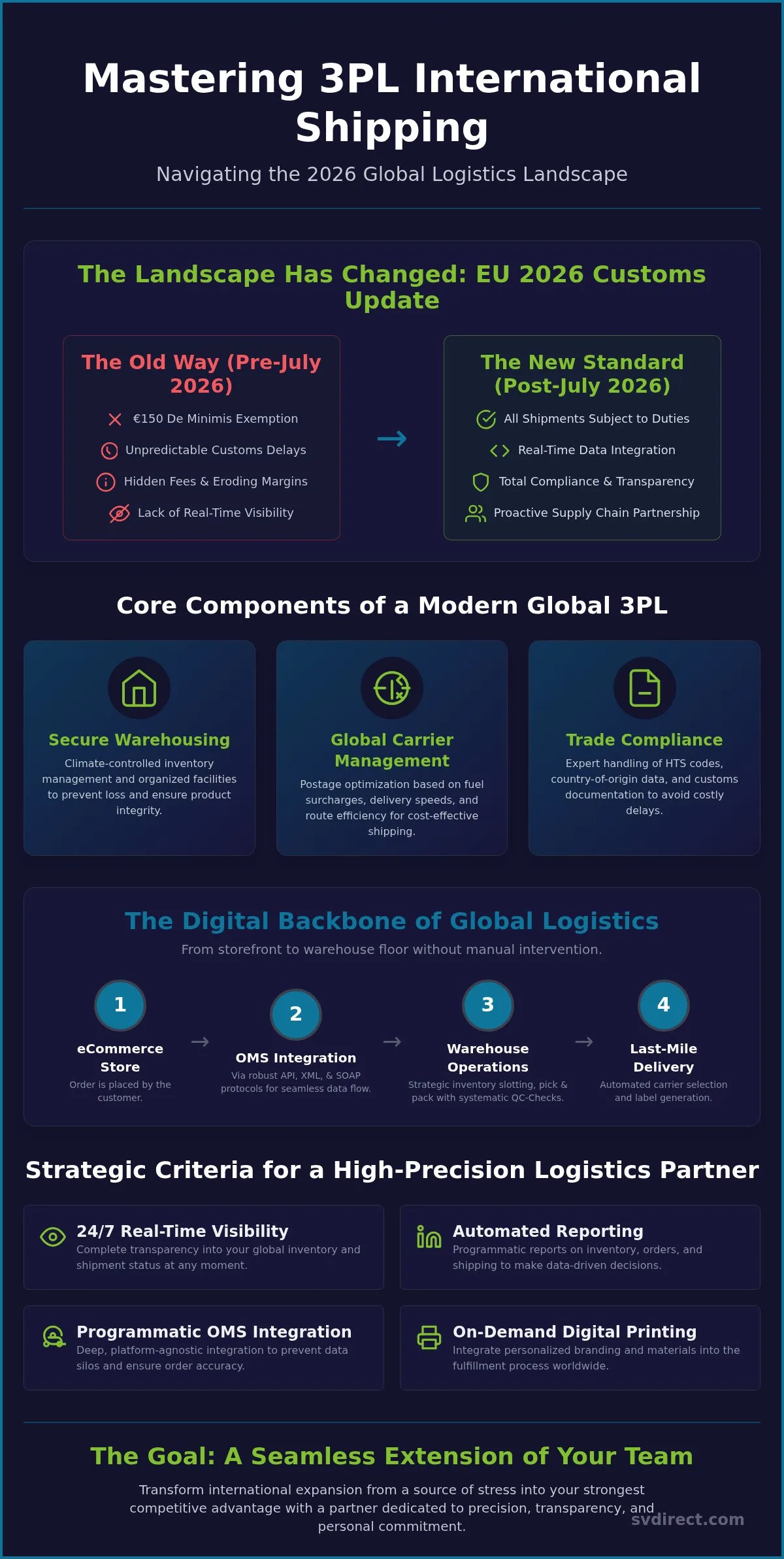
Did you know that as of July 2026, the European Union has removed the €150 de minimis exemption, making every single international shipment subject to duties? For brands scaling across borders, this regulatory shift means that the old way of “set it and forget it” 3pl international shipping is officially dead. You likely feel the weight of unpredictable customs delays and those hidden fees that quietly erode your profit margins. It’s frustrating when you lack real-time visibility into your own global inventory, leaving you to guess where your products are at any given moment.
We believe that global growth shouldn’t be a source of constant stress. This guide will help you master the complexities of global fulfillment by leveraging high-precision technology and human oversight. We’ll preview the essential 2026 customs updates, explain how to achieve reliable cost transparency, and show you how a proactive partnership can transform international expansion into your strongest competitive advantage. By the end, you’ll see how a steady hand in logistics provides the stability your business needs to thrive as an extension of your own team.
Key Takeaways
- Understand how the 2026 logistics landscape has shifted from simple transport to a complex requirement for real-time data integration and total compliance.
- Learn to optimize your supply chain through programmatic OMS integration and strategic inventory slotting to make 3pl international shipping a seamless part of your operations.
- Identify the hidden costs of global trade by mastering Incoterms and implementing landed cost transparency to protect your margins.
- Discover the specific technical criteria, such as 24/7 visibility and automated reporting, that define a high-precision logistics partner.
- Explore how integrating on-demand digital printing with your fulfillment strategy creates a personalized brand experience for customers worldwide.
What is 3PL International Shipping? Defining the 2026 Landscape
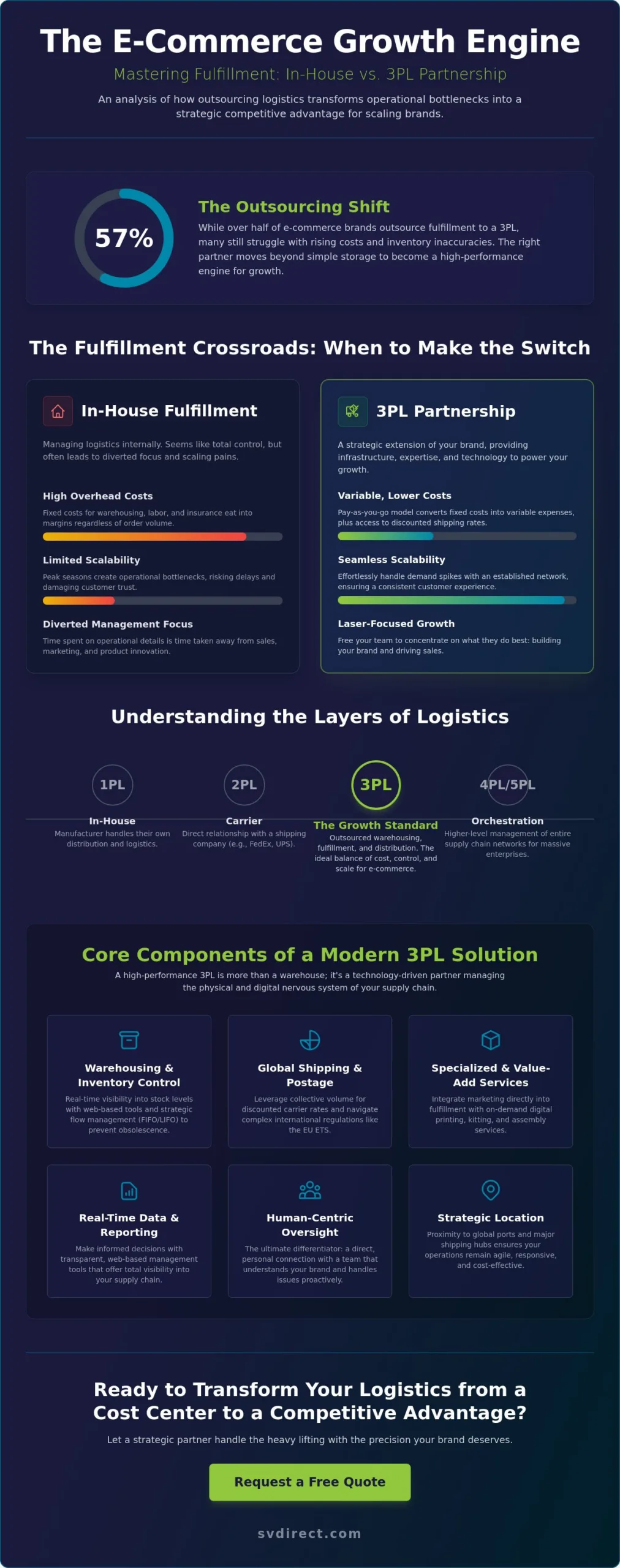
At its core, 3pl international shipping is the strategic outsourcing of your supply chain operations to a specialized logistics expert. While the basic definition of Third-party logistics (3PL) focuses on warehousing and transport, the 2026 environment requires a much deeper level of integration. It’s no longer enough to simply move a parcel from Point A to Point B. Modern global fulfillment now demands a high-precision marriage of customs brokerage, trade compliance, and real-time data synchronization. This ensures that every shipment is accounted for, regardless of its destination.
The defining trend of this year is the final transition of the 3PL from a mere shipping provider to a true supply chain partner. Growing businesses are moving away from the chaos of in-house global logistics. They’ve found that managing international regulations, such as the 2026 EU duty changes, is too complex to handle without professional oversight. Instead, they’re choosing models that offer stability and act as a seamless extension of their own internal teams. This shift allows brands to focus on product development while experts handle the mechanical nature of global movement.
The Core Components of Global 3PL
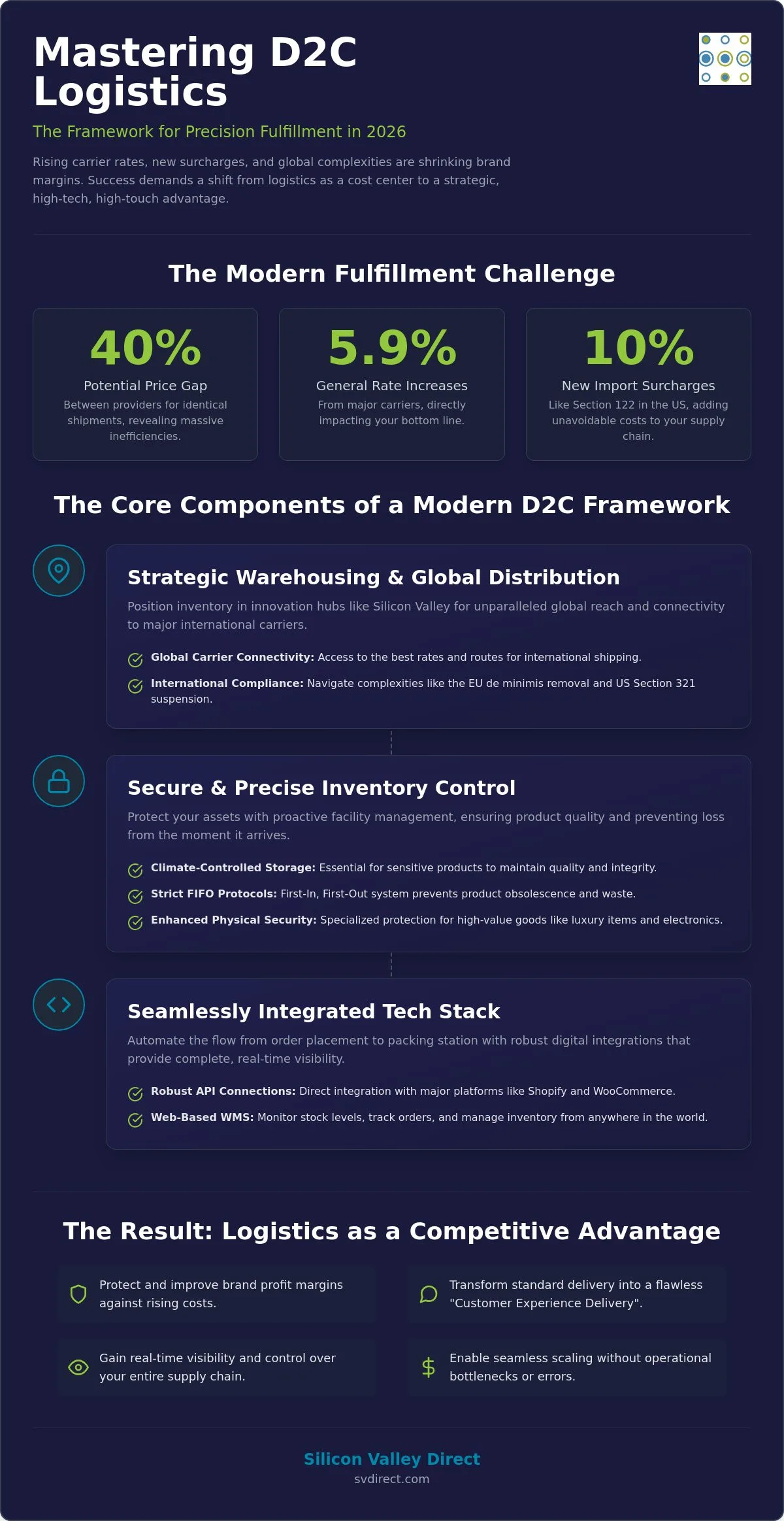
A robust international shipping strategy relies on three foundational pillars that ensure your products reach customers safely and legally. First, secure warehousing is essential. This involves more than just storage; it requires climate-controlled inventory management and organized facilities that prevent loss. Second, global carrier management allows for postage optimization based on current fuel surcharges and delivery speeds. Finally, trade compliance is mandatory. With the U.S. suspending de minimis exemptions for many imports, having an expert handle HTS codes and country-of-origin data is critical to avoiding costly delays.
Why eCommerce Brands are Going Global Now
Brands are aggressively expanding into international markets to find lower customer acquisition costs and untapped audiences. However, these customers now expect local-speed delivery. They won’t wait weeks for a package to clear a port. By leveraging specialized 3PL fulfillment services, brands can reduce the massive overhead of international expansion. High-tech integration allows small and medium enterprises to compete with global giants by providing the same level of transparency and reliability that modern consumers demand. This shift isn’t just about growth; it’s about building a sustainable, global presence through precision and personal commitment.
The Mechanics of Global Logistics: From Warehousing to Last-Mile Delivery
Success in 3pl international shipping isn’t just about physical movement; it’s about the precision of the data that precedes it. The process begins with the programmatic integration of your Order Management System (OMS). This digital handshake ensures that every order flows seamlessly from your storefront to the warehouse floor without manual intervention. Once integrated, we utilize strategic inventory slotting. By positioning stock based on global demand patterns, we reduce internal travel time and expedite the fulfillment cycle before the package even reaches the dock.
The Digital Backbone: API and Web Service Integration
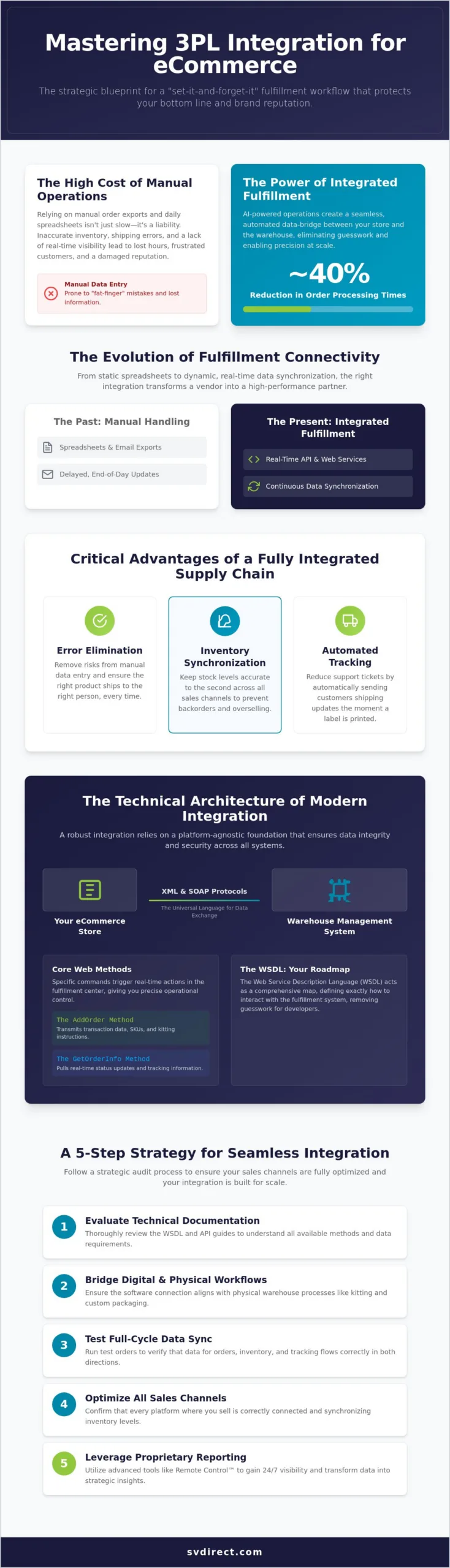
Modern logistics relies on robust XML and SOAP protocols to facilitate a constant, bi-directional exchange of information. These platform-agnostic systems allow your business to scale across different sales channels without being tethered to a single eCommerce provider. Specifically, standardized web methods like ‘AddOrder’ reduce custom coding time for your developers by providing a pre-defined structure for order submission. This proactive technical setup prevents the order conflicts and data silos that often plague less organized facilities.
After an order is received, it enters a pick and pack process governed by a systematic QC-Check. High-precision fulfillment requires more than speed; it requires total accuracy. Once verified, our system handles carrier selection and automated label generation tailored for specific international routes. We meticulously follow international shipping regulations to ensure that customs documentation is perfect. This attention to detail minimizes the risk of border delays and ensures your brand remains reliable in the eyes of the global consumer.
Inventory Precision and Serial Number Tracking
We maintain 99.9% accuracy through rigorous, cycle-counted inventory management that replaces the chaotic “annual count” model. For industries like high-value electronics or healthcare, serial number tracking provides an essential layer of accountability and security. Clients gain 24/7 visibility into these stock levels and movement history through our proprietary Remote Control system. This level of transparency ensures you’re never guessing about your global availability or stock health.
The journey concludes with real-time tracking and coordinated last-mile delivery. We monitor the package until it reaches the end customer, providing a reliable experience that feels like a natural extension of your own team. If you’re ready to see how this level of precision can stabilize your expansion, you might want to consult with a logistics expert about your specific global needs.
Navigating Compliance, Customs, and the Hidden Costs of Global Trade
Customs clearance is often the most volatile stage of 3pl international shipping. It’s where simple paperwork errors turn into weeks of delays and mounting storage fees. We approach this challenge with a proactive mindset, identifying potential conflicts before a parcel ever leaves our facility. This level of oversight ensures that your international trade remains a competitive advantage rather than a logistical bottleneck. By coordinating with a partner that acts as a steady hand, you can focus on scaling while we handle the mechanical complexities of global border crossings.
A high-performance logistics partner doesn’t just react to customs issues; they anticipate them. This involves a deep understanding of HTS codes and the shifting de minimis values we discussed earlier. When your data is integrated correctly from the start, the risk of a shipment being held for “valuation disputes” or “missing documentation” drops significantly. It’s about maintaining a proactive stance that protects your profit margins and your brand reputation simultaneously.
Managing Duties, Taxes, and DDP vs. DDU
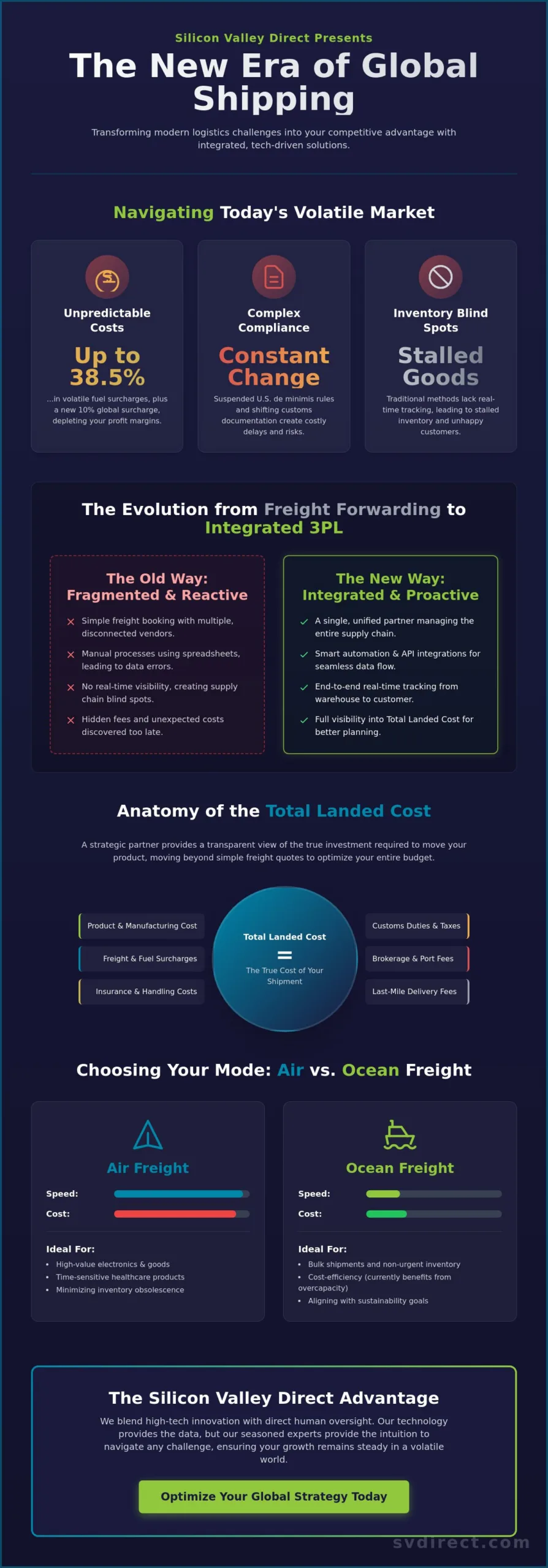
The choice between Delivered Duty Paid (DDP) and Delivered Duty Unpaid (DDU) fundamentally changes your customer’s unboxing experience. With DDP, all duties and taxes are settled at the point of sale. This eliminates the “sticker shock” of a customer being asked for additional payment at their front door. We help automate these calculations, ensuring total landed cost transparency. Beyond the customer experience, we leverage our long-term carrier relationships to secure volume discounts. These savings help offset the rising fuel surcharges and regulatory fees that have become standard in 2026.
- DDP (Delivered Duty Paid): Enhances brand loyalty by removing hidden fees for the recipient.
- Landed Cost Transparency: Provides a clear, upfront total that prevents cart abandonment.
- Carrier Optimization: Utilizes established shipping lanes to reduce transit times and costs.
Specialized Compliance: Healthcare and Literature
Global fulfillment becomes even more rigorous when dealing with sensitive sectors. Healthcare and pharmaceutical logistics require a level of precision that many standard providers simply can’t offer. From managing HIPAA-compliant mailing to the secure distribution of Explanation of Benefits (EOB) documents, every step must be documented and verified. We treat these shipments with the personal commitment they deserve, ensuring that sensitive data is protected and regulatory standards are met without exception.
For a deeper look into these specific requirements, you can explore our Healthcare Mailing Services guide. This resource details the intersection of high-precision fulfillment and strict regulatory compliance. Whether you’re shipping personalized literature or medical supplies, our organized facility and systematic QC-Check process provide the stability necessary for these high-stakes operations. We don’t just ship boxes; we protect the integrity of your brand across every border.
Strategic Criteria for Selecting an International 3PL Partner
Selecting a 3pl international shipping partner is a multi-year decision that dictates the trajectory of your global growth. It’s a move away from the traditional vendor mindset toward a strategic alliance. You must evaluate whether a provider offers the scalability required for your busiest months. Can they reliably manage 3,000+ shipments a week during peak holiday seasons? If a facility feels hectic and reactive during your initial tour, those internal stresses will eventually manifest as shipping errors and customer complaints. You’re looking for a quiet, organized facility that treats every parcel with deliberate care.
Flexibility is another non-negotiable factor. Many large-scale providers rely on “cookie-cutter” procedures that force your business to adapt to their rigid systems. This approach often fails when you have specialized kitting needs or unique international packaging requirements. A high-performance partner provides bespoke problem-solving that fits your specific workflow. They should act as a steady hand, alleviating the stress of expansion through a proactive attitude and a commitment to precision. This ensures your logistics operations remain a stable foundation for your brand’s reputation.
Evaluating 3PL Technology and Reporting
In the 2026 landscape, technology is the only way to maintain 24/7 visibility into a global supply chain. You need instant access to order histories and real-time inventory levels to make informed decisions. A partner shouldn’t just give you a login; they should provide a deep data suite. Our proprietary Remote Control system offers 120+ standard reports, giving you granular insights into every aspect of your fulfillment. Automated email notifications for receipts and backorders ensure your team is always informed, reducing the need for manual check-ins and repetitive status updates.
The ‘Partnership’ Litmus Test
The best logistics relationships feel like an extension of your own team rather than an outsourced service. This is achieved through human oversight and direct connection, specifically rejecting the trend of total automation that ignores the nuances of your products. When a partner understands your business goals, they can anticipate order conflicts before they impact your customers. This level of personal commitment is rare in a tech-saturated market. You can explore how these long-term collaborations drive growth by reading our customer testimonials from clients who value stability and expert-level service.
Scaling Your Global Reach with Silicon Valley Direct’s Integrated Solutions
Scaling a brand globally requires more than just a warehouse; it requires a strategic hub where technology, customer service, and marketing converge. We’ve built Silicon Valley Direct to serve as that unified foundation. Our model moves beyond the mechanical nature of traditional logistics by integrating high-resolution digital printing directly into the fulfillment workflow. This ensures that your 3pl international shipping strategy isn’t just about moving products, but about delivering a consistent, high-quality brand experience to every corner of the world.
Personalized Global Fulfillment with Variable Data Printing
Through our on-demand digital printing, we utilize HP Indigo 5500 liquid ink technology to produce offset-quality collateral. This capability allows for variable data printing, which means you can customize copy or images for specific international markets without the burden of large print runs. It’s a proactive way to reduce waste and storage costs while maintaining a personalized touch. Whether it’s a custom insert or a localized manual, our systematic QC-Check process ensures that complex kitting and assembly are performed with absolute accuracy every time. We don’t just assemble packages; we curate the unboxing experience for your global audience.
The Silicon Valley Direct Promise: Precision and Proactivity
Our commitment to your growth is defined by our Nine Promises, a framework that ensures we listen, understand, and anticipate problems before they reach your customers. We maintain a quiet, organized facility that stands in stark contrast to the hectic, reactive environments of many automated hubs. This deliberate pace allows our team to meet high-volume deadlines with the precision your brand deserves. Since 1999, we’ve prioritized long-term staff retention and human oversight, ensuring that the collective experience of our team remains your greatest asset.
By choosing our Silicon Valley 3PL fulfillment services, you’re leveraging a geographic identity synonymous with innovation and global connectivity. Our location in the heart of the world’s tech capital keeps your supply chain connected to the latest advancements in digital integration and logistics efficiency. We don’t act as a mere vendor. We function as a dedicated extension of your team, providing the steady hand you need to master 3pl international shipping in 2026 and beyond.
Master Your Global Fulfillment Strategy
The 2026 landscape for global fulfillment demands a shift from simple transport to total data transparency and regulatory precision. Success now hinges on your ability to anticipate customs shifts and maintain real-time visibility across every border. By choosing a partner that prioritizes human oversight alongside high-tech integration, you ensure that 3pl international shipping becomes a driver of growth rather than a source of stress. It’s about finding a steady hand to manage the mechanical complexities while you focus on your brand’s vision.
We provide the stability your business needs through our proprietary Remote Control™ tracking system and on-site, Red Dot-quality digital printing. These tools, backed by decades of experience in high-precision fulfillment, allow us to act as a seamless extension of your team. We don’t just move boxes; we protect your reputation with every parcel sent. Our proactive approach ensures that high-volume deadlines are met with the accuracy and care your international customers expect.
Mastering global logistics is a journey best taken with a reliable, seasoned partner. We’re ready to help you transform your international operations into a powerful competitive advantage.
Frequently Asked Questions
What is the difference between an international 3PL and a standard freight forwarder?
An international 3PL offers comprehensive order fulfillment, while a freight forwarder primarily coordinates the transportation of goods from one point to another. While a forwarder handles the logistics of air or sea freight, a 3PL manages the entire lifecycle of an order. This includes warehousing, pick and pack services, and returns management. Choosing a 3PL ensures a more integrated approach to your supply chain, acting as an extension of your team rather than just a transport vendor.
How much does 3PL international shipping typically cost for a small business?
3pl international shipping costs are determined by a combination of storage requirements, kitting complexity, and global postage rates. Since every business has unique needs, pricing is typically customized based on shipment volume and the specific destinations served. Factors like current fuel surcharges and dimensional weight also impact the final total. We recommend requesting a personalized quote to understand how these variables align with your specific growth goals and profit margins.
Can a 3PL help with customs clearance and international documentation?
A high-precision 3PL proactively manages customs clearance by ensuring all international documentation is accurate before a shipment leaves the facility. This involves assigning correct Harmonized Tariff Schedule (HTS) codes and preparing detailed commercial invoices. By handling these technical compliance requirements, the 3PL anticipates potential border conflicts and reduces the risk of costly delays. This level of oversight is essential for navigating the complex duty regulations that define the 2026 global trade environment.
What is the ‘landed cost’ and why is it important for international eCommerce?
Landed cost represents the total price of a product once it has arrived at the customer’s doorstep, including the original item price, shipping fees, duties, and taxes. Providing this transparency is vital for international eCommerce because it prevents “sticker shock” during delivery. When customers see the full cost upfront, it builds trust and significantly reduces cart abandonment rates. A sophisticated logistics partner automates these calculations to ensure a seamless unboxing experience for every global recipient.
How does a 3PL handle international returns and reverse logistics?
3PLs manage international returns through a structured reverse logistics process that includes receipt, inspection, and inventory updates. Once a returned item is received at the facility, it undergoes a systematic quality check to determine if it can be restocked. This data is then synced with your inventory management system in real time. Efficient returns management protects your margins and ensures that the human element of customer service remains a priority even after a sale is completed.
What integration options are available for connecting my Shopify or WooCommerce store to a 3PL?
Integration with platforms like Shopify or WooCommerce is achieved through programmatic API and web service interfaces using XML or SOAP protocols. These digital handshakes allow your store’s Order Management System (OMS) to communicate directly with our warehouse. This automation eliminates manual data entry and ensures that tracking information is pushed back to your customers instantly. Our systems are platform-agnostic, providing the flexibility you need to scale across multiple global sales channels without technical friction.
How do I ensure my high-value electronics are secure in a 3PL warehouse?
High-value electronics are secured through a combination of physical facility organization and digital serial number tracking. Every unit is accounted for using cycle-counted inventory management to maintain 99.9% accuracy. You can monitor stock movement and security 24/7 through our proprietary Remote Control™ system. This high-resolution visibility ensures that your inventory is protected by both advanced technology and the personal commitment of a seasoned operations team.
What are the benefits of using a 3PL for pharmaceutical or healthcare mailing?
Healthcare and pharmaceutical mailing benefit from the strict precision and HIPAA-compliant processes required for sensitive medical documents. Using a 3PL for these services ensures that Explanation of Benefits (EOB) and pharmaceutical collateral are kitted and mailed with absolute accuracy. Our systematic QC-Check process prevents errors in these high-stakes sectors. This specialized oversight provides the stability and reliability needed to maintain compliance while reaching a global patient or provider network.