img not found!
The Ultimate 3PL Checklist: How to Vet a Fulfillment Partner in 2026

The Ultimate 3PL Checklist: How to Vet a Fulfillment Partner in 2026

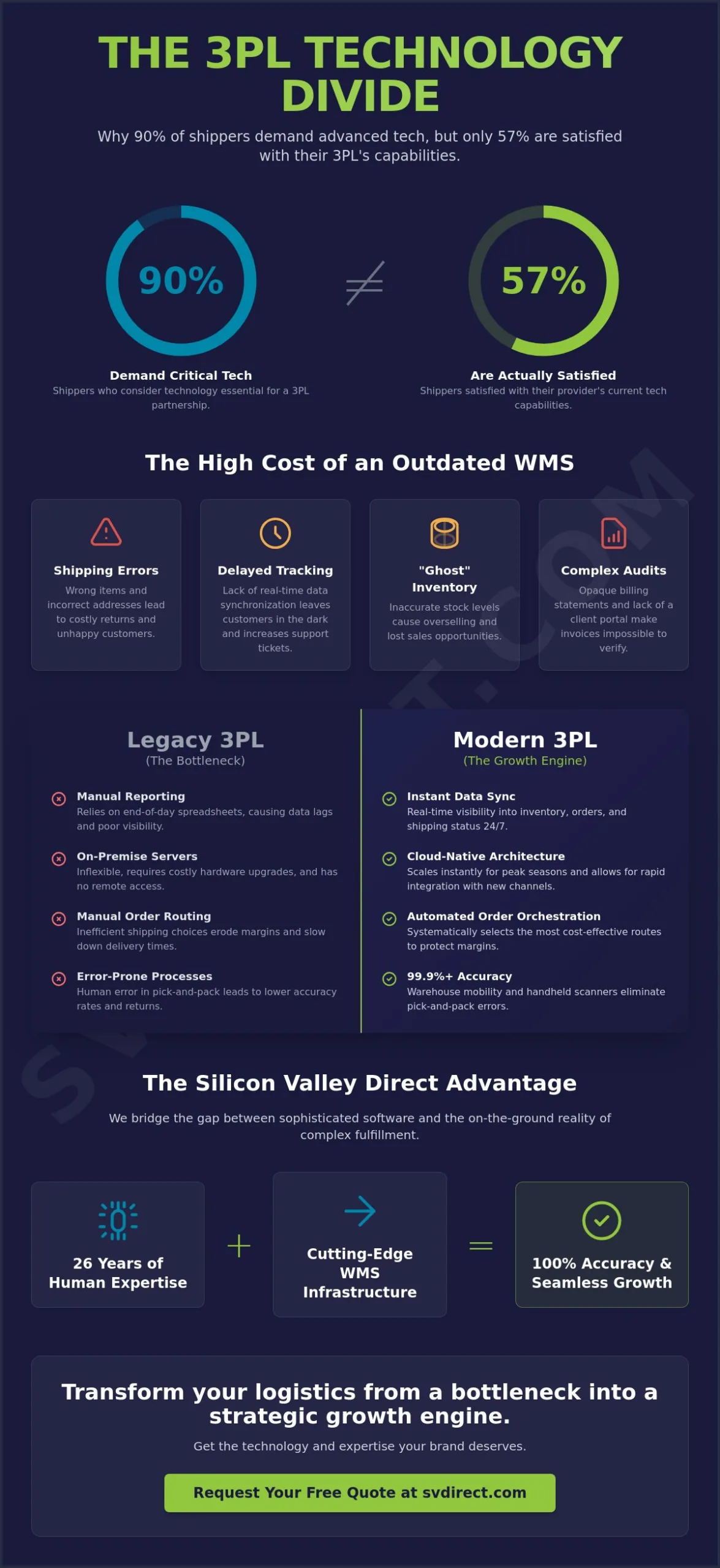
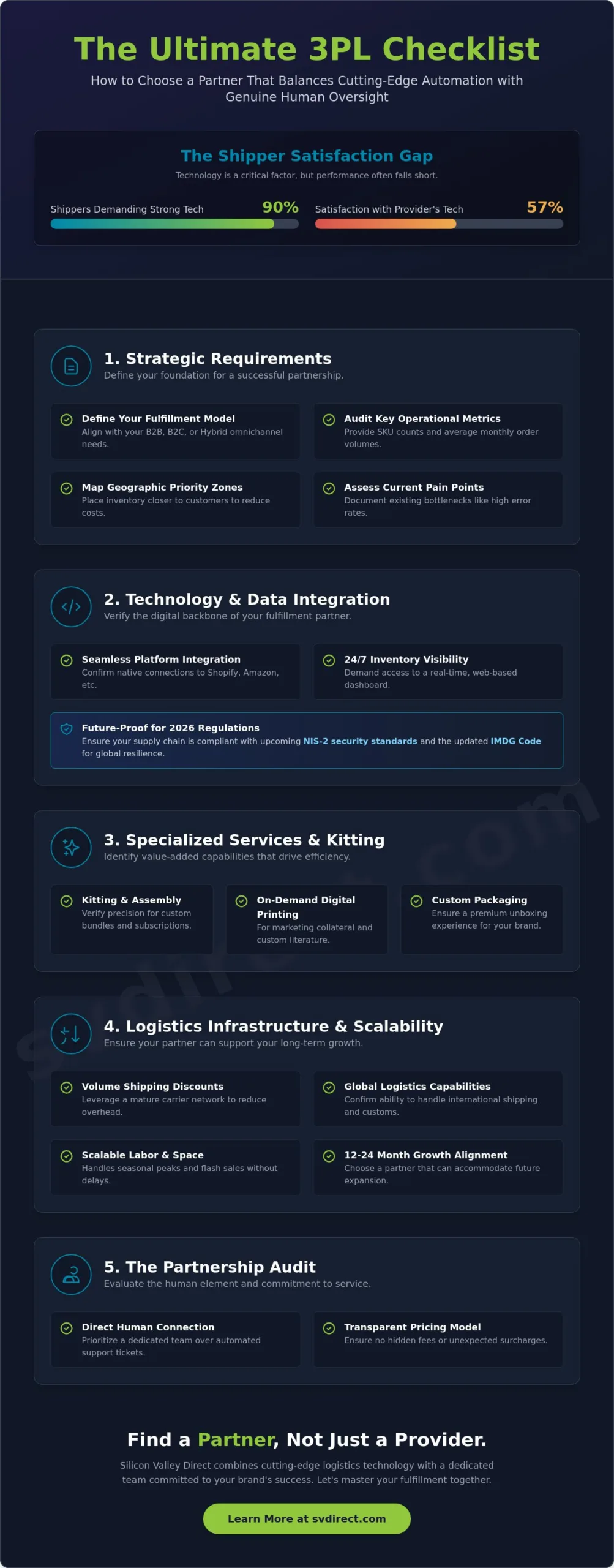
90% of shippers consider technological capabilities a critical factor when selecting a logistics provider, yet only 57% are actually satisfied with their current provider’s tech stack. If you’re struggling with inventory blind spots or hidden fees that seem to appear out of nowhere, you’ve likely felt that frustration. It’s exhausting to manage a partner that feels more like a hurdle than a high-performance extension of your team. This guide provides a comprehensive 3pl checklist designed to help you master your logistics transition and identify a partner that balances cutting-edge automation with genuine human oversight.

We agree that your fulfillment should be a steady hand during your fastest growth phases, not a source of errors and shipping delays. You deserve a partner that offers total transparency in inventory levels and absolute precision in kitting and assembly. By following this framework, you’ll learn exactly how to evaluate a provider’s scalability and specialized fulfillment capabilities. We’ll also preview the essential 2026 regulatory requirements, such as the NIS-2 security standards and the updated IMDG Code, to ensure your supply chain remains resilient, compliant, and ready for the global market.

Key Takeaways

  • Define your fulfillment model—B2B, B2C, or hybrid—to ensure your partner aligns with your specific SKU complexity and monthly order volumes.
  • Utilize a comprehensive 3pl checklist to verify seamless digital integration with platforms like Shopify or Amazon and confirm 24/7 inventory visibility via a web-based dashboard.
  • Identify opportunities for operational efficiency through specialized kitting and on-demand digital printing for literature and marketing collateral.
  • Reduce overhead by leveraging a provider’s mature carrier network to access volume-based shipping discounts for both domestic and global logistics.
  • Prioritize direct human connection and transparent pricing models to ensure your fulfillment transition is managed by a dedicated team rather than automated tickets.

The Strategic 3PL Checklist: Defining Your Fulfillment Requirements

Before you ever step foot on a warehouse floor or sign a long-term contract, you must establish a clear internal baseline. A successful partnership starts with a rigorous third-party logistics (3PL) strategy that aligns your physical operations with your long-term business goals. This isn’t just about finding a place to store boxes; it’s about identifying a stable extension of your own team. You need to determine if your primary model is B2B, B2C, or a hybrid omnichannel approach. Each model requires different labor rhythms, technology integrations, and space allocations.

To begin your 3pl checklist, start with hard data. Audit your current SKU count and average monthly order volume to provide a baseline for storage and labor requirements. Without these figures, you’re essentially guessing at your logistics needs, which leads to inefficiencies and unexpected expenses later. You should also define your geographic priority zones. Placing your inventory closer to your densest customer clusters minimizes transit times and reduces shipping costs across various zones.

To visualize how these factors impact your operational success, watch this breakdown of essential logistics criteria:

Assessing Current Pain Points and Growth Trajectory

Look closely at your existing bottlenecks. Are you seeing high error rates in kitting or slow processing times during peak seasons? Document these issues now so you can address them during the vetting process. You also need to project your 12-month and 24-month growth. A partner that fits you today might not have the physical space or the labor scaling capacity for your future. Identify your seasonal peaks or flash sale requirements that demand rapid labor scaling to ensure your partner can pivot quickly without losing precision.

Operational Alignment: B2B, B2C, and Omnichannel Needs

If you sell to big-box retailers, verify that the provider handles retail distribution and EDI compliance. B2B logistics is a specialized field that differs significantly from direct-to-consumer (DTC) shipping. For DTC, your 3pl checklist should prioritize pick-and-pack speed and accuracy. An omnichannel partner must manage inventory across multiple sales channels simultaneously. This synchronization prevents stockouts and ensures a seamless experience for every customer, regardless of where they shop. For more insights on optimizing these processes, you can explore our latest industry analysis on the company blog.

Finally, determine the level of customization required for your packaging and unboxing experience. If your brand relies on a premium presentation, you need a team that treats your packaging with the same care you do. High-performance logistics is about more than speed; it’s about the precision and personal commitment that protects your brand’s reputation with every delivery.

Technology and Data Integration: The Digital 3PL Checklist

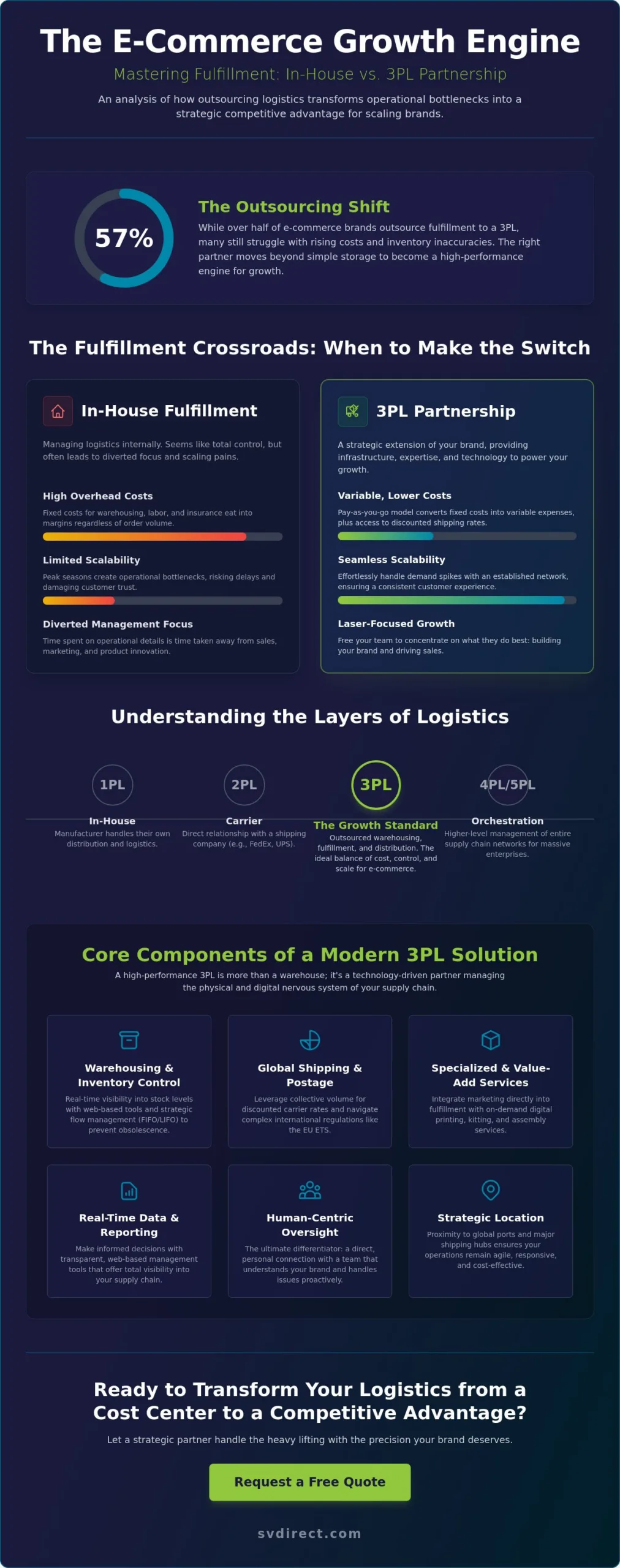
While a warehouse’s physical footprint matters, its digital infrastructure defines its actual reliability in a modern market. In 2026, the gap between what shippers require and what providers deliver is surprisingly wide. Research indicates that 90% of shippers prioritize technological capabilities, yet only 57% feel satisfied with their provider’s current stack. This discrepancy makes your 3pl checklist for technology the most critical part of your vetting process. You need a partner whose systems don’t just “talk” to yours but act as a unified, proactive extension of your storefront.

A high-performance logistics partner provides more than just a place to store goods; they offer a steady hand through data transparency. Automated order status updates and tracking information should flow to your customers instantly, which reduces the burden on your internal support staff. When vetting a fulfillment partner, look for a sophisticated blend of seasoned professionalism and high-tech efficiency. This ensures that while the technology does the heavy lifting, human expertise remains at the helm to interpret data and manage complex situations.

Seamless eCommerce Platform and API Connectivity

Integration with Shopify, WooCommerce, or Amazon should be the baseline for any modern provider. Don’t settle for vague promises of “custom builds” if you need to launch quickly. Ask for a specific onboarding timeline for digital integrations to avoid costly downtime. The user interface of the client portal should be intuitive, allowing your team to pull reporting and monitor activity without specialized technical training. We believe that true partnership is built on this kind of accessible, real-time collaboration.

Real-Time Inventory Visibility and Reporting Accuracy

Real-time inventory visibility is no longer a luxury; it’s a requirement to prevent the nightmare of overselling during peak seasons. Your 3pl checklist must confirm that the system provides 24/7 monitoring of stock levels across all sales channels. This transparency allows for proactive inventory management and actionable data on aging inventory or shipping costs. High-volume periods demand 99.9% system uptime guarantees. If a provider’s system crashes during a flash sale, your brand’s reputation pays the price.

With the 2026 EU NIS-2 regulation now in effect, IT security is also a critical operational risk. Your partner must demonstrate robust data security protocols to protect sensitive customer information and comply with increasing personal liability standards for IT shortcomings. If you’re ready to see how a tech-forward approach can stabilize your growth, you might consult with an expert who values both precision and personal commitment.
The Ultimate 3PL Checklist: How to Vet a Fulfillment Partner in 2026

Beyond Standard Shipping: Specialized Services and Kitting Checklist

Standard fulfillment often fails when a business requires more than just picking a product off a shelf. If your brand relies on subscription boxes, medical devices, or high-touch marketing collateral, your 3pl checklist must account for specialized handling that goes beyond the basics. These value-added services are where a partner’s operational history and precision truly shine. It’s about finding a steady hand that can manage complexity without increasing your error rates.

Reverse logistics is a prime example of a service that requires a high-performance partner. Returns management is no longer a secondary concern; it’s a core component of customer retention. In 2026, returns processing fees typically range from $3 to $7 per unit, but the real cost lies in poor inspection. You need a partner that meticulously evaluates returned goods, ensuring that only pristine items are restocked while damaged inventory is handled according to your specific protocols. This level of care prevents the accidental shipping of faulty products to future customers.

Climate-controlled storage is another critical factor for sensitive materials. Verified data shows that climate-controlled warehousing can add 15% to 30% to base storage rates. While this is an investment, it’s essential for maintaining the integrity of high-value goods or regulated materials. A reliable partner will provide transparent reporting on these environmental conditions, giving you peace of mind that your inventory is protected.

High-Value Goods and Compliance-Driven Fulfillment

Handling sensitive inventory requires more than just space; it requires a culture of compliance. For those in the medical or wellness sectors, verifying HIPAA compliance is non-negotiable. Our Healthcare Mailing Services demonstrate how precision and regulatory adherence protect both the brand and the end-user. Beyond compliance, assess the physical security of the facility. Restricted access areas and 24/7 surveillance ensure that high-value inventory remains secure from arrival to final dispatch. This proactive stance on security is a hallmark of a professional, team-oriented organization.

Integrated Digital Printing and Custom Kitting Solutions

One of the most significant advantages of a sophisticated partner is the integration of on-demand digital printing. This capability allows for just-in-time production of marketing collateral and literature fulfillment, eliminating the need to store bulk amounts of potentially outdated printed materials. When evaluating Kitting and Assembly Services, look for the ability to handle complex bundling. Whether you’re launching a promotional kit or a monthly subscription box, the assembly must be error-free. This level of customization bridges the gap between mechanical operations and the high-stakes nature of growing a business. A reliable 3pl checklist ensures your partner can scale these labor-intensive tasks during peak seasons without sacrificing the unboxing experience that defines your brand.

Logistics Infrastructure and Global Shipping Capabilities

A 3PL’s physical infrastructure serves as the engine of your supply chain. When building your 3pl checklist, don’t just look at square footage. You must evaluate the strategic location of the facility and its proximity to major shipping ports and tech hubs. A warehouse situated in a logistics desert will inevitably lead to higher “last mile” costs and longer transit times. We believe that a high-performance partner should offer a location that acts as a symbol of global connectivity, ensuring your products move seamlessly from the loading dock to the customer’s door.

Global reach requires more than just a mailing address. In 2026, international shipping is increasingly defined by complex regulations. For instance, the updated International Maritime Dangerous Goods (IMDG) Code is now in effect, and new IMO regulations require specific electronic inclinometers on larger vessels constructed on or after January 1, 2026. Navigating these changes requires a partner with deep expertise in cross-border eCommerce and customs documentation. This specialized knowledge prevents your shipments from being held at the border, ensuring a reliable flow of goods even as global standards evolve.

Carrier Networks and Discounted Rate Structures

Your fulfillment partner should provide immediate access to a mature network of domestic and international carriers, including USPS, FedEx, and UPS. This is where volume-based discounted shipping rates become a significant competitive advantage. Because a 3PL ships millions of packages annually, they can pass these savings directly to you. Your 3pl checklist should include an inquiry about “Rate Shopping” capabilities. This technology automatically identifies the most cost-effective shipping method for every individual parcel, balancing speed with budget. For a deeper dive into these logistics frameworks, consult our guide on Global Shipping Services.

Scalability for Peak Season and Flash Sales

Precision is easy when volumes are low. The true test of a partner is their ability to handle 10x volume spikes during holiday seasons or flash sales. Ask specifically about their temporary labor strategies and how they allocate flexible warehouse space during these periods. A partner that relies solely on marketing abstractions won’t survive a Black Friday surge. You need a team backed by physical infrastructure and human expertise that remains accessible when the pressure is highest. Confirm their daily cutoff times for order processing to ensure your customers receive their packages as promised, even during the busiest months of the year.

If you’re ready to stabilize your logistics with a partner that offers both global reach and personal oversight, request a personalized logistics quote today to see how our infrastructure can support your growth trajectory.

The Partnership Audit: Evaluating the Human Element and Service Quality

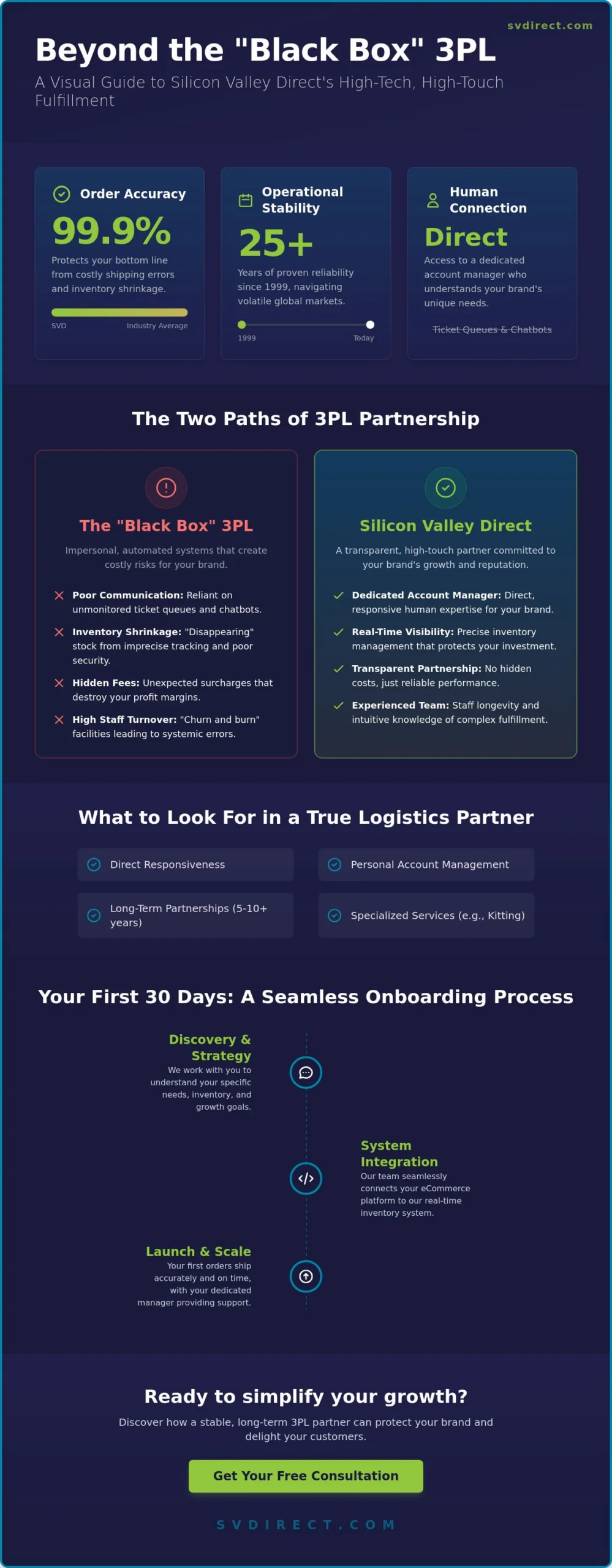
While the previous sections of our 3pl checklist focused on digital integration and physical infrastructure, the final pillar of a successful transition is the human element. Technology provides the efficiency, but human expertise provides the resilience. In a tech-saturated market, many providers hide behind automated support tickets and impersonal chatbots. We believe that a high-performance partner should offer a steady hand and a direct line of communication. Research from the 2025 Annual Third-Party Logistics Study indicates that 82% of shippers credit their 3PL with improving customer service. This improvement doesn’t happen through automation alone; it requires a dedicated team that understands your brand’s specific nuances.

Stability is another critical factor to audit. Look for a partner with a multi-decade history, ideally 20 years or more, which serves as a constant anchor of trust. Industry longevity suggests that the provider has weathered market shifts and possesses the financial stability to invest in long-term staff retention. This internal stability directly impacts your service quality, as seasoned professionals are better equipped to handle bespoke problem-solving and complex logistics challenges. Transparency in the pricing model is equally vital. A professional partner will clearly outline storage costs, pick-and-pack fees, and management charges without burying hidden expenses in the fine print.

Transparency, Account Management, and Communication

Don’t settle for a faceless service. Interview the specific account managers who will oversee your day-to-day operations to ensure they share your commitment to precision. You should review their service level agreements (SLAs) for order accuracy and shipping speed to ensure they align with your growth goals. Verified industry data shows that nearly half of warehouses (48.6%) now charge long-term storage fees, a significant increase from 2024. Your 3pl checklist should confirm exactly how these fees are structured. Clear protocols for resolving shipping discrepancies are essential for maintaining a high-performance partnership.

The Transition Plan: Moving to a Professional 3PL

A structured transition plan is the only way to migrate inventory without disrupting your sales. This plan should include a detailed timeline for inventory transfer and a rigorous process for receiving and auditing incoming goods. We recommend scheduling a site visit to the fulfillment center to verify that the physical infrastructure matches the digital promises. This allows you to see the organized rhythm of the facility firsthand. If you’re looking for more strategies on optimizing your supply chain, explore our latest insights on the company blog. A successful migration is a collaborative effort that transforms your logistics from a source of stress into a competitive advantage.

Securing a Resilient Supply Chain for 2026 and Beyond

Choosing the right fulfillment partner is a strategic decision that dictates your brand’s long-term stability and growth. By utilizing this 3pl checklist, you’ve established a framework that prioritizes both high-tech efficiency and genuine human oversight. You now understand the necessity of seamless digital integrations and the immense value of specialized services like on-demand digital printing and HIPAA-compliant healthcare mailing. These capabilities ensure that your logistics operations remain as precise as your business vision. Precision isn’t just a goal; it’s a commitment that protects your reputation with every delivery.

Since 1999, Silicon Valley Direct has acted as a steady hand for businesses navigating the complexities of global shipping and kitting. We reject impersonal, automated models in favor of direct connection and personal commitment. Whether you require complex assembly or secure returns management, our team provides the physical infrastructure and expert-level service needed to alleviate the stress of expansion. Your growth deserves a partner that remains accessible and grounded while operating at the cutting edge of innovation. Complementing your physical fulfillment strategy with personalized direct mail campaigns can further bridge your online and offline channels, driving measurable response rates that digital outreach alone cannot match.

Ready to streamline your fulfillment? Download our specialized 3PL checklist or contact Silicon Valley Direct today.

We look forward to helping you master your logistics transition and watching your business reach its full potential with total confidence.

Frequently Asked Questions

What is the most important item on a 3PL checklist?

The most critical item on a 3pl checklist is operational alignment and the quality of account management. While technology and warehouse space are essential, a partner that offers direct human oversight ensures that complex issues are resolved without the delays of automated tickets. This cultural fit guarantees that the provider treats your brand’s reputation with the same care and precision as you do.

How long does it typically take to transition to a new 3PL?

Transitioning to a new provider typically takes between 30 and 90 days, depending on SKU complexity and technical integration requirements. This timeline allows for a methodical migration of physical inventory and thorough testing of API connections. A structured transition plan minimizes sales disruptions and ensures that all receiving protocols are verified before your first order ships from the new facility.

What are the hidden costs I should look for in a 3PL agreement?

Common hidden costs include monthly technology access fees, minimum pick and pack volume requirements, and specialized receiving surcharges for non-compliant shipments. You should also scrutinize long-term storage fees, as nearly half of modern warehouses now apply these charges after a specific duration. Transparent pricing models should clearly list every potential expense, from kitting labor to returns processing, to prevent budget surprises.

Can a 3PL handle both B2B and B2C fulfillment simultaneously?

A sophisticated partner can handle both B2B and B2C fulfillment simultaneously through an integrated inventory management system. This omnichannel approach allows you to fulfill large retail distribution orders while maintaining high-speed pick and pack for direct to consumer sales. Successful execution depends on the provider’s ability to manage EDI compliance for retailers alongside the rapid shipping demands of eCommerce platforms.

How does a 3PL handle international shipping and customs?

3PLs manage international logistics by preparing customs documentation and leveraging relationships with global shipping carriers. They navigate complex regulations to ensure your goods remain compliant in various jurisdictions. By utilizing a provider’s established carrier network, you can access volume-based discounted rates that significantly reduce the cost of reaching a global audience while maintaining delivery precision.

What technology integrations are mandatory for a modern 3PL?

Mandatory technology for a modern logistics partner includes real-time API integrations with platforms like Shopify or Amazon and a web-based client portal. This digital 3pl checklist item ensures 24/7 visibility into inventory levels and automated order status updates for your customers. Without these seamless connections, your team loses the data transparency required to make proactive inventory decisions and prevent stockouts during peak seasons.

How do I know if my business is large enough for a 3PL?

Your business is large enough for a 3PL when internal fulfillment begins to hinder your ability to scale or focus on core marketing efforts. Most providers look for a consistent monthly order volume, but the real indicator is the complexity of your needs. If you require specialized kitting, climate-controlled storage, or healthcare mailing services, a professional partner provides the infrastructure you cannot realistically build in-house.

What is the difference between a 3PL and a fourth-party logistics (4PL) provider?

A 3PL provides the physical infrastructure, labor, and technology to manage specific logistics functions like warehousing and distribution. In contrast, a fourth-party logistics (4PL) provider acts as a high-level integrator that manages the entire supply chain, often overseeing multiple 3PLs. Most growing brands prefer the direct control and personal connection of a 3PL partnership to ensure their operational standards are met through direct oversight.
Shopify Fulfillment Services: The 2026 Strategic Resource Guide

Shopify Fulfillment Services: The 2026 Strategic Resource Guide

What if the very system meant to scale your business is actually the one holding it back through rigid automation and rising costs? For many merchants, shopify fulfillment services have become a source of friction rather than a lever for growth. You’ve likely felt the sting of inventory inaccuracies or the frustration of being just another ticket in an impersonal support queue. We understand that behind every SKU is a promise you’ve made to a customer; meeting that promise requires more than just a software connection.

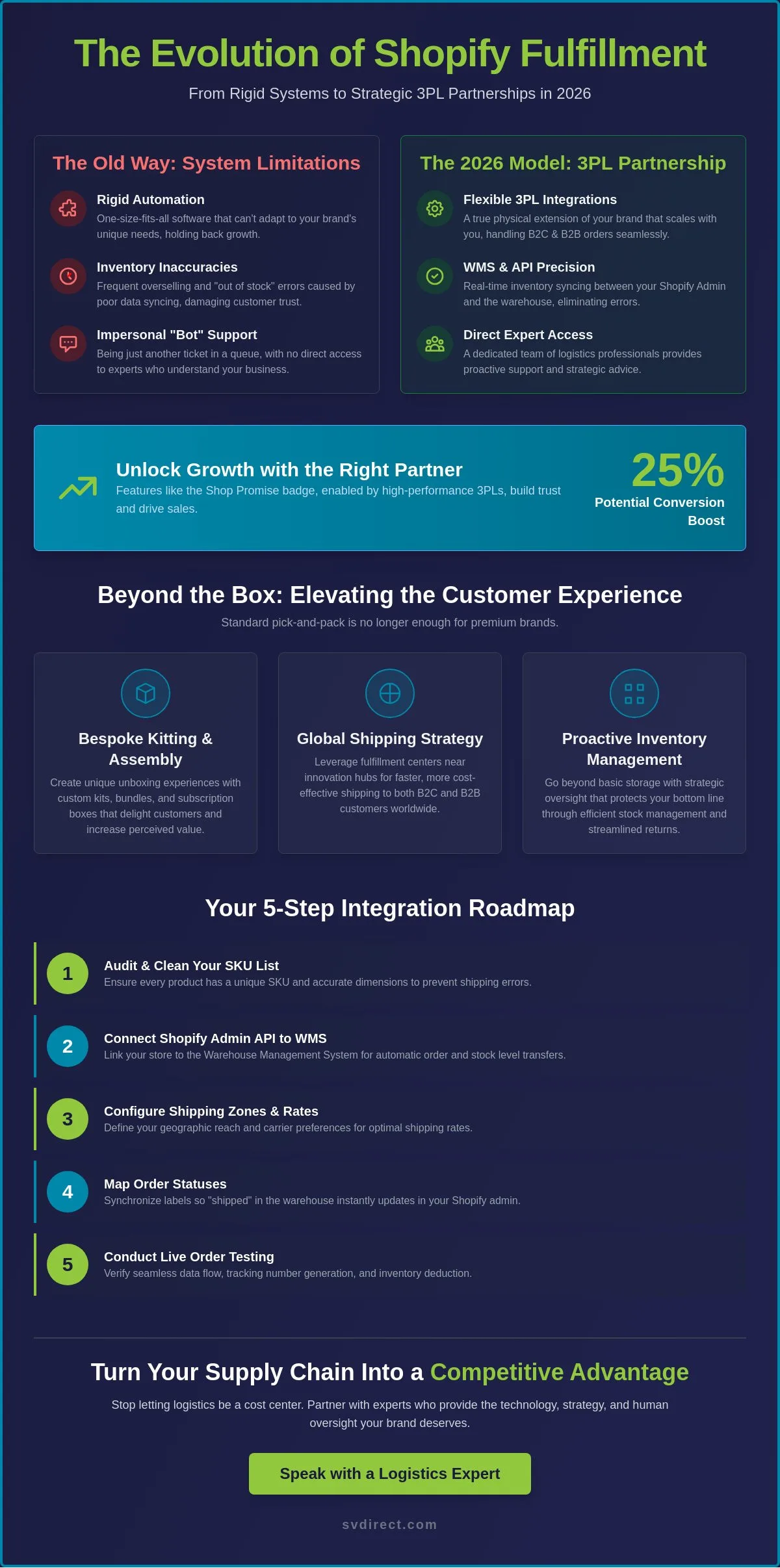
It’s true that the logistics landscape has shifted toward a partner-based model, where the right 3PL integration can boost conversion rates by up to 25% through features like the Shop Promise badge. This guide will show you how to transform your operations from a draining cost center into a sharp competitive advantage. We’ll explore the nuances of 2026 logistics, from precision kitting and assembly to global shipping strategies that prioritize human oversight over basic algorithms.

Key Takeaways

  • Learn how the 2026 partner-based model for shopify fulfillment services replaces rigid automation with flexible 3PL integrations that scale with your brand.
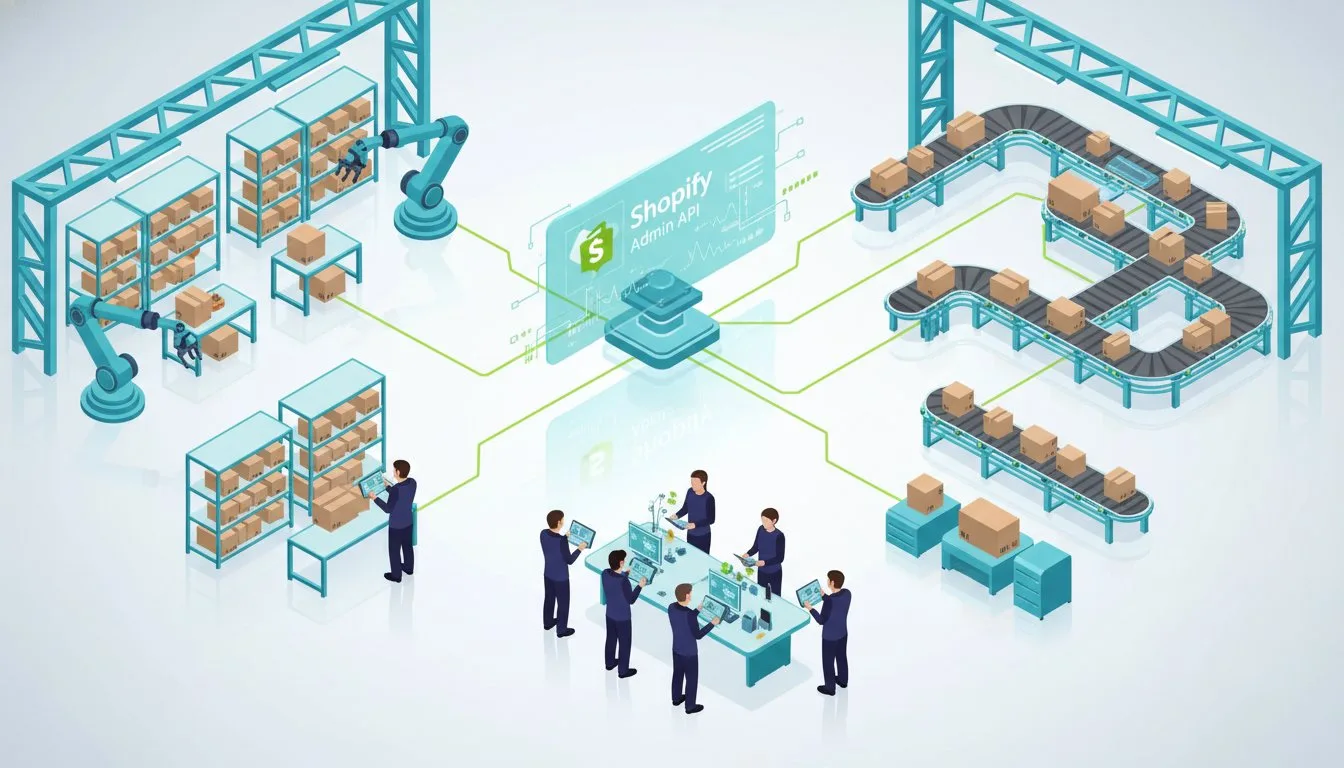
  • Discover the technical roadmap for connecting your Shopify Admin API to a sophisticated Warehouse Management System to eliminate inventory inaccuracies.
  • Explore why standard pick and pack is no longer enough for premium brands and how bespoke kitting and assembly can elevate your unboxing experience.
  • Identify the strategic advantages of fulfillment centers located near major innovation hubs for faster global shipping and better cost transparency.
  • See how a “No-Bot” policy and direct access to logistics experts can turn your supply chain into a stable, high-performance partnership.

Understanding Shopify Fulfillment Services in 2026

Shopify fulfillment is the comprehensive, end-to-end journey of a product, stretching from the moment an order is placed to the second it arrives at a customer’s doorstep. It’s no longer just about putting items in boxes; it’s a critical component of the customer experience. Since its founding, Shopify has evolved from a simple storefront tool into a massive commerce engine that requires sophisticated logistics to function at scale. In 2026, shopify fulfillment services have transitioned from basic third-party apps to deep, integrated partnerships with logistics experts who act as a physical extension of your digital brand.

Most merchants reach a “threshold of outsourcing” when manual packing starts to impede their ability to innovate. If your team spends more time taping boxes than developing new products, or if inventory inaccuracies are causing frequent overselling, your volume justifies a professional partner. Strategic fulfillment differs from standard shipping because it integrates every touchpoint of the supply chain. While standard shipping is a reactive process of getting a package from A to B, strategic fulfillment includes proactive inventory management and streamlined returns management to protect your bottom line.

To better understand how these systems work in practice, watch this helpful video:

The Role of a 3PL in the Shopify Ecosystem

A third-party logistics (3PL) provider acts as the backbone of your physical operations. It’s not just a software handshake; it’s a physical logistics strategy. High-performance 3PLs use real-time inventory syncing to ensure your Shopify admin reflects exactly what’s on the warehouse shelf. This precision prevents the “out of stock” notifications that damage customer trust. By moving beyond a simple fulfillment app to a dedicated warehousing and distribution model, you gain the stability needed to scale without the overhead of managing your own facility.

B2C vs. B2B Shopify Fulfillment

Modern shopify fulfillment services must be versatile enough to handle diverse sales channels. Direct-to-consumer (DTC) orders require high-speed pick and pack to meet modern delivery windows. Conversely, B2B fulfillment involves managing bulk shipments and complex wholesale orders within the same Shopify environment. A seasoned partner manages these different workflows seamlessly, handling everything from individual package tracking to global shipping and logistics. This dual capability allows you to expand into new markets and wholesale opportunities without the friction of disparate systems or manual data entry.

How to Integrate Your Shopify Store with a 3PL

Integrating your storefront with a professional logistics partner is a pivotal transition. It moves your business from manual labor to a scalable, automated system. This process requires a methodical approach to ensure that data flows accurately between your digital sales channel and the physical warehouse. When you select shopify fulfillment services that prioritize precision, the integration becomes a strategic asset rather than a technical hurdle.

  • Step 1: Audit your SKU list. Before syncing, ensure every product has a unique SKU and accurate dimensions. Clean data prevents shipping errors and inventory discrepancies.
  • Step 2: Connect the Shopify Admin API. This step links your store to the 3PL’s Warehouse Management System (WMS). It allows for the automatic transfer of order details and stock levels.
  • Step 3: Configure shipping zones. Define your geographic reach and carrier preferences. This ensures your customers receive the most efficient shipping rates based on their location.
  • Step 4: Map order statuses. Synchronize how orders are labeled. When a 3PL picks and packs an item, the status in your Shopify admin should instantly update from unfulfilled to shipped.
  • Step 5: Conduct a live test. Place several sample orders to verify that the data flow is seamless. This confirms that tracking numbers are generating correctly and inventory is deducting as expected.

If the technical complexity of these steps feels daunting, you can speak with an integration specialist to help streamline the transition.

Real-Time Data Syncing and Inventory Control

Success in modern eCommerce depends on low-latency updates. During flash sales or high-volume seasonal events, even a short delay in data syncing can lead to overselling. A high-performance 3PL provides a single pane of glass view of your operations. This transparency allows you to monitor stock levels across various channels simultaneously. By utilizing web-based inventory management, you can track pallet and shelf space in real-time. This level of control ensures you always have the operational readiness to meet sudden demand spikes without the stress of manual tracking.

Managing Returns and Reverse Logistics

A robust integration must also account for the journey back to the warehouse. Automating the returns process is essential for maintaining customer trust. When an item is returned, your 3PL partner doesn’t just receive a box. Dedicated staff inspect, refurbish, and restock items according to your specific brand standards. This data then flows back into your Shopify analytics. It provides you with critical insights into why products are returned, helping you refine your offerings and reduce future return rates. This human-centric approach to reverse logistics ensures that returns are handled with the same care as outbound shipments.

Shopify Fulfillment Services: The 2026 Strategic Resource Guide

Beyond the Box: Specialized Fulfillment Capabilities

Standard shopify fulfillment services often stop at the “pick and pack” stage. While this works for commodity goods, premium brands require a level of precision that basic automation cannot provide. When your product arrives, it’s the physical manifestation of your digital promise. If that package lacks the personal touch or professional presentation your brand represents, the customer experience suffers. Moving beyond the box means looking for a partner that offers specialized capabilities like custom assembly and on-demand printing to elevate every delivery.

One significant advantage is the use of kitting and assembly services. This isn’t just about grouping items; it’s about strategic presentation and cost efficiency. For businesses in the medical or wellness sectors, precision is even more critical. Handling healthcare mailing services requires a deep understanding of HIPAA compliance and high-stakes accuracy. Whether you’re shipping diagnostic kits or sensitive patient communications, the human element of oversight ensures that every package meets rigorous regulatory standards.

Custom Kitting and Subscription Box Assembly

Subscription models and promotional bundles are powerful growth drivers, but they’re operationally complex. A dedicated assembly team streamlines the creation of these kits, ensuring that every component is placed with care. This labor-based approach creates a “wow” unboxing experience that builds long-term loyalty. Additionally, expert kitting helps reduce shipping costs by optimizing the weight and dimensions of the final package. It’s a proactive way to manage your margins while enhancing the perceived value of your products.

Just-In-Time Printing and Literature Fulfillment

Integrating on-demand digital printing directly into your fulfillment workflow allows for a level of personalization that was previously impossible. Instead of storing thousands of pre-printed brochures that might become outdated, you can utilize literature fulfillment to print personalized thank-you notes or marketing collateral as needed. This just-in-time approach significantly reduces paper waste and storage costs. It ensures that every Shopify order includes the most relevant, up-to-date information, bridging the gap between digital marketing and physical delivery. By combining physical products with custom-printed materials, you turn a simple shipment into a comprehensive brand experience.

A Decision Framework for Selecting a Shopify 3PL

Selecting shopify fulfillment services is a high-stakes decision that dictates your brand’s growth trajectory. While basic apps offer a connection, they don’t provide a strategy. You need a framework that evaluates a partner’s physical infrastructure alongside their digital capabilities. A partner located near a major innovation hub, such as Silicon Valley, offers a distinct advantage for global shipping and logistics. This proximity ensures your inventory is positioned at the heart of global trade routes, reducing transit times for international customers. For a deeper look at how regional providers stack up, our strategic comparison of top 3PL companies in the Bay Area for 2026 breaks down the key differentiators merchants should evaluate.

Your technology stack must be a priority. Ensure the 3PL’s Warehouse Management System (WMS) integrates seamlessly with Shopify GraphQL. This allows for more efficient data handling than older REST APIs, which is vital when you need to handle a 10x surge in orders during the Q4 holiday rush. Finally, prioritize human support. Logistics is a physical business where things can go wrong; having a dedicated account manager is far more valuable than a chatbot during a shipping crisis. When auditing potential shopify fulfillment services, look for a partner that treats your inventory with the same care you do.

Decoding 3PL Pricing Models

Transparency in pricing is the bedrock of a healthy partnership. You should clearly understand the distinction between pick and pack fees and monthly warehousing costs. Many providers hide costs in receiving fees or account management surcharges that erode your margins. Understanding your true order fulfillment costs — including the hidden variables that drive your total spend — is essential for protecting your bottom line. A high-volume partner can help you leverage discounted carrier rates that are otherwise inaccessible to individual merchants. This turns your logistics from a variable expense into a predictable, scalable model.

The Importance of Operational Longevity

Stability matters in an industry prone to disruption. A logistics partner with 25+ years of experience, operating since 1999, offers a level of reliability that startups cannot match. This history suggests a steady hand that has weathered multiple economic cycles and technological shifts. Look for long-term staff retention as a marker of internal stability and expert-level service. This deep institutional knowledge is essential for managing crowdfunding fulfillment and high-stakes product launches where there is no room for error.

If you’re ready to move beyond automated responses to a partnership built on precision, you can request a custom logistics consultation to see how we align with your growth goals.

The Silicon Valley Direct Advantage for Shopify Merchants

Silicon Valley Direct represents the intersection of sophisticated technical integration and human accountability. While many shopify fulfillment services rely on layers of automation that distance the merchant from their inventory, we prioritize direct human connection. Our “No-Bot” policy ensures that when you have a complex logistics challenge, you speak with a seasoned professional rather than an automated ticketing system. This approach transforms fulfillment from a mechanical task into a collaborative partnership where your success is our primary metric.

Choosing a partner for your eCommerce order fulfillment requires a balance of stability and innovation. We provide the physical infrastructure and expert oversight necessary to handle high-stakes launches and steady growth alike. By combining our extensive operational history with modern digital capabilities, we offer a secure environment for your brand to thrive. If you’re ready to move beyond rigid, one-size-fits-all models, you can request a customized fulfillment consultation to build a strategy that fits your specific needs.

Precision Logistics in the Heart of Innovation

Our facility’s location provides a strategic anchor for global shipping and logistics. This geographic advantage allows us to accelerate domestic and international distribution by leveraging proximity to major innovation hubs and transit networks. We offer secure warehousing and distribution options that protect high-value inventory with meticulous care. Our commitment to precision effectively eliminates the “where is my order” (WISMO) burden on your customer service team. By achieving high accuracy rates in our shopify fulfillment services, we protect your brand reputation and reduce the costs associated with shipping errors.

Your Partner for Long-Term Growth

We’ve designed our infrastructure to adapt as your Shopify store evolves from an emerging startup to a global enterprise. Our team excels at bespoke problem-solving, providing the flexibility needed for unique product requirements that standard providers often reject. Whether you need complex kitting and assembly or specialized literature fulfillment, we provide the steady hand necessary for operational stability. This readiness ensures that your inventory management remains accurate even during periods of rapid scaling or seasonal demand shifts. We don’t just ship boxes; we manage the physical heartbeat of your business.

Streamline your Shopify fulfillment with Silicon Valley Direct today.

Scale Your Brand with Precision Logistics

The transition from a basic shipping app to a strategic logistics partnership is the most significant leap a growing merchant can take. By choosing shopify fulfillment services that prioritize human oversight and specialized capabilities, you ensure that every customer interaction strengthens your brand. You’ve learned how bespoke kitting, on-demand digital printing, and HIPAA-compliant mailing services can transform your operations from a logistical burden into a sharp competitive advantage. High-growth eCommerce requires a steady hand and a stable infrastructure to succeed in a fast-paced market.

Since 1999, our Silicon Valley-based team has provided the reliability and technical integration necessary for brands to thrive. We understand that your business is more than just a series of transactions; it’s a commitment to your customers that requires precision at every step. Whether you’re navigating complex healthcare regulations or launching a high-stakes subscription box, we’re here to support your long-term vision. Let’s work together to build a supply chain that grows as fast as your ambition.

Ready to transform your logistics strategy? Request a Custom Shopify Fulfillment Quote today and experience the difference of a partnership built on history and innovation.

Frequently Asked Questions

What are Shopify fulfillment services?

Shopify fulfillment services are end-to-end logistics solutions that manage the storage, picking, packing, and shipping of products sold through the Shopify platform. These services utilize specialized software to connect a merchant’s storefront to a physical warehouse facility. By outsourcing these tasks, businesses can focus on marketing and product development while ensuring that orders reach customers accurately and efficiently. It’s a strategic move that replaces manual labor with professional warehouse management.

How much do Shopify fulfillment services cost in 2026?

Costs for shopify fulfillment services vary based on your order volume, SKU complexity, and specific storage requirements. Typical fee structures include per-order picking and packing charges, monthly warehousing costs for pallet or shelf space, and carrier shipping rates. Merchants should also account for specialized services like kitting or returns management. Because order fulfillment costs are highly individualized, we recommend requesting a custom quote to understand the exact investment for your unique business model.

Can I use a 3PL and Shopify Fulfillment Network at the same time?

Yes, you can utilize multiple fulfillment partners by configuring different locations within your Shopify admin settings. This allows you to route specific products or regional orders to different warehouses, such as a dedicated 3PL for premium kitting and the Shopify Fulfillment Network for standard items. This hybrid approach provides total flexibility in managing your supply chain. It’s an effective way to optimize shipping speeds and reduce costs across different product categories.

How do I sync my Shopify inventory with a third-party warehouse?

Inventory syncing is achieved by connecting the Shopify API to your partner’s Warehouse Management System (WMS). Once the integration is active, stock levels update automatically in real-time as orders are placed or new inventory is received at the warehouse. This low-latency data flow prevents overselling and ensures your storefront always reflects accurate availability. It eliminates the need for manual spreadsheets and provides a single pane of glass for your physical operations.

What is the difference between a fulfillment app and a 3PL service?

A fulfillment app is a software interface that facilitates data transfer, while a 3PL service provides the physical infrastructure and human expertise to handle your goods. While apps are essential for integration, they don’t pack boxes or manage quality control. A comprehensive 3PL partner like Silicon Valley Direct offers both the technology and the physical warehousing and distribution capabilities. This combination ensures your logistics are backed by real people and physical assets rather than just digital code.

Does Silicon Valley Direct handle international Shopify shipping?

Yes, we provide comprehensive global shipping and logistics for Shopify merchants from our Silicon Valley facility. Our location near major international transit hubs allows for efficient distribution to customers worldwide. We manage the complexities of international documentation and carrier selection to ensure your global orders arrive safely. This capability allows your brand to scale beyond domestic borders with the same precision and reliability you expect for your local shipments.

How long does it take to set up a Shopify 3PL integration?

A standard integration typically takes between two to four weeks depending on the complexity of your SKU list and specific workflow requirements. This timeline includes auditing your data, connecting the Shopify API, configuring shipping zones, and performing live tests to verify data accuracy. A methodical setup process ensures that your logistics transition is seamless. It guarantees that your customers don’t experience any service interruptions during the switch to a professional partner.

What happens if my Shopify store has a sudden surge in orders?

A professional partner for shopify fulfillment services is built to absorb sudden spikes in volume, such as those seen during Q4 or major product launches. Our facility and staff are prepared to scale operations quickly, ensuring that increased demand doesn’t lead to shipping delays or errors. This operational readiness is a primary benefit of moving away from DIY fulfillment. It provides the stability your brand needs to capitalize on growth opportunities without the stress of manual processing.

The Strategic Guide to Secure Warehousing Services in 2026

The Strategic Guide to Secure Warehousing Services in 2026

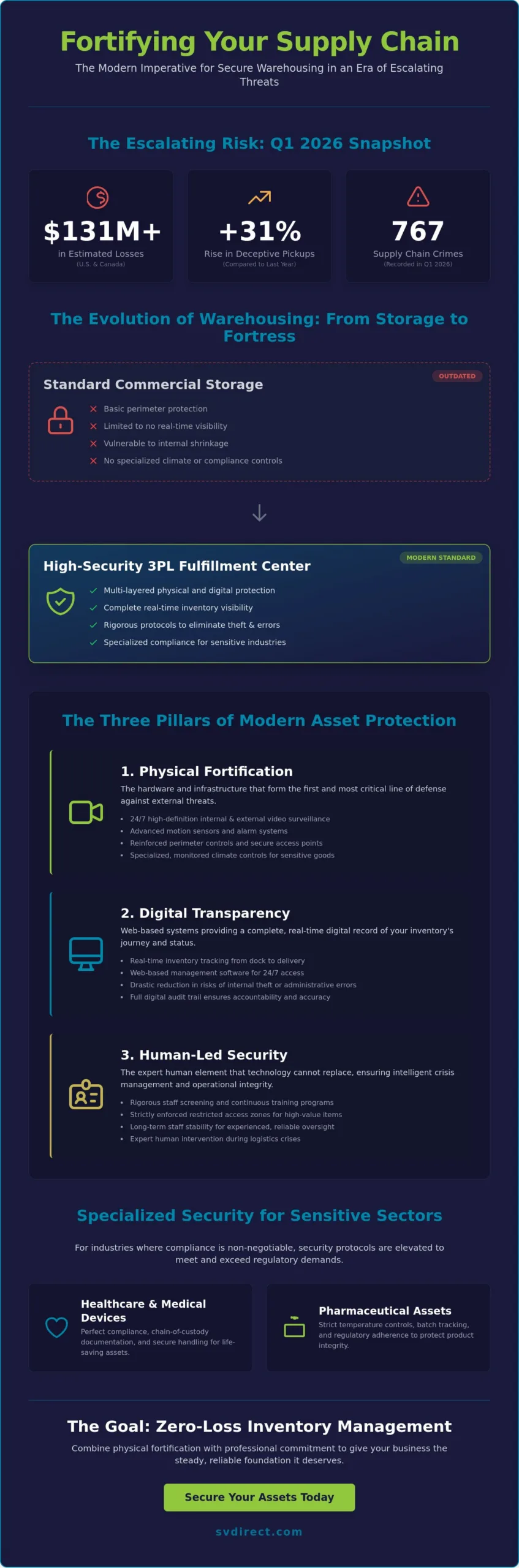
Did you know that in the first quarter of 2026 alone, recorded supply chain crimes in the U.S. and Canada resulted in over $131 million in estimated losses? With deceptive pickups rising by 31% compared to last year, the demand for truly secure warehousing services has moved beyond simple locks and cameras. You likely feel the weight of protecting high-value inventory while navigating the complexities of inventory shrinkage and the stress of limited real-time visibility. It’s frustrating to face these risks, especially when sensitive industries like healthcare require perfect compliance and a human hand to guide operations through logistics crises.

We believe your business deserves a steady partner that values precision as much as you do. This guide promises to show you how modern security integrates physical infrastructure, digital oversight, and rigorous compliance to achieve zero-loss inventory management. We will preview the three-dimensional ecosystem of fortification and transparency that ensures your assets remain protected. This approach gives you the peace of mind to focus on growth while we handle the heavy lifting with a personal, expert touch.

Key Takeaways

  • Learn how multi-layered protection transforms standard storage into high-security 3PL fulfillment centers through 24/7 surveillance and specialized climate controls.
  • Discover how web-based inventory management software provides the real-time visibility needed to eliminate internal shrinkage and ensure full digital transparency.
  • Understand the rigorous security and compliance requirements for sensitive sectors, including specialized secure warehousing services for healthcare and pharmaceutical assets.
  • See why human-led oversight and long-term staff stability are more effective than automated systems for protecting high-value goods during a crisis.
  • Map out a strategy for zero-loss inventory management that combines physical fortification with professional personal commitment.

Defining Secure Warehousing Services in the Modern Supply Chain

The logistics industry has evolved far beyond the days of simple pallet storage in a dusty room. Today, secure warehousing services represent a sophisticated, multi-layered strategy designed to safeguard your physical assets from the moment they arrive at the dock until they reach your customer’s door. This shift reflects a broader commitment to Supply chain security, where the warehouse acts as a critical fortress against theft, fraud, and environmental damage. Unlike standard commercial storage, which often provides only basic perimeter protection, a modern high-security 3PL fulfillment center integrates advanced technology with seasoned human oversight to create a resilient environment for high-value goods and sensitive data.

To better understand how these layers work together to protect your inventory, watch this helpful video:

Standard storage facilities often lack the specialized infrastructure needed for modern commerce. When you transition to a specialized secure facility, you’re investing in more than just square footage. You’re securing your brand’s future by ensuring that inventory levels are accurate and that stock remains untouched by unauthorized parties. This level of precision is vital for businesses handling electronics, pharmaceuticals, or luxury goods where even a small percentage of shrinkage can devastate profit margins. It’s about creating an ecosystem where physical fortification and digital transparency work in tandem.

The Core Components of a Secure 3PL

A truly secure 3PL facility isn’t just about high fences. It requires a synergy between three critical pillars of protection:

  • Physical infrastructure: This includes high-definition internal and external video surveillance, motion sensors, and reinforced perimeter controls that act as the first line of defense.
  • Digital oversight: Web-based inventory management software provides real-time tracking. This allows you to see exactly where your stock is at any second, which significantly reduces the risk of internal theft or administrative errors.
  • Personnel protocols: Security is only as strong as the people behind it. Rigorous staff screening and restricted access zones ensure that only authorized experts handle your most sensitive assets.

Why “Secure” is No Longer Optional for eCommerce

In 2026, the cost of inventory shrinkage in global retail has reached record highs, making secure warehousing services a non-negotiable part of your growth strategy. When a customer receives a damaged product or finds their order delayed due to stock discrepancies, your brand reputation takes the hit. Secure warehousing prevents product obsolescence and damage by maintaining strict environmental controls and handling procedures. It’s about the steady hand of a high-performance partner. By choosing a partner with a long history of operational excellence, you’re ensuring that your business remains grounded and reliable, even as you scale at a fast pace.

Physical Fortification: The Hardware of Asset Protection

While digital systems provide necessary transparency, the physical facility remains your primary line of defense. In an era where 28 stolen shipments were valued at over $1 million each in early 2026, the hardware of your logistics partner is a critical investment. Premium secure warehousing services prioritize a multi-layered physical approach that goes far beyond a simple lock and key. This foundation ensures that high-value assets are not only stored but actively protected against the 767 recorded supply chain crimes that occurred in the U.S. and Canada during the first quarter of 2026.

Perimeter and Interior Surveillance Systems

Modern security requires a comprehensive visual record of every movement within the facility. High-definition CCTV systems with remote monitoring capabilities allow for constant oversight of both internal aisles and external loading docks. These systems are often paired with motion sensor alarms and glass-break detection technology to provide an immediate response to unauthorized entry. Strategic lighting and gated entry requirements for transit vehicles further harden the facility, ensuring that every truck entering the premises is logged and verified before a single pallet is moved.

Environmental Controls and Specialized Storage

Protection isn’t just about preventing theft; it’s about preserving the integrity of the product itself. For many industries, specialized secure warehousing is a regulatory requirement that involves strict temperature and humidity monitoring. This is especially vital for sensitive electronics, high-tech components, and healthcare documents that could be rendered useless by environmental fluctuations. Advanced fire suppression systems are tailored to the specific product categories in storage, while clean-room standards ensure that dust and contaminants don’t compromise delicate inventory. These measures protect your bottom line from the “hidden” losses of product degradation. Businesses managing tech assets can explore a deeper breakdown of these protocols in our guide to secure warehousing for high-value electronics, which covers TAPA standards and tiered climate controls in detail.

Effective physical security also relies on strict access protocols. By utilizing biometrics or RFID technology, a facility can ensure that only authorized personnel enter specific high-value zones. This level of control is a hallmark of a premier logistics company in Silicon Valley, where innovation in security matches the high-tech nature of the inventory. When your goods are housed in a strategically located facility that combines global connectivity with rigorous physical standards, you gain a significant competitive advantage. If you’re ready to see how these physical safeguards can protect your specific inventory, you can request a tailored assessment for your business needs. Our team focuses on creating a stable, high-performance environment where your assets are treated with the precision they deserve.

The Strategic Guide to Secure Warehousing Services in 2026

Digital Transparency: Securing the Data Behind the Goods

While physical walls keep intruders out, digital transparency prevents losses from within. In the modern supply chain, data is as valuable as the physical inventory. Comprehensive secure warehousing services now rely on sophisticated software to create an immutable record of every SKU. This digital “paper trail” serves as your best defense against internal theft. Industry data suggests that 30% to 50% of warehouse losses stem from internal sources. By digitizing every touchpoint, we create a culture of accountability that protects your bottom line and ensures your assets are always accounted for.

It’s not just about counting boxes; it’s about protecting the integrity of your business relationships. Protecting sensitive client data and customer information requires robust, encrypted data transmission. When your eCommerce platform syncs with a 3PL, that bridge must be ironclad. We prioritize high-level encryption to ensure that proprietary business data remains confidential. This shields your brand from the growing threat of cyber-physical attacks that target both the goods and the information behind them. Our approach bridges the gap between mechanical operations and the high-stakes reality of growing a business.

The Role of 3PL Inventory Management Software

Cloud-based dashboards provide 24/7 oversight, allowing you to monitor stock levels from any location with total confidence. This isn’t just a convenience. It’s a core security feature. If an unauthorized movement occurs or stock levels dip unexpectedly, automated alerts notify the management team immediately. This proactive stance is essential for countering the 31% increase in deceptive pickups recorded in early 2026. By integrating directly with your storefront, we ensure a seamless flow of information. This precision reduces the need for manual data entry and minimizes the gaps where errors often hide. For a deeper look at how these platforms are architected to protect your inventory in real time, our strategic guide to 3PL inventory management software covers the essential features that turn chaotic supply chains into precision-engineered growth engines.

Preventing Obsolescence and Stock Loss

Digital transparency also means knowing exactly which items should leave the facility first to maximize value. Implementing FIFO inventory management ensures that older stock is shipped out before it becomes obsolete or loses its market appeal. We utilize batch and lot tracking to maintain precise control over every unit in our care. This level of detail simplifies the reconciliation process through clear digital audit trails. By leaning on barcode and RFID scanning, we significantly reduce the “human error” factor that often leads to stock discrepancies. It is a methodical, high-tech approach that replaces guesswork with verified, real-time data.

Compliance and Specialized Secure Warehousing

Generic storage solutions often fail when faced with the rigorous demands of sensitive industries. For sectors like healthcare and high-tech R&D, secure warehousing services must evolve into a specialized compliance framework. It’s no longer just about preventing loss; it’s about meeting federal mandates and protecting intellectual property. While standard commercial warehousing focuses on volume, specialized facilities prioritize the integrity of every individual unit. Whether it’s a life-saving medical device or a confidential prototype, the stakes are simply too high for a one-size-fits-all approach.

The healthcare sector requires a partner that understands the intersection of logistics and patient privacy. This is particularly true for healthcare mailing services, where the distribution of medical literature and devices must adhere to strict regulatory standards. A failure in compliance doesn’t just result in a lost package. It can lead to significant legal liabilities and a damaged reputation. We position ourselves as a steady hand in this high-pressure environment, ensuring that your sensitive assets are handled with the precision they deserve.

HIPAA-Compliant Warehousing for Healthcare

Handling Protected Health Information (PHI) requires both physical and digital barriers. A secure facility must maintain a documented chain of custody for every item, ensuring that medical devices and literature are tracked with absolute precision. We prioritize staff training and certification to ensure that every team member understands the nuances of handling sensitive healthcare materials. This human-led approach provides a level of oversight that automated systems simply cannot match. It creates a reassuring environment where compliance is a standard, not an afterthought.

High-Value Tech and R&D Storage

In the heart of innovation, protecting proprietary prototypes is a top priority. Silicon Valley businesses often require compartmentalized storage to keep sensitive R&D projects separate from general inventory. This environment necessitates non-disclosure agreements (NDAs) and enhanced security measures for consumer electronics with high resale value. For a comprehensive look at how these protocols apply specifically to tech assets, our strategic guide on secure warehousing for high-value electronics outlines the tiered security ecosystem and real-time visibility tools designed for this sector. It’s a proactive stance that respects the client’s time and the high-stakes nature of their industry. By choosing a partner with a multi-decade history of stability, you’re ensuring that your innovation is protected by a steady hand that remains accessible and grounded.

If your business requires a higher standard of protection and regulatory expertise, you can request a free quote to see how our specialized protocols can support your growth. Our team is ready to provide the customized, secure solutions your high-value assets demand.

The Silicon Valley Direct Advantage: Human-Led Security

While technology provides the tools, human judgment provides the essential layer of defense. Many providers rely too heavily on automated systems that fail to catch nuanced threats or unusual patterns. We explicitly reject the trend of impersonal, automated support in favor of direct human connection. Our 25-year history in Silicon Valley has taught us that operational reliability is built on the shoulders of experienced professionals. This longevity serves as a constant anchor of trust for our partners. When you choose our secure warehousing services, you’re not just renting space; you’re gaining a team that has spent decades refining the art of asset protection.

Staff stability is one of the most overlooked security features in the logistics industry. High turnover rates often lead to training gaps and internal vulnerabilities that tech alone cannot fix. By contrast, our commitment to long-term staff retention ensures that the people handling your inventory are seasoned experts who understand our rigorous protocols. This stability is especially critical during complex operations like kitting and assembly services. We integrate security directly into these workflows. This ensures that high-value components are tracked and protected even as they are being combined into finished products. It is a methodical approach that replaces the chaos of growth with the precision of a high-performance partner.

Bespoke Security for Every Client

Every business faces unique risks. We don’t believe in a one-size-fits-all security model. Instead, we customize our protocols based on your specific product risk profiles and industry requirements. You’ll have direct access to account managers who can answer immediate security inquiries without the frustration of an automated ticket queue. This high-performance partnership allows for total flexibility. As your business needs evolve, we can scale your security measures to match your growth. It’s a proactive stance that respects your time and your assets.

From Warehousing to Global Distribution

The “secure chain” doesn’t end at the warehouse door. We ensure that your goods remain protected from the initial receipt through to the final mile of global shipping and logistics. By leveraging our established relationships with carriers, we offer discounted rates without compromising on transit security. Our comprehensive approach also includes returns management and secure asset recovery. This closes the loop on the product lifecycle, ensuring that even returned items are handled with the same level of precision and oversight as new inventory. We remain a steady hand in a fast-paced industry, providing the peace of mind you need to scale with confidence.

Securing Your Operational Future

Navigating the complexities of the modern supply chain requires a partner that balances high-tech infrastructure with seasoned expertise. By integrating physical fortification, digital transparency, and rigorous compliance, you protect your inventory from the rising threats of theft and shrinkage. This strategic approach ensures that your high-value goods remain secure while your brand maintains its reputation for reliability. It’s about building a foundation that supports fast-paced growth without sacrificing safety.

With over 25 years of operational history since our founding in 1999, we provide the stability and HIPAA-compliant readiness your business deserves. We prioritize direct human connection over automated support, ensuring you always have a steady hand to guide your logistics. Choosing professional secure warehousing services is an investment in your company’s long-term resilience. Our team is dedicated to providing the personal oversight and bespoke problem-solving needed to keep your assets safe.

Get a Custom Quote for Secure Warehousing Today

We are ready to help you streamline your operations and protect your most valuable assets with the precision they require. Let’s build a secure future for your business together.

Frequently Asked Questions

What is the difference between bonded and non-bonded secure warehousing?

Bonded warehouses are specialized areas where imported goods are stored under the supervision of customs authorities without the immediate payment of duties. Non-bonded warehouses require that all taxes and duties are paid before the items enter storage. While both provide secure warehousing services, bonded facilities offer a specific financial advantage for companies managing global shipping and logistics by deferring costs until the products are ready for distribution.

How does a 3PL prevent internal theft or inventory shrinkage?

A professional 3PL prevents internal theft by combining physical access controls with a culture of accountability. This includes rigorous background screenings for all staff and the implementation of biometric entry points to restricted zones. By maintaining a complete digital audit trail of every inventory movement, the facility ensures that every touchpoint is logged. This transparency discourages unauthorized handling and helps maintain a zero-loss environment for your assets.

Is temperature control considered a part of secure warehousing services?

Yes, temperature control is a critical component of asset protection for sensitive inventory. Security isn’t just about preventing theft; it’s also about protecting products from environmental degradation. Facilities use automated monitoring systems to maintain stable climate conditions for electronics, pharmaceuticals, and medical literature. This ensures that your inventory remains in peak condition and avoids the “hidden” losses associated with heat or humidity damage.

What security certifications should I look for in a warehousing partner?

You should prioritize partners that adhere to internationally recognized standards like ISO 28000:2022 for supply chain security management. It’s also beneficial to look for C-TPAT membership if you handle international trade. These certifications demonstrate that the provider has passed rigorous audits of their physical and digital protocols. For specialized industries, ensuring the facility meets HIPAA or cGMP standards is essential for maintaining regulatory compliance.

Can secure warehousing services handle HIPAA-compliant materials?

Specialized secure warehousing services are designed to manage HIPAA-compliant materials by using both physical and digital barriers. This involves creating restricted access zones for Protected Health Information (PHI) and ensuring that medical devices or literature follow a strict chain of custody. We rely on seasoned experts rather than automated systems to oversee these sensitive workflows, providing the personal commitment necessary to meet federal healthcare mandates.

How does real-time inventory management improve warehouse security?

Real-time management acts as a digital security layer by providing a constant, accurate record of every SKU in the facility. When inventory is tracked through 3PL inventory management software and cloud-based dashboards, any unauthorized movement or unexpected dip in stock levels triggers an immediate alert. This visibility allows managers to respond to discrepancies instantly. It closes the gaps where administrative errors or internal theft typically occur, ensuring your digital records match your physical stock.

What happens if inventory is damaged or lost in a secure warehouse?

When an incident occurs, a secure warehouse uses its digital audit trail to pinpoint the exact time and location of the loss. This transparency is vital for a quick resolution and simplifies the insurance claim process. Professional partners handle these situations through direct human contact rather than automated queues. This ensures that you receive a clear explanation and a bespoke solution to mitigate the impact on your business growth.

Why is Silicon Valley a strategic location for secure warehousing?

Silicon Valley serves as a global hub for innovation and connectivity, providing immediate access to advanced logistics networks. This location is ideal for businesses handling high-value electronics or proprietary R&D components that require sophisticated handling. Being situated in this geographic center allows for faster integration with high-tech supply chains. It offers a unique combination of physical infrastructure and expert personnel who are accustomed to the high stakes of the tech industry.

Logistics Companies in Silicon Valley: The 2026 Strategic Guide to 3PL Success

Logistics Companies in Silicon Valley: The 2026 Strategic Guide to 3PL Success

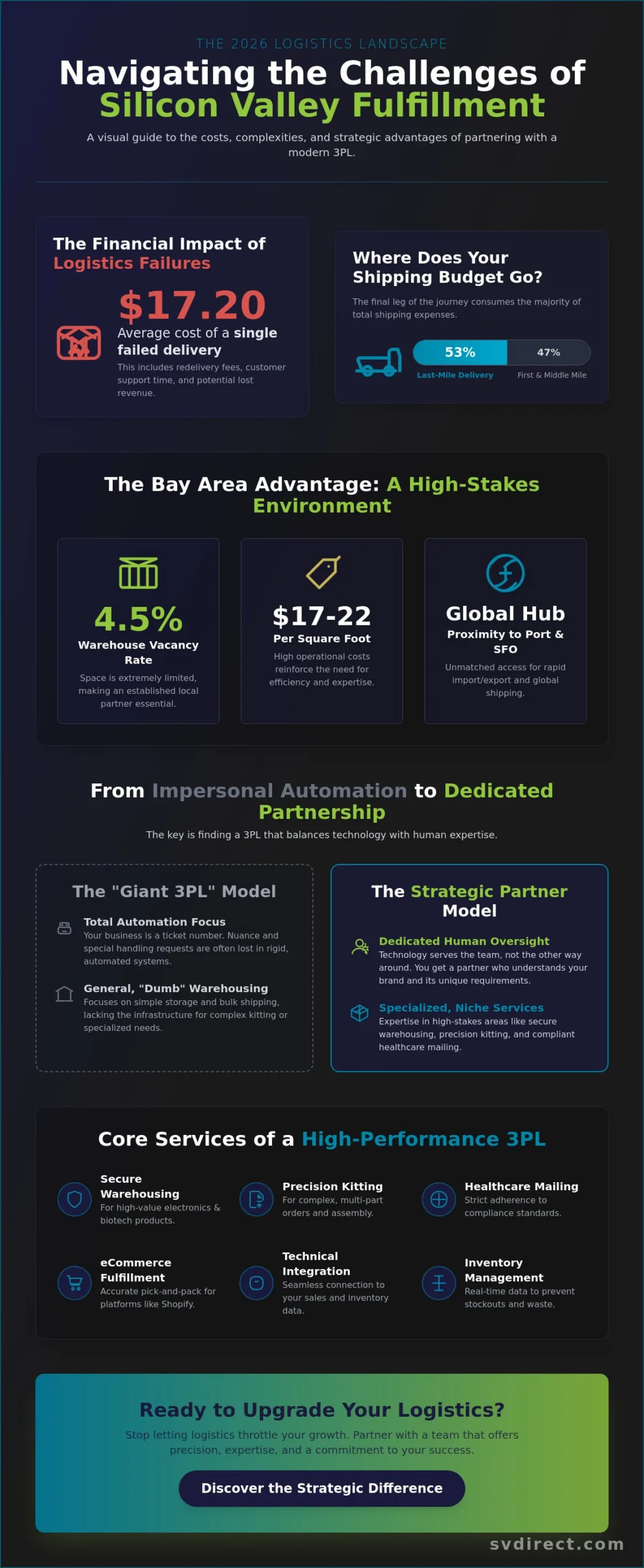
Did you know that a single failed delivery costs a retailer an average of $17.20 in 2026? In an environment where the last mile accounts for 53% of total shipping costs, the margin for error has never been thinner. Choosing between the many logistics companies in silicon valley often feels like a trade-off between cold, automated efficiency and the personal touch your brand actually needs. You’ve likely felt the sting of impersonal support from giant 3PLs that treat your scaling business like a ticket number rather than a partner.

We believe that high-growth brands deserve a steady hand to manage complex kitting and specialized healthcare mailing services with absolute precision. This guide shows you how to find a partner that balances innovative tech with direct human oversight. We’ll explore the current 4.5% warehouse vacancy rates in the Bay Area, the impact of rising CARB compliance fees, and the way a strategic location can slash your shipping times. You’re about to learn how to move beyond basic warehousing and into a logistics strategy that prioritizes accuracy and personal commitment.

Key Takeaways

  • Understand the hybrid nature of Bay Area logistics and why this region remains the global center for high-tech fulfillment and biotech distribution.
  • Identify the core services offered by logistics companies in silicon valley, including secure warehousing and precision kitting for complex orders.
  • Calculate the hidden costs of in-house operations to recognize when your current model is actually throttling your brand’s growth.
  • Audit potential partners based on their technical integration with platforms like Shopify and their ability to maintain strict healthcare compliance standards.
  • Discover the strategic advantage of choosing a partner that rejects total automation in favor of dedicated human oversight and seasoned local expertise.

The Evolving Landscape of Logistics Companies in Silicon Valley for 2026

Silicon Valley logistics has undergone a radical transformation. In 2026, the industry is no longer defined by dusty warehouses and manual clipboards. Instead, it’s a sophisticated hybrid of physical infrastructure and digital precision. The most successful logistics companies in silicon valley now operate at the intersection of high-speed data and tangible goods. They act as the physical backbone for a region that moves faster than anywhere else on earth. While software drives the economy, these partners ensure that biotech samples, high-tech components, and eCommerce orders actually reach their destinations with 100% accuracy.

Modern businesses have moved away from the “dumb warehousing” models of previous decades. They now require a Third-party logistics (3PL) partner that offers deep technical integration and human-centric oversight. This shift toward boutique, specialized providers is a direct response to the impersonal automation offered by global giants. Companies are looking for a steady hand that understands the high-stakes nature of healthcare mailing services and complex kitting. They want a partner that feels like an extension of their own team, not just a line item on a spreadsheet.

To better understand the historical context of this innovative region, watch this helpful video:

Why Location Matters: The Strategic Advantage of the Bay Area

Operating within Northern California provides an undeniable competitive edge. Proximity to the Port of Oakland and San Francisco International Airport allows for rapid global shipping that distant hubs simply can’t match. However, the market is tight. As of early 2026, the industrial warehouse vacancy rate in the Bay Area is just 4.5%, with average asking rents between $17 and $22 per square foot. Despite these costs, the “Silicon Valley Speed” expectation makes a local presence vital. Being close to the world’s most innovative supply chain talent means your logistics provider can implement new tech as soon as it’s viable. You can find more insights on regional trends at the Silicon Valley Direct blog.

The Rise of Specialized 3PL Providers in Northern California

The demand for general storage is shrinking while the need for specialized fulfillment is exploding. Logistics companies in silicon valley are pivoting to offer niche services that support the region’s dominant industries. This includes climate-controlled warehousing for biotech and high-security kitting and assembly for tech hardware. Integrated services like on-demand digital printing and literature fulfillment are now standard requirements. These providers aren’t just storing boxes. They’re managing complex inventory lifecycles and ensuring that every healthcare mailing or direct mail marketing campaign meets rigorous compliance standards. It’s a proactive stance that prioritizes operational readiness over mere storage capacity.

Key Services to Look for in a Silicon Valley 3PL Partner

Not all logistics companies in silicon valley are created equal. In a market where 77% of providers now offer AI solutions, the real differentiator is how that technology serves the physical operation. Effective eCommerce order fulfillment requires more than just a software integration; it demands a precise pick and pack process that ensures accuracy across every shipment. Secure warehousing services are another vital pillar, particularly for brands dealing in high-value electronics or sensitive biotech products that require climate-controlled environments and specialized inventory protection.

Inventory management has moved beyond simple counting. Today, it relies on real-time data to anticipate demand shifts and prevent the “scalability trap” of stockouts or obsolescence. By analyzing evolving trends in logistics and technology, partners can help you optimize stock levels before peak seasons hit. This proactive stance is essential for maintaining the high-performance standards expected in Northern California. It’s about moving from a reactive storage model to a strategic partnership that anticipates your next move.

Integrated Literature and Marketing Fulfillment

Modern brands often struggle to sync their physical products with their marketing efforts. Combining on-demand digital printing with fulfillment services eliminates the need to store outdated brochures or manuals. When your marketing collateral lives in the same facility as your inventory, you can execute seamless brand delivery without the overhead of multiple vendors. This is where kitting and assembly services become a strategic asset. You can build custom kits that arrive exactly as intended, reducing both waste and logistical friction.

Global Shipping and Returns Management

Shipping costs are rising, with the last mile alone accounting for 53% of total expenses in 2026. Navigating international customs and securing discounted carrier rates requires a partner with deep operational history and global reach. Beyond outgoing goods, a robust returns management process is vital for customer retention. A failed delivery or a clunky return can cost retailers an average of $17.20 per order. For a deeper look at navigating these complexities, explore our guide on global shipping services.

If your current provider is treating your high-growth business like just another number, it might be time for a more personal approach. You can reach out to our team to discuss a bespoke logistics strategy tailored to your specific needs.

Logistics Companies in Silicon Valley: The 2026 Strategic Guide to 3PL Success

3PL vs. In-House: When to Transition Your Logistics

Growth is a double-edged sword. At first, packing orders in-house feels like a way to maintain absolute control over the customer experience. However, as volume increases, that control often turns into a bottleneck. Managing your own warehouse involves significant hidden costs that go far beyond a simple lease. You’re responsible for labor management, facility insurance, and the constant overhead of a physical space that might be half-empty during slow seasons. In the high-cost environment of Northern California, these fixed expenses can quickly erode your margins.

Transitioning to professional logistics companies in silicon valley allows you to reclaim your most valuable asset: time. Instead of troubleshooting shipping delays or managing warehouse staff, you can focus on core product development and marketing strategy. Recent MIT Center for Transportation & Logistics research indicates that companies leveraging specialized 3PL partners often see improved agility in their supply chains, especially when navigating the complexities of modern tech-driven markets. It’s about moving from a reactive stance to a proactive partnership that supports your long-term vision.

The Cost Efficiency of Professional 3PL Warehousing

A professional 3PL model replaces the unpredictability of fixed overhead with transparent, per-order pick and pack fees. This shift ensures you’re only paying for the services you actually use. Beyond labor savings, you gain access to a 3PL’s significant shipping volume, which translates to better postage and carrier rates than an individual brand could secure alone. Accuracy is also a major cost saver. By implementing rigorous FIFO inventory management, a seasoned partner prevents the silent profit loss caused by product obsolescence and inventory spoilage.

Operational Agility: Scaling Without the Growing Pains

Scaling should feel like an opportunity, not a crisis. When you partner with experienced logistics companies in silicon valley, you can handle seasonal spikes like the Q4 rush without the stress of hiring temporary staff or renting extra space. This operational readiness extends to global expansion. You can reach international markets through established shipping networks without the need to open overseas facilities. Whether you need month-to-month storage flexibility or on-demand support for complex kitting projects, a professional partner provides the physical infrastructure to back your digital growth. It’s a steady, reliable hand that remains accessible as your business evolves.

How to Evaluate Logistics Companies in Silicon Valley

Selecting between the various logistics companies in silicon valley requires a methodical approach that goes beyond comparing warehouse square footage. A facility’s size matters far less than its operational precision and technical agility. Your evaluation should begin with a deep audit of their integration capabilities. Ensure their systems communicate seamlessly with your storefront, whether you use Shopify, WooCommerce, or a custom API. A failure in digital connectivity leads to manual data entry errors and delayed shipping updates that frustrate your end users.

Test their communication style early in the vetting process. Many giant 3PLs hide behind chatbots and automated ticketing systems. This lack of transparency becomes a liability when a complex product launch or high-stakes shipment requires immediate human intervention. Ask for a dedicated account manager who understands your business nuances. Additionally, review their track record with kitting and assembly. If a provider can’t demonstrate success with intricate, multi-component projects, they likely lack the seasoned oversight necessary to handle your scaling requirements.

Compliance and Security: The Healthcare Gold Standard

In high-compliance sectors, generic logistics solutions are insufficient. HIPAA compliance is non-negotiable for medical device fulfillment and pharmaceutical distribution. You need a partner that understands the legal and ethical weight of protecting sensitive patient data during every stage of the process. Our healthcare mailing services guide provides a detailed breakdown of the precision required for these specialized mailings. Beyond digital security, verify their physical infrastructure. Look for secure warehousing services that utilize advanced access controls and 24/7 monitoring to protect high-value inventory from loss or damage.

The Tech Stack: Real-Time Inventory and Order Transparency

Operational transparency is the bedrock of a successful 3PL partnership. Demand 24/7 access to your inventory levels and order statuses through a centralized, web-based portal. This data accuracy prevents shipping errors and keeps your customer service team informed. A robust tech stack should handle batch delivery to carriers and provide automated tracking updates without requiring manual oversight. This level of digital integration, combined with physical reliability, ensures your operations remain agile. If you’re ready to partner with a team that values precision over impersonal automation, request a free quote today to see how we can optimize your supply chain.

Why Silicon Valley Direct is the Strategic Choice for 2026

Silicon Valley Direct is more than a warehouse facility; it’s a fixture of the Northern California innovation economy with over 25 years of operational history. While many logistics companies in silicon valley have pivoted toward purely digital abstractions, we’ve remained grounded in the physical reality of precision fulfillment. Our stability is built on a multi-decade track record of helping brands navigate the volatile shifts of the Bay Area market. We provide the physical infrastructure and seasoned expertise necessary to turn logistical challenges into a competitive advantage for your business.

Our core differentiator is a deliberate rejection of the impersonal, automated interactions that define modern 3PL giants. We believe that high-stakes operations require direct human connection and personal oversight. This “anti-automation” philosophy ensures that your account is managed by a steady hand rather than a chatbot. Whether you’re a startup launching your first product or a global enterprise managing complex healthcare mailing services, our team provides the proactive stance and operational readiness your brand deserves. We offer a level of bespoke problem-solving that software alone cannot replicate.

We’ve designed our facility to be a comprehensive hub where on-demand digital printing, kitting and assembly, and global shipping and logistics live under one roof. This synergy eliminates the friction of managing multiple vendors and reduces the risk of communication breakdowns. By integrating these services, we provide a seamless path from product creation to final delivery. This integrated approach is why we remain the strategic choice for brands that value accuracy and efficiency in a fast-paced market.

Personalized Service in a Tech-Saturated Market

In an industry often characterized by high turnover, our signature hallmark is long-term staff retention. Many of our team members have been with us for over a decade, bringing a level of seasoned expert knowledge to every shipment. This internal stability translates directly to higher accuracy for your brand. When you partner with us, you’re not just getting a service provider; you’re gaining a dedicated team that treats your inventory with the same care as their own. This commitment to the human element allows us to tackle complex logistics challenges with a level of precision that automated systems often miss.

Ready to Streamline Your Silicon Valley Supply Chain?

Partnering with a local, high-performance 3PL gives you the agility to scale without the traditional growing pains of expanding your physical footprint. You gain access to a sophisticated supply chain network that prioritizes your brand’s specific needs and long-term stability. If you’re tired of being treated like a ticket number and are ready for a logistics partnership built on transparency and direct oversight, we’re here to help. You can request a free quote for your fulfillment needs to begin building a more resilient supply chain. For more updates on the regional market, visit our Silicon Valley logistics blog for ongoing industry insights.

Scaling Your Brand with Precision and Local Expertise

Choosing between the various logistics companies in silicon valley is a decision that impacts your brand’s long-term stability and customer trust. You’ve seen how a strategic partner can replace the burden of fixed overhead with flexible, high-performance fulfillment. By reclaiming your time from warehouse management, you’re free to focus on the innovation that defines your business. Whether you’re managing complex kitting and assembly or sensitive healthcare mailing services, the right partner acts as a steady extension of your own team.

Since 1999, Silicon Valley Direct has provided this stability through a unique blend of high-tech efficiency and direct human oversight. We specialize in HIPAA-compliant solutions and integrated on-demand digital printing to ensure every order is executed with absolute precision. Our seasoned experts are ready to help you navigate the complexities of the 2026 market with quiet confidence and operational readiness. It’s time to move beyond impersonal automation and find a partner committed to your growth.

Request a Free Quote for Your Silicon Valley Fulfillment and discover how a bespoke logistics strategy can accelerate your brand. We look forward to supporting your next stage of success.

Frequently Asked Questions

What are the typical costs for logistics companies in Silicon Valley?

Logistics costs in Northern California are influenced by high demand and limited industrial real estate. With warehouse vacancy rates at 4.5% as of early 2026, average asking rents range between $17 and $22 per square foot. Most providers move away from flat fees toward a transactional model, charging for specific pick, pack, and storage needs. This ensures you only pay for the capacity you use rather than maintaining expensive, underutilized warehouse space.

Do Silicon Valley 3PLs offer HIPAA-compliant fulfillment for healthcare?

Specialized logistics companies in silicon valley provide dedicated healthcare mailing services that adhere to strict HIPAA regulations. Compliance is essential for medical device fulfillment and pharmaceutical distribution where patient data protection is non-negotiable. These providers utilize secure warehousing and rigorous chain of custody protocols to ensure every mailing meets legal standards. It’s vital to verify a partner’s specific experience with high-compliance sectors before transitioning your sensitive inventory.

How do I choose between a large national 3PL and a local Silicon Valley provider?

The choice often comes down to the level of personal oversight your brand requires. Large national 3PLs offer massive scale but often rely on automated ticketing systems and chatbots for support. A local Silicon Valley provider offers direct human connection and a seasoned expert to manage high-stakes shipments. For businesses with complex kitting needs or those moving from in-house operations, the bespoke problem-solving of a local partner provides a steady hand during rapid growth.

Can a Silicon Valley logistics company help with international shipping?

Established providers manage global shipping and logistics by leveraging deep carrier relationships and international customs expertise. This includes navigating complex export regulations and securing discounted rates that individual shippers can’t access alone. A local partner provides the physical infrastructure to reach global markets while maintaining the agility of a Northern California hub. This allows your brand to scale internationally without the need to open multiple overseas facilities.

What is the benefit of combining digital printing with fulfillment services?

Integrating on-demand digital printing with fulfillment eliminates the friction of managing separate vendors. This synergy allows you to print marketing collateral or product manuals only when needed, significantly reducing storage costs and paper waste. When your literature fulfillment happens under the same roof as your inventory, you ensure that every order arrives with the most current branding. This streamlined approach accelerates your time to market and simplifies complex kitting projects.

How quickly can a 3PL integrate with my eCommerce store like Shopify?

Most modern providers can complete a standard integration with platforms like Shopify or WooCommerce within a few business days. The process involves connecting your store’s API to the warehouse management system for real-time inventory and order transparency. While basic setups are fast, bespoke requirements or custom kitting workflows may require additional configuration. A dedicated account manager ensures the technical transition is seamless, preventing any disruption to your active sales channels.

What does ‘kitting and assembly’ mean in the context of logistics?

Kitting and assembly involves taking separate individual items and grouping them together into a single, new SKU for shipment. This service is essential for promotional bundles, subscription boxes, or complex product launches that require precise manual handling. Specialized logistics companies in silicon valley use seasoned staff to ensure 100% accuracy in these multi-component projects. By outsourcing this labor-intensive process, you maintain high quality control while freeing your internal team for core development tasks.

Is it better to have a warehouse near my headquarters in Silicon Valley?

Maintaining a fulfillment partner near your headquarters provides a distinct strategic advantage. It allows your team to conduct physical audits and review complex kitting projects in person, fostering a stronger collaborative partnership. Proximity also aligns with the speed expectations of the region, allowing for faster troubleshooting and inventory adjustments. Being local means your logistics provider understands the regional regulatory environment, including recent shifts in CARB compliance and Bay Area labor laws.

Global Shipping Services: The Strategic Reference Guide for 2026

Global Shipping Services: The Strategic Reference Guide for 2026

What if the logistics strategy that carried your business through 2025 is now the very thing stalling your growth? With the U.S. de minimis threshold suspended and a 10% global surcharge now in effect, the old rules for global shipping services have been completely rewritten. You’re likely feeling the pressure of these shifting regulations, alongside unpredictable fuel surcharges that can climb as high as 38.5% when energy prices spike. It’s a complex environment where traditional methods often lead to stalled inventory and depleted margins.

We understand that managing international logistics feels like a constant battle against customs documentation and hidden fees. This guide is here to help you reclaim control. You’ll learn how to transform these operational hurdles into a scalable growth engine by mastering modern compliance and real-time visibility. We’ll analyze the shift toward a shipper’s market, the impact of Section 122 surcharges, and how precision-led fulfillment keeps your business agile in an era of unprecedented change.

Key Takeaways

  • Learn why modern global shipping services require a shift from simple freight forwarding to an integrated 3PL model that combines physical transport with sophisticated digital oversight.
  • Discover how to leverage the digital layer of logistics, including API integrations and real-time tracking, to eliminate blind spots in your international inventory.
  • Master the essential documentation requirements, from commercial invoices to certificates of origin, to navigate the evolving complexities of international customs with precision.
  • Identify high-efficiency shipping lanes and learn how to utilize strategic 3PL carrier relationships to access volume discounts that protect your profit margins.
  • Understand the competitive advantage of partnering with a logistics provider that blends high-tech Silicon Valley innovation with direct human oversight and personal commitment.

What Are Global Shipping Services in the Modern Economy?

At its core, global shipping services represent the end-to-end movement of goods across international borders. It’s a complex dance of physical transport, regulatory compliance, and digital intelligence. In 2026, this isn’t just a back-office utility; it’s a front-line competitive advantage. For eCommerce brands, a robust global shipping network provides the infrastructure needed to reach customers in emerging markets without sacrificing delivery speed or reliability.

To better understand how these systems interact within international trade, watch this helpful video:

The Evolution of International Logistics

Logistics has moved far beyond the era of analog freight forwarding. Digital transformation has replaced manual spreadsheets with smart automation and real-time API integrations. We leverage Silicon Valley innovation to streamline supply chains, ensuring that data moves as fast as the cargo itself. While automation handles the repetitive tasks, the human element remains our most valuable asset. Technology provides the data, but seasoned experts provide the intuition needed to manage unexpected geopolitical shifts or port congestions. This synergy between high-tech tools and human oversight ensures your growth remains steady even when the global market is volatile.

Key Players in the Global Shipping Ecosystem

Understanding the distinction between carriers, freight forwarders, and 3PL providers is essential for a scalable strategy. Carriers own the ships and planes. Freight forwarders act as intermediaries. However, an integrated 3PL acts as the operational quarterback for your entire supply chain. They don’t just book space. They manage everything from warehousing and distribution to returns management. They coordinate with customs brokers to ensure your documentation is flawless, preventing costly delays at the border.

A primary metric for success in this modern ecosystem is the “Total Landed Cost.” This goes beyond the initial freight quote. It provides a transparent view of the true investment required to move product. Key components include:

  • Original product cost and manufacturing fees.
  • International freight charges and fuel surcharges.
  • Customs duties, taxes, and brokerage fees.
  • Insurance and handling costs.
  • Last-mile delivery to the final customer.

By focusing on this comprehensive figure, you can identify the most cost-effective shipping lanes. A strategic partner helps you leverage carrier relationships to access deep volume discounts, ensuring you get the most value from your global shipping services while protecting your margins as you scale.

The Core Components of Comprehensive Global Logistics

Effective global shipping services aren’t just about moving containers from one port to another. They represent a sophisticated integration of physical infrastructure and digital intelligence. While many providers focus solely on freight forwarding, a strategic partner looks at the entire lifecycle of a shipment. This includes everything from secure warehousing in global distribution hubs to the final mile of delivery. By treating logistics as a unified system, you can eliminate the silos that traditionally lead to delays and increased costs.

Air vs. Ocean Freight: Choosing the Right Speed

Selecting the appropriate mode of transport is a balance of cost, speed, and product requirements. Air freight remains the gold standard for high-value electronics and healthcare products where speed is non-negotiable. It minimizes the risk of inventory obsolescence and ensures that sensitive materials reach their destination in peak condition. Conversely, ocean freight is currently benefiting from significant vessel overcapacity in 2026. This oversupply has put downward pressure on spot rates, making it an ideal choice for bulk shipments and non-urgent inventory. Modern ocean strategies also align with sustainability goals, as the industry continues to adhere to the IMO 2020 sulfur cap, which limits sulfur content in fuel oil to 0.50%.

The Digital Layer: Visibility and Status Tracking

In the modern economy, data is just as important as the physical cargo. The digital layer of your supply chain provides the transparency needed to manage customer expectations and inventory levels. Real-time tracking and API integrations allow you to monitor shipments at every stage. This visibility is crucial when interpreting complex updates, such as the batch delivery to carrier meaning, which indicates a shipment has been processed and is awaiting pickup by the final transporter. When your inventory management software connects directly to your global shipping services, you gain a proactive stance that prevents stockouts across different regions. This level of precision is a hallmark of Navigating International Trade in a tech-driven market.

Beyond simple transport, the physical handling of goods within a 3PL facility adds immense value. For example, kitting and assembly services allow for product localization just before the final shipment. This means you can customize packaging or insert region-specific literature without maintaining separate inventories in every country. If you’re ready to see how these components can work for your business, you can consult with our logistics experts to build a bespoke strategy. This approach ensures your global reach is backed by both physical reliability and high-tech efficiency.

Global Shipping Services: The Strategic Reference Guide for 2026

Many businesses view international customs as an impenetrable nightmare. It doesn’t have to be. While the regulatory environment has grown more complex, especially with the U.S. de minimis threshold suspension that took effect on August 29, 2025, clear documentation remains the ultimate antidote to delays. Every successful shipment relies on a precise triad of records: commercial invoices, packing lists, and certificates of origin. When these documents are accurate, your global shipping services operate with the efficiency of a well-run facility. Accuracy prevents the friction that leads to stalled inventory and frustrated customers.

Understanding the division of responsibility is equally vital. In the modern eCommerce era, choosing between DDP (Delivered Duty Paid) and DAP (Delivered at Place) defines your brand’s relationship with the end consumer. DDP is often the preferred choice for brands acting as a strategic partner for global success. It ensures the customer isn’t surprised by unexpected fees at their doorstep. By handling these complexities on the back end, you provide a seamless experience that mirrors the reliability of domestic shipping.

Understanding Duties, Taxes, and Tariffs

Calculating duties requires a precise understanding of HS codes and product valuation. In 2026, this task is more critical than ever. As of February 24, 2026, the U.S. implemented a 10% global surcharge on most imports, which sits on top of existing duties. Because the de minimis exemption for shipments valued at $800 or less is suspended, all commercial shipments now require formal customs entry. This shift makes strategic warehouse positioning essential. By utilizing regional distribution hubs, you can mitigate some tax liabilities and keep your global shipping services cost-effective despite rising tariff rates.

Compliance for Sensitive Industries

Sensitive industries like healthcare and pharmaceuticals require a higher standard of oversight. We provide specialized healthcare mailing services that adhere to strict HIPAA requirements, ensuring patient data remains secure throughout the logistics chain. High-tech components also demand specialized care, often requiring climate-controlled storage to maintain integrity. A major compliance game-changer is the use of on-demand digital printing for localized literature. Instead of shipping massive quantities of pre-printed manuals, you can print region-specific instructions at the point of fulfillment. This ensures your literature fulfillment is always up to date with local regulations while reducing waste and shipping weight.

Optimizing Your Global Strategy for Growth and Cost-Efficiency

In the high-stakes environment of 2026, simply finding a carrier isn’t enough. True optimization requires a granular analysis of shipping lanes to identify the most cost-effective routes for your specific product mix. By leveraging established 3PL carrier relationships, you gain access to deep volume discounts that are typically out of reach for individual brands. These global shipping services work best when they aren’t just a transaction but a strategic extension of your team. You can find more expert insights on these evolving trends and operational best practices by visiting Silicon Valley Direct’s blog.

One powerful method to reduce overhead is implementing “zone skipping.” This involves consolidating individual packages into a single large shipment that bypasses several intermediate carrier hubs, moving directly to a regional distribution center closer to the final destination. This strategy significantly reduces last-mile costs, which often account for a disproportionate share of the total shipping budget. It’s an approach that prioritizes precision over simple speed, ensuring your margins remain healthy as you expand. When combined with regional distribution, this method allows you to compete with local brands on their own turf. For a deeper dive into tactics like these, our guide on how to reduce shipping costs for eCommerce outlines proven strategies for protecting your margins in the current rate environment.

Scaling from Startup to Global Enterprise

Transitioning from local success to international reach requires a methodical three-step approach. First, audit your current domestic fulfillment to ensure your packaging and weight calculations are optimized for international transit. Second, select priority international markets based on hard demand data rather than guesswork. Finally, integrate your eCommerce platform, such as Shopify or WooCommerce, directly with a global 3PL. This integration ensures that inventory levels and tracking numbers sync automatically, providing the real-time visibility your customers expect. If you’re ready to modernize your approach, request a free quote from our logistics team to start building your roadmap.

Managing the Global Returns Challenge

A transparent international returns policy is a critical trust-builder for global customers. However, the logistics of reverse logistics can be daunting without a clear plan. Consolidating global returns into regional hubs before shipping them back to a central facility helps save significant costs. Within an integrated inventory management system, these items can be efficiently assessed for restocking or refurbishing. This ensures that your global inventory remains accurate and that returned goods don’t become dead capital. Handling returns with the same precision as outbound shipments is what separates a world-class operation from a standard shipping vendor. To build a truly resilient reverse logistics process, our comprehensive guide on returns management logistics provides a complete 2026 audit checklist to help you transform this challenge into a competitive advantage.

Choosing a Strategic Partner for Global Success

Selecting the right provider for your global shipping services is the most critical decision in your international expansion journey. In an industry often dominated by faceless corporations and automated ticketing systems, your business needs more than just a vendor. You need a strategic partner who views your supply chain as a unified engine for growth. This partnership extends beyond simple freight. It encompasses a holistic approach where eCommerce order fulfillment, inventory management, and warehousing and distribution work in perfect synchronization. By consolidating these functions with a single provider, you eliminate the communication gaps that lead to costly errors and stalled inventory.

The most efficient global strategies leverage all-in-one providers. When your partner handles on-demand digital printing, kitting and assembly, and global shipping and logistics under one roof, you gain unprecedented agility. This integration allows for real-time localization of products and marketing materials, ensuring your brand remains relevant in every market you enter. It transforms your logistics from a back-office cost center into a front-line competitive advantage that scales alongside your ambitions. To further amplify your brand’s reach in each new market, pairing your physical distribution with direct mail marketing services can create high-impact, physical touchpoints that drive measurable customer engagement alongside your shipping operations.

The Silicon Valley Direct Advantage

Our location in the heart of Silicon Valley serves as a symbol of our commitment to innovation and global connectivity. We bridge the gap between high-tech digital integration and the personalized care that a growing business requires. With a history of providing stability for over 25 years, we offer a steady hand in a fast-paced market. While we utilize advanced systems for route optimization and tracking, we explicitly reject the impersonal “voicemail” culture that has become standard in logistics. When you contact us, you speak with a seasoned expert who understands your specific operational history. This direct human oversight ensures that bespoke problem-solving is always a priority, not an afterthought.

Next Steps: Your Global Launchpad

Transitioning from in-house fulfillment to a professional global 3PL is a significant milestone for any enterprise. It begins with a comprehensive logistics audit to identify hidden opportunities for cost savings and efficiency gains. We help you map out this transition to ensure no disruption to your daily operations or customer experience. Whether you’re scaling a startup or optimizing a mature enterprise, we provide the technical infrastructure and human expertise needed to navigate the complexities of 2026. Your next step is to request a customized quote tailored to your unique global requirements. This allows you to move forward with the informed confidence that your physical operations are as organized as your digital strategy.

Mastering Your Global Growth Engine

We’ve explored how global shipping services have evolved from a simple freight utility into a sophisticated competitive advantage. By mastering the digital layer of tracking and navigating the complexities of modern customs compliance, your business can turn logistical hurdles into scalable opportunities. Success in 2026 depends on balancing high-tech precision with the human intuition needed to manage global volatility.

Since 1999, we’ve provided this stability from our Silicon Valley base, placing your brand at the heart of global innovation. We believe in direct human connection; it’s why you’ll never encounter an automated voicemail system when you need expert guidance. This personal commitment ensures your supply chain remains resilient and responsive. If you’re ready to transform your international reach, streamline your global logistics with Silicon Valley Direct today.

Your international expansion is a bold step toward future-proofing your brand. We’re ready to provide the steady hand and technical expertise you need to succeed on the world stage.

Frequently Asked Questions

What is the difference between a freight forwarder and a global shipping service?

A freight forwarder typically acts as an intermediary that books space on ships or planes without handling the physical product. In contrast, comprehensive global shipping services provided by a 3PL manage the entire lifecycle of the goods. This includes eCommerce order fulfillment, secure warehousing, and the final mile of delivery. While a forwarder moves the cargo, a strategic partner manages the inventory and the customer experience.

How much does it cost to ship products internationally for an eCommerce business?

International shipping costs depend on several variables, including package weight, dimensions, and the final destination. Beyond the base freight rate, you must account for fluctuating fuel surcharges and the 10% global surcharge currently applied to most U.S. imports. Because the de minimis exemption is suspended, every shipment also incurs formal entry fees. We recommend calculating the total landed cost to understand your true margin on every international sale. To further protect your profitability, explore our detailed breakdown of how to reduce shipping costs for eCommerce businesses facing today’s rate pressures.

What are Incoterms, and which ones should I use for my shipments?

Incoterms are standardized rules that define the responsibilities of buyers and sellers in international trade. For eCommerce, DDP (Delivered Duty Paid) is generally the best choice because the seller handles all duties and taxes. This prevents your customers from receiving unexpected bills at their doorstep. DAP (Delivered at Place) is an alternative where the buyer pays duties, but it often leads to higher return rates due to customer dissatisfaction with hidden fees.

How do I handle customs documentation for high-value or sensitive goods?

High-value or sensitive items require meticulous documentation to avoid seizure or delays. You must provide an accurate commercial invoice, a detailed packing list, and the correct HTS classification for every item. For sensitive healthcare products, we ensure compliance with specialized mailing regulations and maintain the integrity of the goods through climate-controlled storage. Precision in this documentation is the only way to ensure global shipping services remain efficient and reliable.

What is ‘Total Landed Cost’ and why is it important for my margins?

Total Landed Cost is the sum of all expenses required to get a product from the manufacturer to the customer’s hands. This includes the original manufacturing price, international freight, insurance, customs duties, and last-mile delivery fees. Understanding this figure is vital because it reveals your actual profit. If you only track freight costs, you might overlook the taxes and surcharges that can quickly erode your margins in the 2026 regulatory environment.

Can a 3PL help me reduce my international shipping rates?

A 3PL reduces your rates by leveraging deep volume discounts through established relationships with major global carriers. Because we aggregate shipments from multiple clients, we access pricing tiers that individual businesses often cannot reach on their own. We also implement cost-saving strategies like zone skipping and regional consolidation. These methods move your products closer to the end user more efficiently, significantly lowering the overhead for each individual package sent abroad.

How do I manage returns for customers located outside of the United States?

Managing international returns requires a dedicated reverse logistics strategy to keep costs manageable. Instead of shipping individual items back to the U.S. immediately, we consolidate returns at regional hubs. Once a sufficient volume is reached, the goods are shipped back in bulk for assessment, restocking, or refurbishing. This methodical approach ensures that your returns management logistics remains cost-effective while still providing a reliable and transparent experience for your global customer base.

What does ‘batch delivery to carrier’ mean for my international customers?

This status indicates that the fulfillment center has processed a group of orders and they are now staged and ready for the carrier to pick them up. It is a common milestone in the global shipping services workflow, showing that the physical preparation, such as kitting and assembly, is complete. For your international customers, this means their package is moving from the warehouse phase into the transit phase of its journey across borders.

Catalog Order Fulfillment: The Strategic Guide to 3PL Efficiency in 2026

Catalog Order Fulfillment: The Strategic Guide to 3PL Efficiency in 2026

With 86% of brands now selling on two or more channels, is your logistics strategy actually keeping up? Managing catalog order fulfillment in 2026 requires more than just shelf space; it demands a sophisticated blend of on-demand printing and precision kitting. You’ve likely felt the sting of the 5.9% rate hikes from UPS and FedEx this year, or the frustration of inventory levels that don’t reflect reality across your web store and print mailers. These inaccuracies and rising costs can quickly stall the momentum of even the most established brands.

We believe that true operational excellence comes from a blend of high-tech integration and direct human oversight. You deserve a partner who views your business as a collaboration rather than a simple transaction. This guide will show you how to master catalog order fulfillment by scaling your logistics, printing, and global distribution effectively. We’ll preview how to navigate the 2026 shipping surcharges, utilize the 10% USPS Catalog Insights discount, and create a seamless link between your software and the warehouse floor for total inventory transparency.

Key Takeaways

  • Identify why catalog-driven logistics demand higher inventory precision than standard eCommerce to ensure your print and digital channels stay perfectly synchronized.
  • Learn how to apply FIFO protocols and real-time stock triggers to eliminate the risk of backorders and reduce the costs of product obsolescence.
  • Compare the financial and operational impact of in-house warehousing versus the scalability of a 3PL to determine which model fits your 2026 budget.
  • Master the five steps to optimize your catalog order fulfillment by auditing your SKU architecture for seamless integration with modern warehouse management software.
  • Discover the value of a high-tech logistics partner that prioritizes human oversight and personal account management over impersonal, automated systems.

What is Catalog Order Fulfillment in 2026?

Catalog order fulfillment refers to the complete lifecycle of managing orders that originate from a physical or digital product catalog. It’s a specialized discipline that requires more than just picking items off a shelf. In 2026, this model requires a level of inventory precision that standard eCommerce rarely touches. When you send out a physical mailer, you’re making a fixed promise to your customer about availability. If your warehouse isn’t perfectly synced, you risk the high cost of out-of-stock notifications on orders you’ve already paid to generate.

The industry has shifted away from the traditional, static warehouse. Modern centers are now high-tech hubs where Order fulfillment is handled by integrated systems that bridge the gap between digital storefronts and physical inventory. This is particularly vital for sectors like healthcare, high-tech, and luxury retail. In these fields, the cost of error is high and the need for brand consistency is absolute.

To better understand how modern logistics can scale your business, watch this helpful video:

The Core Lifecycle of a Catalog Order

Efficiency starts with real-time synchronization. In 2026, the standard for B2B catalog orders has tightened to sub-24-hour processing. To achieve this, your SKU catalog must talk directly to the Warehouse Management System (WMS). This automation eliminates manual swivel-chair data entry, where a human moves information from one screen to another. By removing these touchpoints, you reduce errors and ensure that your kitting and assembly teams are working with the most accurate data possible. It’s about creating a proactive flow that anticipates demand rather than reacting to it.

Why ‘Pick and Pack’ is Only the Beginning

A box is never just a box. For many brands, literature fulfillment is a critical component of the customer journey. Including the right technical manuals, promotional inserts, or healthcare mailing services materials adds tangible value to every shipment. Because catalog items are often high-value, secure warehousing is a non-negotiable requirement. Finally, optimizing the initial transit phase through batch delivery to carriers helps offset the 5.9% average rate increases implemented by UPS and FedEx this year. Strategic catalog order fulfillment isn’t just about moving items; it’s about protecting your margins through smarter, more organized distribution.

The Mechanics of Modern Catalog Logistics

Precision in catalog order fulfillment starts with a rigorous approach to inventory management. Because catalog cycles are often tied to specific marketing windows, maintaining optimal stock levels for high-turnover SKUs is a delicate balance. We utilize strict FIFO (First-In, First-Out) protocols to ensure that inventory doesn’t sit idle. This is especially critical for sensitive materials like healthcare supplies or high-tech components that may have shelf-life constraints or require high-security storage environments. By prioritizing the rotation of goods, you mitigate the risk of product obsolescence and keep your overhead lean.

Integrating global shipping logistics directly into this workflow allows for a seamless transition from the warehouse floor to international destinations. With 44% of brands planning to expand internationally in 2026, your logistics partner must be a steady hand in a volatile market. By merging these processes, you reduce the friction that often leads to shipping delays and increased costs. A proactive stance on carrier selection and customs documentation ensures that your global reach is as reliable as your domestic operations. To maximize the impact of your outreach campaigns alongside your fulfillment strategy, explore how direct mail marketing services can create high-impact physical touchpoints that drive measurable ROI in 2026.

Digital Printing and Literature Integration

Transitioning to on-demand digital printing is a strategic move that directly impacts your bottom line. Instead of pre-printing thousands of catalogs that might become outdated, just-in-time printing allows for real-time updates to marketing collateral. This approach drastically reduces storage fees and ensures your literature fulfillment is always current. It’s a cleaner, more efficient way to manage your brand assets. For more details on this synergy, explore our guide on Direct Mail Printing and Mailing: Designing a Streamlined Workflow for 2026.

Kitting and Assembly for Custom Catalog Sets

Kitting and assembly are vital mechanics of modern catalog order fulfillment, offering a unique opportunity to boost your average order value (AOV) by bundling related items into a single, cohesive package. Our approach to specialized assembly projects prioritizes the human element. We don’t rely on impersonal automation for complex promotional kits. Instead, we use a dedicated team to ensure every subscription box or custom set meets your exact branding standards. This personal commitment creates a reassuring experience for your customers. If you’re looking to refine your current process, you can speak with a logistics specialist today.

Catalog Order Fulfillment: The Strategic Guide to 3PL Efficiency in 2026

Comparing Fulfillment Models: In-House vs. 3PL vs. Hybrid

Choosing the right operational framework for your catalog order fulfillment isn’t just a logistics decision; it’s a strategic one that impacts your long-term scalability. For many Silicon Valley brands, the allure of in-house fulfillment is total control. You see every box and touch every product. But the reality of Bay Area real estate costs and fixed labor overhead often turns this control into a financial burden. Conversely, a standard 3PL offers rapid scalability and significant carrier discounts. The trade-off is often a loss of customization. If your brand relies on bespoke kitting or complex assembly, a purely automated warehouse might feel too impersonal for your specific needs.

The hybrid model has emerged as a sophisticated alternative for high-growth companies. This approach allows you to keep core R&D or sensitive product development in-house while outsourcing the heavy lifting of global distribution and warehousing. By evaluating per-order pick and pack fees against the massive monthly overhead of maintaining a private facility, you can find the ‘sweet spot’ that protects your margins. This balance ensures that your physical operations are just as organized as your digital communication, providing a steady hand as you expand into new markets.

When to Transition to a Professional 3PL

There’s a specific tipping point where in-house logistics begin to stifle marketing growth. If your team is too busy packing boxes to focus on your next catalog launch, it’s time to scale. Specialized partners are essential for handling high-value goods or providing healthcare mailing services that require a high degree of precision and regulatory awareness. A professional partner handles seasonal catalog spikes with ease; you don’t have to worry about hiring temporary staff or signing new long-term leases just to manage a three-month surge in demand. Before making that transition, using a thorough 3PL checklist to vet your fulfillment partner ensures you select a provider whose technology, transparency, and human oversight align with your brand’s specific requirements.

Cost Analysis: Postage, Labor, and Storage

Postage is often the largest line item in any catalog order fulfillment strategy. With the temporary 8% USPS price increase effective through early 2027 and the 5.9% average rate hikes from UPS and FedEx this year, leveraging a 3PL’s high-volume partnerships is more critical than ever. Beyond shipping, you must account for ‘hidden’ costs like inventory shrinkage and the reputational damage caused by shipping errors in-house. Modern, transparent reporting in 2026 now provides the granular data needed for real-time ROI tracking, ensuring every dollar spent on your catalog campaigns is working toward your growth.

5 Steps to Optimizing Your Catalog Workflow

Optimizing your catalog order fulfillment requires a methodical teardown of your current processes to identify friction points. It’s not just about moving faster; it’s about creating a system that is both accurate and scalable. Achieving this level of operational excellence involves a structured approach that moves from technical foundations to physical execution. By following these steps, you can ensure your logistics machine runs with the precision your brand demands.

  • Audit SKU Architecture: Ensure your product identifiers are fully compatible with modern Warehouse Management Systems (WMS). A fragmented SKU list leads to data silos and picking errors.
  • Implement Real-Time Triggers: With 75% of brands planning to add new sales channels in 2026, you need automated stock alerts. These triggers prevent ‘out-of-stock’ scenarios on catalog items you’ve already spent marketing dollars to promote.
  • Streamline Kitting: Grouping related items into pre-defined sets reduces labor-based assembly fees and speeds up the shipping cycle.
  • Optimize Packaging: Review your box dimensions to minimize dimensional weight (DIM weight) charges. This is vital as carrier surcharges continue to rise.
  • Establish Returns Protocols: A clear, reliable returns management process protects customer trust and allows you to recover inventory value quickly.

If you’re ready to see how these steps apply to your specific business model, you can request a personalized logistics audit from our team.

Streamlining Kitting and Assembly

Pre-assembling your most popular catalog bundles is a proactive way to reduce same-day shipping friction. By using predictive data to forecast high-volume kits before your catalog hits the mail, you can move from a reactive stance to one of operational readiness. This foresight allows your assembly team to work more efficiently during quiet periods, ensuring you’re prepared for the inevitable surge in orders. For a deeper dive into these processes, see our Kitting and Assembly Services: The Strategic Guide to 3PL Efficiency in 2026.

Managing Global Shipping Complexity

As 44% of brands look to expand internationally this year, navigating the maze of global trade regulations is a necessity. True catalog order fulfillment excellence requires a partner who understands the nuances of international customs and localized shipping hubs. From our Union City, CA facility, we act as a global gateway, using automated tracking to provide total transparency. This ensures your customers receive the same high-quality experience, whether they’re in San Francisco or Singapore. We reject impersonal, automated-only interactions, providing the human oversight needed to manage complex cross-border logistics effectively.

The Silicon Valley Direct Advantage in Catalog Fulfillment

Silicon Valley Direct operates from a strategic headquarters in Union City, California. This location serves as a premier global gateway for innovation and logistics, providing brands with a direct link to both domestic and international markets. Since 1999, we’ve focused on solving the most complex challenges in the industry. We don’t just provide shelf space; we provide a foundation of multi-decade experience that ensures your catalog order fulfillment is handled with absolute precision. Our comprehensive service list includes everything from on-demand digital printing to HIPAA-compliant healthcare mailing services, allowing you to centralize your entire distribution strategy under one roof.

We explicitly reject the impersonal, “automated-only” interactions that have become the industry standard. While we utilize high-tech systems to drive efficiency, we believe that direct human connection is the only way to ensure total quality control. You’ll never be stuck behind a chatbot or an anonymous ticketing system. Instead, you’ll work with dedicated account managers who provide personal oversight for every project. This commitment to the human element makes us a steady hand in a fast-paced market, alleviating the stress of business growth through personal commitment and operational readiness.

Tech-Enabled, Human-Driven Logistics

Our web-based inventory management system provides total transparency without sacrificing the personal touch. You can monitor your stock levels in real-time while knowing that a seasoned expert is physically overseeing your products. The expertise of our long-term staff is a unique hallmark of our internal stability. They understand how to handle high-value and sensitive catalog inventory with the care it deserves. We treat every catalog order fulfillment project as a partnership rather than a mere transaction. This allows us to offer customization at scale, ensuring that your specific brand standards are reflected in every package we ship.

Your Partner for Global Growth

Scaling from a startup to an enterprise requires a logistics partner that offers total flexibility. Our warehousing and storage options are designed to adapt as your SKU count and order volume grow. By managing the entire integrated workflow, we significantly reduce the administrative burden on your marketing team. We handle the technical integrations and physical kitting so you can focus on your high-level strategy. To stay informed on the latest trends in logistics and distribution, explore more insights on our Silicon Valley Direct Blog. We are here to ensure that your physical operations are just as organized and innovative as your digital presence.

Mastering the Future of Your Distribution Strategy

The logistics landscape of 2026 requires a partner that bridges the gap between complex digital assets and physical distribution. Auditing SKU architecture and implementing real-time inventory triggers are no longer optional; they’re essential to safeguarding margins against rising carrier costs. By transitioning to a specialized 3PL, your team can focus on high-level strategy while we manage the intricate mechanics of your supply chain.

True success in catalog order fulfillment hinges on a blend of high-tech precision and seasoned human expertise. Since 1999, Silicon Valley Direct has served as a steady hand for brands navigating these complexities. From our strategic Union City gateway, we integrate on-demand digital printing with expert-level kitting to ensure your global shipping remains reliable and efficient. We believe your business deserves a partnership built on transparency and personal commitment rather than impersonal automation. Pairing your fulfillment strategy with proven direct mail marketing services can further amplify your reach by creating physical touchpoints that achieve response rates far exceeding digital channels.

Streamline your catalog fulfillment with Silicon Valley Direct today.

We’re ready to help you scale your operations with the confidence and care your brand deserves.

Frequently Asked Questions

What is the difference between eCommerce fulfillment and catalog fulfillment?

Catalog fulfillment requires higher inventory precision because it’s often tied to physical mailers with fixed stock promises. Unlike standard eCommerce, where you can easily update a website to show an item is unavailable, a print catalog creates a lasting customer expectation. This model demands a partner who can sync your SKU architecture with warehouse levels to prevent the high cost of out-of-stock notifications on pre-paid marketing campaigns.

How do I integrate my existing catalog software with a 3PL warehouse?

Integration is achieved through secure API connections or automated flat-file transfers between your catalog software and the warehouse management system (WMS). This digital bridge allows for real-time inventory triggers and order processing. By removing manual data entry, you eliminate “swivel-chair” errors and ensure that every order generated by your catalog is reflected in the warehouse immediately for sub-24-hour processing.

Can a fulfillment partner handle both physical products and marketing literature?

A specialized fulfillment partner can seamlessly merge physical products with marketing literature into a single shipment. This literature fulfillment service is a core component of modern catalog logistics. It ensures that every package includes the correct technical manuals, promotional inserts, or healthcare-related documents. This integrated approach enhances the customer experience while reducing the administrative burden of managing multiple vendors for print and distribution.

What are the typical fees associated with catalog order fulfillment?

Typical fees for catalog order fulfillment are generally structured around storage, receiving, and order processing. You’ll likely encounter monthly charges for pallet or cubic foot storage along with per-order pick and pack fees. Other common costs include kitting and assembly for custom sets, returns processing, and global shipping rates. While specific rates vary based on volume, a transparent 3PL provides granular reporting to help you track your real-time ROI.

How does kitting and assembly improve my catalog’s profitability?

Kitting and assembly increase profitability by raising your average order value (AOV) and reducing shipping friction. By pre-assembling popular catalog bundles, you lower the labor-based fees associated with individual picking during peak periods. This proactive stance allows for faster turnaround times and ensures that complex promotional kits are ready for immediate dispatch as soon as your catalog hits the mail.

What should I look for in a HIPAA-compliant mailing and fulfillment partner?

Look for a partner that offers secure storage, established chain-of-custody procedures, and verified data privacy protocols. A HIPAA-compliant partner must handle healthcare mailing services with extreme precision to protect sensitive patient information. You need a team that prioritizes human oversight and personal account management over purely automated systems to ensure every shipment meets strict regulatory and branding standards.

How can I reduce shipping costs for international catalog orders in 2026?

You can reduce international costs by optimizing packaging dimensions to minimize DIM weight charges and leveraging 3PL carrier discounts. Utilizing batch delivery to carriers helps offset the 5.9% average rate increases seen in 2026. Strategic placement in a global gateway like Union City, CA, also allows for more efficient cross-border transit, helping you navigate complex international customs and trade regulations without ballooning your budget.

What happens if a catalog item is out of stock when an order is placed?

Modern systems use automated inventory triggers to notify your team before an item reaches zero, preventing the “out-of-stock” scenario entirely. If an item does sell out, a robust WMS will manage the backorder process or trigger an immediate notification to the customer. This level of transparency is vital for maintaining trust, especially since 86% of brands are now managing orders across multiple sales channels.

What is a 3PL? The Strategic Guide to Third-Party Logistics in 2026

What is a 3PL? The Strategic Guide to Third-Party Logistics in 2026

Approximately 57% of e-commerce brands now outsource their fulfillment to a 3 pl, yet many still struggle with the same recurring bottlenecks. You’ve likely felt the pressure of rising shipping costs eating into your margins or the persistent headache of inventory inaccuracies. It’s difficult to scale during peak seasons when you’re bogged down by operational details instead of focusing on your next big product launch. These challenges can make growth feel like a burden rather than a victory.

We believe that logistics should be a silent, high-performance engine that supports your ambition. This guide will help you master the complexities of third-party logistics and show you how a strategic partnership can transform your supply chain into a measurable competitive advantage. We’ll examine the shifting 2026 market, the importance of real-time data, and how a human-centric approach to warehousing and distribution can free you to focus entirely on your sales. By the end of this article, you’ll have a clear roadmap for choosing a partner that handles the heavy lifting with the precision your brand deserves.

Key Takeaways

  • Understand the evolution of the modern 3 pl and how it serves as a strategic extension of your brand in an increasingly complex global market.
  • Identify the overhead costs of in-house logistics and learn why outsourcing warehousing and distribution is the most efficient path to sustainable scaling.
  • Explore specialized services like on-demand digital printing and kitting that allow you to integrate your marketing materials directly into the fulfillment process.
  • Discover why direct human oversight and personal connection remain the ultimate differentiators when selecting a logistics partner in a tech-saturated industry.
  • Learn how to leverage a strategic location near global ports to ensure your shipping and logistics operations remain agile and responsive.

Understanding 3PL: The Foundation of Modern Supply Chains

In the fast-moving commerce environment of 2026, the definition of a 3 pl has moved far beyond simple storage. It now represents a comprehensive, integrated partnership where a provider manages essential supply chain functions on behalf of a brand. This includes everything from eCommerce order fulfillment and warehousing to complex inventory management. Unlike a freight broker who simply facilitates transportation or a courier who handles a single delivery, a 3PL acts as a strategic extension of your business. It provides the physical infrastructure and technical expertise needed to ensure your products reach global markets with precision. According to recent industry reports, the global market for these services is estimated to reach $1.22 trillion this year. This growth reflects a fundamental shift toward professional outsourcing as a necessity for survival in a competitive landscape.

The Layers of Logistics: 1PL to 5PL Explained

Understanding where your business fits within the logistics hierarchy is vital for strategic planning. Third-party logistics (3PL) serves as the industry standard for brands that have outgrown the 1PL (in-house) and 2PL (direct carrier) models. While 1PL involves a manufacturer handling their own distribution, a 3PL provider takes over the operational burden of warehousing and distribution. For massive enterprises, 4PL and 5PL models offer higher-level orchestration of entire supply networks. However, the 3 pl model remains the most effective balance of cost, control, and scalability for growing e-commerce businesses. It allows brands to leverage existing warehouse networks without the capital expenditure of building their own facilities.

The Role of a 3PL in the Customer Journey

A 3PL is the invisible bridge between a customer clicking “buy” and the package arriving at their door. This stage of the journey is critical because it’s often the only physical interaction a customer has with your brand. Professional logistics directly impact customer retention. Accurate real-time inventory tracking and seamless global shipping build the trust necessary for repeat business. By managing the last mile effectively, a 3PL ensures that the final delivery experience is just as polished as your digital storefront. This partnership allows you to focus on product development and sales while your partner handles the operational complexities. It’s about more than just moving boxes; it’s about protecting your brand’s reputation through every shipment.

Core Components of a Comprehensive 3PL Solution

A high-performance 3 pl partnership functions as the centralized nervous system for your physical goods. It is no longer enough to simply house inventory in a static warehouse. In the 2026 market, a comprehensive solution requires a sophisticated blend of physical infrastructure and digital intelligence. This ensures that every item is accounted for and every shipment is optimized for both speed and cost. When these components work in harmony, your supply chain moves from being a cost center to a strategic asset that supports aggressive business growth. If you are ready to see how these systems can work for you, it may be time to request a free quote and explore a tailored strategy.

Warehousing and Inventory Control

Precision in the warehouse is the starting point for all successful fulfillment operations. Beyond providing secure storage, a modern provider utilizes web-based management tools to offer real-time visibility into your stock levels. This transparency allows you to make informed decisions about production and marketing without the guesswork. We prioritize strategic inventory flow through methodologies like First-In, First-Out (FIFO) and Last-In, First-Out (LIFO). These strategies are essential for preventing product obsolescence and maintaining high quality standards. Whether your goods require standard secure storage or specialized handling, the goal remains the same: total accuracy and immediate accessibility.

Global Shipping and Postage Management

Shipping in 2026 involves navigating a complex landscape of regulations and fluctuating costs. For instance, the full implementation of the EU Emissions Trading System (ETS) for maritime transport now requires shipping companies to cover 100% of their verified emissions. This has a direct impact on international shipping rates and requires a partner who understands these global shifts. By leveraging the collective volume of a 3 pl, you can access discounted carrier rates that are typically unavailable to individual brands. Our approach to global shipping includes:

  • Carrier Management: Selecting the most efficient routes and providers for every destination.
  • Customs Expertise: Navigating cross-border logistics to prevent delays in international transit.
  • Returns Management: Transforming reverse logistics into a growth driver by processing returns quickly and restoring inventory to a sellable state.

This level of oversight ensures that your global shipping strategy is both resilient and cost-effective. By selecting a 3 pl that prioritizes human connection and personal oversight, you ensure that complex logistics problems are solved by experts rather than automated algorithms. This commitment to precision helps maintain your margins while delivering a seamless experience to your customers, regardless of where they are located in the world.

What is a 3PL? The Strategic Guide to Third-Party Logistics in 2026

3PL vs. In-House Fulfillment: When to Make the Switch

Many entrepreneurs begin their journey by managing every shipment personally to ensure the highest quality. This hands-on approach is admirable, yet it often becomes a significant bottleneck as order volumes increase. Managing a 3 pl partnership allows you to shift from a fixed-cost model to a flexible, variable-cost structure. Instead of paying for empty warehouse space during slow months, you only pay for the storage and fulfillment services you actually use. This transition is essential for maintaining healthy margins as you scale toward larger distribution networks. It’s the point where you decide if you’re a logistics company or a brand builder.

Calculating the Total Cost of Ownership (TCO)

Evaluating the true cost of in-house fulfillment requires looking beyond the price of shipping labels. You must account for warehouse rent, utilities, insurance, and the administrative burden of managing a warehouse team. While 3PLs charge pick and pack fees, these are often offset by the deep postage discounts they secure through massive shipping volumes. The break-even point occurs when the cumulative expense of maintaining physical warehouse space and a dedicated labor force exceeds the variable, per-transaction costs of an outsourced fulfillment model. By outsourcing, you also reclaim the opportunity cost of your time, allowing you to focus on high-level strategy rather than manual labor.

Overcoming the “Loss of Control” Objection

A common concern for brand owners is that an external partner won’t care for their products as much as they do. This is where the human element of a 3 pl becomes a powerful differentiator. Strategic kitting and assembly services ensure that your promotional campaigns and custom packaging are executed exactly as you designed them. High-touch providers prioritize transparency through web-based management tools, giving you real-time visibility into every order. Professional handling significantly reduces damage and error rates compared to amateur in-house operations. You aren’t losing control; you’re gaining a team of experts dedicated to protecting your brand’s physical reputation through precise execution. This partnership provides a steady hand during seasonal spikes, ensuring that your customer experience remains flawless even during your busiest months.

Beyond Picking and Packing: Specialized 3PL Services

A standard 3 pl provider might stop at moving boxes, but a strategic partner looks for ways to add value at every touchpoint. In sectors like healthcare, the requirements are even more stringent. We provide healthcare mailing services that adhere to rigorous standards, ensuring that sensitive information is handled with the same precision as physical goods. This level of specialization is what separates a mere vendor from a dedicated operational ally. Whether you’re launching a subscription box or managing a complex direct mail marketing campaign, the ability to handle niche requirements under one roof reduces friction and improves your speed to market.

Kitting, Assembly, and Promotional Fulfillment

Creating a memorable unboxing experience often requires complex kitting and assembly services. Instead of storing pre-assembled kits that take up valuable pallet space, we utilize just-in-time assembly. This method allows you to respond to shifting market demands without over-committing to inventory. By bundling individual components only when an order is placed, you reduce storage costs and maintain flexibility. Our team handles everything from custom packaging for high-end consumer goods to the intricate assembly of promotional bundles, ensuring that your brand identity is preserved in every package. This human oversight ensures that even the most complex promotional campaigns are executed without error.

Integrated Printing and Literature Management

One of the most significant advantages of a modern 3 pl is the integration of on-demand digital printing. This capability allows you to include personalized literature fulfillment or marketing collateral without the need for a separate print vendor. By managing print and mail as a single-source provider, we eliminate the logistical lag between production and distribution. This is a game-changer for businesses that need to include updated manuals, personalized thank-you notes, or promotional flyers in their shipments. It ensures your marketing materials are just as current as your product inventory, all while maintaining a lean supply chain. This unified approach removes the silos that often slow down marketing and fulfillment teams.

When your logistics partner understands the nuances of your specific industry, growth becomes a predictable outcome rather than a logistical hurdle. If you’re looking for a partner that goes beyond the basics to provide bespoke assembly and printing solutions, request a free quote today to see how we can streamline your operations.

Choosing the Right 3PL Partner in Silicon Valley

Selecting a 3 pl partner is a high-stakes decision that defines your brand’s physical presence. In a region known for rapid disruption, your logistics provider should be a reliable anchor. A strategic partnership is about more than just finding a place to store goods. It’s about finding a team that understands the nuances of your industry and can adapt to your growth. Choosing a partner based in Silicon Valley offers a distinct advantage for brands aiming for global reach. This location serves as a nexus for international shipping routes and provides immediate proximity to the world’s leading technology hubs.

The Value of Geographic Intelligence

A Silicon Valley base facilitates faster global shipping and logistics by leveraging proximity to major international ports and transit centers. This geographic intelligence ensures that your products move through the supply chain with minimal latency. A provider with a multi-decade history in this region brings an unparalleled level of stability and local expertise to your operations. Being situated near the heart of innovation also allows for tighter software integrations with your existing e-commerce platforms. This ensures that your digital orders translate into physical shipments with the precision required to maintain a competitive edge in 2026.

The Human Element in Logistics

High-tech efficiency is vital, but it shouldn’t come at the expense of personal service. Many modern providers rely heavily on chatbots and automated ticketing systems, which can lead to frustration when complex issues arise. We believe that direct human contact is the foundation of a reliable partnership. Personal commitment from a dedicated team translates to higher accuracy rates in warehousing and distribution. Silicon Valley Direct prioritizes human oversight and personal accountability over the impersonal nature of fully automated interactions. This approach ensures that your specific requirements for kitting and assembly or healthcare mailing services are met with the care they deserve.

When you vet a potential partner, look beyond the marketing abstractions. Ask about staff retention and the longevity of their operational leadership. A steady hand in a fast-paced market provides the stability needed to handle seasonal spikes and supply chain disruptions effectively. Professional oversight allows you to reclaim your time and focus on the sales and product development that drive your business forward. This transition from a vendor relationship to a true partnership is what transforms your logistics into a growth engine. Ready to streamline your supply chain? Consult with our logistics experts today.

Transforming Your Supply Chain for 2026 and Beyond

Transitioning to a strategic 3 pl partnership is about more than just outsourcing labor; it’s about securing a foundation for sustainable growth. By moving beyond the limitations of in-house fulfillment, you gain the agility to scale during peak seasons and the precision to protect your brand’s reputation. We’ve explored how specialized services like integrated on-demand digital printing and HIPAA-compliant healthcare mailing can differentiate your business in a crowded market. These tools allow you to focus on your core mission while experts handle the physical complexities of your operation with a steady, experienced hand.

Silicon Valley Direct has been serving businesses with this level of dedication since 1999. Our approach combines high-tech efficiency with the direct human oversight that automated models simply can’t match. We’re ready to help you navigate the evolving global landscape with a commitment to your specific goals and total operational flexibility. If you’re ready to take the next step toward excellence, streamline your logistics with Silicon Valley Direct today. Your business deserves a partner that values precision as much as you do. We look forward to helping you reach your next milestone.

Frequently Asked Questions

What is the primary difference between a 3PL and a 4PL?

A 3 pl provider focuses on the physical execution of your logistics, including warehousing, distribution, and order fulfillment. In contrast, a 4PL acts as a high level integrator that manages your entire supply chain, often overseeing multiple 3PL providers on your behalf. Choosing a 3PL is ideal for brands that want direct access to physical infrastructure and personal oversight of their daily operations.

How much does a 3PL typically cost for a small e-commerce business?

Pricing is generally structured around your specific operational needs rather than a flat fee. Most providers charge for receiving incoming inventory, monthly storage by the pallet or square foot, and a per order pick and pack fee. Because these costs are variable, they scale directly with your sales volume. This allows you to maintain lean operations without the heavy fixed overhead of a private warehouse.

Can a 3PL handle custom branded packaging and inserts?

Yes, specialized providers excel at creating bespoke unboxing experiences through kitting and assembly services. We can manage custom boxes, branded tissue paper, and promotional inserts to ensure your brand identity remains consistent. Our on-demand digital printing capabilities also allow you to include personalized literature or thank you notes in every package, adding a human touch to your automated fulfillment process.

What is HIPAA-compliant fulfillment, and do I need it?

HIPAA-compliant fulfillment involves the secure handling and distribution of materials that contain protected health information. You need this specialized service if you are sending medical devices, pharmaceutical samples, or healthcare communications that fall under federal privacy regulations. Our healthcare mailing services are designed to meet these rigorous standards, ensuring that your sensitive shipments remain secure and fully compliant with current laws.

How does a 3PL integrate with my Shopify or WooCommerce store?

Modern logistics providers use secure digital integrations to link your online storefront directly to their warehouse management system. This connection enables real-time inventory tracking and ensures that orders are automatically transmitted for fulfillment the moment a customer completes a purchase. This seamless flow of data eliminates manual entry errors and provides your customers with immediate tracking information once their package departs the facility.

What happens to my returns when I use a 3PL provider?

Returns are handled through a dedicated reverse logistics process that prioritizes speed and inventory accuracy. When a return arrives, it is inspected according to your quality standards and then restocked, refurbished, or disposed of as directed. Effective returns management is a critical component of the 3 pl model, as it helps you recover value from returned goods while maintaining a positive customer experience.

How quickly can a 3PL start shipping my orders?

The onboarding timeline typically ranges from one to three weeks, depending on the complexity of your inventory and the speed of software integration. This period allows for the methodical setup of your product database and the physical receiving of your stock. We focus on a thorough implementation process to ensure that your shipping and logistics operations are ready for high performance from the very first day.

Is it better to use a 3PL near my office or near my customers?

It is almost always better to choose a location based on geographic intelligence and proximity to major transit hubs. A provider situated near global ports and carrier hubs, such as those in Silicon Valley, can offer faster transit times and lower shipping rates. While having a partner near your office feels convenient, a strategically located facility provides the global connectivity needed to scale your business effectively.

Silicon Valley Direct Consumer Reviews: A Transparent Look at 3PL Performance in 2026

Silicon Valley Direct Consumer Reviews: A Transparent Look at 3PL Performance in 2026

Why does it feel like your logistics partner is a black box of automated tickets and hidden surcharges instead of a dedicated extension of your team? If you’ve been searching for an honest svdirect cunsomres review to determine if their “High-Tech, High-Touch” model actually delivers, you probably value transparency as much as we do. You’ve likely experienced the frustration of inventory inaccuracies or shipping delays that threaten your customer loyalty. We agree that a 3PL should simplify your growth, not add layers of administrative stress. You deserve a partner that treats your inventory with the same care you do.

This article provides an objective analysis of Silicon Valley Direct’s performance, reliability, and service quality based on over 25 years of operational history. Our goal is to show you exactly how this team maintains 99.9% order accuracy while keeping human accountability at the center of their operations. We’ll explore their warehousing infrastructure, global shipping capabilities, and the benefits of having direct access to a dedicated account manager. By the end, you’ll have the clarity needed to decide if they’re the stable, long-term partner your brand requires.

Key Takeaways

  • Understand why Silicon Valley Direct’s founding in 1999 provides a foundation of stability that helps brands navigate volatile global markets.
  • Learn how to interpret an svdirect cunsomres review through a B2B lens, focusing on metrics that impact your specific eCommerce growth and brand reputation.
  • Explore the “Direct Human Connection” philosophy that prioritizes personalized account management over the automated, impersonal systems used by many competitors.
  • Discover how achieving 99.9% order accuracy and real-time inventory visibility protects your bottom line from hidden fees and costly errors.
  • Gain a clear understanding of the onboarding process, including what to expect during your first 30 days of professional 3PL partnership.

Why 3PL Consumer Reviews Matter: Evaluating Your Fulfillment Partner

In the B2B world, the “consumer” is the eCommerce brand owner who relies on external expertise to keep their promises to their customers. When you search for an svdirect cunsomres review, you aren’t looking for feedback on a retail purchase. You’re looking for a deep dive into how a Third-party logistics (3PL) provider handles high-stakes operations. Standard review platforms often fail because they treat logistics like a simple transaction rather than a complex, human-driven partnership. You need data that reflects operational reliability and the personal commitment of the team handling your goods.

To better understand the geographic context of these logistics hubs and the environment where these teams operate, watch this helpful video:

True operational excellence is built on stability. High-performance warehousing relies heavily on staff retention. When a team stays together for years, they develop an intuitive understanding of kitting requirements and healthcare mailing regulations. This longevity is the backbone of a 99.9% order accuracy rate. In contrast, “churn and burn” facilities often suffer from systemic errors because their workers are constantly in a state of training. It’s vital to distinguish between isolated “growing pains,” which might happen during a massive seasonal spike, and the red flags of a failing infrastructure. A reliable review will highlight how a partner handles those high-pressure moments with grace and direct communication.

The Risks of Choosing a 3PL Without Vetted Feedback

Poor communication is the most expensive “hidden cost” in logistics. If your account manager is a chatbot or an unmonitored ticket queue, a simple shipping delay can escalate into a brand-damaging crisis. Inventory shrinkage is another silent killer, especially for high-value goods. Without precise inventory management, your bottom line suffers from “disappearing” stock that was never properly tracked or secured. Choosing a partner without vetted feedback means risking your capital on a facility that might lack the physical security or digital oversight necessary to protect your investment.

What to Look for in a Logistics Partner Review

Prioritize feedback that mentions direct responsiveness and personal account management. A partner that offers specialized services like literature fulfillment or on-demand digital printing demonstrates a higher level of operational sophistication. Look for mentions of partnerships lasting five years or longer. Stability isn’t just a marketing claim; it’s a measurable result of consistent performance. You can find more insights on industry trends on our blog. When an svdirect cunsomres review points to a decade of collaboration, it signals a level of trust that no flashy marketing campaign can replicate.

Silicon Valley Direct’s 25-Year Track Record of Operational Excellence

Silicon Valley Direct established its operational foundation in 1999. While many logistics providers have entered and exited the market since the dot-com era, our 25-year history serves as a testament to extreme stability. We’ve weathered market shifts by maintaining a privately held ownership structure. This independence allows us to prioritize consistent service standards over short-term investor demands. When you’re searching for an svdirect cunsomres review, you’re looking for a partner that won’t disappear when the industry becomes volatile. Our longevity isn’t just a number; it’s a promise of reliability built into every parcel we ship.

Strategic placement is vital for global reach. Our headquarters in Union City, California, offers a distinct advantage for global logistics and shipping. We blend the “Silicon Valley” mindset of high-tech innovation with a deep commitment to physical precision. This dual approach ensures that your brand benefits from modern digital integrations while receiving the care that only a seasoned team can provide. We don’t just move boxes. We engineer workflows that respect your time and your inventory’s integrity.

Evolution from Direct Mail to eCommerce Powerhouse

Our roots in high-volume direct mail marketing taught us the value of precision. In mailing services, even a minor error can compromise thousands of records. We’ve translated that discipline into our eCommerce order fulfillment and pick-and-pack operations. Today, we seamlessly integrate on-demand digital printing with traditional warehousing. Our legacy expertise in Kitting and Assembly Services remains a core strength for brands with complex packaging needs. If your brand requires this level of precision, you might consider how a tailored solution fits your needs by choosing to request a free quote.

Security and Compliance: A Trusted Healthcare Partner

Precision is non-negotiable in specialized sectors like healthcare mailing services. We’ve invested in the infrastructure required for HIPAA-compliant fulfillment, ensuring that sensitive data and products are handled with total confidentiality. Our secure, climate-controlled warehousing protects high-value goods from environmental damage and unauthorized access. These rigorous standards are why clients in the finance and medical industries often provide the most detailed svdirect cunsomres review feedback. They demand a level of compliance that most general 3PLs simply can’t meet. You can find more details on our commitment to specialized logistics on our blog.

Silicon Valley Direct Consumer Reviews: A Transparent Look at 3PL Performance in 2026

Human Expertise vs. Automated Fulfillment: The SVD Difference

Efficiency shouldn’t come at the expense of empathy. Many logistics providers today rely on chatbots and automated ticket queues to manage client concerns. This trend often leaves brand owners feeling like just another number in a spreadsheet. When you read an svdirect cunsomres review, you’ll notice a recurring theme that sets us apart: our commitment to Direct Human Connection. We’ve built our reputation on the belief that a steady hand and a personal commitment are the best tools for alleviating the stress of business growth. We don’t hide behind algorithms; we provide direct access to dedicated account managers who understand your brand’s unique pulse.

Our philosophy centers on being a proactive partner rather than a passive vendor. While high-tech systems track every parcel, it’s our human oversight that catches the nuances an automated system might miss. Whether it’s a sudden shift in shipping regulations or a specific request for a high-value client, our team is ready to step in. This human-centric approach ensures that your operations remain grounded and accessible, even as your volume scales. We view every transaction as a partnership, prioritizing the human element to create a reassuring and stable environment for your inventory.

The Myth of the ‘Fully Automated’ Warehouse

The idea of a warehouse that runs entirely without human intervention is a myth when it comes to complex logistics. Standard pick-and-pack tasks might be automated, but intricate B2B orders and promotional kitting projects require an expert human touch. We use technology to empower our staff, providing them with real-time data to make informed decisions. This proactive stance allows us to solve problems before they impact your customers. By blending technical integration with physical precision, we maintain a level of accuracy that purely automated facilities struggle to match.

Bespoke Solutions: Beyond the One-Size-Fits-All Model

Startups and established enterprises alike require total flexibility to succeed. A one-size-fits-all model rarely works for brands that value a unique unboxing experience. We offer bespoke solutions that include everything from custom packaging to specialized literature fulfillment. A High-Touch 3PL is a service where every client has a dedicated contact person who manages their specific operational needs from start to finish. This level of customization ensures that your brand’s voice is heard at every stage of the fulfillment process. You can learn more about how we tailor our services to meet diverse industry needs on our blog. When an svdirect cunsomres review mentions our flexibility, it’s a reflection of our “High-Tech, High-Touch” promise in action.

Key Performance Indicators (KPIs) to Look for in SVD Consumer Feedback

Anecdotal stories don’t tell the whole truth about a logistics partner. You need concrete data to make an informed decision for your business. A professional svdirect cunsomres review should focus on the Key Performance Indicators (KPIs) that directly impact your bottom line. At Silicon Valley Direct, our 99.9% order accuracy rate serves as the industry gold standard. This level of precision isn’t accidental. It’s the result of combining advanced digital tracking with the meticulous oversight of our seasoned warehouse team. Every fulfillment error is an avoidable cost, and we’ve spent 25 years refining our processes to eliminate them.

Returns management is another critical metric that separates a high-performance 3PL from a basic warehouse. We treat reverse logistics with the same urgency as outbound shipping. If a customer returns a product, our team processes it quickly to ensure your inventory levels remain accurate and your customers receive their refunds or exchanges without delay. Managing the entire lifecycle of a product requires a steady hand and a deep commitment to service quality. We don’t just ship boxes; we manage your brand’s reputation through every stage of the supply chain.

Inventory Control and Real-Time Visibility

Transparency is the foundation of a successful partnership. Our web-based inventory management software allows remote business owners to monitor their stock levels in real-time from anywhere in the world. We utilize a strict FIFO (First-In, First-Out) system to prevent product obsolescence. This ensures that your older stock moves first, which is vital for maintaining product integrity and reducing waste. For a more detailed analysis of how we optimize stock levels, you can explore our blog for expert inventory strategies.

Global Reach and Shipping Reliability

Our location in Union City, CA, provides a strategic advantage for global shipping and logistics. We leverage Silicon Valley’s connectivity to secure discounted carrier rates for both B2C and B2B shipments. Our “Batch Delivery to Carrier” process is designed to reduce transit times for high-volume eCommerce orders. By consolidating shipments and coordinating directly with major carriers, we ensure your products reach their destination faster. This proactive stance on shipping reliability is a recurring highlight in any svdirect cunsomres review from our long-term partners.

If you’re looking for a partner that prioritizes these high-level metrics, you can request a free quote to see how our precision fits your business model.

Ready to Scale? How to Start Your Partnership with Silicon Valley Direct

Scaling a business is exhilarating, but the logistical weight can quickly become overwhelming. Moving from in-house fulfillment to a professional 3PL requires a partner that values precision as much as you do. When you look for an svdirect cunsomres review, you’re searching for evidence of a seamless transition that protects your brand’s reputation. We’ve spent over two decades perfecting our onboarding process to ensure your brand doesn’t skip a beat. Our philosophy blends high-tech efficiency with a personal touch, allowing us to handle the heavy lifting of technical integration while you focus on strategic growth.

During the first 30 days of our partnership, we focus on establishing a baseline of operational excellence. This phase involves synchronizing your inventory management systems and training our dedicated staff on your specific kitting and assembly requirements. We don’t just store your products; we can immediately integrate your on-demand digital printing and literature fulfillment needs into a single, cohesive workflow. This proactive stance ensures that your orders are processed with the high level of accuracy you’ve come to expect from a seasoned expert. We treat your inventory with a steady hand, ensuring every parcel reflects your brand’s commitment to quality.

Consultative Onboarding: The SVD Approach

Our onboarding process is deeply consultative. We start by analyzing your current supply chain to identify efficiency gaps that might be draining your resources. Whether you use Shopify, WooCommerce, or a custom platform, our technical team ensures a seamless data flow between your storefront and our warehouse. This personalized service begins with our very first discovery call. We take the time to listen to your specific challenges, ensuring that our solution is bespoke rather than a one-size-fits-all model. You can find more tips on preparing for this transition on our blog.

Contact Silicon Valley Direct for a Custom Quote

Every brand has unique requirements, ranging from climate-controlled storage for sensitive goods to high-security warehousing for healthcare mailing services. We invite you to reach out for a tailored logistics analysis that respects your time and your business goals. Choosing a partner founded in 1999 means investing in a stable, long-term foundation. When you read a positive svdirect cunsomres review, it’s a reflection of the trust we’ve built through decades of reliable service. Let us show you how our expertise can alleviate your operational stress and provide the physical infrastructure your growth demands.

Request a fulfillment consultation with Silicon Valley Direct

Secure a Foundation for Your Brand’s Future

Choosing a logistics partner is one of the most critical decisions for any growing eCommerce brand. You’ve seen through this analysis that operational stability is the ultimate competitive advantage. A firm founded in 1999 offers a level of reliability that younger, venture-backed startups often struggle to maintain. Every svdirect cunsomres review reinforces the value of prioritizing direct human connection over impersonal automation. Whether your business requires specialized HIPAA-compliant healthcare mailing or intricate kitting and assembly, having a dedicated account manager ensures your specific standards are met every single time.

Our strategic location in the heart of Silicon Valley keeps your brand connected to the most advanced global shipping networks. We combine this geographic innovation with the physical precision of a seasoned team that treats your inventory as if it were their own. You don’t have to navigate the complexities of global logistics or reverse logistics alone. We’re ready to act as a steady, reliable hand for your business operations as you scale to new heights. Take the first step toward a more transparent and efficient fulfillment model today.

Streamline Your Supply Chain with Silicon Valley Direct

Frequently Asked Questions

Is Silicon Valley Direct HIPAA compliant for medical and healthcare mailing?

Yes, we maintain the rigorous security and procedural standards required for HIPAA-compliant healthcare mailing services. Our facility handles sensitive medical data and pharmaceutical-grade literature with total confidentiality and precision. This specialized expertise is often a focal point in a professional svdirect cunsomres review, as it demonstrates our commitment to regulatory compliance that general fulfillment centers often lack. We treat every healthcare project with the seasoned professionalism your sensitive data requires.

What is the minimum order volume required to work with Silicon Valley Direct?

We provide bespoke solutions tailored to each client’s specific growth stage rather than enforcing a rigid, one-size-fits-all minimum. Our infrastructure supports both emerging startups and established enterprises that require high-touch service and total flexibility. We analyze your current shipping volume and growth projections during our initial consultation. This ensures our operational model aligns with your business needs and long-term scaling goals without the pressure of arbitrary volume requirements.

Does Silicon Valley Direct offer international shipping for eCommerce brands?

Yes, we provide comprehensive global shipping and logistics services from our central California hub. Our team leverages deep relationships with international carriers to secure discounted rates and navigate complex customs requirements for B2B and B2C shipments. This global reach allows your brand to expand into new markets with the confidence that your international customers will receive their orders accurately. We manage the complexities of cross-border logistics so you don’t have to.

How does Silicon Valley Direct handle returns and reverse logistics?

We manage the entire lifecycle of your products through a dedicated returns management system that prioritizes speed and inventory accuracy. When a return arrives at our facility, our staff inspects the items based on your specific quality control standards before updating your inventory levels in real-time. This proactive approach to reverse logistics helps you maintain high customer satisfaction while minimizing the financial impact of returned goods. We ensure your returns process is as efficient as your outbound shipping.

Can Silicon Valley Direct handle high-value inventory and secure warehousing?

Yes, our warehouse features climate-controlled and high-security storage areas specifically designed for high-value inventory. We use advanced digital surveillance and strict access protocols to protect your assets from environmental damage and unauthorized access. This level of physical security is a hallmark of our 25-year operational history, providing peace of mind for brands handling electronics, medical devices, or luxury goods. Your inventory is protected by both modern technology and human oversight.

Does SVD provide on-demand digital printing for marketing materials?

Yes, we offer on-demand digital printing services that integrate seamlessly with our literature fulfillment and eCommerce operations. This allows you to include personalized marketing materials, instruction manuals, or promotional inserts in every package without maintaining a large, static print inventory. By printing materials as they’re needed, you reduce waste and ensure that every customer receives the most up-to-date information. It’s a cost-effective way to enhance the unboxing experience and drive brand loyalty.

How do I integrate my Shopify or WooCommerce store with SVD’s system?

We utilize advanced API integrations to connect your Shopify or WooCommerce store directly to our web-based inventory management software. This setup ensures that orders flow into our facility automatically and shipping data is pushed back to your storefront in real-time. Our technical team manages the integration process during your onboarding phase, providing a stable digital connection that supports 99.9% order accuracy. You’ll have total visibility into your supply chain without the stress of manual data entry.

What makes Silicon Valley Direct different from larger, automated 3PL providers?

The primary difference is our rejection of impersonal, automated interactions in favor of Direct Human Connection and personal oversight. While larger providers rely on chatbots, we provide every client with a dedicated account manager who understands their business. This “High-Tech, High-Touch” philosophy combines 25 years of experience with modern innovation. It’s a recurring theme in an svdirect cunsomres review that values stability over the “churn and burn” models often found in mass-market, automated 3PL facilities.

Why a 3PL is Your eCommerce Store's Best Friend

Why a 3PL is Your eCommerce Store’s Best Friend

Did you know that as of 2026, 84% of eCommerce brands rely on a 3PL for their fulfillment needs? You’ve likely felt the frustration of a “good problem” turning into a logistical nightmare. Your workspace is overflowing, shipping errors are starting to chip away at your hard-earned reputation, and you’re spending more hours taping boxes than developing new products. It’s a common crossroads for growing brands, and it often leads to a single, vital question: why a 3PL is your eCommerce store’s best friend for a business ready to scale?

We understand that your brand is personal. Handing over the keys to your operations requires deep trust and a partner who values precision as much as you do. This article will show you how a strategic 3PL partnership transforms logistics from a growth bottleneck into your greatest competitive advantage. We’ll explore how to leverage high-volume carrier rates and achieve seamless scalability during peak seasons, finally giving you the freedom to focus on the creative work that built your company in the first place.

Key Takeaways

  • Understand why a 3PL acts as a strategic extension of your brand, providing the stability and reliability needed to navigate the complexities of global logistics.
  • Learn how to transition from manual spreadsheets to real-time inventory visibility while leveraging high-volume carrier discounts to lower your shipping costs.
  • Protect your reputation. Discover how a “Human-in-the-Loop” philosophy prevents the errors of pure automation through precise, high-touch fulfillment.
  • Identify the specific criteria for evaluating a partner’s technology stack to understand why is 3pl e-commarce best frind for achieving seamless scalability during peak seasons.
  • Regain your creative freedom. By offloading warehousing and kitting to seasoned experts, you can focus entirely on product development and marketing.

Defining the Partnership: Why a 3PL is an eCommerce Business’s Best Friend

A Third-party logistics partner, or 3PL, is much more than a simple storage facility. It’s an end-to-end supply chain collaborator that manages everything from receiving bulk inventory to the final delivery at your customer’s doorstep. For many growing brands, the question of why is 3pl e-commarce best frind comes down to reliability and shared goals. Just like a trusted friend, a 3PL provides a steady hand during logistics crises and works tirelessly to ensure your business thrives. They’re the partner that stays up late so you don’t have to.

To better understand how these partnerships function in a modern business environment, watch this helpful video:

In 2026, the gap between “DIY fulfillment” and professional 3PL standards has widened. While packing orders in a garage works for the first hundred sales, it quickly becomes a bottleneck that prevents you from focusing on marketing or product design. A professional partner acts as a silent brand ambassador. They ensure that every package arriving on a doorstep is a perfect representation of your commitment to quality. When your logistics are handled with precision, your brand reputation remains spotless, even during the chaos of a holiday rush.

The Evolution of eCommerce Fulfillment

Consumer expectations have shifted dramatically. The “Amazon Prime effect” is no longer a luxury; it’s a baseline requirement for survival. In 2026, successful fulfillment requires complex data-driven systems that can predict demand and sync inventory across multiple sales channels instantly. A modern 3PL doesn’t just “pick and pack” items. They use advanced analytics to optimize every step of the journey, ensuring your business stays agile. This transition from simple storage to high-tech integration is a key reason why these partners are so vital.

When Does a Vendor Become a ‘Best Friend’?

The transition from a transactional service to a strategic partnership happens through consistent performance and transparency. You can tell why is 3pl e-commarce best frind when they proactively communicate about potential shipping delays or inventory discrepancies before they reach your customers. This level of trust is built on three pillars:

  • Inventory Accuracy: Knowing exactly what you have in stock at any given second through real-time cloud visibility.
  • Transparent Reporting: Having immediate access to shipping data and warehouse performance metrics.
  • Proactive Problem Solving: Having a dedicated team that anticipates challenges rather than just reacting to them.

This partnership provides a “peace of mind” ROI that most founders find invaluable. It replaces the daily stress of operational logistics with the confidence that your brand is in expert hands. You can find more insights on scaling these essential relationships on our blog.

The Operational Core: How 3PL Fulfillment Services Drive Sustainable Growth

Operations are the heartbeat of your store. In 2026, 86% of eCommerce brands sell on two or more sales channels. Managing this complexity manually leads to burnout and missed opportunities. This operational relief is a core reason why is 3pl e-commarce best frind for the modern founder. Instead of juggling disconnected spreadsheets, you gain a centralized command center that synchronizes every order across every platform. This stability allows you to scale without the fear of your internal systems breaking under the weight of new traffic.

Shipping costs represent the largest expense for most online retailers. High-volume 3PLs leverage their massive parcel counts to negotiate rates that are often 30-50% below published carrier prices. These savings go directly to your bottom line. Professional warehousing also offers secure, climate-controlled environments. This is critical for high-value electronics or specialized healthcare products that require strict temperature regulation to maintain integrity; these are details often overlooked by basic storage vendors.

Advanced Inventory Control and Visibility

Real-time visibility is no longer optional. Customers expect to see their package’s journey from the warehouse shelf to their front door. Our advanced 3PL inventory management software provides predictive data that helps you avoid the double-edged sword of stockouts and overstocking. You can see exactly what’s moving and what’s sitting. This allows for smarter procurement decisions based on actual velocity rather than guesswork. When your data is accurate, your customers stay happy.

Kitting, Assembly, and On-Demand Customization

Top-tier brands use kitting and assembly as a secret weapon to increase average order value. Whether you’re launching a subscription box or a seasonal gift set, custom kitting creates a memorable unboxing experience. By integrating on-demand digital printing, you can include personalized marketing inserts or localized instructions without holding massive print inventory. This level of customization is explored further in our Kitting and Assembly Services pillar. It bridges the gap between mass production and the personal touch customers crave.

Managing global logistics requires a partner who understands both the digital and physical requirements of international trade. If you’re ready to see how professional fulfillment can stabilize your growth, it’s easy to request a free quote today and begin your transition to a more efficient model.

Human Precision vs. Pure Automation: Protecting Your Brand’s Reputation

The allure of a fully automated warehouse is strong. While the warehouse robotics market is projected to grow at a 17.7% CAGR through 2030, leaning too heavily on machines creates what we call the “Automation Trap.” Robots are excellent at repetitive, high-speed tasks, but they lack the discernment to spot a scuffed luxury box or a delicate item that needs extra protection. This nuance is exactly why is 3pl e-commarce best frind for brands that refuse to sacrifice their soul for speed. A machine sees a SKU; a human sees the unboxing experience your customer has been waiting for.

Relying solely on algorithms often leads to a disconnect when your orders require a personal touch. We champion a “Human-in-the-Loop” philosophy that blends Silicon Valley efficiency with expert oversight. This approach ensures that technology handles the heavy lifting while our seasoned team performs the critical quality checks that protect your reputation. When choosing the right logistics partner, it’s vital to find one that treats your inventory with the same care you would in your own facility. Precision isn’t just about speed; it’s about getting the details right every single time.

The Value of Personal Oversight

Standardized orders are easy, but eCommerce is rarely standard. Whether it’s a last-minute address correction or a specific kitting request for a VIP customer, automated systems often struggle with exceptions. Our internal stability is a point of pride; we rely on long-term logistics experts rather than a revolving door of seasonal temps. This means you have a dedicated team that knows your product line intimately. You won’t find yourself trapped in an “automated ticket” nightmare. Instead, you’ll have direct access to professionals who can solve problems in real time.

Specialized Logistics: Healthcare and Compliance

For brands in the medical and wellness sectors, the requirements for fulfillment are exceptionally high. HIPAA-compliant fulfillment is a non-negotiable for healthcare brands. Managing literature fulfillment and sensitive medical materials requires a level of human rigor and documented chain-of-custody that machines simply cannot replicate. We bring a disciplined approach to these complex shipments, ensuring that every package meets strict regulatory standards. This human-centric oversight provides the security and compliance necessary to protect both your business and your customers’ sensitive information.

Strategic Scalability: Evaluating Your 3PL Best Friend for Long-Term Success

Scaling an eCommerce brand requires more than just extra hands; it requires a foundation capable of supporting rapid expansion. With 44% of brands planning to expand internationally in 2026, the stakes for your supply chain have never been higher. This long-term alignment is exactly why is 3pl e-commarce best frind for businesses that refuse to let logistics become a growth bottleneck. Choosing the right partner involves a methodical evaluation of both their physical capacity and their digital maturity.

To ensure your partnership is built for the future, follow these five essential steps:

  • Step 1: Audit your current fulfillment pain points. Identify where you are losing time or money, whether it’s through shipping errors or lack of warehouse space.
  • Step 2: Evaluate the 3PL’s technology stack. Since 74% of shippers report they would switch providers based on AI capabilities, ensure your partner offers real-time API integrations and predictive analytics.
  • Step 3: Analyze the geographic advantage. A single warehouse in a strategic hub is often more valuable than multiple poorly located facilities.
  • Step 4: Review the 3PL’s history and staff retention. Stability in the warehouse translates to accuracy in your orders.
  • Step 5: Test their responsiveness with a request for a free quote to see how they handle your specific business needs.

The ‘Silicon Valley’ Advantage

Location quality is often more critical than location quantity. Being headquartered in the heart of Silicon Valley provides a unique edge in logistics tech. This proximity allows for seamless API integrations with the world’s leading eCommerce platforms and tech partners. It also offers unparalleled global connectivity. Access to international shipping lanes and major transit ports ensures your products move efficiently across borders. When your 3PL is immersed in an ecosystem of innovation, your brand benefits from the latest advancements in supply chain efficiency.

Vetting for Stability and Reliability

In an industry where new fulfillment startups appear overnight, a multi-decade history is a massive trust signal. Our roots go back to 1999, providing a level of seasoned professionalism that newcomers cannot replicate. This experience allows us to offer flexible, bespoke problem-solving rather than forcing your brand into rigid, one-size-fits-all workflows. Ask potential partners about their security standards and warehousing protocols. A true “best friend” for your business will prioritize the safety of your inventory as if it were their own. This steady hand allows you to navigate peak seasons with total confidence.

If you’re ready to move beyond transactional vendors and find a partner committed to your long-term growth, request a free quote and start your evaluation today.

Silicon Valley Direct: Your Partner for Precision Fulfillment and Global Logistics

When you choose a partner to manage your brand’s physical presence, you’re looking for more than a vendor. Silicon Valley Direct stands as the premier 3PL “best friend” for eCommerce brands that require a sophisticated blend of high-tech efficiency and seasoned expertise. With 27 years of experience since our founding in 1999, we’ve streamlined complex supply chains for businesses ranging from emerging startups to global enterprises. We don’t just provide space; we provide the operational stability required to turn your logistics into a competitive advantage.

Our identity is rooted in the heart of the world’s most innovative tech hub. This location serves as a symbol of global connectivity, allowing us to bridge the gap between digital orders and physical delivery with unmatched precision. While many competitors lean into 100% automated systems, we remain committed to human-led service. This dedicated oversight is the definitive reason why is 3pl e-commarce best frind for brands that value their reputation above all else. We ensure a human eye monitors every high-stakes shipment, providing a level of care that robots simply cannot replicate.

Comprehensive Solutions Under One Roof

Efficiency thrives when your services are integrated. We offer a unique ecosystem that combines standard eCommerce fulfillment with specialized capabilities. Our transparent pricing models cover everything from monthly warehousing to pick and pack fees, ensuring you always know your operational costs. We also provide niche services that most 3PLs ignore:

  • Healthcare-Compliant Solutions: Secure mailing and fulfillment that meets rigorous industry standards.
  • Literature Fulfillment: Managing complex document sets and educational materials with total accuracy.
  • Direct Mail Marketing: Integrating your physical outreach with your digital strategy for a cohesive brand experience.
  • On-Demand Digital Printing: Creating personalized inserts and marketing collateral without the burden of excess inventory.

Ready to Scale Your Brand?

Growth shouldn’t be painful. We specialize in helping brands navigate the transition from small-scale operations to enterprise-level volume without losing their “soul.” The Silicon Valley Direct promise is built on three pillars: precision in every package, reliability in every shipment, and human oversight in every process. We take the time to understand the rationale behind your specific kitting or assembly needs, offering the bespoke problem-solving that modern eCommerce demands.

Your brand deserves a steady hand and a high-performance partner. If you’re ready to transform your logistics from a source of stress into a driver of growth, we’re here to help. Take the first step toward a more efficient future and Request your free fulfillment quote today.

Transform Your Logistics into a Strategic Growth Engine

Logistics shouldn’t be a source of friction; it’s the physical bridge between your brand’s vision and your customer’s reality. By choosing a partner that prioritizes human oversight and specialized compliance, you protect your reputation while unlocking the ability to scale. This unique balance of high-tech efficiency and seasoned expertise is exactly why is 3pl e-commarce best frind for founders who want to reclaim their time and focus on product innovation. A true partner doesn’t just store boxes; they safeguard your brand’s future.

Since 1999, Silicon Valley Direct has served as a steady hand for growing brands navigating the complexities of global shipping and inventory management. We combine our Silicon Valley-based innovation hub with specialized capabilities, such as HIPAA-compliant fulfillment, to ensure every order is handled with surgical precision. Our commitment to staff stability and bespoke problem-solving ensures that your brand’s soul remains intact, even as your order volume multiplies. Don’t let operational bottlenecks hold your brand back from reaching its full global potential.

Ready to scale? Request a Free Quote from Silicon Valley Direct and discover the difference of a partnership built on trust and accuracy. Your journey toward seamless growth starts here.

Frequently Asked Questions

What is a 3PL and how does it help my eCommerce store?

A 3PL is an external provider that manages your warehousing, inventory, and order fulfillment processes. By offloading these physical operations, you gain the freedom to focus on product development and marketing. This strategic shift is a primary reason why is 3pl e-commarce best frind for brands that have outgrown their own storage capacity and need professional oversight to maintain quality.

Can a 3PL handle custom packaging and kitting for my brand?

Yes, specialized 3PLs offer comprehensive kitting and assembly services to ensure your unboxing experience remains unique. This includes bundling multiple SKUs into gift sets or adding personalized marketing inserts. Unlike purely automated facilities, a human-centric partner can execute complex, bespoke requests that protect your brand’s specific aesthetic and soul while maintaining high-speed delivery standards.

Is it cheaper to use a 3PL or do fulfillment in-house?

Using a 3PL is often more cost-effective because it converts fixed costs, such as warehouse rent and full-time labor, into variable expenses. You only pay for the space and services you use. Additionally, you benefit from the 3PL’s high-volume shipping discounts, which are typically 30% to 50% lower than standard carrier rates available to individual small businesses.

How does a 3PL integrate with my Shopify or WooCommerce store?

Modern 3PLs utilize direct API integrations to sync with your eCommerce platform in real time. This connection ensures that every order placed on your site is automatically transmitted to the warehouse for picking and packing. It also provides instant inventory updates across all your sales channels, preventing the risk of overselling products that are no longer in stock.

What happens to my returns when I use a 3PL partner?

Your 3PL manages the entire reverse logistics process, from receiving the returned parcel to inspecting the item’s condition. If the product is undamaged, it’s quickly restocked into your active inventory. This professional handling of returns minimizes losses and ensures that your customers receive their refunds or exchanges promptly, which helps maintain long-term brand loyalty and trust.

How do I know if my business is ready for a 3PL partnership?

You’re ready for a 3PL when logistical tasks start to cannibalize the time you should spend on growth. If your garage is overflowing, shipping errors are increasing, or you can’t keep up with peak season demand, it’s time to transition. A professional partner provides the stability needed to scale from a few hundred orders to thousands without breaking your internal systems.

Can a 3PL help with international shipping and global logistics?

Yes, a 3PL provides the infrastructure and expertise required to navigate customs, duties, and international carrier networks. They act as your guide through the complexities of global trade, ensuring your products reach customers across borders efficiently. This global reach allows your brand to expand into new markets without the massive overhead of managing multiple international warehouse locations yourself.

What are the hidden costs of switching to a 3PL?

Most reputable partners provide transparent pricing, but you should account for one-time setup fees and technology integration costs. Some providers may also charge for receiving inbound inventory or account management. Understanding these initial investments helps you see why is 3pl e-commarce best frind for long-term ROI, as the efficiency gains and shipping savings far outweigh the starting expenses.

The Role of a 3PL Warehouse Management System in Modern eCommerce Scaling

The Role of a 3PL Warehouse Management System in Modern eCommerce Scaling

90% of shippers consider technology critical in a 3PL partnership, yet according to May 2026 industry data, only 57% are satisfied with their provider’s actual capabilities. It’s a staggering gap that often leaves growing eCommerce brands struggling with shipping errors and delayed tracking. You’ve likely felt the frustration of “ghost” inventory or billing statements that feel impossible to audit. When your 3pl warehouse management system isn’t up to the task, your logistics operations become a bottleneck rather than a bridge to your customers.

We believe that anything is possible when you pair 26 years of human expertise with cutting-edge infrastructure. You deserve a partner that offers 100% inventory accuracy and seamless integrations with platforms like Shopify or TikTok Shop. This article shows you how a high-performance WMS transforms logistics from a cost center into a strategic growth engine. We’ll explore the technical essentials that ensure SLA compliance and provide the real-time visibility required to scale your brand globally without the usual growing pains.

Key Takeaways

  • Learn how a modern 3pl warehouse management system evolves from simple stock tracking into a predictive engine that anticipates your inventory needs in real-time.
  • Discover how automated order orchestration identifies the most cost-effective shipping routes to protect your margins while accelerating delivery times for your customers.
  • Understand the importance of a dedicated client portal for auditing logistics invoices and ensuring your provider consistently meets strict SLA requirements.
  • Identify critical technology red flags in a 3PL partnership, such as a reliance on manual end-of-day reporting instead of instant data synchronization.
  • See how 26 years of industry experience bridges the gap between sophisticated software and the human expertise required for complex fulfillment and assembly.

What is a 3PL Warehouse Management System in 2026?

In 2026, a 3pl warehouse management system is far more than a digital ledger for boxes. It has evolved into a sophisticated, multi-tenant ecosystem that acts as the digital nervous system for modern commerce. While traditional Third-party logistics (3PL) providers once relied on static spreadsheets, today’s leaders use predictive execution to anticipate order surges before they happen. This technology serves as the vital bridge between your digital storefront and the physical reality of the warehouse floor, ensuring that a click on your website translates into an accurate package on a customer’s doorstep.

To better understand how these systems function within a physical facility, watch this helpful video:

A dedicated 3pl warehouse management system excels where standard warehouse software fails because it’s built for multi-client complexity. Each brand has unique kitting requirements, specific carriers, and tailored return protocols. A standard system often crumbles under the weight of managing dozens of different brands simultaneously, but a high-performance 3PL platform handles these distinct workflows with ease. It allows for granular control over inventory while maintaining a unified view of operations across the entire facility.

The Difference Between ERP and 3PL WMS

Many brands mistakenly believe their Enterprise Resource Planning (ERP) software can handle logistics. While an ERP is excellent for accounting and high-level resource management, it often lacks the precision required for high-volume fulfillment. An ERP focuses on the “what” and “how much,” but a 3PL WMS is obsessed with “movement.” It manages the logic of the pick path, the efficiency of the packing station, and the real-time status of every SKU. For a seamless operation, these two systems must synchronize data through robust APIs, ensuring your financial records match your physical inventory. You can find more insights on these technical integrations on our logistics blog.

Why “Cloud-Native” is the Standard for 2026

The days of on-premise legacy servers are gone. In 2026, cloud-native architecture is the industry baseline. This SaaS-based approach allows brands to access their inventory data 24/7 from any global location, providing transparency that was once impossible. Cloud systems enable rapid scaling during peak seasons like Black Friday without requiring expensive hardware upgrades. They offer the flexibility to integrate with new sales channels, such as TikTok Shop, in hours rather than weeks. This agility is what separates stagnant brands from those that dominate the marketplace.

Core Features: How WMS Technology Powers eCommerce Growth

A high-performance 3pl warehouse management system isn’t just about moving boxes; it’s about providing the technical foundation your brand needs to scale. When inventory automation is executed correctly, the “out-of-stock” nightmare disappears. The system continuously monitors stock levels and triggers alerts before a SKU hits zero. This proactive stance ensures you never lose a sale due to poor visibility. You can focus on marketing while the software manages the physical constraints of your supply chain.

Order orchestration takes this a step further by automatically selecting the fastest and most cost-effective shipping route for every package. Instead of relying on manual decisions, the system analyzes carrier rates and transit times in milliseconds. This level of precision protects your margins while meeting the high delivery expectations of modern consumers. If you’re curious about how these technical layers impact your bottom line, feel free to consult with our team about your fulfillment needs.

Accuracy on the warehouse floor is maintained through warehouse mobility. Handheld scanners allow our team to verify every item during the pick-and-pack process, driving accuracy rates to 99.9%. This digital double-check eliminates the “wrong item” errors that lead to costly returns and frustrated customers. It’s a level of precision that matches the high standards we’ve maintained for over 26 years.

Seamless Sales Channel Integrations

Expanding into new marketplaces shouldn’t require a team of developers. Modern systems offer pre-configured integrations for platforms like Shopify, WooCommerce, and Amazon, allowing you to sync your store in minutes. API integration is the essential digital link that enables a continuous, real-time flow of order data between your storefront and our facility. This connectivity is vital during “Flash Sales” or viral social media moments. When order volume spikes unexpectedly, the system absorbs the load without manual intervention, keeping your fulfillment timeline on track.

Advanced Inventory Control and FIFO

Managing product freshness is critical, especially for brands with expiration dates or seasonal components. We implement FIFO Inventory Management: Preventing Product Obsolescence to ensure that the oldest stock is always shipped first. This systematic approach reduces waste and protects your inventory investment from unnecessary write-offs.

Research into how 3PLs evaluate warehouse performance shows that technical attributes like real-time visibility into “Available to Promise” (ATP) stock levels are major drivers of operational success. By knowing exactly what is ready for sale versus what is currently being kitted or received, you can make informed marketing decisions with absolute confidence.

The Business Impact: Transparency, Billing, and SLA Compliance

Integrating the strategic role of 3PL into your business model requires more than just physical space; it requires radical transparency. A modern 3pl warehouse management system acts as a truth-teller for your operations. It tracks every movement, from the moment a pallet arrives to the second a package leaves our facility. This level of detail allows you to hold your provider accountable to Service Level Agreements (SLAs), such as same-day shipping guarantees, with data that proves compliance rather than just promising it.

The 3PL Client Portal serves as your window into the warehouse floor. You won’t have to send “never-ending questions” to a support queue to find out where your inventory stands. Instead, you can log in and see live updates. For brands in regulated industries like healthcare or those handling high-value electronics, this visibility is a requirement for compliance and peace of mind. It bridges the gap between the mechanical nature of logistics and the high-stakes reality of growing a business.

Billing Accuracy and Auditability

Manual billing is where many logistics partnerships sour. When billing relies on spreadsheets, errors are inevitable. A high-performance 3pl warehouse management system eliminates “mystery fees” by automatically capturing every pick, pack, and kitting action as it happens. Each line item on your monthly invoice is backed by a digital timestamp. This automation ensures you only pay for the exact services rendered, providing a level of auditability that simplifies your internal accounting. Detailed postage and shipping management reports further clarify your spend, helping you optimize your global logistics budget.

Data-Driven Decision Making

Data is the fuel for smart eCommerce scaling. By analyzing WMS data, you can identify which SKUs are your primary profit drivers and which ones are simply taking up expensive shelf space. This insight is invaluable for seasonal inventory planning. Predictive analytics help you determine exactly when to ramp up stock levels before a major promotion. Reporting also streamlines reverse logistics, allowing you to manage returns efficiently while maintaining a clear view of restockable items. If you want to dive deeper into logistics strategy, our blog offers additional resources on supply chain optimization.

We believe that high-performance logistics should be grounded in trust. By providing automated reporting that proves SLA compliance, we empower our partners to scale with confidence. This structured approach to information density ensures that technical stakeholders and business owners alike have the depth of data they need to succeed.

The Role of a 3PL Warehouse Management System in Modern eCommerce Scaling

Evaluating Your Provider: 3PL WMS Red Flags and Must-Haves

Choosing a fulfillment partner is a high-stakes decision that dictates your brand’s future. You aren’t just renting shelf space; you’re selecting a technology stack that must remain flawless under pressure. A seasoned provider knows that a 3pl warehouse management system should act as a silent partner, working tirelessly in the background to prevent bottlenecks. If you encounter red flags during the discovery phase, it’s a clear sign that the provider’s infrastructure might not match their marketing promises. We’ve seen the industry evolve over 26 years, and we know that a “can-do” attitude must be backed by actual digital architecture.

The first major red flag is a reliance on manual updates or end-of-day reporting. In a world where customers expect instant tracking numbers, waiting until the evening for an inventory sync is unacceptable. This lag suggests a lack of real-time API connectivity, which can lead to overselling and shipping delays. Another warning sign is the absence of a self-service client portal. You shouldn’t have to wait for a human to answer an email just to check your stock levels. True transparency means having a 24/7 window into the warehouse floor, allowing you to audit orders whenever you need. If your current provider can’t offer this, it’s time to see how a modern tech stack can improve your operations.

On the flip side, essential must-haves include multi-location support and robust security protocols. As global shipping requirements become more complex, your WMS must handle international customs documentation and tax compliance with ease. For brands handling sensitive healthcare data or high-value goods, the system must offer encryption and access controls that meet 2026 regulatory standards. This level of protection ensures your brand’s reputation remains untarnished.

The “Tech Audit” Checklist for New Partners

Before signing a contract, perform a deep dive into the provider’s technical capabilities. Ask for their API documentation and historical uptime statistics to ensure they can handle your order volume. Verify how the software manages complex kitting and assembly; if the system requires manual workarounds for bundled products, it will eventually fail at scale. You can find a more detailed guide in our 3PL Checklist: Choosing Your Next Fulfillment Partner. Anything is possible when your software and physical operations are perfectly aligned.

Scalability: Will the Tech Grow With You?

Your logistics partner should be an engine for growth, not a weight holding you back. A scalable 3pl warehouse management system makes it easy to add new warehouses as you expand geographically. Speed-to-market is critical when launching new product lines, so the system must allow for rapid SKU creation and channel integration. This flexibility ensures you can pivot your strategy without being limited by your provider’s software constraints. At Silicon Valley Direct, we combine this high-tech efficiency with a personal touch to ensure your growth is steady and sustainable.

Precision Logistics: The Silicon Valley Direct Tech Advantage

At Silicon Valley Direct, we understand that a high-performance 3pl warehouse management system is only as effective as the experts who operate it. We bridge the gap between sophisticated digital infrastructure and the nuanced problem-solving that only human experience provides. Our 26-year legacy has taught us that while automation drives speed, precision requires a steady hand. Based in Union City, CA, we act as a global hub for eCommerce brands that need more than just a software login; they need a partner committed to operational readiness.

Our approach is defined by the promise that “anything is possible.” Whether you require complex kitting and assembly or tailored integrations with niche ERPs, we adapt our technology to fit your specific workflow. We don’t believe in forcing your business into a pre-set template. Instead, we use our premier WMS to create bespoke solutions that reflect the unique requirements of your brand, ensuring your logistics transition from a cost center into a strategic engine.

A Tech-Savvy Veteran in the Heart of Innovation

Our location in the heart of Silicon Valley keeps our tech stack at the cutting edge of logistics innovation. We leverage local expertise to ensure our API connectivity and web services remain seamless and secure. However, technology is only half the story. Over 50% of our team members have been with us for more than a decade, bringing a level of internal stability that is rare in the logistics world. This collective wisdom allows us to handle specialized fulfillment needs, such as healthcare mailing services and on-demand digital printing, with a degree of accuracy that automated systems alone cannot replicate.

Human Interaction in a Digital World

We explicitly reject the industry trend toward automated-only customer service. You won’t find yourself trapped in a loop of bots or “never-ending questions” with a chatbot. Every client is paired with actual team members who possess a deep passion for your brand’s growth. We use the data generated by our 3pl warehouse management system to lead proactive strategy sessions, helping you interpret stock trends and shipping performance. This hybrid model ensures you have the high-tech tools to scale and the human support to navigate the complexities of global trade. If you’re ready to move beyond virtual operations and into a partnership grounded in physical infrastructure, it’s time to streamline your supply chain with our premier 3PL solutions.

Future-Proof Your Fulfillment Strategy

Scaling an eCommerce brand successfully requires a digital foundation that eliminates guesswork and manual errors. We have discussed how a high-performance 3pl warehouse management system provides the real-time visibility and automated reporting needed to shift from simple survival to strategic expansion. By automating complex billing and ensuring seamless API integrations with your sales channels, you empower your team to focus on brand growth rather than logistics fires.

Silicon Valley Direct offers a unique blend of high-tech innovation and seasoned professionalism. With over 26 years of fulfillment excellence and a 99.9% accuracy rate, we provide the stability your supply chain needs. You will always have direct access to our actual team members because we believe that human expertise is the ultimate differentiator in a tech-saturated market. We are ready to help you navigate the complexities of global shipping and kitting with a steady, reliable hand.

Partner with a Tech-Forward 3PL, Get a Custom Quote Today

Your business deserves a partner that treats your goals with the same passion you do. Let’s build a more efficient future for your brand together.

Frequently Asked Questions

What is the main difference between a standard WMS and a 3PL WMS?

A 3PL warehouse management system is specifically designed for multi-tenant environments, allowing a provider to manage inventory and workflows for dozens of different brands within a single facility. Unlike a standard WMS built for a single company’s internal use, a 3PL version handles complex billing per client, unique kitting requirements, and diverse carrier preferences. This specialized software ensures that your specific business rules are followed without interfering with other brands in the warehouse.

Can a 3PL WMS integrate directly with my Shopify or Amazon store?

Yes, modern systems integrate directly with Shopify, Amazon, and other major marketplaces through robust APIs and pre-configured web services. These connections allow for a seamless, real-time flow of order data and inventory levels between your storefront and the fulfillment center. This automation removes the need for manual data entry, reducing the risk of errors and ensuring that your customers receive tracking information the moment their package is scanned.

How does a 3PL WMS help with inventory accuracy?

A 3pl warehouse management system ensures inventory accuracy by utilizing barcode scanning and digital double-verification at every touchpoint. From receiving and put-away to the final pick-and-pack process, every item is scanned to ensure the physical stock matches the digital record. This systematic approach helps high-performance providers maintain accuracy rates of 99.9%. It virtually eliminates the problem of “ghost” inventory or lost SKUs that can stall your growth.

Will I have real-time visibility into my stock if I use a 3PL?

You will have complete, 24/7 visibility into your stock levels through a dedicated client portal. This window into the warehouse floor provides live updates on inventory status, order processing stages, and inbound shipments. Instead of waiting for end-of-day reports, you can access real-time data from any global location. This allows you to make informed marketing and restocking decisions based on the most current information available.

Does a 3PL WMS handle returns management?

Returns management, or reverse logistics, is a core feature of a comprehensive 3PL WMS. The system tracks returned items, manages the inspection process based on your specific criteria, and determines whether products should be restocked, refurbished, or disposed of. This automated workflow ensures that returns are processed quickly, helping you maintain high customer satisfaction levels while keeping your inventory records accurate and up to date.

How long does it typically take to integrate my store with a 3PL WMS?

The integration timeline typically ranges from a few business days to two weeks, depending on the complexity of your tech stack. Standard Shopify or Amazon connections can often be established quickly through pre-built connectors. More complex setups involving specialized ERPs or custom kitting rules may take longer to ensure data mapping is accurate. Our team guides you through every step to ensure a smooth transition without disrupting your active sales.

What security standards should a 3PL WMS meet for healthcare or financial data?

Security standards for sensitive data should include SOC2 compliance and encryption protocols for data at rest and in transit. For brands in the healthcare sector, HIPAA compliance is essential to protect patient privacy. A high-performance WMS uses robust access controls and regular security audits to ensure that sensitive information remains protected. This level of security is a non-negotiable requirement for any brand operating in a regulated industry in 2026.

Can a 3PL WMS help me calculate my exact fulfillment cost per order?

A 3PL WMS allows you to calculate your exact fulfillment cost per order by capturing every individual pick, pack, and shipping fee automatically. This granular reporting eliminates the “mystery fees” often found in manual billing systems. By reviewing these detailed invoices and postage reports, you can identify your true cost of goods sold. This data empowers you to optimize your pricing strategy and protect your margins as you scale.