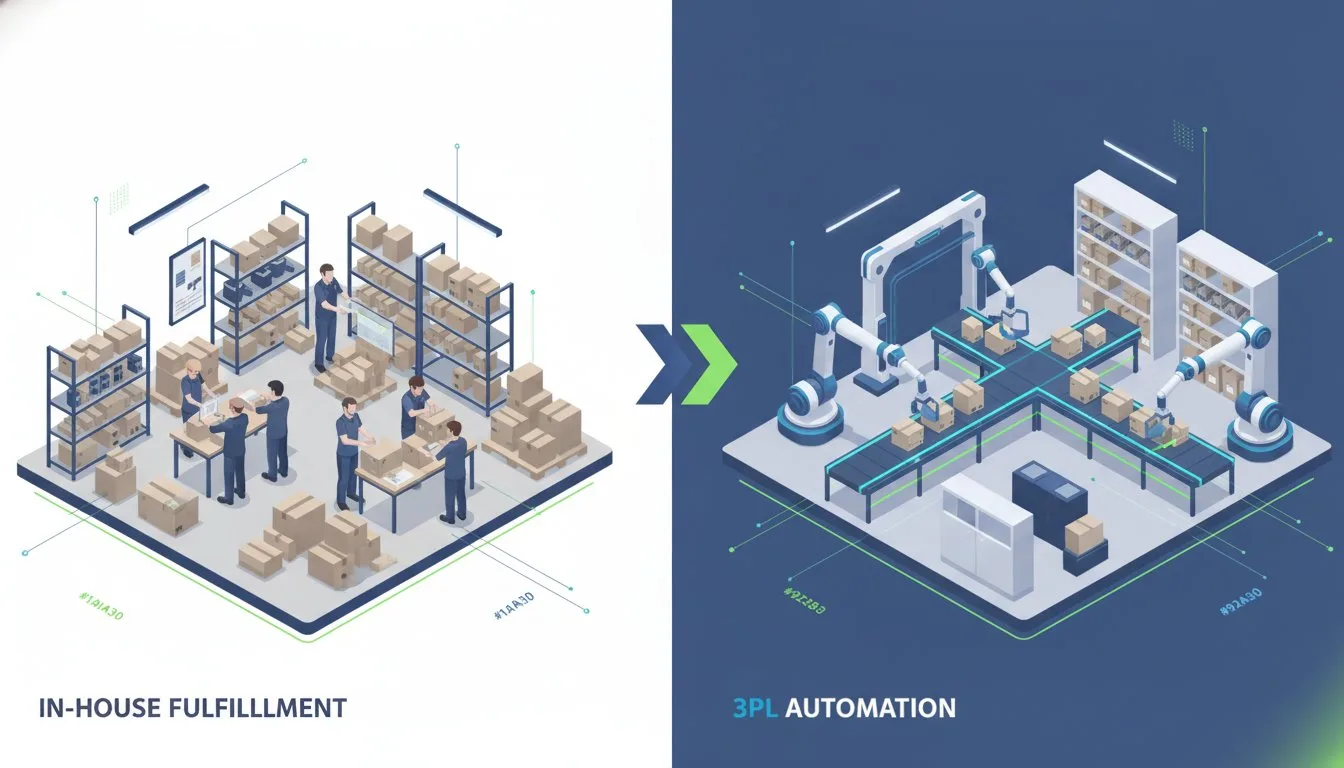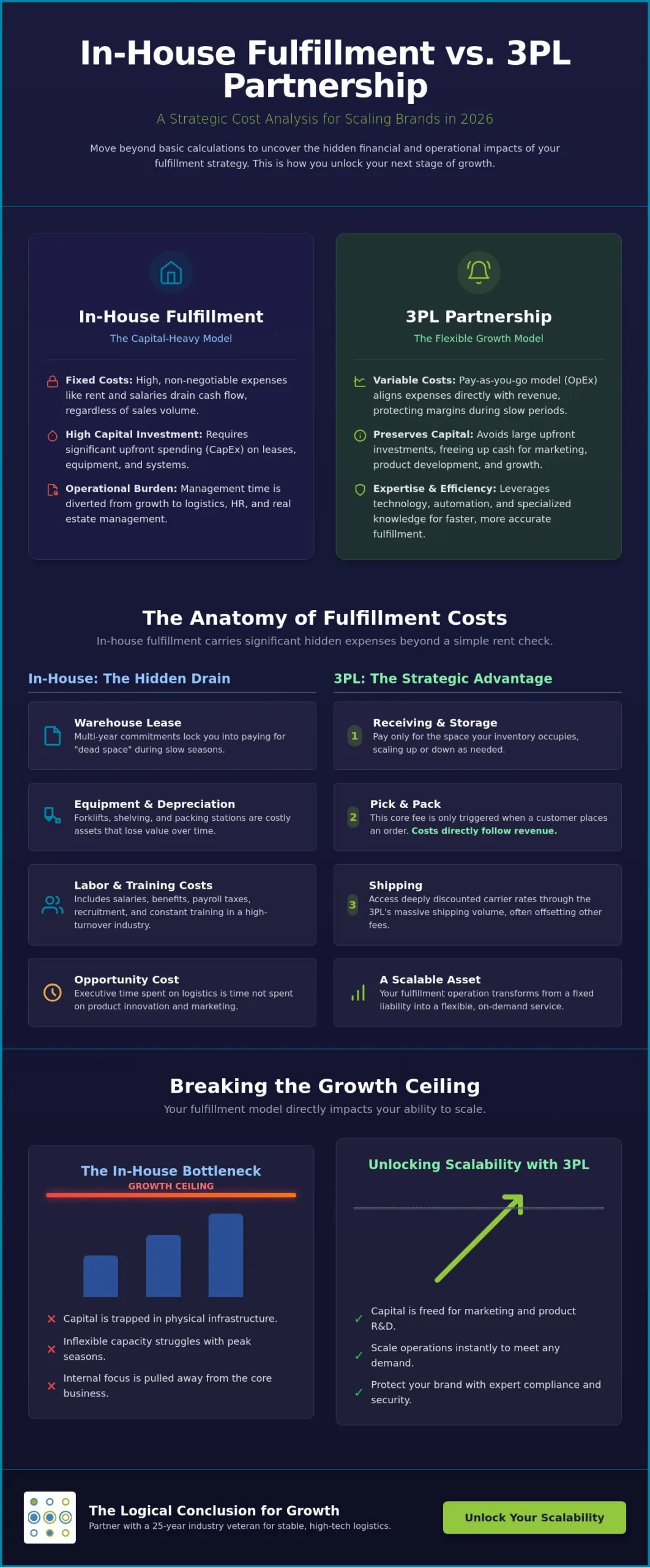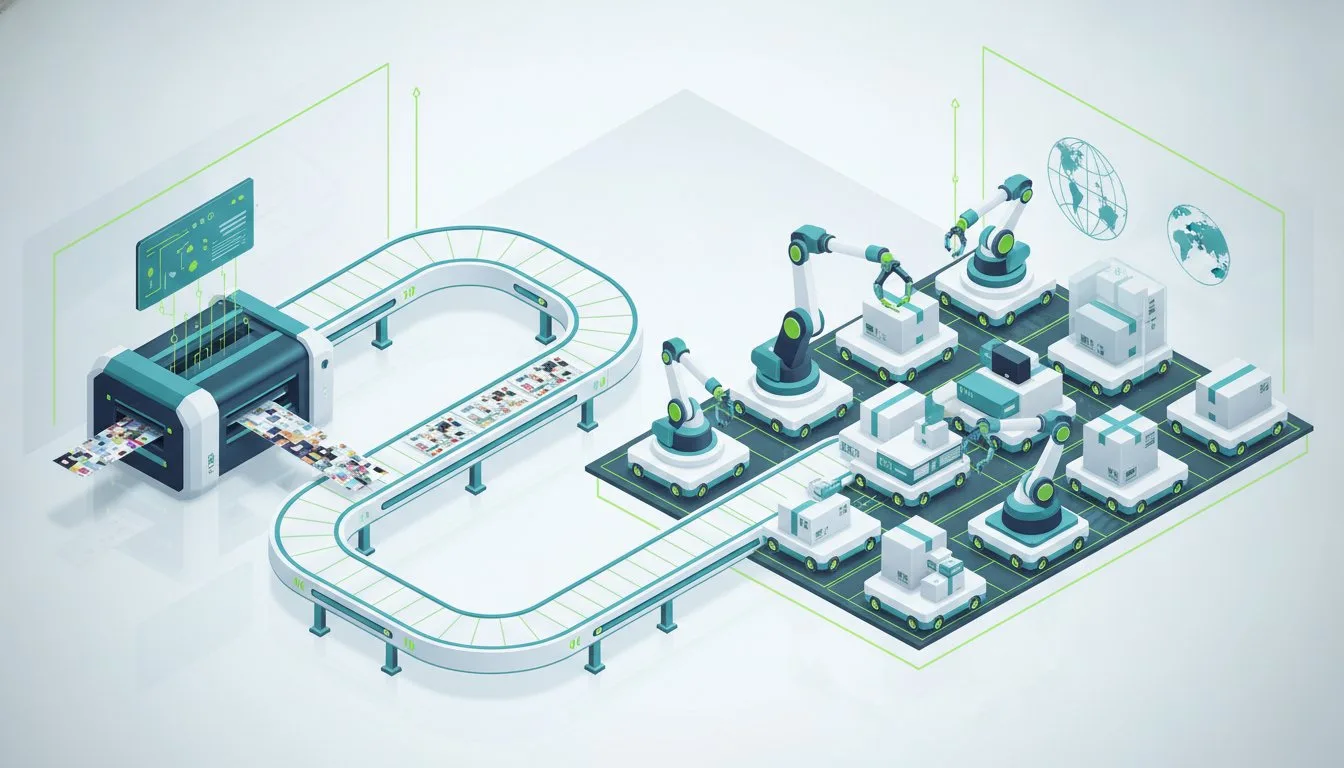
img not found!
Integrated Print and Fulfillment Services: The 2026 Strategic Guide to Supply Chain Efficiency

Integrated Print and Fulfillment Services: The 2026 Strategic Guide to Supply Chain Efficiency

Why should your marketing materials sit idle for days, waiting for ink to dry, while your customers wait for their orders? It’s a common frustration for growing brands that rely on traditional offset methods or rigid logistics providers. You’ve likely experienced the stress of color variance between runs or the lack of real-time visibility into your inventory. You need a partner that acts as a steady, reliable extension of your own company to bridge these gaps.

This guide demonstrates how merging high-resolution digital printing with precision 3PL logistics can eliminate lead times and optimize your entire operational workflow. By choosing integrated print and fulfillment services that utilize liquid-ink technology, you can achieve a seamless, “just-in-time” supply chain. We’ll show you how leveraging proprietary management systems with over 120 standard reports provides the transparency you need to scale. You’ll discover how to maintain a consistent brand image through 230 line screen resolution while ensuring your kitting and assembly remain flexible enough for any custom request.

Key Takeaways

  • Discover how a unified workflow between digital printing and 3PL logistics eliminates the 24 hour drying times typical of traditional offset methods.
  • Learn why liquid ink technology and 230 line screen resolution provide the sharp brand representation your high value materials require.
  • Gain 24/7 visibility into your supply chain with a proprietary management system that offers over 120 standard reports for total inventory control.
  • Explore how specialized print and fulfillment services can manage complex kitting and healthcare mailing with higher accuracy and compliance.
  • Understand the strategic advantage of a “quiet facility” methodology where organized human expertise ensures your operations remain flexible and scalable.

What are Integrated Print and Fulfillment Services?

Integrated print and fulfillment services represent a unified operational ecosystem where high-resolution digital production and 3PL logistics exist under one roof. Historically, businesses managed a fragmented chain. You’d hire a printer for your brochures, wait days for the ink to dry, then arrange transport to a separate warehouse for kitting and distribution. This model is obsolete. Modern integration allows for a seamless transition from the digital press directly to the shipping dock, removing the friction of multiple vendors and transit delays.

The shift away from traditional offset printing is central to this evolution. Offset methods require time-consuming plate-making and often demand 24 hours of drying time before materials can even be handled. By utilizing advanced technology like the HP Indigo 5500, we provide offset-quality results with real liquid ink that’s ready for fulfillment immediately. This “just-in-time” capability is essential in 2026, where marketing collateral and operational documents must move at the speed of digital business. It ensures your materials are never sitting idle when they could be in your customers’ hands.

The Death of the ‘Cookie-Cutter’ Fulfillment Model

Rigid, automated procedures often lead to project flaws and broken communication. Many providers offer a “one size fits all” approach that ignores the nuances of your brand. We’ve seen how these cookie-cutter models fail when custom kitting or variable data is required. A true partnership requires a bespoke approach. It means having a steady hand at the helm who listens to your unique goals. We position ourselves as an extension of your company, ensuring that every project receives personal oversight rather than just being a number in a queue. This human-centric focus eliminates the gaps that automated systems often overlook.

Core Benefits of a Unified 3PL and Printing Partner

Choosing a unified partner drastically simplifies your supply chain. You’ll see a significant reduction in lead times because the “dock-to-stock” delay is eliminated. Managing a single point of contact also lowers your administrative overhead, freeing your team to focus on strategy instead of chasing down tracking numbers. Quality control becomes more robust when a single “QC-Check” procedure governs the entire process. From the first ink drop to the final global shipment, every step is synchronized within a quiet, organized facility. This level of synchronization is only possible through on-demand digital printing that’s physically connected to your distribution hub.

High-Resolution Digital Printing vs. Traditional Offset

The perceived gap between digital and offset printing has vanished. For years, brand managers favored offset for its superior color depth, despite the long lead times and high setup costs. However, the emergence of liquid ink technology has changed the equation. Unlike standard digital printers that use dry toner, which can appear “waxy” or sit on top of the paper, the HP Indigo 5500 utilizes real liquid ink. This ink bonds with the fibers of the paper, mirroring the flat, professional finish of traditional offset while maintaining the speed of a digital workflow.

Precision is the hallmark of high-value brand representation. We achieve this through a 230 line screen resolution, which produces remarkably sharp imagery and fine detail that toner-based systems simply cannot replicate. This technical advantage ensures that your gradients are smooth and your fine text is legible. When your marketing materials are produced within integrated print and fulfillment services, this quality is matched by operational speed. Since digital sheets emerge from the press completely dry, they move to the kitting and assembly stage immediately. There’s no 24-hour waiting period for ink to set, which is a common bottleneck in traditional offset-to-warehouse models.

Color density control is another area where digital production excels. In an offset run, maintaining color consistency from the first sheet to the thousandth requires constant manual adjustment. Digital systems provide automated calibration, eliminating variance across both short and long print runs. Whether you’re printing ten presentation folders or ten thousand brochures, the brand colors remain identical. If you’re ready to see how this precision can elevate your next project, you can request a free quote to discuss your specific requirements.

Variable Data Digital Printing (VDP) for Personalization

Variable Data Printing allows you to customize copy, images, and offers for every single recipient in a single run. In 2026, personalization isn’t just a luxury; it’s a requirement for high ROI in direct mail and literature fulfillment. Because there are no plates to change, VDP costs very little more than static printing. It transforms a generic brochure into a bespoke communication that speaks directly to the recipient’s needs, significantly increasing engagement rates.

Sustainable and Green Printing Initiatives

Modern printing must be as responsible as it is efficient. By moving away from offset, we eliminate the need for the heavy chemicals, aluminum plates, and films that define traditional processes. Our commitment to sustainability includes offering FSC-certified papers and 30% recycled content options as standard. Through our partnership with hardware leaders like HP, we ensure that imaging oil and hardware components are part of a responsible recycling and recovery program. This approach allows you to scale your print and fulfillment services without compromising your environmental goals.

Streamlining the Workflow: From Press to Global Distribution

Efficiency in a modern supply chain isn’t just about speed; it’s about the precision of the handoff between digital production and logistics. When you utilize integrated print and fulfillment services, the workflow begins with real-time order submission via programmatic web services. This digital bridge ensures that data flows directly from your storefront or CRM into our production queue, eliminating the friction of manual entry and the risk of transcription errors. It’s a proactive approach that sets the stage for a flawless execution.

The printing phase follows immediately. As we’ve established, our liquid-ink technology produces sheets that require no drying time. This allows for immediate handling. Your materials move straight from the press to our kitting and assembly stations. Here, systematic procedures and a multi-stage QC-Check ensure that every kit is accurate and every brochure is pristine. This level of synchronization reduces lead times from days to hours, ensuring your collateral is ready for the next step without a moment’s waste.

The Remote Control™ Data Management System

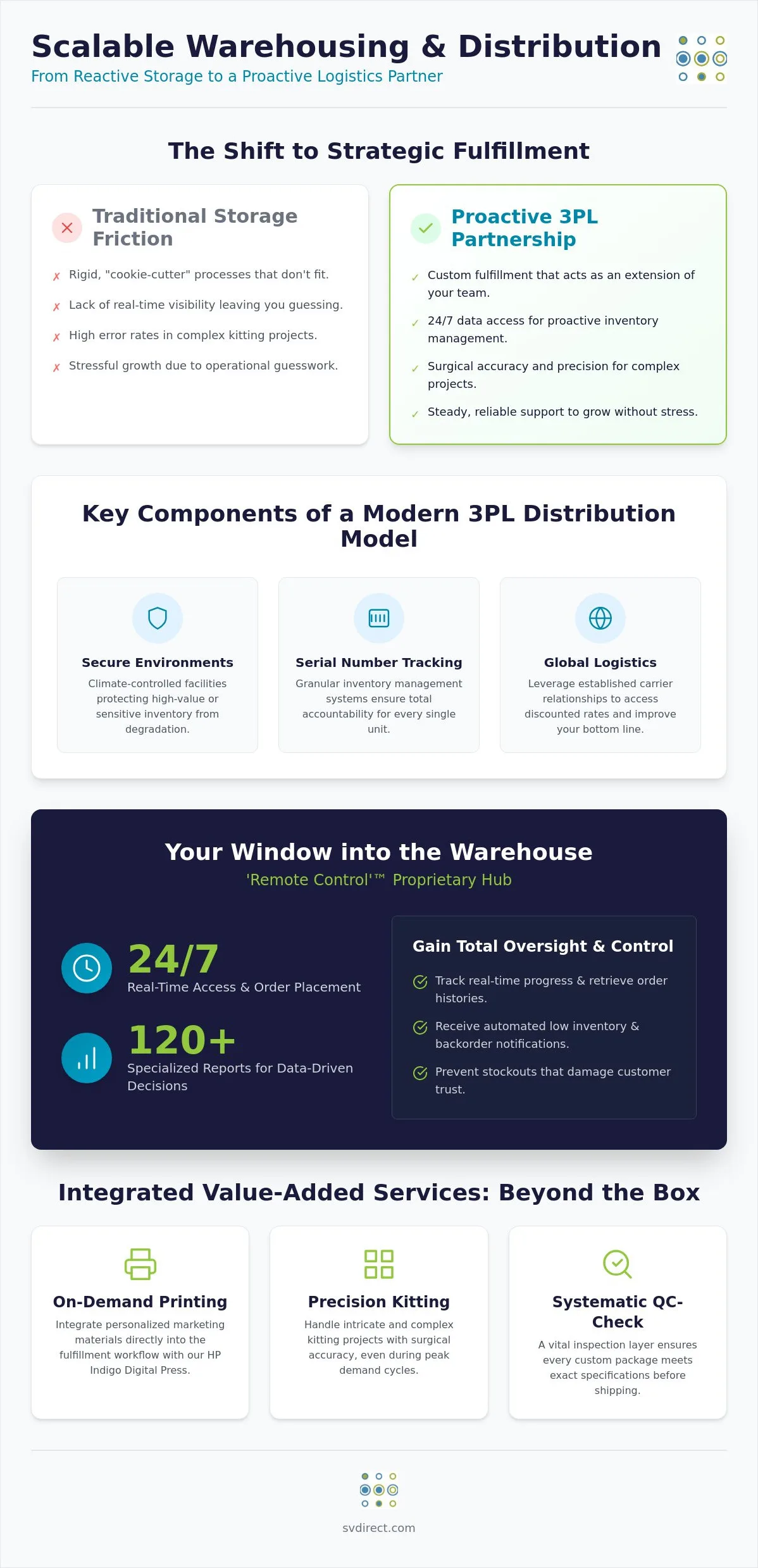
Our proprietary Remote Control™ system acts as the central nervous system for your operations. It provides 24/7 visibility into your inventory levels, order history, and project progress. With over 120 standard reports available, you’ll never have to guess about your stock status. Automated alerts for low inventory or backorders keep you proactive rather than reactive. We can even customize the web interface to reflect your corporate brand, providing a seamless experience for your internal users. Learn more about Remote Order Management.

Technical Integration for Developers

For technical stakeholders, we offer platform-agnostic web services that support XML, SOAP, and WSDL. This allows your developers to integrate our Order Management System (OMS) directly into your existing business logic. You can submit real-time transaction data and receive status updates programmatically. This deep technical integration ensures that our print and fulfillment services function as a native part of your own digital infrastructure. It’s about sharing business logic and processes through a programmatic interface that respects your developers’ time and your company’s technical standards.

Specialized Applications: Healthcare, Marketing, and Events

Literature fulfillment also benefits from this integrated model by solving the problem of obsolescence. In the past, companies would print massive runs of brochures or user manuals to save on unit costs, only to throw away thousands of copies when a product specification changed. Our on-demand approach allows you to print exactly what you need, when you need it. This keeps your press kits and manuals current while reducing waste. For those managing complex event calendars, we provide comprehensive tradeshow support. We handle everything from pre-show packet assembly to post-show lead follow-up, acting as a steady hand behind the scenes. Explore our industry-specific solutions to see how we tailor our processes to your unique sector.

Kitting and Hand Assembly for Complex Projects

While automation has its place, certain projects require a human touch that machines simply don’t replicate. Complex kits involving software, promotional clothing, or fragile items need the discernment of a dedicated hand-assembly team. We utilize a systematic multi-stage QC-Check for every project, ensuring that every component is present and correctly placed. This meticulous oversight is what separates a standard vendor from a true operational partner. It keeps your brand integrity intact. Strategic Guide to Kitting and Assembly Services.

Database Management and Direct Mail Marketing

The success of physical engagement depends heavily on the quality of your data. We provide comprehensive database management to improve the deliverability of your campaigns. This includes data entry, cleansing, and list procurement to ensure your message reaches the right doorstep. By removing duplicates and verifying addresses, we maximize your ROI and provide integrated reporting to track campaign effectiveness. We help you stay proactive. It’s about combining high-tech data processing with the physical reliability of print and fulfillment services. Direct Mail Marketing Services Guide.

The SVD Difference: Why Partnership Trumps Automation

A hectic warehouse environment is often a breeding ground for errors. Unlike the chaotic facilities common in the logistics industry, our operations are built on a ‘Quiet Facility’ methodology. This approach prioritizes organized inventory control and deliberate movement. It allows our team to focus on the precision required for high-stakes print and fulfillment services without the distractions of a disorganized floor. When your facility is quiet and organized, quality control becomes a natural outcome rather than a forced checklist. It ensures that every item is where it should be, exactly when it needs to be there.

Our identity is rooted in Silicon Valley, a region defined by technological innovation for decades. Since 1999, we’ve leveraged this geographic advantage to stay at the cutting edge of logistics and digital production. However, technology is only half of the equation. Our ‘Nine Promises’ serve as the foundation of every client engagement. These promises reflect a deep commitment to listening, flexibility, and absolute accountability. We don’t just process orders; we identify potential conflicts before they impact your project timeline. This proactive stance ensures that your supply chain remains resilient even when market conditions shift. We act as a steady hand, alleviating the stress of business growth through personal commitment.

Decades of Stability and Expertise

Longevity is a rare commodity in a volatile market. Our company was founded in 1999, providing us with over 25 years of operational history and stability. This experience has allowed us to refine our processes through various economic cycles and technological shifts. A key hallmark of our expert-level service is our long-term staff retention. Many of our team members have been with us for decades, bringing a level of institutional knowledge that automated systems can’t replicate. Their seasoned eyes catch the nuances that machines miss, ensuring your brand is always represented with high-resolution accuracy. Read our customer testimonials to see the impact of this stability on our clients’ success.

Flexibility and Rejection of Rigid Procedures

Rigid, ‘one-size-fits-all’ procedures are the enemy of complex marketing and sales projects. Your budget and goals are unique, and your fulfillment partner should adapt accordingly. We explicitly reject the impersonal nature of automated interactions in favor of direct human connection and personal oversight. Instead, we offer custom-fit solutions that align with your specific operational needs. If a challenge arises, our team carries a ‘make-it-right’ attitude that defines first-class customer service. This flexibility allows us to act as a true extension of your company, ensuring that your print and fulfillment services are as agile as your business strategy requires.

Future-Proof Your Supply Chain with Precision Integration

The path to a zero-lag supply chain starts with a partner that understands the high-stakes nature of your brand’s growth. By merging the liquid ink technology of the HP Indigo 5500 with a quiet, organized logistics facility, you eliminate the traditional bottlenecks that slow down your marketing and operational efforts. You gain more than just speed; you gain the absolute peace of mind that comes with 24/7 visibility through our proprietary Remote Control™ system. These tools ensure your inventory is managed with surgical precision, allowing your team to stay proactive rather than reactive.

Since 1999, Silicon Valley Direct has acted as a steady, reliable extension of our clients’ companies. We’ve replaced rigid, cookie-cutter models with bespoke solutions that respect your unique goals and budget. Choosing integrated print and fulfillment services isn’t just a technical upgrade. It’s a strategic commitment to brand consistency and operational excellence. We’re ready to help you navigate the complexities of 2026 with the same personal oversight and expertise we’ve provided for over two decades. Our team handles the mechanical details so you can focus on the big picture of your business.

We look forward to building a partnership that supports your long-term success through every stage of your growth. Our commitment to your brand’s integrity remains our highest priority.

Frequently Asked Questions

What is the difference between digital and offset print quality in 2026?

Modern digital printing using liquid ink technology now matches the depth and professional finish of traditional offset. We utilize the HP Indigo 5500, which provides a 230 line screen resolution for remarkably sharp imagery. Unlike toner-based digital systems that can appear waxy, our liquid ink bonds with the paper fibers. This ensures your brand is represented with the highest level of precision and detail.

How much does variable data printing (VDP) typically cost compared to static printing?

Variable data printing costs very little more than static printing because it eliminates the need for physical plate changes. Since the process is entirely digital, we can customize every sheet in a single run without increasing production time. This makes it a highly cost-effective strategy for increasing engagement and ROI in your direct mail and literature fulfillment campaigns.

How quickly can printed materials be moved to the fulfillment and shipping stage?

Materials move to fulfillment immediately after they leave the digital press. Because our liquid ink technology requires no drying time, we avoid the 24-hour delays that are common in traditional offset-to-warehouse models. This capability is a cornerstone of our print and fulfillment services, allowing for a seamless, “just-in-time” workflow that gets your collateral to customers faster.

Can I integrate my existing eCommerce platform with your fulfillment system?

Yes, we offer platform-agnostic web services that support XML, SOAP, and WSDL for deep technical integration. Your developers can connect our Order Management System directly into your existing digital infrastructure to submit transaction data in real-time. This programmatic interface ensures that our logistics operations function as a native, automated extension of your own company’s storefront or CRM.

What security measures are in place for healthcare or sensitive mailing services?

We maintain strict protocols for sensitive distributions by utilizing a systematic, multi-stage QC-Check for every project. Our quiet facility methodology ensures that healthcare mailing and regulatory documents are handled in an organized environment that minimizes errors. We prioritize accountability and human oversight, treating every sensitive shipment with the sobriety and precision that compliance standards demand.

What is a ‘quiet facility’ methodology and how does it benefit my project?

A ‘quiet facility’ is an operational environment where organized inventory control and deliberate movement are prioritized over hectic, chaotic activity. This methodology benefits your project by drastically reducing the likelihood of errors during kitting and assembly. It allows our seasoned experts to maintain personal oversight on every order, ensuring that your brand integrity is protected through every stage of production.

Do you offer sustainable or eco-friendly printing and packaging options?

We offer FSC-certified papers and 30% recycled content options to support your green initiatives. By utilizing digital production, we eliminate the need for the aluminum plates and heavy chemicals required by offset processes. Additionally, our partnership with HP includes responsible recycling programs for imaging oil and hardware components, helping you scale your print and fulfillment services sustainably.

How do I track my inventory and order status in real-time?

You can track your inventory and order status 24/7 through our proprietary Remote Control™ management system. This system provides access to over 120 standard reports, offering total transparency into your supply chain. You’ll receive automated alerts for low inventory levels and backorder notifications, ensuring you always have the data needed to make informed operational decisions.
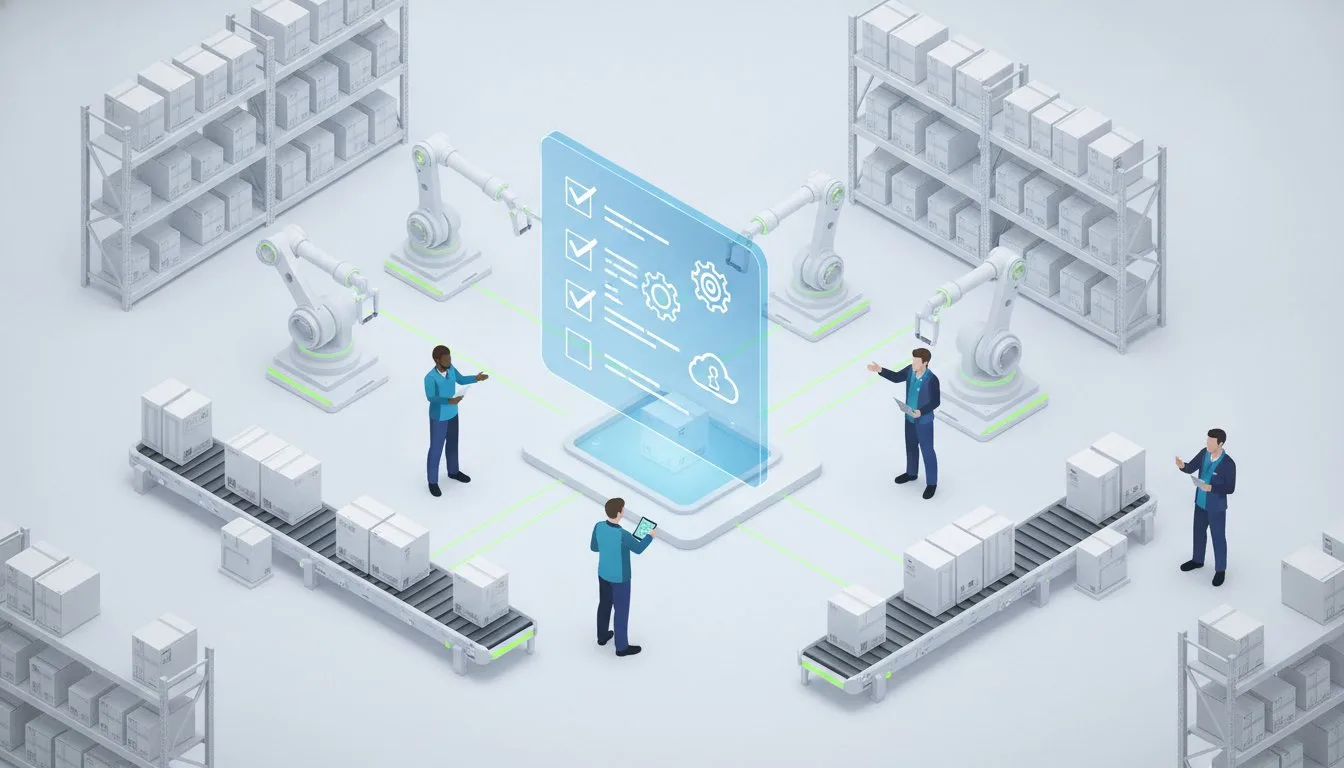
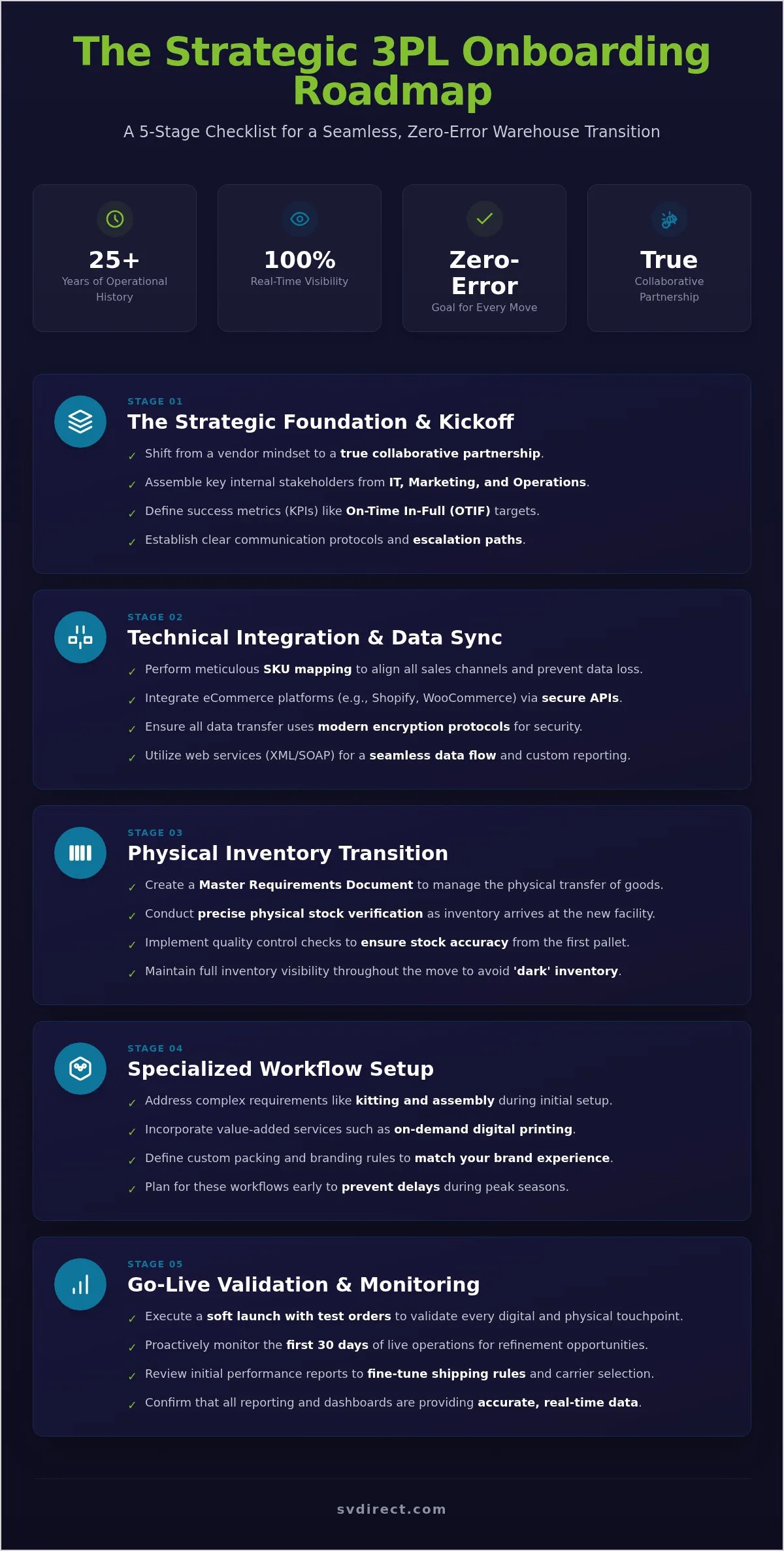
The Ultimate 3PL Onboarding Checklist: A Strategic Guide for 2026

The Ultimate 3PL Onboarding Checklist: A Strategic Guide for 2026

What if the biggest threat to your brand’s growth isn’t a market shift, but the silence of ‘dark’ inventory during a warehouse move? It’s a common anxiety for scaling businesses that fear losing visibility or encountering hidden setup fees. You need a partner who acts as a steady hand, drawing on over 25 years of operational history to ensure your transition is precise. That’s why we’ve developed a comprehensive 3pl onboarding checklist to eliminate technical friction and ensure your data remains secure from the very first scan.

We believe that successful logistics integration requires a blend of high-tech visibility and high-touch human oversight. By following this strategic guide for 2026, you’ll master the transition with a 100-point plan designed for a zero-error move. We’ll preview the essential stages of API synchronization, physical stock verification, and the reporting methods needed to maintain real-time control. This roadmap ensures your new partnership feels like a natural extension of your own team, providing the stability you need to grow without the typical growing pains.

Key Takeaways

  • Successful integration starts by shifting from a vendor mindset to a true partnership. This collaborative approach ensures your logistics provider operates as a seamless extension of your internal team.
  • A comprehensive 3pl onboarding checklist must prioritize technical synchronization and precise SKU mapping. These steps are vital to preventing data loss and ensuring your inventory remains visible throughout the move.
  • Utilize a Master Requirements Document to manage the physical transfer of goods. This structured process provides the clarity needed to maintain stock accuracy from the moment your first shipment arrives.
  • Incorporate specialized workflows like on-demand digital printing and complex kitting into your initial setup. Addressing these technical requirements early prevents operational delays during your peak seasons.
  • Execute a soft launch with test orders to validate every digital and physical touchpoint. Monitoring the first 30 days of live operations allows for the proactive refinement of shipping rules and carrier performance.

The Strategic Foundation: Pre-Onboarding and Kickoff

At its core, Third-party logistics (3PL) onboarding is the systematic alignment of your digital sales channels, backend data, and physical inventory with a fulfillment partner’s operations. It isn’t just a simple software handshake. It’s a high-stakes transition that requires a steady hand to avoid “dark” inventory or data loss. Viewing this move through the lens of a 3pl onboarding checklist helps you shift from a transactional vendor mindset to a collaborative partnership. A vendor simply ships boxes; a partner integrates with your team to solve problems before they reach the customer, creating a foundation for long-term scalability.

Establishing Your Success Metrics (KPIs)

Precision is the hallmark of high-performance logistics. You must define what success looks like before the first pallet arrives. We recommend setting “On-Time In-Full” (OTIF) targets that reflect your specific industry requirements, as healthcare mailing needs differ from consumer electronics. Using a 3pl onboarding checklist ensures that accuracy benchmarks for inventory receiving and order picking are established early. Our Remote Control™ system provides 24/7 visibility into these metrics through 120+ standard reports, so you’re never guessing about your stock levels.

Communication and Project Management

Effective logistics management requires moving beyond endless email chains. A proactive communication cadence, led by a dedicated project manager, prevents the hectic warehouse environment that causes errors. This human-centric approach ensures that your account manager understands the nuances of your assembly needs. You can learn about SVD’s proactive problem-solving philosophy to see how dedicated oversight transforms the shipping experience. This proactive stance ensures your operations remain grounded and accessible even during rapid growth.

Technical Integration: Syncing Your Digital Ecosystem

The digital handshake between your storefront and our warehouse is where operational speed is won or lost. Integrating your eCommerce platform, whether it’s Shopify or WooCommerce, requires more than just a simple plugin installation. It demands a meticulous SKU mapping process to ensure every item variant aligns perfectly across all sales channels. This technical alignment is a core component of any robust 3pl onboarding checklist. Without it, you risk duplicate entries or “ghost” stock that disrupts the customer experience. Our approach prioritizes a seamless data flow that eliminates manual entry errors and provides a stable foundation for growth.

Maintaining security in 2026 means adhering to the latest encrypted data transfer protocols. We ensure that every transaction and customer detail is protected during the sync. This commitment to data integrity allows you to focus on scaling while we handle the mechanical complexities of order transmission. With 85% of supply chain executives planning to increase AI spending in 2026, having a clean data foundation is no longer optional. A precise 3pl onboarding checklist ensures that your data is structured correctly from day one, allowing you to leverage advanced forecasting tools effectively.

Leveraging Web Services and API Integration

We utilize platform-agnostic XML and SOAP protocols to facilitate effortless communication between disparate systems. These programmatic interfaces empower your developers to build custom user dashboards tailored to your specific reporting needs. The AddOrder method streamlines real-time transaction submission by allowing your external systems to programmatically push new orders directly into our management system for immediate processing. This level of flexibility ensures that your technical ecosystem remains agile and responsive to market demands.

Proprietary Data Management Tools

Visibility shouldn’t end when the warehouse doors close. Our proprietary Remote Control™ system offers the ultimate advantage by providing 24/7 access to your inventory and order histories. You can explore our Remote Order Management system to see how we provide 120+ standard reports at your fingertips. This tool doesn’t just display data; it acts as an early warning system with automated notifications for low inventory levels and backorders.

This high-tech efficiency is always backed by human expertise. While our systems handle the heavy lifting of data synchronization, our account managers provide the personal oversight necessary to catch nuances that algorithms might miss. If you’re ready to see how a high-performance partner can stabilize your digital operations, you might want to request a custom quote tailored to your integration needs.

Physical Inventory Transition and Quality Control

The digital sync discussed in the previous section provides the visibility, but the physical migration of your stock is where a partnership is truly tested. A successful transition relies on a Master Requirements Document (MRD). This blueprint defines every physical attribute of your products, from precise dimensions to exact weights. It ensures that when your inventory arrives, there are zero discrepancies between what was sent and what is shelved. This document is a non-negotiable part of your 3pl onboarding checklist, acting as the source of truth for the entire operations team.

Coordinating the “Big Move” from your old facility requires meticulous timing. It isn’t just about loading trucks. It’s about staging shipments to prevent bottlenecks and ensuring your inventory doesn’t “go dark” during transit. Once your goods reach our doors, our inbound receiving protocols take over. We verify quantities, weights, and product condition against the MRD with absolute precision. Our quiet, organized facility methodology isn’t just a slogan. It’s a deliberate operational choice to reduce the noise and chaos that lead to receiving errors. This calm environment allows our staff to focus, ensuring your inventory is available for sale the moment it’s processed.

The Systematic QC-Check Process

Inspection is a core pillar of our 25 year operational history. For complex kitting or hand assembly, a systematic QC-Check process is essential to maintain brand integrity. We believe inspection at every stage is non-negotiable because catching a mistake at the end of a run is often too late. For brands with high-value inventory, secure and climate-controlled warehousing provides an additional layer of protection. You can learn more about Secure Warehousing for High-Value Electronics to understand how we protect specialized assets through every step of a 3pl onboarding checklist.

Inventory Categorization and Storage

Speed in fulfillment starts with how items are shelved. We use ABC analysis to organize inventory, placing high-velocity products in the most accessible zones for faster pick-and-pack cycles. For items requiring strict accountability, we set up serial number tracking at the product level. This ensures you can trace every unit from the moment it enters our facility until it reaches the customer’s doorstep. We also manage literature and promotional assets alongside your primary products. This integrated approach ensures that marketing collateral is always available for kitting, maintaining a consistent brand experience across every package shipped.

The Ultimate 3PL Onboarding Checklist: A Strategic Guide for 2026

Onboarding for Specialized Workflows: Kitting and Printing

Healthcare-specific compliance adds another layer of complexity to the transition that many providers overlook. If you handle medical kits or patient communications, your onboarding process must verify HIPAA-compliant protocols for mailing and data handling. Our facility is designed to manage these sensitive requirements with the same quiet, organized precision we apply to eCommerce orders. This ensures your brand remains compliant while benefiting from high-performance logistics infrastructure. Managing these intricate requirements within your 3pl onboarding checklist prevents operational bottlenecks and legal risks during high-volume launches.

Just-In-Time Digital Printing Setup

Configuring 4-color digital printing for short-run materials requires high-resolution standards to maintain brand quality. We utilize HP Indigo 5500 liquid ink technology to ensure that every print-on-demand asset meets a 300 dpi standard. This setup allows for rapid adjustments to marketing materials without the lead times associated with traditional offset printing. It’s a proactive way to manage promotional literature and seasonal inserts. You can discover our Print-on-Demand capabilities to see how we bridge the gap between digital marketing and physical fulfillment through high-tech integration.

Kitting and Assembly Precision

Complex kitting, from subscription boxes to intricate software packages, demands a rigorous assembly process. We develop detailed assembly instructions and quality benchmarks for every hand-kitting project. Our systematic QC-Check process ensures that each kit is built to your exact specifications, whether it’s for promotional fulfillment or tradeshow support. For a deeper look at these processes, see our Kitting and Assembly Services: Strategic Guide. This level of oversight provides the stability needed for high-stakes assembly work.

The Go-Live Validation and 30-Day Monitoring

The transition from planning to execution is the most high-stakes moment of the logistics journey. We recommend a “Soft Launch” phase to validate every digital and physical connection before opening the floodgates. By processing a small batch of test orders, you can confirm that the digital handshake between your store and our facility is flawless. This validation step is a critical milestone in our 3pl onboarding checklist, ensuring that shipping rules and carrier selections trigger correctly. It’s much easier to refine a process during a controlled pilot than during a full-scale launch where customer expectations are already on the line.

Once live, the focus shifts to monitoring carrier performance and the accurate application of discounted shipping rates. We use the first month to establish a robust returns management workflow, which is essential for building long-term customer trust. Returns shouldn’t be a secondary thought. They’re a vital part of the brand experience that requires the same precision as outbound fulfillment. Reviewing the first month’s reports allows us to identify any minor friction points and refine the operational rhythm. With 76% of supply chain leaders reporting improved forecast accuracy in 2026, using this initial data to sharpen your inventory planning is a proactive move for future growth.

Validation and Troubleshooting

After the initial launch, we conduct a post-onboarding audit to identify any hidden inefficiencies. This isn’t a one-time check but a commitment to operational excellence. Our stakeholders have 24/7 access to live reporting through the Remote Control™ system, providing total transparency into every movement and order status. This ensures that everyone from IT to marketing remains informed and confident. For a broader look at shipping complexities and international regulations, see our Global Shipping Services: 2026 Strategic Reference.

Earning Long-Term Trust

A successful 3pl onboarding checklist is just the beginning of a continuous improvement journey. We move beyond the initial setup to look for ways to optimize your supply chain as your brand scales. You need a partner who thinks outside the box, offering bespoke problem-solving that automated bots simply can’t provide. Our multi-decade history is anchored in the belief that human oversight is the ultimate differentiator in a tech-driven market. This proactive attitude ensures your business remains agile, stable, and ready for the demands of a global marketplace.

Ready for a seamless transition? Contact Silicon Valley Direct today

Securing Your Growth with a Precision-Driven Partnership

Mastering a logistics transition requires more than just a software sync. It demands a high-touch approach that aligns your digital ecosystem with a quiet, organized physical facility. By utilizing a comprehensive 3pl onboarding checklist, you’ve established a source of truth that prevents data loss and ensures your inventory never goes dark. Integrating specialized workflows like complex kitting and high-resolution digital printing early on creates a seamless brand experience from day one. This proactive strategy turns your fulfillment operations into a stable foundation for scaling.

Since 1999, we’ve acted as a steady hand for brands navigating these technical and physical complexities. Our proprietary Remote Control™ system provides the 24/7 visibility you need to maintain informed confidence throughout the go-live phase and beyond. This isn’t just about moving boxes. It’s about building a partnership where physical operations are as organized and reliable as your digital strategy. We’re committed to ensuring your transition is error-free and your stock is visible from the moment it reaches our doors.

Your brand deserves a partner that treats your growth with personal commitment and technical precision. We’re ready to help you turn your logistics from a source of anxiety into a powerful engine for your 2026 expansion.

Frequently Asked Questions

What is a 3PL client onboarding checklist?

A 3PL client onboarding checklist is a structured roadmap that aligns your digital ecosystem, physical inventory, and operational standards with your logistics partner. This comprehensive 3pl onboarding checklist ensures that data syncs correctly and stock is verified before shipping begins. It serves as a source of truth for both your internal team and our account managers, preventing data loss and ensuring a seamless operational integration from the very first day of the partnership.

How long does the 3PL onboarding process typically take?

The onboarding timeline typically spans two to six weeks depending on your operational complexity. While a simple eCommerce integration might be finalized quickly, projects involving complex kitting or healthcare mailing require additional time for rigorous testing. We prioritize a methodical pace to ensure every API connection and physical receiving protocol is perfect. This steady hand approach prevents the hectic warehouse environments that lead to errors during rapid growth or seasonal peaks.

What data does a 3PL need to begin the system integration?

System integration begins with your SKU list, product dimensions, weights, and API credentials for your eCommerce platforms. We also need any specific assembly instructions for kitting or high-resolution assets for on-demand digital printing. Providing this data through a Master Requirements Document allows our Remote Control™ system to establish 24/7 visibility immediately. This organized data foundation is essential for maintaining real-time stock accuracy and ensuring that your reporting remains precise and actionable.

How do I prevent shipping delays during the move to a new 3PL?

Preventing delays requires a “Soft Launch” phase where a small batch of test orders is processed before the full transition. This pilot validates that your shipping rules and carrier selections are functioning correctly within the digital ecosystem. By identifying friction points in a controlled environment, you avoid the silence of “dark” inventory during the move. Our proactive problem-solving philosophy ensures that your customers never experience a disruption in service while we refine the operational rhythm.

What are the common mistakes businesses make when onboarding a 3PL?

A common mistake is viewing the transition as a purely technical software sync rather than a collaborative partnership. Businesses often overlook the importance of physical stock verification or fail to define clear escalation paths for technical issues. Within a robust 3pl onboarding checklist, these human elements are just as critical as the API connections. Ignoring specialized workflows like variable data printing or returns management early on can also create bottlenecks that slow down your long-term scalability.

Can I integrate my existing custom software with a 3PL system?

Our system is designed to integrate with custom software through platform-agnostic XML and SOAP protocols. These programmatic interfaces allow your developers to build custom dashboards or push real-time transaction data directly into our Order Management System. This flexibility ensures that your existing digital investments remain valuable while gaining the benefit of our 25 years of operational history. You don’t have to change your entire workflow to gain high-tech efficiency and human oversight.

How much does 3PL onboarding cost for a small business?

Onboarding costs are generally determined by the complexity of your technical setup and the volume of inventory being transitioned. While setup fees in the industry can range from $250 to over $1,000, we focus on providing a bespoke quote that reflects your specific needs. This might include configurations for HP Indigo digital printing or specialized healthcare compliance. Investing in a precise setup prevents hidden fees and operational errors that could cost much more later.

What happens if my inventory levels don’t match during the transition?

We perform a physical count to reconcile your digital records with the actual stock in our facility if discrepancies arise. This verification process uses your Master Requirements Document as the source of truth to identify where gaps occurred during the move. Our Remote Control™ system then updates your inventory levels in real-time to ensure your storefront reflects accurate data. This transparent approach ensures your partnership is built on a foundation of trust and operational precision.

Inventory Management for eCommerce: The 2026 Strategic Guide to Scaling Operations

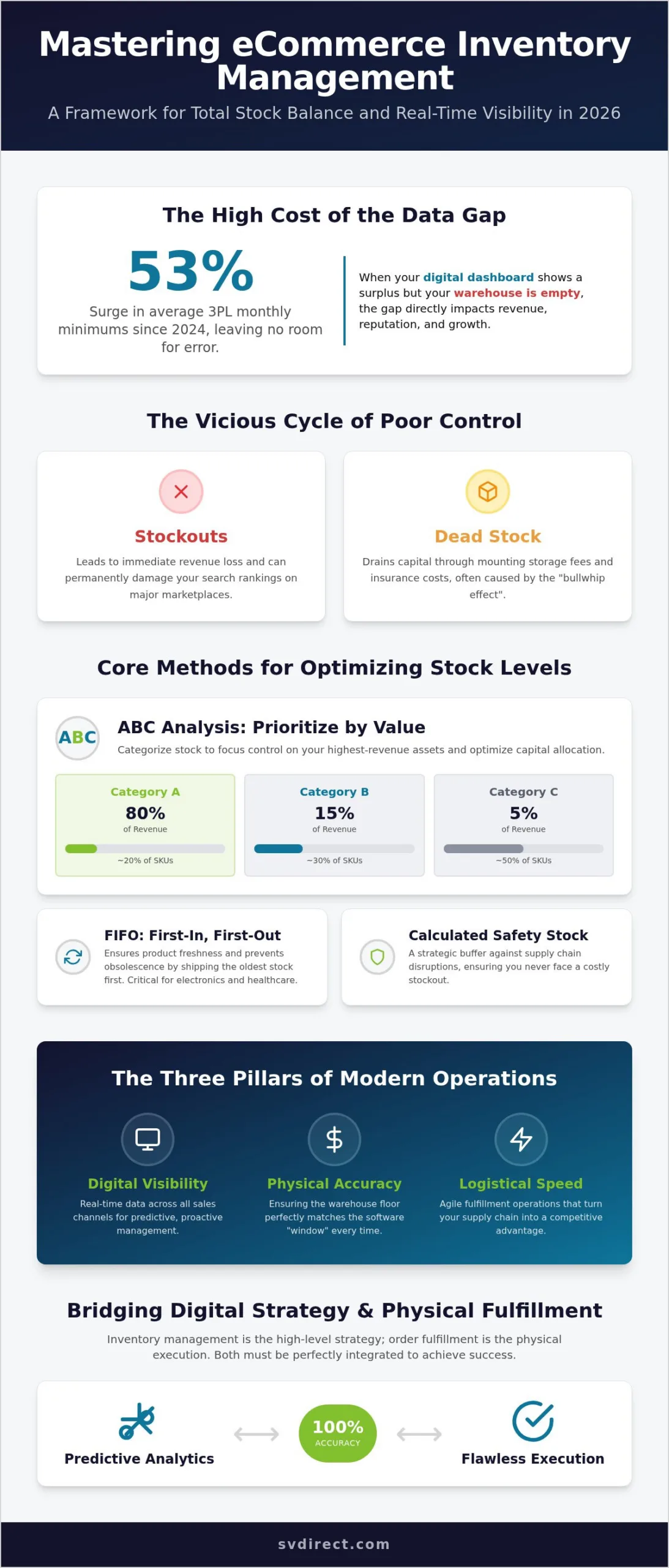
If your digital dashboard shows a healthy surplus but your warehouse floor is actually empty, how much is that data gap costing your brand’s reputation? It’s a question many founders face as average 3PL monthly minimums have surged by 53 percent since 2024, leaving no room for operational error. You likely feel the weight of capital tied up in slow-moving stock while your bestsellers vanish, leading to the inevitable customer frustration that follows inaccurate “in-stock” counts. Manual data entry across multiple sales channels only compounds the stress, making growth feel like a liability rather than a victory.

You deserve a steady hand to help manage these complexities. This guide shows you how to master inventory management for ecommerce by achieving total stock balance and real-time visibility across every channel. We will outline the steps to lower your storage fees through optimized levels and create a seamless bridge between order placement and physical fulfillment. By the end, you’ll have a strategic framework to ensure your physical operations are just as agile and precise as your digital storefront in 2026.

Key Takeaways

  • Understand how the shift toward predictive analytics allows you to anticipate market demand rather than simply reacting to stockouts.
  • Implement proven methodologies like FIFO and ABC Analysis to prioritize your highest-revenue assets and eliminate product obsolescence.
  • Master the balance between digital visibility and physical precision to optimize inventory management for ecommerce across every sales channel.
  • Identify the specific operational tipping points that signal it’s time to transition from fixed warehouse costs to a scalable, variable-cost 3PL model.
  • Learn how leveraging on-demand digital printing and precise warehouse control can reduce overhead while strengthening customer loyalty.

What is Inventory Management for eCommerce in 2026?

In 2026, the definition of success has shifted. It is no longer just about counting boxes in a back room. Effective inventory management for ecommerce involves the end-to-end supervision of non-capitalized assets, from the moment of procurement through to final delivery. While older models focused on reacting to sales after they happened, the modern standard is “predictive inventory.” This proactive approach uses historical data and market trends to anticipate demand before the first order even arrives.

To scale in this high-stakes environment, your operations must rest on three pillars: digital visibility, physical accuracy, and logistical speed. Many traditional warehouses rely on a “hustle” culture that leads to burnout and frequent errors. At Silicon Valley Direct, we replace that chaotic noise with our “quiet facility” methodology. This approach ensures precision even during peak seasons, treating your stock with the care of a seasoned partner. Mastering inventory management for ecommerce in 2026 requires this level of calm, calculated precision to turn your warehouse into a growth engine.

The Cost of Poor Inventory Control

Inaccurate tracking is not just an inconvenience; it’s a direct hit to your bottom line. Stockouts lead to immediate revenue loss and can permanently damage your search rankings on major marketplaces. Conversely, “dead stock” drains capital through mounting storage fees and insurance costs. This often stems from the “bullwhip effect,” where small fluctuations in retail demand cause massive, inefficient swings in wholesale ordering. Mitigation requires real-time data that reflects the actual state of your shelves without delay.

Inventory Management vs. Order Fulfillment

It’s vital to distinguish between these two functions. Fulfillment is the physical action of picking and packing a product. In contrast, inventory management is the high-level strategy that determines what should be on the shelf in the first place. These functions must be perfectly integrated to achieve 100% accuracy. By partnering with a 3PL fulfillment service that prioritizes both strategy and execution, you turn your supply chain into a competitive advantage. This integration ensures that the software “window” matches the reality of the warehouse floor every single time.

Core Methods for Optimizing eCommerce Stock Levels

Success in 2026 requires more than just knowing what is on the shelf. It requires a methodology that adapts to your specific product lifecycle. First-In, First-Out (FIFO) remains the gold standard for brands that prioritize product freshness and quality. By ensuring the oldest stock leaves the warehouse first, you can optimize inventory management for ecommerce and prevent the silent revenue drain of obsolescence. This is particularly critical for industries like healthcare or electronics—where brands like Sunshine Valley distribute natural food supplements—because shelf life is finite and technical specifications evolve rapidly.

Not all products are created equal. ABC Analysis allows you to categorize stock based on value and turnover. “A” items typically represent only 20 percent of your SKU count but drive 80 percent of your revenue. By focusing your tightest controls on these high-velocity assets, you optimize your capital. Just-In-Time (JIT) models offer high rewards in lowered storage fees, yet they carry risks in a volatile global market. To buffer against supply chain disruptions, we recommend a calculated Safety Stock. This acts as a strategic insurance policy, ensuring you never face the “out of stock” badge that kills conversion rates and customer trust. To see how these methods apply to your specific volume, you can request a free quote to discuss a tailored strategy.

Managing Complex SKUs and Kitting

Scaling often involves creating bundles or promotional kits that combine multiple products into a single offer. This introduces the “virtual SKU” concept, where individual components are tracked separately in the warehouse but appear as a single unit to the customer. Managing this complexity requires high-touch precision and an integrated digital view. Silicon Valley Direct provides kitting and hand assembly services that ensure these multi-component orders are built accurately every time. This maintains the integrity of your inventory management for ecommerce even during high-volume promotional pushes or seasonal spikes.

Cycle Counting vs. Physical Audits

Traditional annual physical audits are disruptive and often reveal errors too late to fix. They force a complete halt to operations, which is unacceptable for a fast-moving brand. In contrast, modern Effectively Manage Inventory strategies favor cycle counting. Cycle counting is a rolling audit process that maintains 99 percent accuracy without pausing operations. Our systematic QC-Check inspection process builds this continuous verification into the daily workflow. This ensures that the 120+ standard reports available in your Remote Control™ system reflect the absolute truth of the warehouse floor at any given moment.

The Critical Bridge: Integrating Software with Warehouse Operations

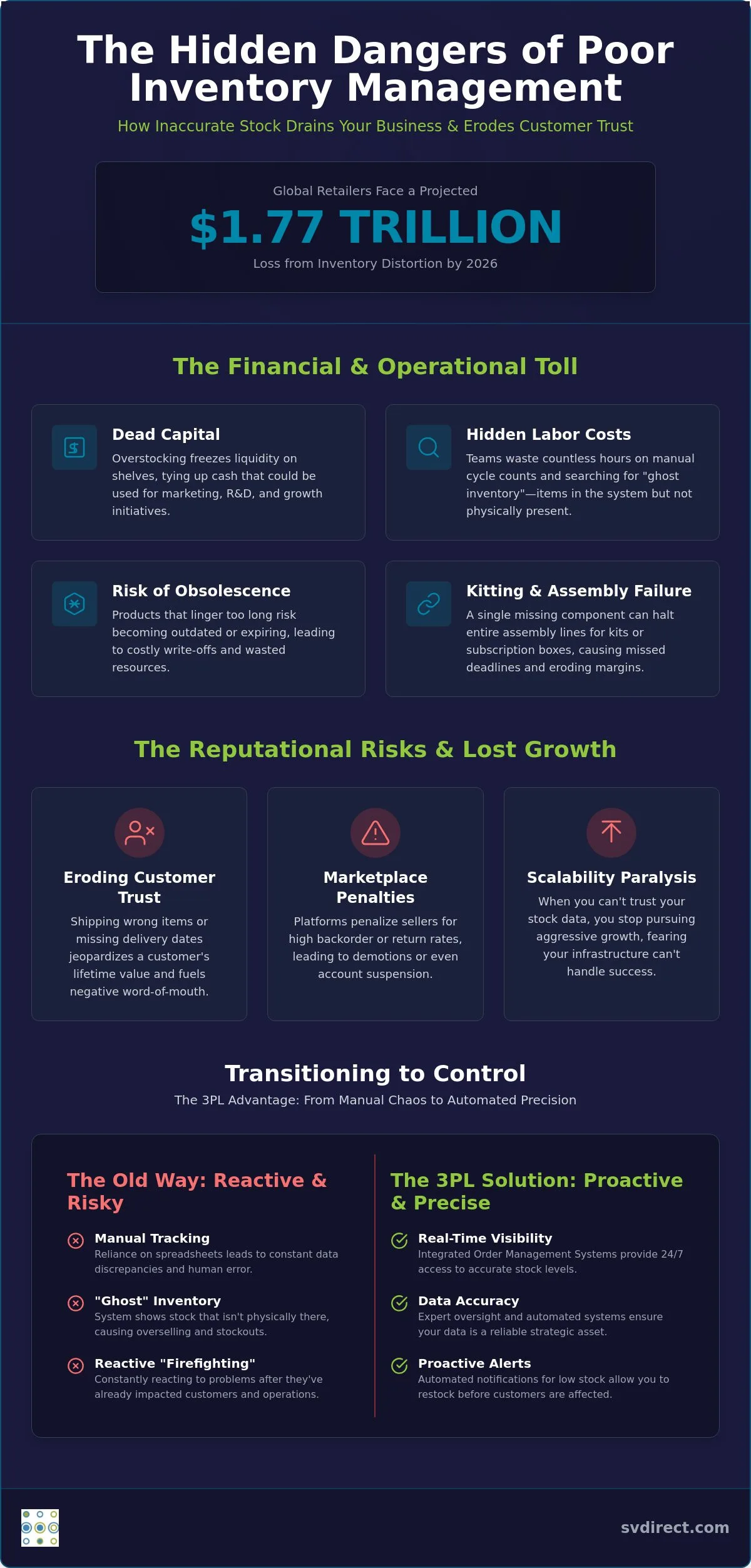
Software is often marketed as a cure-all, but in reality, it’s merely a window into your physical operations. The most sophisticated dashboard is useless if the data it displays doesn’t mirror the actual shelf. Successful inventory management for ecommerce relies on the synergy between digital tools and the human expertise managing the warehouse floor. Without this bridge, brands fall victim to “ghost inventory,” where a website displays items as in-stock that are physically unavailable. This leads to backorders, canceled sales, and eroded customer trust.

To maintain a seamless data flow, integration must be platform-agnostic. Our systems utilize XML, SOAP, and WSDL protocols to ensure that information moves instantly between your storefront and our facility. This technical flexibility allows us to act as a high-performance extension of your team, regardless of which ecommerce platform you use. By implementing essential inventory management techniques through our proprietary Remote Control™ system, you gain a central hub that synchronizes every transaction with physical reality. This eliminates the lag time that often plagues growing brands during rapid scaling phases.

24/7 Visibility with Remote Control™

True operational confidence comes from transparency. Our Remote Order Management system provides 24/7 access to your data, offering over 120 standard reports that detail everything from order history to real-time stock levels. You don’t have to wait for manual updates or business hours to understand your position. Automated notifications for low inventory and backorders ensure you can make proactive decisions before a shortage impacts your sales velocity. This system was designed to provide the depth necessary for technical stakeholders while remaining accessible for daily business decisions.

Removing the ‘Hectic’ from Fulfillment

Many fulfillment centers operate in a state of constant chaos, but we believe precision requires a “quiet facility” methodology. We replace the frantic energy of traditional warehouses with organized, deliberate prioritization. This methodical approach allows us to meet high-volume deadlines with a significantly lower error rate than industry averages. Our team practices proactive problem solving, identifying potential order conflicts or shipping discrepancies before the package ever leaves the dock. This stability is a unique hallmark of our internal culture, where seasoned experts oversee every detail of your inventory management for ecommerce. We reject automated-only interactions, ensuring that a human set of eyes monitors your most critical assets.

Inventory Management for eCommerce: The 2026 Strategic Guide to Scaling Operations

When to Outsource Inventory Management to a Professional 3PL

Deciding when to move your operations out of a private lease or a crowded back office is a pivotal moment for any brand. You’ll know you’ve reached the tipping point when warehouse rent and labor management begin to consume more time than your core product development. If shipping errors are stifling your growth, it’s time to reconsider your approach to inventory management for ecommerce. Transitioning to a 3PL shifts you from a “fixed cost” model, where you pay for empty warehouse space and idle staff, to a “variable cost” model. You only pay for the space and labor you actually use, which preserves your capital for marketing and innovation.

A professional partner provides more than just square footage. You gain immediate access to discounted carrier rates and global logistics expertise that would take years to negotiate independently. Beyond standard shipping, specialized services like on-demand digital printing and literature fulfillment allow you to customize orders without the overhead of in-house equipment. This level of versatility ensures your fulfillment strategy remains as agile as your digital marketing. By outsourcing, you leverage physical infrastructure and human expertise that in-house teams simply can’t replicate at scale.

Handling High-Value and Sensitive Goods

Sensitive inventory requires more than a standard shelf. Electronics and healthcare products often demand secure, climate-controlled environments to maintain their integrity. Precision here involves serial number tracking, which is vital for warranty management and returns processing. For a deeper look at these requirements, see our guide on Secure Warehousing for High-Value Electronics. Our systematic QC-Check process ensures these high-stakes items are handled with absolute care, providing a level of security that generic storage facilities lack.

The ‘Extension of Your Team’ Philosophy

We reject the cookie-cutter approach common in highly automated, impersonal facilities. A true partnership requires a steady hand and a personal commitment to your specific project goals. This flexibility allows us to custom-fit solutions rather than forcing your business into a rigid template. Silicon Valley Direct has served as a reliable anchor for brands since 1999. Our multi-decade history and long-term staff retention mean you’re working with seasoned experts who understand the nuances of inventory management for ecommerce. We act as a proactive extension of your team, identifying logistical hurdles before they become customer complaints.

Maximizing eCommerce ROI Through Precise Inventory Control

Precision in the warehouse translates directly to your bottom line. When your inventory management for ecommerce is executed with absolute accuracy, you create a foundation for customer loyalty that no marketing campaign can match. A customer who receives exactly what they ordered, exactly when promised, is a customer who returns. This reliability reduces the costs associated with returns management and customer support, allowing you to reinvest that capital into growth. It’s about turning your logistics from a cost center into a retention engine that drives long-term value.

Beyond simple stock tracking, integrating specialized services like on-demand digital printing and variable data printing significantly reduces your inventory overhead. Instead of pre-printing thousands of marketing inserts that might become obsolete, you print only what you need for each specific order. This agility ensures your collateral is always current and relevant. Detailed reporting from our Remote Control™ system provides your marketing department with the granular data needed to understand which products are truly profitable after accounting for storage and fulfillment costs. We provide the “window” into your operations that allows for these high-level strategic pivots. Silicon Valley Direct is the strategic choice for brands that value this level of high-touch quality over the impersonal model of high-volume facilities.

Reducing Waste with Green Logistics

Digital printing eliminates the need for massive stockpiles of marketing materials that eventually end up in a landfill. By adopting a “print what you use” philosophy, you significantly lower your brand’s environmental footprint. Our Print on Demand Services utilize sustainable materials and participate in programs like HP’s hardware recycling to ensure our operations remain as green as they are efficient. This commitment to sustainability is part of our proactive problem-solving approach. It ensures that your physical operations align with modern environmental standards without sacrificing logistical speed or precision.

Next Steps: Auditing Your Current System

Evaluating your current operations requires a cold, hard look at your data accuracy and fulfillment speed. Start by comparing your digital stock counts against a physical cycle count. If your discrepancy rate is higher than one percent, your current system is leaking revenue. Look past the slick interface of your software and examine the physical reality of your fulfillment partner. Are they a steady hand in the industry, or are they struggling to keep up with the “hustle” of peak periods? If your current setup feels more like a source of stress than a high-performance partner, it’s time to transition to a more reliable model.

Contact Silicon Valley Direct for a Custom Fulfillment Solution

Building a Scalable Operational Foundation for 2026

Success in the coming year depends on your ability to bridge the gap between digital storefronts and physical reality. You’ve seen how predictive analytics and methods like FIFO or ABC Analysis turn stagnant stock into liquid capital. Effective inventory management for ecommerce isn’t just a back-office task; it’s a primary driver of customer loyalty and long-term ROI. By moving from fixed-cost warehouses to a variable-cost partnership, you gain the agility needed to navigate shifting global regulations and market demands.

Silicon Valley Direct brings over 25 years of operational expertise to your brand’s growth journey. Our proprietary Remote Control™ system provides 24/7 real-time visibility with over 120 standard reports, while our systematic QC-Check process ensures 99 percent accuracy across every SKU. We act as a steady, proactive extension of your team, replacing warehouse chaos with the precision of our “quiet facility” methodology.

Your brand is ready for its next phase of growth. We’re here to ensure your physical operations are just as innovative and reliable as your vision.

Frequently Asked Questions

What is the difference between inventory management and warehouse management?

Inventory management focuses on the high-level strategy of stock levels, demand forecasting, and procurement. Warehouse management deals with the physical movement and storage of goods within a facility, including picking and packing. While the two functions are distinct, they must be perfectly integrated to ensure that your digital records match physical reality.

How much does eCommerce inventory management software typically cost?

Most software providers use a tiered subscription model based on order volume or the number of SKUs. Some enterprise-level platforms require annual licensing fees, while others offer a pay-as-you-grow structure. It’s often more cost-effective to leverage the proprietary systems provided by your 3PL partner to avoid separate software licensing costs while managing inventory management for ecommerce.

What are the most common inventory management mistakes for online stores?

The most frequent errors include relying on manual data entry and failing to account for supplier lead times. These mistakes lead to “ghost inventory” where your site displays items that aren’t physically on the shelf. Another common pitfall is overstocking slow-moving items, which ties up capital that could be used for marketing or product development.

Can a 3PL handle inventory for multiple sales channels like Shopify and Amazon?

A professional 3PL uses platform-agnostic integrations to synchronize inventory management for ecommerce across Shopify, Amazon, and other marketplaces simultaneously. This ensures a single source of truth for your stock levels. Our Remote Control™ system acts as this central hub, pushing real-time updates to every channel to prevent overselling and customer frustration.

How does real-time inventory tracking improve customer satisfaction?

Real-time tracking eliminates the frustration of canceled orders due to stockouts that were not reflected on the storefront. When customers see accurate “in-stock” counts and receive instant shipping updates, their trust in your brand grows. This transparency is a primary driver of repeat purchases and long-term loyalty in a competitive market.

What is a ‘good’ inventory turnover ratio for an eCommerce business?

A healthy inventory turnover ratio generally falls between 4 and 8 for most brands, though this varies significantly by industry. A higher ratio indicates efficient sales velocity, while a lower ratio suggests you’re carrying too much dead stock. The objective is to maintain enough safety stock to prevent stockouts without over-investing in storage fees.

How do I manage inventory for subscription boxes or bundles?

Managing bundles requires a “virtual SKU” strategy where components are tracked individually but sold as a unit. This allows for total flexibility in fulfillment and ensures accurate counts for every part of the kit. Our hand assembly and kitting services specialize in these complex builds to maintain precision during high-volume promotional periods.

What happens if my inventory levels don’t match my software data?

Discrepancies between your software and physical stock usually indicate a failure in the pick-and-pack process or a lack of regular audits. To fix this, you must implement systematic cycle counting rather than waiting for a disruptive annual physical audit. Our QC-Check process builds this verification into the daily workflow to maintain 99 percent accuracy.

3PL vs 4PL: Choosing the Right Logistics Model for Your Business in 2026

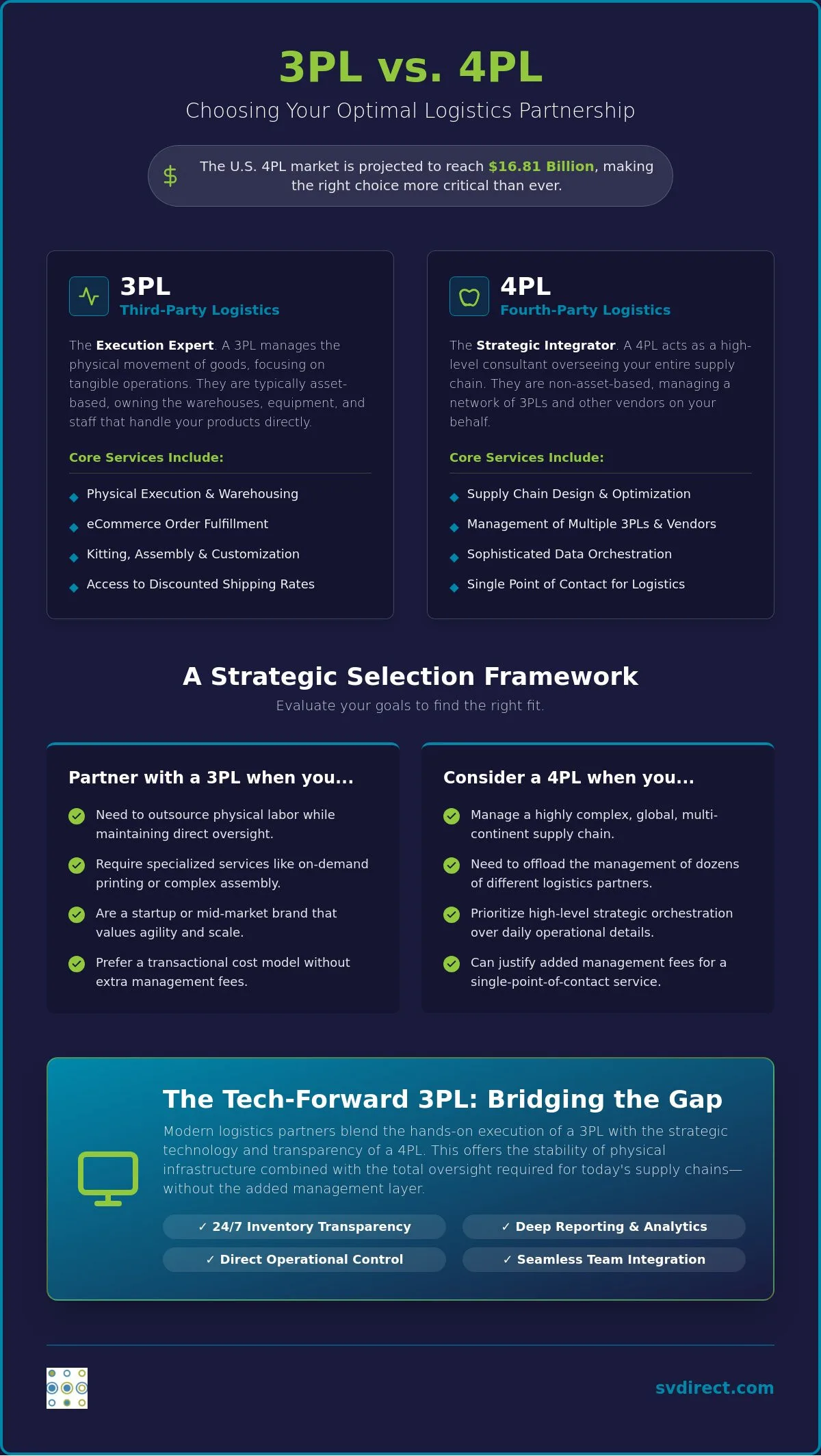
What if the biggest risk to your supply chain in 2026 isn’t choosing the wrong provider, but choosing the wrong category of partnership? As the U.S. 4PL market reaches a projected $16.81 billion this year, many leaders feel pressured to choose between the hands-on execution of a 3PL and the strategic oversight of a 4PL. The debate over 3pl vs 4pl often leaves businesses caught between the fear of losing inventory visibility and the worry of absorbing high management fees. You need a solution that offers the stability of physical infrastructure without sacrificing the high-tech transparency required for modern global trade.

We understand that logistics is more than just moving boxes; it’s about the personal commitment to your brand’s growth. You likely want a partner that acts as a seamless extension of your team rather than a distant vendor. This article provides a clear decision-making framework to help you understand the ROI of each model and determine which path will best scale your operations. We’ll explore how the right integration can offer the strategic control you crave while maintaining the operational precision your customers expect.

Key Takeaways

  • Differentiate between physical execution and strategic integration to resolve the 3pl vs 4pl dilemma for your unique supply chain needs.
  • Evaluate your business volume and growth trajectory to select a logistics model that scales efficiently without inflating management costs.
  • Determine when specialized requirements, like integrated digital printing or healthcare mailing, benefit from the direct control of an asset-based partner.
  • Discover how proprietary technology provides the 24/7 transparency and reporting depth needed to maintain total oversight of your inventory.
  • Learn to identify a partner that prioritizes human connection and operational stability to act as a true extension of your internal team.

3PL vs 4PL: Understanding the Core Differences in Logistics Models

Deciding between a 3PL and a 4PL is a foundational choice for your business’s operational future. A Third-party logistics (3PL) provider manages the physical movement of goods from warehouse to customer. This model focuses on the tangible side of the business, such as physical execution, warehousing, and shipping. In contrast, a 4PL acts as a strategic integrator that oversees the entire supply chain, often managing multiple 3PLs on your behalf. The primary differentiator lies in asset ownership; 3PLs typically own or manage the warehouse facilities and equipment, while 4PLs are often non-asset-based consultants who focus on high-level orchestration.

What is a 3PL (Third-Party Logistics)?

A 3PL specializes in the heavy lifting of your daily operations. They provide secure warehousing and eCommerce order fulfillment, ensuring your inventory is received and stored with precision. By leveraging their physical infrastructure, you gain immediate operational efficiency and access to discounted shipping rates that are difficult to secure independently. Beyond basic storage, these partners offer specialized value through kitting and assembly, allowing you to customize products close to the point of distribution. This model is built for brands that value a direct, hands-on relationship with the people actually touching their product.

What is a 4PL (Fourth-Party Logistics)?

While a 3PL executes, a 4PL designs. This model provides a single point of contact for complex, global, multi-node supply chains. Their core services include supply chain design, vendor management, and sophisticated data orchestration. A 4PL doesn’t usually own the trucks or the racks. Instead, they use their expertise to manage the network of providers you’ve hired. This strategic layer is designed to alleviate the burden of managing multiple logistics partners, though it often comes with higher management fees and a step back from the daily operational details. Understanding the nuances of 3pl vs 4pl ensures you select a partner that aligns with your internal team’s capabilities.

Choosing Between 3PL and 4PL: A Strategic Selection Framework

Selecting the ideal partner in the 3pl vs 4pl debate requires a clear-eyed look at your internal resources and operational goals. For many growth-oriented brands, the choice hinges on the level of direct involvement they wish to maintain. Startups and mid-market companies often find that 3PLs provide the perfect balance of scale and agility. These providers allow you to outsource the physical labor while you keep a steady hand on the pulse of your business through direct communication with the facility floor.

Specialized requirements often dictate the model. If your workflow includes on-demand digital printing or complex healthcare mailing services, a specialized 3PL is typically more responsive. They possess the specific equipment and trained staff in-house. A 4PL would merely act as a middleman between you and another vendor. This direct connection reduces the risk of communication gaps and ensures higher quality control over sensitive projects.

Cost structures also diverge significantly. A 3PL focuses on transactional pricing; you pay for the storage you use and the orders you ship. Conversely, a 4PL introduces a layer of management fees that can significantly impact your bottom line. You must decide if the strategic orchestration they offer justifies the added expense or if a high-performing 3PL can meet those needs more efficiently. If you’re ready to see how a high-touch partnership can protect your bottom line, consult with our team today.

When to Partner with a 3PL

Partner with a 3PL when you need to outsource physical labor while maintaining direct oversight of your inventory management. This is the right path for brands requiring custom kitting, subscription box assembly, or precision-driven mailing. It allows your team to focus on marketing and product development while experts handle the daily fulfillment logistics with a personal touch.

When to Consider a 4PL

Consider a 4PL when your organization manages a global, multi-continent supply chain with dozens of different logistics vendors. This model suits businesses willing to trade higher management overhead for a completely hands-off strategy. It’s a choice for enterprise-level entities where a single integrator handles the complexities of vendor selection and high-level network design across vast geographies.

To further mitigate risks in these complex international networks, many brands integrate pre shipment inspection services Asia to ensure manufacturing standards are met before products are handed off to their logistics providers.

3PL vs 4PL: Choosing the Right Logistics Model for Your Business in 2026

The Tech-Forward 3PL: Bridging the Gap Between Execution and Oversight

Proprietary systems like Remote Control™ are the engine behind this evolution. These platforms provide 24/7 access to your orders and inventory, backed by over 120 standard reports. This level of detail ensures your logistics partner acts as a true extension of your team. Our “Quiet Facility” methodology reinforces this precision. Instead of the chaotic energy found in traditional warehouses, our deliberate organization creates a stable environment where errors are caught before they ever reach your customer. This proactive stance protects your brand’s reputation and your bottom line.

Real-Time Visibility Without the 4PL Overhead

Web-based interfaces and XML/SOAP integrations have made remote order management a standard expectation. You no longer need an expensive middleman to tell you what is happening on the warehouse floor. Automated notifications for low inventory, receipts, and backorders provide the immediate feedback required for agile decision-making. This direct access to data removes the communication lag often found in 4PL models, giving you total control without the added management fees.

Custom-Fit Solutions vs. Cookie-Cutter Logistics

Flexibility is the most important asset in a 2026 logistics partnership. A tech-forward partner combines physical infrastructure with marketing-savvy services to solve bespoke challenges. For instance, integrating variable data printing with direct mail marketing allows you to personalize customer engagement while your inventory is being packed. This holistic approach ensures that your logistics strategy supports your broader business goals rather than just checking a box for fulfillment.

Future-Proof Your Logistics with a Scalable Partnership

Choosing the right model in the 3pl vs 4pl landscape requires balancing your need for operational control with your desire for strategic growth. You’ve learned that while 4PLs offer high-level orchestration, a tech-forward 3PL provides the same digital transparency without sacrificing direct contact with the team handling your inventory. This approach ensures you maintain visibility over every SKU while avoiding the heavy management fees that often accompany non-asset-based models. By focusing on a partner that acts as an extension of your team, you protect your bottom line and your customer experience.

With over 25 years of fulfillment excellence, we focus on providing the stability and precision your brand deserves. Our proprietary Remote Control™ system delivers real-time reporting, giving you the data you need to make informed decisions 24/7. From specialized kitting to integrated digital printing, we build solutions that adapt to your specific requirements. It’s time to move past confusing jargon and partner with a team that values your success as much as you do.

Streamline your supply chain with Silicon Valley Direct’s 3PL solutions. We look forward to helping your business reach its next milestone with confidence and ease.

Frequently Asked Questions

Is a 3PL or 4PL better for a growing eCommerce business?

A 3PL is usually the superior choice for growing eCommerce brands because it provides direct execution and asset-based reliability. This model allows you to scale physical operations like pick and pack and warehousing without the heavy management overhead of a 4PL. By working directly with the facility, you maintain better control over quality and kitting accuracy as your volume increases. The 3pl vs 4pl decision for growth often comes down to wanting a partner that actually touches your product.

Do 4PLs own their own warehouses and trucks?

No, 4PLs are typically non-asset-based providers that act as strategic consultants and integrators. They don’t own the physical infrastructure like warehouses or vehicle fleets. Instead, they manage the relationships and contracts with multiple 3PLs and carriers on your behalf. This makes them a strategic layer rather than an operational one, which is a fundamental distinction when evaluating your logistics needs.

What are the hidden costs of hiring a 4PL provider?

The most common hidden costs involve management fees and pass-through charges that can inflate your total logistics spend. Because a 4PL adds a layer between you and the physical service provider, you often pay for their strategic oversight on top of the actual shipping and storage costs. This can lead to a higher total cost of ownership compared to a direct partnership where you only pay for the services you consume.

Can a 3PL handle international shipping and global logistics?

Yes, many established 3PLs specialize in global shipping and logistics, managing everything from customs documentation to international carrier selection. A 3PL with a strong geographic hub, such as Silicon Valley, can leverage its proximity to major ports and airports to offer efficient global reach. This provides the international scale you need while keeping your operational team close to the product for better quality control.

How does technology like Remote Control™ change the 3PL vs 4PL debate?

Advanced technology like the Remote Control™ system bridges the gap by offering the 24/7 visibility once only found with 4PLs. When a 3PL provides 120+ real-time reports and XML integrations, you get strategic oversight and physical execution in one place. This proprietary digital transparency eliminates the need for an expensive 4PL manager to act as a data middleman, giving you direct access to your inventory status.

What is a Lead Logistics Provider (LLP) in relation to 4PL?

A Lead Logistics Provider (LLP) is another term for a 4PL that takes primary responsibility for managing your entire supply chain network. The LLP coordinates all other logistics vendors and focuses on high-level optimization and network design. While they provide a single point of contact, they often prioritize network-wide strategy over the specific, hands-on details of individual order fulfillment and specialized kitting projects.

Demand Forecasting for eCommerce Inventory: The 2026 Strategic Guide

Did you know that inventory distortion, the combined loss from stockouts and overstock, is estimated to cost global retail $1.77 trillion annually? For many growing brands, this isn’t just a statistic; it’s a daily reality where capital stays locked in slow-moving products while customers are turned away by out-of-stock notices. Mastering demand forecasting for ecommerce inventory has become the definitive line between businesses that scale and those that struggle with stagnant cash flow. You’ve likely felt the sting of inaccurate lead times or the stress of managing a replenishment cycle that feels more like guesswork than strategy.

We understand that your inventory represents more than just units; it’s the lifeblood of your marketing budget and growth potential. This 2026 strategic guide promises to equip you with the data-driven techniques and 3PL integration secrets needed to eliminate stockouts for good. You’ll learn how to leverage real-time visibility to optimize your capital and create a seamless partnership with your fulfillment provider. We’re moving beyond static spreadsheets to show you how a proactive, tech-forward approach to demand planning can turn your warehouse operations into a competitive advantage.

Key Takeaways

  • Transition from static spreadsheets to real-time demand sensing to capture immediate market shifts and social signals.
  • Balance quantitative data with expert qualitative insights to build a more resilient and accurate inventory strategy.
  • Master demand forecasting for ecommerce inventory by establishing a direct data integration between your storefront and your fulfillment partner.
  • Leverage automated “Low Inventory” notifications and safety stock triggers to proactively manage replenishment before stockouts occur.
  • Optimize your working capital and improve cash flow by creating a predictable replenishment cycle backed by real-time visibility.

What is Demand Forecasting for eCommerce Inventory?

Demand forecasting is the predictive process of estimating future customer orders to ensure your stock levels align perfectly with market appetite. It’s more than just looking at last year’s sales. It’s a strategic calculation that allows you to optimize stock levels and protect your margins. In 2026, the industry has shifted away from the slow, error-prone world of static spreadsheets. We’ve entered the era of real-time demand sensing, where live data signals from various channels dictate your replenishment needs rather than outdated gut feelings.

Successful demand forecasting for ecommerce inventory requires a two-pronged view. Macro-level forecasting looks at broad market trends and economic shifts that affect entire categories. Micro-level forecasting drills down into SKU-specific performance, identifying which variations are gaining velocity and which are slowing down. You can’t make these decisions in a vacuum. Clean, reliable data is the only foundation for a trustworthy prediction. Our Remote Control™ system acts as your single source of truth, providing the 24/7 visibility needed to separate actionable signals from noise.

The Core Benefits of Accurate Predictions

Precision in your numbers does more than just fill shelves. It directly impacts your bottom line by reducing “dead capital.” When you aren’t overstocking slow-moving items, your cash stays liquid for reinvestment in marketing or product development. Accurate forecasts also prevent the disaster of frequent stockouts, which can tank your customer trust and search engine rankings overnight. Beyond that, it allows for the optimization of global shipping services. By predicting demand spikes, you can plan batches effectively and avoid the high costs of emergency air freight.

Key Data Inputs for 2026

Your forecast is only as good as the data you feed it. We recommend focusing on three primary pillars to build a resilient model:

  • Historical Sales Velocity: Track data across all channels, including Shopify, Amazon, and B2B orders, to understand seasonal patterns and growth curves.
  • Marketing Calendars: Factor in planned promotions and direct mail marketing campaigns that drive sudden traffic surges.
  • External Variables: Account for shifting supply chain lead times and economic indicators that influence consumer spending habits.

By integrating these inputs, you create a proactive replenishment cycle that supports steady growth without the stress of inventory imbalances. This methodical approach ensures that your physical operations remain as organized and efficient as your digital storefront.

For retailers specializing in premium tech, you can discover PRIMOVA to see how innovative product selections require robust inventory and demand planning to succeed.

Maintaining this level of organization often requires dedicated administrative support. Amplify Yourself, LLC helps ecommerce brands scale by sourcing skilled virtual assistants who can manage inventory data and supplier communications, ensuring your forecasting stays on track.

Demand Forecasting for eCommerce Inventory: The 2026 Strategic Guide

Forecasting Methods: Traditional vs. Real-Time Sensing

Choosing the right method is about balancing hard numbers with human insight. Quantitative methods rely on historical data patterns; qualitative methods use expert judgment and market sentiment. For modern brands, demand forecasting for ecommerce inventory usually requires a hybrid approach. You need the stability of historical trends paired with the agility of current market feedback to navigate a volatile landscape.

Demand sensing represents the next evolution in this process. Instead of relying on what happened last quarter, it analyzes live data from your point-of-sale systems and social signals to adjust short-term stock levels. This shifts your operations from a “Push” model, where you buy inventory based on a guess, to a “Pull” model, where real demand triggers your replenishment. It’s a proactive stance that ensures your capital isn’t sitting idle on a warehouse shelf. If you want to refine these operational layers, you can request a free quote to see how we customize these flows for your specific business needs.

One way to alleviate the pressure of aggressive forecasting is through print-on-demand services. By producing marketing collateral or specific literature only when an order is triggered, you eliminate the risk of overstocking items that might become obsolete. This “just-in-time” approach for physical assets keeps your storage costs low and your messaging current.

Top Forecasting Models for Scaling Brands

  • Moving Average: This is best for stable products with consistent, predictable demand over time. It smooths out random fluctuations to provide a clear baseline.
  • Exponential Smoothing: This model weighs recent sales more heavily. It’s excellent for capturing emerging trends or sudden shifts in consumer behavior before they reach their peak.
  • Trend Projection: We use this for long-term growth patterns to help you plan for high-volume deadlines like Q4 or major product launches, accounting for year-over-year growth.

Handling Inventory for Kitted and Assembled Products

Forecasting becomes significantly more complex when one SKU relies on five different components. If a single insert is missing, the entire order stalls. We utilize “postponement” strategies through our kitting and assembly services. This allows us to keep components in their raw state and assemble the final product only when demand is certain. This flexibility prevents you from locking up capital in finished goods that aren’t moving. Success depends on real-time component tracking in your 3PL interface, ensuring your demand forecasting for ecommerce inventory accounts for every piece of the puzzle in the warehouse.

Executing Your Forecast with a 3PL Partner

Execution is where many brands stumble. A forecast remains a mathematical abstraction until it’s translated into physical action on the warehouse floor. To bridge this gap, start by integrating your store directly with your Silicon Valley 3PL. This connection ensures that sales data flows in real time without the risk of manual entry errors. Once the data pipeline is secure, you can set automated “Low Inventory” triggers based on the safety stock levels defined in your model. This proactive step is essential for demand forecasting for ecommerce inventory, as it prevents the stockouts that drive customers toward your competitors.

Physical accuracy is just as vital as digital precision. We recommend conducting regular inventory audits and “QC-Checks” to ensure your physical stock perfectly matches your digital records. Use 24/7 reporting to compare your “forecasted vs. actual” sales figures. This monthly refinement allows you to sharpen your demand forecasting for ecommerce inventory based on real-world performance rather than static assumptions. It’s a methodical cycle that keeps your capital fluid and your shelves ready for the next surge.

Leveraging Remote Control™ for Predictive Power

Our proprietary Remote Control™ system provides the visibility needed to manage high-volume deadlines with quiet confidence. You can utilize over 120 standard reports to quickly identify your “hero” products and the “laggards” that might be draining your capital. Automated email alerts for receipts and backorders act as a proactive safety net, keeping you informed of every inventory movement. This level of precision is only possible in an organized, stable facility where every SKU is tracked with personal oversight.

The Human Element: Proactive Problem Solving

Technology provides the data, but it doesn’t solve every logistical hurdle. You need a partner who listens to your goals and anticipates conflicts before they impact your project. We view our role not as a mere vendor, but as a seamless extension of your team. This human connection ensures that when a supply chain delay occurs or a promotion exceeds expectations, we’re already working on a bespoke solution. It’s the difference between an automated interaction and a steady hand guiding your business through the complexities of global growth.

Scaling Your Brand with Precision and Confidence

Transitioning from reactive guesswork to proactive strategy is the most significant move you can make for your brand’s longevity. By embracing real-time demand sensing and integrating your storefront directly with your fulfillment partner, you eliminate the friction that leads to stockouts and overstock. Effective demand forecasting for ecommerce inventory isn’t just about the math; it’s about having the right infrastructure to act on those numbers immediately.

Silicon Valley Direct offers the physical expertise and digital tools needed to turn your warehouse operations into a growth engine. Our proprietary Remote Control™ system provides 24/7 real-time visibility and 99.9% accuracy, ensuring your data is always a reliable source of truth. We provide seamless integration with platforms like Shopify and WooCommerce, backed by a team that prioritizes proactive problem solving over automated responses.

Streamline your inventory with Silicon Valley Direct's Remote Control™ system.

You don’t have to navigate the complexities of 2026 alone. We’re here to help you build a predictable, efficient replenishment cycle that keeps your business moving forward with total confidence.

Frequently Asked Questions

What is the most accurate demand forecasting method for eCommerce?

A hybrid approach that combines quantitative historical data with real-time demand sensing is the most accurate strategy. Historical sales provide a stable baseline for seasonal patterns, while live signals from social trends and point-of-sale systems allow you to pivot during sudden market shifts. This combination ensures your demand forecasting for ecommerce inventory remains grounded in reality while staying agile enough to capture emerging opportunities.

How often should I update my inventory demand forecast?

You should conduct a comprehensive forecast review at least once a month. This cadence allows you to adjust for upcoming marketing campaigns and shifting supplier lead times. For high-velocity SKUs, we recommend weekly “sensing” checks to compare your actual sales against your predictions. This regular refinement helps you maintain a predictable replenishment cycle and prevents capital from being locked in slow-moving stock.

How does a 3PL help with demand forecasting?

A 3PL serves as your single source of truth by providing real-time data on sales velocity and inventory levels. By integrating your storefront with a system like Remote Control™, you gain access to 120+ reports that are essential for accurate predictions. A proactive partner also helps by setting automated low-stock triggers and managing complex kitting components, ensuring your physical operations perfectly mirror your digital data.

What is the difference between sales forecasting and demand forecasting?

Sales forecasting predicts what you expect to sell based on internal goals and past revenue. Demand forecasting is a more comprehensive calculation that estimates total market appetite, including external economic factors and sales lost due to previous stockouts. While sales forecasts are used for budgeting, demand forecasting is the essential tool for inventory management and preventing fulfillment disasters.

The Dangers of Poor Inventory Management: Protecting Your Bottom Line in 2026

Did you know that inventory distortion, the combined cost of overstocks and out-of-stocks, is projected to drain $1.77 trillion from global retailers in 2026? It’s a staggering figure that highlights the silent, daily drain on your business resources. You’ve likely felt the frustration of capital tied up in stagnant stock or the sting of a loyal customer walking away because of a preventable backorder. These are the immediate and visible dangers of poor inventory management, but the long-term impact on your brand’s reputation and operational agility can be even more damaging.

We believe that inventory shouldn’t be a source of stress, but a strategic asset for your growth. In this article, you’ll discover the critical risks associated with inefficient inventory control and how a proactive 3PL partnership can safeguard your bottom line. We’ll provide a clear roadmap to help you transition from the errors of manual tracking to the precision of automated systems. By the end, you’ll understand how to improve order accuracy and rebuild the customer trust that drives long-term success. Let’s explore how to turn your warehouse operations into a steady hand for your business.

Key Takeaways

  • Learn how to unlock dead capital by identifying overstocking patterns that drain liquidity needed for marketing and growth.
  • Understand the long-term impact of fulfillment errors on customer retention and how to avoid performance penalties on major eCommerce marketplaces.
  • Identify the hidden labor costs associated with manual warehouse searches and the operational drag of managing ghost inventory.
  • Discover how a proactive 3PL partnership mitigates the dangers of poor inventory management through expert oversight and precision.
  • Explore the transition to real-time visibility using integrated Order Management Systems that provide 24/7 access to your stock levels.

The Financial and Operational Toll of Inaccurate Inventory

Inaccurate data isn’t just a clerical error; it’s a financial anchor. When you overstock items based on flawed forecasts, you create “dead capital.” This is liquidity that’s effectively frozen on your warehouse shelves. Instead of funding aggressive marketing campaigns or critical R&D, your cash sits in cardboard boxes. Effective inventory management ensures that every dollar is working toward your growth. The dangers of poor inventory management often manifest as a slow bleed of capital that many businesses don’t notice until their cash flow tightens unexpectedly.

Labor costs compound these issues. Warehouse teams spend countless hours on manual cycle counts or searching for “ghost” inventory, which are items that appear in the system but aren’t physically present. This wasted effort drives up operational overhead while increasing the risk of stockouts. When demand exceeds your poorly tracked supply, you lose immediate revenue. Products that linger too long also risk obsolescence. This leads to painful write-offs as items reach the end of their shelf life before they ever reach a customer.

This challenge is even more pronounced for businesses dealing with perishable goods. Companies like Shift 2 Fresh must maintain impeccable inventory accuracy to ensure that fresh fruits and vegetables imported from the Philippines and South Asia reach UAE consumers before their shelf life expires.

The Ripple Effect on Specialized Services

For businesses relying on kitting and assembly services, inventory errors are catastrophic. A subscription box or a promotional kit is only as complete as its rarest component. If your tracking fails to account for a single missing insert or product, the entire assembly line grinds to a halt. This disruption causes missed shipping deadlines and forces expensive, last-minute course corrections that erode your margins and frustrate your partners.

Operational Friction and Warehouse Morale

A “hectic” warehouse is rarely a productive one. It’s usually a symptom of poor inventory control. When staff are constantly reacting to discrepancies rather than following a streamlined process, morale suffers. We prioritize a quiet, organized facility. This environment is essential for managing high-volume deadlines with precision. High-performance operations require a steady hand and clear data, not a frantic search for misplaced stock. Precision in the warehouse translates directly to confidence in the front office.

Beyond the Balance Sheet: Reputational Risks and Lost Growth

Financial losses are quantifiable, but the damage to your brand identity is often irreversible. One of the most significant dangers of poor inventory management is the steady erosion of customer trust. Shipping the wrong item or missing a promised delivery window doesn’t just cost you a single sale; it jeopardizes the customer’s lifetime value. Research into Reputational Risks confirms that stockouts lead to immediate dissatisfaction and negative word-of-mouth that can haunt your brand for years. In a market where competitors are only a click away, you can’t afford to give shoppers a reason to look elsewhere.

The stakes are even higher on digital marketplaces. Platforms like Amazon and Shopify utilize strict fulfillment metrics to rank and prioritize sellers. Frequent backorders or high return rates triggered by inventory errors can lead to search ranking demotions or total account suspension. This isn’t just a minor hurdle; it’s a loss of access to your primary revenue streams. The dangers of poor inventory management extend to your psychological ability to scale. When you don’t trust your stock data, you experience scalability paralysis. You stop pursuing aggressive growth because you aren’t certain your infrastructure can handle the success.

The Cost of Customer Churn

Calculating the true cost of an error requires looking beyond the immediate shipping fee. You have to consider the high cost of customer acquisition and the revenue that person would have generated over several years. Our customer testimonials reflect how precision in fulfillment transforms one-time buyers into loyal brand advocates. A single bad shipment can destroy that potential in an instant, turning a profitable relationship into a deficit.

The Proactive Solution: Anticipating Problems

We believe in moving away from the “firefighting” mentality common in smaller, manual operations. Our approach focuses on identifying potential conflicts before they impact your project. Instead of reacting to a stockout after it happens, we utilize automated notifications for low inventory levels and potential backorders. This allows you to restock and plan your marketing spend before a customer ever encounters an “out of stock” message. If you’re ready to move from reactive stress to proactive growth, you can consult with our logistics experts to see how we safeguard your brand reputation.

The Dangers of Poor Inventory Management: Protecting Your Bottom Line in 2026

Transitioning to Control: The 3PL Advantage in 2026

Reclaiming control over your supply chain requires more than just a software subscription. It demands a partnership that combines high-tech visibility with physical precision. Moving away from the dangers of poor inventory management starts with real-time data. Our proprietary Remote Control system provides 24/7 inventory access, allowing you to monitor stock levels from any location. This transparency ensures that you aren’t making critical business decisions based on outdated reports or manual spreadsheets.

True efficiency comes from seamless integration. By connecting your eCommerce storefront directly to a professional Order Management System (OMS), you eliminate the communication gaps that cause shipping delays. You also benefit from a scalable infrastructure. Instead of managing the overhead of long-term warehouse leases, you gain access to secure, professional facilities that grow alongside your order volume. This flexible model allows you to invest your capital where it matters most: in your product and your customers.

Technology Meets Human Expertise

Software can track a barcode, but it can’t verify the physical quality of a delicate component. Software alone isn’t enough to guarantee a perfect customer experience. Our “QC-Check” process adds a vital layer of human oversight to every project. By utilizing Silicon Valley 3PL fulfillment services, you bridge the gap between digital clicks and physical delivery. Our team treats your stock as an extension of your own company, ensuring that every kit is assembled correctly and every shipment is accurate.

Strategic Growth through Outsourcing

Outsourcing your logistics frees up your internal resources to focus on brand building and high-level strategy. You don’t need to spend your afternoons counting boxes or troubleshooting backorders. Instead, you can focus on expanding your market reach. Global shipping services become significantly more efficient when your local inventory is managed with precision. This proactive approach mitigates the dangers of poor inventory management and transforms your warehouse from a source of stress into a steady hand that supports your long-term success.

Securing Your Operational Future

Protecting your business in 2026 requires a shift from reactive troubleshooting to proactive precision. We’ve explored how dead capital and marketplace penalties represent the primary dangers of poor inventory management, but these risks are entirely avoidable with the right partnership. Transitioning to a professional 3PL model provides the structural stability needed to scale without the stress of operational friction.

At Silicon Valley Direct, we’ve supported business growth since 1999 through a blend of advanced technology and personal oversight. Our proprietary Remote Control™ system gives you 24/7 real-time visibility, while our rigorous QC-Check process maintains a 99.9% order accuracy rate. This level of detail ensures that your inventory remains an asset, not a burden. Ready to streamline your supply chain? Explore our 3PL solutions today. Let’s build a more resilient future for your brand together.

Frequently Asked Questions

What are the most common signs of poor inventory management?

The most common signs include frequent backorders, high storage costs for slow-moving items, and consistent discrepancies between your digital records and physical stock. You might also notice a rise in customer complaints regarding shipping delays or incorrect items. These symptoms indicate the dangers of poor inventory management and suggest your current tracking methods aren’t keeping pace with your business growth.

How does inventory accuracy affect eCommerce fulfillment costs?

Inventory accuracy directly impacts fulfillment costs by reducing the labor hours spent on manual warehouse searches and cycle counts. When your data is precise, order pickers can locate items instantly, which lowers the cost per order. In contrast, inaccurate data leads to expensive returns management and expedited shipping fees to correct errors, both of which erode your profit margins over time.

Can a 3PL help with inventory management for specialized industries like healthcare?

Yes, a specialized 3PL provides the precision and compliance necessary for healthcare mailing and literature fulfillment. We manage sensitive materials with a focus on traceability and quality control. This expertise is critical because the dangers of poor inventory management in healthcare can include regulatory non-compliance or the distribution of outdated information, making a seasoned partner essential for maintaining industry standards.

What is the difference between reactive and proactive inventory control?

Reactive inventory control involves responding to problems after they occur, such as rushing to restock after a sell-out. Proactive control uses real-time data and automated notifications to anticipate demand and adjust stock levels before issues arise. This forward-looking approach allows you to maintain a steady operational rhythm, ensuring that your capital is always invested strategically rather than spent on emergency fixes.

Warehousing and Distribution Services: A Strategic Reference for 2026

Is your logistics provider a steady partner or a source of constant friction? As the global warehousing and storage market reaches an estimated $869.32 billion in 2026, the difference between scaling your brand and stalling often comes down to the quality of your warehousing and distribution services. It’s frustrating when rigid, “cookie-cutter” processes fail to fit your unique products, or when a lack of real-time visibility leaves you guessing about inventory levels. You deserve a partner that acts as a true extension of your team, providing the stability and precision needed to grow without the stress of high error rates in complex kitting projects.

In this strategic reference, you’ll discover how to evaluate and implement scalable warehousing and distribution services that integrate cutting-edge technology with custom fulfillment. We’ll show you how to achieve seamless integration with your existing eCommerce platforms and gain access to 24/7 reporting data. We’ll also explore the shift toward data-driven orchestration and how a human-centric approach to logistics ensures your supply chain remains both agile and accurate in an increasingly automated world.

Key Takeaways

  • Shift from reactive storage to proactive inventory management by understanding warehousing and distribution as a strategic, integrated 3PL solution.
  • Leverage the ‘Remote Control’ proprietary hub to access 24/7 inventory data and over 120 specialized reports for smarter decision-making.
  • Discover how to implement scalable warehousing and distribution services that integrate with your eCommerce platforms and act as a dedicated extension of your staff.
  • Master the transition to a high-performance logistics partner by focusing on collaborative goal-setting and precision kitting during peak demand cycles.

The Evolution of Strategic Warehousing and Distribution

The logistics industry has moved far beyond the traditional concept of what is a warehouse. In 1999, we began our journey in Silicon Valley, establishing a foundation that prioritizes precision and reliability over mere volume. Today, modern warehousing and distribution services represent an integrated 3PL solution rather than just static storage. This evolution marks a shift from reactive “pick and pack” operations to proactive, data-driven inventory management. For businesses looking to scale beyond regional borders, having a national reach with global shipping capabilities is no longer optional. It’s a strategic necessity.

Key Components of a Modern 3PL Distribution Model

A sophisticated 3PL fulfillment model must provide more than floor space. It requires a high-performance infrastructure designed for accountability and technical readiness. Our approach focuses on three critical areas:

  • Secure, Climate-Controlled Environments: These facilities are essential for protecting high-value or sensitive inventory from environmental degradation.
  • Serial Number Tracking: We utilize granular inventory management systems that ensure total accountability for every unit in the facility.
  • Global Logistics Coordination: By leveraging established carrier relationships, we provide access to discounted rates that directly improve your bottom line.

Why Flexibility Beats ‘Cookie-Cutter’ Logistics

Rigid, automated procedures often fail when faced with the unique demands of a product launch or complex tradeshow fulfillment where standard warehousing and distribution services might fall short. We reject impersonal business models that treat every client the same. Instead, we employ a deliberate methodology that removes the hectic atmosphere common in many facilities. This calm, structured environment ensures that even the most intricate kitting projects are handled with surgical accuracy. By acting as a steady hand and a direct extension of your team, we alleviate the stress of growth through personal commitment and seasoned expertise.

Technology and Value-Added Services: Beyond the Box

Modern warehousing and distribution services in 2026 require more than just physical space; they demand an intelligent digital layer that connects your team to the stockroom. We’ve developed the ‘Remote Control’ system to serve as your central hub. It provides 24/7 transparency, allowing you to move beyond the guesswork of traditional storage. With access to over 120 standard reports, your team can make data-driven decisions based on real-time movement rather than historical assumptions. This level of precision is a hallmark of high-quality value-added logistics services, ensuring every SKU is accounted for and every shipment is optimized for speed and cost.

Remote Control™: Your Window into the Warehouse

Transparency shouldn’t stop at five o’clock. Our proprietary platform offers 24/7 access to place orders, track real-time progress, and retrieve comprehensive order histories. You’ll receive automated notifications for low inventory levels or backorders, which prevents the stockouts that damage customer trust. It’s about giving you total oversight without the need for manual check-ins. Learn more about our remote order management system to see how we bridge the gap between your office and our floor.

Integrated Print and Fulfillment Synergies

Many providers only move boxes, but we integrate production directly into the fulfillment workflow. By utilizing the HP Indigo 5500 Digital Press, we offer on-demand digital printing that creates personalized marketing materials within the standard cycle of our warehousing and distribution services. This variable data capability allows for tailored brochures, manuals, or press kits that ship just-in-time. Our systematic ‘QC-Check’ process adds a vital inspection layer during Strategic guide to kitting and assembly services, ensuring every custom package meets your exact specifications before it leaves our dock. If you’re ready to see how these integrated services can streamline your operations, you can request a free quote from our team today.

Warehousing and Distribution Services: A Strategic Reference for 2026

Implementing a Seamless National Distribution Strategy

Transitioning to a 3PL partner is more than a technical upgrade; it’s a collaborative shift that starts with listening. We prioritize understanding your specific business goals to ensure our warehousing and distribution services act as a seamless extension of your internal team. The strategic role of distribution in the modern economy means that your provider must be proactive. We work to anticipate potential order conflicts or inventory discrepancies before they ever impact your end customer. This level of foresight is especially critical for sectors like healthcare and finance, where secure mailing and strict compliance are non-negotiable requirements.

A Roadmap for 3PL Integration

Effective integration follows a structured, logical path. First, we audit your current fulfillment bottlenecks and data requirements to identify areas for immediate improvement. Next, we establish programmatic interfaces using API or XML for real-time order submission. This ensures your digital storefront and our warehouse floor stay in perfect sync. Finally, we define custom kitting or assembly workflows tailored to your specific product needs. Our “make-it-right” attitude means we don’t just follow a rigid script; we solve problems with a focus on precision and operational readiness.

Building Long-Term Partnerships

Stability is a rare commodity in the logistics world. We take pride in our high staff retention, which ensures that seasoned experts manage your inventory rather than a revolving door of temporary workers. Our “Nine Promises” framework serves as a constant anchor of trust, providing the transparency and accountability you need to scale with confidence. We don’t just move products; we manage relationships through collective experience and personal commitment. If you’re ready to scale with a partner that values accuracy as much as you do, Contact Silicon Valley Direct for a custom fulfillment solution today.

Future-Proofing Your Supply Chain for 2026

Success in the coming years depends on your ability to pivot from basic storage to a sophisticated, integrated model. You’ve seen how the right warehousing and distribution services provide more than just shelf space; they offer a steady hand in a fast-paced market. By prioritizing data-driven orchestration through our proprietary Remote Control™ system and its 120+ standard reports, you gain the transparency needed to make informed decisions at any hour. This high-tech oversight, combined with our Red Dot-quality digital printing, ensures your brand remains agile and professional.

Since 1999, we’ve acted as a dedicated extension of our clients’ teams, combining high-tech efficiency with a human touch. We believe that physical operations should be just as organized as your digital strategy. It’s time to move past rigid, impersonal logistics models and embrace a partnership built on stability, precision, and a multi-decade history of reliability. Streamline your supply chain with Silicon Valley Direct's professional 3PL services. We look forward to helping you reach your next milestone with confidence and clarity.

Frequently Asked Questions

What is the difference between warehousing and distribution services?

Warehousing acts as the foundational storage component, while distribution services represent the active movement of inventory toward the final destination. Selecting a partner that provides integrated warehousing and distribution services ensures a seamless flow from the shelf to the doorstep. While storage focuses on safety and organization, distribution involves the dynamic processes of order fulfillment and carrier coordination. This approach keeps your logistics strategy agile and responsive to shifting customer demands.

How does a 3PL integrate with my existing eCommerce platform?

Integration occurs through programmatic interfaces like API or XML that sync your online storefront directly with our proprietary management system. This connection allows for real-time order submission and automatic inventory updates. It’s a proactive approach that ensures your digital sales data and physical stock levels are always in perfect alignment. By automating this data exchange, we remove the risk of manual entry errors and provide you with instant visibility into every transaction.

Can a warehousing service also handle my marketing collateral and printing?

Yes, we uniquely integrate on-demand digital printing to manage marketing collateral alongside your physical products within our warehousing and distribution services. By using high-performance digital presses, we produce brochures and manuals just-in-time for fulfillment. This synergy eliminates the need for separate vendors and ensures your literature is always current. It’s an efficient way to personalize your marketing efforts without the burden of maintaining large, outdated print inventories.

What security measures should I expect for high-value or sensitive inventory?

You should expect a multi-layered security protocol that includes 24/7 monitoring, secure access controls, and climate-controlled storage for sensitive items. We employ systematic inspection layers and serial number tracking to ensure total accountability for every unit. This rigorous oversight provides the stability needed for high-stakes industries where precision is paramount. Our team-oriented approach ensures that experienced staff members oversee every high-value asset with personal commitment and professional care.

BigCommerce Fulfillment Services: A Strategic Guide to Profitability and Returns in 2026

BigCommerce Fulfillment Services: A Strategic Guide to Profitability and Returns in 2026

With the global cross-border e-commerce logistics market reaching $218.68 billion in 2026, why are so many merchants still watching their margins disappear into the “black hole” of inefficient returns? You likely feel the sting of high return rates and the persistent frustration of waiting for your dashboard to catch up with actual warehouse activity. It’s a common struggle to align your storefront with bigcommerce fulfillment services that can actually keep pace with the 56.5% of customers who now expect delivery in three days or less.

We believe your growth deserves a steady hand and a partner who values precision over generic automation. This guide will show you how to transform your logistics from a cost center into a profit-recovering engine through specialized 3PL integration and precision reverse logistics. We’ll explore how seamless API synchronization, faster restock cycles for returned goods, and strategic Silicon Valley logistics hubs can slash your shipping costs while navigating the complex new EU and U.S. customs regulations of 2026. You’re about to discover a more reliable, human-centered way to scale your operations and reclaim your bottom line.

Key Takeaways

  • Shift your perspective from logistics as a cost center to a revenue recovery engine through a closed-loop fulfillment strategy.
  • Master the technical API handshake required for bigcommerce fulfillment services to ensure real-time inventory accuracy and zero integration lag.
  • Increase your resale margins by replacing generic automated grading with human-led, functional inspections tailored to your specific product categories.
  • Streamline your international expansion by utilizing a Silicon Valley logistics hub to manage cross-border shipping and the latest global customs regulations.
  • Benefit from operational stability grounded in a multi-decade history of serving the tech industry with personal oversight and bespoke problem-solving.

The Strategic Role of BigCommerce Fulfillment Services in 2026

In 2026, viewing logistics as a simple linear path is a recipe for shrinking margins. Modern bigcommerce fulfillment services must operate as revenue recovery engines. This means every package sent out and every item returned is part of a “closed-loop” system designed to protect your bottom line. As the global cross-border e-commerce logistics market grows to an estimated $218.68 billion this year, the brands that thrive are those that prioritize precision over just moving boxes. It’s about more than delivery; it’s about maintaining operational stability in a high-speed market.

The Profitability Crisis in Modern eCommerce

Many scaling startups face a silent drain on their resources: dead capital. This refers to returned goods sitting unprocessed in a warehouse corner for weeks. When your remote order management isn’t synced with your storefront, you lose sales. Slow fulfillment cycles don’t just frustrate customers; they lead to increased cart abandonment. With 56.5% of consumers expecting delivery within 2-3 days, according to 2026 industry data, your store can’t afford the lag of manual entry or siloed data. Accuracy at this stage is the foundation of customer lifetime value.

Why Forward Fulfillment Needs Reverse Precision

A robust order fulfillment process is only as strong as its weakest link, which is often the return journey. Standard pick-and-pack workflows often ignore what happens when a product comes back. High-growth brands require a partner who treats reverse logistics with the same urgency as the initial shipment. Transitioning to seamless, API-driven bigcommerce fulfillment services ensures that your inventory levels are always accurate. This allows you to restock and resell returned items before they lose value. This steady, methodical approach transforms a logistical headache into a clear competitive advantage for your business.

Seamless Integration: How BigCommerce Syncs with Your 3PL

Establishing a connection between your storefront and bigcommerce fulfillment services shouldn’t feel like a technical hurdle. It begins with a secure API handshake. This digital link allows the BigCommerce dashboard to communicate directly with our warehouse management system. Once the connection is live, we map every SKU to ensure real-time inventory synchronization. This prevents overselling and ensures that what your customer sees on the screen matches exactly what’s on our shelves in Union City. This level of precision is the cornerstone of operational stability.

Efficiency continues through automated order routing. Our system selects the optimal carrier based on speed and cost, ensuring your bigcommerce fulfillment services remain profitable even as you scale. This is vital for brands pursuing cross-border ecommerce, where regulatory compliance and shipping logistics become increasingly complex. To maintain a competitive edge, you might want to consult with an integration expert about your specific workflow needs and carrier optimization strategies.

RMA Management and Visibility

A Return Merchandise Authorization (RMA) is the digital security protocol that protects the return cycle. By providing real-time RMA tracking, you significantly reduce customer service inquiries. Customers stay informed throughout the process, and your BigCommerce dashboard reflects the physical warehouse reality the moment a return is processed. This transparency builds trust and keeps your data clean.

The Human Element in Receipt and Logging

While automation handles the data, Silicon Valley Direct prioritizes personal oversight for the physical receipt of goods. This human-centric approach is critical for high-value items where “box-swapping” or ecommerce fraud can occur at the loading dock. Our team documents the exact condition of every package upon arrival. This level of care protects your brand reputation and ensures that only quality inventory returns to your live stock. It’s a proactive stance that combines high-tech 3PL fulfillment services with the steady hand of an experienced operational team that has been serving the industry since 1999.

Maximizing Value Recovery Through Human-Led Inspection

While massive automated centers prioritize speed, they often lack the nuance required to protect your margins. In the world of bigcommerce fulfillment services, the human element is what prevents profit from leaking out of the warehouse doors. One-size-fits-all inspection protocols fail modern brands because a medical device requires a different level of scrutiny than a piece of apparel. By utilizing custom grading scales, we ensure that every returned item is evaluated against its specific functional and aesthetic standards. This sophisticated approach to direct-to-consumer fulfillment ensures that “Grade A” items return to your active inventory at full retail value rather than being prematurely sent to liquidation.

Strategic Disposition Routing

Our team manages the “backward” supply chain with methodical care. We route items through three primary paths: restocking, refurbishment, or sustainable disposal. Restocking returns “like-new” items to your BigCommerce shelf for immediate resale. Refurbishment involves our kitting and assembly experts turning slightly damaged returns into value-added bundles. For items that cannot be resold, we manage compliant, eco-friendly recycling. This structured flow ensures your bigcommerce fulfillment services remain lean and environmentally responsible.

Protecting High-Value Inventory

Handling sensitive electronics or healthcare products requires more than a standard warehouse setup. We implement specialized handling protocols and maintain a strict chain of custody for every unit. This is a core component of our secure warehousing for high-value electronics. By documenting the package condition and performing functional testing, we protect your brand reputation from the risks of “box-swapping” or faulty re-shipments. This proactive stance is backed by over two decades of operational history in the Silicon Valley innovation hub.

BigCommerce Fulfillment Services: A Strategic Guide to Profitability and Returns in 2026

Scaling Globally: Specialized Fulfillment and Compliance

Scaling a brand on BigCommerce requires more than just adding new markets. It requires a logistics partner who understands the intersection of data and physical movement. Our centralized Silicon Valley hub serves as a gateway for international trade, simplifying the complexities of cross-border shipping. By leveraging bigcommerce fulfillment services that utilize a single, high-tech facility, you reduce the fragmentation that often leads to shipping delays and lost inventory. This strategic location provides immediate access to major global ports and innovation hubs, ensuring your brand remains agile in a fast-paced market.

Fulfillment Meets Kitting and Assembly

Returned components shouldn’t collect dust. We use real-time returns data to identify items that can be re-bundled into new promotional or subscription kits. This process is a core part of our kitting and assembly services. By re-bundling restockable items into fresh SKUs, you streamline your inventory and turn potential losses back into marketable assets. It’s a methodical way to maximize the value of every unit in your warehouse while maintaining the high-performance standards your customers expect.

Healthcare and Global Compliance

Managing specialized returns for the healthcare sector requires a level of precision that generic providers simply cannot reach. We maintain strict adherence to HIPAA and SOC2 standards, ensuring that sensitive medical devices or healthcare literature are handled with absolute security. You can learn more about our specialized healthcare mailing services and how we maintain a rigorous chain of custody for every shipment.

As we move through 2026, international trade standards like the EU’s ICS2 system and new U.S. customs enforcement orders have made documentation more critical than ever. Our team ensures that every package meets these evolving requirements, providing detailed customs data before goods enter foreign territories. This expertise is reflected in our comprehensive global shipping services. If you’re ready to expand your reach without the regulatory headaches, get a custom quote for your global logistics needs. We provide the steady hand you need to navigate these complex bigcommerce fulfillment services with confidence.

Why Silicon Valley Direct is the Strategic Partner for BigCommerce

Choosing a logistics partner is a high-stakes decision for any growing brand. Silicon Valley Direct offers a unique combination of high-tech capability and seasoned experience that few can match. Since 1999, we’ve provided operational stability for the tech industry, evolving alongside the platforms we support. Our bigcommerce fulfillment services are designed to scale with you, whether you’re a startup processing your first hundred orders or an enterprise managing complex global distribution. We provide the physical infrastructure and human expertise to ensure your growth remains sustainable and organized.

A Foundation of Trust for Modern Brands

In a volatile 3PL market, our multi-decade history acts as a constant anchor of trust. We explicitly reject the trend of impersonal, automated help desks. Instead, we prioritize direct human connection and personal oversight. By combining high-tech inventory systems with the seasoned judgment of our long-term staff, we offer a level of bespoke problem-solving that automation alone cannot match. We treat your business as a partnership, not just another transaction.

Take Control of Your BigCommerce Logistics

It’s time to evaluate your current logistics performance. Look for bottleneck areas and high cost-per-return rates that may be hindering your profitability. Our experts are ready to help you design a bespoke fulfillment workflow that addresses your specific product needs. For more strategies on optimizing your supply chain, check out our latest insights on the Silicon Valley Direct blog. Let us provide the steady hand you need to scale with confidence.

Future-Proofing Your eCommerce Logistics

Transforming your logistics from a standard delivery mechanism into a profit-recovering engine is the key to thriving in 2026. You’ve seen how precision reverse logistics and human-led inspections can protect your margins by recovering the value of returned goods. By prioritizing a “closed-loop” system, you ensure that every item is accounted for and optimized for resale. Accuracy is everything. This methodical approach is what separates high-performance brands from those struggling with “dead capital” and integration lag.

A successful partnership requires a steady hand and a commitment to accuracy. Since 1999, we’ve provided operational stability for brands navigating the complexities of the tech industry. Our strategic Silicon Valley location and rejection of impersonal automation in favor of expert human oversight make us a unique partner for your brand. We’re ready to help you scale your operations with bespoke workflows that meet your specific needs. It’s time to reclaim your bottom line and build a more resilient supply chain. We invite you to Request a free quote for BigCommerce fulfillment services today. Let’s work together to turn your logistics into a high-performance asset for your business.

Frequently Asked Questions

How does BigCommerce integrate with a 3PL fulfillment service?

BigCommerce integrates with a 3PL through a secure API handshake that enables real-time data exchange. This digital link ensures that your storefront, inventory levels, and order statuses are perfectly synchronized with the warehouse. Using professional bigcommerce fulfillment services allows for bidirectional flow, meaning that when an order is packed or a return is restocked, your dashboard updates instantly without manual data entry. This precision is vital for maintaining operational stability as your business scales.

What is the difference between reverse logistics and standard returns management?

Reverse logistics is a comprehensive process that manages the entire “backward” movement of goods to recover value. While standard returns management often focuses only on the receipt of a package, reverse logistics includes specialized inspection, custom grading, and strategic disposition routing. It’s a closed-loop strategy designed to transform a cost center into a profit-recovering engine. This approach ensures that items are restocked, refurbished, or recycled with methodical care to protect your margins.

Can a fulfillment service handle high-value electronics and healthcare products?

Specialized fulfillment services can certainly handle sensitive electronics and healthcare products if they have the right infrastructure. These items require strict handling protocols, secure warehousing, and a documented chain of custody to maintain integrity. For healthcare products, compliance with HIPAA and SOC2 standards is mandatory. Expert human oversight ensures that every unit undergoes functional testing or aesthetic grading, protecting your brand reputation from the risks associated with damaged or faulty re-shipments.

How do BigCommerce fulfillment services detect and prevent return fraud?

Detection of return fraud is most effective when high-tech tracking meets human-led inspection at the loading dock. Professional bigcommerce fulfillment services use Return Merchandise Authorizations (RMAs) to verify every incoming package against the original order. Staff members document the condition of the box and its contents upon arrival to prevent “box-swapping.” This proactive stance ensures that only genuine, quality inventory is returned to your live stock, effectively closing the door on common eCommerce fraud.

What are the most common disposition options for returned eCommerce items?

Disposition options usually include restocking, refurbishment, and sustainable disposal. Restocking is the most profitable choice, returning like-new items to the shelf for immediate resale. Refurbishment involves kitting and assembly experts who can re-bundle slightly damaged goods into value-added kits. For items that cannot be sold, sustainable disposal ensures that products are recycled or destroyed according to regulatory and environmental standards. This structured flow keeps your inventory lean and responsible.

How long does it typically take to process a return and update inventory?

Processing times usually take between 24 and 48 hours from the moment a return arrives at the facility. The speed of the update depends on the complexity of the inspection required for that specific product category. Once our team completes the grading process and logs the item back into the system, the API-driven synchronization ensures your BigCommerce inventory levels reflect the change instantly. This minimizes the time capital remains “dead” in the warehouse.

Is it more cost-effective to outsource BigCommerce fulfillment or handle it in-house?

Outsourcing is typically more cost-effective for brands that have outgrown their initial storage or lack specialized logistics expertise. Managing in-house fulfillment involves high fixed costs for warehouse space, labor, and technology. By partnering with a 3PL, you gain access to optimized carrier rates, advanced inventory management systems, and a seasoned team without the overhead. This allows you to focus your resources on marketing and product development while we handle the operational heavy lifting.

Choosing the Best Fulfillment Companies in California: A 2026 Strategic Guide

Choosing the Best Fulfillment Companies in California: A 2026 Strategic Guide

What if the key to surviving California’s $7-per-gallon fuel spikes and rising $16.90 statewide minimum wage isn’t a bigger warehouse, but a more precise partner? Most brands realize that shipping across the country is a margin-killer, yet they often struggle to find reliable fulfillment companies in california that offer more than just impersonal, “big box” service. You’re right to be concerned about the human element; a partner who fumbles complex kitting or fails to meet HIPAA standards can stall your growth faster than a port delay at Long Beach.

We agree that your business deserves a steady hand and a high-performance strategy that doesn’t sacrifice personal commitment for tech-driven speed. This guide will show you how to evaluate West Coast partners to ensure they can handle specialized needs like on-demand printing while lowering your transit times. We’ll preview the critical 2026 regulatory shifts, such as the new warehouse siting requirements in Assembly Bill 98, and explain how to achieve seamless integration with your Shopify or WooCommerce store for total operational readiness.

Key Takeaways

  • Identify why the strategic proximity of California hubs to the Port of Oakland acts as a vital gateway for scaling your Pacific Rim distribution.
  • Discover how to vet fulfillment companies in california by looking beyond low pick fees toward “all-in” transparency and real-time inventory management.
  • Learn to manage complex logistics through specialized solutions, including HIPAA-compliant healthcare mailing and precision kitting for subscription models.
  • Understand the critical role of human oversight in preventing costly errors, ensuring that personal commitment balances high-tech automation.
  • Gain a strategic roadmap for choosing a reliable partner capable of integrating seamlessly with Shopify or WooCommerce for rapid West Coast delivery.

The Strategic Advantage of Fulfillment Companies in California

California serves as the premier gateway to the Pacific Rim and the vast Western United States market. For brands looking to scale, partnering with fulfillment companies in california provides a distinct competitive edge that goes beyond simple storage. In 2026, the logistics landscape is defined by speed and technical agility. Proximity to the Port of Oakland and major international airports ensures that inbound inventory moves from container to shelf with minimal friction. This geographic positioning is essential for maintaining lean inventory levels while meeting the high expectations of modern consumers.

To better understand how these modern facilities operate, watch this helpful video showing the pace of a high-performance center:

The efficiency of the order fulfillment process in this region is often amplified by the “Silicon Valley Effect.” This isn’t just about being near tech companies; it’s about a culture that prioritizes seamless API integrations and real-time data transparency. When your warehouse speaks the same digital language as your Shopify or WooCommerce store, you eliminate the manual data entry that leads to shipping errors. For customers on the West Coast, this proximity translates to Zone 1 and Zone 2 transit times. This often results in next-day delivery without the premium shipping costs associated with cross-country transport from the East Coast.

Why Silicon Valley is the Hub for 3PL Innovation

The presence of global tech leaders in Northern California has raised the bar for what a 3PL should provide. It has fostered a highly skilled logistics workforce that understands the nuances of complex kitting and specialized assembly. Local providers in this ecosystem don’t just pick and pack; they consult on scalability. They offer the stability of a seasoned expert combined with the energetic pace of a startup. This environment allows a brand to start small and transition into an enterprise-level operation without ever needing to switch partners or re-integrate software.

West Coast Logistics: Beyond the Port of Los Angeles

While the San Pedro Bay complex handles massive volume, Northern California offers a strategic alternative that avoids the chronic congestion of Southern California ports. Warehousing in the Bay Area provides a more direct route to the Pacific Northwest and Mountain regions, ensuring faster inbound receiving for regional distribution. This is particularly beneficial for brands dealing in high-value electronics or healthcare goods that require rapid turnover. By utilizing a hub outside the traditional LA sprawl, businesses can bypass local bottlenecks and maintain a more predictable, reliable supply chain.

For businesses that need to balance their West Coast presence with a Southern California hub, you can check out Warenous to explore high-quality 3PL options in the San Diego region.

Evaluating California 3PLs: Beyond the Pick and Pack Fees

Selecting a partner based solely on the lowest pick-and-pack fee is a common pitfall that can lead to long-term operational headaches. While a low entry price looks attractive on a spreadsheet, it often masks a lack of infrastructure or hidden surcharges. Top-tier fulfillment companies in california prioritize “All-In” transparency. This approach ensures you understand the total cost of ownership before the first order ships. You need a partner who demonstrates the capacity to handle a 500% surge in volume during Black Friday or a viral product launch without sacrificing accuracy. A steady hand during these high-pressure periods is what separates a vendor from a true strategic partner.

Security is another non-negotiable factor, particularly for brands storing high-value electronics or specialized inventory. A reliable warehouse must provide more than just four walls; it needs robust surveillance, climate controls where necessary, and rigorous inventory audits. Beyond physical safety, you also have to consider the administrative complexities of operating in the state. It’s vital to understand the tax obligations for fulfillment centers to ensure your business stays compliant with local regulations. Managing these details correctly from the start prevents costly legal or financial surprises as you scale.

The Real Cost of Fulfillment in the Golden State

Warehousing and storage fees shouldn’t be a mystery. Most providers charge based on your footprint, but the structure matters. Pallet storage is ideal for bulk inventory, while shelf-space pricing offers better value for brands with many small SKUs. A sophisticated provider also offers expert postage management. By leveraging deep carrier discounts and optimized routing, they can significantly offset the higher labor costs associated with California operations. Always ask about “account management” or “software maintenance” fees, as these hidden costs can quickly erode your margins if they aren’t disclosed in your initial quote.

Technology Integration: Shopify, WooCommerce, and Beyond

In a fast-paced market, your 3PL must offer seamless API connections to your storefront. Whether you use Shopify, WooCommerce, or a custom-built platform, the data flow must be instantaneous. 3PL inventory management software is the backbone of modern supply chains, providing the 24/7 visibility you need to make informed restocking decisions. This real-time data prevents overselling and allows you to monitor order status from any device. If you’re looking for a partner that balances this high-tech efficiency with personal oversight, you can request a bespoke quote to see how a tailored approach can support your specific business goals.

Handling Complexity: Specialized Fulfillment in California

Many fulfillment companies in california offer basic logistics, but few possess the infrastructure to handle high-stakes complexity. When your business model involves more than just a single item in a poly mailer, the requirements for accuracy increase exponentially. Specialized fulfillment requires a steady hand and a deep understanding of industry-specific regulations. From the pharmaceutical sector to high-end retail, the ability to manage intricate details is what defines a high-performance partner. This is especially true for brands that need to integrate physical products with personalized communication or complex assembly.

HIPAA Compliant and Healthcare Fulfillment

Medical device and pharmaceutical brands face a unique set of challenges that standard 3PLs aren’t equipped to solve. The necessity of secure, climate-controlled warehousing is just the beginning. You need healthcare mailing services that prioritize HIPAA compliance for sensitive documents like Explanation of Benefits (EOB) or patient outreach materials. Precision in these mailings isn’t just about brand reputation; it’s a legal obligation. Partnering with a provider that has a multi-decade history in this space ensures your sensitive medical mailings are handled with the oversight they require, far beyond what an automated system can offer.

Custom Kitting, Assembly, and Branded Packaging

Subscription boxes and promotional launches rely on the unboxing experience to build customer loyalty. Standard automation often fumbles the delicate nature of kitting and assembly services where items must be placed in a specific order or orientation. Human quality control is essential to ensure that every kit leaves the facility exactly as intended. By integrating on-demand digital printing, you can create “just-in-time” marketing collateral that accompanies your orders. This strategy significantly reduces inventory obsolescence, as you only print what you need when you need it.

Literature fulfillment remains a cornerstone for B2B brands and the educational sector. Managing vast libraries of technical manuals or educational materials requires a methodical approach to inventory management. Fulfillment companies in california that offer integrated printing and distribution allow these organizations to remain agile. You can update a manual on Monday and have the new version shipping by Tuesday. This level of flexibility ensures your materials are always current, professional, and delivered with the precision your audience expects. It’s a proactive stance that turns your logistics from a cost center into a strategic asset.

Choosing the Best Fulfillment Companies in California: A 2026 Strategic Guide

The Human Element: Why Personal Oversight Beats Pure Automation

In a market increasingly dominated by algorithmic matching and robotics, the value of a steady human hand cannot be overstated. Many fulfillment companies in california lean heavily on automation to cut costs, but this often leads to a “black box” experience where nuance is lost. When a brand scales, it encounters unique challenges that a sensor cannot diagnose. A dedicated client services manager acts as an extension of your team, providing the bespoke problem-solving necessary to navigate shipping delays or inventory discrepancies. This direct human connection prevents costly shipping errors and reduces the rate of returns by catching issues before the package ever hits the carrier truck.

Quality Control in the Age of High-Speed Logistics

High-speed logistics facilities often rely on weight sensors or cameras to verify order accuracy. While these tools have their place, a physical inspection of kitted goods remains superior for brands that prioritize brand presentation. A human eye can detect a scuffed label or a misaligned insert that a machine would simply ignore. While software tracks data, people execute the precision required for custom packaging. This human-led approach is equally critical for managing complex returns. A trained specialist can evaluate the condition of a returned item and decide whether to restock, refurbish, or discard it, ensuring your inventory remains pristine and your customers stay satisfied.

For brands that want to extend this commitment to physical presentation onto their Southern California delivery fleet, you can check out Yeahgor for professional commercial vehicle wraps and decals in San Diego.

Bespoke Solutions for Non-Standard Products

Standardized automation works well for uniform boxes, but it struggles with fragile or odd-sized items. If your brand deals in premium components, you need secure warehousing for high-value electronics where staff are trained in specific handling protocols. Robots simply lack the tactile flexibility required for complex assembly or specialized protection. A partner that values long-term staff retention offers a unique hallmark of stability; when the same team manages your account for years, they develop an intuitive understanding of your brand’s standards. This allows them to say “yes” to custom logistics workflows that automated giants would reject as too complex.

Operational readiness is about more than just software; it’s about the people who stand behind it. This collective experience creates a reassuring environment where your business growth is supported by proactive experts rather than just marketing abstractions. If you’re tired of impersonal service and ready for a partnership grounded in personal commitment, you can request a free quote to discuss your specific logistics needs and see how a human-centric approach can stabilize your supply chain.

Silicon Valley Direct: Your Partner for Scalable California Fulfillment

Silicon Valley Direct has served as a steady hand in the logistics industry since 1999. While many fulfillment companies in california have shifted toward impersonal, fully automated models, we remain committed to a high-performance partnership grounded in personal oversight. Our facility is more than just a warehouse; it’s a strategic hub where physical infrastructure meets digital innovation. We provide a comprehensive suite of services, including eCommerce fulfillment, precision kitting, and global shipping services, all managed with the quiet confidence that comes from decades of operational history. This stability ensures your supply chain remains resilient, even as market pressures and regulations evolve.

From Startup to Enterprise: Scaling with Silicon Valley Direct

Growth shouldn’t be a source of stress for your leadership team. Consider a brand that starts with 100 orders a month and rapidly scales to 10,000 monthly shipments. In a “big box” facility, that brand often loses the personal attention it needs to maintain quality. At Silicon Valley Direct, our logistics coordinators and leadership are directly accessible to help you navigate every stage of that expansion. We provide the unique advantage of having warehousing, on-demand digital printing, and mailing services under one roof. This integrated approach allows you to react to market shifts instantly. You won’t have to coordinate between multiple vendors to update a product insert or launch a new promotional kit. You gain the agility of a startup with the stability of a seasoned enterprise partner.

Get Started with a Strategic Fulfillment Audit

Transitioning your inventory to a new provider is a significant operational shift, and we treat it with the deliberate care it deserves. Our process begins with a strategic audit designed to identify immediate efficiencies in your current supply chain. We analyze your specific pick and pack needs to provide a transparent, “all-in” quote that eliminates hidden surprises and simplifies your accounting. Whether you’re moving from a manual in-house operation or an impersonal 3PL, our team ensures a seamless integration with your Shopify or WooCommerce storefront. We don’t just move boxes; we build the operational readiness your brand needs to thrive in the 2026 market.

Contact Silicon Valley Direct for a personalized fulfillment consultation today.

Future-Proofing Your West Coast Logistics Strategy

The logistics landscape of 2026 demands more than just storage space. It requires a proactive partner capable of navigating rising fuel costs and regulatory shifts with precision. By prioritizing geographic advantages and the human element, your brand can maintain high standards while scaling efficiently. You’ve discovered that the best fulfillment companies in california are those that bridge the gap between high-tech software and personal oversight. This balance ensures that complex needs, from HIPAA-compliant mailings to intricate kitting, are executed without error.

Silicon Valley Direct offers the stability of a partner founded in 1999. With over 25 years of logistics experience, we provide specialized expertise in healthcare mailing and complex assembly from our facility in the heart of Silicon Valley. We are dedicated to providing total flexibility and bespoke problem-solving for every client. Our team is ready to help you achieve global reach while maintaining the human connection your business deserves. Partner with Silicon Valley Direct for Expert California Fulfillment and secure a steady hand for your brand’s growth. We look forward to scaling alongside you.

Frequently Asked Questions

Why should I choose a fulfillment company in California if my business is located elsewhere?

Choosing a West Coast partner allows you to drastically reduce transit times for customers in the Western United States. By positioning inventory in California, you can achieve Zone 1 and Zone 2 shipping speeds, which often results in next-day delivery for regional customers. This geographic strategy also places your goods near the Port of Oakland, making it easier to manage inbound shipments from the Pacific Rim without the high costs of cross-country trucking.

What are the typical pick and pack fees for California fulfillment companies in 2026?

Fees are generally structured based on your unique SKU count, monthly order volume, and the complexity of your packaging. You’ll find that fulfillment companies in california vary in their pricing models, so it’s vital to look for “all-in” transparency. Instead of searching for the lowest base fee, prioritize a partner that discloses all costs upfront, including account management and integration fees, to ensure your margins remain protected as you scale.

Is Silicon Valley Direct HIPAA compliant for healthcare mailing?

Yes, we maintain strict adherence to HIPAA standards for all healthcare mailing services. Our facility is designed to handle sensitive medical documents, such as Explanation of Benefits and patient outreach materials, with total precision. We combine secure physical warehousing with a multi-decade history of compliance to ensure that your sensitive data and products are managed according to the highest legal and ethical standards.

How does proximity to Silicon Valley affect my shipping speeds?

Being located in the heart of Silicon Valley provides immediate access to a world-class transportation infrastructure, including major international airports and high-speed logistics corridors. This proximity allows for faster inbound receiving and rapid outbound dispatch. Additionally, the local culture of innovation means your 3PL is more likely to utilize advanced API integrations that sync your storefront with the warehouse in real-time, preventing the delays associated with manual data processing.

Can a California 3PL help me with international and global shipping?

Top-tier fulfillment companies in california are perfectly positioned for global reach due to their proximity to major Pacific gateway ports. We leverage deep relationships with international carriers to provide streamlined global shipping and logistics. This allows your brand to expand into international markets with the same confidence and reliability you expect from your domestic operations, all while benefiting from optimized export routing.

What is kitting, and does every fulfillment company in CA offer it?

Kitting is the process of assembling individual items into a single ready-to-ship unit, such as a subscription box or a promotional bundle. While many providers claim to offer kitting and assembly, the quality of execution varies significantly. You should look for a partner that emphasizes human oversight for these tasks. Automated systems often lack the tactile flexibility needed to ensure that branded packaging is presented exactly according to your specifications.

How do I transition from in-house fulfillment to a professional 3PL in California?

The transition begins with a comprehensive fulfillment audit to map out your current workflows and inventory levels. A professional 3PL will guide you through the process of integrating your Shopify or WooCommerce store with their management software. This ensures that your data flows seamlessly from the moment of purchase. By choosing a partner with a dedicated onboarding team, you can move your inventory into a professional facility without interrupting your daily customer service.

What security measures should I look for in a California warehouse?

You should prioritize facilities that offer 24/7 surveillance, restricted access, and regular inventory audits to protect your assets. Security is especially critical if you’re dealing with high-value electronics or sensitive medical products. A reliable partner will also provide climate-controlled environments when necessary and maintain a stable, long-term workforce. This human element adds an extra layer of protection, as experienced staff are more likely to notice and prevent discrepancies before they become issues.

Cost of In-House Fulfillment vs. 3PL: The 2026 Comprehensive Cost-Benefit Analysis

Cost of In-House Fulfillment vs. 3PL: The 2026 Comprehensive Cost-Benefit Analysis

What if the warehouse space you’re paying for is actually the ceiling preventing your brand from reaching its next million in revenue? It’s natural to want total control over every package, especially when shipping errors can instantly damage a hard-earned reputation. You’ve likely felt the exhaustion of managing unpredictable labor costs during peak seasons or realized that your team spends more time taping boxes than developing growth strategies. We understand that logistics isn’t just about moving product; it’s about protecting the human connection you’ve built with your customers.

This guide explores the true cost of in-house fulfillment vs 3pl to help you identify the most profitable path for your brand in 2026. We’ll move beyond simple rent and payroll calculations to uncover the hidden financial and operational impacts of DIY logistics versus professional partnerships. By the end of this analysis, you’ll have a clear view of how shifting from a capital-heavy model to a flexible, tech-driven approach can unlock the scalability your business deserves. We’ll compare real-world investments, examine the shift toward AI-driven automation, and provide a methodical framework for your next strategic move.

Key Takeaways

  • Identify the hidden “hard costs” that drain your budget, including warehouse equipment depreciation and long-term lease commitments.
  • Evaluate the total cost of in-house fulfillment vs 3pl to see how transitioning to a variable, pay-as-you-go model preserves your capital for marketing.
  • Quantify the opportunity cost of executive time lost to manual operations and learn how to break through the growth ceiling.
  • Protect your brand from heavy fines and security risks by understanding the strict compliance requirements for healthcare and high-value goods.
  • Discover how a strategic partnership with a 25-year industry veteran can stabilize your logistics while maintaining high-tech efficiency.

The Visible vs. Invisible Costs of In-House Fulfillment

In-house fulfillment represents a significant commitment to physical infrastructure, dedicated personnel, and proprietary technology systems. While the desire for total control is understandable, many brands find that the total cost of in-house fulfillment vs 3pl is skewed by expenses that don’t appear on a simple balance sheet. Hard costs like long-term lease agreements, full-time salaries, and the depreciation of warehouse equipment provide a baseline. However, it’s the soft costs, recruitment, ongoing training, and specialized shipping insurance, that often create the most friction for a growing brand.

When comparing these internal operations to the external model provided by Third-party logistics (3PL) companies, the most striking difference is the fixed nature of in-house expenses. Your rent and payroll remain high even if your order volume drops by 40% during a seasonal lull. This lack of elasticity means your profit margins are most vulnerable exactly when sales are slowest. Managing these logistics in-house requires you to be a real estate manager and a human resources expert simultaneously, roles that often distract from your primary mission of product innovation.

To better understand this concept, watch this helpful video:

The Reality of Warehouse Leasing in 2026

Commercial real estate prices in major tech hubs continue to climb, putting immense pressure on your bottom line. Securing a facility in a strategic location requires a multi-year commitment that lacks flexibility. During slow months, you’re essentially paying for “dead space,” which is expensive square footage that sits empty while you wait for the next peak season. Beyond the base rent, maintenance fees and rising utility costs act as a constant drain on monthly cash flow. These are non-negotiable liabilities that exist regardless of your sales performance.

Labor Costs Beyond the Hourly Wage

Calculating the true expense of a warehouse team goes far beyond the base hourly rate. When evaluating the cost of in-house fulfillment vs 3pl, the human element is often the most volatile variable. You must account for the Labor Burden, which is the total cost to employ a worker including benefits, payroll taxes, and administrative overhead. Training new staff takes time and resources, especially in a high-turnover industry. Relying on seasonal hiring introduces further financial risk, as the “temp labor” premium often exceeds the cost of permanent staff. If a warehouse is understaffed during a rush, shipping errors rise; if it’s overstaffed during a dip, your margins disappear.

The 3PL Pricing Model: Transitioning to Variable Costs

Shifting from the rigid, fixed-cost structure of a private warehouse to a variable model is a strategic pivot that transforms fulfillment from a liability into a scalable asset. When you evaluate the cost of in-house fulfillment vs 3pl, the most significant differentiator is the transition from Capital Expenditure (CapEx) to Operating Expense (OpEx). Instead of paying for a facility that is only 30% full during off-peak months, you adopt a pay-as-you-go approach. You only pay for the specific cubic footage your inventory occupies and the exact labor hours required to move your orders.

Standard 3PL fee structures are designed for transparency and predictability. Receiving fees cover the meticulous process of logging and verifying inbound stock. Storage fees are typically billed monthly, based on the volume of pallets or shelves utilized. The core of the transaction lies in the pick and pack fees, which only occur when a customer makes a purchase. This alignment of costs with revenue protects your cash flow. Additionally, established providers leverage massive aggregate shipping volumes to secure deep carrier discounts that are generally unavailable to individual brands. These savings in postage often offset a significant portion of the service fees themselves.

Specialized requirements, such as on-demand digital printing or healthcare mailing, are treated as project-based costs rather than permanent overhead. This flexibility allows you to launch new initiatives without hiring specialized staff or purchasing expensive machinery. If you are looking to optimize your current logistics spend, you can request a personalized cost analysis to see how these variable models apply to your specific SKU profile.

Pick and Pack: Efficiency at Scale

A professional fulfillment center utilizes sophisticated logic and organized workflows to minimize the distance workers travel to find items. This optimization reduces the per-unit cost of every order shipped. Beyond speed, the focus on precision is vital. High order accuracy virtually eliminates the “invisible” costs of returns, which include wasted postage, repackaging labor, and potential customer churn. Many brands find additional value by integrating kitting and assembly services directly into the standard workflow, ensuring that complex bundles are ready for shipment without delay.

Storage and Warehousing: Paying for What You Use

3PLs offer a variety of storage configurations to match your inventory needs. Pallet storage is ideal for bulk backstock, while shelf or bin storage provides quick access for high-velocity SKUs. This granular approach prevents you from paying for empty space. Furthermore, professional facilities provide secure, climate-controlled environments that protect high-value electronics or sensitive documents from damage or theft. By outsourcing, you eliminate the financial risk of long-term commercial lease commitments, allowing your brand to remain agile as market conditions shift.

The Growth Ceiling: Opportunity Costs of DIY Logistics

The “Growth Ceiling” is a silent killer of emerging brands. It happens when your marketing team hits a home run, but your operations team strikes out because they can’t keep up with the volume. When you analyze the cost of in-house fulfillment vs 3pl, you have to look at the revenue you aren’t making because you’re too busy managing tape and bubble wrap. Operational friction doesn’t just slow you down; it stops your marketing and sales efforts in their tracks. If you’re afraid to run a new ad campaign because you don’t have the hands to pack the resulting orders, you’ve hit the ceiling.

A founder’s time is their most expensive resource. Every hour spent troubleshooting a label printer or managing warehouse staff is an hour not spent on business development or strategic partnerships. To minimize these technical distractions and protect your digital assets, you can visit Trinity Networx, LLC for proactive managed IT support. This opportunity cost is rarely reflected on a spreadsheet, yet it’s the primary reason brands plateau. Beyond the human element, inefficient DIY inventory management often leads to stockouts or backorders. These aren’t just logistical hiccups. They’re lost customers who will likely switch to a competitor who can deliver immediately. Professional 3PLs use seasoned expertise to ensure your inventory levels are optimized, preventing the “out of stock” notification that kills conversion rates.

Scalability: Handling the 10x Surge

Black Friday and viral marketing moments demand a level of agility that in-house setups rarely possess. Scaling an internal warehouse requires months of lead time to secure additional square footage and vet new staff. In contrast, a 3PL partnership offers “Elastic Capacity.” This allows you to handle a 10x surge in orders overnight without the long-term burden of capital expenditure. You gain the ability to say “yes” to growth opportunities that would otherwise break your infrastructure. It’s the difference between a successful launch and a reputation-damaging backlog.

Tech and Integration Costs

Building an in-house Warehouse Management System (WMS) is a massive financial and technical undertaking. The development costs and ongoing maintenance can be staggering for a growing brand. However, modern 3PL inventory management software provides real-time control and visibility without the upfront investment. These systems integrate seamlessly with platforms like Shopify or WooCommerce, ensuring that your digital storefront and physical inventory are always in sync. You get enterprise-level tech on a startup budget, which removes the technical friction that often holds brands back from global expansion.

Cost of In-House Fulfillment vs. 3PL: The 2026 Comprehensive Cost-Benefit Analysis

Compliance, Security, and Risk: The Cost of Getting it Wrong

Managing risk is often an afterthought until a crisis occurs. When you weigh the cost of in-house fulfillment vs 3pl, you must factor in the price of a security breach or a compliance failure. In regulated sectors like healthcare, a single mailing error can trigger legal penalties that dwarf your annual shipping budget. For companies in consumer financial services, this level of scrutiny is even higher, often requiring the specialized risk management and digital transformation consulting provided by Versapien. An in-house operation often lacks the specialized oversight needed to navigate these complex legal waters. By outsourcing, you shift much of the operational liability to a partner whose entire business model is built on precision and regulatory adherence.

Returns management is another area where DIY models frequently bleed cash. Without a dedicated team to inspect, refurbish, and restock goods, returned items often sit in a corner, losing value and taking up expensive floor space. Professional 3PLs turn this cost center into a value recovery stream by processing returns with the same efficiency as outbound orders. They provide a buffer between your brand and the logistical chaos of modern commerce, ensuring that damage or theft doesn’t erode your margins. If you’re ready to secure your supply chain and reduce your exposure, request a free quote today to see how we mitigate these specific operational risks.

Specialized Fulfillment: Healthcare and Beyond

The specialized infrastructure required for healthcare mailing services is a significant financial commitment. HIPAA-compliant fulfillment is a system of physical and digital safeguards for patient data. Building this from scratch in an in-house warehouse is rarely cost-effective for brands that aren’t primarily logistics companies. Combining digital printing with fulfillment in a regulated environment ensures maximum precision. This integrated approach reduces the number of hands that touch sensitive data, which naturally lowers the risk of a breach.

Protecting High-Value Assets

Advanced security is expensive to implement and even more costly to maintain. Biometrics, 24/7 monitoring, and limited access zones are standard in professional facilities but cost-prohibitive for small-scale, in-house warehouses. Choosing secure warehousing for high-value electronics as a service is significantly cheaper than a custom build-out. Furthermore, 3PL certifications and high-tier security protocols can often lead to lower business insurance premiums. Insurance carriers recognize the reduced risk profile of a professional facility, which provides another layer of savings when calculating the cost of in-house fulfillment vs 3pl for your brand.

The Strategic Partnership: Why Silicon Valley Direct is the Logical Conclusion

Silicon Valley Direct serves as the vital bridge where high-tech efficiency meets seasoned human oversight. While previous sections have detailed the numerical cost of in-house fulfillment vs 3pl, the decision ultimately rests on the quality of the partnership you build. Since 1999, we’ve acted as a stabilizing force for brands navigating the volatile journey from startup to global enterprise. We don’t just provide warehouse space; we offer a sophisticated operational foundation that allows you to reclaim your time and focus on high-level strategy.

One of the most significant cost-saving benefits we provide is the rejection of the “automated ticket” culture. Instead of waiting days for a response from a generic support queue, you have a dedicated account manager who understands your specific SKU complexity and brand values. This direct human connection prevents small logistical hiccups from becoming expensive errors. Our “One-Stop” advantage further streamlines your budget by integrating eCommerce order fulfillment, on-demand digital printing, and kitting and assembly under a single roof. This eliminates the need to coordinate between multiple vendors, reducing both administrative overhead and transportation costs between facilities.

The Human Element of Precision

Many modern 3PLs prioritize automation to the point of neglecting the physical reality of the product. Automated-only systems often miss subtle packaging issues or inventory discrepancies that lead to “hidden” error costs. At Silicon Valley Direct, we combine digital accuracy with personal oversight. Our long-term staff retention is a unique hallmark of our stability; our team members possess the deep institutional knowledge required to maintain high order accuracy rates. This collective experience allows for custom problem-solving on complex B2B or B2C projects that would baffle a purely algorithmic provider.

Global Reach from the Heart of Innovation

Our location in the world’s premier tech hub isn’t just about geographic identity; it’s a symbol of our commitment to innovation and connectivity. By utilizing our global shipping services, you can reach international markets without the staggering overhead of establishing overseas warehouses. We handle the complexities of international logistics and returns management, giving your brand a worldwide footprint from a single, secure point of origin. This strategic advantage is essential for tech-forward brands that need to move fast and stay lean.

Choosing the right partner is about more than just comparing line items. It’s about finding a steady hand that can alleviate the stress of rapid growth. It’s time to transition from a logistics-burdened business to a growth-focused brand. Let us handle the precision of your physical operations so you can focus on the vision that started it all.

Choosing Your Path to Profitable Growth

Deciding on the cost of in-house fulfillment vs 3pl is ultimately about where you want your leadership team to focus their energy. By moving away from the rigid overhead of warehouse leases and seasonal hiring risks, you transform logistics into a variable expense that scales perfectly with your sales. This shift removes the operational ceiling that often prevents brands from fully capitalizing on viral growth or international expansion. You gain the freedom to innovate while your physical operations remain in expert hands.

Since 1999, Silicon Valley Direct has provided the physical infrastructure and human expertise needed to protect high-stakes shipments. We specialize in HIPAA-compliant fulfillment and secure warehousing for high-value electronics, ensuring that every account benefits from direct human oversight rather than an automated ticket system. Our seasoned team acts as a steady hand to stabilize your operations during rapid growth phases. Streamline your supply chain with a custom quote from Silicon Valley Direct. Your brand’s potential is limitless when your logistics are handled with precision and care.

Frequently Asked Questions

Is 3PL cheaper than in-house fulfillment for small businesses?

Yes, for most small to mid-sized businesses, a 3PL is significantly more cost-effective. Research indicates that brands with fewer than 1,500 orders per month almost always save money by outsourcing. This is because you avoid the massive upfront investment in warehouse equipment and long-term lease commitments. When you calculate the cost of in-house fulfillment vs 3pl, the ability to pay only for the space you use protects your cash flow during the early stages of growth.

What are the most common hidden costs in 3PL pricing?

Hidden costs often include account management fees, software subscription “tech” fees, and packaging material markups. Many automated 3PLs charge extra for every support ticket or phone call you make. At Silicon Valley Direct, we believe in transparency and include direct human oversight as part of our standard partnership. This prevents the “nickel and diming” that often occurs with providers who rely solely on automated interactions to manage their client relationships.

How much volume do I need to justify moving to a 3PL?

Most brands find that 1,500 orders per month is the tipping point where managing logistics in-house becomes a distraction from core business goals. While you can technically manage lower volumes yourself, the opportunity cost of your time usually outweighs the service fees. Between 1,500 and 8,000 orders, the 3PL model offers the best balance of scalability and cost-efficiency. Beyond 8,000 orders, in-house operations might seem cheaper on paper, but they carry much higher operational risks.

Can a 3PL handle custom branded packaging and kitting?

Yes, specialized 3PL providers offer bespoke kitting and assembly services tailored to your brand’s aesthetic. This allows you to maintain a premium unboxing experience without hiring a dedicated team to manage complex packaging requirements. These services are typically billed as project-based fees. This ensures that your customers receive a consistent, high-quality presentation every time they open a package, regardless of how fast your order volume is growing.

What is the average cost per order for 3PL fulfillment in 2026?

Industry data for 2026 shows that 3PL fulfillment typically costs between $3.10 and $4.80 per order, while in-house operations average between $4.50 and $6.20. These figures include the labor for picking and packing along with basic storage. While every brand’s SKU complexity is different, the “all-in” cost for a professional 3PL partnership usually remains lower because of the shared infrastructure and labor efficiencies that an individual brand cannot replicate on its own.

How does a 3PL help reduce international shipping costs?

3PLs leverage massive aggregate shipping volumes to secure carrier discounts that are 15-30% below published rates. They also have the expertise to optimize international routes, which helps you avoid unnecessary duties and long transit times. By using a provider with a global reach, you can serve international customers without the overhead of opening foreign warehouses. This allows you to test new markets with minimal financial risk and much faster delivery speeds.

What happens to my inventory if I switch from in-house to a 3PL?

The transition involves a coordinated physical transfer followed by a comprehensive digital audit. Your inventory is moved to the secure 3PL facility, where it’s counted, inspected for damage, and logged into a specialized inventory management system. This system then syncs with your eCommerce storefront to ensure real-time accuracy. It’s a methodical process that provides a “clean slate” for your inventory data, helping you eliminate the stockouts and backorders that often plague in-house setups.

Are there specific 3PL solutions for HIPAA-compliant mailing?

Yes, but only through providers who have invested in the necessary physical and digital safeguards. HIPAA-compliant fulfillment requires strict protocols to protect patient data and sensitive healthcare materials. Silicon Valley Direct has specialized in these high-stakes services for decades, providing a level of precision that generic 3PLs cannot match. When evaluating the cost of in-house fulfillment vs 3pl for regulated industries, the value of mitigating legal and financial risk is the most important factor to consider.