


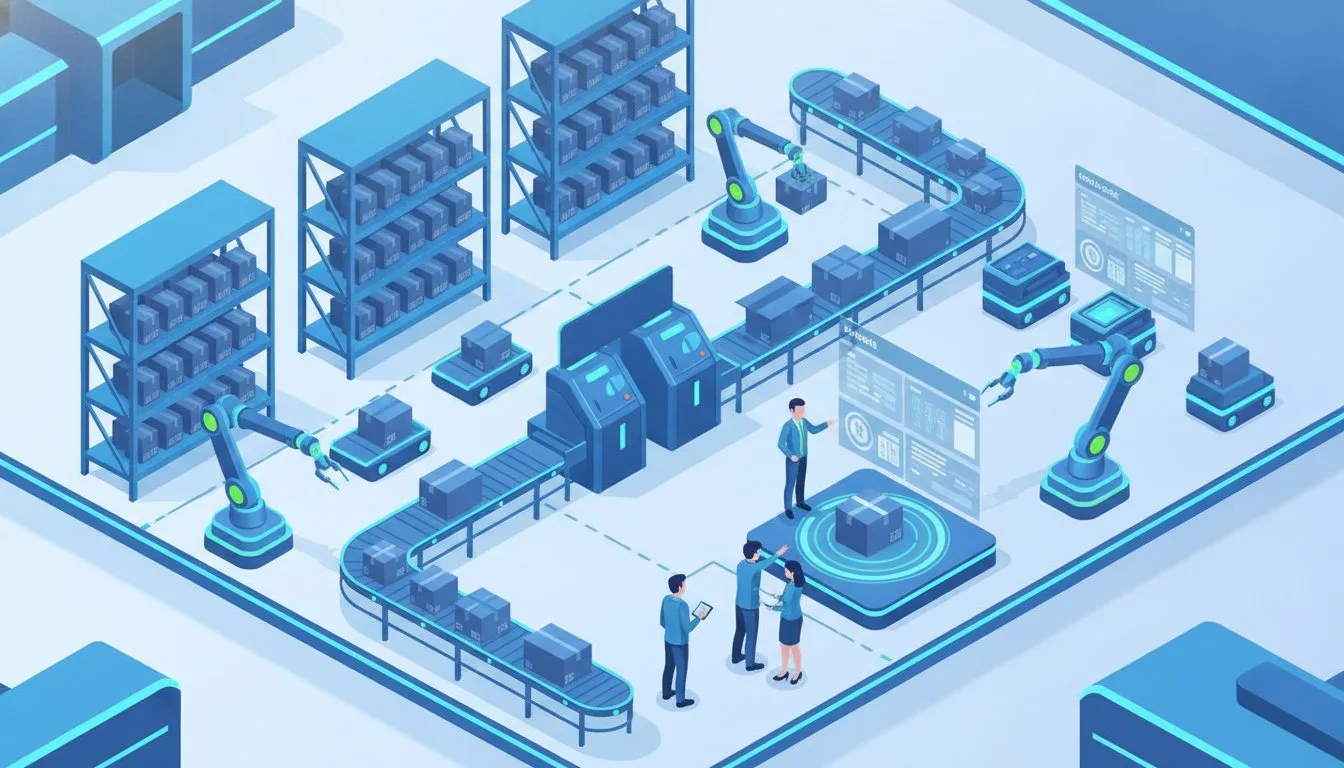
ECommerce Fulfillment for Startups: The 2026 Strategic Scaling Guide
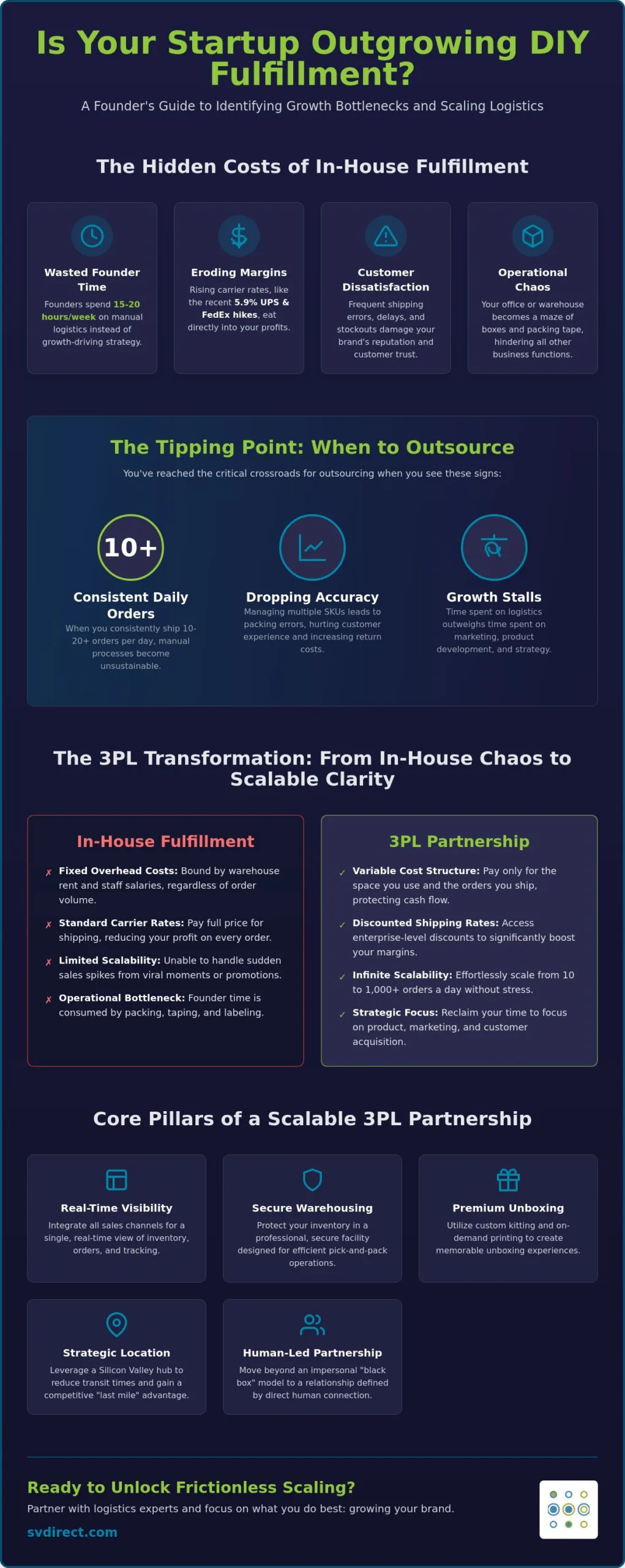
What if the very activity that proved your startup’s success, packing every order by hand, is now the primary obstacle preventing your next stage of growth? You’ve likely reached a point where your office or small warehouse has become a maze of cardboard and packing tape. It’s a common frustration for founders who find themselves trapped in the logistics of the present rather than the strategy of the future. Managing ecommerce fulfillment for startups in-house feels manageable at first; however, as volume increases, so do the shipping errors and the weight of rising carrier rates that eat into your hard-earned margins.
You deserve an operational foundation that scales as fast as your ambition. This guide will show you exactly how to identify your growth tipping point and transition to a professional 3PL without losing the personal touch your customers love. We’ll explore how a strategic partnership provides access to discounted shipping rates and reliable inventory management, ensuring your brand reputation remains spotless. From navigating the 5.9% rate hikes implemented by UPS and FedEx in 2026 to mastering cross-border complexities, you’re about to learn the blueprint for frictionless scaling.
Key Takeaways
- Identify the critical inflection point where DIY shipping begins to hinder your brand’s growth and learn to calculate the hidden costs of in-house labor and space.
- Master the transition to professional ecommerce fulfillment for startups by establishing real-time inventory visibility and secure warehousing across all your sales channels.
- Leverage specialized services like custom kitting and on-demand digital printing to create premium unboxing experiences without the burden of maintaining excess marketing inventory.
- Optimize your logistics strategy by utilizing a Silicon Valley hub to reduce transit times and gain a competitive “last mile” advantage in high-density customer zones.
- Shift from an impersonal “black box” logistics model to a strategic partnership defined by direct human connection and seasoned operational oversight.
Determining When Your Startup is Ready for eCommerce Fulfillment Outsourcing
Growth is a double-edged sword for an emerging brand. In the early days, packing every order by hand is a rite of passage that ensures quality control and a personal touch. However, there is a definitive moment where this manual labor shifts from a cost-saving measure to a significant growth bottleneck. This transition is the core challenge of ecommerce fulfillment for startups. When your team spends more time managing tape dispensers and shipping labels than refining your product or acquiring customers, you’ve reached a critical operational crossroads. Understanding the order fulfillment process from a high-level strategic perspective is essential to move beyond the “hustle” phase and into a scalable business model.
To better understand how these logistics systems function at scale, watch this helpful video:
Identifying the red flags of an overextended operation is the first step toward scaling. Frequent shipping errors, missed pickup windows, and recurring stockouts are not just minor inconveniences; they are brand-damaging events. A professional 3PL partner transforms your logistics from a fixed overhead expense, involving warehouse rent and staff salaries, into a scalable, variable cost structure. You only pay for the space you use and the orders you ship, which protects your cash flow during lean months while providing unlimited capacity for growth.
The Opportunity Cost of Packing Your Own Boxes
Founder time is the most expensive resource in any startup. If you spend 15 to 20 hours a week on logistics, you’re effectively paying a C-suite salary for entry-level labor. Those hours represent lost opportunities for marketing campaigns, product development, and investor relations. Beyond time, professional packaging impacts your customer lifetime value (LTV) by ensuring every unboxing experience is consistent and high-quality. You can explore a deeper breakdown of these financial trade-offs in our guide on The Hidden Costs of In-House Fulfillment. Shifting these responsibilities to experts allows you to focus on the high-level strategy that actually drives revenue.
Scalability: From 10 to 1,000 Orders per Day
Professional warehousing is designed to absorb the volatility of the modern market. Whether you face a sudden viral social media moment or a predictable seasonal spike, a 3PL provides the physical infrastructure and human expertise to maintain 24-hour shipping windows without the typical startup stress. Furthermore, partnering with a logistics expert grants you access to deeply discounted carrier rates that are usually reserved for high-volume enterprises. The inflection point for startup outsourcing arrives when daily order volume consistently hits 10 to 20 shipments or when the complexity of managing multiple SKUs begins to compromise your order accuracy. By making the move early, you ensure that your backend operations never become the reason your front-end growth stalls.
The Core Pillars of a Scalable 3PL Partnership for New Brands
Scaling requires moving from reactive shipping to a proactive supply chain. A 3PL partnership provides the stability needed to navigate the complexities of ecommerce fulfillment for startups. It’s not just about finding a shelf; it’s about securing a team that understands your growth trajectory. This partnership rests on pillars of transparency, technological integration, and physical operational excellence. When these elements align, your logistics transition from a source of friction to a competitive advantage.
Physical security and climate control are often overlooked but are vital for tech-focused startups dealing with sensitive electronics or high-value goods. Beyond the walls, the science of pick and pack efficiency ensures that even small-batch orders are fulfilled with surgical precision. This accuracy prevents the costly returns that can cripple a new brand’s margins. In an era where UPS and FedEx have implemented 5.9% average rate increases at the start of 2026, every error is an expensive drain on your limited capital. Mastering ecommerce fulfillment for startups requires a partner that treats every package with the same care as your original founding team.
Integrating Your Tech Stack with a 3PL
Connectivity is the lifeblood of modern logistics. Your 3PL must offer seamless API integrations with platforms like Shopify and WooCommerce to ensure order data flows instantly. Real-time visibility prevents the nightmare scenario of overselling items that are actually out of stock. This data-driven approach allows you to make informed decisions about restock levels and marketing spend based on actual inventory movement. By using 3PL inventory management software, you gain a high-level view of your business that spreadsheets simply cannot provide.
The Logistics of Global Expansion
For B2C startups, international shipping is no longer an “eventual” goal; it’s a day-one requirement. A Silicon Valley hub provides a strategic gateway to both Asian and European markets, reducing transit times for high-density customer zones. However, 2026 has introduced new hurdles, such as the €3 customs duty on low-value imports into the EU and the permanent suspension of the Section 321 de minimis exemption in the US. Navigating these regulations requires a partner who provides personal oversight rather than automated responses. You can find more tactical advice on managing these complexities in our latest logistics insights.
Building this foundation early ensures your brand remains agile and ready for the next surge in demand. If you’re ready to move from manual processes to a high-performance system, it might be time to consult with a logistics expert who can tailor a solution to your specific needs.
Navigating Specialized Fulfillment: Kitting, Customization, and Compliance
Standard ecommerce fulfillment for startups often treats every package as a mere unit of inventory. However, for a brand building its identity in a crowded market, the unboxing experience is your first physical handshake with the customer. Specialized logistics services allow you to move beyond the brown-box monotony of generic shipping. By integrating high-touch processes into your supply chain, you transform a routine delivery into a powerful marketing event that drives social sharing and customer loyalty. This approach is particularly effective for brands that view their packaging as an extension of their product’s value proposition.
Managing these specialized needs requires a partner capable of handling more than just storage and shipping. Whether you’re assembling complex subscription boxes or managing sensitive medical literature, the human element of oversight is what prevents errors. In 2026, where automation often leads to rigid, impersonal service, having a dedicated team that understands your brand’s specific kitting requirements is a significant competitive differentiator. This level of care ensures that your returns management process also functions as a trust-builder, turning potential disappointments into seamless brand interactions that encourage repeat purchases.
Branded Packaging and Subscription Box Assembly
Custom kitting and assembly services are essential for startups that rely on curated experiences. By pre-assembling products into bundles or subscription boxes, you can significantly reduce shipping weight and dimensional costs compared to shipping items individually. Utilizing “just-in-time” digital printing for promotional inserts allows you to update marketing collateral without the waste of excess inventory. Custom assembly differentiates a startup from Amazon-style generic shipping by ensuring that every insert is placed perfectly and every product is presented exactly as your creative team intended, maintaining brand integrity through every mile of the journey.
High-Stakes Fulfillment: Healthcare and Security
For startups in the health-tech or high-end electronics sectors, ecommerce fulfillment for startups involves more than just speed; it requires strict adherence to security and regulatory standards. HIPAA compliance is non-negotiable for brands handling healthcare products or patient-facing literature. This level of precision extends to the physical environment as well. Utilizing secure warehousing for high-value electronics ensures that your most expensive assets are protected by both advanced surveillance and climate-controlled environments. Professional mailing services bridge the gap for compliance-heavy industries, ensuring that literature fulfillment meets all legal requirements while maintaining a premium feel. This proactive approach to security and compliance protects your brand’s reputation and your bottom line from the start.
Strategic Logistics: Why Your Startup’s 3PL Location and Tech Matter
Many founders believe that a warehouse’s physical location is irrelevant as long as the digital integration is sound. This is a costly misconception. In the context of ecommerce fulfillment for startups, your geographic footprint dictates your shipping speed, your carrier costs, and your ability to scale globally. While software provides the visibility, the physical proximity of your 3PL to major logistics hubs determines the actual transit time your customer experiences. A strategic location acts as a force multiplier for your brand’s agility, allowing you to respond to market shifts with a level of precision that remote facilities cannot match.
Finding the right balance between high-tech automation and human oversight is the hallmark of a sophisticated operation. While AI-driven forecasting is essential for modern inventory management, it cannot replace the seasoned expert who spots a labeling error before a batch leaves the dock. This combination of innovation and personal commitment ensures that your logistics remain a steady hand in a fast-paced market. It’s about creating a system where physical operations are just as organized and responsive as your digital communication.
The Silicon Valley Strategic Hub
Positioning your inventory in the heart of Silicon Valley offers advantages that go far beyond tech industry proximity. This region serves as a premier global gateway, providing immediate access to major international airports and the Port of Oakland. For high-growth startups, this means faster inventory intake from overseas manufacturers and accelerated distribution to both domestic and international markets. The local expertise found here is uniquely attuned to the needs of tech-enabled brands, offering a sophisticated workforce that understands complex integrations and the high-stakes nature of the “last mile” advantage. Being at the center of innovation allows your logistics partner to adopt and refine new technologies long before they become industry standards.
Reducing Shipping Costs Through Zone Optimization
Shipping costs are largely determined by “zones,” which represent the distance a package travels from the warehouse to the customer. Strategic inventory placement in a high-density hub reduces the number of zones an order must cross, directly improving your startup’s profit margins. When your 3PL is located near your primary customer base, you don’t just save money; you gain the ability to offer competitive shipping speeds that build brand loyalty. Use this checklist to evaluate a potential 3PL location based on your specific needs:
- Carrier Proximity: Is the facility near major FedEx, UPS, or USPS sorting hubs to ensure late-day pickups?
- Inventory Intake: How close is the warehouse to international ports to minimize drayage costs?
- Customer Density: Does the location align with your most active customer zip codes to minimize transit zones?
- Technical Talent: Does the region have the workforce required to manage complex API integrations and custom kitting?
Optimizing your physical footprint is a vital step in transforming logistics from a cost center into a strategic asset. If you’re ready to leverage a premier West Coast hub for your brand, request a personalized logistics quote to see how strategic placement can accelerate your growth.
Silicon Valley Direct: Empowering Startup Growth Through Human-Led Logistics
The logistics industry has seen a surge in fully automated aggregators that promise efficiency but often deliver a “black box” experience. For ecommerce fulfillment for startups, this lack of transparency represents a significant operational risk. Silicon Valley Direct rejects this impersonal model in favor of a sophisticated blend of seasoned professionalism and high-tech efficiency. Since 1999, we’ve positioned ourselves as a steady hand in a fast-paced market, ensuring that your brand’s growth is supported by physical infrastructure and human expertise rather than just marketing abstractions. Our multi-decade history serves as a constant anchor of trust, providing the stability you need to scale without the friction of unmanaged errors.
Fully automated 3PLs often prioritize volume over the delicate nuances of a growing brand. This leads to hidden costs in the form of high error rates and a lack of accountability when things go wrong. We believe that startup fulfillment is a strategic partnership, not a commodity transaction. By combining our extensive operational history with modern digital integration, we provide a proactive stance that anticipates challenges before they impact your customer experience. This approach ensures that your logistics remain as organized and responsive as your own internal team, allowing you to focus on high-level strategy while we manage the precision of your physical operations.
A Partnership Built on Transparency
Our primary differentiator in a tech-saturated market is our explicit rejection of automated interactions. We promise direct human connection and personal oversight for every client. When you have a question about your inventory or a complex kitting requirement, you speak to an expert who understands your account, not a chatbot. This commitment to transparency is backed by our exceptional long-term staff retention. Experienced team members translate directly to higher pick-and-pack accuracy and a deeper understanding of your brand’s specific needs. We offer total flexibility and bespoke problem-solving, ensuring that our services adapt to your unique startup journey rather than forcing you into a rigid, one-size-fits-all box.
Ready to Scale Without the Pain?
Choosing a 3PL is one of the most critical decisions a founder will make. Silicon Valley Direct acts as a dedicated extension of your team, providing the “last mile” advantage and global connectivity required to thrive in 2026. We take the time to explain the rationale behind our quality control measures, moving you from a state of curiosity to a state of informed confidence. You can find more expert advice on navigating the complexities of modern supply chains by visiting Silicon Valley Direct’s blog. If you’re ready to eliminate operational friction and secure a high-performance partner, contact Silicon Valley Direct to streamline your startup’s fulfillment today. We are ready to help you turn your logistical challenges into a seamless competitive advantage.
Secure Your Growth with Strategic Logistics
Transitioning your logistics from a manual hurdle to a scalable asset is the most significant move you can make for your brand’s future. By identifying your growth inflection point early, you ensure that your backend operations never compromise your customer experience. Success in ecommerce fulfillment for startups requires more than just software; it demands a strategic partner who provides both the technical precision of a Silicon Valley hub and the human oversight necessary to manage complex, high-stakes orders.
Silicon Valley Direct has been a trusted logistics partner since 1999, offering specialized expertise in high-value electronics and healthcare-compliant fulfillment. We reject the impersonal nature of modern automation, ensuring direct human oversight on every order to maintain the brand integrity you’ve worked hard to build. Whether you are navigating the rate hikes of 2026 or expanding into international markets, our team provides the stability and bespoke problem-solving your startup deserves.
Scale your startup with Silicon Valley Direct’s expert fulfillment services and reclaim the time you need to lead your business toward its next major milestone. Your vision deserves an operational foundation that is as ambitious as your goals.
Frequently Asked Questions
What is the best time for a startup to switch to a 3PL?
The ideal time to transition occurs when manual order processing begins to consume time better spent on customer acquisition and brand strategy. Most founders find that hitting a consistent daily order volume or managing an expanding SKU list creates operational friction that only professional ecommerce fulfillment for startups can resolve. If shipping errors are increasing or you’re missing carrier pickup windows, you’ve reached the tipping point for outsourcing.
Can a 3PL handle custom kitting and branded packaging for my startup?
Yes, specialized providers offer kitting and assembly services to help you maintain a premium brand identity. This goes beyond simple storage; it involves building custom subscription boxes or adding promotional inserts to every order. By utilizing these specialized services, you can offer a unique unboxing experience that differentiates your brand from the generic packaging often associated with larger, fully automated marketplaces.
How much does eCommerce fulfillment typically cost for a small business?
Total costs are generally determined by a combination of storage needs, the number of items per order, and the final shipping destination. While fees vary based on your specific volume and product dimensions, most businesses view these as variable costs that replace fixed overhead like warehouse rent and staff salaries. Shifting to this model allows you to scale your expenses in direct proportion to your actual sales revenue.
What is the difference between a fulfillment center and a warehouse?
A warehouse is primarily designed for the long-term storage of goods, whereas a fulfillment center is a high-activity hub focused on active order processing. Fulfillment centers are equipped with the technology and staff required to pick, pack, and ship individual customer orders the moment they are placed. This distinction is vital for startups that require rapid turnaround times and real-time inventory management rather than just static storage space.
Does Silicon Valley Direct integrate with Shopify and other eCommerce platforms?
Silicon Valley Direct offers seamless API integrations with major platforms including Shopify, WooCommerce, and other popular ecommerce systems. These connections ensure that order data flows instantly to our facility and inventory levels are updated across all your sales channels in real time. This technical synergy prevents the common startup issue of overselling products that have already moved out of the warehouse.
Is it possible for a startup to use a 3PL for international shipping?
Using a 3PL is often the most efficient way for a startup to manage international logistics and cross-border regulations. Professional providers handle the complexities of customs documentation and help you navigate the specific duties or taxes required for different global regions. This expertise allows you to offer a reliable shipping experience to customers in Europe, Asia, and beyond from your first day of global expansion.
What happens if my startup has a sudden spike in orders?
A professional 3PL provides the physical infrastructure and flexible labor needed to absorb sudden spikes in order volume without operational delays. Whether you experience a viral social media moment or a seasonal surge, our facility scales its resources to ensure your shipping windows remain consistent. This elasticity protects your brand reputation during high-growth periods when your internal team would otherwise be overwhelmed by manual packing.
How does a 3PL help reduce shipping costs for new brands?
3PL providers leverage their collective shipping volume to secure deeply discounted carrier rates that are typically unavailable to individual startups. Additionally, strategic inventory placement helps reduce the number of shipping zones a package must travel, which lowers the total cost per order. By optimizing ecommerce fulfillment for startups, you can maintain healthier margins while still offering the competitive shipping speeds your customers expect.