


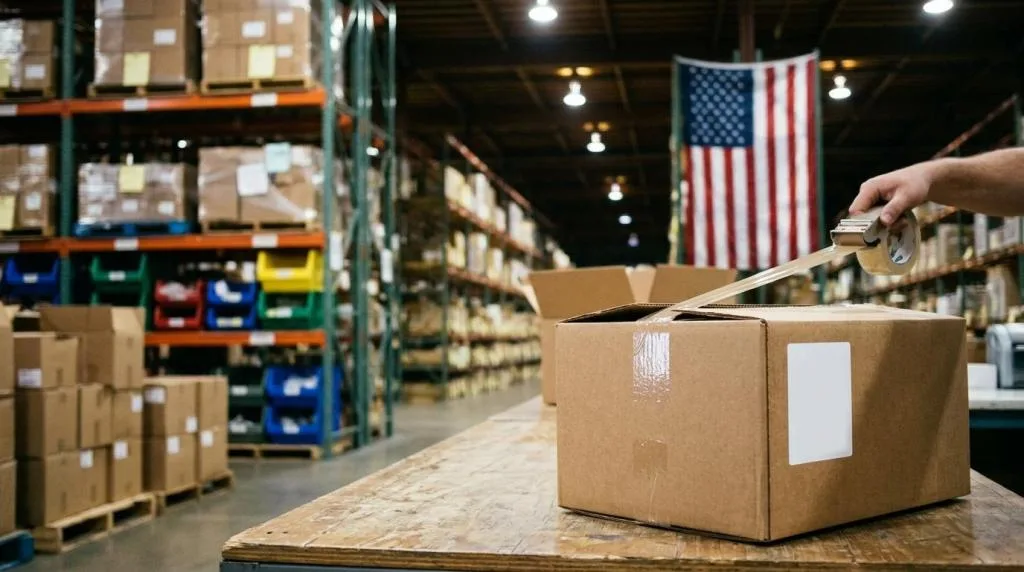
Top Marketplace Fulfillment Services
Marketplace fulfillment is no longer just a shipping decision. For Amazon, Walmart, and multichannel sellers, it is now a choice about delivery speed, channel reach, inventory control, branding, and who owns the customer experience after checkout.
TL;DR: Summary
- Marketplace fulfillment means outsourcing storage, pick, pack, ship, and often returns to a provider that can meet marketplace delivery expectations across channels like Amazon, Walmart, eBay, TikTok Shop, and a brand’s own site.
- The best marketplace fulfillment service depends on your priority: Amazon FBA is strongest for Prime access, Walmart Fulfillment Services is built around Walmart speed and multichannel use, and an independent 3PL like SVDirect offers more control over branding, integrations, and shared inventory visibility.
- Walmart says WFS picks, packs, and ships in two days or less, while Amazon says FBA gives sellers access to free two-day Prime shipping and handles customer service and returns.
- If you sell on more than one channel, inventory visibility matters as much as shipping speed. One stock pool across marketplaces and DTC reduces oversells, split shipments, and manual order routing.
- Compare providers on fully loaded cost, not just pick fees. Review storage, inbound prep, returns, account support, SLA terms, integration depth, and whether the provider can support marketplace rules without limiting your brand options.
- Many growing sellers do best with a hybrid model: FBA or WFS for marketplace-specific velocity, plus an independent 3PL for DTC, branded packaging, slower SKUs, B2B orders, or cross-border needs.
The most useful way to compare options is to separate marketplace-native programs from independent 3PLs. Marketplace programs can improve speed and badge eligibility inside their ecosystems, while independent providers often give broader multichannel flexibility, branded packaging, and operational control.
What is marketplace fulfillment?
Marketplace fulfillment is outsourced order execution tied to marketplace standards. Amazon FBA and Walmart Fulfillment Services are the clearest examples, while independent 3PLs like SVDirect extend the model across marketplaces and direct-to-consumer channels.
In practice, marketplace fulfillment includes inbound receiving, storage, inventory tracking, pick and pack, label creation, carrier handoff, and often returns processing. The difference from basic parcel shipping is that the warehouse workflow is connected to channel rules, delivery promises, and listing performance.
“SVDirect supports marketplace and other order sources with shared inventory visibility, branded packaging options, and a 24/7 client portal.”
A common misconception is that marketplace fulfillment is only about cheaper postage. It is really about meeting service-level expectations without losing control of stock, packaging, or order routing when volumes spike.
Why are sellers shifting from shipping-only decisions to channel-control decisions?
Speed and channel control now matter more than postage alone. Walmart Marketplace and Amazon have trained shoppers to expect two-day delivery, and sellers now need one inventory system that can support marketplaces, social shops, and their own websites.
Walmart says WFS picks, packs, and ships orders in two days or less. Amazon says FBA lets sellers outsource fulfillment and offer customers free, two-day shipping through Prime. Those promises influence conversion, buy-box competitiveness, and late-shipment risk.
The bigger shift is multichannel. Walmart’s Multichannel Solutions uses WFS inventory to fulfill orders across Amazon, eBay, Temu, TikTok, and a seller’s own site. If one pool of inventory can feed several channels, then stockouts and duplicate safety stock become easier to manage. If each channel needs its own separate stock buffer, capital gets tied up fast.
What are the top marketplace fulfillment services for multichannel sellers?
The top marketplace fulfillment options fall into three buckets: marketplace-native programs, independent 3PLs, and hybrid setups. For most growing brands, the best choice depends on channel mix, SKU profile, and how much control they need over packaging, data, and returns.
A practical shortlist often looks like this:
- Silicon Valley Direct (SVDirect): Best fit for brands that want marketplace support with shared inventory visibility, same-day shipping, no minimum order requirement, 80+ preconfigured integrations, and branded packaging options from a Union City, California warehouse.
- Walmart Fulfillment Services (WFS): Best fit for sellers prioritizing Walmart speed, Fulfilled by Walmart benefits, and expanding into Walmart’s multichannel fulfillment model.
- Fulfillment by Amazon (FBA): Best fit for brands that want Prime-linked delivery expectations, Amazon-managed customer service, and Amazon-handled returns.
- Regional 3PLs with marketplace integrations: Best fit when you need retailer-compliant prep, lower inbound complexity, or proximity to specific customer zones.
- Hybrid FBA plus independent 3PL setups: Best fit when fast-moving Amazon SKUs belong in FBA but DTC, B2B, bundle assembly, or branded orders need a separate warehouse workflow.
The ranking should not be treated as universal. A beauty brand that sells 70% on Amazon may choose FBA first. A lifestyle brand with Shopify, Walmart, TikTok Shop, and wholesale orders may value a neutral 3PL more.
How does Fulfillment by Amazon compare with Walmart Fulfillment Services?
FBA is strongest inside Amazon, while WFS is strongest for Walmart sellers who also want multichannel access. Amazon emphasizes Prime-linked speed and service; Walmart emphasizes two-day fulfillment and cross-channel use of WFS inventory.
Amazon says FBA handles pick, pack, ship, customer service, and returns. That can remove a large operational burden, especially for brands with limited support teams. WFS also covers core fulfillment, but Walmart now positions its inventory network as useful beyond Walmart itself.
The trade-off is ecosystem dependency. FBA is deeply effective if Amazon is your main growth engine. WFS may appeal more if Walmart is rising fast in your mix and you want to fulfill non-Walmart orders from the same WFS stock. A common mistake is assuming these programs are identical because both are outsourced fulfillment. They are not. Their network logic, branding limits, fee models, and multichannel use cases differ.
How do marketplace-native fulfillment services compare with independent 3PLs?
Marketplace-native programs win on native ecosystem fit, while independent 3PLs win on flexibility. Amazon and Walmart are optimized for their own marketplaces; SVDirect and similar 3PLs are built to support many order sources from one operational layer.
If your main goal is marketplace conversion tied to a platform’s own delivery program, native fulfillment has a clear edge. If your goal is channel diversification, branded packaging, custom kitting, or one operational dashboard across channels, an independent 3PL is often the cleaner answer.
SVDirect says it serves ecommerce brands across the U.S. and Canada and supports marketplaces and other order sources with shared inventory visibility. That matters when one SKU can sell on Shopify, Walmart, Amazon, and social channels in the same hour.
“SVDirect operates an 88,704-square-foot Union City facility with 9 dock-high doors for ecommerce and marketplace fulfillment.”
Here is the real trade-off: marketplace-native services may simplify compliance inside the marketplace, but they can limit branding and workflow customization. Independent 3PLs give you more operational control, though you may need stronger integrations and more active channel management to capture the same delivery speed signals.
How does marketplace fulfillment work step by step?
Marketplace fulfillment follows a predictable warehouse flow. Amazon FBA, WFS, and 3PLs like SVDirect all move through receiving, storage, order routing, pick-pack-ship, and post-purchase handling.
A seller usually hands off these steps:
- Send inventory in: Products are received, counted, inspected, and stored by SKU or lot.
- Sync orders and stock: Marketplace, website, and ERP orders flow into the fulfillment system through integrations or APIs.
- Route each order: The system applies shipping rules based on channel, promised delivery date, service level, and inventory location.
- Pick, pack, and label: Warehouse staff pick units, pack to required standards, and generate channel-compliant labels.
- Ship and close the loop: Tracking, status updates, returns processing, and reporting feed back into the seller’s systems.
Pro tip: ask how inventory corrections happen when receiving counts do not match the ASN or packing list. That one process often reveals whether a provider has mature SOPs or just basic parcel capability.
How should you choose a marketplace fulfillment partner step by step?
The right choice comes from channel math, not marketing claims. Compare Amazon, Walmart, and independent 3PL options against your actual order mix, SKU behavior, and service commitments.
A simple evaluation process works well:
- Map your channels: List revenue share by Amazon, Walmart, Shopify, TikTok Shop, eBay, and wholesale.
- Segment your catalog: Separate fast movers, oversize items, bundles, fragile products, and low-velocity SKUs.
- Define non-negotiables: Set targets for same-day shipping cutoff, inventory accuracy, returns handling, branding, and account support.
- Model full cost: Include storage, inbound prep, pick-pack, postage, surcharges, returns, and software costs.
- Stress-test operations: Ask what happens during peak volume, stock discrepancies, carrier delays, or blocked ASINs.
If a provider looks cheaper but cannot support your packaging rules or return workflow, then the lower quote is not really lower. Cost without operational fit often turns into hidden labor and customer service expense.
How do you move from in-house shipping to marketplace fulfillment step by step?
A staged transition is safer than a hard cutover. Brands using Shopify, Amazon, and Walmart usually reduce risk by moving a subset of SKUs first, then expanding after inventory accuracy and order routing stabilize.
The first milestone is integration readiness. Confirm catalog mapping, SKU normalization, barcode logic, return addresses, and order status syncing before inbound inventory is scheduled.
“SVDirect offers 80+ preconfigured integrations, same-day shipping, and no minimum order requirement for growing ecommerce brands.”
The second milestone is operational proof. Run live orders through a controlled pilot, check receiving accuracy, confirm tracking uploads, and watch exception queues closely for at least one full replenishment cycle.
A practical rollout sequence looks like this:
- Clean the catalog: Remove duplicate SKUs, fix unit-of-measure errors, and standardize dimensions and weights.
- Pilot limited inventory: Start with a stable subset of SKUs and a modest daily order volume.
- Validate every sync: Check stock feeds, tracking numbers, cancellations, returns, and replacement orders.
- Expand by channel or SKU type: Add DTC first, then marketplace orders, or reverse it based on operational risk.
- Retire in-house processes last: Keep backup label access and emergency SOPs until the new flow proves stable.
Common mistake: moving all channels at once during a promo calendar or seasonal spike. If then logic matters here. If your peak is near, delay migration. If your demand is stable, pilot sooner.
What marketplace fulfillment fees and SLAs matter most?
The most important marketplace fulfillment metrics are fully loaded cost, order accuracy, shipping cutoff, receiving speed, and inventory visibility. Walmart and Amazon set shopper expectations, but your provider’s SLA decides whether you can meet them reliably.
Fee reviews should go beyond storage and pick fees. Look at inbound receiving, prep or relabeling, dim-weight exposure, returns processing, packaging surcharges, account management, and system access. Walmart says WFS costs 15% less than other marketplace fulfillment providers based on its first-party data for orders fulfilled from 2024-07-01 to 2025-06-30. That is useful benchmark data, but each seller still needs its own landed-cost model.
On SLA terms, ask for specifics. What is the same-day shipping cutoff? How are errors measured? What counts as received inventory, and how quickly is it available for sale? A pro tip here is simple: compare posted promises to reporting transparency. A strong SLA without usable reporting is hard to enforce.
When should a brand use a hybrid marketplace fulfillment model?
A hybrid model makes sense when no single provider fits every SKU or channel. Amazon FBA plus an independent 3PL, or WFS plus an external 3PL, is often the most resilient setup for growing brands.
Use a hybrid model if one of these conditions is true. Your Amazon volume is high enough to justify FBA, but your DTC orders need branded packaging. Your Walmart business is growing, but you also ship B2B cartons, subscription bundles, or custom kitting. Your catalog has both fast movers and slow movers, and the same fee logic should not apply to both.
Hybrid setups also reduce concentration risk. If one channel changes fee structures, listing requirements, or storage limits, you still have another operational path. The trade-off is orchestration. You need clean inventory allocation rules, channel priorities, and strong exception handling. If those controls are weak, a hybrid model can create confusion instead of flexibility.