


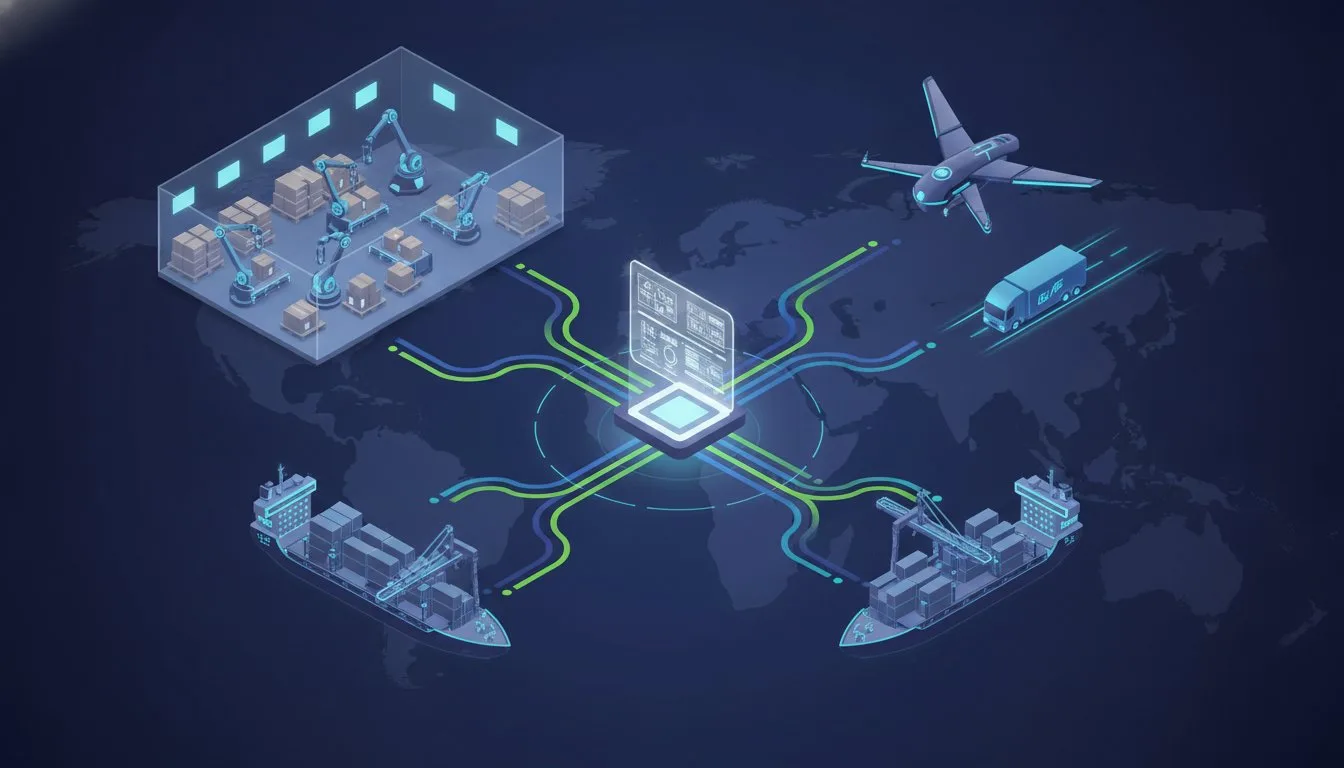
Multi-Carrier Shipping Strategy: The 2026 Guide to Resilient Fulfillment
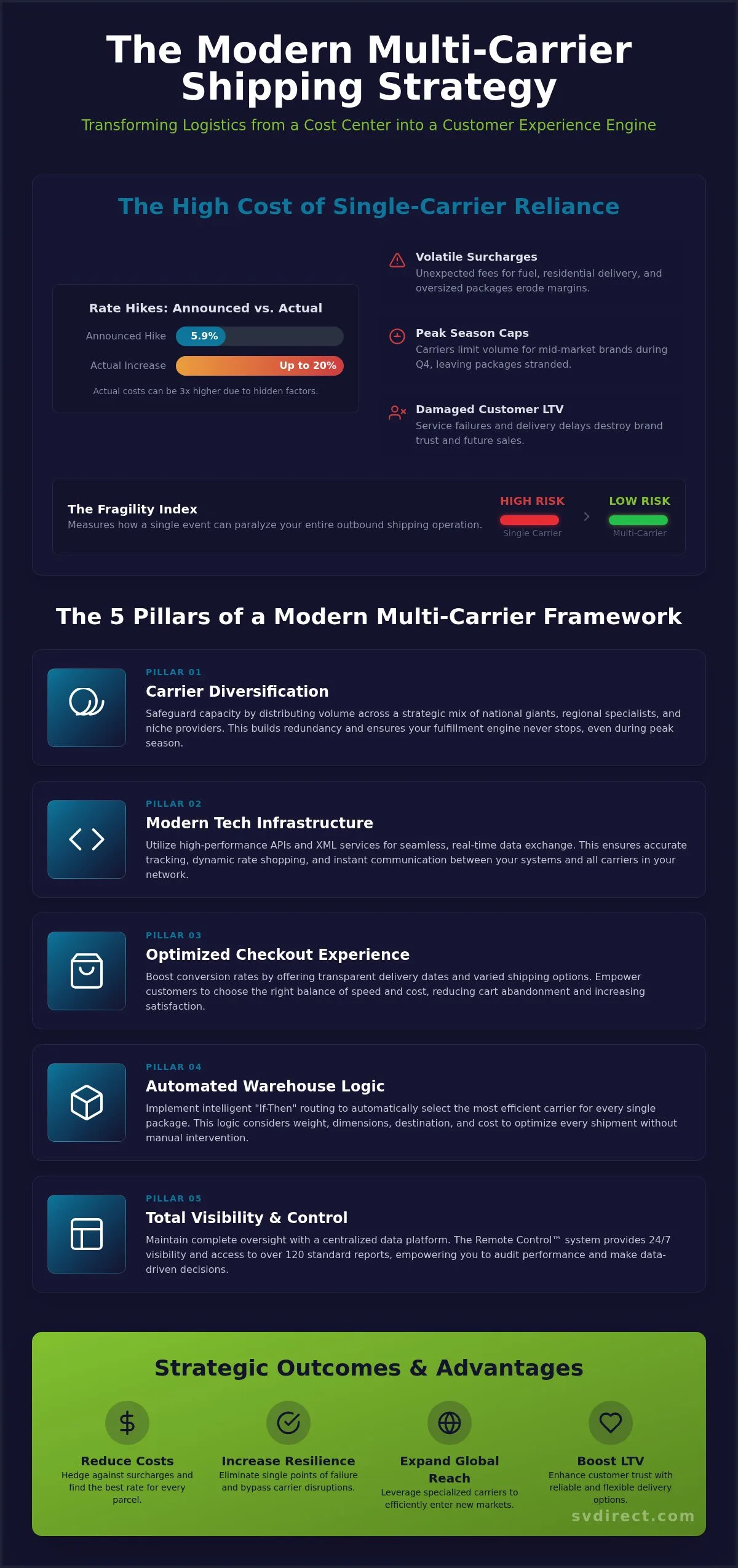
Did you know that while major carriers announced a 5.9% rate hike for 2026, many shippers are seeing their actual costs climb by as much as 20%? Between the USPS shifting its dimensional weight divisor to 139 and new fractional rounding rules, the “average” increase is often a mathematical illusion that erodes your margins. Relying on a single provider isn’t just risky; it’s an operational bottleneck that leaves you vulnerable to surcharges and service gaps. You’ve likely felt the sting of cart abandonment when shipping options are too limited or the anxiety of integrating complex APIs. A modern multi-carrier shipping strategy is no longer a luxury, but a necessity for any brand that values resilience and scale.
You deserve a logistics partner that acts as a steady hand, helping you master the technical framework of carrier diversification without making your operations twice as complicated. This guide provides a clear roadmap to reduce costs, eliminate delivery bottlenecks, and expand your global reach. We’ll examine how to leverage high-performance data to bypass peak season disruptions and transform your shipping operations from a cost center into a customer experience engine.
Key Takeaways
- Shift from single-carrier dependence to a diversified mix of national and regional specialists to safeguard your capacity during peak seasons.
- Leverage modern technical infrastructure, including APIs and XML services, to ensure seamless data flow and accurate real-time tracking across all providers.
- Boost checkout conversion rates by providing customers with transparent delivery dates and varied shipping options that balance speed with cost.
- Optimize your warehouse workflow by building a multi-carrier shipping strategy around precise parcel audits and automated “If-Then” routing logic.
- Maintain total oversight of your logistics network with the proprietary Remote Control™ system, offering 120+ standard reports for 24/7 visibility.
Moving Beyond Single-Carrier Dependence in 2026
Many brands operate under the illusion that a single-carrier contract offers a “safe” and simple logistics path. This approach often creates a dangerous single point of failure. A resilient multi-carrier shipping strategy is the strategic distribution of parcel volume across national, regional, and niche carriers to ensure your fulfillment engine never grinds to a halt. It’s about moving from a passive relationship with one provider to an active, data-driven ecosystem. For a deeper look at the foundational concepts of modern logistics, you can explore our global shipping services guide.
We often discuss the “Fragility Index” with our partners. This metric measures how easily a single event, like a regional weather catastrophe or a labor dispute, can paralyze your outbound shipments. If 100% of your volume sits with one carrier, your fragility is at its peak. Experienced Third-party logistics providers recognize that true stability comes from a diversified network. This infrastructure allows you to pivot instantly when one lane becomes blocked or a carrier reaches its limit.
The Risks of Carrier Fragility and Peak Season Caps
During the high-stakes Q4 peak season, national carriers prioritize their largest enterprise accounts. Mid-market brands often face sudden capacity caps, leaving them with packages that won’t be picked up. These service failures do more than delay a single box; they destroy customer lifetime value (LTV). When a customer’s holiday gift arrives late, they don’t blame the carrier; they blame your brand. Building redundancy into your workflow is the only insurance policy that guarantees your products reach the doorstep when promised.
Why ‘Loyalty’ No Longer Guarantees Shipping Savings
It’s a common misconception that deep volume discounts with a single carrier always lead to the lowest total cost. In reality, “hidden” surcharges for fuel, residential delivery, and oversized packages have become highly volatile. These fees can vary by double digits between providers for the exact same route. Rate diversification acts as a financial hedge, allowing you to shop for the best price on a per-package basis. You aren’t just looking for a discount; you’re looking for the most efficient match for every unique parcel profile in your inventory.
Core Components of a Modern Multi-Carrier Strategy
A successful multi-carrier shipping strategy relies on a sophisticated architecture that balances physical logistics with digital precision. It’s not enough to simply sign contracts with multiple providers. You must build a framework that allows these providers to work in concert. This requires a shift from manual carrier selection to an automated ecosystem where data dictates every move. By centralizing your operations, you gain the agility to respond to market shifts without disrupting your warehouse workflow.
The foundation of this approach is data centralization. At Silicon Valley Direct, we provide our partners with a proprietary Remote Control™ system that offers 120+ standard reports. This level of granularity is critical for auditing carrier performance and identifying where surcharges are quietly eroding your profits. When you have 24/7 visibility into every shipment, you can hold carriers accountable to their service level agreements and make informed adjustments to your routing logic.
Integrating Regional and Niche Carriers for Last-Mile Success
While national giants provide a reliable backbone for long-haul transport, regional specialists often offer superior efficiency in high-density delivery zones. These regional players frequently have fewer surcharges and more flexible pickup windows, which can significantly lower your total landed cost. For brands handling specialized inventory, niche carriers provide the expertise required for healthcare compliance or high-value electronics security. Last-mile optimization is the final leg of delivery where costs are highest. By injecting regional players into your mix, you shorten the distance between the warehouse and the doorstep, effectively bypassing the congestion and fees associated with national hubs.
Dynamic Rate Shopping and Automated Routing Logic
The “brain” of a modern fulfillment operation is its automated routing logic. This technology uses APIs and XML-based web services to perform real-time data exchange between your systems and the carriers. In the milliseconds it takes to process an order, the system compares time-in-transit against current freight costs to select the optimal path. This ensures you aren’t overpaying for expedited shipping when a ground service could reach the customer in the same timeframe.
Precision at this stage is vital. Automated address validation plays a key role here, as it prevents failed deliveries and the steep re-routing fees that carriers often apply. For brands seeking this level of technical integration, our remote order management services provide the real-time visibility needed to manage these complex choices. If you’re ready to see how a tailored approach can stabilize your fulfillment, you can request a custom quote to explore your options. This proactive stance ensures your logistics remain a high-performance asset rather than a growing liability.
Optimizing Checkout Conversions through Shipping Choice
While the back-end logic ensures operational stability, the true test of your multi-carrier shipping strategy happens at the checkout. Consumers today demand more than just a “shipped” notification. They want agency over how and when their products arrive. It’s a mistake to assume that free shipping is the only lever for conversion. For many shoppers, speed is a higher priority, especially for deadline-driven needs like gifts or healthcare supplies. By providing a spectrum of options, you cater to both the budget-conscious and the time-sensitive customer.
Maintaining the customer relationship after they click the buy button is equally vital. Branded tracking pages allow you to keep the conversation on your own digital properties rather than sending users to a generic carrier portal. This touchpoint is a prime opportunity to reinforce your brand identity and provide proactive updates. For brands with a global reach, incorporating Delivered Duty Paid (DDP) options removes the cross-border friction that often leads to refused packages and customer frustration. When duties and taxes are settled upfront, the delivery experience remains seamless and predictable.
Offering Choice Without Operational Complexity
Presenting three distinct shipping tiers, including Economy, Standard, and Expedited, gives users the control they crave without overwhelming your warehouse staff. The “Amazon Effect” has trained shoppers to expect precise delivery windows rather than vague estimates. Meeting this expectation requires using your historical carrier data to determine which providers perform best in specific geographic regions. If a regional carrier consistently beats a national giant in the Pacific Northwest, your checkout should reflect that speed. This targeted approach ensures you aren’t just offering choices; you’re offering the most reliable ones available.
Reducing Cart Abandonment via Shipping Transparency
Cart abandonment often spikes when shipping costs appear as a surprise at the final step. Displaying real-time carrier rates early in the process eliminates this friction and builds immediate trust. Even more powerful is the use of Estimated Delivery Dates (EDD). Phrases like “Arrives Wednesday, Oct 14” significantly outperform generic “3-5 business days” language because they provide a concrete promise. Balancing shipping cost recovery with your conversion goals is a delicate act. However, when customers see the direct value of an expedited service through a transparent EDD, they’re often more willing to pay the premium for that certainty.
Operationalizing Multi-Carrier Logistics in the Warehouse
Executing a multi-carrier shipping strategy requires more than just a software subscription; it demands a disciplined physical workflow. Many providers treat logistics as a “set and forget” digital task, but true resilience is built on the warehouse floor. To move from theory to high-performance execution, your facility must follow a methodical progression that prioritizes data accuracy and physical precision.
Operationalizing this framework involves five essential steps:
- Step 1: Audit your parcel profile. Analyze your weight, dimensions, and destination clusters to identify which carriers offer the most efficient lanes for your specific inventory.
- Step 2: Define “If-Then” routing rules. Program your Order Management System (OMS) to automatically assign carriers based on cost, speed, and reliability targets.
- Step 3: Implement a systematic QC-Check. Establish a verification process to ensure the correct carrier label is applied to the right parcel every time.
- Step 4: Integrate value-added services. Use kitting and assembly to optimize package sizes and reduce dimensional weight surcharges.
- Step 5: Monitor performance daily. Use real-time reporting to track carrier delivery times and surcharge accuracy, allowing for immediate adjustments.
Automating Carrier Selection Rules via Web Services
Modern fulfillment relies on seamless communication between your storefront and the warehouse. We utilize SOAP and XML protocols to allow for programmatic logistics that scale with your order volume. By using specific methods like “AddOrder” to ingest data and “GetShippingActivity” for real-time updates, we eliminate the friction of manual data entry. This technical integration also enables “batch delivery to carrier” logic. This streamlines end-of-day pickups by grouping orders by provider, ensuring that every package is ready for the correct driver at the exact right time.
The Role of Human Oversight in Quality Control
While technology provides the framework, human oversight provides the precision. We believe a quiet, organized facility produces fewer errors than a frantic, fully automated environment. Our team practices proactive problem solving, often catching a carrier conflict or a label discrepancy before the package even leaves the station. This human touch is especially critical when coordinating on-demand digital printing. Our specialists ensure that personalized inserts or destination-specific literature match the shipping destination perfectly. This blend of high-tech logic and high-touch care ensures your brand’s reputation remains untarnished.
Executing Global Strategy with Silicon Valley Direct
Choosing a partner to execute your multi-carrier shipping strategy is a decision that impacts every facet of your business growth. At Silicon Valley Direct, we don’t view ourselves as a transactional vendor. We operate as a dedicated extension of your team. With over 25 years of operational history since our founding in 1999, we’ve seen the industry evolve from simple parcel delivery to the complex, data-driven ecosystem it is today. We provide the steady hand and physical infrastructure needed to turn your logistics goals into a competitive advantage. Our team consists of long-term professionals who understand that your success is our success.
Our proprietary Remote Control™ system serves as the central nervous system for your fulfillment. It offers 24/7 visibility into your inventory and carrier performance through more than 120 standard reports. This level of transparency ensures you aren’t just shipping boxes; you’re managing a high-performance network. Our proactive “Make-It-Right” philosophy means we anticipate carrier conflicts and logistics bottlenecks before they reach your customers. We take personal pride in the precision of our work. If a carrier’s performance dips or a surcharge pattern emerges, we flag it immediately. We believe in direct human connection and personal oversight, which is why you’ll always have access to an expert who knows your business inside and out.
Leveraging Proprietary Technology for Real-Time Control
The SVD web interface is designed for total flexibility. It provides a platform-agnostic environment that works seamlessly with any development stack, allowing your team to build custom user interfaces that fit your specific workflow. This technical agility is backed by real-world performance. For instance, we regularly manage high-volume projects, such as handling over 3,000 shipments in a single week, while maintaining zero color variance on printed materials and zero shipping errors. This combination of digital sophistication and physical accuracy is what separates a true partner from a mere consultant who only offers advice without the warehouse capacity to back it up.
A Proactive Partnership for National and Global Reach
We reject the “cookie-cutter” approach common in the fulfillment industry. Every brand has unique needs, whether you require high-compliance healthcare mailing services or a complex global eCommerce rollout. Our team specializes in bespoke problem-solving, tailoring our kitting, assembly, and distribution processes to your exact specifications. By combining our deep industry expertise with a commitment to human oversight, we ensure your global reach is as reliable as your local presence. We treat every project with the same level of care and precision, ensuring that your growth is never limited by your fulfillment capacity.
Partner with Silicon Valley Direct for your multi-carrier fulfillment needs.
Future-Proofing Your Fulfillment Engine
Transitioning to a sophisticated multi-carrier shipping strategy is the most effective way to insulate your brand from the volatility of the 2026 logistics market. By balancing automated routing logic with the wisdom of seasoned professionals, you transform shipping from a logistical burden into a driver of customer loyalty. You’ve seen how carrier diversification reduces fragility and how transparent checkout options can recover lost revenue. It’s about building a framework that scales with your ambition without increasing your operational stress.
We bring over 25 years of logistics excellence to every partnership, ensuring your operations remain stable even during peak season surges. Our proprietary Remote Control™ system provides the 24/7 visibility you need to audit performance in real time; our proactive human QC-check process prevents errors before they reach the doorstep. We don’t just ship boxes; we protect your brand’s reputation with every delivery. You can move forward with the confidence that your logistics are handled with precision and care.
We look forward to helping you master the complexity of modern distribution and achieving a new level of operational resilience.
Frequently Asked Questions
What is a multi-carrier shipping strategy?
A multi-carrier shipping strategy is a deliberate approach to distributing parcel volume across multiple national, regional, and niche carriers rather than relying on a single provider. This framework allows your business to optimize for cost, speed, and reliability on a per-package basis. It acts as a vital safeguard against carrier capacity caps and service disruptions, ensuring that your fulfillment engine remains operational regardless of external market volatility or peak season pressures.
How many carriers should a growing eCommerce business use?
Most growing brands find that a mix of three to five carriers provides the ideal balance between redundancy and operational simplicity. This usually includes two national giants for broad reach, one or two regional specialists for last-mile efficiency, and a niche provider for specialized shipping needs. Maintaining this variety ensures you have the flexibility to pivot during high-volume periods without overwhelming your internal tracking and reporting systems.
Will I lose my carrier volume discounts if I use multiple providers?
Not necessarily; in fact, a multi-carrier shipping strategy often reveals that hidden surcharges from a single provider outweigh the benefits of a basic volume discount. By rate shopping across multiple carriers, you can often find lower total landed costs for specific zones or parcel profiles. You aren’t just chasing a discount; you’re matching each shipment to the most efficient provider to protect your overall margins and delivery promises.
What is the difference between a regional carrier and a national carrier?
National carriers provide comprehensive coverage across the entire country and international markets, while regional carriers focus on high-density delivery zones within specific geographic areas. Regional providers often offer superior speed and fewer surcharges for last-mile deliveries because they bypass the hub-and-spoke congestion of national networks. Integrating regional specialists is a key component of a resilient and cost-effective distribution model that prioritizes the final leg of the journey.
How do shipping APIs help with a multi-carrier strategy?
Shipping APIs allow your Order Management System to communicate in real time with multiple carriers to pull live rates, validate addresses, and generate labels. This technical integration automates the selection process by comparing transit times and costs in milliseconds. Without these web services, managing multiple providers would require manual entry, which increases the risk of errors and slows down your warehouse production during critical, deadline-driven windows.
What does ‘batch delivery to carrier’ mean in fulfillment?
Batch delivery is the process of grouping all orders assigned to a specific carrier into a single, organized hand-off for end-of-day pickup. This method streamlines warehouse operations by ensuring that packages for different providers are segregated and ready for their respective drivers simultaneously. It reduces the chaos of multiple daily pickups and ensures that your facility maintains a steady, methodical flow from the packing station to the departure dock.
Can a multi-carrier strategy help reduce cart abandonment?
Yes; providing customers with multiple shipping options and transparent delivery dates directly addresses the leading causes of cart abandonment. When shoppers see varied tiers like Economy, Standard, and Expedited, they feel in control of their purchase experience. Displaying precise estimated delivery dates instead of vague windows builds the trust necessary to convert a browsing visitor into a paying customer who feels confident in your reliability.
Is multi-carrier shipping more expensive to manage?
While the initial technical setup requires an investment in integration, the long-term savings in reduced surcharges and improved delivery performance usually outweigh the management costs. A proactive partner manages the complexity for you, using proprietary systems to audit performance and automate routing logic. In the 2026 market, the cost of a single-carrier service failure is far higher than the cost of maintaining a diversified and stable shipping network.