Fulfillment and Distribution Services: The 2026 Buyer’s Guide to Scalable Logistics
A warehouse that merely stores inventory isn’t an engine for growth; it’s an operational bottleneck waiting to disrupt customer loyalty. When auditing the fulfillment and distribution services bay area providers offer, scaling brands quickly discover that modern commerce demands far more than static shelf space. If you’ve battled sluggish order turnaround times, recurring inventory discrepancies, or rigid systems that refuse to handle custom kitting and bespoke collateral, you already understand the heavy cost of operational friction.
You shouldn’t have to wrestle with opaque tracking portals or impersonal support tickets just to verify that an urgent order shipped correctly. In this buyer’s guide, you’ll discover the critical capabilities, technical integrations, and operational standards required to select a high-performance partner capable of acting as a seamless extension of your business. We’ll examine the exact evaluation criteria you need to automate multi-channel order synchronization, accelerate dependable nationwide delivery, and safeguard your margins through meticulous quality control and dedicated, human-led oversight.
Key Takeaways
- Discover how evaluating fulfillment and distribution services bay area partners offer can protect customer retention through systematic quality control and rapid processing windows.
- Learn why real-time software integration and open web services eliminate manual data entry across modern multi-channel commerce platforms.
- Uncover the operational advantages of integrating on-demand digital printing with custom kitting to create high-impact unboxing experiences without packaging delays.
- Understand how strategic West Coast distribution hubs utilize optimized carrier routing and zone skipping to accelerate nationwide transit times.
- Master an actionable partner-vetting checklist to audit operational transparency, packaging flexibility, and proactive account management before signing a contract.
Key Criteria for Evaluating Fulfillment and Distribution Services
Selecting the right logistics infrastructure requires looking far past raw square footage. Evaluating fulfillment and distribution services bay area operators provide means auditing disciplined quality systems, proactive communication, and proven scalability. An agile provider functions as an immediate operational extension of your business, pairing technical execution with seasoned oversight. For organizations seeking adaptable support, find out more about how comprehensive logistics, inventory management, and tailored delivery solutions can strengthen your supply chain.
Operational Accuracy and Order Turnaround Standards
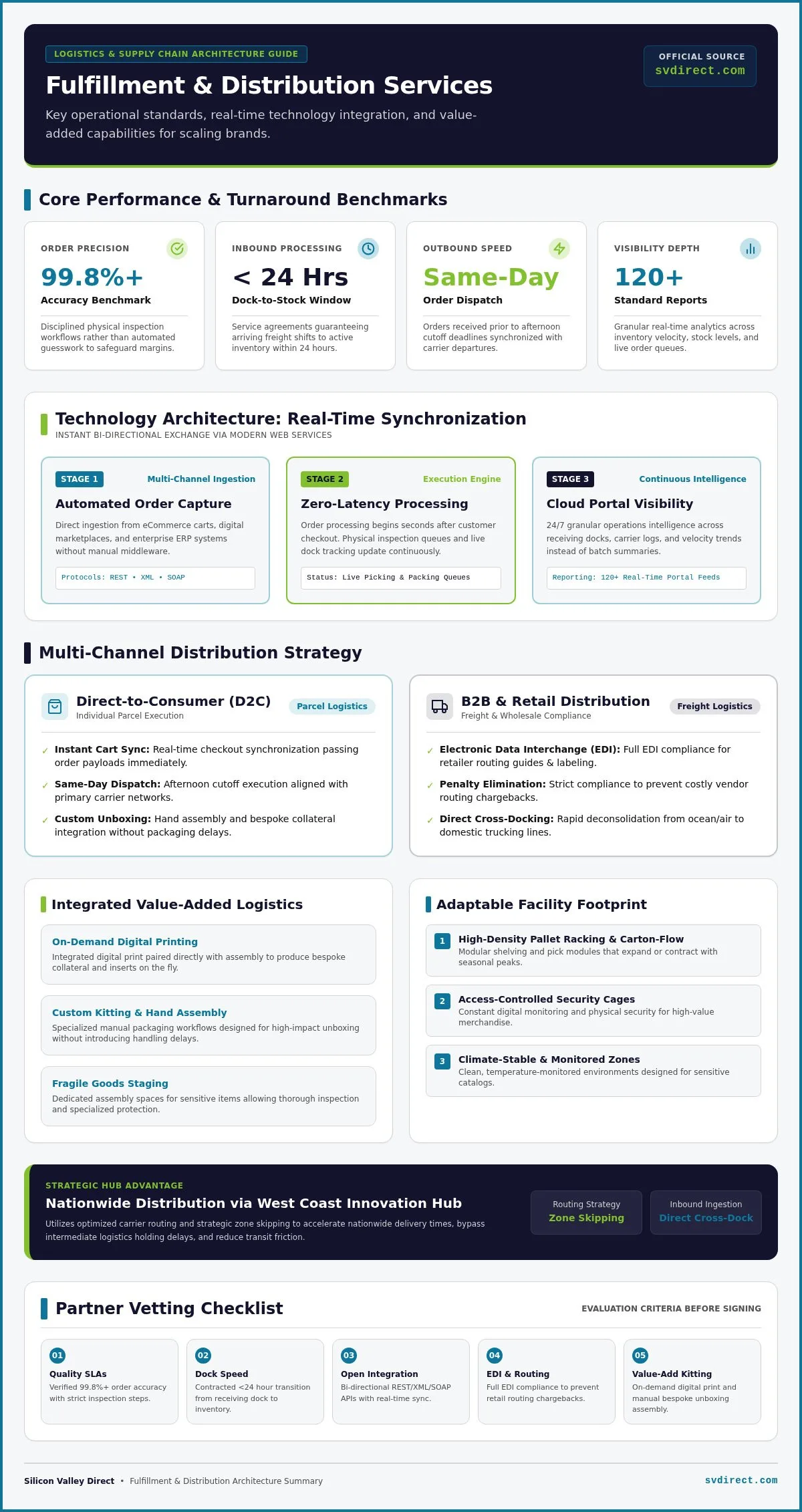
Order accuracy directly preserves your customer retention and bottom line. A mispicked item triggers returns, erodes trust, and doubles handling expenses. High-performance facilities benchmark order accuracy at 99.8% or higher, relying on disciplined physical inspection workflows rather than automated guesswork. Evaluate clear cutoff windows; top-tier facilities enforce same-day dispatch for orders received before afternoon deadlines, synchronizing with major carrier departures. Inbound receiving protocols matter just as much. Demand documented service agreements ensuring arriving freight transitions from dock receipt to active inventory within 24 hours, optimizing every stage of the order fulfillment process.
Scalable Storage and Temperature-Monitored Facilities
Dynamic product catalogs require adaptable footprint management. Your provider should deploy versatile warehouse configurations, combining high-density pallet racking, modular carton-flow shelving, and dedicated pick modules that expand or contract with seasonal peaks. Facilities housing sensitive merchandise must feature access-controlled security cages, constant digital monitoring, and clean, climate-stable storage zones. Dedicated staging spaces for fragile goods give assembly teams the necessary room to inspect and protect sensitive items before final packing.
Multi-Channel Distribution for B2B and Direct-to-Consumer
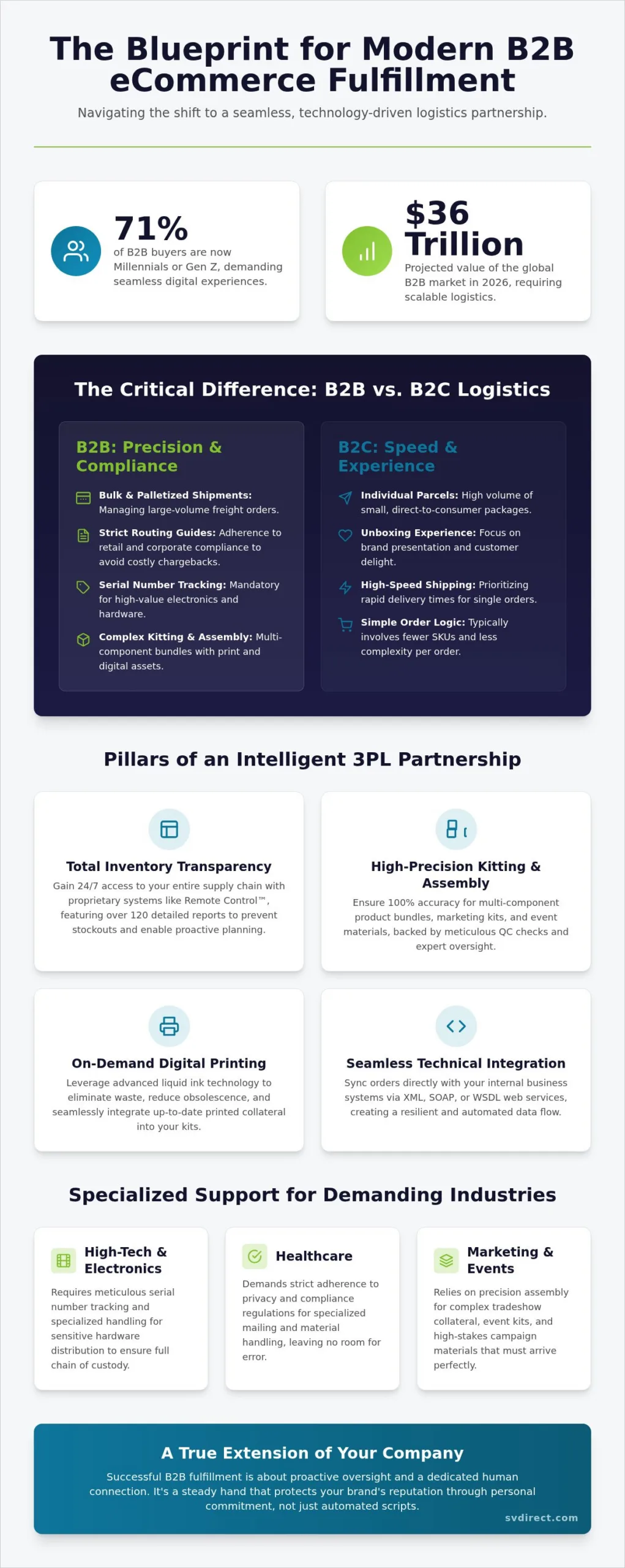
Modern brands rarely sell through a single pipeline. A high-yield logistics strategy harmonizes single-parcel consumer shipments with heavy, palletized wholesale freight. When auditing fulfillment and distribution services bay area networks manage, confirm full Electronic Data Interchange (EDI) compliance. Seamless EDI compliance ensures your shipments respect complex retailer routing guides, vendor compliance standards, and custom pallet labeling, eliminating chargeback penalties. Coupled with cross-docking capabilities, your partner can break down bulk inbound ocean or air freight and redirect it immediately into domestic trucking lines without intermediate holding delays.
Technology Architecture: Real-Time Visibility and Software Integration
High-performance logistics requires absolute digital transparency. In modern commerce, fulfillment and distribution services bay area companies rely on must operate as direct extensions of your digital stack. Fragmented spreadsheets and delayed batch updates simply cannot sustain fast-growing multi-channel operations.
Automated Order Management and Programmatic Web Services
Rigid integration models create unnecessary technical debt. Advanced fulfillment architectures deploy flexible web services utilizing both modern REST protocols and XML or SOAP methods to pass transactional payloads instantly. This direct bidirectional exchange ingests orders from eCommerce carts, marketplaces, and ERP networks without manual middleware. Instantaneous synchronization guarantees that order processing begins seconds after customer checkout, minimizing latency across national distribution pipelines.
Real-Time Portal Controls and Inventory Tracking
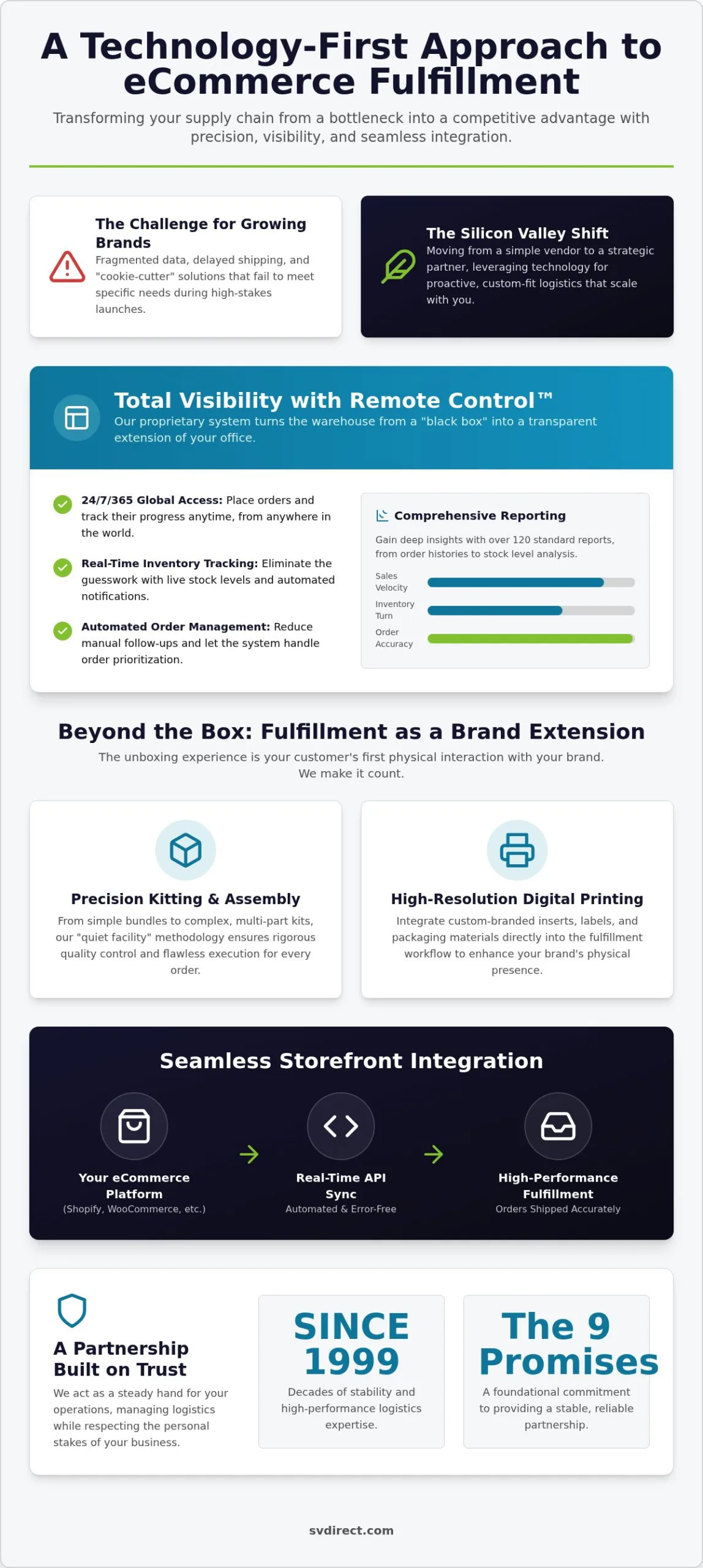
Operational control hinges on round-the-clock data access. Modern systems should deliver clear visibility into live picking queues, warehouse receiving docks, and outbound tracking logs across all carrier networks. As IBM highlights in its analysis of supply chain management (SCM) architectures, centralized digital platforms play a foundational role in orchestrating modern inventory workflows. Rather than waiting for weekly email summaries, operations teams gain granular intelligence via cloud interfaces. Discover advanced capabilities via remote order management platforms that deliver over 120 standard real-time reports to analyze inventory velocity and stock turnover.
Automated Inventory Thresholds and Reorder Triggers
Stockouts immediately stall marketing momentum and drain advertising returns. Dynamic inventory platforms actively protect your pipeline by enabling automated threshold alerts:
- Automated low-stock notifications: Trigger proactive replenishment alerts when physical stock drops beneath calculated safety buffers.
- Granular serial number tracking: Capture discrete unit identifiers during receiving, staging, and packing to support strict warranty compliance.
- Promotional velocity monitoring: Align inventory burn rates against active marketing campaigns to prevent backorders during peak sales spikes.
Pairing robust programmatic connections with experienced operational oversight gives your brand total supply chain confidence. If you’re ready to align your software stack with dedicated logistics infrastructure, take a moment to request a free quote and evaluate your technical integration options.
Value-Added Logistics: Custom Kitting, Hand Assembly, and Digital Print
Standard pick-and-pack fulfillment handles commodity shipments, but high-growth brands thrive on distinction. When evaluating fulfillment and distribution services bay area operations provide, looking beyond carton packing reveals significant competitive advantages. Integrating custom assembly and on-demand printing directly into your distribution warehouse eliminates third-party shipping legs, lowers handling touches, and protects your unboxing experience.
Precision Kitting and Systematic Quality Inspection
Subscription boxes, seasonal retail gift packs, and complex multi-SKU configurations require deliberate hand craftsmanship. Automated sorting lines often fail when handling diverse shapes, delicate glass, or custom tissue wraps. Experienced operational teams apply systematic QC-Check protocols at dedicated staging stations, ensuring every component aligns with exact packaging guidelines before carton sealing. Industry research from the Council of Supply Chain Management Professionals underscores that value-added warehousing activities directly reduce return rates while improving customer lifetime value. You can explore high-touch assembly workflows in detail through our dedicated guide on kitting and assembly services.
On-Demand Digital Printing and Personalized Collateral
Storing pre-printed product brochures, user manuals, and promotional flyers generates excess warehousing waste whenever marketing campaigns shift. Unifying logistics with commercial print technology solves this friction entirely. Utilizing commercial digital presses featuring high-resolution liquid ink technology enables offset-quality printing on demand. Through variable data printing (VDP), your facility can produce customized inserts in real time:
- Personalized packing inserts: Print custom welcome messages, regional discount codes, or loyalty reward points dynamically during order picking.
- Dynamic regulatory manuals: Output localized language guides and warranty sheets matched to exact destination countries.
- Zero-inventory literature fulfillment: Eliminate bulk storage costs by managing marketing collateral via flexible print on demand workflows.
Specialized Project Handling and Event Logistics
B2B organizations require agility for corporate summits, trade expositions, and direct mail campaigns. Top-tier providers coordinate pre-conference packet assembly, badge staging, and scheduled direct-to-booth freight deliveries that align with strict venue receiving windows. Similarly, healthcare organizations and corporate enterprises rely on structured workflows to manage rapid sales lead distribution and secure promotional coupon processing with strict fraud mitigation audits. Sourcing specialized value-added services under one roof provides the human oversight needed to turn high-stakes physical distribution into a predictable competitive asset.
Nationwide Distribution Strategy from an Innovation Hub
Positioning your inventory in Northern California provides a strategic launchpad for domestic commerce. Direct proximity to primary West Coast marine terminals, international air cargo hubs, and transcontinental interstates creates an ideal freight bridge. Brands leveraging fulfillment and distribution services bay area providers offer gain rapid multi-directional transport corridors that easily reach consumer markets across the entire country. When moving cross-border shipments through these fast-paced aviation corridors, securing dedicated freight protection is just as essential—learn more about comprehensive air cargo coverage for global trade.
National Carrier Integration and Cost Management
Dependable nationwide distribution requires diverse carrier relationships rather than reliance on a single courier. Advanced facilities balance relationships across national parcel networks and regional freight lines to maintain consistent dispatch windows. Implementing strategic zone skipping consolidates packages into full truckloads routed straight to destination postal hubs. This strategy bypasses congested sorting terminals, slashing transit times and reducing domestic parcel expenses. Meticulous carton sizing optimizes dimensional weight, ensuring you aren’t paying to ship empty box space. Discover how comprehensive carrier coordination accelerates domestic reach through Silicon Valley 3PL fulfillment services.
Organized Methodology Versus Chaotic Warehouse Environments
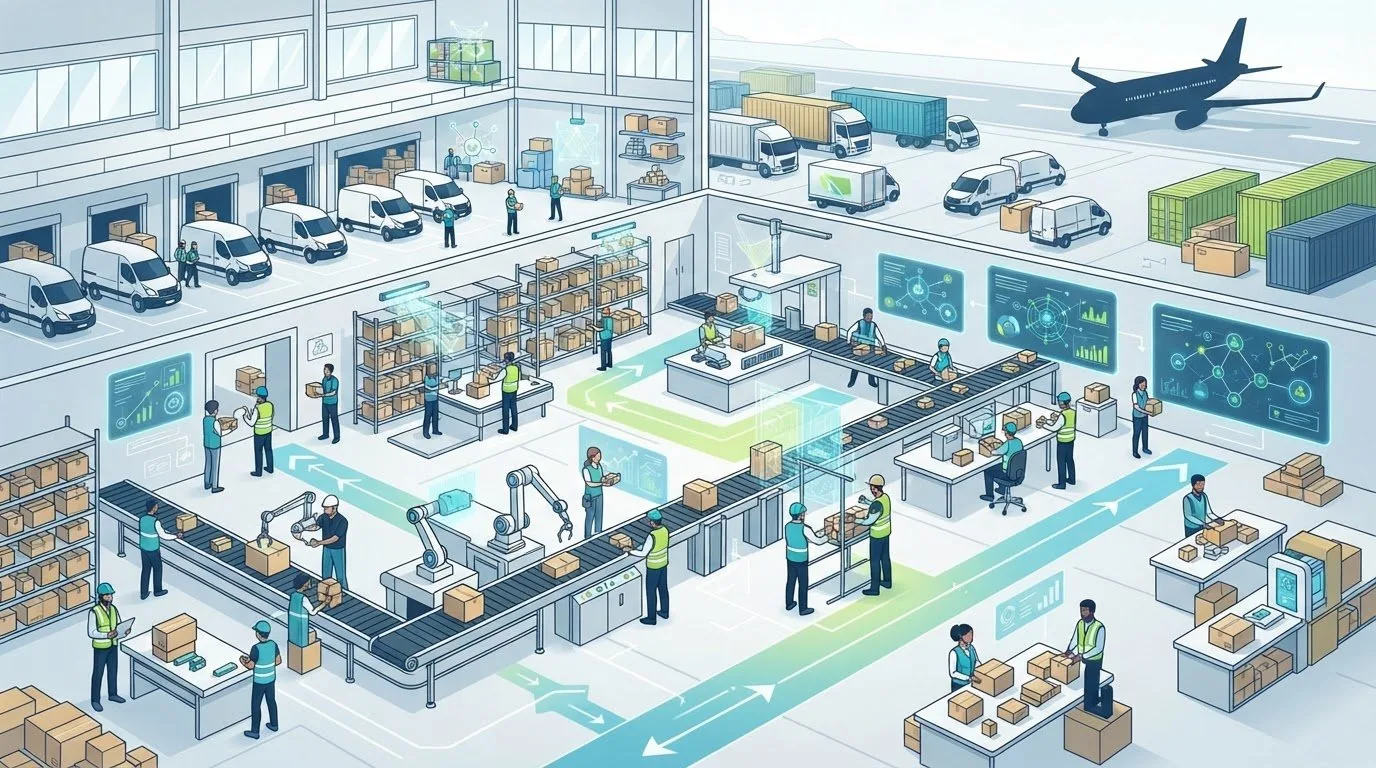
Calm, systematic organization during extreme sales volumes separates high-tier facilities from chaotic operations. Peak seasonal promotions can quickly clog picking aisles, resulting in inventory misplacements and missed carrier cutoffs. A disciplined warehouse relies on clear floor choreography, maintaining strict physical separation between inbound inspection docks, custom staging tables, and final shipping lines. Dedicated staging protocols protect sensitive technical hardware from accidental impact or dust exposure. You can explore how structured facilities protect delicate inventory by reviewing our tailored solutions across high-tech industries.
Sustainable Logistics and Environmental Initiatives
Modern distribution infrastructure must pair rapid transit with responsible environmental stewardship. Forward-thinking fulfillment hubs integrate sustainable materials directly into standard packaging workflows. Using Forest Stewardship Council (FSC) certified paperboard and corrugated mailers made with 30 percent recycled content minimizes packaging footprints without sacrificing structural protection. In-house digital printing eliminates the chemical washes, film negatives, and metal plates required by conventional offset presses. When paired with active electronics recycling programs, this methodical approach delivers clean, sustainable logistics that protect your brand equity.
Selecting Your Fulfillment Partner: Vetting Checklist and Next Steps
Transitioning your supply chain to an external operations hub is a major strategic commitment. When auditing the fulfillment and distribution services bay area companies offer, establishing transparent evaluation criteria prevents operational disruptions down the line. Before engaging a provider, gather your active SKU counts, historical monthly order volumes, promotional spike projections, and specific packaging dimensions so candidates can provide accurate operational feedback.
The Step-by-Step 3PL Vetting Framework
Evaluating candidate facilities requires looking beyond marketing brochures. Request comprehensive workflow schematics illustrating every touchpoint from initial inbound pallet unloading to final outbound carrier scans. During your evaluation, audit these operational fundamentals:
- Proactive communication models: Confirm you will collaborate with a dedicated account manager rather than an impersonal, anonymous ticketing queue.
- Contractual service levels: Define specific performance parameters for inventory receiving timelines, same-day dispatch cutoffs, and assembly accuracy benchmarks.
- Client retention history: Look for multi-year customer relationships that demonstrate stability across fluctuating economic cycles; explore real-world client experiences through verified customer testimonials.
Seamless Onboarding and System Integration Roadmap
A structured implementation plan minimizes transition risks. High-tier providers guide your technical team through a controlled sandbox testing environment. This allows engineers to validate XML feeds, RESTful web services, or shopping cart connections before routing live production orders. During initial stock intake, the warehouse team should perform comprehensive physical counts against packing slips to reconcile catalog discrepancies immediately. Launching with small, controlled order batches verifies that packing configurations, custom inserts, and automated shipping confirmation webhooks operate without error.
Initiate Your Operational Partnership
After technical validation, document your exact standard operating procedures. Outline precise packing sequences, protective void-fill requirements, kitting rules, and unboxing standards. Finalize clear operational protocols detailing how the warehouse team will adjust staffing levels during upcoming product drops, holiday volume spikes, and marketing promotions. Aligning systems and expectations early turns physical logistics into a dependable asset for nationwide expansion. If you’re ready to partner with an experienced team providing dependable fulfillment and distribution services bay area businesses trust, take the next step and Request a Free Fulfillment Quote to start your technical review.
Scale Your Logistics with Precision and Confidence
Scaling physical commerce requires a dependable operational foundation. Choosing the right partner for fulfillment and distribution services bay area businesses rely on ensures that programmatic software integration, strategic nationwide carrier routing, and disciplined kitting workflows operate in complete harmony. When your logistics team treats quality control with meticulous care, you protect customer retention and brand equity at every unboxing.
Backed by over 25 years of proven operational experience, Silicon Valley Direct serves as an agile, dedicated extension of your company. Our proprietary Remote Control™ portal provides complete operational transparency through 120+ standard real-time reports, while our integrated high-resolution digital press produces custom, on-demand marketing collateral without third-party production delays.
Take the friction out of your daily logistics and build a reliable distribution engine ready to support your business wherever you expand next.
Frequently Asked Questions
How do modern fulfillment systems integrate with custom eCommerce platforms?
Modern systems integrate through programmatic web services and open APIs that communicate using XML or REST architecture. When vetting fulfillment and distribution services bay area operations provide, confirm their architecture supports direct data synchronization without cumbersome middleware. Orders placed on your storefront transmit immediately into the warehouse queue, while automated tracking numbers and inventory balances push back to your customer accounts without requiring manual data intervention.
What is the difference between standard pick and pack and specialized kitting?
Standard pick and pack involves retrieving finished, pre-packaged goods from warehouse shelving and placing them directly into an outbound shipping box. Specialized kitting requires dedicated manual labor to assemble individual components, printed literature, and custom packaging into an entirely new SKU before shipping. Kitting teams follow strict sequence protocols, custom folding rules, and multi-point inspections to assemble subscription collections and marketing gift boxes.
How do automated inventory thresholds protect businesses from stockouts?
Automated inventory thresholds set dynamic reorder triggers based on current safety buffers and historical sales velocity. When physical stock reaches a defined minimum level, the management system automatically generates an email notification to operations personnel before a stockout stalls sales. This proactive visibility provides sufficient supplier manufacturing and transit lead time, protecting active marketing campaigns and customer order pipelines from disruptive backorders.
Can a single fulfillment partner manage both physical merchandise and marketing print?
Yes, integrated providers operate in-house commercial digital printing presses directly alongside their physical warehouse facilities. This consolidated operational model allows businesses to print user manuals, marketing collateral, and personalized variable data inserts on demand. Producing printed assets on site eliminates the freight shipping expenses, vendor coordination delays, and obsolete collateral disposal costs tied to separate third-party commercial printers.
What security protocols are required for storing high-value electronics inventory?
High-value electronics require access-controlled facilities featuring continuous digital surveillance, secured wire cages, and discrete serial number logging. Reputable providers maintain organized, climate-stable staging environments isolated from general warehouse traffic to prevent static damage and accidental drops. Serial numbers are recorded upon dock intake, picking, and packing to maintain an unbroken chain of custody for warranty verification.
How does systematic quality inspection prevent order fulfillment errors?
Systematic inspection prevents fulfillment errors by inserting deliberate verification checkpoints throughout the packing process rather than relying solely on automated conveyor scales. Picking personnel cross-reference physical SKUs against packing orders, while secondary assembly managers inspect contents, packaging orientation, and shipping labels before carton sealing. This deliberate methodology catches discrepancies early, ensuring dependable fulfillment and distribution services bay area businesses require to maintain customer retention.
What information should I prepare before requesting a 3PL quote?
Prepare your active SKU catalog counts, historical monthly order volumes, average items per parcel, and specific packaging dimensions. Note whether your inventory requires special handling like custom kitting, serial number scanning, or temperature monitoring. Providing accurate promotional volume forecasts and details about your shopping cart platform ensures the logistics engineering team can model an accurate, tailored operational proposal.