img not found!
ECommerce Returns Management Services: The 2026 Operational Guide

ECommerce Returns Management Services: The 2026 Operational Guide

Treating reverse logistics as a simple label-printing task quietly drains an online brand’s bottom line. True ecommerce returns management services must actively recover product value, not merely haul items back to a staging area. If you manage a growing brand, you already know the daily operational friction: returned items sit unprocessed on receiving docks for weeks, inconsistent manual checks risk damaged goods slipping back into active inventory, and disjointed software leaves both your customer care team and shoppers in the dark.

You don’t have to accept inventory write-downs and escalating return fees as inevitable growing pains. In this operational guide, discover how modern returns management services recover product value, streamline reverse logistics, and protect customer retention. We’ll examine the standardized multi-point inspection workflows, direct software integrations, and rapid restocking protocols required to transform reverse logistics from a chaotic cost center into a reliable retention engine.

Key Takeaways

  • Move beyond basic label printing to understand the complete physical workflow of reverse logistics, from dock intake to final disposition.
  • Explore how professional ecommerce returns management services combine automated RMA portals with multi-point inspections to protect product quality.
  • Weigh the operational footprint of in-house handling against specialized logistics management to reclaim warehouse floor space and internal labor.
  • Identify critical technical integration standards, including bidirectional API and XML connections, that synchronize storefront data with physical warehouse floor operations.
  • Implement rapid restocking and transparent status triggers to recover product value before seasonal depreciation sets in.

What Are eCommerce Returns Management Services and Why Do They Matter?

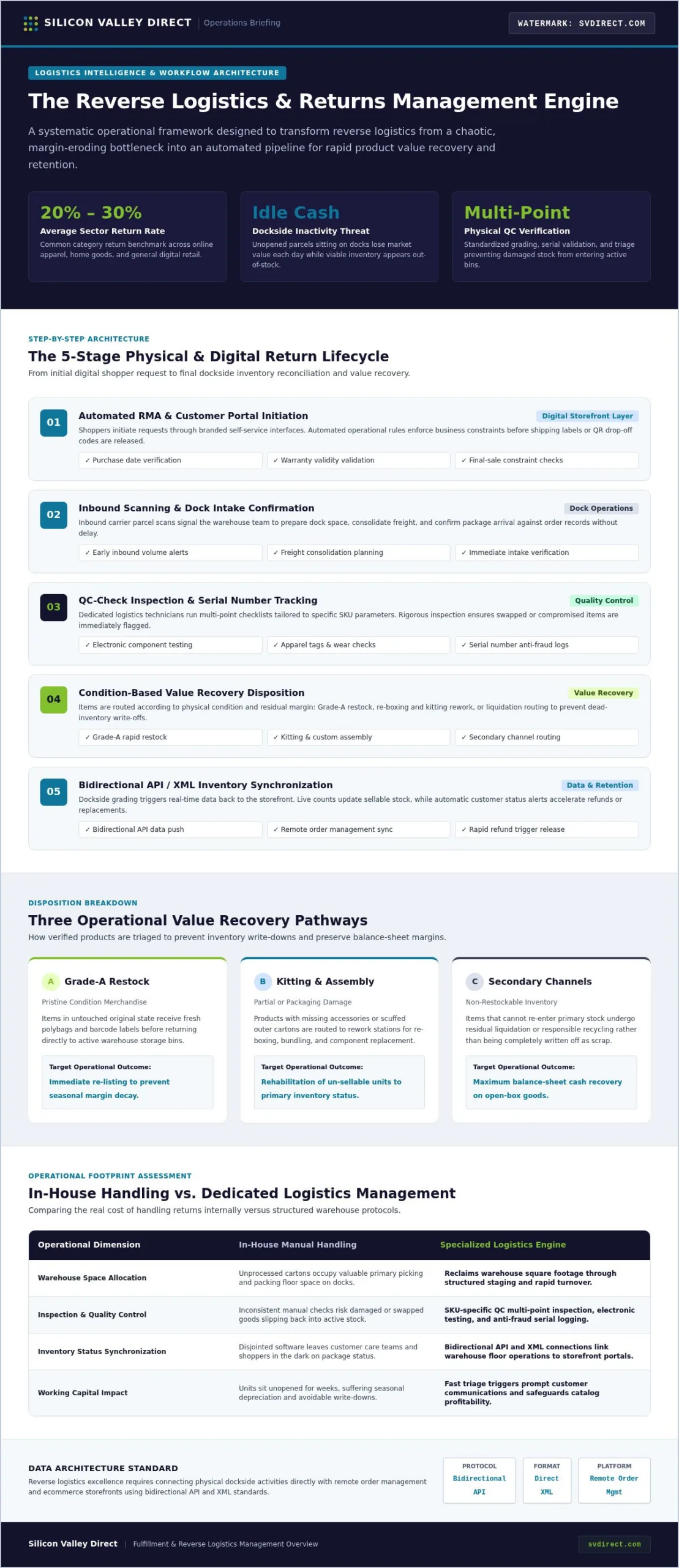
Many digital merchants mistake returns handling for a basic software tool that generates shipping labels. In practice, true ecommerce returns management services encompass the full physical and digital lifecycle: physical intake, triage grading, multi-point technical inspection, and value-recovery disposition. Generating a label merely initiates transportation. Physical reverse logistics determines whether that returned item recovers its margin or ends up written off as dead inventory.

Category return rates regularly sit between 20% and 30% across sectors like apparel and home goods, creating a heavy drag on working capital. Processing these items haphazardly leads to product write-downs and bloated inventory holding costs. By contrast, a structured operational approach transforms return handling from an administrative chore into a measurable customer retention tool.

The Anatomy of Modern Reverse Logistics

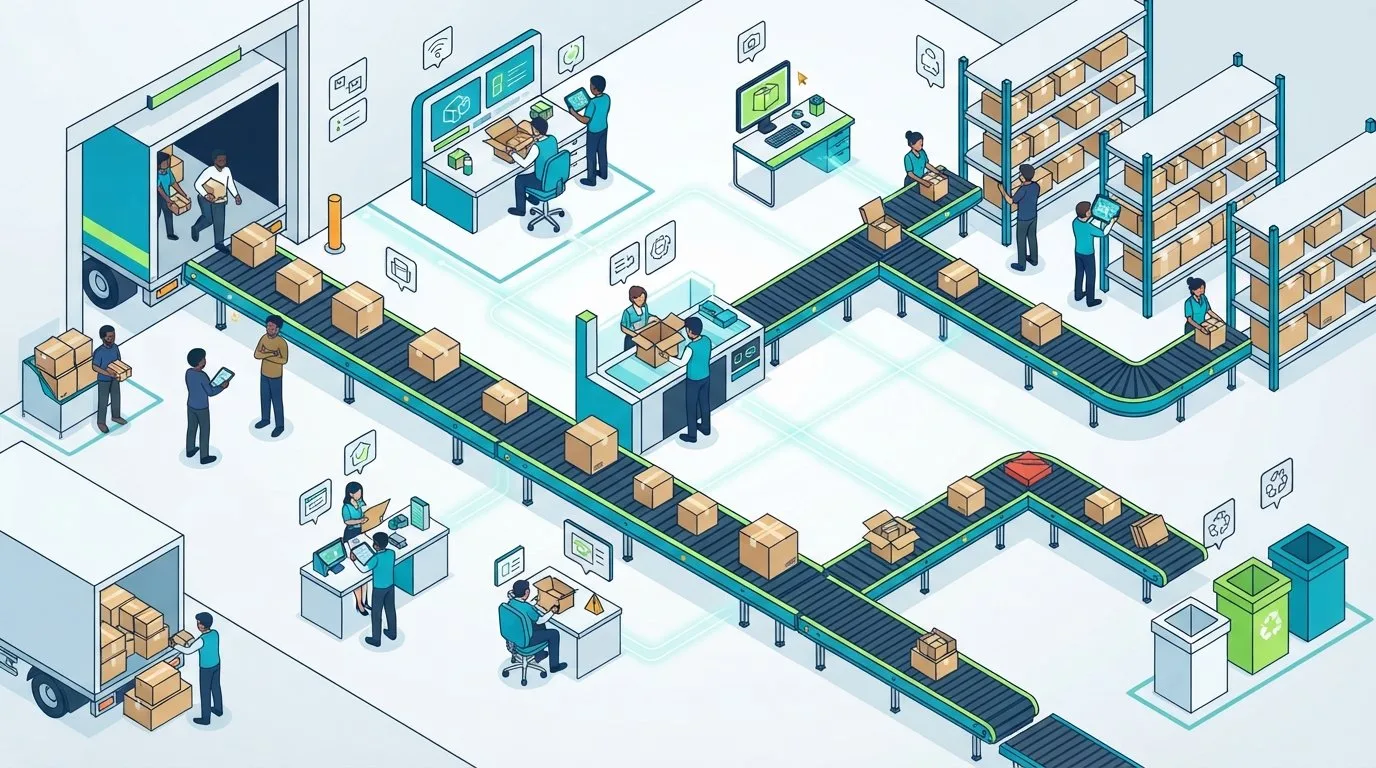
The journey starts the moment a shopper hands off a parcel at a drop-off counter. From there, reverse logistics relies on continuous data handoffs between your storefront portal and the physical receiving team. Inbound carrier parcel scans alert the warehouse to incoming volume, allowing dock teams to plan freight consolidation and confirm package delivery without delays. Instead of boxes piling up unchecked, standardized intake protocols immediately verify package conditions against customer records. Routing these goods through comprehensive 3PL fulfillment services bridges digital customer requests directly with dockside handling.

The Real Bottom-Line Cost of Unprocessed Returns

Unopened cartons sitting on receiving docks represent idle balance-sheet cash. Staged goods lose market value with every passing day, exposing seasonal apparel, cosmetics, and electronics to sharp depreciation. In-demand items remain out of stock on your website even while viable units sit unopened just steps away from the main packing lines.

Operational bottlenecks also harm customer relationships. Delayed physical inspections postpone refunds, prompting inbound customer service inquiries and eroding customer trust. By combining dockside physical verification with proprietary tools like remote order management, brands capture real-time visibility over inventory status. Fast triage triggers prompt customer communications, protects inventory condition, and safeguards profitability across the entire catalog.

Core Capabilities of Comprehensive Returns Management Solutions

Modern ecommerce returns management services combine dynamic front-end customer software with disciplined warehouse triage. Moving an item from an initial return request back to sellable stock requires automated rules, tactile physical evaluation, and precise inventory reconciliation across platforms.

Automated RMA and Self-Service Customer Portals

Clear reverse workflows start at the digital storefront. Branded self-service portals let shoppers request exchanges or generate Return Merchandise Authorizations (RMAs) without waiting on support staff. Behind the scenes, automated rules enforce business constraints, verifying purchase dates, warranty validity, and final-sale tags before issuing pre-paid shipping labels or QR drop-off codes. This immediate validation eliminates guesswork for your customer service team.

Systematic Receiving, QC-Check Inspection, and Serial Tracking

Once parcels arrive at the receiving dock, physical verification takes center stage. Dedicated warehouse teams execute systematic QC-Check multi-point inspections tailored to specific SKU profiles. Technicians evaluate original packaging, test electronic components, check apparel for wear or missing tags, and log serial numbers against customer records to prevent fraud. Incorporating rigorous inspections directly into your broader supply chain management ensures that damaged or swapped merchandise never recirculates back into forward inventory.

Disposition Routing, Kitting, and Value Recovery Pathways

After inspection, items follow defined disposition paths based on item condition and residual margin potential:

  • Grade-A Restock: Pristine items receive fresh polybags and barcode labels before returning immediately to active storage bins.
  • Kitting and Assembly: Products with missing accessories or scuffed exterior packaging enter custom rework stations for re-boxing, bundling, and component replacement.
  • Secondary Liquidation: Opened or cosmetically flawed units route to secondary channels to reclaim working capital.
  • Responsible Disposal: Non-functional or contaminated goods are securely scrapped or recycled according to environmental guidelines.

Automated software triggers notify accounting to release customer refunds or store credits once items pass physical inspection. If your current fulfillment setup struggles to keep pace with return volume, you can consult with our logistics team to build a custom inspection and disposition program tailored to your catalog.

In-House Returns Processing vs. Dedicated 3PL Returns Management

Managing returns internally often starts as an informal task handled between regular packing runs. Over time, that arrangement turns into an operational bottleneck. Warehouse aisles fill with uninspected cartons, pulling full-time warehouse labor away from outbound orders to manually open packages, inspect garments, and swap polybags. Dedicated ecommerce returns management services replace this internal strain with a predictable operational cadence, isolating return flows from forward logistics.

Operational Metric In-House Management Dedicated 3PL Management
Floor Space Impact Staging zones crowd active packing aisles Dedicated disposition bays preserve forward space
Turnaround Time Often lags by weeks during peak volumes Consistent 24 to 48 hour intake and triage
Labor Allocation Pulls fulfillment teams off outbound orders Specialized teams focused purely on reverse flow
Inventory Accuracy High risk of uninspected stock mixing with prime Systematic scanning and strict grade separation

Warehouse Overhead, Labor Allocation, and Seasonal Spikes

Internal facilities rarely flex easily during post-holiday return surges. January return volumes can spike sharply, leaving in-house teams buried beneath incoming freight while struggling to get regular outbound shipments out the door. Dedicated logistics providers absorb these volume shifts without disrupting primary workflows. Brands gain scalable operational capacity through variable models instead of paying year-round leases on extra warehouse space used only during peak surges.

Restock Velocity, Working Capital, and Cash Flow

Every week an item sits in an uninspected carton, its resale probability drops. Dedicated returns management accelerates intake velocity, returning grade-A inventory to active pick bins within 24 to 48 hours. Implementing disciplined Reverse Logistics Strategies frees up trapped balance-sheet cash, preventing unnecessary stock reorders for products you already hold. Fast, systematic verification also triggers immediate exchanges for shoppers, keeping sales revenue inside the business while pairing effortlessly with nationwide 3PL fulfillment services.
ECommerce Returns Management Services: The 2026 Operational Guide

How to Choose the Right eCommerce Returns Management Partner

Selecting the right provider requires looking past slick marketing claims to inspect actual warehouse floor practices. Effective ecommerce returns management services must balance technical connectivity with methodical hands-on care. Use this five-step operational evaluation to vet potential logistics partners.

Assessing Technology Architecture and Real-Time Visibility

Begin by auditing software integration capabilities. Your reverse logistics partner should support platform-agnostic, bidirectional web service connections using modern API, XML, and SOAP protocols. These connections ensure that return authorizations generated in your digital storefront instantly reflect across physical warehouse workstations.

Verify that the provider delivers round-the-clock visibility into processing queues and inventory status. Platforms like Remote Control order management supply 24/7 access to over 120 standard operational reports, giving your operations team instant tracking on condition flags, quarantined units, and return trends by SKU. Real-time data keeps your accounting and customer care teams informed without manual data entry.

Evaluating Operational Rigor, Flexibility, and Quality Control

Software alone cannot inspect a returned product. You must evaluate physical facility procedures to ensure receiving staff follow rigorous, SKU-specific checklists rather than rushed visual scans. Ask prospective providers how they manage edge cases like missing accessories, broken tamper seals, or serial number logging for high-value merchandise.

A true operational partner adapts to your exact packaging standards. Confirm their capacity to execute custom re-bagging, literature replacement, and specialized kitting right at the return workbench. Dedicated teams should possess the physical infrastructure and assembly expertise required to turn opened parcels back into pristine, factory-fresh merchandise.

Finally, evaluate the account management model. Complex reverse logistics cannot run through impersonal support ticketing queues. Insist on dedicated operational managers who know your business nuances and provide direct human access whenever unexpected exceptions arise.

Optimizing Reverse Logistics with Silicon Valley Direct

Operating nationwide, Silicon Valley Direct serves as a dedicated operational partner rather than an impersonal handling depot. We replace dockside congestion with a disciplined, quiet warehouse environment designed to eliminate hurried triage errors. Combining proprietary software architecture with over two decades of continuous logistics operations since 1999, we turn reverse logistics into a stable, predictable extension of your brand.

Our proprietary Remote Control platform delivers 24/7 inventory visibility and direct access to more than 120 standard operational reports. By integrating platform-agnostic XML and SOAP web services directly into your storefront or OMS, inventory counts, disposition statuses, and refund alerts synchronize automatically. Your team stays informed without having to chase down manual tracking updates.

Meticulous QC-Check Standards and Serial Tracking

Every inbound carton undergoes our systematic QC-Check multi-point inspection protocol. Instead of basic visual glances, our receiving teams execute tailored inspection scripts designed around your specific SKUs:

  • Serial Number Verification: Technicians record and cross-reference device serial numbers against original outbound manifests to eliminate product substitution fraud.
  • Accessory and Component Auditing: Teams verify cables, chargers, instruction booklets, and warranty inserts before clearing products for re-boxing.
  • Physical Integrity Grading: Goods are systematically assessed for fabric pulls, surface scuffs, or opened seals, ensuring only pristine units return to sellable inventory.

Our clients rely on this physical precision to protect brand integrity, an operational consistency detailed throughout our verified customer testimonials.

Deliberate Process Control and Dedicated Partnership

Chaotic warehouse floors lead directly to misgraded inventory and lost balance-sheet value. Silicon Valley Direct maintains a calm, organized facility cadence where specialized personnel handle your products with deliberate care. We provide bespoke packaging, re-labeling, and flexible kitting workflows, adhering strictly to your unboxing guidelines rather than forcing your inventory into rigid, one-size-fits-all processing channels.

When questions arise, you collaborate directly with seasoned logistics professionals who understand your specific inventory rules, bypassing automated ticket queues entirely. If you want to transform high return volumes into an efficient, value-recovering operation, partner with a team built for physical precision. Request a free quote to optimize your ecommerce returns management services.

Turn Reverse Logistics into an Engine for Long-Term Growth

Unlocking trapped inventory value requires shifting away from reactionary return handling toward disciplined operational precision. Silicon Valley Direct provides the physical rigor and software transparency needed to scale your operations without dockside friction. Backed by continuous logistics operations since 1999, our facilities apply systematic QC-Check multi-point inspections to protect product integrity, identify wear, and prevent substitution fraud. Meanwhile, our proprietary Remote Control portal delivers 24/7 inventory visibility across more than 120 standard reports, keeping your accounting and support teams completely synchronized.

Investing in comprehensive ecommerce returns management services shields your operating margins from unnecessary inventory depreciation while turning everyday return touchpoints into reliable customer retention drivers. Moving past chaotic staging docks and manual grading lets you focus on sustainable brand expansion.

Take control of your post-purchase workflows and let seasoned logistics professionals protect your customer relationships at every step.

Frequently Asked Questions

What is included in ecommerce returns management services?

Comprehensive ecommerce returns management services cover the complete physical and digital journey of returned goods. This includes dock intake, parcel scanning, multi-point QC-Check inspection, sorting, grading, repackaging, and serial number tracking. Sellable units return directly to active storage bins, while unresellable units route to refurbishment or liquidation. Digital updates synchronize with your storefront to trigger prompt customer refunds or exchanges.

How fast should a 3PL process returned inventory back into active stock?

A dedicated logistics provider should inspect and triage returned inventory within 24 to 48 hours of parcel arrival at the dock. Rapid processing ensures grade-A merchandise returns to active inventory before seasonal depreciation sets in. Quick turnaround also accelerates customer resolution, allowing automated systems to issue refunds or trigger replacement shipments promptly, which reduces inbound support inquiries.

Can an ecommerce returns management partner handle serial number verification?

Yes, specialized providers capture and cross-reference unique serial numbers during physical intake. For high-value electronics and serialized equipment, technicians log serial data against the original order manifest before approving any disposition path. This systematic verification prevents return fraud, eliminates counterfeit swaps, and ensures that warranty records remain completely accurate within your order management system.

How do returns management services integrate with my existing ecommerce platform?

Modern ecommerce returns management services connect directly to online stores and OMS systems through platform-agnostic API, XML, and SOAP web services. These bidirectional connections pass data back and forth automatically. When warehouse technicians complete a physical inspection, the system updates inventory counts across sales channels and signals your storefront to release customer credits without requiring manual data re-entry.

What happens to returned items that cannot be resold as new?

Items failing pristine grading criteria follow predefined disposition workflows tailored to your recovery goals. Products missing exterior packaging or inserts enter custom kitting stations for re-boxing and component replacement. Units with minor cosmetic defects route to secondary sales channels to recoup cash flow, while damaged or non-functional items undergo certified recycling or disposal according to strict environmental guidelines.

How does outsourcing returns management improve customer retention?

Outsourcing reverse logistics eliminates the processing delays and communication gaps that frustrate shoppers. When physical receiving and quality checks occur swiftly, customers receive prompt refunds or instant product replacements instead of waiting weeks for resolution. Reliable, transparent return handling builds long-term brand loyalty, encouraging first-time buyers to purchase again with complete confidence in your post-purchase support.

Is reverse logistics management scalable during seasonal sales spikes?

Partnering with an experienced logistics provider provides elastic capacity that easily absorbs post-holiday return surges. Dedicated facilities allocate specialized intake bays and experienced staff to handle sudden spikes without slowing down primary outbound shipments. Brands gain immediate operational flexibility to manage fluctuating return volumes, avoiding the overhead of maintaining extra in-house warehouse space year-round.
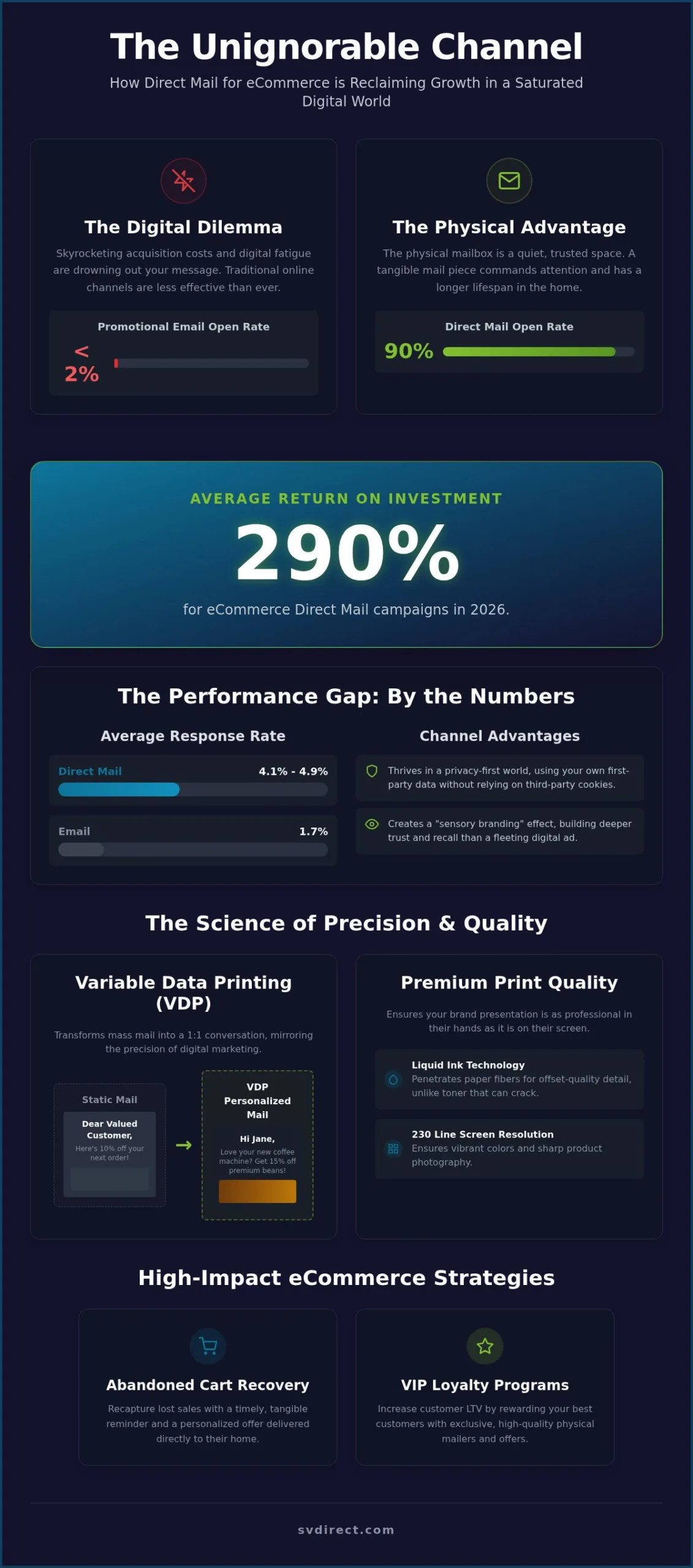
Direct Mail for eCommerce: The 2026 Strategic Guide to Physical Growth

Direct Mail for eCommerce: The 2026 Strategic Guide to Physical Growth

While digital channels grow increasingly saturated, direct mail for ecommerce is delivering a staggering 290% average return on investment in 2026. You’ve likely noticed that reaching customers through their screens has become more expensive and less effective than ever. Between skyrocketing acquisition costs and email open rates that struggle to hit 2%, it’s clear that the digital-only playbook is hitting a wall. It’s exhausting to manage a brand when your message is constantly drowned out by digital noise.

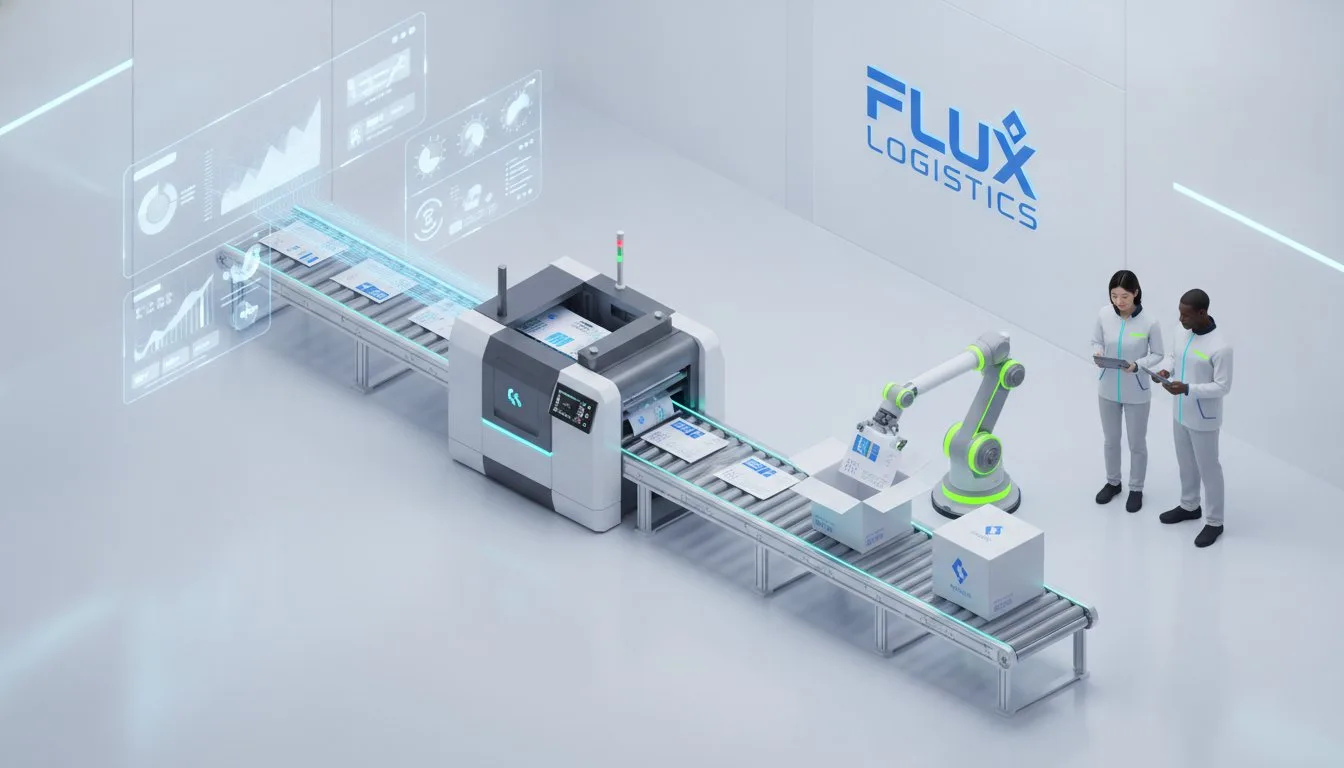
This guide reveals how to bypass that fatigue and drive measurable ROI by pairing high-end digital printing with automated 3PL fulfillment. We’ll show you how to leverage liquid ink precision and Variable Data Printing to deliver a premium brand experience directly to your customer’s hands. You’ll learn how a sophisticated, tech-driven approach to physical mail can integrate with your existing stack to boost Lifetime Value and provide the reliable, offline growth channel your business needs. We’re here to help you scale with precision and personal commitment.

Key Takeaways

  • Learn why physical mailboxes are becoming the most effective channel to bypass digital noise and capture customer attention in 2026.
  • Discover how to use Variable Data Printing (VDP) to create hyper-personalized direct mail for ecommerce that mirrors the precision of your digital marketing.
  • Identify high-impact strategies for abandoned cart recovery and VIP loyalty programs that drive measurable increases in lifetime customer value.
  • Understand the operational advantages of integrating your storefront with a combined 3PL and digital printing partner to ensure seamless, error-free fulfillment.
  • Gain insights into how high-resolution liquid ink technology and a “Quiet Facility” methodology elevate your brand presentation in the customer’s home.

Why Direct Mail is Reclaiming eCommerce ROI in 2026

Modern direct mail marketing for ecommerce isn’t about mass “spray and pray” tactics. It’s the strategic use of physical mailers triggered by digital customer data. Instead of guessing who might want your product, you’re sending a high-quality piece to someone who just abandoned a cart or reached a loyalty milestone. It’s precise, personal, and tangible. In an era where digital ads are often dismissed as fleeting interruptions, a physical mailer represents a deliberate investment in the customer relationship.

Digital fatigue is a significant hurdle for brands in 2026. While consumers are bombarded by hundreds of emails and digital ads every day, the physical mailbox remains a relatively quiet space. Most people handle their mail daily, giving your brand a dedicated moment of attention that a “scroll-by” ad simply can’t replicate. This tactile advantage gives your message a much longer lifespan. A postcard can sit on a kitchen counter for days, serving as a constant visual reminder of your brand, whereas a digital ad disappears the moment the user clicks away.

Privacy regulations have also shifted the landscape. With iOS restrictions and the ongoing depreciation of traditional cookie tracking, digital attribution is harder than ever. Direct mail for ecommerce thrives in this privacy-first environment. It relies on your own first-party data, reaching customers directly at their verified residence without needing to bypass complex browser blockers. It’s a stable, reliable channel that doesn’t fluctuate with every algorithm update.

Breaking Through the 2026 Digital Noise

Research indicates that up to 90% of direct mail pieces are opened and handled, compared to promotional email open rates that often struggle to reach 2%. Holding a physical card creates a “sensory branding” effect that builds deeper trust than a digital pixel. Programmatic Direct Mail acts as the essential bridge here, allowing your digital triggers to automatically initiate high-resolution physical delivery. It combines the automated speed of digital marketing with the undeniable weight and presence of paper.

Measurable Impact on Customer Lifetime Value (LTV)

Direct mail is a powerhouse for retention. The average response rate for physical mail ranges from 4.1% to 4.9%, which significantly outperforms the 1.7% average for email. By adding a physical touchpoint to your journey, you proactively reduce churn and keep your brand top-of-mind. With a documented 290% average ROI in the ecommerce sector, it’s a reliable channel for long-term growth. You can explore more about these high-ROI strategies on our blog. Physical touchpoints prove that your brand is an established, professional entity committed to quality.

The Science of Personalization: Variable Data Printing (VDP)

Variable Data Digital Printing (VDP) is the technical engine behind high-performance direct mail for ecommerce. It transforms a standard postcard into a unique marketing asset tailored to the individual. Unlike traditional “static” mail where every recipient receives the same generic creative, VDP allows you to change specific elements on every single sheet during the printing process. This isn’t just about changing a name; it’s about altering the entire visual and messaging strategy based on your customer’s behavior. A recent study on direct mail campaigns highlights that integrating these physical touchpoints with digital data is exactly why the medium has seen such a powerful resurgence. By using your CRM data, you can create a 1:1 connection that digital ads often fail to achieve.

We utilize the HP Indigo 5500 Digital Press, which uses real liquid ink rather than standard digital toner. This is a critical distinction for brand integrity. Toner often sits on top of the paper and can crack or look artificial. Liquid ink penetrates the fibers, providing offset-quality detail with a 230 line screen resolution. This ensures your brand colors are consistent and your product photography looks as vibrant on the page as it does on a high-resolution screen. High-resolution printing protects premium brand perception by ensuring every detail is sharp and professional. When your mailer feels like a high-end publication rather than a piece of junk mail, the customer’s trust in your brand increases instantly.

Personalization Beyond the First Name

VDP allows for sophisticated logic that mirrors your digital retargeting. If a customer recently bought a coffee machine, their mailer can feature images of premium beans rather than a generic kitchenware photo. You can also embed unique QR codes for every recipient. This enables 1:1 tracking, allowing you to see exactly which customer converted from which mailer. Because modern digital presses don’t require expensive plates or films, this level of customization is now just as affordable as static printing for growing brands. Personalized direct mail for ecommerce can increase response rates by up to 135% compared to static mailers.

Liquid Ink vs. Digital Toner: Why Quality Matters

Liquid ink technology is superior for high-speed fulfillment environments. It dries instantly, which is vital when moving pieces directly from the press to our kitting and assembly stations. This eliminates the risk of smudging or scuffing during the mailing process. The result is a sharper, more vibrant image that stands out in a crowded mailbox. If you’re ready to see how precision printing can elevate your strategy, you can request a free quote to discuss your specific project needs.

High-Impact Strategies for eCommerce Mail Campaigns

Executing successful direct mail for ecommerce requires moving beyond simple mass mailings and into high-intent, data-driven strategies. When a shopper ignores three consecutive email reminders about an abandoned cart, they aren’t necessarily disinterested; they’re likely just digitally fatigued. A physical postcard sent 48 hours after a cart is left behind provides a tactile interruption that demands attention. This approach captures the customer during their daily routine, offering a tangible bridge back to your digital storefront that pixels simply can’t match.

Retaining your most valuable customers is equally critical. VIP and loyalty programs benefit immensely from physical touchpoints. Sending a high-resolution, personalized “thank you” note or a curated welcome kit to top-tier buyers reinforces their status and deepens their connection to your brand. These pieces shouldn’t feel like advertisements. Instead, they should feel like premium brand extensions. This is where sophisticated kitting and assembly play a vital role, ensuring that every element of the package is presented with the precision your brand deserves.

Win-back campaigns also see higher success rates when they move offline. Reactivating a lapsed buyer who hasn’t purchased in six months is often more cost-effective than acquiring a new one. A high-impact physical offer, such as a “we miss you” card with a unique QR code, provides a clear path back to your store. It shows a level of personal commitment that automated email sequences lack, making the recipient feel valued rather than just another entry in a database.

Tactical Triggers for Automated Direct Mail

Automation allows these physical touchpoints to fire exactly when they’re most effective. Timing a post-purchase follow-up to arrive just as a customer is likely to need a refill or a complementary product creates a seamless lifecycle. Leveraging personal data for birthday or anniversary celebrations adds a human element to your tech stack. For broader seasonal promotions, Every Door Direct Mail (EDDM) provides a reliable way to amplify major sales events like Black Friday by reaching entire neighborhoods with high-quality creative.

The Power of Catalog Order Fulfillment

Many DTC brands are rediscovering the “mini-catalog” or “cardalog” as a powerful storytelling tool. These curated pieces allow you to showcase a specific collection with the high-fidelity detail that only liquid ink can provide. Managing these bulk mailings requires a partner who understands the intersection of 3PL logistics and precision printing. To explore how these services integrate into a broader strategy, read our guide on Direct Mail Marketing Services: The Strategic Guide to Physical Engagement in 2026. By combining these physical assets with your digital data, you create a cohesive, multi-channel experience that drives long-term growth.

Direct Mail for eCommerce: The 2026 Strategic Guide to Physical Growth

Bridging the Gap: Integrating Your Store with Physical Fulfillment

Successful direct mail for ecommerce relies on a seamless transition from digital signal to physical production. The first step involves connecting your platform, whether it’s Shopify or WooCommerce, to a robust fulfillment system. This integration ensures that customer triggers, like a specific purchase or an abandoned cart, automatically flow into the production queue without manual intervention. It’s about building a bridge between your digital store and our physical infrastructure, allowing for a proactive approach to customer engagement that scales with your growth.

Once the data flows, designing for the “2nd Pass” becomes essential. This means ensuring your print files are technically ready for immediate production and mailing to avoid costly delays. We help coordinate the complex kitting and assembly required for promotional mailers that include more than just a single card. Whether you’re sending a luxury welcome kit or a multi-piece loyalty package, our team manages the physical labor with the same precision you expect from your digital algorithms. This operational readiness eliminates bottlenecks and ensures your brand reaches the customer’s mailbox exactly when it’s most impactful.

Remote Order Management and Real-Time Visibility

You shouldn’t have to guess the status of your physical campaigns. It’s vital to track your direct mail for ecommerce with the same granularity you apply to digital ads. Our proprietary Remote Control™ system provides 24/7 visibility into your inventory and mailing status. This transparency allows you to monitor exactly when pieces are produced and shipped, giving you a steady hand over your marketing operations. Learn more about our Remote Order Management to see how we provide informed confidence through every step of the fulfillment process.

Data Integrity and Database Management

Precision in fulfillment is impossible without clean data. We prioritize list hygiene to improve deliverability and reduce wasted postage costs. This includes utilizing National Change of Address (NCOA) updates to ensure your mail reaches customers even if they’ve recently moved. For sensitive sectors like healthcare or finance, we maintain strict data handling protocols to ensure HIPAA or financial compliance. Our methodical approach to database management ensures that your physical operations are just as organized and secure as your digital communication, protecting both your brand and your customers.

Choosing a Partner for Integrated Print and Fulfillment

Selecting a partner for direct mail for ecommerce isn’t just about finding a printer; it’s about choosing an operational ally. When your 3PL and print provider are the same entity, you eliminate the logistical friction of moving materials between separate vendors. This integration reduces lead times and shipping costs significantly. It also ensures that your inventory and your marketing collateral are managed under one roof with a single point of accountability. You gain a steady hand in a fast-paced industry, alleviating the stress of business growth through precision and personal commitment.

We operate with a “Quiet Facility” methodology. This means our environment is highly organized and methodical, designed to reduce errors even during high-volume fulfillment peaks. Our team takes a proactive approach to problem solving. We anticipate potential mailing conflicts or data errors before they ever hit a customer’s mailbox. This level of oversight is a powerful differentiator in a tech-saturated market where automated platforms often miss the nuances of physical production. We value transparency and directness, respecting your time by ensuring operations are as organized as your digital communication.

Our digital printing processes are inherently more sustainable. Because we use HP Indigo technology, we eliminate the need for traditional films, plates, or harsh chemicals. This green benefit supports your brand’s sustainability goals while maintaining the 230 line screen resolution required for premium brand presentation. It’s a high-tech solution that remains grounded in environmental responsibility and physical quality.

The Strategic Advantage of a Silicon Valley 3PL

Silicon Valley is synonymous with innovation, and we leverage that spirit to streamline your logistics. Being centrally located allows us to offer global shipping and logistics solutions that are both fast and cost-effective. Explore our Silicon Valley 3PL Fulfillment Services to see how we combine geographic advantages with high-performance infrastructure. Centralized warehousing and printing mean your direct mail for ecommerce is ready to ship the moment the ink is dry, providing a speed-to-market advantage that separate vendors can’t match.

A Partnership Approach to Growth

We view our clients as partners rather than transactions. Our “Extension of Your Team” philosophy means we’re personally committed to your growth. Whether you’re shipping a few hundred pieces or handling thousands of shipments per week, our facility is built to scale with your needs. This internal stability is backed by long-term staff retention and decades of collective experience, ensuring that your brand’s physical presence is handled by seasoned experts. Read our Customer Testimonials to see how we’ve helped other brands achieve reliable, physical growth through bespoke problem-solving and operational excellence.

Scaling Your Brand with Physical Precision

In 2026, the brands that thrive are those that successfully bridge the gap between digital data and physical experiences. Direct mail for ecommerce is no longer a separate silo; it’s a high-performance extension of your digital strategy. By utilizing HP Indigo 5500 liquid ink technology, you ensure your brand maintains a premium presence in the customer’s home. Our proprietary Remote Control™ system provides the 24/7 visibility you need to manage campaigns with total confidence.

We believe in building long-term partnerships, with many of our client relationships lasting over 7 years. This stability allows us to act as a steady hand while you navigate the complexities of high-volume fulfillment. You don’t have to choose between high-tech efficiency and a human touch. We’re here to provide both as you scale your business into the physical world. Our team remains dedicated to your success through every step of the process.

We look forward to helping you turn your digital shoppers into lifelong brand advocates through precision and personal commitment. Your growth is our priority.

Frequently Asked Questions

How does direct mail integrate with my Shopify or eCommerce store?

Direct mail integrates with your store through automated triggers that connect your platform to our fulfillment system. When a customer abandons a cart or hits a loyalty milestone, the data flows directly into our production queue. This eliminates manual list uploads and ensures your mailers are sent with digital speed. It’s a proactive way to maintain a steady presence in your customer’s life without adding operational stress.

Is variable data printing expensive for personalized eCommerce mailers?

Variable data printing is now as cost-effective as static printing because modern digital presses don’t require expensive plates or films. You can personalize every sheet with unique images and copy without increasing production time. Since personalized direct mail for ecommerce can boost response rates by up to 135%, the return on investment is significantly higher than generic mailers. It’s a high-performance strategy that respects your budget.

What is the typical turnaround time for an automated direct mail campaign?

Turnaround times are streamlined because our printing and fulfillment happen under one roof. Most automated campaigns move from a digital trigger to the mailbox within a few business days. Our methodical “Quiet Facility” approach ensures that even high-volume projects are handled with precision. You gain the advantage of speed-to-market while maintaining the high-quality brand presentation your customers expect from a premium brand.

How do I track the ROI of my physical mail campaigns?

You track ROI by using unique QR codes, personalized URLs, or specific discount codes assigned to each recipient. This allows for 1:1 attribution; you know exactly which customer converted from which physical mailer. Our Remote Control™ system provides real-time visibility into your campaign’s progress. By matching back your mailing list to your sales data, you can accurately measure the 290% average ROI typical of this channel.

What is the difference between liquid ink and digital toner for print quality?

Liquid ink provides a superior, offset-quality finish that digital toner simply cannot match. While toner sits on the surface and can crack, liquid ink penetrates the paper fibers for a vibrant, professional look. Our HP Indigo 5500 technology uses a 230 line screen resolution to ensure your product photography is sharp and accurate. This level of detail is essential for maintaining brand integrity in a physical format.

Can I send direct mail to customers who have unsubscribed from my emails?

You can send physical mail to customers who have unsubscribed from your emails because there is no national “Do Not Mail” registry. This makes it a powerful channel for win-back campaigns and reaching shoppers who have opted out of digital noise. While you should always honor direct requests to be removed from your list, direct mail for ecommerce provides a reliable way to bypass crowded inboxes and re-engage your audience.

What are the benefits of using a 3PL for both fulfillment and direct mail?

Using a single partner for 3PL and direct mail eliminates the friction of moving materials between separate vendors. Your inventory and your marketing collateral live together; this reduces shipping costs and lead times. This integrated approach provides a single point of accountability and 24/7 visibility through our proprietary management systems. It’s an efficient way to scale your operations while ensuring every package is presented with precision.

Is direct mail for eCommerce environmentally friendly in 2026?

Direct mail is increasingly environmentally friendly due to digital printing innovations that eliminate the need for films, plates, and harsh chemicals. Our HP Indigo technology offers green printing benefits by reducing waste and using sustainable processes. Because you can target your mailers so precisely with VDP, you also reduce the environmental impact of sending irrelevant mail. It’s a high-tech solution that aligns with modern sustainability goals.

The Strategic Guide to Personalized Direct Mail: Boosting Response Rates in 2026

The Strategic Guide to Personalized Direct Mail: Boosting Response Rates in 2026

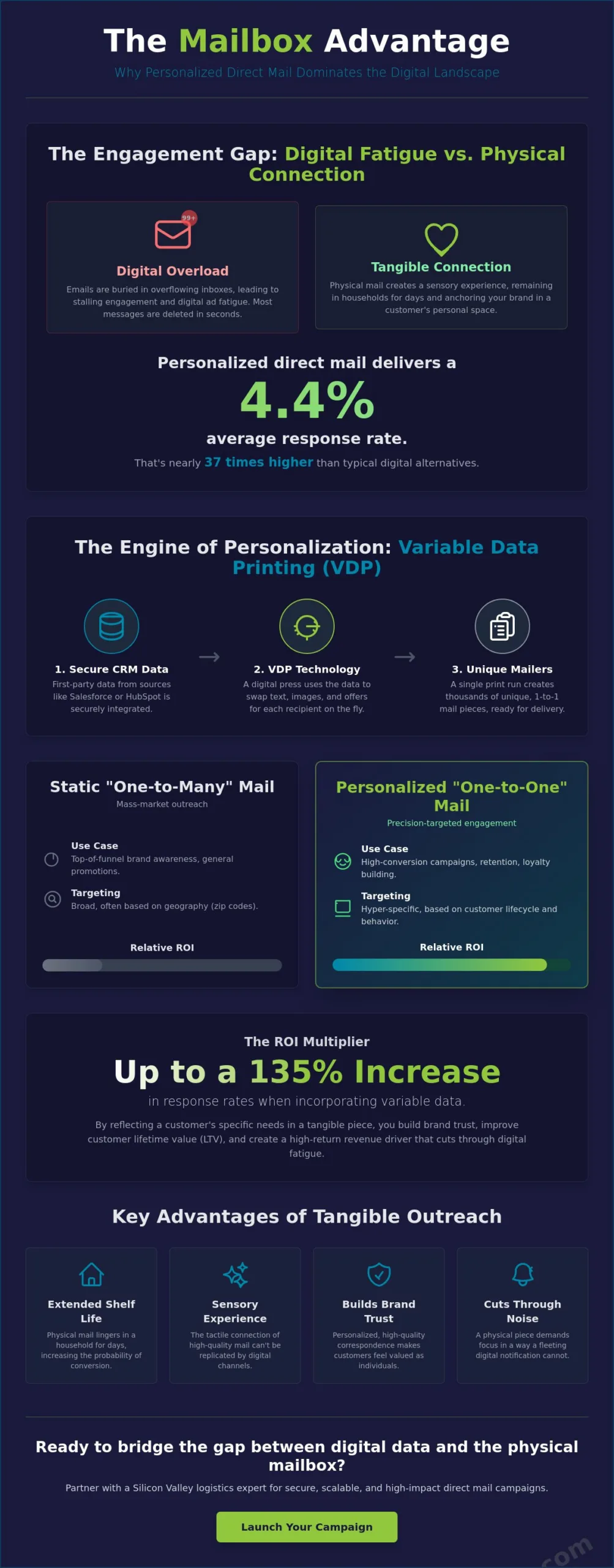
Did you know that while email engagement continues to stall, personalized direct mail is currently delivering response rates of 4.4 percent, which is nearly 37 times higher than typical digital alternatives? You likely already feel the weight of digital ad fatigue and the frustration of seeing your carefully crafted CRM data sit idle while your outreach is buried in an overflowing inbox. It’s a common challenge to bridge the gap between digital insights and a physical mailbox without getting lost in the technical complexity of variable data printing or worrying about the security of your sensitive information.

We understand that modern marketing is often a logistics challenge disguised as a creative one. This guide will show you how to transform your first-party data into high-impact physical campaigns that drive a higher return on investment and create a seamless bridge between your online and offline channels. We’ll explore the mechanics of variable data technology, how to navigate the July 2026 USPS rate adjustments, and the specific strategies needed to build a scalable retention engine that treats your customers as individuals rather than just entries in a database.

Key Takeaways

  • Explore the sensory advantages of tangible outreach and why physical mail remains in households far longer than fleeting digital notifications.
  • Learn how to leverage Variable Data Printing (VDP) to execute high-impact personalized direct mail that adapts text and imagery for every recipient.
  • Compare the efficiency of static mailers for top-of-funnel awareness against the high-conversion potential of precision-targeted campaigns.
  • Follow a structured workflow to integrate your CRM data into variable design zones, ensuring your physical execution is as accurate as your digital strategy.
  • Gain a competitive edge by utilizing a Silicon Valley logistics partner for secure literature fulfillment and scalable global shipping.

Why Personalized Direct Mail Dominates the 2026 Marketing Landscape

Digital noise is louder than ever. In 2026, consumers are bombarded with thousands of digital pings daily, leading to a psychological barrier where email open rates continue to struggle. Physical mail captures a different kind of focus. Research indicates that 42.2 percent of recipients read or scan the mail they receive. This isn’t just a delivery method; it’s a sensory experience that digital channels cannot replicate. When a customer holds a high-quality piece of mail, it creates a tactile connection that anchors your brand in their physical space.

The concept of personalized marketing has found its most potent expression in the physical world. Unlike a generic flyer, personalized direct mail feels like a private conversation between a brand and a consumer. Because a physical piece requires tactile interaction, it lingers in the home for days. This extended shelf life increases the probability of a conversion compared to an email that is often deleted in seconds. By bridging the gap between digital data and physical touch, you create a lasting impression that drives action.

To better understand how premium mail services can elevate your brand’s physical presence, watch this helpful video:

The Evolution of Direct Mail Marketing

Direct mail used to mean mass-market flyers sent to every zip code. Today, the industry has shifted toward precision. On-demand digital printing allows brands to produce only what they need, exactly when they need it. This reduces waste and ensures the message is relevant to the recipient’s current lifecycle stage. 3PL providers have evolved into execution hubs where digital data meets physical infrastructure. This synergy allows for a seamless transition from a CRM list to a physical mailbox, ensuring that every piece sent is timely and highly relevant.

The ROI of “Personal” Over “Mass”

The numbers tell a compelling story. While the average response rate for direct mail is 4.4 percent, incorporating variable data can increase those results by up to 135 percent. This isn’t just about a one-time sale; high-quality correspondence builds brand trust and improves customer lifetime value. When a recipient sees their specific needs reflected in a tangible piece, they feel valued as an individual. This human element transforms a simple mailing into a high-ROI revenue driver that strengthens long-term loyalty and cuts through digital fatigue.

The Mechanics of Personalization: How Variable Data Printing Works

Variable Data Printing (VDP) serves as the high-tech engine behind every high-performing personalized direct mail campaign. Unlike traditional offset printing, which relies on fixed plates to produce thousands of identical copies, VDP uses digital technology to swap elements on the fly. This means a single print run can produce thousands of unique pieces, each featuring a different name, custom image, or specific promotional offer. This process creates a direct bridge between your digital CRM, such as Salesforce or HubSpot, and the physical printing press.

By extracting first-party data, marketers can automate the transition from a digital lead to a tangible mailer. This on-demand approach is significantly more efficient than bulk printing because it eliminates the need for massive inventory storage and reduces waste from outdated messaging. As discussed in The Direct Mail Revival, this technical shift is why physical outreach is seeing such a strong resurgence among data-driven organizations. You can find more technical insights on our fulfillment blog regarding secure data handling and logistics.

Data Integration and Security

Maintaining security during the transfer of sensitive information is a cornerstone of our operation. We utilize Secure File Transfer Protocols (SFTP) to ensure client data remains protected during the handoff. For those in the healthcare or financial sectors, maintaining HIPAA and regulatory compliance is non-negotiable. Silicon Valley Direct differentiates itself by combining these automated safeguards with rigorous human oversight. Our experts review every data-driven workflow to ensure that the precision of the software is matched by the discernment of an experienced eye. This proactive stance prevents the common data errors that plague automated-only systems.

Beyond the First Name: Advanced Data Use

Personalization in 2026 goes far beyond a simple salutation. Advanced personalized direct mail uses dynamic imagery based on past purchase history or geographic location. For instance, a customer in a specific region might receive a postcard featuring a local landmark familiar to them. We also integrate unique QR codes and Personalized URLs (PURLs) to track individual engagement in real-time. This allows you to tailor the “Call to Action” specifically to loyalty tiers, offering a different incentive to a first-time buyer versus a long-term advocate. If you’re ready to see how these technical integrations can scale your outreach, you can request a specialized quote for your project.

The Strategic Guide to Personalized Direct Mail: Boosting Response Rates in 2026

Static vs. Personalized Direct Mail: A Commercial Comparison

Deciding between static and personalized campaigns depends on your specific marketing objective. Static mailers are ideal for building broad awareness within a defined geographic area. They function well for top-of-funnel outreach where the goal is brand recognition rather than immediate, individual conversion. However, when the goal is to drive specific actions from existing leads or high-vealue prospects, personalized direct mail is the superior choice. While the upfront investment for digital variable printing is higher than traditional bulk runs, the return often justifies the expense. Research shows that personalized pieces can increase response rates by up to 135 percent compared to generic alternatives.

Many organizations find success with a hybrid approach. This involves printing high-quality static shells using traditional offset methods and then using on-demand digital printing to add personalized imprints later. This strategy balances the cost-efficiency of bulk production with the high impact of customization. For more details on how to structure these campaigns, the USPS provides extensive resources on Customized Direct Mail to help businesses navigate postal requirements and format standards.

Cost-Benefit Analysis for 2026

In 2026, postage remains a significant variable in your marketing budget. Utilizing Intelligent Mail Barcoding (IMb) allows for significant postage discounts that help offset the costs of customization. When you factor in the precision of 3PL kitting and assembly, your physical outreach takes on a premium feel that digital ads simply can’t match. Comparing the Cost Per Acquisition (CPA) of physical mail against digital retargeting often reveals that mail, though more expensive per piece, converts at a much higher rate. This efficiency makes it a stable pillar for any customer retention strategy. You can read more about optimizing your logistics on our fulfillment blog.

Strategic Use Cases for Personalization

  • E-commerce: Re-engage customers who haven’t made a purchase in 90 days with a postcard featuring their last-viewed item.
  • Financial Services: Deliver personalized portfolio summaries or loan offers tailored to an individual’s credit profile.
  • Healthcare: Send appointment reminders and wellness literature that addresses a patient’s specific health history.

These targeted applications ensure that your message isn’t treated as junk mail. Instead, it becomes a valuable piece of bespoke correspondence that builds deeper brand trust and encourages long-term loyalty. By treating your audience as individuals rather than data points, you create a more meaningful connection that drives measurable results.

How to Launch a Personalized Direct Mail Campaign

Launching a successful personalized direct mail campaign requires a methodical transition from digital strategy to physical production. While many software platforms promise “push-button” automation, true success relies on a structured workflow that accounts for both data accuracy and physical quality control. Following a steady, logical progression ensures your message reaches the right hands without the friction of logistical errors. This process moves through specific stages of preparation, execution, and optimization to ensure every piece sent contributes to your bottom line.

Data Hygiene and Preparation

The first step involves extracting clean data from your CRM and preparing it for variable data printing. This process must include National Change of Address (NCOA) processing to account for the millions of Americans who move annually. Your CSV or API feed should be formatted to map directly to your design’s variable fields, ensuring that names and offers align perfectly. Rigorous data hygiene is the single most important factor in maximizing your return on investment by eliminating the cost of undeliverable mail. By starting with a clean foundation, you prevent the waste associated with outdated records and ensure your campaign reaches its intended audience.

Design and Creative Execution

Designers must balance brand aesthetics with the technical requirements of “Variable Zones.” These are the specific areas on your mailer where text or images will change for each recipient. Choosing the right paper stock is also vital; a high-quality finish complements a personalized message and reinforces brand trust. For a deeper look at optimizing these processes, explore our guide on Direct Mail Printing and Mailing. This careful attention to the physical medium ensures that your high-tech data strategy results in a high-touch customer experience.

Production, Testing, and Optimization

Unlike digital-only platforms that focus solely on triggers, a 3PL partner provides the physical infrastructure for on-demand digital printing and inventory management. Before full execution, always conduct a test run to verify that data mapping is accurate and print quality meets your standards. This human oversight is a critical differentiator that prevents automated errors from reaching the mailbox. Once the campaign is live, track engagement through scan data or unique identifiers. This allows you to optimize future runs based on real-world performance. If you’re ready to start your next campaign with a partner who values precision, request a free quote to discuss your specific needs.

Scaling Your Strategy with a Silicon Valley 3PL Partner

Silicon Valley serves as a global symbol of innovation, and our location at the heart of this tech ecosystem provides a strategic advantage for your marketing logistics. Scaling a personalized direct mail program requires more than just a printer; it demands a partner capable of managing the complex intersection of 3PL warehousing and on-demand digital production. With a history spanning over 25 years in secure literature fulfillment, Silicon Valley Direct offers the stability and technical expertise necessary to move your strategy from sporadic one-off mailings to sophisticated, triggered programs. This operational readiness allows your brand to respond to customer behaviors in real-time, delivering physical touchpoints exactly when they’re most likely to convert.

Effective scaling isn’t just about speed; it’s about accuracy. We manage the entire lifecycle of your collateral, from warehousing raw materials to the final kitting and assembly of personalized pieces. This integrated approach eliminates the friction often found when working with multiple vendors. By housing your inventory and printing capabilities under one roof, we reduce lead times and ensure that your physical outreach is as agile as your digital ads. This proximity to innovation allows us to implement the latest digital integrations while maintaining the steady hand of a seasoned logistics expert.

The Human Element in a Tech-Driven World

While we leverage cutting-edge technology to drive efficiency, we explicitly reject the industry trend toward total automation. We believe that high-stakes marketing requires personal oversight. Our seasoned experts perform manual quality checks that software often misses, catching data discrepancies before they become costly mailing errors. This bespoke problem-solving is supported by our long-term staff retention, which provides a unique hallmark of internal stability. When you work with us, you aren’t just getting an algorithm; you’re gaining a dedicated team that treats your business growth with personal commitment and precision.

Integrating Mail with Your Total Fulfillment

A unified brand experience requires seamless coordination between your marketing outreach and your physical product delivery. By combining your personalized direct mail with our eCommerce fulfillment services, you ensure that every customer interaction feels intentional and high-quality. Whether you’re sending a loyalty-driven literature piece or a custom-kitted promotional box, the precision of the execution reflects the value of your brand. This holistic view of the customer journey is what transforms a simple mailing into a scalable retention strategy.

Choosing the right partner is a critical business decision that impacts your long-term ROI. We recommend using our 3PL Checklist to vet potential providers against the rigorous standards required for modern marketing logistics. If you’re looking for a high-performance partner that remains accessible and grounded in operational excellence, it’s time to take the next step. Partner with Silicon Valley Direct for your next personalized campaign and experience the difference that precision and human expertise can make.

Elevate Your Outreach with Physical Precision

Bridging the gap between digital data and physical execution is no longer a luxury; it’s a strategic necessity for brands aiming to cut through the noise of 2026. By leveraging variable data printing and secure CRM integrations, you transform standard outreach into personalized direct mail that captures attention and builds lasting trust. This transition from mass-market flyers to data-driven, one-to-one correspondence ensures your message arrives with the relevance and quality your customers expect.

Silicon Valley Direct has been a steady hand in the logistics industry since 1999. We provide a secure, HIPAA-compliant facility where on-demand digital printing is fully integrated with our 3PL warehousing operations. This synergy allows for total flexibility and bespoke problem-solving that automated-only platforms simply can’t match. Our team provides the human oversight necessary to maintain precision at every stage of your campaign lifecycle.

Success in modern marketing requires a partner who understands the high stakes of growing a business. We invite you to request a custom quote for personalized direct mail today. Let’s build a high-performance campaign that delivers measurable results and strengthens your customer relationships for years to come.

Frequently Asked Questions

What is the minimum order size for personalized direct mail?

Minimum order requirements depend on the specific goals of your campaign and the chosen mailer format. Our on-demand digital printing capabilities provide total flexibility, allowing brands to execute smaller, highly targeted test runs or massive national distributions. We suggest contacting our team to discuss your specific volume needs, as we scale our operations to match your growth trajectory.

How long does it take to print and mail a personalized campaign?

The timeline for a campaign typically ranges from a few business days to two weeks, depending on the complexity of the variable data and current inventory. Factors such as data hygiene processing and kitting requirements can influence the schedule. Our integrated 3PL warehousing and printing facility ensures a streamlined workflow that minimizes delays between data approval and physical mailing.

Can I use my own CRM data for personalization?

Yes, you can easily integrate your existing CRM data from platforms like Salesforce or HubSpot into your personalized direct mail strategy. We utilize secure file transfer protocols to ingest your first-party data, which then maps directly to variable zones on your design. This connection allows for dynamic text and imagery that reflects each recipient’s unique purchase history or loyalty status.

Is personalized direct mail more expensive than standard mail?

While the initial cost per piece for variable data printing is higher than static bulk mail, the commercial value is found in the response rates. Personalized outreach reduces wasted spend by targeting individuals with relevant offers rather than sending generic flyers to broad zip codes. This precision typically results in a lower cost per acquisition and a higher overall return on your marketing investment.

How do I track the success of a personalized mail piece?

Tracking is achieved through unique identifiers like personalized URLs (PURLs), custom QR codes, or individual coupon codes. These tools allow you to see exactly which recipients engaged with the mailer and when they transitioned to your digital storefront. By monitoring these scan rates in real-time, you can refine your data segments and optimize the performance of future mailing cycles.

What industries benefit most from personalized direct mail?

Industries with complex customer lifecycles, such as healthcare, financial services, and e-commerce, see the most substantial benefits. Healthcare providers use it for secure appointment reminders, while e-commerce brands use personalized direct mail to re-engage customers with items left in abandoned carts. Any business that relies on high-value lead nurturing can use these tangible touchpoints to build deeper brand trust.

Is my customer data secure during the printing process?

Data security is a primary commitment of our operational facility. We maintain HIPAA-compliant standards and utilize encrypted transfer methods to ensure your sensitive information is never compromised. Unlike fully automated platforms, our process includes personal oversight from seasoned experts who verify that security protocols are followed at every step from data ingestion to the final mailing.