


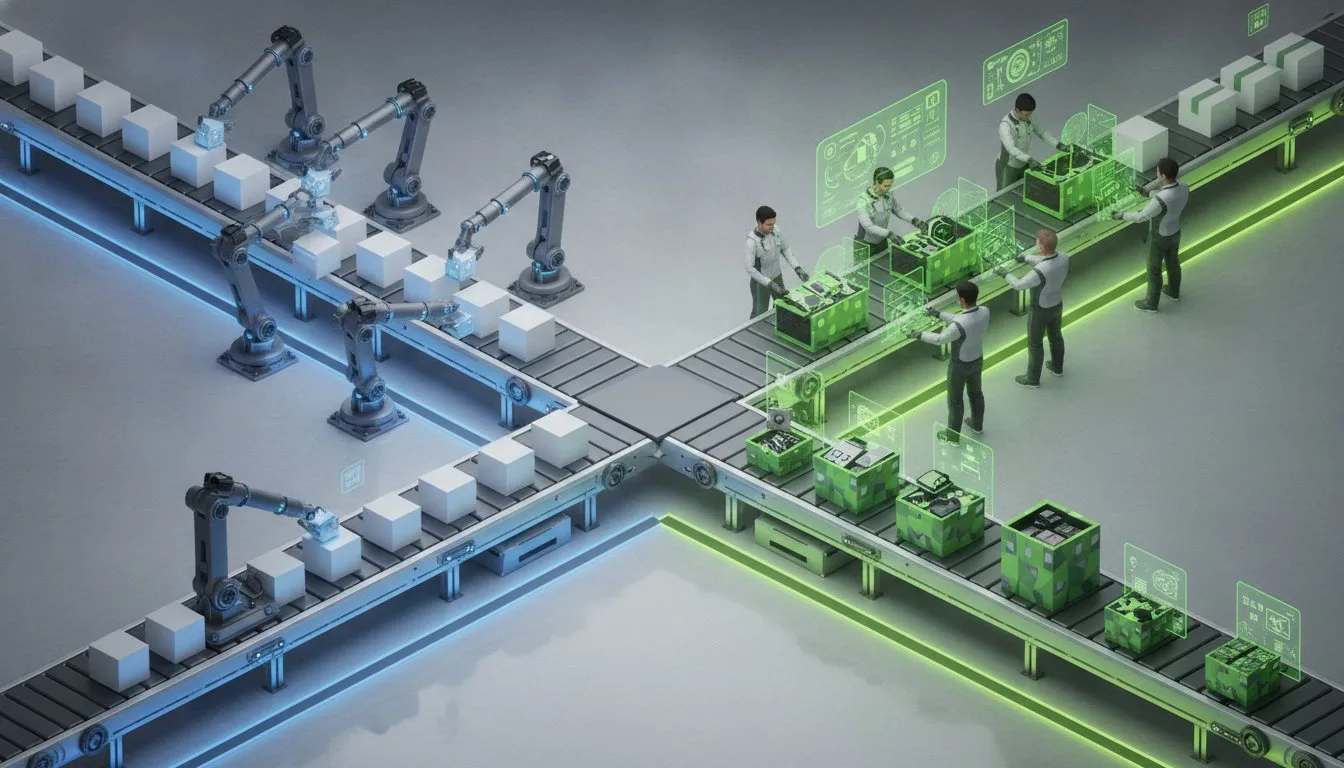
Shopify Fulfillment Network vs. 3PL: Choosing Your Strategic Partner in 2026
What if the automated efficiency of a platform-integrated network is actually the bottleneck preventing your brand from scaling its unique customer experience? It’s a common frustration for growing merchants. You want the simplicity of a native integration, yet you’re tired of shipping crises being handled by a chatbot while your unboxing experience suffers from a lack of customization. When weighing the shopify fulfillment network vs 3pl in 2026, you aren’t just choosing a warehouse; you’re choosing the future of your customer relationships.
This article clarifies how recent technical shifts, such as the mandatory migration to the fulfillment order data model, impact your operations. You’ll learn whether an algorithmic system or a dedicated partner offers the human oversight and specialized services like kitting or on-demand printing that your brand requires to stand out. We’ll examine the trade-offs between standardized platform solutions and the scalable, high-touch infrastructure of a partner that acts as a true, flexible extension of your team. By the end, you’ll have the clarity to choose a partner that provides the precision and stability your growth demands.
Key Takeaways
- Learn why the October 2026 migration to the “fulfillment order” data model requires technical agility to maintain accurate inventory and shipping data.
- Discover the core operational differences in the shopify fulfillment network vs 3pl landscape, specifically regarding automated platform networks versus high-touch human oversight.
- Identify how specialized kitting and on-demand digital printing protect your brand identity from the limitations of standardized, “cookie-cutter” fulfillment models.
- Understand the value of proprietary management systems that provide proactive data visibility rather than reactive, automated customer service.
- Apply a strategic framework to determine if your product complexity and scaling goals demand the precision of a dedicated logistics partner.
The Evolution of Shopify Logistics: Network vs. Dedicated 3PL
Scaling your brand to a national level involves a critical transition from manual operations to professional logistics. In 2026, the decision between the shopify fulfillment network vs 3pl is no longer just about cost per package. It’s a choice about the degree of control you maintain over your brand’s physical footprint. A dedicated 3PL fulfillment service acts as an extension of your team, whereas a network often functions as a utility. Modern eCommerce demands strategic supply chain integration that goes beyond simple shipping labels; it requires a partner that understands the nuances of your inventory and the expectations of your customers.
What is a Fulfillment Network?
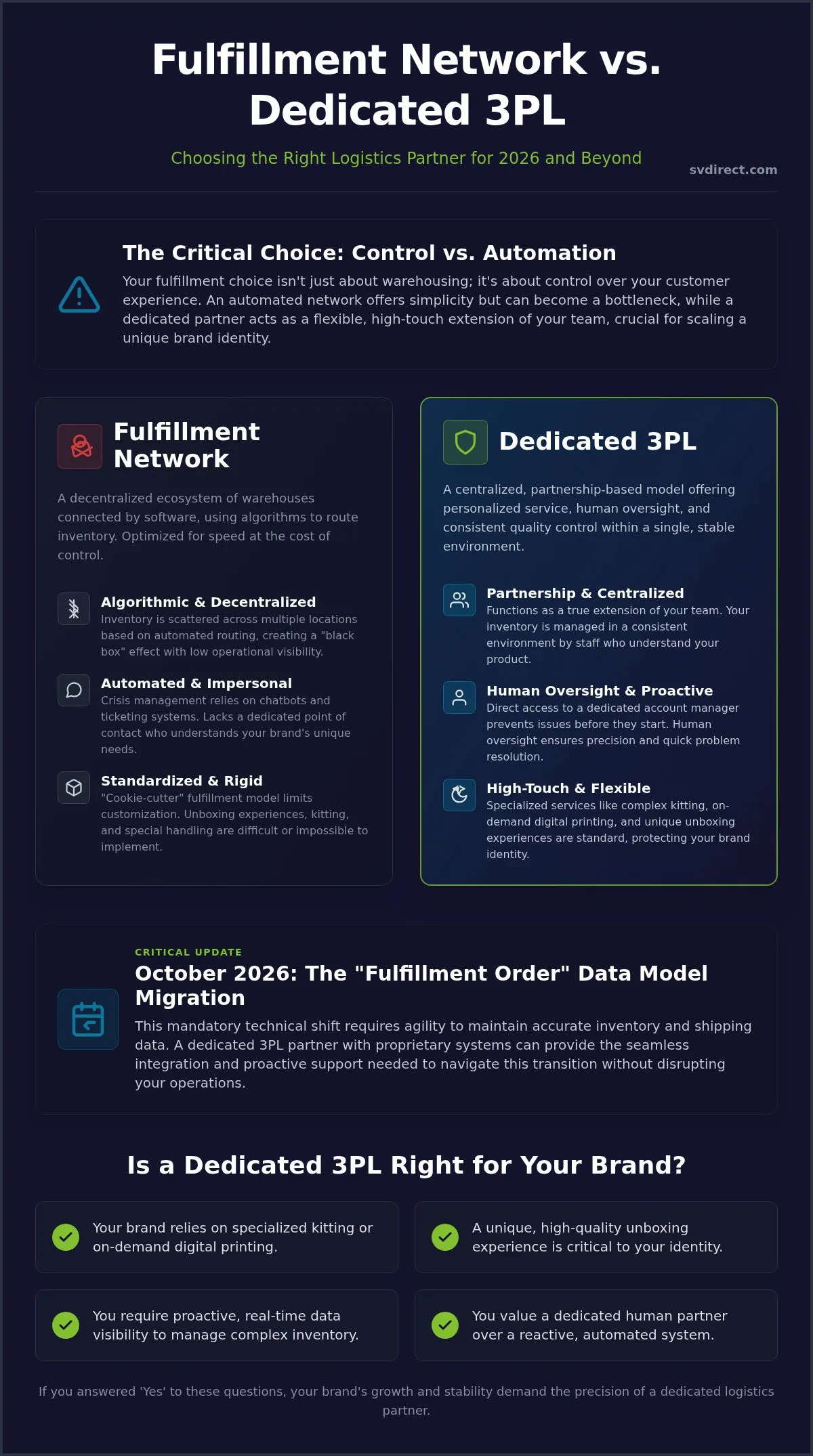
A fulfillment network is essentially a decentralized ecosystem of various warehouses connected by a central software layer. These networks use algorithmic routing to distribute your inventory across multiple locations. The goal is to place products closer to the end consumer to reduce shipping times. While this sounds efficient, it often creates a “Black Box” effect. Because your goods are spread across facilities managed by different teams, you lose granular visibility into how your products are handled. Automation manages the order flow, but when a crisis occurs, you’re often left dealing with an impersonal ticketing system rather than a dedicated account manager who knows your brand.
The Dedicated 3PL Model
A Third-party logistics (3PL) provider offers a more centralized and personalized approach. Instead of your inventory being scattered by an algorithm, it sits within a facility governed by established quality controls and consistent staff. This model prioritizes a partnership over a mere transaction. You gain direct access to human oversight, which is vital for preventing the small operational “hiccups” that can lead to negative customer reviews. A dedicated 3PL provides a stable environment where precision is the standard, and your specific requirements aren’t lost in a sea of standardized procedures.
Choosing between the shopify fulfillment network vs 3pl requires assessing your need for flexibility. If your brand relies on a specific unboxing experience or complex inventory management, the rigid nature of a decentralized network might stifle your identity. By 2026, the most successful brands are those that treat their logistics as a competitive advantage. They look for a steady hand in a fast-paced industry, ensuring that as they grow, their operational foundation remains deeply reliable and highly responsive to their unique business needs.
Evaluating Technical Integration and Real-Time Visibility
Visibility is the pulse of your supply chain. In the debate of shopify fulfillment network vs 3pl, the depth of your data determines your agility. It isn’t enough to see that a package left the warehouse; you need to know exactly what’s on the shelf, what’s pending, and what’s on backorder at any given second. This transparency mitigates the common challenges in 3PL partnerships where information silos lead to missed opportunities. Data transparency builds a bridge of trust, eliminating the anxiety of shipping crises by providing a single source of truth.
When you compare the shopify fulfillment network vs 3pl, look for a system that doesn’t just store data but makes it actionable. A partner should provide a steady hand, ensuring your digital information is as organized as the physical stock. This marriage of technology and customer service is what allows a brand to scale without the hectic atmosphere often associated with high-volume growth.
Proprietary Systems vs. Standardized Apps
Standardized apps often provide a simplified reporting structure that fails to satisfy the needs of high-growth brands. These “cookie-cutter” views lack the granular inventory analytics required for sophisticated forecasting. Our Remote Order Management system, Remote Control™, rejects this approach by providing 24/7 access to more than 120 standard reports. You can monitor inventory aging, track receipts, and analyze order trends in real time. Automated email alerts for low inventory act as a proactive safety net, ensuring you never lose a sale due to an unforeseen stockout.
Web Services and XML Integration
Modern eCommerce brands often require more than a simple plug-and-play app. They need a system that communicates effectively with proprietary tools or custom dashboards. We utilize robust web services and XML integration to facilitate this. By leveraging SOAP protocols, we provide a secure and standardized method for data transfer. This approach significantly reduces the time your developers spend on custom coding. Well-documented programmatic interfaces ensure that your user interface remains exactly how you want it, while our backend handles the complex heavy lifting of logistics data.
Strategic integration is the difference between a reactive supply chain and a proactive one. If your current setup leaves you guessing about your inventory levels or order status, it might be time for a more sophisticated approach. You can request a free quote today to explore how our technology can act as a seamless extension of your Shopify store.
Customization and Complexity: When ‘Standard’ Isn’t Enough
Standardized solutions are often the enemy of a unique brand identity. Many merchants fall into the “cookie-cutter” trap, where rigid operational procedures force products into generic packaging that fails to excite the customer. When evaluating the shopify fulfillment network vs 3pl, the deciding factor is often the ability to execute complex, non-standard requests. A network built for speed and volume frequently lacks the agility to handle the intricate details that define a premium brand experience. True precision requires a partner that treats your specific requirements as the standard, not the exception.
Kitting, Assembly, and the ‘QC-Check’
Systematic oversight is the cornerstone of successful kitting. Whether you’re launching a complex promotional kit or managing monthly subscription boxes for clothing and software, precision is mandatory. We employ a proprietary QC-Check inspection process to ensure every component is present and correctly placed. This proactive stance prevents errors before they reach your customer’s doorstep. Unlike automated networks that prioritize throughput over detail, a dedicated partner provides the human expertise necessary for multi-item assembly. Our team handles high-volume deadlines with a quiet confidence that eliminates the hectic atmosphere of traditional warehouses. Explore our specialized kitting and assembly services to see how we maintain accuracy across diverse product types.
Print-on-Demand and Variable Data
Personalization is no longer a luxury; it’s a requirement for modern eCommerce. We utilize the HP Indigo 5500 liquid ink technology to provide offset-quality results for your marketing collateral. This system allows for on-demand digital printing that transforms the unboxing experience from a transaction into a relationship. Through Variable Data Printing (VDP), we can customize the copy on every sheet, allowing for unique messages tailored to individual customers. This marriage of high-tech printing and logistics ensures that your brand voice remains consistent across every touchpoint. Discover our on-demand digital printing capabilities and learn how variable data can elevate your collateral.
Regulated industries, such as healthcare and pharmaceuticals, require an even higher level of stability and expertise. Since 1999, we’ve provided specialized literature and healthcare mailing services that adhere to strict accuracy standards. The shopify fulfillment network vs 3pl choice for these sectors isn’t just about shipping. It’s about finding a partner with a multi-decade history of reliability and the physical infrastructure to support high-stakes operations without compromise.
The Decision Framework: Choosing the Right Model for Your Brand
Choosing between a shopify fulfillment network vs 3pl requires a structured evaluation of your brand’s specific trajectory. While automated networks offer a low barrier to entry, they often lack the depth required for complex operations. 2026 eCommerce fulfillment complexity is the degree to which a brand’s logistical needs exceed the capabilities of standardized, automated pick-and-pack systems. If your product line involves more than just single-SKU shipments, the algorithmic approach of a decentralized network can introduce hidden costs. These costs manifest as lost customers due to kitting errors or the inability to handle specialized requirements like healthcare literature fulfillment or serial number tracking.
Step 1: Audit Your Fulfillment Requirements
A thorough audit starts with your SKU profile. Do you require specialized mailing services or serial number tracking for high-value electronics? Brands that rely on high-quality physical engagement, such as custom-printed inserts or complex assembly, often find that standardized platforms struggle with these nuances. If your strategy involves on-demand digital printing or HIPAA-compliant healthcare mailing, a dedicated partner is essential. You’ll need a facility where staff members are trained on your specific brand standards rather than following a generic, platform-wide script. It’s about ensuring your physical operations are just as organized as your digital storefront.
Step 2: Compare Support Models
The support model you choose dictates how your brand handles shipping crises. Automated ticketing systems and chatbots can leave you feeling stranded during peak seasons. In contrast, a dedicated account team provides a proactive hand. This marriage of technology and customer service ensures that issues are identified and resolved before they impact the end user. A quiet, organized facility with long-term staff retention naturally produces higher order accuracy than a hectic, high-turnover environment. By prioritizing a partner that rejects impersonal business models, you gain a scalable infrastructure that acts as a true extension of your own team.
Location-based innovation also plays a role in this framework. Being positioned within a hub of global connectivity allows for a synergy between advanced digital integration and physical logistics. This technological readiness, backed by decades of stability since 1999, provides the informed confidence you need to scale. Ultimately, the choice in the shopify fulfillment network vs 3pl debate comes down to whether you want a vendor or a strategic partner who shares your commitment to precision and bespoke problem-solving.
Silicon Valley Direct: A Seamless Extension of Your Shopify Store
Silicon Valley Direct (SVD) represents the evolution of the 3PL model, moving beyond transactional shipping to become a dedicated extension of your brand. While the choice between the shopify fulfillment network vs 3pl often centers on digital integration, we differentiate ourselves through a marriage of technology and customer service. Since 1999, we’ve rejected “cookie-cutter” solutions in favor of a methodology that adapts to your growth. This flexibility allows us to support brands as they scale from emerging startups to established enterprises without the rigidity of automated networks. We position ourselves as a steady hand in a fast-paced industry, aiming to alleviate the stress of business growth through precision and personal commitment.
Our partnership is grounded in the “Nine Promises,” a framework of accountability that ensures every shipment meets your exact standards. By choosing a partner that “thinks outside the box,” you aren’t just buying warehouse space; you’re gaining a team that prioritizes your unique operational goals and takes direct responsibility for your inventory’s integrity. Our Silicon Valley location serves as a constant symbol of innovation, allowing us to leverage global connectivity while maintaining the precision control required for modern eCommerce. This geographic identity isn’t just about location; it’s a commitment to staying at the cutting edge of logistics technology while remaining accessible and grounded.
The Human Element of High-Tech Logistics
At SVD, we explicitly reject impersonal, automated interactions. We believe high-performance logistics requires a human touch. Our team takes the time to listen and understand your specific brand requirements before implementing automated workflows. This proactive stance allows us to anticipate potential “hiccups” in the supply chain, such as inventory shortages or shipping delays, before they impact your customers. This commitment to personal oversight and staff stability is why many brands have remained with us for over seven years, as evidenced in our customer testimonials. We value transparency and directness, showing a clear disdain for inefficient business models that prioritize bots over people.
Global Reach with Precision Control
Managing the complexities of international trade requires more than just a software platform. We provide first-class customer service for both domestic and international logistics, ensuring your global reach is backed by stable, reliable infrastructure. Whether you’re shipping across the country or across borders, our systematic QC-Check process ensures accuracy at every stage. For those navigating the intricacies of international expansion, we recommend you review our global shipping services to understand the strategic landscape for 2026. If you’re ready to move beyond the limitations of the shopify fulfillment network vs 3pl debate and find a true strategic partner, contact Silicon Valley Direct for a custom fulfillment consultation today.
Securing Your Brand’s Operational Future
The choice between the shopify fulfillment network vs 3pl ultimately defines how your brand navigates the complexities of the 2026 e-commerce landscape. We’ve explored how technical agility and the shift to more granular data models require a partner that offers both sophisticated integration and human oversight. By moving away from rigid, automated networks, you reclaim control over your unboxing experience and your customer relationships. You gain the stability of a partner serving brands since 1999, backed by the real-time visibility of our proprietary Remote Control™ system. This combination ensures your physical operations are as organized as your digital storefront.
Our 99.9% accuracy rate with the QC-Check process provides the informed confidence you need to scale without the hectic atmosphere of traditional fulfillment centers. We’re here to act as a steady hand, turning your logistics into a proactive engine for growth and long-term brand loyalty. We look forward to helping you build a more flexible and resilient supply chain.
Frequently Asked Questions
What is the main difference between a fulfillment network and a 3PL?
The primary difference lies in the level of centralization and control. A fulfillment network is a decentralized group of warehouses connected by software, while a 3PL provides a dedicated, single-source operational partnership. When comparing the shopify fulfillment network vs 3pl, you’ll find that a 3PL offers more human oversight and bespoke problem-solving. This centralized model ensures consistent quality control and a steady hand in managing your brand’s physical inventory across all channels.
Can a 3PL integrate directly with my Shopify store admin?
Yes, a professional 3PL integrates directly with your Shopify store admin through robust web services and XML protocols. This connection allows for a seamless exchange of data regarding orders, shipping status, and stock levels. By utilizing secure SOAP integrations, a partner can act as a technical extension of your store. This ensures that your digital storefront and physical warehouse remain perfectly synchronized without the need for manual data entry or complex workarounds.
How does variable data printing improve my eCommerce fulfillment?
Variable data printing (VDP) allows for the mass customization of marketing collateral included in every shipment. By using high-resolution liquid ink technology like the HP Indigo 5500, a 3PL can print unique messages, QR codes, or names on every sheet. This transforms the unboxing experience into a personalized marketing touchpoint. It bridges the gap between digital personalization and physical fulfillment, helping brands build deeper emotional connections with their customers through high-quality printed materials.
What are the hidden costs associated with automated fulfillment networks?
Hidden costs in automated networks often stem from “cookie-cutter” rigidity and algorithmic errors. When a system lacks human oversight, small mistakes in kitting or assembly can lead to expensive returns and damaged customer trust. These networks may also charge premium fees for non-standard requests that a dedicated 3PL handles as part of a standard partnership. In the shopify fulfillment network vs 3pl comparison, the 3PL’s proactive QC-Check process often prevents these costly operational hiccups.
Is it possible to manage inventory in real-time with a 3PL?
Real-time inventory management is a standard feature of modern 3PL technology stacks. Systems like Remote Control™ provide 24/7 access to over 120 standard reports, offering immediate visibility into stock levels, receipts, and backorders. This level of transparency allows you to make data-driven decisions without waiting for manual updates. You can monitor inventory aging and receive automated alerts for low stock, ensuring you maintain a proactive stance in your supply chain management.
How do I transition from Shopify’s native fulfillment to a dedicated 3PL?
Transitioning requires a strategic technical migration, particularly given the October 2026 deadline for Shopify’s new fulfillment order data model. A dedicated 3PL will guide you through this process, ensuring your internal tools and apps are compatible with the new infrastructure. This proactive technical support prevents order disruptions during the switch. The goal is to move from a reactive network to a partner that understands your specific business logic and scaling requirements.
What should I look for in a 3PL’s technology stack?
You should prioritize transparency, scalability, and well-documented programmatic interfaces. A high-performance 3PL stack should offer more than basic shipping status; it needs deep inventory analytics and secure data transfer via SOAP or XML. Look for proprietary systems that allow for custom UI development rather than generic, third-party apps. This ensures your technology can grow with your brand’s complexity, providing a stable foundation for both domestic and global shipping operations.
Does a 3PL handle returns and exchanges for Shopify stores?
A dedicated 3PL provides comprehensive returns management, including inspection, re-kitting, and restocking. This service is essential for maintaining high order accuracy and preserving brand value. Unlike automated systems that might simply dispose of returned items, a partner follows your specific guidelines for quality control. They can process exchanges and update your inventory in real-time, ensuring that your Shopify store reflects accurate stock levels while providing a professional experience for your customers.