img not found!
Fulfillment and Distribution Services: The 2026 Buyer's Guide to Scalable Logistics

Fulfillment and Distribution Services: The 2026 Buyer’s Guide to Scalable Logistics

A warehouse that merely stores inventory isn’t an engine for growth; it’s an operational bottleneck waiting to disrupt customer loyalty. When auditing the fulfillment and distribution services bay area providers offer, scaling brands quickly discover that modern commerce demands far more than static shelf space. If you’ve battled sluggish order turnaround times, recurring inventory discrepancies, or rigid systems that refuse to handle custom kitting and bespoke collateral, you already understand the heavy cost of operational friction.

You shouldn’t have to wrestle with opaque tracking portals or impersonal support tickets just to verify that an urgent order shipped correctly. In this buyer’s guide, you’ll discover the critical capabilities, technical integrations, and operational standards required to select a high-performance partner capable of acting as a seamless extension of your business. We’ll examine the exact evaluation criteria you need to automate multi-channel order synchronization, accelerate dependable nationwide delivery, and safeguard your margins through meticulous quality control and dedicated, human-led oversight.

Key Takeaways

  • Discover how evaluating fulfillment and distribution services bay area partners offer can protect customer retention through systematic quality control and rapid processing windows.
  • Learn why real-time software integration and open web services eliminate manual data entry across modern multi-channel commerce platforms.
  • Uncover the operational advantages of integrating on-demand digital printing with custom kitting to create high-impact unboxing experiences without packaging delays.
  • Understand how strategic West Coast distribution hubs utilize optimized carrier routing and zone skipping to accelerate nationwide transit times.
  • Master an actionable partner-vetting checklist to audit operational transparency, packaging flexibility, and proactive account management before signing a contract.

Key Criteria for Evaluating Fulfillment and Distribution Services

Selecting the right logistics infrastructure requires looking far past raw square footage. Evaluating fulfillment and distribution services bay area operators provide means auditing disciplined quality systems, proactive communication, and proven scalability. An agile provider functions as an immediate operational extension of your business, pairing technical execution with seasoned oversight.

Operational Accuracy and Order Turnaround Standards

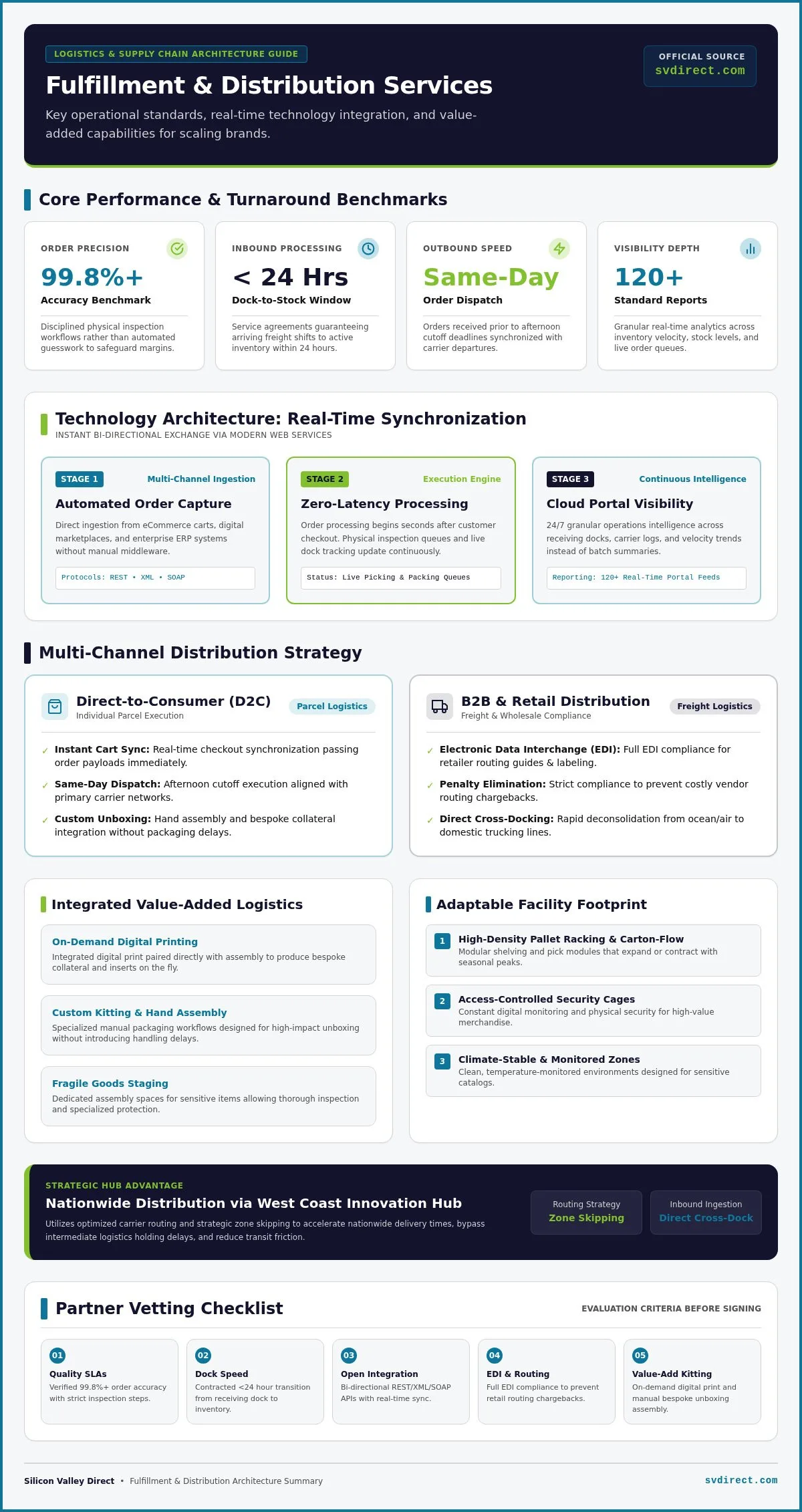
Order accuracy directly preserves your customer retention and bottom line. A mispicked item triggers returns, erodes trust, and doubles handling expenses. High-performance facilities benchmark order accuracy at 99.8% or higher, relying on disciplined physical inspection workflows rather than automated guesswork. Evaluate clear cutoff windows; top-tier facilities enforce same-day dispatch for orders received before afternoon deadlines, synchronizing with major carrier departures. Inbound receiving protocols matter just as much. Demand documented service agreements ensuring arriving freight transitions from dock receipt to active inventory within 24 hours, optimizing every stage of the order fulfillment process.

Scalable Storage and Temperature-Monitored Facilities

Dynamic product catalogs require adaptable footprint management. Your provider should deploy versatile warehouse configurations, combining high-density pallet racking, modular carton-flow shelving, and dedicated pick modules that expand or contract with seasonal peaks. Facilities housing sensitive merchandise must feature access-controlled security cages, constant digital monitoring, and clean, climate-stable storage zones. Dedicated staging spaces for fragile goods give assembly teams the necessary room to inspect and protect sensitive items before final packing.

Multi-Channel Distribution for B2B and Direct-to-Consumer

Modern brands rarely sell through a single pipeline. A high-yield logistics strategy harmonizes single-parcel consumer shipments with heavy, palletized wholesale freight. When auditing fulfillment and distribution services bay area networks manage, confirm full Electronic Data Interchange (EDI) compliance. Seamless EDI compliance ensures your shipments respect complex retailer routing guides, vendor compliance standards, and custom pallet labeling, eliminating chargeback penalties. Coupled with cross-docking capabilities, your partner can break down bulk inbound ocean or air freight and redirect it immediately into domestic trucking lines without intermediate holding delays.

Technology Architecture: Real-Time Visibility and Software Integration

High-performance logistics requires absolute digital transparency. In modern commerce, fulfillment and distribution services bay area companies rely on must operate as direct extensions of your digital stack. Fragmented spreadsheets and delayed batch updates simply cannot sustain fast-growing multi-channel operations.

Automated Order Management and Programmatic Web Services

Rigid integration models create unnecessary technical debt. Advanced fulfillment architectures deploy flexible web services utilizing both modern REST protocols and XML or SOAP methods to pass transactional payloads instantly. This direct bidirectional exchange ingests orders from eCommerce carts, marketplaces, and ERP networks without manual middleware. Instantaneous synchronization guarantees that order processing begins seconds after customer checkout, minimizing latency across national distribution pipelines.

Real-Time Portal Controls and Inventory Tracking

Operational control hinges on round-the-clock data access. Modern systems should deliver clear visibility into live picking queues, warehouse receiving docks, and outbound tracking logs across all carrier networks. As IBM highlights in its analysis of supply chain management (SCM) architectures, centralized digital platforms play a foundational role in orchestrating modern inventory workflows. Rather than waiting for weekly email summaries, operations teams gain granular intelligence via cloud interfaces. Discover advanced capabilities via remote order management platforms that deliver over 120 standard real-time reports to analyze inventory velocity and stock turnover.

Automated Inventory Thresholds and Reorder Triggers

Stockouts immediately stall marketing momentum and drain advertising returns. Dynamic inventory platforms actively protect your pipeline by enabling automated threshold alerts:

  • Automated low-stock notifications: Trigger proactive replenishment alerts when physical stock drops beneath calculated safety buffers.
  • Granular serial number tracking: Capture discrete unit identifiers during receiving, staging, and packing to support strict warranty compliance.
  • Promotional velocity monitoring: Align inventory burn rates against active marketing campaigns to prevent backorders during peak sales spikes.

Pairing robust programmatic connections with experienced operational oversight gives your brand total supply chain confidence. If you’re ready to align your software stack with dedicated logistics infrastructure, take a moment to request a free quote and evaluate your technical integration options.

Value-Added Logistics: Custom Kitting, Hand Assembly, and Digital Print

Standard pick-and-pack fulfillment handles commodity shipments, but high-growth brands thrive on distinction. When evaluating fulfillment and distribution services bay area operations provide, looking beyond carton packing reveals significant competitive advantages. Integrating custom assembly and on-demand printing directly into your distribution warehouse eliminates third-party shipping legs, lowers handling touches, and protects your unboxing experience.

Precision Kitting and Systematic Quality Inspection

Subscription boxes, seasonal retail gift packs, and complex multi-SKU configurations require deliberate hand craftsmanship. Automated sorting lines often fail when handling diverse shapes, delicate glass, or custom tissue wraps. Experienced operational teams apply systematic QC-Check protocols at dedicated staging stations, ensuring every component aligns with exact packaging guidelines before carton sealing. Industry research from the Council of Supply Chain Management Professionals underscores that value-added warehousing activities directly reduce return rates while improving customer lifetime value. You can explore high-touch assembly workflows in detail through our dedicated guide on kitting and assembly services.

On-Demand Digital Printing and Personalized Collateral

Storing pre-printed product brochures, user manuals, and promotional flyers generates excess warehousing waste whenever marketing campaigns shift. Unifying logistics with commercial print technology solves this friction entirely. Utilizing commercial digital presses featuring high-resolution liquid ink technology enables offset-quality printing on demand. Through variable data printing (VDP), your facility can produce customized inserts in real time:

  • Personalized packing inserts: Print custom welcome messages, regional discount codes, or loyalty reward points dynamically during order picking.
  • Dynamic regulatory manuals: Output localized language guides and warranty sheets matched to exact destination countries.
  • Zero-inventory literature fulfillment: Eliminate bulk storage costs by managing marketing collateral via flexible print on demand workflows.

Specialized Project Handling and Event Logistics

B2B organizations require agility for corporate summits, trade expositions, and direct mail campaigns. Top-tier providers coordinate pre-conference packet assembly, badge staging, and scheduled direct-to-booth freight deliveries that align with strict venue receiving windows. Similarly, healthcare organizations and corporate enterprises rely on structured workflows to manage rapid sales lead distribution and secure promotional coupon processing with strict fraud mitigation audits. Sourcing specialized value-added services under one roof provides the human oversight needed to turn high-stakes physical distribution into a predictable competitive asset.
Fulfillment and Distribution Services: The 2026 Buyer's Guide to Scalable Logistics

Nationwide Distribution Strategy from an Innovation Hub

Positioning your inventory in Northern California provides a strategic launchpad for domestic commerce. Direct proximity to primary West Coast marine terminals, international air cargo hubs, and transcontinental interstates creates an ideal freight bridge. Brands leveraging fulfillment and distribution services bay area providers offer gain rapid multi-directional transport corridors that easily reach consumer markets across the entire country. When moving cross-border shipments through these fast-paced aviation corridors, securing dedicated freight protection is just as essential—learn more about comprehensive air cargo coverage for global trade.

National Carrier Integration and Cost Management

Dependable nationwide distribution requires diverse carrier relationships rather than reliance on a single courier. Advanced facilities balance relationships across national parcel networks and regional freight lines to maintain consistent dispatch windows. Implementing strategic zone skipping consolidates packages into full truckloads routed straight to destination postal hubs. This strategy bypasses congested sorting terminals, slashing transit times and reducing domestic parcel expenses. Meticulous carton sizing optimizes dimensional weight, ensuring you aren’t paying to ship empty box space. Discover how comprehensive carrier coordination accelerates domestic reach through Silicon Valley 3PL fulfillment services.

Organized Methodology Versus Chaotic Warehouse Environments

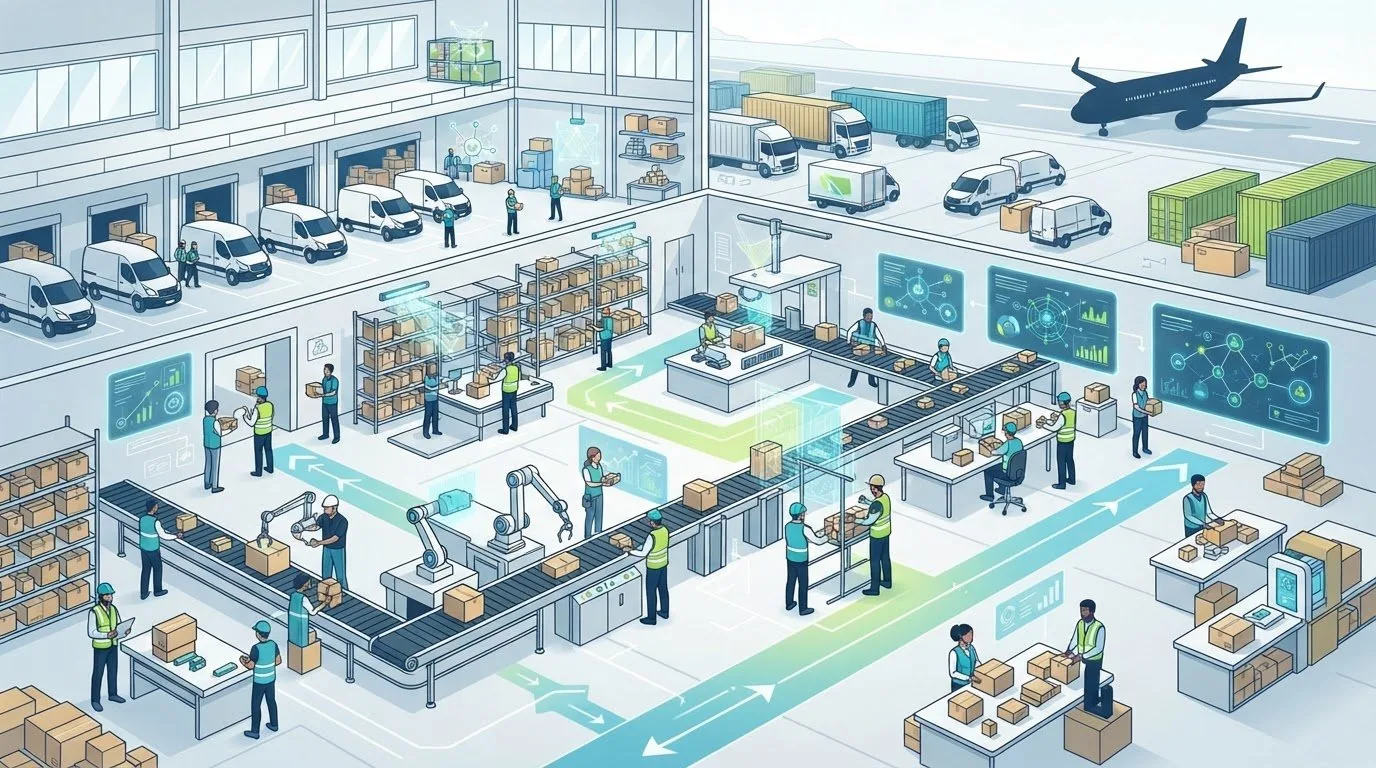
Calm, systematic organization during extreme sales volumes separates high-tier facilities from chaotic operations. Peak seasonal promotions can quickly clog picking aisles, resulting in inventory misplacements and missed carrier cutoffs. A disciplined warehouse relies on clear floor choreography, maintaining strict physical separation between inbound inspection docks, custom staging tables, and final shipping lines. Dedicated staging protocols protect sensitive technical hardware from accidental impact or dust exposure. You can explore how structured facilities protect delicate inventory by reviewing our tailored solutions across high-tech industries.

Sustainable Logistics and Environmental Initiatives

Modern distribution infrastructure must pair rapid transit with responsible environmental stewardship. Forward-thinking fulfillment hubs integrate sustainable materials directly into standard packaging workflows. Using Forest Stewardship Council (FSC) certified paperboard and corrugated mailers made with 30 percent recycled content minimizes packaging footprints without sacrificing structural protection. In-house digital printing eliminates the chemical washes, film negatives, and metal plates required by conventional offset presses. When paired with active electronics recycling programs, this methodical approach delivers clean, sustainable logistics that protect your brand equity.

Selecting Your Fulfillment Partner: Vetting Checklist and Next Steps

Transitioning your supply chain to an external operations hub is a major strategic commitment. When auditing the fulfillment and distribution services bay area companies offer, establishing transparent evaluation criteria prevents operational disruptions down the line. Before engaging a provider, gather your active SKU counts, historical monthly order volumes, promotional spike projections, and specific packaging dimensions so candidates can provide accurate operational feedback.

The Step-by-Step 3PL Vetting Framework

Evaluating candidate facilities requires looking beyond marketing brochures. Request comprehensive workflow schematics illustrating every touchpoint from initial inbound pallet unloading to final outbound carrier scans. During your evaluation, audit these operational fundamentals:

  • Proactive communication models: Confirm you will collaborate with a dedicated account manager rather than an impersonal, anonymous ticketing queue.
  • Contractual service levels: Define specific performance parameters for inventory receiving timelines, same-day dispatch cutoffs, and assembly accuracy benchmarks.
  • Client retention history: Look for multi-year customer relationships that demonstrate stability across fluctuating economic cycles; explore real-world client experiences through verified customer testimonials.

Seamless Onboarding and System Integration Roadmap

A structured implementation plan minimizes transition risks. High-tier providers guide your technical team through a controlled sandbox testing environment. This allows engineers to validate XML feeds, RESTful web services, or shopping cart connections before routing live production orders. During initial stock intake, the warehouse team should perform comprehensive physical counts against packing slips to reconcile catalog discrepancies immediately. Launching with small, controlled order batches verifies that packing configurations, custom inserts, and automated shipping confirmation webhooks operate without error.

Initiate Your Operational Partnership

After technical validation, document your exact standard operating procedures. Outline precise packing sequences, protective void-fill requirements, kitting rules, and unboxing standards. Finalize clear operational protocols detailing how the warehouse team will adjust staffing levels during upcoming product drops, holiday volume spikes, and marketing promotions. Aligning systems and expectations early turns physical logistics into a dependable asset for nationwide expansion. If you’re ready to partner with an experienced team providing dependable fulfillment and distribution services bay area businesses trust, take the next step and Request a Free Fulfillment Quote to start your technical review.

Scale Your Logistics with Precision and Confidence

Scaling physical commerce requires a dependable operational foundation. Choosing the right partner for fulfillment and distribution services bay area businesses rely on ensures that programmatic software integration, strategic nationwide carrier routing, and disciplined kitting workflows operate in complete harmony. When your logistics team treats quality control with meticulous care, you protect customer retention and brand equity at every unboxing.

Backed by over 25 years of proven operational experience, Silicon Valley Direct serves as an agile, dedicated extension of your company. Our proprietary Remote Control™ portal provides complete operational transparency through 120+ standard real-time reports, while our integrated high-resolution digital press produces custom, on-demand marketing collateral without third-party production delays.

Take the friction out of your daily logistics and build a reliable distribution engine ready to support your business wherever you expand next.

Frequently Asked Questions

How do modern fulfillment systems integrate with custom eCommerce platforms?

Modern systems integrate through programmatic web services and open APIs that communicate using XML or REST architecture. When vetting fulfillment and distribution services bay area operations provide, confirm their architecture supports direct data synchronization without cumbersome middleware. Orders placed on your storefront transmit immediately into the warehouse queue, while automated tracking numbers and inventory balances push back to your customer accounts without requiring manual data intervention.

What is the difference between standard pick and pack and specialized kitting?

Standard pick and pack involves retrieving finished, pre-packaged goods from warehouse shelving and placing them directly into an outbound shipping box. Specialized kitting requires dedicated manual labor to assemble individual components, printed literature, and custom packaging into an entirely new SKU before shipping. Kitting teams follow strict sequence protocols, custom folding rules, and multi-point inspections to assemble subscription collections and marketing gift boxes.

How do automated inventory thresholds protect businesses from stockouts?

Automated inventory thresholds set dynamic reorder triggers based on current safety buffers and historical sales velocity. When physical stock reaches a defined minimum level, the management system automatically generates an email notification to operations personnel before a stockout stalls sales. This proactive visibility provides sufficient supplier manufacturing and transit lead time, protecting active marketing campaigns and customer order pipelines from disruptive backorders.

Can a single fulfillment partner manage both physical merchandise and marketing print?

Yes, integrated providers operate in-house commercial digital printing presses directly alongside their physical warehouse facilities. This consolidated operational model allows businesses to print user manuals, marketing collateral, and personalized variable data inserts on demand. Producing printed assets on site eliminates the freight shipping expenses, vendor coordination delays, and obsolete collateral disposal costs tied to separate third-party commercial printers.

What security protocols are required for storing high-value electronics inventory?

High-value electronics require access-controlled facilities featuring continuous digital surveillance, secured wire cages, and discrete serial number logging. Reputable providers maintain organized, climate-stable staging environments isolated from general warehouse traffic to prevent static damage and accidental drops. Serial numbers are recorded upon dock intake, picking, and packing to maintain an unbroken chain of custody for warranty verification.

How does systematic quality inspection prevent order fulfillment errors?

Systematic inspection prevents fulfillment errors by inserting deliberate verification checkpoints throughout the packing process rather than relying solely on automated conveyor scales. Picking personnel cross-reference physical SKUs against packing orders, while secondary assembly managers inspect contents, packaging orientation, and shipping labels before carton sealing. This deliberate methodology catches discrepancies early, ensuring dependable fulfillment and distribution services bay area businesses require to maintain customer retention.

What information should I prepare before requesting a 3PL quote?

Prepare your active SKU catalog counts, historical monthly order volumes, average items per parcel, and specific packaging dimensions. Note whether your inventory requires special handling like custom kitting, serial number scanning, or temperature monitoring. Providing accurate promotional volume forecasts and details about your shopping cart platform ensures the logistics engineering team can model an accurate, tailored operational proposal.
Flexible Fulfillment Solutions: The 2026 Strategic Evaluation Guide

Flexible Fulfillment Solutions: The 2026 Strategic Evaluation Guide

Signing a standard logistics contract often feels like a safe operational milestone, yet rigid agreements and cookie-cutter workflows usually deliver the exact opposite of real adaptability. When seasonal surges hit or order volumes suddenly fluctuate, businesses frequently find themselves trapped by steep minimum volume penalties, sluggish support queues, and assembly lines that can’t handle custom packaging or specialized kitting. Modern brands don’t just need basic warehouse space; they require true flexible fulfillment solutions that adjust dynamically to real-world demand without sacrificing accuracy or control.

You already know that expanding your operations shouldn’t mean compromising on the personal touches and unboxing experience your customers expect. In this guide, you’ll discover how flexible fulfillment solutions eliminate logistics bottlenecks, unite custom kitting with on-demand collateral, and maintain total operational transparency through real-time inventory tracking. We outline the essential operational criteria, integration standards, and collaborative practices you need to evaluate in 2026 to build an elastic supply chain that scales effortlessly alongside your business.

Key Takeaways

  • Discover why modern brands are replacing restrictive volume minimums with flexible fulfillment solutions that scale smoothly alongside volatile demand cycles.
  • Learn how unifying warehousing with custom kitting, systematic inspection protocols, and on-demand collateral production eliminates costly logistical delays.
  • Uncover the critical differences between legacy, fixed-commitment 3PL agreements and modular storage models designed around actual inventory throughput.
  • Master a structured evaluation framework to audit prospective partners for open web service integrations, real-time reporting visibility, and responsive customer support.
  • Identify the operational hallmarks of a dedicated logistics partner that functions as a proactive extension of your internal team rather than an impersonal vendor.

What Are Flexible Fulfillment Solutions in Modern Supply Chains?

Flexible fulfillment solutions are adaptable operational architectures engineered to scale warehousing space, labor, and dispatch velocity in direct response to real-time market shifts. Traditional logistics operations typically trap expanding merchants in rigid multi-year leases, fixed pallet commitments, and punitive monthly minimum volume fees. In contrast, elastic operations treat supply chain infrastructure as a responsive service that expands during sales surges and contracts during quiet lulls.

Modern omnichannel businesses face unprecedented inventory dispersion across direct storefronts, major online marketplaces, and retail distribution networks. When demand spikes abruptly, static fulfillment setups inevitably crack under the strain. That leads to shipping backlogs, inventory inaccuracies, and disappointed customers. A truly flexible framework absorbs these fluctuations smoothly, protecting the end-customer experience while maintaining rigorous operational control.

The Driving Forces Behind Logistics Agility

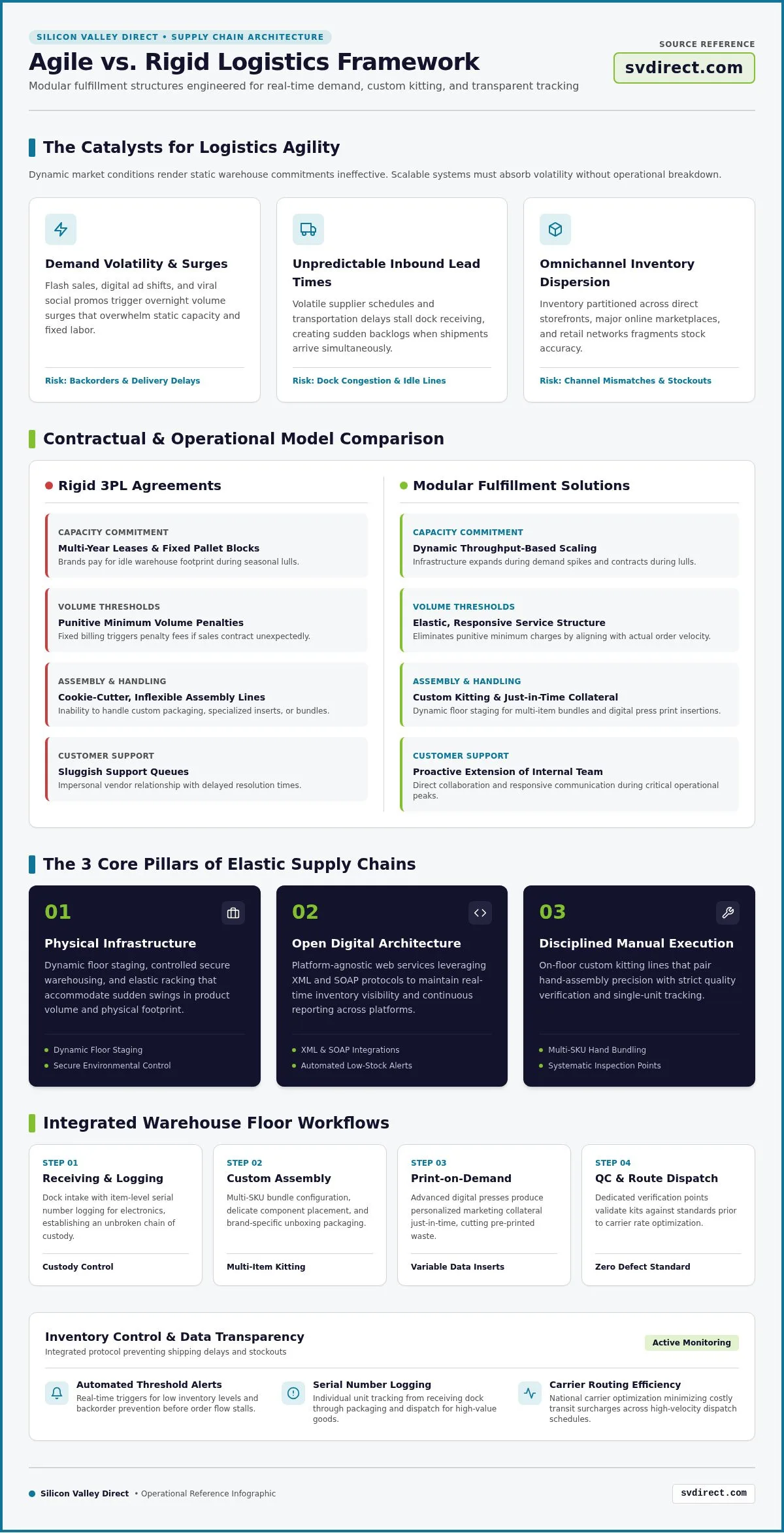
Rapid shifts in digital ad performance, viral social promotions, and unexpected flash sales frequently create overnight order spikes that static fulfillment teams can’t handle. At the same time, volatile supplier lead times and transit delays can stall incoming inventory without warning. When peak holiday rushes collide with rigid vendor contracts, standard facilities hit severe capacity bottlenecks. Logistics agility resolves this vulnerability by dynamically shifting floor staging, assembly resources, and packaging schedules to match actual inventory flows.

Beyond Storage: The Broad Scope of Agile Fulfillment

True operational flexibility encompasses far more than overflow warehouse racking. It demands synchronized execution across dynamic pick, pack, and specialized assembly workflows, as well as disciplined outbound carrier management. Working with proven providers of silicon valley 3pl fulfillment services allows brands to optimize national carrier routing, reduce costly transit surcharges, and maintain strict quality standards across every parcel, regardless of sudden swings in order velocity.

Core Components of a Truly Agile Fulfillment Strategy

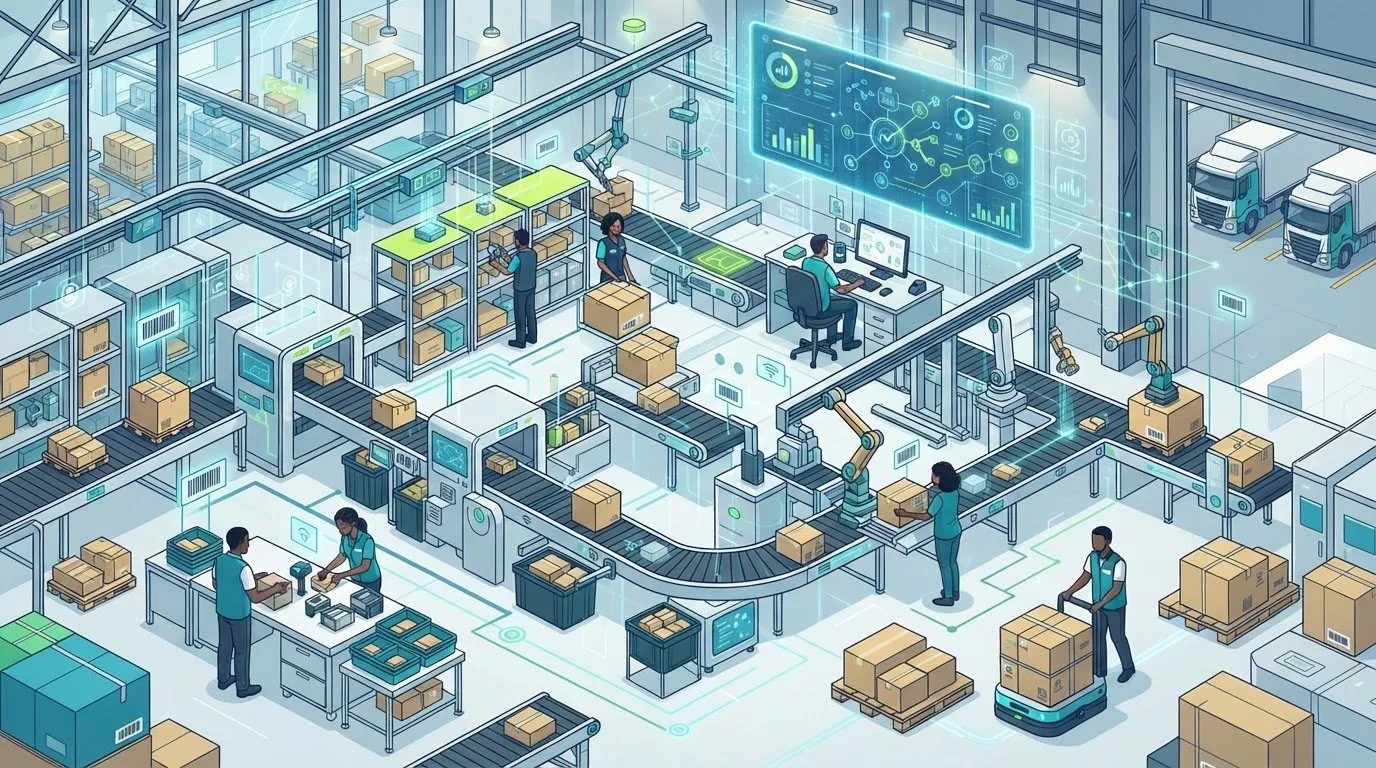
Fulfillment flexibility isn’t just about leasing temporary pallet space or deploying automated shipping algorithms. Real adaptability relies on three interconnected operational pillars: physical infrastructure, open digital architecture, and disciplined manual execution. Many logistics providers focus solely on generic storage, leaving merchants stranded when an order requires specialized packaging or custom product configurations. Resilient flexible fulfillment solutions bridge this gap by uniting dynamic storage, platform-agnostic web services (such as XML and SOAP), and high-precision assembly lines within a single operational environment.

Dynamic Warehousing and Inventory Management

Operational agility requires complete inventory transparency. Modern warehousing workflows leverage real-time tracking with automated alerts for low inventory thresholds and backorders, preventing costly stockouts before they affect order flow. For high-value electronics and sensitive goods, item-level serial number logging maintains an unbroken chain of custody from initial dock receiving to final delivery. Controlled, secure storage protocols protect sensitive products against environmental damage and shrinkage, keeping stock organized and ready for rapid dispatch.

Value-Added Kitting, Assembly, and On-Demand Production

Modern buyers expect personalized, memorable unboxing experiences. Agile operations handle complex kitting and assembly directly on the warehouse floor, allowing brands to launch multi-item bundles, seasonal gift boxes, or promotional variations without routing goods across multiple third-party suppliers.

  • Custom Bundling and Hand Assembly: Flexible assembly lines configure multi-SKU packs, insert fragile components, and apply specialty packaging materials on demand.
  • Variable Print Integration: Pairing packaging lines with just-in-time print on demand collateral using advanced digital presses eliminates pre-printed marketing waste and inserts personalized messaging inside each carton.
  • Systematic QC-Check Procedures: Dedicated verification points inspect each kit against rigorous assembly standards, confirming that every component, label, and insert matches specifications before sealing.

This coordinated physical execution prevents the chaotic fulfillment bottlenecks common during sudden marketing spikes. If your current distribution network lacks custom assembly agility, you can request a tailored quote to see how unified kitting and warehousing can streamline your order cycles.

Rigid 3PL Contracts vs Modular Fulfillment Solutions

Traditional logistics agreements often burden growing brands with rigid terms, punitive fee structures, and automated ticketing queues. When monthly order volumes dip below arbitrary thresholds, legacy facilities enforce volume penalties that drain operating budgets. In contrast, modular flexible fulfillment solutions adjust dynamically to business reality, aligning floor space, assembly labor, and distribution schedules with actual inventory velocity.

Operational Feature Rigid Legacy 3PLs Modular Flexible Fulfillment
Storage Allocation Fixed footprint leases with penalties for unused space Elastic pallet footprints that expand and contract as stock moves
Volume Commitments Strict minimum monthly parcel quotas Activity-based models scaling with seasonal velocity
Assembly & Kitting Rigid, cookie-cutter pick and pack only Tailored hand-assembly, custom packaging, and print inserts
Account Support Impersonal call centers and automated helpdesk tickets Dedicated operational points of contact and human oversight

The Hidden Operational Costs of Inflexible Providers

Inflexible operational models introduce hidden operational friction that erodes margins. When inventory turns slow down, paying for vacant warehouse racking strains capital reserves. If a sudden promotional spike occurs, rigid workflows stall; support inquiries sit unanswered in generic queues while shipping backlogs build up. Inflexible packing configurations also restrict branding choices, causing unboxing errors, customer dissatisfaction, and elevated return rates.

The Modular Advantage: Tailoring Workflows to Exact Business Goals

A common misconception is that tailored, high-touch fulfillment introduces runaway overhead. In practice, modular workflows lower overall operating costs by eliminating payments on idle storage and unfulfilled minimums. Businesses pay strictly for active operations while retaining the power to deploy complex assembly runs whenever demand spikes. To explore how adaptable fulfillment workflows support specific sectors, review the tailored applications on our industries page.

Flexible Fulfillment Solutions: The 2026 Strategic Evaluation Guide

Five Key Criteria for Evaluating a Flexible Fulfillment Partner

Selecting an adaptable operations provider requires moving past standard sales pitches and evaluating how a warehouse functions under peak pressure. Software dashboards mean very little if physical assembly lines fail during unexpected spikes. When auditing providers of flexible fulfillment solutions, applying a structured evaluation framework helps confirm that their operational capabilities, data pipelines, and facility culture align with your business goals.

  1. Audit Technical Integration Standards: Verify that the provider supports open, language-agnostic standards like XML and SOAP Web Services rather than locking your data into restrictive, proprietary software.
  2. Evaluate Physical Floor Discipline: Tour the facility to observe daily floor workflows. A methodical, organized environment prevents picking errors, whereas chaotic packing stations lead to mis-ships.
  3. Inspect Value-Added Production Agility: Confirm that the team handles on-demand assembly, customized packaging runs, and integrated digital collateral alongside standard storage.
  4. Audit Contractual Adaptability: Review fee agreements carefully. Ensure the partner offers modular, throughput-based models rather than enforcing punitive minimum monthly volume penalties.
  5. Assess Human Accountability: Demand direct access to dedicated operational specialists. Transparent communication beats an automated support ticket queue every time.

Auditing Technology Integration and Data Visibility

Fulfillment platforms must connect directly with your existing enterprise systems without requiring expensive custom code. Standardized web services ensure clean data synchronization across storefronts and warehouses. Demanding continuous visibility is equally essential; platforms like remote order management provide self-service access to real-time inventory levels, automated backorder triggers, and comprehensive reporting suites with over 120 standard reports.

Assessing Operational Methodology and Service Culture

A quiet, deliberate warehouse floor is the mark of a seasoned logistics operation. Hurried workers running through crowded aisles indicate systemic planning failures that inevitably compromise order accuracy. Inquire about internal staff retention rates. Long-tenured operational teams bring deep familiarity to intricate packing instructions, protecting your brand unboxing standards. You can evaluate this track record of dependable execution by reviewing verified customer testimonials from long-term brand partners.

Scaling Your Operations with Silicon Valley Direct

Since 1999, Silicon Valley Direct (SVD) has delivered high-performance flexible fulfillment solutions to expanding brands nationwide. Rather than operating as a distant third-party vendor, SVD functions as an integrated extension of your internal team. Our methodology replaces automated call queues and rigid contract terms with seasoned human oversight, operational stability, and bespoke problem-solving. At the center of this framework sits our proprietary Remote Control platform. It equips your team with 24/7 visibility into stock movements and over 120 standard reports. Every workflow is guided by our Nine Promises, which guarantee direct accountability, open communication, and proactive operational support.

The Silicon Valley Direct Operational Advantage

Our facility operates under a calm, structured floor methodology engineered to eliminate chaotic fulfillment errors. We manage end-to-end logistics under one roof, handling rapid eCommerce dispatch, complex kitting runs, marketing collateral, and compliance-driven healthcare mailings. When unexpected order surges strike, seasoned specialists adjust packing lines and allocation schedules immediately. Systematic QC-Check protocols verify every carton before release. We catch discrepancies early, solving exceptions before they impact the recipient.

Seamless Migration and Custom Onboarding

Migrating to an agile logistics partner shouldn’t compromise day-to-day fulfillment. SVD coordinates every transition through a dedicated onboarding roadmap led by veteran logistics experts. Because our infrastructure connects using open, platform-agnostic web services like XML and SOAP, your online stores and ERP systems synchronize smoothly without extensive custom coding. We build long-term relationships backed by high staff retention and deep operational pride. Partnering with a dedicated logistics team ensures your business gains dependable, flexible fulfillment solutions designed to scale alongside your evolving physical and technical requirements.

Transform Your Logistics into an Elastic Engine for Growth

Scaling a modern brand shouldn’t force you to choose between punitive volume penalties and compromised packaging quality. Adopting flexible fulfillment solutions allows your business to align warehouse footprints with actual sales velocity, pairing dynamic storage with disciplined hand assembly and on-demand digital printing. When your logistics model flexes alongside real-world demand, seasonal surges become profitable milestones rather than operational crises.

Since 1999, Silicon Valley Direct has delivered operational stability to growing organizations nationwide. We combine the continuous visibility of our proprietary Remote Control system, featuring over 120 standard reports, with rigorous QC-Check protocols and dedicated human oversight. Our specialists stand ready to eliminate your supply chain bottlenecks with personal care and methodical execution.

Take the friction out of your supply chain and build an elastic foundation that supports your business at every stage of growth.

Frequently Asked Questions

What makes flexible fulfillment solutions different from traditional 3PL services?

Flexible fulfillment solutions eliminate rigid multi-year leases and punitive monthly volume minimums found in legacy logistics models. Traditional facilities force brands into standardized pick-and-pack parameters with automated ticketing queues. In contrast, agile providers offer scalable storage footprints, bespoke kitting, and integrated on-demand production. You gain dedicated human oversight and an elastic operational foundation that actively adapts to fluctuating customer demand.

How do flexible fulfillment solutions accommodate seasonal sales spikes and promotional surges?

Agile fulfillment operations handle volume surges by dynamically adjusting floor space, pick paths, and staging lines before promotional periods begin. Rather than hitting capacity limits, facilities reallocate trained assembly personnel to high-velocity packing stations. This methodical shift maintains rapid dispatch timelines and strict quality standards during high-volume spikes without requiring brands to sign long-term commitments for unused seasonal capacity.

Can a flexible fulfillment partner manage custom kitting and specialized product assembly?

Yes, agile logistics providers maintain dedicated assembly lines specifically designed for complex hand assembly, multi-item bundling, and promotional sets. Workflows incorporate systematic inspection protocols, like our QC-Check process, to verify that every box, insert, and product SKU matches technical specifications. Many agile partners also integrate variable data digital printing directly within the packaging cycle, creating customized collateral for every order.

How does real-time inventory visibility prevent backorders and stockouts?

Real-time tracking systems continuously synchronize available stock levels across sales channels, immediately logging adjustments as items are received, picked, or returned. Advanced platforms, such as Remote Control, generate automated alerts for low inventory thresholds and backorders. This instant operational transparency lets you forecast reorder timelines accurately and prevent out-of-stock situations before they disrupt store transactions.

What technological integrations are required to connect an online store with a flexible 3PL?

Connecting your storefront or enterprise resource planning system requires standardized programmatic web services rather than complex proprietary software. Modern facilities utilize open protocols like XML and SOAP to transmit order data, tracking updates, and shipping details instantly. Because these programmatic interfaces remain operating-system and platform-agnostic, your developer team can link storefront carts directly to warehouse management systems with zero custom software friction.

How do modular fulfillment agreements handle changing storage space requirements?

Modular agreements calculate storage strictly based on the active pallet, bin, or shelf space your products occupy each billing cycle. Instead of forcing your business into fixed square footage contracts, flexible fulfillment solutions let you expand warehouse footprints during peak inventory arrivals and contract during lean periods. You pay only for functional capacity, protecting your working capital from excessive carrying costs.

What steps are involved when transitioning inventory to a new flexible fulfillment provider?

The onboarding process starts with an operational discovery audit to establish custom packaging rules, kitting specifications, and data sync parameters. Next, technical teams establish and test web service connections to ensure seamless order feeds. Finally, inbound inventory arrives, undergoes initial dock inspection and barcode logging, and is slotted into secure racking. Dedicated logistics specialists oversee every step to avoid order fulfillment interruptions.

ECommerce Shipping Strategy 2026: The Strategic Guide to High-Growth Fulfillment

ECommerce Shipping Strategy 2026: The Strategic Guide to High-Growth Fulfillment

By 2026, the success of your brand won’t be measured simply by how fast you ship, but by how intelligently you fulfill every promise. You’ve likely felt the weight of rising postage costs eroding your margins and the quiet anxiety that comes from a lack of real-time inventory visibility. Developing a sophisticated ecommerce shipping strategy 2026 is no longer optional; it’s the foundation of high growth. It’s frustrating to see a generic unboxing experience fail to capture the loyalty your products deserve, especially when you’ve worked so hard to build your reputation.

This guide offers a masterclass in mastering the logistics of the near future. You’ll learn how to navigate the evolving landscape by integrating intelligent technology with bespoke kitting and global scalability. We’re moving beyond simple transactions to a partnership-based model that prioritizes accuracy and brand integrity. We’ll preview a scalable framework designed to grow with your business, reduce shipping errors through systematic quality control, and create a seamless bridge between your digital orders and physical fulfillment operations.

Key Takeaways

  • Learn how to transition from reactive logistics to proactive fulfillment by building a comprehensive ecommerce shipping strategy 2026 that prioritizes accuracy and personalization.
  • Discover how to leverage on-demand digital printing and custom kitting to create high-impact, personalized unboxing experiences that build lasting brand loyalty.
  • Master the complexities of global distribution with a roadmap for domestic and international logistics coordination supported by secure, climate-controlled warehousing.
  • Gain 24/7 visibility into your operations by integrating advanced order management systems with proprietary reporting tools for real-time inventory control.
  • Identify the critical indicators for transitioning from in-house fulfillment to a professional 3PL partnership that acts as a seamless extension of your own team.

The Evolution of eCommerce Shipping Strategy for 2026

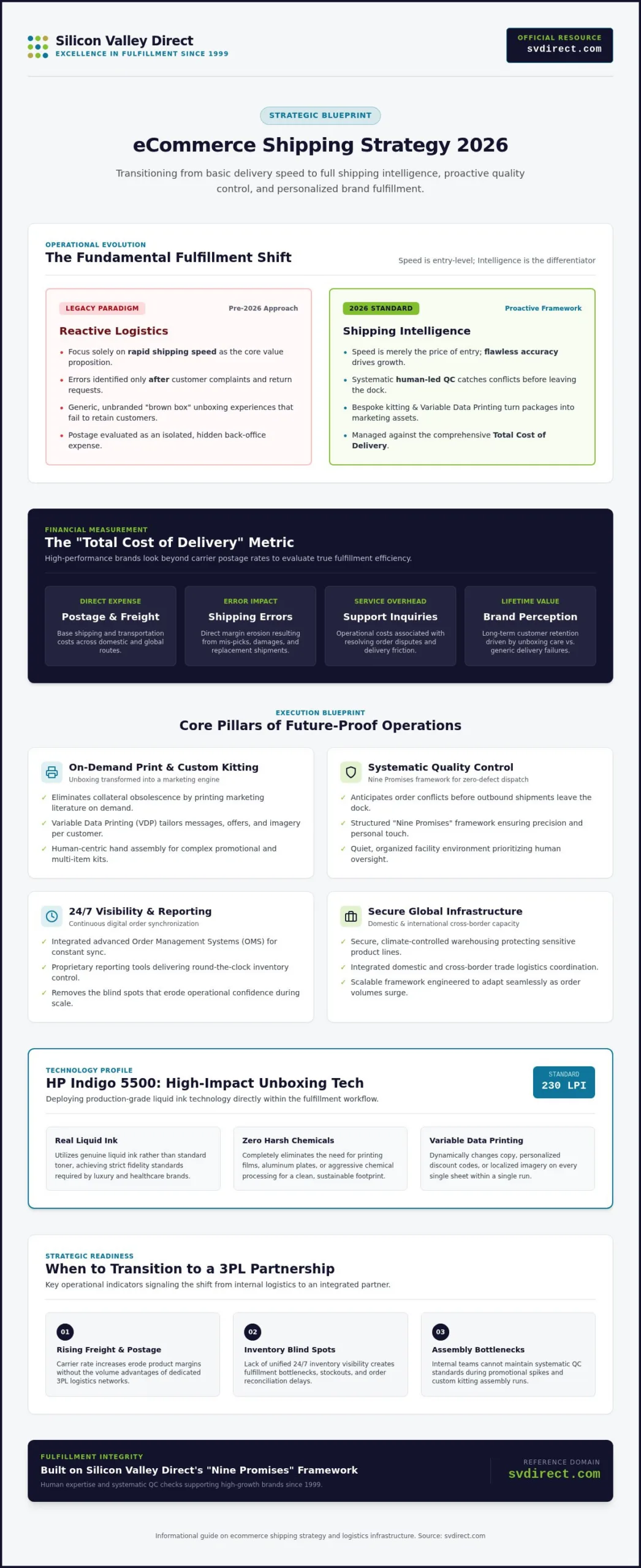
The landscape of fulfillment has shifted. In previous years, brands competed on delivery speed alone. By 2026, rapid shipping is merely the price of entry. To truly scale, your ecommerce shipping strategy 2026 must pivot toward shipping intelligence. This means moving from reactive logistics, where you solve problems after a customer complains, to proactive fulfillment, where errors are caught before the package leaves the dock. It’s a fundamental change in how high-growth businesses view their physical supply chain.

Consumers now look past the “brown box” experience. They expect precision. A package that arrives in two days but contains the wrong item or a damaged product is a failure that erodes margins through return costs and lost customer lifetime value. High-performance brands are shifting their focus to the “total cost of delivery.” This metric accounts for postage, yes, but it also weighs the impact of shipping errors, the cost of customer service inquiries, and the long-term value of brand perception.

From Commodity to Competitive Advantage

Shipping is no longer a hidden back-office expense. It’s a front-end marketing tool. When a customer opens a package, that first physical touchpoint determines whether they’ll buy again. Integrating custom kitting and personalized collateral transforms a standard delivery into a brand-building event. This approach is essential for survival in a market where generic experiences are quickly forgotten. By treating fulfillment as an extension of your marketing team, you drive higher retention rates and increase the long-term value of every lead. Thinking outside the box means using the package itself to communicate quality and care.

The Role of Proactive Problem Solving

Trust is earned through transparency and consistent quality control. A strategic third-party logistics (3PL) partner should anticipate order conflicts before they impact the end user. This proactive stance is rooted in a commitment to human oversight and systematic QC checks. At Silicon Valley Direct, we’ve provided this steady hand since 1999, viewing our 3PL fulfillment services as a partnership built on a “Nine Promises” framework. This ensures that every shipment meets a high standard of accuracy, alleviating the stress of growth while maintaining the personal touch that defines your brand. Our quiet, organized facility reflects this philosophy, focusing on the human expertise required to manage complex inventory with precision rather than just relying on automated abstractions.

Beyond the Box: Integrating Digital Printing and Custom Kitting

A winning ecommerce shipping strategy 2026 requires more than just efficient transit. It demands a marriage of marketing and logistics at the point of unboxing. Traditional fulfillment often relies on generic inserts that customers ignore. High-growth brands now utilize on-demand digital printing to create personalized collateral that speaks directly to the individual. By integrating these assets into the fulfillment workflow, you reduce inventory obsolescence and ensure every piece of literature is current and relevant.

Variable Data: Personalization at Scale

Variable Data Printing (VDP) allows you to change copy or images on every sheet within a single run. This level of customization is a cornerstone of a modern cross-border eCommerce digital strategy, where localized messaging and personalized offers drive re-orders. At Silicon Valley Direct, we use the HP Indigo 5500, which employs real liquid ink rather than standard toner. This technology achieves 230 line screen resolution, meeting the stringent quality standards required by luxury and healthcare brands. Because this process eliminates the need for films, plates, or harsh chemicals, it’s a more sustainable choice for environmentally conscious businesses. If you’re looking to elevate your brand collateral, you can explore our on-demand digital printing capabilities.

Strategic Kitting and Hand Assembly

Complex promotional kits require a level of precision that automated systems often miss. Our systematic QC-Check process ensures that every item in a custom kit is present and perfectly placed. This human-centric approach allows us to manage high-volume deadlines without the hectic atmosphere found in less organized facilities. Instead of “cookie-cutter” procedures, we provide bespoke solutions for Kitting and Assembly Services that reflect your brand’s unique needs. This meticulous oversight prevents shipping errors that could otherwise damage your reputation. If you’re ready to see how precision fulfillment can stabilize your growth, consider how easy it is to request a free quote for your next project.

Global Scalability: Navigating International Trade and Distribution

Scaling globally requires a roadmap that coordinates domestic efficiency with international complexity. By 2026, high-growth brands can’t afford fragmented logistics. Your ecommerce shipping strategy 2026 should center on a centralized hub capable of managing both B2C individual orders and B2B bulk distribution. This consolidation reduces overhead and ensures that your brand standards remain consistent, regardless of the destination. Managing these two distinct channels from one facility allows for better oversight of carrier rates and shipping management fees, which are often the largest hurdles in international trade.

Strategic Warehousing and Inventory Management

Inventory integrity is the backbone of global scalability. For brands dealing in sensitive goods, secure, climate-controlled warehousing isn’t just a luxury; it’s a necessity for protecting product lifespan. We’ve found that maintaining a quiet, organized facility is the most effective way to ensure accuracy during high-volume periods. This methodical environment allows our team to execute precise inventory controls, such as serial number tracking for high-value electronics, without the chaos typically associated with large-scale warehouses. You can learn more about our approach to Secure Warehousing for High-Value Electronics to see how we protect your most critical assets. Real-time tracking and automated low-stock alerts through our Remote Control system ensure you never miss a sale due to inventory lag.

International Logistics and Trade Support

Navigating the nuances of cross-border commerce involves more than just picking a carrier. It requires a deep understanding of trade documentation and global distribution channels. Resources like the International Trade Administration’s eCommerce logistics directory offer essential guidance for businesses looking to expand their reach. We support these efforts by integrating literature fulfillment into international product launches, ensuring that localized manuals and marketing materials arrive alongside the physical product. Our Global Shipping Services are designed to act as a seamless extension of your company, providing the expertise gained since 1999 to handle complex international requirements. This partnership model allows you to focus on growth while we manage the technical details of global logistics.

ECommerce Shipping Strategy 2026: The Strategic Guide to High-Growth Fulfillment

Real-Time Visibility: Leveraging Proprietary Technology for 24/7 Control

Data transparency is the pulse of a high-performance fulfillment operation. By 2026, relying on periodic updates is insufficient for enterprise scalability. A robust ecommerce shipping strategy 2026 requires an integrated tech stack where Order Management Systems (OMS) communicate directly with your web services. This ensures that every stakeholder has 24/7 access to order histories and real-time inventory levels. Utilizing our proprietary ‘Remote Control’ system, you gain a level of oversight that transforms fulfillment from a black box into a transparent, data-driven engine.

The Power of Integrated Web Services

Scalability depends on how well different systems talk to each other. We favor platform-agnostic XML and SOAP protocols because they provide the flexibility needed to grow without being locked into a single software ecosystem. Methods like ‘AddOrder’ and ‘GetOrderInfo’ streamline data exchange, significantly reducing custom coding time for your development team. This programmatic approach allows for immediate transaction verification; you can even view the XML source code to ensure every data point is accurate. It’s about providing the technical tools for total control while maintaining the human oversight that prevents automated errors.

Actionable Reporting for Strategic Decisions

Data is only as valuable as the insights it provides. Our Remote Control system generates over 120 standard reports, allowing you to identify fulfillment bottlenecks before they impact your margins. Beyond simple tracking, we employ rigorous data cleansing and database management to improve deliverability and reduce return-to-sender costs. We also understand that your digital tools should feel like your own. We offer Remote Order Management interfaces that can be customized to match your corporate branding. This creates a seamless experience for your team while maintaining the high-tech efficiency required for modern logistics.

Communication shouldn’t stop once an order is placed. We automate the feedback loop through triggered email notifications for receipts, backorders, and shipments. This proactive stance keeps your customers informed and reduces the volume of inquiries hitting your support desk. It’s a steady, methodical approach that prioritizes precision and personal commitment. Our system ensures you’re never left wondering about the status of your inventory or your customer’s experience.

Building a Seamless Partnership: Transitioning to Professional 3PL

Transitioning from in-house fulfillment to a professional partner is a significant milestone for any high-growth brand. You reach a point where managing your own warehouse becomes a distraction from your core mission of product innovation and marketing. Refining your ecommerce shipping strategy 2026 requires a partner that doesn’t just process orders but acts as a seamless extension of your company. This partnership model is built on listening and understanding your specific needs before a single box is packed. We’ve operated with this philosophy since 1999, ensuring our clients feel supported by a steady, reliable hand rather than an impersonal vendor relationship.

Evaluating Your Current Fulfillment Efficiency

Identifying the hidden costs in your current workflow is the first step toward optimization. These costs often lurk in high labor turnover, rising facility overhead, and the administrative burden of managing shipping errors. A professional 3PL brings stability through long-term staff retention; when the same experts handle your inventory for years, the quality of service remains consistently high. We prioritize a “make-it-right” attitude in our quality control, ensuring that every kit and shipment meets your exact standards. This human oversight, combined with our systematic QC-Check process, provides the precision needed to protect your margins and your brand reputation. If you’re looking for stability, our 3PL fulfillment services provide a quiet, organized atmosphere where accuracy is the primary objective.

Taking the Next Step Toward 2026 Success

Finalizing your 2026 roadmap requires a commitment to flexibility and proactive growth. It’s time to choose a partner that values innovation and “thinks outside the box” to solve complex logistics hurdles. A strategic audit of your current shipping strategy can reveal untapped opportunities for cost savings and improved customer experiences. Whether you’re integrating new digital printing capabilities or expanding into international distribution, your fulfillment partner should be ready to scale alongside you. We invite you to collaborate with a team that views your success as our own, providing the physical infrastructure and human expertise to turn logistics into a competitive advantage.

Mastering the Future of Fulfillment

Building a resilient ecommerce shipping strategy 2026 requires a shift from viewing logistics as a cost center to treating it as a primary engine for growth. By integrating high-resolution digital printing via the HP Indigo 5500 and leveraging the 120+ standard reports in our proprietary Remote Control system, your brand gains the precision needed to scale globally. Accuracy, transparency, and personalization are the pillars of a successful unboxing experience that drives long-term customer loyalty.

Since 1999, we’ve served as a steady hand for businesses navigating the complexities of fulfillment. We focus on direct human connection and bespoke problem-solving to ensure your operations remain organized and efficient. As you refine your roadmap for the coming years, remember that a true partnership is built on trust and a shared commitment to quality control.

Your growth is within reach when you have the right infrastructure and expertise backing every shipment. It’s an exciting time to turn your logistical challenges into a seamless competitive advantage.

Frequently Asked Questions

What is the most important trend in eCommerce shipping for 2026?

The most significant trend for an ecommerce shipping strategy 2026 is the transition from reactive logistics to proactive fulfillment intelligence. Fast shipping is now a baseline expectation. Brands must differentiate through high-touch personalization and data-driven accuracy. This involves integrating marketing collateral directly into the package. It ensures every unboxing experience builds loyalty while maintaining strict control over the total cost of delivery.

How does digital printing improve an eCommerce shipping strategy?

Digital printing enhances your strategy by allowing for just-in-time production of marketing inserts and manuals. This drastically reduces inventory obsolescence. Using technology like the HP Indigo 5500, brands produce high-resolution collateral without the long lead times of traditional offset methods. This flexibility ensures every package contains current information and personalized offers. It turns a standard shipment into a powerful marketing touchpoint.

Is variable data printing (VDP) expensive for small businesses?

Variable data digital printing is an affordable solution that costs not much more than producing static color printing jobs. It allows businesses of all sizes to customize every sheet in a print run with unique copy or images. This high level of personalization was once reserved for large corporations. Modern digital technology makes it accessible for startups looking to create professional, personalized mailers that resonate.

What is the difference between digital and traditional offset printing for fulfillment?

The primary difference lies in speed, setup, and handling. Traditional offset printing requires plates, films, and up to 24 hours of drying time before materials can be handled. In contrast, digital printing on an HP Indigo 5500 uses real liquid ink to achieve 230 line screen resolution and produces dry sheets ready for kitting immediately. This eliminates expensive plates and allows for superior color consistency.

How can I track my inventory in real-time with a 3PL partner?

You can track your inventory through a proprietary online data management system like Remote Control. This platform provides 24/7 access to real-time inventory levels, order histories, and shipment progress. By utilizing automated email notifications for low stock and inventory receipts, you maintain total visibility over your supply chain. This transparency allows you to make informed decisions without waiting for manual reports from your partner.

Why is HIPAA compliance important for healthcare mailing services?

HIPAA compliance is essential for healthcare mailing services because it ensures the secure handling of sensitive patient information and protected health data. Fulfillment partners in this sector must implement strict security protocols to prevent unauthorized access during the printing and mailing process. This level of oversight protects both the brand and the recipient, ensuring that all communications meet privacy standards while maintaining high accuracy.

What are the benefits of a proprietary Order Management System (OMS)?

A proprietary Order Management System offers seamless integration between your digital storefront and physical fulfillment. Unlike generic plugins, a custom OMS like Remote Control uses platform-agnostic XML and SOAP protocols to facilitate data exchange without custom coding. It provides over 120 standard reports and can be customized to match your corporate branding. This gives your team a tailored interface to manage orders and shipments.

How does a ‘quiet facility’ methodology improve fulfillment accuracy?

A ‘quiet facility’ methodology improves accuracy by replacing the hectic, chaotic atmosphere of traditional warehouses with a deliberate, organized workflow. This calm environment allows staff to focus on systematic QC-Check procedures and precise inventory controls. By reducing environmental stress, fulfillment teams manage high-volume deadlines with fewer errors. It ensures that complex kitting projects and high-value shipments are processed with the highest care.

Bay Area eCommerce Fulfillment Center: The 2026 Strategic Guide

Bay Area eCommerce Fulfillment Center: The 2026 Strategic Guide

In 2026, the distance between your warehouse and your customer is measured in brand loyalty, not just miles. You already know that high shipping costs to West Coast hubs and the impersonal service of massive 3PLs can stall your growth. It’s frustrating when errors in custom kitting or a lack of real-time inventory visibility make you feel like you’re losing control of your own business. You need a partner that acts as a proactive extension of your team, not just a vendor.

Selecting the right bay area ecommerce fulfillment center shouldn’t mean sacrificing a personal touch for technical scale. This strategic guide explores how to leverage Silicon Valley precision to slash shipping times and manage complex kitting with zero-error accuracy. We’ll preview the 2026 logistics landscape, including the impact of AB 98 regulations and the diverging industrial markets in the East Bay and Silicon Valley. By the end of this guide, you’ll have a clear roadmap for scaling your brand with a partner that values human connection as much as operational efficiency.

Key Takeaways

  • Leverage proximity to SFO, SJC, and the Port of Oakland to drastically reduce last-mile shipping costs for the Northern California market.
  • Ensure your brand can handle seasonal surges with real-time inventory visibility and scalable warehousing solutions designed for rapid growth.
  • Understand why a bay area ecommerce fulfillment center with a high-touch approach provides more reliability for complex orders than impersonal, fully automated systems.
  • Elevate your brand identity through specialized custom kitting and assembly that creates a memorable unboxing experience for every customer.
  • Gain peace of mind with a logistics partner that offers decades of expertise in secure healthcare mailing and global shipping compliance.

The Strategic Advantage of a Bay Area eCommerce Fulfillment Center

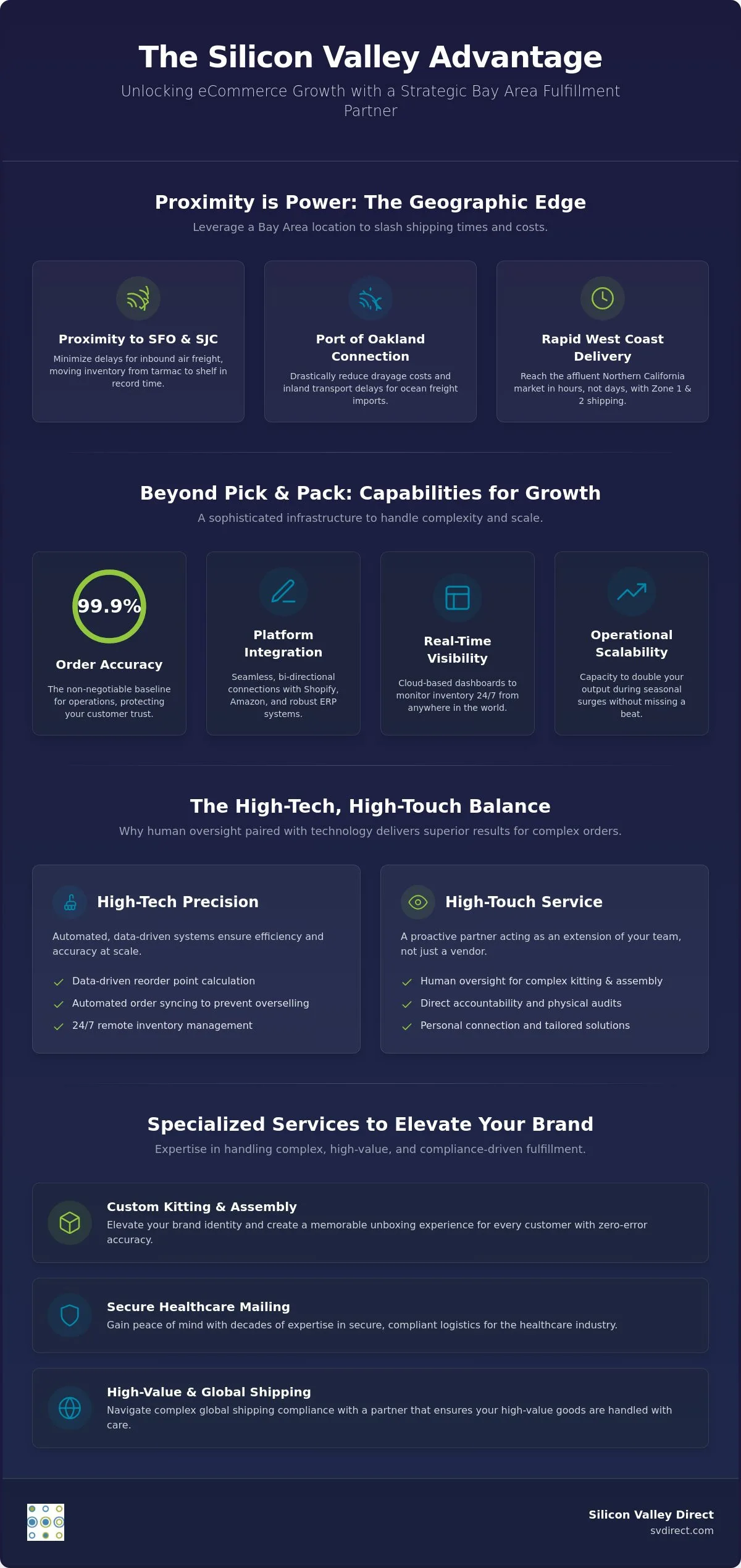
Success in modern retail depends on how quickly you can move a product from a digital cart to a physical doorstep. Choosing a bay area ecommerce fulfillment center provides a unique geographic leverage that most national providers can’t replicate. By positioning your inventory near major hubs like SFO, SJC, and the Port of Oakland, you’re placing your brand at the epicenter of global trade and domestic demand. This proximity doesn’t just save time; it ensures your brand remains agile in an unpredictable market.

The “Silicon Valley Effect” extends far beyond software. It permeates the local logistics industry, creating a talent pool that understands how to refine the order fulfillment process through technical precision. This local presence allows for direct oversight and physical audits, ensuring that your standards are met with human accountability rather than just automated reports. When you partner with a Silicon Valley 3PL, you’re gaining an extension of your own team that speaks the language of innovation.

Shipping Zones and Transit Times

An anchor point in Northern California drastically improves West Coast delivery speeds. Most shipments within the region fall into Zone 1 or Zone 2, which significantly reduces the cost of every parcel sent. By reaching major population centers in hours rather than days, you meet the high expectations of the affluent Northern California market. Proximity to international airports also means your inbound freight moves from the tarmac to the warehouse shelf with minimal delay.

The Port of Oakland Connection

The Port of Oakland serves as a vital artery for brands importing goods from overseas. Streamlining the transition from ocean freight to warehouse shelving is much easier when your facility is minutes away. This closeness reduces drayage costs and eliminates the inland transport delays that plague inland facilities. You can manage international imports with greater agility, reacting to inventory needs in real time while keeping your overhead low.

Evaluating 3PL Capabilities: Beyond the Standard Pick and Pack

Modern commerce requires more than just moving boxes. For a high-growth brand, a bay area ecommerce fulfillment center must provide a sophisticated infrastructure that handles seasonal surges and flash sales without a dip in quality. In 2026, 99.9% accuracy is the non-negotiable baseline for operations. Errors don’t just cost money; they erode the trust you’ve built with your customers through hard work and marketing.

Success depends on how well your warehouse communicates with your digital storefront. Your partner needs to offer:

  • Platform Integration: Seamless, bi-directional connections with Shopify, Amazon, and robust ERP systems.
  • Real-Time Visibility: Web-based tracking that shows exactly where your inventory sits at any given moment.
  • Operational Scalability: The physical and technical capacity to double your output during peak seasons without missing a beat.

The Tech Stack of a Modern Fulfillment Center

Cloud-based dashboards allow you to monitor inventory 24/7 from anywhere in the world. Automated order syncing prevents the nightmare of overselling or backorders, keeping your customer satisfaction scores high. Strategic partners use data-driven insights to help you calculate reorder points with surgical precision, ensuring you never tie up too much capital in stagnant stock. This level of remote order management ensures you’re always in the loop without needing to be on-site.

When to Transition to a Professional 3PL

The tipping point often arrives when your team spends more time packing boxes than developing new products. In the Bay Area, where labor and warehouse costs are at a premium, in-house logistics can quickly become a bottleneck for growth. Transitioning to a professional partner allows you to convert fixed costs into variable ones, freeing up resources for brand expansion. Before making the move, ensure your data is clean and your SKU list is organized to facilitate a smooth migration. If you’re ready to see how a professional partner can streamline your operations, you can request a custom assessment of your current needs.

The High-Tech, High-Touch Balance: Why Human Oversight Wins

While automation drives speed, it cannot replace the nuanced judgment of a seasoned professional. A high-performing bay area ecommerce fulfillment center should operate at the intersection of digital efficiency and personal oversight. This “high-touch” approach ensures that your brand’s unique requirements aren’t lost in a sea of generic algorithms. In an industry increasingly dominated by cold, mechanical processes, the human element remains your strongest safeguard against costly errors.

Fully automated systems often struggle with specialized logistics. If your product requires specific orientation, delicate handling, or a bespoke unboxing experience, a robot simply won’t notice a slight deviation from the standard. Relying solely on automation can lead to impersonal service and a lack of accountability. When a challenge arises, you need to reach a human partner who understands your business, not an automated ticketing system that leaves you waiting for days. This direct communication allows for rapid pivots and custom workflows that align with your specific goals.

Quality Control in the Assembly Line

Precision starts with rigorous manual inspection points. For high-value or fragile goods, outbound verification ensures that every package meets your exact brand standards before it leaves the dock. This extra layer of human care significantly reduces return rates and protects your reputation. By catching potential issues during the specialized handling process, we ensure that your customers receive exactly what they expected, every single time.

Building a Logistics Partnership

A true partnership is built on stability and collective experience. Long-term staff retention at your fulfillment center is a hallmark of quality; it means the people handling your inventory actually know your product. You deserve a dedicated account manager who acts as a steady hand, offering collaborative problem-solving for your most complex shipping hurdles. This level of commitment transforms a standard vendor relationship into a strategic alliance that alleviates the stress of business growth. It’s about having a team that is just as invested in your success as you are.

Bay Area eCommerce Fulfillment Center: The 2026 Strategic Guide

Specialized Fulfillment: Navigating Healthcare, High-Value, and Custom Kitting

Complexity defines the 2026 eCommerce market. A standard bay area ecommerce fulfillment center might handle a simple pick-and-pack order with ease, but specialized inventory requires a more sophisticated touch. Whether you’re managing HIPAA-compliant medical shipments or high-value electronics, your logistics partner must provide more than just shelf space. They need to offer a secure, climate-controlled environment backed by rigorous human oversight to ensure every regulation is met and every asset is protected.

High-value goods like consumer electronics and sensitive components demand specialized warehousing protocols. We implement advanced security measures and inventory controls to mitigate risk. This includes:

  • Asset Protection: Restricted access zones for high-value inventory.
  • Climate Stability: Temperature and humidity monitoring for sensitive electronics.
  • Serial Tracking: Precise tracking for warranty and compliance management.

Healthcare and Compliance Mailing

Managing sensitive medical documents or pharmaceutical samples requires a deep understanding of security protocols. We provide HIPAA-aware handling that prioritizes data integrity and physical safety. Secure storage is essential for maintaining the efficacy of medical devices and sensitive materials. You can learn more about healthcare mailing services in our detailed 2026 compliance guide. Our facility acts as a steady hand for healthcare providers who cannot afford errors in their specialized mailing workflows.

Advanced Kitting and Assembly Services

Your brand’s unboxing experience is a powerful tool for building customer loyalty. Custom kitting and assembly allow you to create subscription boxes or promotional kits that stand out in a crowded market. By integrating on-demand digital printing, we can include personalized literature directly into your shipments. This just-in-time approach ensures your messaging is always current and relevant to the recipient. Read our guide on kitting and assembly services to see how we streamline these complex workflows for growing brands.

If your brand requires a specialized approach to logistics, our team is ready to help you scale with precision. You can request a free quote to discuss your specific requirements and receive a bespoke solution.

Silicon Valley Direct: Decades of Reliability in the Heart of Innovation

Since 1999, Silicon Valley Direct has stood as a steady hand in an industry defined by rapid change. We’ve built our reputation on a legacy of excellence, providing a bay area ecommerce fulfillment center that combines physical infrastructure with human expertise. As a privately held corporation, we prioritize long-term stability and personal commitment over the quarterly pressures that often drive impersonal service in larger firms. This independence allows us to focus entirely on your brand’s growth and the precision of your operations.

Our comprehensive solutions span the entire logistics spectrum, from secure warehousing and inventory management to complex global shipping. We don’t just move products; we manage your brand’s physical presence with the same care you used to build it. By leveraging our local hub in the heart of innovation, you gain global reach with the agility of a local partner. Whether you’re shipping across the peninsula or across the ocean, our team ensures your supply chain remains seamless and resilient.

Our Operational Philosophy

We explicitly reject the trend of automated interactions. You won’t find yourself trapped in a loop of automated support tickets here. Instead, we foster direct human connection and personal oversight. Our communication rhythm is steady and methodical, mirroring the efficiency of our facility. This approach ensures that every detail of your fulfillment services is handled with deliberate care and total flexibility.

Getting Started with Your Bay Area Partner

Transitioning to a new logistics partner is a significant step toward scaling your brand. Our onboarding process is designed to be thorough yet efficient, setting your supply chain up for immediate success. We start by understanding the specific nuances of your inventory and your customer expectations. If you’re ready to experience a partnership grounded in precision and reliability, contact Silicon Valley Direct for a bespoke logistics consultation today. We’ll provide a customized quote tailored to your unique fulfillment needs, ensuring you have the support required to lead your market in 2026.

Secure Your Logistics Strategy for a Competitive 2026

The 2026 logistics landscape demands a partner that can navigate regulatory shifts while maintaining surgical precision in every order. By choosing a bay area ecommerce fulfillment center, you’re positioning your inventory at the intersection of global trade and technical innovation. You’ve seen how proximity to the Port of Oakland slashes drayage costs and how human oversight ensures your high-value electronics or healthcare shipments remain secure. This geographic and operational advantage is the key to reducing last-mile costs in the affluent Northern California market.

Since 1999, Silicon Valley Direct has acted as a steady hand for brands that refuse to settle for impersonal, automated service. We provide the specialized expertise required for HIPAA-compliant healthcare mailing and secure warehousing for high-value electronics. Our team doesn’t just manage boxes; we protect your brand’s reputation through bespoke problem-solving and a commitment to 99.9% accuracy. If you’re ready to move beyond the limitations of generic 3PL providers, it’s time to build a partnership grounded in history and high-performance execution.

Streamline your supply chain with Silicon Valley Direct and discover the difference that decades of local expertise can make for your brand’s growth. We look forward to helping you scale with confidence.

Frequently Asked Questions

What should I look for in a Bay Area ecommerce fulfillment center?

Look for a partner that prioritizes a balance of high-tech efficiency and high-touch human oversight. It’s essential to find a provider with a proven history of stability, such as a multi-decade operational record in the region. Your fulfillment partner should offer seamless digital integration while maintaining a steady, methodical flow in its physical operations to ensure maximum accuracy and reliability for your brand.

How does a local 3PL help with international shipping from the West Coast?

A local partner leverages its proximity to major international hubs like SFO, SJC, and the Port of Oakland to accelerate global transit. This geographic advantage reduces inland transport delays and lowers drayage costs for inbound freight. By managing global shipping and logistics from a West Coast anchor point, you can reach international markets with greater agility and significantly reduced overhead.

Is it more expensive to use a fulfillment center in Silicon Valley versus elsewhere?

While regional real estate costs are premium, the investment is often offset by significant savings in shipping zones and transit times. Reaching the affluent Northern California market through a bay area ecommerce fulfillment center places your inventory in Zone 1 or 2 for millions of customers. This proximity slashes last-mile costs and improves brand loyalty through much faster delivery speeds.

Can a Bay Area fulfillment center handle HIPAA-compliant mailing?

Yes, specialized facilities provide HIPAA-aware handling for sensitive medical documents and pharmaceutical samples. This requires a sophisticated infrastructure that includes secure storage and rigorous outbound verification protocols. Choosing a partner with a legacy in healthcare logistics ensures your brand meets all regulatory standards with surgical precision, protecting both your organization and your patients’ sensitive information.

What is the difference between standard fulfillment and custom kitting?

Standard fulfillment focuses on efficient pick-and-pack operations for individual SKUs and high-volume orders. Custom kitting and assembly involve creating a bespoke unboxing experience through subscription box assembly or promotional kit creation. This specialized service often includes integrating marketing collateral or personalized literature directly into shipments to build deeper customer loyalty and enhance your brand identity.

How do returns management services work with a local 3PL?

Returns management involves a methodical process of receiving, inspecting, and restocking returned goods to maintain inventory accuracy. A local partner provides a steady hand in verifying the condition of items before they return to the shelf. This proactive approach reduces waste and ensures that only high-quality products are available for subsequent orders, protecting your bottom line and customer satisfaction.

What integrations are available for Shopify and WooCommerce stores?

Modern fulfillment centers offer seamless, bi-directional connections with major platforms like Shopify, WooCommerce, and various ERP systems. These cloud-based dashboards provide 24/7 inventory monitoring and automated order syncing across all your sales channels. This level of technical integration prevents the nightmare of overselling by providing real-time visibility into your stock levels at every moment.

How does proximity to the Port of Oakland affect my supply chain?

Being minutes away from the Port of Oakland streamlines the transition from ocean freight to warehouse shelving. This proximity eliminates the long inland transport delays and high fuel surcharges that plague facilities located further from the coast. It allows your brand to handle international imports with greater agility, reacting to inventory needs in real time while keeping your overhead low.