Cross-Border eCommerce Fulfillment: How to Evaluate a Global Network
What if the hardest part of cross-border ecommerce fulfillment isn’t reaching new customers, but knowing who’s responsible when an order, inventory update, or return goes off plan?
Expanding into international markets adds moving parts: inventory must stay visible, orders need to progress smoothly, and shipping and returns responsibilities should be clear. A provider’s broad-sounding network isn’t enough if its destination coverage, system integration, or exception-handling process doesn’t match your needs.
This guide helps you compare fulfillment models using practical operational criteria. You’ll learn how to assess destination coverage, inventory visibility, order data integration, shipping responsibilities, and returns support, then match those capabilities to your business needs.
Technology can make a practical difference. Silicon Valley Direct’s Remote Control system provides access to order and inventory information, helping teams monitor progress across operations. As you evaluate partners, consider visibility and communication alongside network reach. The right fit connects inventory, order data, and delivery responsibilities, so you can see what happens at each step.
Key Takeaways
- See how cross-border ecommerce fulfillment coordinates an order beyond the international shipping leg, including inventory and returns.
- Trace the order journey to identify where order status, inventory records, and delivery updates need to stay aligned.
- Compare centralized inventory, destination-based inventory, and coordinated partner models against your operational needs.
- Build a partner checklist that records target destinations, order profiles, inventory requirements, returns expectations, and escalation paths.
- Understand how Silicon Valley Direct’s fulfillment, warehousing, inventory management, returns, and global shipping services may support your planning.
What Cross-Border eCommerce Fulfillment Covers Beyond International Shipping
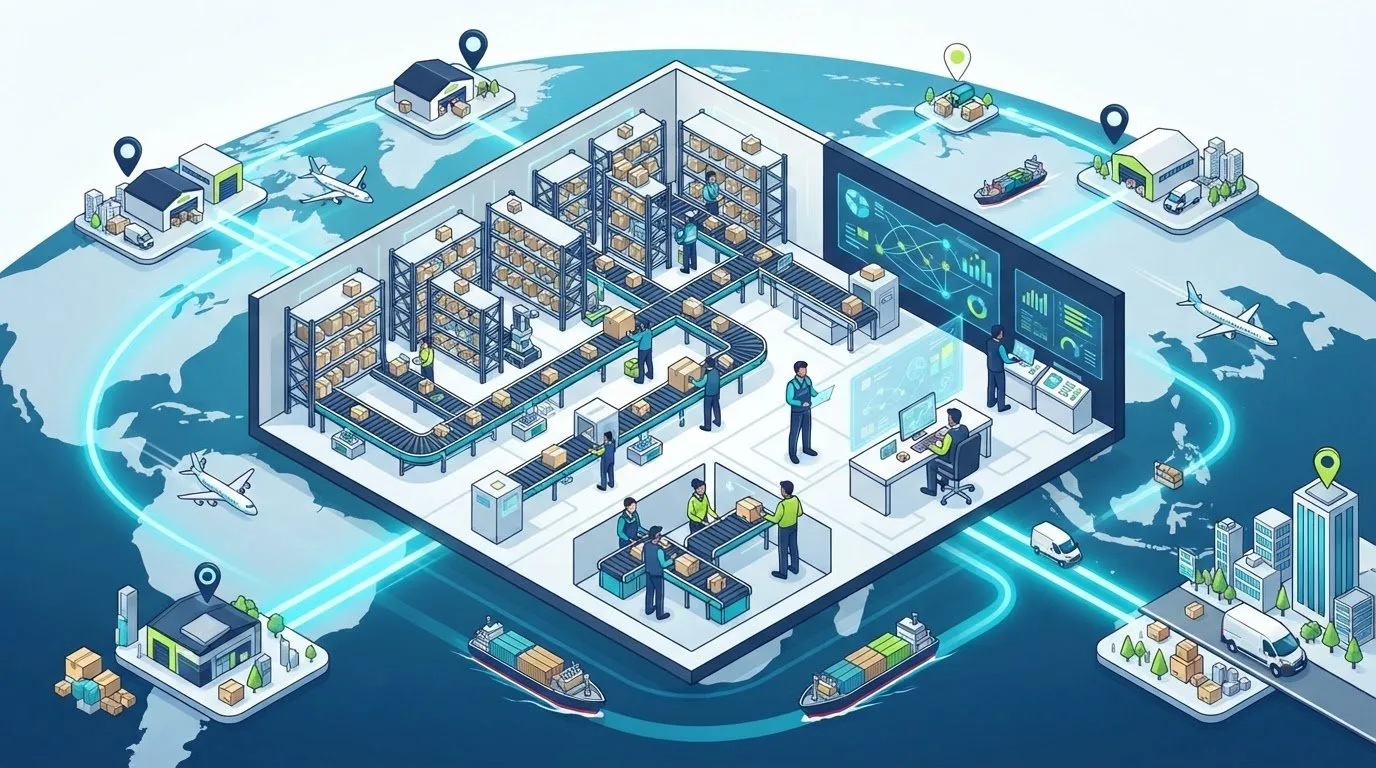
Cross-border eCommerce fulfillment is the coordinated management of online orders, inventory, shipping, and returns as products move between countries. International shipping is one part of the process: it moves a parcel from one location to another. Fulfillment also connects the steps before dispatch and after delivery, so order details, stock records, and customer updates remain aligned.
This distinction matters when evaluating a provider. A company may arrange shipping to a destination without storing your inventory, processing orders, managing returns, or sharing order status information. Order fulfillment covers the wider flow of receiving, processing, and delivering customer orders. Across borders, the added challenge is making sure each handoff has a clear owner.
Which activities belong in a cross-border fulfillment workflow?
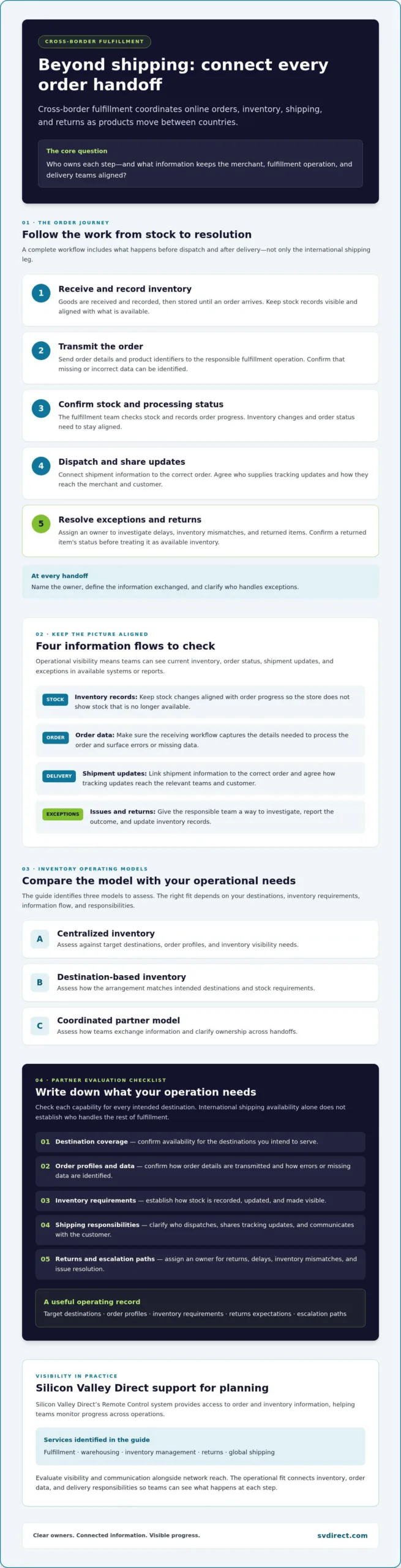
The workflow starts when inventory is received and recorded, then stored until an order arrives. Next, the order details must reach the team or system responsible for fulfillment. Items are picked, packed, and dispatched, and shipment status is shared through the agreed channels. If a customer returns an item, the returns process needs an owner and a way to update inventory records.
These activities may be divided among the merchant, a fulfillment provider, a carrier, and other service partners. For example, a provider might store and pack goods while the merchant handles customer messages and a carrier supplies tracking updates. The arrangement can vary. Document who owns each step, what information they exchange, and who handles exceptions such as a delayed shipment or returned item.
Why doesn’t international reach automatically mean end-to-end fulfillment?
A stated ability to ship internationally describes a delivery option, not necessarily a complete operating model. Warehousing, inventory management, order processing, tracking visibility, and returns are distinct capabilities. Confirm which ones a provider performs directly, which rely on another partner, and which remain with your team.
Check availability and responsibilities for every intended destination rather than assuming a general claim about global reach covers your plan. Ask how orders are transmitted, how stock and progress are made visible, and how returns are handled. Also clarify who communicates with the customer and who resolves issues when information or a shipment falls out of step.
Start your evaluation with the complete order journey, not just a destination list. When every handoff has a named owner and a clear information path, you can assess operational fit with greater confidence.
How a Cross-Border Fulfillment Network Connects Orders, Inventory, and Delivery
A cross-border order can pass through several teams and systems before it reaches the customer. Operational visibility is the ability to see current inventory, order status, shipment updates, and exceptions in the systems or reports available to the teams responsible for the order. In cross-border ecommerce fulfillment, a shared picture helps the merchant and fulfillment partners act on the same information instead of working from conflicting records.
- Transmit the order. The store sends order details and product identifiers to the fulfillment operation. Confirm that the receiving workflow captures the information needed to process the order and that both sides can identify errors or missing data.
- Confirm inventory and processing status. The fulfillment team checks stock, then records the order’s progress. Inventory changes and order status should stay aligned so the store doesn’t continue showing stock that is no longer available.
- Dispatch and share shipment updates. Once the order ships, shipment information should connect to the correct order. Agree on who supplies tracking updates and how they reach the merchant and customer.
- Resolve exceptions and returns. If a shipment is delayed, inventory doesn’t match the record, or a product comes back, the responsible team needs to investigate and report the outcome. Returned inventory should not be treated as available until its status is confirmed.
What information should move between the store and fulfillment operation?
Agree on the required order details, product identifiers, inventory changes, shipment status, and exception notifications before launch. Then confirm available integration methods, data formats, update expectations, and who will troubleshoot a failed or incomplete transmission. The Remote Order Management page provides more information about order and inventory visibility. For broader planning considerations, the International Trade Administration offers resources on cross-border ecommerce.
Where should teams assign ownership for exceptions and returns?
Name the person or team responsible for investigating stock discrepancies, delivery exceptions, and returned inventory. Document escalation contacts, expected updates, and who can decide the next action. A clear handoff matters: if a carrier reports an issue but no one owns the customer update, the order may be moving while the customer hears nothing. For destination-specific legal or customs requirements, verify details with qualified advisers rather than assuming a fulfillment provider covers them.
Before choosing a workflow, map your order data, inventory needs, destinations, and exception process. If you’re assessing how order processing, inventory management, and global shipping could fit together, you can discuss your fulfillment requirements with Silicon Valley Direct.
Which Cross-Border Fulfillment Model Fits Your eCommerce Business?
The right cross-border ecommerce fulfillment model depends on your order patterns, inventory priorities, and ability to coordinate operations. A larger physical network isn’t automatically a better starting point. More locations can mean more stock transfers, system updates, and partner handoffs to manage. Compare the operational trade-offs first, then confirm destination-specific coverage and service details with the providers involved.
| Model | Inventory control | Operational complexity | Visibility and adaptability |
|---|---|---|---|
| Centralized inventory | Stock is held in one primary location, making oversight more direct. | Fewer storage locations to coordinate, though shipping and destination coverage still need checking. | A single stock pool can be easier to monitor; delivery options and expectations depend on confirmed routes. |
| Destination-based inventory | Stock is positioned in multiple locations closer to intended customer markets. | Requires coordination of stock levels, replenishment, and order routing across locations. | May support different market needs, but inventory can become harder to balance and track. |
| Coordinated partner model | The merchant and service partners manage agreed portions of inventory and fulfillment. | Responsibilities and data handoffs must be clearly documented across parties. | Can be shaped around business needs, provided systems and communication keep records aligned. |
When can centralized inventory support cross-border sales?
One primary inventory location can simplify stock oversight and reduce the number of storage points and partner relationships to coordinate. It may suit a business testing demand across markets before changing its inventory footprint. Consider the trade-offs: confirm whether the provider can serve each intended destination and what shipping options are available. Don’t assume a general coverage statement establishes delivery expectations for a particular route; businesses and shoppers looking at regional logistics can also explore 國際集運服務 to see how international package consolidation connects cross-border shipments.
When might distributed inventory or multiple partners make sense?
Additional locations or partners may fit a business with established demand patterns and a clear plan for allocating stock. They also create more work: teams need to reconcile inventory, decide which location fulfills each order, and clarify responsibility when stock or shipment information differs. Before changing models, weigh demand, product availability, and customer expectations, then verify capabilities for each intended destination. The World Customs Organization’s Framework of Standards on Cross-Border E-Commerce provides context for cross-border processes, but it doesn’t confirm a provider’s coverage or service offer.
For related shipping considerations, see this guide to global shipping services. Use your order profile and operating capacity to choose a model you can oversee reliably, not simply the one with the most locations.
How to Evaluate a Cross-Border eCommerce Fulfillment Partner
A strong cross-border ecommerce fulfillment arrangement depends on more than a broad network claim. Before committing, map your actual destinations, order profiles, inventory requirements, returns expectations, and exception process. Then ask providers to confirm what they handle, what your team retains, and what depends on another service partner. Written answers make it easier to compare operational fit and reduce uncertainty at handoffs.
- Confirm destination coverage. Ask which intended destinations are currently serviceable and what shipping options can be confirmed for each. Request written confirmation of any destination-dependent services or limitations.
- Map the workflow. Document how orders move from your store to fulfillment, who receives and processes them, and who coordinates shipment updates. Clarify responsibility for delivery exceptions and customer communication.
- Check system access and data flow. Ask how orders are submitted and how you can access inventory, order progress, and shipment information. Confirm available integration methods, required data, reporting, and exception alerts before launch.
- Define inventory and returns handling. Agree how stock changes are recorded, who investigates discrepancies, and how returned items are assessed and reflected in inventory.
- Set support and escalation expectations. Record operational contacts, how issues are escalated, who has decision authority, and what updates your team should expect when a problem arises.
What questions reveal a provider’s actual destination coverage?
Ask for specifics rather than relying on phrases such as “global reach.” Can the provider confirm service for each destination on your list? Which party coordinates the shipment and shares tracking updates? Who investigates a delivery exception, and how will your team know what action is needed? Keep the answers tied to your routes and order needs; availability for one destination shouldn’t be assumed for another.
How can you assess integration, inventory visibility, and support?
Request a clear explanation of how order details enter the operation and how inventory and shipment records are made accessible to your team. Check which reports and alerts are available, how discrepancies are handled, and whom you contact when an integration or fulfillment issue arises. Silicon Valley Direct’s 3PL fulfillment services overview can help you understand its service scope. You can also review customer testimonials for examples of client experiences, while treating them as context rather than a guarantee of your own results.
Use your completed checklist to discuss your order, inventory, visibility, and destination requirements with Silicon Valley Direct.
How Silicon Valley Direct Can Support Cross-Border Fulfillment Planning
Cross-border ecommerce fulfillment calls for more than a shipping option. Order processing, inventory records, returns, and delivery information need to work together, with clear responsibilities at every handoff. Silicon Valley Direct provides eCommerce order fulfillment, warehousing and distribution, inventory management, returns management, and global shipping and logistics. Assess these capabilities against your workflow rather than assuming they guarantee coverage in every destination.
Which SVD capabilities may fit a cross-border fulfillment workflow?
Consider how order fulfillment, inventory management, and global shipping could connect for your operation, then confirm which services apply to your project and who owns each step. Silicon Valley Direct’s Remote Control system is described as providing access to orders, progress, order histories, and real-time inventory, with over 120 standard reports. Confirm current features, access, and reporting details before relying on them for a particular workflow. Destination availability and shipping options also need project-specific confirmation.
A practical planning discussion should connect system visibility to physical operations. For example, identify how a stock change would be reflected in inventory records, who would review an order exception, and how shipment progress would be shared with your team. Clear communication helps set expectations, while a flexible partnership approach can make it easier to discuss responsibilities that fit your process. Confirm proposed integration methods and service scope directly rather than assuming they are included.
What information should you prepare before requesting a quote?
Bring a concise operating brief so the conversation can focus on fit. Include product details, approximate order patterns, inventory requirements, intended destinations, and the steps in your current order workflow. Add your systems, reporting expectations, returns requirements, known integration questions, and any handoffs that need clarification. Sharing these details helps identify what must be confirmed, including destination-specific availability and the division of responsibilities between your team and service partners.
- Products and orders: What you sell and the order patterns you expect.
- Inventory and destinations: Where stock is held, how it is managed, and where you intend to ship.
- Workflow and systems: How orders are submitted, what information needs to move, and what visibility your team requires.
- Returns and exceptions: Your expectations for returned inventory, issue updates, and escalation contacts.
With these requirements documented, you can discuss how eCommerce fulfillment, inventory management, returns, and global shipping may fit together. Confirm destination coverage, system functionality, and service responsibilities for your specific project.
Build a Clearer Path for International Growth
Effective cross-border ecommerce fulfillment depends on choosing an operating model that fits your order and inventory needs, then confirming who owns each step from processing through returns. Evaluate partners on specific destination coverage, clear workflows, useful data access, and a defined process for handling exceptions. These details help turn a broad expansion plan into an operation your team can oversee.
Silicon Valley Direct has supported fulfillment operations since 1999. Its Remote Control system is documented as offering 24/7 access to order and inventory information and over 120 standard reports. Confirm current system specifications and report availability as you discuss your requirements, along with destination coverage and service responsibilities. A direct conversation can clarify how eCommerce fulfillment, inventory management, returns, and global shipping may fit your workflow.
Answering these questions early helps you approach international growth with a clearer plan and a partner conversation grounded in your operational needs.
Frequently Asked Questions
What is cross-border eCommerce fulfillment?
Cross-border eCommerce fulfillment is the coordinated handling of online orders sold across national borders. It can include storing inventory, receiving order data, picking and packing products, arranging international shipping, sharing shipment updates, and managing returns. The exact scope depends on the provider and destination. Before committing, clarify which activities the partner performs, which remain your responsibility, and how order, inventory, and shipment information moves between your systems.
How does cross-border eCommerce fulfillment work?
The process begins when a store sends order information to its fulfillment operation. The team checks inventory, picks and packs the products, and prepares the shipment. The provider or an agreed partner coordinates shipping and shares available status updates. If a delivery exception or return occurs, the parties follow their documented process. Before launch, agree on data requirements, destination coverage, handoffs, and responsibility for customer communication.
Do I need a fulfillment center in every country I sell to?
No, not necessarily. Some businesses may manage international orders from one primary inventory location, while others may consider additional locations as their needs change. The right choice depends on demand, stock control, destination coverage, customer expectations, and the complexity your team can manage. Compare the operational trade-offs before deciding. Confirm actual service options with providers, and consult qualified advisers about requirements specific to your intended destinations.
What should I compare when choosing a cross-border fulfillment provider?
Compare confirmed destination coverage, service scope, inventory and order visibility, integration methods, returns handling, exception ownership, and communication. Ask how each step works in practice, including who investigates a stock discrepancy or delivery issue. Request written clarification for the destinations and services that matter to your business. A consistent checklist helps you assess each potential arrangement against the same operational needs, rather than relying on broad network descriptions.
How can I track international orders and inventory?
First, confirm what order, inventory, and shipment information the provider makes available, how you access it, and how often it updates. Ask whether you can review order progress, stock records, shipment activity, and exceptions through a system or reports. Silicon Valley Direct’s Remote Control system is documented as providing order and inventory access and over 120 standard reports. Verify current features and reporting availability, and clarify who investigates discrepancies.
Can one 3PL manage fulfillment and international shipping?
One 3PL may offer both order fulfillment and global shipping coordination, but the exact scope can vary. Confirm whether the provider handles inventory, order processing, shipping arrangements, tracking information, and returns, or relies on other parties for some steps. Silicon Valley Direct offers eCommerce order fulfillment, inventory management, returns management, and global shipping and logistics. Ask which destinations and services apply to your project, and who owns exceptions.
What information should I prepare before discussing cross-border fulfillment?
Prepare your intended destinations, product details, inventory needs, approximate order patterns, current sales systems, shipping expectations, and returns requirements. Note how orders are submitted and what status information or reports your team needs. Include any special handling or customer communication needs, plus questions about system integration. A clear outline helps a provider assess the workflow and confirm service scope and availability without relying on assumptions about destinations or capabilities.