Flexible Fulfillment Solutions: The 2026 Strategic Evaluation Guide
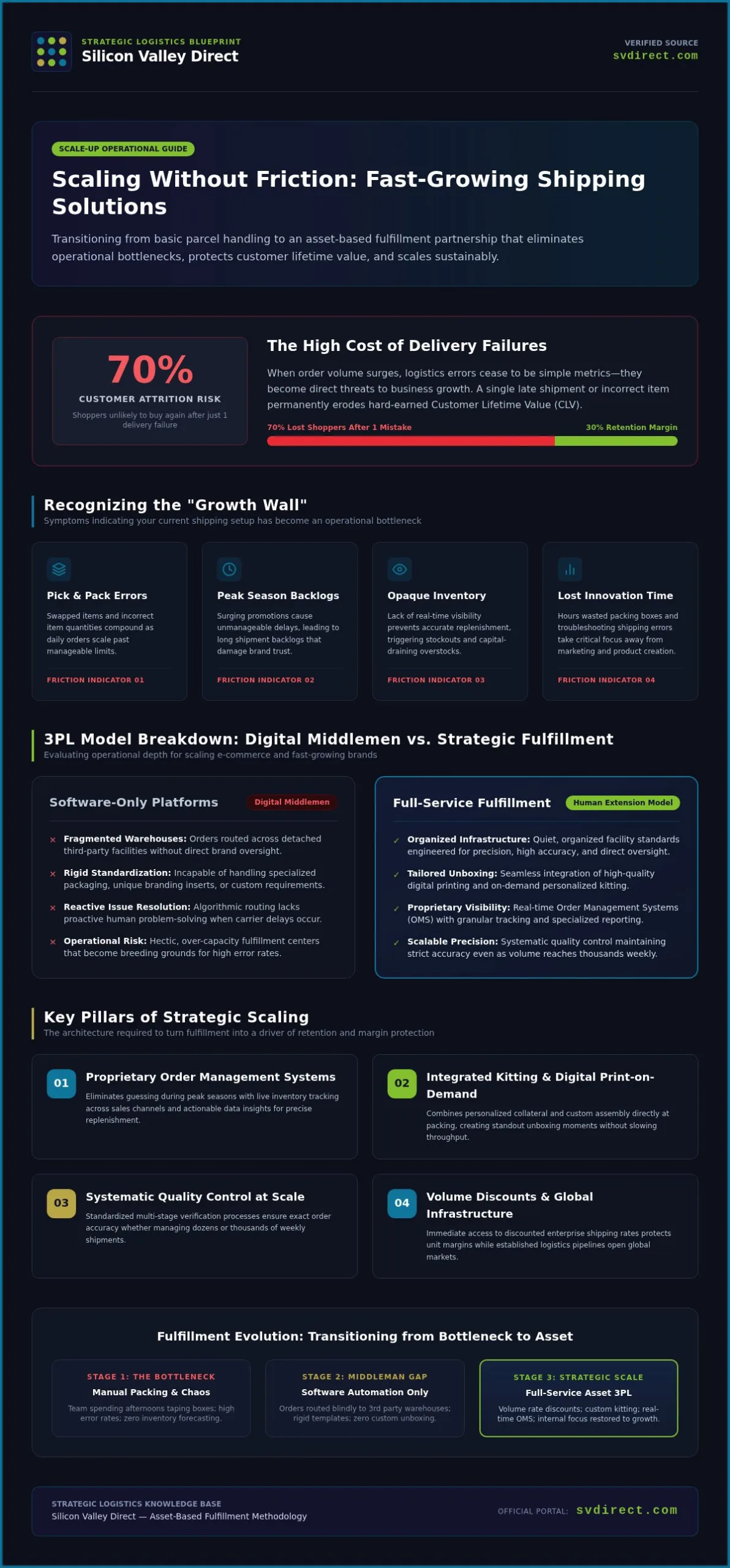
Signing a standard logistics contract often feels like a safe operational milestone, yet rigid agreements and cookie-cutter workflows usually deliver the exact opposite of real adaptability. When seasonal surges hit or order volumes suddenly fluctuate, businesses frequently find themselves trapped by steep minimum volume penalties, sluggish support queues, and assembly lines that can’t handle custom packaging or specialized kitting. Modern brands don’t just need basic warehouse space; they require true flexible fulfillment solutions that adjust dynamically to real-world demand without sacrificing accuracy or control.
You already know that expanding your operations shouldn’t mean compromising on the personal touches and unboxing experience your customers expect. In this guide, you’ll discover how flexible fulfillment solutions eliminate logistics bottlenecks, unite custom kitting with on-demand collateral, and maintain total operational transparency through real-time inventory tracking. We outline the essential operational criteria, integration standards, and collaborative practices you need to evaluate in 2026 to build an elastic supply chain that scales effortlessly alongside your business.
Key Takeaways
- Discover why modern brands are replacing restrictive volume minimums with flexible fulfillment solutions that scale smoothly alongside volatile demand cycles.
- Learn how unifying warehousing with custom kitting, systematic inspection protocols, and on-demand collateral production eliminates costly logistical delays.
- Uncover the critical differences between legacy, fixed-commitment 3PL agreements and modular storage models designed around actual inventory throughput.
- Master a structured evaluation framework to audit prospective partners for open web service integrations, real-time reporting visibility, and responsive customer support.
- Identify the operational hallmarks of a dedicated logistics partner that functions as a proactive extension of your internal team rather than an impersonal vendor.
What Are Flexible Fulfillment Solutions in Modern Supply Chains?
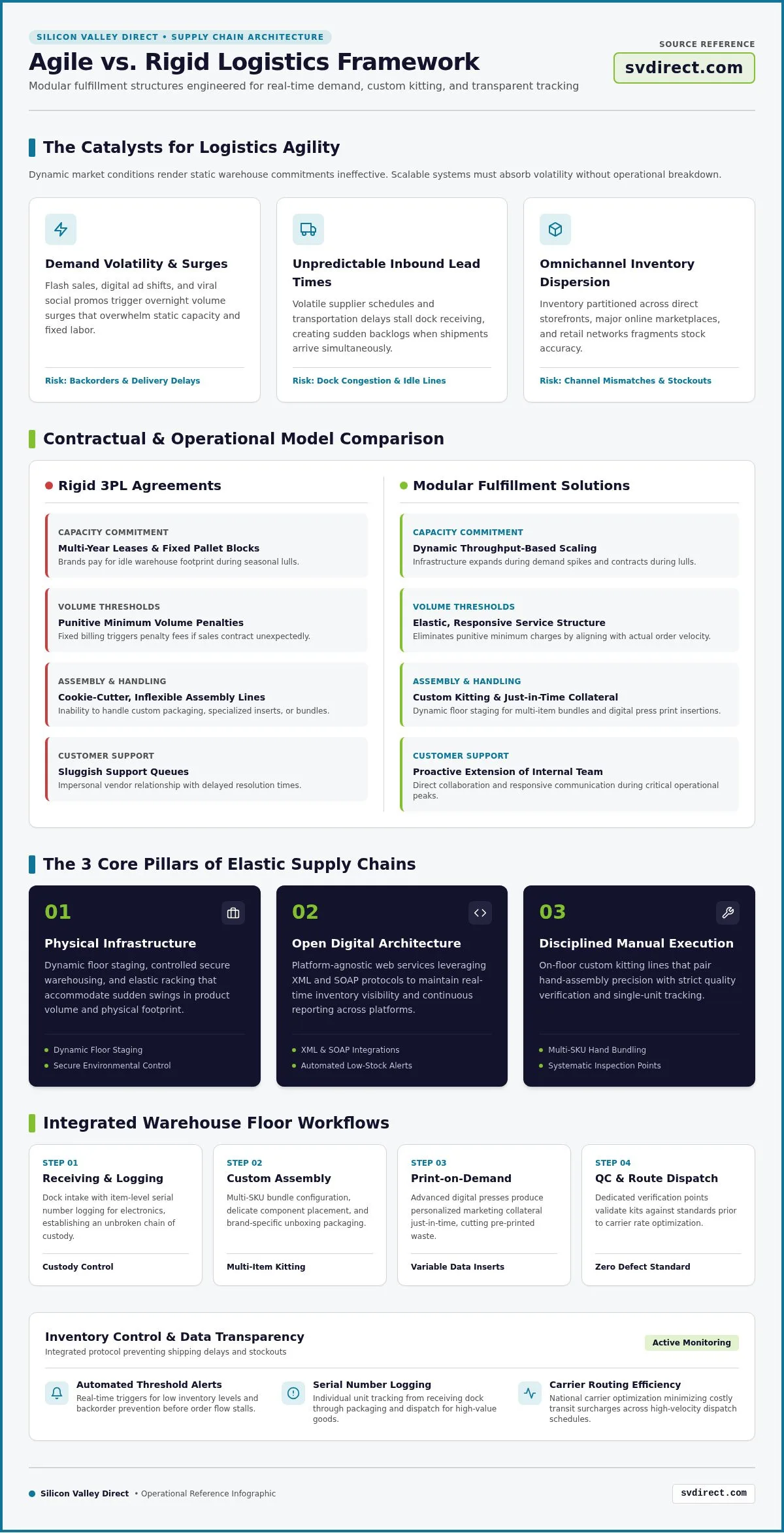
Flexible fulfillment solutions are adaptable operational architectures engineered to scale warehousing space, labor, and dispatch velocity in direct response to real-time market shifts. Traditional logistics operations typically trap expanding merchants in rigid multi-year leases, fixed pallet commitments, and punitive monthly minimum volume fees. In contrast, elastic operations treat supply chain infrastructure as a responsive service that expands during sales surges and contracts during quiet lulls.
Modern omnichannel businesses face unprecedented inventory dispersion across direct storefronts, major online marketplaces, and retail distribution networks. When demand spikes abruptly, static fulfillment setups inevitably crack under the strain. That leads to shipping backlogs, inventory inaccuracies, and disappointed customers. A truly flexible framework absorbs these fluctuations smoothly, protecting the end-customer experience while maintaining rigorous operational control.
The Driving Forces Behind Logistics Agility
Rapid shifts in digital ad performance, viral social promotions, and unexpected flash sales frequently create overnight order spikes that static fulfillment teams can’t handle. At the same time, volatile supplier lead times and transit delays can stall incoming inventory without warning. When peak holiday rushes collide with rigid vendor contracts, standard facilities hit severe capacity bottlenecks. Logistics agility resolves this vulnerability by dynamically shifting floor staging, assembly resources, and packaging schedules to match actual inventory flows.
Beyond Storage: The Broad Scope of Agile Fulfillment
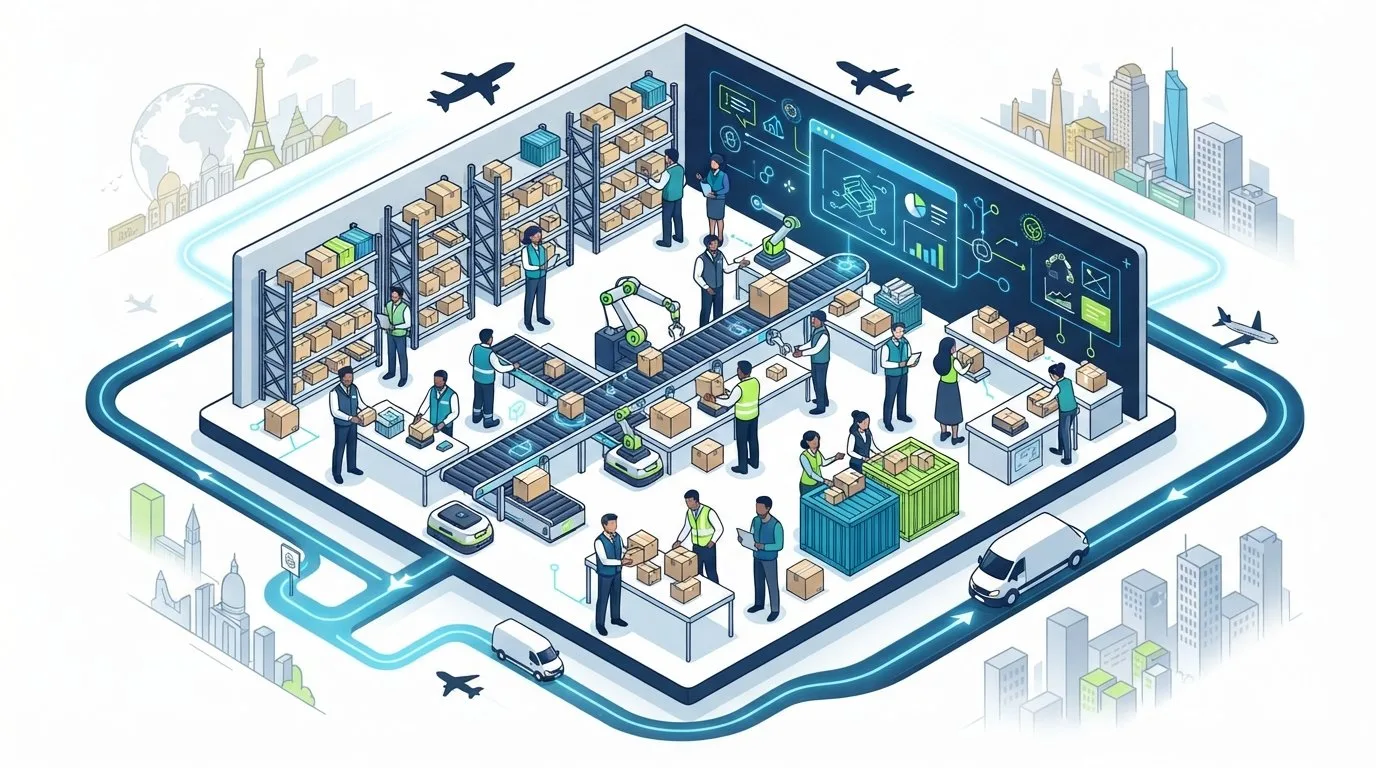
True operational flexibility encompasses far more than overflow warehouse racking. It demands synchronized execution across dynamic pick, pack, and specialized assembly workflows, as well as disciplined outbound carrier management. Working with proven providers of silicon valley 3pl fulfillment services allows brands to optimize national carrier routing, reduce costly transit surcharges, and maintain strict quality standards across every parcel, regardless of sudden swings in order velocity.
Core Components of a Truly Agile Fulfillment Strategy
Fulfillment flexibility isn’t just about leasing temporary pallet space or deploying automated shipping algorithms. Real adaptability relies on three interconnected operational pillars: physical infrastructure, open digital architecture, and disciplined manual execution. Many logistics providers focus solely on generic storage, leaving merchants stranded when an order requires specialized packaging or custom product configurations. Resilient flexible fulfillment solutions bridge this gap by uniting dynamic storage, platform-agnostic web services (such as XML and SOAP), and high-precision assembly lines within a single operational environment.
Dynamic Warehousing and Inventory Management
Operational agility requires complete inventory transparency. Modern warehousing workflows leverage real-time tracking with automated alerts for low inventory thresholds and backorders, preventing costly stockouts before they affect order flow. For high-value electronics and sensitive goods, item-level serial number logging maintains an unbroken chain of custody from initial dock receiving to final delivery. Controlled, secure storage protocols protect sensitive products against environmental damage and shrinkage, keeping stock organized and ready for rapid dispatch.
Value-Added Kitting, Assembly, and On-Demand Production
Modern buyers expect personalized, memorable unboxing experiences. Agile operations handle complex kitting and assembly directly on the warehouse floor, allowing brands to launch multi-item bundles, seasonal gift boxes, or promotional variations without routing goods across multiple third-party suppliers.
- Custom Bundling and Hand Assembly: Flexible assembly lines configure multi-SKU packs, insert fragile components, and apply specialty packaging materials on demand.
- Variable Print Integration: Pairing packaging lines with just-in-time print on demand collateral using advanced digital presses eliminates pre-printed marketing waste and inserts personalized messaging inside each carton.
- Systematic QC-Check Procedures: Dedicated verification points inspect each kit against rigorous assembly standards, confirming that every component, label, and insert matches specifications before sealing.
This coordinated physical execution prevents the chaotic fulfillment bottlenecks common during sudden marketing spikes. If your current distribution network lacks custom assembly agility, you can request a tailored quote to see how unified kitting and warehousing can streamline your order cycles.
Rigid 3PL Contracts vs Modular Fulfillment Solutions
Traditional logistics agreements often burden growing brands with rigid terms, punitive fee structures, and automated ticketing queues. When monthly order volumes dip below arbitrary thresholds, legacy facilities enforce volume penalties that drain operating budgets. In contrast, modular flexible fulfillment solutions adjust dynamically to business reality, aligning floor space, assembly labor, and distribution schedules with actual inventory velocity.
| Operational Feature | Rigid Legacy 3PLs | Modular Flexible Fulfillment |
|---|---|---|
| Storage Allocation | Fixed footprint leases with penalties for unused space | Elastic pallet footprints that expand and contract as stock moves |
| Volume Commitments | Strict minimum monthly parcel quotas | Activity-based models scaling with seasonal velocity |
| Assembly & Kitting | Rigid, cookie-cutter pick and pack only | Tailored hand-assembly, custom packaging, and print inserts |
| Account Support | Impersonal call centers and automated helpdesk tickets | Dedicated operational points of contact and human oversight |
The Hidden Operational Costs of Inflexible Providers
Inflexible operational models introduce hidden operational friction that erodes margins. When inventory turns slow down, paying for vacant warehouse racking strains capital reserves. If a sudden promotional spike occurs, rigid workflows stall; support inquiries sit unanswered in generic queues while shipping backlogs build up. Inflexible packing configurations also restrict branding choices, causing unboxing errors, customer dissatisfaction, and elevated return rates.
The Modular Advantage: Tailoring Workflows to Exact Business Goals
A common misconception is that tailored, high-touch fulfillment introduces runaway overhead. In practice, modular workflows lower overall operating costs by eliminating payments on idle storage and unfulfilled minimums. Businesses pay strictly for active operations while retaining the power to deploy complex assembly runs whenever demand spikes. To explore how adaptable fulfillment workflows support specific sectors, review the tailored applications on our industries page.
Five Key Criteria for Evaluating a Flexible Fulfillment Partner
Selecting an adaptable operations provider requires moving past standard sales pitches and evaluating how a warehouse functions under peak pressure. Software dashboards mean very little if physical assembly lines fail during unexpected spikes. When auditing providers of flexible fulfillment solutions, applying a structured evaluation framework helps confirm that their operational capabilities, data pipelines, and facility culture align with your business goals.
- Audit Technical Integration Standards: Verify that the provider supports open, language-agnostic standards like XML and SOAP Web Services rather than locking your data into restrictive, proprietary software.
- Evaluate Physical Floor Discipline: Tour the facility to observe daily floor workflows. A methodical, organized environment prevents picking errors, whereas chaotic packing stations lead to mis-ships.
- Inspect Value-Added Production Agility: Confirm that the team handles on-demand assembly, customized packaging runs, and integrated digital collateral alongside standard storage.
- Audit Contractual Adaptability: Review fee agreements carefully. Ensure the partner offers modular, throughput-based models rather than enforcing punitive minimum monthly volume penalties.
- Assess Human Accountability: Demand direct access to dedicated operational specialists. Transparent communication beats an automated support ticket queue every time.
Auditing Technology Integration and Data Visibility
Fulfillment platforms must connect directly with your existing enterprise systems without requiring expensive custom code. Standardized web services ensure clean data synchronization across storefronts and warehouses. Demanding continuous visibility is equally essential; platforms like remote order management provide self-service access to real-time inventory levels, automated backorder triggers, and comprehensive reporting suites with over 120 standard reports.
Assessing Operational Methodology and Service Culture
A quiet, deliberate warehouse floor is the mark of a seasoned logistics operation. Hurried workers running through crowded aisles indicate systemic planning failures that inevitably compromise order accuracy. Inquire about internal staff retention rates. Long-tenured operational teams bring deep familiarity to intricate packing instructions, protecting your brand unboxing standards. You can evaluate this track record of dependable execution by reviewing verified customer testimonials from long-term brand partners.
Scaling Your Operations with Silicon Valley Direct
Since 1999, Silicon Valley Direct (SVD) has delivered high-performance flexible fulfillment solutions to expanding brands nationwide. Rather than operating as a distant third-party vendor, SVD functions as an integrated extension of your internal team. Our methodology replaces automated call queues and rigid contract terms with seasoned human oversight, operational stability, and bespoke problem-solving. At the center of this framework sits our proprietary Remote Control platform. It equips your team with 24/7 visibility into stock movements and over 120 standard reports. Every workflow is guided by our Nine Promises, which guarantee direct accountability, open communication, and proactive operational support.
The Silicon Valley Direct Operational Advantage
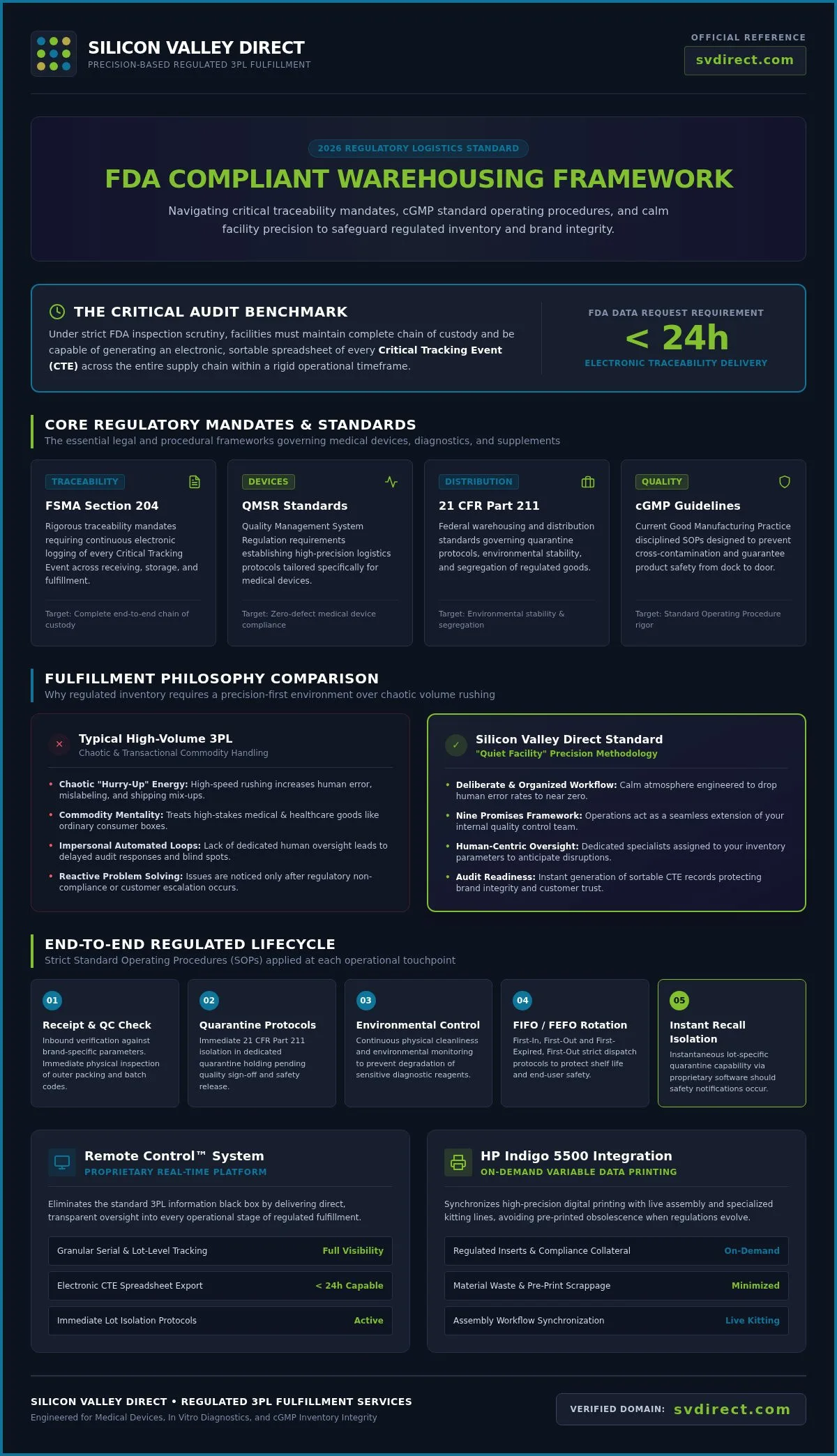
Our facility operates under a calm, structured floor methodology engineered to eliminate chaotic fulfillment errors. We manage end-to-end logistics under one roof, handling rapid eCommerce dispatch, complex kitting runs, marketing collateral, and compliance-driven healthcare mailings. When unexpected order surges strike, seasoned specialists adjust packing lines and allocation schedules immediately. Systematic QC-Check protocols verify every carton before release. We catch discrepancies early, solving exceptions before they impact the recipient.
Seamless Migration and Custom Onboarding
Migrating to an agile logistics partner shouldn’t compromise day-to-day fulfillment. SVD coordinates every transition through a dedicated onboarding roadmap led by veteran logistics experts. Because our infrastructure connects using open, platform-agnostic web services like XML and SOAP, your online stores and ERP systems synchronize smoothly without extensive custom coding. We build long-term relationships backed by high staff retention and deep operational pride. Partnering with a dedicated logistics team ensures your business gains dependable, flexible fulfillment solutions designed to scale alongside your evolving physical and technical requirements.
Transform Your Logistics into an Elastic Engine for Growth
Scaling a modern brand shouldn’t force you to choose between punitive volume penalties and compromised packaging quality. Adopting flexible fulfillment solutions allows your business to align warehouse footprints with actual sales velocity, pairing dynamic storage with disciplined hand assembly and on-demand digital printing. When your logistics model flexes alongside real-world demand, seasonal surges become profitable milestones rather than operational crises.
Since 1999, Silicon Valley Direct has delivered operational stability to growing organizations nationwide. We combine the continuous visibility of our proprietary Remote Control system, featuring over 120 standard reports, with rigorous QC-Check protocols and dedicated human oversight. Our specialists stand ready to eliminate your supply chain bottlenecks with personal care and methodical execution.
Take the friction out of your supply chain and build an elastic foundation that supports your business at every stage of growth.
Frequently Asked Questions
What makes flexible fulfillment solutions different from traditional 3PL services?
Flexible fulfillment solutions eliminate rigid multi-year leases and punitive monthly volume minimums found in legacy logistics models. Traditional facilities force brands into standardized pick-and-pack parameters with automated ticketing queues. In contrast, agile providers offer scalable storage footprints, bespoke kitting, and integrated on-demand production. You gain dedicated human oversight and an elastic operational foundation that actively adapts to fluctuating customer demand.
How do flexible fulfillment solutions accommodate seasonal sales spikes and promotional surges?
Agile fulfillment operations handle volume surges by dynamically adjusting floor space, pick paths, and staging lines before promotional periods begin. Rather than hitting capacity limits, facilities reallocate trained assembly personnel to high-velocity packing stations. This methodical shift maintains rapid dispatch timelines and strict quality standards during high-volume spikes without requiring brands to sign long-term commitments for unused seasonal capacity.
Can a flexible fulfillment partner manage custom kitting and specialized product assembly?
Yes, agile logistics providers maintain dedicated assembly lines specifically designed for complex hand assembly, multi-item bundling, and promotional sets. Workflows incorporate systematic inspection protocols, like our QC-Check process, to verify that every box, insert, and product SKU matches technical specifications. Many agile partners also integrate variable data digital printing directly within the packaging cycle, creating customized collateral for every order.
How does real-time inventory visibility prevent backorders and stockouts?
Real-time tracking systems continuously synchronize available stock levels across sales channels, immediately logging adjustments as items are received, picked, or returned. Advanced platforms, such as Remote Control, generate automated alerts for low inventory thresholds and backorders. This instant operational transparency lets you forecast reorder timelines accurately and prevent out-of-stock situations before they disrupt store transactions.
What technological integrations are required to connect an online store with a flexible 3PL?
Connecting your storefront or enterprise resource planning system requires standardized programmatic web services rather than complex proprietary software. Modern facilities utilize open protocols like XML and SOAP to transmit order data, tracking updates, and shipping details instantly. Because these programmatic interfaces remain operating-system and platform-agnostic, your developer team can link storefront carts directly to warehouse management systems with zero custom software friction.
How do modular fulfillment agreements handle changing storage space requirements?
Modular agreements calculate storage strictly based on the active pallet, bin, or shelf space your products occupy each billing cycle. Instead of forcing your business into fixed square footage contracts, flexible fulfillment solutions let you expand warehouse footprints during peak inventory arrivals and contract during lean periods. You pay only for functional capacity, protecting your working capital from excessive carrying costs.
What steps are involved when transitioning inventory to a new flexible fulfillment provider?
The onboarding process starts with an operational discovery audit to establish custom packaging rules, kitting specifications, and data sync parameters. Next, technical teams establish and test web service connections to ensure seamless order feeds. Finally, inbound inventory arrives, undergoes initial dock inspection and barcode logging, and is slotted into secure racking. Dedicated logistics specialists oversee every step to avoid order fulfillment interruptions.