


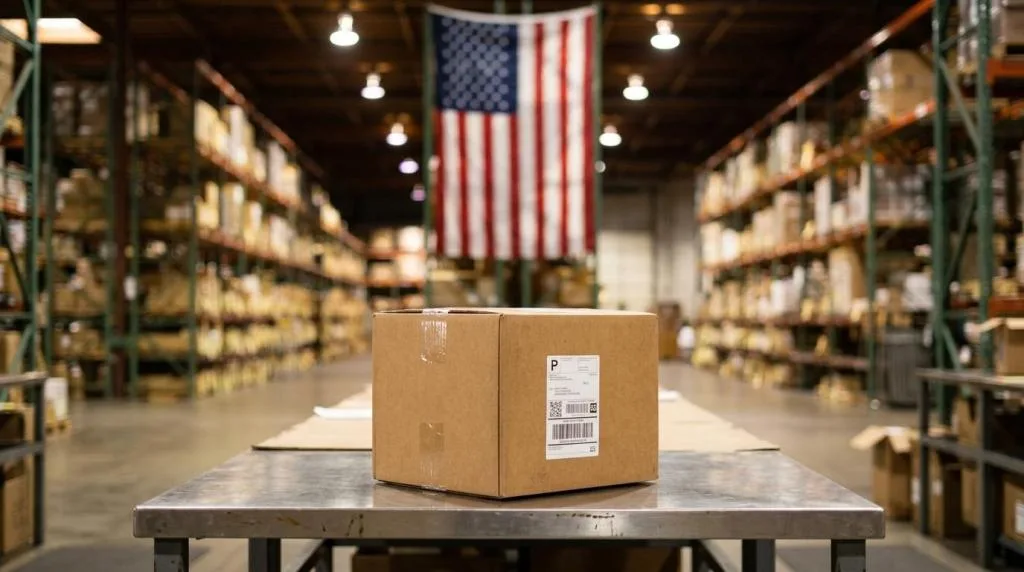
How Parcel Shipping Zones Affect Delivery
Parcel shipping can look simple from the outside. A customer places an order, a label is printed, and a box goes out the door.
Yet the distance between the shipment origin and the destination often shapes almost everything that happens next. Cost, transit expectations, carrier service fit, and even customer satisfaction are all influenced by shipping zones.
For ecommerce brands, that means parcel performance is not only about negotiating rates. It is also about where inventory sits before the order is placed. A smart fulfillment setup can shift a large share of orders into lower zones, which often helps both margins and delivery speed.
What parcel shipping zones mean for delivery speed
Parcel shipping zones are distance bands used by carriers to price many domestic shipments. With USPS zoned services, the farther a package travels, the more zones it crosses, and the more postage tends to increase. USPS identifies zones from Zone 1 for local destinations through Zone 9 for very distant ones.
That basic structure matters because delivery expectations usually improve when a parcel starts closer to the customer. Fewer miles can mean fewer handoffs, shorter line-haul time, and a better chance of reaching the buyer quickly with the service selected.
This does not mean every Zone 2 parcel arrives fast or every Zone 8 parcel arrives slowly. Carrier networks, service standards, cutoff times, weekends, and weather all matter too. Still, zone distance is one of the clearest planning variables available to a growing brand.
| USPS zone concept | General meaning | Typical effect on cost | Typical effect on transit expectations |
|---|---|---|---|
| Zone 1 to Zone 2 | Local or very nearby destination | Usually lower postage | Often faster potential |
| Zone 3 to Zone 5 | Regional to mid-range destination | Moderate postage | Moderate transit expectations |
| Zone 6 to Zone 8 | Long-distance domestic destination | Higher postage | Longer transit expectations |
| Zone 9 | Very distant destination | Often highest zoned postage | Longest transit potential |
The takeaway is practical. If most orders are shipping into higher zones, the business is likely paying more than necessary and asking customers to wait longer than they would if inventory were placed closer to demand.
How USPS parcel shipping zones are assigned
For USPS zoned services, the zone is tied to the origin and destination ZIP pairing. USPS zone charts use the first three digits of the destination ZIP Code as part of the assignment process, which is why two identical packages can carry different postage depending on where they begin their trip.
That point is easy to miss when brands only look at product dimensions or package weight. The label may look the same, but the origin warehouse changes the zone mix across the whole order base.
A few USPS services commonly discussed in this context include Priority Mail Express, Priority Mail, USPS Retail Ground, and Bound Printed Matter. These are zoned services, so the shipment origin has a direct impact on what the order costs to send.
- Zone logic: distance from origin to destination drives the zone
- ZIP structure: the destination 3-digit ZIP Code is part of the zone chart method
- Service fit: some USPS parcel services are zoned, so distance matters to postage
- Local shipments
- Cross-country shipments
When brands look at zone assignment through that lens, warehouse location becomes a financial and customer experience decision, not just an operations choice.
Why fulfillment origin changes parcel shipping costs
A parcel does not begin costing money when it reaches the carrier network. Cost pressure starts earlier, with inventory placement.
If a brand stores all inventory on one coast while demand is spread across the country, a large share of orders may fall into higher zones. That can raise postage and stretch delivery windows. If the same brand repositions inventory closer to its major customer clusters, many of those orders can move into lower zones instead.
This is one reason fulfillment origin deserves more attention in growth planning. A lower storage rate in a less strategic location may look attractive on paper, yet that saving can disappear quickly if outbound parcels are pushed into costlier zones day after day.
A California origin is a strong example. For brands with meaningful order volume in California and the broader West, shipping from a Union City, California facility can reduce zone distance for a large slice of customers. When that setup is paired with same-day shipping, the shipment may start both closer to the buyer and earlier in the day, which is a powerful combination.
Silicon Valley Direct operates from Union City and supports same-day shipping, no minimum order requirements, and reporting visibility through a custom web portal. For a brand evaluating parcel performance, those details matter because zone strategy works best when inventory data, order timing, and shipment execution are all visible.
California fulfillment strategy and parcel shipping zones
California is not just a large consumer market. It is also a useful launch point for brands serving the West Coast, the Bay Area, and many customers across the western United States.
That does not mean California is the right origin for every order nationwide. It does mean a West Coast fulfillment origin can materially change the zone mix if customer demand is concentrated in nearby states. In practical terms, more orders may fall into lower zones, which can lower postage and improve expected transit performance.
A Union City location adds another operational advantage. Its proximity to major highways, ports, and airports supports flexible outbound movement, which is valuable for brands that need fast parcel handling, print-on-demand support, literature fulfillment, or broader ecommerce order flow.
The effect becomes easier to see when viewed by customer region.
| Customer region | Likely effect of a Union City, CA shipping origin | Parcel shipping implication |
|---|---|---|
| Bay Area and much of California | Often lower zones | Lower postage potential and faster delivery expectations |
| West Coast states | Often lower to mid zones | Strong fit for quick regional parcel movement |
| Mountain West | Frequently moderate zones | Balanced cost and transit profile |
| Midwest | Often mid to higher zones | More variable postage and delivery timing |
| East Coast | Commonly higher zones | Longer transit expectations and higher zoned cost |
| Canada | Depends on service and entry path | Requires careful service planning and reporting |
This is why many brands outgrow a one-warehouse mindset. The question is not only, “Where can goods be stored?” It is also, “Where should orders begin if the goal is better parcel economics and faster customer delivery?”
How parcel shipping zones affect expected delivery times
USPS publishes expected delivery times based on service standards, and those expectations depend on the service selected plus the origin and destination relationship. A package traveling a short zone distance may have a much different delivery outlook than one going across the country, even when the package contents and packaging are identical.
Drop-off timing also matters. USPS notes that Priority Mail Next Day reflects a 1 business day delivery time in most cases, based on origin, destination, and drop-off time. That means a fast service name alone is not enough. The order has to be processed and handed off quickly as well.
For ecommerce brands, zone strategy and warehouse execution should be treated as a pair. One without the other leaves value on the table. A warehouse close to customers helps, and same-day pick, pack, and ship helps too.
Several variables shape delivery expectations beyond the zone number itself:
- Carrier service selection
- Daily order cutoff time
- Package verification accuracy
- Weekend and holiday timing
- Inventory availability
- Weather and network disruptions
That is why high order accuracy still matters in a zone-focused plan. If an order misses cutoff, requires relabeling, or ships from an alternate location due to stockouts, the expected transit benefit of a lower zone can disappear.
Parcel shipping zone examples for growing ecommerce brands
A new brand with most customers in Northern California will usually see a very different zone profile from a brand that sells evenly across all 50 states. The first brand may benefit from a California-centered origin almost immediately. The second may need to model regional inventory placement more carefully.
Picture three common situations.
- Regional brand: most orders come from California, Oregon, Washington, and Nevada
- National brand: orders are spread across the West, Midwest, South, and East Coast
- Expansion-stage brand: current demand is regional, but paid acquisition is broadening the customer map
For the regional brand, a Bay Area fulfillment origin can be highly efficient. Lower zones are more common, shipping cost may stay controlled, and buyers often receive orders sooner.
For the national brand, the answer is more nuanced. A single California origin may still work if western demand is dominant or if the brand values strong access to ports and Bay Area customers. Yet a wider distribution pattern may call for additional inventory strategy over time.
For the expansion-stage brand, zone reporting becomes especially valuable. This is where a 3PL with strong integrations, a responsive account team, and detailed shipment reporting can help identify when a warehouse footprint that once worked well is beginning to strain parcel economics.
Parcel shipping metrics that deserve regular review
Parcel zones should be part of monthly operating reviews, not just something checked during carrier negotiations. When the zone mix shifts, shipping cost and delivery expectations often shift with it.
A useful review framework includes a small set of practical metrics:
- Zone distribution by order count
- Weighted shipping cost per order
- Transit performance by customer region
- Orders shipped same day versus next day
Those four numbers tell a meaningful story. If same-day shipping is strong but costs remain high, the issue may be inventory location rather than warehouse speed. If zone distribution looks favorable but transit results lag, service selection or carrier handoff timing may need attention.
The best part is that zone analysis does not require guesswork. With order data, origin data, and customer ZIP patterns, brands can see where money is going and where time is being lost. That creates room for better planning, stronger customer promises, and healthier growth.
For many ecommerce teams, parcel shipping starts to improve when they stop treating it like a back-end expense and start managing it as a network decision. Inventory placed closer to demand, supported by same-day execution and clear reporting, can shift the delivery experience in a very real way.