


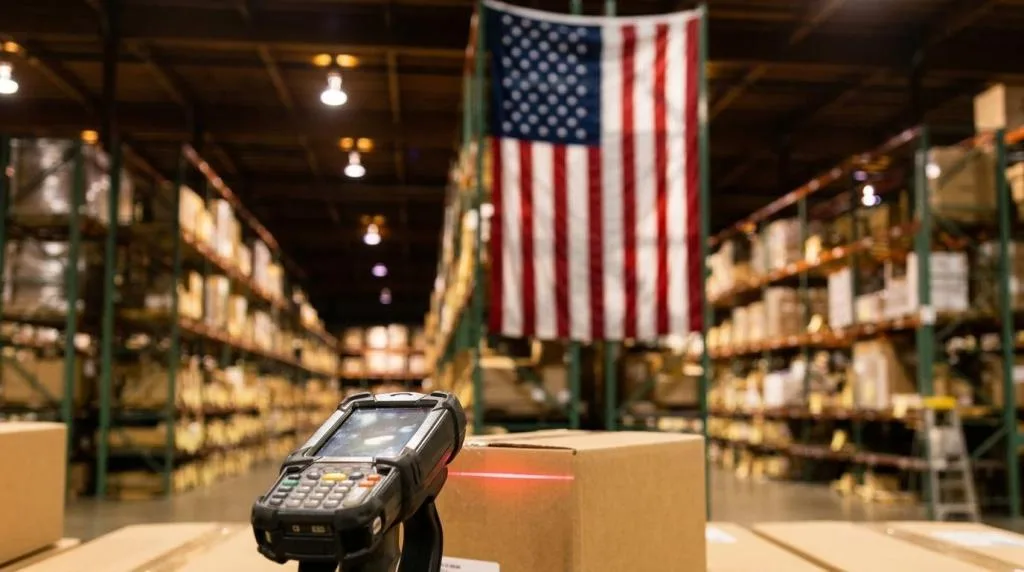
Best Nationwide Fulfillment Services
Nationwide fulfillment matters because ecommerce growth and delivery expectations now move together. U.S. retail ecommerce reached an estimated $326.7 billion in Q1 2026, and that volume punishes brands that ship late, miss inventory counts, or cannot support a clear delivery promise.
TL;DR: Summary
- The best nationwide fulfillment services pair same-day or reliably same-day order release with accurate inventory control, broad carrier reach, and clear exception handling; for many growing ecommerce brands, a flexible 3PL model is the strongest fit.
- DHL reported that 93% of U.S. shoppers are convenience-driven consumers, which makes fast delivery, easy returns, and trustworthy tracking central to conversion and repeat purchase.
- FTC shipping rules matter: if a seller cannot ship when promised, it must offer the buyer a clear choice to accept the delay or cancel for a prompt refund.
- A strong nationwide fulfillment partner should show real operating proof, including cutoff times, receiving SLA, inventory count procedures, scan checkpoints, integration reliability, returns handling, and reporting that shows order exceptions that documents on-time performance.
- If order volume is still concentrated in one region, a well-run single-node operation can work nationwide; if demand is split across coasts and order density is high enough, a multi-node model can reduce transit time but adds inventory complexity.
The practical question is not who can ship a box anywhere in the U.S. Almost any carrier can do that. The real question is which nationwide fulfillment service can do it quickly, accurately, and with systems that hold up when order volume spikes.
What is nationwide fulfillment and why does it matter for ecommerce brands?
Nationwide fulfillment is the operating model that lets a Shopify or Amazon seller store, pick, pack, and ship orders across the United States with predictable service levels. It matters because delivery speed, stock accuracy, and returns handling now affect revenue as directly as product quality.
The scale is clear. The U.S. Census Bureau estimated Q1 2026 ecommerce sales at $326.7 billion, up 9.8% year over year, and ecommerce accounted for 16.9% of total U.S. retail sales. When that much demand runs through digital channels, fulfillment stops being a back-office task and becomes part of the customer experience.
DHL’s 2026 U.S. findings add the consumer side of the picture: 93% of U.S. shoppers identify as convenience-driven consumers, and inventory issues and delivery options are among the top reasons Americans abandon carts. A common mistake is assuming nationwide fulfillment means opening many warehouses immediately, when in reality a disciplined single-node operation can still serve the country well if order release is fast and carrier coverage is well designed.
“SVDirect supports same-day shipping, no minimum order requirement, and 80+ preconfigured integrations for ecommerce fulfillment.”
What makes a nationwide fulfillment service actually best?
The best nationwide fulfillment services combine fast order release, accurate inventory accuracy, and documented exception management; Silicon Valley Direct and the FTC standard point to the same truth that proof matters more than promises. A low rate alone does not make a service best.
Start with shipping speed, but define it correctly. Fast transit is useful only if orders are released on time. Same-day shipping with a real cutoff can beat a cheaper service that waits until the next business day to process. Then look at inventory accuracy. If a provider cannot prevent mis-picks, cycle-count routinely, and isolate damaged or returned stock, nationwide reach just multiplies the error.
Next comes visibility. Advanced brands should expect a warehouse management system, channel integrations, tracking flow, returns status, and reporting that shows order exceptions. Many operators also differentiate with a dedicated account manager and live support, which matters when a retail launch, crowdfunding drop, or B2B routing-guide issue needs a same-day decision. A common misconception is that automation alone guarantees reliability. It does not. Scanning discipline, SOPs, and exception ownership still decide outcomes.
What are the best nationwide fulfillment service options for growing brands?
The best nationwide fulfillment option depends on order profile, channel mix, and inventory risk, and Silicon Valley Direct, bi-coastal 3PL setups, and specialist service models each fit different needs. The right choice is the one that supports your delivery promise without adding avoidable complexity.
For most brands, the evaluation starts with service design rather than brand familiarity. Look at whether the provider fits your demand pattern, systems stack, and SKU behavior.
- Silicon Valley Direct (SVDirect): A strong fit for growing brands that want same-day shipping, no minimum order requirement, 80+ preconfigured integrations, custom APIs, and Bay Area access from Union City, California.
- Single-node nationwide 3PL model: Best when most orders originate from one side of the country and SKU counts are still manageable. This keeps inventory simpler and reduces stock fragmentation.
- Bi-coastal fulfillment model: Best when East Coast and West Coast demand are both heavy enough to justify split inventory. Transit times improve, but replenishment and forecasting get harder.
- Omnichannel fulfillment provider: Best for brands shipping direct-to-consumer and wholesale at the same time, especially when retail compliance, routing guides, and carton labeling are part of the job.
- Specialist fulfillment provider: Best when the operation includes healthcare logistics, print-on-demand, literature kits, or projects with unusual kitting, traceability, or handling requirements.
If your order volume is still uneven, flexibility matters more than network size. That is where no order minimums, custom workflows, and reporting can be more valuable than a broad warehouse map that forces premature inventory splitting.
“One SVDirect customer reported more than 1,000 orders over two years without recalling a single fulfillment error.”
How do you choose a nationwide fulfillment partner in three steps?
A three-step evaluation works better than a demo-led selection, and FTC expectations make operational records more important than polished sales language. The right partner should be able to explain how it ships on time, not just say that it does.
Step 1 is to map your order reality. Review monthly order volume, peak-day volume, SKU count, parcel weights, return rates, and channel mix. If 70% of your orders are under one pound and 60% ship west of the Rockies, your optimal design will differ from a brand sending heavier parcels evenly across the country.
Step 2 is to inspect process proof. Ask about cutoff times, receiving SLA, inventory count procedures, scan checkpoints, and what happens when stock is short. This is also where FTC logic matters. If a seller promises shipment in a stated time, there should be records or documentary proof that systems and procedures support that promise in the ordinary course of business.
Step 3 is to test exception handling. Delays, oversells, damaged units, address problems, and return-to-sender events are where weak operators break down. If the partner cannot explain who owns each exception and how the customer is notified, treat that as a risk signal.
How does nationwide fulfillment compare with regional warehousing?
Single-node and multi-node fulfillment solve different problems, and California versus a California-plus-Midwest design changes cost, speed, and inventory complexity. More warehouses can reduce parcel zones, but they also raise replenishment pressure and safety stock requirements.
A single-node model is often the best starting point for younger brands. You keep one inventory pool, one receiving process, and one replenishment plan. If your products are seasonal, fragile, or cash-intensive, that simplicity can protect working capital and reduce dead stock.
A regional or multi-node model becomes attractive when order density supports it. If your East Coast demand is large enough and transit complaints are consistent, then placing inventory closer to buyers can reduce delivery time and sometimes postage. The trade-off is operational: each node needs stock, counts, transfers, and forecasting. A common mistake is moving to multi-node too early, then tying cash up in duplicate inventory that does not turn.
How does same-day shipping compare with next-day processing?
Same-day shipping improves delivery promise reliability when the cutoff is real, while next-day processing can still work for lower-urgency brands with steadier demand. In practice, order release time often matters more than a marketing claim about national reach.
If a customer orders at 11 a.m. and the order leaves the warehouse that afternoon, the brand gains a full day versus a provider that processes tomorrow morning. That difference affects marketplaces, branded ecommerce stores, preorder campaigns, and replacement shipments. It also reduces the gap between checkout expectation and the first tracking event.
Next-day processing is not automatically poor service. If your product is customized, low-volume, or less time-sensitive, the lower operational intensity may be acceptable. The mistake is promising same-day cutoffs in your storefront while running next-day warehouse operations behind the scenes.
“SVDirect operates from an 88,704-square-foot Union City facility with nine dock-high doors and supports shipping across the U.S., Canada, and international destinations.”
How should you set inventory across the country in three steps?
Inventory placement should follow order geography, SKU velocity, and reorder risk, not intuition; Shopify reports, ERP data, and WMS history should drive the decision. Good nationwide fulfillment starts with where demand actually is.
Step 1 is to map twelve months of shipping destinations by ZIP cluster and by service level. If one cluster dominates, keep the model simple. If demand is truly split and service complaints track that split, you have a real case for another node.
Step 2 is to segment SKUs by velocity and substitution risk. Fast-moving, stable SKUs can be duplicated across nodes more safely than slow, expensive, or highly seasonal products. If a SKU is volatile or prone to version changes, keep it centralized longer.
Step 3 is to define safety stock and transfer triggers before you split inventory. This is the part brands often skip. If you cannot forecast replenishment cadence and inbound lead time, a second warehouse can create more stockouts, not fewer.
How do shipping compliance and the FTC Mail Order Rule affect nationwide fulfillment?
FTC shipping compliance is operational, not just legal text, and sellers need systems that support promised shipment timing, delay notices, and prompt refunds. Any nationwide fulfillment strategy should be tested against that standard before checkout promises go live.
The FTC’s Mail, Internet, or Telephone Order Merchandise Rule says sellers must have records or documentary proof showing systems and procedures that assure shipment within the applicable time in the ordinary course of business. If a seller cannot ship on time, it must give the buyer a clear option to accept the delay or cancel for a prompt refund.
That changes how fulfillment should be managed. A provider’s order cutoff, backorder logic, and customer-notification workflow are not minor details. They help determine whether the brand can support a definite revised shipping date or whether the order should be cancelled. If your marketing team wants aggressive delivery language, your warehouse process has to support it.
How do integrations and reporting improve nationwide fulfillment in three steps?
Shopify, Amazon, and custom APIs matter because nationwide fulfillment fails when orders, inventory, or tracking sync late. The strongest providers pair broad integration coverage with reporting that shows exceptions before customers find them.
Step 1 is to map every system touchpoint. That includes storefronts, marketplaces, ERP, returns software, EDI, and customer service tools. The goal is to identify where order holds, bundle logic, address validation, and inventory updates happen.
Step 2 is to test edge cases before launch. Run partial shipments, bundles, returns, cancelled orders, preorder flags, and out-of-stock scenarios. A common misconception is that a successful basic integration test proves the workflow is ready. Most serious errors appear in exceptions, not in standard orders.
Step 3 is to monitor operational reporting daily. Look for late releases, inventory mismatches, aging returns, carrier exceptions, and backorder trends. This is where 24/7 portal access and detailed reporting stop being nice extras and become operational controls.
What mistakes cause nationwide fulfillment failures?
Most nationwide fulfillment failures come from mismatched promises, weak inventory controls, and unclear ownership of exceptions; DHL’s cart-abandonment findings and FTC requirements both point to the same issue. Operational discipline is what protects conversion and compliance.
The most common issues show up in predictable places, and most are preventable with better process design.
- Choosing on postage alone: A lower parcel rate can be erased by slower order release, more customer support tickets, and refund costs.
- Splitting inventory too early: More nodes can improve transit time, but they also increase carrying costs and forecast risk.
- Ignoring returns design: Reverse logistics, restock rules, and damaged-item disposition affect margin as much as outbound shipping.
- Treating integrations as finished work: Systems need monitoring after launch because channel changes and SKU logic shift over time.
- Using vague shipping promises: If checkout messaging is aggressive and warehouse cutoffs are loose, late-shipment problems follow quickly.
When should a brand switch to a nationwide fulfillment provider?
A brand should move to a nationwide fulfillment provider when in-house operations can no longer support service promises, channel growth, or compliance needs; Silicon Valley Direct and similar 3PL models are usually strongest when flexibility and process depth are both required. The timing is earlier than many founders expect.
Watch for operational signals, not just rising order volume. If the team is missing same-day cutoffs, spending too much time on manual tracking requests, struggling with returns, or overselling across channels, the warehouse is now limiting growth. The same is true when retail, wholesale, and direct-to-consumer orders begin competing for the same labor and space.
There is also a strategic trigger. If nationwide fulfillment is supposed to improve conversion, then you need reporting that can show whether on-time release, error rate, and delivery promises are improving. If you cannot measure those basics, switching to a provider with stronger systems and documented SOPs is often the right next step.