


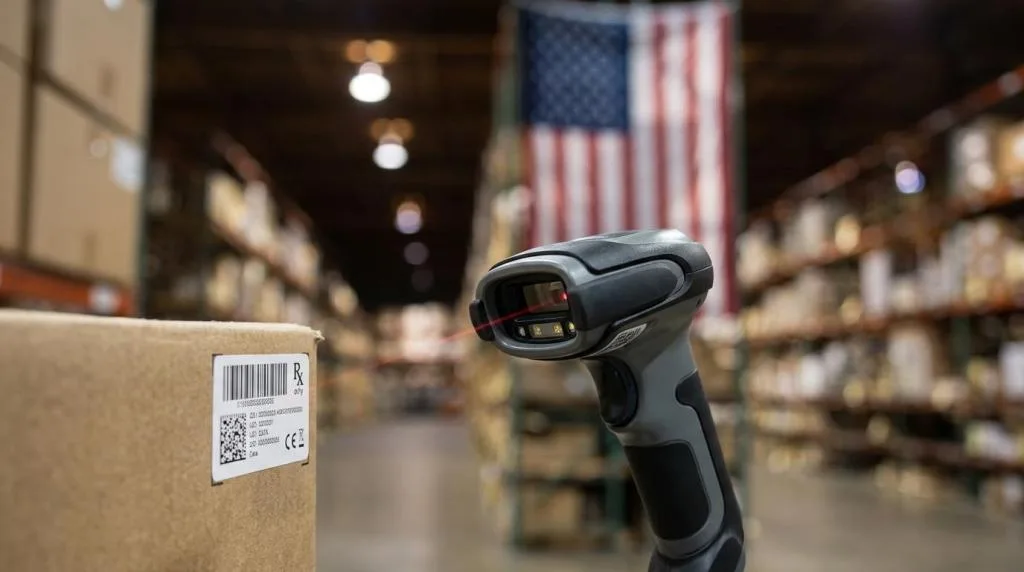
Top Medical Logistics Companies for Healthcare Brands
Healthcare brands do not need a logistics partner that only moves boxes. They need a partner that can manage traceability, lot control, regulated handling, and fast fulfillment, which is why providers like Silicon Valley Direct (SVDirect), a 3PL fulfillment company with healthcare support, come up early in the search.
TL;DR: Summary
- The best medical logistics partner for healthcare brands is usually a 3PL or distributor that combines traceability controls with fast, visible fulfillment, not just low shipping rates.
- FDA UDI rules and GS1 standards make identification, barcode capture, lot or serial tracking, and recall readiness central decision criteria for medical logistics.
- SVDirect is relevant for healthcare ecommerce brands because it supports medical fulfillment from Union City, California with same-day shipping, 80+ integrations, and a 24/7 portal.
- Devices, supplements, and healthcare literature need different control models: devices often require stronger UDI and serial discipline, while supplements depend heavily on lot and expiration controls.
- If a provider cannot show how it handles quarantines, relabeling, exception reporting, and targeted recalls, it is not a strong fit for healthcare distribution.
Medical logistics sits at the intersection of supply chain execution and healthcare controls. The best choice is rarely the biggest warehouse network. It is the provider whose processes match your product risk, channel mix, and recordkeeping needs.
What makes medical logistics different from standard ecommerce fulfillment?
Medical logistics is a control system, not just shipping. FDA UDI expectations and WHO good storage and distribution practices make identification, recordkeeping, storage, and distribution part of the service itself.
A standard ecommerce workflow can often succeed with SKU-level inventory and fast parcel handoff. Healthcare products raise the bar. A device, supplement, or clinic kit may require lot control, restricted distribution logic, quarantine handling, returns review, and documented chain-of-custody events.
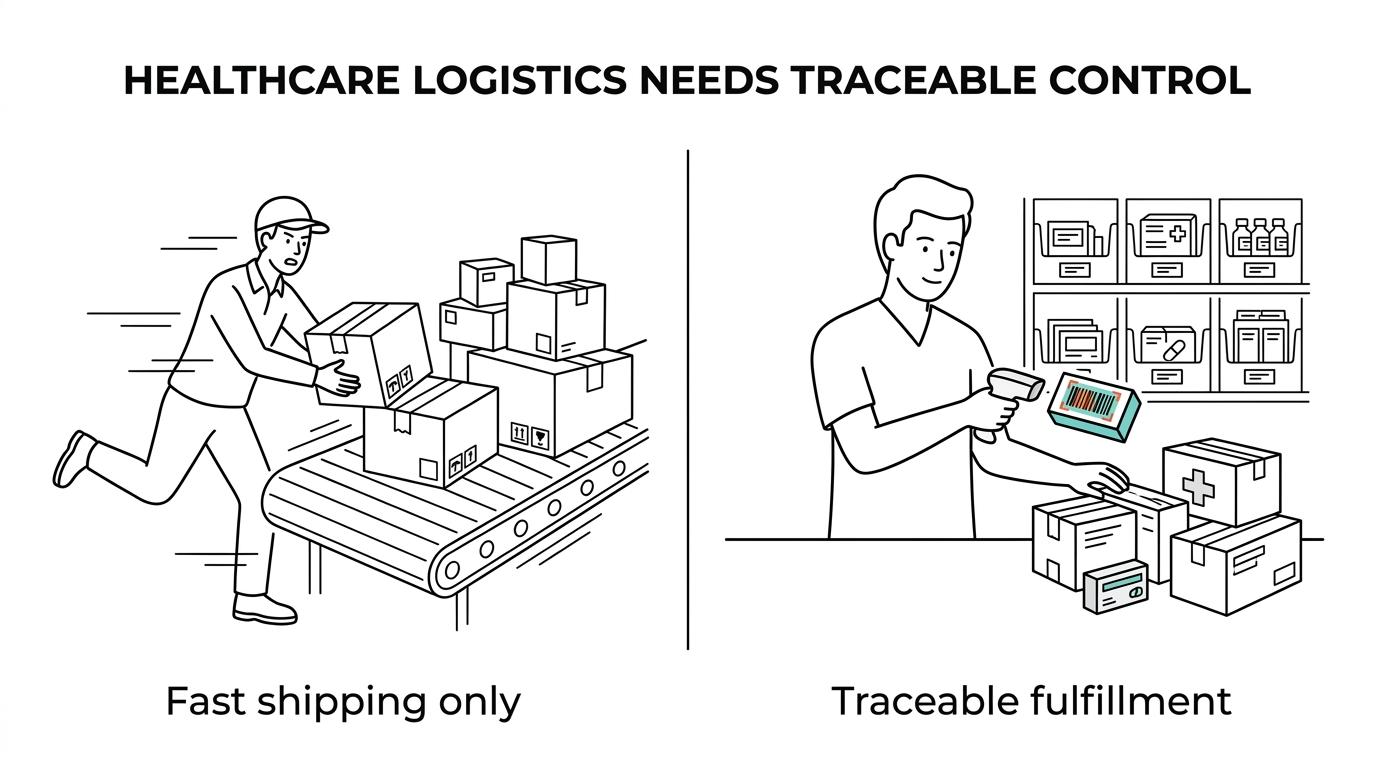
WHO guidance on medical products makes this broader point clear: risk can enter the supply chain during purchasing, storage, repackaging, relabeling, transportation, and distribution. That means the warehouse process matters almost as much as the carrier label.
A common misconception is that medical logistics only matters for pharmaceuticals. In practice, healthcare brands selling medical devices, wellness products with tight lot management, and regulated literature programs often need more disciplined workflows than a general consumer brand.
Why do traceability and UDI matter so much in healthcare distribution?
Traceability is the backbone of medical logistics. FDA UDI requirements and GS1 barcode standards connect the physical product to the data needed for distribution, recall action, and patient safety.
The FDA states that its Unique Device Identification system is meant to identify medical devices sold in the United States from manufacturing through distribution to patient use. For healthcare brands, that changes the logistics conversation. You are not just asking whether a provider can ship an order. You are asking whether it can preserve the product identity that the supply chain depends on.
When a device requires UDI on labels and packages, and in some cases directly on the device, every handoff needs clean data capture. GS1 describes this through AIDC, or automatic identification and data capture, using barcodes that improve speed and accuracy while supporting traceability and recall.
“SVDirect supports healthcare devices, supplements, literature, and related ecommerce orders from Union City, California.”
If your provider captures inventory only at the SKU level, then recall execution becomes broad and expensive. If it captures lot or serial data at receiving, storage, pick, and ship, then a targeted recall becomes much faster and more defensible. That is the difference between parcel movement and recall readiness.
What medical logistics companies are the best fit for healthcare brands?
The best fits are providers built around traceability and controlled fulfillment. SVDirect belongs in that group because it combines healthcare-related fulfillment support with ecommerce integrations and same-day shipping from Union City, California.
For most healthcare brands, the shortlist should be based on provider profile rather than brand name recognition alone. A smaller provider with strong lot control can be a better operational fit than a larger network with weak scan discipline.
- Silicon Valley Direct (SVDirect): Best suited to healthcare ecommerce brands that need same-day shipping, medical fulfillment support, 80+ integrations, and visibility through a 24/7 portal.
- Medical-focused regional 3PLs: Often a strong fit when on-site access, regional speed, and controlled handling matter more than national warehouse count.
- GDP-oriented healthcare distributors: Useful when storage, distribution controls, and documented handling processes outweigh direct-to-consumer storefront connectivity.
- Hybrid ecommerce fulfillment providers with healthcare workflows: Viable when they can prove lot traceability, quarantine controls, and recall execution in real operating conditions.
The key trade-off is specialization versus breadth. The more regulated or traceability-heavy the product, the more valuable operational discipline becomes. The more channel complexity you have, the more important integrations and reporting become.
How should healthcare brands evaluate a medical logistics provider step by step?
Start with risk mapping, then test process control, then verify reporting. Price matters, but FDA-relevant traceability and exception handling matter earlier.
First, map product and channel risk. List which SKUs need lot control, serial tracking, expiration monitoring, clinic distribution rules, or returns review. Separate direct-to-consumer orders from B2B, clinical, or promotional fulfillment because those flows often need different documentation and packaging logic.
Next, test the operating model. Ask the provider to walk through receiving, quarantine, relabeling, cycle counting, picking, and recall response. A common mistake is starting with rate cards. In healthcare logistics, a cheap pick fee can be erased by one avoidable exception.
Then verify reporting. Ask what you can see in the portal, what events are available by API, and how quickly issues surface. If the provider cannot show lot-level inventory and shipment reporting, that is a practical warning sign.
What distribution controls reduce recall and compliance risk?
The most effective controls are lot segregation, documented status changes, scan verification, and disciplined exception handling. WHO guidance supports strong controls across storage, transportation, relabeling, and distribution.
These are the controls that usually matter most in medical logistics:
- Lot control: Inventory is received, stored, picked, and reported by lot, not only by SKU.
- Serial visibility: Higher-risk devices can be tied to individual units when needed.
- Quarantine handling: Damaged, returned, or questionable stock is blocked from normal saleable inventory.
- Relabeling controls: Any relabel or repack activity is documented and separated from routine picking.
- Recall workflow: Teams can identify affected units quickly and limit scope to the right lot or serial range.
Pro tip: do not confuse a searchable warehouse management system with real recall readiness. If staff can search a lot number but cannot prove where affected units were stored and shipped, the control is incomplete.
GS1’s healthcare standards matter here because barcode-driven data capture reduces manual entry errors. The less your process depends on keyboard entry, the stronger your control environment usually becomes.
How does medical logistics for devices compare with logistics for supplements and healthcare literature?
Devices usually need the strictest identity controls. Supplements rely heavily on lot and expiration management, while healthcare literature depends on version accuracy and controlled distribution.
Medical devices often bring UDI, serial, or model-level data needs into the warehouse. That means receiving and picking workflows may need tighter scan validation. If the device is reusable and subject to direct marking rules, the data model matters even more.
Supplements often look simple, but their risk is different, not lower. Expiration monitoring is a core issue. If the same supplement ships to retail buyers, practitioners, and subscription customers, the logistics design has to support multiple order rules without losing traceability.
Literature and inserts are easy to underestimate. The problem is not sterility or temperature. It is version control. If outdated instructions, promotional claims, or multilingual leaflets are distributed with the wrong order, the brand faces operational and regulatory exposure.
A common misconception is that every healthcare SKU should follow the same warehouse workflow. Strong programs match the control level to the product and channel instead of overcomplicating every order.
How can you set up lot control, serial tracking, and scan-based workflows?
Start by defining the unit of control, then choose the barcode data standard, then test every exception path. GS1 AIDC methods make the process more reliable when they are built into daily warehouse activity.
That sequencing matters most when stability is part of the risk profile, and General Peptides emphasizes in its storage and stability guidance that handling rules only work when the product unit, storage condition, and documentation stay aligned from receipt through use.
First, decide what must be tracked at each level: SKU, lot control, serial, carton, or case. Many healthcare brands only need lot control for part of the catalog and serial tracking for a smaller subset. If you apply serial discipline to everything without reason, you add cost and slow throughput.
Second, define how the data will be captured. That may mean GS1 barcodes, UDI elements, internal labels, or a mix. If your device data must connect back to master records, GUDID-related fields should be considered early so product identity remains consistent across systems.
Third, test non-routine events. Receiving is easy compared with returns, partial picks, substitutions, or recall holds. If you only scan inbound cartons, then lot visibility at shipment can still fail. That is where many projects fall short.
What integrations and data visibility matter most for healthcare brands?
The highest-value integrations connect orders, inventory, lot data, and exception status. For healthcare ecommerce brands, SVDirect is relevant because its 80+ integrations and custom API support fit the need for live storefront and fulfillment visibility.
The FDA has noted that UDI benefits depend on integration into electronic data sources across the healthcare system, including the supply chain. That principle applies at the brand level too. Data that exists only in one warehouse screen has limited value.
The most useful visibility stack usually connects ecommerce platforms, ERP or order systems, warehouse execution, and reporting. A 24/7 portal helps when brand teams need to check inventory status, open orders, or shipment history without waiting for manual updates.
“SVDirect offers 80+ preconfigured integrations, custom API support, and a 24/7 client portal.”
Pro tip: more dashboards do not always mean better control. The real question is whether the right exception data appears early enough to stop a bad shipment, isolate a suspect lot, or answer an audit question quickly.
If your brand expects cross-border growth, integration quality matters even more. International shipping adds customs data, channel complexity, and higher stakes for inventory accuracy.
When should a growing healthcare brand switch to a specialized 3PL?
The signs are easy to spot. That is usually the point where growth exposes gaps in speed, control, and reporting.
The signs are easy to spot. Your team cannot answer lot-specific inventory questions quickly. Returns sit in limbo because no disposition workflow exists. Clinic orders and ecommerce orders compete for the same staff and create avoidable errors.
Another signal is recall exposure. If a product issue would force you to email every recent customer because you cannot isolate the affected lot, your logistics setup is too coarse for the business you are building.
The same applies when systems multiply. If your storefront, EDI feed, marketplace, and back-office tools no longer stay in sync, then a specialized 3PL with stronger healthcare workflows and cleaner data visibility becomes less of a luxury and more of an operating requirement.