


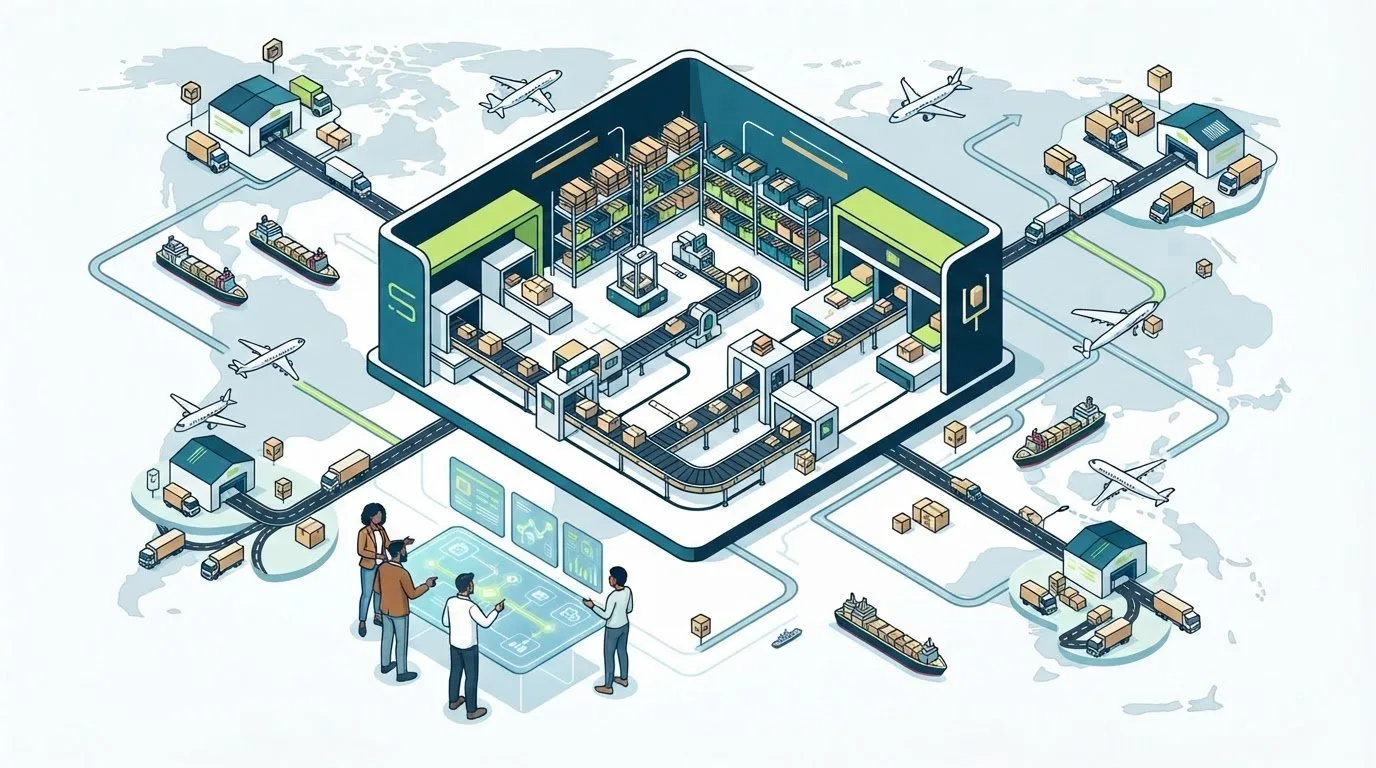
International Ecommerce Fulfillment: A Practical Guide to Choosing the Right Solution
What if the hardest part of serving international customers isn’t getting orders across borders, but keeping every step visible and coordinated? International ecommerce fulfillment connects order processing, inventory, shipping coordination, and returns in one operation. When responsibilities or updates are unclear, even a well-planned shipment can become difficult to manage.
Choosing a solution means weighing more than shipping options. You need an operating model that fits your products and order flows, along with clear communication and enough visibility to oversee day-to-day activity. Outsourcing doesn’t have to mean losing sight of your inventory or customer orders.
This guide explains centralized, distributed, and hybrid fulfillment models, then walks through workflows and capabilities to consider when comparing them. You’ll learn how to assess fit as your requirements change, from inventory management and returns to reporting and partner communication. Silicon Valley Direct’s Remote Control system provides 24/7 access to order activity, inventory, order histories, and more than 120 standard reports, supporting informed oversight while our team works alongside yours.
Key Takeaways
- Distinguish fulfillment operations from international shipping so you can map responsibilities across each stage of an order.
- Follow the flow from order data and inventory status through dispatch, tracking, and returns to see where clear information supports better decisions.
- Compare centralized, distributed, and hybrid models against your inventory needs, operational complexity, and visibility requirements.
- Assess international ecommerce fulfillment by looking at your order profile, products, workflows, reporting, communication, exception handling, and returns.
- See how Silicon Valley Direct coordinates order processing, inventory, warehousing, and global shipping through workflows tailored to each client.
What International Ecommerce Fulfillment Covers, and Where Shipping Fits
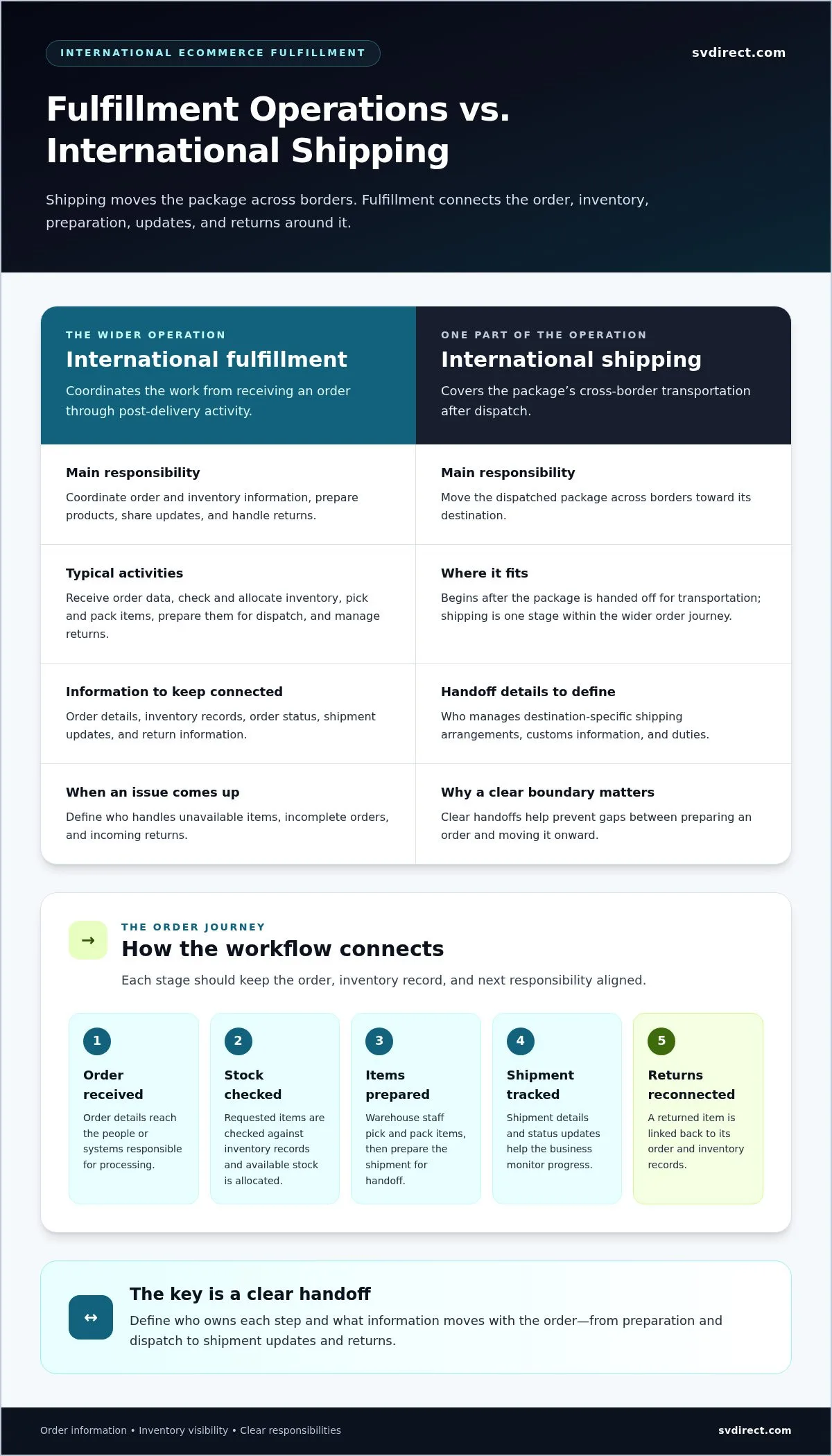
International ecommerce fulfillment is the coordinated work of receiving and processing customer orders, managing inventory, preparing products for dispatch, sharing shipment updates, and handling returns. International shipping is the cross-border transportation of the package. Shipping is one part of the wider operation. The order fulfillment process connects a purchase to its delivery and any activity that follows.
A useful distinction is responsibility. Fulfillment teams coordinate order and inventory information and may handle the physical work of picking and packing. Shipping covers the package’s movement after dispatch. The workflow should also define who manages destination-specific shipping arrangements, customs information, and duties. Clear handoffs help prevent gaps between preparing an order and moving it onward.
Which activities belong in an international fulfillment workflow?
The process starts when order data is received. The team checks and allocates inventory, picks and packs the items, then prepares them for dispatch. After handoff, tracking information and status updates help the business monitor progress and respond to customer questions. If a product comes back, the returns process should reconnect the physical item with its order and record its status according to the business’s procedures.
Some workflows include more than standard pick-and-pack. Kitting and assembly can bring multiple items together as one order, while a printed insert can be added during packing when the project calls for it. These are physical tasks. Software organizes order and inventory records; reports help teams review activity, and communication keeps people informed when an order needs attention. Define who owns each step, including what happens when an item is unavailable, an order is incomplete, or a return arrives.
When does international ecommerce fulfillment become a priority?
Consider a more structured workflow as cross-border orders become a regular part of sales, inventory becomes harder to oversee across channels, or internal teams have limited capacity to manage order preparation and follow-up. Frequent questions about order status or time spent resolving stock discrepancies can also indicate that the process needs clearer ownership and better information flow.
There isn’t one order-volume threshold that applies to every business. A smaller operation with varied products, kitting requirements, or returns may need defined processes sooner than a larger business with a simple, consistent order profile. Assess the work itself: how orders arrive, how stock is tracked, which tasks require hands-on handling, and what updates your team needs. This gives you a practical basis for deciding whether your international ecommerce fulfillment setup fits.
How International Ecommerce Fulfillment Connects Orders, Inventory, and Shipping
Reliable international ecommerce fulfillment depends on more than moving a parcel through a warehouse. Order data, stock records, physical handling, shipping updates, and return information need to stay connected. If an item is unavailable but the order still appears ready to pick, or a dispatch occurs without a clear status update, teams can lose time resolving avoidable confusion.
Inventory visibility and clear handoffs matter because every team needs to know what has happened, what happens next, and who is responsible for acting. That shared understanding helps people respond to stock changes, order exceptions, and customer questions without guesswork.
What should happen between order placement and dispatch?
Start with order intake: order details must reach the people or systems responsible for processing. Check the requested items against inventory records and allocate available stock. Warehouse staff can then pick the correct items, pack them according to the workflow, and prepare the shipment for handoff. Each step should update the order status and relevant inventory record.
Dispatch isn’t the end of the information flow. Shipment details and tracking updates give the business a way to follow progress, while exception notes can flag issues that need attention. If a customer returns an item, return handling should reconnect the physical product with its order and inventory records. The parties involved should define shipping arrangements and handoffs in advance. The aim is to keep responsibilities and updates clear without assuming a particular carrier outcome or dispatch timeline.
How do systems and people maintain operational visibility?
Systems organize order activity and inventory information so teams can review status and history. People apply judgment and communicate when a record needs attention, an exception arises, or the next action isn’t obvious. Reports provide a broader view of activity, helping teams oversee the workflow instead of checking each order in isolation.
Silicon Valley Direct’s Remote Control system provides 24/7 access to order activity, inventory, order histories, and more than 120 standard reports. This visibility supports day-to-day oversight while keeping people connected to the work. Explore Remote Order Management to learn more about the system.
Consider integration in practical terms: how order information reaches fulfillment operations, how inventory changes are reflected, and how shipment statuses return to the team. The right setup depends on the workflow. A clear process, useful records, and proactive communication help teams coordinate each handoff with confidence.
International Fulfillment Models Compared: Centralized, Distributed, and Hybrid
Choosing an inventory model means deciding where stock sits and how orders move through your operation. A centralized setup concentrates inventory and processes in one operation. A distributed model holds inventory in multiple locations. A hybrid approach combines elements of both. Each affects how teams allocate stock, coordinate work, and maintain visibility across international ecommerce fulfillment.
| Model | Inventory control | Operational complexity | Visibility needs | May suit |
|---|---|---|---|---|
| Centralized | Stock is managed through one primary operation. | Fewer inventory locations to coordinate, with greater dependence on one setup. | Clear order and stock records for the consolidated operation. | Businesses prioritizing a consistent process and consolidated stock oversight. |
| Distributed | Stock is held across multiple locations. | More coordination is needed for allocation, replenishment, and consistent processes. | Strong visibility across locations to understand stock levels and order status. | Businesses whose demand patterns or priorities support placing inventory in more than one location. |
| Hybrid | Some inventory or workflows remain centralized while others are distributed. | Teams coordinate both shared and location-specific processes. | Visibility must connect the different locations and workflows. | Businesses that want to combine selected centralized and distributed approaches. |
When can a centralized fulfillment setup make sense?
Centralization can suit businesses that want to coordinate stock and operating procedures through one primary setup. With inventory gathered in one place, teams can work from a more consolidated view of stock and order activity. This can be practical when the product range, demand patterns, and internal processes are straightforward to manage together.
There are trade-offs. Orders may require more shipping coordination depending on their destinations, and the operation depends more heavily on that one setup. Centralization isn’t automatically simpler if it creates other workflow pressures. Consider where orders are going, how stock is allocated, and how the team will respond if the primary operation encounters a disruption.
When might distributed or hybrid fulfillment fit better?
Distributed inventory may suit a business whose demand patterns or priorities favor holding stock in multiple locations. But each additional location adds coordination. Teams need consistent inventory records, clear allocation rules, and an agreed way to manage exceptions. Without shared visibility, it can be harder to understand which stock is available for each order.
A hybrid model offers a middle path. A business might centralize some inventory or processes while distributing selected stock or workflows. The right balance depends on demand, product needs, stock strategy, and business priorities, not a universal formula. For related context on transportation and cross-border operations, explore Silicon Valley Direct’s 3PL fulfillment services.
How to Evaluate an International Ecommerce Fulfillment Solution
A useful evaluation starts with your actual operating needs, not a volume threshold or a feature checklist. Map the work your team handles now, identify where visibility or capacity is strained, and decide which responsibilities need to be shared. This makes it easier to compare solutions against the tasks you need done rather than relying on general claims.
Which operational requirements should shape your decision?
- Map your order profile. Consider order patterns, destinations, channel mix, and how often orders need special handling. The shape of the work matters as much as its volume.
- Review product requirements. Note packaging needs, kitting or assembly tasks, and whether specific items require serial-number tracking. These details affect handling steps and the information teams need to record.
- Define inventory oversight. Decide how your team needs to view stock status, review order histories, and receive reports. Clear inventory records help you understand what is available and make decisions when stock changes.
- Map workflows and ownership. Identify who handles order processing, dispatch updates, exceptions, and customer communication. Include returns so responsibility remains clear after delivery.
- Set expectations for quality and communication. Consider what checks apply to your products or assembly work, how issues should be escalated, and how often teams need operational updates.
Use this assessment to compare your requirements with the scope of 3PL fulfillment services and identify where a tailored workflow could support your operation.
How can you assess visibility, quality control, and communication?
Look for practical oversight: access to order tracking and histories, a way to review inventory, and reports that help your team monitor activity. Silicon Valley Direct’s Remote Control provides 24/7 access to order activity, inventory, and order histories, along with more than 120 standard reports. These records give teams an information base for daily oversight, while direct communication helps address exceptions that need human attention.
Quality processes should match the work. For applicable assembly projects, QC-Check provides a systematic inspection process as part of the workflow. Clarify how checks are recorded, how issues are communicated, and who takes the next step when work needs attention.
Silicon Valley Direct builds client-specific workflows, communicates proactively, and works as an extension of the client’s team. A tailored assessment connects your order profile, inventory needs, handling requirements, reporting, and returns in one practical operating plan.
How Silicon Valley Direct Supports International Ecommerce Fulfillment
International ecommerce fulfillment brings order processing, inventory, warehousing, and shipping coordination together. Silicon Valley Direct works with clients to shape these activities into a workflow that fits their products and internal processes. The aim is clear ownership at each step, supported by visibility into order and inventory activity and proactive communication from a team that works as an extension of yours.
What can a coordinated SVD workflow include?
A workflow can connect order fulfillment and inventory management with warehousing, global shipping coordination, and returns management. The right combination depends on the work involved. For example, kitting and assembly can prepare multiple items together as one order. Literature fulfillment or on-demand digital printing can support campaigns that need printed materials included with product orders.
Shipping is one part of the operation, so define how order preparation, inventory updates, and shipping coordination hand off to one another. Silicon Valley Direct also provides 3PL fulfillment services that connect fulfillment operations with warehousing and distribution. Clear responsibilities and communication help teams manage the workflow as one coordinated process.
Remote Control supports day-to-day oversight with 24/7 access to order activity, inventory, order histories, and more than 120 standard reports. This information helps clients follow activity and review the records behind operational decisions. It complements, rather than replaces, communication with the people handling the work.
What is a practical next step for your business?
Before discussing a workflow, gather a concise picture of your operation. Consider your order patterns, product and handling details, inventory needs, and any requirements for assembly, printed materials, or returns. Note how your current process assigns order updates and handles exceptions. These details help focus the conversation on your goals and the operational support you need.
Silicon Valley Direct can use that context to discuss a workflow tailored to your requirements, with order processing, inventory oversight, warehousing, shipping coordination, and communication considered together. To discuss your fulfillment needs, request a quote.
Build a Fulfillment Workflow Ready for What’s Next
The right international ecommerce fulfillment solution connects order processing, inventory, shipping coordination, and returns, with clear visibility across each handoff. Your operating model should fit your products, demand patterns, and team’s oversight needs. Centralized, distributed, and hybrid approaches each bring different coordination requirements, so start with your actual workflow.
Silicon Valley Direct has supported fulfillment operations since 1999. Remote Control provides 24/7 access to order and inventory information, order histories, and more than 120 standard reports. Customized workflows, proactive communication, and QC-Check help align operational oversight with the work your business needs done.
Bring your order patterns, product details, inventory needs, and process requirements into the conversation. These details help shape a workflow around your business goals and prepare for growth with greater clarity.
With a well-coordinated process and a responsive team alongside yours, serving international customers can feel more manageable.
Frequently Asked Questions
What is international ecommerce fulfillment?
International ecommerce fulfillment is the coordinated process of receiving customer orders, managing inventory, picking and packing products, arranging dispatch, sharing shipment updates, and handling returns for cross-border sales. Shipping is one part of this broader operation. Fulfillment also covers the inventory records, order workflows, and handoffs that support each shipment. A well-defined process clarifies which team handles each step, including how shipping details and other destination-specific responsibilities are managed.
How does international ecommerce fulfillment work?
It begins when a business’s order information reaches the fulfillment operation. The team checks the order details and inventory, allocates available stock, picks and packs the products, then prepares the shipment for handoff. Status and inventory records help teams follow progress and respond when an order needs attention. Tracking updates support post-dispatch oversight, while return handling reconnects a returned product with its order and inventory records.
Which international fulfillment model should an ecommerce business choose?
The right model depends on demand patterns, product needs, inventory strategy, and the level of coordination your team can support. A centralized model manages stock through one primary operation, while a distributed model holds inventory in multiple locations. A hybrid model combines selected elements of both. Compare how each option affects stock oversight, order allocation, and workflow visibility. Don’t choose based on a presumed universal threshold; assess the work your operation needs to handle.
What should I look for in an international ecommerce fulfillment provider?
Look for a clear approach to order processing, inventory management, warehousing, shipping coordination, and returns. Ask how order histories, inventory status, reporting, communication, and exceptions fit into the workflow, and how product-specific needs such as serial-number tracking or assembly are handled. Silicon Valley Direct builds customized workflows, communicates proactively, and uses QC-Check for systematic inspection during applicable assembly work. These practices help make responsibilities and oversight clear.
How are international ecommerce fulfillment fees determined?
Fees depend on the services and work involved in your fulfillment workflow. Factors may include the number of items in an order, packaging requirements, the inventory storage space used, shipping coordination, and project-based needs such as printing or kitting and assembly. The mix can differ from one operation to another. Share your order patterns, products, inventory needs, and process requirements to support a quote tailored to the work involved.
Can an international fulfillment provider manage returns and inventory visibility?
Yes. A fulfillment workflow can include returns management as well as processes for recording stock movements and reviewing inventory. Silicon Valley Direct’s Remote Control system provides 24/7 access to order activity, inventory, order histories, and more than 120 standard reports. This supports ongoing oversight of orders and stock information, while direct communication helps teams address issues that call for attention and keep responsibilities clear.
How can I integrate order data with a fulfillment operation?
Start by defining what information must pass between your ordering process and fulfillment operations, such as order details, product identifiers, quantities, and status updates. Agree how inventory changes and exceptions will be recorded, who owns each handoff, and how your team will review activity. The technical method depends on the systems and workflow involved. Remote Control offers access to order activity, histories, inventory information, and reporting for operational oversight.