



Best Literature Fulfillment Services for Healthcare Brands
Healthcare literature fulfillment sits at the intersection of logistics and quality control. Silicon Valley Direct (SVDirect), a California 3PL that supports healthcare products and patient-facing literature, is relevant here because the job is not just mailing brochures. For many healthcare brands, printed materials can become controlled labeling that must be stored, versioned, and distributed correctly.
TL;DR: Summary
- The best literature fulfillment services for healthcare brands combine compliance controls with fast distribution, because healthcare literature fulfillment often involves regulated labeling, traceability, inventory visibility, and accurate shipping.
- FDA labeling rules make printed inserts, preprinted packaging materials, and related documents subject to receipt inspection, legibility standards, segregation, and formal change control.
- SVDirect is one example of a 3PL in this category that pairs healthcare-focused fulfillment with same-day shipping, real-time inventory visibility, and support for patient-facing literature.
- Strong providers should offer approved-version control, kitting and assembly, portal reporting, integrations, and a documented process for quarantining obsolete stock.
- If a brand changes materials often, on-demand printing can reduce obsolete stock; if materials are stable and high volume, preprinted warehousing may be more efficient.
The right service decision depends on how your literature is used. A patient insert that supports a medical device program needs a different workflow than a trade show handout, even if both move through the same warehouse. That is why healthcare brands should evaluate literature fulfillment through the lens of labeling control, change management, and service reliability.
What is healthcare literature fulfillment?
Healthcare literature fulfillment is the controlled storage, picking, and distribution of patient-facing materials, inserts, and support documents. In FDA-regulated categories and medical device programs, those printed items can function as labeling, not simple collateral.
This category can include instructions for use, welcome kits, reimbursement support packets, patient education brochures, product inserts, and literature bundled with healthcare products. The core task is making sure the right document, in the right version, reaches the right destination without mixups.
A capable workflow usually includes receipt inspection, SKU and revision tracking, segregated storage, inventory counts, kitting, and shipment confirmation. The more closely literature is tied to product use or patient guidance, the more important those controls become.
Why is literature fulfillment a compliance issue, not just a shipping task?
It is a compliance issue because FDA labeling rules treat many printed materials as controlled items before they ever enter a carton. The FDA links labeling to receipt inspection, legibility, storage controls, and formal change control.
FDA guidance on labeling requirements says printed labeling must remain legible until used. It also says packaging and labeling materials, including inserts and preprinted packaging materials, must be examined on receipt and accepted before they enter inventory or production. In practical terms, that means a healthcare brand needs a process for checking counts, condition, and approval status before materials are available for order fulfillment.
The same FDA framework ties labeling to the device master record and requires changes to move through a formal change control system. A common mistake is to assume a new PDF approval is enough. It is not enough if old inventory is still sitting in pick locations, mixed with current stock, or still tied to open kit bills of material.
When a provider cannot show which version was on hand, when it shipped, and whether obsolete stock was quarantined, the risk is not just operational. It can become a quality problem.
What are the best literature fulfillment service capabilities for healthcare brands?
The best services combine quality discipline with execution speed. Healthcare brands should look for a provider that can protect approved materials while still supporting urgent field requests and patient-facing distribution.
After the core compliance review, the most valuable capabilities usually include the following:
- Approved-version control and segregation
- Receipt inspection for incoming printed stock
- Real-time inventory visibility by SKU and location
- Kitting and assembly for patient-facing literature
- Same-day shipping options for urgent replenishment
- Integration support for commerce, ERP, or custom order flows
- Documented handling of obsolete stock and destruction holds
These capabilities work together. Same-day shipping means little if the wrong revision ships. Real-time inventory is helpful only if the counts reflect accepted, current materials rather than mixed or unapproved stock.
How should a healthcare brand audit its printed materials before outsourcing?
Start with a material map, then assign control rules, then define the operational exceptions. A clean audit reduces onboarding errors and makes provider selection much easier.
Step 1 is to inventory every literature type. List each item, its purpose, who approves it, how often it changes, and whether it is patient-facing literature, packaging support, or promotional content. This is where many brands realize two different teams have been ordering near-identical pieces with different revision practices.
Step 2 is to define the status each item can hold. Current approved versions, pending release, quarantined, obsolete, and destroyed are common categories. If you skip this step, your warehouse may know quantities but still lack a clean decision rule for what can ship.
Step 3 is to map order behavior. Decide whether each piece ships alone, inside a kit, with a device, to a clinic, to a sales rep, or to a patient-support program. Pro tip: identify who can authorize substitutions. In healthcare fulfillment, substituting “similar” literature can be a serious error.
How do warehousing controls compare with on-demand printing for healthcare literature?
Warehousing and on-demand printing solve different problems. Preprinted inventory favors stability and speed, while on-demand printing favors revision control and reduced obsolete stock.
If a piece changes rarely and ships in high volume, preprinted warehousing is often the more efficient option. It supports fast pick-pack-ship execution and lowers per-unit handling complexity once the item is approved and received into stock.
If a piece changes often, on-demand printing can be the better control point. It can reduce obsolete stock, cut storage demand, and limit the chance that an older revision remains in circulation. This matters when healthcare brands support decentralized sales teams or run frequent campaign updates.
A common misconception is that on-demand printing removes compliance pressure. It does not. You still need release rules, file control, and proof that only approved content moved into production.
How can integrations and portal visibility reduce distribution errors?
Integrations and live reporting reduce errors by turning orders, revisions, and replenishment into traceable events. SVDirect describes this model with platform integrations, 24/7 inventory access, and more than 120 standard reports in its Remote Control system.
When orders are keyed manually from emails or spreadsheets, small mistakes multiply. SKU confusion, outdated ship-to data, and missed kit rules become more likely. By contrast, integrated order flows can enforce field validation, approved item mapping, and cleaner shipment records.
Real-time inventory also changes decision-making. A brand can see whether a patient brochure is available, on hold, or nearly depleted before a field launch or patient mailer begins. That makes replenishment more deliberate and helps prevent rush printing that bypasses normal review.
“SVDirect says its Remote Control system provides 24/7 access to real-time inventory and order history, with more than 120 standard reports.”
Portal visibility is not just a convenience feature. In a regulated environment, it can support traceability, exception review, and better coordination between marketing, operations, and quality teams.
What process should a 3PL follow when labeling versions change?
A sound process freezes the old version, verifies the new one, updates all system records, and disposes of obsolete stock under control. Anything less creates a mixup risk.
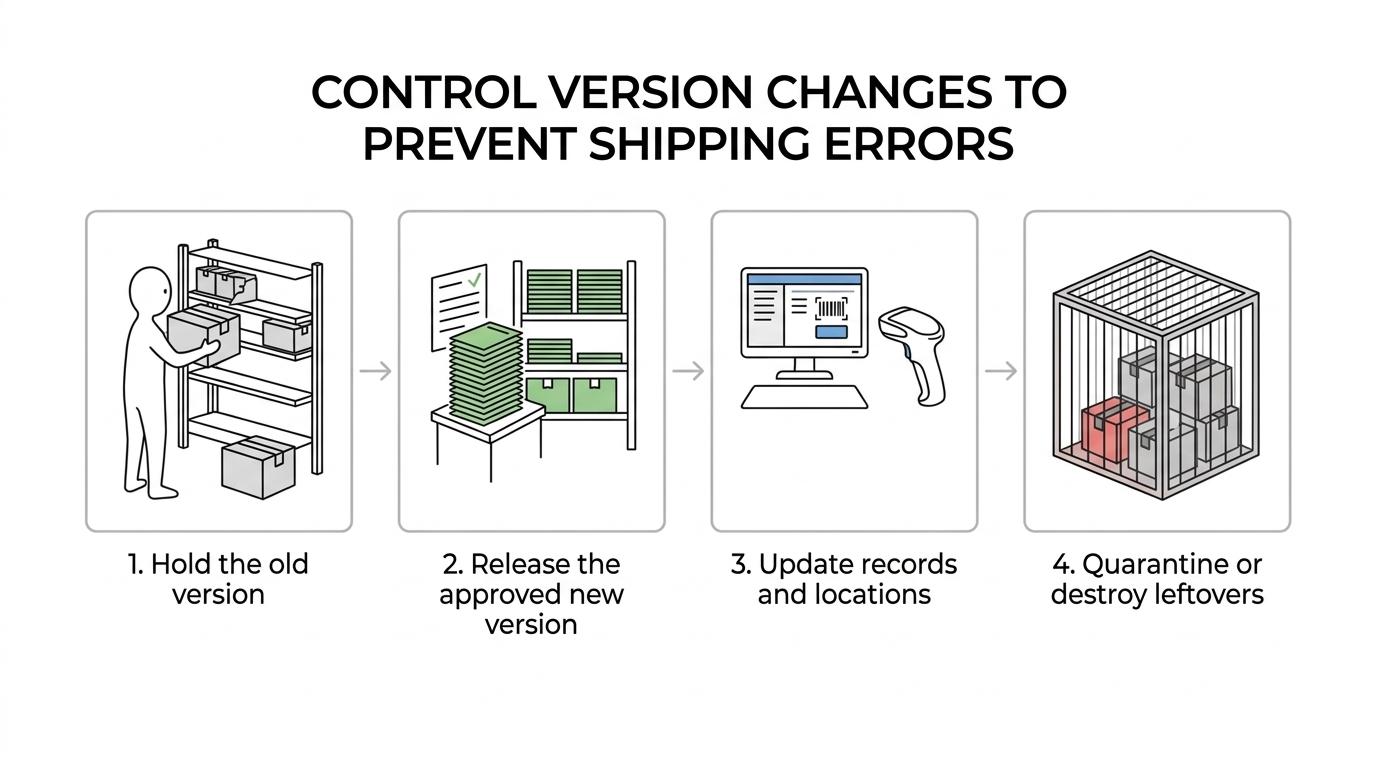
The first move should be a hold on the prior version. That means removing it from active pick locations and flagging it in the warehouse management process so it cannot be packed by mistake.
Next comes release of the new version under documented approval. If the literature belongs in the device master record or a related controlled file set, then the operational update should follow that same formal change control system. If the new version is approved but the warehouse is still shipping from old locations, then the change is not fully implemented.
Last, the provider should reconcile the remaining old inventory. That can mean quarantine, return, or destruction, depending on the brand’s procedure. The key is that obsolete stock should not remain as a silent source of future errors.
How is healthcare literature fulfillment different from standard marketing fulfillment?
Healthcare literature fulfillment has a higher control burden because distribution accuracy can affect regulated communications, patient use, and field consistency. Standard marketing fulfillment usually prioritizes campaign speed and reach.
Both categories may use storage, kitting, and parcel shipping. The difference is in the level of documentation and the consequences of failure. In a general marketing program, an outdated flyer is mostly a brand problem. In a healthcare setting, the wrong insert or support document can create quality, legal, or patient-experience issues.
Another difference is approval governance. Healthcare literature often needs tighter review, clearer segregation, and more disciplined depletion planning. A common mistake is to assume that because the package size and carrier are the same, the workflow can be the same too. The carton may look identical while the control requirements are very different.
What should happen when a field team needs custom kits or urgent replenishment?
The provider should verify approved components first, then assemble to a defined bill of materials, then ship on the agreed service level. Speed matters, but control still comes first.
A good workflow starts with a structured request. That could come through a portal, integration, or account contact, but it should identify the destination, kit type, approved components, and needed ship date. Ad hoc phone orders with vague descriptions are where many fulfillment errors begin.
Once the request is received, the operation should confirm that each literature piece is a current approved version and available in accepted inventory. Then the warehouse assembles the kit, records what was packed, and ships using the preapproved method. If the request misses a cutoff but is business critical, the escalation path should already be documented rather than improvised.
“SVDirect reports a case study with 3,158 shipments in a single week, which is a useful reminder to ask how a provider handles sudden volume swings.”
This is where same-day shipping can be valuable, especially for launches, clinic replenishment, or time-sensitive patient support materials. The trade-off is simple: urgent fulfillment only works well when SKU rules, approvals, and inventory status are already clean.
How should you evaluate service levels, accuracy, and shipping speed?
The strongest scorecard combines version control, documented accuracy, and responsive shipping. Silicon Valley Direct publishes same-day shipping, no minimum order requirement, double-verified 100% order accuracy, and dedicated account support as useful criteria buyers should test in any review.
Do not judge a literature fulfillment provider on freight pricing alone. In healthcare, service levels should reflect whether the operation can prevent incorrect materials from shipping while still meeting launch and replenishment deadlines.
A practical evaluation framework often includes these questions:
- Accuracy method: How are picks verified, and how are exceptions documented?
- Shipping cutoff: What qualifies for same-day shipping, and what does not?
- Visibility: Can your team see real-time inventory, order history, and approval status?
- Change control: How are obsolete stock, quarantines, and new revisions handled?
- Support model: Do you get a dedicated account manager and direct human support?
No minimum order requirements can also matter more than many buyers expect. They help startups, pilot programs, and niche healthcare brands avoid overcommitting volume before demand is stable.
What warning signs suggest a literature fulfillment service is a poor fit?
The clearest warning signs are weak version control, vague receiving procedures, and limited visibility into what actually shipped. Those gaps often show up before the first major error.
Be cautious if a provider cannot explain how printed materials are examined on receipt or how accepted inventory is separated from unapproved or obsolete stock. That is a basic control point under FDA-style labeling expectations.
Also look for warning signs in language. If a provider describes healthcare literature as “just marketing collateral,” that may signal a weak grasp of how patient-facing literature, inserts, and labeling-related materials must be handled. Pro tip: ask for the exact process used when a revision changes mid-campaign. The answer should be operationally specific, not generic.
Strong healthcare literature fulfillment is built on a simple idea: every approved piece should be visible, current, and shipped accurately. Once that foundation is in place, speed and scale become much easier to trust.